
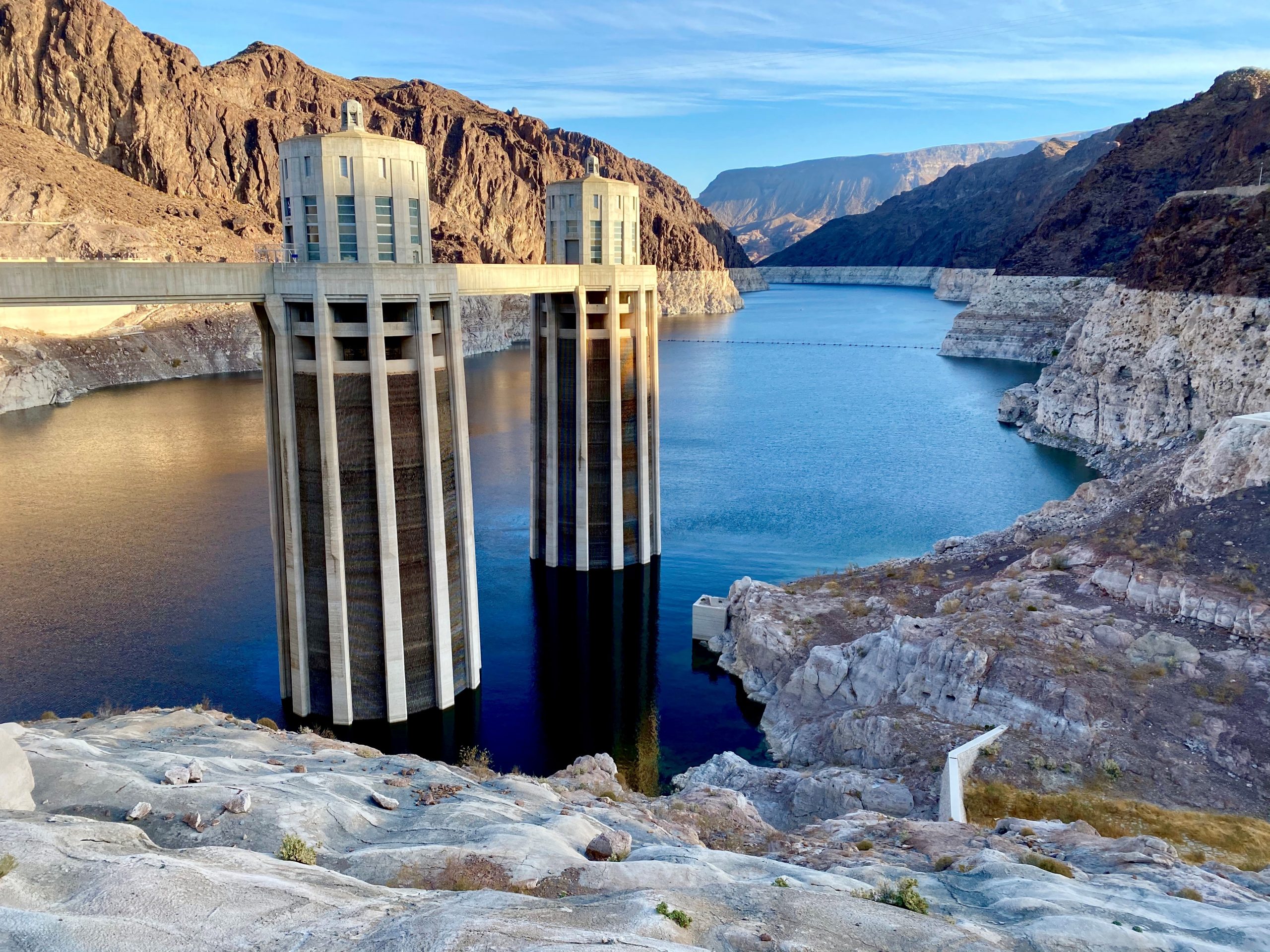
#California farmers agree to conserve 700,000 acre-feet of water in #LakeMead through 2026 — The #Nevada Current

Lake Mead, December 2020. Photo credit: Brian Richter

Click the link to read the article on The Nevada Current website (Jennifer Solis):

August 14, 2024

The Imperial Irrigation District in California, which uses more Colorado River water than any other district in the West, finalized an agreement on Monday to leave up to 700,000 acre-feet of water in Lake Mead through 2026.

As part of the landmark conservation agreement with the U.S. Bureau of Reclamation, the district will receive federal funding for conservation programs from 2024 through 2026 to conserve up to 300,000 acre-feet a year of water that will remain in Lake Mead to aid the drought-stricken Colorado River.

Funding will be used to pay agricultural water users to implement field-level conservation measures, and short-term pauses of water-intensive crops like established Alfalfa, Bermuda grass, and Klein grass crops.

The agreement approved on Monday by the Imperial Irrigation District Board of Directors is the largest conservation agreement in terms of volume anywhere in the Colorado River Basin, according to the district. The Imperial Irrigation District, serves a large portion of the Coachella Valley in the Colorado Desert region of Southern California.

As of August, Lake Mead is at 33% of capacity, meaning even the latest conservation efforts in California are unlikely to halt emergency water cuts this summer. In 2021 and 2022, Lake Powell and Lake Mead — the two largest reservoirs in the nation — both fell below critical thresholds, triggering emergency cuts and federal action to protect the lakes.

Rebecca Mitchell, John Entsminger, Estevan Lopez, Gene Shawcroft, JB Hamby, Tom Buschatzke at the Getches-Wilkinson Center/Water and Tribes Initiative Conference June 6, 2024. Photo credit: Rebecca Mitchell

JB Hamby, the Vice Chairman of the Imperial Irrigation District and the Colorado River Commissioner for California, said the Imperial Irrigation District’s “efforts provide an example for other states and regions to follow as we plan for a drier future in the Colorado River basin.”

“IID has cleared enormous hurdles to make this deal happen — there is no excuse for inaction anywhere along the river,” he continued.

The new agreement builds on the 100,000 acre-feet of water the Imperial Irrigation District agreed to conserve in Lake Mead last year, a total of about 800,000 acre-feet of conservation through 2026.

Under additional water transfer agreements, the Imperial Irrigation District plans to conserve about 24% of their annual water entitlement for the next three years, or about 500,000 acre feet a year of water. 

The district’s aggressive conservation efforts are part of the Lower Basin Plan between Arizona, California, and Nevada to conserve 3 million acre-feet of water by 2026 to protect the Colorado River system from extended drought.

In total, the agreement adds up to over half of California’s commitment to conserve up to 1.6 million acre-feet of water, a total approved by the Bureau of Reclamation for the final Supplemental Environmental Impact Statement for Near-term Colorado River Operations drafted last year.

In 2022, Congress passed the Inflation Reduction Act to provide $4 billion in funding to the Bureau of Reclamation to mitigate drought in the western United States, prioritizing the Colorado River Basin.

“The decisive action taken by our Board today demonstrates how the District and our water users work together to make meaningful contributions to the Colorado River,” said Gina Dockstader, Imperial Irrigation District Director. “We value the collaborative relationship with the Bureau of Reclamation that has allowed us to craft an agreement we can all support and make a difference.”

Imperial Irrigation District Board of Directors Acts to Protect #ColoradoRiver, #SaltonSea with New #Conservation Agreement: Landmark conservation agreement with the federal government to leave up to 700,000 AF of water in #LakeMead through 2026

Salton Sea with the Imperial Valley in the foreground. Ted Wood/The Water Desk

Click the link to read the release on the Imperial Irrigation District website:

August 12, 2024

Today,the Imperial Irrigation District Board of Directors approved a landmark conservation agreement with the federal government to leave up to 700,000 acre-feet of water in Lake Mead through 2026.

The Board’s approval of the System Conservation Implementation Agreement (SCIA) with the U.S. Bureau of Reclamation will provide funding for the implementation of conservation programs from 2024 through 2026 to conserve up to 300,000 acre-feet a year of water that will remain in Lake Mead to aid the drought-stricken Colorado River.

The conservation programs authorized under the SCIA include expanding IID’s existing On-Farm Efficiency Conservation Program (OFECP) and a new Deficit Irrigation Program (DIP). The OFECP incentivizes agricultural water users to implement field-level conservation measures while the DIP would fund short-term idling of established Alfalfa, Bermuda grass, and Klein grass crops. These water conservation measures will unlock the balance of nearly $250 million in federal funding for Salton Sea restoration efforts, authorized in a 2022 historic agreement to accelerate the construction of thousands of acres of dust suppression and aquatic habitat projects.

“The decisive action taken by our Board today demonstrates how the District and our water users work together to make meaningful contributions to the Colorado River and the Salton Sea,” said Gina Dockstader, IID Director and Salton Sea Authority President. “We value the collaborative relationship with the Bureau of Reclamation that has allowed us to craft an agreement we can all support and make a difference.”
“IID’s efforts provide an example for other states and regions to follow as we plan for a drier future in the Colorado River basin,” stated JB Hamby, IID Vice Chairman and Colorado River Commissioner for California. “IID has cleared enormous hurdles to make this deal happen — there is no excuse for inaction anywhere along the river.”

A Collaborative Effort with Far-Reaching Impact

Advocated by the seven Colorado River Basin States, Congress in August 2022 authorized the Inflation Reduction Act to provide $4 billion in funding to the Bureau of Reclamation to mitigate drought in the western United States, prioritizing the Colorado River Basin. In October 2022, the Bureau of Reclamation established the Lower Colorado River Basin System Conservation and Efficiency Program for water delivery contractors, entitlement holders, and tribes.

The program provides funding for near-term water conservation, through 2026, to generate conserved water that remains in the Colorado River system. The agreement approved today by IID is the largest volumetric SCIA anywhere in the Colorado River Basin, and when combined with IID’s 2023 SCIA, will create in excess of 800,000 acre-feet of conservation.

This adds up to over half of California’s commitment to conserve up to 1.6 million acre-feet of water, as a part of the May 2023 Lower Basin Plan that Reclamation authorized in the May 2024 Record of Decision for the final Supplemental Environmental Impact Statement for Near-term Colorado River Operations.

Support for Imperial Valley Agriculture

The 2024 – 2026 SCIA will fund the development of significant volumes of conserved water over the next three years that, when combined with IID’s existing 2003 Quantification Settlement Agreement large-scale conservation and transfer programs, will total up to 750,000 acre-feet of conservation each year, or about 24 percent of IID’s annual Colorado River entitlement.  The federal funding for this conservation is commensurate with IID’s San Diego County Water Authority water transfer program.

About IID and Farming in Imperial Valley:

  • IID has conserved over 7.7 million acre-feet of water since 2003, with 1.5 million generated through the On-Farm Efficiency Conservation Program since 2013.
  • Last year, IID conserved 106,111 AF of System Conservation Water that was left in Lake Mead under a 2023 SCIA.
  • In 2023, IID generated over 500,000 AF of conservation with 215,382 AF created by IID growers participating in the On-Farm Efficiency Conservation Program.
  • Imperial Valley farmers and IID continue to ramp up water conservation efforts annually, utilizing advanced irrigation technologies and sustainable farming practices, including the installation and use of sprinklers, drip systems, field reconfiguration and precision land-leveling, tailwater return systems, and other field-level conservation measures.
  • Imperial Valley remains one of California’s and the Colorado River Basin’s top agricultural producers, with one in every six jobs directly related to agriculture, the backbone of the local economy.
“New plot using the nClimGrid data, which is a better source than PRISM for long-term trends. Of course, the combined reservoir contents increase from last year, but the increase is less than 2011 and looks puny compared to the ‘hole’ in the reservoirs. The blue Loess lines subtly change. Last year those lines ended pointing downwards. This year they end flat-ish. 2023 temps were still above the 20th century average, although close. Another interesting aspect is that the 20C Mean and 21C Mean lines on the individual plots really don’t change much. Finally, the 2023 Natural Flows are almost exactly equal to 2019. (17.678 maf vs 17.672 maf). For all the hoopla about how this was record-setting year, the fact is that this year was significantly less than 2011 (20.159 maf) and no different than 2019” — Brad Udall

#ColoradoRiver Connectivity Channel Final Season of Construction – Summer 2024 — Northern #Colorado Water Conservancy District #COriver #aridification

Proposed bypass channel for the Colorado River with Windy Gap Reservoir being taken offline, part of the agreements around Northern Water’s Windy Gap Firming project.

The finishing touches are just around the corner for the historic and broadly supported Colorado River Connectivity Channel (CRCC). After having been talked about for decades, the CRCC, which has aquatically reconnected two segments of the Colorado River around Windy Gap Reservoir for the time since the reservoir was built in the 1980s, is heading into its third and final construction season, with work expected to wrap up this fall. In this new 5-minute video, Northern Water and Colorado Parks and Wildlife officials discuss the ramping back up of construction, goals for the final construction season, and how fish have been successfully using the new channel since water first started flowing though it back in October.