#Colorado Water Trust restoring water to the Upper #YampaRiver during low flows

Yampa River downtown with low flows. Photo credit: Colorado Water Trust

From email from the Colorado Water Trust (Blake Mamich, Katie Weeman and Holly Kirkpatrick):

(August 2, 2024) – On July 29, Colorado Water Trust (the Water Trust) began boosting flows in the Upper Yampa River with the initial order of 1,000 acre-feet of water (326 million gallons) at a rate of up 10 cfs for instream flow use by the Colorado Water Conservation Board (CWCB). This weekend the flow rate of the releases will increase to up to 45 cfs. The Water Trust is able to release this water out of Stagecoach Reservoir thanks to a ten-year, Temporary Lease for Instream Flow Use Water Delivery Agreement (ISF Lease) with the CWCB and has the contractual opportunity to purchase up to 5,000 acre-feet of water in 2024 if and when the Upper Yampa River needs additional flow. This project, in partnership with the Upper Yampa Water Conservancy District (UYWCD), the CWCB, and the City of Steamboat Springs (City) aims to support a healthy Yampa River, the fish and wildlife that depend on it, as well as the municipal, industrial, agricultural, and recreational uses on the river.

Why this project is needed: Nearly every year, no matter the snowpack and monsoon conditions, the Upper Yampa River’s flows start to dip below healthy levels in the summer and/or fall. These low flows and high temperature conditions on the river create unhealthy environments for fish species and can force the City to institute recreational closures on the Upper Yampa which closes the river to all human interaction and harms local businesses conducting tubing and fly-fishing activities.

How the partnerships work: This is a truly collaborative cross-industry effort between local, state, and federal agencies. Since 2012, Colorado Water Trust has led the effort to contract for water out of Stagecoach Reservoir to purchase and lease water to restore the Upper Yampa if and when the river experienced low flows. Because stored water must be released for a beneficial use, the mechanisms for releasing water to protect the health of the river are complex. Throughout the years, this project has become increasingly collaborative, resulting in a flexible ten-year contract with UYWCD and culminating in the second execution and operation of a ten-year ISF Lease with the CWCB. In the summer and fall, Colorado Water Trust coordinates and leads weekly meetings to report on implementation, discuss input and observations, and address questions from the community. Attendees include representatives from the CWCB, the City, Colorado River Water Conservation District, Friends of the Yampa, Yampa River Fund, the Upper Colorado Endangered Fish Recovery Program, Routt County, UYWCD, and Tri-State Generation and Transmission and local business representatives. During the coordination meetings, attendees provide real-time and on-the-ground observations, critical standards and thresholds are discussed, and pivotal questions are raised and deliberated. Once it is determined that the Upper Yampa needs boosted flows, Colorado Water Trust goes to work in executing our existing ten-year water supply contract with UYWCD and fundraising for the cost of the water.

How the funding works: It is a different compilation every year, but in 2024 we have major support from the CWCB’s Instream Flow program, as well as support from the Yampa River Fund, an anonymous donor in Steamboat Springs, and the Colorado River Water Conservation District.

What’s the impact: Since 2012, Colorado Water Trust has restored nearly 21,000 acre-feet of water to the Upper Yampa (5.88 billion gallons). We anticipate 2024 may be our biggest year yet. We aim to purchase and release up to 5,000 (1.6 billion gallons) of water from Stagecoach Reservoir to the Upper Yampa when it needs boosted flows. This can lower temperatures and protect fish and can hold off recreational closures for the benefit of the local economies and people tied to the river.

Yampa River downtown. Photo credit: Colorado Water Trust

According to a report titled Evaluating the Economic Contribution of Boatable Opportunities on the Yampa River written by Hattie Johnson with American Whitewater and Rachel Bash with Lynker Technologies, “In the example shown here, the extra 30 days of flows over 85 cfs in Steamboat Springs provide the region with about $500,000 of economic contribution.” This is a conservative estimate for Colorado Water Trust’s 2022 purchases and releases on the Yampa River. It is based on reports from rafting and fishing participants and was intended to be a tool that could easily be updated when more data is collected.

How the Upper Yampa is fairing this year: After a relatively cool spring, hot temperatures and dry conditions are taking their toll. Stream temperatures are rising and flows are dropping quickly. This was not unexpected as mid to late July is often when the river starts to need added flows.

QUOTE FROM COLORADO WATER TRUST

”It’s becoming apparent that in almost any year, wet, dry or average, the Upper Yampa River can benefit from additional flow in the late summer and fall months. That’s why it was an easy decision to make this year an operational year for the Instream Flow Lease with the CWCB. This lease was signed in 2022 and the legislation hat allowed it was adopted in 2020, so it’s exciting to use this contemporary tool for streamflow restoration for the first time.” Blake Mamich, Colorado Water Trust.

QUOTE FROM UYWCD

“Recent years have proven that our river system is changing in response to new climate realities,” said Andy Rossi, General Manager for the Upper Yampa Water Conservancy District. “Our partnership with the Colorado Water Trust and the use of CWCB’s Instream Flow Lease will be critical to protecting our river ecosystems and the communities that depend on them for years to come.”

QUOTE FROM CWCB

“The Colorado Water Conservation Board is proud to support continued partnership with the Colorado Water Trust,” said Lauren Ris, CWCB Director. “This important Instream Flow agreement on the Upper Yampa means we are not only addressing immediate ecological needs but also investing in the long-term health and resilience of the river for future generations.”
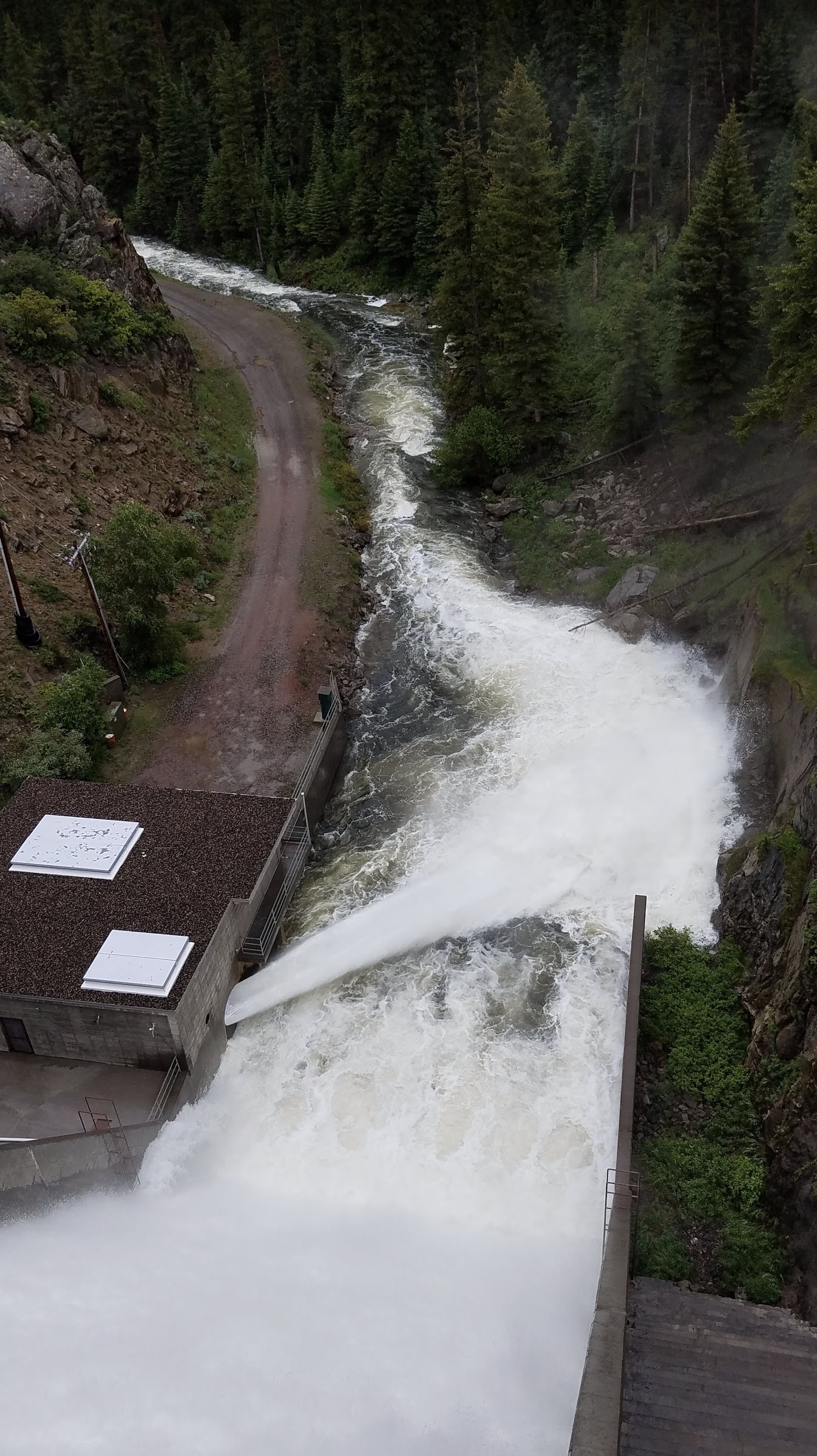
Stagecoarch Reservoir outflow June 23, 2019. Photo credit: Scott Hummer

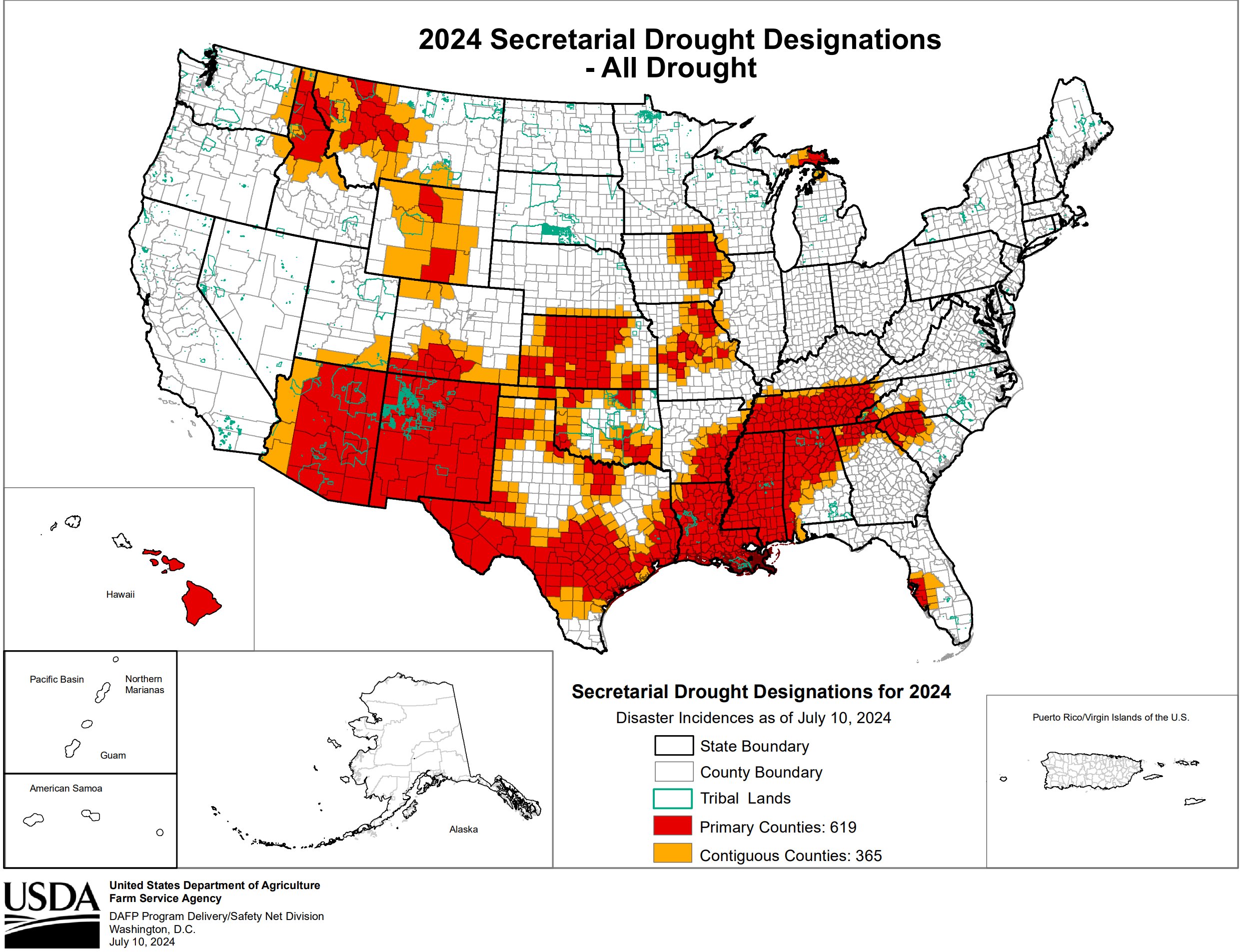
The Secretarial #Drought Designations for 2024 include 619 primary counties and 365 contiguous counties through July 10, 2024 — @DroughtDenise

For more info, please see the Emergency Disaster Designation and Declaration Process Fact Sheet at https://fsa.usda.gov/Assets/USDA-FSA-Public/usdafiles/FactSheets/emergency_disaster_designation_declaration_process-factsheet.pdf…

#ColoradoRiver 2023 Water Use: An Optimistic Narrative — John Fleck (InkStain.net) #COriver #aridification

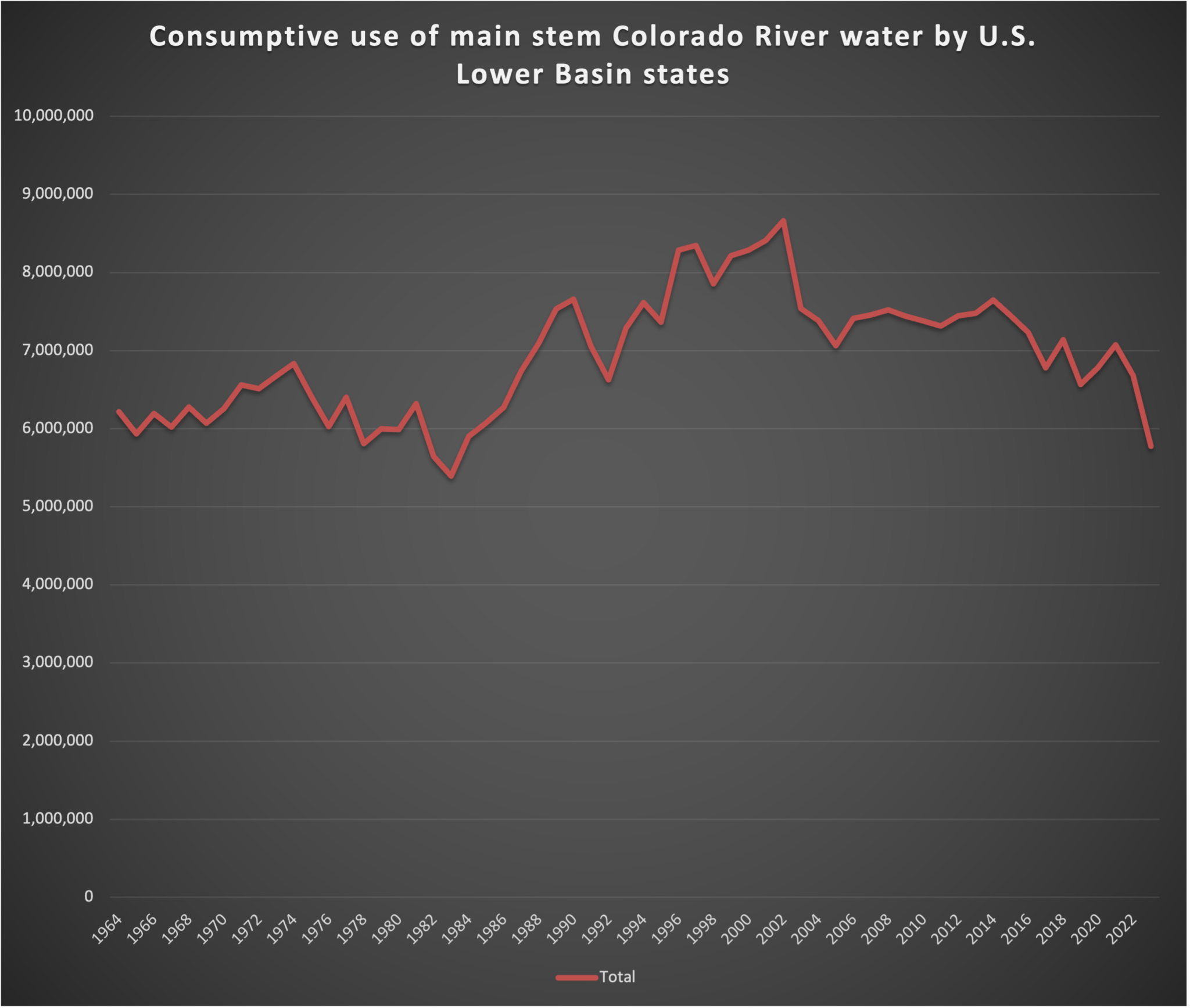
Lower Basin U.S. use. Credit: John Fleck/InkStain

Click the link to read the article on the InkStain website (John Fleck):

July 18, 2024

Preparing for A Thing I’m doing next week, I updated the Crazy Fleck Spreadsheet this morning of data from Reclamation’s annual Lower Basin decree accounting reports.

Amid all the angst and rhetoric, it is easy to miss the salient fact made clear by this graph: Lower Basin water users have reduced their take on the Colorado River substantially since the early 2000s.

  • Nevada’s use was the lowest since 1992.
  • Arizona’s use was the lowest since 1991.
  • Records that far back in time are tricky*, but California’s take on the river in 2023 was appears to have been the lowest since the late 1940s.

To be clear, the use in the late 1990s and early 2000s was unsustainably large. Praise is due for shrinking Lower Basin use, but the praise should be tempered by the fact that that they didn’t do it until the reservoirs had dropped to scary low levels.

But – crucially – everyone’s economy is doing fine. We’ve absorbed dramatic water use reductions without harming the basic structure and function of the Lower Colorado River Basin communities that depend on the river.

Upper Basin water use. Credit: John Fleck/InkStain

Upper Basin Data

Working with Upper Basin data is trickier*. There’s a new dataset from Reclamation that uses remote sensing to estimate consumptive use from 1971 to 2023. There’s been a good deal of back-and-forth among Colorado River data nerds because of some confusing aspects of the data, which we hope to sort out soon to enable a more useful analysis. But the top line numbers tell a different but also ultimately an optimistic story.

The curve appears (see data nerd confusion caveat above) to show an upward trend since the 1970s with a huge amount of interannual variability. So we haven’t hit the conservation brakes yet, at least at the basin scale. But it also is clear that the Upper Basin is using far less than the 7.5 million acre feet tagged for us in the 1922 Colorado River Compact.

We Can Do This

It is easy to get tangled these days in the anger and finger pointing about who should cut, and by how much, about who has already cut and how and why, about questions that are both technical but more importantly deeply emotional about equity and fairness. We need to remember and learn from our successes.

* A Note on Data

The Lower Basin data from 1964 to the present is contained in the decree accounting reports, prepared by the Bureau of Reclamation since the Supreme Court ruling in the Arizona v. California case back in the 1960s. Prior to that, I have stitched in a dataset created by the numbers wizards at the Metropolitan Water District of Southern California.

The Upper Basin data comes from the new Upper Basin Consumptive Uses and Losses reports published by the Bureau of Reclamation. The were originally published in May, then a revised set was published in June, I’m cautious in my analysis and citation because there are still some things I don’t understand about them.

Map credit: AGU

Project 2025 calls for the repeal of the Antiquities Act, but Utah Governor Cox says that’s a step too far — #Utah News Dispatch

Ruins are pictured near the Fish Creek area of Bears Ears National Monument in San Juan County on May 18, 2018. (Kyle Dunphey/Utah News Dispatch)

Click the link to read the article on the Utah News Dispatch website (Kyle Dunphey):

July 19, 2024

Utah Gov. Spencer Cox has his issues with how the federal government manages its public lands in the state. But he thinks the Antiquities Act, which allows the president to designate national monuments without congressional approval, should remain. 

That’s at odds with the conservative Project 2025 initiative, which calls for the repeal of the act, established in 1906 and used to safeguard some of America’s most iconic public lands. 

“I don’t support a complete repeal,” Cox said Friday during the monthly PBS Utah press conference with the governor. “I think the Antiquities Act has value. The problem is the Antiquities Act has not been used the way it was intended to be used.” 

Published by the Heritage Foundation, a conservative think tank, Project 2025 is a manifesto describing the various policies that a new Republican administration could enact. It touches on issues like immigration, defense, regulations, the environment and the economy. 

Referring to Grand Staircase-Escalante, the manifesto decries “the designation of a vast national monument in Utah over the objections of Utah leaders — but with the support of the Hollywood elite.” It accuses the U.S. Department of Interior of abusing the Antiquities Act and recommends the second Trump administration, if elected, take “a fresh look at past monument decrees.”  

Cox, while not advocating for a repeal, echoed some of the sentiments in Project 2025, telling reporters he takes issue with “large scale, million-acre deployments” — that includes national monuments like Bears Ears or Grand Staircase-Escalante. 

“That’s just not what this was supposed to do,” he said. 

Grand Staircase-Escalante was designated by President Clinton and Bears Ears was designated by President Obama. Both monuments were drastically reduced in size by President Trump, then reinstated by President Biden. 

Utah promptly sued the federal government over Biden’s reversal. That case was dismissed in August 2023 by a U.S. District Judge and within days the state filed an appeal with the 10th Circuit Court of Appeals. Cox on Friday reiterated his belief that the case would end up before the U.S. Supreme Court. 

“I feel very confident that the Supreme Court will look at this and say presidents have not followed the Antiquities Act the way it was intended to be followed,” Cox told reporters. 

But Steve Bloch, legal director for the Southern Utah Wilderness Alliance, said the governor’s interpretation of the act doesn’t mesh with the last century of precedent. 

Bloch pointed to national parks like the Grand Canyon, Grand Teton and four of Utah’s Big Five — Arches, Capitol Reef, Zion and Bryce Canyon national parks — which all started as national monuments, designated by a president who used the Antiquities Act. Since 1906, the act has been used over 300 times to set aside millions of acres of land, according to the National Park Service. 

“Even without arguing explicitly for a repeal, his version of what the act would authorize a president to do is simply inconsistent with how the act has been used and how the act has been upheld by courts for more than 100 years,” Bloch said. “It’s simply rewriting history to say that Congress didn’t intend to authorize the president to protect large landscapes.” 

Repealing the Antiquities Act would require an act of Congress and regardless of political affiliation, public lands, including national monuments in Utah, have broad support among voters in the West. 

According to Colorado College’s annual Conservation in the West poll, 83% of respondents said they supported Biden’s “30×30” initiative, which includes a push to designate new national monuments and conserve more land. 

About 84% of respondents said they support creating new national parks, monuments and wildlife refuges, and designating new tribal protected areas of historic significance.  

Meanwhile, a 2023 poll from Deseret News found that 42% of Utah voters support keeping Bears Ears at its current size, compared to 26% who are opposed. 

“The American public supports these types of designations — Utah is a great example. Four of our five national parks started off as monuments. Nobody thinks that was a bad idea,” said Bloch.

Currently two states — Wyoming and Alaska — have exemptions carved out in the Antiquities Act that requires Congress to approve any national monument designations. Cox would like to see something like that in Utah, which he called “the pincushion for Democrats.” 

“Whenever they need an environmental win, they just approve another monument in Utah and I don’t think that was ever intended,” Cox said. 

Although Project 2025 spells out an ambitious conservative policy agenda, Trump has recently tried to distance himself from it. Earlier this month, he took to Truth Social, claiming he knows “nothing about Project 2025.”  

“I have no idea who is behind it. I disagree with some of the things they’re saying and some of the things they’re saying are absolutely ridiculous and abysmal. Anything they do, I wish them luck, but I have nothing to do with them,” Trump wrote. 

Rep. Ken Ivory, R-West Jordan, is listed as one of Project 2025’s contributors. And Utah Republican Sen. Mike Lee is quoted on the 922-page initiative’s jacket, calling it a “blueprint” to “dismantle the administrative state and return power back to the states and the American people.”