Click the link to read the article on the Writers on the Range website (Peter Gartrell):
August 5, 2024
The coal mining industry reacted with outrage when the Bureau of Land Management recently announced plans to stop issuing new coal leases on the eastern plains of Wyoming and Montana.
From its headquarters in Washington, D.C., the National Mining Association predicted “a severe economic blow to mining states and communities,” while the industry’s political allies likened the move to declaring “war” on coal communities.
The truth is that coal has been steadily falling from its past dominance as energy king for nearly two decades. Domestic coal consumption dropped to 512 million tons in 2022, down 55 percent since its 2007 peak.
With the downward trajectory expected to continue, the Biden administration’s decision to end coal leasing in the Powder River Basin—the nation’s largest coal-producing region—reflects clear market trends. And far from killing coal, the administration’s plan allows mining to continue as the market transitions.
Billions of tons of previously leased federal coal remain available for mining from 270 tracts across the nation, which combined cover an area larger than Rocky Mountain National Park. One Montana mine has enough coal to keep operating until 2060. Taken together, economic effects related to ending new coal leasing in the Powder River Basin may not be felt until the 2040s and beyond.
Coal companies are well aware that U.S. energy markets have rapidly changed, a fact they soberly tell investors: “Over the last few years, customers have shifted to long-term supply agreements with shorter durations, driven by the reduced utilization of (coal) plants and plant retirements, fluidity of natural gas pricing and the increased use of renewable energy sources,” Wyoming’s largest coal producer, Peabody Energy, disclosed in its 2023 financial filing.
Even with declining markets, the Biden administration did not come to the decision on its own. Arguing that BLM’s past reviews of coal’s contributions to climate change were inadequate, a coalition of environmental groups sued the government and won. That forced the agency to revisit whether more coal leasing was warranted.
“For decades, mining has affected public health, our local land, air, and water, and the global climate,” said Lynne Huskinson, a retired coal miner. She’s a member of the Powder River Basin Resource Council, a Wyoming landowners’ group that was among the plaintiffs.
Now, she said, “we look forward to BLM working with state and local partners to ensure a just economic transition for the Powder River Basin as we move toward a clean energy future.”
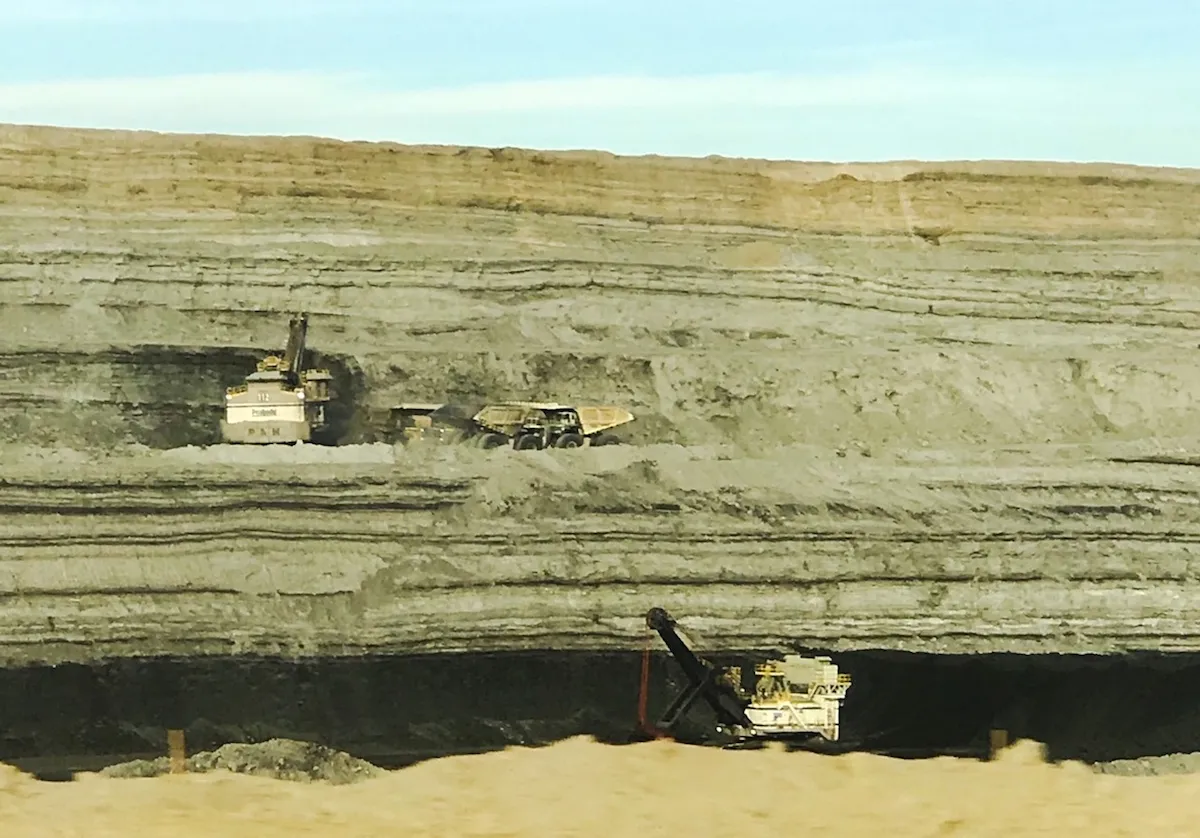
Huskinson lives in Gillette, Wyoming, where a dozen highly mechanized strip mines sprawl across the grasslands of the Powder River Basin. The Wyoming mines alone produce 40 percent of U.S. coal while employing less than 10 percent of the nation’s 44,000 coal workers.
The Basin’s mines have leased 8 billion tons of federal coal since the 1990s, a cheap and plentiful supply for the industry. The leasing process allows companies to nominate desired tracts, and then bid with little or no competition. Winning bidders often pay less than $1 a ton for coal, plus a nominal annual rent and a royalty after final sale.
There is little question that leasing helped launch and sustain the region’s energy boom. But in his 2022 decision, Judge Brian Morris of the Federal District Court of Montana cast his eye toward the future. Morris wrote that federal law required BLM to consider “long-term needs of future generations” that included “recreation, range, timber, minerals, watershed, wildlife and fish, and natural scenic, scientific, and historical values.”
The judge also gave the federal agency an out: “Coal mining represents a potentially allowable use of public lands, but BLM is not required to lease public lands.”
Morris’ words cleared the way for BLM to stop leasing, a decision that dovetails with a Colorado College poll that found most residents in eight Rocky Mountain states—including Wyoming and Montana—want Congress to prioritize conservation over energy development on public lands.

The legal wrangling will likely continue, with the BLM reviewing protests from the coal industry and its political allies that lay the groundwork for more lawsuits. For now, though, it seems the Biden administration’s decision to keep coal in the ground not only follows the market and the law, but public opinion, too.
Peter Gartrell is a contributor to Writers on the Range, writersontherange.org, an independent nonprofit dedicated to spurring lively conversation about the West. He is a consultant in Washington, D.C., and covered coal leasing issues as a journalist and congressional staffer.