Project 2025 would pillage our rights and institutions. Kansans want to fight back — #Kansas Reflector

Pennsylvania state Rep. Malcolm Kenyatta talks about Project 2025 during the Democratic National Convention at the United Center on August 20, 2024 in Chicago. (Chip Somodevilla/Getty Images)

Click the link to read the article on the Kansas Reflector website (Clay Wirestone):

August 26, 2024

Speaker after speaker at the Democratic National Convention in Chicago last week hauled out an oversized prop copy of Project 2025, the Heritage Foundation’s guide to creating a more perfect conservative presidential administration.

Former president Donald Trump and his presidential campaign have disavowed the plan, saying it doesn’t represent his views. But the document was prepared by former members of his administration and overlaps with much of what the candidate has advocated (270 proposals and counting, according to CBS News). If you want to know what a second Trump administration would bring, there’s no better guide.

And Kansans have gotten the message.

I was part of a panel digging into the specifics Tuesday in Lenexa, brought together by the nonprofit Mainstream Coalition. We spoke to a capacity crowd of more than 200 everyday folks who wanted to know all the gory details. What became clear over the hour and a half was how these plans could upend institutions and plans right here in Kansas. 

Kansas Reflector opinion editor Clay Wirestone joins a panel discussion on Project 2025 on Aug. 20 at Shawnee Mission Unitarian Universalist Church.

Amii Castle, a professor at the University of Kansas, summarized the myriad ways the document attacks abortion rights. Yes, an overwhelming majority of Kansans turned out to reject an anti-choice state constitutional amendment. But that wouldn’t matter if Project 2025 were implemented. It foresees a de facto national ban on the procedure through enforcement of the long-dormant Comstock law and restructuring of the Department of Health and Human Services into the Department of Life.

“You have to really read the document to go through and see all of the different things that they want to do with respect to abortion,” Castle told the crowd. “But really what it amounts to is absolutely no abortions in the United States and no contraception.”

Kansas public education advocates have struggled for decades to ensure the state adequately funds schools. The Heritage Foundation’s plan takes a different approach, to put it mildly.

Project 2025 calls for eliminating the Department of Education, ending Head Start and cutting off Title I funding for schools serving low-income students. As you might expect, it also calls for universal “school choice,” weakening the system that has educated generations of Kansans.

“Basically the federal government steps out of education entirely and leaves all of this to state and local governments,” said Andrea Vieux, an associate professor of political science at Johnson County Community College, at the Mainstream event. “Now, if you’re in a state that values public education, great. If you’re not in a state that values public education, that’s going to be a problem.”

At nearly 1,000 pages, Project 2025 goes on and on.

Underlying the bewildering assortment of proposals (which include restructuring the executive branch, overhauling the immigration system, targeting climate spending and banning pornography) lurks something far darker. Heritage has embraced Christian Nationalism, envisioning an America in which the federal government has merged with the most repressive and retrograde form of evangelical Christianity. State Rep. Susan Ruiz, D-Shawnee, emphasized this connection to the crowd.

“It’s the thread that goes through the entire document,” she said. “And for me, it is the foundation with which they have built everything up.”

Money, power and local control

The evening event in Lenexa could have run far longer. The audience submitted dozens of questions for moderator Laurel Burchfield, Mainstream’s advocacy director. Those of us on the panel did our level best to provide context.

The discussion focused my thinking on the fringe conservative movement that has wormed itself into the brains of formerly sensible people. Project 2025 has become a flashpoint in the presidential race because it condenses this extremism. Trump can distance himself all he wants — and fact checkers can offer him cover — but everyone sees the overlap. Everyone understands the subsequent lies for political advantage.

It also highlights the blatant hypocrisy of those who bankroll hard-right campaigns and think tanks like Heritage. They don’t care about the damage done to reproductive rights or the education system or religious freedom. They care about the taxes they pay, the regulations their companies face, and the lives of privilege they enjoy.

The billionaire members of this plutocratic elite don’t need a government to protect their rights. Their dollars do that.

If their wives or daughters or girlfriends need abortion care, they will receive that abortion, no matter where they are or what the law says. Their children and grandchildren and friends can receive astonishing educational opportunities no matter the quality of public schools. They may be evangelical Christians or not, but their freedom won’t be abridged by federal law. They can always head to another country.

Those wealthy beyond the dreams of Midas don’t have to worry about losing health insurance because they can always pay for whatever treatment they need. They can flee the worst effects of climate change. They can rest easy at night, knowing they won’t ever lose their job or require unemployment assistance or food stamps.

That leaves them free to bankroll would-be authoritarians. It leaves them free to support the spread of Christian nationalism without the slightest concern for themselves or their families.

It leaves them free to threaten everyday Kansans.

So what can be done? Kansas voters will likely have little to contribute to the national presidential contest. As a largely red state, albeit less conservative than its reputation suggests, Kansas’ six electoral votes will likely go to Trump.

However, we do have power, and that power can be grasped and employed by engaging with politics at a local level. That means school boards, city councils, county commissions, and state government. That means understanding the roles of advisory boards, volunteer organizations and community institutions. Those funding Project 2025 and sympathetic candidates would like nothing more than seeing our nation degraded into tiny radicalized fortresses, mainlining Fox News and bristling with weaponry.

What they don’t want to see is a nation where residents actually care for one another and step up to help when the need arises. For all their chatter about honoring family, hard-right extremists attack and demonize young people rather than including them in our nation’s future. They want power and profit now, damn the consequences.

Turning the avaricious tide won’t be easy. But last week, I witnessed an audience eager to toss Project 2025 onto the ash heap of history.

Clay Wirestone is Kansas Reflector opinion editor. Through its opinion section, Kansas Reflector works to amplify the voices of people who are affected by public policies or excluded from public debate. Find information, including how to submit your own commentary, here.

3 videos of Havasupai, taken less than an hour apart, in northern #Arizona — @TrentonHooker #monsoon

Cold water shots into the #ColoradoRiver slow a bass invasion in the #GrandCanyon — AZCentral.com #COriver #aridification

The humpback chub is one of four endangered fish species on the Colorado River. Photo credit: Utah Division of Wildlife Resources.

Click the link to read the article on the AZCentral.com website (Brandon Loomis). Here’s an excerpt:

August 25, 2024

A shot of cold water from Glen Canyon Dam appears to have stalled a smallmouth bass invasion of the Grand Canyon and protected rare Colorado River fish there, federal officials say. In early July, two years after first finding the predatory bass spawning below the dam and in threatened humpback chub territory, the U.S. Bureau of Reclamation began releasing cold water from deep in Lake Powell in an effort to chill the river past the temperature at which bass are known to reproduce. So far this summer, numerous netting, snorkeling and electrofishing trips on the river have turned up no newly hatched bass, biologists reported to an advisory committee meeting on Grand Canyon’s South Rim on Thursday.

“That’s huge,” said Kelly Burke, executive director at Wild Arizona and its Grand Canyon Wildlands Council, which had pushed for flow alterations from the dam to disrupt the bass invasion.

Cooler water was a must for preventing possible biological disaster this summer in particular, she said. “It couldn’t be better timed. We’re having an extraordinarily hot summer.”

The initial success also means the National Park Service will not dump a fish-killing chemical into spawning grounds a few miles downstream of the dam this year as it did last summer. Last year’s effort drew a rebuke from some tribal officials associated with Grand Canyon, who prefer nonlethal controls. Federal officials considered the bass invasion an emergency requiring quick action to prevent a population explosion that could devastate humpback chubs, 90% or more of which live in the Canyon. Cooling the river below 60 degrees Fahrenheit has at least stalled that explosion.

SCOTUS appoints new special master in #Texas v. #NewMexico #RioGrande case — Source NM

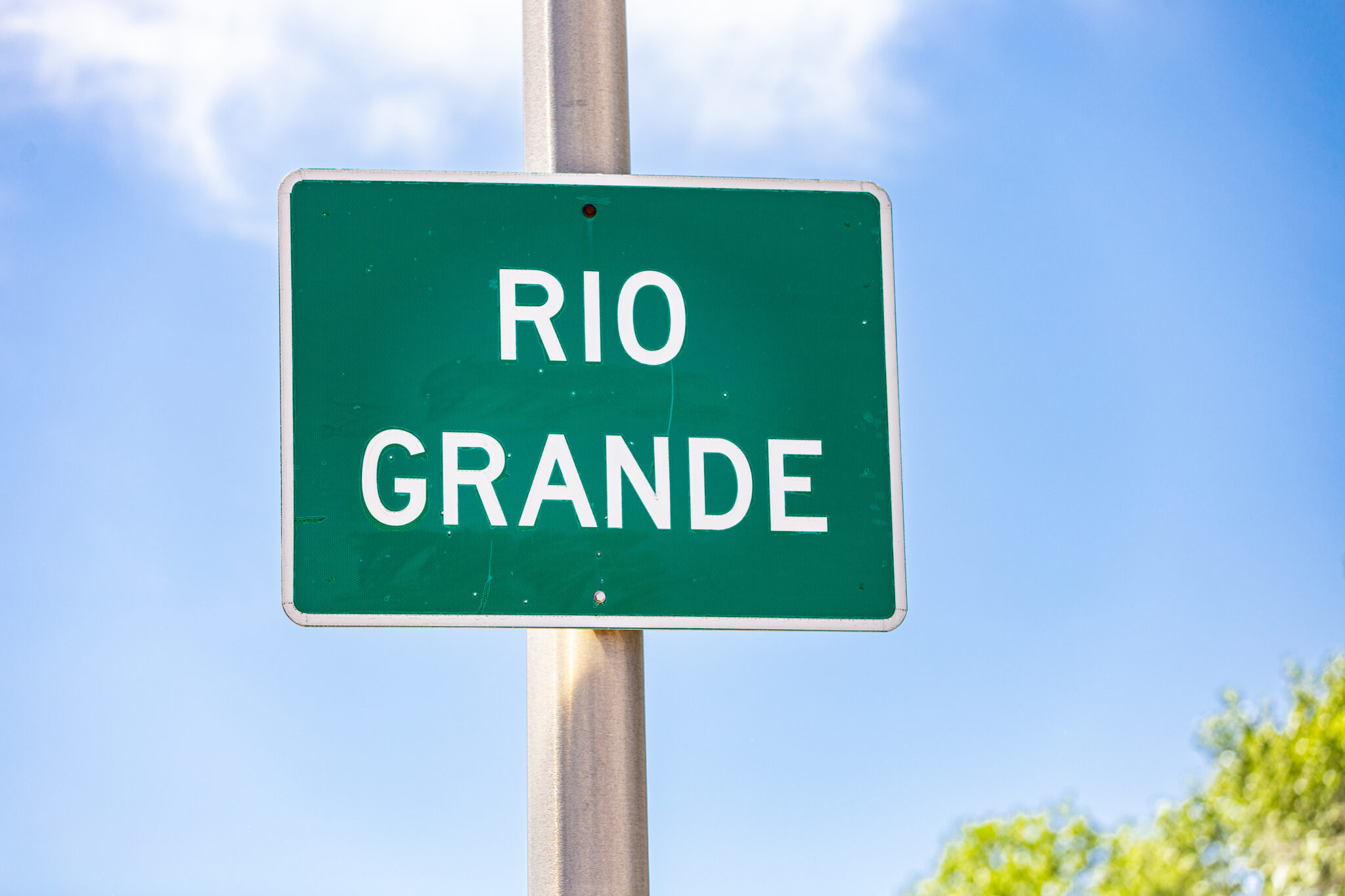
A Rio Grande sign at Isleta Blvd. and Interstate 25 on Sept. 7, 2023. The U.S. Supreme Court appointed a new special master to oversee the case, after their June ruling blocking a proposed deal. (Photo by Anna Padilla for Source New Mexico)

Click the link to read the article on the Source NM website (Danielle Prokop):

August 26, 2024

The U.S. Supreme Court appointed a new judge to oversee the Rio Grande water dispute between Texas and New Mexico.

The case will continue on after the high court’s June ruling dismissed a deal between New Mexico, Colorado and Texas, as five justices sided with objections from the federal government to the deal.

Justices appointed Judge D. Brooks Smith, U.S. Court of Appeals for the Third Circuit from Duncansville, Pennsylvania, to replace federal appeals Judge Michael Melloy as the special master in the case in July.

A special master acts as a trial judge, decides on issues in the case and prepares reports to inform the U.S. Supreme Court’s ultimate opinions in the case.

Smith, 72, has a long career in law, first starting in private practice and as a prosecutor. He donned the robes in 1984 as both a Court of Common Pleas judge in Blair County, Pennsylvania, and an administrative law judge.

In 1988, he was appointed by President Ronald Regan and confirmed to a federal position for the U.S. District Court for the Western District of Pennsylvania.

In 2002, the Senate confirmed his appointment by the Bush administration to the federal appeals court, where he’s served since.

This is the third special master for the case, called Original No. 141 Texas v. New Mexico and Colorado. 

In a complaint filed in 2013, Texas alleged that pumping in New Mexico below Elephant Butte Reservoir was taking Rio Grande water owed to Texas under a compact from 1939.

That 85-year old document governs the Rio Grande’s use between Colorado, New Mexico and Texas, and also includes provisions for sending water to Mexico under 1906 treaty obligations and acknowledges regional irrigation districts.

In 2018, the U.S. Supreme Court unanimously ruled to allow the federal government to join the case, accepting the arguments that New Mexico’s groundwater pumping threatened federal obligations to deliver water to Mexico and two irrigation districts.

After months of negotiations and a partial trial, Colorado, Texas and New Mexico proposed a deal to end the yearslong litigation. The federal government and regional irrigation districts objected to the deal, saying that it imposed unfair obligations and was negotiated without their agreement.

Melloy recommended the court ignore the federal government’s objections and approve the state’s proposed deal.

In June, the high court released a narrow 5-4 ruling siding with the federal government’s objections and blocking the state’s deal.

It’s unclear what comes next in the case under the new special master, but the parties could return to the negotiation table to hammer out another deal or return to the courtroom.

Rio Grande and Pecos River basins. Map credit: By Kmusser – Own work, Elevation data from SRTM, drainage basin from GTOPO [1], U.S. stream from the National Atlas [2], all other features from Vector Map., CC BY-SA 3.0, https://commons.wikimedia.org/w/index.php?curid=11218868

#Utah goes for the ultimate public land grab: Lawsuit would seize control of 18.5 million acres of your land — Jonathan P. Thompson (www.landdesk.org)

Credit: AI from the Land Desk

Click the link to read the article on the Land Desk website (Jonathan P. Thompson):

August 23, 2024

🤯 Annals of Inanity 🤡

This week, the state of Utah filed a lawsuit looking to seize control of some 18.5 million acres of federal land in the state, culminating decades of effort by movements such as the Sagebrush Rebellion and Wise Use to wrest America’s public lands from the public’s hands. The suit only targets “unappropriated” lands, meaning those managed by the BLM that are not designated as national monuments, parks or conservation areas or wilderness areas. It’s not clear how this would apply to national monuments the state is looking to shrink or revoke, such as Bears Ears and Grand Staircase-Escalante. 

Utah says it launched the legal action to “answer the constitutional question of whether or not the Federal Government can retain unappropriated lands in a state indefinitely.” And on the state’s website — standforourland.utah.gov — created solely to promote the suit, the state justifies the action by saying, “Federal overreach prevents Utah from actively managing public lands, impacting recreation, local economies, and resource development.” 

And they’re mad because the feds shut down a handful of trails to motorized travel (while leaving far more open to OHVs and jeeps and other internal-combustion-engine-propelled machines). Oh, yeah, and Gov. Spencer Cox is apparently feeling sensitive about his opponent and state lawmaker Phil Lyman out-wing-nutting him on public lands issues. So instead of his old “disagree better” routine, Cox has gone all in on the MAGA grievance party, in which he whines and cries about having too much public land in his state, even though that public land is easily the state’s most valuable asset and alluring draw. It’s all a vain and vacuous spectacle aimed at riling up the extreme right wing that is increasingly calling the shots in Utah, Wyoming, and Idaho. 

And one way to do that is to appeal to a sense of nostalgia for a past that never really existed, for which “Make America Great Again” is exhibit A. Exhibit B? The ad Utah posted on Twitter or X or Elno’s rantroom to build support for its lawsuit (I’ll get to the legal merits in a moment). Let’s take a look:

          The ad is overflowing with misinformation, but it tugs at the heartstrings and evokes that faux nostalgia, which is the objective, I guess. It does harken back to the wrong era, though: The Sagebrush Rebels’ glory days ended in 1976, when Congress passed the Federal Land Policy Management Act, and when President Jimmy Carter vowed to end the Western “rape, ruin, and run” ethos. And, besides, I’m pretty sure no RV-appropriate roads are being closed anywhere in Utah. The handful of routes that are going non-motorized are in the backcountry, and are mostly used by OHVs. 

          Okay, but let’s get to the legalese. First of all, Utah’s claim is baseless, because the 1894 Enabling Act, which paved the way to Utah’s statehood, gave up all right to the public domain (i.e. lands stolen from the Diné, Ute, and Paiute people). It reads: 

          That the people inhabiting said proposed State do agree and declare that they forever disclaim all right and title to the unappropriated public lands lying within the boundaries thereof.

          See that “forever” part? Well, we’re still within that timeline. 

          Utah’s complaint reads: “Nearly half of that federal land—roughly 18.5 million acres—is ‘unappropriated’ land that the United States is simply holding, without formally reserving it for any designated purpose or using it to execute any of its enumerated powers.” But then, in the very same paragraph, Utah contradicts the no-designated-purpose part by writing that the BLM “earns significant revenue by leasing those lands to private parties for activities such as oil and gas production, grazing, and commercial filmmaking, and by selling timber and other valuable natural resources that the federal government retains for its own exploitation.” 

          The formal purpose of unappropriated BLM land is just this, what’s called multiple-use in FLPMA. And, by the way, the federal government isn’t exploiting those resources — which belong to the American people. The oil and gas companies, livestock operators, mining companies, and recreationists are. Utah also fails to mention that a lot of that revenue comes back to the state and local communities. 

          Meanwhile all the taxpayer money the state is throwing away on spurious lawsuits, and on the ads to support them, ain’t coming back.

          But what’s most irking is Utah’s victim shtick. They feel like they’re being discriminated against because nearly 70% of the state is public land, while only 1% of Connecticut and New York or managed by the federal government. I guess Utah’s so-called leaders haven’t noticed that East Coasters are coming to Utah in droves, to visit or to live, and are stocking up the state’s coffers in the process. Are they coming for the sodas? The fry sauce? The backwards ass politics? 

          Nope. They’re coming for all of that public land. 

          The arrogance of the off-road vehicle lobby — Jonathan P. Thompson, January 2, 2024

          The AI intern made this. Not terrible, I guess. Credit: Jonathan P. Thompson/The Land Desk

          In a rather predictable — but still maddening — move, the off-road-vehicle lobby is suing the Bureau of Land Management over the agency’s Labyrinth Canyon and Gemini Bridges travel plan for off-highway vehicle use. Read full story


          🏠 Random Real Estate Room 🤑 

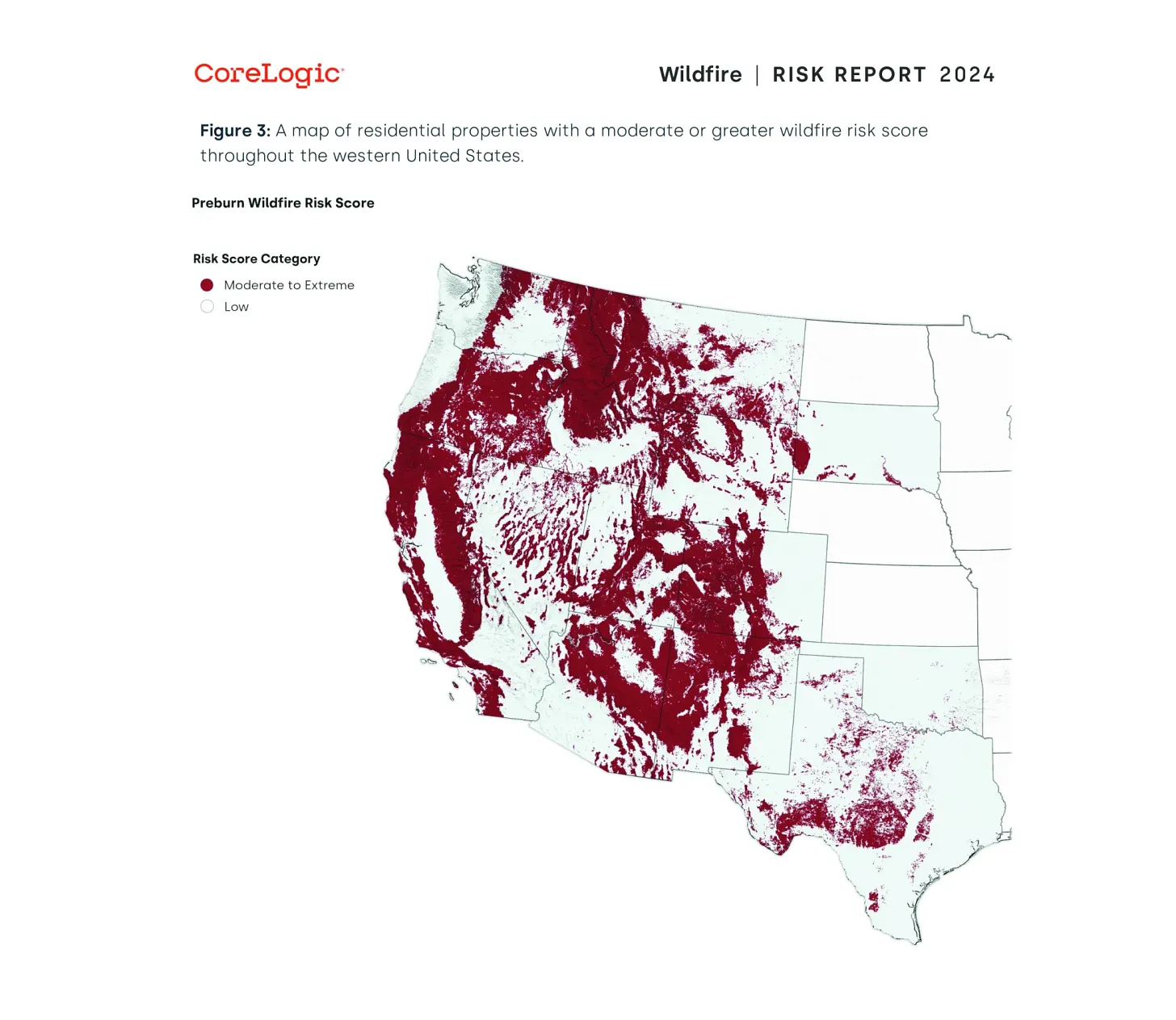
          A new report from CoreLogic finds 2.6 million homes in the West are in wildfire danger zones. That includes 1.26 million in California and more than 321,000 in Colorado. Damn. I reckon a lot of those folks have or will get a grim letter from their insurance company canceling coverage or hiking prices.


          📸 Parting Shot 🎞️