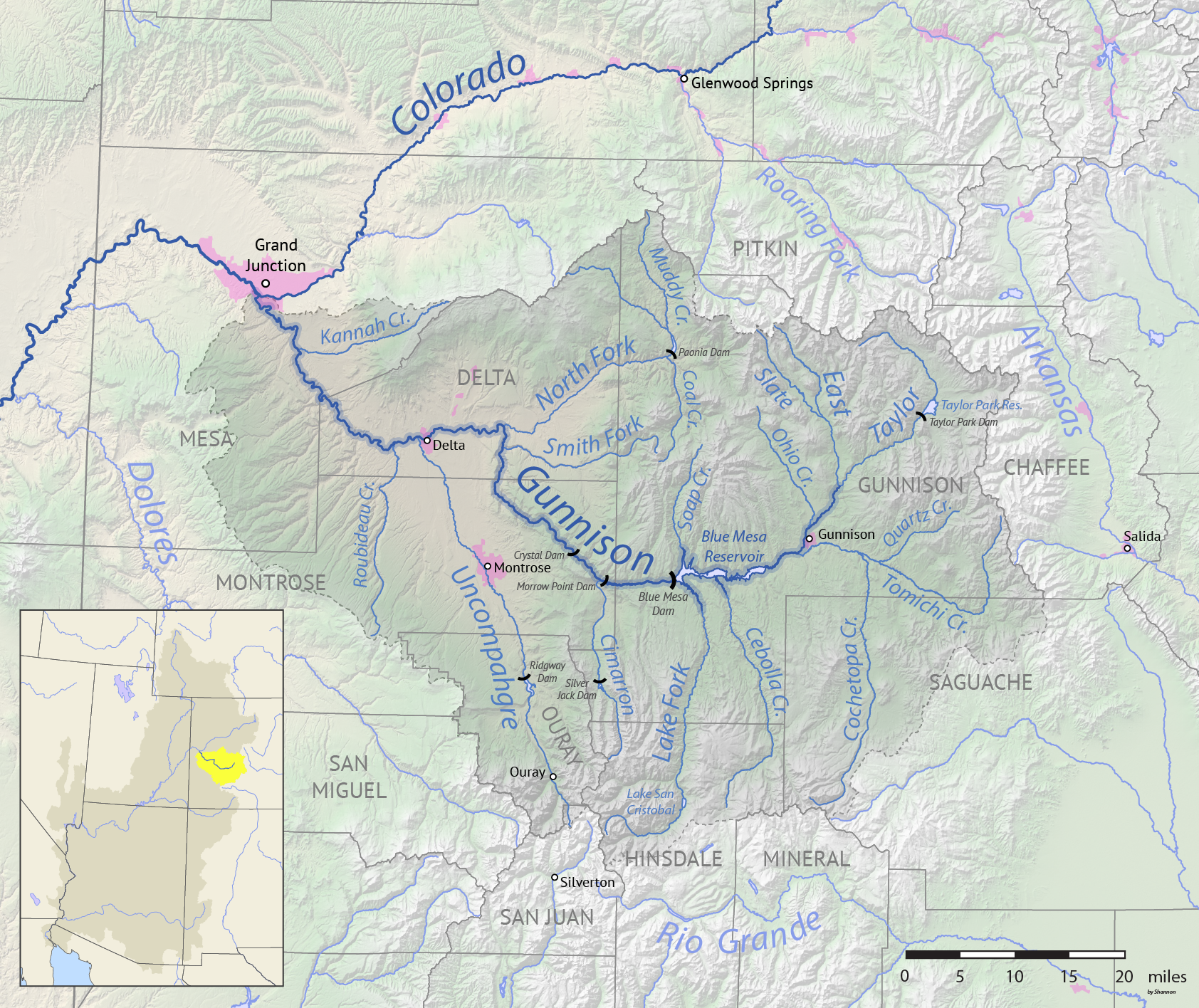
Releases from the Aspinall Unit will be decreased from 1550 cfs to 1500 cfs on Wednesday, August 21st. Releases are being decreased as flows on the lower Gunnison River are well above the baseflow target of 1050 cfs. Another reduction in the release at Crystal is expected to occur next week if river levels remain above the target.
Flows in the lower Gunnison River are currently above the baseflow target of 1050 cfs. River flows are expected to remain above the baseflow target for the foreseeable future.
Pursuant to the Aspinall Unit Operations Record of Decision (ROD), the baseflow target in the lower Gunnison River, as measured at the Whitewater gage, is 1050 cfs for August through December.
Currently, Gunnison Tunnel diversions are 1050 cfs and flows in the Gunnison River through the Black Canyon are around 500 cfs. After this release change Gunnison Tunnel diversions will still be 1050 cfs and flows in the Gunnison River through the Black Canyon will be around 450 cfs. Current flow information is obtained from provisional data that may undergo revision subsequent to review.
This scheduled release change is subject to changes in river flows and weather conditions. For questions or concerns regarding these operations contact:
“New plot using the nClimGrid data, which is a better source than PRISM for long-term trends. Of course, the combined reservoir contents increase from last year, but the increase is less than 2011 and looks puny compared to the ‘hole’ in the reservoirs. The blue Loess lines subtly change. Last year those lines ended pointing downwards. This year they end flat-ish. 2023 temps were still above the 20th century average, although close. Another interesting aspect is that the 20C Mean and 21C Mean lines on the individual plots really don’t change much. Finally, the 2023 Natural Flows are almost exactly equal to 2019. (17.678 maf vs 17.672 maf). For all the hoopla about how this was record-setting year, the fact is that this year was significantly less than 2011 (20.159 maf) and no different than 2019” — Brad Udall
A plan from water officials in Arizona, Nevada and California to cut back on the amount of water those states use from the Colorado River in exchange for money with hopes of saving 3 million acre-feet of water over three years is meeting conservation goals, a top water official said Wednesday. The 2023 agreement has already seen 1.7 million acres of improvement less than one year into the effort, Bureau of Reclamation Commissioner Camille Touton said. She says she believes the states are on pace to reach their original goal.
“There is proof here that we can take on these hard moments, but we have to do it together,” said Touton, who spoke during a summit hosted by U.S. Rep. Susie Lee, D-Nev., at Springs Preserve. “We’ve been able to stabilize the system in the short term, and now we are focused on what this river looks like for the future.”
[…]
The $1.2 billion plan in 2023 called for half of the cuts to be made by the end of 2024 — a benchmark that has already been hit. The agreement runs through 2026, when the 100-year legal document about how Colorado River water is shared will expire, and negotiations could bring deeper cuts in water usage based on climate modeling and future warming in the West.
“We really were on the brink of catastrophe in this basin if we got another dry year,” said Colby Pellegrino, Southern Nevada Water Authority’s deputy general manager of resources, of the Colorado River prior to the agreement. “Mother Nature was kind to us, and Congress was very kind to us. And those two things together are what enabled us to get there voluntarily.”
Atmospheric rivers (ARs) reaching high-latitudes in summer contribute to the majority of climatological poleward water vapor transport into the Arctic. This transport has exhibited long term changes over the past decades, which cannot be entirely explained by anthropogenic forcing according to ensemble model responses. Here, through observational analyses and model experiments in which winds are adjusted to match observations, we demonstrate that low-frequency, large-scale circulation changes in the Arctic play a decisive role in regulating AR activity and thus inducing the recent upsurge of this activity in the region. It is estimated that the trend in summertime AR activity may contribute to 36% of the increasing trend of atmospheric summer moisture over the entire Arctic since 1979 and account for over half of the humidity trends in certain areas experiencing significant recent warming, such as western Greenland, northern Europe, and eastern Siberia. This indicates that AR activity, mostly driven by strong synoptic weather systems often regarded as stochastic, may serve as a vital mechanism in regulating long term moisture variability in the Arctic.
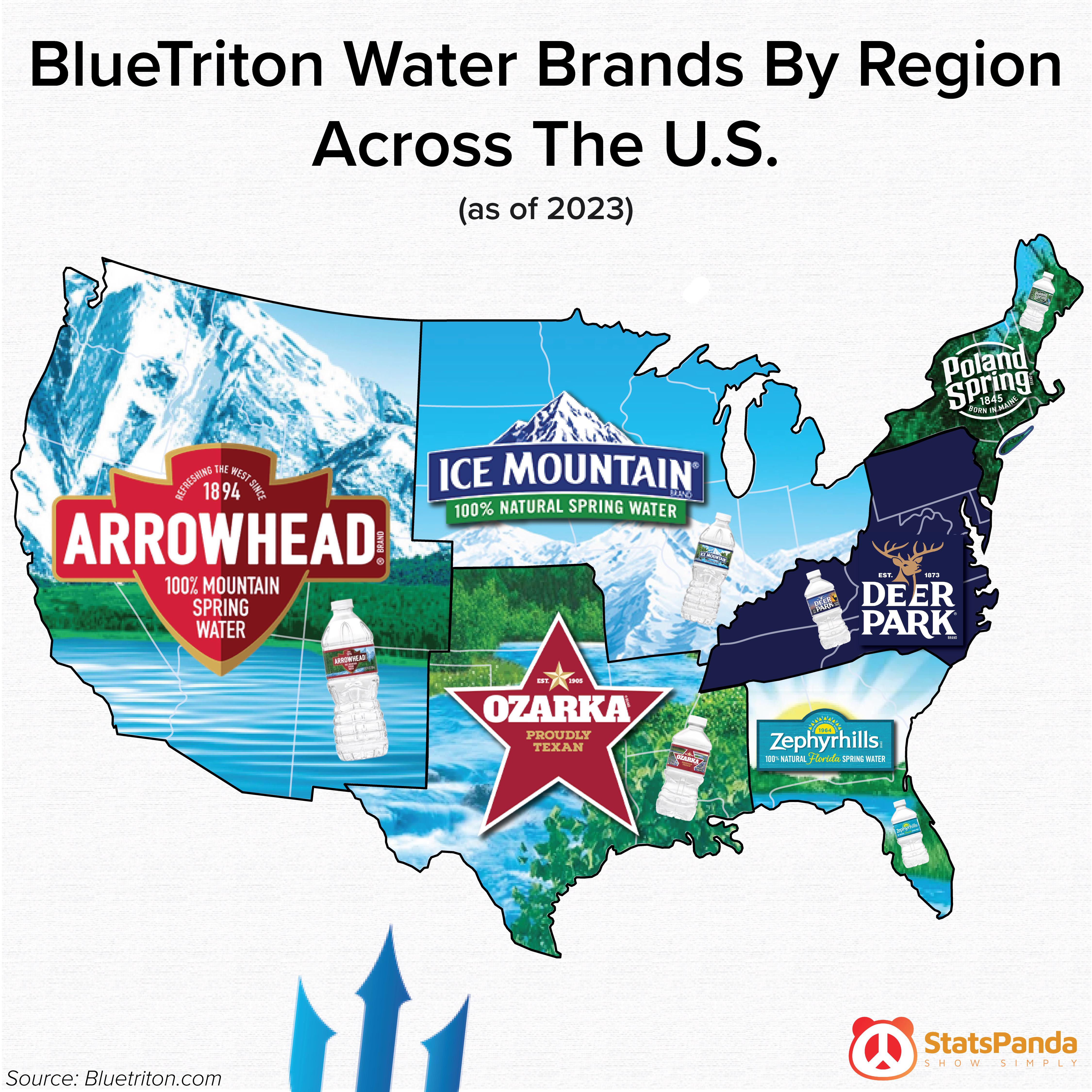
In a decision that could end a years-long battle over commercial extraction of water from public lands, the U.S. Forest Service has ordered the company that sells Arrowhead bottled water to shut down a pipeline and other infrastructure it uses to collect and transport water from springs in the San Bernardino Mountains. The Forest Service notified BlueTriton Brands in a letter last month, saying its application for a new permit has been denied. District Ranger Michael Nobles wrote in the July 26 letter that the company “must cease operations” in the San Bernardino National Forest and submit a plan for removing all its pipes and equipment from federal land. The company has challenged the denial in court.
Environmental activists praised the decision.
“It’s a huge victory after 10 years,” said Amanda Frye, an activist who has campaigned against the taking of water from the forest. “I’m hoping that we can restore Strawberry Creek, have its springs flowing again, and get the habitat back.”
She and other opponents say BlueTriton’s operation has dramatically reduced creek flow and is causing significant environmental harm. The Forest Service announced the decision one month after a local environmental group, Save Our Forest Assn., filed a lawsuit that alleged agency was illegally allowing the company to continue operating under a permit that had expired.
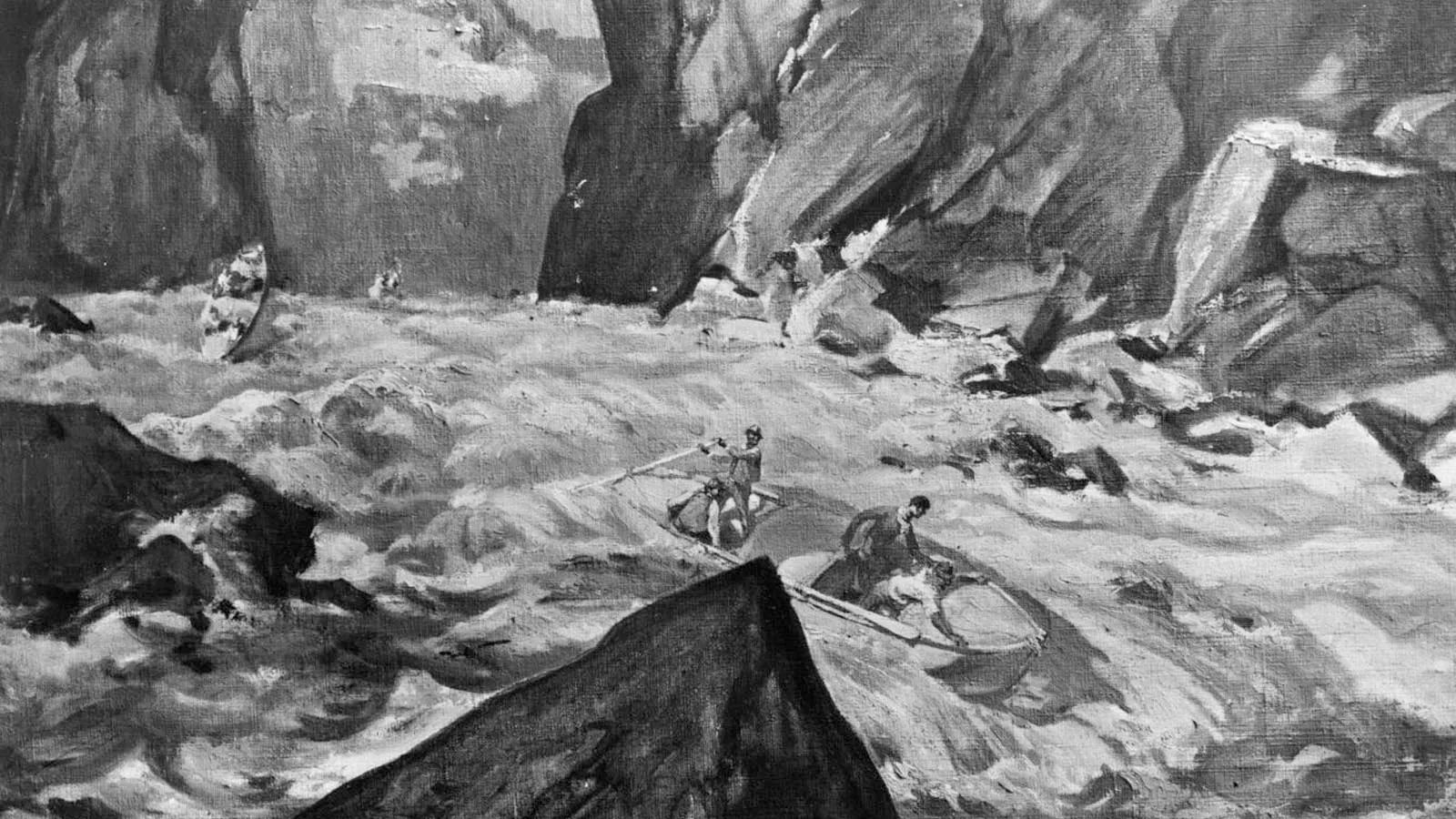
Painting by Henry C. Pitz showing John Wesley Powell and his party descending the Colorado River through the Grand Canyon, presumably during the historic 1869 expedition. (Image credit: Smithsonian Institution, Bureau of American Ethnology)
Intensifying extreme weather events and an insurance crisis are likely to cause significant economic and political disruption in the U.S. sometime in the next 15 years.
The words of explorer John Wesley Powell on the eve of his departure into the unexplored depths of the Grand Canyon in 1869 best describe how I see our path ahead as we brave the unknown rapids of climate change:
Powell’s expedition made it through the canyon, but the explorers endured great hardship, suffering near-drownings, the destruction of two of their four boats, and the loss of much of their supplies. In the end, only six of the nine men survived.
Likewise, we find ourselves in an ever-deepening chasm of climate change impacts, forced to run a perilous course through dangerous rapids of unknown ferocity. Our path will be fraught with great peril, and there will be tremendous suffering, great loss of life, and the destruction of much that is precious.
It is inevitable that climate change will stop being a hazy future concern and will someday turn everyday life upside down. Very hard times are coming. At the risk of causing counterproductive climate anxiety and doomism, I offer here some observations and speculations on how the planetary crisis may play out, using my 45 years of experience as a meteorologist, including four years of flying with the Hurricane Hunters and 20 years blogging about extreme weather and climate change. The scenarios that I depict as the most likely are much harsher than what other experts might choose, but I’ve seen repeatedly that uncertainty is not our friend when it comes to climate change. This will be a long and intense ride, but if you stick through the end, I promise there will be a rainbow.
By late this century, I am optimistic that we will have successfully ridden the rapids of the climate crisis, emerging into a new era of non-polluting energy with a stabilizing climate. There are too many talented and dedicated people who understand the problem and are working hard on solutions for us to fail.
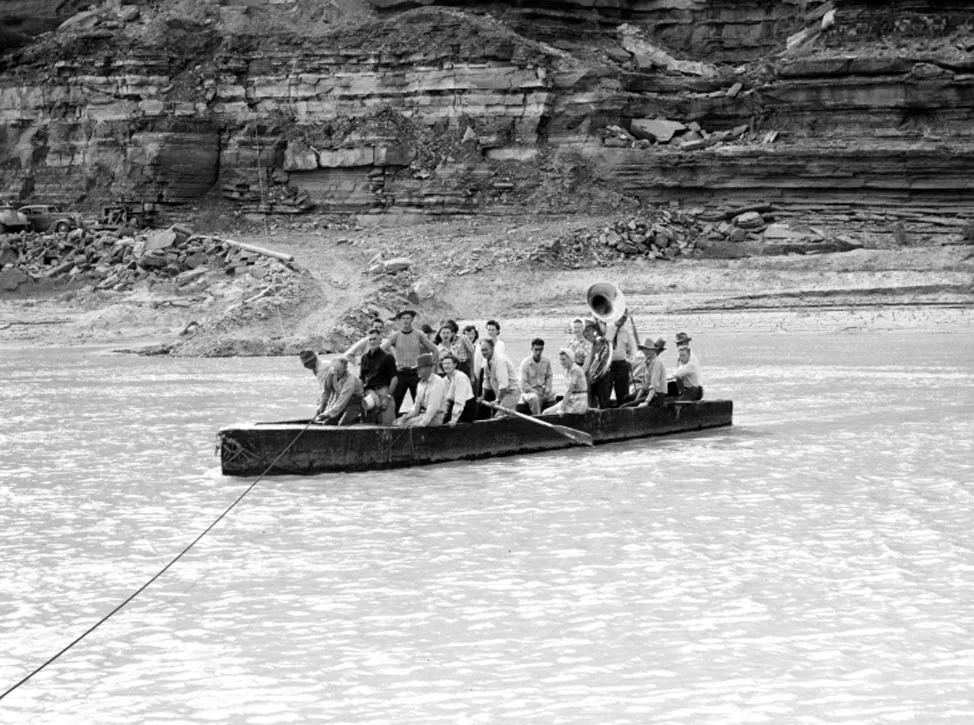
Figure 1. America is about as unprepared for a dangerous trip down the rapids of climate change as this group would have been going down the rapids of the Colorado River in Grand Canyon. Photo taken at the Colorado River crossing at Hite Ferry, Utah, in 1946. (Image credit: Utah Historical Society)
The 1974 made-for-TV movie Hurricane included a subplot loosely based on the hurricane party that allegedly occurred during the 1969 landfall of category 5 Hurricane Camille in Mississippi. The predictable catastrophic end to the party is depicted at 0:05-second mark of the trailer above. Though the party never happened, legendary TV anchorman Walter Cronkite perpetuated the hurricane party story during one of his broadcasts after the hurricane. As the camera panned over the cement slab littered with debris that marked the former location of the Richelieu Apartments, Cronkite narrated: “This is the site of the Richelieu Apartments in Pass Christian, Mississippi. This is the place where 23 people laughed in the face of death. And where 23 people died.”
Although there is a major climate change hurricane approaching, we’re busy throwing a hurricane party, charging up our planetary credit card to pay for the expenses, with little regard to the approaching storm that is already cutting off our escape routes. This great storm will fundamentally rip at the fabric of society, creating chaos and a crisis likely to last for many decades.
The intensifying climate change storm will soon reach a threshold I think of as a category 1 hurricane for humanity — when long-term global warming surpasses 1.5 degrees Celsius above preindustrial temperatures, a value increasingly characterized over the last decade as “dangerous” climate change.
Assuming that we don’t work exceptionally hard to reduce emissions in the next 10 years, the world is expected to reach 2 degrees Celsius of warming between 2045 and 2051. In my estimation, that will be akin to a major category 3 hurricane for humanity — devastating, but not catastrophic.
Allowing global warming to exceed 2.5 degrees Celsius will cause category 4-level damage to civilization — approaching the catastrophic level. And warming in excess of 3 degrees Celsius will likely be a catastrophic category 5-level superstorm of destruction that will crash civilization.
We must take strong action rapidly to rein in our emissions of heat-trapping gases to avoid that outcome — and build great resilience to the extreme climate of the 21st century that we have so foolishly brought upon ourselves.
According to the Carbon Action Tracker (see tweet below), we are on track for 2.7 degrees Celsius of warming; if the nations of the world meet their targets for reducing heat-trapping climate pollution, warming will be limited to 2.1 degrees. There’s a big difference between being hit by a Cat 4 versus a Cat 3, and every tenth of a degree of warming that we prevent will be critical.
Two years on from Glasgow and our warming estimates for government action have barely moved. Governments appear oblivious to the extreme events of the past year, somehow thinking treading water will deal with the flood of impacts? https://t.co/fbM4xY9OJepic.twitter.com/MekGIeU1Z3
As climate scientist Michael Mann explains in his latest book, “Our Fragile Moment,” great climate science communicator Stephen Schneider once said, “The ‘end of the world’ or ‘good for you’ are the two least likely among the spectrum of potential [climate] outcomes.” So forget sci-fi depictions of planetary apocalypse. That will not be our long-term climate change fate.
But the impacts of climate change will be apocalyptic for many nations and people — particularly those that are not rich and White. People and communities with the least resources tend to be the first and hardest hit by climate change, not only because poorer people and communities are inherently more vulnerable to the impacts of any disaster, but also because the extremes induced by climate change tend to be worse in the tropics and subtropics, home to many poor nations.
In the U.S., climate change has already turned life upside down for numerous communities. For example, in North Carolina, the financially strapped, Black-majority towns of Fair Bluff and Princeville are in danger of abandonment from hurricane-related flooding (from Hurricane Floyd in 1999, Matthew in 2016, and Florence in 2018). Seven Springs, North Carolina (population 207 in 1960, now just 55) is largely abandoned.
Climate change was a key contributor to these floods; a 2021 study found that about one-third of the cost of major U.S. flood events since 1988, totaling $79 billion, could be attributed to climate change. And for the town of Paradise, California — utterly destroyed by the devastating Camp Fire of 2018, which killed 85 and caused over $16 billion in damage — climate change has been apocalyptic.
In the U.S., the most likely major economic disruption from climate change over the next few years might well be a collapse of the housing market in flood-prone and wildfire-prone states. Billion-dollar weather disasters — which cause about 76% of all weather-related damages — have steadily increased in number and expense in recent years and would be even worse were it not for improved weather forecasts and better building codes. The recent increase in weather-disaster losses has brought on an insurance crisis — especially in Florida, Louisiana, California, and Texas — which threatens one of the bedrocks of the U.S. economy, the housing and real estate market.
In California, the insurer of last resort, the FAIR plan, had only about $250 million in cash on hand as of March 2024.
“One major fire near Lake Arrowhead, where the Plan holds $8 billion in policies, would plunge the whole scheme into insolvency,” observed Harvard’s Susan Crawford, author of “Charleston: Race, Water, and the Coming Storm.”
It is widely acknowledged that higher weather disaster losses result primarily from an increase in exposure: more people with more stuff moving into vulnerable places, including those at risk of floods. Martin Bertogg, Swiss Re’s head of catastrophic peril, said in a 2022 AP interview that two-thirds, perhaps more, of the recent rise in weather-related disaster losses is the result of more people and things in harm’s way.
But this balance will likely shift in the coming decades. Increased exposure will continue to drive increased weather disaster losses, but the fractional contribution of climate change to disaster losses — at least for wildfire, hurricane, and flood disasters — is likely to increase rapidly, making the insurance crisis accelerate.
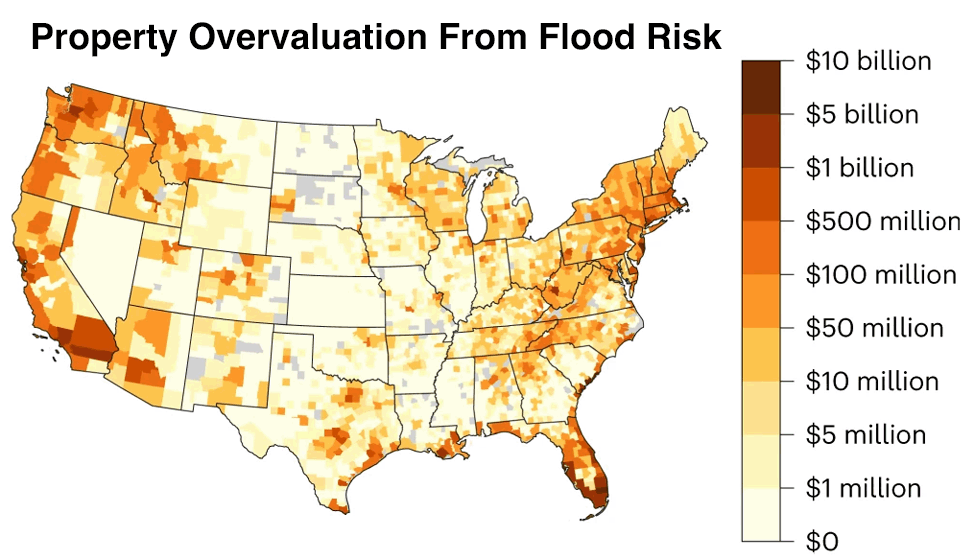
Figure 2. County-level overvaluation of property from flood risk. Florida had the highest property overvaluation — about $50 billion. In 2021, Florida’s real estate industry accounted for $294 billion, or 24% of the gross state product, according to a report from the National Association of Realtors. (Image credit: Gourevitch et al., 2023, Unpriced climate risk and the potential consequences of overvaluation in US housing markets, Nature Climate Change volume 13, pages 250–257)
A 2023 study (Fig. 2) drew attention to a massive real estate bubble in the U.S.: the vast number of properties whose purported value doesn’t account for the true costs of floods. The study estimated that across the U.S., residential properties are overvalued by a total of $121-$237 billion under current flood risks. This bubble will likely continue to grow as sea levels rise, storms dump heavier rains, and unwise risky development continues.
Likewise, U.S. properties at risk of wildfires are collectively overvalued by about $317 billion, according to David Burt, a financial guru who foresaw the 2008 subprime mortgage crisis. Insurers are already pulling out of the areas most at risk, threatening to make property ownership too expensive for millions and posing a serious threat to the economically critical real estate industry.
Climate futurist Alex Steffen has described the climate change-worsened real estate bubble this way:
Something brittle is prone to a sudden, catastrophic failure and cannot easily be repaired once broken. The popping of the real estate Brittleness Bubble will potentially trigger panic selling and a housing market collapse like a miniature version of the Great Financial Crisis of 2008 but focused on the 20% of American homes in wildfire and flood risk zones. In his 2023 Congressional testimony, Burt estimated that a wildfire and flood-induced repricing of risk of the U.S. housing market could have a quarter to half the impact of the 2008 Great Financial Crisis.
However, the 2008 crisis was relatively short-lived, as fixes to the financial system and a massive federal bailout led to a rebound in property values after a few years. A climate change-induced housing crisis will likely be resistant to a similar fix because the underlying cause will worsen: Sea levels will continue to rise, flooding heavy rains will intensify, and wildfires will grow more severe, increasing risk.
Science writer Eugene Linden wrote in 2023, “as we saw in 2008, a housing crisis can quickly morph into a systemic financial crisis because banks own most of the value, and thus the risk, in housing and commercial real estate.”
Crawford of Harvard recently wrote: “Because insurance can help communities and households recover more quickly from disasters, and because so much of the U.S. economy is driven by spending on housing, the inaccessibility and unaffordability of insurance poses a threat to the stability of the entire economy.”
As Sen. Sheldon Whitehouse, a Democrat from Rhode Island, said earlier this year, “The thing about economic crises is that they come on slowly, until they come on fast.”
How the insurance crisis may play out: the “Wholly irrational and completely ad-hoc pirate capitalism” solution
In his blunt 2023 essay, “Insurance Politics at the End of the World,” journalist Hamilton Nolan offers these thoughts on the potential ways this climate change-induced insurance crisis could be addressed:
When will the Brittleness Bubble pop?
When might this “crash into the wall of reality” happen and the Brittleness Bubble pop? Politicians are working extremely hard to keep their jobs by delaying this day of reckoning, artificially limiting insurance rate rises and offering state-run insurance plans of last resort. This approach — the equivalent of giving a blood transfusion to the injured, without stopping the bleeding — does not fix the underlying problem and all but guarantees that the pain of the eventual national reckoning will be much larger. Insurance is designed to transfer risk, but risk is rising everywhere. [ed. emphasis mine]
As the hurricane season is set to begin soon and wildfire risk gradually increasing, private insurers in some states are fleeing areas considered at high risk.
Crawford addressed the issue in a 2024 essay, “Who ends up holding the bag when risky real estate markets collapse?” Citing financial guru Burt, she concluded: “2025 or 2026 is when things give way and it becomes very difficult to offload houses and buildings in risky places where mortgages are suddenly hard to get, much less insurance.” When asked in an interview with Marketplace if the market is due for another correction, as homeowners in places with growing risk of flooding and wildfire have to pay more for insurance, Burt said:
In the same Marketplace story, though, Ben Keys, a professor of real estate and finance at the University of Pennsylvania’s Wharton School, said, “The idea that we would expect there to be a huge wave of defaults or delinquencies feels relatively unlikely.”
But like Burt, climate change futurist Steffen predicts the real estate Brittleness Bubble will pop within five years (10 at the most).
People are beginning to grasp the seismic implications of a widespread loss of home insurance. Good.
But the economic shocks created by finally being forced to acknowledge that our society is unprepared for the realities of climate chaos won't end there.
This reckoning could come sooner for Florida if another $100-billion hurricane hits. The Florida insurance and coastal property market did manage to withstand the $117-billion cost of Category 4 Hurricane Ian of 2022, but another blow like that might well cause a severe downward spiral in the Florida real estate market from which it might never fully recover. This vulnerability was underscored by Florida Gov. DeSantis during a 2023 radio interview with a Boston host, when DeSantis suggested homeowners should “knock on wood” and hope the state didn’t get hit by a hurricane in 2024.
But “knocking on wood” is not an effective climate adaptation strategy for Florida. Because of climate change, Mother Nature is now able to whip heavier bowling balls with more devastating impact down Hurricane Alley. It’s only a matter of time before she hurls a strike into a major Florida city, causing an intensified coastal real estate and insurance crisis. And the odds of such a strike are higher than average in 2024 because of record-warm ocean temperatures in the tropical Atlantic, combined with a developing La Niña event.
Like this hyper-strike rolling robot, Mother Nature is now able to whip heavier bowling balls with more devastating impact down hurricane alley because of the extra heat energy in the oceans from human-caused global warming.
Watch out for increased coastal flooding in the mid-2030s
We may manage to avoid a coastal real estate market crash in the next 10 years if we get lucky with hurricanes and if our politicians continue to pump huge amounts of money to bail out the failing system.
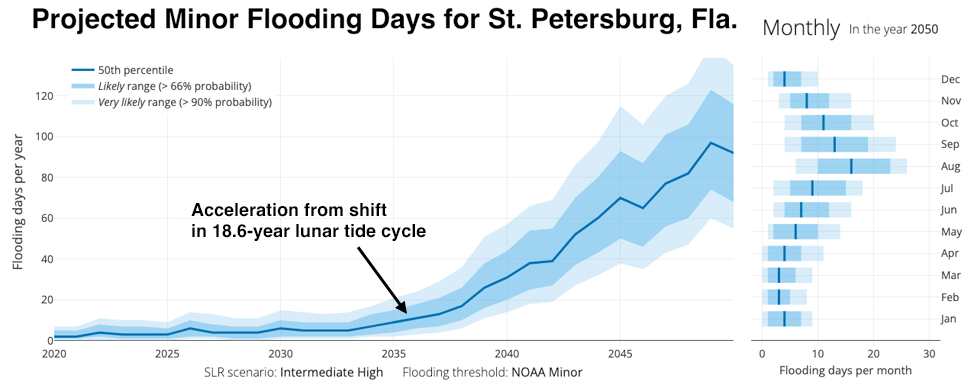
But it will become increasingly difficult to keep the coastal property market propped up beginning in the mid-2030s, because of accelerating sea level rise combined with an 18.6-year wobble in the moon’s orbit. Thus, I expect that the longest we might stave off the popping of the coastal real estate Brittleness Bubble is 15 years.
Figure 3. Predicted change in minor flooding days (>1.74 feet above high tide) in St. Petersburg, Florida, under an “intermediate-high” sea level rise scenario (5.33 feet of sea level rise in 2100 compared to 2000). (Image credit: NASA sea level rise tool)
As I wrote in my 2023 post, 30 great tools to determine your flood risk in the U.S., beginning in 2033, the moon will be in a position favorable for bringing higher tides to locations where one high tide and low tide per day dominate. This will bring a rapid increase in high tide flooding to the coasts of the Gulf of Mexico, the Southeast, the West Coast, and Hawaii. This expected acceleration in the mid-2030s is obvious for St. Petersburg (Fig. 3), plotted using NASA’s Flooding Analysis Tool and Flooding Days Projection Tool. The rapid acceleration in coastal flooding simultaneously along a huge swathe of heavily developed U.S. coast in the mid-2030s will be sure to significantly stress the coastal housing market. And according to the Coastal Flood Resilience Project, the nation is flying blind on the possible impacts: There are no national assessments of the potential loss of major, critical infrastructure assets to coastal storms and rising seas.
Another immediate danger: a series of global extreme weather events affecting agriculture, causing global economic turmoil.
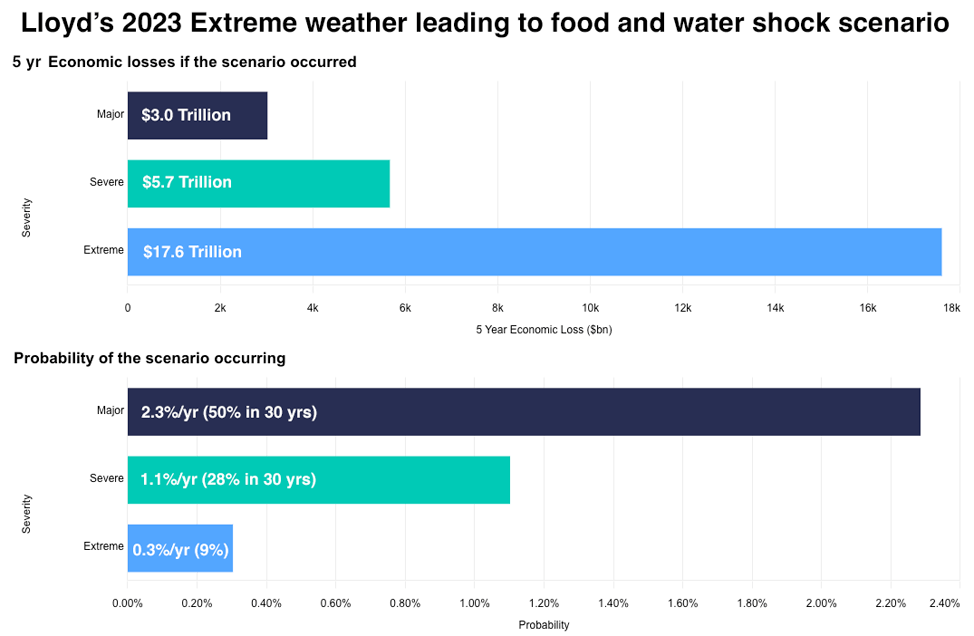
In my 2024 post, “What are the odds that extreme weather will lead to a global food shock?” I reviewed a 2023 report by insurance giant Lloyd’s, which modeled the odds of a globally disruptive extreme food shock event bringing simultaneous droughts in key global food-growing breadbaskets. The authors estimated that a “major” food shock scenario costing $3 trillion globally over a five-year period had a 2.3% chance of happening per year (Fig. 4). Over a 30-year period, those odds equate to about a 50% probability of occurrence — assuming the risks are not increasing each year, which, in fact, they are.
Figure 4. The 2023 ‘Extreme weather leading to food and water shock’ scenario from Lloyd’s. (Image credit: modified from this image)
Yet another concern for the U.S. is the risk of wholly unanticipated “black swan” extreme weather events that scientists didn’t see coming. As Harvard climate scientists Paul Epstein and James McCarthy wrote in a 2004 paper, “Assessing Climate Instability”: “We are already observing signs of instability within the climate system. There is no assurance that the rate of greenhouse gas buildup will not force the system to oscillate erratically and yield significant and punishing surprises.”
One example of such a punishing surprise was Superstorm Sandy of 2012, that unholy hybrid spawn of a Caribbean hurricane/extratropical storm that became the largest hurricane ever observed and one of the most damaging, costing $88 billion. And who anticipated that a siege of climate-change-intensified wildfires in western North America beginning in 2017, causing multiple summers of horrific air quality that would significantly degrade the quality of life in the West? Or the jet stream experiencing a sudden increase in unusually extreme configurations over the past 20 years, leading to prolonged periods of intense extreme weather over multiple portions of the globe simultaneously? As the late climate scientist Wally Broecker once said, “Climate is an angry beast, and we are poking at it with sticks.”
Just as concerning might be future “gray swan” events — extreme weather events that climate models anticipate could happen but exceed anything in the historical record. (“Gray swan” is an expression first coined by hurricane scientist Kerry Emanuel in his 2016 paper, “Grey swan tropical cyclones.”) Several potential gray swan events I have written about include a $1 trillion California “ARkStorm” flood, the potential failure of the Old River Control Structure during an extreme flood that allows the Mississippi River to change course, or a storm like 2015’s Hurricane Patricia, with winds over 200 mph, hitting Miami, Galveston/Houston, Tampa, or New Orleans. The risk of gray swan events is steadily increasing.
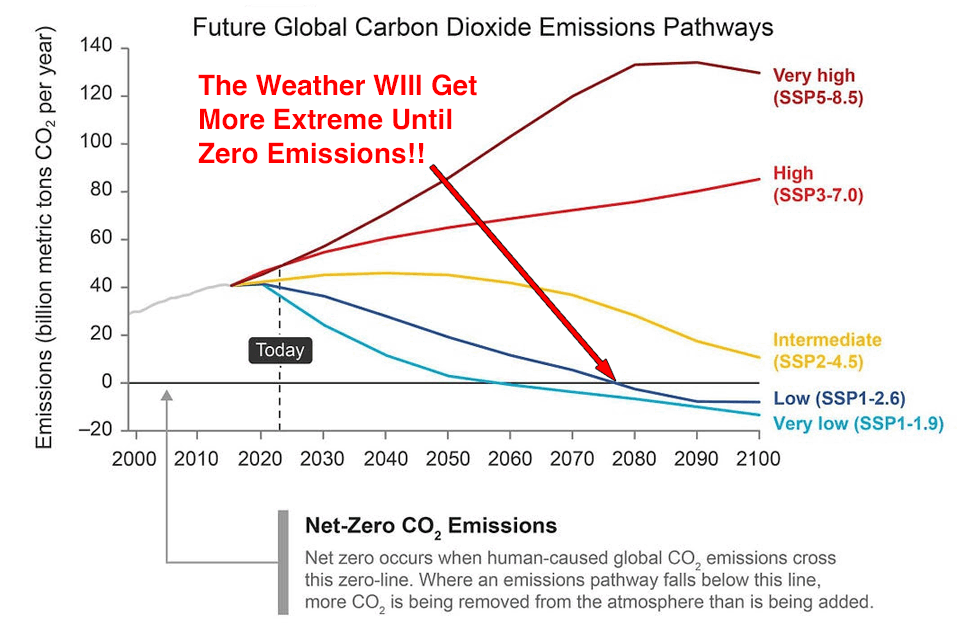
I’m often asked if the absurdly extreme weather events we’ve been experiencing recently are the new normal. “No!” I reply. “Heat is energy, so the energy to fuel more intense extreme weather events will increase until we reach net-zero emissions. At that time, the climate will finally stabilize at a new normal with a highly dangerous level of extreme weather events.”
Barring a series of extraordinary volcanic eruptions or a major geoengineering effort, even under an optimistic “low” emissions climate scenario, the earliest the climate might stabilize is in the mid-2070s (Fig. 5); thus, the weather will grow more extreme, on average, for at least the next 50 years. Considering that CO2 emissions have not yet peaked and may be following the “Intermediate” pathway shown below, there is considerable danger that the weather will still be growing more extreme when today’s children are very old early next century. But even when net zero emissions are reached, sea level rise will continue to occur at a pace difficult to adapt to, and the climate crisis will continue to intensify.
Figure 5. Wishful thinking: We’ve reached a “new normal” of extreme weather. In reality, the weather will keep growing more extreme until net-zero emissions are reached. Under the optimistic “Low” scenario presented here, that will not occur until the mid-2070s. (Image credit: 2023 U.S. National Climate Assessment, with annotation added)
The high probability that the weather will grow more extreme throughout the lifetime of everybody reading this essay means that we have to take seriously some very bad long-term threats. As I wrote in my 2022 post, “The future of global catastrophic risk events from climate change,” a global catastrophic risk event is defined as a catastrophe global in impact that kills over 10 million people or causes over $10 trillion (2022 USD) in damage. Since the beginning of the 20th century, there have been only three such events: World War I, World War II, and the COVID-19 pandemic. But climate change is a threat multiplier, increasing the risk of five types of global catastrophic risk events:
Drought
War
Coastal flooding from sea-level rise and land subsidence
Collapse of the Atlantic Meridional Overturning Circulation (AMOC), the powerful currents that circulate warm water in the tropical Atlantic Ocean to the Arctic and back (an August 2024 study gave a 59% chance of an AMOC collapse occurring before 2050)
The likeliest of these is a global catastrophic risk event from sea level rise, which is highly likely to occur by the end of the century. For example, a moderate global warming scenario will put $7.9-12.7 trillion dollars of global coastal assets at risk of flooding from sea level rise by 2100, according to a 2020 study, “Projections of global-scale extreme sea levels and resulting episodic coastal flooding over the 21st century.” Although this study did not take into account assets that inevitably will be protected by new coastal defenses, neither did it consider the indirect costs of sea level rise from increased storm surge damage, mass migration away from the coast, increased saltiness of fresh water supplies, and many other factors. A 2019 report by the Global Commission on Adaptation estimated that sea level rise will lead to damages of more than $1 trillion per year globally by 2050.
Furthermore, sea level rise, combined with other stressors, might bring about megacity collapse — a frightening possibility when infrastructure destruction, salinification of freshwater resources, and a real estate collapse potentially combine to create a mass exodus of people from a major city, reducing its tax base to the point that it can no longer provide basic services. The collapse of even one megacity might have severe impacts on the global economy, creating increased chances of a cascade of global catastrophic risk events. One megacity potentially at risk of this fate is the capital of Indonesia, Jakarta, with a population of 10 million. Land subsidence of up to two inches per year and sea level rise of about an eighth of an inch per year are causing so much flooding in Jakarta that Indonesia is constructing a new capital city in Borneo.
Is the #AMOC approaching a tipping point? Here's my take after researching this topic for over 30 years. Open access, peer-reviewed, in full colour & understandable for non-experts.https://t.co/gMu6Zw5mR7pic.twitter.com/mrgzO9NMxR
— Prof. Stefan Rahmstorf 🌏 🦣 (@rahmstorf) April 11, 2024
I also expect one or more climate change-amplified global catastrophic risk events from drought will occur this century. Mexico City, with a metro area population of 22 million, has suffered record heat over the past year, is in danger of its reservoirs running dry, and is drilling ever-deeper wells to tap an overtaxed aquifer. Though the city will muddle through the crisis now that the summer rains have come this year, what is the plan for 30 years from now, when the climate is expected to be drier and much, much hotter? Although Mexico City can greatly improve its water situation by fixing a poorly maintained system that has a 40% loss rate, it is unclear how the city will be able to survive the much hotter and drier climate of 30 years from now. And at least 10 other major cities are in a similar bind.
Technology can help us adapt to a hotter climate by providing air conditioning (if you are rich enough), but technological solutions to create more water availability when the taps run dry are much more difficult to achieve. I believe water shortages will drive a partial collapse of and mass migration out of multiple major cities 20-40 years from now, significantly amplifying global political and economic turmoil. For example, a 2010 study, “Linkages among climate change, crop yields and Mexico-US cross-border migration,” found that a 10% reduction in crop yields in Mexico leads to an additional 2% of the population emigrating to the United States.
In his frightening 2019 book “Food or War,” science writer Julian Cribb documents 25 food conflicts that have led to famine, war, and the deaths of more than a million people — mostly caused by drought. Since 1960, Cribb says, 40-60% of armed conflicts have been linked to resource scarcity, and 80% of major armed conflicts occurred in vulnerable dry ecosystems. Hungry people are not peaceful people, Cribb argues.
Though climate change itself is not accelerating faster than what climate scientists and climate models predicted, devastating impacts from climate change do seem to be accelerating. That is because the new climate is crossing thresholds beyond which an infrastructure designed for the 20th century can withstand. These breaches are occurring in tandem with an increase in exposure — more people with more stuff living in harm’s way — which is the dominant cause of the sharp increase in weather-disaster losses in recent years. It’s sobering to realize that the current U.S. insurance crisis has primarily been driven by increased exposure and foolish insurance policies that promote development in risky places — not climate change — and that climate change’s relative contribution to the crisis is set to grow significantly.
Accelerating sea level rise alone is sure to cause a massive shock to the U.S. economy; according to a 2022 report from NOAA, sea level along the U.S. coastline is projected to rise, on average, 10-12 inches (0.25-0.30 meters) in the next 30 years (2020-2050), which will be as much as the rise measured over the last 100 years (1920-2020). At this level, 13.6 million homes might be at risk of flooding by 2051, triggering a mass migration of millions of people away from the coast.
If we add to sea-level-rise-induced migration the additional migration that will result from climate change-intensified wildfires, heatwaves, and hurricanes, we are forced to acknowledge the reality that a nation-challenging Hurricane Katrina-level climate change storm has already begun in the U.S., one which has the potential to cause catastrophic damage. As I wrote in my June post, The U.S. is finally making serious efforts to adapt to climate change, there have been some encouraging efforts to prepare for the coming mass migration. But, as I argued in my follow-up post, The U.S. is nowhere near ready for climate change, we remain woefully unprepared for what is coming.
And my subsequent post, Can a colossal extreme weather event galvanize action on the climate crisis?, argues that we should not expect that any future extreme weather event or breakdown of the climate system will galvanize the type of response needed — we’ve already had at least 13 events since 1988 that should have done so, yet have not. Even if such an event did prompt strong, transformative change, it’s too late to avoid having life turned upside-down by climate change. It’s like we’ve waited until our skin started getting red before seeking shade from the sun, and we’re only now taking our first stumbling steps toward shade. Well, it’s a long hike to shade, and a blistering sunburn is unavoidable.
Given the unprecedented nature and complexity of this planetary crisis, there is huge uncertainty on how this drama may unfold; there are climate scientists who offer a more optimistic outlook than I do (for example, Hannah Ritchie, author of “Not the End of the World”), and those who are more pessimistic (James Hansen).
I suggest that you make the most of the current “calm before the storm” and prepare for the chaotic times ahead, which could begin at any time. I will offer my recommendations on how to do this in my next post in this series, “What should you do to prepare for the climate change storm?”
The urgency to rapidly deal with the climate crisis was succinctly summarized by the Intergovernmental Panel on Climate Change in its latest summary report: “There is a rapidly closing window of opportunity to secure a livable and sustainable future for all.”
But taking advantage of that window of opportunity is difficult because of human psychological and political realities. In climate scientist Peter Gleick’s 2023 book, “The Three Ages of Water,” he quotes Harvard’s E.O. Wilson, father of sociobiology, who perhaps said it best: “The real problem of humanity is the following: We have Paleolithic emotions, medieval institutions, and godlike technology. And it is terrifically dangerous, and it is now approaching a point of crisis overall.”
The boat of civilization has already hit multiple rocks along the rapids of climate change and is taking on water. Perilous rapids with even more dangerous rocks and waterfalls lie before us, but the course of our boat cannot be so easily altered to avoid the rocks, because of our Paleolithic emotions and medieval institutions. As a result, we may have only a few more years — or perhaps as long as 15 years — of relative normalcy in our everyday lives here in the U.S. before the approaching climate change storm ends our golden age of prosperity. But this “golden age” was made of fool’s gold, paid for with wealth plundered from future generations.
Figure 6. The North Rose window of Chartres Cathedral, France, 1190-1220 CE. The stained glass window shows scenes of Jesus Christ, the prophets and 12 kings of Judah. (Image credit: Walwyn) Licensed under Creative Commons BY-NC.
Though this essay has dwelt on some grim realities, I am optimistic that we will prevent climate change from becoming a civilization-destroying category 5-level catastrophe. But we must fight extremely hard to correct the course of our boat and not allow its inertia to carry us into the rocks that stud the rapids of climate change. This is not a task that can be accomplished in our lifetimes.
Susan Joy Hassol, the climate communication veteran who served as a senior science writer on three National Climate Assessments, put it this way in an interview with Yale Climate Connections contributor Daisy Simmons: “This is the fight of our lives, and it’s a multigenerational task. We need what’s been called ‘cathedral thinking.’ That is, the people who started working on that stone foundation, they never saw the thing finished. It took generations to get these major works done. This is that kind of problem. And we have to all do our part. The more I act, the better I feel, because I know I’m part of the solution.”
Actions we take now will yield enormous future benefits, and the faster we undertake transformative actions to adapt to the new climate reality, the less suffering will occur. The Global Commission on Adaptation says that “every $1 invested in adaptation could yield up to $10 in net economic benefits, depending on the activity.” We should work to build our cathedral of the future with the thought that each action we take now will multiply by a factor of 10 in importance in the future.
An excellent @nytimes article on rapid growth of wind, solar, & EVs, including factories, in the US. Costs are below fossil and nuclear (see graphs). Reasons why, graphs with how fast, pictures of it happening. https://t.co/uglQDnE97tpic.twitter.com/oIpLmlp28v
But some of the hardest work has been done: The cornerstone of this cathedral of the future has already been laid. The clean energy revolution is here and has progressed far more rapidly than I had dared hope. Passage of the 2021 Bipartisan Infrastructure Law and 2023 Inflation Reduction Act has been instrumental in getting this cornerstone laid. Solar energy is now the cheapest source of energy in world history, and the costs of wind power and battery technology have also plummeted. Two recent reports were optimistic that climate-warming carbon dioxide emissions had finally peaked in 2023, and GDP growth has decoupled from carbon dioxide emissions in recent years, giving hope that economic growth can still occur without making the planet hotter.
At its heart, the root of the climate crisis is humanity’s spiritual inharmoniousness: We overvalue the pursuit of material wealth and we worship billionaires but undervalue growing more connected to our spiritual selves and acting to preserve and appreciate the natural systems that sustain us. Making yourself more peaceful and loving through quiet spiritual pursuits and time spent in nature will help counteract the anxiety and fear sparked by the climate crisis. But in tandem with your increased peace must come a righteous anger to “throw the money changers out of the temple” and topple the might of the fossil fuel industry and its enablers.
So put your shoulder to an oar! Help us power the boat of civilization through the rapids of climate change. All of humanity shares the same boat, and you have the opportunity to make your own unique and valuable contribution to the effort.
We're loving this exercise created by @AyanaEliza & shared by @allwecansave for figuring out what you should do about the climate crisis:
Make a Venn diagram and notice what's at the center: 1. What brings you joy? 2. What is the work that needs doing? 3. What are you good at? pic.twitter.com/m0uVd6ctug
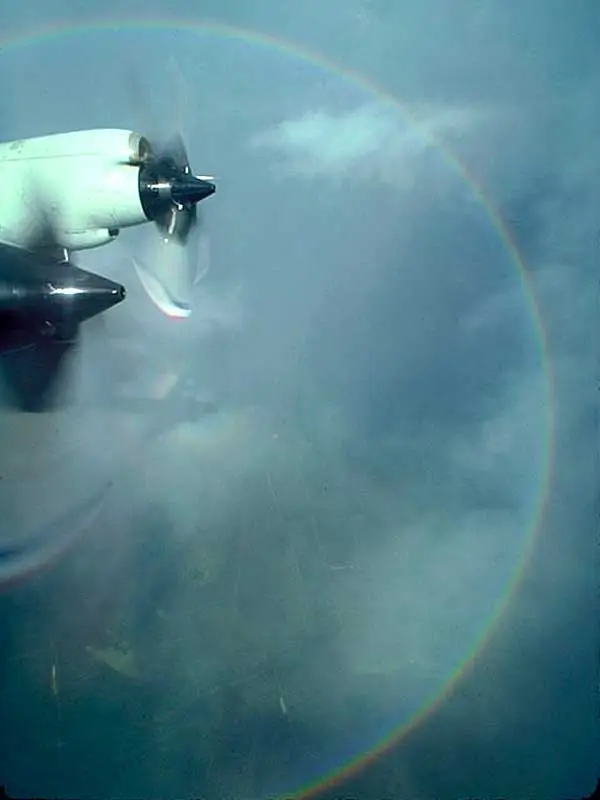
Figure 7. A portion of a 360-degree rainbow seen from a NOAA P-3 hurricane hunter aircraft as it flew through a rain shower near South Florida in 1988. (Image credit: Jeff Masters)
As promised, here is the rainbow at the end. It’s the intro image from my first and last Weather Underground blog posts, “The 360-degree Rainbow,” and “So long, wunderground!” My unique and valuable contribution to building our new cathedral has not yet reached the end of the rainbow, for a rainbow has no end — it is a full circle. One just has to fly high in a rainstorm where the sun is shining to see it.
I will continue to make my voice heard as long as climate science-denying politicians, corporations, media pundits, and wealthy individuals continue to row the boat of civilization into the rocks of climate-change catastrophe. I encourage those of you who have learned about extreme weather and climate change from me to do the same. To get started, learn from one of the best communicators in the business, climate scientist Katherine Hayhoe:
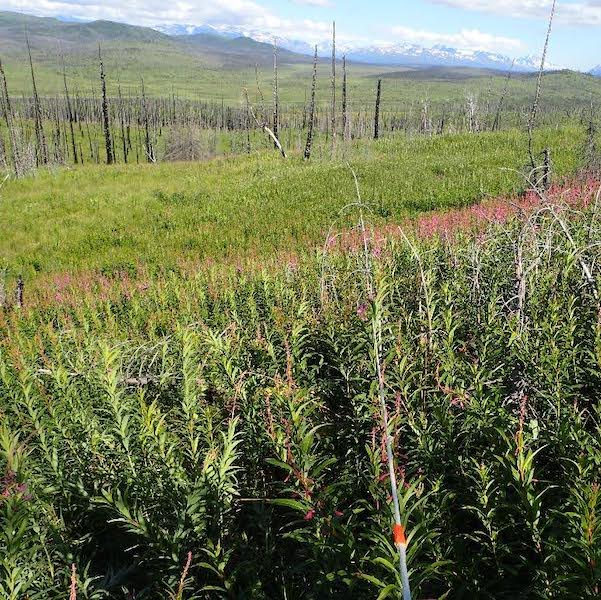
A grassland in an area formerly dominated by boreal forest. Photo credit: Dawn Magness, U.S. Fish & Wildlife Service.
Click the link to read the article on the NOAA website (Wynne E. Moss):
August 5, 2024
Alaska’s boreal forests are declining, as increasing drought stress and fire kill off the next generation of conifer trees. Where boreal forest has disappeared, new plant communities—like grasslands and aspen forests—have begun to take its place.
Elsewhere, in the southeastern United States, droughts have decimated saltmarsh vegetation, turning saltmarshes into mudflats or open water.
In the Southwest, pinyon pines have experienced widespread die-offs during extreme droughts. Meanwhile, junipers and grasses have expanded.
Across the globe, natural resource managers now face the reality of stewarding such landscapes with vastly different species and functions. These are just three examples of drought-triggered ecological transformation, a growing phenomenon that is highlighted in a new paper in the journal BioScience.
Research on ecological drought demonstrates that while many species are tolerant of water shortages, others may experience declines, with recovery taking years or even decades after drought ends. The new study, funded by the U.S. Geological Survey (USGS) National Climate Adaptation Science Center, discussed an even more extreme possibility—that some ecosystems will never recover from drought. Instead of returning to pre-drought conditions, some ecosystems may undergo transformation, or a shift into a new, persistent state, dominated by different forms of vegetation.
Ecosystem transformations represent a major challenge for natural resource agencies. Those caused by drought can be particularly rapid and surprising. To aid preparedness, researchers synthesized science on the mechanisms involved in drought-triggered transformation. Their work provides a broad overview of this phenomenon and highlights three major points about drought’s ability to cause long-term ecological change:
1. Drought-triggered transformations are happening across the globe.
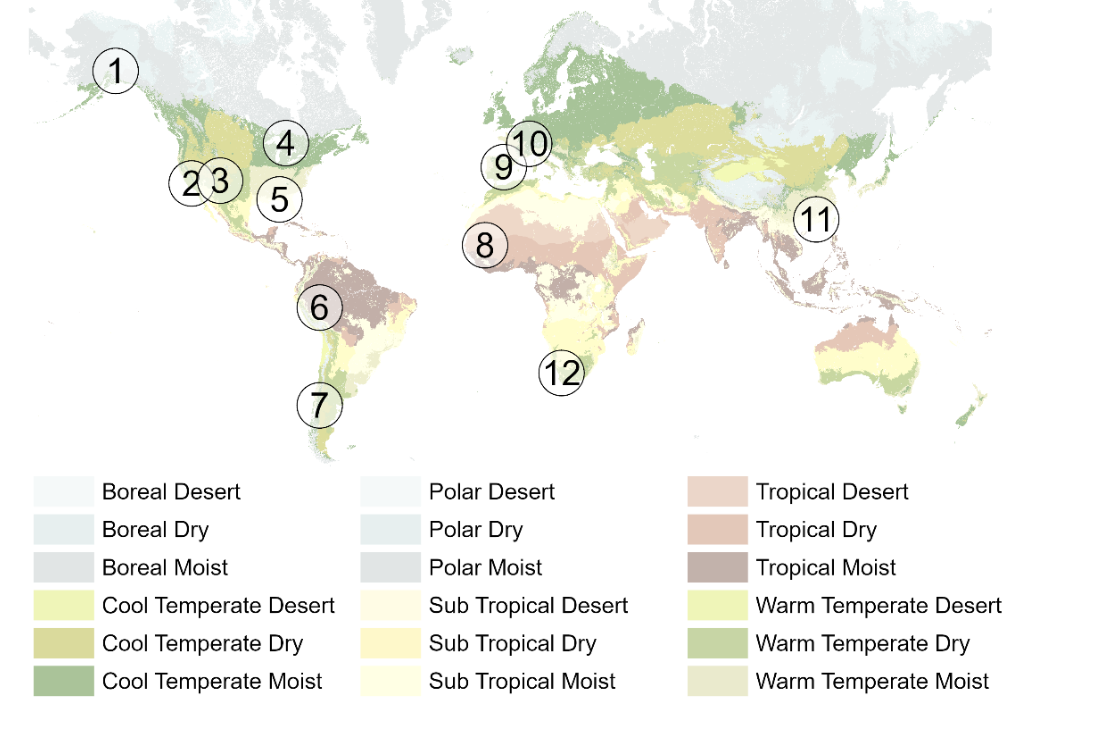
The paper highlights a dozen examples of transformations triggered by drought. They occur in many types of ecosystems, including temperate and tropical forests, grasslands, and woodlands. This suggests the risk of transformation is not limited to arid ecosystems or forests, which have received the bulk of scientific attention.
2. Shifting drought regimes are eliciting more extreme ecosystem responses.
As the climate warms, many regions of the planet are expected to experience novel and more extreme drought regimes. This is true even where annual precipitation is increasing. Certain forms of drought, including hotter droughts, snow droughts, and flash droughts, are becoming more common. Plant communities in a location may not be adapted to the changing character of drought, which may have greater impacts and exacerbate the risk of transformation.
3. Drought interacts with stressors that reduce ecosystem resilience.
Increasing drought severity is not the only factor causing transformation. The ability of ecosystems to recover from drought is also changing in the 21st century. Stressors like habitat loss, invasive species, and fire are increasingly likely to occur alongside or after drought and disrupt recovery after drought. Although managers have little control of the severity of drought, they may be able to reduce the likelihood of transformation by addressing these stressors.
Twelve locations where drought has caused a significant and permanent change in ecosystem composition. Examples occur across an aridity gradient and involve multiple different mechanisms. Figure modified from Moss et al. 2024. Base Map: World Terrestrial Ecosystems 2020.
The Next Challenge: Preparing for the Future
Translating this information into readiness is the next challenge. Many managers are already aware that climate change can trigger large shifts in the systems they manage. But they may not be aware that these changes could happen quite rapidly—after the next severe drought. Syntheses such as this can help managers develop both proactive and reactive strategies to respond to drought. A better understanding of the mechanisms involved also aids in developing predictive science to tell us what systems are most vulnerable. However, some aspects of ecosystems are just not predictable. Rather than aiming to perfectly predict the future, managers could prepare for a range of potential outcomes and consider how their actions could steer the recovery of ecosystems towards preferred conditions after drought.
Denver’s City Ditch is celebrating its 150th anniversary in 2017. Learn about the Ditch’s important role in Denver’s history and how Denver Water helps out.
August 14, 2024
Long before Denver was established, residents of the area drank water directly from the South Platte River and Cherry Creek.
But the surface wells and buckets of water used as a delivery system were not an adequate means of providing the one thing these early travelers needed for survival: water. Irrigation ditches were the next step forward for the growing population spurred by the city’s Gold Rush of 1859.
But the surface wells and buckets of water used as a delivery system were not an adequate means of providing the one thing these early travelers needed for survival: water. Irrigation ditches were the next step forward for the growing population spurred by the city’s Gold Rush of 1859.
Crews work on City Ditch in this 1935 photo. Photo credit: Denver Water
“City Ditch first started flowing in 1867,” said Sarah McCarthy, Washington Park community member. “It’s a huge part of the Denver community.”
City Ditch was the vision of the Capitol Hydraulic Company, which saw an opportunity to bring more water to Denver from the South Platte River system, explained Holly Geist, Denver Water’s records management analyst.
“The Kansas Territorial Legislature allowed the company to build a ditch and use water for agricultural, mining, mechanical and city purposes,” Geist said.
The company’s first attempt to build the ditch failed in the early 1860s in part because the slope wasn’t high enough for water to flow to Denver.
According to Geist, surveyor and engineer Richard Little — the man for whom Littleton is named — was brought in to build a new flow path for the ditch that was farther up the river, closer to Waterton Canyon. Businessman John W. Smith was brought in to complete building the ditch and water began flowing into the city in 1867.
“There really was nothing in the area but scrub where Washington Park is today,” McCarthy said. “The ditch brought water for farms and homes and helped transform City and Washington parks into the urban gardens they are today.”
The city of Denver took control of the ditch in 1875, and by 1898 nearly all of the ditch within city limits had been placed in pipes. Denver Water acquired the ditch in 1918.
Community members “christen the monument with water balloons” during a celebration at Washington Park in Denver on Aug. 12, for the 150th anniversary of City Ditch. Photo credit: Denver Water
City Ditch continues to flow today, but in two sections. The southern section is managed by the city of Englewood and the northern section by Denver Water.
Denver Water’s portion of the open ditch can still be found flowing through Denver’s Washington Park. City Ditch’s primary function now is to irrigate and fill the lakes in Washington and City parks.
In an effort to conserve more river water supplies, Denver Water began using water from its Recycling Plant in 2004 for the northern section of the ditch. Stormwater also flows through it. Washington Park and the open section of City Ditch were listed on the National Register of Historic Places in 1976 and designated a Denver Landmark in 1977.
McCarthy hopes people will visit a monument at Washington Park that honors John W. Smith and the people who helped build City Ditch. The monument is located south of the playground near Smith Lake.
“If John W. Smith were here today, he’d be very proud that City Ditch is still supplying water that’s vital to our community,” McCarthy said. “We hope the anniversary raises awareness about the ditch and its history and increases our community’s pride in the city.”