The science behind the city of San Diego’s multibillion dollar effort to recycle wastewater into drinking water.
Try driving up Morena Boulevard in Mission Valley, or north through Bay Park and Clairemont, and chances are you’ll be bottlenecked by an army of orange traffic cones demarking a huge construction project that will consume northern San Diego for years to come.
The city of San Diego is currently building a massive wastewater-to-drinking water recycling system – but it must tear up the streets to do it. The new pipe route tunnels from Morena Pump Station near the San Diego International Airport, then 10 miles north to University City and then another 8 miles to Miramar Reservoir, the final stop for all our transformed toilet water.
But wait – why is San Diego drinking its own sewage in the first place? And how is that even possible?
That’s why San Diego is very proud of its recycling project, called Pure Water, which will turn 42 million gallons of wastewater into 34 million gallons of drinking water per day once the first phase is complete around 2027. But the project is actually a compromise the city made after years of wrangling over sewage, of which unlike drinkable water, the city often has too much.
A bit of history: In the 1930s, San Diego dumped its sewage into San Diego Bay which began to corrode the hulls of Navy ships and drove tourists away. In 1963, the city, with support from neighboring cities, opened the Point Loma Wastewater Treatment Plant which cleaned wastewater one way, but soon fell short of what the 1972 Clean Water Act required.
San Diego was on the hook to make billions of dollars in upgrades to Point Loma, even though it argued dumping treated wastewater should be OK because, as the saying goes, “the solution to pollution is dilution.” Congress agreed to give the city a pass on the Clean Water Act requirements for a decade until it failed to reapply for a waiver, setting off a wave of litigation. That’s about the time San Diego offered to do something different: Make its wastewater drinkable.
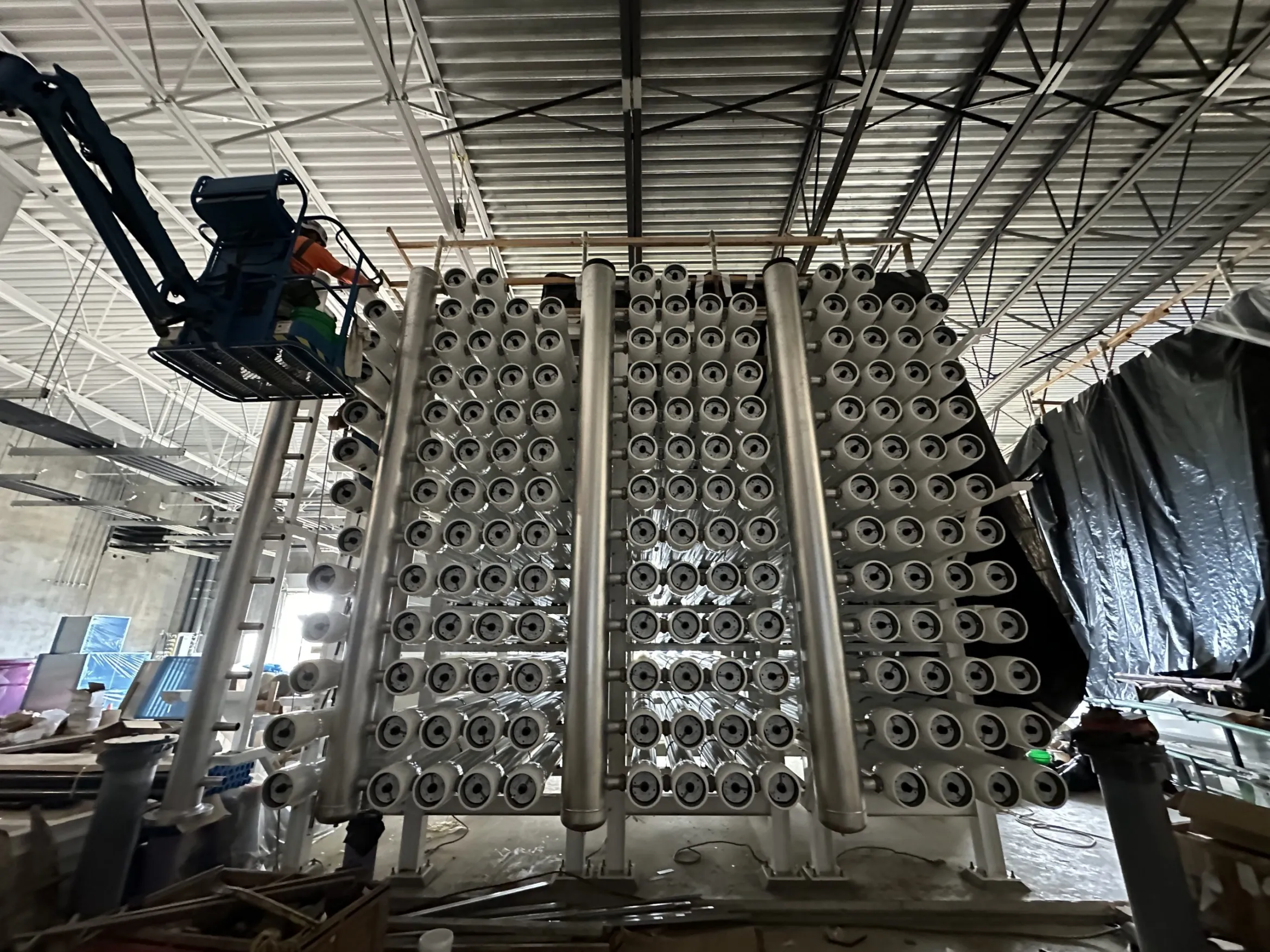
Filtration membranes at the city of San Diego’s new wastewater-to-drinking water facility on June 11, 2024. / MacKenzie Elmer
That seemed to settle qualms from environmentalists angered by Point Loma’s ocean pollution and the feds that were upset over continued Clean Water Act waivers. And here we are.
Pure Water officials told me the water produced on the other side of the multi-step recycling process is so clean, the city must add minerals back in at the end. And there’s the added bonus of San Diego having to buy less imported water – one of the city’s biggest monthly bills. Pure Water is supposed to provide over half the city’s water needs when it’s complete.
So instead of billions in upgrades to Point Loma, the city’s spending billions on Pure Water, about $1.5 billion just for the first of its two phases.
Beyond the miles of new pipeline and pumps yet to be built to round out the system, an expansion of the existing North City Water Reclamation Facility in Miramar is the heart of the purification process. Juan Guerreiro, the director of the city of San Diego’s Public Utilities Department, gave me and our social media journalist, Bella Ross, a tour of the construction.
The North City reclamation plant, and its sister plant in South Bay, were built about 25 years ago to divert some of the waste being sent to Point Loma, clean it, and use it for irrigation. The massive expansion effort is underway while the North City plant is still doing its 24/7 job.
Juan Guerreiro, the director of the city of San Diego’s Public Utilities Department, points to the new Pure Water North City facility under construction on June 11, 2024. / MacKenzie Elmer
“It’s like open heart surgery. You’re running the plant producing recycled water while it’s being expanded,” Guerreiro said.
That plant already strains out all the solids, adds bacteria to eat up bad gunk, chlorinates and then runs water through coal filters – like a big Brita filtration system. You could probably drink the end product, but it wouldn’t pass California’s drinking water standards. Pure Water adds five extra treatment steps, including shooting every water molecule through a filter membrane with pores that are 500,000 times smaller than a human hair.
After all that energy-intensive cleaning, the city dumps the purified water in the Miramar Reservoir where San Diego stores much of its untreated drinking water already. But wait, isn’t it kind of a shame to dump that extra-purified water into a reservoir filled with yet untreated drinking water, then treat it again?
In an abundance of caution, California requires the treated wastewater-turned-drinking water be stored in an “environmental buffer” like a reservoir or an underground aquifer, instead of pumping it straight to public taps. It’s a kind of “just in case” measure for a lot of these new recycling projects. Orange County built a similar wastewater-to-drinking water system in 2008 that injects the treated water into underground aquifers. San Diego doesn’t have many aquifers so the next best buffer is the reservoir.
City of San Diego digging a megatrench to transport treated water from its new Pure Water facility on June 11, 2024. / MacKenzie Elmer
Building Pure Water is a massive undertaking that involves building what officials called a “mega trench” artery connecting the North City Reclamation facility and the new Pure Water facility underneath Eastgate Mall road. But the city is also building a Pure Water education center on site to cure any skeptics of their suspicion of the process.
Now, students, don your lab goggles and learn how Pure Water is done:
How it works now: Someone in the city of San Diego flushes their toilet. The waste flows through pipes in a building then out to the street into a large sewer main. Eventually it hits a pump station which shoots the sewage to its traditional final destination: The Point Loma Wastewater Treatment Plant.
How it will work once Pure Water is complete: Everything is the same at the start, except a new pump station off Morena Boulevard and north of Interstate 8 will be responsible for diverting 32 million gallons of wastewater away from Point Loma and sending it northward to the reclamation plant.
Workers erect a massive retaining wall at the city of San Diego’s new Pure Water facility on June 11, 2024. / MacKenzie Elmer
Once it makes its miles-long journey to the plant, the sewage moves through the first steps of a typical treatment process, starting with what’s called primary. That phase gets rid of the most obvious gross stuff. The water sits still in a settling tank so fats, oils, grease and plastic float to the top where that gunk is skimmed off and sent to disposal. Organic solids (fecal matter, etc.) sink to the bottom and separate from the water.
That water is not ready to drink yet. Its next stop is secondary treatment, where the wastewater moves into huge concrete bathtubs and pumped through with air and microbes that eat up a lot of the organic stuff still floating around. The microbes burp out ammonia, carbon dioxide gases and water. If that bacteria begins to die during this process, it’s a signal to treatment plant staff that something toxic and unusual may have been illegally dumped into the sewage system. (That happened once back in 2016 when a port-a-potty company called Diamond Enviornmental Services got caught dumping its outhouse contents into the city’s wastewater system. The FBI raided the company’s offices. Some of its executives got prison time.)
The wastewater moves to more settling tanks where that well-fed bacteria clump together, die and sink to the bottom. Cleaner water remains at the top inch of the surface, which then flows out onto the city’s prized Pure Water, five-step purification process – and reportedly exceed — drinking water standards.
The reclaimed water first goes through ozone and biologically active carbon filtration. Any pharmaceuticals or personal care products one might worry survived the primary and secondary treatment get broken down by ozone and become food for additional biology in the carbon filter. Ozone, when dissolved in water, turns into a kind of biocide that kills bacteria, parasites, viruses and other bad stuff.
By this stage, the water is ready to be shot at high speed through a membrane filter, which looks like a large PVC pipe filled with straws that contain ultra-small pores. The idea is any microscopic grime or grit still floating around won’t be able to make it through those pores.
Juan Guerreiro, director of the city’s Public Utilities Department, holds a piece of the new Pure Water filtration system at the North City Water Reclamation Facility in Miramar. Ally Berenter and Anna Vacchi Hill with the city of San Diego on June 11, 2024. / MacKenzie Elmer
Next, the water goes through reverse osmosis, another kind of filter with even smaller pores, about the size of a water molecule. This helps remove any excess salts or minerals. “The water that comes through reverse osmosis is some of the cleanest we’ve seen compared to distilled water quality,” said Doug Campbell, the assistant director of the city’s Public Utilities Department’s wastewater branch. It cleans the water so well, Campbell said, minerals must be added back to the water later.
A filtration membrane that’s part of the city of San Diego’s wastewater-to-drinking water system called Pure Water on June 11, 2024. / MacKenzie Elmer
There’s one more step, the water gets flashed by ultraviolet light at the most lethal wavelength for germs or microorganisms. “UV light is really good at harming organic things. So if any viruses, parasites or bacteria make it through the other steps, then the UV light will quickly destroy it,” said Campbell said.