#OgallalaAquifer Summit: Collaboration on the High Plains — NOAA

Click the link to read the article on the NOAA website:

December 11, 2024

A patchwork of green circles dot the landscape across the High Plains of the United States, their green grid created by sprinklers irrigating with well water pumped from the Ogallala Aquifer. Relying heavily on the Ogallala Aquifer, farmers and livestock growers in this semi-arid region produce nearly one-fifth of the wheat, corn, cotton and cattle produced in the United States as of 2011.

The importance of the Ogallala Aquifer and the communities it supports cannot be overstated. Irrigation of crops significantly boosts productivity and supports the socioeconomic lifeblood of this region. Agricultural sales from the Ogallala Aquifer region contribute billions of dollars to local economies and national gross domestic product. 

However, the Ogallala Aquifer is in trouble. Groundwater measurements in the Ogallala Aquifer show ongoing declines in aquifer water quality and quantity. The shared water resource can be managed sustainably, but this will require cooperation by water users within the region and support from those outside of the region who also benefit from it.

In March 2024, NOAA’s National Integrated Drought Information System (NIDIS) and the Irrigation Innovation Consortium at Colorado State University partnered with the Kansas Water Office and others in the region to host the third Ogallala Aquifer Summit.

The Summit brought together more than 230 crop and livestock growers, scientists and technical experts, water managers, governments (local, state, and federal), and other partners to work to address water management challenges within the region. Summit opening remarks were delivered by Kansas Governor Laura Kelly and U.S. Senator for Kansas Jerry Moran.

“Without water there is no agriculture, and without agriculture there are no rural communities in the High Plains,” said Kansas Senator Jerry Moran. “The future of the High Plains region depends on leadership to preserve water.”

This third Summit built on successes of past Summits led in 2021 and 2018 by the Irrigation Innovation Consortium. Key takeaways from the Summit were summarized in the recently published 2024 Ogallala Aquifer Summit Summary Report. The Summit program was split among four sessions, each devoted to some aspect of the theme, “Building Trust, Mobilizing Collaboration.”

Session 1: Applying Science and Data for Regional Agricultural Sustainability

The opening session focused on the science of the hydrology and climatology of the region with the goal of building trust and collaboration between scientists, who are working to understand the dynamics of the Aquifer, and business leaders and decision-makers, who are implementing the knowledge being produced. Presenters highlighted the value seasonal climate predictions provide to manage risks to the community, as well as tools to support decisions to withdraw groundwater. 

Session 2: Harnessing the Power of Peer Networks

The next session focused on harnessing the power of peer networks to bring people together to share successes and lessons learned. This included a presentation about the successes of the Master Irrigators program in some states, and successes in individual regions and farms when solutions are implemented.

Session 3: Mobilizing Supply Chain Partners

The second day opened with a focus on the nationwide and global risk presented by Ogallala water challenges. Water scarcity in this region impacts local, national, and global economies, and even national security, because, as one panelist pointed out, “food security is national security.” Producers underscored the need to recognize the economic value of water in approaches to address these risks. 

Subsequent discussions focused on mobilizing supply chain partners to support agricultural sustainability within the region. Sustainable water use in the Ogallala not only impacts local farmers within the region, but major corporations from across the country and the world who rely on Ogallala water. Customers at grocery stores across the country buy bread or beef that was grown from Ogallala water. Northern Texas alone produces 20% of U.S. cotton using water that is drawn from the Ogallala Aquifer. This cotton is being worn as t-shirts or blue jeans by millions of people around the world. Corporations who rely heavily on production in the High Plains regions are invited to be part of the ongoing conversation about sustainable use, hence the importance of mobilizing supply chain partners.

Session 4: Building the Future We Want: Thinking and Acting Intergenerationally

The final session focused on building intergenerational collaboration. Thinking and acting intergenerationally is about making sure there is a future for the next generation in the region. Participants discussed their desire for flexible and voluntary tools to manage the aquifer and a need for more educational opportunities to create future leaders and a skilled workforce for the next generation’s water. 

The conference ended with a capstone session that asked Summit participants, “What do you hope to be true in three years?” This 90-minute conversation helped articulate the potential next-steps to arrive at real progress in the region. Participants hoped to return to the next Summit having made strides in communicating and collaborating further, developing and implementing new tools, and broadening educational and research opportunities in the region. 

Ogallala aquifer via USGS

#Colorado has tens of thousands of abandoned hardrock mines. Congress just passed a bill to help more groups clean them up — Colorado Public Radio

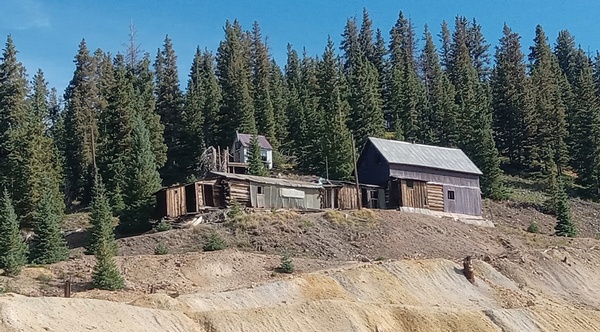
The Brooklyn Mine, northwest of Silverton, is among the worst polluters in the Animas River watershed. An innovative restoration project successfully planted 900 trees on a mine waste rock pile to help repair the landscape./ Courtesy of U.S. Forest Service

Click the link to read the article on the Colorado Public Radio website (Caitlyn Kim). Here’s an excerpt:

December 10, 2024

The U.S. House on Tuesday approved the Good Samaritan Remediation of Abandoned Hardrock Mines Act, via voice vote. The bill passed the Senate in July and now goes to President Joe Biden’s desk. The bill sets up a pilot program under the Environmental Protection Agency to allow “good Samaritans” to clean up and improve water quality around abandoned hard rock mine sites without being subject to liability for pre-existing pollution…

Colorado Sens. John Hickenlooper and Michael Bennet are original co-sponsors of the Senate bill, while Colorado Reps. Brittany Pettersen, Joe Neguse, Lauren Boebert, Jason Crow and Yadira Caraveo co-sponsored the House version. Hickenlooper said the bill is important for all Mountain West states because current liability rules make clean up work too risky.

“If someone, a good Samaritan, comes along and wants to help try to fix [an old mine leaking pollution] and they’ve got a great idea … they can’t do it because the moment they touch anything to do with that pollution, they own it. In other words, they can be sued.” Hickenlooper said. “This is all about trying to let people clean up the mess that people made a century ago without being liable for it.”

[…]

It’s estimated there are as many as 140,000 abandoned hardrock mines in the U.S., with about 23,000 in Colorado. The legislation sets up 15 pilot projects over seven years. Ty Churchwell, mining coordinator for Trout Unlimited, said passage of this bill is “a big, big deal.” The non-profit is one of only a few that do this kind of work, with much of it done by state mine remediation agencies.

Historic water rights settlements yet to deliver lifeline to Navajo Nation — The Navajo Times #ColoradoRiver #COriver #aridification #CRWUA2024

Navajo Reservation map via NavajoApparel.com

Click the link to read the article on the Navajo Times website (Donovan Quintero). Here’s an excerpt:

December 15, 2024

At the Colorado River Water Users Association conference last week in Las Vegas, Nevada, representatives from the 25th Navajo Nation Council, the Navajo Nation Department of Justice, the Office of the President and Vice President, and the speaker’s office outlined the significant water challenges facing Navajo communities and the opportunities presented by ongoing water rights settlement agreements. Crystal Tulley-Cordova, a hydrologist with the Navajo Nation Department of Water Resources, stated at the conference that the tribe is committed to safeguarding water resources across its 27,000-square-mile Navajo Nation, which spans Arizona, Utah, and New Mexico…Tulley-Cordova explained that the Navajo Nation has historically relied on groundwater, which can take thousands of years to recharge…

Three key water rights settlement acts are critical to the Navajo Nation’s water future, Tulley-Cordova stated. The Northeastern Arizona Indian Water Rights Settlement Act of 2024, the Navajo Gallup Water Supply Act of 2023, and the Navajo Nation Rio San José Stream System Water Rights Settlement Act of 2024 provide opportunities to secure water rights and avoid costly litigation…

The CRWUA’s 2024 report highlighted significant developments and challenges in water management, particularly emphasizing the efforts of the Ten Tribes Partnership. The partnership, established in 1992, includes tribes with federally recognized water rights in the Colorado River Basin, such as the Navajo Nation, the Ute Indian Tribe, and the Southern Ute Indian Tribe, which collectively hold rights to approximately 20% of the river’s mainstream flow…The Navajo Nation was a focal point of the report, with updates on key infrastructure projects such as the Navajo-Gallup Water Supply Project. The initiative, supported by federal legislation, will deliver reliable drinking water to underserved Navajo communities by 2029. Recent advancements include the awarding of a $267 million contract for the San Juan Lateral Water Treatment Plant, one of the project’s cornerstone facilities. The report also highlighted innovative collaborations, such as the Jicarilla Apache Nation’s efforts to use its settlement water rights creatively. By leasing water to the state of New Mexico, the tribe supported endangered species preservation while funding essential water delivery projects. These collaborative approaches demonstrate how tribal water rights can address both ecological and human needs.

Voices: We represent the Upper Basin states, and it’s time we manage the #ColoradoRiver we have — not the one we want — Brandon Gebhart, Estevan Lopez, Becky Mitchell and Gene Shawcroft (The Salt Lake Tribune) #COriver #aridification #CRWUA2024

Colorado River “Beginnings”. Photo: Brent Gardner-Smith/Aspen Journalism

Click the link to read the article on The Salt Lake Tribune website (Brandon Gebhart, Estevan López, Becky Mitchell and Gene Shawcroft). Here’s an excerpt:

December 6, 2024

As representatives of the Upper Basin states of Colorado, New Mexico, Utah and Wyoming, we are committed to a fair, common sense, data-driven approach that balances the needs of all stakeholders. Our approach is to adapt Colorado River operations and uses to the annual available water supply using the best available science and tools while we continue to meet our responsibilities and commitments to our communities, our states and the Basin. We are planning for and will manage the river we have, not the river we want…More than 90% of the river comes from the annual snowpack, which occurs almost entirely in the Upper Basin. Warming temperatures are making river flows increasingly volatile and uncertain and have intensified since the Colorado River Compact was signed in 1922. Getting the next set of Colorado River operating rules right demands that we manage uses within the river we have.

Udall/Overpeck 4-panel Figure Colorado River temperature/precipitation/natural flows with trend. Lake Mead and Lake Powell storage. Updated through Water Year 2024. Credit: Brad Udall

Annual hydrologic variability forces the Upper Basin states to manage uses within the means of the river, which hinders our ability to develop our full compact apportionment. Each year, water managers across the Upper Basin shut off water users when flows are low, adapting uses to the available supply. This is painful to individual Upper Basin water users but is necessary to continue to manage our uses consistent with actual hydrology and the rights and obligations under the 1922 Compact.

As part of the negotiations to establish post-2026 operating rules, we have offered an Upper Division States Alternative, a common-sense, data-driven solution to the Colorado River’s challenges. Our proposal benefits the entire basin by aligning uses and operations with actual water supply and includes voluntary conservation in the Upper Basin. Reclamation has released a description of potential Colorado River water management alternatives to guide development of the post-2026 Colorado River operating rules. We believe the Upper Basin Alternative is within the range of options outlined by Reclamation…Climate change is already here in the Colorado River Basin. Adapting to actual hydrologic conditions, which the Upper Basin does every year out of necessity, can provide a model for equitable and sustainable river use across the entire system. With the current guidelines expiring in 2026, our shared responsibility must be to prioritize the Colorado River’s future by aligning water use with the available supply. It’s time to live within the means of the river we have.

#ColoradoRiver talks tackle users’ competing water demands — The Las Vegas Sun #COriver #aridification #CRWUA2024

Map of the Colorado River drainage basin, created using USGS data. By Shannon1 Creative Commons Attribution-Share Alike 4.0

Click the link to read the article on the Las Vegas Sun website (Ilana Williams). Here’s an excerpt:

December 8, 2024

Sessions at this year’s conference, themed “Piecing the Puzzles Together,” were designed to help fit together the various competing interests among Colorado River water users, including tribal, municipal, agricultural, conservation and environmental concerns, said Gene Shawcroft, president of the Colorado River Water Users Association. Climate change and explosive growth in the region have introduced new variability and instability that was not affecting the river when the 1922 Colorado River Compact was signed and require discussions to craft a solution…Water stakeholders across the basin have a responsibility to solve the puzzle for the people of the American West, Shawcroft said. There is also a responsibility to manage the river in an efficient way to ensure its future…

The 1922 Colorado River Compact is still enforced, but the operating guidelines are being negotiated, said Jennifer Pitt, the Colorado River program director at the National Audubon Society. The long-term guidelines, referred to as Post-2026 Operations, will revisit the 2007 Interim Guidelines and other operating agreements that expire in 2026, including drought contingency plans and Minute 323, which allows Mexico to continue to store water in Lake Mead, according to the association’s 2023 report.

#ColoradoRiver states fear a long legal battle as talks falter over shortage rules — AZCentral.com #COriver #aridification #CRWUA2024

Udall/Overpeck 4-panel Figure Colorado River temperature/precipitation/natural flows with trend. Lake Mead and Lake Powell storage. Updated through Water Year 2024. Credit: Brad Udall

Click the link to read the article on the AZCentral website (Brandon Loomis). Here’s an excerpt:

December 6, 2024

State water officials lobbed pointed criticisms at each other on Thursday during successive programs at the Colorado River Water Users Association conference. J.B. Hamby, California’s lead river negotiator, said his state and Arizona won’t keep reducing what they take from the river simply to watch upstream states increase their diversions “and building pipelines to more golf courses.” Brandon Gebhart of Wyoming responded by calling such positions “saber-rattling,” “distractions” and “bullshit.”

[…]

After listening to the back-and-forth on Thursday, a former Interior secretary and Arizona governor said the talks may require a high-level mediator appointed by the White House. That’s what it took to get the states to agree to their initial water-sharing compact in 1922, Bruce Babbitt told The Arizona Republic, and it would help now…Officials from Arizona have begun discussing the option of triggering a “compact call” if that happens, referring to language in the compact that they believe should cause the Interior Department’s Bureau of Reclamation to enforce the compact on behalf of the Lower Basin. Central Arizona Project board members began the week by passing a resolution calling on federal officials to analyze the option of such a compact call…The Rocky Mountain states upstream from Lees Ferry say they already take their share of cuts in low-snow years. Instead of reducing releases from the big reservoirs that the Lower Basin uses, the Upper Basin has to cut back according to what’s flowing down headwater streams. Those reductions average more than a million acre-feet a year, according the New Mexico’s [Estevan Lopez]. The upper states have never approached using their full half, New Mexico compact Commissioner Estevan Lopez said, and aridification has force reductions from a high point of 5.1 million acre-feet.

“It’s highly likely that we in total won’t be able to develop much more than that based on hydrology,” he said.

#ColoradoRiver Basin tribes enter new water agreements with outgoing Biden administration — KJZZ #COriver #aridification #CRWUA2024

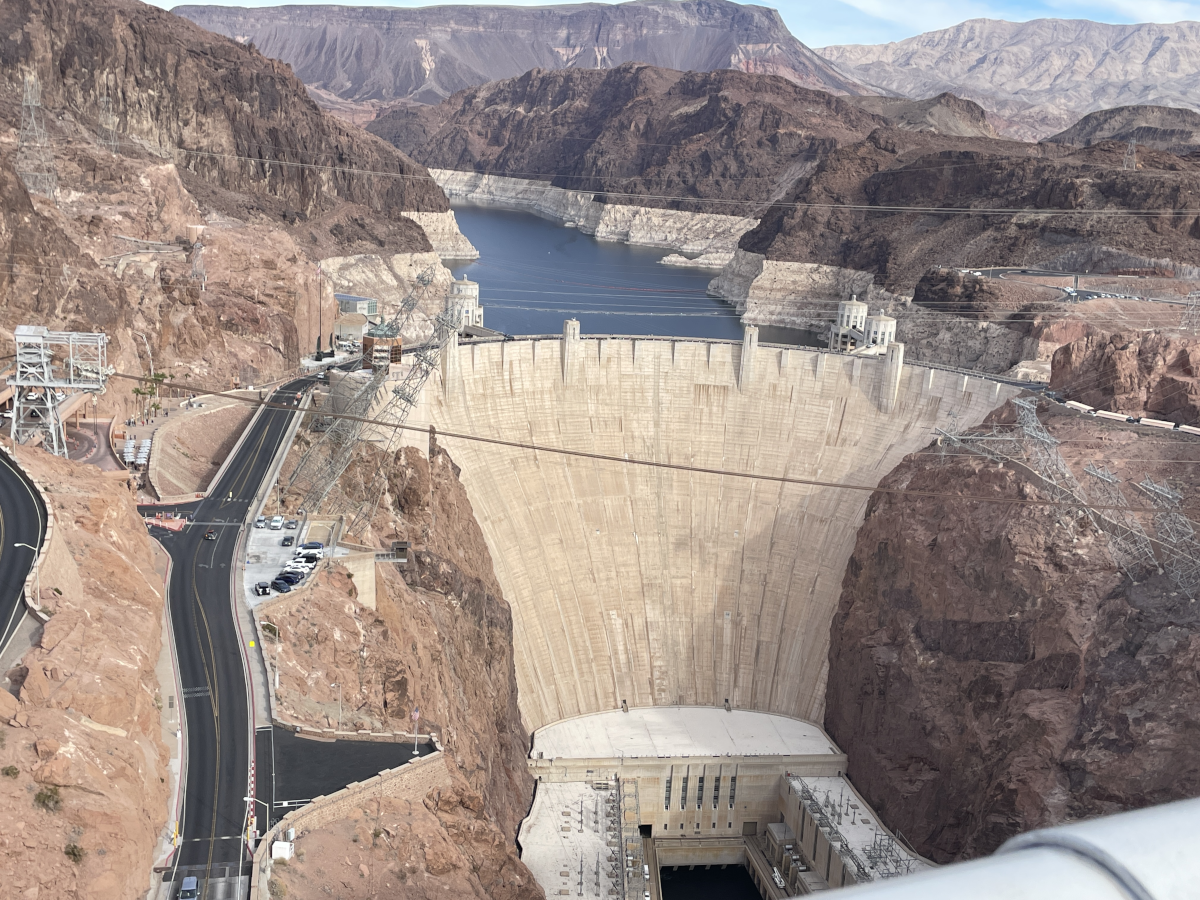
Hoover Dam from the U.S.-93 bridge over the Colorado River December 3, 2024.

Click the link to read the article on the KJZZ website (Gabriel Pietrorazio). Here’s an excerpt:

December 5, 2024

The future of managing water in the West remains uncertain following the presidential election. But a handful of Colorado River Basin tribes are celebrating a series of new water infrastructure investments from the outgoing Biden administration. Inside a cramped room at a Las Vegas resort, leaders from five federally recognized Southwestern tribes came together during the annual Colorado River Water Users Association conference…

The San Carlos Apache Tribe and Fort Yuma Quechan Indian Tribe, which straddles the Arizona-California border, met with the Bureau of Reclamation to extend water-saving agreements during a signing ceremony on Wednesday. San Carlos has agreed to not withdraw 30,000 acre feet from Lake Mead in exchange for $12 million from the federal government, while Fort Yuma Quechan will collect $5.2 million to leave 13,000 acre feet alone. Colorado River Indian Tribes Chairwoman Amelia Flores signed a letter of intent to fund a $5 million planning study to construct a new reservoir for its main canal through Reclamation’s Native American Affairs Technical Assistance Program, which provides support to develop, manage and protect their water resources…Additionally, the Ute Mountain Ute Tribe, which spans the Four Corners states of Utah, Colorado and New Mexico, signed a repayment contract for the Animas-La Plata Project that has been ongoing for 14 years. It’ll also allocate the tribe 38,000 acre feet of storage in Lake Nighthorse, a reservoir near Durango, Colorado…Lastly, the White Mountain Apache Tribe has been awarded $21.5 million from the Inflation Reduction Act to help plan and design a rural water system to divert, store and distribute water from the White River for some 15,000 residents across the Fort Apache Reservation in eastern Arizona.

Cleanup of abandoned mines could be getting easier in the West — KUNC

Prior to mining, snowmelt and rain seep into natural cracks and fractures, eventually emerging as a freshwater spring (usually). Graphic credit: Jonathan Thompson

Click the link to read the article on the KUNC website (Rachel Cohen). Here’s an excerpt:

December 12, 2024

More than 140,000 abandoned hardrock mines scatter federal lands in the Western U.S. Their cleanup could be getting easier, thanks to a bill that cleared its final hurdle in Congress this week…Finally, this week, the U.S. House of Representatives passed a bipartisan bill called the Good Samaritan Remediation of Abandoned Hardrock Mines Act, which the Senate had already passed this summer. It creates a pilot program under the Environmental Protection Agency that allows nonprofits, governments or landowners to clean up old mines without taking on the risk…

“Historically, the fear of litigation and liability that might trail a would-be ‘good Samaritan’ has kept us from doing a lot of that clean-up work,” said Chris Wood, the president and CEO of Trout Unlimited, which works to remediate mine tailings to improve water quality. Wood said the organization faces obstacles to do as much cleanup as it would like because of the liability concerns. He’s been working to remove these hurdles for two decades.