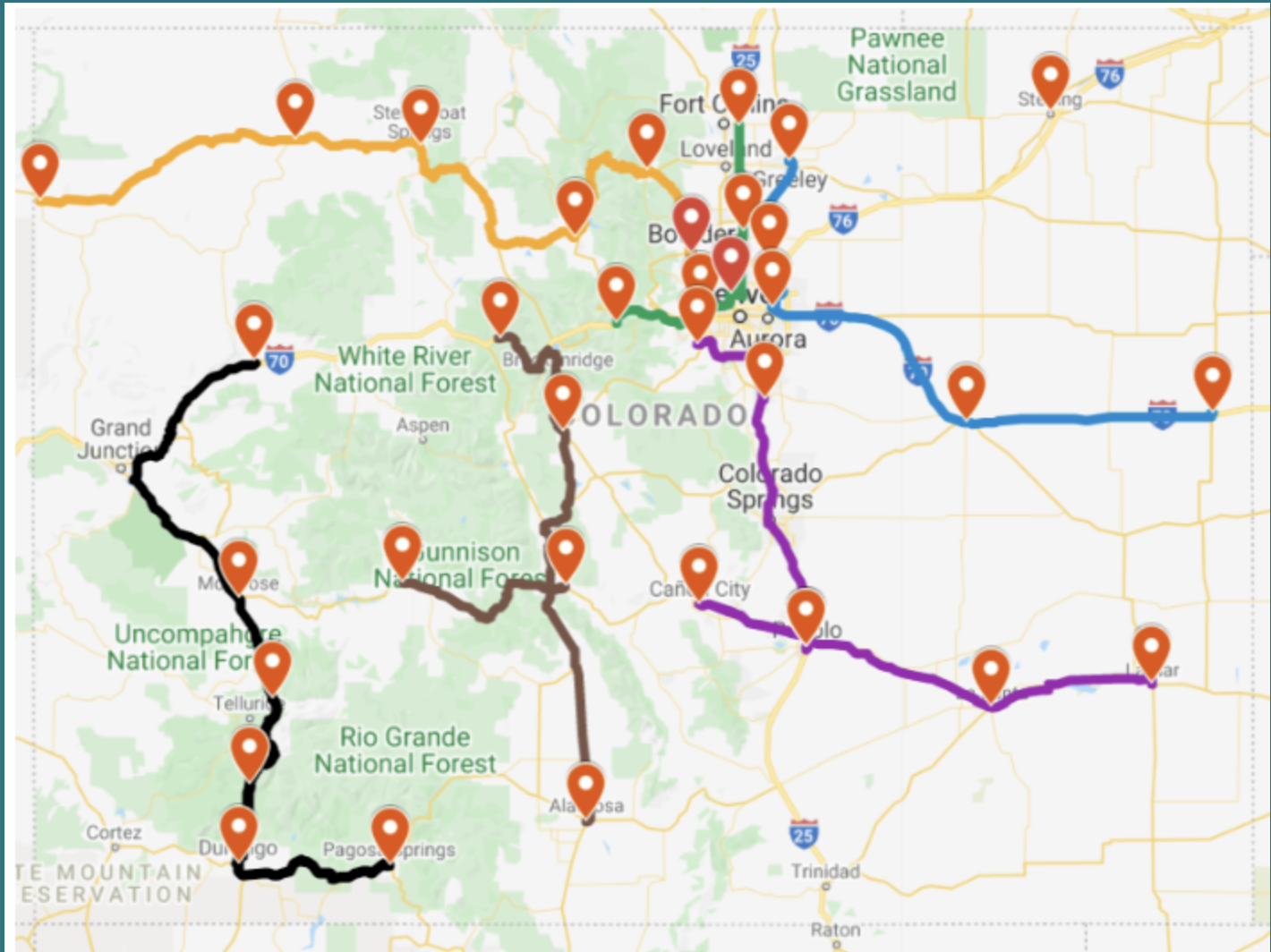
Update December 19, 2024: The Limon facitlity listed below was offline on November 26, 2024 and it does not show up today on ChargePoint. It looks like Deer Trail and Burlington for Corridor fast-charging.You can also charge in Flagler.
December 16, 2024
Gov. Polis joined officials from the Colorado Energy Office and the Colorado Department of Transportation to celebrate the completion of the EV Fast Charging Corridors Program, which was launched in 2018. The state spent more than $10 million on the grant program, which aimed to increase Colorado’s electric vehicle fast-charging infrastructure. Additional funds totaling over $2 million were provided by private investors and local governments. The Energy Office partnered with charging station company ChargePoint to install a total of 33 high-speed charging stations around the state…To date, there Colorado has more than 1,100 fast-charging stations and 4,400 Level 2 ports. Electric vehicles made up over a quarter of new car sales in Colorado in the third quarter of 2024, according to a study by the nonprofit organization Northeast States for Coordinated Air Use Management.
These fast-charging stations are located along six major transportation routes, including interstates and state and U.S. Highways, enabling Coloradans to drive anywhere in the state in an electric vehicle. All 33 sites are now open.
Western Slope
Craig: Kum & Go, 700 E. Victory Way, Craig, CO 81625
Dinosaur: Welcome Center, 101 Stegosaurus Fwy, Dinosaur, CO 81610
Durango:
City Parking, 250 W 8th St, Durango, CO 81301
Purgatory Ski Resort, 1 Skier Pl, Durango, CO 81301
Granby: Kum & Go, 308 W. Agate Avenue, Granby, CO 80446
Gunnison: 202 E Tomichi Ave, Gunnison, CO 81230
Montrose: City Parking Lot, 533 N. 1st Street, Montrose, CO 81401
Ouray: 1230 Main Street, Ouray, CO 81427
Pagosa Springs: Centennial Park, San Juan River Walk, Pagosa Springs, CO 81147
Rifle: Kum & Go, 705 Taugenbaugh Blvd, Rifle, CO 81650
Steamboat Springs: Kum & Go, 80 Anglers Drive, Steamboat Springs, CO 80477
Vail: Lionshead Parking, 395 S Frontage Rd W, Vail, CO 81657
Eastern Plains
Burlington: 122 Lincoln St, Burlington, CO 80807
La Junta: Village Inn, 5 Walmart Way, La Junta, CO 81050
Lamar: Welcome Center, 109 E Beech St, Lamar, CO 81052
Limon: 250 E Main St, Limon, CO 80828
Sterling: 130 N 4th St, Sterling, CO 80751
Front Range
Aurora: 7-Eleven, 14490 E Colfax Ave, Aurora, CO 80011
Boulder: 1500 Pearl St., Boulder, CO
Brighton: 7-Eleven, 15200 E 120th Ave., Brighton, CO 80603
Canon City: 403 Royal Gorge Blvd, Canon City, CO 81212
Conifer: 27181 Main Street, Conifer, CO, 80433
Dacono: Kum & Go, 127 Laura Way, Dacono, CO 80514
Estes Park: Visitor Center, 500 Big Thompson Ave, Estes Park, CO 80517
Fairplay: Town Hall, 901 9th St, Fairplay, CO 80440
Although the relationship between conservatism and solar energy has historically been contentious, some conservatives, like Weld County Commissioner Lori Saine (R-Dacono), see solar power as a key part of a “free-market” energy economy — as well as a step on the path to energy independence.
In early December, the American Legislative Exchange Council (ALEC), an organization of state legislators that espouses free market principles and federalism, unanimously passed “The Resolution in Support of Farming and Energy Production” at its States & Nation Policy Summit in Washington, D.C. Introduced by Saine, the resolution advocates for the permitting of community solar and agrivoltaics projects on farmland. Proponents of the measure hope it will spur consumer choice and energy options to help family farmers and increase domestic energy production.
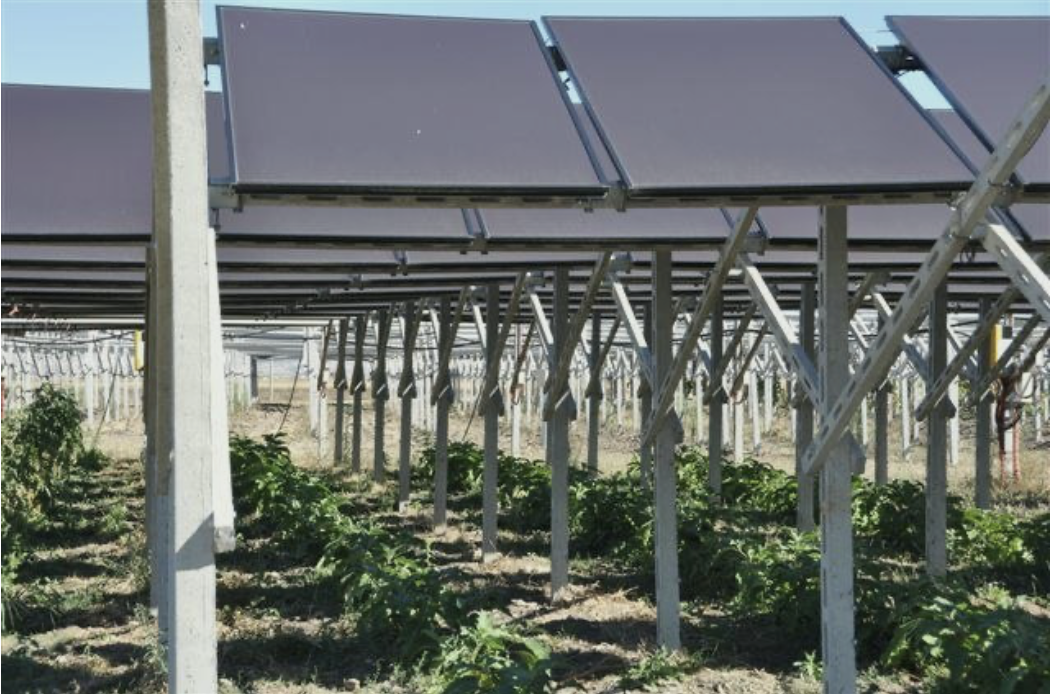
Agrivoltiacs, or agrisolar, is the practice of using the same land you use for traditional agricultural practices for the production of solar energy.
“American farmers and ranchers deserve to have choices about how they produce energy on their farmlands,” Saine said in support of the resolution. “Small-scale community solar and agrivoltaics can play an important part in our national energy future, providing opportunities for farmers and keeping farmland in production. We have seen firsthand in Colorado the positive impact these types of projects have in preserving our agricultural communities and I urge conservatives around the nation to embrace it.”
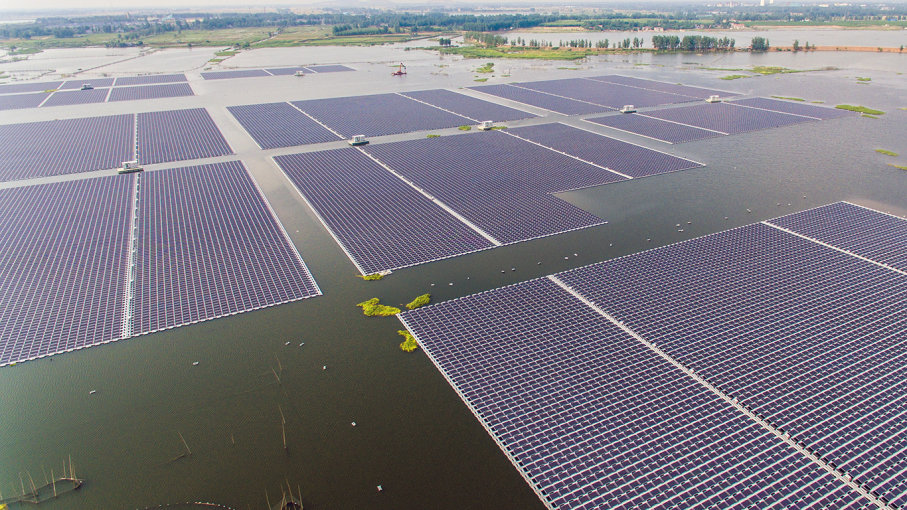
China connected the world’s largest floating solar power plant in central Anhui province to its power grid in early June 2017. The solar farm will generate electricity for 15,000 homes. Photo via Science.HowStuffWorks.com
Weld County has already seen a push for improved solar capabilities. A project funded through the federal Department of Energy moved forward earlier in the year with plans in Fort Lupton to replace a diesel-powered generator that powers a water purification plant with a solar-powered one.
Saine admits that she is somewhat of an unlikely ally for the burgeoning solar industry, especially considering she received several zero scores from environmentalist groups when she was in the state Legislature. Saine said in an interview that she thinks some of the conservative opposition to solar and other forms of renewable energy was coming from partisanship.
“My own journey on this began in 2021 when I had farmers approach me as a commissioner to tell me they needed more fairness when it comes to this type of energy production on farmland,” Saine said. “I did face pushback from some of my constituents; the two main things I was hearing in opposition were, ‘Oh, this is just going to be giving money to Joe Biden,’ and that some people just thought that solar panels were ugly.”
Saine, who ran unsuccessfully for Congress in 2022, worked to find a way to bridge that gap between the solar advocates and skeptics in her rural community. She sees solar as a way to meet the needs of Weld County.
“This is really exciting as a burgeoning industry, just five years ago solar panels were effective at about 15%, now they’re about 25%. We have really seen massive leaps in technology over the past few years, and we’re excited that Weld County can be a national leader on this front,” said Saine.
The measure provides what advocates call an “actionable path forward” for counties and localities considering the adoption of community solar and agrivoltaics. According to the resolution, “Solar facilities on unproductive or nonproductive farm ground can provide passive income for farmers to weather adverse events or uncertainty,” and “Solar production and agrivoltaics can also help young farmers afford to buy land for farming production.”
Larry Ward, the president and CEO of Conservatives for a Clean Energy Future, was optimistic about the prospects of community solar being embraced by the conservative movement.
“Conservative policymakers across the country are embracing community solar as an opportunity to prioritize economic development and increase consumer choice,” Ward said. “We are hopeful that this ALEC resolution will encourage more conservative lawmakers to explore how community solar can promote energy freedom and prosperity in their counties.”
As it currently stands, 19 states and D.C. have policies in place that allow for third-party community solar development. Multiple state legislatures are advancing bills to enable these new programs, including Republican-sponsored legislation in states like Wisconsin, Iowa, Ohio, Missouri, Georgia, and Pennsylvania.
Research from the Conservative Energy Network has found that 60% of Republicans and 65% of Independents support community solar. For conservatives, the growing support for community solar has to do with more competition and freedom in the energy market than for anything related to climate. Support typically comes for economic reasons. Conservative states are currently the largest producers of wind energy and often lie in what is called by those in the energy industry as the “wind belt” in the Midwest. Conservatives in these states have seen a sizable return on investment in wind power, for both the state and local landowners, and have provided rural communities and agricultural centers with a reliable source of energy.
“Conservatives should hold on to free market values. Nothing in this resolution prescribes who should operate the companies or how one gets financial incentives. Just energy choice,” Saine concludes. “Conservatives should hold on to free market values even when it isn’t popular, because principles don’t change.”
Solar installation in the San Luis Valley. Photo credit: Western Resource Advocates
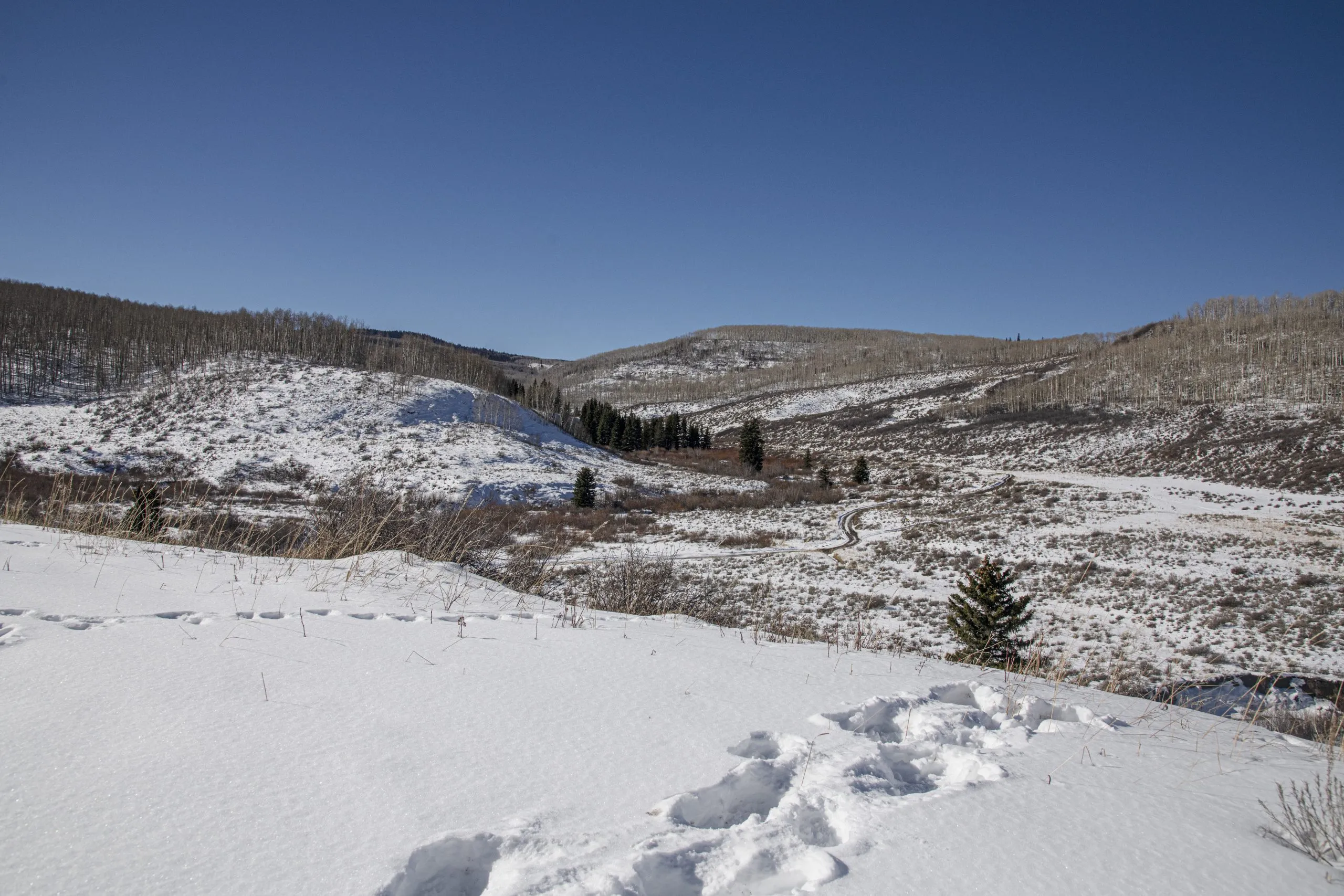
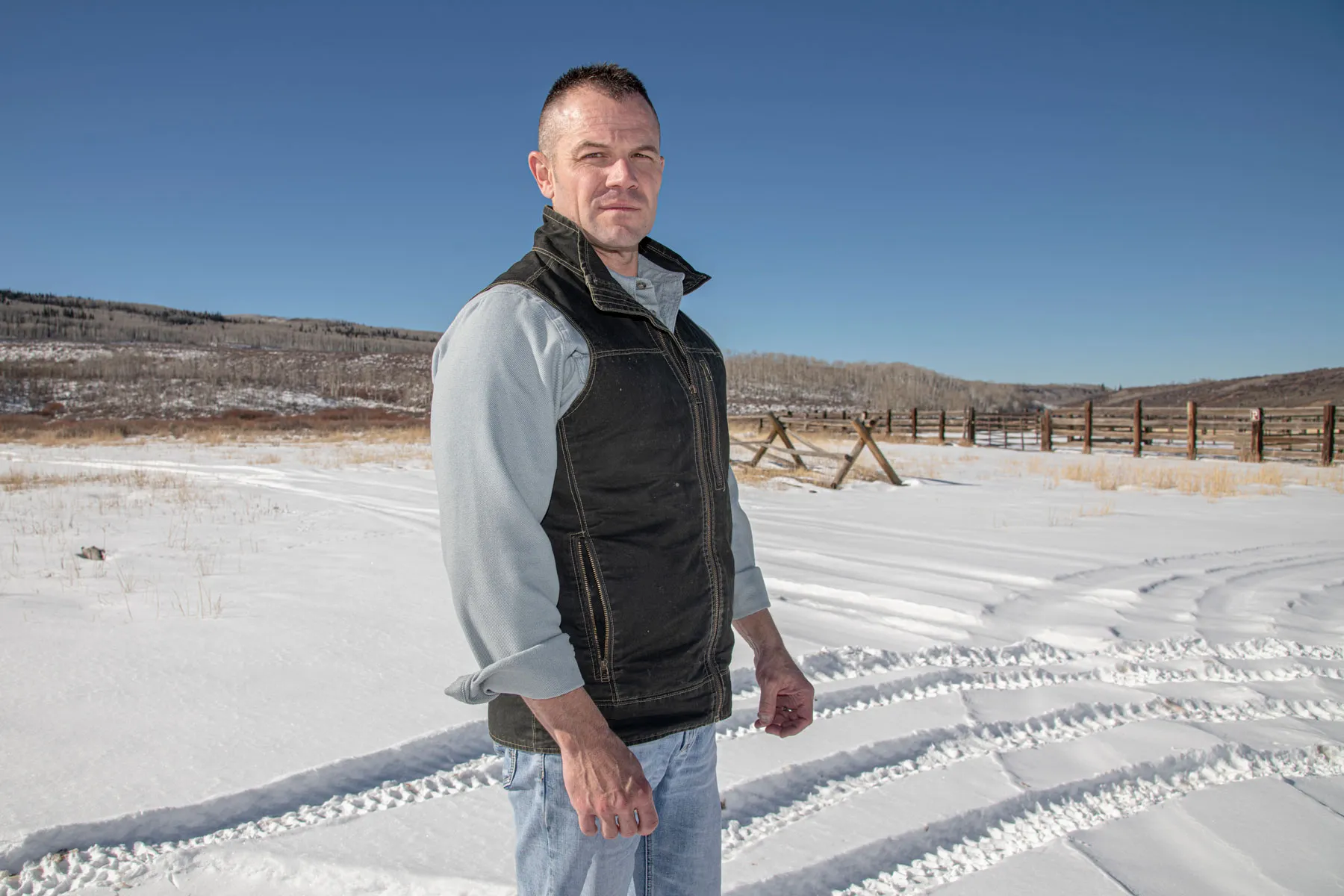
he site where Ute Water plans to build Owens Creek Reservoir at 8,200 feet on the Grand Mesa was snow covered by mid-November. The Western Slope’s largest domestic water supplier has conditional water rights for the 7,000-acre-foot reservoir. Credit: William Woody
Click the link to read the article on the Aspen Journalism website (Heather Sackett) Be sure to click through for the great graphic showing conditional water rights volumes and locations:
Updated December 18, 2024 to include William Woody’s photographs (Used with permission).
December 12, 2024
Cities, conservancy districts, energy companies own rights for 2.6 million acre-feet of additional water storage on the Western Slope.
Nearly two hours east of Grand Junction on a remote dirt road on the Grand Mesa is a nondescript, shallow, sage-brush-covered valley where two creeks meet.
The site, at 8,200 feet in elevation, is home to a wooden corral where ranchers with grazing permits gather their livestock and to the Owens Creek Trailhead where hikers set out for nearby Porter Mountain.
It’s also the spot where the largest domestic water provider on Colorado’s Western Slope plans to someday build a reservoir. The proposed Owens Creek Reservoir is modest in size, at about 7,000 acre-feet. It would help Ute Water Conservancy District satisfy the needs of its 90,000 customers into the future.
“Our job as a water provider is never done,” said Greg Williams, assistant manager at Ute Water. “You can develop one and you move onto your next project and go through that same process.”
Ute Water Assistant Manager Greg Williams, left, stands at the site of the proposed Owens Creek Reservoir on the Grand Mesa. Cities across the state have conditional water rights that save their place in line while they work to develop projects. Photo credit: William Woody
In most cases, water in Colorado must be put to beneficial use to keep a right to use it on the books. The cornerstone of Colorado water law is the system of prior appropriation, where the oldest water rights get first use of rivers. And hoarding water rights without using them amounts to speculation, which is illegal. But a Colorado water law feature known as a conditional water right allows water-rights holders to skirt this requirement and hold their place in line. The conditional water rights for the proposed Owens Reservoir date to 1972, although work to build this particular reservoir appears limited to preliminary studies and work on other related components of Ute Water’s system.
Ute Water, along with many other cities, conservancy districts and oil and gas companies across the Western Slope, are hanging on to water rights that are in some cases a half-century old without using them. Conditional water rights allow a would-be water user to reserve their priority date based on when they applied for the right, while they work toward eventually using the water. The result is millions of acre-feet worth of conditional water rights on paper that have been languishing for decades without being developed. Some of these rights are tied to large reservoir projects.
An analysis by Aspen Journalism found that across Colorado’s Western Slope, cities, conservancy districts, fossil fuel companies and private entities hold conditional water rights that would store about 2.6 million additional acre-feet from the Colorado River and its tributaries in not-yet-built reservoirs each bigger than 5,000 acre-feet. This is a staggering amount of water storage and more than the entire state of Colorado currently uses from the Colorado River basin, which is about 2.1 million acre-feet a year.
Most of this water would be stored in not-yet-built reservoirs, each bigger than 5,000 acre-feet. In some cases, the water would be stored in already-existing reservoirs, using conditional rights that would allow the reservoir to be refilled or enlarged.
Ute Water has plenty of company among the state’s conditional water rights holders. The Glenwood Springs-based Colorado River Water Conservancy District has rights from 1972 for the 66,000-acre-foot Wolcott Reservoir on Ute Creek in Eagle County; Mountain Coal Company says it wants to build the 75,000-acre-foot Snowshoe Reservoir on Anthracite Creek near Kebler Pass with rights from 1969; and Denver Water has plans for the 350,000-acre-foot Eagle-Colorado Reservoir on Alkali Creek in Eagle County using water rights from 2007. These are just a few examples of the 94 conditional water rights for new and existing reservoirs of 5,000 acre-feet or more planned for western Colorado identified by Aspen Journalism.
In a way, this planned water development represents the hopes and dreams for the future growth of the Colorado River’s Upper Basin states — Colorado, Wyoming, Utah and New Mexico. The 1922 Colorado River Compact promised 7.5 million acre-feet to the Upper Basin, which so far has never come close to using its half. The state of Colorado has the right to use 51.75% of the Upper Basin’s allocation.
But some experts say these proposed reservoirs are unrealistic wishes of the past, a vestige of the mid-20thcentury frenzy of dam building across the West that is mismatched for 21st century conditions. They say if this scale of future development comes to pass, it would upend the system of water rights, as well as harm the environment. They say the water court system that keeps these phantom reservoirs alive is being abused and should be reformed. In the era of historic drought, climate change and crashing reservoir levels, where users already see shortages in dry years, some say this amount of water for new development simply does not exist.
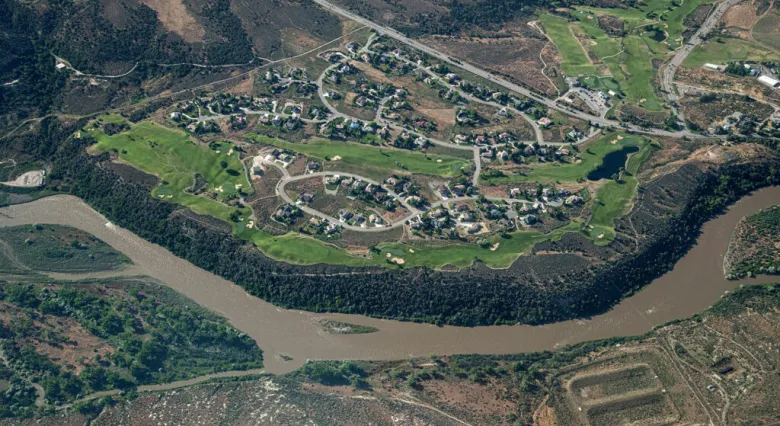
The Colorado River flows past a golf course near Parachute. Cities, conservancy districts, energy companies and private entities have conditional water rights for 2.6 million acre-feet of water to be stored across the Western Slope. Photo credit: William Woody
The Upper Basin’s dreams of water development also highlight a central tension at the heart of the current disagreement between the Upper Basin and the Lower Basin states of California, Arizona and Nevada. The two sides have not been able to reach an agreement about how the river’s two largest storage buckets, Lake Powell and Lake Mead, should be operated in the future and how cuts should be shared in drought years. Negotiations are currently at an impasse.
Over the past 100 years, the Lower Basin has fully developed its share of the river and then some. The Upper Basin has not, but it believes it is still entitled to, despite the contradictory nature of both committing to conservation while holding on to plans for new future uses.
“It’s especially a problem when we’re trying to find more water to reduce the amount of depletion on the Colorado River,” said Mark Squillace, a natural resources law professor at the University of Colorado Boulder. “If all these water rights were developed, it would be a disaster. I think everybody understands that.”
Holding on to conditional rights
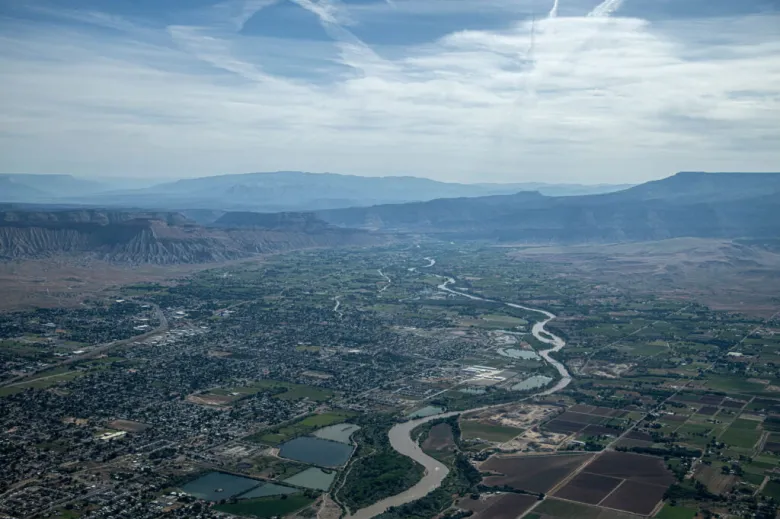
The Colorado River meanders through the Grand Valley, where it turns peach orchards and alfalfa fields green. Ute Water, the largest domestic water provider on the Western Slope, plans to build additional reservoirs to serve its Grand Valley customers.
Photo credit: William Woody
Entities can’t just hang on to conditional water rights in perpetuity. To maintain a conditional right, an applicant must every six years file what’s known as a diligence application with the state’s water court, proving that they still have a need for the water, that they have taken substantial steps toward putting the water to use and that they “can and will” eventually use the water. They must essentially prove they are not speculating and hoarding water rights they won’t soon use.
A cottage industry has sprung up around these diligence filings. Engineering firms produce studies that show a conditional water rights holder has worked to develop the water right. Attorneys file diligence applications with the water court and then see them through the sometimes yearslong process to get it renewed for another six years.
Aspen Journalism’s analysis looked at only the biggest proposed reservoirs on the Western Slope, but every year, hundreds of diligence applications are filed statewide for smaller amounts of water.
And the bar for proving diligence is low.
“It’s only limited by the imagination of the lawyer who’s filing the application about what you can claim for diligence,” said Aaron Clay, a longtime water attorney and water court referee in the Gunnison River basin, who teaches community courses about the basics of water law across the Western Slope.
The standard for reasonable diligence is much lower now than it was decades ago, Clay said, because state officials want at least some of these reservoirs to be built. The thinking is practical and political: Building more reservoirs makes it easier to control the timing and amount of water Colorado lets flow downstream.
Water court judges are hesitant to abandon these conditional water rights, even if they have been languishing without being used for decades partly because in Colorado water is treated as a fully vested property right, where the state may have to compensate water rights holders if they take it away from them. And owners of these rights believe they are valuable and are reluctant to let them go. The status quo is maintained because there’s no incentive for anyone to scrub these unused water rights from the books. [ed. emphasis mine]
Some entities, such as Ute Water, have conditional water rights for several reservoirs, pipelines, pumping stations and other components of an integrated system. Applicants are not usually required to file separate diligence applications for each of the system’s components. For example, in Ute Water’s most recent diligence filing for Owens Reservoir, the conservancy district filed a combined application for 14 different components of an integrated system. The application, filed in August and still pending in Division 5 of water court, claims that work on one feature of the system constitutes reasonable diligence on all the features of the system.
Municipal water providers such as Ute Water are given special deference under Colorado water law through something called the Great and Growing Cities Doctrine. [ed. emphasis mine]
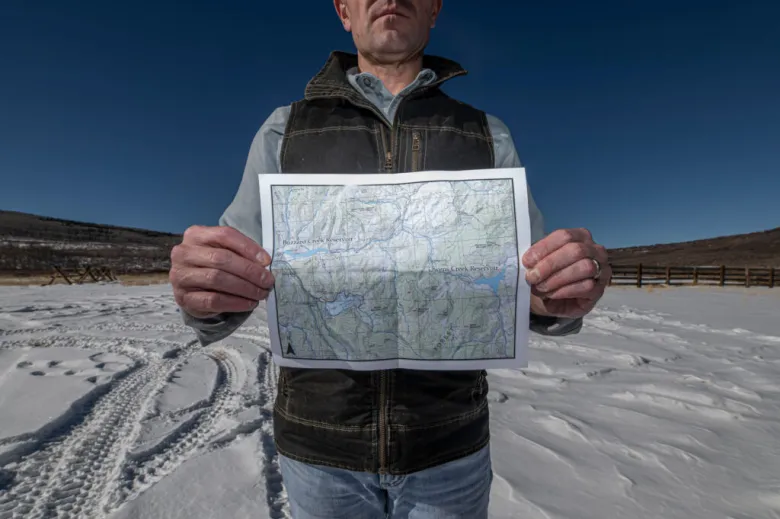
Ute Water Assistant Manager Greg Williams shows a map where the domestic water provider plans to build Buzzard Creek Reservoir and Owens Creek Reservoir. Cities, conservancy districts, energy companies and private citizens have 94 conditional water rights for use in new and existing reservoirs on the Western Slope.
Photo credit: William Woody
“The standard for diligence for a municipality is even lower,” Clay said. “We’re going to give them a little leniency with diligence by saying if you can still show us you’re going to need that water 30, 40, 50 years from now and you’re doing something toward it — studying it, working on the environmental issues or whatever — that’s going to be enough diligence to get you by for another six years.”
Owens Reservoir is just one of several Ute Water plans to develop. Williams said they are currently working to enlarge Monument Reservoir No. 1 and will then explore building Buzzard Creek Reservoir, Willow Creek Reservoir and Big Park Reservoir, all on the Grand Mesa.
“It remains to be seen the timing of when those reservoirs would be developed,” Williams said. “But our intent would be to continue developing each one of those sources.”
Squillace said that although he understands cities may need more leeway when it comes to long-term water planning, there is a lot of abuse of the conditional water rights system. The state water courts should be tougher on denying claims of diligence and stop granting extensions to water rights that haven’t been developed despite having had decades to do so, he said.
“You’re not supposed to sit on them for 20, 30, 40 years before you develop them,” he said. “It’s the failure of the state water courts to take diligence requirements seriously. They just apparently seem to give out these extensions of water rights without a whole lot of showing that there’s actually any kind of diligent work toward developing the water. I think it’s a huge problem.”
Uncertainty hangs over decades-old proposed reservoirs
Smaller proposed reservoir sites are scattered across Grand Mesa in western Colorado, and are underpinned by decades-old conditional water rights.
Photo credit: William Woody
One way in which these conditional water rights could present a problem is the uncertainty they create for the state’s other water users, especially those who have put their water to use in the past 60 or so years.
Andrew Teegarden is a fellow at the Getches-Wilkinson Center for Natural Resources, Energy and the Environment at the University of Colorado School of Law. The University of Denver Water Law Review plans next fall to publish his paper “Uncertain Future: How Conditional Water Rights Have Created Unintended Consequences in Colorado.” When the owners of conditional water rights with older priority dates finally begin diverting water that they have not used for decades, they may cut off junior water users who began using water between the conditional right’s older date and the present day. Teegarden calls this “line-jumping,” and if all these proposed reservoirs were developed, it could upend the entire priority system. [ed. emphasis mine]
The solution, he said, is for Colorado to stop treating conditional rights as property rights. Lawmakers could also reform diligence standards and impose a strict time limit, such as 50 years, for applicants to put their water to beneficial use. Otherwise, these conditional rights should be abandoned.
“Clearly, the history and precedent surrounding conditional rights were well-intentioned on giving users within the system flexibility to implement large-scale projects and the security to hold their place in priority,” the paper reads. “These rights, though, come with unintended consequences and it is vital that reforms be implemented before people begin seeing their water rights curtailed or diminished.”
If these proposed dams are built, they could also have a negative impact on the environment. Western Resource Advocates and several other nonprofit and government organizations within Colorado work to improve riparian habitats and keep water flowing in rivers for the benefit of fish and ecosystems. Many of the groups’ projects try to mitigate the effects of cities and agriculture taking too much water out of rivers.
John Cyran, senior attorney with WRA’s Healthy Rivers Program, said this 2.6 million acre-feet of proposed reservoirs is a time bomb.
“Given that so many streams are already in stressed positions, it’s a big problem for the environment,” Cyran said. “We’re trying to look at the river as it is now and figure out how we can make it healthier. If a bunch of new claims come on the river, that work will be for nothing.”
Cyran brings up another potential issue with conditional water rights: They are able to be bought, sold, changed and transferred to another owner, another location or another type of use. In October, the Middle Park Water Conservancy District transferred conditional rights for a 20,000 acre-foot reservoir on Troublesome Creek near Kremmling to a private ranch for just $10. Some worry that this Western Slope water could be sold to the Front Range. And WRA is opposing another instance in the White River basin where an oil and gas company wants to transfer its storage rights to a new location.
“The idea is supposed to be a conditional right saves your place in line,” Cyran said. “There should be restrictions on water users trying to change those rights to some new purpose while retaining their senior priority. If you can’t use it for what you intended, it goes back to the river. You don’t get to use it for something else, and you don’t get to sell it to somebody to use for something else.”
Future water development tensions persist on Colorado River
But perhaps the biggest issue with 2.6 million acre-feet worth of new water storage may be the effect on, and implications for, the Colorado River basin as a whole. Water managers from each of the seven basin states are in the midst of hammering out a deal that would decide how Lake Powell and Lake Mead are operated and how cuts are shared among the seven states beyond 2026.
The Colorado River flows along I-70 in De Beque Canyon just east of the Grand Valley. Water users hold rights to store an additional 2.6 million acre-feet from the Colorado River and its tributaries in proposed reservoirs on the Western Slope.
Photo credit: William Woody
Colorado officials have been rolling out new talking points, which include that the Upper Basin already uses about 30% less water in dry years because the water simply isn’t there, so the Lower Basin should take a corresponding proportionate cut of 30%.
At a time when water managers are debating how to share cuts in a hotter, drier future and where some water users are already suffering shortages, why is this large scope of water development in western Colorado still planned?
JB Hamby, chair of the Colorado River Board of California and the state’s lead negotiator in Colorado River talks, who also serves on the board of the Imperial Irrigation District, which is the biggest water user on the Colorado River, laughed when Aspen Journalism told him that Colorado has plans to develop 2.6 million acre-feet worth of new reservoirs on the Western Slope.
“That’s crazy,” he said.
Hamby said building 20th century-style infrastructure to develop more water in the Upper Basin does not make sense. He said all water users in the basin should be working together to find ways to collectively reduce their use. That includes navigating differing interpretations of the Colorado River Compact without involving the U.S. Supreme Court.
“That’s our best step forward, not pretending like it’s 1965, which it is not,” Hamby said.
Hamby was getting at something that is a major sticking point between the Upper and Lower basins: two different interpretations of an aspect of the 1922 Colorado River Compact.
The agreement assumed there was 16 million acre-feet of available water each year, with 7.5 million acre-feet each allocated to the Upper and Lower basins. The goal was to reserve an equal portion of the river’s flows for the Upper Basin to prevent rapidly growing California from taking all the water. Giving half to the Upper Basin ensured that the states could slowly grow into their full allocation.
A century later, the Upper Basin still has not done that and currently uses about 4.3 million acre-feet a year. Experts have pointed out that 16 million acre-feet was an overestimate of how much water was available to begin with, and after two decades of being wracked by drought and climate change, that amount of water surely no longer exists in the Colorado River basin system. The foundation of the Colorado River Compact was flawed.
Upper Basin water managers cling not only to what was promised to them 100 years ago but to the belief that as long as they don’t use more than the 7.5 million acre-feet allocated to them, they will not be in violation of the compact. However, some Lower Basin advocates believe that regardless of the Upper Basin’s use, the upstream states could be subject to a compact call if they don’t deliver 7.5 million acre-feet a year. Because river flows have diminished over the past 20-plus years, additional use in the Upper Basin could exacerbate shortages and trigger litigation from the Lower Basin in the form of a compact call, which could force cuts on the Upper Basin. Legal uncertainties about how a compact call could unfold complicates the dynamic and heightens animosity between the two basins.
Amy Ostdiek, chief of the interstate, federal and water information section of the Colorado Water Conservation Board, said an additional 2.6 million acre-feet of reservoir storage won’t increase the risk of a compact call.
“We have the right to the beneficial use of 7.5 million acre-feet a year and in the Upper Basin, Colorado gets 51.75% of the available supply,” she said. “I do not see these projects as putting us in danger of going over that number.”
According to Jason Ullmann, Colorado’s head engineer at the Department of Water Resources, 2.6 million additional acre-feet of water exists in some years and could be developed, especially since most of that would be captured as spring runoff. The way reservoirs typically work is by storing snowmelt in the spring and releasing it as needed later in the year. But any new reservoir would be at the mercy of the particular and variable hydrologic conditions of any given year and may not always fill.
“Typically, storage buckets, the larger ones in particular, they may not accomplish a full fill every year,” Ullmann said. “It may not be a [2.6 million acre-foot] draw on the river every year. It’s just a water right for that amount of storage.”
Hamby said the Upper Basin point of view is one of the past and out of alignment with the hydrology of the river, which has been declining over the past two decades and is expected to continue to decline.
“The idea of developing new infrastructure to put more water to use does not make sense in this century,” he said. “And while there may be feelings of promises from 1922, this is 2024.”
What if it was all a dream?
One reason these proposed reservoirs don’t seem to worry many water managers is because nobody believes they will ever all be built. Although these projects represent the desires of the Upper Basin, this scale of development may be just a pipe dream.
Eric Kuhn, a Colorado River expert, author and former general manager of the Colorado River District, doubts that many of these reservoirs will be built, but not because the water isn’t there or because of the permitting hurdles, environmental impacts or expense of construction. Rather, Kuhn says there’s no longer a need for many of these storage buckets.
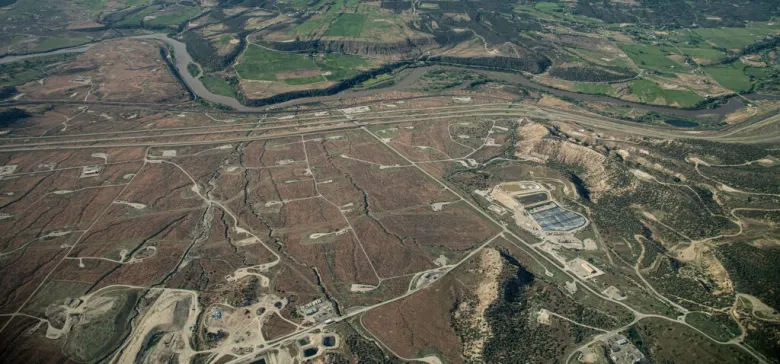
Oil and gas wells line the Colorado River along a rural stretch of western Colorado. Energy companies hold conditional water rights across the region, many linked to the potential future development of oil shale.
Photo credit: William Woody
Some of these conditional rights, especially in the Yampa-White-Green River basin, are associated with oil shale development, which has become less economically feasible in recent years. There are no new large-scale federally subsidized irrigation projects on the horizon. And as more agricultural land is converted to residential developments across the West, water use goes down.
Cities such as Aurora and Las Vegas have implemented aggressive conservation programs and have proved they can grow without using a lot more water. As the Upper Basin continues to urbanize, it may never grow into its 7.5 million-acre-foot allocation. The only reservoirs that will realistically be built, Kuhn said, will be small (1,000 acre-feet or less) and on a creek where there’s municipal demand.
“Maybe you need additional storage for streams that don’t have enough storage today, but that’s a tiny, minute amount,” he said. “Conditional water rights are a product of 50, 60, 70, 80 years ago, when they had a purpose. I don’t even see that they have a purpose anymore. They also represent a whole bunch of projects that, if they had been economically feasible, would have been built a long time ago.”
Although many entities continue to hang on to conditional water rights that they are unlikely to develop, some are starting to take a more clear-eyed approach, recognizing that some of these phantom reservoirs are dreams of the past and letting them go.
The River District has abandoned conditional reservoir rights on the Crystal River and other places; in January, a company with ties to oil shale development abandoned rights for a reservoir on Thompson Creek south of Carbondale; Colorado Springs recently gave up water rights for reservoirs in Summit County; and in October, the town of Breckenridge let go of water rights for two reservoirs on the Swan River but kept rights for a third: Swan River Reservoir No. 4.
James Phelps, director of public works for the town of Breckenridge, said they didn’t file the diligence claims this time for Swan River Reservoirs Nos. 1 and 2, which had water rights dating to 1981, because the town doesn’t need to develop that much reservoir capacity. Other factors in the town’s decision to not keep the reservoirs alive were the huge financial costs; the fact that housing developments encroached on the reservoir sites; and disturbance to the ecosystem in a place where residents place a high value on the environment.
“It was determined that if there was a need for the water in the future, whatever that need may be, we wouldn’t need to develop all three of those,” Phelps said. “We know that developing reservoirs is not an easy thing to do.”
Despite Colorado water courts’ tendency to rubber-stamp most diligence applications to keep alive decades-old unused water rights, there is at least one recent example of legal pushback on a reservoir enlargement project.
In October, a federal judge ruled that Denver Water’s Gross Reservoir expansion violated the Clean Water Act because it didn’t take into consideration the potential for a Colorado River Compact call and the declining hydrology of the basin. Although it’s unclear if this ruling would set a precedent for any other dam and reservoir project in Colorado, it signals a growing understanding of the risks that new water development could pose to the entire Colorado River system.
“The Colorado River Compact rests on a politically unpalatable truth — the Compact promised the basin states water that simply does not exist,” a footnote in the ruling reads. “The Court emphasizes this context for good reason: The cracked foundation of the Colorado River’s management system all but demands skepticism over any proposal that will affect the hydrology of the Colorado River basin.”
This story was produced by Aspen Journalism, in partnership with The Water Desk at the University of Colorado Center for Environmental Journalism.