#Colorado Parks and Wildlife to award $1.1 million to projects that restore wetland habitat for waterfowl and at-risk species: Application deadline February 10, 2025

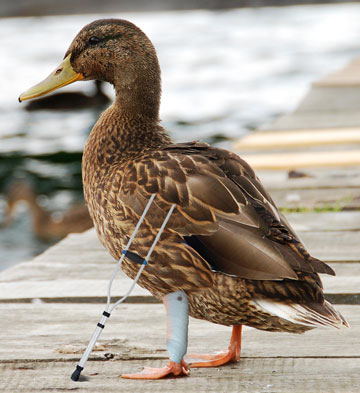
Photo credit: Colorado Parks and Wildlife

Click the link to read the release on the Colorado Parks and Wildlife website (Joey Livingston):

December 23, 2024

DENVER — Colorado Parks and Wildlife is seeking applications for wetland and riparian restoration, enhancement and creation projects to support the Wetlands for Wildlife Program.

This year, CPW will award over $1.1 million in funds from Great Outdoors Colorado (GOCO) and Colorado Waterfowl Stamps to projects in Colorado that support the Wetlands Program Strategic Plan’s two main goals: 

  1. Improve the distribution and abundance of ducks, and opportunities for public waterfowl hunting. Applications supporting this goal should seek to improve fall/winter habitat on property open for public hunting (or refuge areas within properties open for public hunting) or improve breeding habitat in important production areas (including North Park and the San Luis Valley in Colorado, and other areas contributing ducks to the fall flight in Colorado).
  2. Improve the status of declining or at-risk species. Applications supporting this goal should seek to clearly address habitat needs of these species. See the identified threats, recommended conservation actions, and progress to date for these species in the Colorado State Wildlife Action Plan (SWAP) Conservation Dashboards.

Wetlands for Wildlife application guidance and instruction is available at: cpw.state.co.us/wetlands-wildlife-grants. The application deadline is Monday, Feb. 10. 

About the program
The Colorado Wetlands for Wildlife Program is a voluntary, collaborative and incentive-based program to restore, enhance and create wetlands and riparian areas in Colorado. Funds are allocated annually to the program and projects are recommended for funding by a CPW committee with final approval by the Director.

ā€œWetlands are so important,ā€ said CPW Wetlands Program Coordinator Brian Sullivan. ā€œThey comprise less than two percent of Colorado’s landscape, but provide benefits to over 75 percent of the species in the state, including waterfowl and several declining species. Since the beginning of major settlement activities, Colorado has lost half of its wetlands.ā€

Since its inception in 1997, the Colorado Wetlands Program and its partners has preserved, restored, enhanced or created more than 220,000 acres of wetlands and adjacent habitat and more than 200 miles of streams. The partnership is responsible for more than $40 million in total funding devoted to wetland and riparian preservation in Colorado.
Permafrost is thawing across Boreal and Arctic lands, causing old carbon stored in soil or sediment to be released to the atmosphere as CO2 or CH4 — Dr. Merritt Rae Turetsky (‪@queenofpeat.bsky.social‬)

Permafrost is thawing across Boreal and Arctic lands, causing old carbon stored in soil or sediment to be released to the atmosphere as CO2 or CH4. A lot of these emissions occur in winter because post-thaw soils can become too wet to freeze, like this thaw bog in northwestern Canada.

Dr. Merritt Rae Turetsky (@queenofpeat.bsky.social) 2024-12-30T18:03:39.848Z

2024 – 2025: Look back, look ahead — @AlamosaCitizen

On Sunday, Dec. 29, the daytime high of 57 degrees in Alamosa established a new record for the date, making December 2024 one of the warmest Decembers this century. | Credit: The Citizen

Click the link to read the article on the Alamosa Citizen website:

December 30. 2024

A mild December caps a year of unusual weather for Alamosa and the greater San Luis Valley. Or maybe it’s just the new normal in a century of changing climates and chaotic weather patterns.

The month of December brought 10 different 50-degree weather days, and an average temperature of 45 degrees – or 10 degrees above what’s been historically normal, according to figures from the National Weather Service.

On Sunday, Dec. 29, the daytime high of 57 degrees in Alamosa established a new record for the date, making December 2024 one of the warmest Decembers this century.

The summer and late fall were strange as well this year. Between May and August, the Valley floor received 6.14 inches of rain, making it one of the wettest four-month periods on record this century.

For perspective, the San Luis Valley typically experiences 7 inches of total precipitation and around 30 inches of measurable snow each year. In 2024, Alamosa experienced 11.36 inches of precipitation and 37 inches of snow.

Those late spring and summer rains came off a record amount of total snow in March when 14.5 inches fell, way above the 4 inches of snow that is typical for the month. Indeed, 2024 was a strange, wet weather year.

Yet, the Upper Rio Grande Basin continues to struggle and local irrigators remain under state pressure to reduce their groundwater pumping and retire more fields. In August alarm bells went off for water managers when readings of the unconfined aquifer storage levels shockingly showed the critical aquifer near its lowest measurable point.

ā€œYou’re always under pressure and the sense of urgency is always there,ā€ said Cleave Simpson of the stress farmers and ranchers in the San Luis Valley face to recover the ailing aquifers of the Rio Grande. He works as general manager for the Rio Grande Water Conservation District and represents the Valley and most of southwestern Colorado as a state senator.

In his role as state legislator, Simpson sponsored legislation that resulted in $30 million committed to pay Valley irrigators to retire more groundwater wells to reduce their groundwater pumping. Over the past dozen years, payments made to either temporarily or permanently fallow agricultural fields and reduce the amount of groundwater pumped in the Valley have totaled $100 million, according to figures Simpson cited on this episode of The Valley Pod.

The podcast episode with Simpson looks back on the century and how the new millennium, now 25 years in, has been dominated by the effects of climate change.

U.S. Drought Monitor July 23, 2002.

ā€œFrom climate, in particular, 2002 was this critical moment in time for us. That’s when the whole paradigm shifted for the San Luis Valley and Colorado and really the western U.S.,ā€ said Simpson. ā€œThat was the worst drought in our recorded history. The Rio Grande had never seen those kinds of diminished flows, ever, since we started recording it.

ā€œIt’s basically since 2002 till today, that’s 22 years of this drying, this no snow pack, this change in how runoff occurs, and the timing and the volumes.ā€

Simpson and others who closely follow the weather patterns of the San Luis Valley say it’s no longer drought but aridification settling into the soil that the Valley will wrestle with as the 21st century proceeds.

We’ll see now what 2025 has in store.

Rio Grande and Pecos River basins. Map credit: By Kmusser – Own work, Elevation data from SRTM, drainage basin from GTOPO [1], U.S. stream from the National Atlas [2], all other features from Vector Map., CC BY-SA 3.0, https://commons.wikimedia.org/w/index.php?curid=11218868