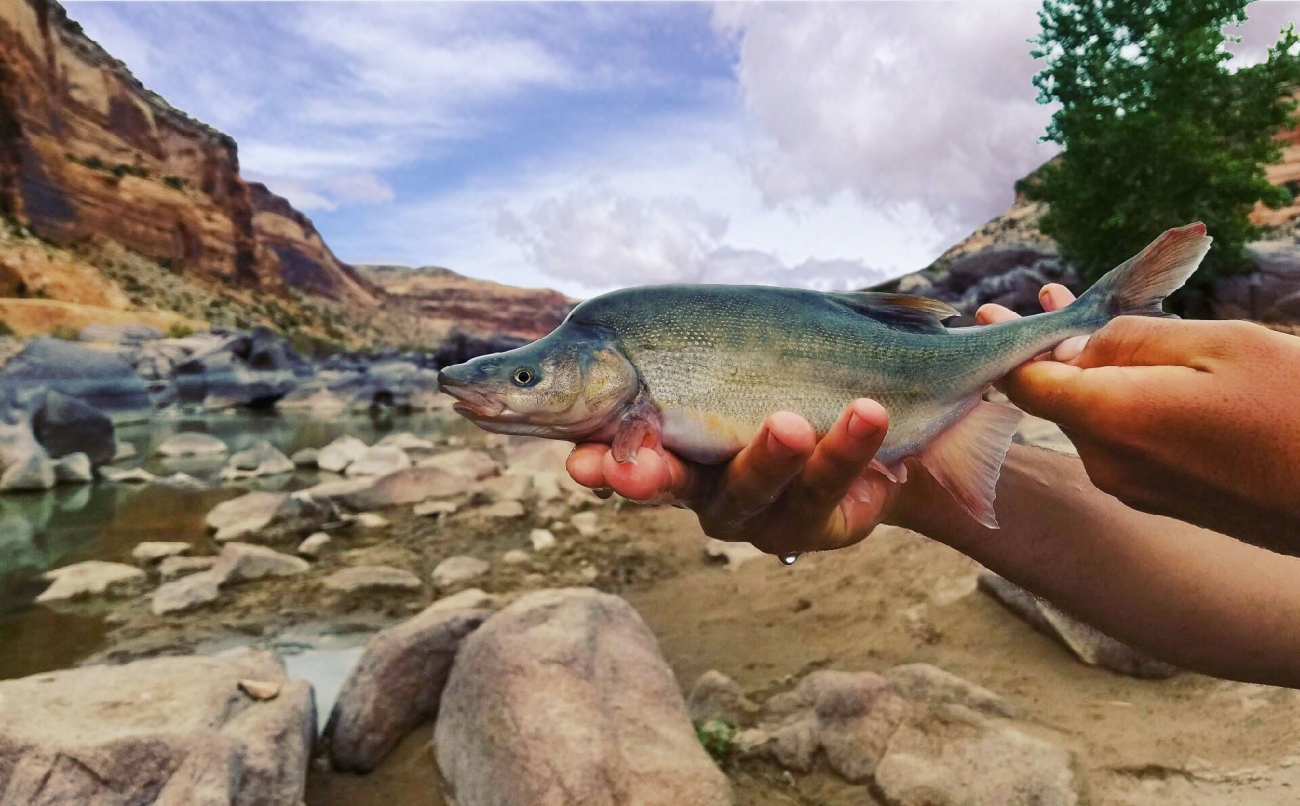
The threatened Humpback Chub is one of four fish species that programs in Colorado and other Western states have been working to recover for nearly three decades. U.S. Fish and Wildlife Service/ Courtesy Photo
For nearly three decades, Colorado and other Western states have been working to recover several species of endangered fish in the Colorado and San Juan river basins. Congress last week approved a bill that will renew the program’s federal funding for seven more years. The bill was included in the 2025 National Defense Authorization Act, which is heading to President Joe Biden’s desk. Sens. John Hickenlooper, D-Colo., and Mitt Romney, R-Utah, sponsored the fish recovery program’s reauthorization act. Rep. Lauren Boebert, R-Colo., sponsored the bill in the House.
“Local communities, Tribes, water users, and Congress — we’re all in to protect our native fish and rivers,” Hickenlooper stated in a news release. “These programs are tried and true. Our extension will help continue them to save our fish and make our rivers healthier.”
Federal authorization for the two fish recovery programs — the Upper Colorado River Endangered Fish Recovery in Colorado, Utah and Wyoming as well as the San Juan Recovery Implementation Program in Colorado and New Mexico — expired this September. The reauthorization act, however, will extend the programs through 2031, authorizing the U.S. Bureau of Reclamation to contribute up to $92 million in the next seven years. The bill also adds up to $50 million for capital projects that support infrastructure improvements to recover the threatened and endangered species…The annual operating costs for the programs were historically funded by Colorado River Storage Project hydropower revenues, which have diminished over time due to drought, declining reservoir storage, increased costs and more, according to a September Colorado Water Conservation board memo. This has required the federal and state appropriations and contributions to increase to cover costs, it adds. The fish recovery programs also rely on in-kind contributions and funding from other partners. Both programs have sought to recover populations of four species — the humpback chub, razorback sucker, Colorado pikeminnow and bonytail fish — in these basins. When the Upper Colorado and San Juan programs were established in 1988 and 1992, all four species faced extinction, but they have seen some success.
The Gold King Mine’s level 7 adit and waste rock dump, boarding house, and other associated structures, circa 1906. Via the Land Desk
Click the link to read the article on the Land Desk website (Jonathan P. Thompson):
December 13, 2024
⛏️Mining Monitor ⛏️
The News: After decades of trying, Congress finally passed a “good samaritan” mine remediation bill that could help nonprofits and other non-governmental organizations clean up abandoned mining sites.
The Context: In 1994, the state of Colorado, with the help of Bill Simon and other volunteers, launched the Animas River Stakeholders Group to study and address abandoned mines in the upper Animas River watershed. It would be a collaborative approach — without heavy-handed regulations or the dreaded Superfund designation. “We figured we could empower the people in the community to do the job without top-down management,” Simon told me back in 2016. “Giving the power to the people develops stewardship for the resource, and that’s particularly useful in this day and age.”
Their task was a monumental one: The US Geological Survey has catalogued some 5,400 mine shafts, adits, tunnels, and prospects in the upper Animas watershed. Nearly 400 of them were found to have some impact on water quality, about 60 of which were major polluters, contributing about 90% of the mining-related heavy metal loading in streams. Dozens of abandoned mine adits collectively oozed more than 436,000 pounds of aluminum, cadmium, copper, iron, and zinc into the watershed each year, with waste rock and tailings piles contributing another 80,000 pounds annually.1
The upper Animas isn’t unusual in this respect. A 2020 Government Accountability Office report estimated that there are more than 500,000 abandoned mining-related sites and features across the Western United States. While most of those are hardly noticeable and have little effect on the environment, at least 100,000 of them were found to pose physical or environmental hazards.
Those hazards range from open mine shafts (that can swallow up an unsuspecting human or animal), to contaminated tailings or waste rock piles, to the big one: mine adits discharging heavy metal-laden acid mine drainage into streams. Federal and state programs exist to address some of these hazards. But the sheer number of problematic sites, and the fact that many are on private lands, makes it impossible for these agencies to remediate every abandoned mining site.
So, for the last few decades, nonprofits and collaborative working groups like the Animas River Stakeholders have taken up some of the slack. With funding from federal and state grants and mining companies, the Stakeholders removed and capped mine waste dumps, diverted runoff around dumps (and in some cases around mines), used passive water treatment methods on acidic streams, and revegetated mining-impacted areas.
This image was taken during the peak outflow from the Gold King Mine spill at 10:57 a.m. Aug. 5, 2015. The waste-rock dump can be seen eroding on the right. Federal investigators placed blame for the blowout squarely on engineering errors made by the Environmental Protection Agency’s-contracted company in a 132-page report released Thursday [October 22, 2015]
But the most pernicious polluters — the draining adits — were off limits. The volunteer groups couldn’t touch them, because to do so would require a water discharge permit under the Clean Water Act, and that would make the Stakeholders liable for any water that continues to drain from the mine, and if anything went wrong. In other words, if some volunteers were trying to remediate the drainage from a mine, and it blew out Gold King-style, the volunteers would be responsible for the damage it inflicted — which could run into the hundreds of millions of dollars.
For the last 25 years, the Animas River Stakeholders2, Trout Unlimited, other advocacy groups, and Western lawmakers have pushed for “good samaritan” legislation that would allow third parties to address draining mines without taking on all of the liability. Despite bipartisan support, however, the bills struggled and ultimately perished.
That’s in part due to concerns that bad actors might use the exemptions to shirk liability for mining a historic site. Or that industry-friendly EPA administrators might consider mining companies to be good samaritans. And back in 2015 Earthworks pointed out that good samaritan legislation wouldn’t address the big problem: A lack of funding to pay the estimated $50 billion cleanup bill. So if a volunteer group did trigger a Gold King-like disaster, the taxpayers would likely end up footing the bill.
But last year, Sen. Martin Heinrich, a New Mexico Democrat, and 39 co-sponsors from both parties introduced the Good Samaritan Remediation of Abandoned Hardrock Mines Act, tightened up to alleviate most concerns. It passed the Senate in July of this year, and was sent to the House, where it also received support from Republicans and Democrats alike.
Assuming President Biden signs it into law, the new act will open the door to more cleanups — but in a limited way. To begin with, the bill only authorizes 15 pilot projects nationwide, which will be determined via an application process. The proponents will receive special good samaritan cleanup permits and must follow a rigorous set of criteria. No mining activities will be allowed to occur in concert with a good samaritan cleanup. However, reprocessing of historic waste rock or tailings may be allowed, but only in sites on federal land, and only if all of the proceeds are used to defray remediation costs or are added to a good samaritan fund established by the act.
Rep. Frank Pallone, a New Jersey Democrat, opposed the bill nonetheless, saying it compromises federal environmental law and “opens the floodgates for bad actors to take advantage of Superfund liability shields and loopholes.” He added that it would give the incoming Trump administration “unilateral power to decide which entities are good samaritans and which are not.”
This isn’t, however, a blanket loophole, it only applies to 15 projects — at least for now. While that limits the damage that could be done by bad actors abusing the liability shields, it also limits the benefits: Fifteen projects isn’t going to go very far in addressing the 100,000 or so hazardous mine sites. The Animas River watershed may not benefit at all, since the 48 sites in the Bonita Peak Mining District Superfund site are not eligible for good samaritan remediation.
Still, the law will open the door for a handful of projects that could improve water quality in some watersheds. The challenge now is figuring out how to address draining mines in an economically feasible fashion. Simply plugging, or bulkheading, the mine adits often isn’t effective, because the contaminated water ends up coming out somewhere else. And treating the draining water is an expensive, and never-ending, process.
The good news is that some funding was made available via the Infrastructure and Inflation Reduction laws passed during the last four years, and just this week the Biden administration gave mining cleanup a boost this week by offering states $3.7 million in grants to inventory, assess, and remediate abandoned hardrock mines.
The bad news is that the legislation that’s really needed — genuine and substantial mining law reform — probably is on hold for at least the next four years.
Prior to mining, snowmelt and rain seep into natural cracks and fractures, eventually emerging as a freshwater spring (usually). Graphic credit: Jonathan Thompson
***
In other mining news, the Biden administration this week halted new mining claims and mineral leasing for the next two years on 165,000 acres in the upper Pecos River watershed west of Santa Fe, New Mexico. The “segregation,” as the action is called, is designed to allow the Interior Department to determine whether to ban mining and drilling in the area for the next 20 years.
Included within the acreage are more than 200 active mining claims held by Comexico LLC, a subsidiary of Australia-based New World Resources. For the past several years, Comexico has been working its way through the permitting process to do exploratory drilling at what it calls its Tererro mining project. It has met with stiff resistance from locals and regional advocacy groups, partly because mining has a dark history in the Pecos River watershed. In 1991, a big spring runoff washed contaminated mine and mill waste from a long-defunct mine into the upper Pecos River, killing as many as 100,000 trout. That prompted a multi-year cleanup of various mining sites.
But the withdrawal won’t stop the project outright, because it doesn’t affect existing, active, valid claims. Yet it can keep the company from staking more claims and may make it harder to develop the existing ones (especially if they haven’t established validity).
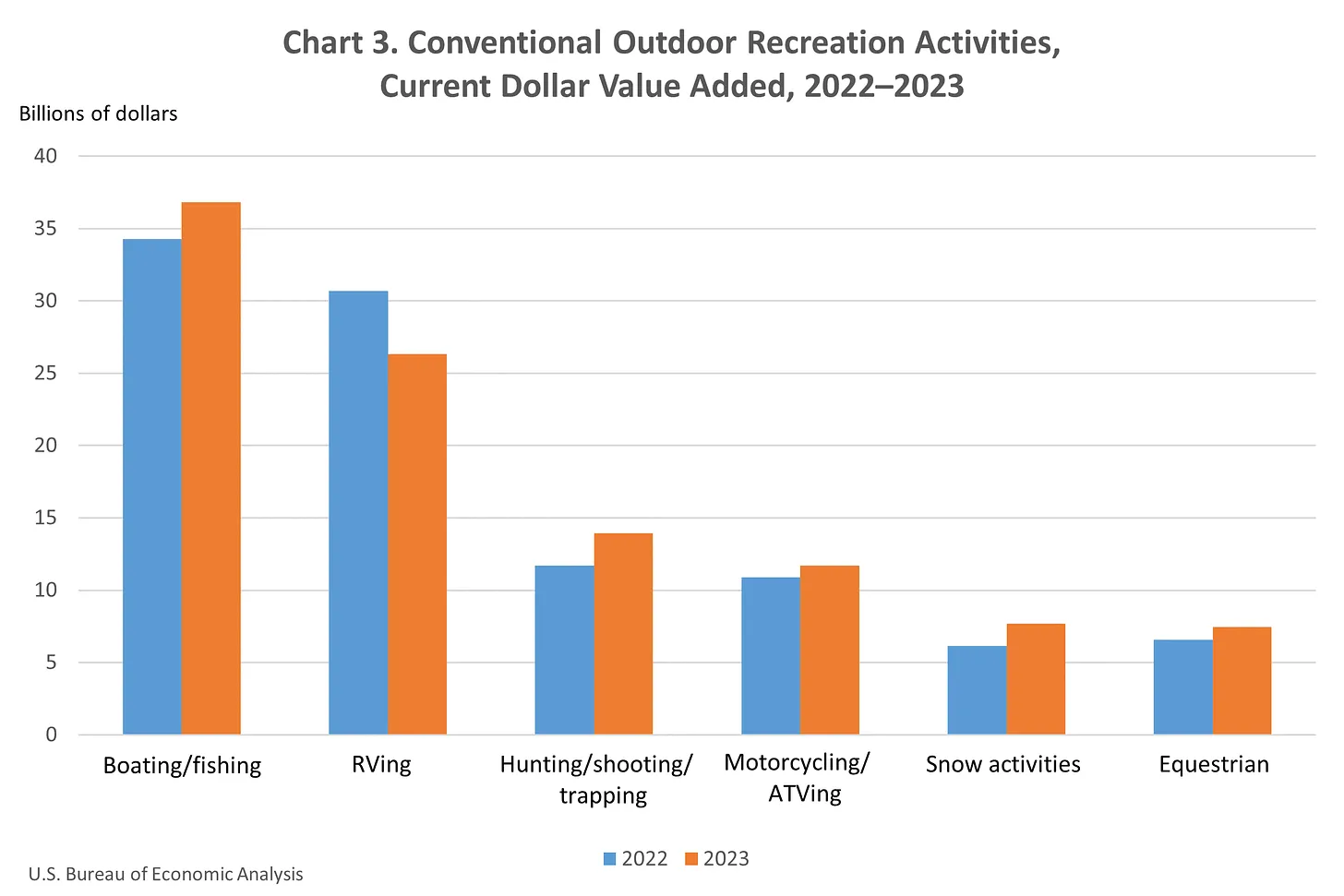
What was a bit more of a surprise to me is how it broke down into categories.
📸 (Not Quite) Parting Shot 🎞️
The old Buick at Cow Canyon Trading Post and Cafe in Bluff, Utah, my favorite place to stop and get caffeinated and breakfast burrito’d in Canyon Country. Jonathan P. Thompson photo.
1 These figures did not include the recently closed Sunnyside Mine/American Tunnel or the Gold King, since both were permitted mines at the time, meaning they weren’t abandoned.
2 The ARSG disbanded after much of the watershed was designated a Superfund site.