A sign of hope on the Colorado River — John Fleck (InkStain.net) #COriver #aridification

A high desert thunderstorm lights up the sky behind Glen Canyon Dam — Photo USBR

Click the link to read the article on the InkStain.net website (John Fleck):

December 5, 2024

One of the hopeful notes coming out of the recent Colorado River discussions is the way the operation of Glen Canyon Dam in a more flexible way, to accommodate a broader range of values, is back on the table. The USBR alternatives released ahead of this week’s Colorado River Water Users Association, while requiring some tea leaf divination because of their brevity, seem to leave the door open for this discussion.

Jack Schmidt and I have a new white paper offering some assistance, based on our understanding of the legal and regulatory structure around Grand Canyon National Park and Glen Canyon National Recreation Area. The idea behind what we’re arguing isn’t to wag a regulatory finger and say, “The law requires us to do X.” Rather, we’re saying, “The law enables us to do X,” where for “X” we argue for the consideration of a wider range of social, cultural, and environmental values as we make decisions about how to divide the water up between Lake Mead and Lake Powell.

On Biden’s Energy Dominance: The U.S. is the globe’s biggest oil and gas producer — without the drill, baby, drill BS — Jonathan P. Thompson #ActOnClimate

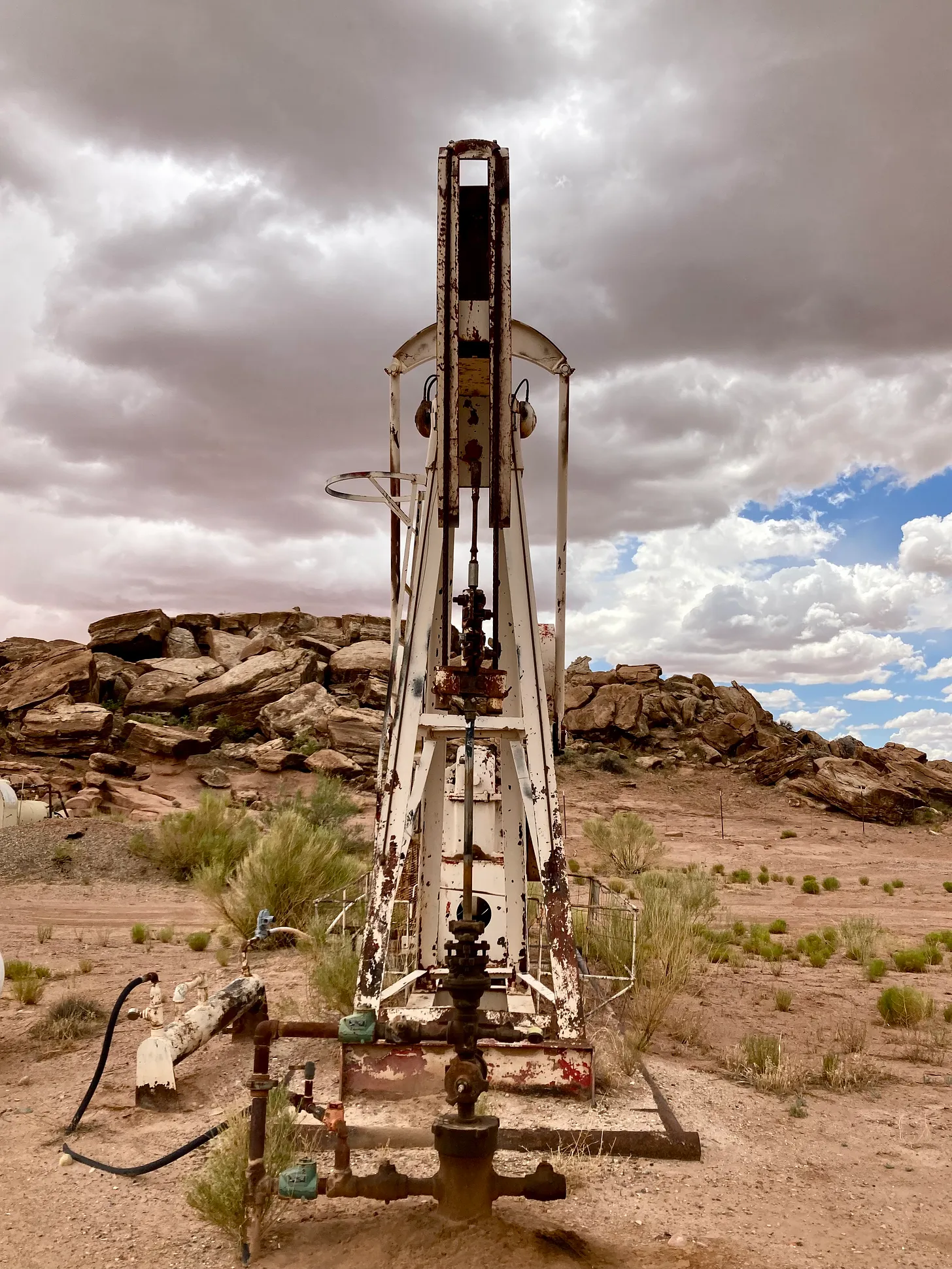
Pumpjack in the Aneth Oil Field in southeastern Utah. Jonathan P. Thompson photo.

Click the link to read the article on The Land Desk website (Jonathan P. Thompson):

November 27, 2024

📈 Data Dump 📊

The Land Desk is taking a break from its regularly scheduled programming to set something straight. It has come to our attention that one or more of our readers don’t realize that under the Biden administration the United States has become the planet’s leading oil and gas producing powerhouse. Well, it has, mostly on the strength of a drilling frenzy on public, private, and state land in the Permian Basin of New Mexico and Texas. 

For those who pay attention, this shouldn’t come as a surprise. But apparently it is news to those who have been duped by President-elect Trump’s claims that his “drill, baby, drill” agenda will bring an end to Biden’s alleged “war on energy” and make America energy-dominant again. There is no war on energy, and under the Biden administration the U.S. has been more “energy dominant” than ever before. In fact, it is the globe’s leading producer (and consumer) of petroleum and natural gas. 

The United States’ crude oil and petroleum production surpassed both Saudi Arabia’s and Russia’s in 2013, during the Obama administration, and has continued climbing ever since. Now the U.S. produces more crude oil than any nation in history. This is largely due to advances in drilling technology opening up new sources of hydrocarbons, but is also driven by global oil prices. Source: U.S. Energy Information Administration.

This is not something to celebrate, or for the outgoing administration to take pride in — all that oil and gas gets burned, adding more greenhouse gases to the atmosphere and exacerbating the climate crisis. It’s just the facts, which include: 

  • U.S. oilfields are producing more crude oil and natural gas than ever before, and production continues to increase steadily, particularly from the Permian Basin. 
  • 13.4 million barrels per day: Crude oil production from U.S. oil fields in August 2024. In August 2008 it was 5 million barrels per day.
  • The U.S. is the globe’s leading producer of crude oil, extracting as much crude oil and other petroleum liquids as Saudi Arabia and Russia combined. 
  • 21.91 million barrels/day; 11.13 million b/d; 10.75 million b/d: U.S.; Saudi Arabia; and Russia crude oil and other petroleum liquid production in 2023. They are the world’s top three producers.
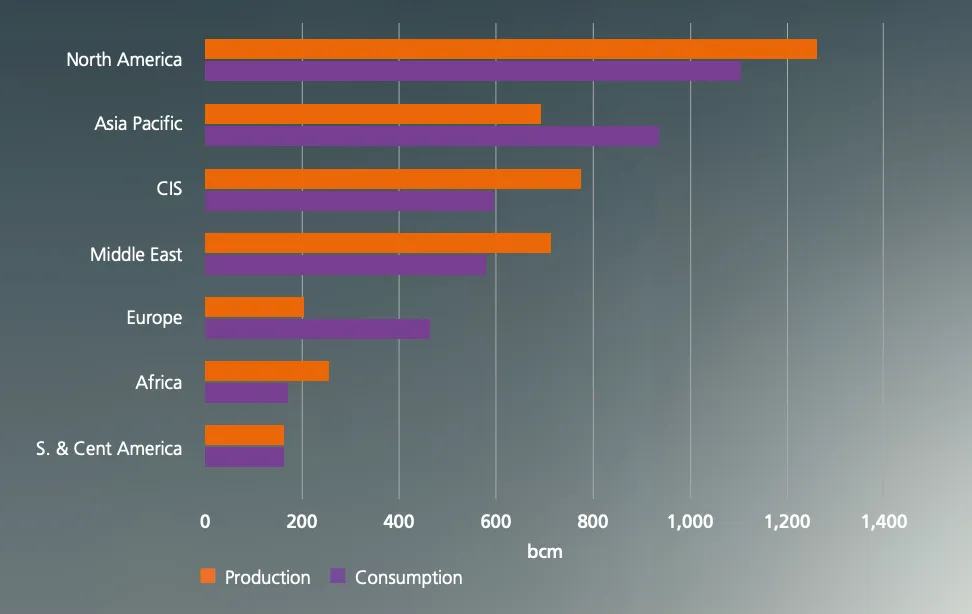
  • The U.S. is even more methane-dominant, producing 25% of the globe’s natural gas.
Natural gas production and consumption for various regions. Source: Statistical Review of World Energy.
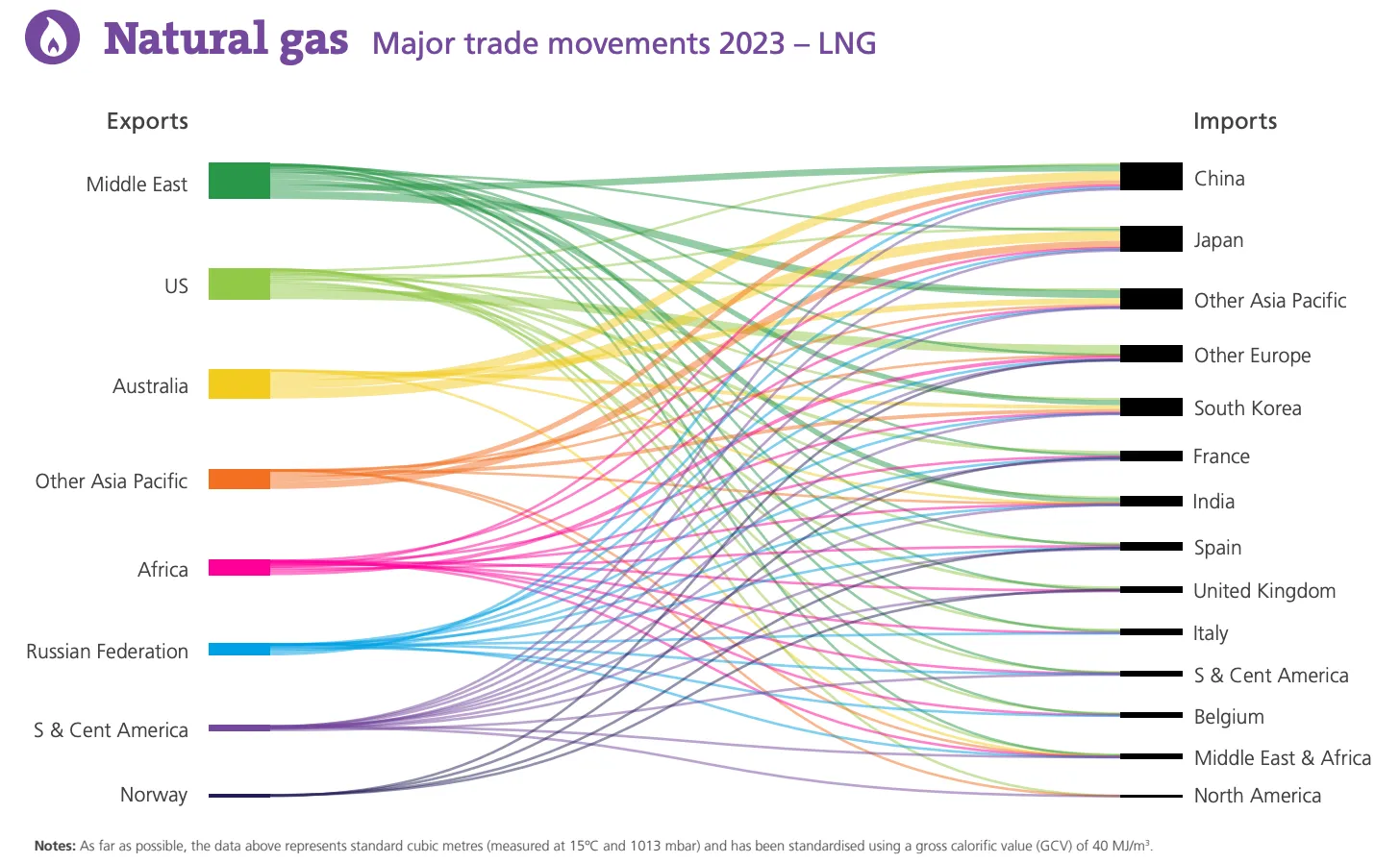
  • The U.S. is exporting more liquefied natural gas, crude oil, and petroleum products than ever before, becoming one of the world’s leading exporters of hydrocarbons.
The United States exports nearly as much LNG, or liquefied natural gas, as all Middle Eastern producers combined. Source: Statistical Review of World Energy.
  • The U.S. is a net exporter of crude oil and other petroleum products, making it more “energy independent” than it has been since the early 1900s — if you fall for that sort of thing.
While the U.S. continues to import millions of barrels of crude oil each day, it exports substantially more petroleum products as a whole, making it a net exporter to the tune of over 5 million barrels per day. Source: Energy Information Administration.
  • The U.S. also continues to import large volumes of crude oil, because oil is a global commodity and many of the nation’s refineries are equipped to handle “sour” crude from the Middle East. 
  • Oil and gas corporations have enjoyed tremendous profits during the Biden administration.
ExxonMobil pulled in $13.2 billion in operating profit during the third quarter of this year. Source: Tradingeconomics.com

Whether this is because of or in spite of or totally unrelated to the Biden administration’s policies is open to debate. Biden revived or implemented a handful of new regulations on oil and gas drilling during his term, some of which have only just begun to take effect. And the Bureau of Land Management offered less acreage for federal oil and gas leasing than previous administrations. But the agency also handed out about as many drilling permits, on average, as the Obama and Trump administrations. 

That the oil and gas industry was able to reap such bounty regardless is partially due to the fact that, intentionally or not, Biden’s policies were crafted to allow drilling to continue at a rapid pace while still giving the taxpayers a better return and protecting more fragile areas. This included designating (intentionally or not) the Permian Basin as a de facto oil and gas sacrifice zone. A huge majority of the drilling permits issued under Biden were for federal land on the New Mexico side of the Permian Basin, and the Environmental Protection Agency delayed its response to rising pollution in the area, allowing drilling to go on unfettered. Nearly all of the domestic crude oil and natural gas production growth of the last several years has come from the Permian Basin. 

The Biden administration issued around the same number of drilling permits, on average, as the Obama and first Trump administrations. But it handed out far more permits in New Mexico’s Permian Basin than ever before. Source: BLM.

The incoming Trump administration has announced plans to roll back Biden-era environmental protections and expedite oil and gas drilling permitting and leasing on federal lands shortly after taking office. This will almost certainly include opening up more acreage in Wyoming, Utah, and Alaska to leasing. And they’ll try to issue more drilling permits in those places, too. 

But even if companies lease more land or pull more permits in Wyoming, they won’t necessarily put them to use— most oil and gas leasing is speculative, anyway, meant to build up a corporation’s land-holdings to entice more investment. And petroleum firms currently are sitting on thousands of unused federal drilling permits. These days the industry has shown little interest in developing areas outside of the Permian Basin, and the Biden administration has more or less let it run rampant down there, leading to the current state of U.S. energy dominance. 

Oil and gas production from the Permian Basin will continue to increase for the foreseeable future regardless of who is in the White House. But you shouldn’t expect Trump’s “drill, baby, drill” agenda to further increase drilling or oil and gas production — or to lead to lower gasoline prices. In fact, Trump’s threatened tariffs on Canada will actually increase gas prices in some parts of the U.S., because we get quite a bit of crude oil from them. Besides, his policies are not really aimed at bolstering production or bringing down your prices. They are intended to cut costs for petroleum corporations, thereby increasing their profits, which are already ridiculously high. And it will come at the expense of human health and the environment. [ed. emphasis mine]


⛏️Mining Monitor ⛏️
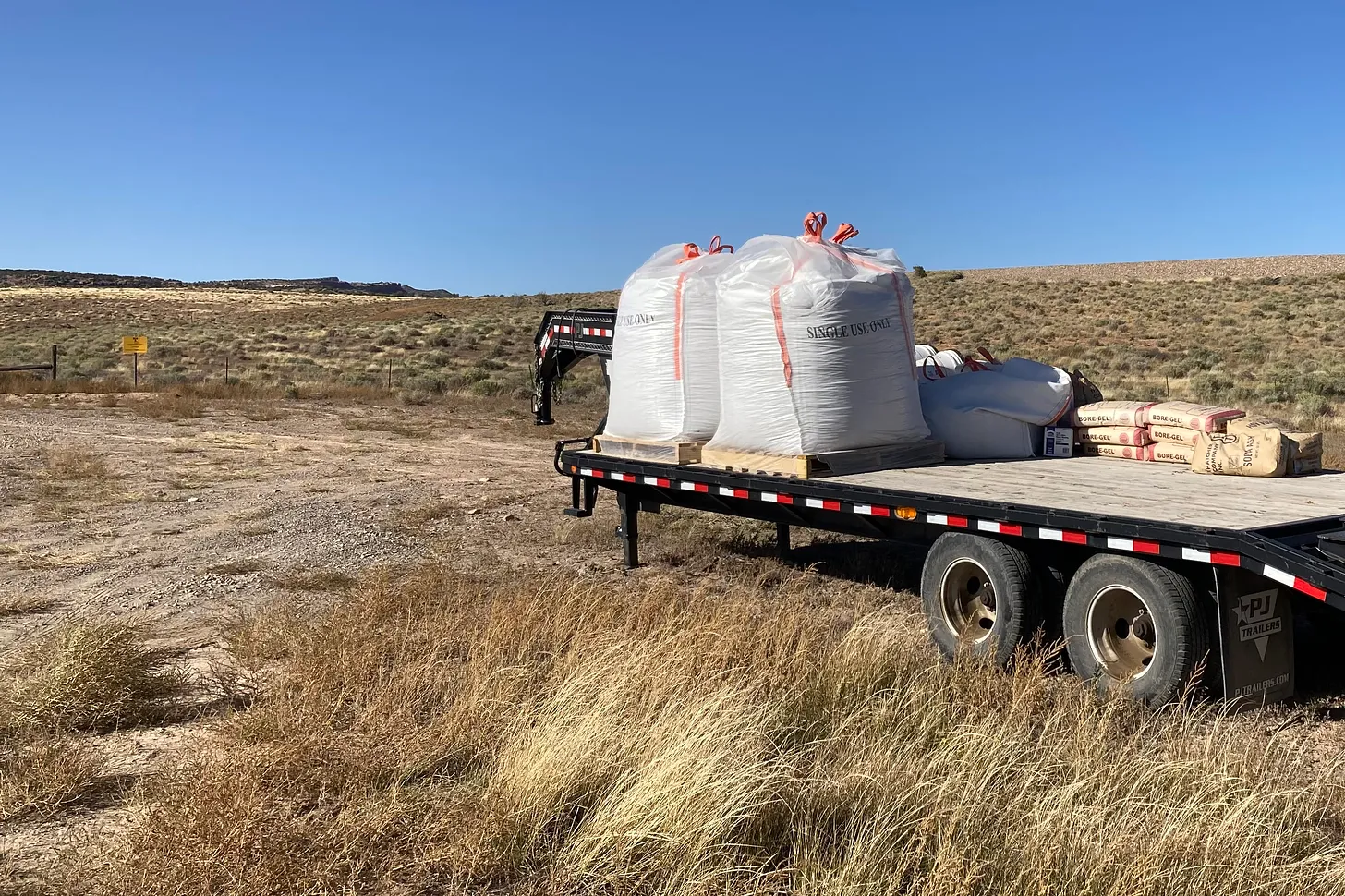
Drilling material near Slick Rock, Colorado. Jonathan P. Thompson photo.

My email box has been hopping with press releases from various lithium and uranium mining companies tooting their horn about their latest acquisition or exploratory drilling campaign in the Four Corners Country, which tends to get my hackles up. And yet, among the noise is still very little news about actual mining. I have to admit I’m a bit surprised by the lack of ore production, given all of the hype over the last few years. 

I did visit one of the more contentious exploratory drilling projects just outside Slick Rock, Colorado. They weren’t drilling when I was there, but a flatbed trailer loaded down with drilling material was on hand, right next to the radioactive-symbol signs warning folks of the presence of a uranium mill tailings repository. Anfield, one of the bigger companies operating in the area, is behind that project. 

Anyway, here’s a sampling of the hype — and a bit of whatever the opposite of hype is:

  • Thor Energy says it has begun drilling at its Wedding Bell Project, which sits right near the San Miguel-Montrose county line in the Uravan Mineral Belt in western Colorado. The area has seen heavy prospecting (and a bunch of road-building) in the past. 
  • Pegasus Resources says it has secured drilling permits — contingent upon posting a reclamation bond — for its Energy Sands and Jupiter claims along the San Rafael Swell, west of Green River, Utah, and just north of I-70 where it intersects the Swell. They’re planning on drilling 48 exploratory wells on 50’x50’ pads. 
  • C2C Metals acquired five groups of uranium mining claims in the Uravan Mineral Belt, including the Eula Belle and Mum-Whitney claims in Montrose County and the Norther, Spud Patch, and Dulaney extension in San Miguel County. The claims cover a total of about 5,400 acres. 
  • American Battery Materials says it has received the “necessary agency approvals” — pending the posting of a financial bond — to reenter an old oil and gas well in the Lisbon Valley of southeastern Utah to search for lithium. 
  • And then there’s the anti-hype: Even as all of these projects appear to be ramping up the exploratory phase, one of the few companies that’s actually producing lithium is shutting down. That’s right. U.S. Magnesium, which extracts lithium and magnesium and other materials from Great Salt Lake brine, is idling its operations and laying off 186 employees, according to KUER. They cite “deteriorating market conditions for lithium carbonate.” That is, the price for the stuff isn’t high enough to make mining it profitable. 
  • More information and locations of most of these projects can be found at the Land Desk’s Mining Monitor Map.

📸 Parting Shot 🎞️

I guess this sort of thing was inevitable? The Family Farm Alliance is now offering “Make Alfalfa Great Again” hats. It makes me wonder what that would mean, exactly? Maybe they want to genetically engineer it to use less water? Hmmm…

Credit: Family Farm Alliance via The Land Desk

#Colorado passes #California in the fast lane of EV sales — Allen Best (@BigPivots) #ActOnClimate

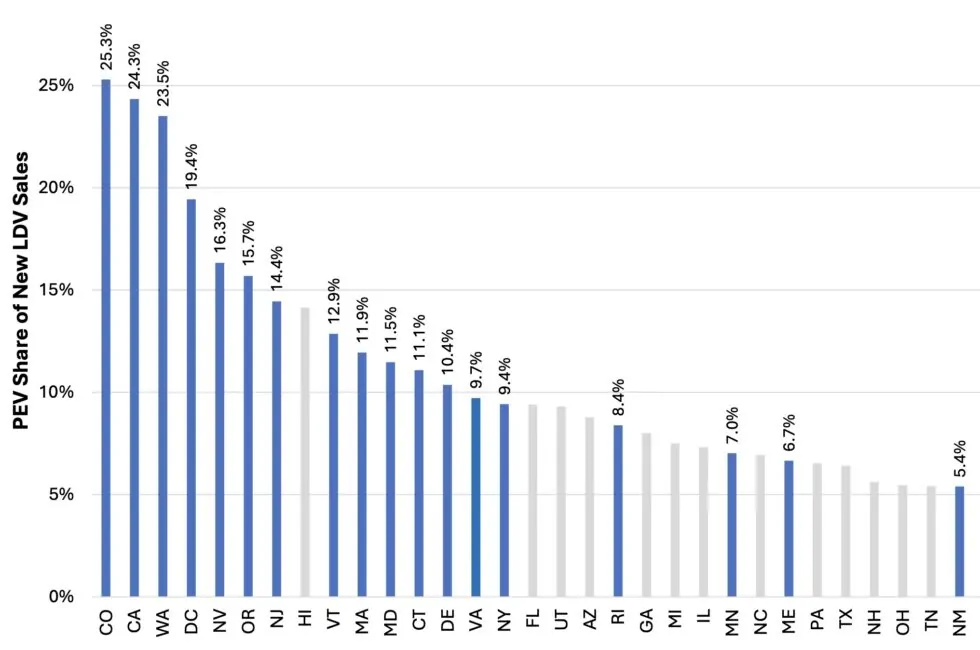
EVs and plug-in hybrids were 25.3% of all new-car sales in third quarter of this year. What might slow the momentum? Credit: Allen Best/Big Pivots

Click the link to read the article on the Big Pivots website (Allen Best):

December 5, 2024

Colorado earlier this year surpassed California in the sales of electric vehicles and plug-in hybrids.

From July through September, 25.3% of all new cars sold in Colorado were EVs or plug-in hybrids. That’s a 5.4% increase from the April-June time period. California, the perennial leader in EV sales, recorded 24.3% increase during the same period.

Washington state was next on the sales list at 23.5% followed by District of Columbia at 19.4% and Nevada at 16.3%, according to data from the Northeast States for Coordinated Air Use Management.

In Colorado, 82% were full electric vehicles and 18% were plug-in hybrid electric vehicles.

Spurred by the most lucrative incentives in the nation, Colorado has been on a roll in EV sales throughout 2024.

“Colorado’s nation-leading progress in electric vehicle adoption is a key part of our ambitious efforts to achieve net-zero emissions in Colorado by 2050,” said Will Toor, executive director of the Colorado Energy Office.

“Between investments in charging infrastructure and generous incentives to bring down purchase and lease costs, our commitment to making electric vehicles an affordable and reliable option for Coloradans is paying off.”

Colorado still lags California in EV sales for the first cumulative nine months of 2024, according to the Colorado Automobile Dealers Association.

Travis Madsen, the transportation program manager for the Southwest Energy Efficiency Project, concurred with that assessment. “Things are heading in the right direction” he said.

Next year, Colorado will offer somewhat smaller incentives and whether the federal incentives will remain intact is an open question. “We will be tasked with keeping the momentum going,” said Madsen.

Carrots aplenty line the path to the sales lot. All Coloradans can get a $5,000 state tax credit for purchasing or leasing those new EVs (battery electric and plug-in hybrid electric) with manufacturer’s suggested retail prices under $80,000. An additional $2,500 can be applied against purchase of EVs with suggested retail prices of under $35,000.

The $5,000 state tax credit is available through the end of this year. It drops to $3,500 starting in January 2025.

Income-qualified Coloradans exchanging an eligible old or high-emitting vehicle can also take advantage of a $6,000 rebate through the Vehicle Exchange Colorado program for a new EV purchase or lease and a $4,000 rebate for a used EV purchase or lease.

Madsen pointed out that the income-qualified EV rebate program offered through Xcel Energy was a great success, although all available funds have now been reserved. The program had a budget of $6 million, and somewhere around 1,200 customers claimed financial help for purchase of new or used EVs. “The $6 million budget went pretty fast,” he said.

See also: Why this Arvada family decided to lease an electric car

 In addition, Coloradans may be eligible for a $7,500 federal tax credit for the purchase or lease of certain EV models that meet specific manufacturing requirements. A $4,000 federal tax credit is available for used EV purchases and leases.

Might those federal tax credits be curbed? The national press has chewed over the possibility that Republicans under Trump, who has been heavily influenced by Elon Musk, may try to reduce or eliminate the tax breaks for EV buyers.

Madsen said he would not be surprised if the incoming administration changes the tax credit for individual vehicle purchases or leases, but is more optimistic that the commercial EV tax credit that was made available through the Inflation Reduction Act of 2022 will prove more durable. That tax credit has helped dealers offer better deals on EV leases even for models that do not qualify for the individual credit.

Republicans hold a slim five-vote majority over Democrats in the House of Representatives, 220 to 215. Battery factories and other components of EV manufacturing can be found in quite a few congressional districts represented by Republicans. Madsen speculates that some Republicans may vote against efforts to slow the momentum of EV adoption, because the credit is providing economic benefits in a diverse array of locations across the country.

Meanwhile, car manufacturers continue with plans to roll out new models such as the Chevy Equinox EV. Madsen sees no fundamental changes. “If federal support declines, they might manufacture fewer vehicles,” he said. “Those kinds of changes are possible.”

Also at issue has been the confidence level for charging. Colorado, in some cases working with the federal government, now has more than 5,500 publicly available charging ports. Another $5 million has been awarded by the state to install an additional 576 ports via the Charge Ahead Colorado program.

First road charge for Coyote Gulch’s Leaf in Granby May 19, 2023. Note the Colorado Energy Office’s logo below the connectors on the unused charger.