
Click the link to read the article on The Land Desk website (Jonathan P. Thompson):
November 27, 2024
📈 Data Dump 📊
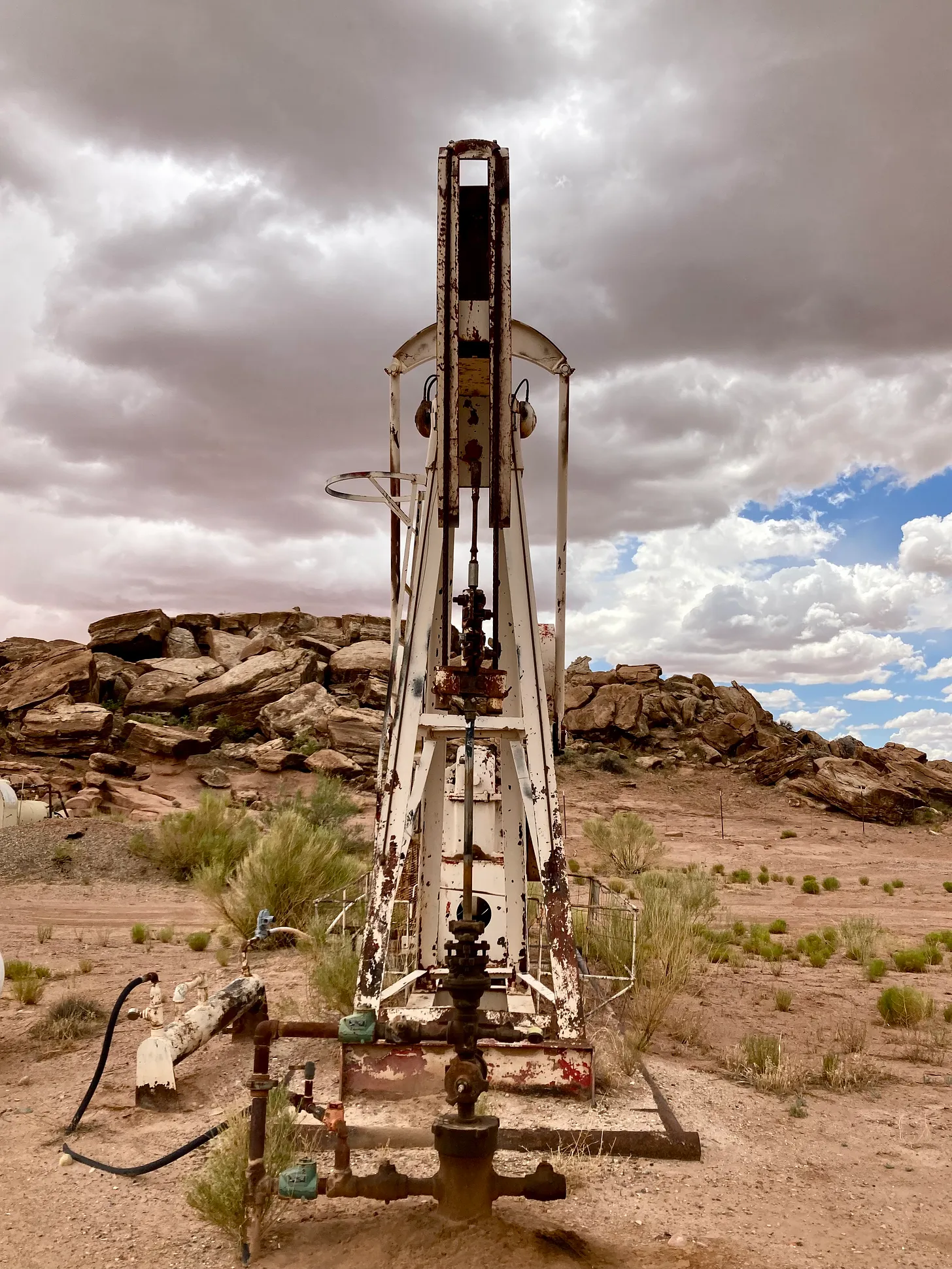
The Land Desk is taking a break from its regularly scheduled programming to set something straight. It has come to our attention that one or more of our readers don’t realize that under the Biden administration the United States has become the planet’s leading oil and gas producing powerhouse. Well, it has, mostly on the strength of a drilling frenzy on public, private, and state land in the Permian Basin of New Mexico and Texas.
For those who pay attention, this shouldn’t come as a surprise. But apparently it is news to those who have been duped by President-elect Trump’s claims that his “drill, baby, drill” agenda will bring an end to Biden’s alleged “war on energy” and make America energy-dominant again. There is no war on energy, and under the Biden administration the U.S. has been more “energy dominant” than ever before. In fact, it is the globe’s leading producer (and consumer) of petroleum and natural gas.

This is not something to celebrate, or for the outgoing administration to take pride in — all that oil and gas gets burned, adding more greenhouse gases to the atmosphere and exacerbating the climate crisis. It’s just the facts, which include:
- U.S. oilfields are producing more crude oil and natural gas than ever before, and production continues to increase steadily, particularly from the Permian Basin.
- 13.4 million barrels per day: Crude oil production from U.S. oil fields in August 2024. In August 2008 it was 5 million barrels per day.
- The U.S. is the globe’s leading producer of crude oil, extracting as much crude oil and other petroleum liquids as Saudi Arabia and Russia combined.
- 21.91 million barrels/day; 11.13 million b/d; 10.75 million b/d: U.S.; Saudi Arabia; and Russia crude oil and other petroleum liquid production in 2023. They are the world’s top three producers.
- The U.S. is even more methane-dominant, producing 25% of the globe’s natural gas.
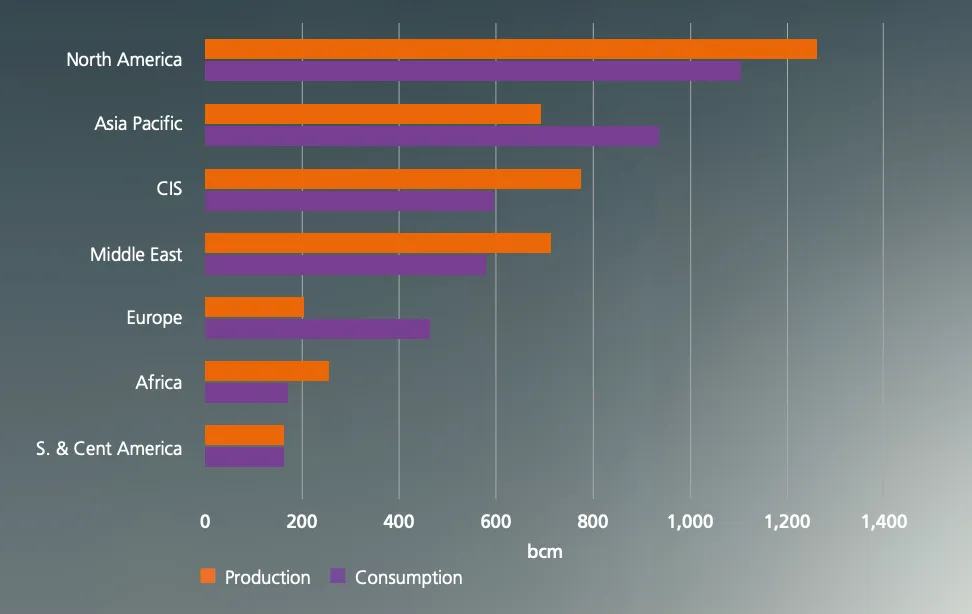
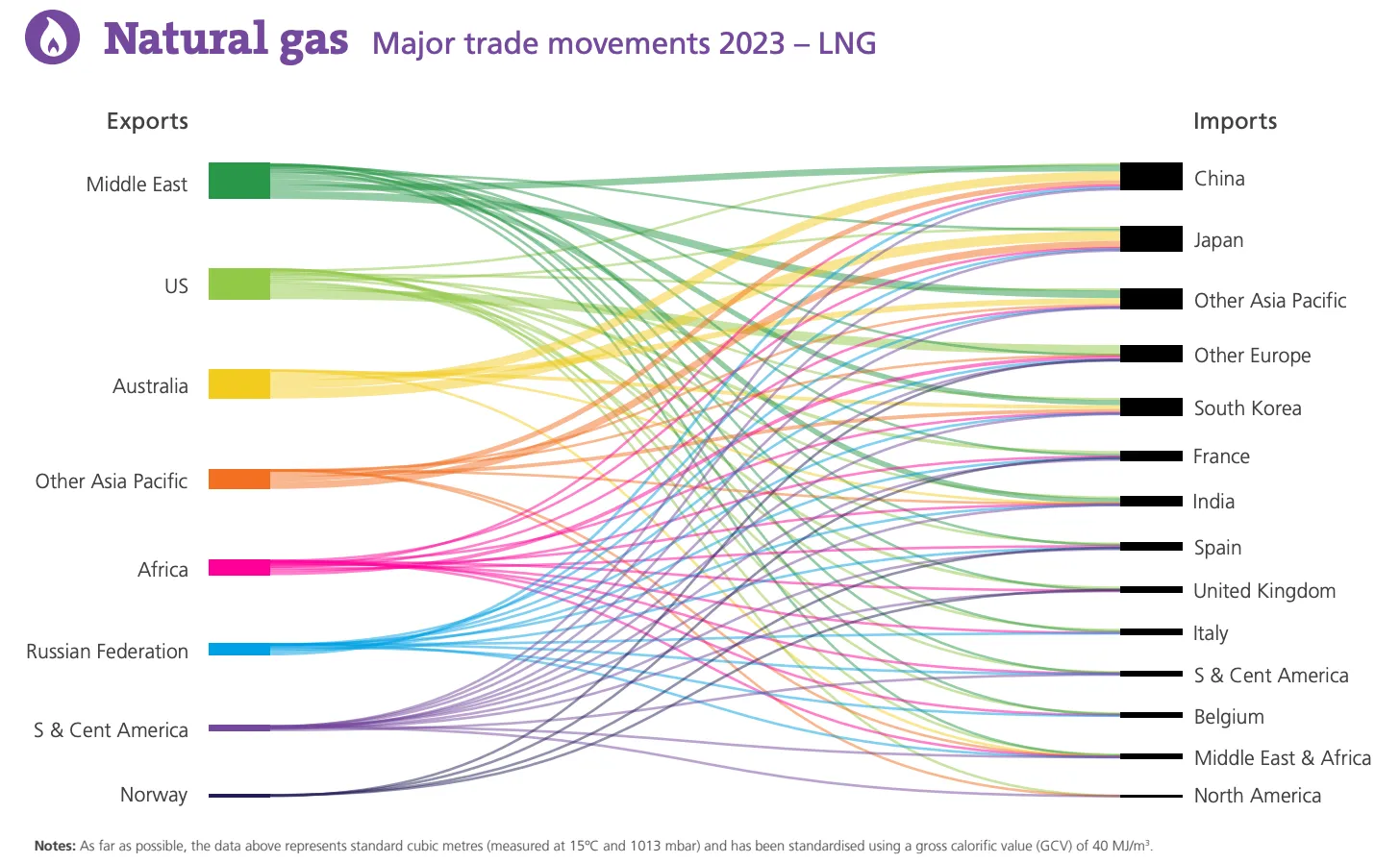
- The U.S. is exporting more liquefied natural gas, crude oil, and petroleum products than ever before, becoming one of the world’s leading exporters of hydrocarbons.
- The U.S. is a net exporter of crude oil and other petroleum products, making it more “energy independent” than it has been since the early 1900s — if you fall for that sort of thing.

- The U.S. also continues to import large volumes of crude oil, because oil is a global commodity and many of the nation’s refineries are equipped to handle “sour” crude from the Middle East.
- Oil and gas corporations have enjoyed tremendous profits during the Biden administration.

Whether this is because of or in spite of or totally unrelated to the Biden administration’s policies is open to debate. Biden revived or implemented a handful of new regulations on oil and gas drilling during his term, some of which have only just begun to take effect. And the Bureau of Land Management offered less acreage for federal oil and gas leasing than previous administrations. But the agency also handed out about as many drilling permits, on average, as the Obama and Trump administrations.
That the oil and gas industry was able to reap such bounty regardless is partially due to the fact that, intentionally or not, Biden’s policies were crafted to allow drilling to continue at a rapid pace while still giving the taxpayers a better return and protecting more fragile areas. This included designating (intentionally or not) the Permian Basin as a de facto oil and gas sacrifice zone. A huge majority of the drilling permits issued under Biden were for federal land on the New Mexico side of the Permian Basin, and the Environmental Protection Agency delayed its response to rising pollution in the area, allowing drilling to go on unfettered. Nearly all of the domestic crude oil and natural gas production growth of the last several years has come from the Permian Basin.

The incoming Trump administration has announced plans to roll back Biden-era environmental protections and expedite oil and gas drilling permitting and leasing on federal lands shortly after taking office. This will almost certainly include opening up more acreage in Wyoming, Utah, and Alaska to leasing. And they’ll try to issue more drilling permits in those places, too.
But even if companies lease more land or pull more permits in Wyoming, they won’t necessarily put them to use— most oil and gas leasing is speculative, anyway, meant to build up a corporation’s land-holdings to entice more investment. And petroleum firms currently are sitting on thousands of unused federal drilling permits. These days the industry has shown little interest in developing areas outside of the Permian Basin, and the Biden administration has more or less let it run rampant down there, leading to the current state of U.S. energy dominance.
Oil and gas production from the Permian Basin will continue to increase for the foreseeable future regardless of who is in the White House. But you shouldn’t expect Trump’s “drill, baby, drill” agenda to further increase drilling or oil and gas production — or to lead to lower gasoline prices. In fact, Trump’s threatened tariffs on Canada will actually increase gas prices in some parts of the U.S., because we get quite a bit of crude oil from them. Besides, his policies are not really aimed at bolstering production or bringing down your prices. They are intended to cut costs for petroleum corporations, thereby increasing their profits, which are already ridiculously high. And it will come at the expense of human health and the environment. [ed. emphasis mine]
⛏️Mining Monitor ⛏️
My email box has been hopping with press releases from various lithium and uranium mining companies tooting their horn about their latest acquisition or exploratory drilling campaign in the Four Corners Country, which tends to get my hackles up. And yet, among the noise is still very little news about actual mining. I have to admit I’m a bit surprised by the lack of ore production, given all of the hype over the last few years.
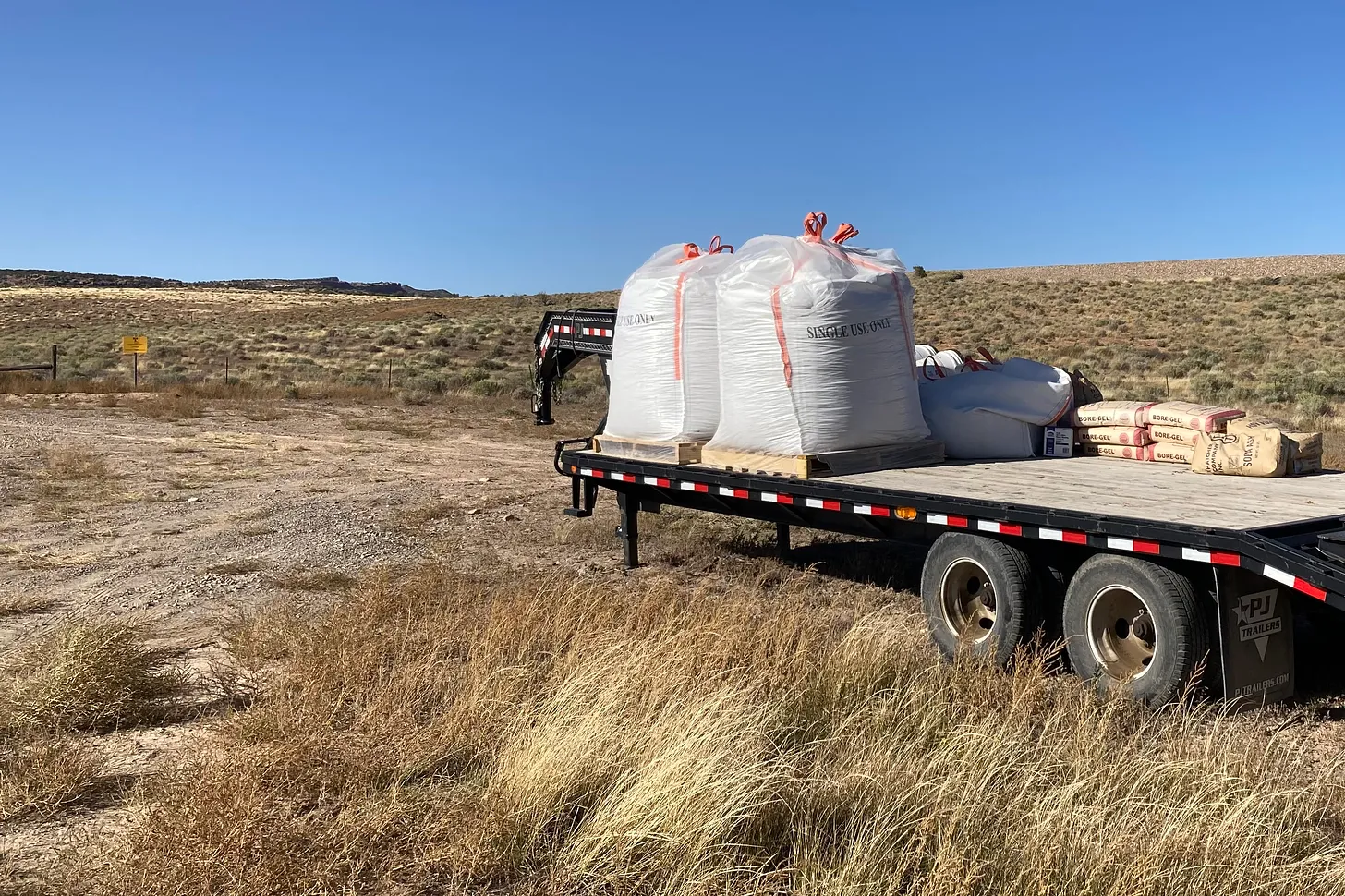
I did visit one of the more contentious exploratory drilling projects just outside Slick Rock, Colorado. They weren’t drilling when I was there, but a flatbed trailer loaded down with drilling material was on hand, right next to the radioactive-symbol signs warning folks of the presence of a uranium mill tailings repository. Anfield, one of the bigger companies operating in the area, is behind that project.
Anyway, here’s a sampling of the hype — and a bit of whatever the opposite of hype is:
- Thor Energy says it has begun drilling at its Wedding Bell Project, which sits right near the San Miguel-Montrose county line in the Uravan Mineral Belt in western Colorado. The area has seen heavy prospecting (and a bunch of road-building) in the past.
- Pegasus Resources says it has secured drilling permits — contingent upon posting a reclamation bond — for its Energy Sands and Jupiter claims along the San Rafael Swell, west of Green River, Utah, and just north of I-70 where it intersects the Swell. They’re planning on drilling 48 exploratory wells on 50’x50’ pads.
- C2C Metals acquired five groups of uranium mining claims in the Uravan Mineral Belt, including the Eula Belle and Mum-Whitney claims in Montrose County and the Norther, Spud Patch, and Dulaney extension in San Miguel County. The claims cover a total of about 5,400 acres.
- American Battery Materials says it has received the “necessary agency approvals” — pending the posting of a financial bond — to reenter an old oil and gas well in the Lisbon Valley of southeastern Utah to search for lithium.
- And then there’s the anti-hype: Even as all of these projects appear to be ramping up the exploratory phase, one of the few companies that’s actually producing lithium is shutting down. That’s right. U.S. Magnesium, which extracts lithium and magnesium and other materials from Great Salt Lake brine, is idling its operations and laying off 186 employees, according to KUER. They cite “deteriorating market conditions for lithium carbonate.” That is, the price for the stuff isn’t high enough to make mining it profitable.
- More information and locations of most of these projects can be found at the Land Desk’s Mining Monitor Map.
📸 Parting Shot 🎞️
I guess this sort of thing was inevitable? The Family Farm Alliance is now offering “Make Alfalfa Great Again” hats. It makes me wonder what that would mean, exactly? Maybe they want to genetically engineer it to use less water? Hmmm…
