Click the link to read the article on the EOS website (Peter Reiners). Here’s an excerpt:
May 2, 2025
As the world blows past 1.5°C of anthropogenic warming and looks increasingly likely to hit 2.6°C–3.1°C by the end of the century, plenty of controversy still exists, even among geoscientists, about how to slow, stop, or reverse the rapid climate change we are causing. As so many studies have documented, such warming will cause inundation of many coastal cities, trillions of dollars in damage from extreme weather, widespread species extinctions, and unrelenting heat waves. It will also fundamentally threaten financial sectors and economies at all scales. One thing is clear: To mitigate these outcomes, humanity’s first priority should be to drastically reduce its annual emissions of roughly 40 gigatons (billion metric tons) of carbon dioxide (CO2), the greenhouse gas most responsible for driving warming. Without this reduction, other measures will be only modestly effective at best. But unfortunately, at this point, the scale of mitigation needed to keep warming to below 2°C–3°C goes beyond reducing annual emissions. We must also remove and store carbon that has accumulated in the atmosphere…
Not only has focusing on annual emissions over the past few decades failed to reduce them, but it’s also not our annual emissions today (and into the future) that are causing the 1.55°C of warming we’re witnessing. It’s how much CO2 we have already emitted. Our cumulative emissions of 1.8 trillion tons (1,800 gigatons) of CO2 from energy and industry—heavier than the combined mass of all living things on Earth—taken from geologic reservoirs and dumped into the atmosphere, will stay there (and in the ocean) for thousands of years. Even on that happy day when we finally start reducing emissions, we will be the farthest we have ever been from solving the problem, and in fact, we will still be adding to it…
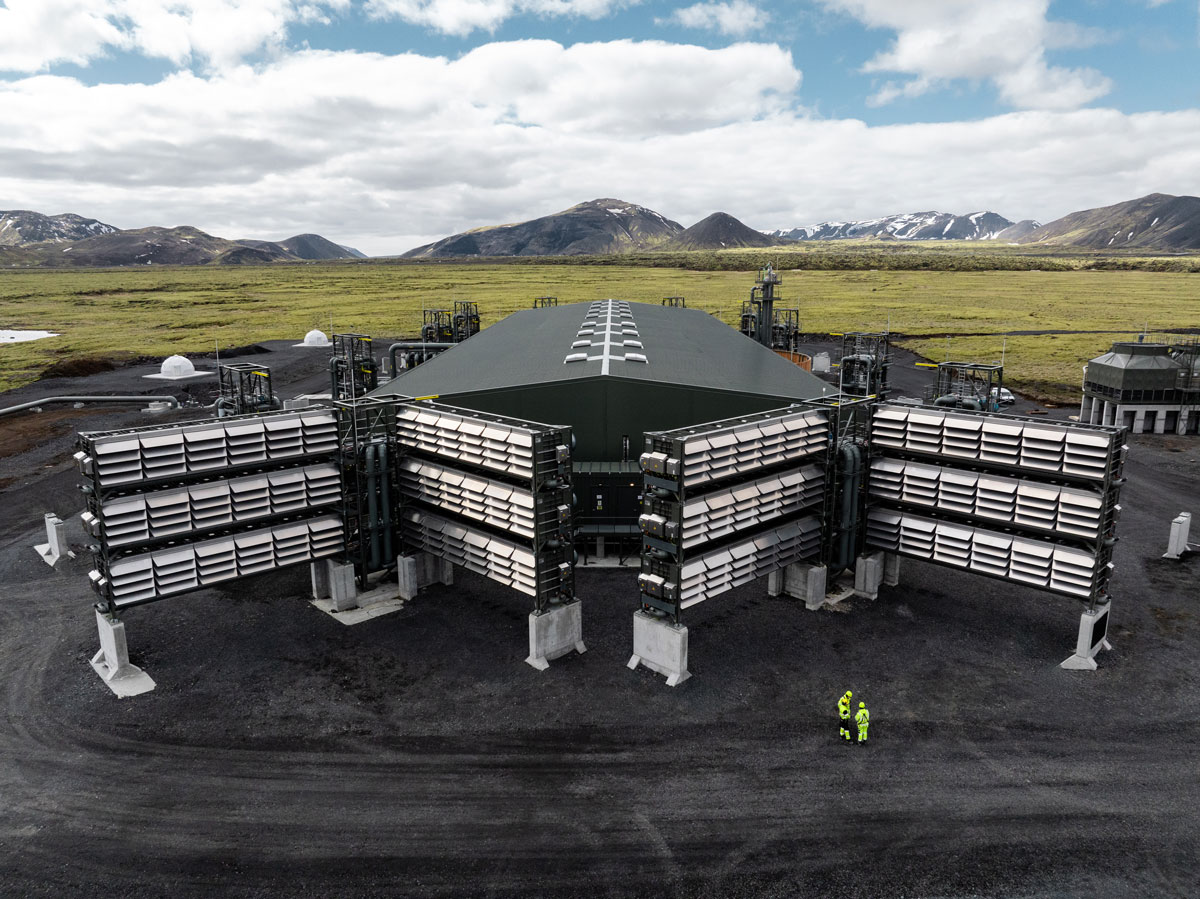
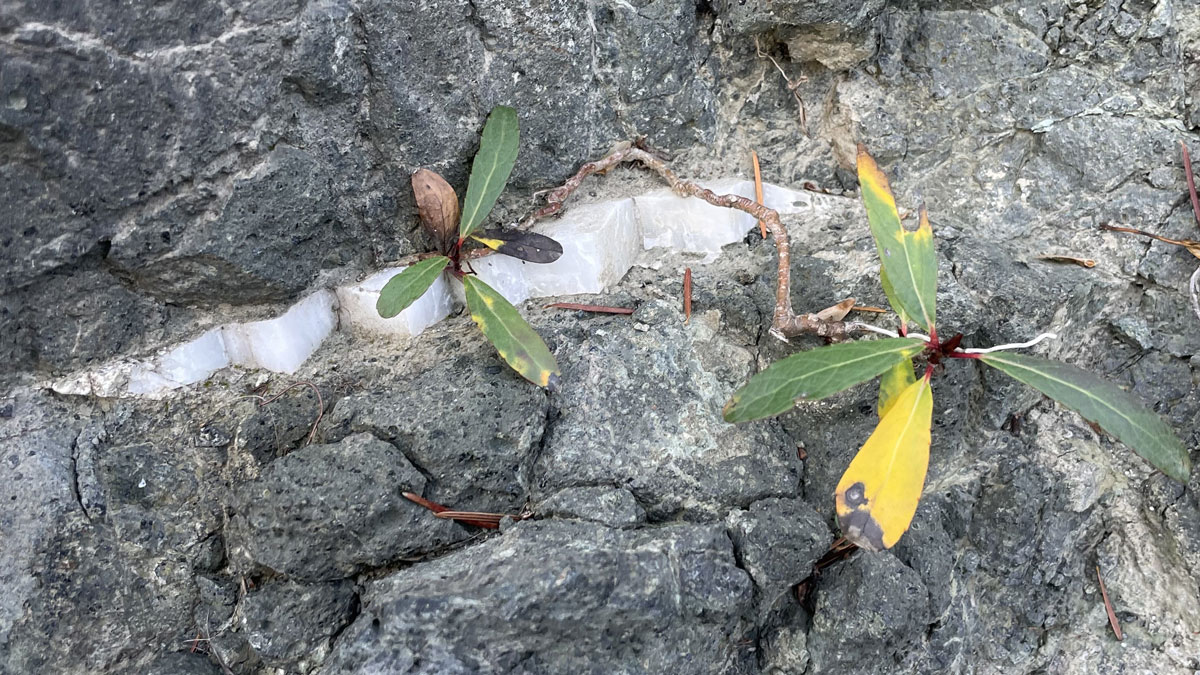
The biggest opportunity—and perhaps the biggest responsibility—for geoscientists to contribute to mitigation is through facilitating durable carbon dioxide removal (CDR). Concerns are sometimes raised about CDR as a form of climate intervention, or geoengineering, yet it is far less risky than the centuries-long geoengineering experiment of using the atmosphere as a sewer. Indeed, removing gigatons of CO2 per year is essential to net zero strategies and avoiding disastrous amounts of warming, as unequivocally stated by the Intergovernmental Panel on Climate Change, Energy Transitions Commission, and American Physical Society. Three principles are generally considered fundamental to CDR. First, CO2 already in the atmosphere must be taken out. This principle distinguishes it from point source carbon capture and storage (CCS), which simply reduces new CO2 emissions from fossil fuel energy and industry sources while competing with clean energy…Many approaches to CDR exist. Direct air capture (DAC), for example, is a rapidly growing method in which CO2 is pulled straight from the atmosphere. Biomass carbon removal and storage (BiCRS) methods capture a fraction of the 480 gigatons of CO2 that plants naturally absorb each year and prevent it from cycling back to the atmosphere by converting biomass to forms that can be isolated and stored. Other CDR approaches focus on managing ecosystems to stimulate more CO2 removal than would occur naturally, the second of the three principles of CDR. Examples include various strategies for enhanced rock weathering in croplands or forests and for marine CDR, such as using nutrients to promote biomass growth and raising the alkalinity of seawater so it pulls more CO2 from the air. Third, and most important, is the fact that however CO2 is removed, it must be stored durably, with minimal likelihood it can return to the atmosphere for a long time. Using captured carbon to create marketable stuff like fertilizer and chemicals may seem economically savvy, but it’s not a durable approach. The entire global industrial demand for CO2 is less than 1% of our annual emissions, and much of this carbon goes right back to the atmosphere or is used for enhanced oil recovery (EOR) to extract more petroleum.