
Mrs. Gulch’s landscape June 3, 2025


Click the link to read the article on the KUNC website (Alex Hager):
June 2, 2025
This story is part of ongoing coverage of water in the West, produced by KUNC in Colorado and supported by the Walton Family Foundation. KUNC is solely responsible for its editorial coverage.
The Colorado River basin has lost huge volumes of groundwater over the past two decades according to a new report from researchers at Arizona State University.Researchers used data from NASA satellites to map the rapidly-depleting resource.
The region, which includes seven Western states, has lost 27.8 million acre-feet of groundwater since 2003. That’s roughly the volume of Lake Mead, the nation’s largest reservoir.

The findings add a layer of complication for the already-stressed Colorado River. As demand for its water outpaces supply, more users may be turning to groundwater instead, which is often less regulated than water from above-ground rivers and streams.
The majority of water conservation work throughout the Colorado River basin has been focused on cutbacks to surface water use. Some river experts say the focus should be broader.
Brian Richter analyzes water policy and science as president of Sustainable Waters. He was not an author of the study but says its findings show the need for a “holistic perspective” on water management from the region’s leaders.
“It suggests that we have to become more aggressive and more urgent in our reduction of our overall consumption of water,” he said.

The study found that groundwater losses in the Colorado River basin were 2.4 times greater than the amount of water lost from the surfaces of Lake Powell, Lake Mead, and a number of other smaller reservoirs that store Colorado River water. The study highlights agriculture’s outsized water use in the Colorado River basin, and said that industry could suffer some of the greatest consequences if the region keeps sapping limited water supplies.
Most of the losses happened in the river’s Lower Basin states of Arizona, California and Nevada. The study says Arizona’s “Active Management Areas,” which the state set up to regulate groundwater withdrawal, may have helped slow depletion.
Kathleen Ferris, an architect of Arizona’s groundwater laws, said much more work is needed to protect groundwater.
“We are not on track,” said Ferris, who was not involved in the study. “We are way behind the eight ball, and I’m really sad that nothing seems to get done. We should have been thinking about this issue 25 years ago.”
Ferris is now a senior research fellow at Arizona State University’s Kyl Center for Water Policy.
As experts call for more robust groundwater management policies, Richter said this study presents a small silver lining: scientists are producing better data than ever before, giving policymakers a better sense of the region’s water problems.
“From a public policy standpoint, this is bad news,” he said. “This tells us that it’s worse than we thought, because now we understand what’s going on underground as well. From a science perspective, this kind of study is good news, because it says that we are now much more capable of accurately describing a water problem like what we’re experiencing in the Colorado River system.”

Click the link to read the article on the Utah News Dispatch website (Kyle Dunphey):
May 30, 2025
Utah has some of the best infrastructure in the country when compared to other states, although its canals and levees are in need of repair.
That’s according to the American Society of Civil Engineers’ report card, released Thursday, which gives the Beehive State an overall C+ grade. That’s tied with Georgia and Wisconsin for the highest score of all U.S. states and territories.
“A C+ means our infrastructure is meeting the needs of Utahns, but there’s still room for improvement,” said Craig Friant, a civil engineer who worked on the report. “This is a sign that we’re doing things well here in Utah.”
While the state has one of the highest grades, the rest of the country is not far behind. The national grade is C, and most states and territories received a C or C- grade — South Carolina and Louisiana each received a D+, West Virginia received a D and Puerto Rico received a D-, the lowest grade.
According to the American Society of Civil Engineers, or ASCE, an A grade is defined as exceptional and fit for the future; B is good and adequate for now; C is mediocre, requiring attention; D is poor and at risk; and F is failing, requiring critical attention and unfit for purpose.
The report lists 12 separate areas of infrastructure for each state. Consider Utah’s report:
- Aviation: C+
- Bridges: B
- Canals: D+
- Dams: C+
- Drinking water: B-
- Hazardous waste: C+
- Levees: D-
- Roads: B+
- Solid waste: B-
- Stormwater: C
- Transportation: B-
- Wastewater: C
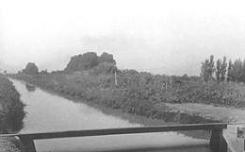
The majority of the state’s levees and canals are old, according to the report — most levees are more than 60 years old, and many of the state’s canals were built in the 19th century for irrigation purposes.
The report also noted that data isn’t readily available for levees and canals, which poses another risk.
“These are systems that protect households and businesses from flooding, yet we don’t know their condition in many cases, which is a major public safety hazard,” said Friant, who pointed to outdated levees in Salt Lake County that protect residential areas from flooding during runoff or storms.
These levees don’t currently meet the Army Corps of Engineers standards, putting them at risk of being delisted — if that happens, the Federal Emergency Management Agency, or FEMA, could eventually reclassify the land surrounding the Salt Lake City International and Provo City airports as flood plains, according to the report. That could “drastically” alter how the land is assessed and insured, engineers say.
Recommendations for improving Utah’s infrastructure
What can the state do to boost its grade? The report gives several recommendations, including more analysis and better funding when it comes to infrastructure.
“Specifically, detailed written plans are critical for the areas of water resources, canals, transportation, transit, and waste management,” the report reads. “The state should be providing consistent financial support for project improvements, maintenance, resiliency, and risk reduction through reliable funding streams year after year that facilitate this planning.”
Prioritizing funding for bridges is another recommendation. Even though Utah received a B, engineers say many of the state’s bridges are nearing the end of their “service lives.”
The state should also increase funding for its Dam Safety Program. Utah currently has hundreds of dams considered “high hazard,” which means if they fail, it would cause severe damage and loss of life.
That includes the Panguitch Lake Dam, which showed signs of seepage last year after cracks appeared near the top, likely the result of ice pushing up against the concrete. The roughly 1,700 residents of Panguitch were put on notice to prepare for evacuation, but crews were able to break the ice away and stabilize the dam.
To avoid a repeat scenario, the report recommends the state dump at least $10 million each year into the Dam Safety Program and try to rehabilitate all dams within 50 years. “An increase to $20 million per year would allow faster repairs but could still require 25 years for all required repairs,” the report reads.
Bolstering “multi-modal” transportation options — like expanding bus or train networks —is another recommendation as the state deals with rapid population growth.
And lastly, Utah should make sure the Great Salt Lake reaches and remains at healthy levels — replacing canals with pipelines will help reduce evaporation, and could ultimately result in more water flowing to the lake, according to the report.

Click the link to read the article on The Denver Post website (Elise Schmelzer). Here’s an excerpt:
May 31, 2025
Concerningly low amounts of water are flowing from Rocky Mountain snowpack this spring, a summer of drought looms across swaths of the West, and the negotiators tasked with devising a sustainable long-term water plan for the 40 million people who rely on the Colorado River are running out of time. Commissioners from the seven states in the Colorado River Basin — Colorado, New Mexico, Wyoming, Utah, Arizona, California and Nevada — must create a plan that will govern how those states divvy up the river’s water after the current guidelines expire at the end of 2026. As the river shrinks due to drought and climate change, the negotiators must decide who will take less water — and they need to do so in the next few months.
“The way the law of the river is set up, this is a decision that takes the seven states, and there are so many stakeholders and users who depend on that,” said Jennifer Pitt, Colorado River program director at the National Audubon Society. “We are really at their mercy and we are just about out of time.”
The negotiators, who met in Las Vegas this week, have repeatedly said they are committed to finding a consensus solution, but have not yet done so and have already blown past previous deadlines set by federal authorities more than a year ago. JB Hamby, California’s negotiator, said in an interview that the states have been meeting several times a month since December, when tensions between the states burst into public view during a conference. Both the frequency and the tenor of the meetings have since improved, he said.
Those who depend on the river are already dealing with uncertainty: this season’s mountain snowpack is expected to deliver about half the median amount of water to the system’s two major reservoirs, which are already two-thirds empty. Years of drought not balanced by decreases in water consumption have drained Lake Mead and Lake Powell, and aridification fueled by climate change is expected to continue to reduce the flow of the river that makes modern life possible across the Southwest. The Colorado River irrigates more than 5 million acres of farmland — including water supplies for much of the nation’s winter vegetables — and comprises large portions of many Western cities’ water portfolio, said Brad Udall, senior water and climate research scholar at Colorado State University’s Colorado Water Institute.

Click the link to read the article on the Writers on the Range website (Ted Williams):
May 19, 2025
Corn ethanol, also known as grain alcohol, has been burned in gasoline engines and human stomachs since before Henry Ford was born. It’s hard on both, so until 35 years ago it never caught on much, at least not for engines.
But in 1990, Congress amended the Clean Air Act, requiring gasoline to be spiked with an oxygen-containing compound to reduce carbon monoxide. With the help of corn-belt farmers and public officials, the oxygenate of choice became corn-based ethanol. Now, most gasoline sold in the United States contains at least 10 percent ethanol, also called “gasohol.”
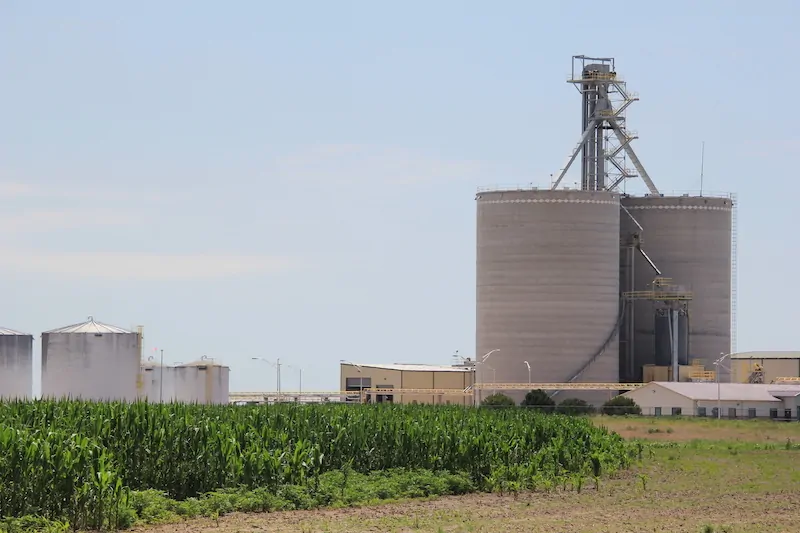
Fifty ethanol plants produced 900 million gallons of ethanol in 1990. In 2024, 191 ethanol plants produced a record 16.22 billion gallons. From the corn belt, ethanol production has spread West. Today, ethanol is produced in Oregon, Idaho, Colorado, New Mexico, Wyoming, Arizona and California.
Though it is hyped as an elixir for what ails the earth, ethanol has long been a disaster that we can’t seem to remedy. Calling it wasteful and inefficient doesn’t begin to list its drawbacks: It costs more to produce than gasoline, reduces mileage, corrodes gas tanks and car engines, pollutes air and water, and, by requiring more energy to produce than it yields, increases America’s dependence on foreign oil.
While gasohol releases less carbon monoxide than gasoline, it emits more smog-producing volatile organic compounds. And ethanol plants produce more pollutants than oil refineries, including high levels of carcinogens, thereby routinely violating already relaxed pollution permits. In 2007, under industry pressure, ethanol plants were exempted from the EPA’s most stringent pollution regulations.
Of all crops grown in the United States, corn demands the most massive fixes of herbicides, insecticides, and chemical fertilizers, while creating the most soil erosion. Producing each gallon of ethanol also results in 12 gallons of sewage-like effluent, part of the toxic, oxygen-swilling stew of nitrates, chemical poisons and dirt that gets excreted from corn monocultures.
From Kentucky to Wyoming, this runoff pollutes the Mississippi River system, harming aquatic animals all the way to the Gulf of Mexico, where it expands a bacteria-infested, algae-clogged, anaerobic “Dead Zone.” In 2024, this Dead Zone was about the size of New Jersey.
Thanks to billions of dollars in tax credits, rebates, grants and other subsidies pumped into corn ethanol production, farmers are motivated to convert marginal ag land to corn plantations. Some farmers even drain wetlands, the most productive of all wildlife habitats.
Cornell University professor David Pimentel, who died in 2019, was the first agricultural scientist to expose ethanol production as a boondoggle. While his data are old, they provide a snapshot of our current situation and a valuable model for groups like the Environmental Integrity Project, a nonprofit “holding polluters and government agencies accountable under the law,” as it digs out the real costs of gasohol.
Without even factoring in the fuel required to ship ethanol to blending sites, Pimentel found that it takes about 70 percent more energy to produce ethanol than we get from it. Then, figuring in state and federal subsidies, he found that ethanol costs $2.24 a gallon to produce, compared with 63 cents for gasoline.
Pimentel determined that allocating corn to ethanol production also raises ethical questions: “Abusing our precious croplands to grow corn for an energy-inefficient process that yields low-grade automobile fuel amounts to unsustainable, subsidized food burning.”
And Pimentel chided the U.S. Department of Agriculture for taking planting and yield data only from states with the best soils and productivity. The Department also didn’t fully take into account fossil-fuel expenditure for operation and repair of farm machinery or for production of fertilizers made from natural gas.
What stymies reform? Agricultural communities have built valuable support from the bottom up—from local agricultural communities and regional politicians to U.S. presidents such as Ronald Reagan, Barack Obama, Joe Biden and Donald Trump. The beneficiaries of America’s ethanol addiction have become behemoths that get bigger and hungrier with each feeding.
If President Trump really wants to cut wasteful and inefficient spending, decrease our dependence on foreign oil and prove that he wants America to have “among the very cleanest air and cleanest water on the planet,” he needs to end what now amounts to government-forced gasohol use.
Ted Williams is a contributor to Writers on the Range, writersontherange.org, an independent nonprofit dedicated to spurring lively conversation about the West. He is a longtime environmental writer.