Click the link to read the article on the Big Pivots website (Allen Best):
June 3, 2025
Not much to like in this bill. But then, it’s only half-time. How hard will key Republicans in Senate push back?
Higher electricity rates? In Colorado as elsewhere, that’s the given if the U.S. Senate adopts the recent budget reconciliation bill passed by the House of Representatives that would end a whole host of federal tax credits.
Tax credits shorn by the bill include those now available to consumer who purchase electric vehicles and plug-in hybrids
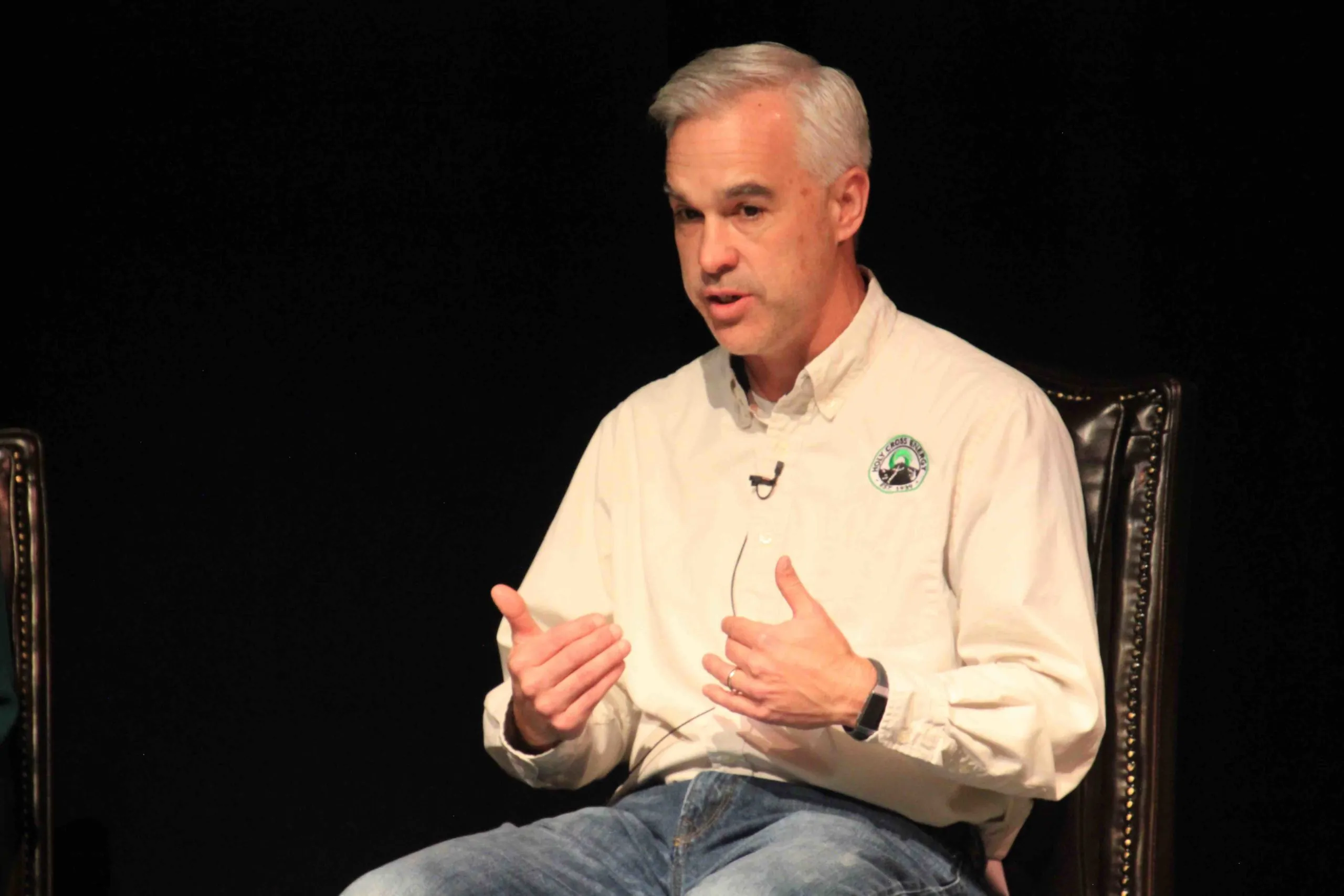
How exactly will that impact Glenwood Springs-based Holy Cross Energy? In the short term, the legislation adds uncertainty as the electric cooperative works to move from 80% emission-free energy in 2025 to its goal of 100% in the next five years. It serves the Aspen- and Vail-dominated resorts valleys.
Brighton-based United Power has a different problem posed by the sharp-elbowed bill if it remains intact after review by the U.S. Senate. An electrical cooperative also, United serves one of Colorado’s fastest growing areas for population growth, but the electrical demand from new homes is dwarfed by that from new industrial and commercial development.
By a one-vote margin, the House approved the sweeping tax and spending bill on May 22. In addition to other sweeping provisions, the bill largely guts incentives created by Congress in 2022 in the Inflation Reduction Act to advance clean energy and storage. The IRA is widely regarded as the most significant climate change legislation ever adopted in the United States.
Supporters of the controversial bill included two Republicans from swing districts in Colorado, Rep. Gabe Evans of Fort Lupton and Jeff Hurd of Grand Junction. Two Republicans and all 212 Democrats voted against the bill. Another two Republicans did not vote and one merely registered presence.
Evans and Hurd were among 21 House Republicans who signed a letter in March that calls for preserving energy tax credits as necessary to “increase domestic manufacturing, promote energy innovation and keep utility costs down.” Hurd, but not Evans, was among 26 who signed a May letter calling for preservation of tax credits necessary to accelerate deployment of next-generation nuclear power technologies.
After the vote, Evans posted a press release that said the bill “eliminates Green New Deal-style giveaways.”
Two days before the vote, President Donald Trump visited Capitol Hill to inform on-the-fence representatives that they could face primary opposition if they voted against what the president had called his “one big beautiful bill.” Big Pivots requested comment of both Evans and Hurd but without response.
he Senate, where Republicans hold a three-vote advantage, may act on the budget bill as early as July. However, the Washington Post on Monday noted that four Republicans senators in April sent a letter to Senate Majority Leader John Thune cautioning against “the full-scale repeal of current credits.”
“We just hit half-time. We’re still very much in the middle of this game,” said Harry Godfrey, who manages federal priorities for Advanced Energy United, a national industry association that monitors Colorado and 16 other states.
Differences would be negotiated by a conference committee before being returned to the two chambers for review.
“They really went after just about everything that they could in the realm of clean energy and electric vehicles,” said Will Toor, who directs the Colorado Energy Office.
“I would certainly hope that cooler and wiser heads will prevail in the Senate,” Toor added. “The benefits of the Inflation Reduction Act are widespread, not just for clean energy but for consumers and for jobs, especially in red states and districts. We’re hopeful that the Senate will reject this incredibly unwise bill that was adopted by the House of Representatives.”
Mike Johnson, speaker of the House, had described the bill as being “somewhere between a scalpel and a sledgehammer” approach to the IRA. Abigail Ross Hopper, head of the Solar Energy Industries Association, a trade group, called it a “sledgehammer masquerading as a scalpel.”
The IRA along with the earlier Bipartisan Infrastructure Law have produced a proliferation of announcements about expanding battery production and other business ventures along the Front Range.
For example, Louisville-based Solid Power is developing next-generation solid-state batteries and has agreements with EV manufacturers Ford and BMW. The company’s business model assumes continued rapid expansion of the market for EVs. See October 2024 story.

Employment at the Vestas factories in Brighton and Windsor may suffer if clean energy incentives get gutted. The manufacturer of blades and nacelles for wind turbines invested $40 million at its plants. In the last year it hired 700 people in anticipation of orders for 1,000 turbines during 2025. Orders for wind turbines would be impacted by loss of the manufacturing production tax credit, according to Advanced Energy United.
At Namaste Solar, chief executive Jason Sharpe said he is unsure whether to plan for expansion or constriction.
“As a business owner, how do you plan a business with this amount of uncertainty, trying to thread the needle between coping with political change and not creating panic among my employees? It’s challenging,” he said.
Namaste sees the bill having a target on residential solar because it would eliminate tax credits that homeowners can apply for directly.
The bill also has a provision that would disrupt the transfer of tax credits, harming existing renewable energy and storage projects and making funding more difficult for other, less proven technologies.
“If Xcel Energy, for example, builds a large solar project, they might not have enough tax obligation to fully utilize the tax credit. So, they could sell that, or transfer it, to other investors to monetize the tax credit.”
Advanced Energy United’s Godfrey says that a conventional big bank will be more risk adverse, but the transferrable tax credit enlarges the pool of potential investors. As such, this sweetener, as the Economist describes it, will also be lost for nuclear energy and carbon capture and storage, technologies currently absent in Colorado but which remain theoretically possible. The State Land Board has leased subterranean rights to several parcels for carbon capture.
As for Colorado’s solar sector Sharpe says Namaste will survive if the bill becomes law but with fewer employees. Now 20 years old, the company has 200 employees “We will have a smaller market but not a zero market,” he said.
U.S. Sen. Michael Bennet met last week with Sharpe as well as representatives of Vestas, electrical utilities, and others to hear how they saw the proposed shift in tax incentives impacting them.
“This casts a broad shadow on lots of the progress that the state has made in terms of power supply,” said Mark Gabriel, the CEO of United Power, in a later interview. The bill as written, if it becomes law, will impact “virtually all of our members and virtually all of Colorado.”
Project developers will find it more difficult to get financing, said Gabriel. Those projects that do go forward will cost more.
United serves 115,000 members across a 900-square mile service territory stretching from the oil-and-gas wells of the Wattenberg Field to the foothills west of Arvada. During the last four years demand in April, to cite just one month, has grown from 350 megawatts to 500 megawatts.
“I am a practical businessman. I don’t have dreadlocks. I don’t wear Birkenstocks. This is not a crusade,” said Gabriel.
Resource adequacy and reliability lie at the heart of Gabriel’s concerns. Colorado has plans to close all of its coal plants in the next six years. Coal has become expensive when compared to renewables. Most Colorado utilities plan major investments in natural gas plants, and United Power has one nearing completion about 40 miles northeast of Denver.
United also plans new renewable generation and battery storage in what Gabriel calls a hyper-localization strategy. Cheap renewables from other states and time zones could be part of the long-term strategy, but getting new transmission built remains a daunting, long-term challenge.
“Replacing base-load generation takes time,” said Gabriel. “The transmission is not coming over the hill to save us between now and 2030. What resources can we install in a relatively expeditious manner? They tend to be solar and storage and some gas.”
Perversely, the higher cost of electricity would also add to the cost of production of oil and gas in Colorado. Chevron, said Gabriel, has reported plans to drill 262 wells north of Denver in the Wattenberg Field, some of which is served by United.
“If you think about it, oil and gas is moving to electrify many of their fields. Certainly, the folks in the mid-stream arena are under certain requirements of the state,” Gabriel observed.
Xcel Energy CEO Robert Kenney was also at the meeting. He told Bennet that the existing tax credits will help Xcel reach its goals for emissions reduction while simultaneously reducing the cost of projects, all while keeping customers’ bills well below the national average.
In a filing with state regulators in October, Xcel said it needs 700 megawatts of new generating capacity, about two-thirds of it for a wave of new and large data centers.
Tri-State Generation and Transmission, Colorado’s second largest electrical wholesaler, said that the House version presents challenges to meeting its priorities of maintaining reliable and affordable energy for rural communities.
Residents of Castle Rock and other communities served by CORE Electrical Cooperative could also expect higher electricity prices. The utility, Colorado’s largest in terms of members, has entered into contracts for renewable and battery projects. Any reduction of the tax credits will result in increased costs to CORE’s members,” said the utility in a statement. “These tax credits are critical to keeping costs, and therefore rates, stable for our members.”
Holy Cross Energy has no large data centers on its horizon and serves only a few gas wells in the Western Colorado’s Piceance Basin. Growth in electrical demand from the Aspen and Vail-dominated resort valleys has been modest. It has a different challenge. It wants to erase all emissions from its electrical generation by 2030.
Bryan Hannegan, the chief executive, said six years ago that achieving 85% to 90% emissions-free energy would be the easier task. Holy Cross is close to complete. For 2025, the utility expects to surpass 80% emissions-free energy. That compares to 50% in 2022. Last October and again in April, it surpassed 90% emissions-free electricity.
Holy Cross did this while maintaining some of Colorado’s lower electrical rates.
Now, the utility has started work on that last 10% to 15%. After securing large amounts of wind and solar energy from Colorado’s eastern plains, Holy Cross now is focused on adding local resources with greater flexibility and in precise locations within its service territory or base-load generation that can be relied upon when the wind isn’t blowing and the sun isn’t shining. Geothermal is one of the options.
A program called Power+FLEX encourages Holy Cross members to install batteries that can benefit the homes and businesses where they are located but in a way that Holy Cross can draw upon them when needed to support the local power grid. Roughly 850 batteries have been installed as part of the program with a combined capacity for 4.25 megawatts.
The batteries are financed through a combination of upfront rebates, low-interest financing by the utility, the federal investment tax credit and the direct pay provisions in the current tax code. These provisions allow Holy Cross to subtract the value of the tax credit from the amount financed. Loss of the tax credit will make the batteries more expensive, dampening future demand.
On May 22, the same day the House passed its bill, Holy Cross issued a request for proposals for solar combined with battery storage and other technology that may allow it to produce 90% clean energy consistently in coming years.
“These resources are different from what they were in the past: much more flexibility, much more localized, even specific locations. That reflects the success of the energy transition so far. To go further, we will need different things than what we have had in the past,” said Hannegan.
How might the bids — which are due by the end of June — impact Holy Cross’s plans? The uncertainty about federal law will introduce a large amount of uncertainty, said Hannegan.
“These tax changes will be far reaching throughout the entire energy system, and without some clarity, it is hard to say what those impacts will be,” he said. “But if you increase the cost of something, people tend to reduce their consumption of it.”
In other words, if solar and energy storage become more expensive because tax credits go away, the costs to utilities will increase.
Wouldn’t it be fair for the renewable sector to stand on its own now? Prices for first wind and then solar have dropped with jaw-dropping speed during the last decades with energy storage now echoing their successes.
Namaste’s Sharpe says that time is approaching but has not yet arrived.
“I think we are getting close, and I do look forward to that day,” he said, while noting that the fossil fuel industries had what he called a 200-year head start in their subsidies.
Solar, he said, has become the lowest cost resource and the fastest dispatching. But it does have a vulnerability, as does wind: variability.
“The problem with high-penetration renewables is that variability,” said Sharpe. “That is the last hurdle.”
Colorado — and the world, actually — are on the “cusp of what we need to get over that hurdle,” said Sharpe, as we work on new storage technologies such as the Form Energy iron-air project in Pueblo. For that, innovation — which has started coming in great spurts, particularly by companies along the Front Range — must continue, and that innovation has been driven by the favorable tax credits.
“It’s wrong to abruptly end incentives at a time when we are on the cusp of innovation that will solve this problem,” he said.