
Aug 31, 2017A film produced by The U.S. Bureau of
Reclamation on the failure of the Glen Canyon Dam spillway in 1983.

Aug 31, 2017A film produced by The U.S. Bureau of
Reclamation on the failure of the Glen Canyon Dam spillway in 1983.
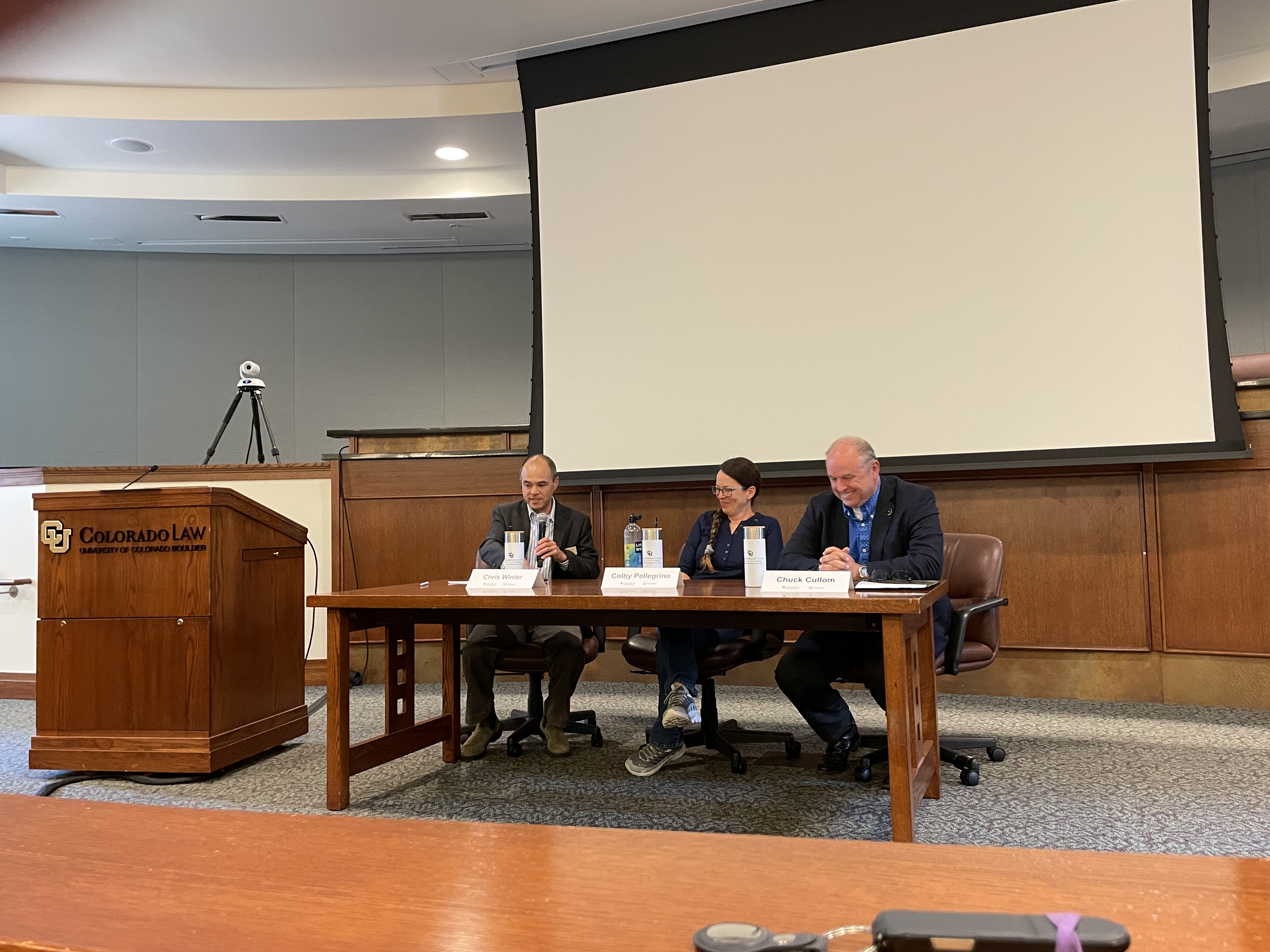
I was at the Getches-Wilkinson Center & Water and Tribes Initiative shindig this week live-posting on BlueSky (Click the “Latest” tab). The question of whether the negotiators from the seven states were being candid about their proceedings came up. Colby Pelligrino described her frustration with folks jumping all over every proposal as unfair or damaging to their rights. They can’t make any progress towards building a solution if every proposal is prevented from going forward. Chuck Cullom let everyone know that the data the negotiators are working with is available.
Also, Eric Kuhn, maintained that since the Colorado River Compact was written for a river that doesn’t exist any longer parts need to be reworked. He emphasized living with the river we have.
Click the link to read the article on the AWDR website:
June 5, 2025
In his much-anticipated keynote speech at the conclusion of this year’s Water Resources Research Center’s Annual Conference at the University of Arizona, ADWR Director Tom Buschatzke laid out the vast complexities of managing the Colorado River system.
With a deep sigh, he acknowledged that managing the vital river system “is a huge burden” for those mere mortals charged with that task.
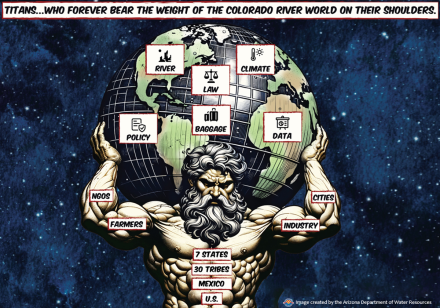
The Director included in his presentation to the conference audience an image he often uses when describing the on-going negotiations over new guidelines for river management: a depiction of the mythical Greek god Atlas holding up the world.
Buschatzke told the WRRC attendees that “one thing that Atlas had going for him that we don’t have is that Atlas was a god, and we are not gods, so it is a huge burden for us to try to deal with this river.”
Divided into Upper and Lower Basins, comprised of seven U.S. states, the Colorado River system is operated by the Bureau of Reclamation under the terms of agreements that are scheduled to run out at the end of 2026. For well over a year, representatives of those seven states have been locked into often-intense negotiations over what the new operating guidelines should look like. Director Buschatzke is Arizona’s representative to those negotiations.
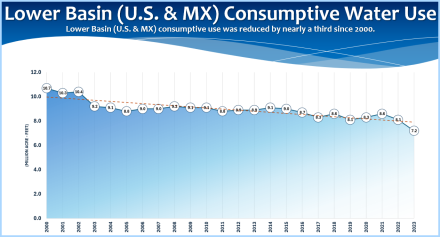
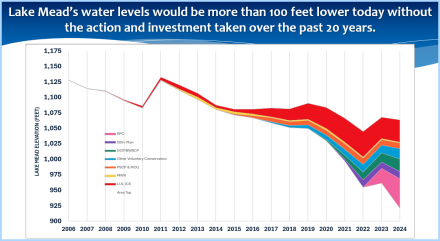
The Director described Lower Basin conservation efforts in recent years. Among those efforts, the Lower Basin and the Republic of Mexico having combined to reduce consumptive use of river water by 20 percent since 2000. He also noted that Lower Basin states and Mexico have left enough water in Lake Mead, especially since 2014, to raise surface levels by more than 100 feet.
“Without this, we’d be in a heap of trouble,” he said. “We’ve shown that we can take proactive measures and we’ve been successful in doing it.”
That 100 feet of elevation in Lake Mead, he said, represents a little over 8 million acre-feet of conserved water.
“And Arizona itself has done 4.6 million acre-feet of that 8 million,” said Director Buschatzke.
The Director emphasized his primary message as it relates to the river-management negotiations: Everyone who benefits from the river needs to contribute to conservation efforts on the river. His Upper Basin counterparts have rejected proposals to share any Colorado River water conservation efforts, he noted.
In a luncheon address preceding the Director’s keynote, Arizona Governor Katie Hobbs observed the importance of cooperation and collaboration in reaching agreement.
“Collaboration is the foundation of water policy and management discussions in which Arizona is on the cutting edge,” Governor Hobbs told conference attendees.
Collaboration proved a key element in two of the most important water-rights settlements in recent Arizona history.
Under Governor Hobbs, the State in 2024 concluded two tribal water settlements including four Native American tribes – settlements that concluded Arizona’s involvement in water-rights negotiations that in some cases had lasted decades.

I was at the Getches-Wilkinson Center & Water and Tribes Initiative shindig this week live-posting on BlueSky (Click the “Latest” tab). The question of whether the negotiators from the seven states were being candid about their proceedings came up. Colby Pelligrino described her frustration with folks jumping all over every proposal as unfair or damaging to their rights. They can’t make any progress towards building a solution if every proposal is prevented from going forward.
Also, Eric Kuhn, maintained that since the Colorado River Compact was written for a river that doesn’t exist any longer parts need to be reworked. He emphasized living with the river we have.
Chuck Cullom let everyone know that the data the negotiators are working with is available.