Yesterday was a hoot up in Boulder. Check out my BlueSky posts here (Click on the “Latest” tab).

Yesterday was a hoot up in Boulder. Check out my BlueSky posts here (Click on the “Latest” tab).


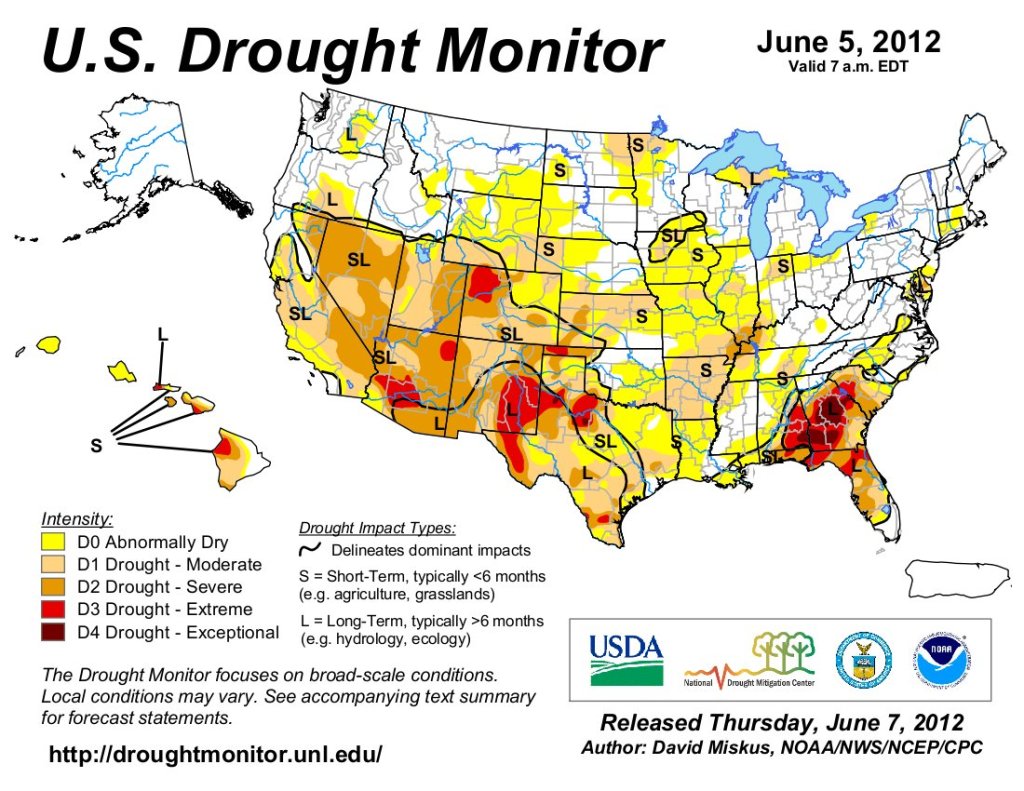
Click on a thumbnail graphic to view a gallery of drought data from the US Drought Monitor website.

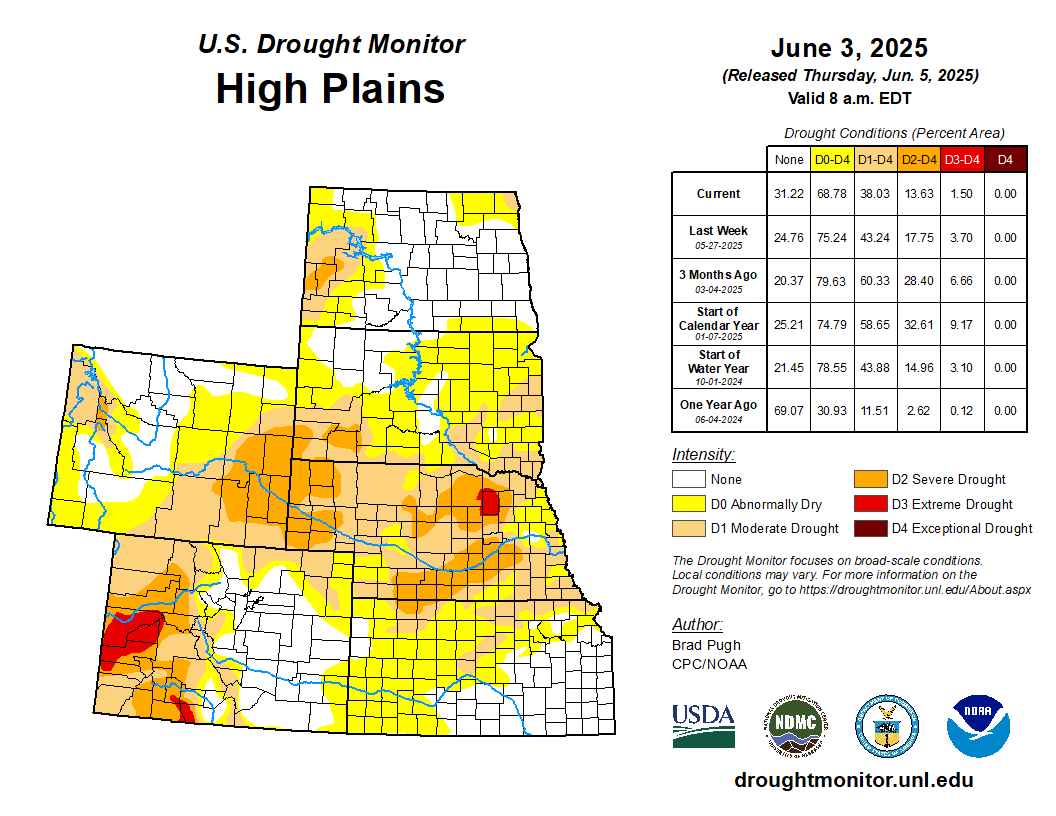

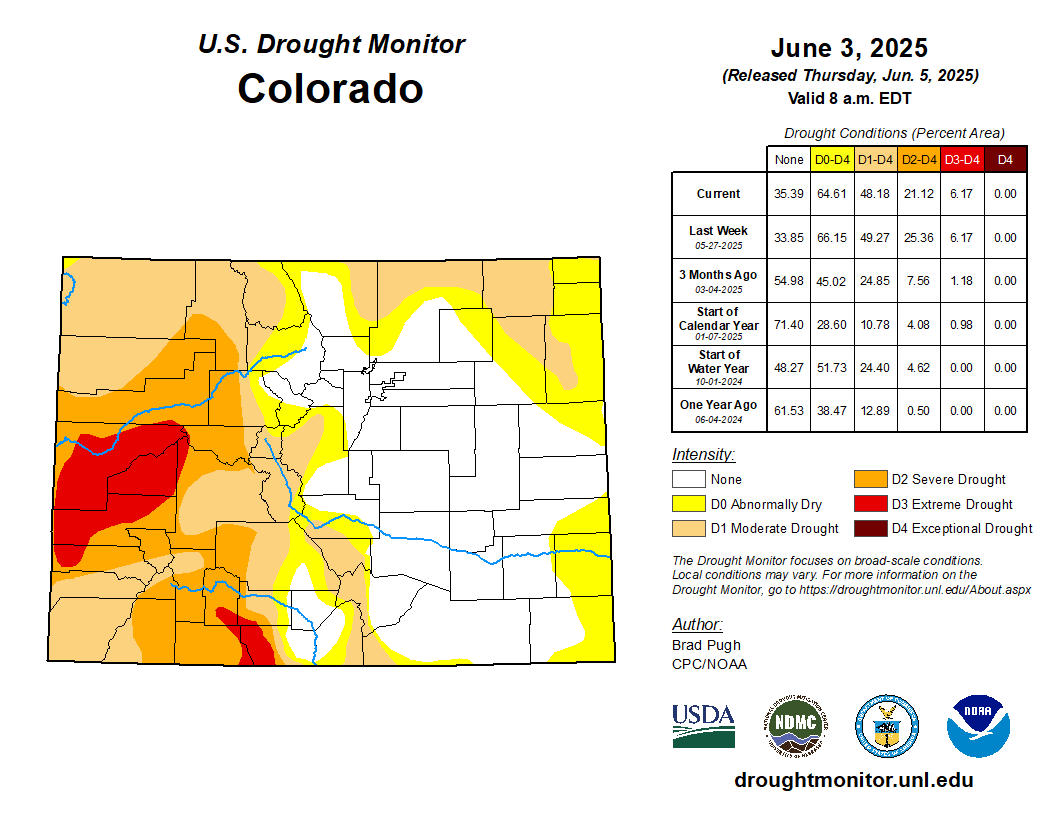
Click the link to go to the US Drought Monitor website. Here’s an excerpt:
This Week’s Drought Summary
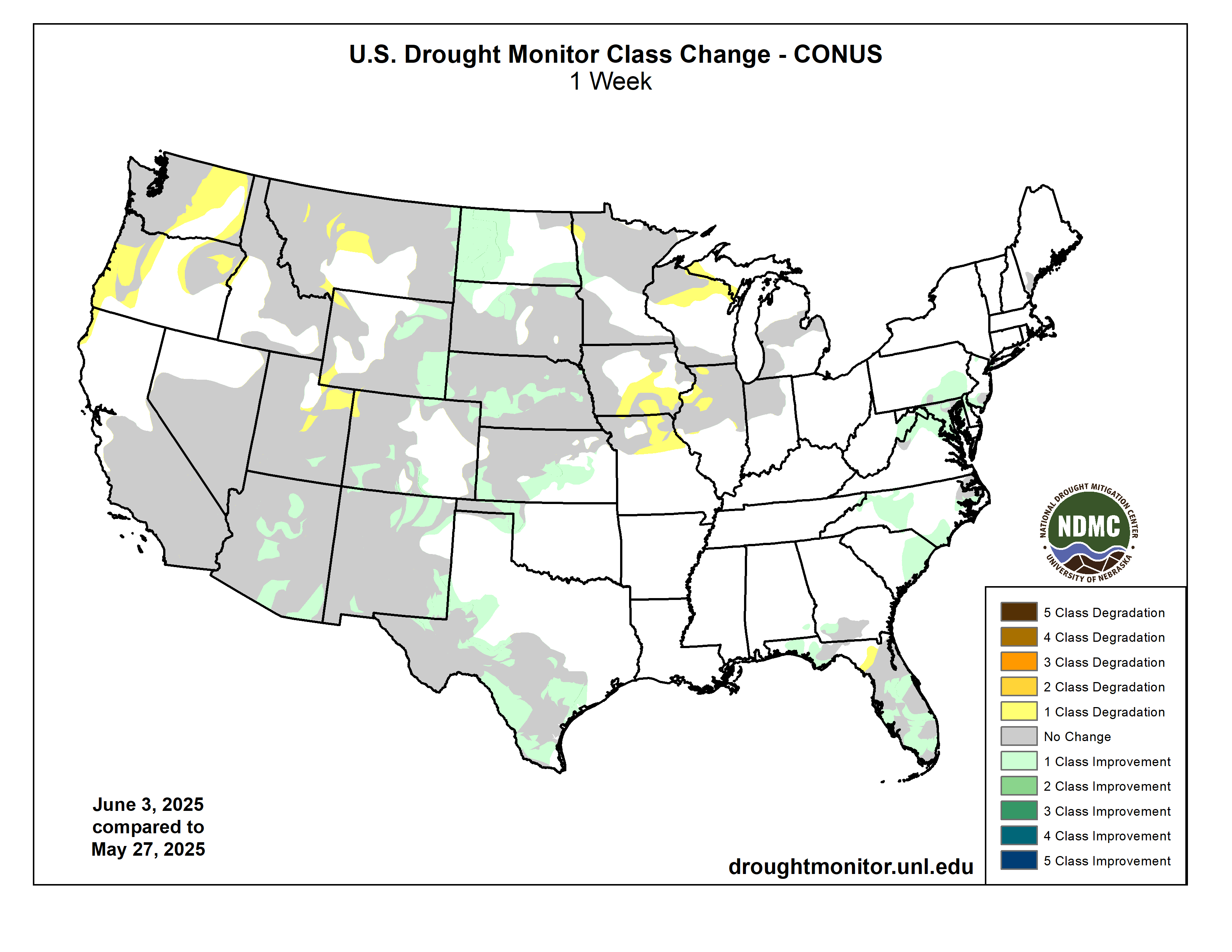
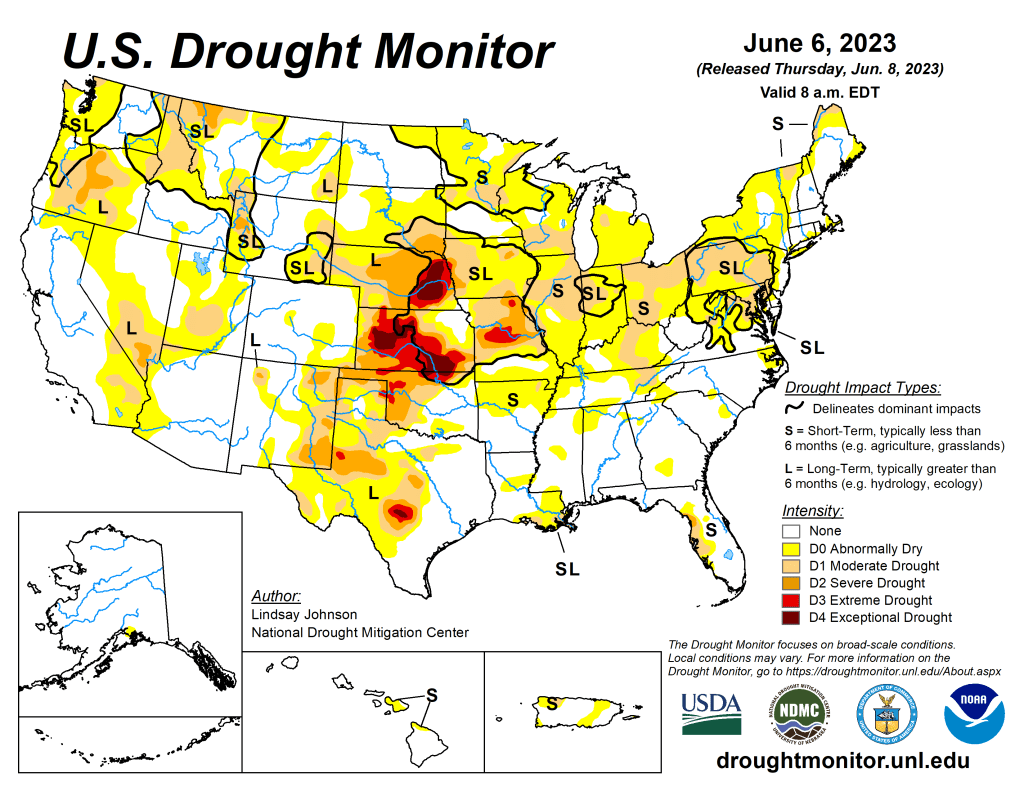
Drought coverage and intensity continued its overall decreasing trend this spring across the Great Plains. To the east across southern Iowa, northern Illinois, and northern Missouri, drought expanded with little to no precipitation from May 27 to June 2. The Desert Southwest had an unusual wet start to June as a low pressure system, interacting with enhanced moisture from Tropical Storm Alvin in the East Pacific, resulted in locally heavy rainfall and a 1-category improvement to parts of Arizona. A wetter-than-normal May brought an end to drought throughout much of the Northeast. The rainy season is well underway across Florida and heavy rainfall this past week led to improvements across the central to southern Florida Peninsula. 7-day temperatures (May 27-June 2) averaged below-normal across most of the eastern and central U.S., while above-normal temperatures prevailed for the West. Alaska and Puerto Rico are drought-free, while drought of varying intensity continues for parts of Hawaii…
High Plains
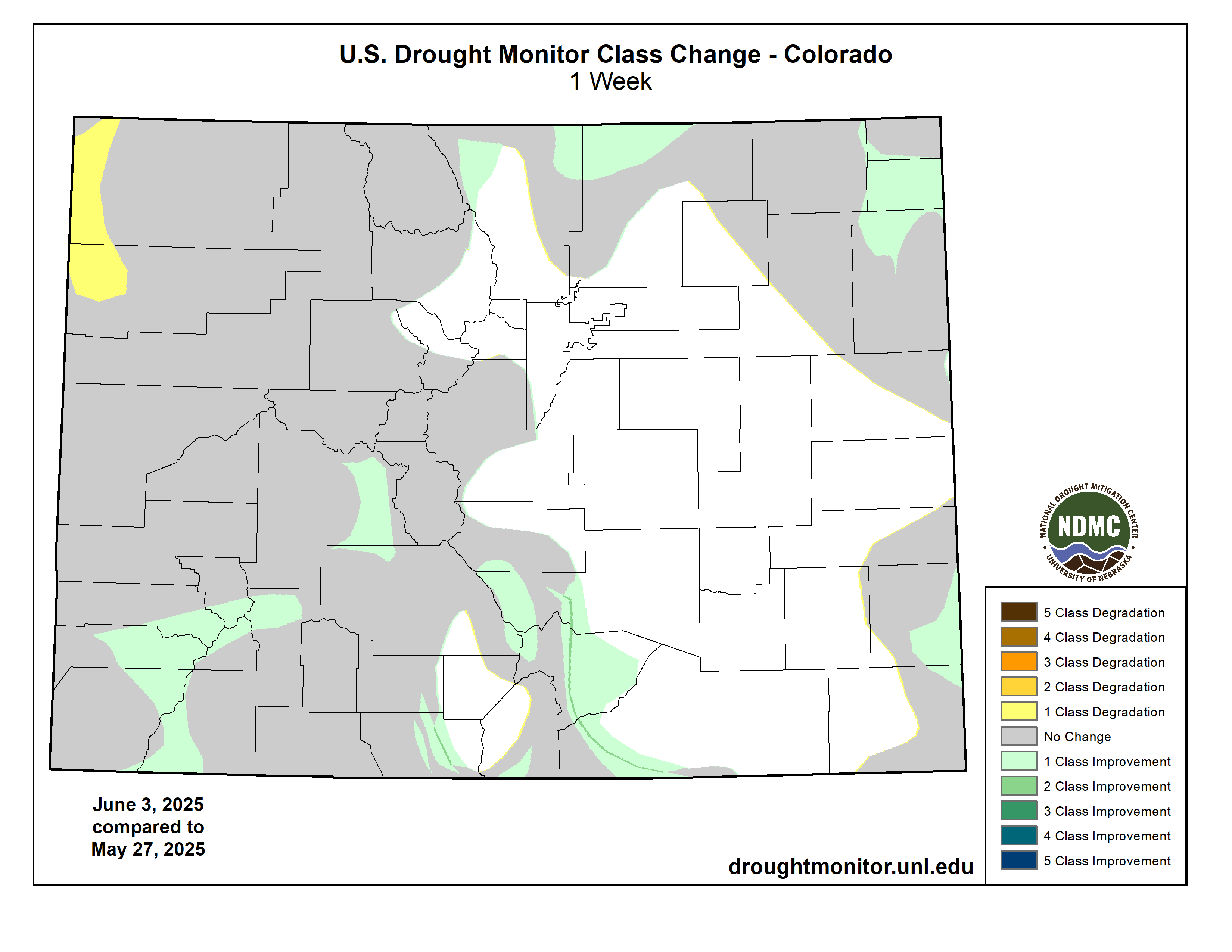
From May 20 to June 2, two-week precipitation amounts ranged from 2 to 4 inches, locally more, across much of Kansas, Nebraska, and northeastern Colorado. This precipitation accompanied by cooler-than-normal temperature during the latter half of May led to improving drought for the Central Great Plains. The southern half of Kansas is now drought-free. On June 2, precipitation (more than 0.5 inch) overspread southern Colorado where a 1-category improvement was made. Additional precipitation this past week along with consideration of SPIs dating back 6 to 12 months and the NDMC drought blends supported the removal of severe (D2) to extreme (D3) drought across southeastern Wyoming. Despite only light precipitation this past week, a 1-category improvement was made to much of the Dakotas to be more consistent with SPIs at various time scales, soil moisture, and the NDMC drought blends. For the Northern Great Plains, the drought impact was changed to long-term only given the recent wetness and the drought signal is strongest at 9 to 12 months…
West
The Desert Southwest had a rare wet start to June as a mid-level low pressure system interacted with enhanced moisture from former Tropical Storm Alvin in the East Pacific. Central Pima, northern Maricopa, and southern Yavapai counties of Arizona received 0.75” inches of precipitation with isolated amounts exceeding 2 inches, supporting a 1-category improvement. Although amounts were lower in southeastern Arizona, there was enough precipitation to warrant shifting the exceptional drought category (D4) to extreme drought (D3). A lack of springtime precipitation led to an expanding area of abnormal dryness (D0) and short-term drought (D1) across the Pacific Northwest. Based on worsening soil moisture and low 28-day average streamflows, a 1-category degradation was warranted for parts of central and southwestern Montana. A 1-category degradation was also made to parts of central and northeastern Utah. Elsewhere, across the West, little to no changes were made as California and Nevada enter their drier time of year.
South
For the second consecutive week, heavy rainfall (more than 1 inch) prompted a 1-category improvement to central and southern Texas. Despite this recent heavy rainfall, levels in the long-term monitoring wells of Bexar and Medina Counties remain near or at all-time lows. In addition, many of the 28-day average USGS streamflows across south-central Texas are below the 5th percentile, supporting the D3-D4 depiction. Since the SPIs dating back 6 months are mostly neutral to positive, the drought impact is designated as long-term only for central and southern Texas. Recent precipitation and the NDMC drought blends supported 1-category improvements to northern and eastern New Mexico. Additional rainfall this past week ended drought across Oklahoma and the Sooner State became drought-free for the first time since July 2019. The Lower Mississippi Valley and Tennessee Valley are also drought-free with 30 to 90-day precipitation averaging above normal…
Looking Ahead
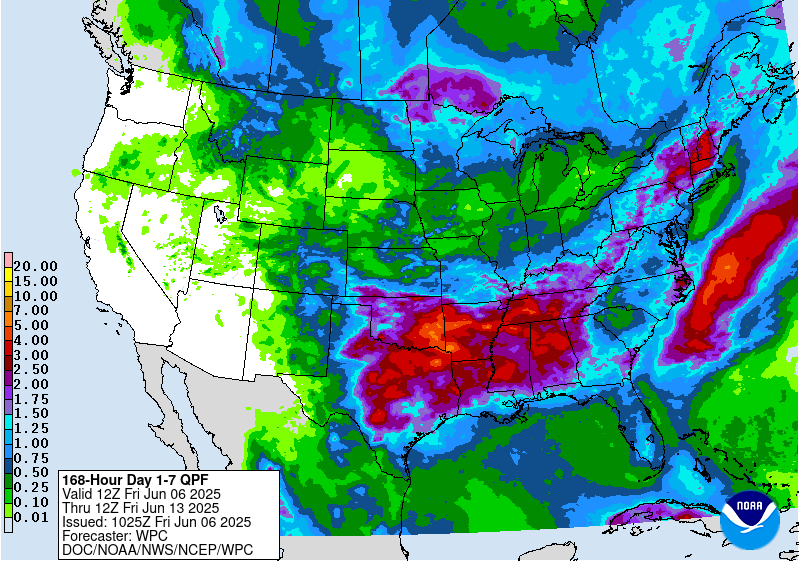
From June 5 to 7, a slow-moving cold front coupled with a low pressure system near the East Coast is forecast to bring scattered showers and thundershowers to the East with the heaviest precipitation for eastern North Carolina. Multiple rounds of thunderstorms with locally heavy precipitation are forecast from the Central and Southern Great Plains east to the Tennessee Valley through June 7. In the wake of a cold front, mostly dry weather will prevail for the Northern Great Plains and western Corn Belt. A warming trend is forecast across the Pacific Northwest and northern California with potential record highs on June 8 and 9.
The Climate Prediction Center’s 6-10 day outlook (valid June 10-14, 2025) favors above-normal precipitation for the Rocky Mountains, Great Plains, Lower Mississippi Valley, and Southeast. The outlook leans towards below-normal precipitation for the eastern Corn Belt. Below-normal precipitation is also favored for southern Alaska, while elevated above-normal precipitation probabilities are forecast across Hawaii. Above-normal temperatures are favored throughout much of the West, Northern Great Plains, Upper Mississippi Valley, and East Coast with increased chances for below-normal temperatures forecast for the Southern Great Plains and Middle Mississippi Valley. Cooler-than-normal temperatures are also more likely for much of Alaska.
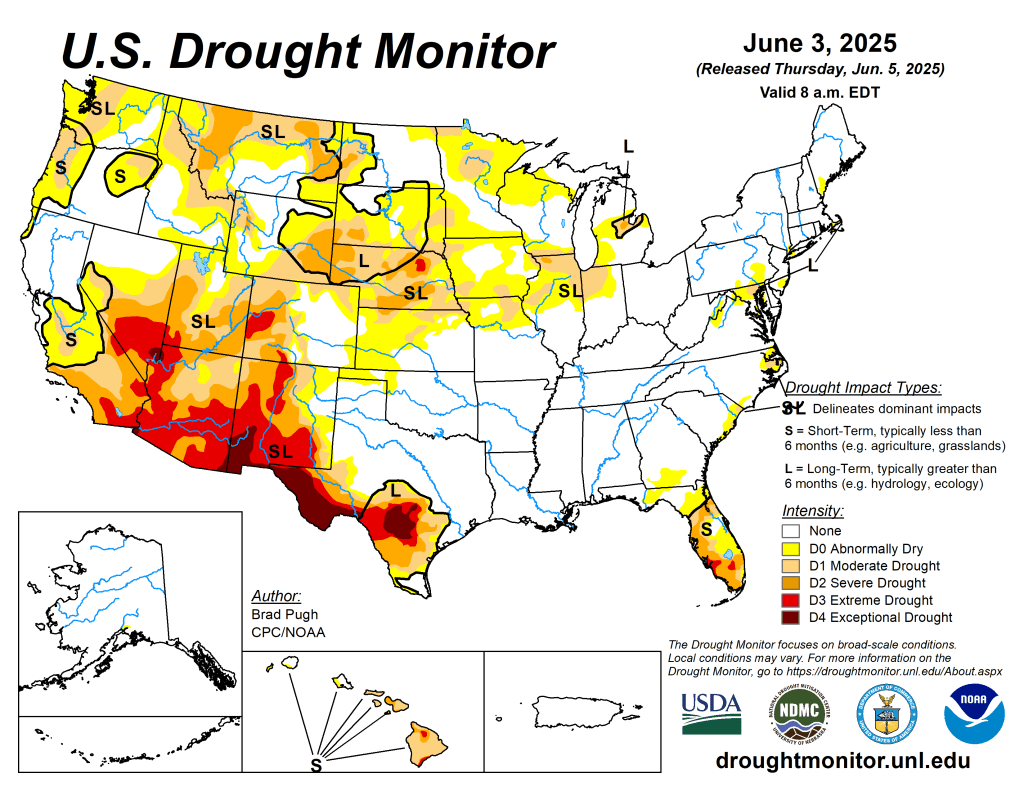
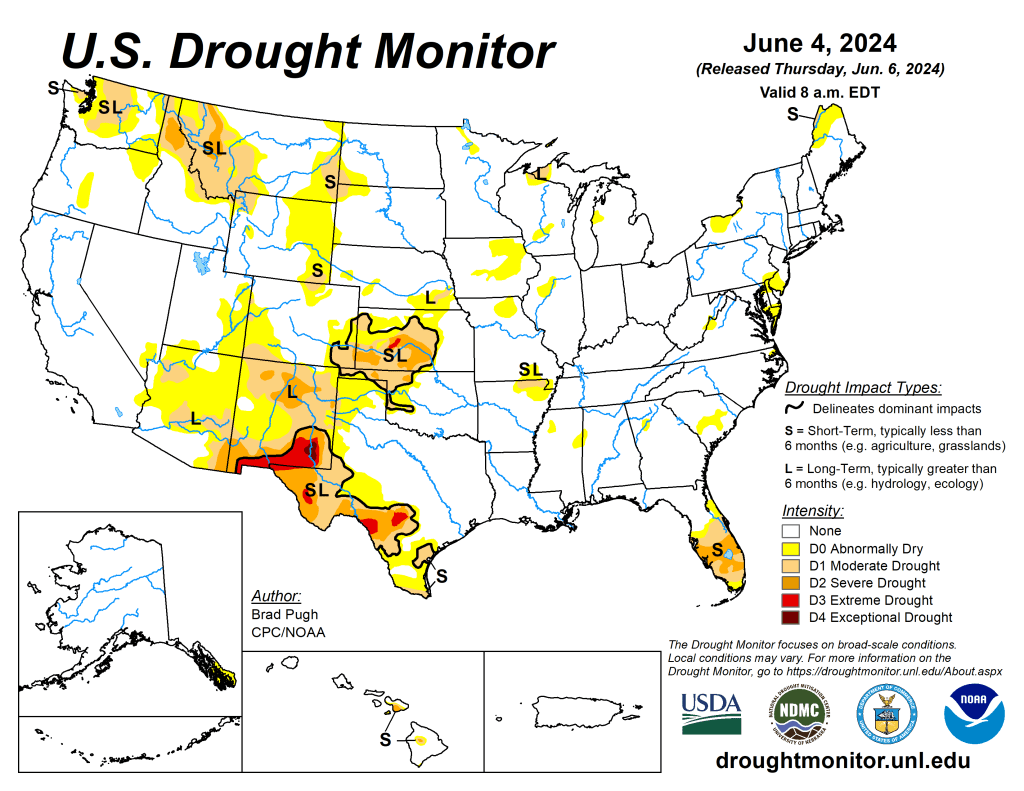
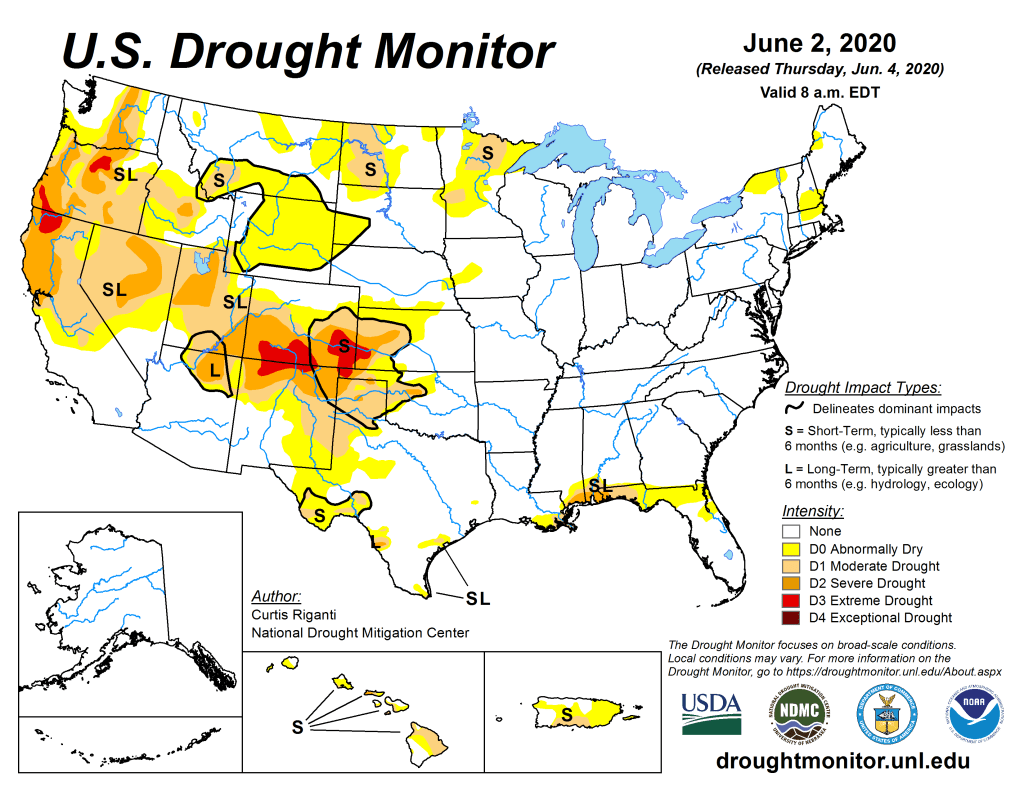
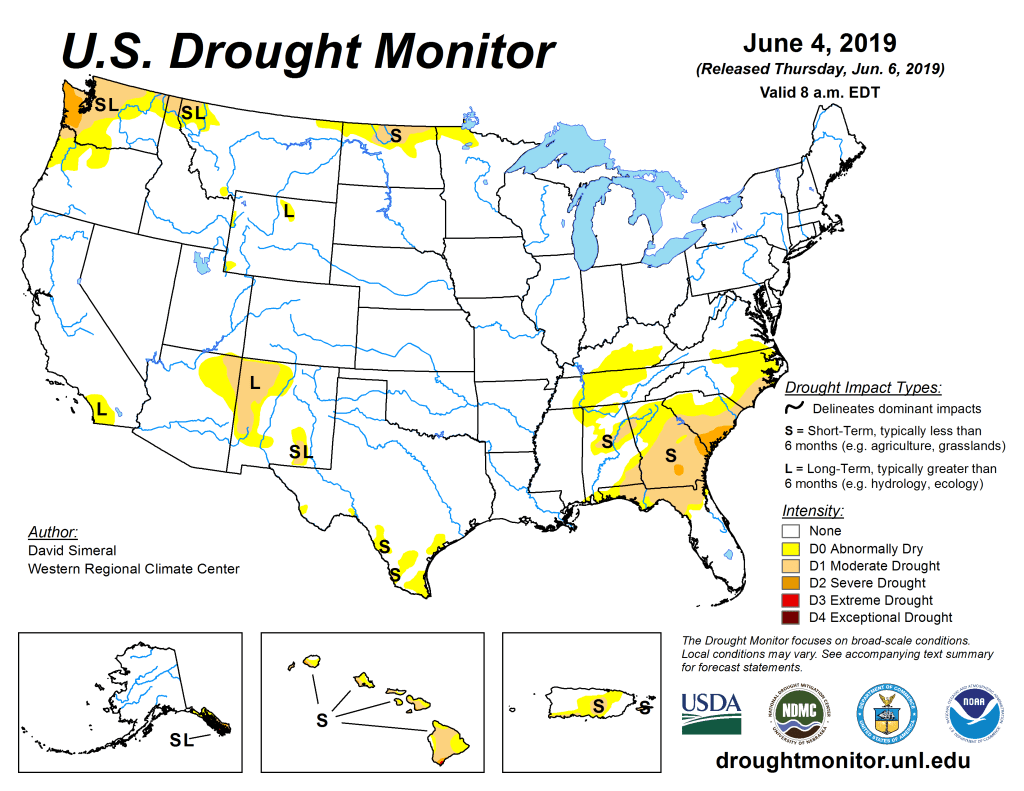
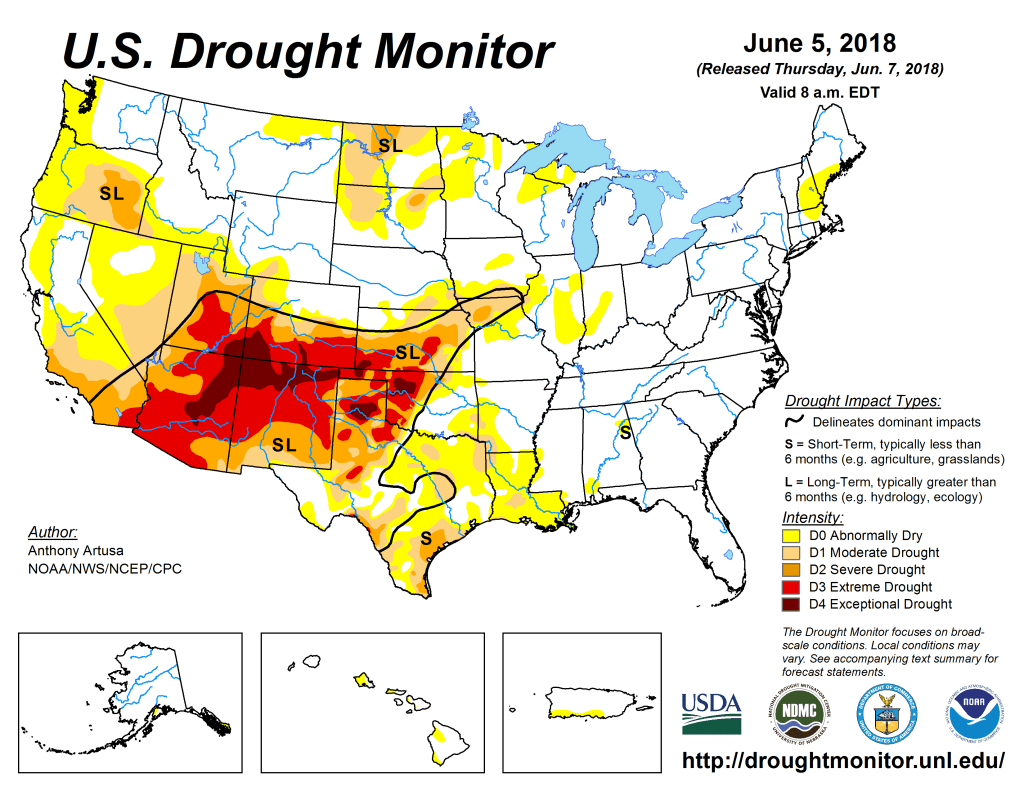
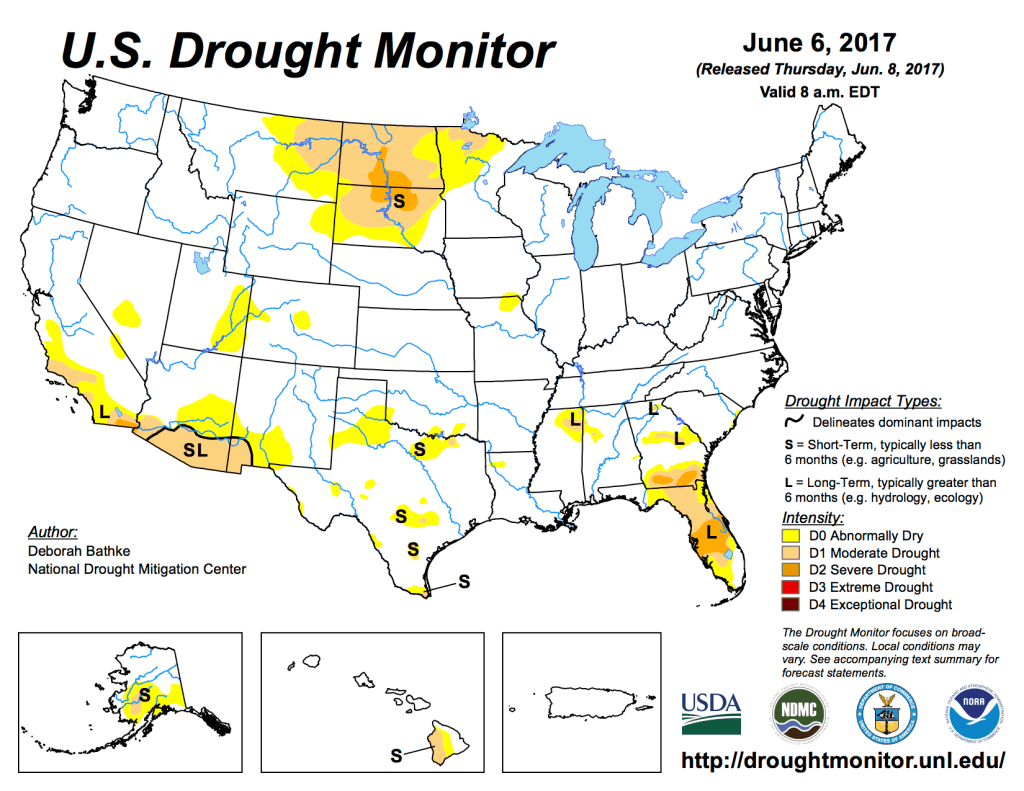
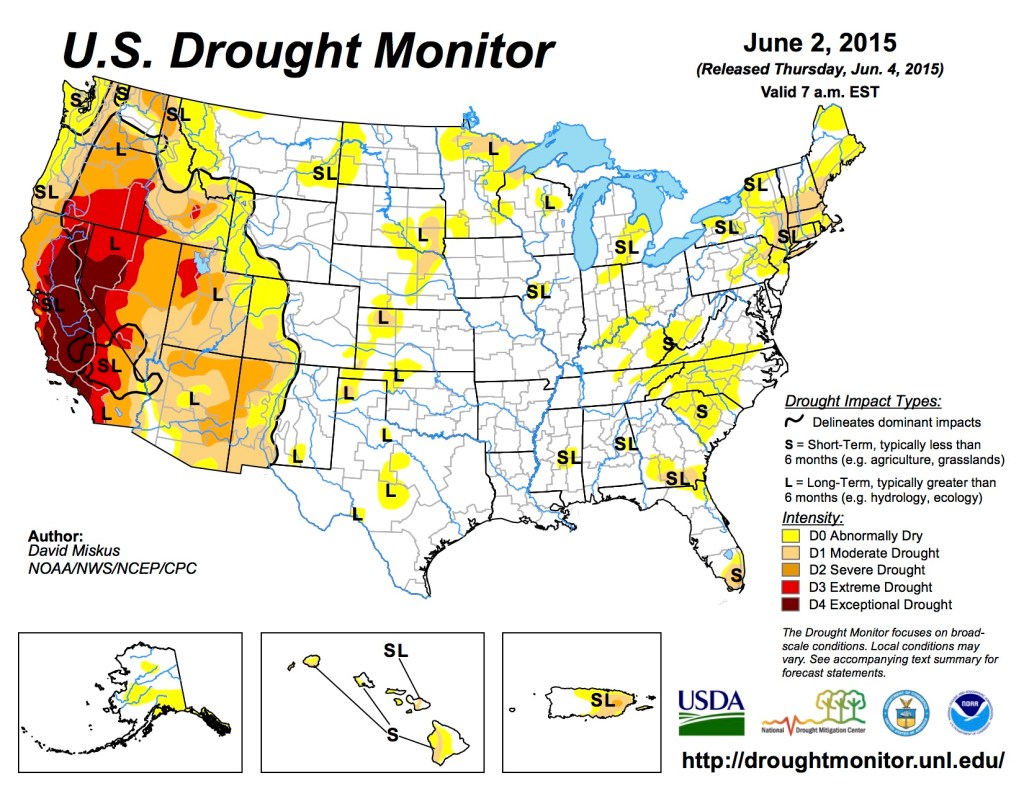
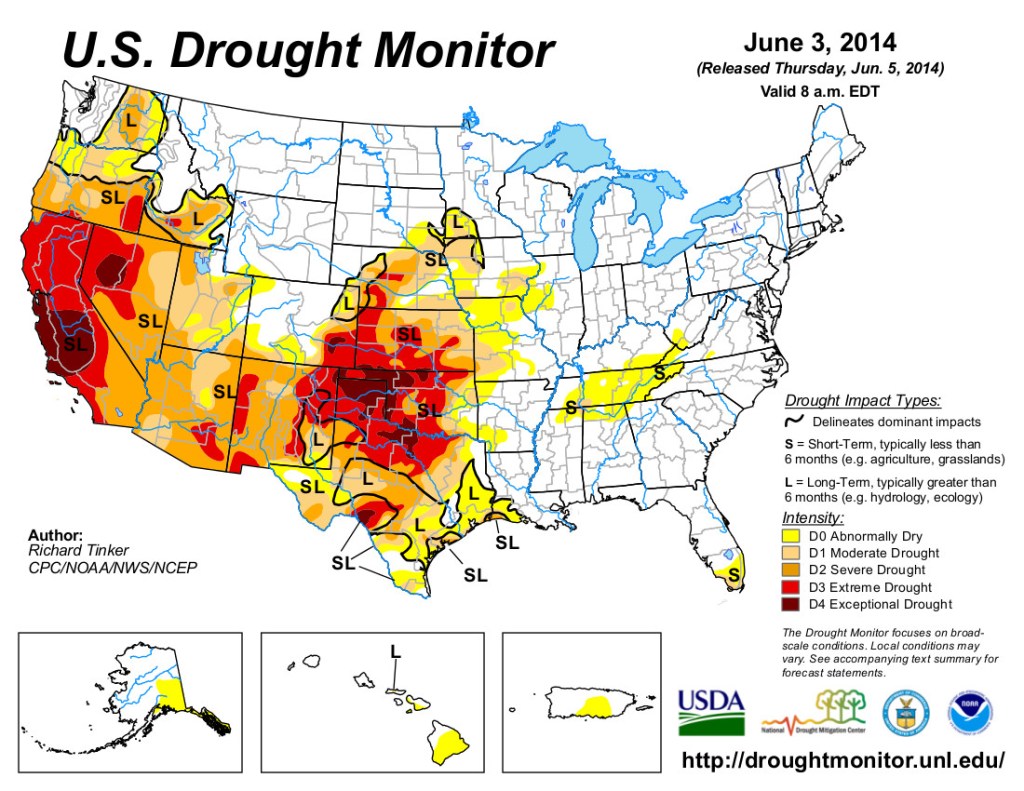
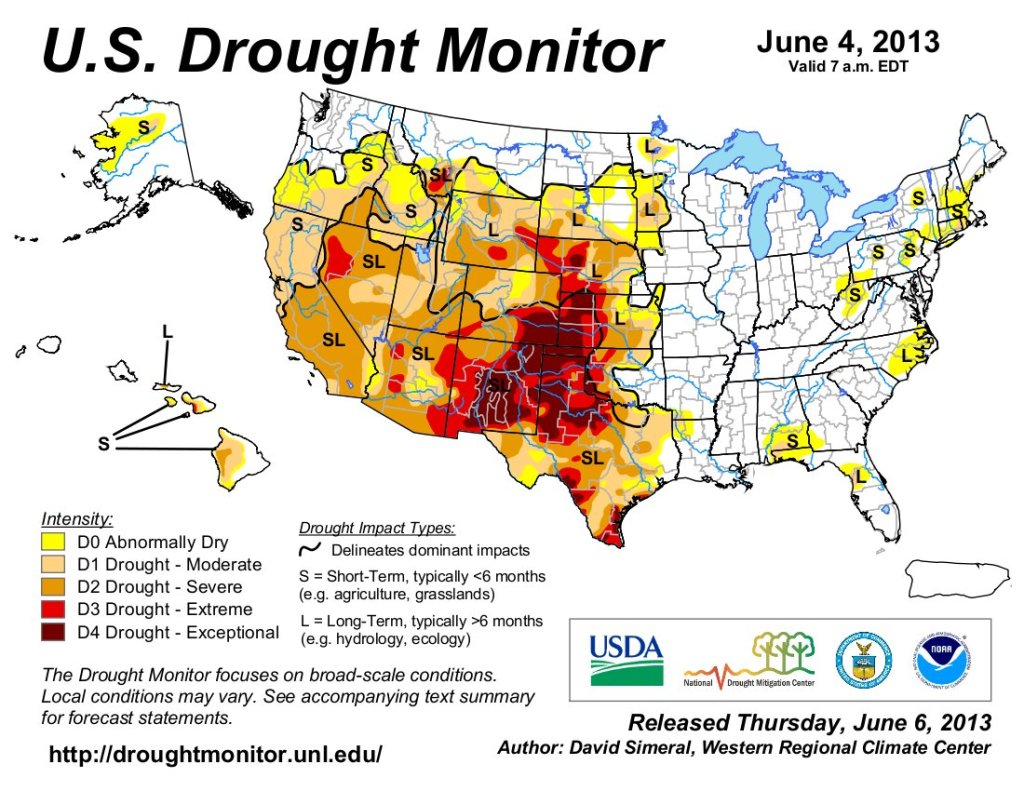
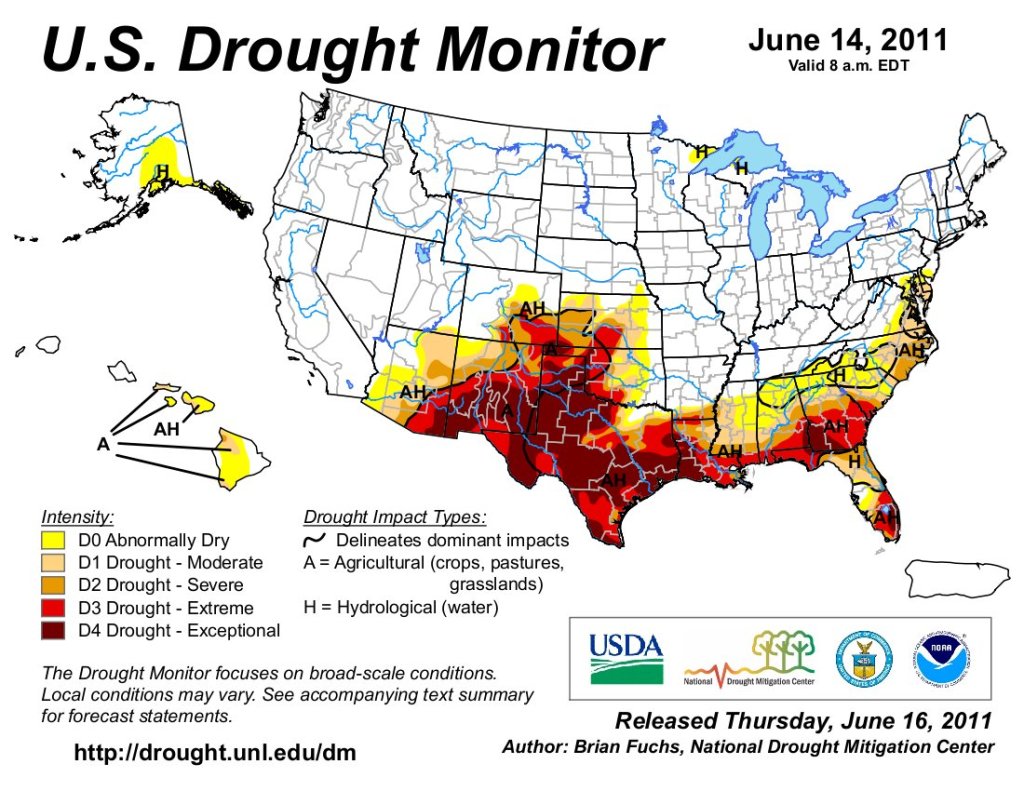
Just for grins here’s a slideshow of US Drought Monitor maps for early June for the past few years.





Click the link to read the article on the High Country News website (Lisa Song):
June 4, 2025
This article was originally published by Inside Climate News.
The U.S. Supreme Court has ruled in favor of a controversial Utah railway project that critics say erodes the National Environmental Policy Act (NEPA), a bedrock of environmental law for the past half century.
The case centered on a proposed 88-mile railway that would connect the oil fields of northeastern Utah to a national rail network that runs along the Colorado River and on to refineries on the Gulf Coast.
The waxy crude oil is currently transported by truck over narrow mountain passes. Project proponents said shipping the fossil fuel by rail — as many as 10 trains daily — would be quicker and revitalize the local economy by quadrupling the Uinta Basin’s oil production, ICN previously reported,
In 2020, the Seven County Infrastructure Coalition applied to the U.S. Surface Transportation Board for approval of the railroad’s construction. Under NEPA, the board was required to conduct an Environmental Impact Statement (EIS) to evaluate possible harms from the project and consider how they could be mitigated.
Environmental groups and Eagle County, Colorado, opposed the railway project. They cited the potential for derailments and spills into the Colorado River, the drinking water supply for 40 million people. Opponents were also concerned about increased air pollution in the Uinta Basin, where oil fields emit high levels of methane, a potent planet-warming greenhouse gas, as well as volatile organic compounds, some of which have been linked to increased risks of cancer.
Gulf Coast communities would also be harmed by air pollution when the crude oil was refined, opponents argued. The increased oil production and associated emissions would also drive climate change and its disastrous global effects: hurricanes, floods, droughts and extreme heat.
The Center for Biological Diversity, among the groups that had sued the Surface Transportation Board, said in a prepared statement that the ruling “relieves federal agencies of the obligation to review all foreseeable environmental harms and grants them more leeway to decide what potential environmental harms to analyze, despite what communities may think is important. It tells agencies that they can ignore certain foreseeable impacts just because they are too remote in time or space.”
In 2021, the board issued a 3,600-page EIS, which identified numerous “significant and adverse impacts that could occur as a result of the railroad line’s construction and operation— including disruptions to local wetlands, land use, and recreation,” according to court documents.
The board nonetheless approved the railroad construction, concluding that the project’s transportation and economic benefits outweighed its environmental impacts.
Opponents, including EarthJustice and Utah Physicians for a Healthy Environment petitioned the U.S. Court of Appeals for the District Columbia. They argued the board’s environmental review excluded impacts of the project on people living near the oil fields, as well as Gulf Coast residents.
The appellate court agreed. It ruled that the board’s EIS impermissibly limited the analysis of upstream and downstream projects.
“The appeals court had ruled that the federal agency that approved the railway failed in its obligations to consider the regional consequences of massively increased oil extraction on the Uinta Basin, the increased air pollution for the communities in Texas and Louisiana where the oil would be refined and the global climate consequences,” said Dr. Brian Moench, president of Utah Physicians for a Healthy Environment.
The Seven County Coalition and the railroad company then appealed to the Supreme Court.
“The Supreme Court’s ruling will allow all these consequences to unfold without meaningful restraint,” Moench said. “This court has made a name for itself making rulings that mock science and common sense and fail to protect the common good. This unfortunate ruling fits that same pattern.”

NEPA has been federal law since 1970. It doesn’t prescribe specific environmental decisions, but it does establish a process to ensure federal agencies follow proper procedure in permitting. It can be a laborious, time-consuming process, but requires an agency to be thorough in assessing potential environmental impacts while giving the public adequate opportunity to comment.
NEPA doesn’t necessarily halt projects but it can force project developers to pursue alternatives that protect environmentally sensitive areas and communities.
In his first term, Trump rolled back some aspects of NEPA, including weakening requirements to consider cumulative impacts of a project and the effects of climate change. Shortly after taking office this year, Trump signaled he plans to further streamline NEPA to expedite its approval process, especially for energy projects.
Justice Brett Kavanaugh, who was appointed by President Trump in his first term, wrote the opinion on behalf of four other members of the court. “NEPA has transformed from a modest procedural requirement into a blunt and haphazard tool employed by project opponents (who may not always be entirely motivated by concern for the environment) to try to stop or at least slow down new infrastructure and construction projects,” Kavanaugh wrote.
Courts should “afford substantial deference and should not micromanage those agency choices so long as they fall within a broad zone of reasonableness,” Kavanaugh wrote. “NEPA does not allow courts, under the guise of judicial review of agency compliance with NEPA, to delay or block agency projects based on the environmental effects of other projects separate from the project at hand.”
The 8-0 decision excluded Justice Neil Gorsuch, who recused himself because of his close connection to billionaire Philip F. Anschutz, who would economically benefit from the project.
In a concurring opinion, Justice Sonia Sotomayor differed with Kavanaugh on his rationale for the ruling, but agreed on the outcome. She wrote that NEPA didn’t require the board to consider the effects of oil drilling and refining because those activities were outside its authority. “Even a foreseeable environmental effect is outside of NEPA’s scope if the agency could not lawfully decide to modify or reject the proposed action on account of it.”
Justices Elena Kagan and Ketanji Brown Jackson joined Sotomayor in the concurrence.
The coalition was represented by Jay Johnson of Venable LLP, who said the ruling “restores much-needed balance to the federal environmental review process.”
Keith Heaton, director of the Seven County Infrastructure Coalition, the project’s public partner, said the decision affirms the years of work and collaboration that have gone into making the Uinta Basin Railway a reality. “It represents a turning point for rural Utah—bringing safer, sustainable, more efficient transportation options and opening new doors for investment and economic stability.”
Wendy Park, a senior attorney at the Center for Biological Diversity, said despite the court’s ruling, “we’ll keep fighting to make sure this railway is never built.”


Click the link to read the article on the Big Pivots website (Allen Bestl):
June 4, 2025
Car buyers took the bait when Colorado dangled tax credits of $5,000 on top of federal tax credits of up to $7,500 for electric vehicles and plug-in hybrids. Sales took off. EVs alone constituted 24.7% .of all new car sales in the final months of 2025. T
Even in early 2025, when Colorado’s tax incentives ramped down to $3,500, EVs were still responsible for about 21.1% of all sales.
What if federal tax credits go away as proposed in the budget reconciliation bill now before the U.S. Senate?
Repeat, (Rapid Energy Policy Evaluation and Analysis Toolkit), a project housed within the University of Princeton, predicts 40% fewer sales nationally by 2024. Sales will still increase, just not as fast.
Travis Madsen, who oversees the transportation program for the Southwest Energy Efficiency Project, an advocacy group, said EV sales will continue to grow in Colorado. EVs save people money in lesser fuel and maintenance costs over the lifetime of a car.
Research by the Southwest Energy Efficiency Project found that drivers in Colorado and other Southwestern states can save on the order of $10,000 over 200,000 miles by choosing an electric sedan. For battery-electric pickups, the savings can exceed $30,000.
The front-end costs can be discouraging, though.
“We will have to develop new tools to help people understand that they can save money,” said Madsen. “We will still be making progress. It just won’t be as fast.”
Will Toor, who directs the Colorado Energy Office, described the bill’s effects more broadly if the Senate were to go along with what the House passed.
“They would be, I think, ceding the future of auto manufacturing to China and essentially knee-capping American auto manufacturers from their ability to compete into the future,” he said.
“We’d started to see a bit of manufacturing renaissance in this county for clean energy supported by the Inflation Reduction Act. If this moves forward, I think it will be really negative for that clean energy manufacturing across the nation.”
The net effect of the sweeping 1,000-page bill would be to “drive up the cost of electricity, drive up the cost of vehicles and essentially drive up the costs of all the things that Coloradans depend on in their daily lives,” he added.
New York Times columnist Thomas Friedman, a frequent visitor to Colorado over the years, made the same point several days later. In a column, “Trump’s Gilded Gut Instinct,” he wrote this:
“As I have been arguing since Trump came to office, his ridiculous right-wing woke obsession with destroying the U.S. electric vehicle industry that President Joe Biden was trying to build up undermines U.S. efforts to compete with China in electric batteries. Batteries are the new oil; they will power the new industrial ecosystem of A.I.-infused self-driving cars, robots, drones and clean tech.”
Friedman then introduced the thoughts of an economist, Noah Smith, who observed the consequences of the new budget bill in light of last weekend’s attack of Russian’s airplanes by Ukrainian drones. The essay is extended but entirely germane to U.S. defense but also EV adoption in Colorado.
Smith’s posting on Tuesday included this:
“Electric vehicles are crucial for battery manufacturing capacity, because in peacetime, they’re the main source of demand for batteries. Pump up the EV industry, and you pump up the battery industry too — just as the chart above shows Biden doing. Kill the EV industry and you kill the battery industry too, just as Republicans now want to do. Harming the solar industry will also harm the battery industry, because some types of batteries are used to store solar energy for when the sun isn’t shining.”
As for Colorado’s goal of having 940,000 EVs on its roads by 2030, it remains on track to get there. The incentives have jump-started sales. Another component was to ensure sufficient charging infrastructure exists.
This has several components.
To assuage worries about running out of fuel without a way to quickly charge when traveling, Colorado set out to get high-speed charging stations around the state. Some of this has been done with federal aid.
Gaps remain in Colorado, though. Most every wide spot in the road has a gas station. Fast charging EV stations are not so omnipresent. Colorado has worked to provide that reliability.
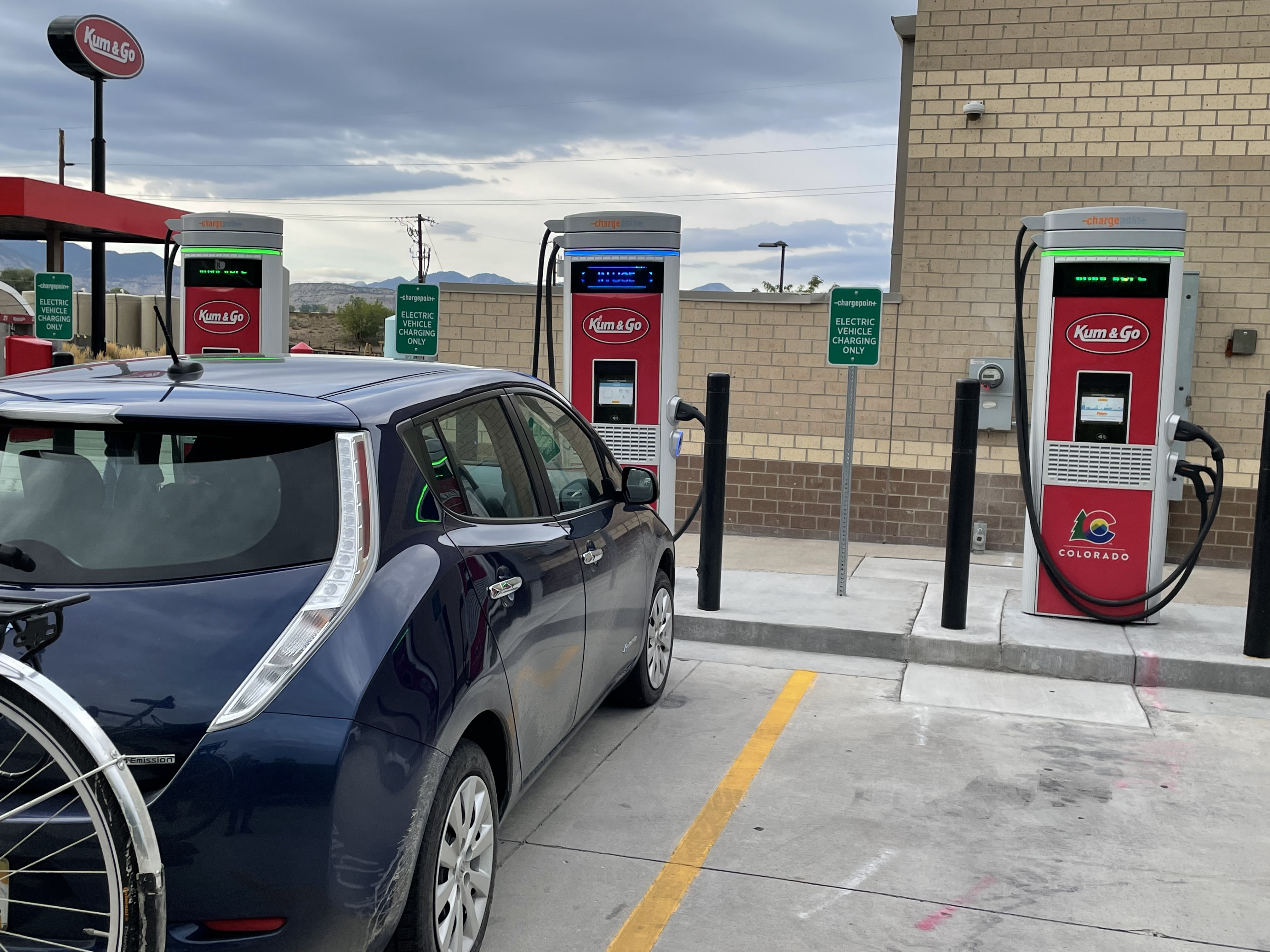
Colorado has been helped by but has not been solely dependent upon federal aid to seed the charging stations needed to make drivers comfortable when considering purchase of an EV. The state has investment programs, and utilities have invested, too.
“Unlike many other states, we haven’t been dependent just on federal investment,” said Toor.
The federal government has cut off funds for continued fast-charging through the National Electric Vehicle Infrastructure Fund. Colorado Attorney General Phil Weiser joined with California and other states in a lawsuit that seeks to force the Trump administration to thaw those funds.
“They are important, and we’ve been relying on them and we need to get access to them,” said Toor. “But there’s a lot of EV charging that’s been deployed and will continue to be deployed in the state.”
EV adoption in Colorado also depends upon having ample fast-charging stations in other states, too, said Toor. Coloradans don’t always stay in Colorado, so they want assurances of being able to charge when driving across the vast expanses of Wyoming and Montana, too.
Another difference is that you can fill up a car with gas before you finish washing your windows. With an EV it can take 10 or 20 minutes. Best to find a charger coupled with a coffee shop and plan your trips accordingly. You can get charged up with caffeine while your car gets charged with electricity.
In May, after the Legislature convened, Toor, who directs the Colorado Energy Office, set out from the Front Range in his Chevy Blazer EV for a backpacking trip in Canyonlands National Park. It worked well, he reported. The car has a listed range of 285 miles. He reports that in temperate weather, he can get 330 miles. “And I’m sort of the opposite of a lead-footed driver,” he explained.
The first stop was a fast-charging station coupled with a coffee shop in Fruita. In Utah, at Monticello, they had a similar pre-scheduled stop.
“We stopped a few times in nice places,” said Toor. “The only problem was I drank too much coffee. Couldn’t sleep that night.”
Click the link to read the article on the Water Education Colorado website (Jerd Smith):
June 5, 2025
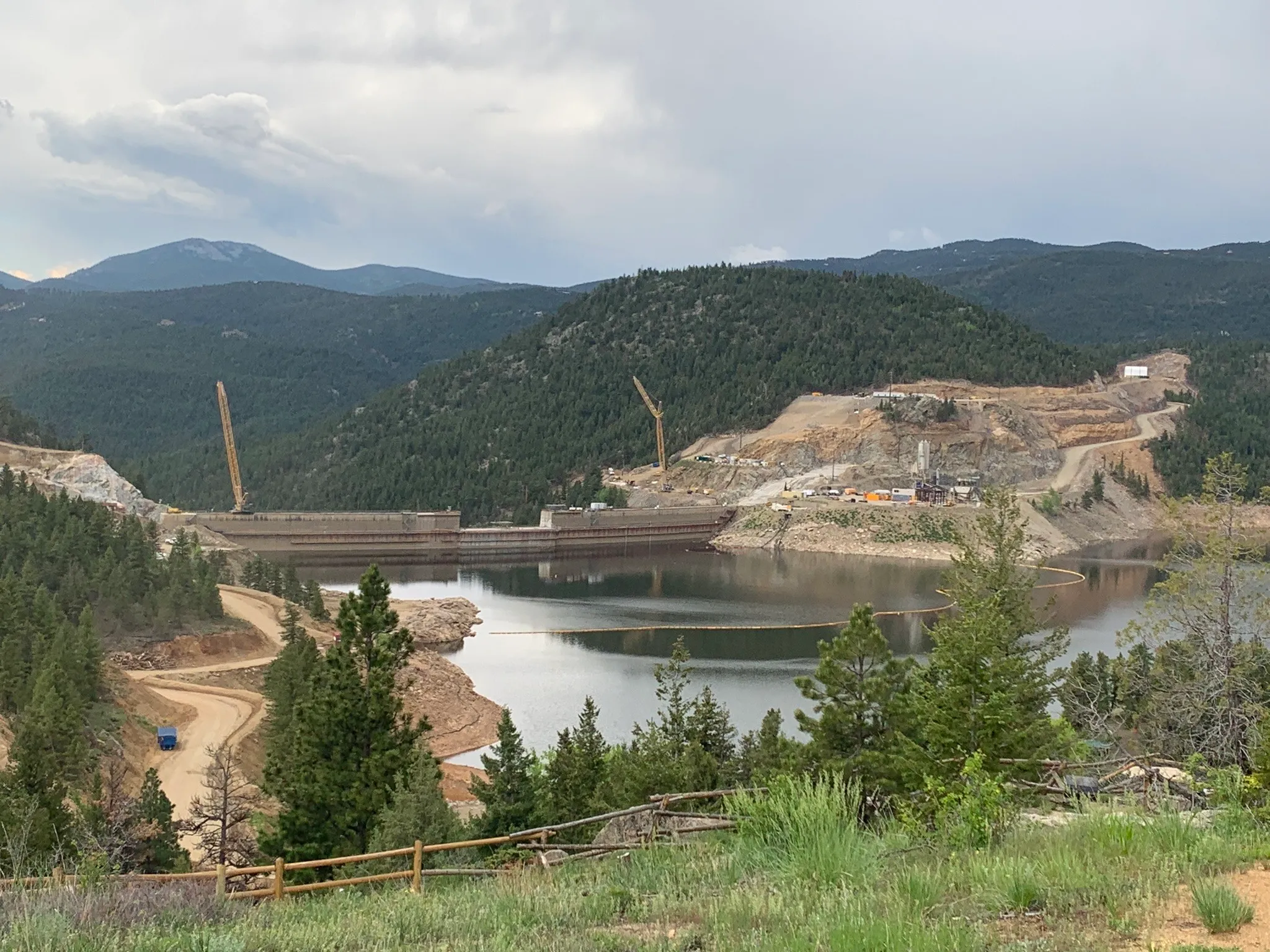
Afederal judge will allow Denver Water to continue work on a $531 million project to raise a dam in Boulder County, dealing a blow to environmentalists who had hoped to stop the construction.
However, Senior U.S. District Judge Christine Arguello in her ruling May 29 prohibited Denver Water from filling Gross Reservoir until federal environmental permits can be rewritten by the Army Corps of Engineers.
“There is no evidence that there would be additional environmental injury resulting from completion of the dam construction. In fact, the opposite is true,” Arguello wrote. “There is a risk of environmental injury and loss of human life if dam construction is halted for another two years while Denver Water redesigns the structure of the dam and gets that re-design approved by” the Federal Energy Regulatory Commission.
FERC is involved because of the hydroelectric plant at the base of the dam.
Denver Water’s general counsel, Jessica Brody, said Friday her agency was pleased the judge recognized the safety issues in leaving the dam half-built.
“We’re relieved that the judge understood and appreciated the safety issues. We are relieved as well that she understood the impact to Denver Water’s customers,” Brody said.
The construction is expected to be completed this year, she said. In the meantime, she said, her agency will move forward in asking a federal appeals panel to rule on whether key environmental permits need to be rewritten, as Arguello has ordered.
If the permits are redone, it could mean that the U.S. Army Corps of Engineers will determine that the metro Denver water provider, which serves 1.5 million people, needs less water from the Fraser River to fill an expanded Gross Reservoir than the original permit authorized.
The judge initially shut the project down April 3, saying that the Army Corps and Denver Water had violated the federal Clean Water Act and the National Environmental Policy Act when the Gross Reservoir expansion permits were issued in 2017.
Save The Colorado, one of the plaintiffs in the case, said Friday morning that it will defend the portion of the Thursday ruling that could prevent or reduce additional diversions from the Fraser River, a key tributary in the Upper Colorado River system.
“Importantly,” said Save The Colorado’s Gary Wockner, “her original 86-page ruling still stands … so they can’t cut trees and they can’t put water in it until it is all resolved.”
How the case progressed
In her April 3 ruling, Arguello said Denver Water had acted recklessly in proceeding with construction in 2022, knowing that important legal questions were being challenged by Save The Colorado, the Sierra Club and others.
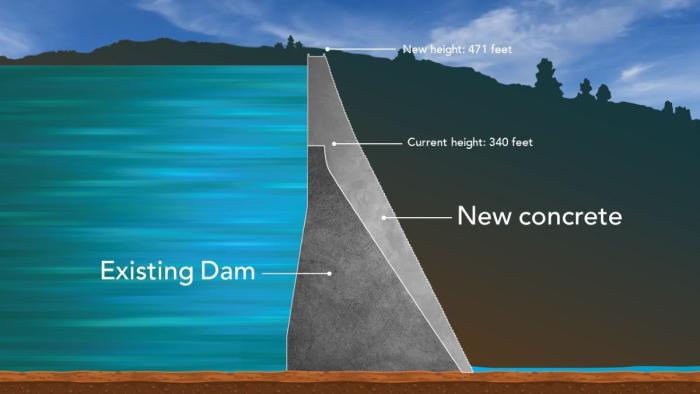
The massive construction project to raise the dam 131 feet and triple the capacity of Gross Reservoir has sparked fierce opposition in Boulder County and prompted several legal challenges from Save The Colorado, a group that advocates on behalf of rivers. Though its early lawsuits failed, the group in 2022 won an appeal that put the legal battle back in play. Despite months of settlement talks, no agreement was reached.
Denver Water first moved to raise Gross Dam more than 20 years ago when the water provider began designing the expansion and seeking the necessary federal and state permits. Denver Water has said raising the dam and increasing capacity of the reservoir is necessary to ensure it has enough water throughout its delivery system and to help with future water supplies as climate change continues to reduce streamflows.
After years of engineering, environmental studies and federal and state analyses, Denver received a permit from the U.S. Army Corps of Engineers, and construction began in 2022.
Arguello’s April 3 ruling said, in part, that the Army Corps should have considered whether ongoing climate change and drought would leave the Colorado River and Western Slope waterways too depleted to safely allow transfer of Denver Water’s rights into a larger Gross Reservoir for Front Range water users.
At the same time, she ordered a permanent injunction prohibiting enlargement of the reservoir, including tree removal and water diversion, and impacts to wildlife.
Almost immediately, Denver Water filed for temporary relief from the order, saying, in part, that it would be unsafe to stop work as the incomplete concrete walls towered above Gross Reservoir.
Arguello granted that request, too, allowing Denver to continue work on the dam considered necessary for safety.


Click the link to read the article on the Water Education Colorado website (Jerd Smith):
June 5, 2025
State health officials will face tighter deadlines and more scrutiny of a water quality permitting program that has been plagued by massive backlogs and criticized by some small communities who say they can’t afford their state-mandated water treatment systems.
The changes will come under a new bipartisan law Senate Bill 305 approved last month. Gov. Jared Polis is expected to sign the bill this week, according to state Sen. Jeff Bridges, a Democrat from Greenwood Village who is one of the bill’s sponsors and chairs the Joint Budget Committee.
“This bill is a reset in the relationship between the Colorado Department of Public Health and Environment (CDPHE) and local governments that both sides believe will result in better communication, collaboration and ultimately better water quality,” Bridges said this week.
The permits are required under the federal Clean Water Act and are designed to protect Colorado’s rivers and streams from contaminants contained in wastewater. The state is required to enforce the federal law.
The measure is designed to help the CDPHE battle a permitting backlog that has left dozens of communities without a current wastewater discharge permit. Those communities can still discharge under a special administrative rule, but the backlog means the communities aren’t complying with the most current wastewater treatment standards that seek to reduce the various contaminants, such as ammonia and nitrates, being discharged into streams.
Earlier this year, as the state sought to fast-track permit approvals, small towns revolted, saying the new permits that were issued were too tough and that it was too expensive to upgrade treatment systems to comply.
The controversy comes as climate change and drought reduce stream flows and cause water temperatures to rise, and as population growth increases the amount of wastewater being discharged to Colorado’s rivers.
In response to the towns’ concerns, the CDPHE water quality control division took the unusual step in March of holding off on taking enforcement action against at least some of the towns that say they can’t comply with the new regulations.
Senate Bill 305 will allow communities to hire outside engineers and consultants to help speed permit processing times and it also requires the CDPHE to develop new rules establishing clear timeframes for granting or denying different types of permits by Dec. 31, 2027.
In addition, according to Nicole Rowan, director of the Water Quality Control Division, they will set a schedule by Dec. 31, 2026, for reducing the backlog.
The changes aren’t likely to help Ault, a community of 2,350 people on the Eastern Plains that finally received a new permit in March. The permit, however, contains standards the town’s 9-year-old wastewater treatment plant can’t meet. The CDPHE has agreed to suspend any enforcement action against the community until it can do additional analysis to see if it can comply with the new rules simply by upgrading its treatment plant, according to Grant Ruff, who oversees the town’s treatment system.
The town still owes $1.2 million on the existing plant. Building a new one would likely cost more than $20 million, Ruff said.
“We hope it is feasible [to comply] by making minor upgrades,” he said. “Otherwise we will have to spend $20 million to $30 million.”
That won’t be the case for towns seeking new permits in the years ahead.
“The new standards will be tremendously helpful in the future because the state will have to take into consideration the community’s ability to pay,” he said.