With #ColoradoRiver negotiators in a ‘conclave,’ other experts are on the outside looking in — Alex Hager (KUNC.org) #COriver #aridification #GWCWTI2025

Bill Hasencamp with the Metropolitan Water District of Southern California speaks at the University of Colorado, Boulder on June 5, 2025. More than 300 Colorado River experts attended, but the region’s top water policymakers skipped the event. Alex Hager/KUNC

Click the link to read the article on the KUNC website (Alex Hager):

June 6, 2025

This story is part of ongoing coverage of the Colorado River, produced by KUNC in Colorado and supported by the Walton Family Foundation. KUNC is solely responsible for its editorial coverage.

Closed-door negotiations about the future of the Colorado River are at a standstill. The news of the day is that there’s barely any news. So, when more than 300 water experts got together for an annual conference this week, they had little to do besides wring their hands, listen for crumbs of news, and talk about how they would do things differently if they were on the inside of those negotiations.

“The current process to me kind of feels like the conclave,” said Jim Lochhead, who formerly served as Colorado’s top water negotiator.

Top policymakers caused a stir when they decided to skip the meeting at the University of Colorado, Boulder, withdrawing further into the shadows as tense talks about sharing water appear to be making little progress. The people excluded from those meetings — scientists, academics, tribal leaders, environmental advocates and others with a stake in the river — have been left waiting like the masses gathered in St. Peter’s Square.

“We’re waiting for the black smoke or the white smoke to come out of the seven-state negotiating room,” said Lochhead, who once served as CEO of Denver Water and now works as an independent consultant.

On the other side of this Colorado River “conclave,” seven state-appointed negotiators are trying to come up with a new set of rules for sharing water after 2026. They’re under pressure to cut back on demand for water because the river’s supply is shrinking due to climate change. Until they emerge with a new set of rules, farmers, cities and everyone else will be wondering if they will feel the sting of those cuts.

Across the Colorado River basin, those who depend on the river’s water are making preparations however they can. Cities are spending big on technology that will help stretch out their water supplies if they’re given less in the future. Tribes are trying to get a more formal role in river negotiations, so future water-sharing policies don’t leave them behind like so many in the past.

Efforts like those have been underway for years now. But in Boulder, as top state negotiators keep their heels firmly planted in incompatible policy positions and an unpredictable federal government has yet to appoint a top official to oversee Colorado River matters, everyone else was left to marinate in the anxiety that will linger until a new set of rules is formed.

Looking to the past

With little information about the future, the talks in Boulder mainly focused on lessons from history.

Some of those lessons were relatively recent. For example, Lochhead pointed to talks ahead of a 2007 plan that saw more than seven people in the negotiating room, including federal government representatives who were able to push the states towards consensus. He said today’s negotiations would benefit from a similar approach.

Other lessons were more than a century old. Tribal leaders advocated for the presence of Indigenous interests in today’s talks. Were they included in previous discussions, said Lorelei Cloud, things might be different today.

September 21, 1923, 9:00 a.m. — Colorado River at Lees Ferry. From right bank on line with Klohr’s house and gage house. Old “Dugway” or inclined gage shows to left of gage house. Gage height 11.05′, discharge 27,000 cfs. Lens 16, time =1/25, camera supported. Photo by G.C. Stevens of the USGS. The Colorado River flows past a measuring device at Lee’s Ferry in Arizona on Sept. 21, 1923. Speakers at a recent conference on the Colorado River drew lessons from history to inform the next chapter of water management in the region.. Source: 1921-1937 Surface Water Records File, Colorado R. @ Lees Ferry, Laguna Niguel Federal Records Center, Accession No. 57-78-0006, Box 2 of 2 , Location No. MB053635.

“The past century has really shown that the exclusion of tribal voices has really led to this crisis that we’re dealing with now in the basin,” said Cloud, a member of the Southern Ute Tribe and the recently appointed chair of the Colorado Water Conservation Board. “If we had just honored tribal sovereignty from years back, even from the beginning, we probably would have had serious offers that provided solutions to what we’re dealing with now. We wouldn’t be sitting here talking about hindsight to foresight.”

Patty Limerick, a historian and author whose work focuses on the American West, also brought lessons from more than a century ago when she told the story of a man named E.C. LaRue.

LaRue was a federal engineer who studied the river in the early 1920s. He urged his higher-ups to be conservative in their estimates about the amount of water in the Colorado River. They largely ignored LaRue, instead signing legal agreements that promised more water than the river, in most years, is able to provide.

If policymakers had listened to LaRue more than a hundred years ago, some say, those who rely on the Colorado River today would not be in such a crisis.

Limerick finished describing LaRue’s tale and posed a question to the room.

“Is there a latter-day counterpart to E.C. LaRue to whom we should be paying attention?” she asked. “Is that person among us?”

Another speaker suggested that counterpart might be climate scientist Brad Udall. When he spoke shortly thereafter, his outlook was grim.

Udall/Overpeck 4-panel Figure Colorado River temperature/precipitation/natural flows with trend. Lake Mead and Lake Powell storage. Updated through Water Year 2024. Credit: Brad Udall

‘Beyond awful’ forecasts

Udall and other scientists have provided a rare, uncomfortable dose of certainty to Colorado River talks: The planet is getting warmer, the Colorado River is losing water, and cutbacks to water demand are unavoidably necessary.

He told the audience to “hold on to [their] seats” before describing the climate forecast as “beyond awful.”

While his predictions are rarely rosy, Udall struck a more pessimistic tone than previous years, calling out fossil fuel companies and an “anti-knowledge president and his vile enablers” for attacking science and efforts to gird the nation against the harms of climate change, including water shortages.

“Not only are we in a really deep climate hole,” he said, “We’re continuing to dig and absolutely the last thing we need is the federal government undercutting our efforts to meet the water supply challenges in this basin.”

What the feds said

Those in attendance looking for crumbs of information about negotiations from state leaders were left empty-handed. But one federal representative, perhaps surprisingly, dropped a few tiny ones.

The federal government has stayed relatively tight-lipped on Colorado River matters since Donald Trump returned to the White House. In the administration’s early days, it paused funding for water conservation and infrastructure projects. It has yet to appoint a new commissioner for the Bureau of Reclamation, the agency which manages dams and reservoirs across the West.
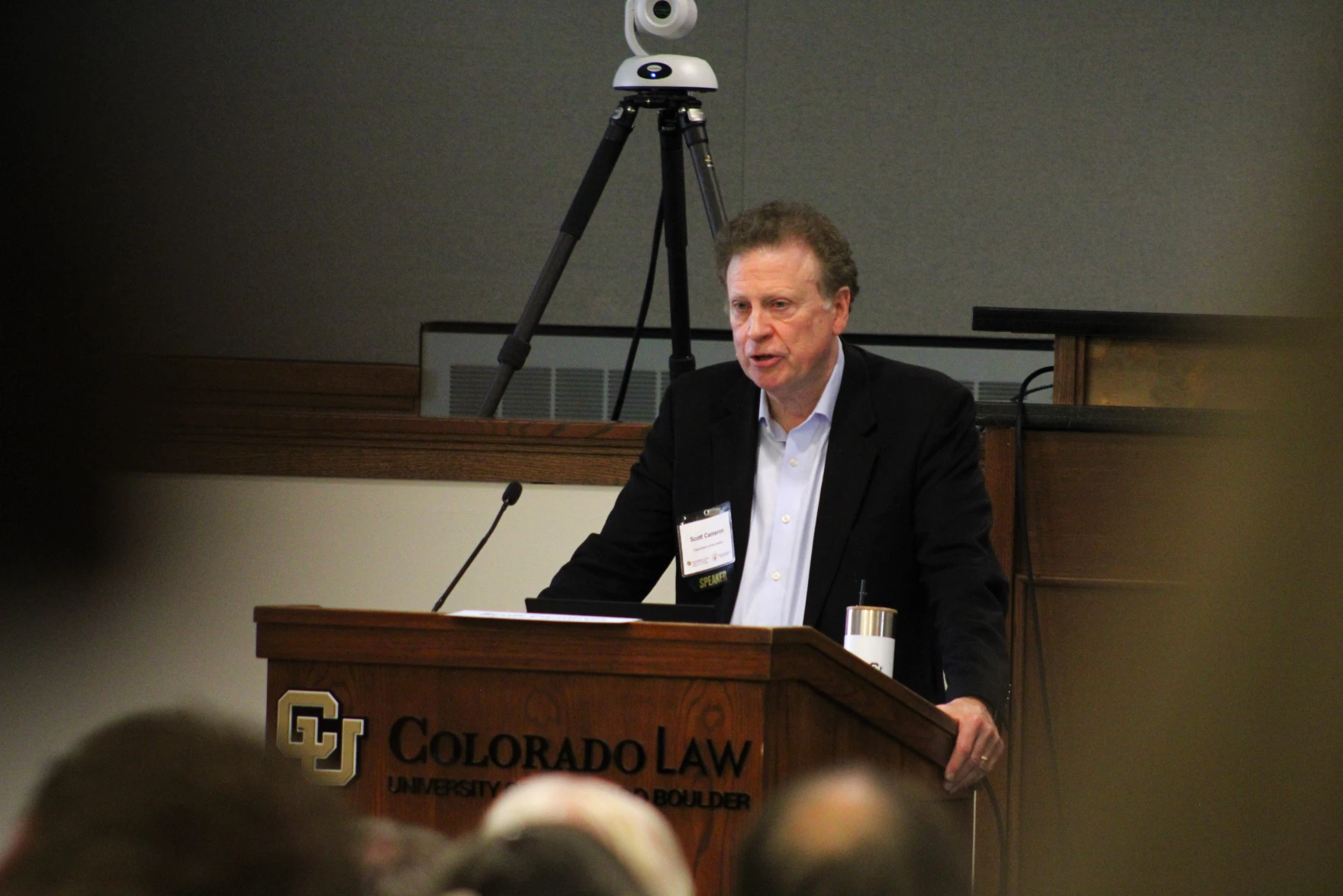
Scott Cameron, the Interior Department’s acting Assistant Secretary for Water and Science, speaks at a conference in Boulder, Colorado on June 6, 2025. He said federal officials are working closely with state negotiators to shape the next chapter of Colorado River management. Alex Hager/KUNC

With that role unfilled, the administration’s highest-ranking official focused on Colorado River matters is Scott Cameron, a longtime federal official who currently serves as the Department of the Interior’s acting Assistant Secretary for Water and Science.

Cameron said he’s been meeting with state negotiators roughly “every other week for the last eight weeks” after his boss, Interior Secretary Doug Burgum, said he wanted the department’s leadership to be “personally, intensely, and constantly” involved in discussions with the seven states. Cameron did, however, say he did not believe the states needed an external moderator to help break their deadlock.

“My impression is they really want a deal, they really want to find a path forward to working together, and I’m convinced that they’re all sincere in that regard,” he said.

Cameron also said he was “constantly” asking Reclamation’s senior leadership to bolster the agency’s staff on Colorado River matters as a way to “mitigate any unintended consequences of national level initiatives to reduce overall federal spending.”

Map of the Colorado River drainage basin, created using USGS data. By Shannon1 Creative Commons Attribution-Share Alike 4.0

#Aspen reaffirms plans for new reservoirs with water court filings: Five potential sites remain; effort to add more locations falls short of deadline — Heather Sackett (AspenJournalism.org)

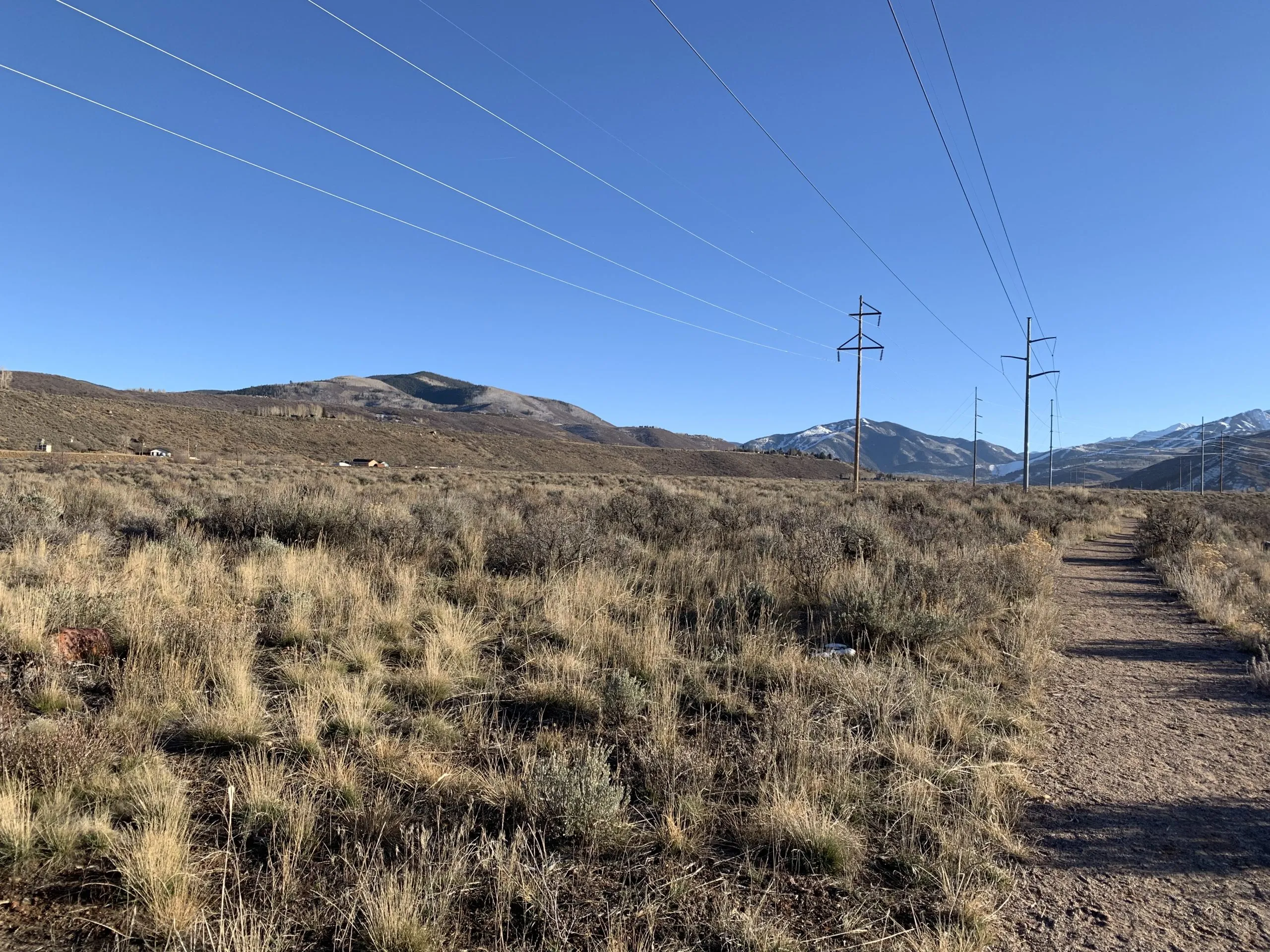
This land in Woody Creek is owned by the city of Aspen and is a potential site for a reservoir. On May 30, the city reaffirmed its plans to build water storage with two water court filings. CREDIT: HEATHER SACKETT/ASPEN JOURNALISM

Click the link to read the article on the Aspen Journalism website (Heather Sackett):

June 7, 2025

The city of Aspen is reaffirming its plans to build reservoirs to store water from Castle and Maroon creeks — but where they might be built has still not been decided.

On May 30, attorneys for the city filed two applications in water court: a diligence application detailing the actions Aspen has taken toward developing the rights over the past six years and an application to change the original locations of the reservoirs. After a water court process, which saw 10 groups oppose the reservoirs, Aspen in 2019 agreed to modify the rights and move the proposed reservoirs out of Castle and Maroon valleys. 

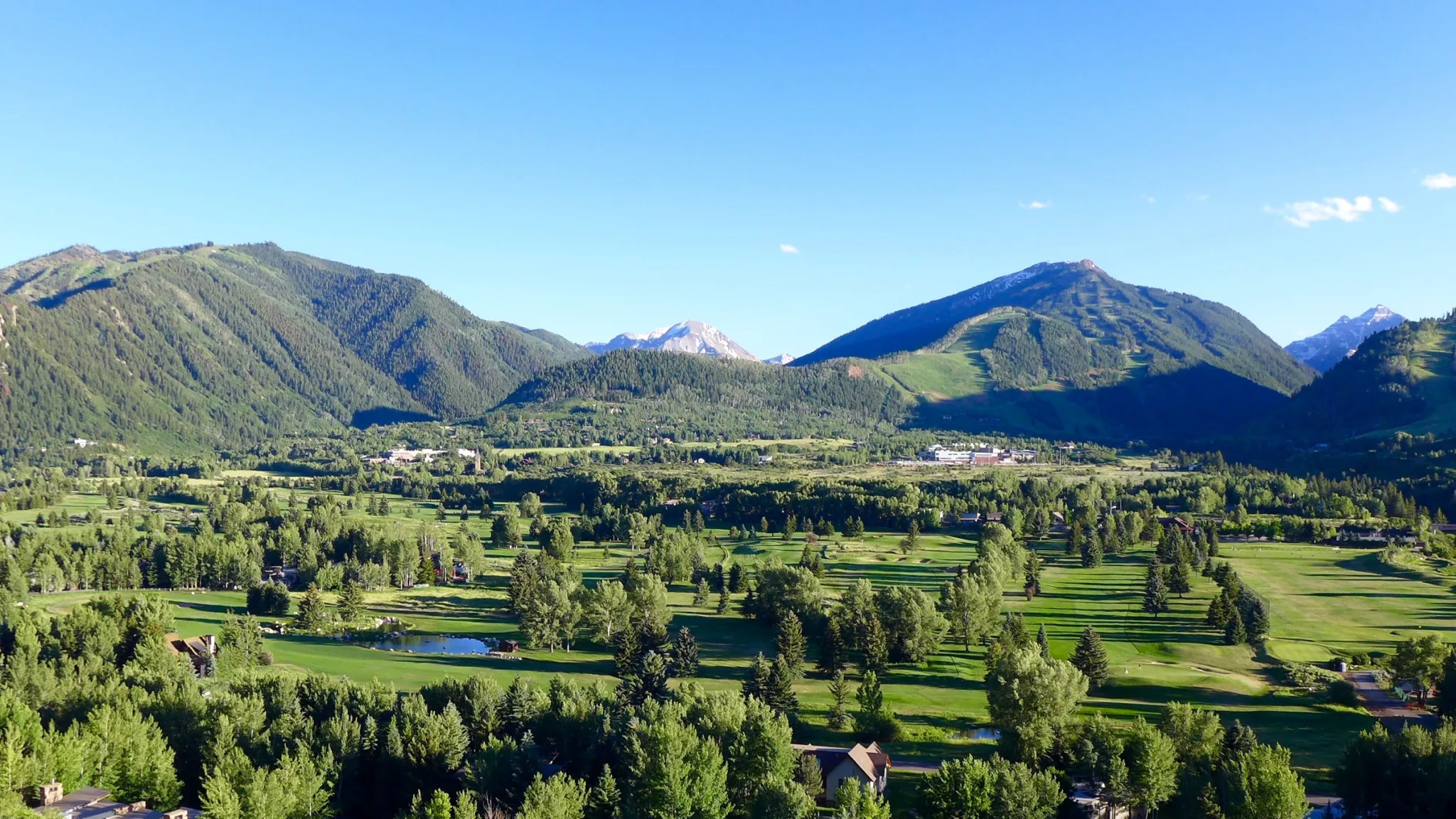
The city has previously identified five potential locations for reservoirs: on land the city owns in Woody Creek; Vagneur Gravel Quarry; and three underground sites — the Aspen Golf Course, Cozy Point Ranch and Zoline Open Space. 

“I think the city would try and prioritize sites that we own already, or those that have larger and contiguous areas and focus on those, but I think a lot of it will come down to the feasibility and constructability, and those sites that might have the least impact as well,” said Erin Loughlin Molliconi, Aspen’s utilities director. 

Aspen has what’s known as conditional storage rights for up to 8,500 acre-feet of water from Castle and Maroon creeks, which it could store in one or more locations. Conditional water rights allow a water rights owner to save their place in line while they work toward developing the rights. 

Since first claiming the rights in 1965, the city every six years filed little-noticed diligence applications to maintain them. But the city’s 2016 diligence filing brought statements of opposition from 10 parties: the U.S. Forest Service, Pitkin County, American Rivers, Western Resource Advocates, Trout Unlimited, Wilderness Workshop and four private-property owners — two who owned land in the Maroon Creek Valley and two who owned land in the Castle Creek Valley.

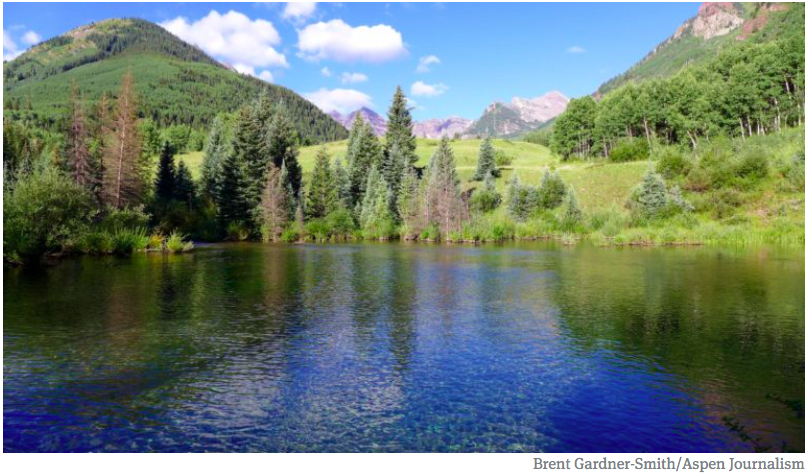
The location of the potential Maroon Creek Reservoir. Photo credit: Brent Gardner-Smith/Aspen Journalism

The Maroon Creek Reservoir would have had a dam 155 feet tall and would have held 4,567 acre-feet of water in a pristine location in view of the Maroon Bells. The reservoir would have flooded 85 acres of U.S. Forest Service land, including some in the Maroon Bells-Snowmass Wilderness.

The Castle Creek Reservoir would have had a dam 170 feet tall and would have held 9,062 acre-feet of water. The reservoir would have flooded 120 acres on both private and USFS lands, including a small area in the wilderness.

After settling with the opposing parties, Aspen’s total storage rights were winnowed to 8,500 acre-feet, and the city is now required to find a new site or sites to build storage buckets.

Conditional water storage rights that have not yet been developed — such as Aspen’s — are held by many cities, water conservancy districts and fossil fuel companies across the Western Slope.

Five new potential reservoir sites

Besides the five previously identified sites where the city might want to move its potential water storage, officials had been seeking to add five new reservoir sites to the change case, but ultimately they did not include them. In a March 28 letter to opposersin the 2016 case, the city requested approval to include Thomas Reservoir, Marolt Open Space, Snowmass Reservoir, Ziegler Reservoir and Wildcat Reservoir in the list of potential locations. 

According to the settlements with opposers, the city needs written approval from the opposers to add any new potential reservoir locations, other than the previously identified five (Woody Creek, Vagneur Gravel Quarry, Aspen Golf Course, Cozy Point Ranch and Zoline Open Space). Aspen did not get that approval from all of the opposers for all of the locations before the May 30 water court filing deadline.

“We can say that some parties did approve of sites,” Molliconi said. “We just didn’t get all parties to approve of all sites.”

Molliconi said the city chose the five additional sites because they already have existing reservoirs or ponds.

“It would be better to get either a partnership with an existing site or enlarge an existing site,” Molliconi said.

It is unclear if the city will pursue adding any of the five new sites to a future proposal. In an emailed statement, officials said they would “continue to respect and honor the stipulations and conditions of other stakeholders in this process.”

“The city intends to maintain site flexibility because we can’t perfectly predict future demands,” the statement said. “We feel it is our responsibility to continue analyses and stakeholder conversations for storage given the need for resource resiliency, storage and demand gaps, and other beneficial uses.”

Bill Hegberg is the association president of Wildcat Ranch, a residential subdivision outside of Snowmass Village. He said he had talked with city officials about including in their plans Wildcat Reservoir, a 1,100-acre-foot lake on Wildcat Creek, a tributary of Snowmass Creek.

“It doesn’t really work when we’ve got a lake that’s a recreation amenity,” Hegberg said. “We aren’t available for that.” 

Aspen officials did not provide additional information on how reservoirs in the Brush Creek and Snowmass Creek drainages could be used to provide water to the city.

Environmental conservation organization American Rivers was one of the opposers Aspen settled with in 2019. Matt Rice, American Rivers’ southwest regional director, said the organization couldn’t sign off on the five additional new locations until Aspen provided more information. 

“We can’t in good faith approve Aspen’s very vague plans,” Rice said. “But we are not trying to throw up unnecessary roadblocks. They just need to do a little bit more work on that and we can have this discussion in six years, especially if they provide us a longer timeline to get our approval.”

Every six years, holders of conditional water rights must file what’s known as a diligence application with the state’s water court, proving that they still have a need for the water, that they have taken substantial steps toward putting the water to use and that they “can and will” eventually use the water. They must essentially prove they are not speculating and hoarding water rights that they won’t soon use. 

According to the water court filings, the city says the following things count as diligence over the past six years: It has spent about $310,000 to investigate the 10 potential reservoir locations; it has spent $300,000 on attorneys fees to “defend” its water rights; and it has continued to improve, operate and maintain its water systems that serve Aspen residents.

The Aspen municipal golf course, which sits between Castle and Maroon creeks. The golf course is one potential site the city of Aspen is considering for underground water storage. CREDIT: BRENT GARDNER-SMITH/ASPEN JOURNALISM

Storage is part of Aspen’s Integrated Water Resource Plan, which was completed in 2021and lays out options for meeting increasing water demands in a hotter and drier future. In addition to storage, the IWRP options include nonpotable reuse; groundwater wells; using Hunter Creek as a water source; enhanced water conservation; and drought restrictions.

“I think that [IWRP] is part of the reason why keeping these water rights alive was important, too, for the supply and demand,” Molliconi said. 

According to the plan, which uses estimates of population growth and climate change to make projections 50 years into the future, the worst water shortages could occur in two consecutively dry years and be about 2,300 acre-feet total over the course of both years.

In recent years, Aspen has worked at reducing customers’ water use — especially outdoor water use — with increased public outreach, a landscape ordinance, automated metering and tiered water use rates. The city has also stepped up the monitoring of snowpack and streamflow by funding a new SNOTEL site at the headwaters of Castle Creek and Airborne Snow Observatory flights that measure snowpack from planes using light detection and ranging, or lidar. 

Steve Hunter, Aspen’s utilities resource manager, said he plans to recommend to City Council on June 10 that the city move into a Stage 1 water shortage declaration, which aims to reduce water use by 10% through voluntary conservation. 

Now that the applications are filed, anyone who might want to oppose the city’s plans has 60 days to file a statement of opposition. The 10 original opposers in the case agreed not to fight the city’s efforts to move the rights to the five alternative locations for 20 years. 

If the city’s change case is approved, officials would still need land-use and permitting approval to build any eventual new water-storage reservoir and associated infrastructure. 

Aspen Journalism is supported by a community nonprofit grant from the city of Aspen.

Aspen Journalism is a nonprofit, investigative news organization covering water, environment, social justice and more. Visit http://aspenjournalism.org.