SB13-181: Water Conservation Bd Construction Fund Projects moves out of committee, would fund Chatfield reallocation

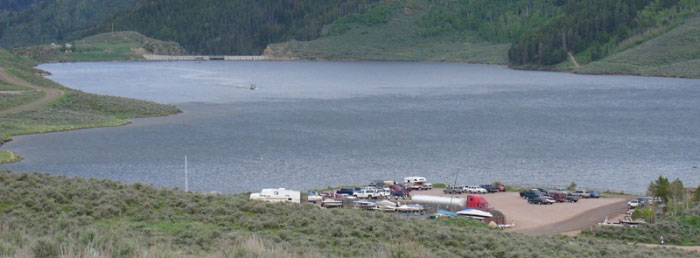
chatfieldreservoirreallocationprojectalternatives.jpg

From The Greeley Tribune (Eric Brown):

A water development project of huge interest to local farmers got a big boost Thursday, after it had endured setbacks in recent weeks when a couple of participants backed out. The Colorado Senate Agriculture, Natural Resources and Energy Committee moved forward a bill that supports $70 million in water projects, with about $28 million of that going toward the Chatfield Reservoir Reallocation Project, according to a news release from Senate Majority Whip Gail Schwartz, D-Snowmass, who introduced the bill. The measure, [Senate Bill 13-181: Water Conservation Bd Construction Fund Projects] will go to the Senate Appropriations Committee for consideration.

The Central Colorado Water Conservancy District in Greeley, which provides augmentation water to more than 100,000 acres of irrigated farm ground in the area, is one of 13 water-providers participating in the proposed Chatfield project. The endeavor would raise the Denver-area lake by as much as 12 feet, and, in doing so, would provide an additional 2,849 acre-feet of water to some of Central’s users.

The $184-million Chatfield Reservoir Reallocation Project wouldn’t provide immediate help for local farmers, who battled drought last year and are potentially facing another round in the upcoming growing season. But local farmers say they need to secure future water supplies quickly, because the cities around them are growing and are increasing their own water needs.
Central Water and the farmers within its boundaries have long been dependant on leasing excess water from local cities, but those supplies will soon be limited, and are already becoming more expensive. Augmentation water is needed to make up for depletions to the aquifer and surrounding surface flows caused by pumping water out of the ground.

In addition to battling cities for supplies, the additional augmentation water is needed since many of the wells in Central Water’s boundaries were either curtailed or shut down in 2006, when the state made augmentation requirements more stringent. Some farmers haven’t been able to use their wells since then because they haven’t had the necessary amount of augmentation water to do so. Randy Ray, executive director for Central Water, said that, if S.B. 181 goes through, it could speed up the Chatfield project by at least several months. Ray said he expects the Chatfield Reservoir Reallocation Project to get federal approval by the end of 2013, meaning participants can go forward with needed mitigation efforts.

Before additional water can be stored at Chatfield Reservoir, facilities at the state park must be relocated to higher ground and new wildlife habitats must be created, along with other measures. Without the new bill freeing up state funding, the water-providers participating in the proposed project wouldn’t have enough dollars to get going on those mitigation efforts, Ray said.

Two water providers — Aurora Water and the Roxborough Water and Sanitation District — recently backed out of the Chatfield project to pursue other projects. Ray described that development as a “setback.” They had accounted for about 20 percent of the funding for the project. But if the bill can pass this year and make state funds available, mitigation efforts at Chatfield can take place as soon as federal approval comes.

Without the state funds, though, there’s uncertainty about whether there would be enough dollars available, and the project, even with federal approval, would be at a standstill until state funding was available later in 2014, or maybe even farther down the road. According to the news release from Schwartz, the 15 water projects in the bill would get under way without taking money from the General Fund. The funds will come from the state’s Construction Fund and the Severance Tax Trust Fund Perpetual Base Account, both of which include sustainable revolving loan programs. The Construction Fund has helped nearly 440 water projects get going since 1971, according to Schwartz.

In November, voters in the Central Colorado Water Conservancy District approved a pair of water measures, including a $60 million bond issue that would help pay for Central Water’s portion of the Chatfield Reservoir Reallocation Project, along with other endeavors. Central Water officials also are considering the construction of gravel pits for an additional 8,000- 9,000 acre-feet of storage, and buying 1,000 acre-feet of senior water rights with the approved bonds.

More 2013 Colorado legislation coverage here.

SB13-075: Promote Water Conservation Of Designated Ground Water

dripirrigation.jpg

Click here to read the bill SB13-075: Promote Water Conservation Of Designated Ground Water (Brophy/Sonneberg):

Here’s a report from Tony Rayl writing for The Yuma Pioneer. Here’s an excerpt:

On Wednesday, February 13th, Senate Bill 75 passed the Colorado Senate. The bill, which was sponsored by Senator Greg Brophy (R-Wray), would prevent any government organization from changing the amount of water a permit holder can draw from an aquifer based on conservation measures. This practice, Senator Brophy argues, encourages overconsumption.

“Something happened in the water permitting process that created an incentive to use the maximum amount of water that you possibly can on your farm,” Brophy stated. “What this bill is trying to do is remove the incentive to waste water and instead incentivize conservation.” To keep groundwater aquifers from being depleted, the state regulates how much water a permit holder can draw from an aquifer. The amount an individual is allowed to draw is based on how much water they have needed to water their crops in the past.

“When users try to conserve water, the state sees their water usage drop and sometimes lessens the amount of water they can use from then on,” argued Senator Brophy. “This encourages irrigators to waste water to avoid having their allowable water consumption amount permanently reduced.”

The bill would protect permitted consumptive use — in designated groundwater basins — as the floor for a permit in perpetuity and would prevent the reduction of pumping rates or annual volumetrics based on consumptive use after implementation of conservation measures.

More 2013 Colorado legislation coverage here.

HB13-1130: ‘Bill would hurt rural Colorado’ — State Rep. Clarice Navarro #codrought

bessemerditch1890waterarchives.jpg

Here’s a column from State Representative Clarice Navarro urging the legislature to reject expanded authority for the State Engineer, under HB13-1130: Reapprove Interruptible Water Supply Agreements. From the column:

Colorado Water Law is a unique, complex series of statutes, court cases and decreed water rights. This framework of laws is designed to protect people who do not live next to the river, but have a real need to use the water that flows from snowmelt in the spring and summer months.

Some of my colleagues in the state Legislature are seeking to change this system in favor of benefiting large cities such as Aurora and Denver at the expense of rural Colorado.

House Bill 1130 seeks to extend the operation of interruptible water supply agreements in Colorado. Because of the arid nature of our state, the Legislature entrusts the Colorado water courts to oversee the decreed water rights in order to ensure that people with junior water rights are treated equitably with those who have senior water rights.

This bill gives the Colorado water engineer the ability to grant interruptible supply agreements in three-year increments outside of court oversight for up to 30 years. Only after the state engineer has made a determination can someone appeal to water court. This simply entrusts the state engineer with more authority, and it will lead to rural Coloradans losing the water to large, metropolitan areas of the state.

Southern Colorado cannot stand for this. There are better ways for the Legislature to allow, in times of drought, the ability to divert water out of priority. The current network of laws, in my opinion, adequately addresses all surface water rights. I hope that my fellow legislators are able to work together and defeat HB 1130. This is bad legislation for Southern Colorado.

More 2013 Colorado legislation coverage here.

2013 Colorado legislation: ‘The number of water-related bills tends to be inversely proportional to the amount of snowpack we have’ — Randy Fischer

dnrpipelineconcepts309.jpg

From The Pueblo Chieftain (Chris Woodka):

A bill that would extend the state engineer’s authority to approve interruptible supply agreements was heard in the state House Agriculture Committee this week. Most of the testimony was against the bill, which would allow the state engineer to approve temporary water transfer agreements between cities and farms for up to 30 years, rather than the current limit of 10 years. Leases of water could occur for only three years within each 10-­year period. Claims of injury could be filed in water court.

Opponents of the bill argue that the time period is too long, and that applications in water court are needed in advance to determine if other water rights are injured. Aurora Water, which has sought leases from the Arkansas River basin, is supporting the legislation, [HB13-1013: Protect Water Right Ownership Rights]. Rep. Jerry Sonnenberg, R-­Sterling, and Rep. Randy Fischer, D­-Fort Collins, are co­sponsors of the bill. Sen. Angela Giron, D-­Pueblo, is listed as the Senate sponsor. No vote was taken on the bill during the committee meeting, in order to allow changes to be made.

Another bill, [SB13-074: Irrigation Water Right Historical Use Acreage], passed the Senate ag committee on a 4-­1 vote last week. The bill attempts to clear up ambiguities in pre­-1937 agricultural water rights by allowing the maximum amount of land irrigated during the first 50 years to be claimed as historical usage. The Colorado Water Congress recently voted to oppose the bill because it does not take into account other deliberations water courts used to determine rights. It could expand the amount of acreage claimed in some cases.

A third bill, [SB13-019: Promote Water Conservation], is sponsored by Sen. Gail Schwartz, D­-Snowmass Village, and seeks to provide more incentives for water conservation by easing the requirements to use the water or lose the right. It has not been heard in committee.

From the Fort Collins Coloradoan (Bobby Magill):

Six weeks into the session, water concerns are emerging among the biggest issues lawmakers are addressing. “The number of water-related bills tends to be inversely proportional to the amount of snowpack we have,” said Rep. Randy Fischer, D-Fort Collins. “A lot of people are concerned about the drought coming up, anticipating we’ll be in another year of severe drought.”

Fischer, who is chairman of the House Agriculture, Livestock and Natural Resources Committee, is sponsoring or co-sponsoring at least seven bills that address water supply, irrigation, water conservation or a combination of those issues. Most have quickly gained traction in the Democrat-controlled Legislature.

A bipartisan bill Fischer is working on with the previous GOP chairman of Fischer’s committee, Rep. Jerry Sonnenberg, R-Sterling, would allow farmers to share their water with cities and towns through temporary water exchanges. The bill, [House Bill 13-1130: Reapprove Interruptible Water Supply Agreements], would allow farmers to share their water with businesses and cities without losing the right to use it later, Fischer said…

Fischer said lawmakers were waiting for the Colorado Oil and Gas Conservation Commission to approve new rules on groundwater testing around oil and gas wells and a new regulation requiring a 500 buffer zone between an oil well and the nearest building. Those rules have now been approved, and oil and gas-related legislation will likely be introduced soon, Fischer said…

Lawmakers are coordinating to write legislation addressing local control of oil and gas permitting and resolving a conflict between that local control and state law that requires oil and gas to be regulated only at the state level, [Fischer] said.

A bill likely to be introduced soon will propose increases in penalties for oil and gas companies that spill their products, he said. Another bill may propose additional studies looking into the affects of oil and gas development on public health…

Fischer said he plans to sponsor a bill that will propose a renewable thermal standard similar to the state’s renewable standards for electricity generation. “There is no incentive for people to use ground-source heat pumps for heating and cooling,” he said.

More legislative news from the Coloradoan:

Bills on the move

Senate Bill 19: Promoting water conservation
Allows farmers to reduce the water they consume without losing their water right. Currently, farmers have to use all the water they’re entitled to, or risk losing the right to some of that water.
Northern Colorado sponsors: Rep. Randy Fischer, D-Fort Collins.
Status: Assigned to Senate Agriculture, Natural Resources and Energy Committee.

Senate Bill 41: Preserves water supplies for drought
Reverses a Colorado Supreme Court decision declaring that storing water in reservoirs to prepare for wildfire and drought are not sufficient for water rights owners to keep the right to that water without emptying reservoirs and putting the water to “beneficial use.”
Northern Colorado sponsors: Rep. Randy Fischer, D-Fort Collins, Rep. Jerry Sonnenberg, R-Sterling.
Status: Passed Senate, introduced in House.

Senate Bill 70: Alternative fuels for state fleet vehicles
State fleet vehicles are currently required to be fueled by compressed natural gas. The bill would allow the purchase of other vehicles that run on other cost-effective alternative fuels.
Northern Colorado sponsors: Rep. Randy Fischer, D-Fort Collins; Rep. Dave Young, D-Greeley.
Status: Passed Senate.

Senate Bill 110: Emergency wildfire funds
Creates a wildland fire cost recovery fund in the Colorado Treasury.
Northern Colorado sponsors: Sen. Kevin Lundberg, R-Berthoud; Rep. Joann Ginal, D-Fort Collins; Rep. Dave Young, D-Greeley.
Status: Signed into law.

House Bill 1044: Allowing use of graywater
Allows the state to determine how residential and commercial wastewater that is considered “graywater” can be put to beneficial use as a water conservation measure.
Northern Colorado sponsor: Rep. Randy Fischer, D-Fort Collins.
Status: Passed House Agriculture, Livestock and Natural Resources Committee and referred to House Appropriations Committee.

House Bill 1091: Air quality testing for diesel fleet vehicles
Allows the state to write new rules for air quality testing regarding heavy-duty diesel fleet vehicle owners who can prove excellent maintenance of their fleet.
Northern Colorado sponsors: Sen. John Kefalas, D-Fort Collins; Rep. Dave Young, D-Greeley.
Status: Passed House Transportation Committee and referred to House floor.

House Bill 1130: Water supply agreements between farmers and cities
Allows farmers to share water through temporary exchanges with municipal and industrial water users.
Northern Colorado sponsors: Rep. Randy Fischer, D-Fort Collins and Rep. Jerry Sonnenberg, R-Sterling.
Status: In discussion in House Agriculture, Livestock and Natural Resources Committee.

House Bill 1191: Regulations for wastewater treatment plants
Allows state public health officials to award grants to cities and towns for waste water treatment plant improvements.
Northern Colorado sponsor: Rep. Randy Fischer, D-Fort Collins.
Status: Passed House Agriculture, Livestock and Natural Resources Committee and referred to House Appropriations Committee.

Senate Bill 142: Ceding federal lands
Bill would require the United States government to transfer title to about 23 million acres of national forests and other “agricultural” public lands to the state of Colorado.
Northern Colorado sponsors: Sen. Scott Renfroe, R-Greeley; Sen. Vicki Marble, R-Fort Collins
Status: Passed in Senate State, Veterans and Military Affairs Committee; awaits Senate vote.

House Bill 1122: Energy, jobs and higher education act
Would create “incentive” oil and gas wells, exempting them from severance taxes for two years before severance tax collection resumes and is used for a “college opportunity fund.”
Northern Colorado sponsors: Rep. Jerry Sonnenberg, R-Sterling; Rep. Perry Buck, R-Windsor.
Status: Died in committee

House Bill 1128: Excluding counties from vehicle emissions tests
Would allow county commissioners to exclude all or part of a county from Colorado’s motor vehicle emissions testing program if that part of the county meets ambient air quality standards.
Northern Colorado sponsors: Rep. Brian DelGrosso, R-Loveland; Rep. Perry Buck, R-Windsor; Rep. Steve Humphrey, R-Severance; Sen. Kevin Lundberg, R-Berthoud; Sen. Vicki Marble, R-Fort Collins.
Status: Died in committee

More 2013 Colorado legislation coverage here.

HB13-013 passes out of the House Agriculture, Livestock and Natural Resources Committee #coleg

powderhornskiarea.jpg

From the Sterling Journal-Advocate (Marianne Goodland):

[HB13-1013: Protect Water Right Ownership Rights], which is sponsored by Rep. Jerry Sonnenberg (R-Sterling), passed the committee unanimously, but not without a little last-minute wrangling during the Feb. 4 hearing. Rep. Mike McLachlan (D-Durango) announced during the hearing he intended to amend the bill to limit the impact to ski areas because he said the bill was too broad.

The issue was brought to the Legislature by the ski industry, but during a Jan. 28 hearing, attorney Glenn Porzak told the committee that the Forest Service had issued similar directives on water rights for ranchers and other agricultural users who lease federal lands for grazing.

McLachlan eventually decided not to add the amendment and HB 1013 is now awaiting action from the House Appropriations Committee. A companion measure, House Joint Resolution 13-1004, passed the full House on Feb. 1 and is headed to the Senate. Sonnenberg also won House support this week for HB 1034, which would allow commodities warehouses and elevators to issue electronic receipts that could be shared with banks and other financial institutions. HB 1034 passed the House 64-0 on Feb. 4, and is now in the Senate.

More 2013 Colorado legislation coverage here.

‘Ski areas’ water rights should be protected from federal infringement’ — Mike McLachlan (HD 59) #coleg

durangomountainresorttrailmap.jpg

From The Durango Herald (Mike McLachlan HD 59):

On Monday, I attended the Colorado Water Congress and met with former Sen. Bruce Whitehead. Later in committee, we had a full discussion about the relationship between U.S. Forest Service attempts to link the ski area permit system to what some people consider an infringement on ski area water rights. One side of the debate wants to make this a full-fledged assault on all levels of the U.S. government. As a legislator who has a significant number of ski areas in his district, I listened earnestly to all the testimony and do understand that the ski areas’ water rights should be protected from federal infringement. Because the bill as currently drafted is so broad and so sweeping, I cannot support it in its current form, but if it is narrowed to the U.S. Forest Service and our Colorado ski area water rights, I will support House Bill 1013…

On Thursday I also was privileged to attend and participate in a legislative panel at the Colorado Water Congress. As I told its membership, I continue to remain committed to bipartisanship and good government. I fully understand the responsibilities of a Western Slope legislator regarding the protection of our water rights, rivers and streams. It was good to see Sen. Ellen Roberts, Sen. Gail Schwartz, John Porter, Steve Fearn, Barry Spear, Steve Harris, Bob Wolfe, Billy Nesbitt, Frank Kugel and John McClow. I will continue my dialogue with the Colorado Water Congress to ensure that the water rights of the 59th District are fully protected.

More 2013 Colorado legislation coverage here.

SB13-041 passes agriculture committee — defines firefighting and drought mitigation as beneficial uses #coleg

stagecoachreservoir1.jpg

From The Durango Herald (Joe Hanel) via the Cortez Journal:

Sen. Ellen Roberts, R-Durango, won unanimous support for Senate Bill [13-041] in the agriculture committee. Her bill counteracts a 2011 court ruling on the Yampa River that said reservoir owners can’t get an absolute right to water in their reservoirs unless it is all put to a “beneficial use.”

Colorado law has a “use it or lose it” approach to water, in order to prevent hoarding or speculation. But legislators and their allies in the water business think the court took that doctrine to an extreme…

Denver Water CEO Jim Lochhead said that unless the bill passes and reverses the Supreme Court ruling, utilities would have to suck their reservoirs dry before they could get new water rights…

The bill declares that storing water for firefighting and drought mitigation is a beneficial use, and it says water rights can’t be considered to be abandoned when the water is in long-term storage.

More 2013 Colorado legislation coverage here.

House Joint Resolution 13-1044 clears House Agriculture, Livestock and Natural Resources Committee

powderhornskiarea.jpg

From the Sterling Journal-Advocate (Marianne Goodland):

The committee unanimously approved House Joint Resolution 13-1004, which encourages the U.S. Department of Agriculture Forest Service to withdraw a 2012 directive that requires ski areas to turn over their water rights, without compensation, for federal lands leased from the Forest Service.

HJR 1004 points out that federal law requires federal agencies to abide by the water laws of the states in which federal lands are located. However, according to resolution sponsor Rep. Jerry Sonnenberg (R-Sterling), the Forest Service drafted the 2012 directive in violation of that law, known as the McCarran Act.

The National Ski Areas Association filed a lawsuit against the Forest Service over the directive, and a Denver District Court judge recently ruled in favor of the NSAA, but only on procedural grounds and not on the substance of the directive. According to testimony in Monday’s hearing, the judge told the Forest Service that “they didn’t do it right” when they issued the directive without public input, a violation of federal administrative procedures.

Meanwhile, here’s the USFS release about the public meetings this spring (Chris Strebig):

The U.S. Department of Agriculture Forest Service announced today a public process to develop a directive regarding water rights on National Forest System lands that have ski areas and other permitted uses. The Forest Service plans to begin the public process this spring.

“Establishing an inclusive process on this important issue will help meet long-term goals,” said Rocky Mountain Regional Forester Daniel Jirón. “Maintaining the water with the land will ensure a vibrant ski industry, and resilient and healthy national forests and mountain communities into the future.”

Regional Forester Jirón testified today before the Colorado General Assembly House Agriculture, Livestock and Natural Resources Committee at the Colorado State Capitol in Denver. The Committee scheduled the hearing to address water rights and ski areas brought up through Colorado House Bill 13-1013 and Colorado House Joint Resolution 13-1004.

On December 19, 2012, the United States District Court for the District of Colorado in National Ski Areas Association, Inc. v. United States Forest Service ruled to vacate the 2012 Forest Service directive on ski area water rights. The Court declined to rule on the substance of the Forest Service directive, but indicated the Agency should proceed with public notice and comment for this type of directive.

The Forest Service Directive System consists of manuals and handbooks that codify policy and provide administrative direction for Forest Service employees to manage National Forest System lands.

“Together, we can find solutions that support a strong ski industry, keep the water with the land to sustain local communities, and ensure the long-term viability of this unsurpassed winter recreational experience,” said Jirón. “We think it is a good idea to engage the public and communities to map out next steps on this issue.”

The National Forest System lands comprise 192 million acres of forest and grasslands in 43 states. The Forest Service estimates that downhill skiers and snowboarders at 22 ski areas on national forests in Colorado contribute approximately $1.5 billion annually to Colorado’s economy.

More 2013 Colorado legislation coverage here.

CMU: ‘Learn all about water in February’ — Hannah Holm #coriver

farviewreservoir.jpg

From the Grand Junction Free Press (Hannah Holm):

What better way to spend three cold, dreary winter evenings than immersing yourself in water issues?

You’ll get your chance in February with the Water Center at CMU’s annual water course, which is intended to bring all interested citizens up to speed on how water is managed in our region, with particular attention to recent developments in water policy and management. The course will be held in the University Center Ballroom from 6 to 9 p.m. Feb. 11, 18 and 25 — all Mondays.

SESSION ONE – FEB. 11
Session one will focus on Colorado water law, history and culture. Kirsten Kurath, an attorney at Williams, Turner & Holmes, PC will open the session with an orientation to Colorado water law and what water rights issues are of most concern to Grand Valley water users. Then, Colorado Supreme Court Justice Gregory Hobbs will take the stage to discuss the culture and history of Colorado water.

In addition to being a judge, Hobbs is also a poet and the author of the book “Living the Four Corners: Colorado, Centennial State at the Headwaters,” which reviewer Tom I. Romero II described as “a collection of poems, oral testimony, multicultural teaching, inspired reflections, robust exchange, and legal reasoning about the great rivers and the varied people who comprise Colorado.”

SESSION TWO – FEB. 18
Session two will focus on cooperative initiatives for water management and river health. These include initiatives for salinity control, riparian restoration, canal hydropower and improving flows for native fish in the Dolores River. John Sottilare of the Bureau of Reclamation with discuss salinity control projects, which seek to keep irrigation water from leaching salt from our valley’s soils into the river, where they cause problems for farmers downstream.

Tamarisk Coalition staff will discuss their efforts to work with a wide variety of stakeholders to remove tamarisk along riverbanks and restore native vegetation. David Graf, with Colorado Parks & Wildlife, will discuss the Lower Dolores River Implementation, Monitoring and Evaluation Plan for Native Fish, which is the product of several years of discussions among numerous stakeholders.

SESSION THREE – FEB. 25
Session three will focus on current water policy issues. Chris Treese of the Colorado River District will give us a rundown of the water bills introduced in the state legislature this session, which include proposals on agricultural water conservation and the reuse of graywater (that’s water that’s already been used once in your house, somewhere other than the toilet). Then we’ll learn about how the statewide process to figure out how to fill an anticipated gap between water supply and demand from Jacob Bornstein, a staffer for the Colorado Water Conservation Board. We’ll finish off the evening with a discussion of new water quality monitoring requirements for oil and gas drilling.

So come out and join us! We’ll even feed you fruit and cookies while you learn. And keep you awake with coffee.

The cost is $45 for the whole series or $20/session. We will provide certificates of completion for those who attend the whole series, and are seeking accreditation to provide continuing education credits for lawyers, teachers, water system operators and Realtors. Scholarships are available for high school students and K-12 teachers, and admission is free for CMU students and employees. For complete details, go to http://www.coloradomesa.edu/watercenter or call the Water Center at 970-248-1968.

This is part of a series of articles coordinated by the Water Center at Colorado Mesa University in cooperation with the Colorado and Gunnison Basin Roundtables to raise awareness about water needs, uses and policies in our region. To learn more about the basin roundtables and statewide water planning, and to let the roundtables know what you think, go to http://www.coloradomesa.edu/WaterCenter.

From The Grand Junction Daily Sentinel (Dave Buchanan):

Whether it’s simply a coincidence or divine intervention, the water course being offered next month by the Water Center at Colorado Mesa University comes at an opportune time. The three-seminar series on water law, policies and management begins Feb. 11 with other sessions Feb. 18 and 25.

It seems a lot of people last year would have profited from knowing more about how water policy, and specifically the doctrine of prior appropriation, decides who gets water in a year when there isn’t enough to go around.

Bob Hurford, state Division of Water Resources engineer for Division 4 in the Gunnison River Basin, said Thursday many people holding water rights were surprised last summer when the expected irrigation water never arrived. Speaking during Thursday’s Aspinall Unit operations meeting in Montrose, Hurford said it was people who had moved into the region within the past decade and hadn’t gone through a year of
under-supplied and over-appropriated water. “People were saying, ‘But I own water rights, why aren’t I getting any water?’ ” Hurford recalled. “They couldn’t understand why they didn’t have water and yet the farmers did.”

Hurford said the water shortages appeared much earlier than most people expected. “If you didn’t take your water before May 1, you probably weren’t getting it,” he said. “The Uncompahgre Valley was on call by May 2.”

It was particularly severe in the North Fork Valley, which Hurford called “extremely, highly over-appropriated,” where water rights dating to 1882 take precedence over those coming later. That means those using the Fire Mountain Canal, with 1934 water rights, saw its water dry up after mid-July. “People were outraged,” Hurford said. “But it’s because they didn’t understand how prior appropriation works.”

With this year’s water year shaping up as challenging or more so than 2012, the Water Center’s seminar series is bound to help. Information is available at http://www.coloradomesa.edu (http://www.coloradomesa.edu), click on Water Center.

More education coverage here.

‘We will create incentives instead of disincentives in terms of creating efficiency in agriculture’ — Gail Schwartz

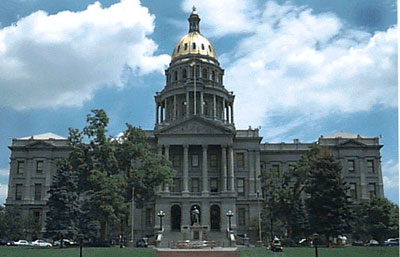
coloradocapitolfront.jpg

From the Durango Herald (Joe Hanel) via the Cortez Journal:

Legislators are considering changes to Colorado water law that would take the first serious legal steps toward encouraging conservation instead of maximum use of water. But their ideas are controversial. “We need the ability to respond to the drought,” said Sen. Ellen Roberts, R-Durango, who is sponsoring a bill to allow more year-to-year water storage in reservoirs to save for the next dry spell.

Currently, Colorado water law takes a “use it or lose it” attitude, and other legislators want to make a big change to the legal doctrine that dates back more than a century. “This is really the first time that we will create incentives instead of disincentives in terms of creating efficiency in agriculture,” said Sen. Gail Schwartz, D-Snowmass Village, the chairwoman of the Senate Agriculture Committee.

The law is at once simple and maddeningly complicated. Basically, people can claim a water right by being the first to use unclaimed water on a stream, and they can keep the right as long as they’re still using the water. But the law doesn’t allow users to save for a non-rainy day. Courts can partially revoke a water right if the owners don’t use it. Schwartz’s Senate Bill 19 would forbid water judges from reducing farmers’ water rights after they install more efficient irrigation.

In the House, Rep. Randy Fischer, D-Fort Collins, is sponsoring House Bill 1044, which allows people to capture graywater – used water from showers and washing machines – for reuse.

Rep. Jerry Sonnenberg, R-Sterling…farms in Northeast Colorado, and he and his neighbors depend on water that’s “wasted” upstream in the Front Range cities. “That’s why when I’m in Denver, I always flush twice,” Sonnenberg said.

He represents another side in the debate – one that looks to more reservoir storage as a solution to drought. “We’ve got to keep Colorado’s water in Colorado, and the only way to do that is water storage,” Sonnenberg said.

Sonnenberg is a sponsor, along with Roberts and Fischer, of Senate Bill 41, which takes on Colorado Supreme Court decisions that future drought mitigation and firefighting cannot be used to justify a water storage right. Roberts said the law discourages prudent planning for droughts. “The idea of it is to push back on those court cases and say, no, you can store water for firefighting and drought mitigation,” Roberts said.

Water bills typically attract intense lobbying, and Sonnenberg said his ideas aren’t popular at the influential Colorado Water Congress. “We have legislators trying to make water policy and lawyers who represent the Water Congress trying to stop water legislation,” Sonnenberg said…

The House Agriculture Committee will hear four water bills Monday, including the graywater bill. Roberts’ storage bill has its first hearing Thursday.

Also Thursday, Rep. Don Coram, R-Montrose, has the first hearing for his bill to make it easier for gas and oil companies to use produced water for dust suppression.

And finally Thursday, the Water Congress holds its annual convention, which will attract the state’s most powerful water lawyers to Denver.

From the Sterling Journal-Advocate (Marianne Goodland):

The interim Water Resources Review Committee sent six bills and two resolutions to lawmakers for the 2013 legislative session. That committee was co-chaired by Rep. Jerry Sonnenberg (R-Sterling), then chair of the House ag committee. Its ten members also included Sen. Greg Brophy (R-Wray).

Monday, Sonnenberg will ask for ag committee approval on two measures from the interim water committee. They are: House Bill (HB) 13-1013, on protecting water rights for lease holders, and House Joint Resolution 13-1044, which opposes efforts by the US Forest Service to obtain the water rights on lands leased to ski areas and other permitted uses. Both measures are tied to problems with the Forest Service, which wants the water rights of the state’s 22 ski areas that lease national forest lands. The Forest Service changed a long-standing policy last year that allowed the ski areas to use the water rights as they saw fit. The new policy, now the subject of a federal lawsuit, requires lease holders to turn over their water rights to the Forest Service…

More 2013 Colorado legislation coverage here.

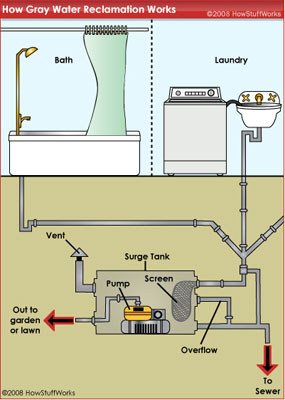
2013 Colorado legislation (HB13-1044): Consumptive use challenge on the horizon if the bill passes?

graywatersystem.jpg

From the Fort Collins Coloradoan (Patrick Malone):

Sometime in the next three to five weeks, with the flip of a single valve, toilet tanks in the residence hall will fill with recycled water, a testament to [researchers Larry] Roesner and [Sybil] Sharvelle’s work.

“We are very anxious for that first flush,” Roesner said. “We are ready to flush the toilet, but we’re taking some final tests to make sure it’s OK.”

The conversation around gray water in Colorado also faces a new test.

A gray water bill by state Rep. Randy Fischer, D-Fort Collins, has undergone some fine-tuning and appears poised to pass after a similar measure met swift defeat last year. This year’s incarnation faces its first hurdle Monday in the House Agriculture Committee that Fischer chairs.

Fischer’s bill would recognize gray water systems as legal in statute, enable regulation of them to protect public health and grant cities and counties discretion to permit them — or not, if they so choose…

“We can save about 50 percent of the indoor demand by using gray water for toilet flushing, and we can save about 30 percent of overall annual demand by gray-water reuse,” Roesner said. “A household of four could save 58,000 gallons a year using gray water, and a 40-home subdivision would save over 2 million gallons a year.”

“There are not many other conservation practices that would allow you to achieve those types of conservation benefits,” Fischer said.

But that wasn’t enough to get a proposal off the ground at the Legislature last year. In its first committee hearing, Republicans killed it on a party-line vote.

“It’s been interesting, because it seems like a relatively simple idea, yet it’s been so difficult to achieve in legislation,” Fischer said.

Opponents of last year’s version of the bill say concerns that proliferation of gray water systems would harm downstream water-rights holders — not partisan politics — torpedoed Fischer’s first bid.

“That has always been my concern, how it affects downstream water users,” said agriculturally-oriented Rep. Jerry Sonnenberg, R-Sterling.

More 2013 Colorado legislation coverage here.

2013 Colorado legislation: Water will be front and center during the session #coleg

usdroughtmonitor01182011.jpg

From The Sterling Journal-Advocate (Marianne Goodland):

Noting the state is still in drought, the governor has set a goal of creating a state water plan by 2015, one that focuses on conservation. “While expanding reservoir capacity makes sense, and rotational fallowing of agricultural land shows great promise, every discussion about water should start with conservation,” [Governor Hickenlooper] said.

One issue that the governor didn’t mention, and which caught [Rep. Jerry Sonnenberg’s] attention, was agriculture. “Nothing referencing agriculture and its contribution as the 2nd largest industry and conservation is the answer to water. Dang,” he tweeted after the speech.

The first days of the 2013 session saw the introduction of more than 100 bills, with more than a dozen dealing with water, agriculture and county governments. Legislators can expect to see 500 to 700 bills during the session.

One bill to watch is Sonnenberg’s House Bill HB13-1013: CONCERNING LIMITATIONS ON A LANDOWNER’S ABILITY TO IMPOSE CONDITIONS ON A WATER RIGHT OWNER AS A CONDITION OF PERMISSION TO USE LAND. The bill would tell landowners and the courts that they cannot take away the water rights of those who lease their lands. According to Sonnenberg, the issue arose during the summer’s interim Water Resources Review Committee hearings. It’s based on a 2012 rule, issued by the U.S. Forest Service, which seeks water rights related to ski areas that lease federal lands. The rule is already the subject of a federal lawsuit.

Sonnenberg also is the chief House sponsor of an accompanying measure, HJR13-1004: CONCERNING OPPOSITION TO NEW SPECIAL USE PERMIT WATER REQUIREMENTS, which claims the federal rule is in conflict with Colorado’s Constitution regarding prior appropriation. The resolution states that the Forest Service does not have the authority to require leasees to transfer their water rights. But the problem goes beyond the 22 affected ski areas in Colorado. According to the resolution, the Forest Service also has held up permits for ranchers who lease land for cattle and sheep grazing, also seeking those water rights.

Both measures are unanimously supported by the 10-member bipartisan water resources committee, which includes Brophy.

Next, a Western Slope lawmaker has introduced a bill to grant the Solid and Hazardous Waste Commission exclusive authority to regulate the “beneficial use of produced water for dust suppression on unpaved roads in rural areas.” This refers to groundwater produced during oil and gas operations. HB13-1018: CONCERNING THE BENEFICIAL USE OF PRODUCED WATER FOR DUST SUPPRESSION requires the commission to establish rules and standards for use of that water. The bill states the standards must prevent the discharge of pollutants into the state waters and minimize public exposure to naturally-occurring radioactive materials that come from the produced water. Rep. Don Coram (R-Montrose) is the bill’s sponsor. The commission is part of the Colorado Department of Public Health and Environment…

And in line with the governor’s request for water conservation measures, Sen. Gail Schwartz (D-Snowmass) and Rep. Randy Fischer (D-Fort Collins), have introduced SB 19, which would encourage water users to increase the efficiency of their water utilization.

More coverage from Joe Hanel writing for The Durango Herald. Here’s an excerpt:

Colorado legislators want to issue up to $50 million in bonds to protect watersheds from the threat of wildfires. They also want to extend the state’s tax credits for homeowners who pay for fire mitigation on their rural properties. The ideas in HB13-1012: CONCERNING THE EXTENSION OF FINANCIAL INCENTIVES FOR WILDFIRE MITIGATION are the Legislature’s first response to the wildfires that ravaged the state last year.

More 2013 Colorado legislation coverage here.

2013 Colorado legislation: Northern Water hopes to push graywater reclamation bill this session #COleg

graywatersystem.jpg

From the Northern Colorado Business Report (Steve Lynn):

Colorado water law allows just one use of water before it goes down the drain, through a wastewater treatment plant and back into the river for others to use. There are exemptions, however. For instance, Denver International Airport is allowed to use graywater from its sinks for sprinkler water on remote fields that are closed off to the public.

Republican lawmakers in the House State, Veterans and Military Affairs Committee narrowly defeated the bill in a 5-4 vote in committee last year. Rep. Randy Fischer, D-Fort Collins, will reintroduce the bill [HB13-1044: CONCERNING THE AUTHORIZATION OF THE USE OF GRAYWATER], which he thinks stands a better chance of drawing bipartisan support this year.

Fischer, chairman of the House Agriculture, Livestock and Natural Resources Committee, explained that he believes House Speaker Mark Ferrandino will help send the bill to the full House. Water bills are usually first considered in the agriculture committee.

Fischer also has tweaked the bill slightly to win support from lawmakers, including addressing concerns about water rights, he said. The bill also rights, he said. The bill also would authorize the state Water Quality Control Commission to create rules for graywater use, a provision meant to address public health concerns…

“I think it’s very important to have as many tools available as possible to promote wide use of our water sources,” Fischer said.

Northern Water agrees and plans to endorse the bill in its role as a member of the Colorado Water Congress, a water advocacy group comprised of districts throughout the state, officials said…

Northern Water also plans to back a bill from Sen. Mary Hodge, D-Brighton, that will ensure water left in reservoirs is not considered abandoned and released.

“Water storage is critical to Colorado’s water needs going forward,” Hodge said in an email. “Clearly defining its use is vital.”

The bill would reverse parts of a state Supreme Court decision in Upper Yampa Water Conservation District v. Wolfe from 2011. The high court upheld a lower court’s decision that to keep a water right, a water district must show it has used the resource.

Northern Water General Manager Eric Wilkinson supports the bill because he has concerns that the court decision will prevent use of water in reservoirs that see occasional use but serve the important purpose of storing water for use during droughts.

More 2013 Colorado legislation coverage here.

Governor Hickenlooper: Colorado is still experiencing a difficult drought #COdrought

hickenlooper2007gulchie.jpg

Click here to read the Governor’s prepared remarks from the State of the State speech yesterday. Here’s an excerpt:

As the wildfires remind us, Colorado is still experiencing a difficult drought. About 95 percent of Colorado is under severe or worse drought conditions. Our snowpack is well below average. This affects far more than the outdoor recreation industry; it impacts all of Colorado.

That’s why we set a goal of crafting a state water plan by 2015 … and much work has already been done. While expanding reservoir capacity makes sense, and rotational fallowing of agricultural land shows great promise, every discussion about water should start with conservation [ed. emphasis mine].

The Interbasin Compact Committee and Basin Roundtable process affords stakeholders in each basin a forum for discussion. Our water plan will stand on the shoulders of their work. We know that a plan is not a silver bullet, but it is an essential next step if we are to shape how Colorado will look in the future. As farmers and ranchers brace for what could be another hard year of drought, every property owner who lives in the mountains to our west will need to make their own preparations…

Many scientists believe that our severe drought, the bark beetle epidemic and the terrible fire season are further evidence of climate change. While no state can address the issue in isolation, reducing pollutants and promoting sustainable development, ought to be common ground for all of us.

More 2013 Colorado legislation coverage here.

2013 Colorado legislation: SB13-019 Promote Water Conservation

dripirrigation.jpg

Update: Representative Fischer sent along the bill description in email:

Section 1 of the bill declares that increasing water use efficiency by appropriators promotes the maximum utilization of Colorado’s water resources and is in the public interest.

The amount of water that currently can be changed to a new type or place of use is limited by the amount of water that was historically consumed by the original type and place of use. Therefore, a water user has no incentive to reduce the amount of water diverted. Current law encourages the conservation of water in some contexts by eliminating from the determination of abandonment the period during which water is conserved under a variety of government-sponsored programs. However, in these contexts, the water conserved through a reduction in the application of the water to a beneficial use results in a reduction of consumptive use. Section 2 directs the water judge to disregard the decrease in use of water from such programs in its determinations of historical consumptive use in change of water right cases and adds to the list a decrease in water use to provide for compact compliance. Section 3 defines “conserved water”, and section 4 directs water judges to allow a change of water right for conserved water.

State Senator Gail Schwartz and State Representative Randy Fischer are sponsoring SB13-019: CONCERNING THE PROMOTION OF WATER CONSERVATION MEASURES. Representative Fischer told Coyote Gulch in email:

Basically, the bill would provide incentives for agricultural water users to conserve by not reducing their consumptive use credits for the amount they conserve.

More 2013 Colorado legislation coverage here. More conservation coverage here.

2013 Colorado legislation: The Northern Colorado Legislative Alliance will support water storage bills during the upcoming session

coloradocapitolfront.jpg

From the Fort Collins Coloradoan (Kevin Duggan):

…a local business organization, the Northern Colorado Legislative Alliance, is prepared to support bills dealing with both issues if they match its agenda, which includes developing more water storage facilities and encouraging growth in the energy economy.

Growth in the oil and gas industry should be encouraged, along with innovative approaches to energy, said Sandra Hagen Solin, the NCLA’s issues manager, during the organization’s annual legislative preview on Friday. The event at the Budweiser Event Center was attended by local business leaders and elected officials. The energy sector is critical to Northern Colorado and the state, she said.

“We want to protect those interests and ensure that both sides of that energy equation are protected and are encouraged and are enhanced,” Solin said…

The NCLA is the public policy arm of regional chambers of commerce and economic development agencies. Its priority remains supporting “business vitality first,” Solin said. Its interests include developing additional water storage, especially the Northern Integrated Supply Project, or NISP, and Glade Reservoir.

More coverage from Steve Lynn writing for the Northern Colorado Business Report. From the article:

Representatives of the lobbying arm of Fort Collins, Greeley and Loveland chambers of commerce and the Northern Colorado Economic Development Corporation outlined their goals at a luncheon Friday at the Ranch in Loveland.

The alliance will seek funding for expansion of the interstate, said Sandra Hagen Solin, the alliance’s lobbyist. It also will take steps to encourage development of the Northern Integrated Supply Project.

NISP, led by the Northern Colorado Water Conservancy District, is expected to supply cities and towns with 40,000 acre-feet of water annually if approved by the federal government.

More 2013 Colorado legislation coverage here.

2013 Colorado legislation: Sen. Gail Schwartz plans to introduce a bill to grease the conservation skids for farmers

burlingtonditchheadgatehistoricalbdrc.jpg

From The Aspen Daily News (Curtis Wackerle):

As the legislative session is about to kick off, state Sen. Gail Schwartz, D-Snowmass Village, has drought and renewable energy on her mind.

For her first bill of the 2013 session of the Colorado General Assembly, Schwartz will introduce legislation that would allow farmers to implement water-conservation measures without fear of endangering their water rights.

The bill, which would enact safeguards against the normal “use it or lose it” rules governing Colorado water rights, was defeated in a summer water committee, where a supermajority is required to move forward. But in the normal session, Schwartz, who is the chair of the Senate’s Agriculture, Natural Resources and Energy Committee, would need just a majority to pass the bill. The idea, Schwartz said, is to protect farmers who choose to cut down on water use, since not taking the full allotment can expose water rights holders to abandonment claims.

“Given the drought circumstances, we need to do things differently,” said Schwartz, 63, who is halfway through her second and final term as a state senator.

More 2013 Colorado legislation coverage here.

2013 Colorado Legislation: State Representative Randy Fischer will chair the Agriculture Committee

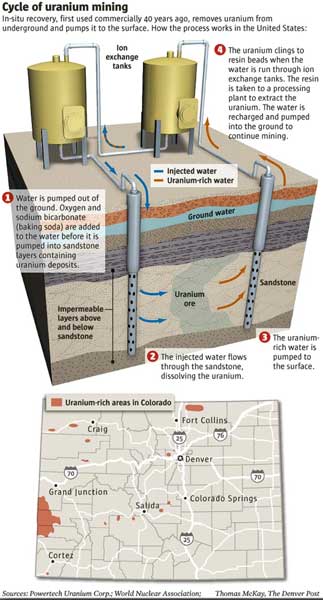
uraniuminsitu.jpg

From the Fort Collins Coloradoan (Patrick Malone):

[State Representative Randy Fischer] will chair the House Committee on Agriculture, which is likely to be ground zero for natural resources legislation and forest health. The reach of local government to limit oil and gas development — including the practice of hydraulic fracturing — and efforts to diminish the likelihood of wildfires, could pass through the panel.

But Fischer hopes that the Colorado Oil and Gas Conservation Commission’s ongoing rule-making process will reconcile conflicts between communities and the oil and gas industry over well setbacks and air and water quality so lawmakers don’t have to…

Fischer’s first bill of the new session will seek to authorize graywater systems that reuse domestic wastewater as a means of conservation. He also plans to carry legislation aimed at addressing drought and water shortages.

More 2013 Colorado legislation coverage here.

2013 Colorado legislation: The Colorado State Geologist’s Office is being transferred from DNR to the Colorado School of Mines

usdroughtmonitor12252012.jpg

From The Pueblo Chieftain:

And hold onto your hat — the Colorado state geologist’s office will be moved from the Department of Natural Resources to the Colorado School of Mines in Golden.

More 2013 Colorado legislation coverage here.

Proposed budget for FY 2013-14 boosts funding for education, economic development and restores cuts for critical state services

Here’s the release from Governor Hickenlooper’s office (Eric Brown/Megan Castle):

Gov. John Hickenlooper today delivered the FY 2013-14 proposed budget to the Joint Budget Committee (JBC) that makes targeted increases and restores funding in many critical areas.

The proposed budget includes new and continuing resources for: protecting the last and the least in Colorado, restoring and even improving K-12 education funding, enhancing economic development efforts, investing in infrastructure and local communities, enhancing public safety, improving State government performance and saving for the future.

“Colorado’s economy is outperforming other states,” Hickenlooper said. “This gives us the ability to restore some cuts and modestly increase funding in critical areas of the state’s budget. But we still have a long way to go to fully recover from this recession.”

The FY 2013-14 proposed budget is $21.9 billion, of which $8.1 billion is from the General Fund. Relative to the FY 2012-13 appropriation, these amounts represent increases of $1.1 billion (5.4 percent) in total funds and 5 percent ($387 million) in the General Fund.

The rebound in revenue in the General Fund finally exceeds the pre-Great Recession peak this year (FY 2012-13). But when inflation and population growth are accounted for, expected revenue is still $1.1 billion, or 14.4 percent, below the FY 2007-08 level.

“When you have this big of an economic downturn, it takes time to dig your way out,” Hickenlooper said. “That is why we’ve been so focused on finding efficiencies, pursuing statewide efforts to streamline a wide range of processes and consolidating government functions wherever appropriate. At the same time we have taken bold steps to increase the State’s reserve fund to help protect against the inevitable next economic slowdown.”

The proposed budget for FY 2013-14 includes these major policy changes and initiatives:

PROTECTING THE LAST AND THE LEAST
The administration places a very high priority on protecting the most vulnerable in our state. Some requests from the Departments of Human Services and Health Care Policy and Financing include:

– $13.1 million Total Fund (TF) dollars — $6.5 million from the General Fund (GF) — to provide services to 809 additional people with developmental disabilities. This amount includes an increase of 576 funded waiver slots to eliminate the Children’s Extensive Services Waiver Program waiting list. Unfortunately, numerous other waiting lists exist for the developmentally disabled and other populations that are not fully eliminated in this request.
– $1.8 million TF ($1 million net GF) for early intervention services for children from birth to 2 years of age.
– A 1.5 percent provider rate increase for community providers including Colorado’s county departments of human services. This equates to $56.5 million total funds, $25.8 million GF. In addition, this will apply to providers of services in the Departments of Corrections and Public Safety.
– $5 million GF as a legislative set aside for the estimated costs of the recommendations of the Elder Abuse Task Force to increase protections for vulnerable seniors. These costs will fund a system of mandatory reporting of instances of exploitation or mistreatment of seniors.
– $2 million GF for programs funded by the Older Coloradans Act.

FUNDING FOR K-12 AND HIGHER EDUCATION
The recovery in revenue allows for increased funding for both K-12 and Higher Education:

– In K-12 Education, the budget includes an increase of $201.6 million in State ($189.1 million) and local funds ($12.5 million) for total program funding, which allows for $31.7 million above what the inflation and enrollment calculation over the current year would require. In this way, the “negative factor” will decline to 15.5 percent from 16.05 percent.
– With this increased funding, the administration proposes that Colorado’s school districts focus $23.9 million to enhance full day Kindergarten and pre-school opportunities and to improve teacher quality in hard to fill areas of the state.
– The state expects 8,592 new students in the K-12 system at an average cost of $6,659 compared with $6,474 in the current year ($185 per student more).
– In the State Education Fund, the budget targets an ending balance of $435.5 million at the end of FY 2013-14. It is essential that a meaningful balance remain in the SEF for stability and protection of education funding levels.
– In Higher Education, $30 million GF for operations at the Governing Boards, Local District Junior Colleges, and Area Vocational Schools; separately, the budget includes $5.3 million for need-based financial aid.
– The budget request includes $250,000 for higher education tuition assistance for National Guard members.

ENHANCING ECONOMIC DEVELOPMENT EFFORTS
To help sustain Colorado’s economic momentum, the budget sets aside money for several programs aimed at attracting and retaining job-creating employers. The plan also invests in efforts to ensure that people around the country look at Colorado as a great place to visit and work. Notable requests include:

– $3 million to bring the annual appropriation for the Strategic Fund in the Office of Economic Development and International Trade. This funding is expected to spur the recruitment of 1,230 new jobs to Colorado.
– $2 million additional GF for tourism promotion and the establishment of a unified branding platform for the State.
– $600,000 to retain existing jobs here in Colorado.
– An additional $1 million for the existing film incentive rebate and loan guarantee program.

INVESTING IN OUR INFRASTRUCTURE AND LOCAL COMMUNITIES
The vast array of assets owned by Colorado’s State and local governments require ongoing investments in maintenance and repair. Because much of the state’s revenue is one-time in nature, the budget request includes a dramatic increase in efforts to sustain and improve many of our most important assets. Meanwhile, some of Colorado’s most important government services are delivered locally with State support. The administration believes strongly that enhancing these partnerships is integral for the quality of life and economic vitality of the State. Requests in this area include:

– $102.8 million transfer to the Capital Construction Fund, including $15 million for local water projects to deal with new standards related to “nutrients” such as phosphorous and nitrogen in wastewater [ed. emphasis mine].
– $44.9 million GF for controlled maintenance of State buildings, including $25.4 million at institutions of Higher Education.
– $23.1 million to continue building up the balance in the Controlled Maintenance Trust Fund;
– $3.0 million in the Department of Local Affairs for a grant program to assist communities with diversifying their economic development portfolios.
– A multi-agency effort to repurpose the Fort Lyon correctional facility into a key component of a drug treatment and homelessness prevention program.
– $2.0 million to the Department of Local Affairs for affordable housing support. These funds will leverage the construction of 1,200 units, 800 of which will be affordable.

ENHANCING PUBLIC SAFETY AND ADDRESSING UNMET MENTAL HEALTH NEEDS
Public Safety is a shared priority and responsibility at all levels of government in Colorado. The budget request for FY 2013-14 reflects the continuing needs in the Departments of Corrections, Public Safety and Human Services. The request this year is unique because it includes a comprehensive request for improvements in mental health services:

– For expansions and improvements related to mental health issues, in the Departments of Health Care Policy and Financing and Human Services, $17.1 million GF comprised of: $10.3 million GF for expansions of the behavioral health crisis response system, $4.8 million GF for improving behavioral health community capacity, and $2.1 million General Fund for increasing access to civil beds for those defendants determined incompetent to proceed with their trials.
– In the Department of Corrections, the incarcerated population is expected to decline, but the number of parolees to increase. Thus, the request reflects an overall decline of 137 FTE at the Department, though the budget includes an additional 25.1 FTE and $2.1 million GF for the increase in parole.
– Also in DOC, the budget includes $2.1 million GF for an expansion of the Sex Offender Treatment Program, though the final recommendation is dependent on a forthcoming study.

IMPROVING STATE GOVERNMENT
The administration is focused on making State government more efficient, effective and elegant. The budget proposal continues this important work through investment in critical IT systems and other assets, an enhanced focus on across-the-board improvements in the processes that serve the customers and taxpayers of Colorado, and pursuing thoughtful personnel and compensation policies. Selected initiatives in this area include:

– The information technology system that supports the Medicaid program is called the Medicaid Management Information System (MMIS). The time has come to replace this antiquated system. With a 9 to 1 federal match, the budget includes $15.6 million TF and $1.4 million GF to begin the multi-year procurement of this replacement.
– $372,000 in the Department of Personnel and Administration to restore and protect critical legislative and other historical archives.
– In the Office of State Planning and Budgeting, just under $1 million to continue the implementation and expansion of Lean management and process improvement initiatives. To date, 2,100 employees have received training and departments have completed 55 projects, with more than 30 more expected by March 2013.
– After four fiscal years without a raise, it is time for State employees to receive a modest cost of living adjustment of 1.5 percent and to reward top performers from a pool of funds equivalent to 1.5 percent of payroll. In total, these items require $57.8 million TF and $27.4 million GF. These totals include funding for the Judicial and Legislative branches as well as the Departments of Law, Treasury and State.

The proposed budget also includes 5 percent general fund reserve starting in FY 2012-13. Some may call this a rainy day fund. The state’s current 4 percent reserve represents only two weeks of operating expenses in the event of a downturn. The last two recessions each caused roughly 16 percent reductions in General Fund revenue.

A reserve of 5 percent ($387.3 million) would represent 18 days of operating expenses and would help protect existing state expenditures and buffer the State against slower out-year growth and volatility outside of the State’s control.

The entire letter from the governor to the Joint Budget Committee about the FY 2013-14 proposed budget can be found online at http://1.usa.gov/SrHj32.

More 2013 Colorado legislation coverage here.

2013 Colorado Legislation: Interim Water Resources Review Committee: Legislative Report

2013 Colorado Legislation: Interim water resources committee moves 6 bills forward

burlingtonditchheadgatehistoricalbdrc.jpg

From The Pueblo Chieftain (Chris Woodka):

Five bills to protect water rights, another to change stormwater permit process and two resolutions were approved last week by the interim water resources committee. The actions represent concerns brought to the committee, which includes members of both houses, over the last two months by water users throughout the state. They will be referred to the full Legislature in 2013.

One seeks to address questions of the amount and location of acreage intended to be irrigated by older water rights. When the water rights are changed in court, lawyers argue over the original intent of the irrigator. The new law would change the determination to the maximum amount of land irrigated during the first 50 years after the original decree. It would apply to water rights claimed more than 75 years ago, when it is unlikely that those who claimed the right would still be living to testify about intent.

Other bills involving water rights protection include:

● A remedy for erroneous points of diversion caused by technical errors or refinements in surveys. The bill would allow water rights to be more easily amended.

● A bill to promote conservation of water in designated groundwater basins by avoiding penalizing those who conserve water, while maintaining the volume authorized by a groundwater commission.

● A measure that limits a landowner’s ability to impose restrictions on water rights used on that land. The bill was inspired by the U.S. Forest Service attempt to tie up ski area water rights.

● Deletion of the requirement for a final permit for wells in the Denver Basin aquifers. Another bill would require the state to follow rule making procedures when changing stormwater permits.

That would mean the state providing permit holders a basis for the changes, evidence about why the change is needed and a costbenefit analysis.

The resolutions oppose diverting mineral severance tax revenues from water projects to meet funding needs in other parts of the state budget and oppose the Forest Service water permit requirement for ski areas.

More 2013 Colorado Legislation coverage here.

Long-term assurance for interruptible supplies for cities proposed legislature’s water resources review committee

arkbasinditchsystem.jpg

From The Pueblo Chieftain (Chris Woodka):

A proposal that would expedite partnerships between ditch companies and cities was proposed to state legislators this week.

It aims at modifying the state’s interruptible supply law to provide long-term assurance of drought-year water supply, preserving water court scrutiny and protecting agriculture water rights that are used in temporary transfers.

“We are not proposing specific legislation,” Gerry Knapp, Aurora Water’s manager for the Arkansas River and Colorado River operations, told the legislature’s water resources review committee this week. “But if the drought continues, several municipalities will be needing to use an interruptible supply.”

Aurora was the first and only Colorado city to use the interruptible supply law on a large scale, leasing water from the Rocky Ford High Line Canal in 2004-05. A joint water decree application was filed in water court and an agreement was signed to preserve the opportunity.

More 2013 Colorado legislation coverage here.

The General Assembly may come out for the skiing industry against the USFS’s ‘taking’ of water rights

powderhornskiarea.jpg

From the Summit County Citizens Voice (Bob Berwyn):

The proposed resolution, under review by an interim legislative committee, would oppose a new Forest Service water rights clause in ski area special use permits that would bar resorts from transferring certain water rights to third parties. The Forest Service clause also requires ski areas to transfer certain water rights to the United States or to subsequent special permit use holders if a permit is terminated. The measure is one of several water bills on the agenda during a session of the interim Water Resources Review Committee. The bills will be discussed by lawmakers Thursday (Sept. 27) morning, with public testimony in the afternoon. The session will be streamed on the web. Go to this Colorado Legislature website and click on the House Committee 0112 link…

One of the bills includes language that would guarantee water-rights owners a right-of-way through lands between the point of diversion and where the water is used…

Another bill under consideration, possibly prompted by this year’s drought conditions, could clarify when so-called graywater could be reused…

Yet another measure addresses enforcement of permit terms by ground water management districts for small-capacity well permits.

Another issue that comes up perennially is the use of severance tax funds for water infrastructure improvements, and one of the proposed bills claims that diversions of “significant sums from their originally intended purposes has had a devastating effect on the maintenance and development of water infrastructure in Colorado.”

More 2013 Colorado Legislation coverage here.