Donation of nearly 77,000-Acre Easement by Louis Bacon establishes Sangre de Cristo Conservation Area

trincheraranchforbessangredecristoconservationarea.jpg

Here’s the release from the U.S. Department of Interior (Blake Androff/Leith Edgar):

Secretary of Interior Ken Salazar today announced the formal establishment of the Sangre de Cristo Conservation Area as the nation’s 558th unit of the National Wildlife Refuge System, thanks to the donation of a nearly 77,000-acre conservation easement in the Sangre de Cristo Mountains bordering the San Luis Valley by noted conservationist Louis Bacon.

“Following in the footsteps of our greatest conservationists, Louis Bacon’s generosity and passion for the great outdoors is helping us to establish an extraordinary conservation area in one of our nation’s most beautiful places,” Secretary Salazar said. “This newest treasure in our National Wildlife Refuge System links together a diverse mosaic of public and private lands, protects working landscapes and water quality, and creates a landscape corridor for fish and wildlife unlike any place in the world.”

Bacon, a longtime advocate and proponent of landscape and wildlife conservation, is donating a conservation easement on nearly 77,000 acres of his 81,400-acre Trinchera Ranch. Today’s action builds on his previously announced intention also to donate a perpetual conservation easement on the 90,000 acre Blanca Ranch, bringing the total amount of permanently protected land to nearly 170,000 acres. When completed, the two easements will represent the largest donation ever to the U.S. Fish and Wildlife Service (Service). The Blanca Ranch easement donation is expected to be finalized later this year.

“We are too quickly losing important landscapes in this country to development– and I worry that if we do not act to protect them now, future generations will grow up in a profoundly different world,” said Bacon. “This motivates me and is why I am proud to place Trinchera Ranch, Blanca’s adjoining ranch, into a conservation easement forever protecting it with the US Fish and Wildlife Service. I am also honored to help Secretary Salazar and the US Fish and Wildlife Service create the Sangre de Cristo Conservation Area in Colorado’s San Luis Valley. It is an area widely known for its cultural, geographic, wildlife and habitat resources, and this conservation area provides another opportunity to conserve it in perpetuity.”

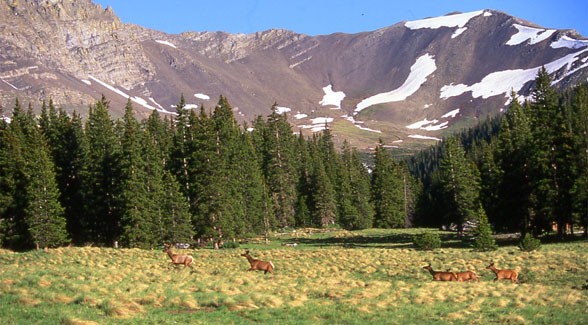
Trinchera Blanca Ranch is the largest contiguous, privately owned ranch in Colorado and features breathtaking vistas of high desert shrubs and mountain grasslands, combined with alpine forest and alpine tundra. The area stretches up to the top of one of the highest peaks in Colorado, Blanca Peak at 14,345 feet above sea level. It falls in the center of the Sangre de Cristo mountain range, the longest mountain chain in the United States, and borders the Sangre de Cristo Wilderness near Great Sand Dunes National Park and Preserve.

Joined by Service Director Dan Ashe and Dan Pike of Colorado Open Lands, Salazar and Bacon signed the conservation easement on the Trinchera Ranch to formally establish the new refuge. They also signed a memorandum of agreement to complement an existing Colorado Open Lands easement agreement already in place on the property.

Colorado Open Lands will jointly monitor and support the conservation efforts with the Service. The agreement marks one of the first cooperative arrangements of its kind among the federal government, a private land trust and a private landowner.

“Trinchera is such a spectacular property and the creation of the Sangre de Cristo Conservation Area allows us to protect this landscape, something that is truly special,” said Colorado Open Lands Executive Director Pike. “It has been an honor to hold the conservation easement on Trinchera for nearly a decade. We look forward to being able to share best practices with the US Fish and Wildlife Service and are extremely excited about this innovative collaboration in land conservation.”

“We’re excited to see the results of this collaborative conservation effort come to fruition, thanks to the generosity of Louis Bacon and the strategic and inclusive planning efforts that serve the conservation needs of fish, wildlife and plants across the San Luis Valley landscape,” said Director Ashe. “The Service has been working with landowners in the San Luis Valley on a locally-led voluntary cooperative partnership effort to conserve wildlife habitat and keep working lands working.”

Costilla County Commissioner Crestina Martinez, noted photographer and author John Fielder, and Executive Director of Colorado Coalition of Land Trusts John Swartout also joined today’s signing ceremony.

“Mr. Bacon’s donation of this incredible conservation easement is welcome news for Coloradans who treasure this area and can now rest assured that it will be protected for generations to come. I want to commend him for the example he is setting for other landowners in Costilla County and across the state interested in protecting the wildlife and natural resources that sustain our local economies and way of life,” Udall said. “This announcement reflects a first-of its kind partnership in this part of Colorado, where a private landowner and a federal agency, the Fish and Wildlife Service, have made a shared commitment to conservation of one of the most pristine private landholdings in the southern Rockies. It has been said that we don’t inherit the earth from our parents — we borrow them from our children. The establishment of the Sangre de Cristo Conservation Area ensures that this scenic gem will be here for future Coloradans to enjoy.”

Under President Obama’s America’s Great Outdoors initiative to establish a 21st century conservation and outdoor recreation agenda, the Interior Department has spearheaded a series of voluntary partnerships with landowners to conserve rural landscapes while ensuring ranching, farming and other traditional ways of life remain strong. Conservation easements are only acquired from willing landowners.

These initiatives include new units of the National Wildlife Refuge System, such as the Flint Hills Legacy Conservation Area in Kansas, the Dakota Grassland Conservation Area of South Dakota and North Dakota, and the Rocky Mountain Front Conservation Area in Montana.

For more information about the Service’s partnership work in the San Luis Valley or the Sangre de Cristo Conservation Area, please visit the U.S. Fish and Wildlife Mountain-Prairie’s homepage at: http://www.fws.gov/mountain-prairie/.

More coverage from the Associated Press (Thomas Peipert) via The Denver Post. From the article:

Bacon, a hedge fund manager, is adding a conservation easement to protect nearly 77,000 acres of his 81,400-acre Trinchera Ranch from development. He announced plans in June to add a perpetual conservation easement on his 90,000-acre Blanca Ranch if the federal government moved ahead with plans to create a new 5 million-acre conservation corridor in Colorado and New Mexico…

It creates “a contiguous mosaic of privately held and publicly protected lands that will stay in perpetuity in creating one of the longest migratory wildlife corridors in America,” stretching from the Great Sand Dunes National Park and Preserve to New Mexico, Bacon said. He added that he hopes his decision to put the land under a conservation easement will inspire other landowners to do the same.

Bacon’s land, which Salazar’s office said is the largest contiguous, privately owned ranch in Colorado, includes three 14,000-foot peaks—Mount Lindsey, Blanca and Little Bear peaks—in the Sangre de Cristos. The mountain range is one of relatively few in the United States that that still allows unobstructed migration by wildlife.

More Rio Grande River Basin coverage here and here.

Restoration: Colorado Parks and Wildlife stocks Hermosa Creek with Colorado River cutthroat #coriver

cutthroattrouthistoricranges.jpg

Here’s a look at restoration efforts on Hermosa Creek, from Dale Rodebaugh writing for The Durango Herald. Click through for the Herald video taken on Wednesday at the headwaters. Here’s an excerpt:

Colorado Parks and Wildlife biologists and volunteers, including Trout Unlimited, planted 11,000 fingerlings about 3 inches long and 200 10-inchers in the main stem of Hermosa Creek upstream from Hotel Draw. Fish were carried in bags from trucks and emptied into Hermosa Creek at various points. If the fish had to be carried any distance, they were transported in super-oxygenated water to ensure they arrived in good condition.

Michael Martinez, a fish culturist at the Parks and Wildlife hatchery in Durango, brought the fingerlings Tuesday from the Rifle Falls hatchery in Garfield County…

Native cutthroat trout don’t compete well with other species, so efforts to increase their population – they occupy only 14 percent of their historic habitat – focus on giving them exclusive use of certain waters…

In pre-Columbian times, the Colorado River variety was found in all cool-water habitat above present-day Glen Canyon…

More restoration coverage here and here.

Fryingpan-Arkansas Project update: Reclamation is bypassing Ruedi Reservoir inflows to the Grand Valley

fryingpan.jpg

From email from Reclamation (Kara Lamb):

We have a couple of adjustments coming to our release from Ruedi Dam to the Fryingpan River. Today, 9-13, at 5 p.m., releases will increase to 241 cfs. Tomorrow, around noon, they will increase to 266 cfs. The total increase in releases is 50 cfs.

Today’s change is due to the senior water right call down on the Colorado River near Grand Junction. That call requires us to pass the inflow to Ruedi on downstream. Inflows went up with the recent rains, so to meet this water right, we increased 25 cfs today, 9-13.

Tomorrow’s change is per the U.S. Fish & Wildlife Service on behalf of the endangered fish and their critical habitat in the Colorado River. The Colorado, like the rest of the state, saw a very hot and dry August.

More Fryingpan-Arkansas Project coverage here.

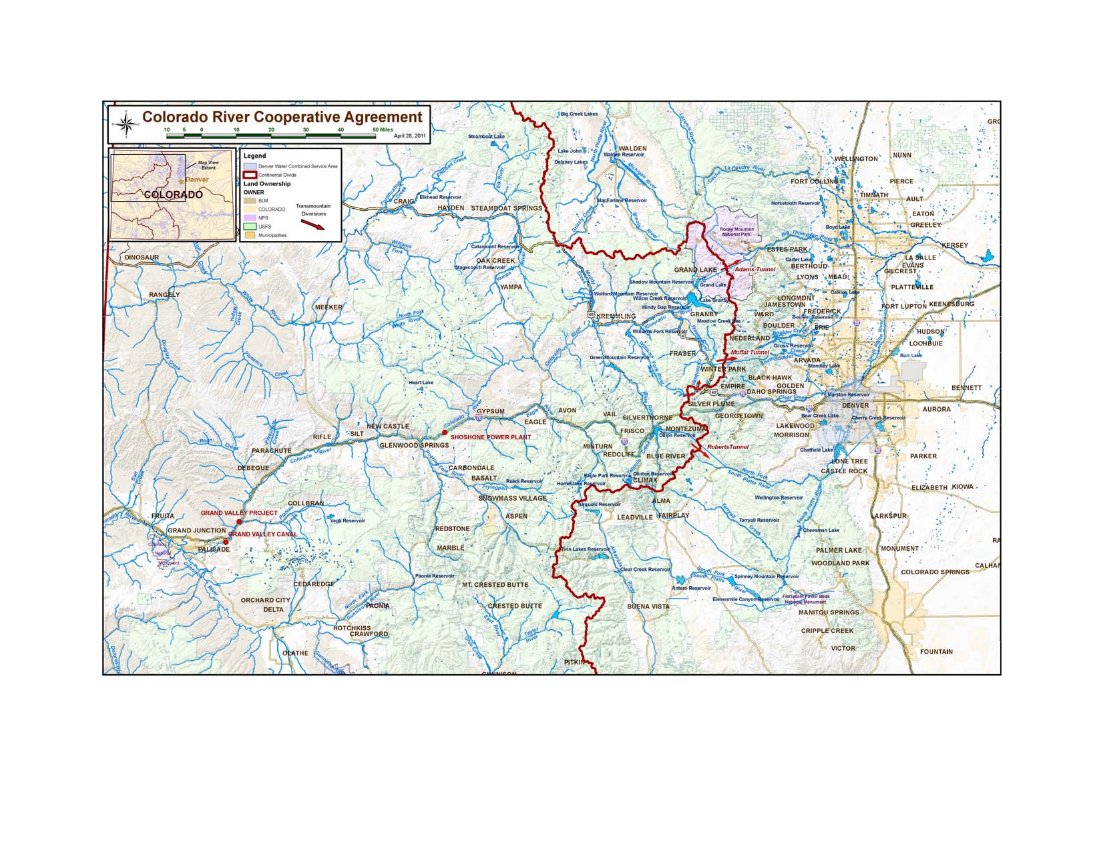
Colorado River Cooperative Agreement implementation at hand

Here’s a short report from the Associated Press via The Columbus Republic:

Colorado’s largest water utility and more than 30 western slope providers are expected to begin implementing an agreement balancing the Denver-area’s demand for water with the needs of mountain communities as early as next month. According to the Grand Junction Daily Sentinel a project spokesman said Tuesday a few more signatures are needed.

More Colorado River Cooperative Agreement coverage here.

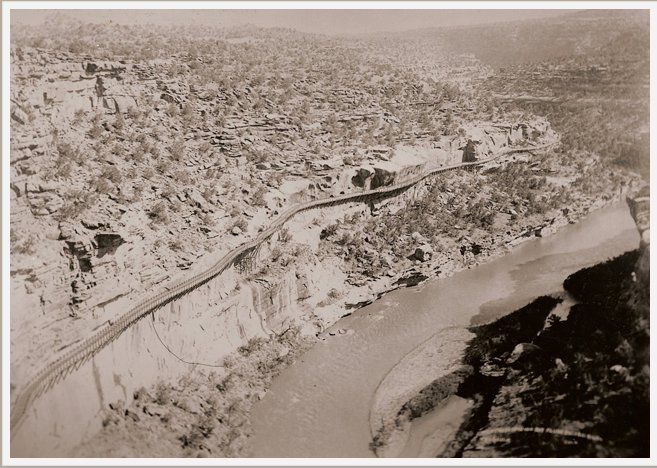
San Miguel River: Montrose County water rights application heading to trial

sanmiguelhangingflumeaerialhangingflumeorg.jpg

From the Montrose Daily Press (Katharhynn Heidelberg):

Montrose County’s stipulation with several objectors in its water rights case has been accepted by District Judge J. Steven Patrick, court records show. A three-day trial remains set, however, as the stipulation did not encompass all 29 objectors to the county’s filing for water rights on the San Miguel River. The Colorado Water Conservation Board in June had filed a statement of opposition, as well as a motion to intervene in the case “due to information that was not in the (water rights) applications, but was revealed in the engineering report,” unclear language, and proposed actions, such as appropriating instream flow and recreational in-channel diversions, that were not listed in the application.

More San Miguel River watershed coverage here and here.

Horsethief Canyon Native Fish Facility Construction Completed

horsethiefcanyongrowoutpondsendageredfish.jpg

Here’s the release from the U.S. Bureau of Reclamation:

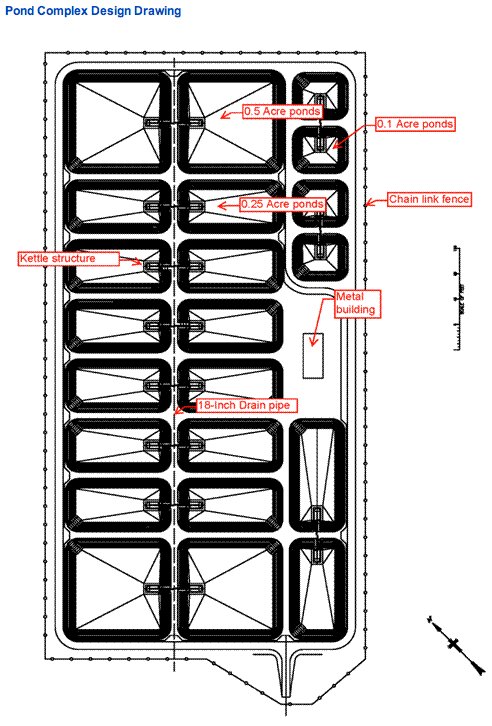
The Bureau of Reclamation in cooperation with the U. S. Fish and Wildlife Service have completed construction of a complex of grow-out ponds at the Horsethief Canyon Native Fish facility located just outside of Fruita, Colo. The ponds were constructed as part of the Upper Colorado River Endangered Fish Recovery Program and the San Juan River Basin Recovery Program, to hold and rear endangered Colorado River fish.

A total of 22 ponds were constructed by Kissner General Contractors Inc., of Cedaredge, Colo., at a total cost of $5.3 million which was funded by the recovery programs to rear endangered razorback sucker, and Colorado pikeminnow, as well as bonytail and humpback chub in the future.

The ponds range in size from 0.1 to 0.5 acres with a combined total of approximately 6.2 acres of ponds each between five and six feet deep and lined with a geo-membrane fabric to reduce seepage. This will allow the ponds to be drained, maintain water levels during operation, and provide an area for the fish to be concentrated when the time comes to be relocated. All design work on the ponds was completed by Reclamation’s Western Colorado Area Office. In the coming months, Reclamation will complete mitigation and re-vegetation of the site.

The need for the grow-out ponds was initially identified as an essential component of the recovery programs to ensure the successful reproduction of the endangered Colorado River fish and genetic monitoring efforts. Without the grow-out ponds, production of endangered fishes of optimal size and numbers for stocking cannot be ensured and certain research in the area of genetics and propagation will be hampered.

The FWS currently produces approximately 28,000 razorbacks suckers annually at the Ouray National Fish Hatchery, Grand Valley Unit in Grand Junction, Colo. Approximately 75 percent of these fish are taken to private ponds leased by the Service and the remainder of the fish are kept at the hatchery. The Service has an annual goal of releasing a minimum of 15,000 fish, at an approximate length of 300 millimeters (11.8 inches), back to the rivers.

The Horsethief Canyon Native Fish Facility will reduce, if not eliminate, the need for leasing private ponds. Also, since the facility will be operated and maintained by the Service, the facility will provide greater numbers of fish to be returned to the river…

The ponds were constructed at an elevation that will prevent overtopping up to the 100-year flood event. The facility will be fenced to prevent river otters from entering the ponds and to preclude entry by the public.

More endangered/threatened species coverage here.

Restoration: Woods Lake fish are going to get a dose of Rotenone to pave the way for expanded cutthroat habitat

woodslakecdow.jpg

From The Telluride Daily Planet (Collin McRann):

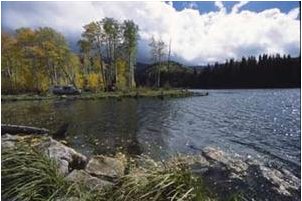
Over the past year, the lake and its tributaries — located off of Forest Service Road 618 west of Telluride — have been the subject of a Colorado Parks and Wildlife project to eliminate non-native trout, mainly brookies and browns, to make way for native cutthroats. Though the project was supposed to be complete by this summer, an assessment revealed brooke trout are still living the lake.

“Last year we treated the lake and tributaries and then they went back this summer, and we found mainly young of the year — brooke trout,” said John Alves, a Senior aquatic biologist with Colorado Parks and Wildlife. “It looks like some of them might have spawned before we got the project going last year, so there’s some that we have to go hit again this year, that’s going to happen next week.” The lake will be treated Aug. 14-16 with a chemical called Rotenone. Alves said the treatment will focus on areas of the lake where the brooke trout were found.

Another assessment will be done after the treatment via electro fishing and gill netting. If it is then determined the lake is ready for a transplant of cutthroat, the fish could be transported into the area as soon as this fall. If not, the lake will be left barren until next year…

The transplant will involve at least 2,000 cutthroats a year, which will be taken from different brood stocks and hatcheries around the state. Though no specific source for the fish has been determined, Alves said Kelso Creek in the Uncompahgre National Forest is a likely candidate.

More restoration/reclamation coverage here and here.

Chatfield Reallocation Project: Many are eyeing the project warily

chatfieldreservoirreallocationprojectalternatives.jpg

From the Littleton Independent (Jennifer Smith):

“The political support seems overwhelmingly in favor of the project as one small step to ease the projected shortfall in water for the metro region,” reads a staff report to the South Suburban Parks and Recreation District board. “However, it does not seem as though South Platte Park or South Suburban recreation users or park patrons are guaranteed any mitigation or specific benefits from this plan as written.”[…]

Members of the local Audubon Society said during an Aug. 2 meeting they are planning to sue should the Corps’ preferred alternative go forward. One significant problem, they say, is a little amphibian called the northern leopard frog, which is one step below being endangered.

Joe Farah is a Chatfield volunteer who has been studying reptiles and amphibians at Chatfield for a decade. He says he gave his work to the Corps, but it’s not reflected in the proposal – which never mentions the frog. Farah said the project would have a devastating impact on its habitat.

The Corps’ study notes it won’t negatively affect the threatened Preble’s meadow jumping mouse, which also lives at the lake and caused quite a stir a few years ago when it was threatened by development in Douglas County…

“This is potentially disastrous,” Farah said. “I fail to see how this project will do anything positive for anything but humans.”[…]

Audubon has launched a website, www.savechatfield.org, and is planning tours of the affected areas in Chatfield the weekend of Aug. 18-19.

More Chatfield Reservoir coverage here.

Poose Creek concrete fish ladder planned to aid Colorado River Cutthroat recovery

greenbackvscorivercutthroat.jpg

From Steamboat Today (Tom Ross):

The fish ladder will be part of an ongoing effort to support spawning of native Colorado River cutthroat trout. It would be built in an existing box culvert beneath an unpaved road that crosses the stream. The culvert prevents spawning and trout reproduction in the upper reaches of the stream.

Poose Creek flows off the flanks of Dunckley Pass in Rio Blanco County before flowing into Vaughn Lake. Routt County residents who drive to Trappers Lake in the Flat Tops Wilderness Area via Phippsburg are familiar with Vaughn Lake.

A document released by the U.S. Forest Service this week reports that Yampa District Ranger Jack Lewis would sign an environmental assessment required before construction of the fish ladder could go forward.

Cutthroat trout, named for the pair of crimson streaks beneath their lower jaws, spawn successfully in late spring in the northern Colorado Rockies. However, Forest Service documents state the culvert under Rio Blanco Country Road 8 where it crosses Poose Creek prevents spawning by the Colorado River cutthroats. They are a native species whose populations are not as numerous as they once were.

More endangered/threatened species coverage here.

Illegal Stocking Hits Miramonte Trout Fishery: Rotenone to the rescue

miramontereservoircpw.jpg

Here’s the release from Colorado Parks and Wildlife:

Colorado Parks and Wildlife is planning to take action to eradicate smallmouth bass at Miramonte Reservoir where they’ve become established after being stocked illegally.

The agency will utilize an organic pesticide to kill all the fish in the reservoir and then rebuild this renowned trout fishery that attracts anglers from throughout the West. The operation is tentatively scheduled to occur in late summer or fall of 2013.

In the meantime, Parks and Wildlife is implementing an emergency order that removes all bag and possession limits on smallmouth bass at Miramonte Reservoir.

“Killing all the fish in the reservoir lake is something we wish we didn’t have to do, but we know we must,” said Renzo DelPiccolo, area wildlife manager in Montrose. “People who illegally move fish into lakes, ponds and rivers are not only committing a criminal act, they are endangering native species, stealing a resource and recreational opportunity from thousands of anglers and negatively impacting the local community.”

Miramonte Reservoir is located in San Miguel County about 10 miles south of Norwood in western Colorado. The reservoir is one of the most productive still-water trout fisheries in the state and people travel from throughout the West to catch the rainbow and brown trout that regularly grow to quality size. The lake is also a popular destination for crayfish enthusiasts. Miramonte accounts for about 20,000 angler days every year which contribute $1.5 million to the economy of San Miguel County.

Miramonte is a very productive reservoir, allowing Parks and Wildlife to stock thousands of fingerling trout every year. The trout grow quickly and reach quality size within two years.

“This reservoir is managed as a put and grow trout fishery and that management strategy will not change,” explained John Alves, senior aquatic biologist for the southwest region for Colorado Parks and Wildlife. “Under this management strategy we can provide an excellent angling opportunity at a low cost to anglers.”

Smallmouth bass, which are a warm-water predator fish, were illegally stocked in the reservoir sometime before 2011 and reproduction has been documented. A recent survey showed that in one year smallmouth bass have increased in abundance from 5 percent to 44 percent of the fish in the reservoir.

“The bass are now a top predator in the lake. They compete with trout for food and space, and consume trout and crayfish,” Alves said. “If left alone, the bass could eventually devastate Miramonte as a trout fishery. Furthermore the habitat, prey base and water temperature will not support a quality bass fishery in the long term. So, once an illegally stocked fish population has become established, the only recourse is to start over by using a fish pesticide to kill all the fish in a lake.”

In addition to impacting a renowned sport fishery, the smallmouth bass also pose a threat to native fish downstream. An agreement between the state of Colorado, U.S. Fish and Wildlife Service and neighboring states restricts stocking of non-native warm water fish without a permit because of the danger they pose to native and endangered fish.

Miramonte Reservoir is located above the San Miguel and Dolores rivers which support important populations of three native fish species that biologists are working to protect: the roundtail chub, the bluehead sucker and the flannelmouth sucker. These native fish are found only in desert rivers of the western United States. Changes in the river system such as dams, pollution, water withdrawals and competition from non-native species have caused these fish to decline in range and numbers.

“Native species are needed to help maintain the natural health and balance of any ecosystem. If a species is lost, that affects the health of other plants and animals, and changes a natural ecosystem forever,” Alves said.

CPW aims to maintain healthy native fish populations not only for the benefit of native ecosystems and the people of Colorado, but also to prevent unwanted federal management of these species under the Endangered Species Act.

“Illegal stocking carries serious consequences that can have long-lasting negative effects on local communities,” DelPiccolo said.

Draining and treating a reservoir is also expensive and takes money away from other important aquatic habitat projects. The Miramonte operation will cost more than $100,000, not including staff time. The reservoir will be drawn down to a small pool and the chemical Rotenone will be applied to the remaining water and feeder streams to kill all the fish. Rotenone breaks down quickly in the environment and poses no threat to vegetation or non-aquatic species. Biologists will restock the lake with fish as soon as the pesticide has dissipated.

Anyone who has information about illegal fish stocking at Miramonte Reservoir or at any other water in Colorado should contact the Parks and Wildlife office in Montrose at 970-252-6000, or call Operation Game Thief at 1-877-265-6648. Tips can be made anonymously and cash rewards are possible.

For more information about fisheries management in Colorado and aquatic nuisance species, see: http://wildlife.state.co.us/FISHING/Pages/Fishing.aspx.

More restoration coverage here and here.

Horsethief Canyon Native Fish Facility Construction Completed

gravelbarrubyhorsethiefcanyoncu.jpg

Here’s the release from the Bureau of Reclamation:

The Bureau of Reclamation in cooperation with the U. S. Fish and Wildlife Service have completed construction of a complex of grow-out ponds at the Horsethief Canyon Native Fish facility located just outside of Fruita, Colo. The ponds were constructed as part of the Upper Colorado River Endangered Fish Recovery Program and the San Juan River Basin Recovery Program, to hold and rear endangered Colorado River fish.

A total of 22 ponds were constructed by Kissner General Contractors Inc., of Cedaredge, Colo., at a total cost of $5.3 million which was funded by the recovery programs to rear endangered razorback sucker, and Colorado pikeminnow, as well as bonytail and humpback chub in the future.

The ponds range in size from 0.1 to 0.5 acres with a combined total of approximately 6.2 acres of ponds each between five and six feet deep and lined with a geo-membrane fabric to reduce seepage. This will allow the ponds to be drained, maintain water levels during operation, and provide an area for the fish to be concentrated when the time comes to be relocated. All design work on the ponds was completed by Reclamation’s Western Colorado Area Office. In the coming months, Reclamation will complete mitigation and re-vegetation of the site.

The need for the grow-out ponds was initially identified as an essential component of the recovery programs to ensure the successful reproduction of the endangered Colorado River fish and genetic monitoring efforts. Without the grow-out ponds, production of endangered fishes of optimal size and numbers for stocking cannot be ensured and certain research in the area of genetics and propagation will be hampered.

The FWS currently produces approximately 28,000 razorbacks suckers annually at the Ouray National Fish Hatchery, Grand Valley Unit in Grand Junction, Colo. Approximately 75 percent of these fish are taken to private ponds leased by the Service and the remainder of the fish are kept at the hatchery. The Service has an annual goal of releasing a minimum of 15,000 fish, at an approximate length of 300 millimeters (11.8 inches), back to the rivers.

The Horsethief Canyon Native Fish Facility will reduce, if not eliminate, the need for leasing private ponds. Also, since the facility will be operated and maintained by the Service, the facility will provide greater numbers of fish to be returned to the river.

The configuration of the ponds is shown on Figure 1. The ponds were constructed at an elevation that will prevent overtopping up to the 100-year flood event. The facility will be fenced to prevent river otters from entering the ponds and to preclude entry by the public.

Meanwhile, here’s a report about the current state of the Upper Colorado River Endangered Fish Program from Bob Berwyn writing for the Summit County Citizens Voice. From the article:

Issuing a “sufficient progress” memo, the U.S. Fish and Wildlife Service said this week that, “with continued cooperation by all Recovery Program participants, the Recovery Program will continue to make significant strides toward recovery of the four endangered fishes.”

But flows are a significant concern, especially in dry years.

“The Recovery Program still struggles to meet flow recommendations in drought years. The Service emphasizes the importance of meeting the flow recommendation,” according to the memo, which also says that the Colorado Water Conservation Board has not yet provided a required depletion accounting report.

Specifically, the CWCB is behind on accounting for depletions in the Yampa River, and needs to “address projected future depletions and whether or not additional instream flow filings or other flow protections mechanisms should be considered.”

More endangered/threatened species coverage here.

The second phase of the Hermosa Creek restoration project is underway — Brookies are in their gun sights

rotenone.jpg

From The Durango Herald (Dale Rodebaugh):

Rotenone, derived from the root of a tropical plant, is registered by the Environmental Protection Agency as a pesticide. It degrades quickly, leaves no residue and is no threat to humans or other wildlife.

“We did the first treatment last summer,” Joe Lewandowski, a parks and wildlife spokesman, said Thursday. “Then in June they went back to electroshock, which found fish that can live in little water.”

The Rotenone applied this week will catch all survivors, Lewandowski said.

In late summer or in the fall, native Colorado River cutthroat will be stocked in that section of the stream, Lewandowski said.

More Hermosa Creek coverage here and here.

H.R. 6060: Endangered Fish Recovery Programs Extension Act of 2012

coloradopikeminnow.jpg

From The Pueblo Chieftain (Chris Woodka):

HR6060 would authorize the base funds of $4 million to the Upper Colorado and $2 million to the San Juan fish recovery programs. Revenues are generated through federal hydroelectric projects. All of Colorado’s congressional representatives, except Doug Lamborn, signed on to the bill as co-sponsors.

Pueblo benefits from the program because it has avoided environmental lawsuits which could affect imports of water from the Colorado River, said Alan Ward, water resources manager…

Pueblo annually contributes funds to the program, along with other large water importers — Denver, Colorado Springs, Aurora, Twin Lakes, and the Northern and Southeastern Colorado water conservancy districts. Indian tribes and Western Slope water users also contribute to and benefit from the program. The funds help pay for water that is used to sustain flows for the fish and for things like fish passages, hatcheries, screens or habitat improvement projects.

More endangered/threatened species coverage here and here.

The Rio Grande Basin Roundtable approves conservation easement request for the Haywood Ranch

collerswariogrande.jpg

From the Del Norte Prospector (Stan Moyer):

More than 37 percent would be put up by a combination of $25,000 from the local Roundtable and $400,000 from the CWCB’s Water Supply Reserve Account (WSRA).

Focusing on the 400-acre Haywood Ranch, it was noted that the owners “contribute through a charitable portion of the value of of their conservation easement — in this project, an estimated value of $400,000.

“The land and water are available for the long term, and the environmental and recreational water benefits are sustained in perpetuity,” according to the application submitted by the Rio Grande Headwaters Land Trust (RiGHT). Nancy Butler is executive director of the Del Norte-based organization…

The potential catch in the creation of the conservation easement is that the Roundtable proposal for funding is contingent on receipt of about $300,000 in funding coming from the North American Wetlands Conservation Act (NAWCA), to meet the total estimated purchase costs of $1.125 million…

Among theses benefits are the “U.S. Fish and Wildlife Service’s recently produced habitat maps that show the Haywood Ranch as being within a zone of irreplaceable habitat,” including quite likely the Southwestern Willow Flycatcher and the Yellow Billed Cuckoo, which are in the Rio Grande Water Conservation District (RGWCD)’s effort to create a “Habitat Conservation Plan.”

The application emphatically details the importance of the success of the easement in protecting wildlife:

The project parcel submitted is within the Rio Grande’s floodplain and includes approximately 2/10 of a mile of the river, 160 acres of important wetlands and the No.1 senior water right on the river that sustains them. Riparian areas and wetlands along the river corridor provide highly important habitat for Haywood Ranch wins Roundtable nodall the area’s wildlife and several endangered species.

More IBCC — basin roundtables coverage here.

Gunnison River basin: Hartland Dam rehab complete

gunnisonriver.jpg

From the Delta County Independent (Hank Lohmeyer):

The benefits from the Hartland Dam reconstruction project are several, and important to sportsmen, recreationalists, irrigators, and to environmentalists concerned about native fish habitat.

According to a narrative of the project distributed during the dedication, “The primary purpose of the project was to provide fish passage, but other benefits were considered when designing the project. The Hartland Diversion Dam was an extreme safety hazard to boaters. Addressing those safety issues provided a continuous corridor for boaters and greatly increased safe access to recreation on the Gunnison River.” The dam had been the site of river rafter deaths over the years.

More Hartland Dam coverage here.

IBCC: Next Flaming Gorge Task Force meeting Friday in Colorado Springs

flaminggorgepipelineearthjustice.jpg

From email from Peak Facilitation Group (Heather Bergman):

…please find the agenda for Friday’s meeting of the Basin Roundtable Project Exploration Committee: Flaming Gorge. The meeting will be held from 10 am to 3 pm at the Pikes Peak Regional Council of Governments offices in Colorado Springs (15 S. 7th St..).

More Flaming Gorge Task Force coverage here.

Runoff/drought news: Endangered fish program is short of water to operate some infrastructure this season

fishladderpricestubbsdamcoloradoriver.jpg

From the Summit County Citizens Voice (Bob Berwyn):

… in key tributaries like the Yampa, and the fish could take another hit because there won’t be enough water during parts of the summer to operate fish passages that enable species like the Colorado pikeminnow to reach spawning areas.

Biologists said suspending operation of the fish passages this summer will have a short-term impact on the endangered fish, but are more concerned about long-term impacts if the drought lasts another year.
The endangered species evolved over millennia to survive extreme high and extreme low flows, but human activities have hit hard at the low end of the range, resulting in conditions that can’t sustain populations without help — like the fish ladders. Overall, recovery program leaders say they’ll manage the little bit water they do have based on experience from the drought in the early 2000s. “We’ve been there before,” program director Tom Chart said in a previous interview, explaining that this year’s low flows will likely result in a temporary setback for recovery efforts, especially in tributaries like the Yampa River…

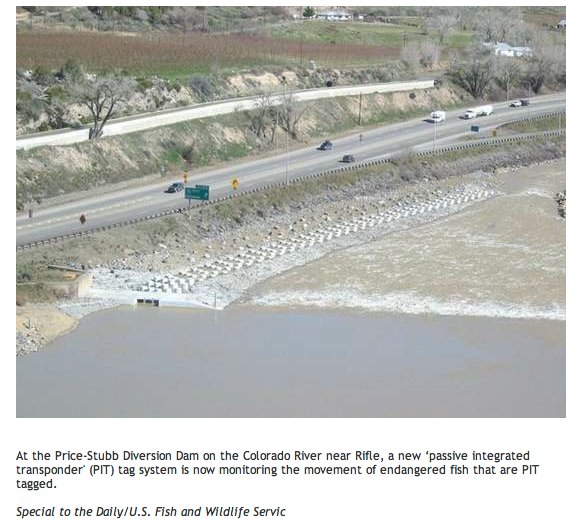
In a release, the U.S. Fish and Wildlife Service specifically identified the Grand Valley Irrigation Company Fish Passage, Grand Valley Project Fish Passage, and the Price-Stubb Fish Passage, all in western Colorado. The passages were built as part of the recovery program to give the fish access to important habitat extending from Lake Powell to Rifle on the Colorado River and from Grand Junction to Delta on the Gunnison River.

On the Colorado River, agricultural irrigators in the Grand Valley are operating fish screens on their canals when conditions permit. The screens serve a dual purpose of preventing fish from entering canals and benefiting canal operations by reducing debris loads in the canals. “We have a history of cooperation with the Recovery Program that helps our water users and the endangered fish,” said Richard Proctor, manager of the Grand Valley Water Users Association.

The Recovery Program is also coordinating with the Redlands Water and Power Company on operating procedures for the Redlands Fish Passage and Screen, located on the Gunnison River. The Recovery Program is working to minimize impacts to water deliveries to Redlands irrigators while continuing to operate the fish passage and fish screen, as conditions allow.

From Steamboat Today (Scott Franz):

“It’s a brutal year, and I don’t have anything good to say other than it is what it is,” [Pete Van De Carr] the owner of Backdoor Sports said Sunday as the river behind him ran at 111 cubic feet per second, well below its average flow of 1,810 cfs for June 17. According to a National Weather Service forecast, the Yampa River could slow to 85 cfs in Steamboat Springs as early as Wednesday. Once the river falls below that threshold, it essentially closes to recreation to protect wildlife and the river’s habitat.

More endangered/threatened species coverage here.

Colorado River Cooperative Agreement: Parties to the agreement flip the switch on the Shoshone Outage Protocol

shoshoneglenwoodcanyon.jpg

Here’s the release from the Colorado River District (Jim Pokrandt):

In this year of historically low runoff, the Colorado River District, Denver Water and the Bureau of Reclamation are cooperating to add flows to the Colorado River through the Shoshone Outage Protocol for the benefit of fish, rafting and crop irrigation along the entire stretch of the mainstem from Parshall in Grand County to Grand Junction in Mesa County.

The extra water is the result of the Shoshone Outage Protocol, a part of the Colorado River Cooperative Agreement that was hammered out over the last six years by 42 West Slope entities and Denver Water.

The three reservoir operators are increasing river flows by about 450 cubic feet a second (cfs) through releases from Wolford Mountain Reservoir, Williams Fork Reservoir and Green Mountain Reservoir, respectively. Through the weekend and early next week, flows in Glenwood Canyon should hover around 1,100 cfs, to improve rafting and to aid farmers and ranchers in the Grand Valley, helping to boost flows that are too low. The 71-year average of flows for this time of the year in Glenwood Canyon is more than 6,000 cfs.

Additionally, the flows are helping to lower water temperature levels in the river along the Pumphouse area of the river in Grand County to help trout survive.

“This makes a real difference in the river,” said Colorado River District General Manager Eric Kuhn. “Since we started, you can see by the gage that the temperature of the water has come down 4 degrees Fahrenheit.”

The Protocol is designed to add water to the Colorado River when the Shoshone Hydro Plant in Glenwood Canyon is down for maintenance and not using its senior water right, which normally would have the river flowing at about 1,250 cfs through the canyon, absent the usual runoff flows. The Protocol is taking place even though all the parties have yet to sign the agreement.

“This is a good example of how the Colorado River Cooperative Agreement can work when everybody is pitching in to help the river in a time of need,” said Lurline Underbrink Curran, the Grand County Manager.

Said Jim Lochhead, CEO/Manager of Denver Water, “This is exactly why we all came together to sign the Colorado River Cooperative Agreement – to provide benefit to the Colorado River. Denver Water is proud to be part of an effort that fulfills our goal to operate our system in a way that benefits the environment.”

Currently, the Shoshone Hydro Plant is operating at about half capacity, which requires about 700 cfs of water. Xcel Energy is unable to run Shoshone at full capacity while it works on repairs to the tunnel that runs about two miles from the Hanging Lakes power plant dam to the power plant itself. The work could last until early September.

A call on the river, such as the Shoshone 1,250 cfs water right, forces junior water rights holders to replace diverted water from reservoir storage or to stop diverting, thus boosting flows as they decline with the natural drop of the runoff throughout the summer.

From the Associated Press via The Columbus Republic:

The Colorado River District, Denver Water and the U.S. Bureau of Reclamation are increasing river flows by about 450 cubic feet a second through releases from the Wolford Mountain, Williams Fork and Green Mountain reservoirs. That should boost flows in Glenwood Canyon to around 1,100 cfs through early next week. The river district says the 71-year average of flows for this time of the year in Glenwood Canyon is more than 6,000 cfs. The extra flows will help reduce water temperatures in Grand County to help trout survive.

More Colorado River Cooperative Agreement coverage here.

San Juan River Habitat Restoration Project part of America’s Great Outdoors Rivers Initiative

coloradopikeminnow.jpg

Here’s the release from the U.S. Bureau of Reclamation (Justyn Hock):

Today, Secretary of the Interior Ken Salazar highlighted nine of 51 total projects, one in each state and the District of Columbia, that serve as models of the America’s Great Outdoors River Initiative to conserve and restore key rivers across the nation, expand outdoor recreational opportunities and support jobs in local communities.
Included in this list is the San Juan River in Reclamation’s Upper Colorado Region.

“The San Juan River Habitat Restoration Project, as part of America’s Great Outdoors Rivers Initiative, will greatly assist Reclamation and all of its federal, tribal, states and non-governmental partners in the San Juan River Basin to continue the significant gains being made towards eventual recovery of endangered species of fish,” said Western Colorado Area Manager Ed Warner.

The goals of the Rivers Initiative include protecting and restoring America’s rivers for people and wildlife and enhancing river recreation that support jobs in tourism and outdoor recreation.

Of the 51 projects, nearly half expand recreational fishing and boating while others improve signage, maps, access points and other tools to enhance recreational use of rivers. Twelve projects engage youth in projects while 12 projects also support the America’s Great Outdoors Urban Initiative, to enhance parks and other outdoor recreational facilities and provide outdoor education to young people in cities.

“Across the country, we are working hand in hand with states, tribes, local communities and other partners to revitalize our nation’s rivers and expand the opportunities for people to fish, boat, and otherwise connect with the natural world,” Salazar said. “These on-going projects demonstrate how the federal government can be an effective conservation partner for community-led efforts to improve our environment and the quality of life of residents while creating jobs in the outdoor recreation economy.”

Reclamation will serve as lead on four of these projects: the Red Bluff Fish Passage Improvement Project on the Sacramento River in California; the Yankee Fork (of the Salmon River) Off-Channel Habitat Restoration in Idaho; the Colorado River Heritage Greenway Park and Trails in Nevada and the San Juan River Habitat Restoration in New Mexico. Reclamation will co-lead a project in Nebraska with the U.S. Fish and Wildlife Service: Platte River Restoration and Recreation Project.

Salazar unveiled the America’s Great Outdoors Rivers Initiative in January as part of President Obama’s overall America’s Great Outdoors initiative to work with communities across the country to establish a 21st century conservation ethic, reconnect people, especially young people, to the natural world, and promote the outdoor recreation economy.

Here’s the project description from the Department of Interior website:

The San Juan River is home to the endangered Colorado Pikeminnow and Razorback sucker. The San Juan Recovery Program assists in recovery of endangered species for over 300 water development projects in Utah, Colorado, and New Mexico. In addition, actions taken under this program will provide benefits to other native fishes in the San Juan Basin and prevent them from becoming endangered in the future.

Recovery actions involve restoring and managing stream flows and habitat, boosting wild populations with hatchery-raised endangered fish, and reducing negative interactions with non-native fish species. For this project, bulldozers and excavators were used to construct secondary channels and backwaters and remove non-native vegetation.

While species recovery and water development are the primary benefits of these recovery activities, in-stream flow protection and habitat restoration will also likely result in healthier riverine and riparian environments in national parks, on tribal lands, and on other public and private lands enjoyed by outdoor recreationists and nature enthusiasts.

More San Juan River Basin coverage here.

Spring Releases for Endangered Fish a ‘No Go’ This Year

coloradoriverdebeque.jpg

Here’s the release from Reclamation (Kara Lamb):

A voluntary river flow program to provide enhanced spring peak flows for endangered fish will not take effect this year. Operators of Dillon, Green Mountain, Williams Fork, Wolford and Ruedi reservoirs cannot implement the Coordinated Reservoirs Operations program this spring because river flows in western Colorado will not approach levels where increased flows would benefit the endangered fishes. This year is very dry, similar to 2002. The current forecast for the water supply for the Colorado River at Cameo near Grand Junction, Colo., is 44 percent of average.

The Coordinated Reservoir Operations Program was established in 1995 as part of the Upper Colorado River Endangered Fish Recovery Program. Its purpose is to enhance spring peak flows to a section of the Colorado River upstream of Grand Junction without causing flooding. In years when snowpack is above average, surplus inflows to the five reservoirs can be passed on downstream to benefit two species of endangered fish in the Colorado River: the Colorado pikeminnow and the razorback sucker.

This spring, most of the basin reservoirs are not expected to fill. Streamflows are predicted to remain well below the Coordinated Reservoir Operations target threshold of 12,900 cubic-feet-per-second in the Colorado River near Grand Junction.

More Colorado River Basin coverage here.

‘Unlike motorcycle riders, the trout has nowhere else to go besides Bear Creek’ — Jack Hunter

cutthroat.jpg

From the Summit County Citizens Voice (Bob Berwyn):

There are only four populations of pure-strain greenback cutthroat trout in the world, and genetic studies suggest the Bear Creek population is unique — an irreplaceable element of Colorado’s natural history. The trout were nearly extirpated from over-fishing by early settlers, and the introduction of non-native trout, as well as numerous water diversions, nearly drove them to extinction.

“Protecting Bear Creek is absolutely critical to saving this unique population of cutthroat trout,” said Jack Hunter, trout enthusiast and former Colorado Springs resident. “Unlike motorcycle riders, the trout has nowhere else to go besides Bear Creek.”

In recent years, the Forest Service has taken action to address the well-recognized impacts of motorcycles in Bear Creek, where steep slopes and fragile soils are a recipe for destruction by the vehicles, including building bridges to keep some crossings out of the stream.

Despite these efforts, a habitat assessment conducted last year by an independent consultant found ongoing problems with motorcycles causing erosion into the creek, which smothers spawning beds and fills pools that provide critical habitat for the vanishing fish. Population surveys show the trout in steep decline in Bear Creek over the past few years.

More endangered/threatened species coverage here.

Cache la Poudre River: Will the Arapahoe snowfly end up on the endangered species list?

arapahoesnowfly.jpg

From the Fort Collins Coloradoan (Bobby Magill):

The U.S. Fish and Wildlife Service announced Wednesday that the snowfly is worthy of protection under the Endangered Species Act, but the agency’s other priorities preclude it from doing so immediately.

Instead of being listed as an endangered species right away, the species will be added to the list of possible species to be added to a queue of species waiting to be considered for endangered status, something that will be reviewed each year.

The snowfly was first discovered in 1986 in Young Gulch in Roosevelt National Forest, one of only two places on earth the snowfly is thought to exist. The other is Elkhorn Creek, about five miles from Young Gulch.

Scientists consider the snowfly an “indicator” species, the health of which is a sign of the overall health of the Poudre Canyon ecosystem…

[Colorado State University entomology professor Boris C. Kondratieff] said if the species is listed, the entire Young Gulch and Elkhorn Creek watersheds would have to be protected, but how that would be done would require more study.

More coverage from Bob Berwyn writing for the Summit County Citizens Voice:

The species was first discovered in 1986 in Young Gulch, a small tributary of the Cache la Poudre River in the Front Range of the Rocky Mountains of Colorado.

It is a small, dark‑colored insect with both a body length and wing length of about 0.2 inches. In 1988, it was identified as a new species. It was also found in a second tributary, Elkhorn Creek, approximately five miles from Young Gulch.

No other populations have been found in searches of nearby tributaries, and numerous visits to Young Gulch since the species’ discovery in 1986 have failed to locate additional specimens. Thus, the Service believes the species is extirpated from Young Gulch and currently only occurs in Elkhorn Creek.

The status review identified threats to the species including the potential present and future threat of habitat modification caused by climate change; the lack of adequate regulatory mechanisms to protect the species from impacts due to climate change; and its small population size (only one known population with few individuals documented).

More Arapahoe snowfly coverage here.

Reclamation Releases a Record of Decision for Aspinall Unit Operations

aspinallunitdescription.jpg

Here’s the release from the Bureau of Reclamation (Steve McCall/Justyn Hock):

Reclamation’s Western Colorado Area Office announced today the release of the Record of Decision for the Aspinall Unit Operations Final Environmental Impact Statement.

The ROD outlines how Reclamation will operate the Aspinall Unit, consisting of Blue Mesa, Morrow Point and Crystal dams and reservoirs on the Gunnison River, to avoid jeopardy to downstream endangered fish species while continuing to meet the congressionally authorized purposes of the unit.

“This record of decision is a culmination of an extraordinary effort by a diverse group of interests and a major step in ongoing efforts to recover the Colorado River endangered fish,” said Assistant Secretary for Water and Science, Anne Castle. “The careful attention that has been given to meeting the goals of the Upper Colorado River Endangered Fish Recovery Program, as well as working within the constraints imposed by flood control and meeting existing water rights, ensures that the operations under the ROD are sustainable and appropriate.”

The operations outlined in the ROD will provide higher spring flows and protect the base flows in the Gunnison River. In addition to avoiding jeopardy, the goal of the operational modifications is to assist in the recovery of the endangered fish species, while continuing to meet the needs of agriculture, recreation, and sport fisheries.

The ROD is available on Reclamation’s web site in Environmental Documents). If you have questions, please contact Steve McCall at 970-248-0638 or Dan Crabtree at 970-248-0652.

More Aspinall Unit coverage here.

Carrizo Creek: Students, Scientists Team Up On Stream Survey

carrizocreekbacomanchenationgrasslandbacacounty.jpg

Here’s the release from Colorado Parks and Wildlife via FishExplorer.com:

A team of 20 Campo School students armed with sharp eyes and nets helped scientists learn more about a rare Eastern Plains fish community last week by participating in an aquatic life survey on the East Fork of Carrizzo Creek as it runs through the Sikes Ranch in southeastern Colorado.

Working alongside Colorado Parks and Wildlife biologists, the students collected fish stunned by a mild electric shock, netted them and then recorded data such as species, size and location. Fish were also collected using trap nets, dip nets and seines. The information will be used to help develop management goals for the property.

“This is a fun science project that gave students an experience that will have a long-lasting impact,” said Chris Pague, lead scientist for the Nature Conservancy of Colorado, which partnered with the state agency on the project. “The Sikes Ranch is a unique piece of property with amazing pools and streams. Some of the fish and plants found here are not found anywhere else in the state.”

The 7,100-acre ranch, located between the small communities of Pritchett and Kim, consists of shortgrass prairie, riparian woodlands, rocky outcrops, shrublands, marshes and an Eastern Plains stream. The headwaters of the East Fork of Carrizo Creek provides a critical and unique riparian corridor for migrating waterfowl and amphibians as well as native prairie fishes. The property also has three crop circles irrigated from well water that provide feeding areas for mule deer and white-tailed deer as well as several species of birds including quail and lesser prairie chicken.

Management goals could include protecting portions of the water with fences and managing grazing to ensure water is delivered to livestock while protecting the vegetation and stream banks.

“Without the efforts of landowners like the Sikes, Coloradans would not enjoy the remarkable wildlife heritage we have today,” said District Wildlife Manager Aaron Bartleson of Springfield. “This research will paint a clear picture of how amphibians and fish are doing in this area. We can use this data to work with the Sikes family and the Conservancy to help protect this important habitat.”

The stream survey by the Conservancy and Colorado Parks and Wildlife is part of a broader conservation effort to protect the Sikes Ranch and provide recreation for Coloradoans. The Nature Conservancy will place a conservation easement on 7,100 acres of the ranch, which will help support the family’s bottom line while precluding future development. Once that’s completed, Colorado Parks and Wildlife will place a public access easement on the land, which means people can hike to observe wildlife and hunt in the area.

“We’re thrilled we can provide this opportunity to connect people with the landscape,” added Bartleson “Some of life’s best memories are made outdoors.”

The Nature Conservancy is a leading conservation organization working around the world to protect ecologically important lands and waters for nature and people. To date, the Conservancy and its more than 1 million members have helped protect 130 million acres worldwide. Visit The Nature Conservancy on the Web at http://www.nature.org/Colorado.

Colorado Parks and Wildlife was created by the merger of Colorado State Parks and the Colorado Division of Wildlife, two nationally recognized leaders in conservation, outdoor recreation and wildlife management. Colorado Parks and Wildlife manages 42 state parks, all of Colorado’s wildlife, more than 300 state wildlife areas and a host of recreational programs.

More Arkansas River basin coverage here.

How would the State Engineer administer diversions with respect to the Flaming Gorge pipeline?

flaminggorgepipelineearthjustice.jpg

From The Pueblo Chieftain (Chris Woodka):

“I just laid out the options we have if either Flaming Gorge plan were to move forward,” State Engineer Dick Wolfe said following a meeting last week of the Flaming Gorge Task Force in Grand Junction. The options include special legislation to cover bringing water from outside the state, an agreement between the states or state rules on water imports…

Wolfe is concerned that a pipeline could inadvertently injure Colorado water rights. Prompted by Million’s plan, Wolfe talked to the Colorado legislative interim committee on water resources last year about the possibility of legislation…

Colorado already has agreements with Wyoming and Utah on how to administer specific rights that cross state lines. Those involve smaller quantities of water than Flaming Gorge would divert, and neither targets a specific water right. Under an agreement, Colorado would be able to ask Wyoming to curtail diversions if they threatened rights on the Colorado River within Colorado. There could also be impacts to the Colorado River Compact, among seven states, that could affect Flaming Gorge diversions. “We don’t want Wyoming making judgments on how much water we have left to develop under the compact,” Wolfe said…

“It would involve a very public process, and would create the conditions for importing water,” Wolfe said. “Right now we have no venue to do that.”

More Flaming Gorge Pipeline coverage here and here.

IBCC: Gunnison Basin Roundtable non-consumptive needs workshop, May 3

gunnisonriverbasin.jpg

Click here for the agenda.

Flaming Gorge pipeline: FERC grants a rehearing for the project’s preliminary permit

flaminggorgepipelineearthjustice.jpg

Update: FERC did not grant a request for a rehearing. They need more time to review the request.

From The Pueblo Chieftain (Chris Woodka):

The Federal Energy Regulatory Commission announced Monday it will grant a rehearing for Aaron Million’s Wyco Power and Water Co., over the objections of environmental groups and Colorado Springs Utilities…

Among those opposing the rehearing were the Colorado Environmental Coalition, the National Parks Conservation Association, Western Resource Advocates and the Sierra Club.

Colorado Springs Utilities on April 6 filed a motion asking FERC to exclude consideration of a reservoir in El Paso County at the same site where it plans to build a reservoir for the Southern Delivery System. The Norris family, owners of T-Cross Ranches, are family friends of Million. They have filed an application with El Paso County for the Marlborough Metropolitan District with the intention of building a regional reservoir on Upper Williams Creek, southeast of Colorado Springs.

Million also could have competition in building the pipeline from the Colorado-Wyoming Coalition, led by Frank Jaeger, manager of Parker Water, which is studying its own plan for a Flaming Gorge Pipeline.

Meanwhile, a state task force continues to meet to identify issues that could arise if either project is built. Its next meeting is Wednesday in Grand Junction.

Here’s the agenda for the next task force meeting via email from the IBCC facilitator.

More Flaming Gorge pipeline coverage here and here.

Colorado Water Trust Employs New, Unique Tactics In Drought Response

cutthroat.jpg

Click here to to the Colorado Water Trust website to download the materials for the program. Here’s the announcement:

The Colorado Water Trust (CWT), a private, nonprofit organization dedicated to protecting and restoring streamflows in Colorado, is making a Request for Water. CWT uses market-based, voluntary mechanisms to ensure that water flows in Colorado’s rivers and streams. At this point in time, reports show statewide snowpack at 38% of average, and streamflow forecasts indicate flows are likely to be below average to well below average in all basins. These low flow conditions can stress important aquatic ecosystems. This Request for Water is a pilot program released in limited fashion to address both the drought impacts to streams and the financial needs of Colorado’s water users this summer and fall.

To maintain sufficient streamflows in Colorado’s rivers and streams, we are seeking direct flow or storage water rights for short-term lease into Colorado’s Instream Flow Program for the coming summer and fall seasons. Leasing water into the Instream Flow Program during a dry year will help protect streams and aquatic habitat when it is most critical. We intend to lease appropriate water rights and offer water users the opportunity to both protect Colorado’s natural heritage and generate revenue this year—lease your water for instream flow use, obtain compensation, and grow a crop of fish habitat.

CWT has coordinated this process with the Colorado Water Conservation Board (“CWCB”), which runs the state’s Instream Flow Program. CWT will be paying for and facilitating these leases under a state law specifically designed for this purpose. The law provides several protections for those who choose to lease their water. It also protects other water users from injury when these leases are implemented.

With this Request for Water, we are requesting offers of water from interested water right holders. To lease your water through this pilot program, please read carefully the “Leasing Terms and Conditions” and the “Guide to Initial Offer Form & Frequently Asked Questions” and submit an Initial Offer Form as soon as possible; time is of the essence. Please be diligent in following all Initial Offer Form instructions. Many restrictions are based upon the legal tools available.

Initial Offer Forms and associated documents must be received by the Colorado Water Trust, by mail or by e-mail, by close of business on Friday, May 11, 2012.

More coverage from Grace Hood writing for KUNC. From the article:

Today the Colorado Water Trust announced plans to lease water from willing users to boost stream flows. The idea is to take advantage of a state statute created after the 2002 drought, which allows agencies to lease water short-term from willing sellers to help preserve wildlife, fish, bugs and plants. Amy Beatie, executive director of the Colorado Water Trust, says this will be the first time an organization has taken advantage of the 2002 statute.

“What we’re trying to do is keep low-flow streams alive during what we anticipate to be a fairly dry summer,” she says. For example, fish in low-water flow hunker down in pools where they are more susceptible to parasitism and disease, says Beatie.

CWT is planning on purchasing water rights and initiating projects in all seven of Colorado’s river basins.

More instream flow coverage here.

Flaming Gorge pipeline: The Garfield County Commissioners go on record opposing the project

greenwithenvytrailerscreenshottroutunlimited.jpg

From the Glenwood Springs Post Independent (John Stroud):

…the decision to oppose the proposed 560-mile-long Flaming Gorge pipeline was not a unanimous one. The Garfield Board of County Commissioners voted 2-1 Monday to take the position against the controversial project. Commissioner Tom Jankovsky said that, although philosophically opposed to Front Range water diversions, it’s too early in the process for the county to be taking a position on the controversial project…

But Commissioners Mike Samson and John Martin disagreed.

Samson has been pushing for the county to take a stance against the project, as other Western Slope governments, water users and conservation groups have done. “We can’t continue to give West Slope water to Eastern Slope entities,” Samson said. “Enough is enough.

“I’m looking down the road to our future needs,” he said. “Western Colorado will grow and expand, and we will need that water. And once it’s over there, there’s no way to get it back.”[…]

Garfield County’s resolution opposing the project questions the costs for the project, as well as the potential threats to the western Colorado and other downstream water users on the west side of the Continental Divide. “The Flaming Gorge pipeline is not feasible without subsidies, with some estimates suggesting that the project would need as much as $370 million in state or federal subsidies,” the resolution states.

“Garfield County urges Colorado water leaders and policymakers to devote the state’s attention and financial resources on water projects and programs that are cost-effective and that do not pit one region of the state against the others,” it concludes.

More Flaming Gorge pipeline coverage here and here.

Flaming Gorge pipeline: Earthjustice, et al. to FERC — ‘No’ should mean no to do-over for preliminary permit

flaminggorgepipelineearthjustice.jpg

From the Earthjustice blog (Doug Pflugh):

Million is back at it again, asking the Federal Energy Regulatory Commission to reconsider his application for a preliminary permit. Million’s request comes on the heels of FERC’s dismissal of his preliminary permit. You may remember that Million turned to FERC after an earlier attempt to permit this project was terminated by the Army Corps of Engineers last summer. That’s two no’s in less than one year. Will a third do the trick?

This week, Earthjustice, representing 10 environmental groups, filed papers with the Federal Energy Regulatory Commission (FERC) objecting to a do-over by FERC. FERC’s decision to deny the permit was right on the money and should have been the end of this scheme. But, with at least $1.4 billion at stake—according to Million—it’s easy to understand why he isn’t giving up easily…

Earthjustice represents a coalition of ten conservation groups with interests throughout the Colorado River Basin: Sierra Club, Center for Biological Diversity, Rocky Mountain Wild, Save the Poudre: Poudre Waterkeeper, Biodiversity Conservation Alliance, Wyoming Outdoor Council, Citizens for Dixie’s Future, Glen Canyon Institute, Living Rivers: Colorado Riverkeeper, and Utah Rivers Council.

More coverage from Mark Wilcox writing for the Wyoming Business Report. From the article:

Aaron Million’s confidential business plan to annually pump about 81 billion gallons out of Flaming Gorge and the Green River that feeds it has been revealed to the Associated Press, and it is no small wonder he has not taken ‘no’ for an answer. The plan would bring in an estimated net profit of between $1.4 and $2.4 billion. And that’s after construction costs of somewhere between $2.8 billion and $3.2 billion. And end users of the water would pay up to $117 million in annual operating costs based on a “cost plus 20 percent” business model with estimated operating costs of between $70 million and $90 million…

“Million’s plan is a blatant attempt to transform an important public good into billions of dollars of private profit,” said Earthjustice staff attorney McCrystie Adams in a statement urging the Federal Energy Regulatory Commission not to rehear Million’s request. Earthjustice represents various conservation clients on this issue. “We know from the developer’s public statements and documents that he’s looking for someone else to cover the millions of dollars of permitting costs that will undoubtedly be associated with what they describe as ‘the largest water infrastructure, pipeline, hydropower and storage project’ in the region.”

Adams’ statement refers to portions of the plan showing that Million’s Wyco Power and Water Inc. is seeking to raise $15 million through 2015 to get through the permitting process. While the amount raised so far is confidential, $5 million has been spent on the permitting process.

“It is clear that Million sees the Flaming Gorge Pipeline as his Mega-Millions jackpot and hopes someone else will pay for his tickets,” Adams wrote. “Fortunately, the odds of permitting this boondoggle are similar to winning the lottery.”

More Flaming Gorge pipeline coverage here and here.

Flagstaff, Arizona: Glen Canyon Long Term Experimental and Management Plan EIS meeting April 4 – 5

glencanyondam030508

Here’s the latest newsletter from the National Park Service and the Bureau of Reclamation. Here’s an excerpt:

The Bureau of Reclamation (Reclamation) and National Park Service (NPS) are working on a plan that will use the latest science to help ensure releases of water from the dam and other potential actions meet the goals of protecting the environment in Glen and Grand Canyons while continuing to supply water and power for communi- ties, agriculture, and industry. Known as the Long Term Experimental and Management Plan (LTEMP), it requires the development of an Environmental Impact Statement (EIS) under the National Environ- mental Policy Act, one of the nation’s oldest environmental laws.

Here’s the link to the meeting agenda.

Here’s the link to the LTEMPEIS website.

More Colorado River basin coverage here.

IBCC: Wyco Water and Power, Inc. and the Colorado-Wyoming Cooperative Water Supply Project proponents briefed the state task force yesterday

flaminggorgepipelinemillion.jpg

From The Pueblo Chieftain (Chris Woodka):

A private developer and a public group who want to build major water supply pipelines from Flaming Gorge Reservoir in Wyoming to Colorado’s Front Range met Tuesday for the first time with a state task force. “Can both projects go? Folks, there should be collaboration. If this task force wants an additional task it could look at finding collaboration,” said Aaron Million, who first came up with the idea for the project about six years ago. “One of the outcomes of the task force has been a huge pushback from the environmental community.”

Million’s Wyco Power and Water Inc. faces competition from the Colorado-Wyoming Coalition, led by Parker Water and Sanitation General Manager Frank Jaeger. The task force, formed at the request of the Arkansas and Metro basin roundtables, was formed to identify issues, interests and impacts associated with a Flaming Gorge project. It won’t recommend either project, and right now just has a growing list of questions and concerns…

The Colorado-Wyoming Coalition still is investigating whether it even wants to pursue the project and is waiting on a Bureau of Reclamation determination of whether water is available, Jaeger said. “We don’t have all the answers,” Jaeger said. “We have to know what the Bureau of Reclamation plan says before we go any further.” The group has clearly identified it would serve a population of 569,000 in the next 60 years. The project would divert 100,000 acre-feet of water, which through re-use could provide about 200,000 acre-feet of need. About one-fourth of the water would go to communities in Wyoming.

Million filed for water rights in 2007 on the Green River in Wyoming and has applied for a contract with Reclamation. He is using an earlier decision by Reclamation as the basis for his claim of 250,000 acre-feet. He has identified potential users, but does not have a specific list, unlike the coalition. So far, $5 million has been spent to develop his plan…

While the project faces stiff opposition in Western Wyoming, there is a growing realization that the decision could be made without the area’s consensus. There is a spectrum of opinion heavily weighted toward stopping the project to those who realize control of the water is in someone else’s hands and the object is to reduce the impacts of diverting some of it. “I think our mission is to stay informed on the issues,” said Don Hartley, of the Rock Springs, (Wyo.,) Chamber Enterprise Committee. “We have to stay abreast of the issues with an eye to minimizing the impacts.”

More Flaming Gorge Pipeline coverage here and here.

Flaming Gorge pipeline: Aaron Million files a reconsideration request with FERC in response to their denial of the preliminary application

flaminggorgedrycoloradoestuary9billionbillboard.jpg

From The Pueblo Chieftain (Chris Woodka):

Environmental groups promise to fight the project at every turn, while a state task force will hear about Flaming Gorge pipeline proposals next week in Glenwood Springs. Fort Collins entrepreneur Aaron Million on Friday filed for a rehearing with the Federal Energy Regulatory Commission for his proposed 500-mile water pipeline from the Green River and Flaming Gorge Reservoir in Wyoming to Colorado’s Front Range. FERC rejected the application from Million’s Wyco Power and Water Inc. on Feb. 23.

Million’s response states that FERC made errors in its determination that the application was filed prematurely. The basis was that the water pipeline associated with hydropower projects has not been constructed. “Wyco contends that sufficient information and maps associated with the pipeline alignment have been provided to the commission,” Million stated in an 11-page request for rehearing and clarification. “We’re asking for clarification of why the decision was made, other than political pressure. That shouldn’t be a factor,” he said.

Million contends FERC has granted preliminary permits to other power projects in their infancy, including the Lake Powell pipeline project in Utah. He said Wyco plans to build the pipeline. Wyco already has issued requests for proposals to manage the project.

On Tuesday, the Flaming Gorge task force, formed by the Colorado Water Conservation Board at the request of the Arkansas Basin and Metro roundtables, will hear presentations from Million and from Frank Jaeger, whose Colorado-Wyoming Coalition has proposed a similar, but competing project.

More coverage from Electa Draper writing for The Denver Post. From the article:

On Feb. 23, the Federal Energy Regulatory Commission dismissed Wyco Power and Water Inc.’s application for a preliminary permit on the basis it was premature. Officials said there was no purpose in issuing a hydropower permit without information on construction and operation of the pipeline, which Million couldn’t provide. Conservationists hailed the decision as a victory for the environment because, they said, Million’s project, which would divert water from the Upper Colorado River Basin to Front Range cities, would drastically lower the level of Flaming Gorge Reservoir, threaten four species of endangered fish, and further harm ecosystems, wildlife and recreation. “We hope that FERC will reject this appeal, and the project will die a much-deserved death,” wildlife biologist Erik Molvar said in a statement from the Biodiversity Conservation Alliance…

Million, in a telephone interview from Fort Collins, said FERC had asked for some additional information when Wyco filed the application in September. If there were additional deficiencies in the application, he said, FERC should have told him before accepting the application. However, Million said, Wyco doesn’t need the FERC preliminary permit to keep moving forward with other elements of the project. “We already hold the water filings in the river and for federal water rights,” Million said. “We already hold the priority filings. We’re going to move through the process, regardless.”

More coverage from Brandon Loomis writing for The Salt Lake Tribune. From the article:

Utah has used the same rationale in seeking approval for a Lake Powell pipeline to St. George, and Million’s new application questions whether FERC imposed the same requirements in advancing that project. “Wyco contends that it will be counterproductive and cost-prohibitive to secure all necessary permits and authorizations to construct the pipeline without confirming the locations of the associated hydroelectric facilities,” the company said in its filing…

“FERC certainly got it right the first time,” Earthjustice attorney Michael Hiatt said. “This project would clearly devastate the Green River.”

More coverage from Troy Hooper writing for the Colorado Independent. Here’s an excerpt:

Critics say the pipeline would drain 81 billion gallons of water each year from the Green River, a tributary of the already stressed Colorado River, and the state of Colorado projects the pipeline could cost as much as $9 billion to build. The Colorado River Water Conservation District, Wyoming Gov. Matt Mead, county and local governments in southwestern Wyoming and a multitude of conservation groups are opposing the potential pipeline that Million claims is needed for Colorado to meet its rising demand for water.

“FERC made the right decision in February,” said Matt Rice, director of the Denver-based chapter of American Rivers. “It is clear this is nothing more than a speculative project that if ever built would severely harm the recreational, economic, agricultural and natural values of the Green River. Mr. Million is grasping for straws. It is highly unlikely that FERC will reverse their decision.”

Gary Wockner of Save The Poudre added that “Mr. Million seems to think this process is like an Etch-A-Sketch, where he can just keep shaking and redrawing until he finally wears down the federal agencies and the opposition. The Flaming Gorge Pipeline is a fatally flawed concept that would devastate the Green and Colorado River ecosystems — we will fight it at every opportunity.”

More coverage from Amy Joi O’Donoghue writing for the Deseret News. Here’s an excerpt:

In a document filed Friday requesting a rehearing before the agency, Million argued that FERC should question if it erred by tossing his application for a permit in February on the basis that it was “premature” or incomplete…

Million said the agency needs to consider if it let the amount of comments and objections on record by multiple agencies unduly sway the commission. Opponents like the Wyoming Game and Fish Department, the U.S. Forest Service, Sweetwater County and Colorado Springs Utilities — as well as numerous conservation organizations — have asked the commission to legally recognize objections raised.

When the commission dismissed the preliminary permit application for Million’s Regional Watershed Supply Project, the agency said until the pipeline is built and authorizations are in place, it would be premature move the hydropower project forward. “The commission’s order implies that the final pipeline alignment, all authorizations to construct the pipeline and even the construction of the pipeline should be completed prior to filing an application for a preliminary permit” Million’s rehearing request said. Such a requirement, he added, is counterproductive and cost prohibitive absent knowing where the hydroelectric components would be sited…

“The developer’s application for a rehearing is a waste of taxpayer dollars,” said Michael Hiatt, an attorney with Earthjustice.

More coverage from Mark Wilcox writing for the Wyoming Business Report. From the article:

Aaron Million and his company Wyco, first proposed the water project to the Army Corps of Engineers. The Corps rejected the application in July of 2011 after two years’s consideration because they said Million failed to provide sufficient information. Million then proposed the Flaming Gorge pipeline to FERC as a power-generating project that would simultaneously quench the Front Range’s thirst in Colorado, and received an initial dismissal Feb. 23. The multi-billion dollar pipeline would transport water more than 500 miles to a reservoir at its final destination in Pueblo, Colo. “As presented in Wyco’s application, these hydropower projects are exclusively dependent on water from the proposed water supply pipeline,” the dismissal stated. “However, this pipeline does not currently exist, and Wyco’s application does not provide any information about the timeline for seeking and obtaining the necessary authorizations for the construction and operation of such a pipeline.”

Additionally, officials cited a lack of information on the route the pipeline would take through public and privately held lands. “Until…authorizations have been obtained for a specific route or the process to identify a specific route has been substantially completed, Wyco will be unable to prepare “[s]uch maps, plans, specifications, and estimates of cost as may be required for a full understanding of the proposed [hydropower] project,” the order read.

While the initial government dismissal was based on technicalities, many environmentalist groups are pushing for a more permanent dismissal. “Anyone who tries to divert Wyoming’s Green River over the Continental Divide doesn’t appreciate the value that it provides for native fish and wildlife, local economies and the western way of life,” said Earthjustice attorney Michael Hiatt in a statement. “The Flaming Gorge Pipeline—one of the biggest, most environmentally damaging water projects in the history of the western United States—would irreparably damage the Green and the Colorado River downstream.”[…]

Another group is now touring the region with a short film and presentation that reflect the damage the pipeline would do to Flaming Gorge and the Green River’s $118 million outdoor recreation economy. Studies indicate the lost water could raise salinity levels in the gorge and river to lethal levels for fish and other marine mammals. Opponents of the pipeline also indicate the potential downsides to mammals of building a 10-foot pipeline over the Continental Divide. “This thing is still on the rails,” said Walt Gasson, Trout Unlimited’s endorsed business director, “And still constitutes — to my way of thinking — to our way of thinking, a clear and present danger to wildlife conservation in Wyoming.”

More coverage from Steve Lynn writing for the Northern Colorado Business Report. From the article:

“[Wyco Power and Water Inc] respectfully requests that the commission grant re-hearing of the dismissal of preliminary permit application for the regional watershed supply project and to issue the preliminary permit for a term of 36 months,” the company stated in the document…

The pipeline would help meet the water needs of Colorado, which faces a water supply shortfall of between 500,000 and 700,000 acre feet in the next two decades, Wyco principal Aaron Million has said. He contends the federal government will take steps to protect river flows for recreation as well as enhance fisheries.

From the Denver Business Journal:

The Associated Press reports that Aaron Million of Fort Collins filed the request Friday with the Federal Energy Regulatory Commission…

FERC’s permission was needed for the pipeline’s water to be used to generate electricity.

More Flaming Gorge pipeline coverage here and here.

Flaming Gorge pipeline: Aaron Million files a reconsideration request with FERC in response to their denial

pumpedstoragehydroelectricschematic.jpg

From the Associated Press (Ben Neary) via The Columbus Republic:

Fort Collins businessman Aaron Million on Friday filed the reconsideration request with the Federal Energy Regulatory Commission. The agency last month dismissed his application, saying it was premature and lacked specifics about the proposed pipeline…

Million says his project is essential to helping Colorado meet its increasing demand for water. The state of Colorado also is evaluating the project’s merits.

From the Summit County Citizens Voice (Bob Berwyn):

As he indicated in late February, Million has submitted a new application to the Federal Energy Regulatory Commission for the project, challenging the same agency’s previous rejection of the application by requesting a rehearing and clarification.

In the new document, Million says it would be prohibitively expensive to secure pipeline permits without first “confirming the locations of the associated hydroelectric facilities.” The application also claims that, for the purposes of the preliminary permit he’s seeking, “sufficient information and maps associated with the pipeline alignment have been provided to the Commission.”

Million also charged that FERC’s rejection is inconsistent with other preliminary permits issued by the agency.

More Flaming Gorge pipeline coverage here and here.

Ogallala Aquifer, Lesser Prairie Chicken, Sage Grouse Initiatives Target Local Resource Concerns NRCS seeks applications for financial, technical assistance

lesserprairiechickenhowstuffworks.jpg

Here’s the release from the Natural Resources Conservation Service (Katherine Burse-Johnson):

The U.S. Department of Agriculture’s (USDA) Natural Resources Conservation Service (NRCS) in Colorado recently announced that funding is available to help farmers and ranchers implement conservation practices, as part of the Ogallala Aquifer, Lesser Prairie Chicken, and Sage Grouse initiatives. These initiatives target efforts to address local resource concerns for important Colorado wildlife species, and water quality and quantity.

NRCS accepts applications on an ongoing basis. There will be two funding cycles in 2012. The first funding cycle will be March 30, 2012 and the second will be June 1.

“The Ogallala Aquifer, Lesser Prairie Chicken, and Sage Grouse initiatives are a few of several landscape conservation initiatives that maximize our conservation efforts to address some of Colorado’s most pressing natural resource challenges,” said Phyllis Ann Philipps, State Conservationist, NRCS, Colorado.

NRCS’ landscape conservation initiatives use a systems approach that focuses technical and financial assistance to implement a suite of conservation practices to address specific resource concerns. Through the Lesser Prairie Chicken and Sage Grouse initiatives, farmers and ranchers are incorporating conservation practices to improve healthy plant and animal communities by implementing practices such as prescribed grazing systems, fence marking, range plantings, brush/pinon-juniper management, and cross fencing into their agricultural operations. The Ogallala Aquifer Initiative will allow producers to install conservation practices that directly benefit water quality and water quantity issues.

Conservation assistance is available to producers through several 2008 Farm Bill conservation programs, such as the Environmental Quality Incentives Program (EQIP).

Producers interested in becoming a part of the Ogallala Aquifer, Lesser Prairie Chicken, or Sage Grouse initiative, or any other NRCS programs and services, should contact their local USDA Service Center, or visit www.co.nrcs.usda.gov for more information.

Thanks to The Holyoke Enterprise for the heads up.

More Ogallala Aquifer coverage here.

Colorado’s Section 303(d) list of impaired waters and monitoring and evaluation list is hot off the press

sanmiguelriver1109

Click here to find out if your favorite stream is on the list, and why. Here’s the link to the EPA’s Clean Water Act Section 303 webpage.

Reclamation Releases Final Aspinall Unit Operations Environmental Impact Statement

aspinallunitdescription.jpg

Here’s the release from the U.S. Bureau of Reclamation (Steve McCall/Justyn Hock):

Reclamation’s Western Colorado Area Office announced today the release of the final Aspinall Unit Operations Environmental Impact Statement. The purpose of the EIS is to outline Aspinall Unit operations to avoid jeopardy to downstream endangered fish species while continuing to meet the congressionally authorized unit purposes. In general, new operations will provide higher spring flows and protect base flows in the Gunnison River. Reclamation will not make a decision on the proposed action until at least 30 days after release of the FEIS. After the 30-day public review period, Reclamation will complete a record of decision which will state the action to be implemented and discuss all factors leading to that decision.

If you have questions or need additional copies of the final EIS, please contact Steve McCall at 970-248-0638 or Terry Stroh at 970-248-0608. The final EIS is also available on Reclamation’s web site.

More Aspinall Unit coverage here.

HR1837: U.S. Representative Scott Tipton wants to make sure the bill remains a San Joaquin Valley water grab

deltasmeltbybmoosepetersonusfws.jpg

Interesting legislation is wending its way through the U.S. Congress. Central Valley farmers are making a play for more water, and less water for the San Joaquin delta. U.S. Representative Scott Tipton is hoping to make sure that it doesn’t open up a new angle for federal reserved water rights in Colorado and the rest of the country. Here’s a report from Chris Woodka writing for The Pueblo Chieftain. From the article:

U.S. Rep. Scott Tipton, R-Colo., sponsored an amendment to the bill which would limit its scope to the San Joaquin Valley in order to avoid opening the door to federal reserve water rights in Colorado. “In order to protect jobs in Colorado, we attached language to the bill that would prevent it from preempting state law in any other state,” Tipton said…

The legislation, HR1837, authorizes the secretary of Interior to review water contracts in the San Joaquin Valley for 40 years, at the request of contractors. Its sponsor is U.S. Rep. Devin Nunes, R-Calif.

The bill would allow water deliveries from Northern California to continue in order to restore irrigation water to farms. The state supported federal preemption of state water law to protect delta smelt fish…

Tipton supports the bill, with his amendment to limit the scope of federal review, because it would protect farm jobs. He does not want the federal review to set a precedent that would be applied to other states, however.

More coverage from Michael Doyle writing for The Miami Herald. From the article:

“The question is, has the bill created so much distrust and chaos that the process of solving the problem has been set back?” said Rep. John Garamendi, D-Walnut Grove. A former top Interior Department official, Garamendi contends the Sacramento-San Joaquin Valley Water Reliability Act approved by the House on Wednesday “creates a huge disruption” that will complicate the search for long-term California solutions…

The water bill’s authors, having secured House passage by a largely party line 246-175 margin, now insist they are on a roll. “We’re going to figure out what our options are, how to bring the bill up on the Senate floor,” said the bill’s chief author, Rep. Devin Nunes, R-Visalia.

The bill would would lengthen 25-year water contracts to 40 years, preempt strict state environmental laws and steer more water to farmers south of the Sacramento-San Joaquin Delta. Carefully negotiated language is designed to reassure Sacramento Valley farmers they won’t lose supplies as a result. The bill also would end an ambitious plan to restore salmon to the San Joaquin River below Friant Dam, replacing it with a more modest proposal for other fish species.

Supporters call the bill a way to save farms and turn water to better use. As Rep. Jeff Denham, R-Turlock, put it, the legislation will “put people to work.” Opponents call it a water grab by south-of-Delta farmers…

“It’s a very selfish bill,” [Senator Diane] Feinstein said of the House effort in an interview. “It says the farmers get the water, and everybody else be damned.” Feinstein, moreover, denounces [U.S. Representative Rep. Devin] Nunes’ characterizations of her. Nunes has run ads that say Feinstein “defines hypocrisy,” and in interviews he has called her a “liar” whose staffers are “radicals” aligned with “radical environmentalists” and the “hippie generation.” “In all my life, I’ve never been exposed to this kind of behavior,” Feinstein said. “It says to me he doesn’t want to work with me.”

More coverage from Karoun Demirjian writing for the Las Vegas Sun. From the article:

What happens in California holds sway over many of Nevada’s most important industries: Californians populate the state’s casinos, they are the state’s best would-be buyers of renewable energy, and now, they may be setting a standard for how Nevada’s scarce water resources will be allocated in the future.

Or at least that is what Nevada, along with a host of other Western states, fears will happen if a federal bill to restructure California’s system for sharing water among urbanites, farmers and conservation projects passes Congress…

The particulars of the dispute are localized to California. But some Nevadans believe that if the federal government can successfully intervene to impose a water settlement on California, there’s no reason government won’t meddle in Nevada’s water disputes too. “This flawed legislation would threaten our ability to determine how we manage Nevada’s most precious natural resource — our water supply,” said Rep. Shelley Berkley, a Democrat, who voted against the bill this week. “That is why the state of Nevada opposed this bill and why I voted to protect the rights of the Silver State when it comes to water.”[…]

“Enacting (the bill) would set a dangerous precedent of preempting state water rights, which could reduce available water supplies from Northern California to the Metropolitan Water District of Southern California,” the CRC of Nevada wrote. “This reduction could increase pressure on limited Colorado River water supplies crucial to Southern Nevada.”[…]

But while the House may have put its weight behind the bill in a 245-171 vote (mostly along party lines), momentum behind the effort is likely to stop there. California’s two Senators, both Democrats, are opposed to the plan, as is President Barack Obama, who complained through his advisers that the House bill “would codify 20-year-old, outdated science as the basis for managing California’s water resources, resulting in inequitable treatment of one group of water users over the other.”

More water law coverage here.

AWRA — Colorado Section: Summary of the Colorado Water Conservation Board’s (CWCB) 2012 Annual Instream Flow (ISF) Workshop

sanmiguelriver.jpg

From the AWRA — Colorado Section website (Margaret Herzog):

The more than 40 attendees represented a wide variety of interests, including the US Forest Service, the US Bureau of Land Management, the Colorado Dept. of Transportation, the Colorado Div. of Parks and Wildlife, several Colorado Water Conservation Board staff and new board members, The Nature Conservancy, Trout Unlimited, the Colorado Water Trust, Western Resource Advocates, the City of Fort Collins, the Colorado River District, High Country Citizens’ Alliance, consultants, and other interested parties.

The workshop went well beyond a review of recommended ISF projects for board consideration this year. It also covered a discussion of potential synergy between ISF appropriations and acquisitions with stream restoration projects and multi-purpose water supply projects. New SWSI 2010 Nonconsumptive Needs Assessment maps and related projects by Basin Round Table (BRT) were also presented, the successful culmination of an Interbasin Compact Committee / Basin Round Tables (IBCC/BRTs) analytical process which began in 2005.

More instream flow coverage here.

Flaming Gorge pipeline: Was last week’s FERC application dismissal a fatal blow to Aaron Million’s plans?

flaminggorgepipelineearthjustice.jpg

From The Salt Lake Tribune (Brandon Loomis):

Wyco Power and Water Inc. downplayed the denial as a glitch that it can address by submitting a better application to the Federal Energy Regulatory Commission (FERC), but opponents say it effectively kills the pipeline until the company gets environmental permits and secures the water — approvals they doubt are coming. “We think that’s going to be impossible,” said McCrystie Adams, an Earthjustice attorney who represented the Sierra Club, Utah Rivers Council and other groups that intervened to oppose the federal permit…

A FERC official ruled Thursday that the route was too uncertain and the application premature. Although Wyco’s application maps show only federal rights of way, FERC Office of Energy Projects Director Jeff Wright wrote in his decision, the pipeline would also have to cross state, county and private lands. “Until some certainty regarding the authorization of the pipeline is presented,” Wright wrote, “Wyco will not be able to gather and obtain the information required to prepare a license application for a proposed hydropower project.” He also noted that the hydropower stations on which the application is based require water from a pipeline that doesn’t exist, and the application provides no timeline for seeking other agencies’ authorizations to build it…

The proposal has drawn criticism from a number of sectors, including Wyoming’s governor, environmentalists opposing trans-basin diversions, Utahns fearing effects on their state’s water supply, advocates for the Green River’s endangered and sport fish, and those who question private control of 200,000 acre-feet of scarce Colorado River Basin water…

Million insisted Thursday’s decision just means he needs to fill in more details before resubmitting a FERC application. Gaining permission to cross lands on the map isn’t an issue, he said, given that water projects are entitled to condemnation rights…

Identifying an exact route means getting permission from other federal agencies more suited to studying water projects, said Adams, the Earthjustice attorney. The Bureau of Reclamation likely would not consent, she said, because there’s insufficient water at its Flaming Gorge Reservoir, and endangered fish would suffer downstream.

More coverage from The Salt Lake Tribune via Power Engineering. From the article:

Million has said the water is there and, if not, Utah’s plans for a Lake Powell pipeline likely are doomed. In fact, he said he modeled his proposal after Utah’s project, which also is before FERC because it includes hydropower production. FERC’s decision on the Flaming Gorge pipeline may indicate the agency learned a lesson after approving an initial permit for study of the Lake Powell pipeline, Harris said. Maybe the energy regulators will no longer take the lead on projects that are primarily about supply. A FERC spokeswoman did not respond to a question about whether the Powell project was more complete.

Zach Frankel, executive director of the Utah Rivers Council, said Utah’s proposal to supply water to St. George likely carries more weight with federal regulators than does Million’s “speculative” concept. Still, he was surprised FERC shot down the Flaming Gorge proposal before even granting a permit for further study. “They give those out like candy,” he said.

Gov. Gary Herbert has said he would not stand for the Green River project if it threatens Utah’s supply, but he did not intervene in the FERC application as Wyoming’s governor did.

More Flaming Gorge pipeline coverage here and here.

Colorado State University Professor Named the 2011 Aldo Leopold Memorial Award Winner

aldoleopold.jpg

Here’s the release from Colorado State University (Kimberly Sorensen):

The Wildlife Society’s highest honor, the Aldo Leopold Memorial Award, has been awarded to Kenneth P. Burnham, professor emeritus from the Department of Fish, Wildlife, and Conservation Biology at Colorado State University. The award recognizes individuals who have made significant contributions to wildlife conservation.

CSU’s Department of Fish, Wildlife, and Conservation Biology (FWCB) has the distinction of now having four faculty honored with this award. The others are:

1973 Gustav A. Swanson, Professor Emeritus (deceased)
2000 Gary C. White, Professor Emeritus
2004 David R. Anderson, Professor Emeritus

Burnham and Anderson were also U.S. Geological Survey scientists in the Colorado Cooperative Fish and Wildlife Research Unit, a unit within FWCB. All have been recognized with numerous awards for their scientific and academic accomplishments, and they continue to actively enrich the profession and Department of Fish, Wildlife, and Conservation Biology.

Burnham began his career as a statistician for the U.S. Fish and Wildlife Service, and later as an area statistician for the USDA Agricultural Research Service in the southeast United States.

Burnham’s early research produced a wide variety of statistical methods used by ecologists around the world. These methods had a profound impact on the science behind numerous monitoring programs, including the northern spotted owl, endangered desert tortoise, endangered fish on the Colorado River, salmon passage through hydro dams on the Columbia River, and assistance in planning and conducting the 2000 U.S. Census.

Starting in 1988, and for the next 21 years, Burnham held the position of assistant unit leader for the Colorado Cooperative Fish and Wildlife Research Unit at CSU. His work led to effective insights into a broad range of biological systems in many places throughout the world.

Over his 40-year career, he has nearly 200 scientific publications, and these works have been cited more than 17,000 times by wildlife professionals, ecologists, and statisticians around the world.

Ultimately, his scientific contributions have had an enormous impact on a wide range of management and research programs in numerous countries across the globe.

Aldo Leopold is considered the “father” of wildlife science and is one of the great conservationists from the first half of the 20th century.

Following Leopold’s death in 1948, the Wildlife Society annually awards an individual the Aldo Leopold Memorial Award in his honor. The Wildlife Society, founded in 1937, is a professional, international, non-profit scientific and educational association dedicated to excellence in wildlife stewardship through science and education.

More endangered/threatened species coverage here.

Colorado River Basin: What are the reasonable water management options and strategies that will provide water for people, but also maintain a healthy river system?

coloradoriverbasin.jpg

Here’s a guest commentary written by Eric Kuhn, David Modeer and Fred Krupp running in The Denver Post. The trio are issuing a call to arms of sort, asking for input for the Colorado River Basin Study. Here’s an excerpt:

Management of the Colorado River is a complex balancing act between the diverse interests of United States and Mexico, tribes, the seven basin states, individual water users, stakeholders, and communities. The challenges posed by new growth and climate change may dwarf anything we faced in the past. Instead of staring into the abyss, the water users, agencies, and stakeholder groups that make managing the Colorado River responsibly their business are working together, using the best science available to define the problem, and looking for solutions.

We’re calling our inquiry the Colorado River Basin Study, and we want your help. As Colorado River management professionals, we have a lot of knowledge and ideas, but we know that we don’t have them all. We want ideas from the public, from you, but we need your input by February 1. You can submit your suggestions by completing the online form at: http://on.doi.gov/uvhkUi.

The big question we need to answer is: What are the reasonable water management options and strategies that will provide water for people, but also maintain a healthy river system? We don’t believe there’s a single silver bullet that will resolve all of our challenges. We want to continue to explore the benefits and costs of every possibility, from conservation to desalination to importing water from other regions.

The West was built on innovation and hard work, and that spirit is still strong. Our landscapes and communities are unparalleled in their beauty, resilience, and character. The economic well-being of our rural and urban communities in the Colorado River basin is inextricably linked to Colorado River and its environmental health.

That’s why we are asking for the public’s input to help us craft a study showing a path forward that supplies our communities with the water they need to thrive and protects the health of the Colorado River-and the ecosystems and economies it supports.

More Colorado River basin coverage here.

Taylor McKinnon: ‘Burning fossil fuels to pump river water across 500 miles to feed urban sprawl is a ludicrous idea — and that’s what the public told the Federal Energy Regulatory Commission this week’

flaminggorgedamusbr.jpg

Here’s a release from the Center for Biological Diversity (Taylor McKinnon/McCrystie Adams):

More than 5,000 public comments were sent to the Federal Energy Regulatory Commission this week opposing the proposed Flaming Gorge Pipeline, which would pump more than 250,000 acre-feet of water annually over 500 miles from Flaming Gorge Reservoir to Colorado’s Front Range. The project would suck massive amounts of water out of the Green and Colorado rivers in Utah, unleashing disastrous impacts on those river ecosystems, four species of endangered fish — the Colorado pikeminnow, humpback chub, razorback sucker and bonytail chub — and human communities dependent on those rivers. The commission is currently evaluating whether to grant a preliminary permit for the project.

“Burning fossil fuels to pump river water across 500 miles to feed urban sprawl is a ludicrous idea — and that’s what the public told the Federal Energy Regulatory Commission this week,” said Taylor McKinnon of the Center for Biological Diversity. “It’s hard to imagine a worse proposal for the already over-allocated Colorado River system that’s beset by a warming climate, declining flows and disappearing native fish populations.”

This week’s public comments come on the heels of formal intervention in the commission’s process filed last week by the Colorado River Protection Coalition — a coalition of 10 conservation groups, including the Center. The coalition asserts that the Flaming Gorge Pipeline is unlikely to be permitted because it would likely violate the Endangered Species Act and adversely affect four national wildlife refuges; part of the project would be located in a U.S. Forest Service roadless area. The coalition also argued that the permit should be denied because the applicant, Wyco, failed to meet several requirements during a previous attempt at permitting a nearly identical project with the U.S. Army Corps of Engineers.

The new batch of comments this week came from online action alerts created by the Center for Biological Diversity and Earthjustice.

“The opposition to this project is amazing,” said McCrystie Adams of Earthjustice. “The pipeline would devastate the Green River and severely harm the Colorado River downstream — the public is strongly speaking out against this pipeline scheme.”

Wyco previously sought a permit for the pipeline from the U.S. Army Corps of Engineers. In July 2011 the Corps terminated its review of the project because Wyco missed multiple deadlines and did not provide information requested by the Corps. A few months later, Wyco redesigned the project to include some incidental hydropower components and requested review through the Federal Energy Regulatory Commission. Despite the modifications, the project remains an energy hog — at least nine air-polluting, natural gas-fired pumping stations would be required to pump the water uphill across Wyoming and over the Continental Divide. Wyco’s president has acknowledged that pumping the water uphill would use more energy than the project would create through hydropower.

Since its inception, the Flaming Gorge Pipeline has met with opposition in Colorado, Wyoming and Utah. The water would go to the Front Range of Colorado, which is projected to double in population in the next 50 years. Colorado is already a parched state with severely depleted rivers, while the majority of the water in Colorado’s cities is used to keep lawns green for three months in the hot, dry summer across sprawling suburban landscapes.

The coalition’s intervention comments can be downloaded here.

More coverage from Kathy Gilbert writing for the Green River Start. From the article:

The coalition contends that the project cost could reach as much as $9 billion and that Million has failed to demonstrate a need for the water with customers committed to paying for it if it could be delivered.

They also say preventing that much water from flowing into the Green River would hurt wetlands, birds, fish and the recreation economies of surrounding communities.

The coalition believes the pipeline is extremely unlikely to be permitted because it would likely violate the Endangered Species Act, would adversely affect four national wildlife refuges and part of the project would be located in a U.S. Forest Service roadless area…

“The water in the Green River is essential for the operation of many of Sweetwater County’s major industries including four trona mines and the Jim Bridger Power Plant,” the county’s letter states. The power plant relies on a constant stream of water piped from the Green River for use in its four cooling towers.

The county asserts that the Regional Watershed Supply Project and the effects it would have on the water supply in the Green River, would “dramatically impact Sweetwater County’s industrial base.”

The county also states 38,769 or the county’s 43,806 population rely on the river to provide potable water and fire suppression supplies.

Finally, the county suggests its tourism industry would be impacted because the Flaming Gorge Reservoir is the basis of a multi-million dollar tourism industry…

In the Wyoming Game and Fish Department’s filing, they’re intervening with the purpose of ensuring its interests, including the protection of all Wyoming wildlife, is considered during the FERC process.

More Flaming Gorge pipeline coverage here and here.

Wyco Water and Power’s proposal to supply water for hydraulic fracturing is an insult to injury proposal for conservationists

flaminggorgepipelineearthjustice.jpg

Aaron Million has a history of trying to be all things to all people. At various times he’s said the Flaming Gorge pipeline will save agriculture in northeast Colorado, be environmentally friendly by using existing utility corridors, use natural gas for pumping instead of coal-generated power, etc. Last week he suggested that the project could supply the needed water for hydraulic fracturing. At least the oil companies could afford to pay the water haulers just about any price that he needs to charge to make a profit on his speculative venture. However, water providers in Weld County might object. The City of Greeley will sell about $1.4 million worth of water to oil companies this year, helping to keep rates down, according to their water manager, Jon Monson.

Last week ten conservation organizations filed the paperwork to intervene in the permit process now that the project has morphed into a hydroelectric generation project. Here’s a report from Deb Courson Smith writing for the Public News Service – Wyoming. From the article:

Duane Short, wild species program director with the Biodiversity Conservation Alliance, Laramie, is a spokesman for the coalition that has filed to intervene. “Probably the most local concern is the impact that this pipeline, which would consume some 81-billion gallons of water a year, would have on the Green River area water-sport and recreation industries.”

The list of objections is long, Short says. It includes violations of the Endangered Species Act, landscape destruction to build the pipeline, and downstream effects of removing so much water from the Green River, which connects to the Colorado River in Utah.

The company proposing the pipeline, Wyco Power and Water Inc., has touted its job-creation benefits and the fact that it includes hydropower construction plans. Short claims the hydropower was only added so FERC would look at the permit. He says the project will use much more power than it generates, because the water has to be pumped uphill across Wyoming and over the Continental Divide. The developer also recently announced that some of the water would be used for hydraulic fracturing (fracking). “With that type of history, and with all these other concerns that have been expressed in Wyoming, Colorado and even in Utah, to make this water available for fracking is sort of an ‘insult to injury’ type of proposal.”

More Flaming Gorge pipeline coverage here and here.

Rare minnows restored to Arkansas River

Plains minnow photo credit Texas State University

Here’s the release from Colorado Parks and Wildlife (Michael D. Seraphin):

Two rare minnows are once again swimming in the Arkansas River thanks to pioneering research efforts at the John Mumma Native Aquatic Species Restoration Facility.

Plains minnows (Hybognathus placitus) and suckermouth minnows (Phenacobius mirabilis) are native species on the Colorado threatened and endangered list. The small minnows were stocked into the Arkansas River above John Martin Reservoir in the vicinity of the Rocky Ford and Oxbow State Wildlife Areas in November. The fish will be monitored annually to determine the success of the stocking effort.

“We’ve been working on getting them re-established in portions of their native habitat for over a decade but were unable to reproduce them successfully until recently,” said Paul Foutz, Southeast Region Native Aquatic Species Biologist for Colorado Parks and Wildlife.

Because plains minnows and suckermouth minnows are exceedingly rare, efforts to aid in their recovery were hampered by the fact that very little research was available about the optimal conditions for them to reproduce in a hatchery. Since 2000, the staff at the Native Aquatic Species Restoration Facility near Alamosa has worked meticulously and persistently to produce viable offspring. Several times they were able to achieve successful reproduction, only to encounter difficulties raising the young fish to maturity.

Colorado Parks and Wildlife hatchery technicians worked in conjunction with fish culturists at Colorado State University and the Albuquerque Aquarium investigating spawning and rearing techniques using methods similar to those that were successful for another small fish, the silvery minnow.

After a breakthrough in 2010, hatchery staff was able to create the proper conditions and reared approximately 38,000 plains minnow and 4,000 suckermouth minnows in 2011. The fish ranged in size from one to two inches.

As State listed endangered species, re-establishing populations of plains minnow and suckermouth minnow will have no impact on normal agricultural operations.

The original bloodstock of plains minnows came from collections in Kansas on the Salt Fork of the Arkansas River in Barber County. The suckermouth minnows are offspring of fish that were collected from the wild in Colorado in areas where small populations existed in the Arkansas River.

Species summaries:

Suckermouth minnow (Phenacobius mirabilis)
Suckermouth minnows are native to the eastern plains of Colorado in the South Platte, Arkansas, and Arikaree Rivers. Its range extends to most of the Mississippi River basin from Ohio west to Wyoming, and south to Louisiana and Texas. This species has spotty and rare distribution and is currently a state listed endangered species. This small (2-5 inch) fish is slender with a conspicuous dark spot at the base of the tail fin. It inhabits shallow riffles with sand/gravel substrate, but utilizes deeper pools during low flow periods.

Plains Minnow (Hybognathus placitus)
This plains fish is native to the Arkansas, Republican and South Platte basins in Colorado. Its range includes the Missouri River and western Mississippi River systems from Montana south to Texas. A few specimens were collected on the eastern plains in the South Platte in the early 1980’s and mid-1990’s. It has not been seen in the Arkansas River since the 1960’s. It is olive or yellow-green with brassy reflection and grows to about five-inches. It is currently a Colorado state endangered species.

For additional information and pictures of the plains minnow and suckermouth minnow along with some of Colorado’s other native aquatic species please visit the following web sites: http://wildlife.state.co.us/Education/TeacherResources/ColoradoWildlifeCompany/Pages/FishCWCF03.aspx

http://ndis.nrel.colostate.edu/wildlife.asp

More coverage from the Summit County Citizens Voice (Bob Berwyn):

Plains minnows (Hybognathus placitus) and suckermouth minnows (Phenacobius mirabilis) are on the Colorado threatened and endangered list.The plains minnow hasn’t been seen in the Arkansas River since the 1960s.

The two species have different requirements for habitat, food and reproduction. Plains minnow primarily feed on algae as well as other microscopic plants and animals, while suckermouth minnows typically feed on larval insects and other microscopic organisms which they glean from the riverbed with their sucker-like mouth, according to Colorado Parks and Wildlife biologists.

Both species declined due changes that have taken place on the Arkansas River during many decades due to water and land development.

More endangered species coverage here.
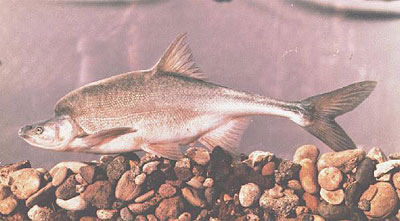
The Southeastern Colorado Water Conservancy District board approves a $17.2 million budget for 2012

arkansasvalleywateruse2011

From The Pueblo Chieftain (Chris Woodka):

The major portion of the budget, $11.8 million, goes to repay federal costs of constructing the Fry-Ark Project, which includes the Fountain pipeline. Another $270,000 is revenue from state and federal grants.

The operating budget for the district is $5.1 million, with about 60 percent in the general fund, and 40 percent in the enterprise fund.

Of the $3 million district fund, $1.36 million goes toward personnel.

The budget also includes a capital expenditure of $850,000 as the district’s share for purchase of the Red Top Ranch near Lake Granby. That cost will total $1.7 million over two years. The ranch purchase is part of a plan by Front Range water users, including Aurora, Colorado Springs, Denver, Pueblo and the Northern Colorado Water Conservancy District, to provide flows for endangered fish species in the Colorado River. Participation in the program is a condition for importing Fry-Ark water each year.

The major project in the $2.1 million enterprise fund will be the Arkansas Valley Conduit. The U.S. Bureau of Reclamation is preparing an environmental impact statement for the conduit.

More Southeastern Colorado Water Conservancy District coverage here.

Colorado Mesa University: ‘Habitat Restoration for Endangered Colorado River Fishes in the Grand Valley’ seminar Monday

humpbackchub.jpg

From email from the Water Center at Colorado Mesa University (Hannah Holm):

The Fall 2011 Natural Resources of the West seminar series at Colorado Mesa University focuses on Restoration. Our next guest speaker will be Patty Gelatt, US Fish and Wildlife Service

Habitat Restoration for Endangered Colorado River Fishes in the Grand Valley

Monday 7 November 2011 4 pm – 5:15 pm
Wubben-Science, Room 141 (Saccomanno Lecture Hall)
Colorado Mesa University (for maps and directions, see: http://www.coloradomesa.edu/campusinfo/maps.html)
Grand Junction, CO

Please note that this is an adjustment to the published schedule. Steve Renner’s talk on mine remediation will be held the following Monday 11/14.

The seminars are free and open to the public, no registration necessary.

For the complete schedule, see http://home.coloradomesa.edu/~grichard/WSS/Seminar2011.htm

Please contact Dr. Gigi Richard (970-248-1689) or Dr. Tamera Minnick (970-248-1663) for more information.

More endangered/threatened species coverage here and here.

West Slope stakeholders are voicing concern about releases from Ruedi Reservoir for the Upper Colorado River Endangered Fish Recovery Program

coloradopikeminnow.jpg

From the Summit County Citizens Voice (Bob Berwyn):

Some stakeholders in Eagle and Pitkin counties said they are concerned that the planned releases from Ruedi Reservoir could threaten the economically valuable trout fishery in the Roaring Fork.

But if the various stakeholders can make all the pieces fit together, it could be a win-win, with less water coming out of Ruedi and some additional flows from Granby Lake and Green Mountain Reservoir, according to Dave Nickum, director of Colorado Trout Unlimited.

Most trout species (with the exception of cutthroats) are not native to Colorado, but angling has become a huge part of the recreational economy. As such, the plan to recover the native fish sets up an interesting conflict between protection of endangered native species and potential impacts to non-native fish that are a big part of the culture and economy of the West Slope. Learn more about the recovery effort at this U.S. Fish and Wildlife Service website.

At issue are the Colorado pikeminnow, the bonytail and humpback chub and the razorback sucker. The four species are native to the Colorado River, but dam-building and diversions reduced their habitat to just a few pockets.

Under a 1999 programmatic biological opinion from the U.S. Fish and Wildlife Service that addresses impacts to the four endangered species, Front Range and West Slope water users agreed to provide equal amounts of water for the recovery effort.

More endangered/threatened species coverage here and here.

CSU to present six week non-credit adult education course — ‘Whiskey’s For Drinking; Water is for Fighting: The Social Organization of Water in Colorado’, starting October 26

grandriverditchlookingupstream.jpg

From email from Colorado State University:

The non-credit adult education water organization course at CSU addresses how a succession of conflicts were each resolved by self governing organizations: On the irrigation ditches (mutual companies, irrigation districts); among ditches on the rivers (State Engineers Office); how supplemental supplies were organized via water exchanges; trans-mountain imports (mutuals and Northern Colorado Water Conservancy District); groundwater use (4 varieties of augmentation organization); incorporation of a federal endangered species agenda (Colorado, Wyoming, Nebraska and the U.S. Department of Interior); and finally, the Northern Integrated Supply Project (NISP) will be reviewed along with alternatives. Find more information here.

Green Mountain Reservoir operations update: 750 cfs in the Lower Blue River below the dam

greenmountainreservoir.jpg

From email from Reclamation (Kara Lamb):

If you’ve been out on the Lower Blue this morning [ed. October 12], you probably noticed that it’s running a little lower than yesterday. That is because this morning around 6:30, we dropped releases from Green mountain Dam by about 50 cfs. Currently, there is 850 cfs flowing below the dam. We will be making additional changes today. We will drop again at noon today, by 50 cfs, putting the Lower Blue around 800 cfs. Then around 5 p.m. today, we will drop another 50 cfs. By the end of the day, releases from Green Mountain Dam to the Lower Blue will be around 750 cfs.

The reason for the change is two fold: the 15-Mile Reach of critical habitat for endangered fish no longer needs additional water and the Shoshone Plant has some maintenance work. Reduction in flows will help both projects.

More Colorado-Big Thompson coverage here.