#Colorado water infrastructure projects score $24.9 million from @EPA

The water treatment process

From The Greeley Tribune (Trevor Reid):

The funding includes about $10.6 million in clean water infrastructure and $14.3 million in drinking water state revolving loan funding.

“The State Revolving Fund programs are critical for Colorado as they have provided the ability to fund more than $1.2 billion for clean water and $600 million for drinking water infrastructure projects throughout the state,” Pat Pfaltzgraff, director of the state’s Water Quality Control Division, said in the release. “The SRF programs continue to help offset the $12 billion dollar funding gap.”

According to the release, Colorado’s water infrastructure projects also are funded with state match, repayments from State Revolving Fund loans and interest earnings. Key projects for wastewater treatment and drinking water State Revolving Fund loans include: $43 million to Evans for its new consolidated wastewater treatment plant, $320,000 to Larimer County’s Wonderview Condos Association to replace its collection system and $58 million to Breckenridge for an intake structure, raw water piping and a water treatment plant.

A federal-state partnership, the Clean Water State Revolving Fund provides financing for water quality projects through low-interest loans. The Drinking Water State Revolving Fund was created in 1996 and provides financial support to ensure safe drinking water.

@DenverWater estimates $600 million in costs to treat for molybdenum if temp standard is made permanent

Climax Mine

From The Denver Post (Bruce Finley):

Chronic ingestion of molybdenum can cause diarrhea, stunted growth, infertility, low birth weights and gout

Colorado health officials on Wednesday ignored state scientists and delayed for two years a decision on a mining giant’s push to weaken statewide limits on molybdenum pollution of streams, including a creek flowing into Dillon Reservoir, Denver’s drinking water supply.

Denver Water contends that Climax Molybdenum’s campaign to jack up molybdenum pollution limits 43 times higher than at present could cost ratepayers up to $600 million for expansion of a water treatment plant. Trace amounts of molybdenum — below a health advisory level — already flow out of Denver taps.

But Colorado Department of Public Health and Environment officials and federal Environmental Protection Agency officials on Wednesday rescheduled a Dec. 12 molybdenum rule hearing for November 2019.

A CDPHE hearing officer said the delay will allow time for industry-financed studies to move through a peer-review process and for the Agency for Toxic Substances and Disease Registry to make decisions on molybdenum toxicity. A “temporary modification” that currently allows elevated molybdenum pollution from the Climax Mine was extended this year through 2018, and CDPHE officials at Wednesday’s meeting opened the possibility it could be extended again.

CDPHE scientists opposed the delay. The scientists, Denver Water and a coalition of mountain towns have opposed the push by Climax to allow more molybdenum pollution of Tenmile Creek, which flows down from the Climax Mine above Leadville into Dillon Reservoir, where water flows out through a tunnel to Denver and the upper Colorado River Basin. CDPHE water-quality scientists have determined that molybdenum pollution at the proposed new limits would kill fish and could hurt people…

Denver Water treatment plants cannot remove molybdenum, and expanding one plant to do that would cost from $480 million to $600 million, utility officials said in documents filed to the CDPHE.

Those costs ultimately would hit ratepayers, the 1.4 million people who rely on Denver Water for their domestic water supply. The molybdenum pollution from Tenmile Creek that reaches Denver facilities today is “below the human health advisory levels,” Denver Water spokeswoman Stacy Chesney said.

“We’d likely exceed the human health advisory standard if that (new limit) were to become the statewide water quality standard. … Currently, the concentrations in Tenmile Creek have not been at a high enough concentration that would result in an exceedance of the human health advisory level, so an extension of the ‘temporary modification’ for molybdenum is acceptable,” Chesney said.

A subsidiary of the $46 billion mining giant Freeport-McMoRan, Climax Molybdenum runs the Climax Mine, which was closed for 25 years and reopened in 2012. This led to elevated molybdenum pollution at levels up to 2,500 ppb, 10 times higher than the current statewide limit. The “temporary modification” granted by CDPHE water commissioners, and extended this year, allows this elevated pollution through December 2018…

EPA officials recently said a molybdenum pollution limit as high as 10,000 ppb could be sufficient. But EPA scientists previously have advised lower limits.

“Denver Water’s current position is that the molybdenum limit should be based on scientific evidence. While Climax Molybdenum Company has presented scientific studies in support of its proposed standard, the studies fail to account for the effect high molybdenum concentrations will have on individuals with a copper deficiency,” Chesney said. “Because we do not know how high molybdenum concentrations will affect people with copper deficiencies, and EPA has not modified the Human Health Advisory for molybdenum to correspond with Climax’s proposed standard, the (state water quality control) commission should decline to increase the molybdenum standard to the level proposed by Climax.”

A coalition of mountain towns also is fighting the proposed higher limits for molybdenum pollution of waterways.

“Because of scientific uncertainty regarding the effects of varying molybdenum concentrations on human health, the commission should decline to make the changes that Climax Molybdenum Company has proposed in the statewide molybdenum standards,” Frisco attorney Jennifer DiLalla said. “The town’s primary goal is ensuring that any action the commission may take with respect to molydenum standards is protective of the health of those who live and work and play in Frisco.”

Widefield Aquifer: USAF responds to Fountain City Council concerns

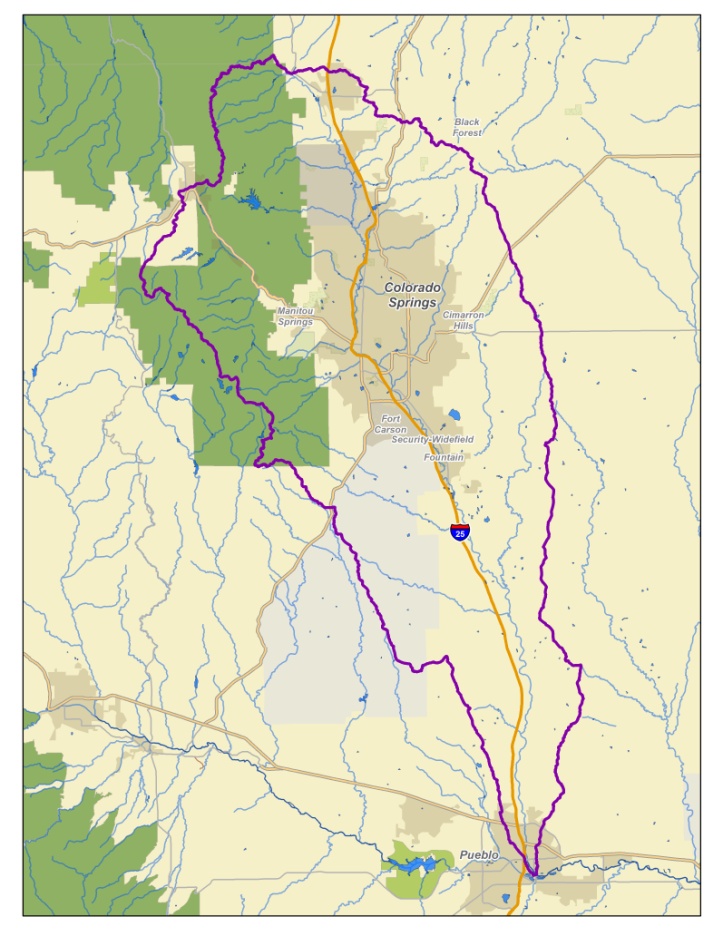
Widefield aquifer via the Colorado Water Institute.

From The Colorado Springs Gazette (Tom Roeder and Jakob Rodgers):

Peterson Air Force Base bosses worked Tuesday to soothe the Fountain City Council’s frustrations over the base’s role in polluting drinking water for thousands of residents in southern El Paso County…

“We have two objectives: One is to be as transparent as humanly possible,” Col. Eric Dorminey, vice commander of Peterson’s 21st Space Wing, told the council. “Two is to foster the partnership we have with the city of Fountain.”

The Air Force wants the pollution cleaned up as badly as local residents do, Dorminey told the council.

“We are committed to finding a means to mitigate these concerns,” he said.

Fountain Mayor Gabriel Ortega said the council knows better than to shoot the messengers from Peterson.

“While Peterson is where this potentially is coming from, they are not the ones who pull the strings,” Ortega said. “The leaders in Washington, D.C., are the ones we need to poke and prod.”

Monday, local officials twisted arms in Washington to prod the Air Force into faster action on the issue.

Officials from Fountain, Security and Widefield met with Air Force leaders at the Pentagon.

Locals are frustrated that they’re left with a substantial bill to install filters or bring in other water sources to get perfluorinated compounds out of their drinking water.

While the Air Force provided filters as part of an initial $4.3 million effort to provide clean water, the service didn’t come up with cash for buildings to house them, nor did it budget for pipelines to connect water users to other sources.

Water districts and utilities in Security, Widefield and Fountain have paid $6 million in checks responding to the water crisis, and they expect that tap to hit $12.7 million by the end of 2018.

The Air Force has said it won’t reimburse water districts for most of those expenses.

U.S. Rep. Doug Lamborn, a Colorado Springs Republican who arranged the Pentagon confab, called the gathering productive…

Lamborn said it remains unclear, though, whether the Air Force will pay up.

The congressman said he’s frustrated by the military’s slow response to the contamination…

The City Council meeting also comes a day after an open house held by the Colorado Department of Public Health and Environment on a proposed site-specific groundwater standard in central and southern El Paso County for the toxic chemicals.

The standard would limit two well-known types of perfluorinated compounds in the area’s groundwater to 70 parts per trillion (ppt), or a shot glass of the chemical in 107 million gallons of water.

It also would create the state’s first legally enforceable means to make polluters clean up contaminated areas. The likely boundaries extend across a wide swath of the county, including central and eastern Colorado Springs, Peterson Air Force Base and southern portions of Fort Carson.

State officials plan to release their draft of the rules in December, and a hearing is slated for April 9.

While Fountain now relies on clean water from Colorado Springs Utilities, the city could be forced to pull water from the aquifer in a drought.

At the council meeting, leaders said they have been frustrated by the lack of communication from the Air Force. They had been asking to meet with Peterson bosses for months.

#AnimasRiver: Lead pollution at Bonita Peak Mining District superfund site

On April 7, 2016, the Environmental Protection Agency proposed adding the “Bonita Peak Mining District” to the National Priorities List, making it eligible for Superfund. Forty-eight mine portals and tailings piles are “under consideration” to be included. The Gold King Mine will almost certainly be on the final list, as will the nearby American Tunnel. The Mayflower Mill #4 tailings repository, just outside Silverton, is another likely candidate, given that it appears to be leaching large quantities of metals into the Animas River. What Superfund will entail for the area beyond that, and when the actual cleanup will begin, remains unclear.
Eric Baker

From The Denver Post (Bruce Finley):

This lead and dozens of other contaminants are spreading beyond waste-rock piles into surrounding “halos” where they are absorbed by plants and then can be ingested by bugs and transferred from the insects to birds to, ultimately, mammals. EPA officials said tissue samples from deer will be tested to assess ecological harm.

“You start to understand the scope of the environmental problem and how long this is going to take,” EPA Superfund project chief Rebecca Thomas said after a town hall meeting this week in Silverton. “It is pretty overwhelming.

“We don’t really have an active mining industry in this state anymore. Yet we still see so many impacts. And we’re just looking at the Bonita Peak Mining District in the San Juan Mountains. Think how much more widespread it is across the Rocky Mountain West. It’s a big problem. It’s going to take many years to solve it — and a lot of money.”

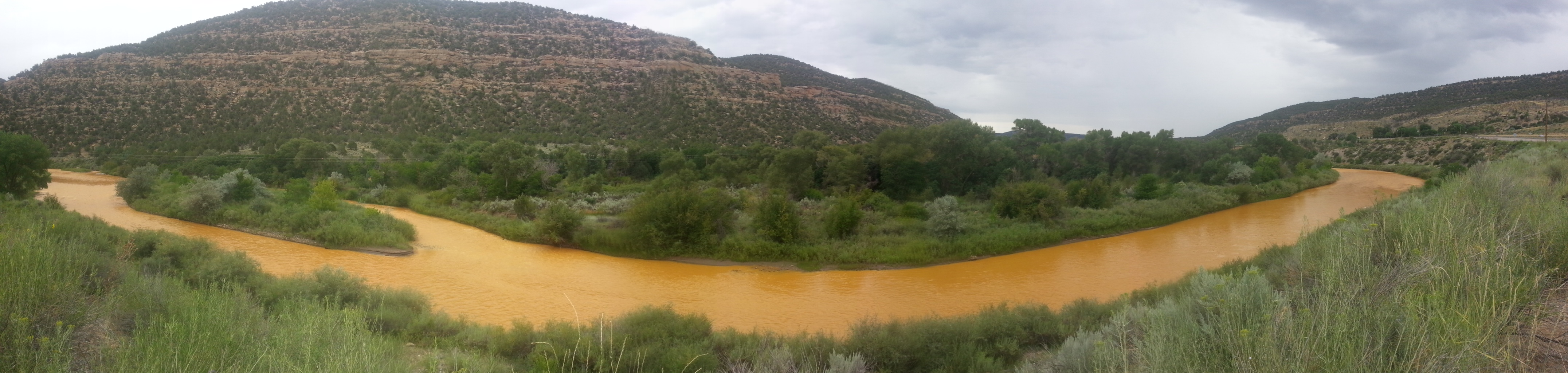
The lead, measured at concentrations up to 5,000 parts per million, surfaced in the latest round of sampling and study that were spurred by a federal declaration last year of a Superfund environmental disaster linked to the 2015 Gold King Mine spill that turned the Animas River mustard-yellow through three states.

EPA Administrator Scott Pruitt has said Superfund cleanups will be the EPA’s priority, even as he and other Republicans push to trim the agency’s $8 billion budget, because Americans deserve to have environmental harm fixed as required by law.

From The Durango Herald (Jonathan Romeo):

A recent Denver Post article is being called misleading and inaccurate for overstating the risks to wildlife from mine contamination around a Superfund site near Silverton.

“The statement that EPA crews found that lead is threatening birds and animals is not accurate,” Environmental Protection Agency project manager Rebecca Thomas wrote in an email Friday. “The terrestrial risk assessment is ongoing and no conclusions have been reached.”

Around 7 p.m. Thursday, The Denver Post sent a “Breaking News Alert” for a story titled “EPA crews working on Gold King cleanup find elevated lead threatening birds, animals and, potentially, people.”

In the story, the Post draws the conclusion based on a presentation the EPA gave Monday, in which the agency said preliminary sampling of soils around the Superfund site found levels of lead at some locations at 5,000 parts per million.

The Post said these levels are 100 times higher than “danger thresholds for wildlife.”

However, EPA had said this data had not been validated.

“The statement regarding ‘danger thresholds’ for wildlife in The Denver Post story is misleading,” Thomas said. “At this point, we are looking at very conservative screening values in assessing potential risk.”

San Juan County Commissioner Scott Fetchenheir, a former miner and geologist who is quoted in the Post article, also took issue with the story.

“I tried to explain that to (the reporter) and he just didn’t get it,” Fetchenheir said. “He had his mind made up there’s going to be lead problems.”

@EPA and the State of Colorado release plans to protect water quality, enable land reuse at the Eagle Mine Superfund Site

Eagle Mine

Here’s the release from the Environmental Protection Agency (Richard Mylott):

Actions build upon prior cleanup efforts

The U.S. Environmental Protection Agency (EPA) and the Colorado Department of Public Health and Environment (CDPHE) have released two final Records of Decision for environmental remediation at the Eagle Mine Superfund Site in Eagle County, Colorado, following the consideration of input received through a public comment process. Both documents, specifying measures to protect water quality and facilitate site reuse, focus on further reducing exposure to heavy metal contamination created by nearly one-hundred years of mining activity at the site.

“These actions reflect both EPA’s and CDPHE’s commitment to efficiently evaluate conditions and protect human health and the environment at the Eagle Mine Superfund Site,” said EPA Assistant Regional Administrator Betsy Smidinger. “Together, we are strengthening the water quality improvements we have achieved in the Eagle River and providing opportunities to bring lands back into safe, productive reuse. EPA remains committed to improving environmental conditions and human health for Americans that live and work near Superfund sites.”

The amended Record of Decision finalized for Operable Unit 1 (OU1) at the Eagle Mine Superfund Site adopts site-specific arsenic remedial goals and modifies surface water cleanup levels for cadmium, copper and zinc to meet more recent standards established for the site by the Colorado Water Quality Control Commission in 2008. Water quality monitoring in the Eagle River indicates that these standards for cadmium, copper and zinc are not attained in March and April of most years. The OU1 Record of Decision requires institutional controls to protect existing remedial features and expands the current groundwater collection system in Belden and at the mouth of Rock Creek to further reduce metals loading to the Eagle River.

EPA and CDPHE have also finalized a separate Record of Decision for Operable Unit 3 (OU3) focused on soil remediation necessary to protect human health should future residential development occur. EPA created OU3 after a developer purchased a large portion of the Eagle Mine Superfund Site in 2004 with plans to develop the property into a private, residential community. The Record of Decision for OU3 includes a combination of the following elements for areas proposed for development: excavating soil; placing a soil exposure barrier; grading the site; placing institutional controls and conducting monitoring; and/or demolishing structures.

The Eagle Mine Superfund Site is located in Eagle County, Colorado. The site is defined as the area impacted by past mining activity along and including the Eagle River between the towns of Red Cliff and Minturn. Mining activities at the Eagle Mine began in 1879 and continued until 1984. EPA listed the site on the National Priorities List (NPL), commonly known as the list of Superfund Sites, in 1986 because of the mine metals discharge, uncontrolled mine waste piles and the close proximity of the population to the mine and associated features. To better manage the site, EPA divided it into operable units.

EPA and CDPHE issued a final Record of Decision for the Eagle Mine Superfund Site in 1993. Over the years, all required environmental cleanup work has occurred at the site under a number of state and federal directives. EPA declared all cleanup construction activities complete at the site in 2001. Remediation conducted to-date has resulted in significant improvement in water quality and reduction in risk to human health and the environment. Continued operation of the existing remedy, including drawdown from the mine pool and treatment at the water treatment plant, is required to maintain this condition. Contaminant concentrations in surface water and groundwater have decreased significantly, and the aquatic ecosystem continues to show signs of recovery.

For more information about the Eagle Mine Superfund Site, please contact: Ms. Wendy Naugle, On-Site Coordinator, Colorado Department of Public Health and Environment, 4300 Cherry Creek Drive South, Denver, CO 80246, Wendy.naugle@co.state.co.us, or Ms. Jamie Miller, Project Manager, U.S. Environmental Protection Agency, 1595 Wynkoop Street, Denver, CO 80202, miller.jamie@epa.gov

You can also visit one of the following Websites: https://www.colorado.gov/pacific/cdphe/eagle-mine, https://www.epa.gov/superfund/eagle-mine

@EPA awards Colorado $1.3M to improve and protect Arkansas River water quality

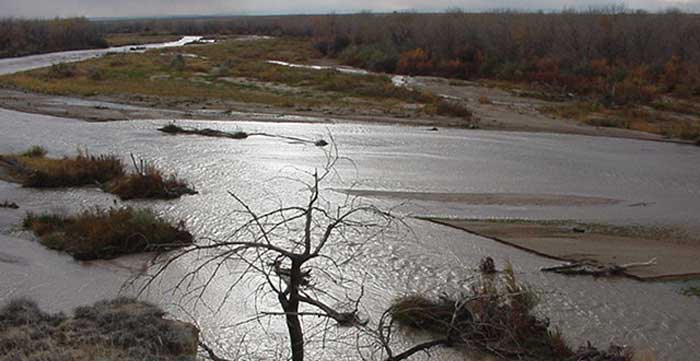
Lower Arkansas River near Bent

Here’s the release from the Environmental Protection Agency (Richard Mylott):

The U.S. Environmental Protection Agency (EPA) has awarded $1,293,010 to the Colorado Department of Public Health and Environment (CDPHE) to help protect human health and the environment through a Nonpoint Source Program Clean Water Act Section 319 cooperative agreement. This grant is given to states to implement environmental programs that address nonpoint source pollution in surface water and groundwater in order to improve and protect water quality.

“EPA is partnering with states to protect and restore watersheds, streams and groundwater,” said EPA Administrator Scott Pruitt. “Investments like this grant allow states to support local watershed projects, improving water quality and supporting communities that depend on clean and healthy water resources.”

Under CDPHE’s Nonpoint Source Program, a targeted basin approach is used to provide funding for projects across the state. Three projects that will address water quality in the lower half of the Arkansas River in Colorado will be funded in 2017. The projects will support the continued voluntary efforts by landowners, local stakeholders, and local governments to address excess selenium pollution in the Arkansas River. Selenium is naturally occurring, but agriculture practices often increase the natural levels in rivers to levels that can harm human health and the environment.

“Our local partners in the Arkansas, Colorado and South Platte River basins will use these funds to plan and implement priority ​water quality improvement ​ projects​,” said​ ​Patrick Pfaltzgraff, Director of CDPHE’s Water Quality Control Division. ​ “Perhaps most importantly, the funds will allow us to continue creating and strengthening our partnerships which is so crucial for sustaining quality waters throughout our state. We value and appreciate this EPA funding.”

EPA’s grant will also provide funds to support local watershed planning for two additional river basins and for water quality outreach and education activities. The basic goal for all the projects is to improve water quality and restore the beneficial uses of waters impacted by nonpoint source pollution. The program works through a set of overarching principles that emphasize voluntary and incentive-based participation, locally-led projects, partnerships, measurable water quality improvement, and effective and efficient program administration.

Nonpoint source pollution encompasses a wide range of sources that are not always subject to federal or state regulation. These sources include agricultural runoff, unpermitted urban runoff, abandoned mine drainage, failing onsite disposal systems, and pollution caused by changes to natural stream channels. Congress enacted Section 319 of the Clean Water Act in 1987and established a national program to control nonpoint sources of water pollution. Through Section 319, the EPA provides states, territories, and tribes with guidance and grant funding to implement their nonpoint source programs and to support local watershed projects to improve water quality. Collectively, this work has restored over 6,000 miles of streams and over 164,000 acres of lakes since 2006. Hundreds of additional projects are underway across the country.

You can learn more about successful nonpoint source projects at https://www.epa.gov/nps/nonpoint-source-success-stories

For more information on the state of Colorado’s efforts to address nonpoint source pollution, visit: https://www.colorado.gov/pacific/cdphe/nonpoint-source-pollution-management

@EPA awards $225K to protect, manage and restore wetlands in #Wyoming

Spring sampling location along Little Sandy River in southern Wyoming. Photo credit: Chris Shope, USGSPublic domain

Here’s the release from the EPA Region 8 office (Lisa McClain-Vanderpool):

Wyoming Game and Fish and the University of Wyoming are wetlands grant recipients

The Wyoming Game and Fish Department and the University of Wyoming have each received $112,500 in grant funding from the U.S. Environmental Protection Agency (EPA) to develop protect, manage and restore wetlands in the state of Wyoming. The EPA Wetland Program Development Grants announced today are awarded through a competitive process and are intended to support state and local efforts to increase the quantity and quality of wetlands in the U.S. by conserving and restoring wetland acreage and improving wetland condition.

“Wetland restoration is key to capturing pollutants that impact Wyoming’s natural resources,” said EPA Administrator Scott Pruitt. “Understanding the current health of wetlands and where restoration efforts are most needed will help the many groups working on making the state’s rivers, lakes and streams healthy.”

The Wyoming Game and Fish Department will receive $112,500 to develop a voluntary wetland restoration and protection program and develop plans for critical wetlands throughout the state. Project partners include Ducks Unlimited, the Wyoming Governor’s Big Game License Coalition, and Wyoming Wetlands Society.

“We are excited to receive this funding,” said Steve Tessmann, a biologist with the Wyoming Game and Fish Department. “The grant is supporting a much-needed jump-start of a voluntary wetland restoration and protection program in Wyoming. The effort will also include preparation of plans to manage and improve wetlands located on several State wildlife habitat areas.”

The University of Wyoming is also receiving a $112,500 EPA wetlands grant to carry out a multi-year project to improve the effectiveness of monitoring and assessment methods related to aquatic resources. These improvements will be achieved by developing, testing, and calibrating Wyoming-specific protocols to assess wetland condition and value. This project will support state priorities for wetland monitoring, protection, and conservation, focusing on the effects of climate change in highly managed basins. Project partners include The Nature Conservancy, the Wyoming Game and Fish Department, and the Wyoming Department of Environmental Quality.

“Many people don’t realize that even though the area of marshes, ponds, and streamside forests in Wyoming is small, those wetlands have a large impact on biodiversity and other ecological services,” said Teresa Tibbets, a freshwater ecologist at the University of Wyoming. “Wetlands also often overlap with areas important for agricultural production. Our goal is to develop assessment methods that can inform how we can better manage our water resources to balance the needs of wetland habitats and people.”

EPA Wetlands Program Development Grants assist state, tribal, and local government agencies in building programs that protect, manage, and restore wetlands and aquatic resources. Partners are encouraged to develop wetlands program plans, which help create a roadmap for building capacity and achieving long-term environmental goals. These plans also help prioritize projects and funding needs and ensure that EPA is providing strategic support for states and tribes as they pursue their environmental goals.

For more information visit: https://www.epa.gov/wetlands/wetland-program-development-grants

#ColoradoSprings sales tax revenue up, stormwater infrastructure could benefit

Colorado Springs with the Front Range in background. Photo credit Wikipedia.

From The Colorado Springs Gazette (J. Adrian Stanley ):

The budget proposal assumes the stormwater fee measure on the Nov. 7 ballot will not pass, but Suthers is prepared to submit an amendment to City Council if it does.

A big chunk of the anticipated increase in revenue is from sales tax collection increases. At times, the city has needed to refund sales tax collections that grew quickly, due to revenue growth limits set by the Taxpayer’s Bill of Rights. But this year, and in 2018, the city will be able to keep $6 million per year in revenue overage thanks to a measure approved by voters in April. That money is dedicated to stormwater projects. (The city is aggressively dealing with drainage issues, in part, because it’s being sued by the federal government for violation of the Clean Water Act.)

Fountain Creek: @EPA and CDPHE lawsuit prep. to continue until April 2018

Fountain Creek

From The Pueblo Chieftain (Robert Boczkiewicz):

Senior U.S. District Judge Richard Matsch, who is presiding over the lawsuit, stated Thursday that pre-trial preparation will continue until April. Matsch, in a written order, said he will set a trial date after that.

In pre-trial work so far, Colorado Springs has turned over 1,275 boxes of documents to the EPA and the state environment department to examine for possible evidence. That is part of the legal process known as “discovery.”

Matsch earlier this year granted requests from the Board of Pueblo County Commissioners and the Lower Arkansas Valley Water Conservancy District to intervene in the case, on the side of the environmental agencies. Intervention allows the commissioners and the conservancy district to have a direct voice in the litigation in order to protect their interests.

The district encompasses Bent, Crowley, Otero, Prowers and Pueblo counties, where considerable produce is grown. District officials told Matsch they want to ensure the quality of the river water.

Colorado Springs has denied it is violating the laws. Mayor John Suthers has pointed to its commitment of money and manpower to improve its stormwater system.

The lawsuit seeks a court order requiring the city “to develop, implement and enforce” its storm management program, as required by permits issued by the environmental agencies.

#NM Environment Dept. & #GoldKingMine Citizens’ Group Meets September 25, 2017

The orange plume flows through the Animas across the Colorado/New Mexico state line the afternoon of Aug. 7, 2015. (Photo by Melissa May, San Juan Soil and Conservation District)

From email from the New Mexico Environment Department:

The New Mexico Gold King Mine Spill Citizens’ Advisory Committee, based out of San Juan County, New Mexico, meets Monday at 5:30 p.m. in the San Juan Community College Student Center – SUNS Room (accessible through the Henderson Fine Arts Building).

Shannon Manfredi, Coordinator, Animas River Community Forum (ARCF) in Durango will discuss the role of the ARCF and related organizations, membership composition, and issues.

The Citizens’ Advisory Committee is a group of 11 citizen volunteers from Northern New Mexica, including the Navajo Nation, who provide a forum for public concerns while tracking the scientific long-term monitoring of the Gold King Mine spill’s effects in the state. The CAC works with New Mexico’s Long-Term Impact Review Team established by Governor Susana Martinez to both monitor and discuss with the public the continuing effects of the 2015 mine blowout, caused by the U.S. Environmental Protection Agency, that released three million gallons of mining wastewater laden with 880,000 pounds of metals into the Animas and San Juan River system.

For more information please visit the New Mexico Environment Department’s Gold King Mine website at https://www.env.nm.gov/river-water-safety/ or send an email to: NMENV-Outreach@state.nm.us

#AnimasRiver: #GoldKingMine update

On April 7, 2016, the Environmental Protection Agency proposed adding the “Bonita Peak Mining District” to the National Priorities List, making it eligible for Superfund. Forty-eight mine portals and tailings piles are “under consideration” to be included. The Gold King Mine will almost certainly be on the final list, as will the nearby American Tunnel. The Mayflower Mill #4 tailings repository, just outside Silverton, is another likely candidate, given that it appears to be leaching large quantities of metals into the Animas River. What Superfund will entail for the area beyond that, and when the actual cleanup will begin, remains unclear.
Eric Baker

From The Associated Press (Dan Elliott):

The 12-inch (30-centimeter) valve will regulate wastewater pouring from the Gold King Mine in the San Juan Mountains of southwestern Colorado, where the EPA inadvertently triggered a wastewater spill while excavating at the mine entrance in August 2015…

The valve will be mounted in a steel-and concrete barrier about 70 feet (20 meters) inside the mine. The barrier will have water-tight access doors so workers and equipment can get deeper into the mine for cleanup and investigation.

The EPA is also drilling a 170-foot (50-meter) horizontal well into another part of the Gold King to drain any water building up there. That water would be routed through a temporary treatment plant below the mine where wastewater draining from the main entrance is cleaned up.

The EPA said it can control the flow of wastewater from the new drain to avoid another blowout.

The documents did not say say how much the work will cost and the EPA did not immediately respond to emails and a phone call Wednesday seeking comment.

The work is expected to be completed next month.

Peter Butler, a leader of the volunteer Animas River Stakeholders Group, which works to improve water quality in the area, said he agreed with the EPA’s decision to install the barrier and drainage well.

“It’s probably a good idea,” he said. “They are showing an abundance of caution.”

Wastewater has flowed from the Gold King for years, and since the 2015 blowout, it has poured out at a rate of about 500 gallons (1,900 liters) a minute.

Mine waste flows are unpredictable In the San Juan Mountains, where underground water flows through an interconnected warren of mine tunnels and natural faults.

Precautions such as the barrier, valve and horizontal drain will make it safer for investigators to enter the mines and try to figure out the water flows, Butler said.

The Gold King and dozens of other mining-related sites in the region were designated a Superfund district in 2016.

#Colorado sues U.S. Army/USFWS over Rocky Mountain Arsenal clean up

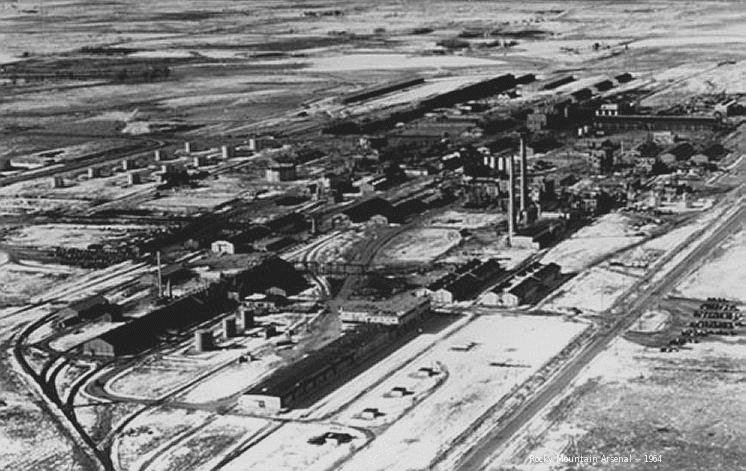
Rocky Mountain Arsenal back in the day

From CBS Denver:

The arsenal stopped production of chemical weapons and pesticides in the early 80s. Cleanup was finished seven years ago and now much of the area has been turned into a wildlife refuge but many toxic compounds remain.

Colorado says the potential for trouble is still there unless the property has proper control.

“It was referred to as one of the most contaminated pieces of property on the planet,” said Colorado Department of Health and Environment spokesman Doug Knappe.

Knappe manages the hazardous waste program for the state health department.

Now, the agency he works for is suing the U.S. Army, U.S. Fish and Wildlife Service and Shell Oil. The lawsuit claims that an area called “Basin F” still poses a potential threat, “all of these constitute threats to human health and environment.”

He says the state needs proper management of the site.

“We don’t have control of that and we therefore can’t ensure for the protection of humans, health and environment,” said Knappe.

Much of the hazardous waste remains in landfills or contained under covers. The state says even though some ground water remains contaminated, it is treated.

@NatGeo: Why the US Clean Water Rule Needs to Stay in Place #WOTUS #CleanWaterRules @EPA

Colorado River headwaters tributary in Rocky Mountain National Park photo via Greg Hobbs.

From National Geographic (Sandra Postel):

Floodplains, tributaries, wetlands, lakes, ponds, rivers and groundwater form an interconnected whole that helps ensure clean, safe, reliable water supplies. A well-functioning water cycle naturally moderates both floods and droughts, reducing societal risks from both.

The Trump administration’s proposal to rescind the Obama-era Clean Water Rule would further break the natural water cycle just at the time we need to double-down on repairing it…

The motivation for the Clean Water Rule arose from Supreme Court decisions, in particular the 2006 case of Rapanos v. United States, that sowed consideration confusion about which waters came under the jurisdiction of the federal Clean Water Act, and which did not.

Both the Environmental Protection Agency (EPA) and the Army Corps of Engineers (the Corps) were spending considerable time and tax dollars determining whether or not a particular stream or wetland was protected under the Act. Just between 2008 and 2015, the agencies had to make some 100,000 case-by-case determinations, causing backlogs and delays.

The 2015 rule, also known as the Waters of the United States (WOTUS) rule, clarified the definition and expanded protection to headwater streams and some 20 million acres (8 million hectares) of wetlands. An EPA-Corps economic analysis of the rule published in May of that year found that while the additional water protections would have negative economic impacts on certain industries and farm enterprises, the benefits to society from cleaner and more secure water supplies exceeded those costs.

In June 2017, as the Trump administration moved to rescind the rule, EPA Administrator Scott Pruitt ordered agency staff to redo the economic analysis and omit the half billion dollars of benefits associated with wetland protection, according to reporting by the New York Times.

Scientists are speaking out against the repeal of the 2015 Clean Water Rule.

A letter already signed by more than 320 scientists (including me) from academia, state agencies, nonprofits, and the private sector notes that more than 1,200 peer-reviewed publications clearly establish “the vital importance” of wetlands and headwater streams “to clean water and the health of the nation’s rivers.”

In an amicus curiae (literally, friend of the court) brief to the Supreme Court in the Rapanos case, ten scientists (including me) argued that “when it comes to the connection of tributaries, streams, and wetlands to navigable waters and interstate commerce, there is no ecological ambiguity….[I]f the Clean Water Act does not protect these resources, then it does not protect navigable waters from pollution, and it cannot achieve its goals.”

Cleanup bill for US military bases could top $2 billion

Photo via USAF Air Combat Command

From The Spokane Spokesman-Review (Chad Sokol):

It may cost up to $2 billion to clean up toxic firefighting chemicals that have leaked from more than 400 U.S. military installations, including Fairchild Air Force Base, a group of Democratic senators said Tuesday in a letter to the Senate Appropriations Committee.

The senators, including Patty Murray and Maria Cantwell of Washington, attributed that cost estimate to U.S. Department of Defense officials.

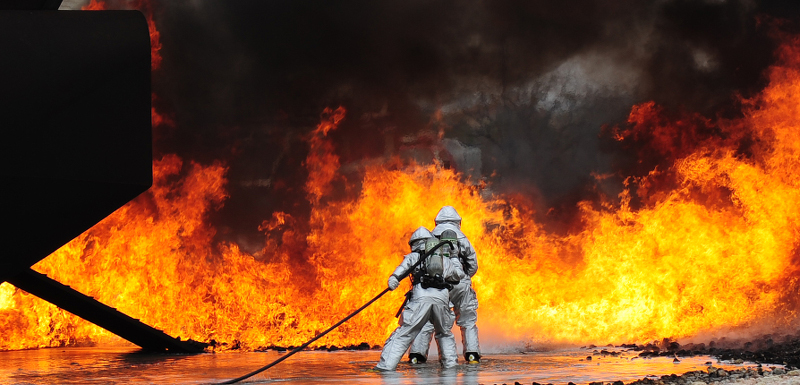
The senators requested a study of the chemicals known as PFOS and PFOA, which were key ingredients in a foam that was used for decades to douse aircraft fires at military bases and civilian airports…

Other senators who signed the letter include Michael Bennet of Colorado, Jeanne Shaheen and Maggie Hassan of New Hampshire, Kirsten Gillibrand of New York and Bob Casey of Pennsylvania.

They asked that funds be included in the 2018 budget for the Centers for Disease Control, the EPA and the Department of Defense to study the spread of the chemicals, the health effects and viable alternatives for the toxic firefighting foam.

The chemicals have been linked with cancer, thyroid problems and immune system disorders, although scientists aren’t sure exactly how they interact in the human body.

@EPA accepting comments on #CleanWaterRules #WOTUS

Colorado River headwaters tributary in Rocky Mountain National Park photo via Greg Hobbs.

From Colorado Corn (Eric Brown):

Farmers and all others interested are encouraged to submit comments to the U.S. Environmental Protection Agency (EPA) on a pair of important issues: The EPA’s proposed 2018 Renewable Volume Obligation (RVO) under the Renewable Fuels Standard (RFS), and its rescind of the 2015 Waters of the U.S. (WOTUS) rule.

Comments on 2018 RVO proposal due Aug. 31
The EPA proposed a 2018 Renewable Volume Obligation (RVO) for corn-based ethanol at 15.0 billion gallons — matching this year’s level — but proposed to lower the total RVO, including cellulosic and advanced biofuels, below the 2017 volumes.

During the past decade, the RFS has spurred economic growth for farmers and rural America, provided a dependable structure that assists in stabilizing markets, and promoted new technological advancements in the biofuels industry. With the help of the RFS, corn farmers and the ethanol industry have played a significant role in providing cleaner air and promoting energy independence, among other successes.

Learn more about the proposed RVO rule and submit comments here.

Comments on proposal to rescind the 2015 WOTUS rule due Sept. 27
The Trump Administration has proposed to rescind the waters of the U.S. (WOTUS) rule issued in 2015. With the rescind of the rule, a new rule-making would take place, likely coming in late 2017 or early 2018.

The rule has been a source of friction in recent years. The EPA and U.S. Army Corps of Engineers had worked on the WOTUS rule in recent years in an attempt to make things clearer for farmers and others regarding responsibilities and permitting under the Clean Water Act. But as details were released, many expressed frustration that it didn’t provide clarity, and was viewed as an expansion of EPA’s jurisdiction.

To learn more and submit comments on the repeal of the 2015 WOTUS rule, click here.

@EPA: Extension of Comment Period for the Definition of “Waters of the United States” #WOTUS – Recodification of Pre-existing Rules

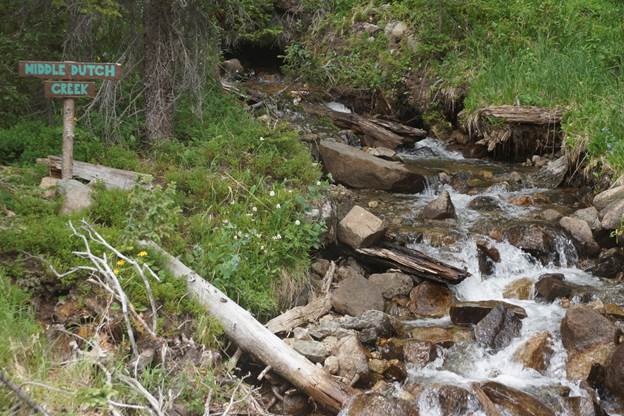
Middle Dutch Creek near the Grand River Ditch. Photo credit Greg Hobbs.

Here’s the release from the Environmental Protection Agency:

DESK STATEMENT
Extension of the Comment Period for Proposed Rule “Definition of ‘Waters of the United States’ – Recodification of Pre-existing Rules”

August 16, 2017

EPA and the Army are extending the comment period by 30 days for the proposed first step of the review of the definition of ‘Waters of the U.S.’ to provide additional time for stakeholders to weigh in.
Background

The comment period, as now extended, will close on September 27, 2017. The proposed rule was signed by the Administrator and posted to EPA’s website on June 27th and published in the Federal Register on July 27th. With this extension, the public will have more than 90 days to review the proposal. When finalized, the proposed rule would replace the 2015 Clean Water Rule with the regulations that were in effect immediately preceding the 2015 rule. For more information on the proposed rule: http://www.epa.gov/wotus-rule
Pre-Publication Version

The EPA Acting Assistant Administrator for Water, Michael Shapiro, along with Mr. Douglas Lamont, senior official performing the duties of the Assistant Secretary of the Army for Civil Works, signed the following document on 08/16/2017, and EPA is submitting it for publication in the Federal Register (FR). While we have taken steps to ensure the accuracy of this Internet version of the rule, it is not the official version. Please refer to the official version in a forthcoming FR publication, which will appear on the Government Printing Office’s FDsys website (http://fdsys.gpo.gov/fdsys/search/home.action) and on Regulations.gov (http://www.regulations.gov) in Docket No. EPA-HQ-OW-2017-0203. Once the official version of this document is published in the FR, this version will be removed from the Internet and replaced with a link to the official version.

#Utah #GoldKingMine lawsuit lacks details

This image was taken during the peak outflow from the Gold King Mine spill at 10:57 a.m. Aug. 5. The waste-rock dump can be seen eroding on the right. Federal investigators placed blame for the blowout squarely on engineering errors made by the Environmental Protection Agency’s-contracted company in a 132-page report released Thursday [October 22, 2015]

From the Associated Press (Dan Elliot):

Utah’s $1.9 billion claim against the Environmental Protection Agency for a multi-state mine waste spill says Utah’s water, soil and wildlife were damaged, but it offers no specifics.

The Utah Attorney General’s Office provided a copy of the claim to The Associated Press Wednesday…

Utah’s claim from the spill is believed to be the largest of 144 filed under the Federal Tort Claims Act, which allows people to seek government compensation without a lawsuit. The claims seek payment for lost crops, livestock, wages and income and other damages.

The Navajo Nation filed a claim for $162 million and the state of New Mexico for $130 million. Both have also filed lawsuits against the federal government.

Utah also filed suit, but it named mine owners and EPA contractors as defendants, not the government.

The EPA said January it was prevented by law from paying any of the damages under the Tort Claims Act, angering many. EPA Administrator Scott Pruitt, who took over after President Donald Trump assumed office, has said the agency will reconsider at least some of the claims.

Utah’s claim cites damage to the San Juan River and Lake Powell, a vast reservoir on the Colorado River which the San Juan feeds into. It also cites damage to other waterways, underground water, soil, sediment, wildlife and other, unspecified natural resources.

It does not say how state officials arrived at the $1.9 billion figure.

Dan Burton, a spokesman for Attorney General Sean Reyes, said the state’s lawyers came up with the number after consulting with Utah Department of Environmental Quality scientists and others.

Navajo and #NM lawsuits preclude @EPA review says agency #GoldKingMine

The orange plume flows through the Animas across the Colorado/New Mexico state line the afternoon of Aug. 7, 2015. (Photo by Melissa May, San Juan Soil and Conservation District)

From the Associated Press (Dan Elliott) via The Durango Herald:

In a written statement, the EPA said the law prevents it from reconsidering claims from anyone who has filed suit.

That could rule out a review of the two largest claims from the 2015 spill in southwestern Colorado, which the EPA inadvertently triggered…

More than 70 governments, businesses and individuals sought about $420 million in damages under the Federal Tort Claims Act, which is a way to settle without a lawsuit. The Navajos filed claims for $162 million and New Mexico for $130 million.

New Mexico and the Navajos sued the EPA for damages in federal court…

President Donald Trump’s appointee to head the agency, Scott Pruitt, pledged during his confirmation hearing he would review that decision. On Friday, the second anniversary of the spill, he announced a new course.

“A new review is paramount to ensure that those who have, in fact, suffered losses have a fair opportunity to have their claims heard,” he said.

Monday’s EPA statement appeared to narrow the scope of the review considerably.

“EPA won’t be able to reconsider a claim once the claimant has sued the U.S. in court, which the state of New Mexico and the Navajo Nation have done,” it said.

The EPA designated the Gold King and 47 other mining sites in the area a Superfund district and is reviewing options for a cleanup.

On April 7, 2016, the Environmental Protection Agency proposed adding the “Bonita Peak Mining District” to the National Priorities List, making it eligible for Superfund. Forty-eight mine portals and tailings piles are “under consideration” to be included. The Gold King Mine will almost certainly be on the final list, as will the nearby American Tunnel. The Mayflower Mill #4 tailings repository, just outside Silverton, is another likely candidate, given that it appears to be leaching large quantities of metals into the Animas River. What Superfund will entail for the area beyond that, and when the actual cleanup will begin, remains unclear.
Eric Baker

@EPAScottPruitt tours the #GoldKingMine

On April 7, 2016, the Environmental Protection Agency proposed adding the “Bonita Peak Mining District” to the National Priorities List, making it eligible for Superfund. Forty-eight mine portals and tailings piles are “under consideration” to be included. The Gold King Mine will almost certainly be on the final list, as will the nearby American Tunnel. The Mayflower Mill #4 tailings repository, just outside Silverton, is another likely candidate, given that it appears to be leaching large quantities of metals into the Animas River. What Superfund will entail for the area beyond that, and when the actual cleanup will begin, remains unclear.
Eric Baker

From The Denver Post (Jesse Paul):

Environmental Protection Agency chief Scott Pruitt says his agency “walked away” from Colorado after the Gold King Mine spill under the Obama administration, vowing Friday to make a federal cleanup of the Gold King and other abandoned mines around Silverton a priority…

Pruitt visited the site Friday with a delegation of Colorado’s top politicians on the eve of the two-year anniversary of the EPA-triggered disaster. He said that he planned to meet with private citizens impacted by the spill, as well as local leaders, to get first-hand information on his agency’s response.

“I’ve already sent out a letter to all the claimants who have filed claims asking them to resubmit,” Pruitt told The Denver Post in a phone interview ahead of his visit to the Gold King. “Some of those folks I’m sure I’ll meet today, and I’m looking forward to speaking with them directly. Farmers and ranchers, business owners, the recreational activities that occur on the Animas River — all were impacted, and from my perspective it was a wrong that we need to make right.”

Remediation will take place at the scores of sites that have leeched millions of gallons of heavy metal-laden water from the Gold King and surrounding mines, Pruitt said, despite President Donald Trump’s proposed funding cuts to the EPA’s Superfund cleanup program. Silverton’s leaders have expressed concern about the EPA’s efforts taking too long or being delayed indefinitely.

“I can absolutely commit that this will be a priority,” Pruitt said. “I’ve shared with Congress that if money is a concern about fulfilling our responsibilities under Superfund, I will advise them.”

Pruitt said he is working to create a list of 10 Superfund sites — of the more than 1,300 nationwide — for the EPA to focus on.

“I don’t know yet (if the Gold King and surrounding mines will be on that list),” he said. “We are evaluating all of the sites right now. Either way, it is going to be a priority.”

From the Associated Press via The Fort Collins Coloradoan:

The Environmental Protection Agency will reconsider whether to pay farmers, business owners and others in three states for economic losses caused by a mine waste spill that government crews accidentally triggered in 2015, the agency’s leader said Friday during a visit to the site.

EPA Administrator Scott Pruitt, who toured Gold King Mine with Colorado lawmakers on the eve of the disaster’s second anniversary, said he told people to resubmit claims rejected under the Obama administration. It’s not clear if the agency could pay on its own or how much of the potential payouts would need to be approved by Congress…

The EPA has designated the area a Superfund site to pay for a broad cleanup…

Pruitt, who had promised to visit the mine during his confirmation hearing earlier this year, said he has sent letters to people whose claims were rejected by former President Barack Obama’s EPA.

In January, the agency said federal law prevented it from paying claims because of sovereign immunity, which prohibits most lawsuits against the government…

It’s uncertain whether the White House and Congress, both controlled by Republicans, are willing to pay for any of the economic losses, although the GOP has been most vocal in demanding the EPA make good.

It’s not clear how much money would be at stake in a new round of claims.

Claims for $1.2 billion in lost income, property damage and personal injuries were initially filed with the EPA, but attorneys for some of the larger claimants later reduced the amounts they were seeking. A review by The Associated Press estimated the damages sought at $420 million.

The EPA has spent more than $31.3 million on the spill, including remediation work, water testing and payments to state, local and tribal agencies.

The agency said last year it would pay $4.5 million to state, local and tribal governments to cover the cost of their emergency response to the spill, but it rejected $20.4 million in other requests for past and future expenses, again citing federal law.

From CBS Denver (Rick Sallinger):

In an interview with CBS4’s Matt Kroeshel, [U.S. Senator Michael] Bennet said, “Having designation as Superfund site is only one step in the process. We need to make sure the resources are put into there to do the remediation that’s required at the site.”

The environmental mess that flowed from the Gold King Mine could happen again. Its owner Hennis says an adjacent mine is filled with even more toxic liquids.

When asked, “Could we have another disaster?” Hennis replied, “Absolutely and it would be a thousand times worse than Gold King.”

[…]

Sen. Gardner echoed that this is not a one time only problem, “Not just Gold King, we are talking about a handful of mines around the West that pose a threat to our environment and our community.”

#Utah sues over #GoldKingMine spill

On April 7, 2016, the Environmental Protection Agency proposed adding the “Bonita Peak Mining District” to the National Priorities List, making it eligible for Superfund. Forty-eight mine portals and tailings piles are “under consideration” to be included. The Gold King Mine will almost certainly be on the final list, as will the nearby American Tunnel. The Mayflower Mill #4 tailings repository, just outside Silverton, is another likely candidate, given that it appears to be leaching large quantities of metals into the Animas River. What Superfund will entail for the area beyond that, and when the actual cleanup will begin, remains unclear.
Eric Baker

From The Deseret News (Amy Joi O’Donoghue):

In a lawsuit filed in federal court Monday, Reyes asserts the contractor, subcontractor and mine owner — Delaware-based Sunnyside Gold Corp. — failed to take a host of proper precautions to avoid the disastrous breach near Silverton that released 3 million gallons of metals-laden sludge.

The Utah Department of Environmental Quality is continuing to take water samples from the San Juan River, which was impacted, and Lake Powell, where most of the sludge was deposited.

While Utah agencies and other entities, such as San Juan County, were compensated by the U.S. Environmental Protection Agency $464,000 for costs related to the initial response, Reyes’ suit asks for punitive damages for the ongoing environmental impacts, stigma associated with the spill and interference with the public’s ability to enjoy the waterways.

The suit asserts the EPA’s on-site team:

• Assumed that because the mine was draining it was not under pressure from the contaminated water behind it

• Didn’t believe it was necessary to test the level or volume of contaminated water from the blockage

• Did not take a measurement to determine the pressure of the water against the blockage of the adit, or horizontal mine entrance

Additionally, Reyes’ suit says the on-site team failed to take the precaution of installing a secondary containment system to prevent large quantities of toxic wastewater from reaching the Animas River and did not develop or implement an emergency response plan.

Although the Occupational Safety and Health Administration, as well as EPA, requires a health and safety plan in conjunction with hazardous waste site operations, the plan in place failed to meet those requirements, the suit asserts.

On Aug. 5, 2015, the day of the spill, the EPA’s on-site team was performing work on the Level 7 adit, where none of the proper measurements or precautions were taken, according to the lawsuit.

“Members of the EPA on-site team have given conflicting reports regarding their work. Some believed the objective was to excavate the adit to create an opening. Others believed the objective was to use a backhoe excavator to scratch the earth around the adit,” the suit reads. “On information and belief, this conflict was caused by miscommunication among the EPA on-site team.”

The suit says the mine blowout continues to pose environmental, economic and other damages to Utah that are not inconsistent with a “national contingency plan,” that will require additional investigation and remediation that will include soil and water testing.

Although the defendants named in the lawsuit should have known the Gold King Mine presented a “high risk of significant harm to the state of Utah and other downstream communities,” they acted in disregard of those risks, the suit says.

New Mexico and the Navajo Nation brought lawsuits against the EPA for the spill, and New Mexico also sued Colorado, asserting negligence.

In late June, the U.S. Supreme Court refused to hear arguments related to the dispute between the states.

The EPA in January said it would not pay $1.3 billion in claims related to the spill because it is protected by a federal tort law.

In addition, the agency’s inspector general concluded there was no wrongdoing with the Gold King Mine spill, but also conceded there were no specific standards in place for dealing with a collapsed mine portal.

Daniel Burton, a spokesman for the Utah Attorney General’s Office, said the state is continuing to negotiate with the EPA to see if a settlement can be reached without the need for litigation.

The mining district that includes where the breach happened was declared a Superfund Site nearly a year ago, which will accelerate cleanup efforts.

From the Associated Press (Lindsay Whitehurst) via The Durango Herald:

Utah wants cleanup compensation and unspecified damages in the 3-million-gallon Gold King Mine spill that was accidentally trigged by EPA contractors in 2015, Utah Attorney General’s Office spokesman Dan Burton said Tuesday.

Utah hasn’t named a damages amount because it’s still investigating how much it will ultimately cost to clean up its portion of spill that left as much as 880,000 pounds of metals in rivers in Colorado, New Mexico and Utah, Burton said. The metals have settled into riverbeds, where they can get stirred up any rainstorm or heavy snowmelt, state officials have said.

Total damages from farmers, business owners and residents along the spill’s path have been estimated at $420 million.

Though Utah was farther away from the epicenter of the spill, contaminants from the blowout have been transported through the San Juan River in southeastern Utah to the vast reservoir of Lake Powell, the lawsuit states…

The Utah lawsuit filed Monday doesn’t name the EPA. The agency has taken responsibility for the spill and given Utah agencies $464,000 so far to help pay for the cleanup. The state hopes to come to a final settlement with the agency out of court, Burton said.

Gold King Mine entrance after blowout August 2015

Scott Pruitt stops in #Utah for #WOTUS briefing

Stevens Arch viewed from Coyote Gulch photo via Joe Ruffert

From The Deseret News (Amy Joi O’Donoghue):

EPA Administrator Scott Pruitt visited Utah as part of multistate tour to get input on how the agency can be more responsive to states’ needs in general and in specific how the controversial Waters of the United States rule should be retooled.

During his tour of Utah, Pruitt stopped off at the Bitner Ranch and Conservatory in Park City to get a firsthand look at a small pool of water that falls under federal regulation due to the rule, as well as a subdivision development hampered by permitting requirements…

Pruitt is acting under the direction of an executive order issued in February by President Donald Trump that called for a rollback of the so-called WOTUS rule, which inspired a firestorm of controversy when it was adopted in 2015.

Although celebrated by sportsmen’s groups and environmental organizations as the most comprehensive and significant overhaul of the Clean Water Act in more than 40 years, the rule raised the ire of states, farmers, ranchers and industry officials who complained about its scope and ambiguity.

At the time of its adoption, federal regulators insisted the rule only clarified protections for seasonal waterways that are critical to downstream communities. The EPA and Army Corps of Engineers contended the rule did not expand the scope of jurisdictional oversight — an assertion hotly contested by the National Association of Counties, which argued even ditch maintenance projects would require a Army Corps of Engineers permit.

In late June, Pruitt initiated a proposal to repeal the Waters of the United States rule and later invited states to offer their input on a new regulation that would incorporate a standard in a 2006 U.S. Supreme Court decision. That test said federal jurisdiction would only apply to “relatively permanent, standing or continuously flowing bodies of water…

Utah Farm Bureau President Ron Gibson accompanied Pruitt on the tour Tuesday and praised the EPA action.”

[…]

Environmental groups and conservation organizations that include the Theodore Roosevelt Conservation Partnership favored the regulation, citing its protection of wetlands — particularly the Prairie Pothole Region that is home to upward of 70 percent of the ducks in North America.

Seven scientific organizations that include the Society of Wetlands Scientists argued in a letter to Trump that the rule should be left intact.

In a separate announcement during his visit, Pruitt said the EPA will revisit a previous ruling on Utah’s regional haze plan, allowing the state to come up with additional visibility modeling to look at impacts from a pair of PacifCorp-owned power plants to nearby national parks.

Local officials travel to D.C. to lobby for Bonita Peak Mining District Superfund site funding

On April 7, 2016, the Environmental Protection Agency proposed adding the “Bonita Peak Mining District” to the National Priorities List, making it eligible for Superfund. Forty-eight mine portals and tailings piles are “under consideration” to be included. The Gold King Mine will almost certainly be on the final list, as will the nearby American Tunnel. The Mayflower Mill #4 tailings repository, just outside Silverton, is another likely candidate, given that it appears to be leaching large quantities of metals into the Animas River. What Superfund will entail for the area beyond that, and when the actual cleanup will begin, remains unclear.
Eric Baker

From The Durango Herald editorial board:

Good representatives, at every level of government, are willing to go the extra mile.

In mid-June, Durango City Councilor Dean Brookie, La Plata County Commissioner Brad Blake and San Juan County Commissioner Scott Fetchenhier did just that, both literally and figuratively, by traveling to Washington, D.C. with Ty Churchwell of the Durango office of Trout Unlimited.

Armed with letters and messages from counties and town councils, chambers of commerce and other Animas River stakeholders, their aim was to meet with Environment Protection Agency director Scott Pruitt. Their goal: to lobby for priority status and adequate funding for the Bonita Peak Mining District Superfund project, now in its investigative stages.

Heading east, the four were worried. While Pruitt had announced that Superfund projects – there are 1,300 across the country – would be a top priority of the agency under the Trump administration, the preliminary 2018 federal budget released in March showed a 25 percent cut in funding for the program.

To their chagrin, the first part of the mission failed. Pruitt was out of the country and could not keep his appointment.

But good representatives are by nature persistent. And optimistic. Instead of a meeting with Pruitt, the four met with eight high-ranking EPA officials and were joined via phone by more staff members in Denver intimately familiar with the Bonita Peak listing.

Churchwell came away convinced that the cleanup and mitigation of acid mine drainage contaminating the headwaters of the Animas River is at the top of the agency’s list.

“The response was that Bonita Peak is a stated priority of the EPA,” he said. “We feel confident that the agency is deeply committed.” More proof of that statement is evident in the work now being done. While many Superfund sites sit idle, Churchwell said, the Bonita Peak project is underway.

That Brookie, Blake and Fetchenhier came away convinced as well is due in no small part to the negative publicity generated by the Gold King Mine spill in August, 2015. The EPA’s role in causing the disaster is well known, and the visitors to Washington were not about to let the agency off the hook. As Brookie reminded EPA staff, “You had your hands on the shovel.”

That played into the other message the group wanted to convey, Churchwell added, that this project can be the agency’s “opportunity to shine, and demonstrate how a federal agency can respond and do it right.”

All indications are that the agency agrees.

Before leaving Washington, the four also met with Sens. Michael Bennet and Cory Gardner and Rep. Scott Tipton to ask the trio for a coordinated and united show of support for the project.

We are both fortunate and thankful for the efforts made by our local elected officials to ensure the EPA makes good on the promise the Superfund program holds for a restored Animas River watershed.

Thanks also go to Churchwell for organizing and finding the means to fund the journey; no taxpayer money was used for the trip. In return, he would like to see sustained local interest and community oversight of the project. More opportunities to participate arrive next month with a series of informative meetings followed by a tour of the mining district in September.

We should all capitalize on the momentum generated by the visit; find details at http://wearetheanimas.com.

Potential wide-ranging effects of @EPA redo of #WOTUS rule

Farmers Highline Canal Arvada.

From The Denver Post (Bruce Finley):

Less than 30 percent of Colorado’s estimated 95,000 miles of streams are likely to qualify for protection if the current system is changed as proposed, according to a 2009 study by the conservation group Trout Unlimited. EPA data show that 77,850 miles of waterways in Colorado are ephemeral, only flowing seasonally or during rain.

Federal environmental officials must protect “waters of the United States” under the nation’s landmark 1972 Clean Water Act — by requiring property owners to obtain permits designed to minimize impact before water can be polluted or wetlands destroyed. The U.S. Army Corps of Engineers administers these permits, typically requiring six months or more for processing — a source of frustration for some.

Trump’s team has proposed to repeal a broader definition of “waters of the United States” that the EPA and Army Corps adopted in 2015 under President Barack Obama — one that expanded protection following U.S. Supreme Court decisions in 2001 and 2006 that created confusion. The court ruled that federal authorities could only require permits for pollution and dredging of “navigable waters.” The Obama-era approach, still not implemented due to lawsuits, allows regulation of flowing water, including ephemeral streams, with exemptions for agriculture.

Publication in the federal register on June 27 of the Trump administration’s proposal to repeal and replace clean water standards triggered a 30-day period for public comment. Then the rollback would take effect. However, more than 70 members of Congress last week requested an extension to no less than six months. On Thursday, the League of Conservation Voters and 18 other environment groups sent Pruitt a letter requesting the same.

While Colorado has state-level rules limiting water pollution that still could apply, there is no state rule against dredging and filling that destroys wetlands and streams.

Beer brewers were among the first to object. Eight craft brewers in Colorado, joined by counterparts nationwide, sent a letter to EPA and Army Corps leaders urging maximum protection.

“Beer is mostly water, so the quality of our source water affects our finished product. Even small chemical disruptions in our water supply can alter the taste of a brew or influence factors like shelf life and foam pattern,” they wrote. “We need reliable sources of clean water to consistently produce the great beer that is key to our success.”

In western Colorado, a growing reliance on pristine water for the economy — depending more on recreation and tourism — compelled concern. The fuzzy meaning of “waters of the United States” and delays issuing federal permits are a problem, many agree, and local officials would welcome greater clarity, said Torie Jarvis, co-director of the Water Quantity and Quality Committee (QQ) of the Northwest Colorado Council of Governments. But most favor greater protection, not less.

“While QQ supports increased clarity for the definition of ‘waters of the United States,’ this clarity should not mean reduced water quality protection under the Clean Water Act,” Jarvis and the other local leaders told EPA officials June 19, after the feds had asked for input for their proposed repeal and overhaul of clean water rules.

“Water quality in the headwaters of Colorado is critically important for our regional tourism economy as much as for environmental protection. Tourism is the largest employment sector in the headwaters region, comprising 48 percent of all jobs,” local officials wrote. “Tourism in the region includes fishing, hunting, kayaking, rafting, wading, lake and reservoir recreation, wildlife watching, hiking, and snowmaking for ski resorts, all of which depend on clean water.”

Some local officials reckon they could protect cherished watersheds on their own, without robust federal clean water rules, by using their power to regulate land use.

Environment groups last week argued that a federal role is necessary to buttress local power.

“Local governments may be able to control some impacts based on conditions they might impose on developments, but they do not have a statutory obligation to do so — so the ability to protect these important resources ends up relying on their level of commitment to protecting water quality, and their ability to have the expertise and resources to do so, which for smaller local governments can be a real limitation,” Colorado Trout Unlimited director David Nickum said.

“Our main practical concern with the change in these federal standards is that we would lose the protection for seasonal streams and for wetlands from being dredged or filled in — protection that currently is provided. … Allowing those areas to be degraded will in turn have ripple effects downstream onto our drinking water supplies and our important fishing and recreation rivers,” Nickum said.

“Colorado’s outdoor economy and quality of life depend on healthy, clean watersheds, and anglers know that starts at the source: the small, unassuming streams, headwaters and wetlands that rescinding the Clean Water Rule puts at risk,” he said.

“President Trump promised to drain the swamp. Instead, this EPA proposal aims to drain our wetlands and pollute our streams,” he said. “Coloradans deserve better.”

Environmental policy in the current administration

Science Senator. It’s called science.

You owe it to yourself to come up to speed about the rollback of environmental protections over the first 6 months of the new administration. Focus on the protection of the water supply, then contact your elected officials about the problem. Water is a great way to find common ground with folks. It’s more important than ever to support the role of local and state government in regulating air and water pollution.

Here’s a list of changes in policy from Mother Jones:

Timeline of the rollbacks

14 February Trump signs a bill repealing an anti-corruption rule that required energy companies to disclose payments to foreign governments. The regulation was scrapped under the Congressional Review Act.

16 February The stream protection rule, which prevented mining companies dumping their waste into streams, is axed under the Congressional Review Act. Trump calls it a “terrible job-killing rule.”

28 February Trump instructs the EPA to rewrite the ‘waters of the United States’ rule, which expanded the definition of the Clean Water Act to protect the water supply for around 117 million Americans. Many farmers, real estate developers and golf course owners opposed the rule.

2 March On 1 March, governors and attorneys general from several Republican-led states write to Scott Pruitt to request the EPA stop collecting methane emissions data from around 15,000 oil and gas operations. A day later, Pruitt says he has decided to oblige “after hearing from industry.”

15 March Trump announces a review of vehicle fuel efficiency standards that are designed to push down greenhouse gases and other pollutants. More than a dozen car company chief executives asked the president to revisit an Obama-era decision to mandate improved fuel economy by 2025. Pruitt calls the standards “costly for automakers and the American people.”

28 March A sweeping executive order penned by Trump orders a rewrite of the EPA’s clean power plan, which was Obama’s centerpiece climate policy, an end to the moratorium on coal mining on public land and the removal of climate change as a consideration when approving federal projects.

29 March Pruitt denies a bid to halt the use of chlorpyrifos, a widely used pesticide. The chemical has been linked to damage to the nervous system and last year EPA scientists said a ban was warranted. Household use of the chemical was phased out a decade ago but it is still used in farms across the US.

11 April A court grants an EPA request to delay the implementation of ozone pollution standards that were made stricter in 2015. The EPA intends to review the rules around ozone, which is created when sunlight reacts with pollutants from vehicles exhausts and other sources. Ozone can create smogs and can trigger a raft of health ailments, especially among children, the elderly and those with respiratory problems.

13 April The EPA pauses a regulation that curbs the dumping of toxic metals such as arsenic and mercury by power plants into public waterways. The Obama-era rule, set to commence in 2018, would’ve destroyed jobs, according to Pruitt.

27 April The EPA successfully convinces a US appeals court to halt a challenge by states and industry groups to an Obama administration rule aimed at reducing toxic emissions from power stations. Pruitt, in his previous role as attorney general of Oklahoma, had sued the EPA to stop the rule, which is known as MATS.

23 May A three-month pause is put on landfill methane rules so they EPA can “reconsider certain aspects” of the regulation. Methane is a powerful greenhouse gas and is emitted from rotting garbage in landfills, as well as other sources such as agriculture.

13 June The EPA announces plans for a two-year pause on regulations that would reduce emissions leaks from oil and gas operators. The regulator acknowledges that pollution from the leaks results in “disproportionate” harm to children but proposes to go ahead with the suspension of the rule anyway.

27 June The EPA, along with the US army, proposes to scrap the clean water rule. This would reverse an Obama-era move that expanded federal government protections to the drinking water of around a third of all Americans. Pruitt said the rollback will provide “regulatory certainty to our nation’s farmers and businesses.” The announcement didn’t reference public health.

US Supreme Court declines to hear #GoldKingMine lawsuit, #NM v. #Colorado

This image was taken during the peak outflow from the Gold King Mine spill at 10:57 a.m. Aug. 5. The waste-rock dump can be seen eroding on the right. Federal investigators placed blame for the blowout squarely on engineering errors made by the Environmental Protection Agency’s-contracted company in a 132-page report released Thursday [October 22, 2015]

From The Naitional Law Review:

On June 26, the US Supreme Court denied New Mexico’s petition seeking to institute an original action against Colorado for the 2015 Gold King Mine spill. An original action in the US Supreme Court is a lawsuit between states. Invoking that rarely used procedure, New Mexico sought to hold Colorado liable for the Gold King Mine spill. New Mexico asserted claims under the intricate provisions of the Comprehensive Environmental Response, Compensation, and Liability Act of 1980 (CERCLA) and the Resource Conservation and Recovery Act of 1976 (RCRA). New Mexico also sought analogous relief against Colorado under federal interstate common law.

Attorneys assisting the State of Colorado, successfully argued that the US Supreme Court should not entertain New Mexico’s novel lawsuit. As explained in Colorado’s briefing, New Mexico’s RCRA claim failed because a CERCLA response action had been initiated to address the relevant hazardous substance release. New Mexico’s CERCLA claim failed, Colorado argued, for a number of reasons, including that once a site is under investigation under CERCLA authority, several of New Mexico’s claims are barred because they would interfere with the CERCLA investigation and remedy decision making. Colorado additionally argued that Congress displaced New Mexico’s putative federal common law claims through its enactment of comprehensive environmental statutes, most importantly the Clean Water Act, but also CERCLA and RCRA. Finally, Colorado’s briefing also explained that Colorado should not be held liable for its regulatory activities in remediating and managing abandoned mines…

Colorado’s victory at the US Supreme Court protects Congress’s carefully constructed statutory scheme for the effective management and remediation of water pollution across the country. It also protects Colorado’s sovereign ability to remediate abandoned mines.

On April 7, 2016, the Environmental Protection Agency proposed adding the “Bonita Peak Mining District” to the National Priorities List, making it eligible for Superfund. Forty-eight mine portals and tailings piles are “under consideration” to be included. The Gold King Mine will almost certainly be on the final list, as will the nearby American Tunnel. The Mayflower Mill #4 tailings repository, just outside Silverton, is another likely candidate, given that it appears to be leaching large quantities of metals into the Animas River. What Superfund will entail for the area beyond that, and when the actual cleanup will begin, remains unclear.
Eric Baker

The path to a new @EPA #CleanWaterRule will be through the courts

Photo via Greag Hobbs March 29, 2015.

Scott Pruitt now faces an uncertain outcome in the courts. Here’s a report from Patrick Parenteau (Vermont Law School) writing for The Conversation. Here’s an excerpt:

EPA developed the Clean Water Rule in an attempt to resolve uncertainty created by a fractured 2006 Supreme Court decision, Rapanos v. United States. The Rapanos ruling caused widespread confusion about which waters were covered [Click through for the Reagan Waskom and David J. Cooper explainer about Ag and the rule], creating uncertainty for farmers, developers and conservation groups. Efforts to clarify it through informal guidance or congressional action had failed, and EPA acted under mounting pressure from various quarters, including some members of the court.

As Oklahoma’s attorney general, Pruitt unsuccessfully sued to kill the rule, which he has called “the greatest blow to private property rights the modern era has seen.” Now he is seeking to accomplish by administrative fiat what he failed to achieve in court. However, he faces a stiff challenge from supporters of the rule, and the courts may not buy his arguments for wiping a rule off the books.

Under the Administrative Procedure Act, federal agencies must follow specific steps when they seek to establish or repeal a regulation. These procedures are meant to establish efficiency, consistency and accountability. To promote fairness and transparency, the law requires that the public must have meaningful opportunity to comment on proposed rules before they take effect.

The Clean Water Rule emerged from an extensive rule-making process that featured over 400 meetings with state, tribal and local officials and numerous stakeholders representing business, environmental and public health organizations. It generated over one million comments, the bulk of which supported the rule.

This process was preceded by a comprehensive peer-reviewed scientific assessment that synthesized over a thousand studies documenting the importance of small streams and wetlands to the health of large rivers, lakes and estuaries. According to a 2015 fact sheet, which has been scrubbed from EPA’s website but is archived here, the rule protects streams that roughly one in three Americans depend upon for their drinking water.

To undo the Clean Water Rule, EPA will have to go through the same notice-and-comment process. Pruitt’s proposal to rescind the rule will be published in the Federal Register sometime in the near future. From that date, the public will have just 30 days to file written comments electronically. (Normally public comment periods last for 60 days, and the Clean Water Rule was open for comment for 120 days.)

[…]

EPA must then review and respond to the comments, make any changes it deems necessary and publish a final rule. Parties with standing can then challenge the final rule, although there is a question as to which court will have jurisdiction to hear them. The Supreme Court is scheduled to hear arguments on this issue in the fall. In weighing challenges, the key question the court must address is whether EPA’s action is “arbitrary and capricious,” meaning that the agency has failed to consider important aspects of the problem or explain its reasoning.

In a seminal 1983 decision, the Supreme Court ruled that an agency must supply a “reasoned analysis” when it rescinds a rule adopted by a previous administration. The court acknowledged that agencies have some discretion to change direction in response to changing circumstances. However, it noted that “the forces of change do not always or necessarily point in the direction of deregulation.” Further, the court said that a decision to rescind a rule would be arbitrary and capricious if it offers an explanation “that runs counter to the evidence before the agency.”

Pruitt asserts that his repeal “need not be based upon a change of facts or circumstances,” citing a 2009 opinion by Justice Antonin Scalia. But in my view, Pruitt reads too much into that decision, which simply held that an agency did not face “heightened scrutiny” – that is, an extra-high bar – when changing policy, but must still “show that there are good reasons for the new policy.” As Justice Breyer observed, dissenting in the same case, “Where does, and why would, the Administrative Procedure Act grant agencies the freedom to change major policies on the basis of nothing more than political considerations or even personal whim?”

Drinking water at risk with new @EPA proposals #WOTUS

Middle Dutch Creek near the Grand River Ditch. Photo credit Greg Hobbs.

From The Colorado Connection (Josephine Peterson) via The Durango Herald:

The American public will have 30 days to comment on the Trump administration’s plan to repeal and replace the 2015 Clean Water Rule, once it’s published in the Federal Register.

Jan Goldman-Carter, wetlands and water resources director for the National Wildlife Federation, said the move would remove pollution limits from streams and wetlands that supply a third of the nation’s drinking water and which also are home to countless fish and wildlife species.

“The American public has long thought – since the 1972 act – that their water is protected, their wetlands are protected, their streams are protected from pollution,” she said. “None of us can really take that for granted anymore.”

The Clean Water Rule restored protections under the Clean Water Act for headwaters, streams and wetland habitat that had been left uncertain because of convoluted U.S. Supreme Court rulings. Current Environmental Protection Agency Administrator Scott Pruitt has argued that rolling back the measure will provide certainty to farmers and other businesses by returning regulatory authority to states.

Carter said western states rely on clean water to fuel their multi-billion-dollar outdoor recreation industries. She pointed to polls that show nearly 80 percent of hunters and anglers favor Clean Water Act protections. Dozens of craft brewers also have come out in support of the 2015 measure. Carter said a majority of the nation’s stream miles and wetland acres are at stake…

But some Colorado legislators see the beginning of the process to rollback this rule as a victory for private water rights.

Sen. Cory Gardner, R-Colo., called the withdraw of this rule as “a victory for agriculture, rural communities, and all Coloradans.”

[…]

Gardner has been a consistent opponent of the administrative rule from the beginning.

Rep. Scott Tipton, R-Cortez, said he also welcomed the news and that the rule was a threat to private water rights…

Samantha Slater, a spokeswoman for Sen. Michael Bennet, D-Colo., said the senator is opposed to the rule’s full appeal, and wants only what is best for the state.

According to the Environment America Research and Policy Center, the Clean Water Rule, supported by more than 80 percent of small-business owners, was expected to generate more than $400 million annually in economic benefits. Public comments can be submitted at http://www.regulations.gov.

The EPA plan is online at epa.gov/wotus-rule, and the Environment America brief is at environmentamericacenter.org.

@EPA proposed repeal of #WOTUS exacerbates environmental political polarization

A paddle-boarder drifts down the Colorado River [May 2017] near the entrance to Burns Hole. Photo/Allen Best

From ColoradoPolitics.com (Peter Marcus):

EPA Administrator Scott Pruitt said this week that the administration will repeal the so-called Waters of the United States rule, or WOTUS. The rule, enacted under the Obama administration, clarifies regulatory authority under the Clean Water Act to protect streams and wetlands.

Meanwhile, U.S. Rep. Scott Tipton, R-Cortez, successfully pushed a measure through the House Natural Resources Committee on Tuesday to prohibit the departments of Agriculture and the Interior from requiring the transfer of water rights as a condition of any land-use permit. The bill also requires that future directives from the departments be consistent with state water law.

Tipton said he became concerned over federal attempts to manipulate federal permit, lease and land management processes to circumvent state water law and “hijack” privately held water rights. He pointed to a U.S. Forest Service attempt to require a transfer of privately-held water rights to the federal government as a condition for granting permits on National Forest System lands…

Concerns raised over repealing WOTUS

The WOTUS announcement by the Trump administration on Tuesday left environmental groups on edge. They say repeal of the rule “turns the mission of the Environmental Protection Agency on its head.”

“Instead of safeguarding our drinking water, the Trump administration is proposing to stop protecting drinking water sources for 3.7 million Coloradans,” said Garrett Garner-Wells, state director for Environment Colorado. “It defies common sense, sound science, and the will of the people of Colorado.”

The group said the 2015 rule restored federal protections to 73,000 miles of Colorado’s streams, which feed waterways such as the Colorado River and, in some cases, provide drinking water.

The Obama administration took action on small bodies of water after confusing and complex guidelines resulted from Supreme Court decisions. Polluters escaped fines for violations because of uncertain jurisdiction. But ranchers and farmers worry that even small ditches and ponds on private property could be subject to federal regulation, raising costs and overall compliance burdens.

The Trump administration’s reversal on the rule was expected after Trump in February signed an executive order directing the EPA and Army Corps of Engineers to review the regulation, a move the president described as “paving the way for the elimination of this very destructive and horrible rule.”

“The previous administration used the vague language in the WOTUS Rule to harm local communities – including ranchers, farmers, and small business owners,” said U.S. Rep. Doug Lamborn, R-Colorado Springs. “I look forward to a revision of this rule that will empower local landowners instead of giving power solely to the federal government.”

“Farmers and ranchers across Colorado will now be free from Washington bureaucrats who want to regulate every small body of water on their private property,” added U.S. Rep. Ken Buck, R-Greeley.

Colorado Republican U.S. Sen. Cory Gardner also applauded the action, saying, “The harmful impacts of the EPA’s Waters of the United States rule on Colorado’s farmers, ranchers, and small business owners cannot be overstated. Colorado’s agriculture community is already facing hardship and it is welcome news that this over burdensome regulation will never go into effect.”

But Kristin Green, water advocate for Conservation Colorado, said repealing the rule will put Colorado at greater risk of pollution and development on precious lands.

@EPA and the State of #Colorado release proposed plans for environmental cleanup at the Eagle Mine Superfund site

Here’s the release from the Environmental Protection Agency (Jennifer Chergo):

The U.S. Environmental Protection Agency (EPA) and the Colorado Department of Public Health and Environment (CDPHE) today released two Proposed Plans for environmental remediation at the Eagle Mine Superfund Site. Both Proposed Plans focus on further reducing heavy metal contamination created by nearly one hundred years of mining activity at the site.

“The cleanup proposals represent both EPA and CDPHE’s commitment to protect human health and the environment at the Eagle Mine Superfund Site,” said Acting Regional Administrator Deb Thomas. “These plans also highlight EPA’s commitment to bringing contaminated lands back to health and reuse.”

The Eagle Mine Superfund Site is located in Eagle County, Colorado. The site is defined as the area impacted by past mining activity along and including the Eagle River between the towns of Red Cliff and Minturn. Mining activities at the Eagle Mine began in 1879 and continued until 1984. EPA listed the site on the National Priorities List (NPL), commonly known as the list of Superfund Sites, in 1986 because of the mine metals discharge, uncontrolled mine waste piles and the close proximity of the population to the mine and associated features. To better manage the site, EPA divided it into operable units (OUs). OU1 focuses on protecting surface water by reducing metals loading from the site to the Eagle River. OU2 focuses on potential human health risks from contaminated soils in the abandoned company town of Gilman. OU3 focuses on soil remediation necessary to protect human health due to planned future development by the current landowner.

EPA issued a final Record of Decision (ROD) for OU1 in 1993 and a final ROD for OU2 in 1998. Over the years, all required environmental cleanup work has occurred at the Eagle Mine Superfund Site under a number of state and federal directives. Response actions at the site addressed the major sources of metals contamination to the Eagle River, including the old and new tailings pile, rex flats and various roaster waste piles near Belden. In 2001, EPA declared all cleanup construction activities complete at the Eagle Mine Superfund Site, except for ongoing operation and maintenance of remedial features like the water treatment plant. Remediation conducted to-date resulted in significant improvement in water quality and reduction in risk to human health and the environment. Continued operation of the existing remedy, including drawdown from the mine pool and treatment at the water treatment plant, is required to maintain this condition. Contaminant concentrations in surface water and groundwater have decreased, and the aquatic ecosystem continues to show signs of recovery.

In 2009, water quality standards established by the Colorado Water Quality Control Commission specifically for the Eagle Mine site became effective. Water quality monitoring in the Eagle River revealed that the water quality standards for cadmium, copper and zinc are not attained in March and April of most years. In response, the Proposed Plan released today for OU1 describes a number of alternatives designed to further reduce metals loading to the Eagle River. The preferred OU1 alternative includes the collection and treatment of groundwater from Belden and at the mouth of Rock Creek.

The Proposed Plan for OU3 presents cleanup alternatives focusing on soil remediation necessary to protect human health should future development occur. EPA created OU3, after a developer purchased a large portion of the Eagle Mine Superfund Site in 2004 with plans to develop the property into a private, residential community. The preferred alternative includes a combination of the following elements for areas at OU3 proposed for development: placing a soil exposure barrier; grading the site; placing institutional controls and conducting monitoring; and/or demolishing structures.

@EPA, U.S. Army Move to Rescind 2015 #WOTUS

Colorado River headwaters tributary in Rocky Mountain National Park photo via Greg Hobbs.

Here’s the release from the Environmental Protection Agency:

The Environmental Protection Agency, Department of Army, and Army Corps of Engineers (the agencies) are proposing a rule to rescind the Clean Water Rule and re-codify the regulatory text that existed prior to 2015 defining “waters of the United States” or WOTUS. This action would, when finalized, provide certainty in the interim, pending a second rulemaking in which the agencies will engage in a substantive re-evaluation of the definition of “waters of the United States.” The proposed rule would be implemented in accordance with Supreme Court decisions, agency guidance, and longstanding practice.

“We are taking significant action to return power to the states and provide regulatory certainty to our nation’s farmers and businesses,” said Administrator Scott Pruitt. “This is the first step in the two-step process to redefine ‘waters of the U.S.’ and we are committed to moving through this re-evaluation to quickly provide regulatory certainty, in a way that is thoughtful, transparent and collaborative with other agencies and the public.”

This proposed rule follows the February 28, 2017, Presidential Executive Order on “Restoring the Rule of Law, Federalism, and Economic Growth by Reviewing the ‘Waters of the United States’ Rule.” The February Order states that it is in the national interest to ensure that the Nation’s navigable waters are kept free from pollution, while at the same time promoting economic growth, minimizing regulatory uncertainty, and showing due regard for the roles of Congress and the States under the Constitution. To meet these objectives, the agencies intend to follow an expeditious, two-step process that will provide certainty across the country.

The proposed rule would recodify the identical regulatory text that was in place prior to the 2015 Clean Water Rule and that is currently in place as a result of the U.S. Court of Appeals for the Sixth Circuit’s stay of the 2015 rule. Therefore, this action, when final, will not change current practice with respect to how the definition applies.

The agencies have also begun deliberations and outreach on the second step rulemaking involving a re-evaluation and revision of the definition of “waters of the United States” in accordance with the Executive Order.

“The Army, together with the Corps of Engineers, is committed to working closely with and supporting the EPA on these rulemakings. As we go through the rulemaking process, we will continue to make the implementation of the Clean Water Act Section 404 regulatory program as transparent as possible for the regulated public, ” said Mr. Douglas Lamont, senior official performing the duties of the Assistant Secretary of the Army for Civil Works.

For the pre-publication Federal Register Notice and additional information: http://www.epa.gov/wotus-rule

U.S. Supremes pass on #NM #GoldKingMine lawsuit against #Colorado #AnimasRiver

The orange plume flows through the Animas across the Colorado/New Mexico state line the afternoon of Aug. 7, 2015. (Photo by Melissa May, San Juan Soil and Conservation District)

From The Albuquerque Journal (Dan Boyd):

While Colorado’s attorney general cited the ruling as proof the lawsuit should not have been filed, New Mexico Attorney General Hector Balderas indicated the legal fight may not be over yet.

“The Supreme Court’s ruling only limited the venue in which the state of Colorado can be sued for the harm done to New Mexico children, families and businesses,” AG’s office spokesman James Hallinan said.

The lawsuit, filed roughly a year ago, alleged Colorado was too lax in its oversight of groundwater contaminated by decades of mining and should be held responsible for the fallout of the Gold King Mine spill.

The U.S. Supreme Court, on an 8-1 vote, denied a motion to hear the case. The nation’s highest court did not provide a reason for its decision, but has also opted not to intervene in other recent interstate disputes, including a 2016 lawsuit filed by Nebraska and Oklahoma against Colorado’s legal marijuana laws…

In addition to the lawsuit against Colorado, New Mexico has also filed a lawsuit in federal court against the EPA and the owners of the Gold King Mine that seeks more than $136 million in damages. That amount would include money to pay for economic losses the state attributes to the mine spill, specifically in the tourism, recreation and agriculture sectors.

From ColoradoPolitics.com (Peter Marcus):

The New Mexico Attorney General’s Office and the state Environment Department announced last year that it filed a complaint against Colorado with the U.S. Supreme Court. It sought damages and demands that Colorado address problems at draining mines in southwest Colorado.

Former New Mexico Environment Department Secretary Ryan Flynn alleged that his water quality researchers rejected assertions from Colorado Gov. John Hickenlooper and Colorado environment officials that the Animas River quickly returned to safe pre-event conditions after the August 2015 spill of toxic heavy metals.

Flynn and attorneys for his department at the time suggested that Colorado is liable for the incident, which spilled 3 million gallons of sludge into the Animas in Durango, turning it a mustard yellow color. The spill fouled rivers in three Western states with arsenic, lead and other heavy metals.

The EPA acknowledged fault in the spill, in which sludge flowed into creeks and rivers during restoration work at Gold King. The flow headed into the San Juan River in New Mexico and Utah…

The Supreme Court was an appropriate venue for the case against Colorado, as it involved two states suing each other. But the high court declined to hear arguments in the case, though it did not issue an opinion explaining the decision. Justices Clarence Thomas and Samuel Alito said they would let the lawsuit move forward.

From The Durango Herald (Jonathan Romeo):

New Mexico’s petition to hold Colorado responsible for the Gold King Mine spill nearly two years ago was denied Monday by the U.S. Supreme Court.

“Because it was the EPA and not Colorado that caused the Gold King Mine disaster, I have said from the beginning that New Mexico should not have sued Colorado in the Supreme Court,” Colorado Attorney General Cynthia Coffman said in a prepared statement.

“Now that my office has won the Supreme Court case, I hope the conversation can focus on the EPA and its promise to take full responsibility for its actions.”

[…]

In its lawsuit, New Mexico claimed the Gold King spill was the “coup de grâce of two decades of disastrous environmental decision-making by Colorado, for which New Mexico and its citizens are now paying the price.”

The complaint specifically called out a decision reached by the state of Colorado and Sunnyside Gold Corp. to shut down a water treatment plant in favor of placing bulkheads at the entrance of the American Tunnel, Sunnyside’s drainage point.

It’s believed among most researchers familiar with the Animas watershed that the bulkheads caused the mine pool of the Sunnyside Mine to back up and cause other mines to discharge acidic water, namely the Gold King.

Regardless, Coffman, in response to the filed complaint, said she tried to resolve the matter without litigation, calling New Mexico’s lawsuit against the state “unfortunate.”

“It’s unclear to me how suing Colorado furthers the states’ mutual goal of holding the EPA to its promise to ‘take full responsibility’ for turning our rivers yellow,” she said…

“The Supreme Court’s ruling only limited the venue in which the State of Colorado can be sued for the harm done to New Mexico children, families and businesses,” James Hallinan, spokesman for New Mexico Attorney General Hector Balderas, said in an emailed statement.

“Attorney General Balderas will continue to fight for economic, social and environmental justice until New Mexico is compensated appropriately by all parties responsible for the horrific impacts of the Gold King Mine Spill.”

The Supreme Court’s decision to dismiss New Mexico’s petition is the latest lawsuit to fail in the long line of litigation in the wake of the spill.

On Jan. 13, the EPA rejected $1.2 billion in claims of damages from private businesses and individuals, citing federal law that encourages “government agencies to take action without the fear of paying damages in the event something went wrong while taking the action.”

To date, the EPA has spent more than $29 million in response to the Gold King Mine spill, with most of those funds used to stabilize the mine adit and mitigate ongoing acid mine drainage through a temporary water treatment plant, Amy Graham, an agency spokeswoman said Monday.

A total of $3.7 million has been awarded to state, tribal and local governments for emergency response costs, and another $2 million was provided to states and tribes for water quality monitoring, Graham said.

From the New Mexico Political Report (Laura Paskus):

The problem of toxic waste from abandoned mines flowing into rivers isn’t limited to just the Gold King Mine.

In Colorado alone, more than 200 abandoned mines collectively leak over a million gallons of wastewater every day. The pollution includes things like heavy metals, arsenic and sulfuric acid.

Last week, the Denver Post reported that EPA officials are trying to stop contamination of the Animas River from the abandoned Red and Bonita Mine, which currently discharges 300-gallons per minute of wastewater into the Animas River…

There are more than 15,000 abandoned mines across New Mexico, according to the New Mexico Energy, Minerals and Natural Resources Department.

According to that agency’s website, “The numbers of abandoned mines in the state are so numerous that one can only guess at the quantity. Some of them are small and not considered dangerous. Others are extremely dangerous.”

James Hallinan, spokesman for New Mexico Attorney General Hector Balderas, emailed a statement:

“The Supreme Court’s ruling only limited the venue in which the State of Colorado can be sued for the harm done to New Mexico children, families and businesses. Attorney General Balderas will continue to fight for economic, social and environmental justice until New Mexico is compensated appropriately by all parties responsible for the horrific impacts of the Gold King Mine Spill.”

#AnimasRiver: Bonita Peak Mining District Superfund site update

From The Durango Herald (Jonathan Romeo):

This summer will be the first full work season since the Bonita Peak Mining District Superfund site was declared last September, and the Environmental Protection Agency is wasting no time trying to figure out one of the biggest mysteries in the watershed: The American Tunnel.

EPA hydrologist Ian Bowen said this week the agency plans to drill 500 feet into the San Juan Mountains to install a monitoring well between the second and third bulkheads on the tunnel…

The American Tunnel, which travels about 11,000 feet, served as a transportation route for ore, as well as a deep drainage, from the vast Sunnyside Mine workings to facilities at Gladstone, north of Silverton.

When Sunnyside Mine closed for good in 1991, attention turned to what to do with acidic discharges out of the American Tunnel. Sunnyside initially pulled the water into a treatment plant, but ultimately decided with the state of Colorado to install three bulkheads to stem the flow of acid drainage.

But in recent years, researchers believe the Sunnyside mine pool behind the American Tunnel reached capacity and the water is spilling into other mine networks, such as the Gold King and Red & Bonita…

The Animas River headwaters are broken into three drainages: Mineral Creek, Cement Creek and the Upper Animas.

Rebecca Thomas, project manager for the Bonita Peak Mining District Superfund site, has previously said each drainage accounts for about a third of heavy metal loading in the Animas, causing a dead zone of aquatic life on the river from just below Silverton to the Bakers Bridge.

But many people familiar with the basin say the EPA, which could see massive budget cuts under the Trump administration, should focus on the high-metal content waters of Cement Creek, where 13 of the 48 sites are located…

Treatment options for the American Tunnel are a great unknown, Bowen said.

Some have called for a complete draining of the tunnel, which could take decades and cost a lot of money to treat discharges. Others have suggested placing bulkheads on all the mines in the area.

Bowen said the EPA first needs to understand the hydrology of the area. The new monitoring well that is expected to be installed by August will be a key tool in that effort because it will provide insight on how much water is behind the bulkheads, he said.

“There’s strong indications that these systems are related, but there’s not enough evidence to say it’s immediately connected,” Bowen said.

Sunnyside Gold Corp. has long contended there is no connection between the American Tunnel and any other mine networks in the area.

The American Tunnel drains about 100 gallons of acid mine waste water a minute, which flows right by the EPA’s temporary treatment plant into Cement Creek.

The temporary treatment plant only takes discharges from the Gold King Mine, which is now at about 620 gallons a minute. The EPA said it may consider treating other mine discharges upon further evaluation.

From The Farmington Daily Times (Hannah Grover):

The second annual Conference on Environmental Conditions of the Animas and San Juan Watersheds with Emphasis on the Gold King Mine and Other Mine Waste Issues today at San Juan College also featured other people who have been monitoring conditions in the rivers.

One challenge for scientists is identifying to what degree metals are naturally occurring in the river and which metals are coming from mines in Colorado.

Kathleen Sullivan, a U.S. Environmental Protection Agency scientist, said heavy metals released into the river during the Gold King Mine spill likely are no longer in the sediments in the rivers.

Sullivan said there are naturally high levels of aluminum and iron in the river because of the composition of the bedrock. She said the EPA looked at the ratio of arsenic and lead to aluminum or iron in the river to identify the plume released by the Gold King Mine spill.

The ratio peaked while the plume was passing through the area…

She said only a small fraction of the heavy metals released into the river during the spill reached Lake Powell in Utah and Arizona during the immediate aftermath of the spill in August 2015. The rest of the metal was deposited as sediment, but Sullivan said the EPA believes the metals from the Gold King Mine spill are no longer present in the sediment and now have been deposited in Lake Powell.

Sullivan said the EPA believes the Gold King Mine metals deposited in sediments passed through New Mexico in low levels over three to four weeks during the spring runoff in 2016.

To test that hypothesis, Sullivan said the EPA took samples during the spring runoff this year. She said the EPA expects to see lower ratios of lead to aluminum in this year’s samples.

Sullivan said the metals in the plume of acid mine drainage were mainly picked up after the water left the Gold King Mine. She said the water exiting the mine picked up a large amount of metal from a waste pile outside the mine. Sullivan said the EPA is currently in the process of testing that pile.

During a panel presentation, Bonnie Hopkins, an extension agent for New Mexico State University, said one of the biggest issues still facing the area is the public stigma associated with the spill.

When Farmington’s Growers Market opened for the 2016 season following the Gold King Mine spill, only three vendors showed up to sell their products. She attributed the small number of farmers selling their products to the stigma surrounding crops grown using water from the Animas River.

This year, the Growers Market saw improvement. Hopkins said 11 vendors brought crops to the first market of the season earlier this month.

During a panel discussion, Sullivan said the acid mine drainage from the Gold King Mine is effectively being treated, although drainage from other mines needs to be addressed. She said samples from Cement Creek — which feeds the Animas River — show the water quality is improving.

Steve Austin, a hydrologist with the Navajo Nation EPA, said community outreach is still needed to communicate that the river water is safe.

From The Denver Post (Bruce Finley):

EPA Superfund officials trying to stop toxic mine contamination of the Animas River headwaters are preparing to close an underground dam, aiming to block a 300 gallon-per-minute discharge equal to a Gold King Mine disaster every week.

Shutting this Red and Bonita Mine bulkhead has emerged as a huge test on mountains here, where miners who penetrated fissures and groundwater pathways left behind the geologic equivalent of Swiss cheese…

But turning a valve and closing that bulkhead could trigger toxic leaks elsewhere, potentially spreading harm along already-contaminated headwaters. The EPA’s latest water data show widespread aluminum, cadmium, copper, iron and zinc contamination from mining and natural sources at levels too high for fish to survive.

EPA officials this week told The Denver Post — and assured local leaders — that the agency will use caution at the bulkhead, installed in 2004, and close it gradually next year while monitoring mountainsides for any new leaks. They’ve launched a data-gathering blitz, harnessing the local Mountain Studies Institute, to measure flows from dozens of mine tunnels and more than 97 mountainside seeps and springs.

“As soon as we feel we have a good handle on what the baseline is, then we’ll close the Red and Bonita bulkhead,” EPA project chief Rebecca Thomas said. “We would do it as a test initially and build up water behind the bulkhead.

“If we see a change we’re not comfortable with, if it is going to cause any further degradation of water quality, we’ll open up the bulkhead and drain it and treat it,” Thomas said in an interview.

“We need to understand how water flows before we close it. There are a lot of underground connections. Some are man-made. Some are natural,” she said. “We want to test whether or not closure of the bulkhead would help us improve water quality by stopping continued flow from the Red and Bonita.”

EPA hydrologist Ian Bowen said environmental gains could be big but emphasized unknowns. For example, the acid-metals muck draining from the Gold King, which is filtered before it mixes into the Animas, increased last year, reaching to 710 gallons per minute. The EPA can treat 1,200 gallons per minute at a plant below that mine.

Bulkheads also were installed inside Kinross Corp.’s Sunnyside Mine and American Tunnel. EPA crews plan to drill behind those bulkheads to test the pressure of pent-up mine wastewater — to make sure they will hold. American Tunnel bulkheads still leak 100 gallons a minute, and the Mogul Mine, where a bulkhead was installed in 2003, leaks 150 gallons a minute more unfiltered muck into headwaters.

Stopping the untreated Red and Bonita discharge would mark a first big fix in a Superfund cleanup following the Aug. 5, 2015, Gold King disaster, where an EPA crew accidentally triggered a 3 million gallon spill that turned the Animas mustard-yellow as it moved down the river and eventually reached the Grand Canyon of the Colorado River.

Installing more bulkheads to trap toxic mine muck inside mountains could mean taxpayers pay less for water cleaning at treatment plants built along headwaters.

Colorado “agrees with EPA’s plan,” state health department spokesman Warren Smith said.

Yet challenges loom. Mapping tunnels, fissures, seeps and springs increasingly occupies a legion of researchers and Deere & Ault engineering consultants tapped by the EPA. They anticipated in an April report that closing the Red and Bonita bulkhead would cause toxic overflows elsewhere. And EPA bureaucracy combined with uncertain funding from Congress has delayed a dozen or so other toxic mine Superfund cleanups around Colorado — let alone the tens of thousands of inactive mines contaminating water around the West.

East of Silverton, above Creede, the EPA’s Superfund cleanup of the Nelson Tunnel and various old mines — declared a national-priority disaster in 2008 — has yet to move beyond studies of tunnels and groundwater.

EPA officials on Wednesday said the agency “is evaluating the focused feasibility study for the (Creede) site and considering a range of alternatives for the proposed remedy” but that, because the EPA has not picked “a preferred alternative,” funds for cleanup aren’t available…

EPA crews seem to be working at sampling water and investigating hydrology before closure of the Red and Bonita bulkhead, said Fetchenhier, who is a geologist. “We said: ‘Before you close it, we want the data gathered on every spring, every seep, every tunnel so that you have a baseline. Anytime you put in a bulkhead, there is a chance something could come out someplace else.’ ”

EPA officials this week convened a forum in Silverton, an in-depth hydrology session with a brain trust of local scientists, mining engineers and others whose collective knowhow, federal officials said, exceeds the agency’s expertise.

Downriver in Durango, La Plata County leaders acknowledged a strong interest in stopping contamination after decades of enduring the toxic legacy of mining — because clean water is crucial for residents of Colorado and other western states.

#Utah continues monitoring of the San Juan River #GoldKingMine #AnimasRiver

On April 7, 2016, the Environmental Protection Agency proposed adding the “Bonita Peak Mining District” to the National Priorities List, making it eligible for Superfund. Forty-eight mine portals and tailings piles are “under consideration” to be included. The Gold King Mine will almost certainly be on the final list, as will the nearby American Tunnel. The Mayflower Mill #4 tailings repository, just outside Silverton, is another likely candidate, given that it appears to be leaching large quantities of metals into the Animas River. What Superfund will entail for the area beyond that, and when the actual cleanup will begin, remains unclear.
Eric Baker

From KSL.com (Amy Joi O’Donoghue):

Erica Gaddis, the newly appointed director of the Utah Division of Water Quality, briefed a committee of lawmakers on the situation during a Tuesday hearing, detailing that 540 tons of heavy metals now rest at the bottom of Lake Powell.

Testing by the U.S. Environmental Protection Agency revealed that the heavy metal concentrations had all been flushed to Lake Powell by last July, carried along by the currents in the San Juan River.

Gaddis, who assumes her new role next Monday, said metals such as copper, zinc and aluminum tested above federal standards in 2015 in aquatic life in more than 150 samples. By 2016, only aluminum remained — with counts that exceeded the standard in 126 samples…

Gaddis told members of the Legislature’s Natural Resources, Agriculture and Environment Appropriations Subcommittee that Utah, the three other states impacted and Native American tribes are working together to monitor long-term impacts.

That task is complicated given the extent of legacy mining operations in the Bonita Peak Mining District in Colorado, where there are 48 historic mines near Silverton.

Gaddis pointed out that over the last decade, it’s estimated there have been 877 million gallons of water released, with 8.6 million tons of tailings generated from the life of those mines.

The Utah Department of Environmental Quality has been reimbursed by the EPA for nearly $464,000 in costs in the initial response and another $212,000 in costs have received preliminary approval by the federal government.

Gaddis said about $20 million has been appropriated by a congressional act to help Utah, Colorado, New Mexico, Arizona and Native American tribes with long-term monitoring.

Utah is also keeping its options open for any potential litigation against the EPA regarding the spill, she added.

Cement Creek aerial photo — Jonathan Thompson via Twitter

Fountain Creek: CDPHE has stopped testing of Widefield aquifer plume

Widefield aquifer via the Colorado Water Institute.

From The Denver Post (Bruce Finley):

“Pueblo County has not been notified by the Colorado Department of Public Health and Environment (CDPHE), Environmental Protection Agency or the Air Force that they have stopped monitoring, testing or sampling groundwater to track the plume,” county commissioner Terry Hart said. “If they have indeed stopped, we would most definitely be interested in learning why they stopped.

“Pueblo County is concerned about any and all groundwater contaminants. We are working aggressively to ensure that any waterway, but particularly Fountain Creek, is clean so they can be assets to our community instead of being a problem.”

State tests for PFCs in drinking water have not been done since November 2016, Colorado Department of Public Health and Environment records show. And CDPHE hasn’t measured PFCs in groundwater since February, the records show.

It’s unclear how far the PFCs contamination has moved in groundwater. Back in April 2016, groundwater samples taken south of Fountain, along Hanover Road north of Pueblo, showed PFC contamination higher than 100 parts per trillion — well above the federal EPA health advisory limit of 70 ppt.

CDPHE officials on Thursday confirmed they stopped sampling water and told The Denver Post that’s because EPA funding that enabled the tests ran out. They could not say whether the agency is still monitoring other contaminated groundwater plumes, such as those spreading PCE from dry cleaning.

“The Water Quality Control Division is not conducting any further PFC sampling. ​We expended the funds from the EPA to complete sampling,” CDPHE spokeswoman Jan Stapleman said.

EPA officials in Denver said state water sampling stopped but that the U.S. Air Force still is monitoring PFCs contamination as part of a military investigation at Peterson Air Force Base. That base is strongly suspected as a source of PFCs, a family of chemicals found in aqueous film-forming foams that firefighters use to douse fuel fires.

#AnimasRiver: New @EPA rules for working around mines like #GoldKingMine should be final Friday, June 16, 2017

From the Associated Press (Dan Elliott):

Like previous investigations, the inspector general’s report said the EPA knew the Gold King — one of scores of inactive mines in the mountains around Silverton, Colorado — posed a risk of a blowout. Even before the Aug. 5, 2015, spill, the mine was spewing out 200 gallons of wastewater per minute, or about 3 million gallons every 10 days, the report said.

Despite the risk, the EPA had “no specific standards for the level of care to be taken or how to assess a collapsed mine portal,” the report said. It said the EPA gives its employees in charge of such operations, known as on-scene coordinators, wide latitude in deciding how to work on old mines, and that both coordinators assigned to the Gold King were experienced and highly trained.

The inspector general’s report disputed one key element in a previous review of the Gold King spill, by the U.S. Bureau of Reclamation, which was assigned to conduct an independent, outside assessment of what went wrong.

The Bureau of Reclamation said the EPA-led crew was attempting to insert a drain pipe through a debris pile blocking the entrance of the mine, and that the on-scene coordinator had pushed that work ahead despite the reservations of the other on-scene coordinator, who was not present that day.

But the EPA inspector general said the crew was excavating loose rock around the mine entrance to see if the underlying rock was solid, not trying to insert a drain pipe. The inspector general said the crew did only work that had been planned for that day and was not rushing the schedule.”

From The Denver Post (Bruce Finley):

Office of Inspector General investigators, working independently within the EPA, found that EPA officials and their contractor were qualified and “had identified concerns about the water level and the potential for blowout of the blockage.”

The EPA-led team was at the mine not to open it but to evaluate conditions, investigators wrote. “Based on interpretation of mine-site conditions, the lead OSC (on-scene coordinator) did not believe direct testing of water behind the blockage was necessary.”

Colorado Department of Natural Resources officials had been working with EPA officials at the site, above Silverton in southwestern Colorado. And the group’s work plan included a warning that “conditions may exist that could result in a blowout of the blockages and cause a release of large volumes of contaminated mine waters and sediment from inside the mine, which contain concentrated heavy metals.”

As the EPA crew and state partners worked at the Gold King, “there was an assumption that because the mine was draining, it was not under pressure. The EPA’s approach…. was to proceed with caution.”

Investigators said they “found it reasonable that the EPA had not conducted direct testing of the water level or pressure during the removal site evaluation at Gold King by the time of the release on Aug. 5, 2015. This was reasonable because of the interpretation of site conditions by the team, and because of safety risks, engineering challenges, unknown benefits and high costs associated with drilling at the site.”

The OIG conducts audits aimed at improving the EPA.

There have been other reviews. EPA leaders and the U.S. Department of Interior Bureau of Reclamation also conducted reviews after the disaster. They recommended improvements to reduce risk of future blowouts at other toxic mines.

Federal prosecutors also looked into what happened. The U.S. Attorney in Denver declined to press charges after looking at evidence that an EPA employee might have made false statements and violated the Clean Water Act…

“The OIG identified no additional actions EPA needs to take to address the concerns raised beyond those already identified by the EPA and the Bureau of Reclamation. Thus, no recommendations were made in the report,” OIG spokesman Jeff Lagda said in an emailed response to queries.

Fountain Creek: #Colorado Springs budget calls for reestablishment of stormwater enterprise

Fountain Creek photo via the Fountain Creek Watershed Flood Control and Greenway District

From The Colorado Springs Gazette (Jakob Rodgers):

Colorado Springs Mayor John Suthers pitched a sweeping vision Friday of bolstering the city’s short-staffed police force by 100 officers and modernizing its aging and increasingly-decrepit vehicle fleet.

It hinges, however, on voters agreeing to resurrect the city’s controversial and defunct stormwater enterprise fee in November.

Calling it “basic to our financial viability,” Suthers pitched the fee’s return during his annual summit with City Council – framing it as a means to restore several flagging or aging city services while offering Colorado Springs a powerful bargaining chip in battling a federal lawsuit over years of neglected stormwater needs.

“We have a legal obligation (to fund stormwater projects),” Suthers said. “The question is whether we’re going to fund it at the expense of other things, or are we going to fund it separately.”

Even if a fee is approved by voters in November, the outcome would not be legally binding. But, it would provide a political mandate for future Colorado Springs leaders and lawmakers to follow, Suthers said.

From KRDO.com (Mike Carter):

“Every other large city in America has a stormwater enterprise where they charge a fee to property owners and that money is what’s used for stormwater,” said Mayor Suthers.

It’s a plan that was rejected by springs voters in 2009, but as the city continues its legal battle with the EPA and the state health department, city council members like Bill Murray say continuing to fund stormwater improvements through the city’s general fund simply won’t work.

“It’s taken a big bite out of our general fund. And I’m sure that the citizens, once they’re given the opportunity, to understand it’s either the EPA or us, that they’ll select us because we actually have the solution and they don’t,” Murray said.

The city pays $17 million a year out of its general fund for storm water obligations.

“And that means we have less money available for police officers,” Suthers said. “We need as many as a hundred additional police officers probably over the next 5 to 10 years.”

Suthers says snowplow equipment also comes out of the general fund, leaving the city strapped for cash in three crucial areas.

The stormwater fee based under the previous stormwater enterprise was based in part on a percentage of total impervious area on a property—think sidewalks and driveways. But the city says that can change over time and what used to be a front law under one homeowner change to a concrete driveway under another.

“And so you would have a residential, a tiered residential structure and it would be based on the size of the lot would equate to a specific monthly fee,” said Springs Public Works Director Travis Easton.

Lower Ark pens letter to @EPA chief Pruitt in support of lawsuit

The Fountain Creek Watershed is located along the central front range of Colorado. It is a 927-square mile watershed that drains south into the Arkansas River at Pueblo. The watershed is bordered by the Palmer Divide to the north, Pikes Peak to the west, and a minor divide 20 miles east of Colorado Springs. Map via the Fountain Creek Watershed Flood Control and Greenway District.

From The Pueblo Chieftain (Jon Pompia):

The lower district recently submitted a letter to EPA administrator Scott Pruitt, reminding him that far from “picking on” Colorado Springs — as Lamborn and Colorado Springs Mayor John Suthers contend — the “EPA is carrying out its statutory responsibility to enforce the Clean Water Act against a permittee that district has sought for nearly a decade to get to live up to its stormwater obligations.”

The dispatch comes on the heels of letters sent by the Pueblo County commissioners to members of the state’s federal congressional delegation, urging the EPA to follow through on its suit, which was filed in conjunction with the state in U.S. District Court in November 2016.

Signed by Lynden Gill, the lower district’s board chair, the letter goes on to highlight efforts, dating back to at least 2008, in getting Colorado Springs to comply with its stormwater permit. Those efforts extended to the lower district filing a notice of intent to file a citizen’s suit pursuant to the Clean Water Act in November 2014.

The lower district, along with Pueblo County, became parties of interest along with the EPA and the state in the lawsuit charging Colorado Springs with illegally discharging pollutants into Fountain Creek and the Arkansas River.

“In short,” the letter continues, “the lower district appreciates EPA’s enforcement action against the city, action the lower district had felt compelled to undertake on its own before EPA sued the city, and can now jointly pursue with EPA and the State of Colorado.”

The letter concludes with a plea for EPA not to abandon the lower district but pursue enforcement of Colorado Springs’ stormwater violations.

Jay Winner, general manager of the lower district, expressed hope the letter will serve its purpose…

Winner said that while the EPA may choose to withdraw from the lawsuit, it cannot halt it.

“That’s why Pueblo County, the lower district and the state intervened — because if they withdraw, we’re still in,” Winner said.

#Colorado will get opportunity to weigh in on the @EPA #WOTUS rewrite

Colorado River headwaters tributary in Rocky Mountain National Park photo via Greg Hobbs.

Here’s a report from Adam McCoy writing for The Colorado Statesman. Click through and read the whole article. Here’s an excerpt:

The U.S. Environmental Protection Agency under Scott Pruitt and the Army Corps of Engineers wrote a letter earlier this month to Colorado asking for written feedback on the state’s “experiences and expertise” as the agencies work to redefine the Waters of the U.S. Rule (WOTUS).

WOTUS, also known as the Clean Water Rule, defines the jurisdiction of the EPA over waterways and wetlands “to restore and maintain the chemical, physical, and biological integrity of waters of the United States.”

[…]

A Feb. 28 executive order signed by President Donald Trump directed the EPA and Army Corps to review the rule and ensure it prioritizes that the “nation’s navigable waters are kept free from pollution, while at the same time promoting economic growth, minimizing regulatory uncertainty, and showing due regard for the roles of the Congress and States under the Constitution.”

[…]

State preparing comment

The governor’s office said in a statement to The Colorado Statesman, it is in the process of developing comments in reply to the EPA.

“It is important to Colorado that a revised rule provide clarity so that projects are able to proceed efficiently, and that the rule be legally defensible,” spokesperson Jacque Montgomery said. “It is also important that the rule protect the headwaters of Colorado and retain the agricultural exemptions.”

U.S. Rep. Scott Tipton, R-CO3, has voiced support for the WOTUS redefining effort, urging Hickenlooper and Colorado Attorney General Cynthia Coffman to weigh in with feedback.

“We all want access to clean and reliable water supplies. This is why the Clean Water Act was signed into law in 1948 and expanded in 1972,” Tipton said in a statement. “What we don’t want is for unelected bureaucrats to legislate through rulemaking. This is what the EPA did with WOTUS, and Colorado responded by joining several other Western States in a lawsuit against the rule.”

Coffman’s office said it has not received any correspondence from the EPA or the Army Corps of Engineers.

The Scalia opinion

The letter to state officials across the country said the order will be enacted in two steps including re-codifying the Clean Water Act before WOTUS, and writing a replacement act that aligns with an opinion written by Justice Scalia in a legal challenge.

That refers to an opinion coming out of a dispute between a Michigan farmer and the EPA over development on a wetland. It was heard by the U.S. Supreme Court in 2006 and the case questioned whether the EPA has jurisdiction over bodies “that do not even have a navigable water,” according to the Congressional Research Service.

In a plurality opinion written by Scalia, the justice argued the word “waters” in “waters of the United States” refers to “relatively permanent, standing or continuously flowing bodies of water.” Scalia was pointing to streams, rivers and lakes and wetlands that have a “continuous surface connection,” the research service wrote.

The nation’s highest court was expected to provide clarity on the EPA’s jurisdiction, but instead couldn’t come to a consensus on a standard.

Impact in Colorado

The Army Corps of Engineers and EPA face the challenge of how to combine the best watershed science into an effort to define federal jurisdiction that provides clarity to regulators and those facing regulations, said Reagan Waskom, director of the Colorado Water Institute.

“As scientists, we see that everything in the watershed is connected at some level, so the challenge is defining what is ‘significant’ in the significant nexus,” he said, referring to a different Supreme Court opinion from Justice Anthony Kennedy that argued the Army Corps should judge on a case-by-case basis whether a body of water has “significant nexus,” or significant impact, on a navigable water.

“We also view the landscape as highly heterogeneous and see case-by-case evaluation as the most likely approach to get it right (from a scientific point of view),” Waskom said.

He said the Scalia approach overlooks the science and “may have trouble withstanding court challenges from citizen-initiated lawsuits.”

Waskom said farmers and developers deserve regulatory certainty, and know the rules when it comes to managing their land and development projects, but there won’t be much impact on Colorado agriculture.

“Here in Colorado, I think agriculture would generally have been in the same position as before with the Clean Water Rule as promulgated as we do not have any of the five categories of ‘isolated waters’ called out for expanded jurisdiction,” he said.

Will the @EPA reconsider the Fountain Creek lawsuit?…@RepDLamborn pow wows with @EPAScottPruitt

The Fountain Creek Watershed is located along the central front range of Colorado. It is a 927-square mile watershed that drains south into the Arkansas River at Pueblo. The watershed is bordered by the Palmer Divide to the north, Pikes Peak to the west, and a minor divide 20 miles east of Colorado Springs. Map via the Fountain Creek Watershed Flood Control and Greenway District.

From the Associated Press via the The Fort Collins Coloradoan:

The Denver Post reports that Lamborn has spoken twice with EPA chief Scott Pruitt about the suit, which was filed in 2016 by the EPA and the Colorado Department of Public Health and Environment.

Pueblo County joined the suit this year.

Colorado Springs insists it is investing $460 million with other municipalities over the next two decades to address the problem…

The EPA declined to comment.

[Stormwater] in Colorado Springs flows into Fountain Creek and south to Pueblo, where it joins the Arkansas River. The Arkansas is heavily used by agriculture in southeast Colorado.

The EPA and the Colorado Department of Public Health and Environment filed suit in 2016, alleging water quality violations.

Lamborn said he’d like to get the Colorado state agency to abandon the suit. But Dr. Larry Wolk, the department’s executive director and chief medical officer, said the agency believes “these significant violations need to be corrected in order to protect the state’s water quality.”

“It’s not just the EPA, but it’s also the state of Colorado that filed the lawsuit,” said Jane Ard-Smith, chair of the Sierra Club’s Pikes Peak chapter. “The EPA doesn’t go around suing willy-nilly. We’ve seen a history of [stormwater] violations, so I would hope that the congressman would see the value of enforcing clean water laws.”

#AnimasRiver: Heavy metal concentrations meet standards #GoldKingMine

This image was taken during the peak outflow from the Gold King Mine spill at 10:57 a.m. Aug. 5. The waste-rock dump can be seen eroding on the right. Federal investigators placed blame for the blowout squarely on engineering errors made by the Environmental Protection Agency’s-contracted company in a 132-page report released Thursday [October 22, 2015]

From The Farmington Daily Times (Noel Lyn Smith):

Two studies conducted in response to the Gold King Mine spill show levels for heavy metals in the San Juan River on the Navajo Nation meet water quality standards set by tribal and federal environmental agencies.

Karletta Chief, a hydrology professor at the University of Arizona, has been leading a research team to study heavy metals in the San Juan River since fall 2015.

The study — a collaboration between the university, Tó Bei Nihi Dziil, Northern Arizona University, Diné College, Fort Lewis College and the Navajo Nation Community Health Representatives program — is also examining sediment and human health…

For the study, the group focused on lead and arsenic because exposure to both over a long period can be harmful to humans, she said.

Chief explained that 288 water samples were collected from the river, irrigation canals and wells located in Upper Fruitland, Shiprock and Aneth in November 2015, March 2016 and June 2016.

The study used drinking water standards established by the U.S. Environmental Protection Agency, and water standards for animals and plants were screened using standards set by the National Oceanic and Atmospheric Administration.

Chief said levels for arsenic and lead were within the standards for drinking water and for plants and animals.

The group is waiting for results for sediment tests. Information from health assessments conducted on 123 participants could be released in the fall, she said.

San Juan River Dineh Water Users Inc. CEO Martin Duncan said after listening to the report that people want to know if the river water is safe to use for irrigation.

“We need to find out if the water is safe now,” Duncan said.

In response, Chief said results show the levels do meet water quality standards for agricultural purposes.

The Navajo Nation Environmental Protection Agency also has been monitoring heavy metal levels in the river since the spill.

Results from the study were presented by Steve Austin, a senior hydrologist with the Water Quality Program under the tribe’s EPA.

Austin said the program has collected water and sediment samples from 10 locations along the river and from the Fruitland and Hogback canals, which supply river water to farms on the reservation. Samples were collected from August to October 2015 and in March 2016 to April 2017.

Those samples were measured using the tribe’s surface water-quality standards from 2007, which also received approval by the U.S. Environmental Protection Agency, he said.

“For water quality, none of our irrigation standards have been exceeded since 2013. We don’t see an issue with irrigating from the San Juan River,” Austin said.

Austin said the only time the concentration of heavy metals has exceeded standards for irrigation use was when the Fruitland canal reopened. But levels subsided after the canal was flushed.

He added that program officials will continue monitoring the river, and they are waiting for results for fish tissue testing.

@EPA Launches New ‘Waters of the U.S.’ Website

Colorado River headwaters tributary in Rocky Mountain National Park photo via Greg Hobbs.

Here’s the release from the Environmental Protection Agency:

EPA is launching a new website (www.epa.gov/wotus-rule) today to provide the public with information about EPA’s review of the definition of “Waters of the U.S.” (WOTUS) as set out in the 2015 “Clean Water Rule.” The site replaces the website developed for the 2015 rulemaking process.

“EPA is restoring states’ important role in the regulation of water by reviewing WOTUS,” said EPA Administrator Scott Pruitt. “The president has directed us to review this regulation to address the concerns from farmers and local communities that it creates unnecessary burdens and inhibits economic growth. This website aims to provide the public with information about our actions to meet the president’s directive.”

In the spirit of transparency, the site will provide the public with relevant information explaining the Agency’s actions, along with the Department of the Army and the Army Corps of Engineers (the agencies), to review the WOTUS rule, including how the agencies are working with our local, state and tribal partners, to examine our role in the regulation of water under the Clean Water Act. All the pages, information and documentation from the Clean Water Rule site will remain available in the EPA archived site, archive.epa.gov.

EPA is initiating consultation and coordination with stakeholders and the public as the agencies implement the February 28, 2017, Presidential Executive Order on “Restoring the Rule of Law, Federalism, and Economic Growth by Reviewing the ‘Waters of the United States’ Rule.”

The February Order states that it is in the national interest to ensure that the Nation’s navigable waters are kept free from pollution, while at the same time promoting economic growth, minimizing regulatory uncertainty, and showing due regard for the roles of Congress and the States under the Constitution. It also directs the agencies to review the existing Clean Water Rule (promulgated in 2015) for consistency with these priorities and to publish for notice and comment a proposed rule rescinding or revising the rule, as appropriate and consistent with the law. Further, the Order directs the agencies to consider interpreting the term “navigable waters,” as defined in the Clean Water Act at 33 U.S.C. 1362(7), in a manner consistent with the opinion of Justice Antonin Scalia in Rapanos v. United States, 547 U.S. 715 (2006). “Waters of the United States” are those waters that are protected under the Clean Water Act.

To meet these objectives, the agencies intend to follow an expeditious, two-step process that will provide certainty across the country: 1) an initial rulemaking to rescind the 2015 rule and recodify the regulatory definition that had been in place for decades and is currently being used in light of a nationwide stay of the 2015 rule, and thus maintains the status quo; and 2) a rulemaking to revise the definition of “waters of the United States” consistent with direction in the February 28, 2017 E.O.

#AnimasRiver: #GoldKingMine Spill Citizens’ Advisory Committee Meeting on Monday, May 22, 2017

The orange plume flows through the Animas across the Colorado/New Mexico state line the afternoon of Aug. 7, 2015. (Photo by Melissa May, San Juan Soil and Conservation District)

Here’s the release from the New Mexico Environment Department (Allison Scott Majure):

New Mexico’s Gold King Mine Spill Citizens’ Advisory Committee (CAC), based out of San Juan County, New Mexico, meets Monday, May 22, 2017 at 5:30 p.m. in the San Juan College Student Center‐ SUNS Room (accessible through the Henderson Fine Arts Center) in Farmington.

The Citizens’ Advisory Committee (CAC) is a group of 9 citizen volunteers from Northern New Mexico, including the Navajo Nation, who provide a forum for public concerns while tracking the scientific long‐term monitoring of the Gold King Mine spill’s effects in the state. At Monday’s meeting the group will hear and discuss updates from the Navajo Nation and from the U.S. EPA Region 8 as follows:

  • Presentation by Dr. Karletta Chief, University of Arizona, discussing the impact of the Gold King Mine Spill on the Animas River on the Navajo Nation, and
  • Presentation by Rebecca Thomas, EPA Superfund Project Manager-Region 8, providing an update on the Bonita Peak Mining District Superfund Project.
  • The meeting agenda can be found at: https://www.env.nm.gov/wp-content/uploads/2016/06/May-2017-Agenda.pdf. The CAC works with New Mexico’s Long‐Term Impact Review Team, established by Governor Susana Martinez, to both monitor and discuss with the public the continuing effects of the August 2015 mine blowout, that the U.S. Environmental Protection Agency admitted to causing which released over three million gallons of mining wastewater laden with more than a million pounds of metals into the Animas and San Juan River systems.

    For more information please visit the New Mexico Environment Department’s Gold King Mine website ( http://www.NMEDRiverWaterSafety.org ) or at http://NMENV‐Outreach@state.nm.us

    Watering down the war: How we may move forward on the issues of growth on the Front Range

    Northern Integrated Supply Project (NISP) map July 27, 2016 via Northern Water.

    From The Rocky Mountain Collegian (Julia Rentsch):

    More than 4 million acre-feet of water has left the state via the South Platte River since 2009, and in an arid environment like the Northern Front Range of the Rockies, a drop unused inside the state boundaries is considered a drop wasted – especially as the area grows in population and demand for water subsequently increases.

    Experts say that the growth of Northern Front Range towns and cities will not be limited by physical access to water – the supply exists. What is up for debate is how we allocate the resource to provide a sustainable supply of water to meet both human and environmental needs.

    One attempt to solve this problem is the Northern Integrated Supply Project, also known as NISP – a proposed water storage plan that has been in the stages of federal permitting and review since 2004. It may be the most famous – or, depending on who you ask, infamous – water project in the region…

    On the surface, debate over the project seems to be gridlocked as participants wait for the final Environmental Impact Assessment to be complete. Discussion has stagnated over the basic question of whether the NISP project is in fact a dam on the Poudre.

    However, at the heart of the debate are larger questions about how to manage growth on the Front Range without sacrificing the health of the region’s rivers and agricultural land.

    “It’s really a deeper question of what do we want Northern Colorado to look like and how do we want to get there,” said Reagan Waskom, director of the Colorado State University Water Center and the Colorado Water Institute.

    NISP basics

    The current project plan calls for the building of two reservoirs: Glade in Larimer County and Galeton in Weld. Additionally, there would be a small reservoir for temporary storage near the mouth of the Poudre Canyon, three pump plants and pipelines to deliver the water to the participants and updates to an existing small canal.

    Designed to provide a reliable 40,000 acre-feet supply of water annually to the fifteen participating cities and water districts to meet needs through the year 2030. The project’s participant list includes the cities of Dacono, Eaton, Erie, Evans, Firestone, Fort Lupton, Fort Morgan, Frederick, Lafayette, Severance and Windsor; participating water districts are Central Weld County, Fort Collins-Loveland, Left Hand and Morgan County Quality. Per Northern Water’s estimates, these 11 towns and four districts serve about 240,000 residents in total.

    In order to do this, Northern plans to divert water from the Poudre during wet periods of the year — under projected conditions, the June rise of the river would be considerably lower than ecologists say is healthy. Northern Water is working on a plan to abide by guidelines that will be set by Colorado Parks and Wildlife, but what constitutes a healthy flow is up for debate.

    “We’re willing to work on a flushing flow plan because we know it’s a big enough issue,” said Brian Werner, a public relations officer for Northern Water.

    NISP was originally expected to cost $500 million; at this price, participants will pay about $12,500 per acre-foot of water they receive from the project. An equivalent amount of water from the Colorado-Big Thompson costs around $40,000 to $50,000 per acre-foot.

    However, more recent changes to make the project plan more feasible and sustainable have pushed the estimated price up to around $800 million.

    The project’s effects on the Poudre are of particular concern to ecologists.

    “The Poudre … is a working river, and it’s been developed to meet human needs since the late 1800s,” said Leroy Poff, a doctor of aquatic ecology at CSU. “But it continues to function ecologically in the lives of the citizens of Fort Collins… Proposed future development of the Poudre presents strong challenges to sustaining the ecosystem that we have today.”

    Planning the future of the Front Range

    The Colorado Department of Local Affairs reports that population in Larimer and Weld counties is forecast to increase by 92 percent from 2015 to 2045, exceeding the 53 percent growth forecast in the statewide population. In addition to the increased municipal demand for water, this level of growth has been attributed as responsible for traffic problems, both local and statewide housing shortages, and increasingly unaffordable housing.

    Despite the region experiencing a slight economic dip due to layoffs in the oil and gas industry as the price of oil lowered, the estimates of the North Front Range Metropolitan Planning Organization say that employment in the region is projected to increase by 80 percent between 2010 and 2040.

    The rising cost of living associated with these trends is causing people who hold jobs in metropolitan areas, but who cannot afford the high price tag of living within city limits, to move to smaller communities to take advantage of the more affordable sprawl. These ‘bedroom communities,’ as they’re termed, predominantly consist of residences, schools and churches and lack the commercial development that characterizes a healthy, balanced city.

    “We’re pushing people who don’t have two good incomes out of Fort Collins because of growth,” Waskom said. “What happens is that growth is now occurring in those places that weren’t here (before) and developed water supplies early on in the game.”

    Growth in these areas indicates that there is a lot of logistical work ahead for the various entities coordinating the region’s infrastructure. In addition to issues of water supply, there must also be planning to ensure adequate water quality, air quality and transportation to support the population. Numerous infrastructure improvement plans are in the works, but none have been as publicly contentious as NISP.

    While some opponents of NISP say that stopping the project, and therefore limiting the supply of water available to these developing communities, might be a solution to curb growth, experts say that this is not the case. If absolutely no action is taken, agricultural water rights would be on the hook to make up the difference.

    “I think it’s true and evident that water is probably not going to be what limits sprawl or growth in this area,” Waskom said. “It’s just got to come out of ag, and it comes out of the environment. Those are the two sectors that are at risk, and the economics of it are such that, as agriculture dries up and houses grow on top of what were cornfields, the economy grows. It doesn’t skip a beat.”

    Solutions

    Some groups are seeking to transcend the back-and-forth over NISP by way of compromise.

    Rather than depending on large new reservoirs and diversions, the nonprofit group, Western Resource Advocates, proposes an alternative plan with a diverse water supply portfolio. WRA’s ‘A Better Future for the Poudre River’ plan would, like NISP, provide 40,000 acre-feet of water to participants annually, but would utilize conservation, reuse, water transferred as a result of growth onto irrigated agricultural lands and voluntary agreements with agriculture.

    The Poudre Runs Through It, a group of professionals facilitated by CSU’s Colorado Water Institute, is looking at ways to bring together the diverse stakeholders on the river and to explore the continuing challenges and opportunities for collaboration.

    “I think until we start to engage more people in that discussion and more groups in that discussion, this is going to be a real tough thing to crack,” said Kehmeier, who is also a member of The Poudre Runs Through It. “It’s going to take more of the water users on the system than just one to make this work.”

    @EPA plans rewrite of the #WOTUS rule

    Colorado River headwaters tributary in Rocky Mountain National Park photo via Greg Hobbs.

    From Capital Thinking (Sarah Vilms and Mallory Richardson):

    Last week, the Environmental Protection Agency (EPA) indicated its plans to solicit comments by June 19 as to how the agency should rewrite the “Waters of the U.S.” (WOTUS) rule following President Trump’s February 28 executive order (EO) directing the agency to revise the contentious Obama Administration rule. Following the EO, EPA specified its plans to revise the rule through a formal notice-and-comment rulemaking process. While this is typically a lengthy procedure, the Trump Administration has expressed its interest in replacing the rule by the end of the year.

    This follows a meeting last week that was held between the EPA and a number of groups representing state and local officials, including the National Governors’ Association, the U.S. Conference of Mayors, the National Association of Counties and the Environmental Council of the states, where participants discussed the Trump Administration’s rewrite of rule.

    #AnimasRiver: @EPA is recommending a scaled-back approach for Bonita Peak superfund due to funding uncertainty

    On April 7, 2016, the Environmental Protection Agency proposed adding the “Bonita Peak Mining District” to the National Priorities List, making it eligible for Superfund. Forty-eight mine portals and tailings piles are “under consideration” to be included. The Gold King Mine will almost certainly be on the final list, as will the nearby American Tunnel. The Mayflower Mill #4 tailings repository, just outside Silverton, is another likely candidate, given that it appears to be leaching large quantities of metals into the Animas River. What Superfund will entail for the area beyond that, and when the actual cleanup will begin, remains unclear.
    Eric Baker

    From The Denver Post (Bruce Finley):

    EPA crews in southwestern Colorado swiftly stopped an acidic, 15 gallons-a-minute flow from the defunct Brooklyn Mine, drainage that for decades has injected heavy arsenic, cadmium, lead, manganese and zinc into Animas River headwaters. That’s a tiny portion of the overall 3,750 gallons-a-minute contaminating the Animas, but is typical of the trickling from thousands of mines that slowly kills Western streams — even as clean water increasingly is coveted.

    “It took half a day. All we did was redirect the adit flow so that it didn’t cross waste rock,” EPA Superfund project manager Rebecca Thomas said…

    …EPA cleanup specialists face the practical reality that the nation’s ailing Superfund program for rectifying environmental disasters may not be able to deliver. Federal cleanups of toxic mining Superfund sites typically take decades due to bureaucracy and scarce funds.

    EPA officials have proposed 40 “early-response” fixes spanning 20 of the mine sites in the mountains above Silverton. If locals approve — public meetings are scheduled next week — EPA crews would embark on these small-scale projects to create ponds that slow drainage so that contaminants drop out, to reroute snow and rain run-off away from waste rock, and to remove tailings that slump into streams and ooze poison.

    The investigation and planning for a full Superfund cleanup still would continue, once EPA chiefs and Congress allocate funds. But the overall cleanup here at 46 sites across the newly designated, 60-square-mile Bonita Peak Mining District Superfund site is complicated and costly. It requires mapping a vast underground maze of drilled tunnels and natural fissures, inserting concrete plugs and installing water-cleaning systems. EPA crews also would have to dispose of thousands of cubic yards of metals-laced sludge each year, spreading it in waste pits or possibly injecting it into super-deep bore holes to serve as a buffer and hold acidic mining wastewater inside dormant mine tunnels…

    Less money for EPA could reduce Colorado Department of Public Health and Environment testing of water quality in streams and slow completion of a toxic mines inventory to guide cleanups at thousands of the worst leaking mines, Green said. Next year, Conservation Colorado will push state-level legislation to require mining companies to post sufficient bond money to guarantee proper postmining restoration.

    In Washington, D.C., Earthworks advocates lamented that legislation Sens. Michael Bennet and Cory Gardner mulled to promote cleanups has fizzled…

    Beyond the quick fixes, EPA and southwestern Colorado officials also are working to create a scientific research center in Silverton that they envision as a hub for hydrology research to improve water quality at mining sites…

    Next week, EPA officials plan to hold public meetings with residents in Silverton, Durango and Farmington, N.M., for discussion of both the quick fixes and long-term cleanup.

    “Funding is a question,” said Thomas, the EPA project manager. “We certainly will be requesting money this year. We will start the work as soon as the funding is available — no earlier than probably the fourth quarter this year.”

    Yet tangible progress can be made sooner, she said.

    “I’m very optimistic. This is a high-visibility project. The work that we do in this district could be used as a template for hundreds, if not thousands, of abandoned mines across the Rocky Mountain West. There’s a lot of energy here at the EPA, and also at the U.S. Bureau of Land Management and the U.S. Forest Service, to make sure we do the right thing and see some improvement in environmental quality. I’m more optimistic than trepidacious for sure,” Thomas said.

    2nd Annual Conference on Environmental Conditions of the Animas and San Juan Watersheds

    This image was taken during the peak outflow from the Gold King Mine spill at 10:57 a.m. Aug. 5. The waste-rock dump can be seen eroding on the right. Federal investigators placed blame for the blowout squarely on engineering errors made by the Environmental Protection Agency’s-contracted company in a 132-page report released Thursday [October 22, 2015]

    Here’s the Click here to register. From the release:

    JOIN US IN FARMINGTON. Building on last year’s successful conference, the 2nd Annual Conference on Environmental Conditions of the Animas and San Juan Watersheds with Emphasis on Gold King Mine and other Mine Waste Issues will continue to facilitate the exchange of data and research results associated with monitoring efforts related to the August 2015 Gold King Mine spill. Since the spill, quite a bit has happened on the site and this conference will provide an update of the increased understanding of the spill, along with lessons that have been learned.

    The conference is an opportunity to meet, learn from, and share ideas on a broad effort that includes four states, three Environmental Protection Agency (EPA) regions, two Tribes, and numerous local and municipal agencies and public water systems.

    The New Mexico Water Resources Research Institute (NM WRRI) will host the conference on June 20-22, 2017 at San Juan College in Farmington, New Mexico. This year’s technical program will include oral and poster presentations in addition to plenary talks from some of the region’s leading experts on environmental catastrophes and their impacts on our communities. This year’s conference will include an all-day educational field trip of the Animas and San Juan watersheds.

    Particularly relevant topics to be featured at the conference this year include:

  • Geology, minerology, ore bodies and natural sources of contamination
  • Analysis of Animas and San Juan watersheds as a result of Gold King Mine spill
  • Effects of acid mine drainage after more than a century of mining
  • Effects of historical mill-waste discharges
  • Effects of historical spill events
  • Effects of the Gold King Mine spill
  • Differentiating geologic and historical contaminants from Gold King Mine spill contaminants
  • Transport and fate of mining contaminants in the Animas and San Juan watersheds
  • Contaminant uptake into the food web
  • Mining and milling contaminant impacts on surface water, sediment, groundwater, agriculture, livestock, wildlife, and humans
  • Long-term monitoring
  • Existing corrective measures to control mine seepage and hydraulic consequences
  • Options for additional source control, spill prevention, and remediation
  • E. coli and other organisms in nutrients
  • Streamflow and water quality sensitivity to climate change
  • Groundwater and surface-water geochemistry and their interaction with the hyporheic zone
  • The conference will support the activities outlined in the Gold King Mine Water Spill Long Term Monitoring Plan, prepared by the New Mexico’s Long Term Impact Team (April 4, 2016).

    The orange plume flows through the Animas across the Colorado/New Mexico state line the afternoon of Aug. 7, 2015. (Photo by Melissa May, San Juan Soil and Conservation District)

    US Supreme Court will continue with Waters of the US rule case

    Kayakers float the Los Angeles River near the Sixth Street Bridge in downtown L.A. Photo credit Tom Andrews via The High Country News.

    From Utility Dive (Robert Walton):

    Dive Brief:

  • The U.S. Supreme Court declined a request to stay litigation over the controversial Waters of the United States (WOTUS) rule, which the White House asked for as it reconsiders the environmental regulations.
  • Last month President Trump signed an executive order directing the U.S. Environmental Protection Agency to reconsider the controversial WOTUS rule, in which the Obama administration clarified federal jurisdiction over waterways and wetlands under the Clean Water Act of 1972.
  • The question before the Supreme Court includes whether District or Circuit courts have jurisdiction over the rule. The White House had asked to hold the case in abeyance as it makes several major environmental policy moves.
  • Can States Protect Our Waters? — @FieldandStream

    Fly fishing on the Gunnison River outside of Delta, Colorado. Photo credit: © Mark Skalny for The Nature Conservancy

    Here’s a report from Hal Herring writing for Field and Stream. Click through and read the whole article. Here’s an excerpt:

    You may wonder why so many Conservationist posts dwell so obsessively on the recent decision by the Trump Administration to review and replace the so-called Waters of the U.S. Rule, and why we’ve written about this topic so many times.

    The answer is that most of us have lived in a nation where, until very recently, water quality has steadily improved. Many of us have never experienced the kind of wholesale water pollution that was common in the U.S. before the 1972 Clean Water Act, with the ruin of property values and fisheries and drinking water supplies. Although this situation of steadily improving water quality is actually unique in a world that is mostly growing dirtier and more crowded by the hour, we seem to take it for granted in a way that I just cannot understand, and that is totally different from the way we think about all our other freedoms and responsibilities. Freedom isn’t free. The price of liberty is constant vigilance. To whom much is given, much is expected.

    #AnimasRiver: Losses from #GoldKingMine spill revised downward

    The orange plume flows through the Animas across the Colorado/New Mexico state line the afternoon of Aug. 7, 2015. (Photo by Melissa May, San Juan Soil and Conservation District)

    From the Associated Press (Dan Elliott) via The Aurora Sentinel:

    The total now appears to be about $420 million. A single law firm that originally filed claims totaling $900 million for a handful of New Mexico property owners told the AP it had lowered their claims to $120 million

    Farmers, business owners, residents and others initially said they suffered a staggering $1.2 billion in lost income, property damage and personal injuries from the 2015 spill at the Gold King Mine, which tainted rivers in Colorado, New Mexico and Utah.

    But the total now appears to be about $420 million. A single law firm that originally filed claims totaling $900 million for a handful of New Mexico property owners told the AP it had lowered their claims to $120 million.

    It’s still uncertain whether the White House and Congress — both now controlled by the GOP — are willing to pay for any of the economic losses, even though Republicans were among the most vocal in demanding the EPA make good on the harm.

    Under former President Barack Obama, a Democrat, the EPA said it was prohibited by law from doing so.

    Now that they’re in charge, Republicans have vowed to slash spending on the environment, leaving the prospects for compensation in doubt…

    The EPA said it received 73 claims for economic damage or personal injuries. The AP obtained copies of the claims through an open records request, although many details were redacted.

    The Albuquerque, New Mexico, law firm Will Ferguson & Associates filed claims totaling $900 million for about a dozen residents of Aztec, a town of about 6,100 on the Animas River in northwestern New Mexico. The residents say the contaminated water damaged their wells, soil and plumbing and caused health problems including chronic intestinal pain, rashes and memory loss.

    Will Ferguson, the firm’s managing partner, said the $900 million represented an opening position, and the attorneys never expected to recover that much.

    Kedar Bhasker, another lawyer with the firm, said the claims were refiled in December. Bhasker called the lower amount “more reasonable.”

    In January, the EPA was still using the $1.2 billion total for all the claims, which didn’t reflect the law firm’s revisions. EPA officials didn’t immediately provide an explanation in response to emails seeking comment.

    The other claims ranged from river guides asking for a few hundred dollars in lost wages to the Navajo Nation seeking $162 million for environmental and health monitoring, among other things. The state of New Mexico asked for $130 million in lost taxes and other revenue. The state and tribe also are suing the EPA separately in federal court.

    Ten tourist-dependent businesses filed claims, saying they lost money when travelers stayed away. Farmers and ranchers said crops died because the river couldn’t be used to irrigate and that they had extra expenses from hauling untainted water to livestock.

    Some property owners said the value of their land plummeted because of the stigma attached to the spill…

    The agency noted it had already spent more than $31.3 million on the spill, including remediation work, water testing and payments to state, local and tribal agencies for their emergency response to the disaster.

    But lawmakers were infuriated — especially Republicans, some of whom portrayed the spill as a glaring example of EPA mismanagement. They have pressed the new EPA chief, Scott Pruitt, to reconsider the decision not to pay damages.

    At his confirmation hearings, Pruitt promised to review it. The EPA didn’t immediately respond to emails and a phone call seeking comment on whether he had done so.

    Republican Sen. Cory Gardner of Colorado said he believes Pruitt “will make good on his promise to work with me and my colleagues in resolving the outstanding issues that remain from the Obama administration’s EPA.”

    Colorado Democrats introduced a measure in Congress in 2015, shortly after the spill, intended to allow federal compensation for economic damages, but the bill died.

    Now, Congress appears to be waiting on President Donald Trump’s administration to make its intentions known.

    “We don’t know what to expect from this administration in regard to that,” said Liz Payne, a spokeswoman for Republican Rep. Scott Tipton of Colorado, whose district was hurt by the spill.

    “It’s still a waiting game for us at this point,” she said.

    @EPA: “…abolishing the agency…I personally think it’s a good idea” — Myron Ebell

    From ColoradoPolitics.com (Peter Marcus) via The Colorado Springs Gazette:

    The man who led transition efforts for President Trump at the EPA said the administration’s proposed budget signals a commitment to abolish the agency.

    But Myron Ebell, a Colorado College graduate and an outspoken climate change skeptic who leads energy and environment policy at the conservative Competitive Enterprise Institute, said it is not an overnight effort.

    The administration’s preliminary 2018 budget proposal released Thursday charts a course that could lead to the end of the federal environmental agency, Ebell said, speaking to a conservative group at the libertarian-leaning Independence Institute in Denver on Thursday.

    Ebell had proposed Trump make a 10 percent cut to the EPA in his first budget request. The proposal unveiled Thursday would cut the agency by significantly more, up to 31 percent. It represents about a $2.6 billion cut to the agency’s relatively small, when compared to other federal agencies, $8.2 billion budget.

    The cuts would result in about 3,200 employees being laid off in the initial wave, which could include many regional staff. Denver is home to Region 8 headquarters, a multi-state jurisdiction that covers much of the Intermountain West, which employs about 500 people.

    “I think there’s a serious commitment here to draining the swamp,” Ebell, calling upon a popular Trump campaign mantra, said to applause.

    The preliminary budget request would eliminate as much as a fifth of the agency’s workforce, which stands at around 15,000. More than 50 programs would be eliminated, including energy grants that help to fight air pollution. Scientific research would also face massive cuts.

    Environmental interests had feared Trump’s budget proposal would start to chip away at the EPA, ultimately leading to closure. News of the preliminary budget sent many into a tailspin, as it potentially signals a much faster outcome.

    Trump also proposed a 12 percent cut to the Interior Department and a 5.6 percent cut to the Department of Energy.

    “The president’s budget is a moral document, and President Trump has shown us exactly where he stands. These unprecedented cuts will hamper the ability of our park rangers, scientists, those who enforce the law against polluters, and other Coloradans from doing their important work,” said Jessica Goad, spokeswoman for Conservation Colorado.

    “This is not just cutting the fat, this is a complete butchering of programs and jobs that are critical to Colorado.”

    The move leaves specific uncertainty in Colorado, where the EPA has promised to cleanup toxic leaking mines that are spilling into the Animas River in Durango. The Gold King Mine spill in August 2015 was triggered by an EPA engineering error, causing about 3 million gallons of mustard yellow sludge to pour into the river.

    In the aftermath of the spill, the EPA declared the area a Superfund site, which allows it to spend significant resources to implement a long-term water quality cleanup effort. Some worry those efforts would be diminished by reductions at the EPA.

    But Ebell said a pushback to the EPA’s “regulatory rampage” does not mean that environmental controls would go away. He said regulations would still be enforced – especially on the state level – including around Superfund sites and clean drinking water.

    “The question is, why do we need 15,000 people working for the EPA?” asked Ebell. “I understand why we need some … Maybe abolishing the agency is something that President Trump … would want to have a discussion about … I personally think it’s a good idea.”

    Busting up the EPA is not a good idea, Myron.