
The Colorado Springs Regional Business Alliance is hosting a business briefing about the #COWaterPlan on April 2

Colorado Water Plan website screen shot November 1, 2013

From The Colorado Springs Gazette:

In Colorado, water is as precious as a rare diamond, though much easier to get your hands on – at least for now.

The future may be another matter.

Frequent droughts, an increasing population and greater demand for water have elected officials, conservationists and the business community worried about the future of Colorado’s water supply.

The specter of future shortages prompted Gov. John Hickenlooper to issue an executive order last year to establish a statewide water plan, said Wayne Vanderschuere, general manager for water resources for Colorado Springs Utilities. The initiative involves people from various statewide water basins coming together to discuss how best to conserve, share, find, develop and expand the existing water supply, Vanderschuere said.

Against this backdrop, business and conservation groups are holding statewide meetings to hear what corporate executives and small-business owners have to say on the importance of water to their ventures, and to get their ideas on conservation and other steps that could be added to the governor’s plan.

“A reliable and sustainable water supply is critical for long-term economic viability,” said Joe Raso, president and chief executive officer of the Colorado Springs Regional Business Alliance, which is hosting an April 2 briefing for the business community on the governor’s water plan.

It’s not just having enough water for existing businesses, Raso said. Even a perception that the city and state might be struggling to maintain its water supply could crush business growth, he said. Water usage is a primary cost of business for major industries and accounts for at least a portion of all small business costs. The cost to provide sufficient water in the future could increase utility prices beyond the average business owner’s ability to pay, Raso said. Those costs also encourage larger businesses to move or locate elsewhere, he said.

“If you have a company that decides the state and Colorado Springs is too expensive for their processes, or if they are worried about the impact of their water usage on the community, then they will locate elsewhere,” he said.

Less water flowing in

Four things must happen with the state’s water supply to keep the commodity from becoming a burden to businesses, said Bryan Blakely, president of Accelerate Colorado, one of two organizations making the April 2 presentation in Colorado Springs.

“We are looking for efficiency, predictability, reliability and cost control,” said Blakely, whose organization pairs state businesses and local governments to work with Congress on issues related to the state’s economic development.

He said one of the primary ways the state could increase available water is construct additional systems that would capture and store more of the state’s snow and rain runoff. Capturing and storing more in years of abundant snow and rainfall would provide additional supplies in dry years, Blakely said.

“There is a lot of water flowing out of the state of Colorado that we have the rights to,” he said, “but we don’t have anywhere to store it.”

There is also a lot less water flowing into the state.

From 2001 through 2010, the Colorado River flow averaged 16 percent below the 20th century average, according to Environmental Entrepreneurs, “a national community of business leaders who promote sound environmental policy that builds economic prosperity,” according to its website, e2.org.

The group’s research, “Colorado Water Supply and Climate Change: A Business Perspective,” states that “from 1999 through 2005, Lake Powell, the Colorado River reservoir designed to ensure delivery of water to the lower basin, fell from 99 percent of capacity to 33 percent, a sharper decline than thought possible.”

Cooperation is key

Solving the state’s water problems will involve the implementation of several ideas. E2 has said the governor’s plan must include a goal of reducing per capita urban water use by 25 percent by 2025 and by 50 percent by 2050. It also wants the state to “require all water providers to adopt water rates that create incentives for water conservation” and expand water reuse programs.

Vanderschuere said finding a solution will require cooperation between governments, organizations and people.

And there will be challenges. Agricultural enterprises, including farms and ranches, account for about 86 percent of the state’s annual water usage annually. But Colorado law is written so that it’s unlikely the state or any municipality could reduce the amount of water used by agriculture, even in lean years.

Still, Vanderschuere said those in agriculture have been the most willing to help when it comes to droughts.

“At least once a week I get someone calling me trying to lease us their water rights,” he said. “And we have had leases from ag in the past and will do so in the future.”

If that’s the case, why worry?

“The problem is getting the water from the farms to the urban area,” Vanderschuere said.

Pumping, transporting, treating and distributing water from farms sometimes can be too costly for the amount of water received. Vanderschuere believes the state could develop ways to capture Colorado’s remaining allotment off the Colorado River, which also supplies water to Arizona, California and Nevada. He said Colorado has “a very specific allocation under the law of the river,” but right now the state is not using its full legal portion.

“What is important is recognizing on the statewide perspective that there is an increasing gap in the water supply and water demand,” he said, “and with the state population expected to double by 2050, that is not very far off in water time.”

While the population growth could be good for business in terms of having more customers, any real or perceived water shortage could stymie future business growth. Hence, the series of roundtables in each of Colorado’s eight major water basins to work on the governor’s initiative.

Vanderschuere said the statewide water meetings are important because it takes decades to create solutions to water problems. He used the term “water time” to describe the time it takes to plan, design, permit, construct and start the flow of water through a new project. For example, he said the Southern Delivery System will be completed in 2016, but the project was envisioned in the 1980s, planned in 1990s and permitted around 2010.

Contact Ned Hunter: 636-0275.

DETAILS

The Colorado Springs Regional Business Alliance is hosting Accelerate Colorado and the Colorado Competitive Council for a business briefing on Gov. Hickenlooper’s statewide water plan, “and to help finalize a new set of statewide business community water policy principles that address the business and economic development needs of Colorado,” according to the alliance’s website,

WHEN: 8-9:30 a.m. April 2

WHERE: Antlers Hilton, 4 S. Cascade Avenue

COST: Free

ETC: Register online at http://bit.ly/1dnvZi6. For more information, contact Shawn Dahlberg at 884-2832.

More Colorado Water Plan coverage here.
Work on the #COWaterPlan continues #ColoradoRiver

Colorado Water Plan website screen shot November 1, 2013

From the Glenwood Springs Post Independent (Hannah Holm):

Over the past month, readers of this column have learned about several aspects of the Colorado Water Plan Governor Hickenlooper wants drafted by the end of this year. Articles have focused on the efforts of the planning group for the Colorado River Basin (in Colorado) that seek to address needs for community water supplies, agriculture, and streamflows to support the environment and recreational uses.

Here are a few of the points highlighted the series:

• Many headwater communities lack sufficient reservoir storage to weather a prolonged or severe drought.

• Many farmers and ranchers already suffer from periodic water shortages, even as they fear that additional Western Slope agricultural water will be demanded for urban uses or meeting downstream obligations.

• The health of many streams have already been undermined by diversions, and there is concern that the problem could get worse as water demands continue to grow, with consequences for the recreational economy as well as the environment.

Reconciling these competing demands for water even within the Colorado River Basin is no simple task, and the fact that water-short farms and cities east of the Continental Divide continue to seek relief from the comparatively wet western side adds another layer of complexity.

Nonetheless, the water managers and stakeholders that make up the Colorado Basin Roundtable are forging ahead with assessing potential projects and methods to enhance the security of water supplies to meet all of the basin’s needs. A few of these potential projects and methods include:

• Developing small storage reservoirs in the Upper Basin that can release water to support both community needs and fish needs in times of prolonged drought.

• Acquiring the Shoshone Power Plant in Glenwood Canyon, which holds a very senior water right that plays an important role in keeping water in the Colorado River to run through its hydropower turbines.

• Identifying land-use policies that could reduce the growth of urban water needs.

The Colorado Basin Roundtable is continuing to address these options at meetings every two weeks in Glenwood Springs and is seeking additional input from the public at town hall meetings held throughout the river basin.

To learn more and get details on upcoming meetings, go to http://www.coloradobip.sgm-inc.com.

From Steamboat Today (Ren Martyn):

The Yampa White Green Roundtable met last week in Craig to further discuss Northwest Colorado’s Basin Implementation Plan that in July will be sent to the Colorado Water Conservation Board to be implemented into the 2015 Colorado State Water Plan…

The imposing task is how to keep the water in our basin and plan for “wet water,” or water that is in the river system not just on paper.

When compared to other Colorado basins, our basin is relatively undeveloped and has limited water usage and storage. Other West Slope basins in close proximity to the thirsty Front Range metro areas with trans-mountain diversions that take West Slope water to the East Slope, have gone through water planning but their rivers lack a normal hydrologic cycle and are dry in comparison.

A quick look at Winter Park’s [Fraser] River will show the water planning did not achieve “wet water,” and millions of dollars now are being spent trying to convince the owner of the water rights, Denver Water Authority, to leave some water in the river.

Past water planning often relied on median flows for projected calculations, but if you lived here in 2011 and 2012, you understand the difficulty in relying on middle flow values.

In 2011, the Yampa River in Steamboat Springs total flow was 598,000 acre feet, but one year later, total flow was 178,000 acre feet. To add emphasis to this dramatic fluctuation, the lowest recorded flow was in 1977 at 122,000 acre feet. “Wet water” planning is no easy task.

The roundtable is a diverse group representing municipal, energy, industrial, recreational, environmental and agricultural interests. The group recognizes the sustainability of our river system and economic health are at risk and is working diligently to address the needs for existing uses, future growth and recreational and environmental values.

During the past month, the roundtable conducted five public meetings in Steamboat Springs, Craig, Meeker, Rangely and Browns Park. The public process has been a valuable component to the BIP process and additional local public meetings likely may be held as the Colorado State Plan is developed.

On March 6, more than 300 water leaders and members of the public from across the state gathered for the 2014 Statewide Basin Roundtable Summit in Golden. Gov. John Hickenlooper and former Gov. Bill Owens each gave a keynote address highlighting the important work of the basin roundtable process and the development of localized Basin Implementation Plans that will comprise a large portion of Colorado’s Water Plan.

As part of the process, the Yampa, White, Green Roundtable is examining years of consumptive and non-consumptive studies, and with public input, will finalize a Basin Implementation Plan that protects an equitable apportionment of the native floes and helps mitigate the risks of over-development of the region’s water resources.

The diverse interests represented on the roundtable agree that planning for “wet water” is a significant challenge but vital to the future sustainability of Northwest Colorado.

For additional information visit http://www.coloradowaterplan.com or attend the next Yampa, White, Green Roundtable meeting on April 16 in Craig.

More Colorado Water Plan coverage here.
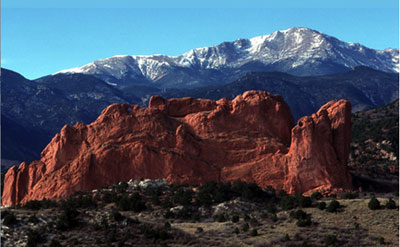
The Colorado Springs Regional Business Alliance, et al., will host a business briefing, April 2, on the #COWaterPlan

pikespeak

From The Colorado Springs Business Journal (Marija B. Vader):

The Colorado Springs Regional Business Alliance, Accelerate Colorado and the Colorado Competitive Council will host a business briefing on the governor’s statewide water plan.

The goal is to help finalize a new set of statewide business community water policy principles that address the business and economic development of Colorado.

The briefing takes place from 8-9:30 a.m. Wednesday, April 2, at the Antlers Hilton, 4 S. Cascade Ave. The briefing is free, but pre-registration is required. Breakfast buffet is free.

To register online, click on: http://web.coloradospringsbusinessalliance.com/events/Water-Policy-Briefing-to-the-Business-Community-1848/details. For information, call 884-2832.

More Colorado Water Plan coverage here.

‘Variability will drive us crazy and keep us humble’ — Nolan Doesken

Nolan Doesken -- Colorado Water Foundation for Water Education President's Award Presentation 2011
Nolan Doesken — Colorado Water Foundation for Water Education President’s Award Presentation 2011

From The Valley Courier (Ruth Heide):

“Nothing new under the sun” was pretty much the message delivered by State Climatologist Nolan Doesken yesterday during a gathering of area water leaders. Although winters have tended to be warmer, dry years more plentiful and snowfall melting off sooner in recent years, the major factors that determine the Rio Grande Basin’s climate have not changed, Doesken explained.

Colorado is still the highest elevation state in the union; it still remains in a mid-latitude location between the pole and the equator; the state is still interior continental, not any closer to an ocean than it ever was; complex mountain topography remains; and solar energy is still constant, with hundreds of sunny days a year.

In a state that boasts 300 days or more of sunshine a year, the Rio Grande Basin, which encompasses the San Luis Valley, is the sunniest part of the state, Doesken reminded the audience of the Rio Grande Roundtable group on Tuesday.

“Most of the main drivers of our climate are not changing ,” Doesken said. “Our high elevation isn’t changing, our mid-latitude location isn’t changing “”

He added, “It does appear over time there’s been a bit of a warming trend in much of the state, but down here it’s mixed signals.” He said summer days in Alamosa have been distinctly on the hot side in recent years, and when Alamosa is 90 degrees, that generally means the entire state is pretty warm.

However, Doesken said the weather station in Del Norte has recorded a colder trend, which might be attributable to a change in the weather station’s location itself.

Of the weather data available for the Valley, “Most locations show a modest upward trend in temperature,” he said.

“Precipitation, on the other hand, is all over the place.”

He said there is no discernable upward trend in precipitation. This basin’s biggest climate indicators are found within the basin itself, Doesken explained.

“It’s a local effect.”

He said if the data from 1925 to the present were examined, for example, temperature changes might be as easy to determine here as answering the question, “When did it snow last?”

Regarding Valley temperatures , residents have learned to dress in layers, because the temperatures can vary so much, even in a single day, Doesken said.

“You are the champion of diurnal range fluctuations, day to night,” he said. The Valley can experience a 50-degree temperature swing from morning to night on a routine basis. It can be 20 degrees in the morning and 70 in the afternoon.

“That’s the climate in which you live,” Doesken said.

“In the Midwest, Mississippi Valley, going north means colder, south means warmer, but in the mountains it’s local topography that drives temperatures.”

The variability of the Valley’s weather is what remains constant, or as Doesken put it, “Variability will drive us crazy and keep us humble.”

Sometimes there will be an apparent cycle of weather, while at other times it will appear random. One constant is the spring wind that the Valley experiences from March through June.

“You are in your fourmonth wind season right now, like it or not,” he said.

Regarding precipitation, this basin is dry, like it or not. Doesken said because of the basin’s location, it generally receives less than 8 inches precipitation annually , which is the climate area residents know and love.

“You love it as long as the mountains around you are full of snow. They are not always.”

The bulk of the state’s legitimate surface water comes from those mountain snows, but that can vary as much as the temperatures. Because of the moisture that came into the state last fall the majority of it in one week Denver wound up experiencing its wettest year, Doesken said. Doesken reminded the group of the fact most were painfully aware, that the Rio Grande Basin has not enjoyed a big snowpack year for a while.

“Drought happens. It keeps happening,” Doesken said. He said there have been more years with less snowpack by April 1, “but there’s a lot of noise in there.”

He explained how important it is to keep data and said the manual snow course collection sites are extremely valuable. He has been a proponent of maintaining those sites in the state.

He has served in the Colorado Climate Center since 1977 and has been the state climatologist since 2006.

“We are climate accountants ,” he said. The center monitors all aspects of climate in the state from humidity and temperature to precipitation and evaporation . Doesken said the first government weather state in Colorado was located at Fort Massachusetts in the San Luis Valley in 1855, and by 1890 there was a statewide weather reporting network that included sites like Monte Vista and Platoro.

That type of information is still valuable, and Doesken encouraged local residents to become part of the Community Collaborative Rain, Hail & Snow (CoCoRaHS) network that depends on folks in places like Villa Grove to provide weather information to the state climate center. Those interested in becoming a part of CoCoRaHS are welcome to attend an open house from 2-7 p.m. on Friday, March 21, at the Colorado Potato Administrative Committee office , 1305 Park Ave., Monte Vista.

More IBCC — basin roundtables coverage here.

‘Rivers do much more than keep fish wet’ — Jo Evans/Ken Neubecker #COWaterPlan

Saguache Creek
Saguache Creek

From The Pueblo Chieftain (Jo Evans/Ken Neubecker):

Colorado faces a future with more people and less water. A state water plan is a good idea, but we must plan carefully to get the future we want. We need to include rivers as rivers, not merely as engineered conduits bringing water to our faucets and farms.

Rivers do much more than keep fish wet. They are the life and heart of entire ecosystems. Ninety percent of Colorado’s wildlife depend on riparian habitat to survive. Riparian areas and rivers make up less than 5 percent of our total land area, but they are the most complex and important habitat we have. They are incredibly valuable economically as well as environmentally. According to the U.S. Census Bureau, Coloradoans spent $10 billion on wildlife related recreation in 2011 alone. Riparian areas and rivers statewide made that possible.

Most Colorado rivers have no prescribed minimum flows, and a healthy riparian zone needs more than that. When we take water out of a stream things change.

Riparian areas and the gravel aquifers they depend on dry out. Recent studies have shown that diverting more than 20 percent of a stream’s native flow can cause damage, and many streams in Colorado have far more water than that removed. Most water used will eventually return to the stream from which it was taken, even if many miles downstream. Water taken out of its original basin for use in another basin is gone forever. Trans-basin diversions impact the entire stream and riparian ecosystem, not just the flow of the stream.

When we add new water to a stream on this side of the Continental Divide, typically the stream becomes wider, deeper and faster. The stream may no longer fit the environment under which it was formed, impacting everything that depended on that stream habitat. This not only impacts wildlife but can make the natural drainage less able to handle floods such as we had last year.

We do pretty well at determining how much water we will need for our faucets and fields. We identify how much we need, where and when, and then look for ways to provide that quantity of water. The draft Colorado Water Plan lists specific municipal, industrial and agricultural needs for each of the major river basins and the possible projects to supply those necessities. But we need balance. Where is a comparable environmental needs list?

Specific environmental water needs are still mostly unknown. Environmental uses are usually described as “attributes” to be “enhanced” often by new storage and diversion projects. These “enhancements” may or may not be enough to maintain a healthy stream and riparian environment. If we are to meet our environmental water needs, we must identify and quantify those needs.

When we know how much water we need to repair and maintain our rivers, we can truly plan how to meet these needs. Until and unless we do, the state water plan is only half a plan and doesn’t provide for all the values expressed in the governor’s executive order calling for the plan. Not by a long shot.

Jo Evans is president of the Audubon Colorado Council. Ken Neubecker is with the Audubon Colorado Council Water Task Force.

Arkansas River Basin Water Forum, April 23-24 #COWaterPlan

Arkansas River Basin -- Graphic via the Colorado Geological Survey
Arkansas River Basin — Graphic via the Colorado Geological Survey

From the La Junta Tribune-Democrat (Pam Denahy):

The annual Forum will be held on April 23-24, 2014. The Forum will be celebrating its 20th anniversary in 2014. We will be taking the Forum down the river this year to La Junta, home of the nearby Bent’s Old Fort National Historic Site.

Additional activities to enjoy in the Otero County area can be found at the City of La Junta website: http://www.ci.la-junta.co.us and the Visit La Junta website: http://www.visitlajunta.net.

Please check out the website for details on lodging and registration: http://www.arbwf.org. Early registration ($45) may be done online at our website or by mail-in. Exhibitors are also welcome at no additional cost.

Given that the original purpose of the Forum was to encourage positive dialog about important Ark Basin issues, it is fitting that this year; the focus will be on Colorado’s Water Plan and the attendant Arkansas Basin Implementation Plan that will be of paramount importance in the coming year. The Forum will be hosting a panel with representatives from basins adjoining the Arkansas, along with James Eklund (director of the CWCB) and John Stulp (special adviser to the governor for Water Issues). The panelists will provide their basin specific perspectives on Colorado’s Water Plan. The program also includes two panels that will discuss the importance and the development of the Arkansas Basin Implementation Plan. Your feedback will be a very important component of the Basin Implementation Plan. This year the Forum has partnered with the Arkansas Basin Roundtable to provide an avenue for you to provide your input to the Basin Plan through an onsite clicker survey. You won’t want to miss this opportunity!

On the Forum’s second day, additional panel discussions will be focused on the Value and Importance of Agriculture, Invasive Species, Arkansas Basin Weather Update, and Agricultural Water Use. Based on the success of our experience with the “Community Workshop” on water education, we will be repeating this event once again the evening before the main Forum, on Tuesday, April 22, 2014 from 6 to 9 p.m. This year’s chairman, Dr. Lorenz Sutherland, and the planning committee have done a fabulous job and it’s shaping up to be a great event.

General questions may be directed to the Peaks & Plains CSU Extension Office at(719) 545-2045 or to Jean Van Pelt, Southeastern Colorado Water Conservancy District at (719) 948-2400.

What: Arkansas River Basin Water Forum

Where: Otero Junior College Student Center

When: April 23-24

Cost: $45 preregistration

Contact: CSU Extension Office, 545-2045 or Southeastern Colorado Water Conservancy District, 948-2400.

More Arkansas River Basin coverage here and here.

More drought planning needed by communities in the Upper #ColoradoRiver Basin #COWaterPlan

Colorado River between Granby and Hot Sulphur Springs

From the Glenwood Springs Post Independent (Hannah Holm):

According to Louis Meyer of the consulting firm SGM, most water providers that serve households in communities from the Colorado River’s headwaters in Grand and Summit counties on down to Grand Junction have done a pretty good job of planning for the range of climate conditions that have been seen over the past several decades.

However, most are not prepared for the more extreme droughts that both climate change models and ancient tree ring studies indicate could occur in the future.

SGM is working with the Colorado Basin Roundtable to assess water needs and potential projects for a “Basin Implementation Plan” that will help inform the Colorado Water Plan that Gov. John Hickenlooper wants drafted by the end of this year. The Colorado Basin Roundtable, like its counterparts in other major river basins around the state, is a group of water managers and stakeholders charged by the state legislature with doing “bottom-up” water planning. Meyer and his team have been interviewing domestic water providers throughout the river basin to determine what their needs are and what kinds of projects would help them be more prepared for the future.

One factor making communities vulnerable to prolonged or extreme droughts is the fact that many lack sufficient reservoir storage upstream from their water treatment plants. These communities rely largely on water in streams to serve their customers while releasing water from reservoirs in other drainages to satisfy any downstream senior calls on the river. This is more of an issue in headwaters communities in the upper Fraser, Eagle, Blue and Roaring Fork river watersheds than in the Grand Junction area, where water providers enjoy access to reservoirs that are physically, as well as legally, upstream…

Increasing reservoir storage, promoting conservation and addressing forest health all require money, and increasing storage requires permits as well. The small size of many water providers in the basin limits their capacity to take on big projects, so Meyer and his team have suggested more regional cooperation may make projects to increase the reliability of community water supplies more feasible.

Water customers also have a role to play in determining the capacity of their water utility to plan and prepare for the future. If customers are not willing to help pay the necessary costs through their rates, it limits a utility’s capacity to act. Water providers are not only faced with providing safe drinking water to customers at prices that are often less than 1/10th of one penny per gallon, but now customers are much more aware of water-demand impacts on local stream health.

San Luis Valley: #COWaterPlan public meetings start March 17

More Colorado Water Plan coverage here/a>.

Arkansas Basin Roundtable recap: Area #COWaterPlan meetings on tap

Colorado Water Plan website screen shot November 1, 2013

From The Pueblo Chieftain (Chris Woodka):

The Arkansas Basin Roundtable Wednesday reviewed its progress toward creating its part of the upcoming state water plan, planning a series of meetings to make sure all voices are heard.

The meetings will be staged in areas throughout the region in order to assure water needs that have not surfaced in the past nine years of meetings are included in the Arkansas Basin implementation plan.

“As we prepared for these meetings? Are we going to get flak jackets?” Canon City farmer Manny Colon jokingly asked.

“Maybe combat gear,” replied interim Chairwoman Betty Konarski, who wore a hard hat to her inaugural meeting as head of the roundtable.

More Colorado Water Plan coverage here.

Roundtable Summit: No consensus yet on securing a new water supply for the looming gap #COWaterPlan

Colorado Water Plan website screen shot November 1, 2013

From The Pueblo Chieftain (Chris Woodka):

The most productive use of water may be drinking pitchers of it while having discussions about the state’s future. That could be the lesson of last week’s state roundtable summit, which brought together about 300 people ranging from state bureaucrats to water lawyers; farmers to water utility managers; county commissioners to fish lovers.

Oh yes, and a current and former governor of the state. Gov. John Hickenlooper and former Gov. Bill Owens spoke briefly at the all-day meeting.

As they have for the past 10 years, they talked about the “gap,” but did little to increase the state’s supply. Back in 2004, that gap was solely the municipal gap that would occur as the state’s population doubles over 50 years. As time went on, the gap has grown to include water for agricultural, environmental and recreational purposes as well.

“What sometimes gets lost in the discussion is that the gap is today,” said Alan Hamel, a Colorado Water Conservation Board member from Pueblo. “So we have to have interim solutions to address that gap.”

The roundtables — nine of them formed in 2005 — have been all about interim solutions. They have directed millions of dollars toward projects and studies aimed at patching up water shortfalls.

The Interbasin Compact Committee formed at the same time to look at the harder question: Where do we find the water to serve 5 million new Coloradans?

This year, Hickenlooper has given the group a new focus, asking the IBCC and roundtables to contribute grass-roots thinking to a state water plan now being developed by the CWCB.

During a panel discussion, IBCC members shared conclusions from a decade of meetings that has led to a broad-brush attempt to plan for various scenarios.

Summarizing reports from each committee:

Conservation:

Cities need to make full use of water imported to the Front Range from the Western Slope. The trade-off will be the reduction of return flows, said Peter Nichols, a water attorney.

Environment and Recreation:

Doing the minimum to protect the environment won’t be enough, and the state should look for ways to improve it as well, said Melinda Kassen of Trout Unlimited.

Identified projects:

As much as 200,000 acre-feet of new water — 150,000 for the Front Range and 50,000 for the Western Slope — could be attained by projects already in the works, said Eric Kuhn, manager of the Colorado River Conservation District.

Storage:

Construction of new storage and better timing of releases from existing storage will improve water supply, said Bruce Whitehead, a former state senator.

Alternative transfers:

New methods of agricultural transfers need to be tested to avoid dry-up of farmland. Without new methods, 20-40 percent of irrigated acres could disappear by 2050, said Eric Wilkinson, executive director of the Northern Colorado Water Conservancy District.

Compact issues:

Colorado has to be comfortable with the level of risk on the Colorado River in order to develop its full potential, said John Mc-Clow a CWCB member from Gunnison.

New supply:

“New supply has been the elephant wandering around in the room. We’ve been talking over it, around it and under it,” Wilkinson said.

“Sometimes the elephant isn’t all that polite,” McClow replied. “We often feel like we’re under it.

More Colorado Water Plan coverage here.

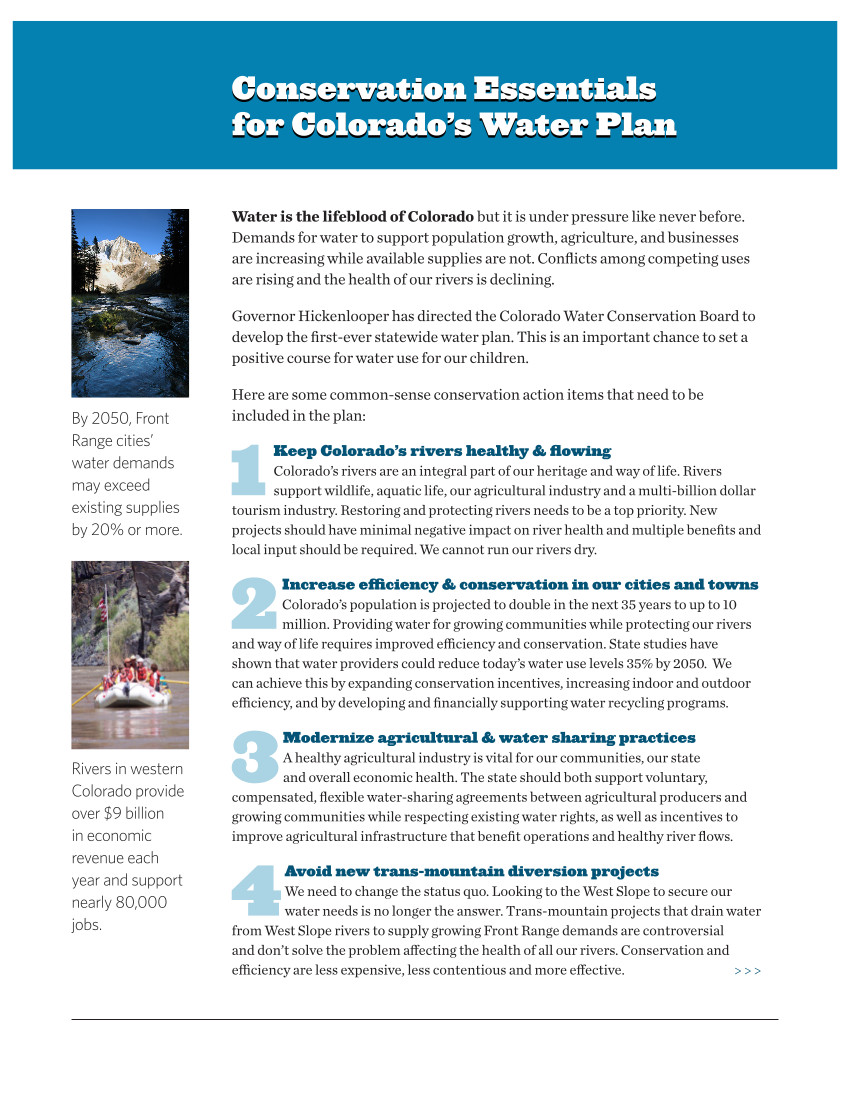
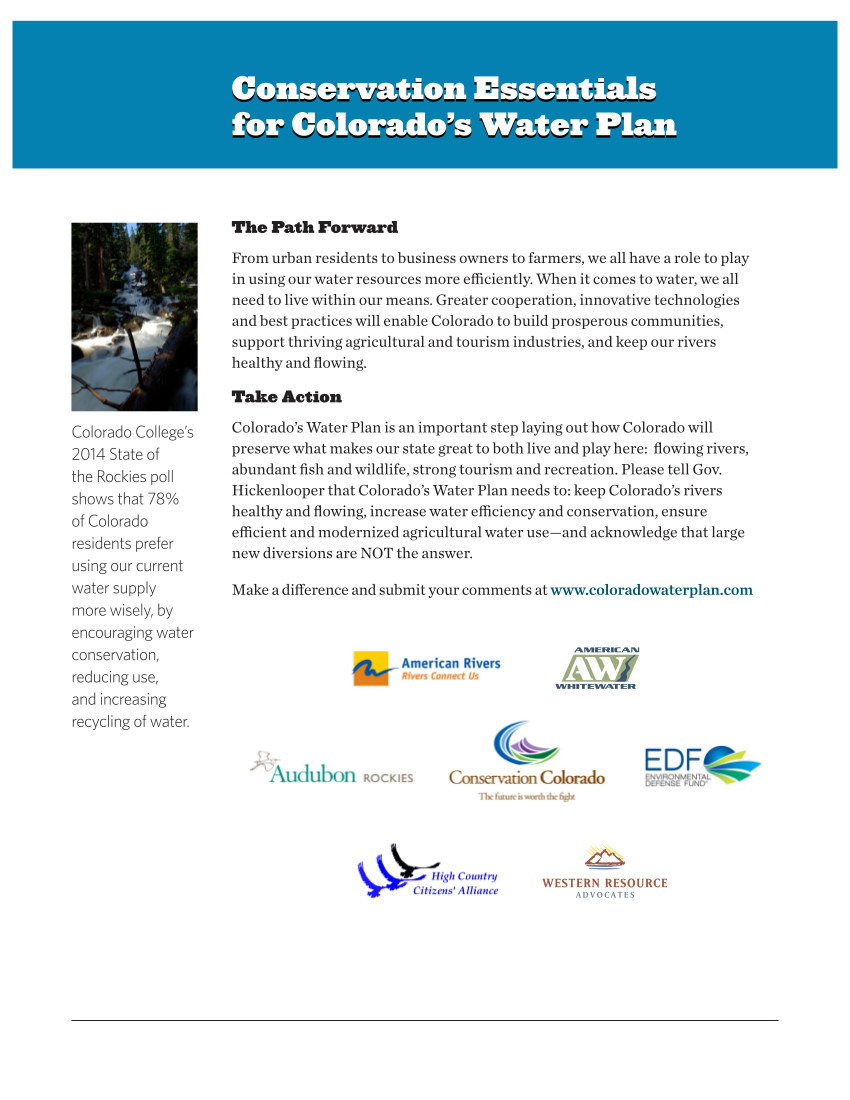
Conservation Essentials for Colorado’s Water Plan – Conservation Colorado #COWaterPlan

Update: I failed to post the second page yesterday.

Click on the graphic to read full size. Thanks to Theresa M. Conley (Conservation Colorado) for the “Essentials.”

Colorado Water Plan Essentials FINAL_030414 page 1

Colorado Water Plan Essentials FINAL_030414 page 2

Here’s hoping that deep snow and short memories don’t add up to problems for Colorado’s water future — Scott Willoughby #COWaterPlan

Colorado Water Plan website screen shot November 1, 2013

From The Denver Post (Scott Willoughby):

Here’s hoping that deep snow and short memories don’t add up to problems for Colorado’s water future. With the March 1 mountain snowpack measuring at 116 percent of average and 161 percent compared with last year, it’s easy to take the lifeblood of the state’s outdoor recreation industry for granted.

Hopefully that won’t be the case between now and March 19, when the Colorado Water Conservation Board (CWCB) is scheduled to report on the public’s expectations for the Colorado Water Plan initiated by Gov. John Hickenlooper last year in an attempt to address the anticipated gap between statewide water supply and demand. With a directive from the governor that “Colorado’s water plan must reflect what our water values are,” time is running short for Coloradans to define those values through public input.

Just don’t forget the two-year drought the state has been dealing with up until now.

With a gloomy forecast predicting water demands outpacing available supplies as soon as 2022, everything from agriculture to angling could be threatened even in a normal water year, along with several other aspects of Colorado’s multibillion-dollar recreation industry that relies on water from healthy rivers and streams. But it’s not just food prices and fishing that hang in the balance, it’s our very identity, the unique traits that define Colorado and many Coloradans.

Above and beyond the basic necessities, water has long defined Colorado’s character, be it an Arkansas River rafting trip or the icy snowmelt portrayed in a Coors beer commercial. Our streams support wildlife for watching, hunting and fishing, entice campers and kayakers and provide the landscapes that inspire hikers and bikers. They provide the water for snowmaking at ski areas and built the halfpipe that hosted the U.S. Open snowboarding championships at Vail this weekend.

Those are just a few examples of what the world has come to think of when it hears the name Colorado. And coupled with the executive order that the Colorado Water Plan needs to focus on “a strong environment that includes healthy watersheds, rivers and streams, and wildlife,” they should provide incentive enough to ensure measures are included in the plan that protect and restore flowing rivers and the tourism and recreation opportunities they provide.

Just in case they don’t, though, Colorado’s outdoors community of boaters, fishermen, hunters, skiers, campers, backpackers, bikers, bird-watchers and the rest should take this opportunity to further the incentive by making their collective voice heard.

The CWCB has established a process for receiving formal input to Colorado’s Water Plan, including a process for specific stakeholder groups such as those vested in “Environment and Recreation.” Information can be found at http://coloradowaterplan.com and e-mails sent to cowaterplan@state.co.us.

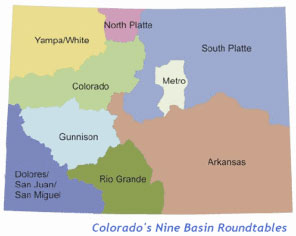
The most effective route may be through submitting input to specific “basin roundtables” established to present perspectives and values of citizens living in each of the state’s eight major river basins and the Denver metropolitan area. The nine roundtables are in the process of developing Basin Implementation Plans that will identify solutions to meet water needs inside the various basins and statewide. A specific page dedicated to the roundtable process has been established on the CWCB website, cwcb.state.co.us, under the “Water Management” tab.

The final Colorado Water Plan incorporating the individual basin plans will be completed by December 2015.

From The Durango Herald (Joe Hanel):

Hickenlooper and former Gov. Bill Owens gave a pep talk to water experts at a statewide summit Thursday to advance work on the state water plan, which is supposed to lay out a strategy for preserving the environment, promoting agriculture and allowing the population to double.

During Owens’ tenure, the state created roundtables in each major river basin to begin thinking about a statewide consensus on water. Since then, the groups have had some 780 meetings around the state, Hickenlooper said.

“This really is the right way to go about things, to go down in the grass roots and make sure everyone’s voice is heard,” he said…

…Hickenlooper said Colorado’s water plan, and similar plans in other Western states, could form the basis of a regional plan for the country’s dry Western states. He and other governors promoted the idea to Obama and Agriculture Secretary Tom Vilsack in a meeting at the White House two weeks ago, he said.

Obama and Vilsack said they liked the idea, and they would pay for the logistics around developing the plan, but they would let states take the lead.

“There were several senior Washington officials in that room, and they said it was the first time they’d seen the governors come in organized enough that we could hold our own against the federal agencies,” Hickenlooper said…

Weld County Commissioner Sean Conway reminded Hickenlooper that Republican presidential candidate John McCain of Arizona caused a ruckus during the 2008 campaign when he suggested the Colorado River Compact needed to be renegotiated.

“We obviously would fight that tooth and nail,” Hickenlooper said. “But the best way to avoid that … is to have a relationship with the other states, and we can put ourselves in their shoes and have them put themselves in our shoes.”

[Sen. Ellen Roberts] said she is worried about Colorado’s negotiating strength if the Western states start working on a regional water agreement.

“I’m not sure I’m on board with that. I think it’s a very ambitious task just to get a state water plan,” Roberts said.

More Colorado Water Plan coverage here.
Arkansas Basin RT Gary Barber steps down as chair #COWaterPlan

Basin roundtable boundaries

From The Pueblo Chieftain (Chris Woodka):

Gary Barber, who has chaired the Arkansas Basin Roundtable since 2007, is stepping down in order to concentrate on finishing the group’s contribution to a state water plan.

“I’ve always tried to do what’s best for the roundtable and for the basin,” Barber said.

Barber has been working on the Arkansas Basin plan that will be part of the state water plan, which comes out in draft form later this year. As chairman, Barber prepared many of the documents that will be used in the plan, but he is now a paid consultant.

“I needed to devote all of my time to the plan,” Barber said.

Vice chairman Betty Karnoski, a Monument real estate broker, will act as chairman of the roundtable.

Barber has been a central fixture in Arkansas Basin water issues for more than a decade.

As an agent for the El Paso County Water Authority, he contributed to the Colorado Water Conservation Board’s understanding of the Arkansas Valley’s municipal water gap in the 2004 Statewide Water Supply Initiative. He was a frequent critic of the Southern Delivery System, saying it did not have a wide enough regional focus, and an advocate for groundwater storage in El Paso County. Barber became a charter member of the roundtable in 2005, helping to organize the group from the beginning. He served as secretary until Alan Hamel stepped down as chairman in 2007.

In 2008, while working for El Paso County water interests, he made offers to buy farms for their water on the Bessemer Ditch, triggering a successful counteroffer by the Pueblo Board of Water Works.

In 2009, he helped to write state legislation that formed the Fountain Creek Watershed Flood Control and Greenway District after three years of meeting with the Fountain Creek Vision Task Force. Within a year, he was chosen as its first executive director.

In 2011, he went to work for Two Rivers Water Co., which has bought Pueblo County farms, and tried to expand its scope to include municipal consulting in El Paso County.

Last year, he joined WestWater Research, a Western U.S. water marketing firm, and secured a roundtable contract. He retained his position as chairman of the roundtable after an open discussion of whether the contract represented a conflict of interest.

Despite, or maybe because of, his forays into valley water activities, Barber commanded respect from other roundtable members because of his ability to sort through differences.

He nearly always ends discussions of complicated water issues with the statement: “We have consensus by the absence of dissension.”

He often interjects humor into those conversations as well. For instance, referring to Aurora’s water buys in the Arkansas Valley, he once said: “Aurora is the brother-in-law you wish your sister had never married. But he does the dishes at Thanksgiving, so you learn to live with him.”

More IBCC — basin roundtables coverage here.

Basin Roundtable Summit recap

Basin roundtable boundaries

From The Pueblo Chieftain (Chris Woodka):

Colorado must work with neighboring states to develop a Western water plan, Gov. John Hickenlooper said Thursday.

“We don’t want the federal government coming in and telling us what to do,” Hickenlooper told the state basin roundtable summit.

Hickenlooper, a Democrat, and former Gov. Bill Owens, a Republican, spoke to about 300 roundtable members and other members of the state’s water community during an all-day meeting to discuss water issues.

The roundtables were formed by the Legislature in 2005, when Owens was governor. They were the brainchild of then-Director of Natural Resources Russell George.

Hickenlooper said the roundtables are providing grass-roots direction for a state water plan he has tasked the Colorado Water Conservation Board to draft by the end of this year.

“Hundreds of people have been engaged in the roundtable process,” Hickenlooper said. “We go down into the grass roots and hear those voices and let the ideas percolate up.”

Action on the water plan is needed quickly both within the state to deal with drought, floods and wildfires the state has witnessed in the last two years, he added. Climate change and compact obligations of all basins within Colorado dictate that Colorado work with other Western states to protect water supply in the future, Hickenlooper said.

“We need to be ready in the future to build relationships in order to reach the compromises we may have to reach later,” he said.

For his part, Owens stressed the need to develop more storage in Colorado.

“A lot of problems revolve around the lack of storage,” Owens said. “Through new laws, there is an emphasis on conservation, but storage has to be a key component.”

More IBCC — basin roundtables coverage here. More HB1177 coverage here.

March Roundtable Summit today

Basin roundtable boundaries

I’m attending the Roundtable Summit today. I intend to live-Tweet the goings on @CoyoteGulch.

Ask Questions About Colorado’s Water Plan #COWaterPlan

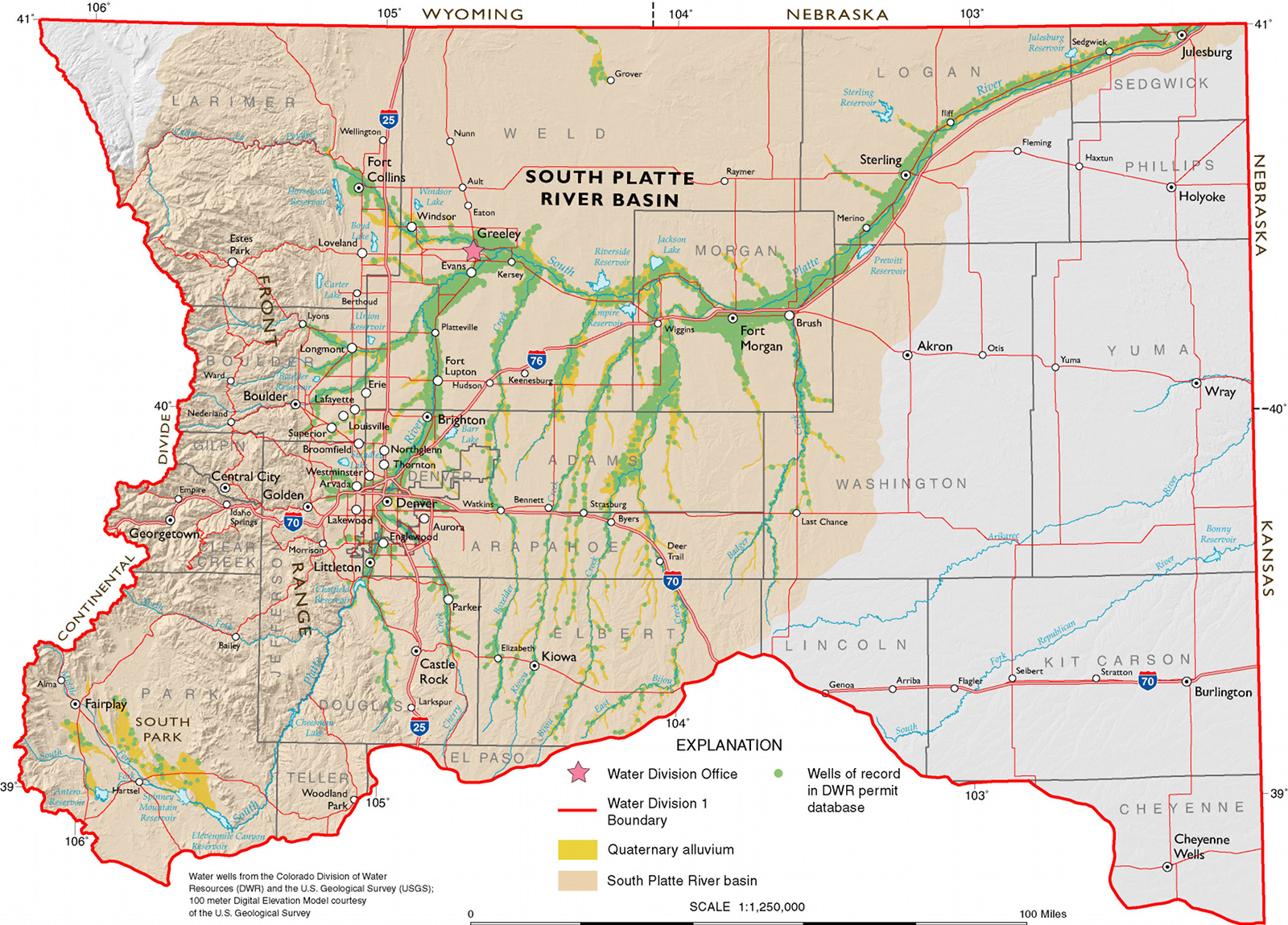
Public meetings for the South Platte Basin implementation plan #COWaterPlan

South Platte River Basin via the Colorado Geological Survey

From The Greeley Tribune;

The South Platte Roundtable is hosting a series of input and information sessions around the region during the upcoming weeks, as it continues piecing together its comprehensive, long-term water plan for northeastern Colorado.

Each of the basins in Colorado is putting together individual water plans, which will help make up the collective Colorado Water Plan — an effort put in motion by Gov. John Hickenlooper.

All meetings will be from 3:30-7 p.m., will include an overview of the South Platte River Basin’s water supplies and needs, and will also feature question-and-answer sessions and information displays.

The remaining meetings will take place on:

» Wednesday at the Southwest Weld County Complex, 4209 Weld County Road 24 1⁄2 in Longmont.

» March 19 at the Fair Barn, 880 Bogue St. in Fairplay.

» April 10 in Yuma (held in conjunction with the Republican River Water Conservancy District’s regular quarterly meeting).

For more information, go to SouthPlatteBIP@hdrinc.com or http://cowaterplan@state.co.us.

From PublicNewsService.org (Stephanie Carroll Carson):

“Just add water.” Simple instructions on the back of your muffin mix, but coming up with the Colorado Water Plan dictated by the Governor last year is proving to be much more complicated. Currently, regional meetings are taking place to put together a plan that will work for the entire state, but Eagle County Commissioner Kathy Chandler-Henry said she is concerned about the competing needs of the Front Range and the mountain communities.

“The concern is that the water is on the western slope and the people are on the eastern slope,” she pointed out. “While it’s always a great idea to collaborate and work together, we always are a little protective of the water that we need to keep on the western slope.”

According to the Northwest Council of Governments, people incorrectly make several assumptions about water: that population growth can’t be contained, that there’s plenty of water on the west slope for the Front Range, and that new water projects are needed to save agricultural interests.

The Colorado Water Plan now in the works is the first of its kind and is to be complete by 2015. It will then influence water decisions for the foreseeable future.

Chandler-Henry and others also question predictions that Colorado’s population is going to double by 2050.

“We don’t think that’s necessarily true,” she said. “We’ve has some big changes with the recession recently that have slowed down population growth, and would like to see more land planning, community planning be a part of this whole water discussion.”

Colorado water allocation has historically been guided by local governments. Supporters of Colorado’s Water Plan say its goal is to get those communities to work more cohesively and streamline efforts to provide adequate water while not compromising the environment.

Link to more information on the Colorado Water Plan at http://NWCCOG.org and the relevant executive order at http://1.usa.gov/NCQbWD.

More Colorado Water Plan coverage here.
Rio Grande Basin Roundtable: The Rio Grande Basin Plan is essential to the Valley’s future #COWaterPlan

Pond on the Garcia Ranch via Rio Grande Headwaters Land Trust

From the Rio Grande Basin Roundtable via the Valley Courier:

The last decade has brought many changes to Colorado’s water supply outlook. Even with the recent economic recession, the state will continue to experience significant population growth. Other pressures on Colorado’s water supply include: severe drought, meeting multiple needs (e.g., municipal, agricultural, environmental , and recreational) with existing resources, and agricultural impacts due to water shortages, urbanization and transfers to new uses.

The state’s river systems generate an average 16 million acre feet (AF) of renewable water each year, however two-thirds of this water is obligated to leave the state under various interstate compacts and agreements. In addition, of the 16 million AF, about 80 percent of the water is on the Western Slope, while approximately 80 percent of the state’s population resides on the Eastern Slope. Most of the irrigated agriculture lands are on the Eastern Slope as well. Colorado’s dry climate creates many challenges for water users, who frequently move water vast distances from its source to its area of use.

These types of challenges made the water law structure that is common in the eastern United States, (riparian law) unrealistic. Riparian law says that only those with land adjoining the stream have a right to use the stream water. Colorado adopted a different system – prior appropriation . This system is commonly summed up as “first in time, first in right.” This means that those with senior (older) rights can begin to use water before junior (newer) rights holders in times of water shortages. (CFWE, 2014)

Colorado needed a clear classification of law to recognize and protect water rights, with consistent administration and enforcement, yet with the flexibility to allow those rights to be transferred, sold, or exchanged. The Colorado Doctrine of Prior Appropriation is a set of laws governing water use and land ownership adopted by the people of Colorado starting in the 1860s.

The four major principles are: All surface and groundwater in Colorado is a public resource for beneficial use by public agencies, private persons, and entities; A water right is a right to use a portion of the public’s water resources; Water rights owners may build facilities on the lands of others to divert, extract, or move water from a stream or aquifer to its place of use; and, Water rights owners may use streams and aquifers for the transportation and storage of surface water and groundwater to meet owners’ water supply needs.

Today’s water managers are tasked with solving the state’s water issues against overwhelming obstacles. This why the State Water Plan is so important. The plan will provide a framework for water managers moving forward. The plan will allow for wise and thoughtful water supply planning that addresses critical issue within each basin securing future water needs across the state. The plan must be done in a manner that considers all solutions and addresses the varied water needs of Colorado and its citizens.

The Rio Grande basin Roundtable has been tasked with preparing a multidimensional basin plan for the upper Rio Grande. Water management is an issue that touches every resident in the San Luis Valley, particularly as it pertains to aquifer sustainability.

The basin’s water is under continuous curtailment as it works to meet Compact compliance. This is why water users in the basin keep water inventory current and are taking steps to ensure reservoirs can store constructed volumes. The Rio Grande Basin Plan will provide a variety of tools that all water administrators can use to preserve the social, cultural and economic resilience of the Rio Grande Basin. As the Water Administration goals are formed the Rio Grande Basin Roundtable would like public input to be considered. The most effective methods for stakeholders to become involved is in one of three ways: 1) attend the Rio Grande Basin Roundtable monthly meetings (These meeting are held the second Tuesday of each month at the San Luis Valley Water Conservancy District office at 623 Fourth Street in Alamosa, Colorado.) or; 2) send your comments directly to us online at www. riograndewaterplan.webs. com and; 3) attend any one of the five BIP subcommittee meetings that can be found on the BIP website. The lead consultant and local liaison from DiNatale Water Consultants is Tom Spezze, Tom can be contacted at tom@ dinatalewater.comThis is the fourth article in the series from the Rio Grande Basin Roundtable, regarding the implementation of the Basin Water Plan. VALLEY The last decade has brought many changes to Colorado’s water supply outlook. Even with the recent economic recession, the state will continue to experience significant population growth. Other pressures on Colorado’s water supply include: severe drought, meeting multiple needs (e.g., municipal, agricultural, environmental , and recreational) with existing resources, and agricultural impacts due to water shortages, urbanization and transfers to new uses.

The state’s river systems generate an average 16 million acre feet (AF) of renewable water each year, however two-thirds of this water is obligated to leave the state under various interstate compacts and agreements. In addition, of the 16 million AF, about 80 percent of the water is on the Western Slope, while approximately 80 percent of the state’s population resides on the Eastern Slope. Most of the irrigated agriculture lands are on the Eastern Slope as well. Colorado’s dry climate creates many challenges for water users, who frequently move water vast distances from its source to its area of use.

These types of challenges made the water law structure that is common in the eastern United States, (riparian law) unrealistic. Riparian law says that only those with land adjoining the stream have a right to use the stream water. Colorado adopted a different system – prior appropriation . This system is commonly summed up as “first in time, first in right.” This means that those with senior (older) rights can begin to use water before junior (newer) rights holders in times of water shortages. (CFWE, 2014)

Colorado needed a clear classification of law to recognize and protect water rights, with consistent administration and enforcement, yet with the flexibility to allow those rights to be transferred, sold, or exchanged. The Colorado Doctrine of Prior Appropriation is a set of laws governing water use and land ownership adopted by the people of Colorado starting in the 1860s.

The four major principles are: All surface and groundwater in Colorado is a public resource for beneficial use by public agencies, private persons, and entities; A water right is a right to use a portion of the public’s water resources; Water rights owners may build facilities on the lands of others to divert, extract, or move water from a stream or aquifer to its place of use; and, Water rights owners may use streams and aquifers for the transportation and storage of surface water and groundwater to meet owners’ water supply needs.

Today’s water managers are tasked with solving the state’s water issues against overwhelming obstacles. This why the State Water Plan is so important. The plan will provide a framework for water managers moving forward. The plan will allow for wise and thoughtful water supply planning that addresses critical issue within each basin securing future water needs across the state. The plan must be done in a manner that considers all solutions and addresses the varied water needs of Colorado and its citizens.

The Rio Grande basin Roundtable has been tasked with preparing a multidimensional basin plan for the upper Rio Grande. Water management is an issue that touches every resident in the San Luis Valley, particularly as it pertains to aquifer sustainability.

The basin’s water is under continuous curtailment as it works to meet Compact compliance. This is why water users in the basin keep water inventory current and are taking steps to ensure reservoirs can store constructed volumes. The Rio Grande Basin Plan will provide a variety of tools that all water administrators can use to preserve the social, cultural and economic resilience of the Rio Grande Basin. As the Water Administration goals are formed the Rio Grande Basin Roundtable would like public input to be considered. The most effective methods for stakeholders to become involved is in one of three ways: 1) attend the Rio Grande Basin Roundtable monthly meetings (These meeting are held the second Tuesday of each month at the San Luis Valley Water Conservancy District office at 623 Fourth Street in Alamosa, Colorado.) or; 2) send your comments directly to us online at http://www. riograndewaterplan.webs. com and; 3) attend any one of the five BIP subcommittee meetings that can be found on the BIP website. The lead consultant and local liaison from DiNatale Water Consultants is Tom Spezze, Tom can be contacted at tom@dinatalewater.com

More Colorado Water Plan coverage here.
West slope ag producers, feeling pressure, are lining up to provide input to the #COWaterPlan #ColoradoRiver

Colorado Water Plan website screen shot November 1, 2013

From the Glenwood Springs Post Independent (Kathleen Curry):

For several months now a group of agricultural producers on the Colorado River have been meeting to develop their section of the pending Colorado Water Plan. Whether you are a wine producer in Mesa County or a cattle producer in Grand County, water is the key to success and survival. And even though the snowpack is looking pretty good at the moment, there isn’t enough water to meet all of today’s needs let alone new future demands.

Agricultural water users are feeling pressure from a number of directions. Looking upstream, they see a growing population on the Front Range of Colorado. Water users east of the continental divide have not minced words regarding their desire to transfer additional water from West Slope agricultural users to the Front Range. Looking downstream, agricultural water users on the Colorado watch the declining levels of Lake Powell and Lake Mead and speculate as to how much of the water they are currently relying on to raise their crops will have to be bypassed to meet Colorado’s compact obligations. And last, but not least, population numbers within the Colorado Basin are on the rise, and pressure to sell agricultural water for municipal use is ever-present.

The agricultural section of the Colorado River “Basin Implementation Plan,” developed by the Colorado Basin Roundtable with help from the consulting firm SGM, will be incorporated into the statewide Colorado Water Plan that Governor Hickenlooper is seeking to finalize by year’s end. The Colorado Basin Roundtable, like its counterparts in other major river basins around the state, is a group of water managers and stakeholders charged by the state legislature with doing “bottom-up” water planning. SGM is working with agricultural water users throughout the river basin to determine what their needs are and what kinds of projects and methods would help them be more prepared for the future.

A number of themes have emerged during the roundtable discussions to date. These include a desire to address the existing shortage of water supply available to agricultural users, consensus by all that additional transmountain diversions would harm agricultural production, a desire to preserve the right of an individual landowner to do what he or she wants with their property and water rights, and general agreement that improved agricultural efficiencies would have limited water supply benefits in the basin. The discussion participants have also concluded that administration of the Colorado River Compact due to a failure to meet downstream obligations would have a negative impact on the viability of long-term agricultural production in the basin.

The Colorado Basin Implementation Plan agricultural discussion group will continue to meet in conjunction with the monthly meetings of the Colorado Basin Roundtable. Next on the agenda will be identifying individual projects and methods that could provide agricultural benefits in the Colorado Basin.

If you would like to join in on the conversation, we would love to hear from you. Meetings are held the third Monday of the month at noon at the Glenwood Springs Recreation Center. For more information, please feel free to contact Angie Fowler at SGM, AngieF@sgm-inc.com. To learn more about the Colorado Basin and statewide water planning processes, go to http://www.coloradobip.sgm-inc.com. You can also contribute your knowledge and opinions by taking a short survey a http://www.surveymonkey.com/s/ColoradoBasinAg.

More Colorado Water Plan coverage from the North Denver News:

Residents of the Denver metro area and northeast Colorado – including homeowners, farmers, ranchers, business owners, environmentalists and recreationalists interested in knowing more about Colorado’s water – are encouraged to attend any of four public information and input meetings to be held in March and April in Denver, Longmont, Fairplay and Yuma.

The South Platte Basin and Metro Roundtables, composed of diverse volunteers representing agricultural, municipal, recreational and industrial water users and environmental interests from the headwaters communities to the Nebraska state line, were created by the state legislature in 2005, along with seven other roundtables representing each of the state’s river basins. They are charged with determining how to meet Colorado’s significant water supply shortfalls anticipated by 2050. Since 2005, the basin roundtables have brought together more than 300 representatives of these interests to discuss water supply planning and other water issues.

The roundtables are currently working under an executive order issued by Governor John Hickenlooper in May 2013, requiring the Colorado Water Conservation Board to develop a Colorado Water Plan by December 2015. This statewide plan will detail how Colorado will manage its diverse water needs in the future. At a local level, the roundtables are developing Basin Implementation Plans outlining how to meet predicted water needs for all uses.

Chairs of both Roundtables emphasized that the South Platte Basin represents a critical piece of Colorado’s water future and are encouraging all interests to participate in the process.

“Finding the correct balance and tradeoffs of water uses is vital to ensuring a sufficient water supply in the future. To find that balance, everyone needs to work together,” said Sean Cronin, chair of the South Platte Basin Roundtable. “Whether you live in Fort Collins, Sterling, Denver, or Idaho Springs, there is a meeting taking place near you and we want the public to attend and be part of the process.”

[Mark] Koleber, chair of the Metro Roundtable, reinforced the importance of public participation. “We are developing the South Platte Basin’s plan now. The public’s thoughts and suggestions will be vital to the success of our plan and we are urging all to provide input.”

The meetings will be held from 4-6 p.m. on the dates and at the locations indicated below. Roundtable representatives will also be available starting at 3:30 p.m. until up to 7 p.m. for informal discussions. The meetings are free and open to the public. More information about the South Platte Basin Plan is available at http://www.southplattebasin.com.

More Colorado Water Plan coverage here.
Custer County Stockgrowers Association annual meeting recap #ColoradoRiver #COWaterPlan

organicdairycows

From The Wet Mountain Tribune (J.E. Ward):

One of the most significant issues addressed during the meeting surrounded water. It is a problem not only for the county, but the state as a whole.

“Water ownership, immunization and management are the key issues with the water problems,” Kattnig explained.

“For us, water is vital to our Valley and our industry. We know we will have to change, but it is incumbent upon us as landowners to be at the table as these decisions are being developed.”

Local water laws were developed for the mining industry here, and as industrial utilization of water declined, agriculture became the biggest user. Today, given the size of Custer County’s population and voting strength, Kattnig said that water policies can be changed. These issues affect not only Custer County and the Arkansas River Basin, but also the Colorado River, the Rio Grande and the Platte River basins.

“People in San Diego and Los Angeles have a voice in water in the Colorado River,” Kattnig said, “and indirectly there is potential impact for water in Custer County. These water laws were made through legislation, and can be changed with legislation.”[…]

Among the dignitaries in attendance were the president of the Colorado Cattlemen Association, Gene Manuello, and the Director of the Southeast Quarter and past CCA president David Mendenhall. Together they produced information concerning Senate Bill 17, which covers the use of agriculture water transfer to new municipal developments. This bill limits the percentage of water used for lawn landscaping and to promote xeriscaping.

More Arkansas River Basin coverage here.

Storage key to weathering prolonged drought? #COWaterPlan

From the Vail Daily (Hannah Holm):

According to Louis Meyer, of the consulting firm SGM, most water providers that serve households in communities from the Colorado River’s headwaters in Grand and Summit counties on down to Grand Junction have done a pretty good job of planning for the range of climate conditions that have been seen over the past several decades. However, most are not prepared for the more extreme droughts that both climate change models and ancient tree ring studies indicate could occur in the future.

SGM is working with the Colorado Basin Roundtable to assess water needs and potential projects for a Basin Implementation Plan that will help inform the Colorado Water Plan that Gov. John Hickenlooper wants drafted by the end of this year. The Colorado Basin Roundtable, like its counterparts in other major river basins around the state, is a group of water managers and stakeholders charged by the state legislature with doing “bottom-up” water planning. Meyer and his team have been interviewing domestic water providers throughout the river basin to determine what their needs are and what kinds of projects would help them be more prepared for the future.

One factor making communities vulnerable to prolonged or extreme droughts is the fact that many lack sufficient reservoir storage upstream from their water treatment plants. These communities rely largely on water in streams to serve their customers while releasing water from reservoirs in other drainages to satisfy any downstream senior calls on the river. This is more of an issue in headwaters communities in the upper Fraser, Eagle, Blue and Roaring Fork than in the Grand Junction area, where water providers enjoy access to reservoirs that are physically, as well as legally, upstream.

Today’s regulatory and permitting requirements for reservoirs have resulted in planning horizons which can take longer than 20 years. Permitting costs can exceed many millions of dollars with no assurance that reservoirs can even be permitted. Both in order to ease permitting and to respond to increasing competition for water between different user groups, Meyer argues that, “Reservoirs of the future must provide multiple benefits to provide water for safe drinking water, agricultural irrigation and water to provide in-stream flows to protect environmental and recreational needs.”[…]

Another challenge for water providers attempting to plan for the future is the wild card of population growth. This region is expected to grow at the fastest rate in the state, and much of that growth could occur outside of established municipalities. In unincorporated areas, water supplies tend to be less developed and secure. Increasing conservation is one way to reduce the impact of population growth, and many water providers have strong conservation programs, but there is a lack of consistency in these efforts across the basin…

Increasing reservoir storage, promoting conservation and addressing forest health all require money, and increasing storage requires permits as well. The small size of many water providers in the basin limits their capacity to take on big projects, so Meyer and his team have suggested more regional cooperation may make projects to increase the reliability of community water supplies more feasible.

Water customers also have a role to play in determining the capacity of their water utility to plan and prepare for the future. If customers are not willing to help pay the necessary costs through their rates, then it limits a utility’s capacity to act. Water providers are not only faced with providing safe drinking water to customers at prices that are often less than 1/10th of one penny per gallon, but now customers are much more aware of water demand impacts on local stream health.

More Colorado Water Plan coverage here.

Are you Involved in Colorado’s Water Future?

Eighteen Conservation Groups Give Gov. Hickenlooper Input on State Water Plan #COWaterPlan

Colorado Water Plan website screen shot November 1, 2013

Here’s the release from Earth Justice:

Today, eighteen Colorado conservation and citizen groups sent a letter to Governor John Hickenlooper with recommendations for the Colorado Water Plan. The local, regional, and statewide groups pointed out that the Governor’s Executive Order creating the Water Plan called for “Healthy Watersheds, Rivers and Streams, and Wildlife,” and asked the Governor to prioritize these values in the Plan…

The groups’ recommendations include three “actions” for the Plan to implement:

  • Focus on “Healthy Alternative Water Supplies” including conservation and other measures that are cheaper, faster, and easier to implement.
  • Do not support any new diversions from Colorado’s rivers.
  • Prioritize river restoration.
  • “This is the time to act,” said McCrystie Adams, staff attorney at Earthjustice. “River flows are expected to plunge in the coming years as our climate grows warmer and the mountain snowpack is disrupted. What will happen to our rivers and the life they support if we are already diverting all of the flows that we physically can?”

    The groups’ letter highlights that seven extremely controversial projects are going through state and federal permitting processes, including the Halligan Project, Seaman Project, Bellvue Pipeline, Northern Integrated Supply Project, Windy Gap Firming Project, Moffat Project, and Chatfield Project.

    The groups recommend that these projects be put “on hold” and that “Healthy Alternatives” be prepared that don’t divert more water out of Colorado’s rivers. The groups also point out that some of the participants in these projects are selling increasing amounts of water for fracking which is further degrading Colorado’s rivers.

    One of the projects, Denver Water’s “Moffat Collection System Project,” is scheduled to have its “Final Environmental Impact Statement” released in April. The groups are especially concerned about the Moffat Project.

    “With so much of our clean, treated, drinking water being sprayed on non-native grass in a semi-arid climate, the opportunity for tremendous advances in meeting future supply needs through simple conservation seems a no-brainer,” said Chris Garre of The Environmental Group which is addressing the threat of the Moffat Project. “Nevertheless, Denver Water is proposing to divert still more water off the Fraser River—85% of its natural flows—effectively killing the river.”

    The groups are responding to a call for input by the Governor, Colorado Water Conservation Board, and Interbasin Compact Committee. The Water Plan is supposed to be “grassroots” and “bottom up.” By focusing on these citizen groups’ recommendations, which represent tens-of-thousands of Coloradans, the State Water Plan can protect and restore Colorado’s rivers and meet the needs of local communities.

    Groups signing the letter include Citizens for a Healthy Fort Collins, Clean Energy Action, Clean Water Action, Earthjustice, Earth Works Action, Environment Colorado, Frack Free Colorado, Fractivist.com, Plains Alliance for Clean Air and Water, Rocky Mountain Wild, San Juan Citizens Alliance, Save Chatfield, Save The Colorado River Campaign, Save The Poudre: Poudre Waterkeeper, Sheep Mountain Alliance, Sierra Club – Poudre Canyon Group, The Environmental Group of Colorado, and WildEarth Guardians.

    More Colorado Water Plan coverage here.

    Conversation with James Newberry (Colorado River District @ColoradoWater) via Sky-Hi Daily News #ColoradoRiver

    Colorado Water Plan website screen shot November 1, 2013
    Colorado Water Plan website screen shot November 1, 2013

    From the Sky-Hi Daily News (Leia Larsen):

    James Newberry is starting his second year as the Colorado River District board president, and has represented Grand County on the board since 2004. Through his time on the board and serving as a county commissioner, Newberry has made protecting the area’s valuable water resources a high priority.

    Chief among water concerns are developing Colorado’s first water plan, which is currently being drafted, and obligations from the 1922 Colorado River Compact. As drought menaces water supplies in downstream states, those obligations could spell trouble for those living at the Colorado River’s headwaters in Grand County. Newberry spoke about the challenges facing the state’s water supply and thoughts about our water future.

    What are you goals as president of the Colorado River District board for the coming year?

    I don’t know it’s a goal, but what’s been laid out in front of us is the Colorado water plan, and we as a district have been involved in formulation of that plan. We’re also looking into compact calls to lower basin states, and how that integrates into the Colorado water plan. For example, how do we match up being able to divide up water on the East and West slopes within Colorado, while still managing those compact agreements? I think the Colorado River District will be a leader in advocating for different methods, such as water banking and risk-management in the different river basins. Statewide, we’re looking at what it means to develop a water plan while meeting a compact call, should it go into place. As a river district, we don’t believe it’s just a West Slope issue.

    Explain the problems Grand County could face from drought issues farther downstream.

    That truly is the problem with a compact call. The only water rights that wouldn’t be subjected to a compact call are those made before 1922, the very senior water rights. Some people say if we get compact calls it’s great for Grand County, because not as much water will go to the Front Range as we send it down river to meet our obligations. But there are going to be a lot of junior rights that people wouldn’t be able to use.

    The bottom line is, it works in all water users’ interests to work on a water plan. That way if there is a call, we’ll have water stored up or credited, and we can work out those preexisting diversions.

    One thing the Colorado River District is fighting for is to make sure whatever the risk of that future that call is, it’s not just going to be the West Slope bearing the brunt of meeting compact obligations downstream.

    The West’s water future is looking grim. Is there anything that makes you feel optimistic?

    We’re now taking a hard look at the water situation we’ll have in the future. When they decided the Colorado River Compact, it was one of the wettest periods in the history of the Colorado River. I don’t think that model is viable. Whether you believe in climate change and its effects or not, maybe this is making us aware of the amount of water we really do have, and it’s getting us to do a better job of managing it. Is that optimism? Maybe not, but it’s the reality we’re facing.

    What projects are you advocating to increase conservation of Colorado River water?

    We’re always looking at ways of conservation. In the next 30 years or so, the state projects we’re going to have a 500,000-acre-foot water shortage. One of our engineers looked at the study (the Statewide Water Supply Initiative 2010), then turned around and said we could address that gap without further diversions from the West Slope, some of that through conservation. There is no ‘new water,’ and we’ll have to go back to conservation, like installing low-flow faucets and lining irrigating ditches. We’re always backing ways to better use water we have.

    Are there any accomplishments you’re proud of during your time on the Colorado River District board?

    I think the involvement with the Windy Gap firming project in Grand County. Without the river district, I don’t know how far we would’ve gotten back at the federal level and the Bureau of Reclamation, the heavy hitters, without their help.

    The Colorado River District has also been heavily involved in Vail Ditch water shares and trying to move water to the upper Fraser River. And they’ve done a huge amount of work on the Colorado River here. The river district basically came into existence to be a watchdog on the Colorado-Big Thompson project. That’s truly the root of their existence, and we have held true to that. For example, we’re working on water clarity in Grand Lake, and the river district is helping hand-in-hand.

    More Colorado River Water Conservancy District coverage here.

    The #ColoradoRiver Basin Roundtable is soliciting input for the #COWaterPlan

    Colorado Water Plan website screen shot November 1, 2013
    Colorado Water Plan website screen shot November 1, 2013

    From the Glenwood Springs Post Independent (Hannah Holm):

    A looming water shortage for Front Range cities is largely driving current efforts to develop a Colorado Water Plan, but that doesn’t mean that towns and cities on the Western Slope are entirely prepared for their own water future.

    According to Louis Meyer of the consulting firm SGM, most water providers that serve households in communities from the Colorado River’s headwaters in Grand and Summit Counties on down to Grand Junction have done a pretty good job of planning for the range of climate conditions that have been seen over the past several decades. However, most are not prepared for the more extreme droughts that both climate change models and ancient tree ring studies indicate could occur in the future.

    SGM is working with the Colorado Basin Roundtable to assess water needs and potential projects for a “Basin Implementation Plan” that will help inform the Colorado Water Plan that Governor Hickenlooper wants drafted by the end of this year. The Colorado Basin Roundtable, like its counterparts in other major river basins around the state, is a group of water managers and stakeholders charged by the state legislature with doing “bottom-up” water planning. Meyer and his team have been interviewing domestic water providers throughout the river basin to determine what their needs are and what kinds of projects would help them be more prepared for the future.

    One factor making communities vulnerable to prolonged or extreme droughts is the fact that many lack sufficient reservoir storage upstream from their water treatment plants. These communities rely largely on water in streams to serve their customers while releasing water from reservoirs in other drainages to satisfy any downstream senior calls on the river. This is more of an issue in headwaters communities in the upper Fraser, Eagle, Blue and Roaring Fork than in the Grand Junction area, where water providers enjoy access to reservoirs that are physically, as well as legally, upstream.

    Today’s regulatory and permitting requirements for reservoirs have resulted in planning horizons which can take longer than 20 years. Permitting costs can exceed many millions of dollars with no assurance that reservoirs can even be permitted. Both in order to ease permitting and to respond to increasing competition for water between different user groups, Meyer argues that, “reservoirs of the future must provide multiple benefits to provide water for safe drinking water, agricultural irrigation and water to provide in-stream flows to protect environmental and recreational needs.”

    Another challenge for water providers attempting to plan for the future is the wild card of population growth. This region is expected to grow at the fastest rate in the state, and much of that growth could occur outside of established municipalities. In unincorporated areas, water supplies tend to be less developed and secure. Increasing conservation is one way to reduce the impact of population growth, and many water providers have strong conservation programs, but there is a lack of consistency in these efforts across the basin.

    Forest health is also important to many Colorado Basin water providers. While having intakes high up in pristine tributaries has great benefits in terms of water quality, it also means that a catastrophic wildfire in a source watershed could be particularly devastating.

    Increasing reservoir storage, promoting conservation and addressing forest health all require money, and increasing storage requires permits as well. The small size of many water providers in the basin limits their capacity to take on big projects, so Meyer and his team have suggested more regional cooperation may make projects to increase the reliability of community water supplies more feasible.

    Water customers also have a role to play in determining the capacity of their water utility to plan and prepare for the future. If customers are not willing to help pay the necessary costs through their rates, it limits a utility’s capacity to act. Water providers are not only faced with providing safe drinking water to customers at prices that are often less than 1/10th of one penny per gallon, but now customers are much more aware of water demand impacts on local stream health.

    How do you think water utilities should prepare for the future, and what are you willing to pay for?

    To let the Colorado Basin Roundtable know your thoughts, answer a quick survey by clicking on this link: http://www.surveymonkey.com/s/CommunityWater.

    To learn more about the Colorado Basin and statewide water planning processes, go to http://www.coloradobip.sgm-inc.com.

    More Colorado Water Plan coverage here.
    Draft #COWaterPlan emphasizes the importance of ag

    Flood irrigation -- photo via the CSU Water Center
    Flood irrigation — photo via the CSU Water Center

    From The Greeley Tribune (Eric Brown):

    More irrigated farmland will no doubt go out of production, but the economic impact of agriculture in Colorado must maintain its current levels in the future. That was put in writing by the Interbasin Compact Committee on Tuesday, as the group continued piecing together the language that could make up the official Colorado Water Plan.

    T. Wright Dickinson of Maybell was among the most adamant about protecting ag.

    “There’s the assumption … that to meet the water needs of everyone else, ag will crumble,” said Dickinson, an IBCC member and former president of the Colorado Cattlemen’s Association. “I won’t be any part of it. There has to be language (in the Water Plan) that says Colorado will do everything it can.”

    The long-term Colorado Water Plan is expected to consist largely of input from the 27-member IBCC — made up of water experts, lawmakers, engineers, farmers and others from throughout the state.

    The group on Tuesday agreed on language that stressed ag’s economic importance, along with other language saying that new water projects in the future must consider any negative impacts on the state’s ag industry.

    Tuesday’s discussions focused solely on new-supply issues.

    Months ago, members of the IBCC agreed on “low risk” and “no risk” water solutions regarding conservation, water reuse and other issues. They didn’t agree on their “low risk” and “no risk” solutions for new supply until Tuesday.

    Now with “conceptual agreements” on the new-supply language in the Colorado Water Plan draft, IBCC members will take that draft to their respective basin roundtables for further discussion. Gov. John Hickenlooper wants a draft report of the Colorado Water Plan by the end of next year, but there’s still a long way to go, with the “high risk” solutions still needing to be discussed and agreed upon down the road.

    Compromising on some aspects is difficult, because each of the basin’s issues vary from one another and require different solutions. Even the discussions on “low risk” and “no risk” solutions have been contentious at times.

    Agriculture has been at the heart of the discussions.

    As Colorado cities have grown quickly in recent decades, those expanding municipalities have bought water supplies from farming and ranching families leaving the land, because comparatively it’s an inexpensive way to acquire needed supplies. But, according to the 2010 Statewide Water Supply Initiative study, the state was on pace to see about 500,000 to 700,000 acres of irrigated farmland dry up by 2050, an outcome that would hurt the local food supply, diminish ag’s estimated $40 billion impact on the state’s economy, and place hardships on Colorado’s rural communities.

    Because water supplies are already tight in Colorado, and because agriculture uses the bulk of the state’s water supplies — about 85 percent, according to the Colorado Division of Water Resources — water experts say it’s inevitable that cities down the road will buy out more water from agriculture to meet their needs.

    Members of the IBCC said Tuesday that with improved efficiencies in ag production — technology and methods that have farmers now growing 200-bushel-per-acre corn, as opposed to 20-bushel-per-acre corn decades ago — farmers should be able to produce more food on less acres down the road. Perhaps farmers could also grow more high-value crops on fewer acres, some suggested.

    But advancements in the industry and different farming practices alone won’t cut it.

    Whatever the specifics may be, IBCC members said that farmers and ranchers must work more closely with cities and recreational and environmental interests — creating water banks, or using alternative transfer methods, rather than selling off their water — to slow down the current rate of “buy and dry” of irrigated ground in the state.

    Members of the IBCC said Tuesday they felt strongly enough about the issue that they wanted it down in writing in the Colorado Water Plan.

    “We have to do anything we can not to exacerbate ‘buy and dry,’” said Eric Wilkinson, the general manager of Northern Colorado Water Conservancy District, which oversees the largest water-supply project in the region — the Colorado-Big Thompson Project. “We can’t keep doing what we’re doing.”

    From the Sky-Hi Daily News (Leia Larsen):

    At a Grand County town hall meeting in Granby on Feb. 12, most of those stakeholders included ranchers, water engineers and representatives from the county’s municipalities. They came to learn more about the Colorado state water plan, find out what is means for the Colorado River basin and express their concerns…

    Louis Meyer, a civil engineer with the company SGM, was contracted to help prepare the Colorado water plan. He said that while the governor’s timeline is aggressive, preparing a water plan is both timely and necessary. Most states in the Western U.S. have water plans. Only Washington, Oregon, Arizona and Colorado lack one…

    According to Meyer’s town-hall presentation, municipal and industrial consumption account for 9 percent of the state’s water use. Recreation, fisheries, augmentation and recharge take 5 percent. The majority of the state’s water use, 86 percent, goes to agriculture. To close the future water gap, at least some of the state’s conservation efforts might have to come from agriculture.

    But local ranchers took issue with that figure. While most of the state’s agriculture is concentrated on the Front Range, east and southwest regions of the state, it’s still a significant part of Grand County’s economy. As meeting attendees pointed out, many ranchers in the Kremmling area use flood irrigation in the spring for their hay, making their fields look like lakes by the summer.

    “You’d assume the water was used and gone forever if you didn’t know any better,” said Chris Sammons, whose family has ranched in the area for over 100 years. “But the ground is a sponge, soaking up water, recharging it back into the basin and downstream.”

    Sammons figures her hay only consumes a tiny portion of the actual irrigation water she uses. Sending the rest of that irrigation water back downstream helps Colorado meet its water rights obligations to other Western states and the nation of Mexico. That’s not the case with water piped to the East Slope.

    Other suggestions coming from Grand County locals included stronger leadership among government officials managing water and lands, with lower turnover in these roles. They also suggested changes to the state’s land uses and development, and stronger educational campaigns on the true cost of water in the state.

    More Colorado Water Plan coverage here.
    The South Platte Roundtable is holding a series of input and information sessions for the #COWaterPlan

    Colorado Water Plan website screen shot November 1, 2013
    Colorado Water Plan website screen shot November 1, 2013

    From The Greeley Tribune:

    The South Platte Roundtable will be hosting a serious of input and information sessions around the region during the upcoming weeks, as it continues piecing together its comprehensive, long-term water plan for northeast Colorado.

    Each of the basins in Colorado are putting together individual water plans, which will help make up the collective Colorado Water Plan — an effort put in motion by Gov. John Hickenlooper.

    All meetings will be from 3:30-7 p.m., and will include an overview of the South Platte River Basin’s water supplies and needs, and will also feature Q and A sessions and information displays.

    The meetings will take place on:

    • Feb. 26, Clarion Inn in Fort Morgan, 14378 U.S. 34.

    • March 3, Metro State College in Denver, 900 Auraria Parkway, Suite No. 250.

    • March 5, Southwest Weld County Complex in Longmont, 4209 Weld County Road 24 1⁄2.

    • March 19, the Fair Barn in Fairplay, 880 Bogue St.

    • April 10 in Yuma (held in conjunction with the Republican River Water Conservancy District’s regular quarterly meeting).

    For more information, contact SouthPlatteBIP@hdrinc.com or cowaterplan@state.co.us.

    More Colorado Water Plan coverage here.

    SB14-115: ‘The objective of the bill is to make sure this is an open conversation’ — Ellen Roberts #COleg #COWaterPlan

    Governor Hickenlooper, John Salazar and John Stulp at the 2012 Drought Conference
    Governor Hickenlooper, John Salazar and John Stulp at the 2012 Drought Conference

    From The Grand Junction Daily Sentinel (Charles Ashby):

    A measure to ensure that the public will have input to a proposed statewide water plan cleared a Senate committee Thursday. Though highly rewritten from its original version, SB115 introduced by two Western Slope lawmakers also would ensure that whatever plan is developed is nothing more than policy and not a state rule that would have the force of law.

    “Our effort here is to support the work that has been done out in the basins … but that the Legislature is key in this whole thing,” said Sen. Ellen Roberts, D-Durango, who introduced the bill with Sen. Gail Schwartz, D-Snowmass Village.

    “What this bill will do is define how in development of that policy the General Assembly will participate,” added Schwartz. “The objective of the bill is to make sure this is an open conversation.”

    Ever since Gov. John Hickenlooper signed an executive order last year calling for a statewide water plan to be developed by the end of 2014, several people on the Western Slope and other parts of the state outside of the more populated South Platte River Basin that serves Denver and northeast Colorado have been wary of where it might lead.

    John Stulp, the governor’s water policy adviser and director of the state’s Interbasin Compact Committee, told the committee the measure will help clarify to everyone that the process will be open and thorough.

    “We’re basing this on the work of a lot of people over the last eight to nine years,” he said.

    More 2014 Colorado legislation coverage here.

    The #ColoradoRiver District board meeting summary is hot off the presses @ColoradoWater #COWaterPlan

    New supply development concepts via the Front Range roundtables
    New supply development concepts via the Front Range roundtables

    Click here to read the summary. Here’s an excerpt:

    A potential “New Supply” project from the Colorado River continues to be a “big issue” as the Inter‐ basin Compact Committee (IBCC) and the Basin Roundtables discuss the makeup of “Colorado’s Water Plan.”

    By Gov. John Hickenlooper’s executive order, Colorado’s Water Plan is to be delivered in draft by the end of 2015, thus culminating what will be eight‐plus years of discussions by the IBCC and Roundtables on how to close a water‐supply gap created through the projected doubling of Colorado’s population by 2050.

    At the October meeting of the Colorado River District Board of Directors, General Manger Eric Kuhn, an IBCC member as a governor’s appointee, reported that “in the last several years, new supply as a concept has evolved into a New Supply project from the Colorado River Basin and in the view of some on the Front Range, a large new transmountain diversion from the Colorado River system.”

    More Colorado River Basin coverage here and here.

    ‘But the train is going down the track pretty fast here’ — Doug Monger #COWaterPlan

    Colorado transmountain diversions via the State Engineer's office
    Colorado transmountain diversions via the State Engineer’s office

    From Steamboat Today (Tom Ross):

    If December 2015 sounds like it’s in the distant future, consider that the first deadline for the combined Yampa, White and Green river basins to produce their initial draft is July. A final draft plan is due by December, allowing another full year before the final plan must be on the governor’s desk. So the work is underway, and the clock is ticking on a plan that will affect future generations of Coloradans.

    “The deadlines are a little disconcerting for us,” Routt County Commissioner Doug Monger told an audience of about 100 people Thursday night in Steamboat Springs. “We’ve been in the process for eight years. We’ve plotted out sections of rivers and streams and what characteristics they have. But the train is going down the track pretty fast here.”

    When Monger uses the pronoun “we,” he is referring to government leaders and citizens serving on the Yampa, White and Green River Basin Roundtable. He also is a member of the roundtable and recently filled a seat on the board of directors of the Colorado River District.

    Steamboat Springs attorney Tom Sharp previously was on that board.

    This week’s meeting was one of several more to come seeking public input about the complex challenge of how to provide enough water in an era of declining precipitation and reservoir levels across the semi-arid West even as population projections are on the rise…

    Gallagher said it’s not unlikely that basins will identify what he called “low regret water projects” that will boost available water supply in the future as Colorado learns to do more with less water.

    It’s also likely that a variety of basins will be covetous of unappropriated water in the Yampa River Basin.

    “The real questions is how we would cover a shortfall if we don’t have enough water supply,” even with new water projects and processes in place, Gallagher said.

    He observed that in recent years, Colorado’s urban corridor has addressed shortfalls by purchasing water transfers from agricultural rights holders. The resulting reduction in ag land under production is sure to become a topic of discussion between now and December 2015, he said…

    And that is the the challenge that faces Colorado together with Wyoming, Utah, Nevada, California and parts of New Mexico and Arizona in the next few years.

    “We have a burden and the necessity to develop the water,” Monger said. “Not only are we a highly at-risk (basin) because we are probably the least populated, but we’re the last to settle. We’re the last in appropriations. We have very few pre (1922) compact rights versus a lot of the other areas” of Colorado.

    More Colorado Water Plan coverage here.

    ‘The issue becomes who’s got the most water and what priority…ag users’ — Kathleen Curry #ColoradoRiver #COWaterPlan

    Mount Sopris via the National Society Daughters of the American Revolution
    Mount Sopris via the National Society Daughters of the American Revolution

    From the Glenwood Springs Post Independent (Hannah Holm):

    The Bookcliff, Mount Sopris and South Side conservation districts host the annual event. This year’s theme was water in the Colorado River basin, with a message that increasing demand, limited supply and less water throughout the state could be devastating to agriculture. Issues included water rights protection, water shortages and the smart-, or mega-ditch, a water conservation method used on an irrigation ditch near Carbondale.

    Curry and Meyer led a discussion about the state water plan, which has to be finalized in six months. Afterwards, Curry said she is worried.

    “Between the shortage on the Front Range due to the growth that they’re facing, and then watching the levels in Lake Powell and Lake Mead drop over the last couple of years, it hit me that we’re looking at not enough water to go around,” she told The Citizen Telegram.

    Something will have to give, Curry added.

    “The issue becomes who’s got the most water and what priority, and that always takes you back down the trail to the ag users,” she said…

    Curry believes the long-term viability of Colorado agriculture is already at risk for a variety of reasons, and that the looming water gap could add to the pressure.

    “It’s not a very profitable business because it’s very work-intensive and labor-intensive,” she said. “And if the commodity markets aren’t strong and [farmers and ranchers] don’t make much money that year, then you add this to it? It just becomes too much weight for them to carry.”

    Another part of the problem is that there are fewer and fewer young ranchers to help carry that weight.

    Carl Day, 30, has been with the Colorado Farm Bureau Young Farmers and Ranchers program for about a month. The program involves Farm Bureau members between the ages of 18-35 that wish to become effective leaders in the ag industry, and learn more about being successful on their own farms and ranches.

    Day is the third generation to raise sheep at the Open Heart Ranch, near Harvey Gap Reservoir. He said that young people are leaving agriculture because the hours are long and the pay isn’t very good.

    “[Agriculture work] pays way below the minimum wage,” he said. “You work from 6 a.m. to 10 p.m. in the summer and, in winter, you work an 8-hour day repairing stuff.”

    More Colorado Water Plan coverage here.

    SB14-115: Sen. Roberts and allies back off legislative approval for the #COWaterPlan #COleg

    Colorado Water Plan website screen shot November 1, 2013
    Colorado Water Plan website screen shot November 1, 2013

    From The Durango Herald (Joe Hanel):

    Roberts’ Senate Bill 115 would have required legislative approval of the Colorado Water Plan. But Roberts and her allies backed down Thursday and changed their bill to require public hearings and reports to the Legislature. The plan will no longer require legislative approval.

    The Legislature has outsourced water policy for decades, starting in the 1930s, when it created the Colorado Water Conservation Board. In 2005, it set up a system of roundtables in each major river basin to begin working toward a state strategy.

    Those roundtables have been working for eight years, and last year, Hickenlooper pushed the roundtables to come up with a state plan by the end of 2014…

    …defenders of the roundtables say they have brought together all sorts of water users who used to be enemies, and more people than ever are now involved in crafting water policy.

    “We need to realize that eight years of hard work has gone into the water plan already,” said Rep. Mike McLachlan, D-Durango, in a Wednesday interview.

    McLachlan said he supports Roberts’ bill, but he doesn’t want the water plan to turn into a turf war between the Legislature and Hickenlooper…

    The Senate Agriculture Committee passed the scaled-down bill 6-1 Thursday.

    More 2014 Colorado legislation coverage here.

    The #ColoradoRiver Basin Roundtable is soliciting input for the #COWaterPlan

    Colorado Water Plan website screen shot November 1, 2013
    Colorado Water Plan website screen shot November 1, 2013

    From the Glenwood Springs Post Independent (Hannah Holm/Angie Boyer):

    Water is important to all of us. Some of us just drink it, some of us rely on it to grow food and livelihoods, and others of us raft, fish, kayak, surf, swim or ski, or build our businesses around people who do. Most of us appreciate the beauty of healthy streams and rivers.

    Many of us also take the water we rely on and enjoy for granted. In May of last year, Governor Hickenlooper ordered his administration to develop a statewide water plan, and said that “Colorado’s water plan must reflect its water values.” This is a call to stop taking water for granted and start defining what our water values are.

    What does our water future hold for us?

    Governor Hickenlooper issued his order because the state of Colorado is facing the prospect of significant water supply challenges in the future. The gap between the state’s developed water supplies and growing urban demands could exceed 500,000 acre feet by 2050 (an acre foot is about enough for two to three families for a year at current usage rates). The biggest gap is anticipated on the Front Range, home to Colorado’s largest cities, but there’s a projected gap in the Colorado Basin as well.

    The options for filling this gap all involve trade-offs. If cities buy more water from irrigated farms and ranches, it has negative impacts on rural communities. Taking more water from the Western Slope to the Front Range would be very expensive and could worsen environmental impacts from existing trans-mountain diversions. Conservation seems easy, but conserving enough to eliminate the need for other water sources could require the broad application of land-use and landscaping restrictions that may not be politically palatable.

    In order to sort through these challenges, the governor has directed his administration to work with “basin roundtables” of stakeholders to help bring forth the perspectives and values of the citizens living in each of the state’s eight major river basins (plus an additional roundtable that focuses on the Denver Metropolitan area). These nine basin roundtables are in the process of developing “basin implementation plans” which will identify solutions to meet water needs both inside each basin and statewide. These individual basin plans will serve as input into Colorado’s Water Plan, which Governor Hickenlooper has ordered to be completed by December 2015.

    LEARN MORE

    What are your water values? What water uses and attributes do you want to see protected or enhanced? What project ideas do you have? The Colorado Basin Roundtable needs your input as it develops its basin plan. Working with SGM, the Roundtable has set up the following ways for you to learn more and provide input.

    1. Visit the Colorado Basin Implementation Plan website at http://www.coloradobip.sgm-inc.com.

    2. Answer a quick survey here: http://www.surveymonkey.com/s/ColoBasinPlanValues.

    3. Attend a meeting. Planning meetings are being held twice a week at the Community Center in Glenwood Springs and presentations are being given across the basin. Upcoming events include a Grand County Town Hall meeting Feb. 12, a seminar in Grand Junction Feb. 17, and a “Waterwise Wednesday” event in Avon Feb. 26. See the website above for an up-to-date schedule.

    4. Facebook: You can find the Colorado Basin Implementation Plan page here: http://www.facebook.com/ColoradoBasinImplementationPlan or you can search “Colorado Basin Implementation Plan.”

    5. Twitter: Follow the Colorado Basin Implementation Plan on Twitter: http://www.twitter.com/colobip.

    6. Questions? If you have any questions or comments, please submit your inquiries to Angie Fowler at angief@sgm-inc.com

    More Colorado Water Plan coverage here.

    Drought news: Many Colorado eyes are watching the southwestern US drought #COdrought #ColoradoRiver

    From The Pueblo Chieftain (Chris Woodka):

    Colorado officials are worried that declining levels in reservoirs on the Colorado River could have an impact within the state.

    “The storage in Lake Powell is going down, after 2012-13, two of the driest years on record,” said John McClow, a Gunnison attorney who represents the state on compact matters.

    McClow gave an overview of the Colorado River Compact to the Arkansas Basin Roundtable Thursday, saying that good snowpack could provide much-needed moisture to stop the decline of Lake Powell levels at least for a year. Under the compact, upper basin states — Colorado, New Mexico, Utah and Wyoming — have an obligation to deliver a certain amount of water to lower basin states — Arizona, California and Nevada. While the compact is open to interpretation, the upper basin state has never failed to deliver the required amount. But if the drought of the last decade continues, there is a danger that there could be a shortfall sometime in the next decade.

    “That’s not a prediction, but a worst-case scenario,” McClow said.

    To prepare for that, the upper basin states have held strategy meetings that would use either coordinate releases from Flaming Gorge, Navajo and Blue Mesa reservoirs to provide water to Lake Powell, as intended under congressional laws surrounding the compact, or curtail use within the states.

    While the amount of water delivered remains a numbers game, the political reality could be that Congress would not turn off water to California or Las Vegas.

    In 2007, all seven states agreed to a plan to share shortages. It requires balancing Lake Powell and Lake Mead. However, the two lakes’ combined storage is at its lowest point since 1968.

    The water level in Lake Mead is approaching the point where it will drop below its second intake, which could trigger releases from Lake Powell.

    Las Vegas is spending $800 million to tunnel under Lake Mead to build its third intake, but that won’t be completed until at least 2015.

    If Lake Powell levels drop, Colorado and the other basin states could be affected by the loss of hydropower generation. While 5.8 million people receive power from Lake Powell, the revenues from that power also help fund endangered fish programs, McClow said.

    ‘Gaps in water supply exist now’ — Gary Barber #COWaterPlan

    Projected supply gap for 2030 via the Colorado Water Conservation Board
    Projected supply gap for 2030 via the Colorado Water Conservation Board

    From The Pueblo Chieftain (Chris Woodka):

    You get what you plan for. That’s the message the Arkansas Basin Roundtable would like communities to heed as the state develops a water plan.

    “Gaps in water supply exist now, both in El Paso County and in the Lower Arkansas Valley,” Gary Barber, chairman of the roundtable, said at the group’s monthly meeting Wednesday at the Salida Steam Plant.

    The roundtable is developing its own input into a state water plan under tight guidelines imposed by Gov. John Hickenlooper.

    There has been friction from the state Legislature, where SB115 is causing ripples. Its sponsors claim lawmakers should have a greater say, while state officials argue that the roundtables, the Interbasin Compact Committee roundtables have studied the issues since 2005 and should have a lead position in developing the plan.

    As it stands now, the Colorado Water Conservation Board will deliver a draft plan to the governor

    “What you hear from talking to people is, ‘Why should I care?'” said Sandy White, who represents the Huerfano Conservancy District. “It’s always dangerous in rural Colorado to say, ‘I’m from the government and am here to help’…In selling the plan, we need to identify what it can do to help the water user.”

    “Utilities like the Pueblo Board of Water Works and Colorado Springs have done planning for years, but how has agriculture planned?” replied Alan Hamel, the Arkansas River basin representative on the CWCB.

    “I think we want to ask communities to contribute to the plan, even if their projects are several years down the road,” said Betty Konarski, who represents El Paso County interests on the roundtable.

    The roundtable is stepping up its outreach efforts to get even more input from county commissioners or town councils. It plans to hold longer meetings in the next few months to allow more time to discuss the plan.

    Meanwhile, the IBCC is working on ironing out differences between the basins.

    Lower Arkansas Valley Water Conservancy District Manager Jay Winner, who represents the Arkansas basin on the IBCC, said preserving agriculture and food security need to be planks in the state water plan.

    “We need a balanced plan that serves all interests,” Winner said.

    More Colorado Water Plan coverage here.
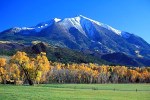
    Sens. Coram, Sonnenberg and Scott walk out of Senate Bill 14-115 hearing in protest #COleg

    Colorado Water Plan website screen shot November 1, 2013
    Colorado Water Plan website screen shot November 1, 2013

    From The Denver Post (Lynn Bartels):

    Three Republican lawmakers walked out of an ag committee hearing Wednesday morning in protest over the handling of a water bill scheduled to be heard Thursday afternoon.

    Senate Bill 115 would give the legislature a say in the “Colorado Water Plan,” an executive order Democratic Gov. John Hickenlooper issued last year charging the state to address water needs in urban and rural areas. A draft of the plan is due in December.

    Mike King, director of the Department of Natural Resources, and James Eklund, director of the Colorado Water Conservation Board, met with the bill sponsors Tuesday to discuss their concerns about the bipartisan proposal, which gives the legislature veto power over the plan. Eklund admitted that during the meeting he got “a little hot, maybe too hot.”

    “I don’t like being lectured or dictated to,” said Rep. Don Coram, R-Montrose, who was at the Tuesday meeting.

    King and Eklund’s concerns over the bill stems from earlier legislation passed in 2005 that attempted to depoliticize water talks by creating roundtables in each of the state’s nine water basins. Those basin roundtables have met almost 800 times since then.

    “We need to respect the work they’ve done and continue to make sure that the people who live and use and recreate in these areas have the primary say in the future of Colorado’s water plan,” King said.

    “I’m passionate about this because it’s important that we honor the work of these basin roundtables,” Eklund said.

    Eklund was at a joint House and Senate ag committee Wednesday to talk about the water plan. Upset about their meeting earlier this week, Coram walked out and was joined by Rep. Jerry Sonnenberg of Sterling, and Rep. Ray Scott of Grand Junction.

    “I have the utmost respect for James Eklund, but I don’t have respect for the process,” Sonnenberg said. “We have three branches of government, and it’s important that the legislature be involved in a statewide water plan.”

    SB 115 is sponsored by Coram and Sens. Ellen Roberts, R-Durango, and Gail Schwartz, D-Snowmass Village, and Rep. Randy Fischer, D-Fort Collins. It is scheduled to be heard by the Senate Agriculture, Natural Resources & Energy Committee at its 1:30 p.m. meeting Thursday.

    More 2014 Colorado legislation coverage here.

    @SaveTheColorado details their issues with #COWaterPlan #ColoradoRiver

    More Colorado Water Plan coverage here.
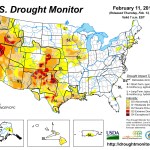
    Arkansas Valley: 10th Annual Farm/Ranch/Water Symposium recap #COdrought #COWaterPlan

    US Drought Monitor February 4, 2014
    US Drought Monitor February 4, 2014

    From the Fowler Tribune (Bette McFarren):

    The 10th Annual Farm/Ranch/Water Symposium once again proved its usefulness with a full house of participants on a cold and wintry day. The meeting was held on Thursday at the Gobin Building and Baggage Room at the Rocky Ford Depot. Not as many tradespeople were in evidence this year, but the crowd of participants appeared undiminished by frigid weather.

    [Grady Grissom], who operates his own working cattle ranch, experimented with varying intensity of grazing and the addition of winter-tolerant grasses to maintain a vegetation cover on pastures. The latter practice was found to greatly enhance water retention in the soil and resilience of the pasture land. He gave four principles for the ranchers to take away: “1. Plant diversity provides economic and ecological resilience in a drought. 2. Total residuals over 800# per acre ensure effective water capture (2″ blue gramma mixed with 8-10″ mid-grasses). 3. Blue gramma residuals over 1.5″ prevent mortality in a drought. 4. Alternate-year grazing may be economically effective in a drought.” He once again, as he did last year, quoted his older mentor, “It takes grass to make grass.”

    Barriers to successful revegetation were the subject of scholarly research by Benjamin and Mikha of the USDA Agriculture Research Service. They found that badly compacted land is extremely difficult to revegetate and bare ground blows away, a factor with which Matt Heimerich of Crowley County is only too familiar. The practice of chiseling the earth to stop blowing dirt is effective only a short time and will produce no long-term benefit to the ground. Crowley County had a limey soil and has become progressively more degraded since 1982. Even dried vegetation helps. It should not be removed.

    In James Eklund’s report on the Colorado Water Plan, he revealed that the basic implementation plan will be finalized in July 2014. Dale Mauch, farmer from the eastern part of the Arkansas River Basin, questioned Eklund about the efficacy of continuing to rely on western water sources, which are progressively severely affected by the drought. Why not import water from the East by pipeline? Eklund said that such a method had been tried previously, the object being to import water from Lake Michigan. The surrounding states formed compacts forbidding the exporting of water. He said that our methods may not be as effective as we wish, but doing nothing would be much worse. He added that in conditions of extreme drought similar to ours, Australia finally resorted to taking control of water resources nationally.

    More Arkansas River Basin coverage here.

    #COWaterPlan will address the protection of agriculture

    San Luis Valley via National Geographic
    San Luis Valley via National Geographic

    From the Valley Courier:

    Today’s agriculture landscape includes not just farming and ranching, but forestry, fruit cultivation, dairy, poultry, mushroom, bee keeping, marketing, processing, distribution of agricultural products etc. VALLEY For decades agriculture has been associated with the production of food crops. Accordingly, agriculture and farming were both one and the same, as long as farming was not commercialized. But as time In addition to food, agriculture also provides feedstuffs for livestock. This portion of agriculture ensures not only meat supplies, but also dairy products. Therefore, agriculture may be defined as the production, processing, marketing and distribution of crops and livestock products.

    It is the agricultural sector that feeds this country’s trade. Products like wheat, soybeans, rice, cotton, tobacco etc. constitute the main items of exports from the US. Thus agriculture helps to balance foreign trade exchanges. Agriculture provides not only food and raw materials, but it also provides employment opportunities to a large proportion of population.

    Colorado’s agriculture is no less important. According to the Colorado Department of Agriculture, “Agriculture is one of largest contributors to the state’s economy, supporting more than 173,000 jobs in Colorado, generates more than $40 billion of economic activity annually, and exported nearly $1.8 billion of food and agricultural products in 2012. Colorado ranks first in the nation in millet production, ranks in the top ten in the nation in nearly 25 commodities. There are over 1 billion eggs laid in Colorado each year. Cattle and Calves is Colorado’s number one agricultural commodity with 2.7 million head of cattle in the state. ”

    It is safe to say that agriculture is a big deal in Colorado . It is for that reason the preservation of agriculture’s water is being addressed in Colorado’s Water Plan. The Water Plan will leverage and incorporate nine years of work that has been done by Colorado’s Basin Roundtables , the Inter Basin Compact Committee, and Colorado Water Conservation Board (CWCB). The goal of the plan will be to determine how to implement water supply planning solutions that meet Colorado’s future water needs while supporting healthy watersheds and environment, robust recreation and tourism economies, vibrant and sustainable cities, and viable and productive agriculture.

    Agriculture is essential to Colorado’s economy and way of life. Yet, the state faces the potential for the permanent dry up of thousands of acres of farmland statewide, unless new solutions become implemented to address the looming gap between supply and demand. Agriculture represents more than 80 percent of Colorado’s consumptive water use. According to the Colorado Water Conservation Board, “Colorado’s Water Plan will develop a number of strategies designed to minimize the permanent buy-and-dry of irrigated agricultural land and begin to counter Colorado’s projected supply gap a gap potentially equivalent by 2050 to the amount of water necessary to supply all of Denver’s households for a full year.”

    Some of these strategies include offering financial incentives for agriculture/ municipal partnerships that maintain land and water for agricultural uses, identifying alternatives to the permanent transfer of agricultural water to municipal use, and identifying the type and amount of infrastructure projects and methods to meet our current and future water supply needs. The Water Plan will be driven by input from each basin roundtable. The Rio Grande Basin Roundtable would like public input to be considered during the Basin Implementation Plan process. The most effective method for stakeholders to become involved is in one of three ways: 1) attend the Rio Grande Basin Roundtable monthly meetings (These meeting are held the second Tuesday of each month at the San Luis Valley Water Conservancy District office at 623 Fourth Street in Alamosa); 2) send comments directly to http://www.riograndewaterplan. webs.com and; 3) attend any one of the 5 BIP subcommittee meetings that can be found on the BIP website The lead consultant and local liaison from DiNatale Water Consultants is Tom Spezze, who can be contacted at tom@dinatalewater.com. It is suggested that input be submitted to the Basin Roundtable by February 28.

    More Colorado Water Plan coverage here.
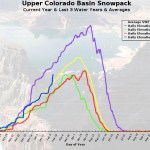
    Morgan County Conservation District annual meeting recap #COWaterPlan

    fortmorganrainbowbridge

    From The Fort Morgan Times (Dan Barker):

    As the Colorado population grows — from people moving here or new families starting — water must be found to meet that hugely increasing demand, said Jim Yahn, manager of the North Sterling and Prewitt reservoirs.

    He was speaking during the annual meeting of the Morgan Conservation District at the Country Steak Out in Fort Morgan on Thursday evening. After speaking on the history of Colorado water-law, he addressed the challenges facing water use in the state.

    Between the year 2000 and today, Colorado’s population grew by about 500,000, and is expected to grow another 5 million by 2050, Yahn said.

    More specifically for Morgan County, demographers project that the population will increase by 73 percent along the South Platte River Basin, he said.

    Water leaders are trying to find ways to meet the water needs of the state, but also trying to avoid just selling off agricultural water rights to meet the needs of Colorado’s cities, Yahn noted.

    If agricultural water rights were just bought up and transferred to city use, as has been the historical trend, from 22 to 32 percent of agricultural water along the South Platte River would be taken for use by cities by 2050, he warned.

    That would mean the loss of production on 180,000 to 270,000 acres, Yahn said.

    It is the state population that uses the water, not agriculture, because the water that goes into agricultural products eventually goes back to people in the form of food, he said. Water that does not go into the food largely soaks back into the underground aquifers after use for crops.

    That means the state needs to develop new water strategies, and that is underway as various groups work on a state water plan, Yahn said.

    Those working on the plan hope to address the expected water shortages in ways that will not dry up farm land and still preserves the state’s rivers.

    The basin implementation plans which will be part of the overall plan are due back to Gov. John Hickenlooper this coming summer, and the draft of a state water plan is expected by the end of the year, Yahn said.

    The trick is creating a plan that will be of actual use, not just another glossy report on the shelf, he said.

    More Colorado Water Plan coverage here.

    #COWaterPlan: ‘Because it’s cheap and a public good, water gets no respect’ — James Eklund

    Colorado Water Plan website screen shot November 1, 2013
    Colorado Water Plan website screen shot November 1, 2013

    From The Pueblo Chieftain (Chris Woodka):

    If commodities were celebrities, water would be Rodney Dangerfield.

    “Because it’s cheap and a public good, water gets no respect,” said James Eklund, director of the Colorado Water Conservation Board, who visited Pueblo last week for a water forum for the business community.

    In Colorado, state and local leaders are not taking water for granted. They are in a final push to devise a plan that will guide the statewide uses of water for coming decades. As part of the push, they are calling for the business community to become more involved in the planning process, which first began after the drought of 2002 when Colorado cities found their historic assumption of water supplies were wrong.

    The drought led to the formation of basin roundtables and the Interbasin Compact Committee in 2005. Since then, there have been nearly as many water meetings in Colorado as there are water lawyers. But there was never the push to develop a specific plan until last year when Gov. John Hickenlooper asked his staff to create one. And the governor wants one soon, by December 2014, so the state can begin to act on it following this November’s statewide elections. The water plan will be the culmination of nine years of meetings seeking alternatives to the default option of buying up farms and moving the water to municipal use. Conservation, new supply, new transfer methods, completing identified projects, environmental protection and storage will be a part of the plan. The details will emerge by the end of the year.

    Eklund said Hickenlooper himself likens the water plan to a “business plan.”

    “I was serving as the governor’s chief counsel and we were talking about the importance of water. He said, ‘Let’s see the business plan,’ ” Eklund said. “Governor Hickenlooper looks at life through a business lens, and it’s unacceptable to have no input.

    More input is starting to come through meetings organized specifically for business interests.

    One business group, the Colorado Competitive Council, which co-sponsored last week’s forum in Pueblo, wants to finalize its list of priorities — also known as “principles” — by July, Competitive Council Director Mizraim Cordero said. The council, along with Accelerate Colorado, conducted the meeting last week to engage Pueblo’s business community in the discussion. Turnout was light with about 20 people in attendance, a number that included several city and county elected officials.

    Getting businesses involved in water policy discussion is a challenge, water experts concede. Cordero said small attendance at water meetings is not unusual. Steve Vandiver, manager of the Rio Grande Conservation District, joked that those in the water community should just hop on a bus, ride around and talk to itself.

    Bryan Blakely, president of Accelerate Colorado, said the lack of interest is not surprising to some extent — “We’re complacent because we turn on a tap and expect water to come out” — but businesses risk a golden opportunity to shape the final statewide plan.

    “We’re looking at this as our plan. This is our chance to weigh-in,” Blakely said.

    Rod Slyhoff, president of the Greater Pueblo Chamber of Commerce, and Jack Rink, president of the Pueblo Economic Development Corp., expressed similar thoughts.

    “We probably do get complacent,” Rink said. “We need to know where we can make a difference.”

    Terry Book, executive director of the Pueblo Board of Water Works, said state policies can have a major impact at the local level. He told the group about the water utility’s struggle with higher energy costs tied to the state’s push for greener energy. That has created a domino effect of increased rates for commercial and residential customers, he said.

    It’s an example of why businesses need to pay attention to state policymaking, including in the area of water, he said. “Nothing is simple in water,” Book said. “Good intentions can lead to unintended consequences.”

    Arkansas Basin Roundtable Chairman Gary Barber, whose business is water consulting, noted that agriculture is a $1.5 billion business in the Arkansas Valley, about 6.6 percent of the region’s overall $23 billion economy.

    It’s also tied to the vibrant and growing $222 million recreation industry on the Upper Arkansas River, he said.

    “If you’re in Chaffee County, you want to make sure the water you use for rafting stays in Rocky Ford,” Barber said. “If you don’t have water, you don’t have an economy.”

    More Colorado Water Plan coverage here.

    Senate Bill 14-115: ‘It brings so much politics into the issue’ — Rachel Richards #COleg #COWaterPlan

    Colorado Water Plan website screen shot November 1, 2013
    Colorado Water Plan website screen shot November 1, 2013

    From the Aspen Daily News (Brent Gardner-Smith):

    Senate Bill 14-115 would trump an executive order issued by Colorado Gov. John Hickenlooper in May 2013 that called for the Colorado Water Plan to be based on regional plans developed by river-basin “roundtables” around the state in coordination with the CWCB.

    “The executive order did not identify a role for the general assembly, and yet we represent the people in the state,” Schwartz said.

    Schwartz, a Democrat from Snowmass Village, is chair of the Senate Agriculture, Natural Resources and Energy Committee, where SB 14-115 has been sent for review.

    Sen. Ellen Roberts, a Republican from Durango who serves on the interim Water Resources Review Committee, also is a co-sponsor of the bill.

    “When an executive order is issued, that bypasses the legislature,” Roberts said at the Colorado Water Congress meeting held last week. “Now, that is certainly the governor’s prerogative, but when something is called the Colorado state water plan, it means the legislature is at the table.”[…]

    A key question for communities on both the Western Slope and along the Front Range is whether more water will be piped under the Continental Divide from the west, where most of the state’s water is, to the east, where most of the state’s people are.

    Pitkin County commissioner Rachel Richards is an active member of the Colorado Basin Roundtable and said she has “real concerns” about Schwartz’s bill.

    “It brings so much politics into the issue,” Richards said about SB 14-115. “I think it will fall down to Front Range versus West Slope legislators. I have a hard time imagining any Front Range legislator running for re-election and saying he or she voted for a plan that did not include a new trans-mountain diversion of very significant magnitude. “

    In addition to giving the legislature power over the final water plan, SB 14-115 also requires that regional public hearings be held after a draft is released and that public comment be taken into consideration in the final draft…

    Gov. Hickenlooper’s executive order calls for the CWCB to finish a draft of the water plan by December and to complete a final version by December 2015.

    The CWCB is to write the draft plan and then submit it “for review by the governor’s office,” according to the executive order. Then it is supposed to “work with the governor’s office to complete the final plan.”

    The only substantive mention of the state legislature in the governor’s executive order is that the plan should include “recommendations to the governor for legislation that will improve coordination, streamline processes and align state efforts” regarding water projects.

    That’s not a big enough role for the legislature, according to Schwartz.

    “Yes, the plan may direct policy, but it does not have the weight of law,” she said.

    SB 14-115 requires the plan to be reviewed by the Water Resources Committee, which would then introduce a bill to approve it — or not.

    The bill also says that a water plan can only be considered official state policy if the legislature approves it. And it says that while the plan could still be the policy of the CWCB, the legislature also could declare that it is not.

    In short, it gives the legislature firm control over future water projects in Colorado.

    Roberts acknowledged that the bill might cause some “hurt feelings” among those at the basin roundtable level.

    “It is not intended as any slight to the folks that are working hard on that, but we do feel that it is critically important that that be an open public process and it also involve the legislature,” Roberts said about the bill…

    On Thursday, the board of the Colorado River District, which represents the Western Slope, voted to take a neutral position on the bill — for now.

    Chris Treece, the external affairs manager for the river district, said SB 14-115 “was a very political bill” and suggested the organization monitor it “very closely from a very long distance.”

    “I think it is an important discussion about who is in charge,” Treece said.

    Mike King, the executive director of the Colorado Department of Natural Resources, which includes the CWCB, said having the legislature involved as proposed by the bill would mix politics and water.

    “We need to depoliticize the development of Colorado’s water,” King said at the Water Congress meeting. “We need to remove it from the political pressures that are inherent in the legislative process and make it organic.”

    And he believes the CWCB can handle the job.

    “Seventy-six years ago the general assembly delegated to the CWCB the express policy setting authority for the state’s water vision,” King said. “I think it served the state well. And I think the CWCB has exercised that authority judiciously and appropriately throughout that period of time.”

    More 2014 Colorado legislation coverage here.

    Arkansas Basin: ‘I’ve got a son who’s farming. Will there be water for him?’ — Dale Mauch #COWaterPlan

    Arkansas River Basin -- Graphic via the Colorado Geological Survey
    Arkansas River Basin — Graphic via the Colorado Geological Survey

    From The Pueblo Chieftain (Chris Woodka):

    Balancing the needs of urban growth and maintaining the state’s agriculture is a difficult equation, and some are wondering if it can be solved with real numbers. The conflict bobbed to the surface during a discussion about the upcoming state water plan at Thursday’s Farm/Ranch/ Water Symposium at the Gobin Community Center.

    “We don’t have enough water for growth and agriculture,” Lamar farmer Dale Mauch said. “This is a way to delay the ultimate end of the story. Who’s going to get it first, Colorado Springs and Pueblo or me in Lamar?”

    Unless a new source of water is brought in, the continuing dry-up of agriculture in the Arkansas River basin will continue, Mauch said.

    “I’ve got a son who’s farming. Will there be water for him?” Mauch asked.

    Charged with providing the answers to his question was James Eklund, director of the Colorado Water Conservation Board. Eklund is heading up Gov. John Hickenlooper’s drive to develop a draft Colorado Water Plan by the end of this year.

    “We don’t want to be in a situation where we knew that this was coming and didn’t do anything,” Eklund said.

    Mauch suggested a project like the Flaming Gorge pipeline that brings new water into the state is the only way to assure agriculture and growth can co-exist.

    Eklund said the political realities of moving water from one state to another might be more difficult than the decadelong process that has led up to a state water plan.

    Another farmer, Wes Eck, said education should be a key component of a state water plan.

    “I had some goose hunters from Colorado Springs come down. They looked at John Martin Reservoir (still at a very low level) and asked, ‘Where did all the water from our floods go?’ I told them we could soak up 100 times that much,” Eck said.

    “We’ve got to do a better job explaining water,” Eklund replied.

    More coverage from Chris Woodka writing for The Pueblo Chieftain:

    Farmers in the Arkansas Valley generally favor a farm bill that beefs up subsidies for crop insurance, rather than providing direct payments that guarantee income regardless of harvest quality or crop prices.

    “The biggest thing for us will be the crop insurance program,” Holly farmer Colin Thompson said Wednesday.

    Like most of the other farmers attending the Farm/Ranch/Water Symposium at the Gobin Community Center Thursday, Thompson is unsure of how his operation will be affected by the farm bill.

    But he said the safety net for farmers is a big deal, given the high costs of planting a crop.

    The farm bill passed the U.S. Senate by a 68-32 vote this week, after passing the U.S. House by a 251-166 vote last week. It is awaiting President Barack Obama’s signature.

    “I’m glad they got it done,” said John Stulp, Gov. John Hickenlooper’s water policy adviser and a Prowers County farmer. “The safety net on crop insurance is the big thing.”

    The bill also boosts conservation programs available to farmers.

    “It’s very important from a conservation and natural resources perspective,” said John Knapp of the Natural Resources Conservation Service office in Rocky Ford. “It will increase opportunities for conservation easements and land trusts.”

    Dale Mauch, a Lamar farmer, said the crop insurance program is vital in order to keep farmers in business.

    “In this day and age, you need crop insurance because of the cost of everything,” Mauch said. “People don’t realize how expensive it is to put in a crop. I just brought a brand new bailer in 2009 for $101,000. Today, that same piece of equipment is $180,000.”

    Costs for seed and fertilizer have skyrocketed, and the price of corn, his primary cash crop, are $4 per bushel, half of what they were just two years ago.

    “I’m glad they cut direct payments. All we need is crop insurance,” Mauch said, as heads nodded all around the table where he was seated. “Irrigated agriculture in the Arkansas Valley is unlike anywhere else in the world.”

    Food stamps need to be a part of the farm bill as well, because only about 50 members of the 435-member House are from rural areas, Mauch said.

    “I don’t think any kid should ever go hungry,” he said. “On the other hand, there are some (negligent) fathers who should go hungry.”

    From The Pueblo Chieftain (Chris Woodka):

    It’s no secret to farmers that the Arkansas Valley usually is short of water. But future consequences of the shortfall are illustrated by actions that already have occurred in the South Platte River and Rio Grande basins.

    The coming crisis was discussed last week at the Arkansas Valley Farm/Ranch/Water Symposium, which attracted about 200 participants.

    “We found that we’ve been double-counting the municipal return flow in the basin,” Arkansas Basin Roundtable Chairman Gary Barber told the group.

    The “agricultural gap” in the Arkansas River basin was identified by the roundtable at 25,000-30,000 acre-feet in March 2012. What that means is that farmers already are irrigating with borrowed water. That became clear last year when augmentation water for wells was cut off during the third year of severe drought. Those who depended solely on surface rights dealt with a reduced water supply by planting fewer crops.

    That will become the norm in the chronically dry Rio Grande basin, said Travis Smith, general manager of the San Luis Valley Irrigation District and a member of the Colorado Water Conservation Board. Subdistricts have formed that will slowly reduce the drawdown on the aquifers agriculture depends on.

    “It’s painful when you talk about cutting a man’s water supply,” Smith said.

    In the South Platte basin, wells were shut down after the Empire Lodge court case restricted the state engineer’s authority to administer temporary plans, said Jeris Danielson, a former state engineer who became a water consultant.

    “They shut down 3,000 wells and now have flooded basements in Sterling because the groundwater table’s rising,” Danielson said. “What we have not done in this state is manage the resource.”

    The Arkansas River basin lags behind the South Platte in developing ways to stretch the water supply such as aquifer recharge programs, said Bill Tyner, assistant engineer for Water Division 2.

    Only two recharge programs exist in the Arkansas Valley now: on the Excelsior Ditch by the Arkansas Groundwater Users Association and the city of Lamar well field. The Arkansas Valley Super Ditch has done some preliminary work in identifying recharge opportunities on canals.

    Jay Winner, general manager of the Lower Arkansas Valley Water Conservancy District, offered a menu of options to deal with filling the ag water gap.

    “We need to buy and retire land that is not productive,” Winner said.

    Farmers need to buy more water and retain it to reduce the dependency on the spot market — which usually means leasing from Pueblo, Colorado Springs or Aurora. They also need to look at trades among water rights owners, recharge and strengthening storage.

    “But with storage, it does not go far when you have no water to put into it,” he cautioned.

    More Colorado Water Plan coverage here.
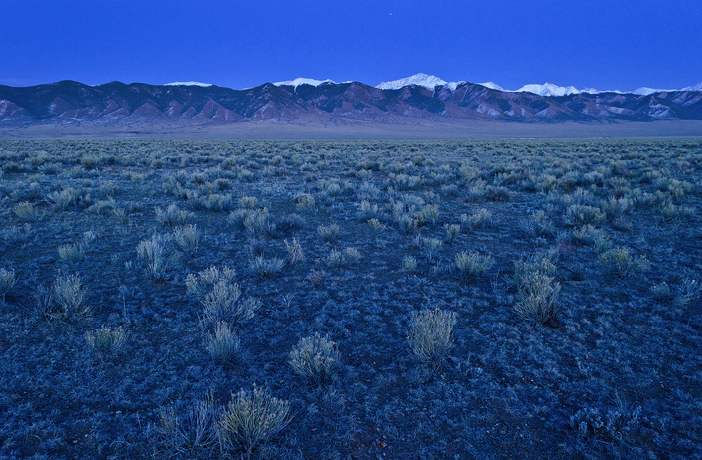
    The latest One World One Water Center newsletter is hot off the presses

    metrostateroadrunner
    Click here to read the newsletter. Here’s an excerpt:

    The Colorado Water Conservation Board (CWCB) is looking for up to 40 volunteer notetakers for the March 6, 2014 Basin Roundtable Summit. Volunteers will be needed from 7am-2pm, will need to bring their own laptop, and will receive complimentary breakfast and lunch. This is a wonderful opportunity to network and learn more about the Colorado water community, CWCB, and the important role basin roundtables play in their communities.

    If interested, please contact Kate McIntire no later than February 12, 2014.

    More education coverage here.
    The latest newsletter from the Eagle River Watershed Council is hot off the presses

    Eagle River Basin
    Eagle River Basin

    Click here to read the newsletter. Here’s an excerpt:

    Watershed Wednesday: the Colorado Water Plan
    February 26th
    Avon Public Library, Avon, CO

    Did you know that 80% of our state’s water falls on the Western Slope but 80% of the population lives on the Eastern Slope? Did you know that Colorado is one of the few Western states that hasn’t yet prepared a State Water Plan? Under Gov. Hickenlooper’s direction, the state is now in the process of creating such a plan, one that aims to forge ‘a path forward for providing Coloradans with the water we need’ in all aspects of our active and productive lifestyles. (coloradowaterplan.com)

    Hannah Holm, Coordinator for the Water Center at Colorado Mesa University, will help bring us up to speed on this exciting & complex process. Diane Johnson of the Eagle River Water & Sanitation District will focus on the local level and explain the Eagle River Basin Principles.

    More Eagle River watershed coverage here.

    Community Agriculture Alliance: The worth of water #COWaterPlan

    Yampa/White/Green river basins via the Colorado Geological Survey
    Yampa/White/Green river basins via the Colorado Geological Survey

    From Steamboat Today (Brody Farquhar):

    …we know the worth of water when it is gone, in short supply, polluted or tied up in a state or federal water court. Otherwise, we don’t give much thought to the water that shows up in our faucets, irrigation ditches, streams and rivers. We often take it for granted.

    Yet we have learned through the work of the Colorado Statewide Water Supply Initiative, the Interbasin Compact Committee and the basin roundtables that our current statewide water trajectory is neither desirable nor sustainable. We know that the state must take a hard look at Colorado’s future water needs as a whole and plan for how they will be addressed…

    The Yampa-White-Green Rivers Basin Roundtable is hosting four meetings, inviting the residents of Northwest Colorado to participate in the one nearest them. Each meeting is aimed at gathering public input toward the creation of a Colorado Water Plan. Routt County residents are encouraged to attend either one of the following:

    • Feb. 13 in Steamboat Springs at the Steamboat Springs Community Center, 1605 Lincoln Ave.

    • Feb. 19 in Craig, at the American Legion Hall, 1055 Moffat County Road 7.

    Following this series of meetings, public input also will be welcome at the basin roundtable meetings held at the American Legion Hall in Craig on March 12, May 14 and June 18. All meetings begin at 6 p.m.

    The goal is to have a comprehensive implementation plan submitted by the Yampa-White-Green Roundtable to Colorado Water Conservation Board by July…

    Interested parties are basically anyone who drinks, uses or recreates in water. More specifically, that includes homeowners and small business owners, ranchers and farmers, recreationists, energy workers (miners, drillers and power generators), town and county officials, etc.

    As noted by Tom Gray, former chairperson of Yampa-White-Green Roundtable and former Moffat County commissioner, “The influence always goes to those who make the effort to get informed and participate. This (Basin Implementation Plan) process is the chance for everyone in the basin to do just that.”

    More Colorado Water Plan coverage here.

    Pueblo: ‘Unlimited growth may be good until you run out of resources’ — Steve Vandiver #COWaterPlan

    Colorado Water Plan website screen shot November 1, 2013
    Colorado Water Plan website screen shot November 1, 2013

    From The Pueblo Chieftain (Chris Woodka):

    Pueblo’s business community has become complacent about water and needs to get involved in the state’s water planning, local business leaders said Tuesday.

    “We’re fortunate in Pueblo that we’ve had people watching out for us. It’s time for the business community to step up and run some cover for our water leaders” said Rod Slyhoff, president of the Greater Pueblo Chamber of Commerce.

    Slyhoff was among local business leaders and elected officials who attended a water forum Tuesday at the Pueblo Convention Center. The forum was sponsored by two statewide business groups, Accelerate Colorado and the Colorado Competitive Council.

    The statewide groups are preparing a list of recommendations to submit to Gov. John Hickenlooper as a statewide water plan moves toward completion.

    The forum featured comments on a variety of water-related topics.

    There was some disagreement between Slyhoff and Mizraim Cordero, director of the Competitive Council, over a legislative bill that would allow flex water rights. Cordero supported the bill while Slyhoff said it might lead to more farm dry-ups.

    James Eklund, director of the Colorado Water Conservation Board, said the water plan is attempting to balance water needs for a statewide population that likely will double in 30 years.

    “We don’t have enough water to address all the needs of the state. If people in this state want a say in water, the water plan is the place to do it,” Eklund said.

    Terry Book, executive director of the Pueblo Board of Water Works, said the utility’s mission of providing the highest quality water at the lowest possible price includes assisting in community and economic development.

    The utility’s economic development efforts have included investing $5 million on incentives to lure industry, he said.

    However, the effort also can bring unintended consequences, Book said. Efforts to quickly expand service to the St. Charles Industrial Park for Vestas presented the utility with a new layer of regulations to address, he said.

    Jack Rink, president of the Pueblo Economic Development Corp., said the average businessperson looks for guidance on complicated issues such as water from those who regularly deal with the subject.

    “Let us know when we can make an impact and you’ll find we can be supportive,” Rink said.

    Gary Barber, chairman of the Arkansas Basin Roundtable, explained how his group was able to bring new voices into the planning process. “The real pressure is on agriculture and that forced us to have a dialogue,” Barber said.

    Steve Vandiver, general manager of the Rio Grande Water Conservation District, said it’s highly unlikely any more water will be available with conservation alone. He suggested building more reservoirs.

    As for another option, slowing down the influx of people coming to the state, “When I’ve said (that) . . . you guys beat me senseless,” Vandiver said. “Unlimited growth may be good until you run out of resources.”

    More Colorado Water Plan coverage here.

    Morgan Conservation District’s Annual meeting February 6 #COWaterPlan

    Fort Morgan vintage photo from Moody's Vintage Collectible Postcards
    Fort Morgan vintage photo from Moody’s Vintage Collectible Postcards

    From The Fort Morgan Times:

    Jim Yahn, manager of North Sterling and Prewitt Reservoirs and the past chairman of the South Platte Basin Roundtable, will be speaking at the Morgan Conservation District’s Annual meeting on Thursday, Feb. 6.

    Yahn will speak on the Past, Present and Future of Colorado’s Water.

    This is a very important meeting to attend if you are concerned about your water rights.

    Yahn is responsible for overseeing the diversion and distribution of water to farmers. He also serves as one of the two South Platte Basin Roundtable representatives Statewide Interbasin Compact Committee.

    It is not too late to RSVP to Morgan Conservation District’s Annual meeting which will be held at the Country Steak-Out Restaurant in Fort Morgan at 5:30 p.m. Cost is $25.

    Please RSVP to the conservation district office at 970-867-9659, x 3.

    More Colorado Water Plan coverage here.

    2014 #COleg (SB14-115): ‘You don’t have to be a Water Buffalo to have an opinion about water’ — Gail Schwartz #COWaterPlan

    Colorado Water Plan website screen shot November 1, 2013
    Colorado Water Plan website screen shot November 1, 2013

    From The Pueblo Chieftain (Chris Woodka):

    The state Legislature would have final say over a state water plan being drawn up under last year’s executive order by Gov. John Hickenlooper. A bill, [SB14-115], giving the state Legislature that authority was introduced this week and has sponsors from both parties in both houses. It also calls for public hearings at basin roundtables in order to provide more public input.

    “We think the state Legislature makes the laws,” said Sen. Ellen Roberts, R-Durango, in supporting the bill Thursday at the Colorado Water Congress annual convention.

    The bill would give the Legislature final say over state water policy, claiming that move is necessary to protect the public interest.

    The bill caused grumbling among the water community in the room, with many scoffing at Roberts’ suggestion that a legislative committee could draw in more public interest than the work of the basin roundtables that have involved hundreds of people since 2005.

    “As I read it, it seems like it could circumvent the priority system and take away power from the state engineer,” said Jay Winner, general manager of the Lower Arkansas Valley Water Conservancy District and Arkansas basin representative on the Interbasin Compact Committee.

    “I’m sorry if there are hurt feelings,” Roberts said. “Water is our No. 1 resource. It built our state and is critical to building our state in the future. The executive order bypasses the Legislature’s authority.”

    She was backed up by Sen. Gail Schwartz, D-Snowmass, who is co-sponsoring the bill.

    “You don’t have to be a water buffalo to have an opinion about water,” Schwartz said. “We have to have an inclusive process and reach out to as many people as possible.”

    In a subsequent panel discussion, three members of the Colorado Water Conservation Board — Travis Smith, April Montgomery and Patricia Wells — defended the roundtable process. The CWCB is given primary responsibility for drafting the water plan under the executive order.

    “We have to look at the work we’ve been doing and fit it into the plan,” Smith said.

    The members, from different corners of the state, agreed that the plan must protect agricultural and environmental interests as well as meeting the needs of future population growth.

    Mike King, director of the Colorado Department of Natural Resources, said the executive order already provides for legislative input into the plan.

    “We will continue to work with the General Assembly,” King said.

    Here’s the information from the Colorado Water Congress website:

    The bill requires the Colorado water conservation board to hold a hearing on a draft state water plan within each basin roundtable, update the plan based on public comments, and present the draft plan to the water resources review committee. The committee must vote on whether to introduce legislation that would approve the plan. The plan does not embody state water policy unless the general assembly, acting by bill, approves the plan.

    Status
    01/27/2014 Introduced In Senate – Assigned to Agriculture, Natural Resources, & Energy

    More 2014 Colorado legislation coverage here. More Colorado Water Plan coverage here.

    #COWaterPlan: ‘The grand opening of the new Rattler’s Den was packed on Wednesday’ — Bette McFarren #COWaterPlan

    Colorado Water Plan website screen shot November 1, 2013
    Colorado Water Plan website screen shot November 1, 2013

    From the Fowler Tribune (Bette McFarren):

    The grand opening of the new Rattler’s Den was packed on Wednesday morning for the appearance of Gov. John Hickenlooper. If the participants were looking for a meaningful discussion of the Colorado Blueprint Bottom Up program, they were not disappointed. Gov. Hickenlooper started with compliments for the small town atmosphere (more oxygen here) and the progress at Fort Lyon, which he feels may be a pattern for repurposing facilities nationwide…

    The big question the governor had been waiting for was posed by Otero County Commissioner Kevin Karney. What is being done about a water plan for Colorado? Hickenlooper believes the state should be divided into regions corresponding with large drainage areas, such as the Platte and the Arkansas. He thinks conservation is the tool for water management, helping the people in Denver realize the water they spend on lawns is better utilized growing crops to feed them. “The farmers are conserving, too,” he said, “finding more efficient ways to water the crops and make better use of the water. Water is precious.” He thinks a comprehensive water plan developed in Colorado could serve as a model for other water-challenged states.
    When speaking of energy, the governor was enthusiastic about the Creative Energy program which would enable energy to be produced from waste tires. He is eager to see the way cleared for this development, which has been discussed in Otero County. The Creative Energy plant would produce no emissions, but export the gas produced…

    The students present were thoughtful and engrossed in the discussion. Small Business Development Director Bill Dutro was present with his intern, Malika Hussan, a college graduate from Pakistan who is studying business at OJC to help her work with women to create their own businesses in Pakistan. The meeting went a long way toward validating the governor’s theory that in order to improve the economy, he needs go to the grassroots to find out what needs to be done and to construct useful programs.

    More Colorado Water Plan coverage here.