In addition to Colorado’s water gap we have that pesky old solutions gap, East Slope vs. West Slope

Colorado Water Plan website screen shot November 1, 2013

From the Boulder Weekly (Bob Berwyn):

When Colorado’s earth cracked open in the great drought of 2002, it may have also cracked open a new corner of consciousness about the finite nature of the state’s water supplies. Spurred by the drought, Gov. Bill Owens and Department of Natural Resources chief Russ George created a series of grassroots river-basin-based roundtables around Colorado and started crafting a statewide vision of how the state will allocate river flows in the 21st century.

Ten years later, the process will culminate with completion of a formal state water plan, ordered by Gov. John Hickenlooper — but there will have to be some serious compromise on the “last 10 percent,” says longtime Colorado River advocate Ken Neubecker, an associate director of American Rivers.

But a round of draft documents posted in recent weeks once again raises concern about a host of transmountain water diversion projects that would require huge amounts of energy and disrupt communities and agriculture in the Colorado River Basin.

Some of the projects have been floating around for decades, representing a Rube Goldberg view of the world, where every problem has an over-engineered technical solution: The Big Straw, which would slurp billions of gallons of water from the Colorado River just before it crosses into Utah; the 500-mile Green River pipeline from Wyoming that supposedly would generate hydropower along the way; the Yampa pumpback, the Blue River pumpback and a new Wolcott Reservoir in Eagle County.

“Keeping the idea of these zombie water projects, when there just isn’t any more water to fill those [new] reservoirs doesn’t make sense. … There’s not enough to fill the reservoirs that are here now,” says Save the Colorado campaign coordinator Gary Wockner. The water bosses are missing the big picture by ignoring the fact that Lake Powell and Lake Mead are near or at their lowest levels ever (since filling), Wockner says.

The downstream demand from Arizona, Nevada and especially California throws a huge political monkey wrench into the works that could someday result in a regional showdown, as the Lower Basin cashes in its water chips under the rules of the 1922 Law of the River. Such a so-called Compact Call would require many Colorado water users to curtail their uses.

Developing any new major Colorado River diversions would only worsen the situation, and all of the zombie projects revive visions of the old-school water wars that got Neubecker involved in river conservation back in the 1980s, when Aurora sought to siphon even more of the Eagle River’s flows across the Continental Divide…

The statewide planning push is designed to seek consensus. There’s no question that the basin roundtable configuration has been an improvement over previous tactics, which consisted mainly of “throwing lawyers at each other,” Neubecker says. All in all, the process has been smooth. Each basin — nine, in all — carved out its own vision for Colorado’s water future.

The regional groups have publicly posted “Basin Implementation Plans” for public comment. It’s a key step for the plan, because the final versions should reflect public concerns. In the spirit of the longterm planning initiative, there’s a user-friendly online portal that, for once, doesn’t look like a government website: https://www.colorado.gov/cowaterplan, literally begging for comment.

Now that it’s time to put it all together, cracks are starting to show along traditional fault lines. Some of the big Front Range communities say the plan must include provisions to shunt more water from the Colorado River Basin to the Front Range.

“They’re looking for certainty that there will be another transmountain diversion,” says Colorado River Water Conservation District spokesman Jim Pokrandt. “The Colorado River Basin Roundtable position is, to the degree that there ever could be one, it’s the last tool out of the box.”

Neubecker goes further to say there simply is no water left to divert in the Colorado River Basin…

The pending showdown over the state water plan (a draft is due in about three months, with a fall 2015 deadline for the final version) shows once again the need to connect the dots between water planning, land-use planning and social, economic and cultural values associated with agriculture — not to mention the ecological values of healthy streams and rivers.

“The Colorado Water Plan is not a Blackhawk helicopter landing and taking control” — Jay Winner #COWaterPlan

Arkansas River Basin -- Graphic via the Colorado Geological Survey
Arkansas River Basin — Graphic via the Colorado Geological Survey

From the La Junta Tribune-Democrat (Bette McFarren):

Two of the most important issues to this region are control of selenium and radionuclides in rural drinking water without driving municipal and private water companies out of business or sending water prices sky high and how to import water to serve a booming population growth and agriculture needs in Colorado. The apparent solution to the first problem is the Arkansas Valley Conduit, which Stulp assured the group is coming along nicely. John Knapp commented that the cost of meeting state regulations is prohibitive, and may we hope the conduit will be in time. Nicole Rowan, the water quality expert on the panel, gave hope the cost of regulation problem is being heard at the state level.

Otero County Commissioner Kevin Karney was in charge of telling about water storage, an essential component to fulfill all of Colorado’s consumptive and nonconsumptive water needs. Pueblo Reservoir and Turquoise Lake have been valuable contributors to helping with the water shortage in the Arkansas Basin. In order to prevent the effect of a call on the water in the upper storage areas, it will be necessary to increase the height of the Pueblo Dam and store more water in Turquoise Lake. He is also looking to Blue Mesa for storage of an additional 100,000 acre feet to counteract a call on the water (imminent from drought-stricken California). Also, attention should be paid to the dam infrastructure in the state, which in some cases, such as Two Buttes, is dangerous at the present time. “We need to be able to store excess water to be used when we need it.”

Better use of agricultural water was commented upon by Dan Henrich, lower Arkansas Valley farmer. He sees conversion to sprinklers a no-brainer, in that it provides better coverage for the farmer and a more efficient use of water resources.

John Tonko of the Colorado State Parks and Wildlife Department had interesting comments on how the storage of water for the benefit of tourism and wildlife has the effect of also helping agriculture. He pointed out several helpful projects for wildlife and fishing which have been created with the cooperation of gravel pit owners in Lamar and other locations in the lower Arkansas Valley. He pointed out that no project can succeed without a united effort from local stakeholders, but it is possible: fishermen and rafters have come to a compromise agreement concerning water flow in the Arkansas River.

Winner summed up the water quality issue: “The Colorado Water Plan is not a Blackhawk helicopter landing and taking control. … We want a cooperative effort to try to address the selenium problem. … Here and in Grand Junction, we have made no significant headway and it is beyond our economic ability to do much about it. … We are tired of studies and want action.”

Comments and suggestions for action are welcomed. For further information, Stulp suggests going to http://www.coloradowaterplan.com, which has the draft of the plan so far on display.

More Colorado Water Plan coverage here.

Fountain Creek dam study funding source up in the air

Fountain Creek Watershed

From The Pueblo Chieftain (Chris Woodka):

Faced with silence so far from Colorado Springs City Council, the Fountain Creek district will seek another direction on funding an evaluation of flood-control strategies. The Fountain Creek Watershed Flood Control and Greenway District board Friday voted to seek $135,000 in state funds to launch the $205,000 study.

Other funds would be: $30,000 from Colorado Springs Utilities and its partners in the Southern Delivery System; $25,000 in district money redirected from another grant; and $15,000 in in-kind engineering services from Utilities.

The board wants to look at whether it makes more sense to build a large dam on Fountain Creek or several detention ponds. The money being sought would be sufficient to both identify and evaluate sites along Fountain Creek where structures could be built.

“This gets us started, but one of the drawbacks is timing,” said Pueblo County Commissioner Terry Hart, a Fountain Creek board member.

The commissioners last month approved a resolution to use interest money from Colorado Springs’ upcoming $50 million payment to the district under Pueblo County’s 1041 agreement on SDS.

The commissioners sent a letter to Colorado Springs Council President Keith King, who has not brought up the issue with other council members.

“It’s council’s decision,” Hart said.

The state money could take longer to arrive because the $135,000 is being sought through the Water Supply Reserve Account. The application would be heard by the Arkansas Basin Roundtable as soon as June, then forwarded to the Colorado Water Conservation Board for consideration in September. After that, it could take several months to get a contract in place, meaning nothing will happen before the end of the year.

“I think Utilities is saying, ‘Try it this way,’ ” Hart said. “But we’ve lost all of 2014.”

More Fountain Creek coverage here.

Draft plan for state’s water future released — Aspen Journalism #COWaterPlan #ColoradoRiver


From the Aspen Daily News (Brent Gardner-Smith):

The Colorado River Basin Roundtable has released its draft Basin Implementation Plan.

I know, I can hear you going “Yawn. What-ev-er.”

But, I can also hear you saying something today like, “Honey, the lawn looks a little brown, could you turn the sprinklers on and bring me some ice water before we go fishing? Oh, and remind me to pick up some local grass-fed beef for dinner.”

In other words, you may not care about water, but you probably should, given that your Colorado lifestyle largely depends on it.

But given that the plan laboriously prepared by consultants at SGM in Glenwood Springs for the Colorado roundtable includes 89 dense pages in an unwieldy 11-by-17 inch format, and that it takes a day to fully decipher and absorb, it’s hard to blame someone for not digging into it.

On the other hand, the plan could well be the key to whether your grandchildren, should they live in Colorado, have clean water to drink, healthy rivers to fish in or float on, and scenic working ranches to gaze upon.

As the plan notes, “water = tourism, recreation, sustainable ecosystem, agriculture and resource development.”

At a minimum, the draft “basin implementation plan,” or BIP, is full of compelling facts, figures, projections and projects. It also explores and explains broader themes and lists important projects in the Roaring Fork River watershed, including potential dams on upper Castle and Maroon creeks.

On the defining-factoid front, consider that 80 percent of the water in Colorado originates on the Western Slope, while 80 percent of the state’s population lives east of the Continental Divide, mainly in cities on the Front Range.

This explains much of the underlying tension in the plan between shipping more water to the Front Range versus leaving it in rivers, or using it, on the Western Slope.

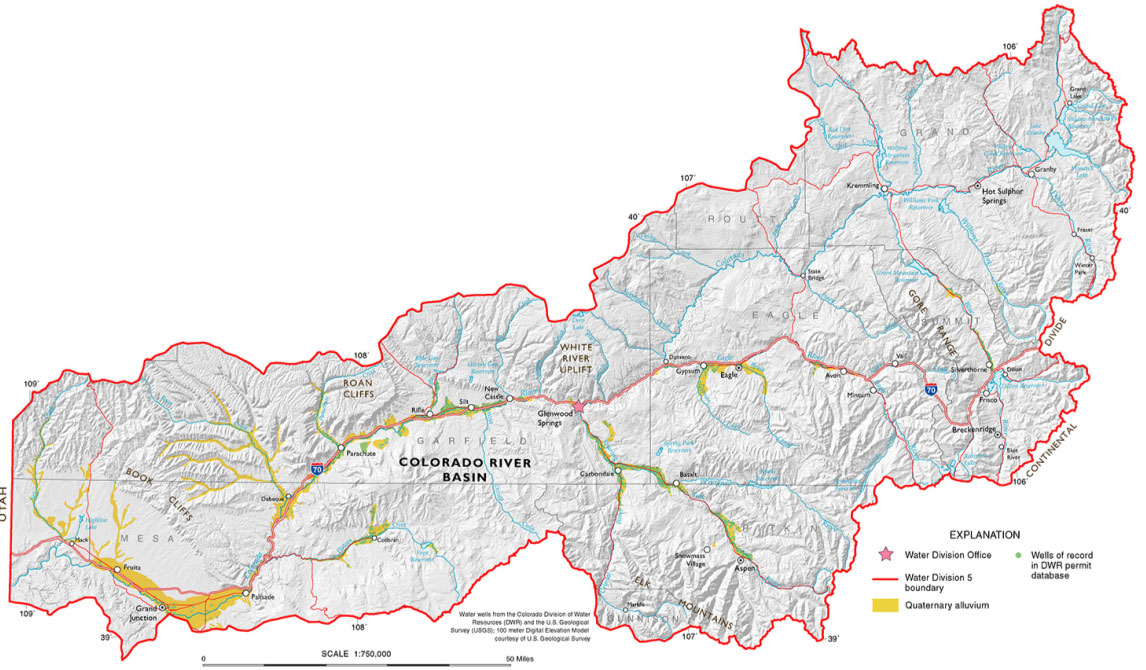
The Colorado River originates in Rocky Mountain National Park and it, or its tributaries, run through Grand, Summit, Eagle, Pitkin, Garfield and Mesa counties on the river’s journey out of the state and onto Utah, Arizona, California and Mexico.

Before the river reaches Glenwood Springs, though, there are more than a dozen tunnels under the Continental Divide that take between 400,000 to 600,000 acre-feet of water each year from the Colorado River and its tributaries to cities and farms on Colorado’s Front Range.

An acre-foot of water, by the way, is equal to an acre of land covered by a foot of water. Ruedi Reservoir holds about 100,000 acre-feet. Paonia Reservoir holds about 15,000 acre-feet. The abbreviation “AFY” means acre-feet-per-year.

When people water their lawns in Denver or Colorado Springs, they are likely using water from the Fraser, Blue, Roaring Fork or Fryingpan rivers, all tributaries to the Colorado River.

Folks on the Western Slope are diverting plenty of water out of Western Slope rivers, too, mainly to grow hay.

Agriculture uses 85 percent of the water diverted from rivers in Colorado, and the most senior water rights are usually tied to ag land.

The Colorado River Basin has 268,000 acres of land under irrigation, or 8 percent of the irrigated land in Colorado, resulting in a consumptive use of 584,000 acre-feet-per-year of water.

So, in rough terms, of all the water diverted from rivers and streams in the Colorado River Basin, almost half goes to Front Range cities and farms and almost half goes to irrigate fields and crops in the basin.

Some of the water goes toward “municipal and industrial” uses, which includes residential use.

There are 54 water-providing utilities and organizations in the Colorado Basin.

In 2008, those providers delivered 68,480 acre-feet to houses, factories and ski areas.

That demand for “municipal and industrial” water is expected to double, or more, to between 129,940 to 179,440 AFY by 2050, according to the draft plan from the Colorado roundtable.

Local water, state water

While it may not be obvious, the development of a basin-wide and a state-wide water plan is indeed a local story, as the Roaring Fork River valley is in the thick of the debate over the future supply of water for the state’s growing population.

Water from the Roaring Fork River watershed, which includes the Fryingpan River, is diverted east each year to Colorado Springs, Aurora and Pueblo through the Fryingpan-Arkansas and Twin Lakes projects.

“On average, 37 percent of the upper Roaring Fork watershed (40,600 AFY) and 41 percent of the upper Fryingpan watershed (61,500 AFY) is currently diverted annually to the Front Range,” the plan notes. “These are the 5th and 3rd largest transmountain diversions, respectively, in the state.”

These diversions mean that about 100,000 AFY of water does not flow each year down to the confluence of the Roaring Fork and Colorado rivers in Glenwood Springs as nature intended, but instead flows east, as water managers intend.

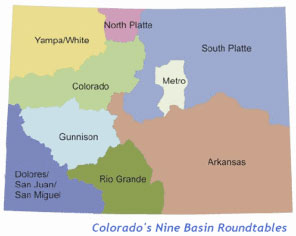
There are eight other river basins in Colorado, and the appointed roundtables in each basin, meeting under the auspices of the Colorado Water Conservation Board, are also developing their own BIPs.

Each plan is supposed to inform the state of the needs and potential water projects in each basin, and the basin plans will be incorporated into a statewide Colorado Water Plan.

The roundtable in the South Platte River Basin on the Front Range, and another roundtable representing metro Denver, are both likely to mention in their plans that new supplies of Western Slope water — meaning more dams and reservoirs — must be developed to meet the water needs of the state’s growing population.

Colorado’s population is expected to grow from 5.1 million today to between 8.6 and 10 million by 2050, according to state estimates, with most of that growth happening on the Front Range.

But the population on the Western Slope and in the Colorado River Basin is also expected to grow significantly, especially along the Interstate 70 corridor. The population in the Colorado River Basin was 307,000 in 2008. It is expected to climb to 661,000 to 832,000 by 2050.

The state has estimated that by 2050 there could be a “gap” between water demand and water supply of some 500,000 acre-feet in the state. Many members of the Colorado Basin Roundtable, which meets monthly in Glenwood Springs, question the validity of the size of the gap.

Even without a big new water-supply project being developed, the plan from the Colorado roundtable points out that many other smaller projects already in the works will divert even more water from the Colorado Basin. Many existing diversions could take more water, and may do so in the future, in a process known as “firming up yields.”

“It is currently estimated that an additional 150,000 AFY will be diverted in the future as Front Range diverters firm up yields in the future,” the plan states. “These additional planned firming projects include: the Moffat Collection System Project, Windy Gap Firming, Eagle River memorandum of understanding, Future Dillon Reservoir diversions, firming in the upper Roaring Fork and Fryingpan Rivers, and Colorado Springs Utilities expanded diversions from the Upper Blue River.”

Both the Fry-Ark project and the Twin Lakes project own conditional water rights that could be developed in the future, meaning more water could be diverted from the Roaring Fork and Fryingpan headwaters.

And yet, the Colorado Basin Roundtable’s plan is adamant that there is no more water to divert from the basin.

Tapped out?

“The Colorado Basin has played more of a role in solving Colorado’s water shortage than any other basin in the state,” the plan states. “These transmountain diversions have had a dramatic impact on the health of our ecosystems, economy and culture of the headwater counties of the Colorado Basin. The headwaters are tapped out.”

The plan, in another section, also plainly says that “there is no more additional water to support other basins into the future.”

The basin roundtable has also articulated a set of “Western Slope Principles,” chief among them is that “Colorado Water Plan solutions should originate first in the basin in which the problem exists.”

In other words, if the Front Range wants to keep growing, it has to find water in its own basin, not look to the Western Slope.

But throughout this planning process, Front Range interests have generally said it would not be a good idea to take any long-term options off the table.

The Colorado Basin plan also calls for the state of Colorado to remain neutral in the grand east-west fight over water.

“The state should act as a facilitator — not an advocate — in inter-basin conversations surrounding transmountain diversions,” the plan states.

The plan also makes a strong call for growth control in the Colorado Basin and the state.

“A strong link should be made between land use patterns and water use together in a meaningful and binding way,” the plan states. “Land use and growth should be directed within urban growth boundaries where water supply plans are currently in place. Land use planning across the basin should recognize the shortage and limits of water supply.”

It also notes, in an apparent dig at Front Range lawns, that “the land use policies of the future must recognize that preserving water for streams and rivers and maintaining agriculture is more important than watering outdoor landscapes.”

New reservoirs?

The Roundtable’s “basin implementation plan” clearly recognizes the need for new reservoirs to meet the needs of both agricultural and municipal needs, and it provides a list of potential new dams and reservoirs, albeit relatively small ones, across the sub-regions in the basin.

It also recognizes that building new reservoirs is going to be challenging, especially for municipal water utilities.

“Many of these water providers’ long term water supplies are based on conditional storage rights for on-stream reservoirs,” the plan states. “Today’s regulatory and permitting climate makes the construction of channel reservoirs virtually impossible.

“Even if they can be permitted as an off-channel reservoir, the expense for any one small utility is cost prohibitive,” the plan states. “Therefore many utilities are discontinuing the diligence filings on these on-channel reservoirs.”

The city of Aspen’s water utility, however, is not walking away from its conditional water rights for dams and reservoirs on upper Castle and Maroon creeks.

In fact, the city has been advocating for the two potential dams and reservoirs to be included in the basin’s draft plans and it has stated in the past it intends to keep the option open to build the reservoirs.

The dams on Castle and Maroon creeks are indeed mentioned in the draft basin plan, which was released by SGM on May 16.

The dams are listed in regional tables that SGM describes as “examples of projects that each region identified from the full list as being a top candidate for the Colorado Basin Roundtable.”

The table for the Roaring Fork region is on page 71 of the plan.

Under the column entitled “themes and supporting vulnerabilities,” it lists “Storage for supply assurance during low flow periods” under the subhead of “Secure Safe Drinking Water.”

The next column over is called “methods,” and here the plan recommends that the city should “investigate the development of storage reservoirs in both Maroon and Castle creeks if no better alternative is discovered.”

And under the column heading of “Projects,” it recommends the city “continue due diligence for the preservation of the 1972 storage rights on Maroon and Castle creeks by giving true consideration to all other potential options.”

Aspen is required in 2015 to file a diligence report with the state showing it is making progress toward building the dams and reservoirs.

While the statements in the draft basin plan would seem to give support for the idea of building a dam within view of the Maroon Bells, the plan also throws plenty of cold water on the idea of new dams in the high country to meet municipal needs.

“Water providers in the upper reaches of the basin are dependent upon direct flow stream intakes and are susceptible to extended drought periods,” the plan notes about water utilities in the Roaring Fork River watershed.

“Because the watersheds above these intakes are primarily located on U.S. Forest Service lands and because of the strong environmental ethics present, the likelihood of construction of reservoirs above intakes is small.

“These water providers should seek redundancy through other means including: enlargement of existing reservoirs, interconnects between regional water providers, development of well supplies and reliance upon multiple stream water supplies,” the plan states.

While the Castle and Maroon creek dams are mentioned in the section of the report that focuses on the Roaring Fork watershed, the primary emphasis in that section is about the lack of water in certain sections of local rivers.

“The primary need of the Roaring Fork watershed is to protect, maintain, and restore healthy rivers and streams,” the plan states. “Almost 140 of 185 miles of streams surveyed in the Roaring Fork watershed have moderately modified to severely degraded riparian habitat.”

The plan further notes that “there are three critical reaches of main streams that have been targeted for restoration 1) the Roaring Fork River below the Salvation Ditch through the city of Aspen; 2) the Roaring Fork River upstream of the confluence of the Fryingpan River, and 3) the Crystal River upstream from Carbondale.

“These three main reaches do not include all the smaller tributaries in the upper Fryingpan and the upper Roaring Fork that have been dried up due to transmountain diversions,” the plan states.

The plan then lists many water projects, some physical and some policy oriented, for the Roaring Fork basin and the five other sub-basins in the Colorado Basin.

The next step for the BIP is for the members of the Roundtable to review it at meetings in June. Then the draft is to be sent in July to the Colorado Water Conservation Board for its review.

In the meantime, if you want to dig deeper into your water future, go to SGM’s website at http://coloradobip.sgm-inc.com/ and look for the plan under the “Resources” tab.

More Colorado Water Plan coverage here.

Just 15 years ago, it was unthinkable that the [CWCB] would be in the fire business — @ChrisWoodka @CO_H2O


From The Pueblo Chieftain (Chris Woodka):

Just 15 years ago, it was unthinkable that the Colorado Water Conservation Board would be in the fire business. But the wildfires that have broken out since 2000 have been larger and more destructive than any in Colorado’s history — including their impact on watersheds the state’s 5 million people depend on.

“Prior to 2000, the largest fire had been 26,000 acres, and that happened in 1879,” said Kevin Houck, watershed and flood protection chief for the CWCB said Thursday at the board’s Pueblo meeting.

Since then, the state has witnessed the Hayman Fire (southwest of Denver), 2002, 137,760 acres; West Fork complex (near Creede) 2013, 110,405 acres; and High Park (west of Fort Collins) 2012, 87,284 acres.

In fact, 28 of the 30 largest wildfires have occurred since 2000.

In addition, 14 of the 15 most destructive fires have been since 2000. These include the Black Forest Fire (509 homes) in 2013, near Colorado Springs; Waldo Canyon (346 homes) in 2012, near Colorado Springs; the High Park Fire (259 homes); and the Fourmile Fire (169 homes) in 2010 north of Boulder.

Many of the fires impact watersheds, including Waldo Canyon, which sent sheets of mud into Fountain Creek last September, and the Hayman Fire, which has caused debris flows for years into Denver and Aurora reservoirs.

Houck praised Canon City officials for the quick response to the aftermath of the Royal Gorge Fire. Last year, the CWCB provided a $485,000 grant for mulching and planting to reduce the impact on Canon City’s water supply.

“The city only used about two-thirds of the grant, so we may get some back,” Houck said. He provided a list of more than $1 million in watershed restoration grants just to deal with fires in 2012-13.

After the East Peak Fire, Huerfano County continues to worry about dry conditions.

Tom Spezze, of the Rio Grand Watershed Emergency Action Coordination Team, gave the board an update on its actives to deal with water quality issues associated with the West Fork Complex and to prevent future fires.

Such fires not only affect water supply, but local economies as well, Spezze said. Creede lost 75 percent of its tourism revenue last July and was 40 percent off for the year.

The fire has left uncertainty in a private tourist camp that operates on federal land near a canyon now prone to flooding.

But the debris and silt after a fire is immense.

“We’re not sure what’s going to happen,” Spezze said. “The debris in one year filled Humphreys Reservoir. It had just been dredged for 25 years’ worth — all for naught.”

Aspen Journalism: What people are saying about the #COWaterPlan so far?

CWCB: Does the draft #COWaterPlan rely too much on unproven alternative ag transfers?

Colorado Water Plan website screen shot November 1, 2013

From The Pueblo Chieftain (Chris Woodka):

A state water plan may be putting too much weight on alternative transfer programs that seek to temporarily provide water to cities from farm lands. While the goal of such programs is to reduce the possibility of permanent dry-up of agriculture, there is little evidence to prove they would work, said Patricia Wells, a member of the Colorado Water Conservation Board, meeting in Pueblo this week.

“Has any transfer method actually happened with rotational fallowing?” Wells, general counsel for Denver Water, asked during Wednesday’s CWCB meeting at the Pueblo Convention Center.

The board was reviewing draft chapters of the state water plan being developed by CWCB staff. Other topics included conservation, water quality and project permitting.

“This chapter paints a rosy picture of alternative transfers,” Wells added. “This doesn’t mean alternative transfer methods can’t be done, but they haven’t been done.”

The Arkansas Valley Super Ditch formed in 2008, but has had difficulty launching pilot programs because drought reduced water availability, permit complications and farmer participation.

In 2013, the Legislature passed HB1130, which set up a framework for long-term lease arrangements, and HB1248, which allowed for 10 pilot programs that have not materialized.

Super Ditch attempted to run a pilot program under HB1248 with the town of Fowler this year, but plans fell through.

This year, a proposal to create a flex marketing water right failed because opponents said it amounted to legalizing speculation.

In 2004-05, Aurora and the Rocky Ford High Line Canal engineered a temporary transfer program that was successful, although it raised questions of moving water from one river basin to another.

Since then, the state has spent millions of dollars on grants to study alternative transfer methods, but large metro providers are reluctant to enter long-term deals without more certainty.

“Unless we find some way to do this, there are barriers,” Wells said.

Board member John McClow, a Gunnison attorney, questioned CWCB staff for using language from the Interbasin Compact Committee’s report rather than taking a fresh approach.

Travis Smith, a board member of both the CWCB and IBCC, responded that the IBCC reached agreement on using alternative transfers several years ago, and thought that should be reflected in the state water plan.

Meanwhile the Arkansas Valley Conduit was also a topic at yesterday’s CWCB meeting in Pueblo. Here’s a report from Chris Woodka writing for The Pueblo Chieftain:

The state showed more support for the Arkansas Valley Conduit Thursday, pledging cooperation in helping to obtain federal funding for the $400 million project.

“This is the last piece of the Fryingpan-Arkansas Project,” said Jim Broderick, executive director of the Southeastern Colorado Water Conservancy District. “It’s been a long wait for something that was promised 50 years ago.”

Broderick gave an update of the conduit to the Colorado Water Conservation Board, which met Thursday at the Pueblo Convention Center.

Contract negotiations will begin later this year for the conduit and two associated federal contracts to provide a master storage lease in Lake Pueblo and a cross-connection between south and north outlets on Pueblo Dam.

More Colorado Water Plan coverage here. More Arkansas Valley Conduit coverage here. More CWCB coverage here.

Business in Colorado? Just add water. #COWaterPlan

From the Public News Service (Stephanie Carroll Carson):

If the Colorado economy were a glass, water makes the glass half full. That was the message heard on Wednesday by the Colorado Water Conservation Board in Pueblo. Business leaders across the state spoke on behalf of the state’s water plan and its importance to business development.

John Le Coq, co-founder and co-owner of the Denver-based companies Fishpond and Lilypond, said water has everything to do with his business plan.

“I see it as more of an economic driver that’s pulling people to the state because of the playground we have in our backyard,” he said. “It’s bringing quality people. ”

Le Coq delivered a letter on Wednesday to the Water Conservation Board signed by more than 100 Colorado companies that share his opinion. They want to make sure the state and the governor prioritize Colorado’s rivers and streams because of their economic benefits.

According to the business coalition, Protect the Flows, the Colorado River supports $26 billion in recreation and 240,000 jobs in six states.

Craig Mackey, Protect the Flow’s co-director, said with the state’s population projected to double by 2050, Colorado should commit to reducing municipal water usage by 35 percent in that time period.

“If we want to have a healthy, diverse economy in the state of Colorado, we need to make sure that we have ample, healthy, natural resources, including water and rivers,” he stressed.

Mackey said because more than 80 percent of water diverted from area rivers goes to farms and ranches, an investment in agricultural infrastructure is key.

“We certainly don’t want to see our farms dry up and go away,” he explained. “We certainly don’t want to see that part of the ranching and farming tradition of Colorado dry up and blow away, and we need that part of our economy.”

Maximizing water storage systems is also seen as important to protect water supplies when record snowfall – as seen this season – creates an excess of the precious resource.

More Colorado Water Plan coverage here.

Solving the supply gap problem #COWaterPlan

Colorado transmountain diversions via the State Engineer's office
Colorado transmountain diversions via the State Engineer’s office

From The Colorado Springs Gazette (James Hagadorn):

There is cause for concern because Colorado is growing. A lot. Which means more baths, more grass and more thirsty crops. Yet the Rockies’ runoff-capturing system is nearly all claimed. In some years there is some water left untapped in the system, but in drought years there isn’t enough.

Sometimes heavy floods help the system catch up by filling reservoirs that buffer demand. But multiple dry years or less-than-average snowpack years, coupled with steady population growth, means that the system is at its tipping point.

The days of prospecting for more Rocky Mountain water are essentially over. Thus, viable solutions include improving efficiency or “buy and dry” – a strategy employed by cities such as Aurora where water is taken from farmland and used to slake suburbs.

Within our water distribution system, there are minor efficiencies to be gained, including reducing evaporative water losses in canals and reservoirs and fixing leaking pipelines and tunnels. But these losses are not sizeable enough to satisfy future demand.

Fortunately, there are opportunities to improve our individual water usage efficiency. This is illustrated by the great variation in the amount of water used by like-kind Coloradans. For example, over the course of a year, Colorado Springs residents use about 100 gallons/day, whereas Denverites use about 85 and Fort Lovely residents use about 130. Yet in the same cities, there are folks with similar homes and lifestyles who use much less water.

Pumping, cleaning and maintaining water consumes lots of energy. And this costs money. To put things into perspective, our family uses between 4,000 gallons per month in the winter and 11,000 gallons per month in the summer. We pay as little as $2.58 per 1,000 gallons. In contrast, Colorado Springs and other Front Range communities pay more – $4 to $5 per 1,000 gallons. It could be worse, though. Los Angeles residents, who divert mountain and agricultural water just like we do, pay $6.31 per 1,000 gallons.

So as we look to the future, perhaps we ought to think about water in the context of energy and with an eye toward balancing economic and population growth with needs for water for farming, forests, wildlife, recreation and tourism.

More Colorado Water Plan coverage here.

Arkansas Basin Roundtable: “You really changed the conversation for the good” — Russell George #COWaterPlan

Basin roundtable boundaries

From The Pueblo Chieftain (Chris Woodka):

Just as a big river is a collection of smaller streams, a state water plan will be made up of many smaller efforts. The Colorado Water Conservation Board got a taste of that at its meeting Wednesday at the Pueblo Convention Center.

It reviewed the activities of roundtables which are contributing to the plan. “From Hugo to Trinidad, all over this part of the state, we’re listening to what people are saying about water in their region,” said Betty Konarski, chairman of the Arkansas Basin Roundtable.

The roundtable has been the most active in the state at gathering input, according to a CWCB staff report.

About a dozen meetings have been held so far, with a few more planned in coming weeks.

The roundtable has been a pacesetter for the rest of the state since its inception in 2005, conducting numerous studies about water needs and collaborative methods to complete projects. Like other roundtables, it also has found ways to help fund projects that reduce the coming gap in municipal supplies. At the same time, the Arkansas River basin group has focused statewide attention on addressing the need for agricultural water supplies.

“What I’ve noticed in the last six to eight months is a new energy and a new commitment,” said Alan Hamel, the Arkansas Basin representative on the CWCB.

CWCB board member Russell George, who was the architect for the roundtable process as state director of the Department of Natural Resources, recalled the mood when the roundtable first met at the convention center nine years ago.

“I was apprehensive. No one was smiling. The room was full,” George said. “But there was energy and interest. Everyone spoke their minds, and listened. I’m stunned by the amount of time, effort, thinking and reading this group has done.

“You really changed the conversation for the good.”

2014 Colorado legislation: Governor signs SB14-115 in Salida #COleg #COWaterPlan

Colorado Water Plan website screen shot November 1, 2013

From The Mountain Mail (J.D. Thomas):

Gov. John Hickenlooper visited Salida Thursday to sign into law a bill sponsored by Sen. Gail Schwartz (D-Snowmass). The governor signed the bill, named State Water Plan Public Review & General Assembly, at 9:42 a.m. at Salida SteamPlant.

According to a summary of the bill, the legislation requires the Colorado Water Conservation Board to hold a hearing within each basin roundtable on a draft to develop a state water plan, update the plan based on public comments and present the draft plan to the Water Resources Review Committee. The committee must vote on whether to introduce legislation that would approve the plan. A state water plan does not have the force of law unless the General Assembly approves the plan, the summary states.

Getting input from more interest groups, other than just agricultural and urban water interests, was the goal of the bill, said Hickenlooper. He said he welcomed environmental and recreational interests to be recognized in the state water plan.
Schwartz said the bill is meant to open the conversation between the eastern part of the state, which she said has 80 percent of the population, and the Western Slope, which has 80 percent of the water.

Rep. Don Coram (R-District 58), a co-sponsor of the bill, attended the signing. Other co-sponsors, Sen. Ellen S. Roberts (R-District 6) and Rep. Randolph Fischer (D-District 53), were unable to attend.

Hickenlooper said it was a treat to come back to Salida, and he welcomes any excuse to visit again. Visiting Salida was part of a tour of the southern part of the state, he said.

Arkansas Basin Roundtable meeting recap #COWaterPlan

Arkansas River Basin -- Graphic via the Colorado Geological Survey
Arkansas River Basin — Graphic via the Colorado Geological Survey

From The Pueblo Chieftain (Chris Woodka):

A series of community meetings on the development of a state water plan appears to be raising some lingering water issues. The Arkansas Basin Roundtable is sponsoring the meetings throughout the area in an effort to encourage more people to participate in a statewide water planning process.

Although the roundtable has met nearly every month since 2005, with ample opportunities to participate, there has been concern from the state Legislature that meetings have not been inclusive enough statewide. More than 20 non-members typically attend the Arkansas Basin Roundtable meetings.

In March, the roundtable redoubled its efforts to reach out, and already has held a dozen meetings, including the Arkansas River Basin Water Forum in April. At least six more meetings are planned, including one in Pueblo — no date or place have been set. Information can be found at the website, http://arkansasbasin.com.

Meetings so far have attracted anywhere from a handful to 60 people. The largest was at Primero during a snowstorm. Reactions have ranged from acceptance to resistance by some who believe the water plan will mean more regulations.

In Lamar, the biggest issue seemed to be the impact of a dam on Fountain Creek on downstream water rights, said Henry Schnabel, Prowers County commissioner. The dam is favored by some in Pueblo to contain increased flood flows caused by development in Colorado Springs. Farmers in the eastern part of the state fear that would change the timing of flows that reach the Arkansas River and reduce the amount of water they receive from Fountain Creek storms.

“A lot of times, we feel like we’re left out,” Schnabel said. “If you stop the water on Fountain Creek, we need to come up with a solution.”

Roundtable members were grateful for the turnout witnessed so far.

“It’s good to see the level of involvement, because we’ve reached out,” said Alan Hamel, former chairman of the roundtable and the basin’s representative on the Colorado Water Conservation Board.

From The Pueblo Chieftain (Chris Woodka):

Urban water conservation measures could be difficult to measure in the Arkansas River basin, where size and scope matter. The Arkansas Basin Roundtable confronted the issue Wednesday as it continues toward developing a basin implementation plan by July. The basin plan is part of a broader effort to develop a state water plan.

Most roundtable members resisted a preliminary approach by consultant Mark Shively that sought to create a “point system” that would identify best practices to save water.

The only part of the proposal that truly resonated was the statement: “One size does not fit all.”

“The conservation plan does not take into account things like our wise use campaign or economic forces within communities,” said Terry Book, executive director of the Pueblo Board of Water Works. “Demographics make a difference. I believe each community has the obligation to define good, better or best.”

Pueblo’s per capita water use has dropped as much as other Colorado communities with aggressive conservation campaigns since 2002. Some of that is because of the downturn in the economy, but a 2007 survey found customers’ habits have changed as well.

In Crowley County, the per capita use is higher because domestic water supplies overlap with water for horses or other livestock, said Rick Kidd, who represents the county on the roundtable.

Communities that already have lowered water use could be penalized under a point system, said Dave Taussig, who represents Lincoln County.

The danger of voluntary guidelines is that they could, over time, become mandatory, said Joe Kelley, superintendent of La Junta water.

“The first thing you know, everybody’s regulated,” Kelley said. “Then you have to spend money you don’t have to get money for grants.”

May 2014 CWCB Board packet is now online for review including several new draft chapters/sections of #COWaterPlan

More Colorado Water Plan coverage here.

Grand County “State of the Rivers” meeting May 13 #ColoradoRiver

Historical Colorado River between Granby and Hot Sulphur Springs

From the Sky-Hi Daily News:

Many claim that we are now living in a “new normal.” In fact, there is no “normal” when it comes to our rivers. In the last 12 months we have gone from heavy autumn rains, enjoyed abundant late-season snow and are now faced with earlier record river flows.

How are water managers reacting to this incredible variability? And what might we anticipate in the near future? There may seem to be plenty of water to satisfy for now, but how does this year’s supply affect longer-term needs? These questions will be the subject of a public outreach and education meeting sponsored by Grand County and the Colorado River District.

The public can learn more about this season’s outlook for river flows, reservoir levels, overall water yields and the status of the longer-term drought at this annual “State of the River” meeting set for 6 p.m. on Tuesday, May 13, at Mountain Parks Electric, 321 W. Agate Ave., Granby.

Water experts from the U.S. Bureau of Reclamation, Northern Water, Denver Water and the Colorado River District will present detailed information related to operations of area reservoirs and how they may affect river flows.

Lastly, Eric Kuhn, General Manager of the Colorado River District, will talk about Colorado’s effort to create a statewide water plan and western Colorado’s perspective on the questions of supply versus demand, the future of the Colorado River basin and other regional river basin issues.

More Colorado River Basin coverage here.

#COWaterPlan: “We’ve gotten awfully good at taking water away from agriculture” — Eric Wilkinson #ColoradoRiver

Flood irrigation in the Arkansas Valley via Greg Hobbs

From The Greeley Tribune (Eric Brown):

A northern Colorado water official expressed concern this week that talks of bringing more Western Slope water across the Continental Divide might take a backseat to other aspects of the long-term, comprehensive Colorado Water Plan.

The statewide water plan — put in motion by Gov. John Hickenlooper and expected to be complete in 2015 — takes into account all aspects of water use in the state, such as further conservation efforts and new water-sharing arrangements between cities and agriculture, among many other efforts aimed at avoiding the large water shortages the state is forecast to face by 2050.

A number of things have been agreed upon in the talks, but building new water-supply projects has long been a hot-button issue — particularly projects that would bring water from the Western Slope to Eastern Slope users.

Discussions Tuesday and Wednesday between representatives of all of Colorado’s river basins made limited progress on the topic.

During the meeting, Eric Wilkinson, general manager of the Northern Colorado Water Conservancy District in Berthoud, expressed concern Tuesday that, because of its controversial nature, trans-mountain water diversions seem to be taking a backseat to other aspects of the long-term water plan.

Wilkinson stressed that without more water going to Eastern Slope users, agriculture in particular will suffer.

“We’ve gotten awfully good at taking water away from agriculture,” said Wilkinson, referring to the ongoing buy-and-dry issue taking place in Colorado, particularly on the Eastern Slope.

The purchasing of water rights from ag producers leaving the land is a comparatively inexpensive way for cities to acquire needed water.

Because of that, however, Colorado is on pace to see as many as 500,000 to 700,000 acres of irrigated farmland dry up by 2050, according to the Statewide Water Supply Initiative study, released in 2010.

With much of Colorado’s ag production taking place in northeast Colorado — particularly in Weld County, which ranks in eighth in the nation for its production — it’s the region that could be hit the hardest.

“If we investigate the possibility of bringing more water over here from the West Slope, and we’re told ‘it can’t be done,’ that’s fine,” Wilkinson said in an interview after the meeting. “But we at least need to be looking into it … and putting as much effort into that as we are other things, like conservation, and every other leg of the stool in these water talks.”

A commitment in the Colorado Water Plan to at least explore trans-mountain water diversions could help such projects, if feasible, get off the ground quicker, which is vital, Wilkinson said, considering that those projects — when factoring in planning, permitting and actual construction — take decades to complete.

The disagreement over trans-mountain water diversions between Eastern Slope and Western Slope water officials and users goes way back.

About 80 percent of the state’s population lives on the Eastern Slope but about 80 percent of the state’s water supplies — primarily snowmelt in the mountains — sits on the West Slope.

To meet the needs of the growing Front Range and northeast Colorado’s robust ag industry, Eastern Slope water providers have long built projects that bring water across the Continental Divide.

There are now more than 30 such projects bringing about 450,000 to 500,000 acre feet of water each year from the Western Slope to the Eastern Slope, Wilkinson noted.

Many on the Western Slope have expressed concern and want the Eastern Slope to stop diverting more of its water.

While only about 20 percent of the population lives on the Western Slope, the Western Slope has its own water demands to meet, mainly its legal obligation to make sure several states downstream from Colorado receive certain amounts of water.

Meeting those needs, while also contributing to those of Colorado’s Eastern Slope, is stretching the Western Slope thin, water officials from that part of the state say.

At the same time, though, many northeast Colorado water officials stress they’re set to face their own water crises, and more trans-mountain diversions, if feasible, would make a huge dent in solving the problem.

From The Grand Junction Daily Sentinel (Dennis Webb):

A representative of Front Range water providers told a Western Slope contingent Monday that Colorado can’t close its future supply gap through conservation alone, and other efforts need to include working on a potential new transmountain diversion project. But several participants at a meeting of the Colorado River Roundtable remained leery of any such idea, including what’s being called a breakthrough proposal that would limit such a project to diverting water only in wet years. The roundtable, covering the six-county mainstem of the Colorado River Basin, was meeting as it continues to prepare final recommendations for what it wants to see in a state water plan to meet future needs.

Much of the debate in that planning process has centered on the potential for further Front Range diversions of Western Slope water. Early this month, the Front Range Water Council told the Colorado Water Conservation Board that plan needs to contain an assurance rather than just the hope that a new Colorado River diversion project would be part of the plan.

Mark Pifher of Colorado Springs Utilities told those attending Monday’s meeting that the concern stemmed from an idea discussed by basin roundtable leaders that water supply might be put at the bottom of a sequential list starting first with conservation, then transfers of agricultural water, then completion of already-planned projects, with no assured pursuit of new supply. Instead, all four concepts should be worked at simultaneously so Front Range utilities can know that “there’s some certainty that new supply will be there when you need it, if you need it,” he said.

He outlined a number of ways those utilities already are pursuing all four approaches to addressing water needs, including by having cut per-capita water use by 20 percent. But he said studies suggesting the Front Range can entirely meet future needs through conservation is wrong, and that it’s just a question of when more supply will be needed.

“The world’s not going to stop in 2040 or 2050 or 2060. Demand is going to develop,” he said.

While Front Range utilities want to be able to count on Western Slope water to help meet that demand, one of the themes the Colorado River Roundtable is settling on is that at least the mainstem six-county basin already has given up plenty of water to the Front Range and has no more left to develop.

The state Interbasin Compact Committee is hoping a compromise might be reached through the idea of a new water project providing no firm yield of water, with diversions occurring only in years of above-average precipitation. The concept is receiving some Front Range support.

Carlyle Currier, a Mesa County resident who sits on the committee, said many on the Western Slope long have said it needs protection from diversions in dry years.

“I think this (new idea) offer certainly opened the door to that and went in the direction we’ve been talking” about, he said.

But several who attended Monday’s session questioned whether the region can afford to give up water even in wet years. They pointed to low water levels at Lake Powell, which states in the Upper Colorado River Basin use to help meet compact obligations to states in the Lower Basin.

“Shouldn’t high-water years be when we start to replenish Lake Powell?” asked Rachel Richards, a Pitkin County commissioner.

She said wet years also provide the environmental benefit of variety in stream flows from year to year if the water isn’t being diverted. And if the Western Slope builds more storage of its own, it needs to make sure it has the ability in high-water years to fill those reservoirs, she said.

Despite the widespread reservations within the roundtable about more transmountain diversions, they generally agreed Monday that they need to at least be willing to discuss the possible conditions of such diversions so decisions aren’t made without their involvement. Several suggested that one condition governing wet-year diversions should be the current water level at Lake Powell.

More Colorado Water Plan coverage here.

Residents in the Arkansas River basin are encouraged to participate in developing #COWaterPlan

Basin roundtable boundaries

From the Lamar Ledger:

Residents in the Arkansas River basin are encouraged to participate in developing Colorado’s Water Plan.

Governor Hickenlooper issued an executive order in 2013 calling for the development of a statewide water plan, the first draft of which will be complete in Dec. of this year.

Each river basin in the state, including the Arkansas Basin, is developing a Basin Implementation Plan (BIP) that will forecast future water needs in the basin and identify way to meet those growing needs in a state where water is scarce.

The BIP information from all basins will be folded into the final state plan.

The Arkansas Basin Roundtable has been working on this issue for many years, and wants to be sure every voice is heard as many interests compete for a limited supply of water.

several ways of providing input are being offered to basin residents.

Attend a meeting of the Arkansas Basin Roundtable

Upcoming meetings include:

May 14 from 11:30 a.m. to 3 p.m. at CSU in Pueblo.

June 11 from 11:30 a.m. to 3 p.m. with a location to be determined.

Attend a meeting hosted by a member of the Roundtable

Attend one of these meetings in or near your community to hear more about the planning process and offer your opinion on water issues that affect you and suggest potential projects or policies that will help meet future needs. Meetings planned so far can be found at arkansasbasin.com.

Long on to the basin Web site

You will find a wealth of information about what has been done so far in the planning process and complete a survey that will ask for your opinion on water matters at http://arkansasbasin.com.

Contact the Arkansas Basin Roundtable member to share your thoughts or find out more about this statewide effort to secure Colorado’s water future.

When finalized, Colorado’s Water Plan will be an important tool in protecting water for all uses in our state – agriculture, the environment, recreation, municipalities and industries. The members of the Arkansas Basin Roundtable urge all citizens to consider the importance of water to our future.

More Colorado Water Plan coverage here.

The latest annual report from the Colorado River District is hot off the presses #ColoradoRiver

2013annualreportcoloradoriverdistrict

Click here to read the report.

More Colorado River District coverage here. Here’s an excerpt:

Thanks to the efforts of Gov. John Hickenlooper, Colorado is pushing forward with the tough, so-called “adult” conversation on how to best supply water to a growing population. In May 2013, the governor issued an executive order that mandates Colorado develop its first-ever state water plan by 2015, with draft documents due in 2014.

The Colorado River District Board of Directors and staff are involved at many levels with a keen interest in protecting Western Colorado water, which has been our mission since 1937. The pres- sure is on – again – as it has been since our founding. This time, the State Demographer has predicted the state population could double by 2050. The 2010 Statewide Water Supply Initiative, produced by the Colorado Water Conservation Board, reconnaissance-level study of population and water, predicts the state has a looming gap of 500,000 acre feet of water as population grows. That is equivalent to two full Dillon Reservoirs or a little bit less than a full Granby Reservoir, to put it in perspective.

The two biggest targets to fill the gap are agricultural irrigation water and the Colorado River System – two vital interests of the River District. In Western Colorado, agriculture provides food, de facto open space and habitat, economy and culture. Agricultural water running down the rivers from the headwaters to the agricultural lands in the lower valleys is the same water upon which a recreational economy plays, while it also enhances the riparian environment.

Arkansas River Basin Water Forum: “What happens when you overdevelop?” — Jim Pokrandt #COWaterPlan

Arkansas River Basin -- Graphic via the Colorado Geological Survey
Arkansas River Basin — Graphic via the Colorado Geological Survey

Chris Woodka was front and center at the Arkansas Basin Water Forum. Below are 3 articles recapping the first day of the event.

From The Pueblo Chieftain (Chris Woodka):

A team of paragliders won’t cut it out of a glacier with a chainsaw. A ski patrol can’t bring it down from the top of a snowy mountain. Deep-sea divers won’t blow up an iceberg to get at it. In other words, no Silver Bullet for the state water plan. But it will provide options, said James Eklund, executive director of the Colorado Water Conservation Board.

“If you want to do planning, you have to do it before the crisis hits,” Eklund told the Arkansas River Basin Water Forum at Otero Junior College on Wednesday. “We’re not going to luck into what we want for our kids. We have to be intentional.”

The state water plan occupied all of the attention at the first day of the forum, along with the Arkansas Basin Roundtable’s basin implementation plan. The forum continues today with the focus on preserving irrigation for farms. The basin plan will be part of a draft state water plan that will be submitted to the governor in December.

“I can’t tell you what will be in the plan,” Eklund said. “It has to come from the grassroots up.”

The basin roundtables, the Interbasin Compact Committee and the CWCB have been talking about the core issues of a water plan — alternatives to ag dry-up, urban conservation, new supply, storage and environmental needs — for 10 years. New meetings are pushing to include more people in the statewide conversation, with about a dozen more planned in the next three months.

Eklund stressed the need to preserve watershed health to prepare for drought, floods and fires that have plagued the state for the past two years. While there will be measurable outcomes, the state water plan likely will not contain blanket solutions for filling the needs of cities on the Front Range as more people move into the state, he added.

“There may be tough decisions in the future,” Eklund said, speaking about some climate models that show reduced snowpack in coming years. “If climate change occurs, at that point dramatic steps will be taken. We have to be comfortable as a state.”

From The Pueblo Chieftain (Chris Woodka):

The Arkansas River basin is no stranger to the troubles of overdevelopment of water resources. But its neighbors also have complaints as they develop their part of the state water plan. Experts from four other basins shared some of those Wednesday at the Arkansas River Basin Water Forum at Otero Junior College.

September’s record floods were a mixed blessing for the South Platte basin, said Sean Cronin, executive director of the St. Vrain and Left Hand Water Conservancy District.

“While some reservoirs filled, it wiped out the infrastructure to deliver water to ditches,” Cronin said.

The Rio Grande basin has been in drought since 2002, and will provide little help in meeting the state’s water gap because it’s struggling to fill its own needs, said Mike Gibson, general manager of the San Luis Valley Water Conservancy District.

“We’re an ag-based economy, and we have a gap already,” Gibson said.

He jokingly suggested moving Interstate 70 — the dividing line for the state’s wet and dry weather — 300 miles south to solve state water problems.

The Gunnison River basin is softening its hard line against taking water out of its basin, but would demand tough conservation measures and no Colorado River Compact complications before agreeing to any further diversions out of the basin, said John McClow, attorney for the Upper Gunnison River Water Conservancy District. It’s still not a popular idea.

“We’re an untapped basin and intend to keep it that way,” McClow said. “And, we’re paranoid.”

Colorado transmountain diversions via the State Engineer's office
Colorado transmountain diversions via the State Engineer’s office

The Colorado River basin is also resistant to more transmountain diversions, said Jim Pokrandt, an education and communication specialist for the Colorado River District. The Front Range already takes 450,000-600,000 acre-feet from the Colorado River each year, so there is no excess water. Pokrandt applauded cooperative agreements with the Denver Water Board and proposals by the Northern Water Conservancy District as examples of moving ahead collaboratively. The Colorado River basin is cautious because of the types of problems the Arkansas River and Republican River basins already have faced.

“What happens when you overdevelop?” Pokrandt asked. “The Colorado River Basin Roundtable does not want that kind of future.”

From The Pueblo Chieftain (Chris Woodka):

An aquatic biologist who worked to establish a high-quality fishery on the Upper Arkansas River was honored Wednesday. Greg Policky, who works for Colorado Parks and Wildlife, received the Bob Appel Friend of the Arkansas River award at the 20th Arkansas River Basin Water Forum. The award is named for the late Bob Appel, who was a farmer and conservationist who helped found the forum 20 years ago. Policky has been the state’s primary biologist for the Upper Arkansas River for more than 20 years and has worked to improved the brown trout fishery.

“His attention to detail and collection of objective fishery data has provided numerous benefits to the river’s fishery,” said Jean Van Pelt, in introducing him at the forum.

In addition to programs and studies, his ability to provide public education about fisheries was cited.

“His goal is to increase the public understanding of aquatic ecology and fishery management,” she said. “He has actively targeted angling organizations and land resource agencies, but he finds his most rewarding beneficiaries in school-age children.”

Policky was humble in accepting the award, thanking members of the Arkansas River basin forum for working together on the voluntary flow program, which modulates reservoir releases for the benefit of fish.

Past winners of the Appel award are Mike Conlin, Denzel Goodwin, Paul Flack, Reed Dils, Carl Genova, Allen Ringle, Bud O’Hara, Alan Hamel and Steve Witte.

More Forum coverage from Bette McFarren writing for the La Junta Tribune-Democrat:

The 20th Arkansas River Basin Water Forum “Planning and Planting for the Future” got under way on Tuesday evening at Otero Junior College. Welcoming the group was La Junta Utility Board Chairman Lorenz Sutherland.

The first session was “Landscaping for Drought Tour of Otero Junior College Campus,” an informative session on selecting drought tolerant plants, xeriscape principles and growing drought tolerant trees, conducted by Genia Short of Otero Junior College, Liz Catt of Southeastern Colorado Water Conservancy District, and Shelly Simmons of the Colorado State Forest Service. The group urged use of drip irrigation and showed the simple and inexpensive tubing needed to accomplish the job. Also stressed were weed barrier material which is water permeable, gravel for mulch and edging to keep out encroaching grass. Also, look at your neighbors’ yards for good drought-tolerant plants. Anything with a bulb or tuber, such as irises and tulips, are drought-tolerant. Also, the old-fashioned bushes like spirea and rose of Sharon are good. Many other design suggestions and tree selection pointers made the session extremely worthwhile.
In the next session, Kevin Rein of the State Engineer’s Office explained the complications of the Colorado water rights system. It sounds simple, first in, first rights, but industrial, agricultural and municipal needs have complicated matters. Many states, in fact more than half of the United States, depend on water originating in Colorado, known as the Headwater State. “It falls as snow on our mountains,” said Rein, “melts, and runs off out of state. We try to catch a little of it as it goes by.”

La Junta’s Director of Water and Wastewater Joe Kelley led off the session on the Arkansas Valley Conduit, supported by Erin Mink, of Senator Mark Udall’s office. She recalled 20 years ago when she was warned about our drinking water while she was working at Bent’s Old Fort. Also making comments about the conduit were Doris Morgan of Congressman Cory Gardner’s office and Brian McCain, of Congressman Scott Tipton’s office. They emphasized that all of Colorado’s congressional representatives are supporting the Arkansas Valley Conduit.

On Wednesday morning, the really big crowd arrived, filling the adjacent parking lots around the Otero Junior College Student Center. Host Chairman Lorenz Sutherland, Otero County Commissioner Keith Goodwin, and La Junta City Manager Rick Klein welcomed the group. The local color guard presented the colors. The keynote speaker was James Eklund, director of the Colorado Water Conservation Board, who spoke on “Colorado’s Water Plan.”

More Arkansas River Basin coverage here.

“Front Range wants dibs on the” #ColoradoRiver — The Grand Junction Daily Sentinel #COWaterPlan

Colorado transmountain diversions via the State Engineer's office
Colorado transmountain diversions via the State Engineer’s office

From The Grand Junction Daily Sentinel (Dennis Webb):

A coalition of Front Range water utilities is calling in a letter for assurance that a new transmountain diversion project will be a part of a state plan aimed at filling the anticipated future gap between demand and supply.

That desire by the Front Range Water Council is unsettling others who question whether the Western Slope has any more water left to give.

[…]

The letter to the Colorado Water Conservation Board was written by James Lochhead, chief executive officer and manager of Denver Water. Other utilities also on the council are Aurora Water, Colorado Springs Utilities, the Northern Colorado Water Conservancy District, the Pueblo Board of Water Works, the Southeastern Colorado Water Conservancy District and the Twin Lakes Reservoir and Canal Co.

It says that the planning process “should begin with an assurance, and not simply a hope,” that a new project involving Colorado River water will be a fundamental part of the package for meeting the state’s future water needs.

Roundtable groups around Colorado, including in the Colorado River Basin, are preparing proposals that the conservation board will consider in trying to come up with a statewide plan.

The Front Range Water Council’s concerns center on meeting notes from a March 17 conference call involving chairmen of the roundtable groups. The notes include a reference to a goal of giving water providers “an indication that there is hope for new supply” if the providers do their part. They went on to refer to various conservation and other milestones that would have to be met prior to an agreement for new supply being reached.

Jim Pokrandt of the Colorado River Water Conservation District is chairman of the Colorado River Basin roundtable and sits on the Interbasin Compact Committee. He described the conference call conversation as a “schematic on how to talk about diversion, illustrating how the discussion might go” in the state planning process.

“It was purely contemplative but it had stuff in there that could be taken out of context and that’s what the Front Range Water Council got excited about … but they’re reacting to something that doesn’t exist,” he said.

That said, Pokrandt questioned how the utilities can expect a new diversion to be a sure thing.

“They’re looking for more than hope and I don’t know how there can be hope when you don’t know if there’s enough water, you don’t know if all the other conditions can be answered, if the public will go for it and finance it, if you can get permits,” he said.

Western Slope water officials long have worried that a statewide plan would simply be a means of paving the way for further diversions of water to the Front Range.

However, the Interbasin Compact Committee now envisions that the plan won’t identify a specific diversion project, but will lay out conditions under which one could be pursued.

In an interview, Lochhead said no one can currently say what a new diversion project would look like, where it would be located, or how much water will be involved.

“But we need to all agree that that is an option that needs to be secured and preserved and not just kind of put out in the future for some future discussion,” he said.

Pokrandt said he thinks the Colorado River Roundtable’s position will be that it doesn’t think any more water is available to support more Front Range diversions.

He said the group is willing to study the idea, but there’s no guarantee enough water exists for a diversion and the outcome can’t be preordained to meet the Front Range utilities’ desire for an assured project.

“I don’t know how you get more than hope with all the questions out there,” he said.

For years, the focus in terms of filling Colorado’s water gap has involved what officials call a four-legged stool involving conservation/reuse, completion of projects already in the planning process, transfers of agricultural water, and new diversions.

“That’s been the most difficult thing to talk about,” Pokrandt said of the diversion concept.

Said Lochhead, “The option of the development of that leg needs to be preserved.”

He said he thinks it’s premature for the Western Slope to say there’s no water available. New supply needs to be part of the strategy and there needs to be a discussion of how and when it should occur, and what the Western Slope benefits can be, he said.

Mesa County Commissioner Steve Acquafresca has been keeping an eye on what the Colorado River roundtable group has been preparing and thinks it is doing a good job of articulating the region’s best water interests.

That includes the possible conclusion about the lack of more water for diversions in part because of Colorado’s water obligations to downstream states under an interstate compact.

“I think the Colorado River roundtable really makes a good case,” he said.

He expects the water conservation board to receive conflicting plans from western and eastern roundtables.

“It’s going to be really interesting to see how the CWCB manages these diverging views as they integrate them together into some statewide water plan,” he said.

Lochhead noted that the letter he signed is from a group of utilities, and when it comes to Denver Water alone, it has a new agreement with Western Slope entities that would require their buy-in for any future diversions by that utility. He said it remains committed to that agreement.

But speaking for Front Range utilities more generally, “If the (Western Slope) position is there’s no water to be developed, what that says is there’s no room for discussion. We need to move beyond platitudes and politics and parochialism and move toward actual discussion,” he said.

At the same time, Lochhead conceded the potential for discussions to start to fall apart when parties start engaging in letter-writing.

“I’ll plead guilty to that here,” he said.

More Colorado Water Plan coverage here.

The Colorado Basin Roundtable trims the list of potential projects for the basin implementation plan #COWaterPlan #ColoradoRiver

maroonlakewikipedia

Aspen Journalism is collaborating with the Aspen Daily News covering water issues in Colorado. I met one of their reporters, Nelson Harvey, last Wednesday at the Water Availability Task Force meeting. Aspen Journalism now has boots on the ground in Denver and on the Front Range.

Here’s an article about the Colorado Basin Roundtable basin implementation plan from Brent Gardner-Smith writing for the Aspen Daily News:

Consultants for the Colorado River Basin Roundtable earlier this week passed out a much shorter list of water projects to be potentially included in a draft water-supply plan for the area.

New reservoirs on upper Castle and Maroon creeks were not included on the working draft list, but enlarging three existing reservoirs in the Roaring Fork River watershed are.

The potentially expanded reservoirs include Spring Park Reservoir on Missouri Heights; Ziegler Reservoir just outside of Snowmass Village; and Martin Reservoir just above the Sunlight ski area.

Instead of over 500 potential projects and updated policy suggestions, the draft list passed out at a roundtable meeting on Monday by consulting engineer Louis Meyer of SGM included 95 potential projects and policies.

SGM has divided the broader Colorado River Basin in Colorado into seven sub-regions: the Roaring Fork, Grand Valley, Middle Colorado, State Bridge, Eagle, Summit and Grand County regions.

Meyer expected to ultimately see about seven to 10 of the projects identified per region under the category of “needs and vulnerabilities.”

In discussing the earlier list of 500-plus potential projects and policy changes identified for the Colorado River Basin, Meyer noted that many projects on the longer list would likely remain conceptual.

“Now mind you, a lot of these reservoirs will never be built,” Meyer said. “There are reservoirs, say, up Maroon Creek or Castle Creek — the chances are they will never be built.”

“Let’s just say, ‘won’t be built for quite a while,’” interjected Mike McDill, the deputy director of utilities for the city of Aspen.

The city holds conditional water rights for reservoirs on both upper Castle and Maroon creeks and wants to see the reservoirs mentioned in the statewide water plan…

Many of the projects on the shorter draft list are designed to leave more water in the rivers to the benefit of aquatic environments.

However, Meyer said there is still a non-consumptive, or environmental, gap in the Colorado basin’s draft plan.

Meyer said the plan did not yet have solutions to leave more water in all of the 64 critical stream segments in the basin identified by the state.

“This plan will recommend that more work be done on identifying a systemic approach to projects and polices to restore and maintain healthy rivers,” Meyer said.

As an example, Meyer cited three reaches of river in the Roaring Fork watershed that had at times run well below the minimum in-stream flows defined by the state as necessary to protect the environment “to a reasonable degree.”

The critical reaches are on the lower Crystal River below the Sweet Jessup Ditch, on the Roaring Fork just above its confluence with the Fryingpan River in Basalt, and on the Roaring Fork in central Aspen below the Salvation Ditch.

Many of the projects identified on the short list for the Roaring Fork region are being recommended for their ability to “protect, maintain and restore healthy rivers.”

Projects that have been identified toward that goal include: restoring sections of the Roaring Fork as it winds through the Northstar nature preserve east of Aspen; the ongoing river restoration work in Basalt; and a restoration project on Cattle Creek, which flows into the Fork between Carbondale and Glenwood Springs.

Other environmental projects listed were whitewater parks in Basalt and Carbondale, which can help ensure a certain amount of water will flow down the Fork; the city of Aspen’s project to re-use wastewater for irrigation and snowmaking; Pitkin County’s effort to leave more water from its open space properties in the Fork; and efficiency efforts by local water utilities.

Also mentioned were ongoing discussions with irrigators on the Crystal River to find a way to leave more water in the river below the Sweet Jessup Ditch, where the river often runs nearly dry…

In 2010, a state study identified a gap of 110,000 acre-feet between supply and demand in the Colorado River Basin by 2050.

And the state found that projects already in the planning stage could produce 63,000 acre-feet of water, leaving an expected gap of 48,000 acre-feet.

Lurline Curran, the Grand County manager and roundtable member, said it would be wrong to leave the impression that there was still plenty of water to be taken out of the Colorado River Basin.

“We can build every reservoir we’ve got here, but we’re not going to have healthy rivers and streams if we do that,” Curran said. “It worries me when we say ‘We’ve got 10 times more than we need to meet our gap.’ No, we don’t, not if we’re going to protect and maintain healthy rivers and streams and protect our drinking water.”

More Colorado Water Plan coverage here.

“Efficiency and conservation need to be permanent programs” — Matt Rice/Bart Miller #COWaterPlan

Colorado River Basin including out of basin demands -- Graphic/USBR
Colorado River Basin including out of basin demands — Graphic/USBR

Here’s a guest column from the Denver Business Journal suggesting that prioritizing wet water in the streams, in the Colorado Water Plan, will have the best economic benefit. Click through and read the whole article. Here’s an excerpt:

Healthy rivers are essential to Colorado’s multibillion-dollar agriculture, recreational, tourism and business economies, not to mention the Colorado River’s impact on the 36 million people who rely on it for drinking water. Yet, for more than a decade Colorado and surrounding states have experienced unrelenting drought. One good snowpack – even on the heels of a historic flood – can’t erase that.

It’s no surprise that in its fourth annual poll of voters across six Western states on issues ranging from public lands to oil and gas development, Colorado College found water issues to be among the top priority issues. In fact, “low levels of water in rivers,” ranked as the No. 2 concern for Western voters, second only to unemployment.

Further emphasizing this sentiment, 78 percent of voters in Colorado agree that using the currently developed water supply more wisely is the best solution to low river levels. In addition, these same voters agree conservation, reducing use and increasing water recycling make more sense than costly, controversial water diversion projects.

An issue that concerns 82 percent of voters should get immediate and sustainable action…

The first common-sense measure that must be included in the state water plan is to keep our rivers flowing at healthy levels…

In addition, it’s critical that we modernize our agricultural policies so voluntary, water-sharing agreements can flourish to benefit agriculture, cities, and the environment. We can also provide better incentives for efficient agricultural water use, storage and infrastructure upgrades.

We need to avoid any new major water diversion projects. Expensive and controversial projects that drain water from the Western Slope to the Front Range are highly controversial, and fail to address the fact that there’s a finite amount of water available amid a rapidly growing population. Buying up agricultural water rights to support urban growth isn’t a sustainable solution, either.

The bottom line? The most cost-effective uses of dollars from water customers and the state, and the most practical and successful ways of ensuring that Colorado has enough water to go around, are conservation and efficiency. Our state water plan must incorporate these measures.

More Colorado Water Plan coverage here.

The latest newsletter from the Colorado Water Congress is hot off the presses #COleg #ColoradoRiver #COWaterPlan

Colorado River near De Beque

Click here to read the newsletter. Here’s an excerpt:

A record 180 people registered for the Wednesday, April 16 webinar, “Adapting the Law of the Colorado River.” John McClow, Colorado’s Commissioner on the Upper Colorado River Commission and CWC Board President, provided a brief summary of the Law of the Colorado River: the Colorado River Compact, the Upper Colorado River Basin Compact, and the Mexican Treaty of 1944. This was followed by a description of collaborative efforts among the seven Colorado River Basin states, the Department of the Interior, and Mexico to adapt the law to changing conditions on the river.

Read an overview of the presentation on the CWC blog and view the presentation on the CWC website.

More 2014 Colorado legislation coverage here.

“…I’ve worked for American Rivers now for a while” — Ken Neubecker #ColoradoRiver

Colorado River Basin including out of basin demands -- Graphic/USBR
Colorado River Basin including out of basin demands — Graphic/USBR

Ken Neubecker posted the comment below in response to this post:

I can forgive Chris Treese for perhaps not knowing that I’ve worked for American Rivers now for a while. I have been on the Basin Roundtable and very involved in the discussions for a very long time and Western Slope water issues for over 20 years. [Gary Harmon, Grand Junction Daily Sentinel], who has my contact info from the MER release, should have given any one of us a call and could have found that out.

More Colorado River Basin coverage here. More Colorado Water Plan coverage here.

“American Rivers needs to come to the joint talks, as well as issue press releases” — Chris Treese #ColoradoRiver #COWaterPlan

Colorado River Basin including out of basin demands -- Graphic/USBR
Colorado River Basin including out of basin demands — Graphic/USBR

From The Grand Junction Daily Sentinel (Gary Harmon):

The upper reaches of the Colorado River make up one of the nation’s most endangered rivers, largely because of the possibility of a transmountain diversion, according to an annual listing. The upper Colorado came in second among the most endangered rivers, according to American Rivers, a Washington, D.C., nonprofit organization, which last year put the Colorado River on top of the list of endangered rivers, criticizing the “outdated water management throughout the region.”

The upper Colorado’s listing this year gives ammunition to the Western Slope in dealing with Front Range interests looking at a new diversion, said Chris Treese of the Colorado River Water Conservation District.

The listing “serves to highlight the uncertainty about the Colorado water plan,” Treese said.

It also, however, reflects a lack of knowledge about the inner dynamics of Colorado water and how the state already is dealing with those matters, he said.

Gov. John Hickenlooper last year ordered the development of a statewide water plan to be on his desk this December and be complete by the end of 2015. State officials are aware that they’re under close observation, said James Eklund, director of the Colorado Water Conservation Board.

“We know that downstream states, the federal government, and numerous national organizations are watching what Colorado is doing with our water, and that’s an important reason why we’re engaged in Colorado’s water plan,” Eklund said, noting that the plan is being drafted with the state’s system of prior appropriation in mind.

The water plan is to take into account the work already done by various groups, or roundtables, representing the state’s river basins, the Colorado River Basin among them.

“American Rivers isn’t coming to the roundtables” or the Interbasin Compact Committee, Treese said. “American Rivers needs to come to the joint talks, as well as issue press releases.”

The statewide water plan won’t include a transmountain diversion, but it could outline the way that one could be pursued.

American Rivers worked with several conservation and environmental organizations in listing the upper Colorado as endangered, among them Boulder-based Western Resource Advocates. The statewide water plan, said Bart Miller of Western Resource Advocates, offers “both a threat and an opportunity” to the Western Slope. To be sure, some Front Range water providers view it as an opportunity to send more water east from the Yampa, Gunnison or Colorado mainstem, Miller said.

Many of the river basins in Colorado already suffer water shortages, so the water plan discussion is an opportunity to find ways to protect rivers “that are so valuable for irrigation, recreation and other things,” Miller said. In any case, the plan should focus on preserving the 80,000 jobs and the $9 billion the river generates on the Western Slope, Miller said.

American Rivers called on Colorado to avoid a transmountain diversion, increase the efficient use of water in cities and towns, modernize agricultural practices and give priority to river restoration and protection. The organization listed the San Joaquin River in California as the most endangered in the nation and also placed the White River in northwest Colorado as the seventh-most endangered because it’s threatened by oil and gas development.

The listing, said David Ludlam, executive director of the West Slope Colorado Oil and Gas Association, is “vague and hyperbolic and it disregards the fact that Colorado has the most robust regulations in the nation, and probably the world, when it comes to protecting water.”

More Colorado River Basin coverage here.

“…nobody is digging a new tunnel tomorrow” — Jim Pokrandt #ColoradoRiver #COWaterPlan

Colorado River Basin including out of basin demands -- Graphic/USBR
Colorado River Basin including out of basin demands — Graphic/USBR

From the Glenwood Springs Post Independent (John Stroud):

…it’s important to note that “nobody is digging a new tunnel tomorrow,” and organizations like the Glenwood Springs-based River District are active at the table in working to protect Western Colorado interests in the face of growing Front Range water needs, [Jim Pokrandt] said.

“There are a lot of top-10 lists when it comes to rivers and water conservation,” Pokrandt said in reaction to the listing last Wednesday by the nonprofit conservation group American Rivers. “It’s a good way to generate publicity for these various causes.”

American Rivers calls on Colorado Gov. John Hickenlooper to prevent new water diversions and instead prioritize protection of Western Slope rivers and water conservation measures in the Colorado Water Plan, which remains in discussions through a roundtable process that involves stakeholders from across the state.

Already, about 450,000 to 600,000 acre-feet of water per year is diverted from the Colorado basin to the Front Range, Pokrandt noted.

The prospect of more diversions “is definitely being advocated in some quarters from those who say a new project is not a question of if, but when and how soon,” he said.

“We’re saying that’s a big ‘if,’ because there are a lot of big issues around that.”

Pokrandt said any new trans-mountain diversions are “questionable, if it’s even possible.” That’s primarily because of the Colorado River Compact with down-river states that guarantees their share of river water.

“It’s important that we don’t overdevelop the river, and any more transmountain diversions should be the last option out of the box [for Front Range needs],” said. “First and foremost, it behooves all of Colorado to be more efficient in our water use.”[…]

Pokrandt notes that many municipalities across the state, not just the Front Range, are scrambling to find water to take care of projected population growth. That means more water demand on both sides of the Continental Divide.

“But there’s a big question about how much water is really left to develop,” he said. “There’s also an economic benefit to leaving water in the river without developing it, so there’s that issue as well.”[…]

Another Colorado river on the American Rivers endangered list this year is the White River, which was No. 7 due to the threat of oil and gas development and the risk to fish and wildlife habitat, clean water and recreation opportunities.

The White River flows from the northern reaches of the Flat Tops through Rio Blanco County and into the Green River in northeastern Utah.

“Major decisions this year will determine whether we can safeguard the White River’s unique wild values for future generations,” said Matt Rice of American Rivers in their Wednesday news release.

From the Vail Daily (Melanie Wong):

The conservation group American Rivers releases the annual list, and rivers that are threatened include sections of the Colorado that run through Eagle County, including headwater rivers, which include the Eagle River.

According to the group, the river is threatened as many Front Range cities look for future water sources to meet growing municipal and industrial needs. Some of those communities are eyeing various parts of the Colorado for diversion.

Advocates hope the list garners some national awareness and spurs lawmakers to prevent new water diversions and prioritize river protection and water conservation measures in the state water plan.

“The America’s Most Endangered Rivers report is a call to action to save rivers that are at a critical tipping point,” said Ken Neubecker, of American Rivers. “We cannot afford more outdated, expensive and harmful water development schemes that drain and divert rivers and streams across the Upper Colorado Basin. If we want these rivers to continue to support fish, wildlife, agriculture and a multi-billion dollar tourism industry, we must ensure the rivers have enough water.”[…]

For decades, Front Range growth has been fed by Western Slope rivers. Around a half million acres of water is already being diverted east from the Upper Colorado and growing cities need more. The problem with diversions, said Neubecker, is that the water leaves the Western Slope forever, citing a proposed project to tap into Summit County’s Blue Mountain Reservoir and divert water from the Blue River.

“Grand and Summit counties are justifiably worried about a Green Mountain pumpback, and so should Eagle County, because that project isn’t possible without a Wolcott reservoir,” he said. “With water diverted to the Front Range, we never see it again. It has serious impacts on us as far as drought and growth. It’s a finite resource.”

Historically, there have been agreements that have benefited both the Western and Eastern slopes, and river advocates said they want to see more such projects. The Colorado Cooperative Agreement, announced in 2011, involved the cooperation of many Eagle County entities. The Eagle River Memorandum of Understanding, signed in 1998, was also a major victory for mountain communities, significantly capping the amount of water that could be taken at the Homestake Reservoir and keeping some water in Eagle County.

Another settlement with Denver Water in 2007 was a big win for the local water community, said Diane Johnson, of Eagle River Water and Sanitation. “Denver Water gave up a huge amount of water rights, pretty much everything leading into Gore Creek, and as for a Wolcott Reservoir, it could only be developed with local entities in control,” she said. “Things are done more collaboratively now. It’s not the 1960s and ’70s anymore, where the Front Range developed the rivers without thought of how it affected local communities.”[…]

A new Colorado State University report commissioned by the Eagle River Watershed Council studied the state of the Eagle River.

“It’s clearly showing that the biggest threat to this portion of the Upper Colorado is reduced flows. It’s impacting wildlife for sure, most notably the fish,” said the council’s executive director Holly Loff.

With less water, the average river temperature is rising, and many cold-water fish have either been pushed out or killed as a result. Less water also means less riparian (riverside) habitat, an ecosystem that supports 250 species of animals. Of course, less water also affects river recreation and means there’s less water to drink.

More Colorado River Basin coverage here.

The funding request for Mountain Home Reservoir sails through the Rio Grande Basin Roundtable

Mountain Home Reservoir via The Applegate Group

From the Valley Courier (Ruth Heide):

Money still following the water in the Rio Grande Basin.

With funds to spare, the Rio Grande Roundtable on Tuesday unanimously approved a $25,000 allocation from the local basin account for a feasibility study to determine the best way to improve the efficiency of Mountain Home Reservoir both for the benefit of Trinchera Irrigation Company irrigators and those who enjoy recreational activities at the reservoir.

Currently the local water supply reserve account totals more than $107,000, and another disbursal of $120,000 to the basin is expected soon, Colorado Water Conservation Board (CWCB) staffer Craig Godbout told the roundtable members during their April 8 meeting. CWCB administers the funds approved by the legislature from a portion of severance tax proceeds for water projects throughout the state’s river basins including the Rio Grande. A portion of the money is allocated to each river basin to be apportioned by each roundtable group whose members locally include representatives of various water groups and interests throughout the San Luis Valley.

Another portion of the money is set aside for statewide disbursement through the CWCB board. That board also has to approve the local projects, many of which seek funding from both the local and statewide accounts. The Trinchera Irrigation Company’s request for $25,000, however, was solely from the local basin account.

Godbout explained that the total of the most recent request of $25,000 added to requests last month for basin funds of $44,500 equaled $69,500, which the current balance of $107,000 can accommodate .

Unlike the Trinchera request, the grant requests from March sought funding from both the local and statewide water reserve accounts, Godbout said. Those March requests are currently on hold until the CWCB receives its next allocation of severance tax proceeds, he added, because the total requests from the statewide account last month exceeded the amount the statewide account contained.

Funding requests for projects from around the state, including $830,500 in requests from the Valley, totaled more than $1.7 million, and the statewide account only had about $980,000 in it at the time, Godbout explained.

“We delayed all the statewide requests until May,” he said.

By that time the CWCB expects to receive an additional $1.9 million in its statewide account, which will more than cover the current requests for funding. The additional funding was supposed to come in on April 1 but has not yet been received.

Godbout anticipated approval for the pending project requests during the May 21-22 meeting of the CWCB board in Pueblo.

Trinchera Irrigation Company Superintendent Wayne Schwab presented the request on Tuesday to the roundtable group to fund a feasibility study on Mountain Home Reservoir improvements. He had presented an overview of the project to the roundtable during its March meeting.

The irrigation company encompasses 47 shareholders irrigating about 12,000 acres in the northern part of Costilla County. Trinchera Irrigation Company manages both Mountain Home Reservoir, with a decreed capacity of about 18,000 acre feet, and Smith Reservoir, decreed for about 2,000 acre feet, Schwab explained.

The project for which the irrigation company was seeking funding was improvement to Mountain Home, which not only provides irrigation water but water for wildlife and recreation such as fishing and boating. Schwab said Mountain Home Reservoir is a popular fishing spot even in wintertime when anglers go ice fishing.

Mountain Home Reservoir was built in 1908, and only one of the three canal gates is operational right now, Schwab said. The state engineer would like to see all three operational, he added.

Schwab said he believed the two gates not currently being used probably would open, but he was nervous they might not close. One of the current problems at the reservoir is gate leakage down the canal to Smith Reservoir, if it makes it that far, Schwab added. He estimated more than 1,000 acre-foot loss annually that is going into the ground or being evaporated.

The feasibility study, for which roundtable funds were requested and approved , would determine the best way to improve dam safety, improve water storage , reduce storage loss and protect and improve water availability for wildlife and recreational purposes.

The study would involve an underwater inspection of the outlet works, cost analyses of alternatives and recommendations .

Schwab said although no funding match was required, the Trinchera Irrigation Company with assistance from Colorado Parks & Wildlife and Trout Unlimited were kicking in $12,650, with more than $10,000 alone from CPW in technical assistance . Rio Grande Roundtable Chairman Mike Gibson reminded the group one of the goals of the roundtable was to support the reservoirs, and this project ties in with that goal. The roundtable has also previously assisted other reservoir projects for the Santa Maria, Continental , Rio Grande, Platoro and Sanchez Reservoirs.

More IBCC — basin roundtables coverage here.

“When the public comments, the No. 1 thing they are very interested in is healthy rivers” — Louis Meyer #ColoradoRiver #COWaterPlan

Fryingpan-Arkansas Project western and upper eastern slope facilities

From Aspen Journalism (Brent Gardner-Smith):

“It’s a bunch of river with serious targets on them,” said Ken Neubecker of Carbondale about the upper Colorado basin. Neubecker, a longtime volunteer with Trout Unlimited and the former head of Western Rivers Institute, now works with American Rivers on policy and conservation issues.

In addition to rivers in the Roaring Fork watershed, Neubecker said the Blue, Eagle, Fraser, Yampa, Gunnison and Green rivers are all threatened by more water diversions.

“We continue to treat rivers as engineered plumbing systems and not ecosystems,” Neubecker said. “And the river doesn’t get a seat at the planning table.”

Aspenites will have a chance to learn more about the current threats and challenges to local and regional rivers when Louis Meyer of Glenwood Springs-based SGM engineering firm makes a presentation today at 6 p.m. in the Rio Grande meeting room in Aspen behind the county courthouse.

Meyer is an engineer, a member of the Colorado River Basin Roundtable and a consultant to the roundtable, which is charged with developing a detailed water plan for the Colorado River basin by July. That basin plan will help inform a statewide plan called the Colorado Water Plan.

For the past several months, Meyer has been talking to members of the public and water providers across the upper Colorado River basin, which extends in Colorado from Rocky Mountain National Park to the state line west of Loma.

“When the public comments, the No. 1 thing they are very interested in is healthy rivers,” Meyer said. “Not just flat rivers where the hydrograph has been taken off by reservoirs, but rivers that can support healthy biology.”

During a recent presentation in Carbondale sponsored by the Roaring Fork Conservancy, Meyer said 41 percent of the Fryingpan River and Hunter Creek is diverted to the Front Range, while 37 percent of the water in the Roaring Fork River and its upper tributaries is sent east under the Continental Divide.

Each year, about 98,900 acre-feet of water is sent out of Pitkin County to growing cities on the Front Range, which is equal to almost all the stored water in a full Ruedi Reservoir. By comparison, Grand County sends 307,500 acre-feet east, Summit County, 73,100 acre-feet, and Eagle, 32,000 acre-feet…

He suggested that people in the Roaring Fork River valley need to better understand what the “PSOP,” or “Preferred Storage Options Plan” is.

“PSOP is something you have to start paying attention to,” Meyer said. “It is an effort by the consortium of East Slope water providers in the Arkansas basin — the Southeastern Water Conservancy District, the cities of Pueblo and Colorado Springs.

“They would like to enlarge Turquoise Reservoir, near Leadville — that’s where water out of the Fryingpan is diverted — and they want to enlarge Pueblo Reservoir down very low in the basin so they can store more water.

“Where is that water going to come from? It’s going to come from out of this basin. The infrastructure is already there,” Meyer said. “You’ve got to keep an eye on it.”

Southeastern’s current strategic plan, available on its website, includes the goal to “maximize Fry-Ark diversions to the limit of (the district’s) water rights.”

In addition to PSOP, that could mean diverting more water from a “deferred area” in the Fryingpan headwaters through diversions planned, but not built, as part of the original Fry-Ark project…

Meyer also said that three Front Range counties between Denver and Colorado Springs — Douglas, Arapahoe and El Paso — are growing fast, need more water and are looking at some relatively dramatic potential solutions referred to as “big straws.”

The straws, or big pipelines and pump-back projects, could take water from the Green, Yampa, or Gunnison rivers and send it back over the Continental Divide to the Front Range.

And Meyer said discussions are happening now between Front Range and Western Slope water interests to determine under what conditions the Western Slope parties might agree to such a project…

Land use, not water use, may be the real key to leaving water in Western Slope rivers, he added.

“The biggest single issue that has come to the forefront in our work is that it’s not a water issue, it is a land-use issue,” Meyer said. “People are asking the questions, ‘shouldn’t we have our land use connected to our water use?’ and ‘shouldn’t the land use of the future respect that we already have a water shortage?’

More Colorado Water Plan coverage here.

The Gunnison County Commissioners take a look at the Gunnison Roundtable basin implementation plan #COWaterPlan

Gunnison River Basin via the Colorado Geological Survey

From the Glenwood Springs Post Independent (George Sibley):

Concern about possible transmountain diversions dominated a public information-and-input meeting in Gunnison on Gunnison Basin Roundtable water planning.

The Gunnison County Commissioners hosted the meeting during their work session Tuesday, March 25. Thirty-five or 40 citizens participated in the discussion through the course of a two-hour meeting.

The water plan under consideration was the Gunnison Basin Roundtable’s contribution to the Colorado Water Plan ordered by Governor John Hickenlooper in May 2013; the plan will create possible solutions for a significant gap between the known water supply and the needs of a population projected to grow 60-100 percent by mid-century, mostly in the Front Range metropolis. Presenting information on the Gunnison Basin plan were roundtable members Frank Kugel, Rufus Wilderson and George Sibley.

The meeting focused mainly on goals that have been identified for the Gunnison Basin over the next four decades, and some “statewide principles” that it hopes to persuade at least the other West Slope basin roundtables to adopt in negotiations for the statewide water plan; some may be acceptable to all eight state river basins plus the metro area.

The priority goal stated for the Gunnison Basin is “to protect all existing water uses.” Roundtable members, according to Sibley, feel that the Gunnison Basin now has a good mix of consumptive uses (agricultural and municipal/domestic/industrial) and non-consumptive uses (environmental, recreational and hydropower), town-and-country, working-and-playing landscapes, and they want to carry that forward into the future. Change should be incremental, and weighed against its impact on existing uses.

Some of the citizen input warned the roundtable presenters to anticipate possible major changes in the headwaters region, from the oil and gas industry and potential mining operations for copper, molybdenum and “rare earth” minerals. Several citizens wanted to see more focus on water quality.

Other intra-basin goals discussed supporting the priority goal. While the planning process was brought about by a projected metropolitan water shortage, the municipal/industrial shortage in the Gunnison Basin is projected to be small, around 6,500 acre-feet (enough for approximately 13,000 four-person households) — roughly one percent of the projected statewide municipal/industrial shortage, and probably manageable through some anticipated agricultural land-use changes.

The heavily agricultural basin does, however, have a significant existing shortage of agricultural water, mostly late in the season, limiting the productivity of the land. Concern over these shortages is not limited to the ranchers; it acknowledges the close relationship between the valley’s agricultural land base and its economically important non-consumptive uses — the environmental and recreational uses also dependent on the extensive groundwater storage, wildlife wetlands and increased late season flows that result from irrigated floodplains, as well as aesthetic open-space considerations.

Most of the concerns expressed by the citizens present, however, reflected a Gunnison Basin antipathy toward headwaters diversions across the Continental Divide going back to the 1930s. These fears were not entirely allayed by the “Statewide Principles” being advanced in the Gunnison Plan. Kugel and Sibley explained that the strategy was to set the bar so high, for Front Range demand reduction preceding any diversion and West Slope compensations in exchange for any diversion, that the diversion would prove to be economically unfeasible. This strategy is furthered by the fact that both the Gunnison and Upper Colorado Basins are now over-appropriated in sub-average water years; any new diversion would be limited to above-average water years — a serious risk for the Front Range water suppliers to contemplate, given the projections for climate change on the one hand and the high cost of “pumpback” projects on the other.

That notwithstanding, the message from the audience was clearly for the roundtable to not be “soft” on the inevitable discussion of further transmountain diversion from any West Slope basin, since water removed from any of them increases the amount of water the other basins must send downstream for still undefined Lower Basin obligations.

Other public-input meetings are planned for other communities throughout the Gunnison Basin over the coming weeks. In addition, a public survey is available online, through the Upper Gunnison River District website — http://www.ugrwcd.org.

The roundtable is now moving into the stage of generating specific plans for meeting the identified needs and expressed goals. The roundtable meets the first Monday of every month, except for January, July and September, at 4 p.m. in the Holiday Inn Express in Montrose; the meetings are open to the public. The meeting on June 2 will precede a “State of the River” informational event held in conjunction with the Colorado River District at 7 p.m.

More Colorado Water Plan coverage here.

Southwestern Water Conservation District Annual Water Seminar recap #COWaterPlan #ColoradoRiver

sanjuan

From the Pine River Times (Carole McWilliams):

With continuing population growth in Southwestern states and ongoing drought, water issues are becoming more and more about who has to cut back their use when there isn’t enough to meet demand.

That thread ran through presentations at the annual Water Seminar on April 4 in Durango, sponsored by the Southwest Water Conservation District.

“How will we handle the water and other needs of 10 million people,” asked John Stulp, a former state agriculture commissioner and current chair of the Interbasin Compact Committee (IBCC) which is developing a State Water Plan along with nine basin water roundtables…

Harris cited a statewide statistic that with municipal water use, half is used inside and half outside. Ninety percent of the inside use returns to the stream. With outside use, 70 to 80 percent is “consumed” and does not return to the stream. The Southwest Roundtable has approved a goal to shift the percentage of municipal use to indoor, especially where the water comes from ag dry-up or trans-mountain diversion, he said.

Harris initiated the idea of legislation to limit lawn sizes in residential developments after 2016 where the water would come from a permanent transfer from ag. It didn’t get through the State Senate but will be a study topic by an interim committee on water resources during the off-session.

“The lawn bill, this is just the first time, not the last,” Harris asserted. “Reduction of lawn size is a significant conservation measure to help meet 2050 water supply.”

State Rep. Don Coram from Montrose commented “On the Front Range, they haven’t addressed storage or depleting the aquifer. They are more interested in trans-mountain diversion.”[…]

John McGlow from the Upper Colorado River Commission said curtailment such as this will affect water rights decreed after the 1922 Colorado River Compact. The Upper Basin is western Colorado, eastern Utah, southwest Wyoming, and northwest New Mexico. They have begun discussions on how cutbacks would be shared, or how to avoid getting to that point with things like fallowing fields and reducing frequency of irrigation.

“Lake Powell is our bank account for complying with the compact,” he said. It’s the cushion for the Upper Basin states to deliver mandated quantities of water to the Lower Basin states (California, Arizona and Nevada) and Mexico over a 10-year average. Navajo Reservoir also is part of that.

McGlow said 1999 was the last year that Powell was full. The goal is to get enough water into Lake Powell each year to avoid curtailment or the possibility of the water level getting too low for hydropower generation, which he said would have its own serious impacts.

The good news is there’s enough snowpack in northwest and north central Colorado that these won’t be issues this year, McGlow said…

Panelist Dan Birch from the Colorado River Conservation District said most pre-compact rights on the Western Slope are in the Grand Valley and Uncompaghre Valley. There is around 1 million AF of pre-compact irrigation on the West Slope, he said. Most of that land is in pasture or hay. Pasture can’t be fallowed, he said.

With a target to make up for 350,000 AF of post-compact use, Birch said, “I don’t think we want one-third of ag to go away. What we’re talking about is interruptible voluntary market-based contracts” for pre-compact users to reduce their water use. “This has to work for the farmers and the ditch companies,” he said.

Birch said power plants in Northwest Colorado are significant post-compact water users. “In the event of a (water) shortage, it will be important to keep critical uses going,” including power generation, he said.

Demand management is a key to avoiding Upper Basin curtailment or loss of hydro generation. “We are way behind on actual implementation of demand management,” including agricultural fallowing and reducing municipal demands, McGlow said. “It’s still a concept. It’s in its infancy.”

Fallowing and reduced irrigation are part of what’s called water banking. Panelist Aaron Derwingson said, “Pretty much everyone supports water banking in concept. It gets a lot more complex actually doing it.”

More Colorado Water Plan coverage here.

American Rivers names the Upper #ColoradoRiver the #2 most endangered for 2014 #COWaterPlan

Colorado River Basin in Colorado via the Colorado Geological Survey

From American Rivers:

Threat: Water diversions
At Risk: River health and recreation

The Upper Colorado River and its tributaries include some of the most heavily degraded rivers and some of the last truly healthy rivers in the West. The rivers are critical to Colorado’s heritage; they are the life-line for much of the state’s fish and wildlife, they sustain a vibrant agricultural economy, and they provide world-class opportunities for fishing, paddling, and hiking. However, these renowned rivers are threatened by increasing water demands and new proposed water diversions. The Governor of Colorado must take a stand now and keep water flowing in the rivers by promoting responsible conservation measures in the Colorado Water Plan.

The River

The Colorado River Basin in the State of Colorado includes the mainstem Colorado River and headwater rivers, such as the Eagle, Roaring Fork, Blue, Yampa, White, and Gunnison. Gold medal trout fisheries, world class paddling, and glorious massive canyons can be found throughout this river system. The resort areas of Winter Park, Breckenridge, Aspen, Steamboat Springs, and Vail, as well as much of the urban Front Range (on the other side of the Continental Divide), all get some or all of their drinking water from these rivers. The Upper Colorado River Basin is home to 14 native fish species, including several fish listed as endangered.

The Threat

n 2013, American Rivers listed the Colorado River as #1 on our list of America’s Most Endangered Rivers® due to the overarching concern of outdated water management throughout the entire basin. To begin addressing this concern in the Upper Basin, Colorado Governor John Hickenlooper has directed the Colorado Water Conservation Board to develop the first statewide Water Plan to determine how Colorado will meet its water needs in the future. With its population expected to double by 2050, Colorado must seize this opportunity to chart a more sustainable course for water management.

Approximately 80% of Colorado’s population lives on the Front Range in cities like Denver, Colorado Springs, and Fort Collins, but 80% of Colorado’s snow and rain falls on the Western Slope, primarily within the Upper Colorado River Basin. The Front Range has long depended on “trans-mountain” projects that pump, pipe, and divert water over the Continental Divide from the Colorado River Basin for municipal use, lawn irrigation, and agriculture. These dams and diversions decrease river flows, degrade the environment, and harm river recreation that is a key element for the tourism economy on the Western Slope. Having tapped the headwaters of the Colorado mainstem, some Front Range water interests are currently considering diversions from rivers further away, like the Yampa and Gunnison Rivers— rivers not yet impaired by trans-mountain diversions.

The Governor of Colorado and the Colorado Water Conservation Board cannot afford to fall back on outdated, expensive, and harmful water development schemes as acceptable solutions when they develop the water plan for Colorado’s future. Rivers are vitally important for Coloradans, and protecting and restoring rivers needs to be a top priority. If we want rivers to continue to support fish, wildlife, agriculture, and a multi-billion dollar tourism industry, we must ensure they have enough water.

What Must Be Done

Colorado Basin Rivers have played an important role providing water for Front Range development, but many of the rivers are drained and have no more water to give. The Draft Colorado Water Plan is scheduled to be released in December 2014, and the Governor and Colorado Water Conservation Board must make the following common sense principles a core part of the plan:

  • Prioritize protecting healthy flowing rivers and restoring degraded ones
  • Increase water efficiency and conservation in cities and towns
  • Modernize agricultural practices and make it easier for irrigators— who now use more than 80% of Colorado’s water— to share water with urban areas in ways that both maintain valuable ranches and farms and keep rivers healthy
  • Avoid new major trans-mountain diversion projects so as not to further harm Upper Colorado rivers and the communities that depend upon them
  • Adopting these strategies will allow sustainable use of water from the Upper Colorado River Basin, without building costly, environmentally harmful, and ultimately ineffective projects on these cherished rivers. Greater cooperation, innovative technologies, and best practices will enable Colorado to build prosperous communities, support thriving agricultural and tourism industries, and keep our rivers healthy and flowing.

    Colorado’s Water Plan will influence water development and impacts to rivers in Colorado for decades to come. Taking additional water from the Upper Colorado River Basin, already over-taxed by existing water diversions, should not be an option and will be unnecessary if the Governor and Colorado Water Conservation Board adopt a sensible Water Plan.

    From Steamboat Today (Tom Ross):

    A nearby tributary of the Colorado, the White River, is No. 7 on the list because of the amount of energy exploration taking place along its length, American Rivers’ Director of the Colorado River Basin Program Matt Rice said Wednesday.

    #The threat of future trans-mountain diversion that would export water from the upper Colorado to the state’s Front Range is the reason the basin ranks high among the top 10 again in 2014. However, Rice said, it’s also the process already underway to establish a new water plan for Colorado that is putting the focus on the Colorado and Yampa rivers.

    #“We want to make sure common-sense principles are included and prioritized in Colorado’s new water plan. We want healthy rivers to be a core component,” Rice said. “And we want to make sure this plan doesn’t support a new trans-basin project. That’s why it’s No. 2 on our list this year.”

    #Steamboat resident Ken Vertrees is uniquely situated in the ongoing discussions about the future of the Yampa as it fits into the Upper Colorado Basin and the water needs of all of Colorado. He sits on the combined Yampa, White, Green river basin roundtable that was tasked by Gov. John Hickenlooper in May 2013 with coming up with a water plan for this basin that will be incorporated into a statewide draft plan in December 2014 and ultimately into the finalized Colorado Water Plan due to be completed no later than Dec. 10, 2015.

    #In addition, Vertrees sits on the board of the Steamboat-based nonprofit, Friends of the Yampa, which is a partner with American Rivers on its 10 most endangered project. He said the rivers of the upper Colorado have in-basin needs of their own to meet before other basins come after their water.

    #“The state has a 20 percent gap in water supply going out to 2050. That’s the whole impetus for everything we’re doing right now,” he said.

    #Vertrees thinks there is potential for the people of the Yampa Basin to become a “complete loser” in the statewide planning process as water officials seek to close that gap either by redirecting water across the state or conserving, or both.

    #One presumption is that the Front Range, where 82 percent of the state’s population is located, will seek the last great trans-mountain diversion, with water now leaving the state in the Yampa, on its way to the Green and ultimately the Colorado, one of the primary targets.

    #The possibility of spending several billions of dollars to capture some of the water leaving Colorado in the Yampa and pumping it eastward across the Continental Divide to the Front Range surfaced in the middle of the past decade. But two proposals to do just that since have languished…

    Ultimately, Vertrees said, he’s hopeful that the state of Colorado as a whole will recognize the intrinsic value of the Yampa in its lower reaches as a wild desert river that supports a rare community of plants and animals.

    #“It’s a very scary time, in some ways, for our river and our basins,” Vertrees said. “Our non-consumptive water rights are critical to the health of the river. It maintains globally rare habitats and federally endangered fish that are found nowhere else. Isn’t that critical for us, as the state of Colorado, to protect forever?”

    More Colorado River Basin coverage here.

    “The roundtables have no authority…But let’s define what a good project looks like” — Gary Barber #COWaterPlan

    Basin roundtable boundaries
    Basin roundtable boundaries

    From The Pueblo Chieftain (Chris Woodka):

    Preparing for a flood of meetings on the state water plan, Arkansas Basin Roundtable members are wondering what style of umbrella to bring.

    “How will the plan be used?” asked Sandy White of the Huerfano County Conservancy District. “There are a lot of cranky people like me in Huerfano County who want to know.”

    White elaborated, saying that it’s apparent that projects listed in the plan won’t be fast-tracked and those omitted won’t be black-listed. The plan also won’t alter water rights.

    Betty Konarski, roundtable chairwoman, said it’s important to know which projects are being contemplated, even if the plan doesn’t say how or when they will be accomplished.

    “One of our goals is following on,” she said. “Which of these can we turn into a project and initiate. Once we see them all, we can see how they can work together.”

    Alan Hamel, the basin’s director on the Colorado Water Conservation Board, said there is value in identifying needs in order to reinforce the importance of projects and coordinate permitting by state agencies.

    Dave Taussig, of Lincoln County, asked how the state plan would interact with local planning efforts, which could override state edicts on growth and water development.

    “The roundtables have no authority,” said Gary Barber, who stepped down as chairman of the roundtable in order to work as a consultant on the basin implementation plan. “But let’s define what a good project looks like.”

    Barber spent most of Wednesday afternoon going over details of the plan, and reviewed the history of how the roundtable formed after the 2004 State Water Supply Initiative was crafted.

    SWSI was updated in 2010, and from it, Gov. John Hickenlooper charged the roundtables, the Interbasin Compact Committee and the Colorado Water Conservation Board to develop a state water plan.

    Roundtable members are being asked to fan out into the countryside to gather input before an Arkansas Basin implementation plan — just one ingredient in the state’s recipe for its water future. Some meetings already have been held and comments are filtering back to the roundtable.

    At least 15 meetings are planned throughout the basin. A complete list, as well as details about the water plans, can be found at the website, http://arkansasbasin.com.

    More Colorado Water Plan coverage here.

    The Arkansas Basin Roundtable is sponsoring a dozen meetings to gather input for their basin implementation plan #COWaterPlan

    Arkansas River Basin -- Graphic via the Colorado Geological Survey
    Arkansas River Basin — Graphic via the Colorado Geological Survey

    From The Pueblo
    Chieftain
    (Chris Woodka):

    Ready to dive in? A dozen meetings have been scheduled to get input from communities on the Arkansas River basin’s portion of the state water plan. The meetings, sponsored by the Arkansas Basin Roundtable, are in response to last month’s decision by the roundtable to reach out into the sprawling basin to gather input as the state moves toward developing a draft water plan by the end of the year under an order by Gov. John Hickenlooper. The meetings also address concerns by some state lawmakers that community outreach on water issues is lacking, despite nine years of roundtable meetings throughout Colorado.

    The Arkansas Basin Roundtable has launched a website (http://arkansasbasin.com) that lists the meeting times and places, as well.

    Included are the roundtable’s monthly meeting, 11:30 a.m. today at Colorado State University-Pueblo; and the Arkansas River Basin Water Forum, April 22-24 in La Junta. Smaller community meetings will begin next week, with meetings in Trinidad and Walsenburg on April 16. Upcoming meetings will be in Gardner, April 25; La Veta, April 29; Springfield, April 29; Lamar, May 1; Salida, May 6; Hugo, May 7; Las Animas, May 20; Rocky Ford, May 27; and Fowler, May 27. Meetings also will be scheduled for Colorado Springs, Pueblo and Simla.

    The website also includes more detailed information about the water plan through a link to the state water plan website at http://coloradowaterplan.com.

    From The Pueblo Chieftain editoral staff:

    When the Arkansas River Basin Water Forum convenes for its 20th annual gathering April 23-24 in La Junta, there should be just one topic at the top of its agenda — water for agriculture. Those attending this year’s forum will take time to discuss the Colorado Water Plan, which is currently being developed thanks to an executive order by Gov. John Hickenlooper. Arkansas River basin water users and officials will talk about a number of topics — including drought, irrigation rules and weed control — during the two-day gathering. But their discussion and eventual input into the water plan shouldn’t stray from agriculture and the need for consistent water supplies in Southern Colorado.

    Agriculture is the backbone of the region’s economy. Without a reliable water supply that will ensure a sustainable future for farmers and ranchers in the Arkansas Valley, our most important industry and our overall economy will be in jeopardy.

    Water interests in the Arkansas River basin need to send a clear and unified message through the Colorado Water Plan process that agriculture, more than growing cities, should be the state’s No. 1 priority when it comes to the allocation of water resources.

    If we don’t stay together in that belief, growing communities to the north will continue to come shopping for water in Southern Colorado, leading to the loss of productive farms and ranches throughout the region.

    There are effective tools available to hang on to Arkansas River water, including conservation easements with farmers and ranchers to tie water rights to specific land. A legislative measure to forbid the transfer of more water out of a basin of origin could be part of the debate as well.

    Our water resources are valuable and finite. The new water plan needs to acknowledge that fact, and strengthen agriculture’s grip on its fair share of the available resources.

    Meanwhile it’s full steam ahead with work on the Rio Grande Roundtable basin implementation plan according to this report from Charlie Spielman writing for the Valley Courier:

    This is the sixth article in the Narrow the Gap water series addressing the Rio Grande Basin Water Plan. VALLEY In 2004, the Colorado Water Conservation Board (CWCB) completed the Statewide Water Supply Initiative (SWSI) Phase 1 Study. One of the key findings of the study was that while SWSI evaluated water needs and solutions through 2030, very few municipal and industrial (M&I) water providers have identified supplies beyond 2030.

    Beyond 2030, growing demands may require more aggressive solutions. Since the SWSI Phase 1 Study was completed, Colorado’s legislature established the

    “Water for the 21st Century Act.” This act established the Interbasin Compact Process that provides a permanent forum for broad-based water discussions in the state. It created two new structures : 1) the Interbasin Compact Committee (IBCC), and 2) the basin roundtables. There are nine basin roundtables each located in one of Colorado’s eight major river basins and the Denver metro area.

    The CWCB determined that the forecast horizon for the water demand projections needed to be extended to the year 2050 to better represent the long-term water needs that the state will face. The West Slope basin roundtables suggested the 2050 timeframe for the demand projections so that potential growth rates on the West Slope could be better characterized. Infrastructure investments and commitment of water supplies also require a longer view into the future. In addition, several of the SWSI Identified Projects and Processes (IPPs) with Environmental Impact Statement (EIS) requirements have used a planning horizon of 2050. Finally, the 2050 timeframe matches the ongoing energy development study conducted by the Colorado and Yampa-White Basin Roundtables. (CWCB, M&I Water Projections.)

    The Municipal and Industrial Rio Grande Basin Water Plan workgroup knows that unless action is taken, water shortages for San Luis Valley cities and towns will be inevitable. So the team set about laying out frame work for the Rio Grande Basin’s Municipal and Industrial uses. By working together the committee has uncovered some interesting facts:

  • The Division of Water Resources doesn’t characterize any wells as “industrial” but as commercial.
  • There is a healthy photovoltaic solar electric business established in the San Luis Valley, and future growth of this sector seems assured. As an added bonus, this generating capacity uses relatively little water.
  • Reasonable projections of future oil and gas drilling indicate that the industry’s future water use will probably not be extensive.
  • Opportunities for significant water requirements for hydro power plants appear limited at this time.
  • Total municipal and industrial water use in the Rio Grande Basin is likely to remain at less than 1-3 percent of the agricultural water use. A situation that is much different, when looking at other cities and towns in river basins across the state.
  • The several municipalities in the Rio Grande Basin that obtain their water from confined aquifer wells provide significant water to the surface system and to the unconfined aquifer in the form of treated waste water. Presently these towns receive no credit or benefit from their contribution. Moving forward these municipalities will need to secure their well water resources by obtaining water augmentation plans or by joining a sub-district . The implementation of new water rules and regulations will lay out a specific blueprint of how these communities can move forward. Further complicating the water outlook for San Luis Valley municipalities is the Colorado Department of Public Health and Environment’s (CDPHE) lowering of the maximum arsenic limits tolerances to 2 parts per billion . This action will greatly increase water treatment costs.

    Water is nearly as “invisible” as air. Unfortunately this creates a complacency that has led to failing infrastructure and severe water shortages in unexpected places like Atlanta, Georgia where, according to Charles Fishmen author of “The Big Thirst” , several million people have been added to the population in the past 20 years without increasing its water supply.

    The key for municipalities is to improve their outreach and education efforts about conservation and population. When simple conservation techniques are implemented, the water savings are quite remarkable. Lowering water demands as a result of water efficiency can assist providers in avoiding, downsizing, or postponing the construction and operation of water supply facilities and wastewater facilities as well as eliminating , reducing, or postponing water purchases. In addition to these water supply benefits , there are other societal, political, and environmental benefits.

    At present there appears to be no communities within the upper Rio Grande Basin at risk regarding the development of adequate water supplies and /or obtaining augmentation water. Planning and conservation, however , will allow them to move smoothly towards 2050. The Rio Grande Basin Roundtable would like input in the development of the Rio Grande Basin Water Plan. The most effective methods to become involved are: attend the Rio Grande Basin Roundtable monthly meetings the second Tuesday of each month at the SLV Water Conservancy office , 623 Fourth Street in Alamosa; submit comments directly online at http://www.riograndewaterplan. webs.com or attend any one of the five Basin Water Plan subcommittee meetings. The lead consultant is Tom Spezze (tom@dinatalewater.com).

    Charlie Spielman, represents municipal and industrial water users on the Rio Basin Roundtable and also serves as chair of the M&I subcommittee for the Rio Grande Basin Water Plan.

    More Colorado Water Plan coverage here.

    A look at James Eklund and the #COWaterPlan

    Colorado Water Plan website screen shot November 1, 2013
    Colorado Water Plan website screen shot November 1, 2013

    From Colorado Public Radio (Rachel Estabrook):

    …Gov. John Hickenlooper has ordered the state to create a water plan; he wants a draft of it by December 2014, to be finalized in 2015. The plan will be based on what local groups organized around watersheds, called basin roundtables, come up with over the next several months. The basin roundtables will meet throughout the spring and will deliver their wish lists to the state over the summer.

    To lead the massive effort, Gov. Hickenlooper has chosen James Eklund to direct the Colorado Water Conservation Board.

    “We have water where we don’t have people, and we have to make sure we address that problem as best we can,” Eklund says.

    That also means there are people where there isn’t much water. Eklund says you can draw a line down the middle of Colorado.

    “If you think of Colorado as a rectangle…and you draw a line right down the middle of that rectangle…80 percent of the water falls on the left side of that line and 80-87 percent of the people are on the right side of that line,” Eklund says.

    In addition to the looming gap between how much water Colorado has and how much it needs, Eklund says he’s worried about a trend known as “buy and dry,” where cities, mostly on the Front Range, buy water rights from farmers, leaving the farms to dry up.

    “The challenge that we face as a state when that happens is a ripple effect that spreads through the local economy, the community,” Eklund notes. “If you’re not farming, you’re not paying into the tax base. You’re not sending your kids to school. You’re not going to the grocery store, the cafe. And that is a challenge for the entire community.”

    Eklund is careful to point out that he doesn’t want to stop arrangements between willing sellers and willing buyers.

    “But we want to give people options,” he says.

    That includes encouraging rotational fallowing, a method that allows farmers to let parts of land go dry for a year or more and sell the water rights for only that period of time, restarting production on that land later.

    Ultimately, Eklund says, the solution to Colorado’s water crisis will include more conservation – and that could mean sacrifices.

    “We’re all going to have to bear some pain,” Eklund says. “And how we bear that pain, and who bears what percentage of it, who bears what risk – that’s the conversation that’s going on right now in Colorado in shaping this water plan.”

    Eklund says that could mean rules about how much water people can use. It could mean water providers will start using aggressive tiered pricing schemes to make it expensive to use water. For farmers, Eklund says, continued buyouts of their land would be very painful.

    As the basin roundtables go on, some conservation groups worry that not enough attention will be paid to keeping the rivers flowing. Those rivers are important to Colorado’s natural habitats and to the state’s recreation industry. Eklund says he’s listening to those concerns.

    “We have been aggressive in reaching out to the conservation and environmental community to make sure their voice is heard in all of this,” he says, “and that our water plan doesn’t become some glossy report that sits on a shelf somewhere.”

    Eklund is encouraging citizens to participate in the planning process. A schedule of the basin roundtable meetings and a link to give input to the plan are at the Colorado Water Conservation Board’s website.

    More Colorado Water Plan coverage here.

    SB14-115’s goal is greater public participation in the #COWaterPlan #COleg

    Colorado Water Plan website screen shot November 1, 2013
    Colorado Water Plan website screen shot November 1, 2013

    From The Durango Herald (Joe Hanel):

    …legislators fret they will be left out of the process. And they worry the public will be caught unaware, even though years of work and hundreds of public meetings have gone into drafting the plan.

    Rep. Steve Lebsock, D-Thornton, said he wants to avoid repeating mistakes the state government made when it partnered with a private company to expand the highway between Denver and Boulder and add toll lanes.

    Even though every local government in the area signed off on the plan in public meetings, hundreds of angry people turned out last winter to oppose that plan and said they were taken by surprise.

    “Perception is reality,” Lebsock said. “It’s absolutely critical that our government, with an assist from the Legislature, is willing to hold public meetings.”

    That’s the idea behind Senate Bill 115, which advanced Monday after an 11-1 vote in the House Agriculture Committee.

    It was proposed by Sen. Ellen Roberts, R-Durango, and Sen. Gail Schwartz, D-Snowmass Village, who thought Hickenlooper’s administration was ignoring the Legislature while drafting the water plan. Originally, the bill would have required the Legislature to approve the Colorado Water Plan.

    Now, the bill requires the Legislature’s summer water committee to hold hearings around the state this year and in 2015 to take public testimony on the plan.

    Two of the meetings would have to be in Southwest Colorado…

    Nine years ago, the Legislature created a system of “water roundtables” in each major river basin to start working on a state water plan while reaching out to as many people as possible.

    Those roundtables have been at work for nearly a decade and have held hundreds of public meetings, which have not always been well-attended.

    More 2014 Colorado legislation coverage here. More Colorado Water Plan coverage here.

    “There is no additional water for additional support to other basins” — Steve Acquafresca #COWaterPlan #ColoradoRiver

    Colorado transmountain diversions via the State Engineer's office
    Colorado transmountain diversions via the State Engineer’s office

    New transmountain diversions of water from the Colorado River Basin to the Front Range got a frosty reception from Grand Valley water users and residents Thursday.

    At certain times during the year, more water travels east through tunnels than flows downhill along the Western Slope, said Max Schmidt, general manager of the Orchard Mesa Irrigation District, during a town hall meeting in Grand Junction City Hall on the development of a statewide water plan.

    “There’s nothing left to give,” Schmidt said to about 40 people gathered in the meeting sponsored by the Colorado River Basin roundtable and the Water Center at Colorado Mesa University.

    Grand Valley water users haven’t strayed from their original reaction to calls for a new transmountain diversion, said Larry Clever, general manager of the Ute Water Conservancy District, the largest supplier of water in the Grand Valley.

    “It’s going to be a fight” if a new transmountain diversion is proposed, Clever said. “If Lake Mead and Lake Powell spill over, then maybe, but until then, we fight.”

    State officials have said the statewide water plan, which is to be complete by December 2015, with a draft due to Gov. John Hickenlooper by this December, won’t include a transmountain diversion. The plan, however, is expected to outline the terms under which one might go forward.

    Comments in the town hall are to be reflected in a Colorado River Basin plan. It, along with other basin plans, are to be reflected in the statewide plan.

    The Colorado River Basin is already a donor basin unable to meet the demands that officials expect by 2050, Mesa County Commissioner Steve Acquafresca said.

    “There is no additional water for additional support to other basins,” Acquafresca said.

    More Colorado Water Plan coverage here.

    The City of Aspen has a long list of projects for the #ColoradoRiver Basin Implementation Plan #COWaterPlan

    aspen
    From Aspen Journalism (Brent Gardner-Smith):

    Tall new dams in pristine spots on upper Castle and Maroon creeks. Bigger dams on Lost Man and Lincoln creeks in the headwaters of the Roaring Fork River. A bigger reservoir at the city’s water plant. Water pumped up from deep underneath Aspen. Treated effluent pumped from the Aspen wastewater plant to the city golf course. Water left in the river instead of being diverted to the Wheeler irrigation ditch.

    These projects are all on a list that Mike McDill, the city of Aspen’s deputy director of utilities, wants included on a larger list of regional water projects now being compiled by the Colorado River Basin Roundtable.

    “If it is already on the list, at least people can’t say they didn’t know we were thinking about it,” McDill said…

    Over 500 “projects, policies and processes” are now on the Colorado roundtable’s draft priority list, including Aspen’s suggested projects. The list, which is part inventory, part to-do list, and part wish list, is to be winnowed down in the next two months by the roundtable.

    “Putting projects on the roundtable’s list is a good way to provoke conversation,” said Louis Meyer, a consulting engineer with SGM, who is leading the development of the Colorado roundtable’s basin plan. “It is also incumbent on us to show the state that we have a list of water needs.”[…]

    During recent public roundtable meetings, McDill has described Aspen’s list of projects in a calm and pragmatic matter, despite the scale of some of them.

    “Our concern is we have a lot of water in June and not so much water the rest of the year,” McDill said about the potential value of reservoirs on upper Maroon and Castle creeks.

    Today the city of Aspen diverts water from lower Castle and Maroon creeks for its water supply, but it does not have any water storage capacity beyond the tiny Leonard Thomas Reservoir at the water plant, which can hold 14 acre-feet of water.

    If built someday as described by the city’s conditional water right, the Maroon Creek reservoir would store 4,567 acre-feet of water behind a 155-foot-tall dam just below the confluence of East Maroon and West Maroon creeks, which is known as a stunningly beautiful location. A Maroon Creek reservoir would cover 85 acres of U.S. Forest Service land about a mile-and-a-half below Maroon Lake.

    The Castle Creek reservoir would hold 9,062 acre-feet of water behind a 170-foot-tall dam located about two miles below the historic town site of Ashcroft in a verdant valley. It would inundate 120 acres of mostly private land.

    The city has renewed the conditional water rights for the two reservoirs eight times since they were decreed in 1971 and is required to do so again in 2016, when it must show it is making progress toward building the reservoirs.

    “Aspen will build the Castle Creek and Maroon Creek reservoirs if necessary and if in the best interest of citizens of the community,” city officials said in 2012…

    Also on Aspen’s list of potential projects is the enlargement of existing reservoirs, including Grizzly Reservoir and Leonard Thomas Reservoir…

    Grizzly Reservoir was built in the 1930s on upper Lincoln Creek, a tributary of the Roaring Fork River. The reservoir is owned by the Twin Lakes Reservoir and Canal Co., of which the city of Colorado Springs is now the majority owner. The reservoir holds about 570 acre-feet of water and primarily serves as the forebay to the tunnel that Twin Lakes uses to divert water under the Continental Divide…

    The smaller Lost Man Reservoir, also owned by Twin Lakes, backs up water on Lost Man Creek and then diverts it to Grizzly Reservoir…

    But Kevin Lusk, a principal with Colorado Springs Utilities, and the president of the Twin Lakes Reservoir and Canal Co., threw cold water this week on the idea of expanding either Grizzly or Lost Man reservoir.

    “Twin Lakes has no plans or interest in enlarging these facilities,” Lusk said via email. “Nor has anyone talked to us about these ideas.”[…]

    Also on the city’s list is expanding Leonard Thomas Reservoir at the city’s water plant above Aspen Valley Hospital so it can hold 25 acre-feet instead of 14 acre-feet…

    Another water project on the municipal list is to determine just how much water is under the city of Aspen, and whether it is suitable for drinking.

    In 2012 and 2013, the city drilled a water-well near Herron Park 1,520 feet underground in search of hot water it could use for geothermal energy.

    But in July 2013 the city announced that it did not find water hot enough to make electricity, but it did find a steady stream of clear water coming up out of the well at 29 pounds per square inch, about half of the water pressure in a normal household.

    “This summer, we’re putting a pump into the well to analyze the water and get some feel for the capacity of the aquifer,” McDill said.

    If it turns out there is still a lot of water 1,500 feet underground Aspen, the city may install a larger, permanent pump into its test well to create a back-up supply of water…

    The pump back project, which is well under way, will allow the city to reuse water from the Aspen Consolidated Sanitation District to supplement its irrigation water on the municipal golf course, and to provide irrigation and snowmaking water for other entities, including the Buttermilk Mountain ski area.

    “It is intended to keep more water in the Castle Creek by not diverting for the golf course,” McDill said.

    The source of the water is “treated municipal effluent” and pipes already have been installed from the sanitation plant, past the Burlingame neighborhood, and to a pond on the city golf course.

    The city is still seeking a water right for its pump back project from state water court, and has been working out agreements with a long list of opponents.

    The water is to be primarily used to irrigate 12.3 acres of landscaping along Highway 82 and Cemetery Lane, according to documents in water court. It also could supplement irrigation on 131 acres of the Aspen golf course, 21 acres of land in the Burlingame project, and 80 acres of the Maroon Creek golf course.

    In all, 233 acres of land could receive water from the project and water could be used to make snow on as much as 156 acres of land at Buttermilk…

    The Fork is often below a flow level of 32 cfs, which is the minimum amount of water the CWCB has determined is necessary to protect the environment “to a reasonable degree.” Last year, the city entered into a short-term water [lease] with the CWCB to leave 6 cfs of water in the river instead of diverting the water into the Wheeler Ditch, which is located river-left just downstream of the Aspen Club pedestrian bridge. The water in the Wheeler Ditch is typically used by the city for landscaping and irrigation in various parts of central Aspen…

    The Colorado River basin roundtable is scheduled to next discuss its draft list of projects on Monday, April 14, from noon to 4 p.m. at the Glenwood Springs community center.

    More Colorado Water Plan coverage here.

    La Junta: Arkansas River Basin Water Forum, April 23-24 #COWaterPlan

    Arkansas River Basin via The Encyclopedia of Earth
    Arkansas River Basin via The Encyclopedia of Earth

    From The Pueblo Chieftain (Chris Woodka):

    A proposed state water plan, drought impacts, irrigation rules and weed control will be discussed at a regional forum in La Junta this month. The Arkansas River Basin Water Forum is planned April 23-24 at Otero Junior College. There also will be a community workshop from 6 to 9 p.m. April 22.

    This is the forum’s 20th year of bringing people from all parts of the Arkansas River basin together to discuss

    On the morning of April 23, James Eklund, director of the Colorado Water Conservation Board, will discuss the state’s water plan now being developed under an executive order by Gov. John Hickenlooper.

    That afternoon, participants in the forum will have the opportunity to give their input into the basin’s portion of the plan.

    The Bob Appel Friend of the Arkansas award will be presented at the luncheon.

    On April 24, irrigation rules and the importance of agriculture to the Arkansas River basin will be in the spotlight.

    Conservation and heritage will be discussed at the luncheon, with invasive species the topic for the afternoon.

    For information, visit http://arbwf.org or call the CSU Extension Office, 545-2045, or Jean Van Pelt, Southeastern Colorado Water Conservancy District, 948-2400.

    More Arkansas River Basin coverage here.

    Southwestern Water Conservation District 32nd Annual Water Seminar recap #ColoradoRiver

    southwesternwaterconservationdistrictmap

    From The Durango Herald (Sarah Mueller):

    Speakers addressed the controversial practice of transmountain diversions, which takes water from the Western Slope to the Front Range. The water crosses the Continental Divide.

    “Frankly, on the Front Range, they’re really not interested in depleting that aquifer; they’re more interested in the transmountain diversions,” Rep. Don Coram, R-Montrose said. “They haven’t addressed the situations of storage; their answer is there’s more water on the Western Slope than they need.”

    Steve Harris, president of Harris Water Engineering, talked about the recent controversy over his idea of limiting lawn size in new suburban developments after 2016. The bill, sponsored by Sen. Ellen Roberts, R-Durango, drew fierce opposition from home builders and utility companies.

    “About half the people I talked to thought that was a great idea and the other half thought I was a demon,” he said. “In this state, I know what it’s like to get between people and grass.”

    Roberts rewrote the bill to call for a study of water conservation.

    Another bill floating through the General Assembly would require Colorado residents to purchase “WaterSense” fixtures, such as toilets, shower heads and faucets, after 2016.

    Coram said he opposed the bill because the products don’t save much water, and it’s impossible to enforce. WaterSense is a Environmental Protection Agency program labeling products as water-efficient…

    Kehmeier, speaking on the water banks panel, said he’s participated in an informal marketplace among local farmers with personal reservoirs where people could lease excess water…

    The Colorado Water Conservation Board also gave an update about creating the state’s water plan. Gov. John Hickenlooper directed the board last year to develop the plan. A draft plan is expected to go to Hickenlooper by the end of the year.

    More Southwestern Water Conservation District coverage <a href="

    Water summit drew large crowd — Fort Morgan Times

    Map of the South Platte River alluvial aquifer subregions -- Colorado Water Conservation Board via the Colorado Water Institute
    Map of the South Platte River alluvial aquifer subregions — Colorado Water Conservation Board via the Colorado Water Institute

    From The Fort Morgan Times (Jenni Grubbs):

    The large crowd at Progressive 15’s Water Summit had their fill of water-related information March 28 at the Country Steak-Out in Fort Morgan, but it seemed they were still thirsty for more, asking nearly every speaker lots of questions and seeking more resources.

    The speakers addressed a number of different topics, including: potential and currently pending legislation and ballot issues that could affect water law, and weather forecasts and the plan the state is forming for dealing with water for the future.

    After Progressive 15 Chairman Barry Gore explained the nonprofit group’s mission as an advocacy agency for its members, Joe Frank from the Lower South Platte Water Conservancy District spoke about the history of public trust doctrine and how it could affect Colorado if adopted here…

    After a break for lunch, the crowd heard from National Weather Service Senior Hydrologist Treste Huse about weather and flood forecasts for Colorado.

    She said that while Morgan County received 300 percent of normal precipitation in 2013, “it’s drying up this year.”

    Northeast Colorado could see higher risks of flooding this spring and summer due to higher water tables, reservoirs already at capacity and the melting of a high snow pack. Landslides also could be possible with that flooding.

    Huse also said that it was possible that 2014 would have El Nino weather patterns in Colorado, which could lead to wetter than average conditions in the south and far east parts of the state.

    Later, former Colorado Agriculture Commissioner John Stulp, who now is an advisor in Gov. John Hickenlooper’s Water Office, spoke about the Colorado Water Plan.

    He said that while drought was growing in southeast Colorado, most of the state was not in a drought.

    Yet, he recognized that flooding could become an issue again.

    “We’re hopeful that the snowpack comes down in an orderly manner,” he said.

    More South Platte River Basin coverage here.

    Republican River Water Conservation District quarterly board meeting, April 10 #COWaterPlan

    Republican River Basin
    Republican River Basin

    From the Yuma Pioneer (Tony Rayl):

    It is time for the Republican River Water Conservation District Board of Directors to hold its regular quarterly meeting in Yuma. It will be held at Quintech on Thursday, April 10, beginning at 10 a.m. Public comment is scheduled for 1 p.m.

    The board will receive a report from Assistant Attorney General Scott Steinbrecher on the negotiations with Kansas regarding compliance with the Republican River Compact, the Bonny Reservoir accounting issue, and the compact compliance pipeline. There also could be other matters addressed by Steinbrecher.

    The pipeline has been put to use this past winter as Kansas agreed to a one-year test run in 2014. Tracy Travis, the pipeline manager, will provide a report on the pipeline.

    Conservation has been a focus, particularly with a symposium sponsored by the RRWCD and local businesses held last month highlighting the need to conserve the Ogallala Aquifer, the region’s source of water. The board will discuss conservation survey results during the April 10 meeting.

    Also on the agenda, HDR Engineering will give a report regarding the Colorado Water Plan. There also will be a presentation on the Great Divide.

    The board will consider purchasing agency bonds, and receive reports on various recent meetings and programs.

    Quintech is located at 529 N. Albany St. in Yuma. For further information, or having any questions, please call RRWCD General Manager Deb Daniel at 970-332-3552, or email her at deb.daniel@rrwcd.net. The RRWCD website is http://www.republicanriver.com.

    Gunnison Basin Rountable basin implementation plan focuses on agriculture #COWaterPlan

    haymeadowsneargunnison

    From the Glenwood Springs Post Independent (Hannah Holm):

    Current efforts to develop a Colorado Water Plan have been largely driven by a large projected gap between urban water needs and developed supplies. Gunnison Basin water planners, however, are more focused on a current gap between agricultural needs and developed supplies. The water managers and stakeholders that make up the Gunnison Basin Roundtable are concerned that efforts to address the urban gap will negatively impact agricultural uses, whose importance goes beyond food production to environmental and recreational values.

    In the Gunnison Basin, which stretches from the headwaters near Crested Butte, Lake City, Ouray and Paonia downstream to Delta and Grand Junction, the anticipated gap between municipal needs and developed supplies is relatively small, while the gap between agricultural needs and supplies is already large.

    According to the latest statewide water supply study, the present gap between water requirements to fully meet crop demands and water available is about 128,000 acre-feet per year in the Gunnison Basin. An acre-foot is about enough water to fill a football-field-sized tub one foot deep. This is generally considered sufficient to sustain two to three average households for a year.

    Agricultural water shortages are experienced in every water district in the basin. The district that includes the North Fork of the Gunnison River and Delta has the largest gap at over 75,200 acre-feet per year. This district also has the largest number of irrigated acres in the basin, with 90,200. The Lake Fork and Lower Uncompahgre districts have the smallest gaps, at between 2,500 and 3,000 acre-feet per year. The farmers of the 79,800 irrigated acres in the Lower Uncompahgre District benefit from senior water rights and upstream reservoirs, while the Lake Fork District contains just 16,500 irrigated acres.

    Analysis conducted so far points to a need for additional upstream reservoir storage to support late-summer and fall irrigation. The Wilson Water Group, the consulting group hired by the Gunnison Basin Roundtable to assist with the basin plan, is conducting targeted technical outreach meetings to more precisely identify the causes of the shortages and identify potential projects to address them. Causes for shortages can be categorized as physical (insufficient water available), legal (water is present, but the irrigator doesn’t have rights to it), storage-related (insufficient late-season water), or efficiency-related (sufficient water could be available if managed more efficiently).

    The focus on agriculture in the Gunnison Basin makes sense, given that the Gunnison Basin Roundtable’s primary goal is to “protect existing water uses in the Gunnison Basin.” Agriculture (mostly grass and alfalfa hay, but also pasture, fruit trees, wine grapes and the famous Olathe Sweet Sweet Corn) accounts for approximately 90 percent of the basin’s water consumption. In addition to its intrinsic value, irrigated agriculture is also seen as supporting other valuable attributes of the basin’s landscape. It provides the aesthetic “open space” important to the basin’s growing recreational economy, and the flood irrigation for high hay meadows slows the flow of water downstream, supporting late-season streamflows. Flood irrigation also creates wetland areas that nurture birds and other wildlife.

    Additional goals, supporting that primary goal of protecting existing water uses, include addressing municipal and industrial shortages, quantifying and protecting environmental and recreational water needs, and maintaining and modernizing critical water infrastructure, including hydropower.

    The Gunnison Basin Roundtable has also put forward a number of “statewide principles” for consideration by other basin roundtables. These principles warn of the hazards of new water projects on the Western Slope and encourage conservation and the development of local projects to meet local needs. Those principles are a response to the perception that Basin Roundtables in basins east of the Continental Divide continue to look west for new water supplies, despite the fact that additional depletions from the West Slope could increase the risk that Colorado may not be able to meet its contractual obligations to the downstream states that share the Colorado River.

    The basin roundtables are working to collect public input on water needs and priorities as well as to technically analyze supplies and demands. In order to learn more and take a survey to contribute your insights, go to http://www.ugrwcd.org and click on “Gunnison Basin Water Plan.”

    More Colorado Water Plan coverage here.

    IBCC meeting recap: Front Range may not seek “annual firm yield” from future projects #ColoradoRiver #COWaterPlan

    Colorado transmountain diversions via the State Engineer's office
    Colorado transmountain diversions via the State Engineer’s office

    From Aspen Journalism (Nelson Harvey):

    Mark Waage, the manager of water resources planning for the utility Denver Water, told a meeting of the Interbasin Compact Committee (IBCC) in Denver that Front Range interests are not necessarily seeking “firm yield,” or reliable annual supply, from a new trans-mountain diversion project, but instead could settle for diverting water only when a wet winter like this one gives the Western Slope and downstream consumers more than they need to satisfy existing water rights.

    “We are looking for wet year water,” said Waage after the meeting. “There are going to be wet years when we can develop more water. In dry periods, this project wouldn’t divert from the Colorado [River], and we would rely on [buying water rights from] Front Range agriculture instead,” along with reservoir and groundwater aquifer storage and mechanisms like rotational fallowing that permit farmers to temporarily lease their water rights to cities.

    The suggestion by Front Range interests that they’re willing to forego diversions during dry years stands in sharp contrast to their usual and long-standing insistence that “firm yield” for the Front Range from new trans-mountain diversion projects is inevitable.

    Existing diversion projects — like the Twin Lakes tunnel underneath the Continental Divide between the Roaring Fork and Arkansas river basins — already have the capacity to pipe as much as 600,000 acre-feet (roughly six Ruedi Reservoirs) of water to the Front Range each year…

    Just how much of the “new supply” sought by the Front Range will come from the Western Slope remains a looming question as officials work to draft a statewide water plan as ordered by Colorado Gov. John Hickenlooper last year…

    In the meantime, members of the IBCC will now take the emerging framework for a new trans-mountain diversion project back to their respective roundtables for input, before drilling down further on the details in future meetings.

    Any agreement on a new project that parties on opposite sides of the Continental Divide can hammer out will likely be reflected in the statewide water plan. Still, the plan itself won’t explicitly endorse any proposed new projects.

    “We’re not going to pick winners and losers, or projects that are given a green light, so to speak, or a red light, so to speak,” said James Eklund, the executive director of the Colorado Water Conservation Board, which oversees the IBCC and the roundtables.

    Eklund spoke at a meeting with state legislators on the statewide water plan that took place in February. “Instead what we’d like to do,” he said, “is focus on a regulatory path where we might be able to someday have the state endorsement of a project.”[…]

    For the IBCC members charged with protecting water supplies on the Western Slope, who have long clashed with Front Range cities over the idea of new trans-mountain diversion projects, Waage’s modest statement last week on behalf of Denver Water— vague and general though it was — sounded like something of a breakthrough.

    “They are now willing to talk about a project that’s not going to divert every year, and that’s new,” said Jim Pokrandt, communications and education director for the Colorado River District, which protects Western Slope water interests. “There seemed to be a coalescing around a project that would only work intermittently.”

    Eric Kuhn, the Colorado River District’s general manager, said that although Front Range water interests have long hinted that they might accept a new trans-mountain diversion project that doesn’t pull water every year, “this is the first time that the idea has surfaced with some consensus.”[…]

    Specifically where a new trans-mountain diversion project would be located also remains to be seen. Front Range interests have proposed several possibilities in recent years, including projects pulling anywhere between 100,000 and 250,000 acre feet from the Green River at Flaming Gorge Reservoir in Wyoming, from the lower Yampa River, or from the Gunnison River at Blue Mesa Reservoir west of Gunnison…

    Since many of the water rights now used by the Front Range to divert Western Slope water under the Continental Divide were adjudicated after 1922, there’s a chance that a so-called “compact call” would force some Front Range water interests to stop diverting water temporarily.

    Faced with the insatiable demand of their urban customer base, those Front Range interests could then begin leasing water from farmers on the Western Slope in order to continue their usual diversions, extending into western Colorado the practice of “buy and dry” water transfers from farms to cities that is now common on the Front Range.

    To alleviate fears of such a scenario playing out, Waage of Denver Water told the IBCC meeting last week that the Front Range would be willing to assume the “hydrologic or legal risk” associated with a new diversion project, meaning that diversions from the project would cease in the event of a compact call before Western Slope water users with more senior rights had to curtail their own use.

    “The risk of compact curtailment has been a stumbling block for years, and we are looking now at how to minimize and share that risk,” said Waage. “We need to look at water projects that won’t lead to the curtailment of the Western Slope’s Colorado Compact allocation.”[…]

    “I think to decide whether there is enough water, the Front Range would have to do a very detailed risk analysis,” said Kuhn of the Colorado River District. “Because of climate change, we know that the [water supply] baseline is going to change. I think most of the science suggests that we will not have more water in the future than we do now.”

    More Colorado Water Plan coverage here.

    “They [Front Range] need to be making land use plans for themselves, instead of relying on us to save them” — Karn Stiegelmeier #ColoradoRiver #COWaterPlan

    Colorado Water Plan website screen shot November 1, 2013
    Colorado Water Plan website screen shot November 1, 2013

    From the Summit Daily News (Alli Langley):

    Summit County’s struggle is meeting the water needs of growing communities while satisfying Front Range water rights established here in the 1930s and ’40s.

    “They need to be making land use plans for themselves,” said County Commissioner Karn Stiegelmeier, “instead of relying on us to save them.”[…]

    The Colorado Basin needs to rally around the idea of no additional water for other basins, said Peter Mueller, of the Nature Conservancy.

    Both Stiegelmeier and Mueller are part of the Colorado Basin Roundtable, one of nine groups of stakeholders created in 2006 by the Colorado Water for the 21st Century Act…

    In Frisco, water experts, local leaders and residents concerned about the future of water convened Wednesday to discuss the Colorado Basin Implementation Plan.

    The plan must show how the basin will produce the projected water needed by 2050, said Louis Meyer, the project manager for SGM, the civil engineering and surveying firm in Glenwood Springs creating the plan.

    More Colorado Water Plan coverage here.

    10th District chief judge Deborah Eyler approves appointments to the Southeastern Water board #ColoradoRiver

    Fryingpan-Arkansas Project via the Southeastern Colorado Water Conservancy District
    Fryingpan-Arkansas Project via the Southeastern Colorado Water Conservancy District

    From The Pueblo Chieftain (Chris Woodka):

    Two new and three returning directors have been appointed to the Southeastern Colorado Water Conservancy District board. The appointments were approved by Deborah Eyler, chief district judge in Pueblo, in conjunction with other chief judges throughout the nine-county area within the district. The new members will take their seats at April’s meeting. There are 15 directors who serve four-year terms on the board that oversees the Fryingpan-Arkansas Project.

    Pat Edelmann, retired head of the U.S. Geological Survey office in Pueblo, and Curtis Mitchell, head of Fountain Utilities, have joined the board.

    Returning directors are Bill Long of Las Animas, Ann Nichols of Manitou Springs, and Tom Goodwin of Canon City.

    Edelmann, 58, replaces Shawn Yoxey as a Pueblo County representative on the board. Pueblo has two other directors on the board, Vera Ortegon and David Simpson.

    Edelmann retired in 2011, and spent most of his career in the Pueblo USGS office studying the Arkansas River and Fountain Creek. He frequently presented USGS reports and studies to the Southeastern board during his career.

    Mitchell, 55, replaces Greg Johnson. Mitchell worked for Colorado Springs Utilities for 30 years before joining Fountain Utilities five years ago.

    “I was involved with the startup of the Fountain Valley Authority, so I have a lot of interest as a water professional in the startup of the Arkansas Valley Conduit,” Mitchell said.

    Building the conduit, which will serve 40 communities east of Pueblo, is the district’s top priority.

    Long, 59, a business owner and Bent County commissioner, is president of the board. He was appointed to the board in 2002.

    Nichols, 68, an economist and treasurer of the board, was appointed in 2006. Her father, Sid Nichols, was a charter member of the board.

    Goodwin, 61, a farmer and rancher, was first appointed in 2011. His father, Denzel Goodwin, was a longtime member of the board.

    More Southeastern Colorado Water Conservancy coverage here.

    Colorado Basin Implementation Plan Mesa County town hall meeting, April 3 #COWaterPlan

    mesacountytownhallmeetingcowaterplan

    More Colorado Water Plan coverage here.

    Grand Junction: Governor Hickenlooper addresses Club 20 #COWaterPlan

    Grand Junction back in the day
    Grand Junction back in the day

    From KREXTV.com (Travis Khachatoorian):

    Water rights was the big topic of the day.

    “Water is critical to everyone, but in Western Colorado we’re very, very concerned about being able to access water to develop our own industries and our own communities,” said executive director of Club 20 Bonnie Petersen.

    Governor Hickenlooper spoke about his support for a statewide Colorado Water Plan. This would involve water basin officials from all corners of the state coming together for compromise on decisions regarding water distribution.

    “I think if we get everyone in the room together and get them frequent meetings so they get to know each other, I think there’s a real chance that the urban areas, the front range, the ranches, the agricultural users here on the Western Slope and the Eastern Plains, we can figure out the right compromises,” said Governor Hickenlooper.

    More Colorado Water Plan coverage here.

    A look back at old-school irrigation efficiency — Greg Trainor #COWaterPlan

    Flood irrigation -- photo via the CSU Water Center
    Flood irrigation — photo via the CSU Water Center

    From the Glenwood Springs Post Independent (Greg Trainor):

    In the early 1980s, I worked for the Atlantic Richfield Company (ARCO) on the Colony Oil Shale Venture at Parachute, Colo. I was a staff member in ARCO’s Community Development Group that was working on the development plans for the Battlement Mesa New Town. The New Town was designed to house the thousands of oil shale workers that were expected to move to western Colorado for oil-shale jobs.

    ARCO had been in the oil-shale business for some time and had purchased property on Battlement Mesa 30 years earlier in anticipation of oil-shale development. Upon purchase of these properties, ARCO leased the lands back to the original owners, allowing them to continue farming and using the water rights attached to the ranch lands. This continuation of use of the agricultural water rights ensured that the rights would not be abandoned, and the water would be available when the oil shale industry had need for it.

    One of my responsibilities with ARCO was to manage these leased ranch lands, working with previous owners, tracking water use, and ensuring a communication link between the land owner (ARCO) and the ranch lessees.

    One of ARCO’s lessees was a man named Dan Duplice, a sheep herder and farmer. Dan lived on Battlement Mesa and owned a band of sheep that traveled each summer from Battlement Mesa, across the Colorado River, and up the steep, hair-raising trails that connected the Colorado River valley floor with the thousand-foot-thick horizontal bands of the oil shale cliffs. At the top of these cliffs were the spruce-fir zones and open, grassed parks of the Roan Plateau.

    Dan had farm lands on Battlement Mesa that were fed by a small ditch that crisscrossed the lower elevations of the mountains that rose above Dan’s farm. Known as “Pete” and “Bill,” these peaks held snow at high elevations as well as on their lower slopes. It was the “low water” that Dan, and now ARCO, had rights to. With an early and short run-off of this “low water,” Dan had to take early advantage of the flow when it appeared.

    On my travels of Battlement Mesa, I would find Dan standing at the head of his alfalfa fields where the ditch emptied into his laterals. He would carefully bring the water to his creases, allowing only enough water down the crease to wet it down to the end of the field. Then he would move the water from one set of creases over to a new set and repeat the process. Dan would stand there with his shovel, husbanding the flow down the field, making sure that it got the water it needed and that no water left the bottom of his fields.

    Having spent most of my adult life in western Colorado, I was more used to standard “flood irrigation,” where irrigators would open up their laterals and flood their fields with all the water the creases would carry. Then, leaving their sets to return later in the day, irrigators would allow their water to flow down across the field and out the end of the field as return flow, usually into the small drainages that would carry the return water to the Colorado River.

    Today I participate in the Colorado Basin Roundtable, one of nine roundtables across Colorado working on development of the Colorado Water Plan, which the governor says is supposed to point the way forward to meeting the needs of growing cities and towns while also preserving agriculture, the environment and recreational opportunities. It’s a tall order.

    Agricultural water efficiency improvements are often suggested as a tool to address shortages and to leave more water in streams for environmental and recreational purposes. As I participate in the discussions, I think of Dan Duplice and my observations of him 34 years ago.

    Dan Duplice invested a significant amount of time to the special care of the flow and management of the available water. Despite the small amount of water carried by his ditch, the result was the production of an incredible amount of tall, thick alfalfa before this ditch water trickled out.

    In times of drought and increased competition for water, the kind of careful management of water practiced by Dan Duplice may have to become more widespread. His experience showed that good yields can still be had when water is tight — but it’s not easy. He spent a lot of time in those fields with a shovel.

    More Colorado Water Plan coverage here.

    Progressive 15 will host a Water Summit this Friday in Fort Morgan #COWaterPlan

    Colorado Water Plan website screen shot November 1, 2013
    Colorado Water Plan website screen shot November 1, 2013

    From The Fort Morgan Times (Jenni Grubbs):

    The nonprofit advocacy group will host a Water Summit this Friday in Fort Morgan. The various speakers will discuss topics that will educate their audience about water and its importance to Colorado, according to a press release…

    John Stulp, the governor’s special policy advisor on water and former state agriculture commissioner, will speak at the forum about the Colorado Plan for water, according to the release.

    The South Platte and Republican rivers will the subject of another session, with Deb Daniel and Jim Yahn as the speakers.

    Public legislation related to water will be the focus of Joe Frank’s talk, which will include the potential local impacts to water rights and use of proposed legislation.

    Jerry Gibbens will provide an update on the Northern Integrated Storage Project, which is a proposed massive water storage project that would build two reservoirs, with one near Fort Collins and one near Ault.

    The featured luncheon speaker will be Treste Huse from the National Oceanic and Atmospheric Administration, who will provide forecasts for moisture and potential flooding issues.

    The summit will end with a panel discussion featuring people who represent different ideas and thoughts on the roles water will play in future plans and how it could impact on the northeast Colorado economy…

    Reservations are required and can be placed online at progressive15.org, by calling 970-867-9167 or by email to cathy@progressive15.org.

    More Colorado Water Plan coverage here.

    Eagle Valley meeting on the #COWaterPlan, March 27

    avonJackaffleck
    Click here for the pitch. Here’s an excerpt:

    Thursday, March 27th
    Eagle Valley “Town Hall” Meeting on the Colorado Water Plan
    6 to 8 pm @ Walking Mountains Science Center, Avon

    Did you know that Colorado is one of only a few states in the West operating without a formal water plan? As of May 2013, that is changing. Gov. Hickenlooper has asked to have a draft of the State’s Water Plan on his desk in December of 2014 with the final completed in December of 2015.

    For this process, Colorado has been divided into 9 river basins, each responsible for outlining their values, priorities, goals, and objectives moving forward. Here in the Eagle Valley, we fall into the Colorado River Basin and the draft of our Basin Implementation Plan is due in July. This process seeks much public input; now is the time for you to learn more about the Statewide Water Plan and give your feedback!

    Please join us for this very important evening of learning and sharing. We need your help to make sure the Colorado Water Plan reflects the needs and concerns of the Eagle Valley moving into the future.

    More Colorado Water Plan coverage here.