Sterling councillors are asking voters to fund a new wastewater treatment plant

Photograph of Main Street in Sterling Colorado facing north taken in the 1920s.

From The Sterling Journal-Advocate (Sara Waite):

At their regular meeting Tuesday, the Sterling City Council approved a resolution asking voters to take out a loan of up to $37 million to replace aging infrastructure and address “inflow and infiltration” issues. The interest rate on the bond would not exceed 3.25 percent.

City Manager Don Saling assured the council that the actual debt and interest rates should be less than the city is asking for, but the cost of the project has not been completely nailed down, and interest rates are also fluctuating. Because of that, he said, “limits were set conservatively.”

Repaying the wastewater bond will require city sewer rates to go up, but how much has not been identified. The council has been awaiting the results of a rate study for water and sewer services that looked at infrastructure needs, debt service and operational costs, but an evaluation of the wastewater treatment system done in 2016 by engineering firm Mott MacDonald suggested they go up $23. Since then, the city has implemented flat rate hikes annually, in anticipation of higher rates to pay for the required system upgrades.

The ballot question specifies infrastructure improvements that include changes to the headworks building, which suffered extensive flood damage in 2013; replacing the existing force main and constructing a redundancy in case of failures; modifications to the main plant; lift station replacements and corrective measures for the collection system. One of the problems the system has is leaks from the storm sewer system that can flood the wastewater lines and disrupt the treatment process after heavy rain events.

Failure to make the improvements could result in hefty fines from the Colorado Department of Public Health and Environment, as much as $10,000 from the date of the first violation in November 2017.

@Denver Water, Aurora in dispute with state over lead treatment — @WaterEdCO

Roman lead pipe — Photo via the Science Museum

From Water Education Colorado (Jerd Smith):

Denver Water and three other organizations are seeking to overturn a state order that directs Denver to adopt a strict new treatment protocol preventing lead contamination in drinking water.

Denver is not in violation of the federal law that governs lead, but it has been required to monitor and test its system regularly since 2012 after lead was discovered in a small sample of water at some of its customers’ taps.

In March of this year, after Denver completed a series of required tests and studies, the Colorado Department of Public Health and Environment (CDPHE) ordered the utility to implement a treatment protocol that involves adding phosphates to its system. It has until March of 2020 to implement the new process.

Denver, which serves 1.4 million people in the metro area, has proposed instead using an approach that balances the PH levels in its treated water and expands a program replacing lead service lines in the city. Old lead service lines are a common source of lead in drinking water.

Treating lead and copper in water systems is a complex undertaking governed by the federal Lead and Copper Rule. In Denver, for instance, there is no lead in the water supply when it leaves the treatment plant. But it can leach into the supply via corrosion as water passes through lead delivery lines and pipes in older homes. Denver has 58,000 lead service lines in its system. Lead has continued to appear in samples it has taken at some customers’ taps, according to court filings, though not at levels that would constitute a violation of the federal law.

Eighty-six samples taken since 2013 have exceeded 15 micrograms per liter, including one tap sample which measured more than 400 micrograms per liter, according to court filings. The 15-microgram-per-liter benchmark is the level at which utilities must take action, including public education, corrosion studies, additional sampling and possible removal of lead service lines.

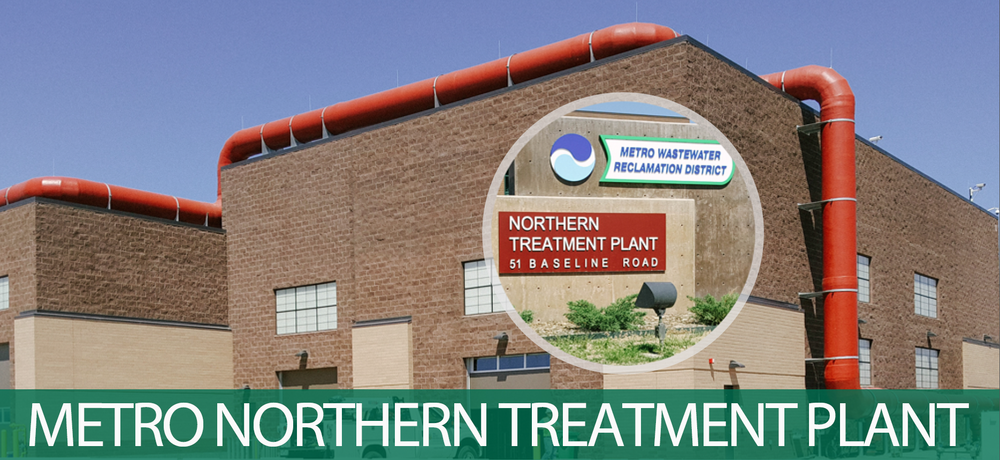
In response to the state’s order, the City of Aurora, the Metro Wastewater Reclamation District and the nonprofit Greenway Foundation, which works to protect the South Platte River, sued to overturn it, concerned that additional phosphates will hamper their ability to meet their own water treatment requirements while also hurting water quality in the South Platte. Denver joined the suit in May.

Because Denver Water services numerous other water providers in the metro area and participates in a major South Metro reuse project known as WISE, short for Water Infrastructure and Supply Efficiency, anything that changes the chemical profile of its water affects dozens of communities and the river itself.

Among the plaintiffs’ concerns is that phosphate levels in water that is discharged to the river have to be tightly controlled under provisions of the Clean Water Act. If phosphate levels in domestic water rise, wastewater treatment protocols would have to be changed, potentially costing hundreds of thousands of dollars, if not more, according to a report by the Denver-based, nonpartisan Water Research Foundation.

From an environmental perspective, any increased phosphate in the South Platte River would make fighting such things as algae blooms, which are fueled by nutrients including phosphorous, much more difficult and could make the river less habitable for fish.

But in its statement to the court, the CDPHE said the state’s first job is to protect the health of the thousands of children served by Denver Water in the metro area.

“The addition of orthophosphate will reduce lead at consumers’ taps by approximately 74 percent, as opposed to the cheaper treatment favored by plaintiffs [PH/Alkalinity], which will only reduce levels by less than 50 percent,” CDPHE said in court documents. “This is a significant and important public health difference, particularly because there is no safe level of lead in blood…Even at low levels, a child’s exposure to lead can be harmful.”

How much either treatment may eventually cost Denver Water and others isn’t clear yet, according to state health officials, because it will depend in part on how each process is implemented.

Denver, Aurora and Metro Wastewater declined to comment for this story, citing the pending lawsuit.

The Greenway Foundation did not respond to a request for comment.

In late July, all parties agreed to pause the legal proceedings while they examine water treatment issues as well as the environmental concerns raised by higher levels of phosphorous in Denver Water’s treated water supplies. If a settlement can’t be reached by Nov. 1, the lawsuit will proceed.

Jonathan Cuppett, a research manager at the Water Research Foundation, said other utilities across the country may be asked to re-evaluate their own corrosion control systems under a rewrite of the Lead and Copper Rule underway now at the U.S. Environmental Protection Agency.

The newly proposed federal rule is due out for review later this year or by mid-2019.

Cuppett said the changes may lean toward more phosphate-based treatment for lead contamination. In fact, the EPA issued a statement in March in support of the CDPHE’s order to Denver Water.

“Within the [Lead and Copper Rule] there are a variety of changes that may be made. Depending on what those changes are other utilities may have to evaluate their strategy again or more frequently. And if that is the case, we may see more of this issue where someone is pushing for phosphorous for control for public health, creating a conflict of interest with environmental concerns,” Cuppett said.

Colorado public health officials said they’re hopeful an agreement can be reached, but that they have few options under the federal Safe Water Drinking Act’s Lead and Copper Rule.

“The [Lead and Copper Rule] is a very prescriptive, strict rule,” said Megan Parish, an attorney and policy adviser to CDPHE. “It doesn’t give us a lot of discretion to consider things that Metro Wastewater would have liked us to consider.”

@WaterEdCO “Fresh Water News’: Aurora’s recycled water plant running at full-tilt

From Water Education Colorado (Jerd Smith):

Aurora’s futuristic recycled water project — Prairie Waters— is running at full-tilt for the first time in its eight-year history, a move designed to make the city’s water supplies last longer in the face of severe drought conditions.

“We’re pushing it as hard as we can,” said Greg Baker, a spokesman for Aurora Water.

In February, as mountain snows failed to accumulate, Baker said the city began mobilizing to ramp up plant operations, knowing its reservoirs would likely not fill this summer. “We were very worried.”

By April, Prairie Waters was running at full speed, generating 9.7 million gallons a day (MGD), up from 5.1 MGD last summer, a 90 percent increase in production.

“We could possibly push it to 10 MGD,” said Ann Malinaro, a chemist and treatment specialist with Prairie Waters, “but we consider 9.7 MGD full capacity.”

[…]

“Prairie Waters was huge, not just in terms of volume, but also because it’s really helped us advance as a state in accepting potable [drinkable] reused water,” Belanger said. “Historically, there has been a yuck factor. But Prairie Waters has helped folks understand how systems can be designed so they are safe and effective.” [Laura Belanger]

Twenty-five Colorado cities, including Denver, Colorado Springs, Fort Collins and Louisville, operate recycled water facilities, according to the Colorado Department of Public Health and Environment, but that water is used primarily to water parks, golf courses and to help cool power plants, among other nonpotable, or non-drinkable, uses.

But Aurora, faced with fast-growth and a shortage of water, realized more than a decade ago that reusing its existing supplies and treating them to drinking water standards was the only way to ensure it could provide enough water for its citizens.

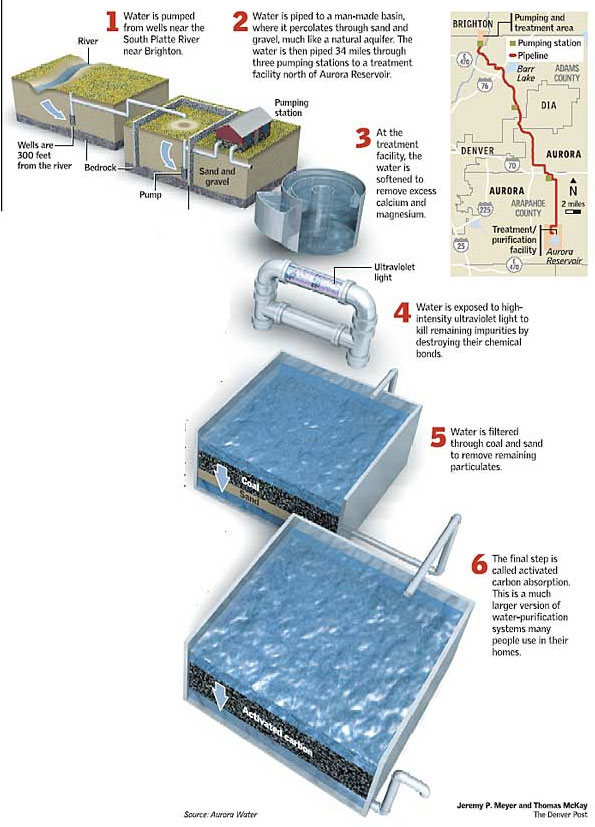
Completed in 2010, the Prairie Waters Project recaptures treated wastewater from the South Platte River and transports it back to Aurora through a series of underground wells and pipelines. As the water makes its 34-mile journey from a point near Brighton back to the metro area through subsurface sand and gravel formations, it undergoes several rounds of natural cleansing.

Once it reaches the Prairie Waters treatment facility near Aurora Reservoir, it runs through a series of high-tech purification processes using carbon filters, UV light and chlorine, among other chemicals. Then, before it is delivered to homes, the reused water is mixed with the city’s other supplies, which derive from relatively clean mountain snowmelt that is carried down from the mountains.

Sterling voters will likely be asked to decide bonding for wastewater infrastructure in November

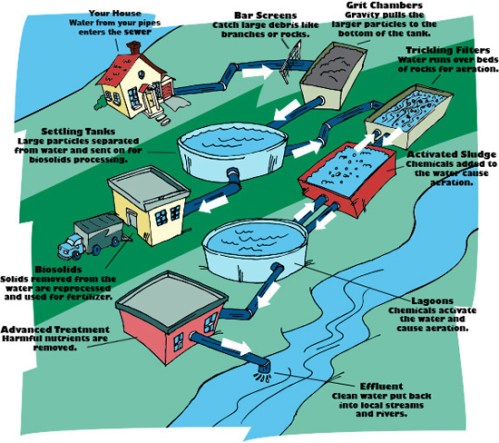
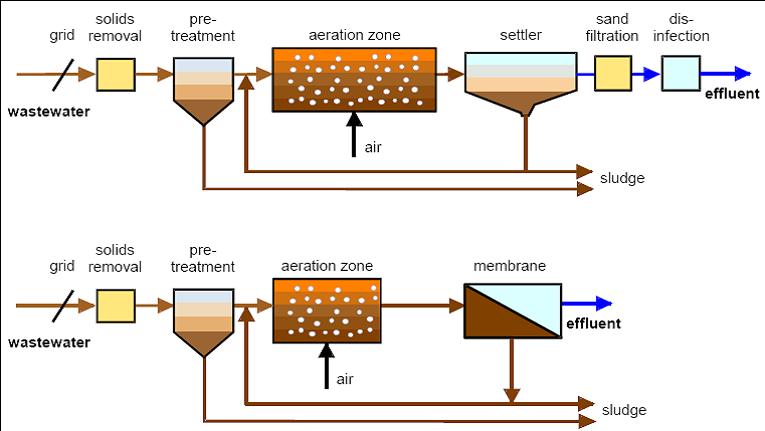
Wastewater Treatment Process

From The Sterling Journal-Advocate (Sara Waite):

The problems faced by the wastewater system have become more urgent, as the city is now non-compliant with its existing discharge permit. Failure to move forward with upgrades could result in stiff penalties from the Colorado Department of Public Health and Environment, to the tune of $10,000 a day assessed from the first date of the violation last November.

The Sterling City Council has long known about deficiencies in the system; two years ago, Rob Demis of engineering firm Mott MacDonald gave a preliminary overview of some of the problems presented by the aging infrastructure. In short, the system suffers from flooding and leakage issues, and also is incapable of meeting new environmental standards…

According to Demis, the system lacks the capacity to handle heavy rainfall events or river flooding, and also suffers from leaks at multiple points that allow groundwater to seep into the wastewater stream. That excess water damages equipment, overloads the system and can lead to costly permit violations, as well as disrupting the biological process that breaks down the organic material in the water.

The system also is incapable of meeting its existing compliance schedules or new regulations that are slated to be implemented by 2022. It suffers from a lack of redundancy, leaving the city vulnerable to failures that would be “catastrophic,” Demis said, and also uses obsolete and dangerous equipment and processes.

Demis explained that much of the system has reached, or exceeded, its useful life and the problems the city is facing will only get worse over time. As an example, he said the four clarifiers that are in place had been banned by the time they were installed in 1995, begging the question of how Sterling ended up with them in the first place, and one of the tanks has failed and can’t be used.

As part of the presentation, Demis went over the estimated costs, 80 percent of which was for construction and the other 20 percent for legal, administrative, engineering, permitting and other costs associated with such a project. The cost of installing a new force main and improvements to the treatment system itself make up about half of the $31 million price tag.

Demis also spoke about possible funding sources. Grants are not reliable, he said; they looked at six possible grant sources and one they identified as a possibility has not received the expected funding because of low oil prices. A review of potential loan sources showed that the State Revolving Fund would provide a lower total cost in the long run versus private loans, because of the reduced interest rate. Either way, the city charter requires voter approval for taking on debt.

The city’s existing sewer rates have not kept up with the rate of inflation, Demis said. Using simple math, he estimated that residential sewer users’ rates would increase by $23, but noted that the city would have to complete a rate study to look at the more complex issues involved in determining the revenue necessary to make the recommended improvements, operate the system and invest in other needed infrastructure. The council is awaiting a report on such a rate study that was funded in the city budget last year.

During his October 2016 presentation, Demis gave credit to the operators at the wastewater treatment plant, saying they were “willing to make their job a little bit harder to try to find the value for the city” by reusing existing equipment and infrastructure where possible. He estimated that the cost to completely start over with a new wastewater system would be between $45 and 50 million. “We think there’s very good value for the city of Sterling there.”

Sterling residents for the past two years have seen increases on both water and wastewater services in an attempt to build up the enterprise funds and address infrastructure needs. According to City Manager Don Saling, the rate hikes were intended to narrow the gap between where rates were and where they’ll need to be, pending the outcome of the rate study. One big change he expects to see from the study is a recommendation to base sewer rates on usage; the rate would be calculated from water usage in cooler months, when users are not watering outdoors. A variable rate would be more equitable — a family of four would presumably pay more than a single retiree on a fixed income — and could also encourage water conservation to lower both water and sewer bills.

New #Colorado rules prompt Garfield County to update septic system rules

Septic system

From the Glenwood Springs Post Independent (Jon Nicolodi):

Garfield County is revising its onsite wastewater treatment system regulations following new regulations put forth by the state. Does this impact you? Considering the consequences of a poorly maintained onsite wastewater treatment system, and with approximately 3,500 out of about 17,000 housing units in Garfield County relying on onsite wastewater treatment systems, the answer could be “yes.”

Some homeowners like septic systems because they don’t have a regular sewage bill from their municipality. Instead, they must properly maintain their system, but they have control, and more ownership, of what goes into their system and how much and how regularly they have to pay for maintenance. By only flushing human waste and toilet paper, by properly disposing of chemicals, and by using a compost collection service or backyard system to break down cooking grease and other food waste, all maintenance is preventative. With care and preventative maintenance, septic system owners can save in the long run.

Septic systems go astray, however, when they aren’t cared for. Septic system leakage isn’t a foreign concept to health and environment officials. Toilet water leaking into the ground untreated might make its innocent way down through hundreds of feet of soil before being neutralized by the soil microbes. More likely, the wastewater will leak into a nearby stream, creating algal blooms and wreaking havoc on the balance of water quality in the ecosystem.

If your home isn’t connected to a public sanitary sewer system, you may be utilizing a private drinking water well. This water source may be near your septic system. Phosphorus, nitrogen and bacteria aren’t exactly the constituents of quality drinking water.

The Colorado Department of Public Health and Environment’s Water Quality Control Division adopted Regulation 43 nearly a year ago, and counties have until June 30th of this year to adopt versions of this regulation that are at least as stringent as the state’s. Among other items, the regulation specifies the categories and type of material installed in and around the leach field, and it requires additional inspection of systems to ensure that they meet industry standards.

Septic systems should be inspected at least every three years, and typically pumped free of their settled solids every three to five years. Contact your local county officials to learn what you have on your site, and to learn who to call for a quality service provider. Be thoughtful about what you put down the drain and how much you use your garbage disposal. Mark the free hazardous waste collection day at the local landfill on your calendar. Practice water conservation by installing high-efficiency toilets, shower heads and laundry machines. Take one more step to being considerate of your local streams, and of your own and your community’s drinking water supply.

The Roaring Fork Conservancy is working to get Cattle Creek off the 303(d) list

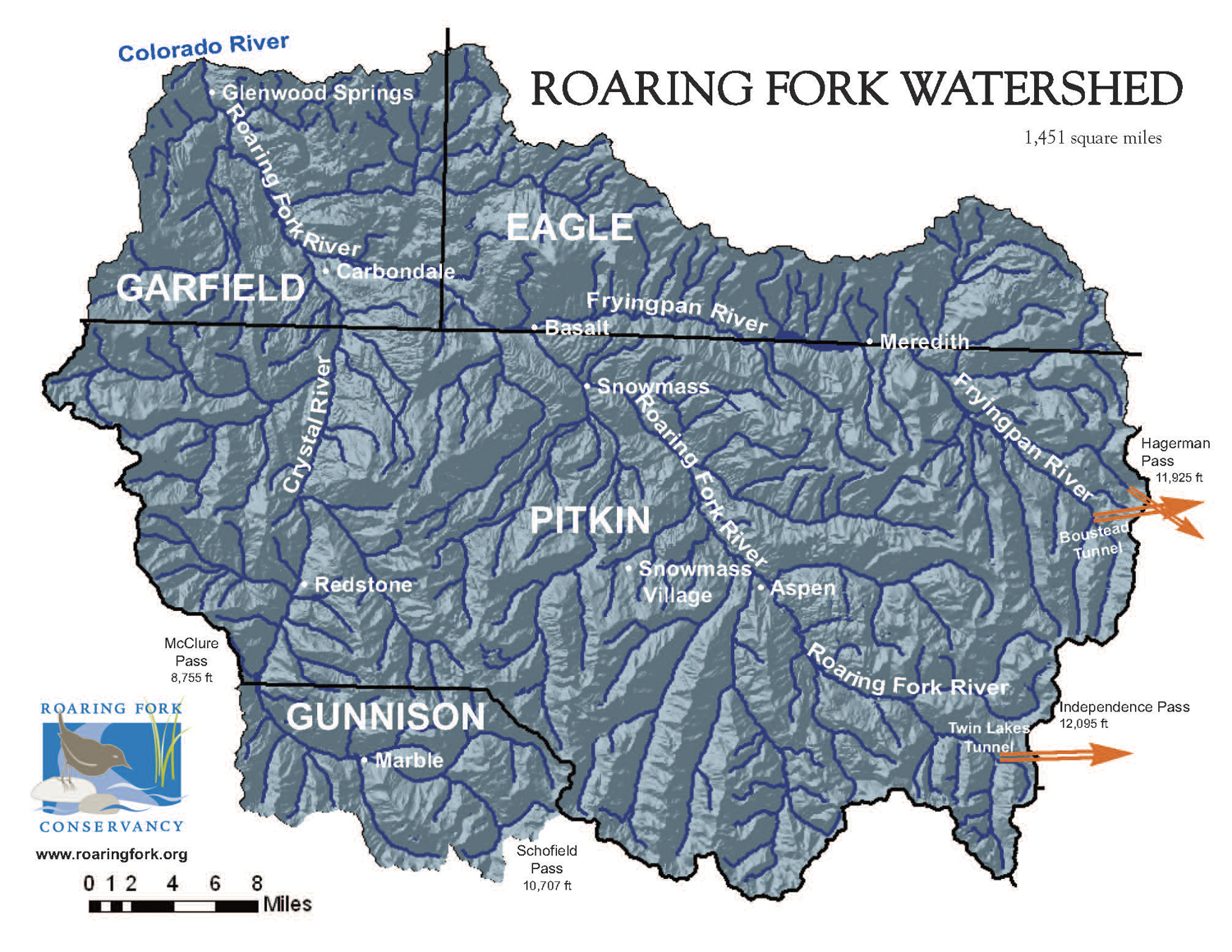
Map of the Roaring Fork River watershed via the Roaring Fork Conservancy

From Aspen Public Radio (Elizabeth Stewart-Severy):

Roaring Fork Conservancy has been studying the creek since 2015, and water quality coordinator Chad Rudow told commissioners Monday that research shows parts of the creek are healthier than the state thought.

“We’re pretty excited and pretty hopeful that at least a section of Cattle Creek will come off of that 303(d) list,” Rudow said.

Roaring Fork Conservancy has submitted its data to the Colorado water quality division, which will analyze it this year.

Garfield County agreed to Roaring Fork Conservancy’s request for $10,000 to continue studying water quality and take steps to improve it. Rudow said the studies have identified some clear trends…

There isn’t just one culprit; diversions, agriculture, septic systems and commercial development all contribute.

Roaring Fork Conservancy is working with landowners to better manage riparian areas and septic systems, and Rudow said continued outreach is key.

Because there are many diversions on Cattle Creek, the stream doesn’t see a typical spring runoff flow, which clears out pollutants and sediments. So Roaring Fork Conservancy is also working with water rights owners to discuss a pulse flow to mimic spring runoff.

Fountain Creek: Lower Ark and other agencies wonder if the @EPA will stay the course on lawsuit v. #ColoradoSprings

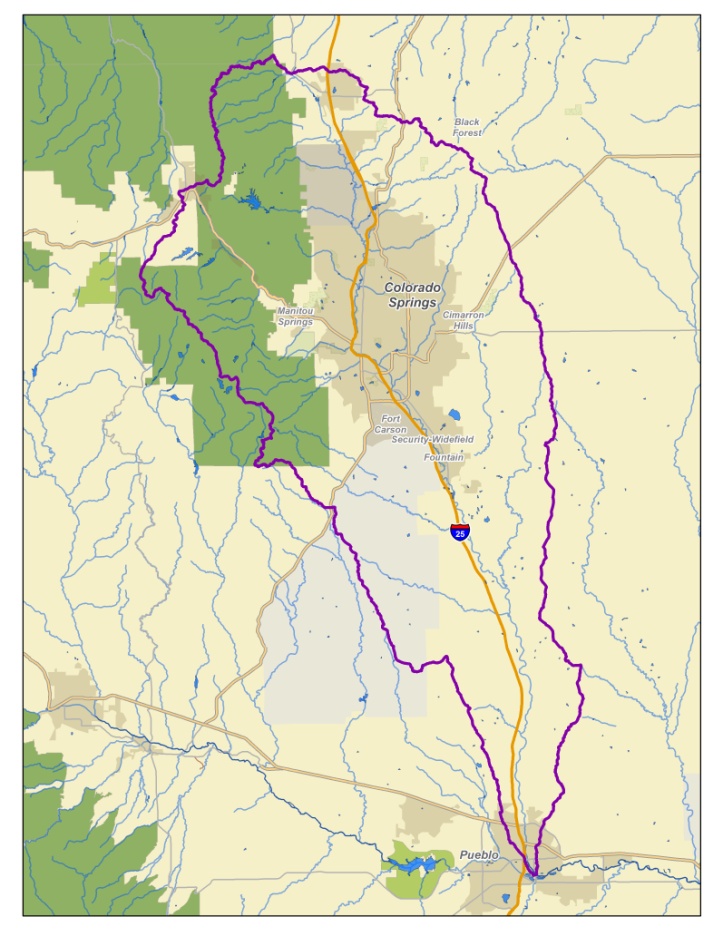
The Fountain Creek Watershed is located along the central front range of Colorado. It is a 927-square mile watershed that drains south into the Arkansas River at Pueblo. The watershed is bordered by the Palmer Divide to the north, Pikes Peak to the west, and a minor divide 20 miles east of Colorado Springs. Map via the Fountain Creek Watershed Flood Control and Greenway District.

From The Colorado Springs Independent (Pam Zubeck):

…in November 2016, the EPA and Colorado Department of Public Health and Environment sued, alleging violations of the Clean Water Act and the city’s Municipal Separate Storm Sewer System (MS4) permit to discharge into creeks, streams and rivers. As a federal judge looks to set a trial date this summer, the state and lawsuit intervenors, Pueblo County and the Rocky Ford-based Lower Arkansas Valley Water Conservancy District, urge the EPA in a March 26 letter to “re-commit” to the case, suggesting a dismissal or settlement might be in the works.

That would be a mistake, says Lower Ark executive director Jay Winner, because the city has broken promises in the past involving stormwater. “I started this in 2005 and we’ve had three or four deals, and something always goes south,” he says. “We’ve got to make sure we have good clean water, not just for now but for the future.”

The city’s struggle to fund stormwater dates to two failed ballot measures in 2001, and City Council’s adoption of fees in 2007 only to rescind them in 2009. In April 2016, the matter became a sticking point as the city prepared to activate the Southern Delivery System, a $825 million, 50-mile water pipeline from Pueblo Reservoir. Having issued a construction permit for it, Pueblo County demanded the city fix its storm system to relieve Fountain Creek flooding, or face revocation. In response, Mayor John Suthers and Council pledged $460 million over 20 years for city drainage work.

In November 2017, Suthers and Council proposed shifting that cost from the city’s general fund to fees. Voters approved, and the city begins collections in July. (See sidebar.)

By all indications, the city is working to comply with its MS4 permit. Its March 30 annual report for 2017 says the city:

  • Increased the number of drainage structures it maintained, from 53 in 2016 to 70, and for the first time, city workers walked every foot of the city’s 270 miles of creeks and channels to assess needs.
  • Boosted by 56 percent its reviews of drainage reports and construction and grading plans — to 1,590 last year. The city also rolled out new grading, erosion and sediment control permitting programs.
  • Launched Stormwater University, which instructs developers, engineers and consultants, as well as citizens, on MS4 mandates.
  • More than doubled the number of cleanup events along city waterways in 2017, to 88 from 37 in 2016, increasing public participation by 54 percent, to 6,014 people. Those volunteers removed 18 tons of trash. “We now have the capacity and people in place to run the programs,” says Jerry Cordova, who oversees the volunteer “trash mob” events, “so we can develop them and continue to grow.”
  • Beefed up development inspections, a key EPA lawsuit criticism. While no monetary penalties were imposed, the city stepped up enforcement, issuing 47 compliance actions last year compared to only 16 in 2016.
  • Inspections are more robust, says stormwater manager Rich Mulledy, because the city has more inspectors focused on drainage issues alone. “If you do a lot more inspections,” he says, “you’re going to catch more.” And the city did. It issued six stop-work orders last year, compared to only two in 2016, and 41 letters of noncompliance, the step that precedes a stop-work order — triple the 14 issued in 2016.

    Pockets of noncompliance, such as Wolf Ranch in the northeast, which gave rise to 23 percent of last year’s enforcement actions, stem from multiple adjacent job sites, Mulledy says. “We have a lot of different home builders and different contractors, and they’re all trying to play in the same sandbox, and they step on each other’s toes. You might have 100 pieces of equipment being used by 20 to 30 different companies.”

    Mulledy also warns against thinking that no monetary fines means no penalties. “Stop-work — that’s a very serious thing. That is a big deal,” he says. “They can’t work till it’s fixed.” Which is why stop-work orders span only a day or so, he says.

    The industry is aware of the heightened scrutiny, says Kevin Walker, spokesperson for the Housing & Building Association of Colorado Springs. That’s why the HBA instituted “Wet Wednesdays,” a series of tutorials about drainage rules for builders and developers.

    But it’s worth noting that builders applaud the Trump administration’s efforts to roll back clean-water and stormwater-runoff regulations. The HBA even funded EPA director Scott Pruitt’s “luxury hotel stay” at The Broadmoor in October 2017, according to Politico, which quoted HBA CEO Renee Zentz as saying it was “our chance to make sure the concerns of our industry are being listened to.”

    It’s not publicly known if the EPA’s lawsuit was discussed during Pruitt’s visit, but there’s been no filing that hints a negotiated settlement is imminent. Still, the March 26 letter from the state, Pueblo County and the Lower Ark says they “are now seriously concerned about whether the EPA continues to share our commitment to working together to protect Fountain Creek…”

    The CDPHE tells the Indy in an email the letter’s intent was to “reiterate the importance … of remedying the ongoing discharge of pollutants” into the Arkansas River watershed.

    But Lower Ark’s Jay Winner is more pointed: “I think there is a genuine distrust that the EPA may try to cut a deal,” he says. “We’re hoping that doesn’t happen. We’ve got to live with Fountain Creek for a very, very long time. Colorado Springs is doing a great job. Mayor Suthers is doing a great job. But we had a mayor before him [Steve Bach] that wasn’t doing a good job, and I don’t know if the mayor after John Suthers is going to do a good job.”

    More coverage of the Colorado Springs stormwater enterprise from Pam Zubeck writing for the Colorado Springs Independent:

    Starting July 2, billings for the city’s Stormwater Enterprise will be mailed to all Colorado Springs residents and property owners.

    The charges were authorized by voters last November under a 20-year plan that would raise roughly $20 million a year. The fee revenue will free up general fund money Mayor John Suthers and City Council had previously committed to its 20-year, $460-million deal with Pueblo County for projects to reduce erosion and flooding along Fountain Creek and other waterways. That general fund money, in turn, will be used for other purposes, such as hiring more cops.

    Since the November vote, the city has been working to set up billing procedures. Residential billings, including those for apartment dwellers, will be made by Colorado Springs Utilities, with one exception. Multi-family buildings that don’t have individual apartment water meters will be handled under nonresidential rates.

    City CFO Charae McDaniel says water service connections will trigger the stormwater fee for residential properties. Residential fee payers who don’t pay the $5 charge on their utility bills will be subject to disconnect under standard Utilities policies, which require payment within 14 days of the billing date. Utilities spokesman Steve Berry wouldn’t say how long Utilities provides service for overdue accounts, but it assesses a $20 fee for disconnection. Reconnection costs $30 during normal business hours and $40 after hours.

    If a residential customer refuses to pay the $5 fee, it rolls onto the next bill. If left unpaid for a period of time, accumulated fees could exceed the usage billings for water, sewer, electric and gas.

    “That couldn’t continue in perpetuity,” Berry says. “They [customers] will then eventually go into arrears, and they would be eligible for disconnection. There’s a point it becomes untenable for the customer, and they would be held responsible, just as in nonpayment of any service we offer.” But, Berry notes, Utilities gives customers “plenty of opportunity” to pay bills prior to disconnection.

    Nonresidential property owners of developed tracts up to 5 acres will be billed $30 per acre per month; if the land isn’t developed at all, no fee will be assessed. Owners of properties larger than 5 acres will be assessed $30 per acre per month on only those portions that are developed. Portions of those properties that remain in a natural state won’t be assessed a fee. Undeveloped land won’t pay any fee.

    There are currently 1,005 parcels that are over 5 acres that will be charged a fee, city spokesperson Jamie Fabos says. McDaniel says when properties are developed, based on monthly reports from the El Paso County Assessor’s Office, they’ll be added to the stormwater fee rolls.

    But Assessor Steve Schleiker says he changes a tract’s status only once a year, on Jan. 1, for tax purposes, and doesn’t generate a monthly report regarding development status; rather, those reports merely describe changes to property ownership.

    Asked about that, Fabos says, “Although we will be receiving monthly updates from the assessor’s office that show current ownership, acreage, and use, each property will be determined as developed or undeveloped by aerial investigation and through additional GIS technologies.” She adds that updates to parcel status will be made every six months — meaning new, nonresidential construction might not be assessed the fees until six months after they’re built.

    Nonresidential customers — which includes businesses, industry, churches, nonprofits and governments, including the city — won’t face disconnection of utility bills, because the city, not Utilities, will collect the fees. Nor will they be assessed late fees.

    “We will be going through collection processes if they become delinquent on the nonresidential side,” McDaniel says, meaning a collection agency could be used. If the fees become 150 days past due, she says, “We will process a lien on the property and record that with El Paso County to be added to property taxes.” That procedure carries a cost of 10 percent of the bill.

    Last fall, City Council President Richard Skorman said nonresidential billing information should be made public. Now, McDaniel says the City Attorney’s Office has said stormwater fees fall under the Colorado Open Records Act’s exemption for utility bills, so they’ll be kept confidential.

    That means citizens, or the media, can’t check how much various tracts are being assessed in stormwater fees.

    “It’s an issue I’d like to bring up,” Skorman says, “because I did make that promise, and I didn’t check with lawyers at the time, and I said, of course we would reveal it.”

    One possible alternative, he says, would be for Council to direct an appointed stormwater fee advisory committee to analyze and monitor fees assessed to assure they’re applied fairly. “That’s something that we definitely want to put in place,” he says.

    Moving forward, the fees can be raised by Council action, but only to satisfy a court order, comply with federal or state laws or permits, or fund the agreement with Pueblo County.

    Down ‘The River Of Lost Souls’ With Jonathan Thompson — Colorado Public Radio

    From Colorado Public Radio (Nathan Heffel). Click through to listen to the interview:

    A new book puts the Gold King Mine spill within the long history of mining and pollution in Southwest Colorado.

    Jonathan Thompson will be at the Book Bar tonight. I wonder if Denver is a bit of a shock to his system even though he’s a sixth-generation Coloradan?

    I am so happy to finally get to finally meet Jonathan. His new book, River of Lost Souls, is an important read. Understanding the industrialization of our state over the years will help us chart a less destructive course.

    I loved the passages where Jonathan reminisces about spending time around the Four Corners and in the San Juans. He transports you to those times in your life spent next to the river or exploring what sights the land has to offer. He connects you to the Four Corners in a way that only a son of the San Juans could.

    Cement Creek aerial photo — Jonathan Thompson via Twitter

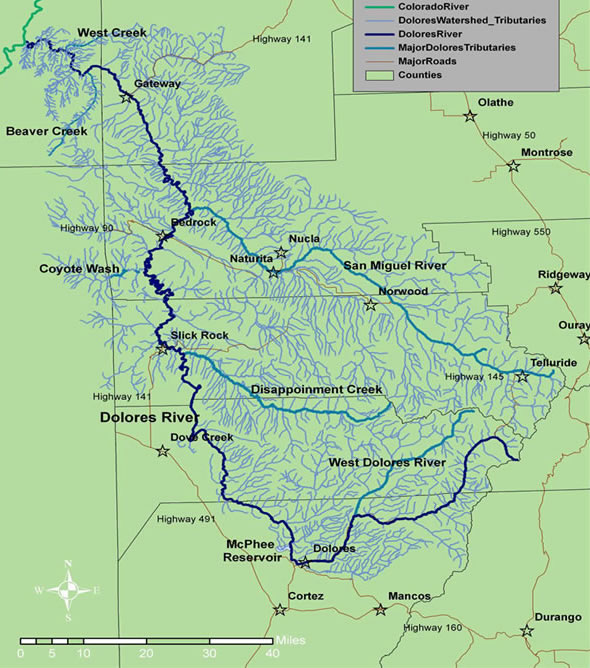
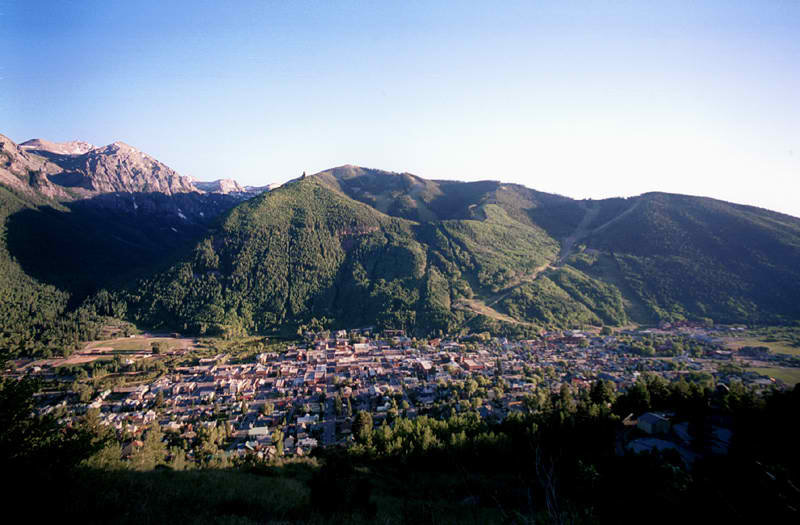
    Telluride Regional Wastewater Treatment Master Plan

    Dolores River watershed

    From The Telluride Daily Planet (Justin Criado):

    Gugliemone explained that the price tag is a “conservative” (aka “likely high”) estimate, and the engineering team is looking into alternative wastewater-treatment technologies that could possibly cut the cost by $20 million. (“That would be nice,” she said about the possible price reduction during her presentation.)

    Stantec Inc. — a design and consulting company headquartered in Edmonton, Alberta — is the engineer under contract, Gugliemone said. The company’s slogan is “We design with community in mind,” according to its official website (stantec.com).

    Gugliemone added that the towns of Telluride and Mountain Village recently tabbed Financial Consulting Services to complete a financial analysis, along with a Financial Analysis Task Force and the town councils. The analysis will “lay out how the community might best meet the financial obligations before us,” she said.

    Water and wastewater projects are covered through separate enterprise funds, which use taxes and service fees to raise capital. At a June 2017 wastewater treatment plant update, Telluride Councilman Todd Brown theorized there most likely would be a utility rate increase to help with project costs.

    At Monday’s meeting, Mountain Village Mayor Laila Benitez pondered whether setting up a special taxing district for the treatment plant would be another funding option. Gugliemone said the financial consulting company is looking into that, but nothing has been suggested — let alone decided — yet.

    The current wastewater treatment plant at Society Turn serves the communities of Telluride, Mountain Village, Eider Creek, Sunset Ridge, Aldasoro and Lawson Hill.

    The plant is reaching its originally designed capacity, officials have explained. Plus, Department of Public Health and Environment regulations through the Colorado Discharge Permit System have been altered over the years. (Colorado Water Quality Control Division stipulations regarding acceptable metal levels in the water also changed in 2017.)

    Those variables, in conjunction with an increased waste stream and new treatment options, make updating and eventually expanding the current plant paramount within the next decade. (A 1.5-percent annual population growth has been used to calculate increased wastewater loads until 2047. Basically, if the plant isn’t expanded, the San Miguel River would run with waste, which is a disgusting, vile thought.)

    Pitkin County embraces reuse of household graywater — @AspenJournalism

    From Aspen Journalism (Brent Gardner-Smith):

    Pitkin County is now the second county in Colorado that can issue permits for graywater systems that allow some household water to be reused to irrigate lawns and flush toilets.

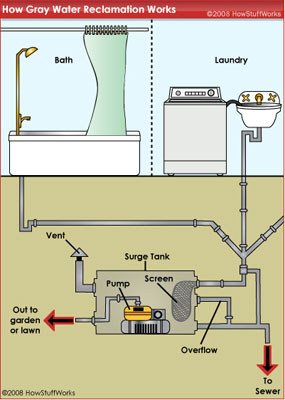
    Graywater is defined by both the county and the state as water coming from bathtubs, showers, bathroom sinks and washing machines. It does not include water from toilets, urinals, kitchen sinks, dishwashers or non-laundry utility sinks, which is often called blackwater.

    The city and county of Denver was the first to adopt a similar permitting process in 2016, and did so after the state approved guiding regulations in 2015.

    The Pitkin County commissioners unanimously approved an ordinance last week that sets up the county’s permitting process, which is voluntary.

    The city of Aspen also is considering adopting a graywater permitting system to complement its recently adopted water-efficient landscaping regulations.

    Kurt Dahl, the county’s environmental health manager, said a 1999 statewide study found that typical indoor residential uses amounted to 69 gallons of water per person per day, and of that 28 gallons is graywater as defined by the state.

    Graywater systems work by diverting household water away from its normal course — toward septic tanks and sewage systems — and into another set of pipes and storage tanks, where it sits until it is reused.

    If the water is used for irrigation, the water must be filtered before storage and then, optimally, pumped out into a subsurface drip irrigation system. It cannot be applied via sprinklers.

    If graywater is used to flush toilets, it must be disinfected and dyed before being sent to a toilet.

    Single-family households can store up to 400 gallons of water a day in a tank for either irrigation or toilet flushing, and multi-family and commercial entities can store up to 2,000 gallons a day.

    Graywater systems require double-piping of plumbing systems, which can be expensive to install in existing homes, and so may be better suited, at least economically, to new construction projects.

    Brett Icenogle, the engineering section manager at the Colorado Department of Public Health, said Friday he was happy to see Pitkin County adopt a graywater permitting process, and he hopes other jurisdictions follow suit, even if current public demand seems low today.

    “We don’t want to wait until there is a water shortage to put regulations in place,” Icenogle said.

    The local permitting process begins with the county’s environmental health department, and also requires plumbing and building permits. If used for irrigation, it may also require a state water right.

    Dahl served on a group that developed the state’s regulations, and he’d like to see other uses added to the state’s list, such as fire suppression.

    “I want to get this to the point where using graywater is an option for everyone,” Dahl said.

    Durango wastewater treatment plant on schedule

    Durango

    From The Durango Herald (Mary Shinn):

    The largest construction project in city history, the Santa Rita Water Reclamation Facility, must improve the quality of water returning to the Animas River by March to meet state regulations…

    The multi-million-dollar construction project was designed to remove more nutrient pollution from the water and increase the plant’s capacity, he said. New carbon filters are also planned to eliminate the infamous and sickening smell that sometimes permeates Santa Rita Park.

    The city is eight months into a 24-month construction schedule, and, thus far, the project is on time and on budget, he said.

    The first two major components of the plant – the aeration basin and the blower and chemical building – are scheduled to be finished in March. Those systems will remove nutrients to keep the city in compliance with state regulations, Boysen said.

    Heightened levels of the naturally occurring nutrients, nitrogen and phosphorous, can cause algae blooms that reduce oxygen in the water and kill fish, according to the Environmental Protection Agency…

    The city contracted Archer Western to upgrade the sewage treatment plant for $54 million and set aside an additional $5 million to cover unforeseen costs, Boysen said in an email.

    As of late December, the city had spent about $500,000 of its contingency fund, he said.

    “There are always unanticipated issues or unknown conditions that require modifications to the original contract,” Boysen said.

    In 2015, voters approved $68 million in debt to fund the plant and additional sewer infrastructure improvements.

    To pay off the debt, residents saw three years of double-digit sewer rate increases. In January, rates go up another 3 percent, bringing the average city resident’s monthly sewer bill to $49.94, or about $599 annually. Those who live outside city limits but are connected to the city’s sewer services pay double.

    Sterling wastewater plant discharge fix will require bonding measure on fall ballot

    Wastewater Treatment Process

    From The Sterling Journal-Advocate (Sara Waite):

    …Public Works Director George Good and two wastewater employees met with officials from the Colorado Department of Public Health and Environment regarding the wastewater treatment plant project and non-compliance issues with Sterling’s existing discharge permit. According to Saling, the city will be required to put a bond issue or a question approving city debt before voters for the treatment plant improvements; failure to do so would result in a $10,000 per day fine imposed dating back to last November…

    The high-end estimate for the project is $36 million, but Saling said they are constantly looking at ways to save on costs. Wednesday, Saling said he expects that a presentation on the rate study for water and sewer rates will be given to the council in the next month.

    Saling said the council will be asked in a coming meeting for permission to retain the services of a law firm to craft the ballot question language. He wants to put it on the November ballot to avoid the cost of having a special election. He is working on a voter education campaign, starting with inserts in city water bills to explain why the project is needed and what the plans are…

    Council member Bob McCarty suggested the campaign should stress the age of the current system; the existing wastewater treatment plant began operations in 1978, Good told the council. Saling noted that the city has 82 miles of sewer lines, the oldest of which was placed in 1898. According to Saling, the life expectancy for the physical structures of a wastewater treatment facility is about 20 to 25 years.

    Pitkin County embraces reuse of household graywater — @AspenJournalism

    From Aspen Journalism (Brent Gardner-Smith) via the The Aspen Times:

    Pitkin County is now the second county in Colorado that can issue permits for graywater systems that allow some household water to be reused to irrigate lawns and flush toilets.

    Graywater is defined by both the county and the state as water coming from bathtubs, showers, bathroom sinks and washing machines. It does not include water from toilets, urinals, kitchen sinks, dishwashers or non-laundry utility sinks, which is often called blackwater.

    The city and county of Denver was the first to adopt a similar permitting process in 2016, and did so after the state approved guiding regulations in 2015. The Pitkin County commissioners unanimously approved an ordinance last week that sets up the county’s permitting process, which is voluntary.

    The city of Aspen also is considering adopting a graywater permitting system to complement its recently adopted water-efficient landscaping regulations.

    Kurt Dahl, the county’s environmental health manager, said a 1999 statewide study found that typical indoor residential uses amounted to 69 gallons of water per person per day, and of that 28 gallons is graywater as defined by the state.

    Graywater systems work by diverting household water away from its normal course — toward septic tanks and sewage systems — and into another set of pipes and storage tanks, where it sits until it is reused.

    If the water is used for irrigation, the water must be filtered before storage and then, optimally, pumped out into a subsurface drip irrigation system. It cannot be applied via sprinklers.

    If graywater is used to flush toilets, it must be disinfected and dyed before being sent to a toilet.

    Single-family households can store up to 400 gallons of water a day in a tank for either irrigation or toilet flushing, and multi-family and commercial entities can store up to 2,000 gallons a day.

    Graywater systems require double-piping of plumbing systems, which can be expensive to install in existing homes, and so may be better suited, at least economically, to new construction projects.

    Brett Icenogle, the engineering section manager at the Colorado Department of Public Health, said Friday he was happy to see Pitkin County adopt a graywater permitting process, and he hopes other jurisdictions follow suit, even if current public demand seems low today.

    “We don’t want to wait until there is a water shortage to put regulations in place,” Icenogle said.

    The local permitting process begins with the county’s environmental health department, and also requires plumbing and building permits. If used for irrigation, it may also require a state water right.

    Dahl served on a group that developed the state’s regulations, and he’d like to see other uses added to the state’s list, such as fire suppression.

    “I want to get this to the point where using graywater is an option for everyone,” Dahl said.

    Aspen Journalism is collaborating with The Aspen Times on coverage or rivers and water. More at http://www.aspenjournalism.org.

    Nederland budget approved

    Mailboxes are laden with snow on April 17, 2016 in Nederland, Colorado. (Helen H. Richardson, The Denver Post)

    From The Mountain Ear (John Scarffe):

    A new Waste Water Treatment facility and sewer maintenance dominated the 2018, $4.9 million budget approved by the Nederland Board of Trustees during a regular meeting at 7 p.m., December 5, 2017, at the Nederland Community Center…

    Estimated expenditures for each fund: General Fund: $2,793,371; Conservation Trust Fund: $16,000; Community Center Fund: $391,068; Water Fund: $708,808; Sewer Fund: $812,422; Downtown Development Authority Fund: $30,700; Downtown Development Authority TIF Fund: $2,900. Total: $4,755,269…

    The Sewer fund capital improvements have multiple items such as manhole repairs, mains and a new vehicle. The design and engineering of the Waste Water Treatment Plant Biosolids project will get up to 100 percent in 2018 but will be reimbursed by a loan, Hogan said, and will hopefully be awarded a $950,000 grant for improvements. It is a $2 million project.

    Capital improvements from the water fund include the other half of the new vehicle, a Micro Hydro Feasibility Study with a matching $8,000 grant, and other projects, Hogan said.

    Grant activity includes a Colorado Department of Local Affairs grant for the Biosolids project, a Great Outdoors Colorado grant for Fishing is Fun; a Colorado Department of Public Health and Environment grant for Pursuing Excellence Raw Water Filtration, a Colorado Water Resources and Power Development Authority grant for the Micro Hydro Feasibility Study with an $8,000 match and a GOCO Parks grant with a $6,000 town match…

    For the Water Fund, the changes in rates are explained in the fee schedule. Total revenue is $707,000, operating expenses are $475,000, capital improvements $91,000 and debt payments of $143,000, resulting in a net change in cash of negative $1,200.

    The Sewer Fund will also contain a fee schedule increase. Total revenue is budgeted to be $814,000, operating expenditures $527,000, capital improvements $42,000 and debt payments of $244,000, resulting in a positive net change in cash of $2,000.

    Hogan presented the 2018 Fee Schedule. Noteworthy increases include the water fee with a three percent increase, and the sewer fund with a four percent increase.

    Fort Collins Utilities’ water treatment plant is changing treatment process

    The water treatment process

    From The Fort Collins Coloradoan (Jacy Marmaduke):

    Fort Collins Utilities is changing some of its procedures after breaking two state water quality rules last month.

    The associated incident happened Dec. 14 and lasted 18 minutes, from 8:41 to 8:59 a.m. Water users were never at risk as a result of the incident, which involved a malfunction in the water treatment system, water resources and treatment operations manager Carol Webb said.

    The malfunction involved a portion of the system that adds lime to water to prevent pipe corrosion. Though lime is a safe and state-approved drinking water additive, the system added too much lime to water on Dec. 14, causing a spike in turbidity, or cloudiness.

    The overfeeding of lime caused water midway through the treatment process to spike to 2.5 times the mandated maximum cloudiness. The state enforces turbidity requirements because high turbidity can interfere with disinfection and offer a medium for microbial growth. Turbidity can also indicate the presence of disease-causing organisms in water, according to the Colorado Department of Public Health and Environment.

    By the time the water reached users, its cloudiness was below state-mandated levels, but the turbidity spike in the combined filter effluent is still considered a violation because the state requires monitoring of water quality at several stages throughout the treatment process.

    Fort Collins Utilities also failed to notify the state of the turbidity spike within 24 hours, which elevated the issue to require public notice. The city didn’t immediately notify the state in part because the department has never before experienced a situation like this one, water production manager Mark Kempton said.

    The department is reviewing its training procedures and considering changes to automated alarms to prevent future violations, utilities staff said. They also said they plan to get to the bottom of the treatment malfunction to avoid a recurrence.

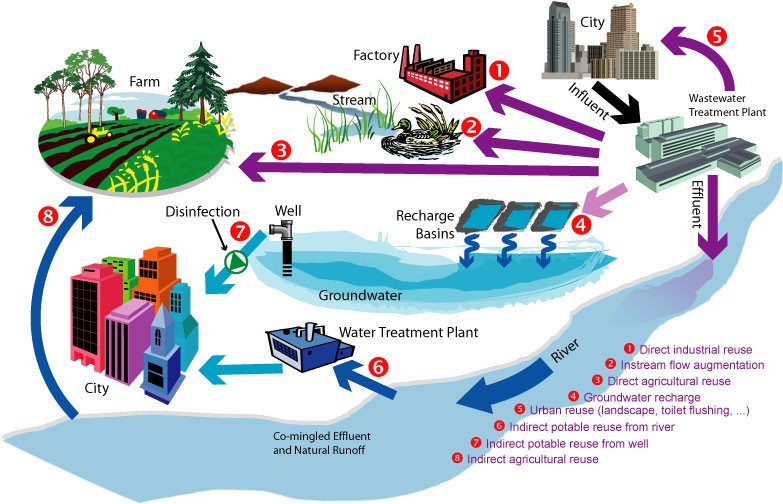
    #CA: Urban designers are incorporating #reuse into building design

    Water reuse via GlobalWarming.com.

    From Water Deeply (Tara Lohan):

    San Francisco is helping to grow adoption of onsite nonpotable water reuse systems by requiring them in large new buildings. Now there is interest in a statewide regulation to streamline permitting while ensuring health and safety.

    IN DOWNTOWN SAN Francisco, a mixed-use 800ft tower nearing completion at 181 Fremont St. features a water treatment system that will provide 5,000 gallons a day of recycled water captured from the building to be used for toilet flushing and irrigation. That will help save an estimated 1.3 million gallons of potable water a year.

    Just down the street, the recently expanded Moscone Conference Center has installed a system to collect and treat foundation drainage, otherwise known as “nuisance groundwater,” that will be used for toilet flushing and irrigation as well by the city’s Department of Public Works for street cleaning.

    Both buildings are among 82 proposed or completed projects in San Francisco that are using decentralized, onsite water-recycling systems to capture and reuse water that would otherwise flow down the drain or run off rooftops to city sewers or into the San Francisco Bay. The treated water that’s captured isn’t used for drinking, but for nonpotable purposes such as flushing toilets and urinals, irrigating landscapes, supplying cooling systems and even generating steam power. In commercial buildings, about 95 percent of water used is generally for nonpotable purposes. In multifamily residential buildings, it’s 50 percent.

    As interest in recycled water grows in California and across the United States, more building professionals are considering these decentralized systems. Up until now, a lack of health and safety regulations at the national and state levels has made the permitting process tricky and slow going. But bottom-up pressure may help create needed regulations…

    This process would be easier for communities if there were established health and safety standards from the state for onsite nonpotable reuse, but so far they’re lacking.

    “We think that from our perspective, if there is clear guidance and regulations that the state establishes, it would make it easier for communities that want to pursue local programs to oversee and manage decentralized water systems,” said Kyle Pickett, managing principal at Urban Fabrick.

    Those regulations could be on the way, but how long it will take is unclear…

    While there are no national or state regulations for onsite nonpotable reuse yet, there is a growing community of professionals sharing resources and expertise. SFPUC’s Kehoe chairs a National Blue Ribbon Commission for Onsite Nonpotable Water Systems, which recently produced a guidebook on water quality standards and management of onsite reuse systems. The commission was established by the U.S. Water Alliance, and it convenes more than 30 water and health professionals from across the country…

    Other efforts are underway, too. Urban Fabrick’s nonprofit arm, the William J. Worthen Foundation, will be releasing a practice guide on January 19 aimed at giving design professionals information about onsite reuse…

    “We don’t do nearly enough water recycling in California, honestly, it’s embarrassing how far behind we are compared to Australia, Israel and other places with very arid environments,” said Wiener. “We have a long-term structural water shortage and we need to modernize our water system and drag it out of the 1850s. Water recycling is a critical aspect of modernizing our water system.”

    Idaho Springs approves 2018 budget — The Clear Creek Courant

    Idaho Springs photo credit by Priscila Micaroni Lalli (prilalli@gmail.com) – File:Montanhas Idaho Springs, CO.jpgFirst derivative version possibly by Dasneviano (talk).Second derivative version by Avenue (talk)., CC BY-SA 2.5, https://commons.wikimedia.org/w/index.php?curid=6871667

    From The Clear Creek Courant (Ian Neligh):

    Greenway

    The city received $2 million in Great Outdoors Colorado funding this year to put toward building a greenway trail through the city, according to Marsh.

    “Bottom line is with the $2 million grant, the greenway will be completed,” Marsh said. “When the construction is done, the greenway will be completed from exit 239 on the west end of the city all the way to the roundabout.”

    The city is planning and looking for additional grant funding to complete the greenway trail from the roundabout on the east end of town to near the Veterans Memorial Tunnels…

    Other road projects

    Marsh said other road projects the city will be taking next year include reconstructing Soda Creek Road and the portion of Miner Street near the Visitors Center, with the help of a 1 percent sales-tax boost approved by city residents in 2014.

    “This project will be the first big project we’re doing from the 1 percent street sales tax approved by voters,” Marsh said. “We’re not only just doing the street, but we’re also redoing water and sewer lines, storm sewer, and it also includes part of the project cost (that) will be offset by a ($250,000) grant we received from (the Colorado Department of Local Affairs) for the water and sewer infrastructure.”

    […]

    Additional projects

    The city is also working on expanding its wastewater treatment plant, which won’t begin construction until 2019. However, planning will begin in 2018.

    “And we’re hoping to use a combination of city funds, loans through the state and grants to make this project happen,” Marsh said.

    Clear Creek watershed map via the Clear Creek Watershed Foundation

    The San Juan Basin Public Health Board of Health adopts new 2018 regulations governing on-site wastewater treatment systems

    Septic system

    From The Pagosa Sun (Claire Ninde):

    On Thursday, Nov. 16, the San Juan Basin Public Health (SJBPH) Board of Health adopted new regu- lations governing on-site wastewa- ter treatment systems (OWTS) in Archuleta, La Plata and San Juan counties following a long stake- holder outreach process. These regulations will go into effect on Jan. 1, 2018.

    On June 30, new statewide regu- lations went into effect for OWTS in Colorado. These regulations required all local public health agencies in the state, including SJBPH, to revise their local OWTS regulations to meet or exceed the minimum statewide standard. SJBPH conducted outreach beginning in the fall of 2016 with wastewater industry professionals, county planning commissioners, state regulators, the real estate community and many others to write a regulation that protects public health and water quality while providing certainty to the industry and to homeowners.

    The 2018 regulations include three major changes toward these goals:

    • Direct adoption of statewide design and construction standards to reduce confusion and provide consistency with neighboring counties;

    • Allowing more design options, including smaller active treatment systems, which may reduce costs for some homeowners and allow for septic systems to be more easily installed on dif cult sites;

    • Beginning in 2019, requiring that most properties served by an OWTS be inspected prior to sale, to identify and quickly repair fail- ing or hazardous systems, and to protect buyers from unforeseen and costly repairs. This require- ment is delayed to allow more time for property owners, real estate professionals and the wastewater industry to prepare for the new requirements.

    PAWSD discusses 2018 preliminary budget

    From The Pagosa Sun (Chris Mannara):

    [The budget was] presented to the board of the Pagosa Area Water Sanitation District (PAWSD) on Sept. 21.

    The PAWSD budget includes four funds: a general, debt service, water enterprise and wastewater enterprise.

    In a follow-up phone call with The SUN, Business Services Manager Shellie Peterson explained some of the larger changes for each portion of the budget…

    Water enterprise fund

    There were also a few notable proposed changes to the water enterprise fund.

    “There are a lot of similarities to the water fund and the wastewater fund,” she said.

    Both are proprietary funds, she explained.

    “These are supposed to be run as you would a private business, meaning that the amount that you charge for service charges in all of your different revenues, ideally, should cover all of your related operating expenses and your capital expenditures and the debt service that’s involved with the enterprise funds,” she said.

    Peterson noted that PAWSD can transfer from the general fund up to 9.99 percent of a funds’ revenues.

    “So in doing that in a small way we’re subsidizing the enterprise funds with a little bit of tax dollars,” she said.

    Capital projects was also included on the water enterprise fund as having a projected negative 35 percent change for 2018.

    This projected change would move the capital projects budget from $428,211 in 2017 to $279,890 in 2018.

    According to the draft budget summary sheet, there is a distinct decrease in capital expenditures, but many of the decreases are off- set by “increases in major mainte- nance item expenditures.”

    “We’re projecting to spend less on capital next year,” she said.

    In an email to The SUN Peterson explained that the reason for spending less on capital is that some years present a bigger need for capital projects than others.

    “There really is not a ‘why’ to capital spending. Some years present the need for major new construction or processes more so than others,” Peterson wrote.

    Water loss was also listed as a larger maintenance item in the draft budget.

    “During the restructuring of the Colorado Water Conservation Board loan for the Dry Gulch prop- erty, a commitment was made to spend $125,000 per year on water line replacement or repairs to re- duce water loss,” she wrote.

    Peterson noted that the water line replacement or repairs are not capital expenditures.

    “They will not be capitalized and depreciated over a useful life,” she wrote.
    The next big capital project will be the installation of ultraviolet disinfection at the San Juan Water Treatment Plant.

    “That work is being engineered this year, dirt work, excavation will be started next year, and the UV project itself will be bid out in 2019,” she wrote.

    The ending fund balance for the water enterprise fund is projected to have a 12 percent increase.

    This would raise the balance up from $5,061,503 in 2017 to $5,666,128 in 2018.

    “That’s saying if everything went exactly according to this formula I would have just over $5 million at the end of 2017, in this fund, and then yet I’m projecting to have a 12 percent increase in that ending fund balance,” she explained.

    Why the fund balance is going to go up involves a few things, Pe- terson noted.

    “Part of the reason that the fund balance is going to go up is because my revenues are going to go up just a titch, but my expenses are going to go up too, just a little bit,” she said.

    Wastewater enterprise fund

    Peterson explained that the wastewater enterprise fund and the water enterprise fund work in the same way, but offer different services.

    “They operate identically other than the fact that they provide two completely different services,” Peterson said.

    The majority of revenue that the wastewater fund receives is from the minimum monthly ser- vice charge for wastewater, she explained.

    “The wastewater fund is less complicated because it’s a flat rate, everyone who is connected to Pagosa Area Water sewer is paying $32 per equivalent unit,” she said. The wastewater fund’s revenue is easier to determine because it doesn’t have a oating volumetric rate that the water enterprise fund has, Peterson noted.

    Two of the bigger proposed percentage changes within the wastewater enterprise fund were wastewater collection and capital projects.

    Wastewater revenue is projected to increase by 42 percent for 2018. The potential increase would move wastewater’s budget of $458,300 in 2017 to $652,935 in
    2018.

    “It means we are expecting our expenses to be higher in that department,” she said.

    Collection of wastewater in- volves everything that happens in the collection system, the pipes underground, to bringing the sewage to the sewer plant, Peterson explained.

    “We expect to go out to bid on $200,000 basis to have a commer- cial sewer line cleaning service come in,” she said.

    The company responsible for the line cleaning would spray the sewer lines clean, and install cameras and create tapes from the cameras, Peterson explained.

    With these tapes, PAWSD could see any potential problems within the sewer line, she explained.

    Right now PAWSD is using local firm, Pagosa Rooter, to clean its sewer lines.

    “They just aren’t able to televise for us, but we’ve been doing cleaning that way,” she said.

    The problem for PAWSD is that it is harder to have larger firms come to Pagosa Springs because they won’t mobilize for that small amount of work.

    “That’s the lion share of why that budget is going to increase,” Peterson said.

    Another reason for the increase for wastewater revenue is having lift station rehab at lift station 21 and lift station 7, Peterson ex- plained.

    Capital projects was again listed under this section of the budget.

    Capital projects is proposed to have a 59 percent decrease in the proposed budget, from $371,525 in 2017 to $153,320 in 2018.

    “In the capital department, we just have less being forecast, really where the big dollars are this year is more in the maintenance line,” Peterson said.

    Both the water and wastewater funds stay at close to the same level of total expenditures, but the weighting is changed for this year, she said.

    Snowmass wastewater plant overhaul update

    Graphic credit Wikimedia.com.

    From The Snowmass Suns (Britta Gustafson):

    The water and sanitation district wastewater management plant, located next to the Snowmass Club Commons housing complex, is currently undergoing a major overhaul and expansion.

    Upgrades to the current facility and a 44,000-square-foot expansion will allow the water and sanitation district to meet heightened state requirements for total removal of inorganic nutrients such as nitrogen, phosphorus and ammonia from local streams and rivers. It also will improve efficiency as water demands increase.

    Gov. John Hickenlooper in May 2013 issued Regulation 85, calling for the implementation of a strategic plan for all of Colorado’s water resources with a phased schedule for statewide wastewater plants to comply.

    Each of the 44 water treatment districts in the state will now be required to start implementing these new regulations. Due to its size and location in a priority watershed, the Snowmass plant falls into the Department of Health’s first phase with a 2020 deadline.

    The district considered 14 different processes and plant configurations to comply with total removal of inorganic nutrients before deciding on a University of Cape Town configuration with membrane bioreactor for enhanced biological nutrient removal.

    Upgraded state-of-the-art equipment — including a supervisory control and data acquisition and an industrial control system that interfaces with equipment — will allow the operation of the plant to be monitored 24/7.

    Probes can now detect potential concerns on a minute-by-minute basis, even offering remote monitoring and management.

    As an example, Snowmass Water and Sanitation District resident project representative Shea Meyer said, “if a restaurant dumps grease, we can detect it a good deal before it contaminates and clogs up the system.”

    Additional improvements will include the installation of new high-efficiency motors and a new charcoal-odor control system…

    With a price tag of nearly $24 million, which Snowmass Village voters approved in May 2016 via a mill-levy tax, expectations are high…

    The new plant should last at least 30 years, potentially upward of 50 or 60, Hamby said, “assuming additional (Environmental Protection Agency) regulations do not affect us.”

    […]

    After thoroughly excavating the existing holding-pond base, the initial phase of the estimated 30-month project will officially begin.

    Once the concrete pour is underway, the project construction contractor, RN Civil Construction of Centennial Colorado, will prepare and issue a timeline for the project.

    RN Civil project manager Dave Ortt said he expects the construction schedule to be available within the next week.

    Hamby said quality, safety and cost efficiency would all take precedence over the 2020 deadline and that the district may ask for an extension if necessary.

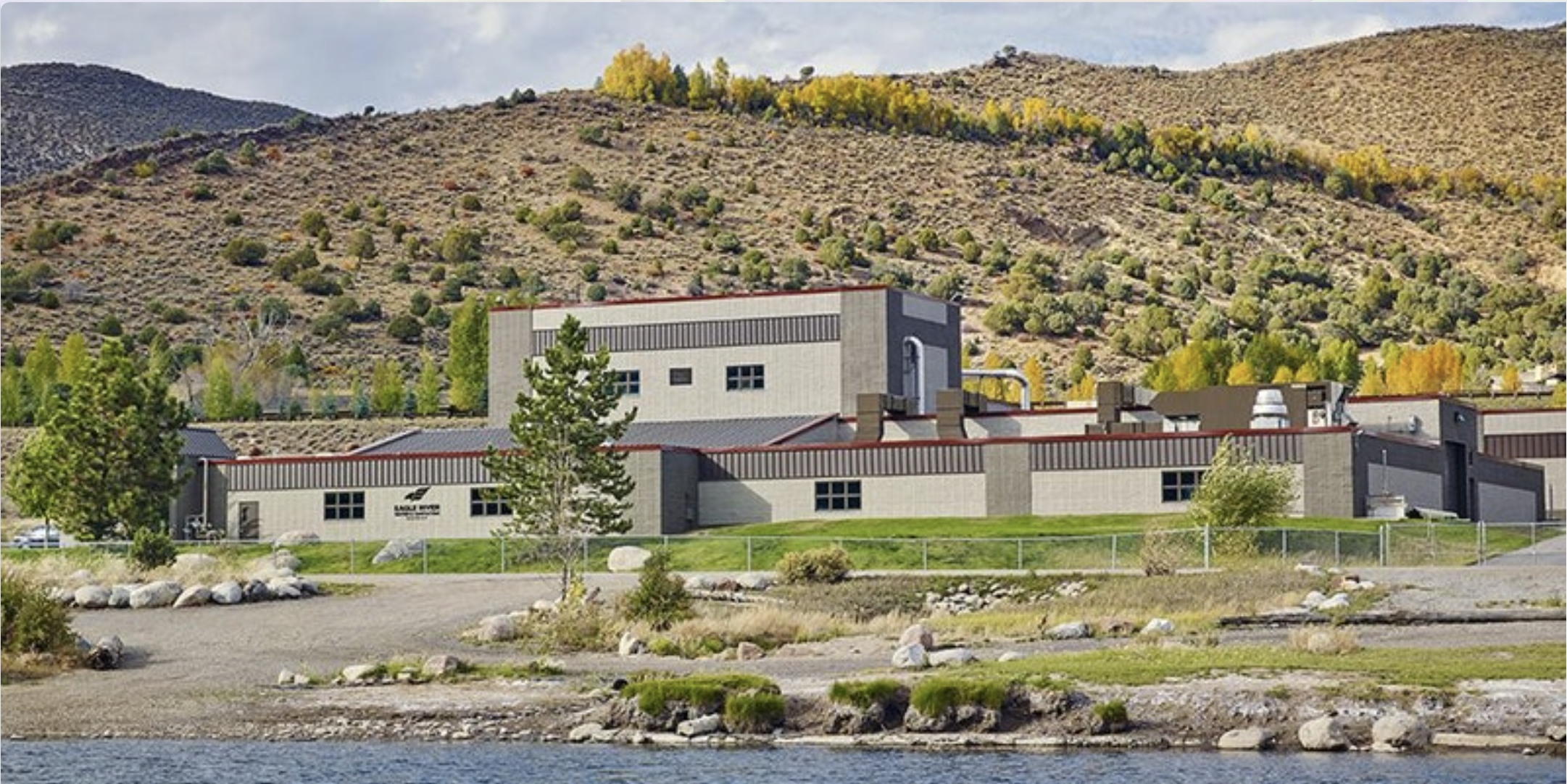
    Community Open House & Reception: Edwards wastewater facility improvements, September 26, 2017

    Edwards Wastewater Treatment Facility photo credit Eagle River Water & Sanitation District.

    Click here to view the Eagle River Water & Sanitation event page and to register:

    Join us for a reception and tour of the $25 million Edwards wastewater treatment facility solids handling improvement project. Now that the landscaping is done, we’re ready for visitors!

    Please register so we can plan enough food for all participants.

  • 11 a.m. to 2 p.m. – Open house, facility tours, and complimentary food.
  • Noon to 1 p.m. – Welcome, acknowledgements, speakers, and short tour.
  • […]

    Improvements include:

  • Preliminary treatment enhancements.
  • Expansion of the solids digestion process.
  • Rehabilitation of solids dewatering.
  • Landscaping and aesthetic updates.
  • New odor control systems.
  • Snowmass: Construction starts today on new wastewater treatment plant

    Wastewater Treatment Process

    From The Aspen Daily News (Madeleine Osberger):

    Construction on the Snowmass Water and Sanitation District’s new $24 million wastewater treatment building begins today, after a re-bid brought the project cost more in line with what voters approved in May 2016 to spend, according to district manager Kit Hamby.

    The district signed a contract Aug. 1 with RN Civil Construction of Centennial for a new 44,000-square-foot plant that can meet heightened state requirements for removal of nutrients like nitrogen, phosphorus and ammonia from local streams and rivers. All 44 water treatment districts in Colorado must comply with the new regulations, although Snowmass happened to fall within the first round with a 2020 deadline…

    The majority of the cost — now budgeted at roughly $24 million — will be covered by the bond sales, which brought in $23.3 million. The remainder could be taken from a $7 million to $7.5 million capital project reserve fund earned in part from Base Village tap fees.

    Longmont: Wastewater infrastructure ain’t cheap

    Wastewater Treatment Process

    From The Longmont Times-Call (John Fryar):

    Longmont’s city staff is recommending raising the city’s sewer rate charges by 3 percent next year, followed by 2 percent increases in both 2019 and 2020.

    The City Council is to discuss the possible rate hikes during a Tuesday night study-session review of Longmont’s wastewater utility and that utility’s financial projections and needs.

    The Department of Public Works and Natural Resources staff said in a memo to the council that the proposed rate hikes “will allow the utility to maintain its target debt service coverage and appropriately fund operational costs” of Longmont’s sewage collection and treatment system.

    “The wastewater utility continues to experience cost increases that affect the utility’s financial outlook,” the staff wrote in that memo. “While staffing levels have been significantly decreased in the utility since 2000, resulting in annual cost reductions in excess of $2 million each year, operating costs have still increased by an average of 2.8 percent each year between 2006 and 2016.”

    Major drivers of those costs included regulatory requirements that necessitated large capital expenses at Longmont’s wastewater treatment plant, the staff said, as well as flood-recovery and repair costs for the sewage collection system, the city staff said.

    The staff also cited a need for “deployment of new metering technologies,” as well as climbing construction costs after the 2008 recession and what it said was an “aging wastewater infrastructure reaching the end of its life cycle.”

    In order to pay for capital improvements to the city’s wastewater treatment plant and infrastructure, Longmont sold a total of $52 million in sewer bonds issued in 2010, 2013 and 2015.

    Debt repayments from the wastewater utility’s budget fund have increased by $3.1 million a year because of those bond sales, the staff said, and the bond requirements include being able to maintain enough budget money to cover at least 110 percent of that debt.

    As part of its adoption of Longmont’s 2017 budget, the City Council approved an average 3 percent increase in customers’ sewer fees that took effect this year…

    Staff reductions, achieved after Longmont completed a 2000 water-wastewater strategic plan, “helped stabilize rates and provided more money for capital needs while service levels were maintained or improved,” the staff wrote.

    However, “while staff has continued to maintain service levels, major cost drivers in the form of regulatory requirements, natural disasters, new technologies, increasing construction costs and aging infrastructure have impacted the utility.”

    The City Council cannot make official rate-increase decisions during a study session but can direct the city staff whether to proceed with preparing a rate hike for formal council votes later this summer or fall.

    Clearas’ process uses algae to remove phosphorus and nitrogen from wastewater plant effluent

    From The Missoulian (David Erickson):

    Formed eight years ago, the company has developed a patented process to use algae to remove nitrogen and phosphorous from public wastewater treatment plants, keeping waterways from being inundated with the compounds that starve fish and plant life of oxygen. In turn, the algae can be sold to other companies for fertilizer, biofuels and other uses.

    Think of it as high tech farming.

    As the global population skyrockets, nitrogen and phosphorous pollution is becoming a significant environmental concern. Often referred to as “nutrient loading,” these two elements cause algal blooms in lakes and rivers that create “dead zones” that devastate vegetation and animals.

    Clearas officials say they have found a way to harness Mother Nature’s own solution to nutrient loading in a different way, making it a beneficial process that makes money instead of an ecological nightmare.

    Sewage contains high levels of nitrogen and phosphorous, and those two elements happen to be what algae, the fastest-growing plant on the planet, likes to eat.

    Phosphorous and nitrogen are in demand from the agriculture sector for their use as fertilizers. So rather than having life-killing algae in nature’s waterways, the nutrients can be put to use in corn fields.

    “I think the simplest way to describe what we do is to say that we take harmful constituents out of the wastewater prior to discharge into our rivers, lakes and streams, and we do it biologically sustainably,” explained company CEO Jordan Lind.

    There are other technologies for removing those nutrients, but they often involve chemical treatment.

    Clearas formed as a company when algae farmers in the Bitterroot Valley wanted phosphorous and nitrogen from Missoula’s wastewater treatment facility to feed their biofuel. Lind recalls that the head of the wastewater facility told them they could take as much wastewater as they wanted for free, a much better alternative than buying synthetic nitrogen.

    It was a “eureka” moment. Kevin McGraw, the company’s co-founder and operations manager, realized that they could develop a technology to harness wastewater’s nutrients to grow a valuable product while doing public utilities a favor…

    The company developed a testing facility at Missoula’s wastewater treatment plant on North Reserve. A series of tubes feed 15,000 gallons of wastewater per day through algae and return it to the Clark Fork River much cleaner than it was before.

    The company recently landed a contract to implement their Advanced Biological Nutrient Recovery technology at a Utah municipality called the South Davis Sewer District, which will be a 4-million-gallon-per-day system.

    Lind said Montana has relatively lax environmental regulations on what wastewater facilities can discharge, but in other places tighter regulations mean that more and more cities will look to this technology…

    In fact, some of the explosions of bright green algae that can be found in the Clark Fork River and other bodies of water across the country in the summer are caused by too much nitrogen and phosphorous from agriculture runoff, laundry detergents and other sources.

    The beauty, Lind says, is that Clearas is recovering the resource rather than just removing it. They have centrifugal machines that can turn the algae into whatever consistency a customer needs, whether it’s a watery sludge for fertilizing a field or a dry cake for making plastics or fuels.

    “There’s lots of potential co-products that result from the treatment process,” Lind said. “So you truly are going waste-to-value. And that’s kind of the new trend in our space. All these municipalities and large industrial plants that have wastewater, there’s value in that waste. The question is how you convert it. And our method is a proven way to do that.”

    Lind said there is a lot of interest in the company’s technology in the Great Lakes region, in Europe and in Asia…

    The Utah contract is the first of what the company hopes will be a long line of dominoes to fall. In essence, they hope that once one municipality sees the technology working, then others will hop on board.

    It’s a little more complicated because taxpayer funds have to be used to upgrade wastewater treatment plants. However, they have high hopes. Right now, the company employs about three dozen people, and they have acquired an engineering firm to deal with helping cities implement the technology.

    Andy Gordon, the company’s market development manager, said he believes the technology could transform the world.

    Telluride Regional Wastewater Plan update

    Telluride

    From The Telluride Daily Planet (Justin Criado):

    Council members and several town officials visited their Mountain Village neighbors to the north in order to discuss the proposed Telluride Regional Wastewater Treatment Master Plan. The plan has not been formally finalized, but it’s not likely to change drastically, Public Works Director Paul Ruud said.

    The two-hour work session included a presentation highlighting immediate, short-term and long-term goals over the next 10 years…

    The current wastewater treatment plant at Society Turn serves the communities of Telluride, Mountain Village, Eider Creek, Sunset Ridge, Aldasoro and Lawson Hill.

    The plant is reaching its originally designed capacity, officials explained. Plus, Department of Public Health and Environment regulations through the Colorado Discharge Permit System have been altered over the years. (Colorado Water Quality Control Division stipulations regarding acceptable metals levels in the water also changed beginning this year.)

    Those variables, in conjunction with an increased waste stream and new treatment options, make updating and eventually expanding the current plant paramount within the next decade…

    Immediate focuses include talking with commercial wastewater dischargers about pre-treatment agreements, seasonal restrictions on septage hauling to the plant and a receiving station for storage of septage, among other items.

    Ruud called the more immediate objectives “stepping stones.”

    The long-term plan, outlined until 2027, includes plant expansion to meet possible new state nutrient regulations.

    The San Miguel Valley Corporation owns the land immediately around the current plant. Ruud said there have been “very preliminary” talks with corporation officials about possibly acquiring more land.

    The total cost of all proposed master plan improvements would be in the $30-$40 million range. Telluride officials explained addressing future wastewater plans in annual budgets would help with the planning process. (Telluride had a specific focus on water and wastewater projects when sculpting its 2017 budget.)

    The recently opened, $22 million Fruita wastewater plant was used as an example of what is possible, but Ruud explained Telluride’s wastewater flow is higher than Fruita’s, which calls for larger improvements.

    Telluride Town Manager Greg Clifton said none of the master plan objectives are necessarily “set in stone” just yet…

    The city continues to replace outdated water lines, update treatment plant technology, and develop better ways to store and treat water and wastewater.

    Water and wastewater projects are covered through separate enterprise funds, which use taxes and service fees to raise capital.//

    For 2017, projected Telluride Water Fund revenues are $2.6 million, while projected expenditures are $3.5 million.

    Plans to replace more pipes around town and the Bridal Veil Basin are in the works for this year, including repairs to pipes that carry water through the Lewis and Blue lakes areas. The Mill Creek Water Treatment Plant is in need of equipment and holding tank updates, which are projected to be $278,500, according to town officials.

    Clifton added that exploring alternative, outside funding options will be a hot topic at future meetings.

    Metro Wastewater Reclamation District Opens New $417 Million Facility

    Photo credit Kuck Mechanical Contractors, L.L.C.

    Here’s the release from the Metro Wastewater Reclamation District:

    The Metro Wastewater Reclamation District today celebrated the grand opening of its Northern Treatment Plant. Planned since 1982, the new $417 million facility is one of the most advanced in the western United States.

    Designed to protect the South Platte River and support rapid community growth, the facility is capable of cleaning 24 million gallons per day and will eventually serve up to 750,000 customers across Aurora, Brighton, Commerce City, Thornton, unincorporated Adams County and Denver.

    “By investing in critical infrastructure, we are investing in the future of the communities where we live and work,” said Catherine Gerali, District Manager of the Metro District. “Completion of the Northern Treatment Plant ensures safe, reliable and cost-effective water reclamation for the 1.8 million Coloradans who rely on the essential public service we provide.”

    Under Budget and on Schedule
    Construction of the Northern Treatment Plant was completed on schedule and the $417 million total program cost was nearly $60 million less than original budget estimates. This includes design and construction of the treatment facilities and a nearly seven-mile pipeline that uses gravity – not pump stations – to transport flow to the plant.

    “This is one of the largest progressive design-build municipal water projects ever delivered in the U.S.,” says CH2M Chairman and CEO Jacqueline Hinman. “The innovative delivery process allowed for the greatest level of collaboration with all project stakeholders, while maintaining a keen focus on safety. We applaud the Metro District’s foresight in delivering a technologically advanced treatment facility that will make a great difference in our community, protect our environment and preserve critical water supplies for our growing region.”

    A Legacy of Environmental Stewardship
    The Northern Treatment Plant strengthens the Metro District’s more than 50-year track record of environmental stewardship. The new facility features the latest proven water reclamation technologies to protect the South Platte River, alongside onsite resource recovery for energy generation and agricultural applications.

    “Protecting the environment is the very reason for the Metro District’s existence,” Gerali added. “We were formed in 1961 to clean up the South Platte River and the Northern Treatment Plant strengthens our more than 50-year legacy of environmental stewardship.”

    A Community Resource
    The Northern Treatment Plant provides community amenities with opportunities for public recreation and education. The facility includes more than a mile of riverside trails and seating around a wetland area. Ultimately, these trails are designed to serve as a connection with a regional trail system that is envisioned to extend from Wyoming to New Mexico. The new facility’s Administration Building includes educational exhibits to inform visitors about how water reclamation protects the South Platte River and benefits the environment.

    Facts & Figures

  • The Metro District is the largest water reclamation provider in the Rocky Mountain West, serving about 1.8 million people in a 715 square-mile area.
  • The Northern Treatment Plant is one of the most advanced facilities in the western United States and will eventually serve up to 750,000 customers
  • Every day the District collects and reclaims about 130 million gallons of wastewater – enough to fill nearly 200 Olympic-size swimming pools.
  • For nine months out of the year, roughly 90% of the water in the South Platte River comes from the outfalls of the District’s Robert W. Hite Treatment Facility.
  • The District makes enough energy onsite to power approximately 40% of its Robert W. Hite Treatment Facility using gas produced during the treatment process – that is enough energy to power roughly 5,000 homes.
  • The District owns and operates a 52,000 acre farm in northeast Colorado. We pioneered wastewater resource recovery for agriculture and have grown crops at our METROGRO Farm for 30 years.
  • For more information, please visit the Metro District’s website at http://www.MetroWastewater.com.

    @GreeleyGov: Water & Sewer Annual Summer Tour, June 30, 2017


    Click here to register and read about the event:

    The Greeley Water & Sewer Board invites residents to this year’s facility tour to learn more about how water and sewer is treated, where the water comes from, and the various ways water is used. Residents will tour the Water Pollution Control Facility (WPCF) and Boyd Lake facilities and learn about system exchanges, points of diversion, and non-potable systems. A light breakfast and lunch will be provided.

    Those interested in attending should contact Ettie Arnold at 970-350-9812 before June 23. Space is limited.

    Get more information about Greeley’s Water System at http://www.greeleygov.com/water.

    Metro Wastewater doles out “Gold Awards” for compliance

    Robert Hite wastewater treatment plant in Denver.

    From the release from the Metropolitan Wastewater Reclamation District:

    Metro Wastewater Reclamation District honored fifteen metro area organizations for perfect compliance with their industrial wastewater discharge permits last week. The following were recognized with Gold Awards for perfect compliance from January through December 2016:

    • Advanced Circuits, Inc.
    • Affiliated Wastewater Environmental Services
    • Airvac Services, Inc.
    • Complete Powder Coating & Paint, Inc.
    • CoorsT ek, Inc.
    • Denver Metal Finishing
    • Finishing Professionals, LLC
    • Goldberg Brothers, Inc.
    • KBP Coil Coaters, Inc.
    • Mid-America Plating, Inc
    • New Mexico Resources, LLC
    • Pepsi Beverages Company
    • Rocky Mountain Bottle Company
    • UniFirst Corporation
    • Wright & McGill Company

    The Metro District issues wastewater discharge permits to these organizations as required by the Clean Water Act. According to Federal Pretreatment Regulations, the Metro District must have an Industrial Pretreatment Program to control the discharge of industrial waste to the sanitary sewer system.

    Today is World Water Day 2017

    World Water Day, on 22 March every year, is about taking action to tackle the water crisis. Today, 1.8 billion people use a source of drinking water contaminated with faeces, putting them at risk of contracting cholera, dysentery, typhoid and polio.

    The Sustainable Development Goals, launched in 2015, include a target to ensure everyone has access to safe water by 2030, making water a key issue in the fight to eradicate extreme poverty.

    In 1993, the United Nations General Assembly officially designated March 22 as World Water Day. World Water Day is coordinated by UN-Water in collaboration with governments and partners.

    Find out more about this year’s theme: wastewater.

    Webcast: Stormwater Contaminants of Emerging Concern — @theCWPInc

    Emerging contaminant transport. Graphic via the USGS.

    Click here to register for the webcast from The Center for Watershed Protection. Here’s their pitch:

    Newly recognized contaminants of emerging concern (CECs) include a broad list of synthetic or naturally occurring chemicals (e.g., pharmaceuticals, synthetic fragrances, detergents, disinfectants, plasticizers, preservatives) or any microorganisms that have the potential to cause adverse ecological and(or) human health effects. Advances in our ability to detect and study CECs in the environment have shown that they are widespread throughout the aquatic ecosystem, and some studies are showing adverse impacts to aquatic organisms and public health. While a major source of CECs is POWT discharges, illicit discharges containing sewage into the municipal separate sewer system is a major pathway for CECs to be delivered to urban and suburban stream systems. Illicit discharge detection and elimination (IDDE) systems have the potential to be effective tools to mitigate the effect of CECs on the environment. This webcast focuses on CECs and the potential for IDDE programs to reduce their impacts.

    #AnimasRiver: @EPA — Cement Creek, #GoldKingMine, summer project plan

    From The Durango Herald (Jonathan Romeo):

    At the Animas River Stakeholders Group meeting in Silverton on Thursday, Superfund site project manager Rebecca Thomas told the 20 or so attendees the EPA has laid out a work plan for the summer.

    Thomas said much of the work will be a continuation of last year’s activities, including collecting data and water samples, as well as looking at flow control structures at the Gold King Mine, the site of the EPA-triggered mine spill in August 2015.

    The EPA also will install a pressure gauge system to monitor the bulkhead at the Mogul Mine, adjacent to the Gold King, which are both significant contributors of heavy metals into Cement Creek, a tributary of the Animas River.

    The EPA wants to install a ground monitoring well between the inner and outermost bulkheads at the American Tunnel, the drain for the Sunnyside Mine workings. It’s suspected the American Tunnel’s water level has reached capacity and could be responsible for increased discharges out of adjacent mines, such as the Gold King.

    Thomas said crews will compile more data for the possible closure of the bulkhead at the Red & Bonita Mine, another contributor into Cement Creek. Specifically, EPA wants to better understand the water hydrology of the mine workings.

    As for the EPA’s interim water-treatment plant at Gladstone that treats discharges out of the Gold King Mine, Thomas said the agency is looking at about six sites to store the mine waste.

    “This is increasingly more important for us as we start to run out of room for sludge management (at Gladstone),” Thomas said.

    She said there may be more than one location for the mine waste, and that the agency hopes to have that finalized by May.

    Thomas added that the EPA is planning a few quick-action remediation projects at sites within the Superfund listing where there is an immediate benefit to the environment, water quality and managing adit discharges.

    She said 27 of the 48 sites qualify for early-action remediation, which could include fixing mine waste ponds, remediating waste rock dumps or redirecting clean surface water away from known polluted areas.

    “There’s no way we’re going to get all the work done, but the hope is to get some of the work done,” Thomas said.

    The Bureau of Land Management, Colorado Department of Public Health and Environment and the U.S. Forest Service – all working on the Superfund site – also listed a few projects they have planned for this year.

    Most notably, the BLM has permission to undergo a pilot project with Texas-based Green Age Technologies to test a new treatment on mine wastewater that many in the stakeholders group have said holds promise for low-cost water treatment.

    The BLM and Green Age will spend 21 days treating discharges out of the American Tunnel and Gold King Mine with a technology known as cavitation, which separates metal ions from water.

    The EPA had promised the town of Silverton before the community supported Superfund designation that the agency would embrace new technologies for mine-waste treatment.

    Las Animas councillors approve loans for sewer infrastructure

    sewerusa

    From The Bent County Democrat:

    …the mayor conducted regular business with the passing of a number of resolutions [including]…

    Resolution No. 3-17, a Resolution of the City of Las Animas Sewer Enterprise approving a loan between the Colorado Water Resources and Power Development Authority and the City of Las Animas sewer enterprise in the principal amount of not to exceed $176,000 for the purpose of financing the design and engineering costs relating to improvements to Las Animas wastewater facilities; authorizing the form and execution of a loan agreement and a governmental agency bond evidencing the loan; and prescribing other details in connection therewith; Resolution No. 4-17, a Resolution of the City of Las Animas sewer enterprise approving a loan between the Colorado Water Resources and Power Development Authority and the City of Las Animas sewer enterprise in the principal amount of not to exceed $593,500 for the purpose of financing improvements to Las Animas wastewater facilities; authorizing the form and execution of a loan agreement and a governmental agency bond evidencing the loan; and prescribing other details in connection therewith; Resolution No. 5-17, a Resolution of the city of Las Animas approving a contract with the City of Las Animas Sewer enterprise relating to improvements to the Las Animas Wastewater System and providing for payment for such services and Resolution No. 6-17, a Resolution of the City of Las Animas sewer enterprise approving a contract with the City of Las Animas wastewater system and providing for payment for such services.

    Morgan Conservation District’s 62nd Annual Meeting, February 9th, 2017

    View of runoff, also called nonpoint source pollution, from a farm field in Iowa during a rain storm. Topsoil as well as farm fertilizers and other potential pollutants run off unprotected farm fields when heavy rains occur. (Credit: Lynn Betts/U.S. Department of Agriculture, Natural Resources Conservation Service/Wikimedia Commons)
    View of runoff, also called nonpoint source pollution, from a farm field in Iowa during a rain storm. Topsoil as well as farm fertilizers and other potential pollutants run off unprotected farm fields when heavy rains occur. (Credit: Lynn Betts/U.S. Department of Agriculture, Natural Resources Conservation Service/Wikimedia Commons)

    From the Morgan Conservation District via The Fort Morgan Times (Angela Werner):

    Morgan Conservation District’s 62nd annual meeting will be held on February 9th.

    It will be held at the Fort Morgan Home Plate Restaurant, 19873 U.S. Hwy. 34. Breakfast will be at 8 a.m. and the meeting will start at 9 a.m. The cost of the meeting will be $25 in advance, and that will cover the annual meeting, annual membership in Morgan Conservation District, and free breakfast that morning.

    If you do not RSVP in advance, and show up on the day of the meeting, please be advised that the cost will be the same, however breakfast will not be free, due to our needing to order the food in advance. Our keynote speakers, Bill Hammerich and Andrew Neuhart.

    Bill Hammerich has served as the CEO of Colorado Livestock Association (CLA) for the past fourteen years. He grew up on a cattle and farming operation in Western Colorado and he attended CSU where he graduated with a degree in Agricultural Economics. Following graduation, he began working with Monfort of Colorado, then Farr Feeders and was with the Sparks Companies before joining CLA in 2002.

    His time spent in the cattle feeding industry provided him not only with an understanding of how to feed cattle, but also the importance of protecting and sustaining the environment in which one operates.

    Bill and his wife Sabrina live in Severance, Colorado and have two grown children, Justin and Jessica, and four grandsons.

    Andrew Neuhart completed both a B.S. in Natural Resource Management and an M.S. in Watershed Science at CSU. After spending two years assisting in precision farming studies in the San Luis Valley for the USDA Soil, Plant and Nutrient Research team, Andrew went to work for the State of Colorado’s Water Quality Control Division. For 9 years with the WQCD, Andrew led a Permitting Unit for discharge permits under the Clean Water Act, for both industrial and domestic wastewater treatment facilities. Working for Brown and Caldwell over the last 4 years, Andrew assists clients with regulatory issues under the Clean Water Act, and has been working with the Ag Task Force, part of the Colorado Monitoring Framework, to get the word out regarding nutrient regulations and their impacts to agricultural operations.

    Mr. Hammerich and Mr. Neuhart will be speaking about Regulation 85.

    Regulation 85 establishes requirements for organizations holding a NPDES permit and with the potential to discharge either nitrogen or phosphorus to begin planning for nutrient treatment based on treatment technology and monitoring both effluents and streams for nitrogen and phosphorus.

    The data from these efforts is designed to better characterize nutrient sources, characterize nutrient conditions and effects around the state and to help inform future regulatory decisions regarding nutrients. Please come to the meeting and learn more from our very knowledgeable keynote speakers!

    Please RSVP as soon as possible to Angela at morganconservationdistrict@gmail.com or call 970-427-3362. Space is limited.

    #coleg: @CWCB_DNR hopes to score $25 million for watershed plans @COWaterPlan

    Yampa River
    Yampa River

    From The Denver Post (Bruce Finley):

    A Colorado Water Conservation Board proposal, sent to state lawmakers last week, recommends the stream-saving action to meet state environmental and economic goals. It remains unclear who would enforce the community watershed plans.

    But there’s little doubt streams statewide are strained by thirsts of a growing population expected to double by 2060, according to state officials. And a Denver Post look at the latest water quality data found that 12,975 miles of streams across Colorado (14 percent of all stream miles) are classified as “impaired” with pollutants exceeding limits set by state regulators.

    Creating local watershed plans to save streams is essential, said James Eklund, the CWCB director and architect of the year-old Colorado Water Plan. Eklund pointed to low-snow winters and drought in California’s Sierra Nevada, where 2015 snowpack at 5 percent of average forced a declaration of a state of emergency requiring 25 cuts in urban water use.

    “When our Colorado mountain snowpack drops below 60 percent of average, we get nervous. If it happens in the Sierras, it can happen in the Rockies,” he said. “We need to protect certain streams before a crisis. We have got to get on this quickly.”

    No single agency oversees waterway health. State natural resources officials monitor flow levels in streams and rivers. They run a program aimed at ensuring sufficient “in-stream flow” so that, even during drought, streams don’t die.

    Meanwhile, the Colorado Department of Public Health and Environment sets standards on maximum levels of pollutants that people and companies are allowed to discharge into waterways. In 2015, only 51.6 percent total stream and river miles in Colorado met quality standards, and 30.1 percent of lake surface acres met standards, according to a CDPHE planning document.

    “If stream flows are low, there is less dilution in the stream to handle the addition of pollutants through permitted discharges,” CDPHE water quality director Pat Pfaltzgraff said in responses sent by agency spokesman Mark Salley.

    Yet CDPHE officials do not make recommendations to natural resources officials about water flows necessary to improve stream health.

    The health department has made separate “watershed plans.” CDPHE officials “are considering broadening the division’s watershed plans to include ecosystem health that might be more consistent with stream management plans.”

    Pfaltzgraff declined to discuss stream health…

    CWCB chairman Russ George supported the push to create local watershed plans, to include detailed maps covering every stream.

    “Every stream and tributary needs to be inventoried. … It should have been done a long time ago,” George said in an interview last week.

    “We have kind of hit the population and demand place where we have to do it. We didn’t have to do it for the first part of history because the population was small and there wasn’t the impact of all the issues we are getting into now,” he said.

    The CWCB voted unanimously last month to ask lawmakers to approve $5 million a year for up to five years to launch local stream planning.

    Basin roundtable boundaries
    Basin roundtable boundaries

    The plans are to be developed within the eight river basin “roundtable” forums that Colorado has relied on for addressing water challenges. These groups draw in residents with interests in stream health who helped hash out the Colorado Water Plan, which was finalized last year and calls for statewide cuts in per person water use by about 1 percent a year.

    Conditions along Colorado streams vary, said Bart Miller, healthy rivers program director for Boulder-based Western Resource Advocates. “There are plenty of streams that have problems.”

    While state natural resources officials run the program aimed at keeping at least some water in heavily tapped streams, survival in a competitive environment is complex. Leaving water in streams for environmental purposes often depends on timing, when the mountain snowpack that serves as a time-release water tower for the West melts, the amount of snowpack, and needs of cities, pastures and farms.

    Collaborative local forums to find flexibility to revive streams “is a great approach.” However, state officials eventually may have to play a central role converting plans into action, Miller said.

    “The state should help both in funding the planning but also in implementing the plans,” he said. “We have a lot of work to do. This matters because this is about ‘the Colorado brand.’ Everyone depends on healthy rivers.”

    The roundtable forums in communities draw in diverse stakeholders from cattlemen to anglers.

    Irrigators and other water users west of Aspen already have created a “stream management plan,” for the Crystal River, seen as a model local effort. Their planning included an assessment of watershed health that found significant degradation above the confluence with the Roaring Fork River. They set a goal of reducing the estimated 433 cubic feet per second of water diverted from the river by adding 10 to 25 cfs during dry times. They’re developing “nondiversion agreements” that would pay irrigators to reduce water use when possible without hurting agriculture, combined with improving ditches and installation of sprinkler systems designed to apply water to crops more efficiently.

    Enforcement of plans hasn’t been decided. “We’d like to see more enforcement” of measures to improve stream health, Rocky Mountain Sierra Club director Jim Alexee said. “We definitely think there’s room to do more. We also want to be respectful of the governor’s watershed process.”

    Colorado has no history of relying on a central agency to enforce water and land use, CWCB chairman George pointed out.

    “When you have a system designed to have everybody at the table, what you’re doing is recognizing there is a finite resource that is shared by everybody. And impacts are shared by everybody statewide. In order to keep from having some force dominate in ways that would not account for all statewide impacts, you need to diffuse the conversation into all areas. That is what roundtables do,” he said.

    “When you do that, you’re going to get a better statewide result over time. … It is a process that is designed to get as many interests into the decision-making as you can. … It gets harder, of course, as the supply-demand makes pinches. For the rest of our lives, it is going to be that way.”

    Today is #WorldToiletDay, “The eighth wonder of the world,” according to @UN_Water

    sewerusa

    From @UN_Water:

    Human beings are now largely an urban species: for the first time in history, more than half of the world’s population lives in towns, cities and megacities.

    Worldwide, it is estimated that almost one-fifth of all urbanites – over 700 million people – live without a decent toilet. To put that into context, the queue for people waiting for toilets in our cities and towns would stretch around the world 29 times.

    In WaterAid’s new report, Overflowing cities: The State of the World’s Toilets 2016, they look at some of the world’s worst countries for urban sanitation, and some of the jobs that are created when the challenge is addressed head-on.

    Lower Ark joins Fountain Creek lawsuit — The Pueblo Chieftain

    Heavy rains inundate Sand Creek. Photo via the City of Colorado Springs and the Colorado Springs Independent.
    Heavy rains inundate Sand Creek. Photo via the City of Colorado Springs and the Colorado Springs Independent.

    From The Pueblo Chieftain (Anthony A. Mestas):

    During their monthly meeting…Lower Arkansas board members voted unanimously to join a lawsuit filed last week against Colorado Springs for discharging pollutants into Fountain Creek and the Arkansas River.

    Members also said they have asked Pueblo City Council and the Pueblo County commissioners to join the lawsuit, as well.

    “I can’t see where Pueblo County and the city cannot step up and do the same thing,” said Anthony Nunez, a former Pueblo County commissioner who sits on the Lower Ark board…

    Peter Nichols, an attorney and a Lower Ark director, told board members that intervening in the lawsuit would give them a seat at the table in any sort of trial or negotiated settlement that might occur…

    Nunez said Colorado Springs needs to be held accountable and, in the nearly six years he has been on the board, he’s heard the same thing from Colorado Springs over and over again.

    “We’ve met with the (Colorado Springs) City Council. I guess to put it in better terms, we meet with half of the City Council because they are always waiting for the next city council,” Nunez said.

    “We have talked and talked, and I think it is time that actions be taken.”

    […]

    “As long as they can keep giving us the stiff arm — put us off, put us off, put us off — they don’t feel like they have any obligation because, quite frankly, if they have a violation, they pay a small fine and that fine is far less than rectifying the entire problem,” [Melissa Esquibel] said.

    Grand County: Three Lakes Water and Sanitation District board discusses sewer line extension

    sewerusa

    From The Sky-Hi Daily News (Lance Maggart):

    The ongoing animosity surrounding a sewer line extension within the Three Lakes Water and Sanitation District (TLWSD) continued Monday night when the TLWSD Board of Directors responded to 17 questions posed by local citizen Michael Eha…

    The meeting covered a broad range of topics but the capacity crowd of attendees was primarily focused on issues surrounding a highly contentious sewer line extension project the District is undertaking in the Pine Beach area. Among the citizens most adamantly opposed to the Bine Beach sewer extension is Michael Eha.

    Eha and other citizens impacted by the Pine Beach sewer extension have requested the Board engage with citizens in a question and answer session. The Board did not engage in a Q&A session.

    Instead the Board requested Eha submit a list of questions in writing so the Board could prepare answers. The Board’s response to Eha’s written questions was scheduled as an agenda item for the evening. The Board refused to entertain additional questions from the crowd and instead responded only to those questions previously submitted by Eha. Responses were prepared ahead of time and were read aloud to the crowd by various members of the Board, TLWSD staff members and the District’s Attorney.

    As the Board took up the issue Board Chairman Bill Heffron pointed out the proceedings were an, “unusual” agenda item for the Board.

    “This Board has a history of asking that questions be submitted in writing,” Heffron said. “It gives us an opportunity to research and give a fully developed and through answer. That is what we are doing here tonight.”

    Heffron continued by asking that additional Board responses to citizen questions no longer be scheduled as agenda items, preferring instead that such interactions occur through correspondence only and outside regularly scheduled meetings.

    Heffron asked if that was the consensus of the Board to which the other Board members stated yes.

    As the segment began Michael Eha raised an objection to the Board. Eha said it was his understanding that the agenda item would be a question and answer session with additional dialog between constituents and the Board and not merely an agenda item wherein constituents were not allowed to ask follow up questions.

    Chairman Heffron said, “We are not accepting questions. We are responding to questions that have been posed.”

    When those in attendance raised additional questions later in the meeting Chairman Heffron used his gavel liberally to bring order to the crowd.

    “Are we going to entertain taking questions from the floor?” Heffron asked the other Board members.

    All other Board members said they wished to press on with the Board responses and not field additional questions.

    In the lead up to the meeting Monday night Michael Eha submitted a list of 17 questions for the Board. Eha submitted his questions at the request of the District, which does not typically hold any formal Q&A sessions. Additionally the Board does not respond to questions posed to the Board during the Public Comment portion of their meeting.

    The responses prepared by Three Lakes for the meeting ostensibly answered the questions posed by Eha though several questions were answered through legalese that appeared to avoid the deeper substantive issues posed by the questions.

    For example, one of the questions posed by Eha was, “We find the Board to be cavalier in their decision making, and would like to give them the opportunity of explaining. Exactly what are the qualifications of each board member that allows them to impose such financial hardships on residents?”

    The response provided by the Board quoted the Colorado State statutes that outline the requirements for election to any special district board in the state. The Board offered no additional response to the question beyond the relevant state statutes outlining Board membership requirements.

    The full list of all questions submitted by Eha, as well as the District’s responses, can be obtained through a request to the Three Lakes Water and Sanitation District.

    The cause of the contention in the TLWSD stems from plans the District has to install a new sewer main line in the Pine Beach area. District resident Gayle Langley, one of a handful of individuals impacted by the Pine Beach sewer extension project, outlined her concerns to the Board during the Public Comment period.

    “As a constituent, and as someone who is not financially able to pay the fees you are asking me for in the time frame you are asking, I am asking you once again to find a way to make a longer term loan program,” Langley said.

    “I’m still looking at 40 to 50 thousand dollars. I cannot pay that off in a four or five-year period of time. I’m asking you to find a way to make it a win win for everybody.”

    Air Force: Toxic wastewater sent into Fountain Creek [via sewer system] up to three times a year until 2015 — The Colorado Springs Gazette

    The Fountain Creek Watershed is located along the central front range of Colorado. It is a 927-square mile watershed that drains south into the Arkansas River at Pueblo. The watershed is bordered by the Palmer Divide to the north, Pikes Peak to the west, and a minor divide 20 miles east of Colorado Springs. Map via the Fountain Creek Watershed Flood Control and Greenway District.
    The Fountain Creek Watershed is located along the central front range of Colorado. It is a 927-square mile watershed that drains south into the Arkansas River at Pueblo. The watershed is bordered by the Palmer Divide to the north, Pikes Peak to the west, and a minor divide 20 miles east of Colorado Springs. Map via the Fountain Creek Watershed Flood Control and Greenway District.

    From The Colorado Springs Gazette (Tom Roeder):

    Peterson Air Force Base sent water laced with toxic firefighting foam into Colorado Springs Utilities sewers as often as three times a year, the service said in an email response to Gazette questions.

    The service said the practice of sending the wastewater mixed with perfluorinated compounds from the firefighting foam into sewers stopped in 2015 and said criminal investigators are looking into a discharge of 150,000 gallons of chemical-laden water from the base announced last week…

    The Air Force contends its earlier discharges of contaminated wastewater were “in accordance with (utilities) guidelines,” which Colorado Springs Utilities disputes.

    “I’m not aware that we have ever authorized them to discharge that firefighting foam into the system,” Utilities spokesman Steve Berry said.

    The chemicals in the firefighting foam, which can’t be removed by the Utilities sewage treatment plant, flowed into Fountain Creek, which feeds the Widefield Aquifer. Unlike other contaminants which settle out of water into sediment, perfluorinated compounds remain in solution, increasing the likelihood of contamination stemming from a release into the sewer system.

    The impact on other water users is unclear. Colorado Springs’ and Pueblo’s drinking water does not come from the creek…

    Berry said the last release of contaminated water from Peterson flowed through the Las Vegas Street sewage treatment plant before the utility was told of the 150,000-gallon discharge from a holding tank on the base. That means utility workers had no way to measure the toxicity of the water.

    “Once we were notified, that stuff had long moved through our system and out of service territory,” Berry said.

    The Air Force said an investigation into the discharge is ongoing and involves the service’s Office of Special Investigations and experts from the Environmental Protection Agency.

    Last week, Peterson officials said releasing the contaminated water from a holding tank near the base fire training area required opening two valves and activating an electric switch, making it possible that the release was intentional.

    The fire training area includes a collection system meant to contain the foam in a pair of holding tanks…

    Berry said in the wake of the latest incident, Utilities has told the Air Force that its firefighting foam isn’t welcome in city sewers.

    He called on the Air Force to release the alleged “guideline” the service cited to justify its earlier releases.

    “That does not sound right to me at all,” he said.

    The Air Force on Friday reiterated its contention that the service has been a good neighbor. The service has contributed $4.3 million toward filtering water for Security, Widefield and Fountain. Peterson is also replacing the foam in its firetrucks this week with a substance deemed less hazardous. The old foam is being disposed of as toxic waste.

    But scrutiny is building for the Air Force, which faced fire from Pikes Peak region politicians this week after a Gazette investigation showed the service ignored decades of warnings from its own researchers in continuing to use the foam. Air Force studies dating to the 1970s determined the firefighting foam to be harmful to laboratory animals.

    “We are working together with the community as a good neighbor who has a portion of our 12,000 employees in the affected area,” The Air Force said Friday.

    La Junta scores $246,000 for wastewater infrastructure upgrades

    Wastewater Treatment Process
    Wastewater Treatment Process

    From the La Junta Tribune-Democrat (Bette McFarren):

    With Mayor Pro Tem Jeffri Pruyn conducting the meeting, the La Junta City Council on Monday evening formally accepted the loan/grant of $246,000 from the Colorado Water Resources and Power Development Authority to the City of La Junta Wastewater Enterprise of not to exceed $246,000. The loan is to be forgiven at its inception. It is for the purpose of dealing with the problems facing the installation of the new wastewater plant, thus enabling construction to get under way. Construction is unlikely to begin until late winter or next spring, said Director of Water and Wastewater Joe Kelley.

    Fountain Creek: 150 KGAL of PFC-laden water released into #Colorado Springs sewer system by Peterson AFB

    The Fountain Creek Watershed is located along the central front range of Colorado. It is a 927-square mile watershed that drains south into the Arkansas River at Pueblo. The watershed is bordered by the Palmer Divide to the north, Pikes Peak to the west, and a minor divide 20 miles east of Colorado Springs. Map via the Fountain Creek Watershed Flood Control and Greenway District.
    The Fountain Creek Watershed is located along the central front range of Colorado. It is a 927-square mile watershed that drains south into the Arkansas River at Pueblo. The watershed is bordered by the Palmer Divide to the north, Pikes Peak to the west, and a minor divide 20 miles east of Colorado Springs. Map via the Fountain Creek Watershed Flood Control and Greenway District.

    From The Denver Post (Bruce Finley):

    The spill, which Air Force officials said they’re investigating, happened as the Air Force increasingly faces scrutiny as a source of groundwater contamination nationwide.

    The surge of waste containing elevated perfluorinated chemicals (PFCs) — used at military airfields to douse fuel fires and linked by federal authorities to kidney cancer, testicular cancer, low birth weights and other health problems — flowed through a Colorado Springs Utilities wastewater treatment plant before crews could try to block it. Then it trickled into Fountain Creek.

    “Even if we would have been able to head it off at the plant, we’re not equipped. I don’t know of any wastewater plants in the country equipped to remove PFCs,” utilities spokesman Steve Berry said. “We would not have been able to remove that chemical before it was discharged back into the environment from our effluent.”

    Fountain Creek flows south toward Pueblo and into the Arkansas River.

    Pueblo Board of Water Works spokesman Paul Fanning said Pueblo didn’t hear about the spill until reporters made inquiries Tuesday.

    “We don’t use any groundwater or surface water from Fountain Creek. We use water from the Arkansas River taken upstream from where Fountain Creek flows in,” Fanning said. “But it is not a good thing to have those contaminants anywhere in our water. There are some reported health effects. It is in our interest to protect our public.”

    […]

    The PFC-laced waste was held in a tank at a firefighter training area on the base, located at the southeastern edge of Colorado Springs. PFCs are a component in the aqueous film-forming foam used to extinguish fuel fires.

    Air Force officials said in the statement that they discovered the spill Oct. 12 during an inspection. They notified Colorado Springs Utilities the next day. The tank was part of a system used to recirculate water to a firefighter training area…

    In Colorado, government well test data show PFCs have contaminated groundwater throughout the Fountain Creek watershed, nearly as far south as Pueblo, at levels up to 20 times higher than that EPA health advisory limit of 70 parts per trillion.

    Public-water authorities in Fountain, Security and Widefield have scrambled to provide enough alternative water. Security has been purchasing millions of gallons of diverted Arkansas River water from Colorado Springs, installing new pipelines and minimizing pumping from contaminated municipal wells. Since Sept. 9, Security has not pumped any water from wells, water and sanitation district manager Roy Heald said. “This spill does not affect us immediately,” Heald said. “Our only concern would be the long-term effect on Fountain Creek and the Widefield Aquifer.”

    Some parents south of Colorado Springs began paying for bottled water — to be safe. A contractor delivers emergency bottled water to at least 77 households.

    The Air Force has contributed $4.3 million to help communities deal with the contamination.

    Colorado Springs utilities crews will work with the military “to keep PFCs out of our system. That is the goal,” Berry said. “How do we protect our customers and our system from this chemical? That is the focus. It goes beyond the Air Force. It is any industrial process that may use that chemical.”

    El Paso County Public Health “takes this discharge seriously and will coordinate with the Colorado Department of Public Health and the Environment to collect water samples along Fountain Creek, if warranted,” spokeswoman Danielle Oller said.

    CDPHE has been informed, agency spokesman Mark Salley said, adding: “It is under investigation by the Air Force, and the department is waiting for information. … The Air Force has demonstrated its commitment to identifying and addressing PFC contamination at Peterson Air Force Base and facilities nationwide.”

    From The Colorado Springs Gazette (Tom Roeder and Jakob Rodgers):

    The release last week posed no threat to Colorado Springs drinking water.

    The base said the release was discovered Oct. 12. The cause hasn’t been determined, but Fred Brooks, Peterson’s environmental chief, said the holding tank was designed to be difficult to discharge.

    “It’s not a direct connection,” Brooks said. “This tank would have to have numerous valves switched to actually discharge.”

    Was it intentional?

    “That’s a possibility,” Brooks said…

    An investigation has been opened to determine the cause of the discharge, said Col. Doug Schiess, who commands Peterson’s 21st Space Wing, in the statement.

    Colorado Springs Utilities said the chemical-laden water passed through the utility’s Las Vegas Street sewage treatment plant and was released into Fountain Creek. The plant does not have the capacity to remove the chemical.

    “There was no risk to the drinking water,” said Steve Berry, a Utilities spokesman. “This did not impact the drinking water, the finished water system, in any way. It went directly into the wastewater system.”

    While Peterson notified Colorado Springs, base officials didn’t warn others downstream. Brooks said the base isn’t required to issue a wider notification, noting that the chemical is “unregulated” – a term used for substances that haven’t drawn enforceable drinking water standards…

    Peterson had scheduled a public firefighting demonstration on Oct. 12, the day the discharge was discovered. The fire training exercise was canceled, with a spokesman at the base blaming the delay on a “bad valve”

    Brooks, the base environmental officer, said two mechanical valves and an electric one must be switched to allow water to flow out of the tank, which held the outflow from fire training exercises dating back as far as 2013.

    He said the water wasn’t tested for levels of the firefighting chemical.

    A second tank on the base holding fire training residue wasn’t discharged.

    The Air Force banned use of the foam outside fire emergencies last year and last month announced a plan to replace the product at all of its bases around the globe. Brooks said the foam at Peterson will be replaced in about two weeks.

    The water contamination in Security, Widefield and Fountain has drawn a pair of lawsuits against the manufacturers of the firefighting foam alleging they sold it to the Air Force despite its toxic risks.

    Although downstream, no drinking water supplied to Pueblo residents by the Pueblo Board of Water Works comes from Fountain Creek, said Paul Fanning, the agency’s spokesman. The Pueblo Reservoir does not pull from Fountain Creek.

    The Widefield Water and Sanitation District is the only water system immediately downstream of the treatment plant now using the Widefield Aquifer, which leaches water from Fountain Creek, where the chemicals flowed.

    Widefield officials have previously said they plan to shut off their wells by sometime in October.

    Other communities have shut off their wells to the tainted aquifer.

    All the water flowing to homes supplied by the Security and Fountain water systems now comes from the Pueblo Reservoir – meaning that last week’s spill should not affect those communities.

    “The long-term effects would be concerning,” said Roy Heald, Security water district’s general manager. “But short-term immediate effects – there wouldn’t be any for us.”

    The EPA said it wasn’t involved with the spill.

    The Colorado Department of Public Health and Environment gave the Air Force a vote of confidence despite the chemical discharge.

    “The Air Force has demonstrated its commitment to identifying and addressing (perfluorinated compound) contamination at Peterson Air Force Base and facilities nationwide,” the state agency said.

    Photo via USAF Air Combat Command
    Photo via USAF Air Combat Command

    Durango sewer plant overhaul work to start in May 2017

    Wastewater Treatment Process
    Wastewater Treatment Process

    From The Durango Herald (Mary Shinn):

    The city plans to take out a $62 million loan this month to pay for a sewage-treatment plant remodel in Santa Rita Park.

    Work at the plant is expected to start in May, and it will require about two years, said consultant Bob Bolton, a vice president with Dewberry.

    Work on aeration basins will be accelerated to meet the February 2018 deadline to remove more nutrients such as nitrogen, phosphorous and ammonia from water the plant puts back in the river, he said.

    Design work has been ongoing all summer, and a team of consultants on Tuesday presented drawings and site plans to the Durango City Council.

    The actual construction of the plant is expected to cost about $53.8 million, Bolton said. The additional money the city will borrow is needed to cover related costs, such as design, said Mary Beth Miles, assistant to the city manager.

    Voters approved a $68 million bond question to use for the plant and other improvements. This will give the city a little flexibility in case the bids come in higher than expected, Miles said.

    At public and stakeholder meetings, odors at the plant have come up as a major concern, Bolton said.

    “We’re going to contain it and take care of it,” he said.

    Air coming into the buildings will be ionized to help purify it to make it more tolerable for employees, and air coming out of the building will be filtered.

    “You won’t know that it’s a wastewater plant,” Bolton said.

    As part of the design process, the consultants factored in the Animas River Trail and Santa Rita Park, and they plan to use landscaping to help buffer some of the plant. In addition, the consultants are planning to use stone, metal and concrete on the outside of the buildings to make them more muted.

    Cortez Sanitation District plans small rate increase — The Cortez Journal

    Montezuma Valley
    Montezuma Valley

    From The Cortez Journal (Jacob Klopfenstein):

    Cortez Sanitation District board members on Monday discussed a rate increase next year of $1 per month for wastewater treatment up to 5,000 gallons.

    Red Rocks Community College offers degree in water quality management

    Photo via Red Rocks Community College.
    Photo via Red Rocks Community College.

    From The Lakewood Sentinel (Clarke Reader):

    This fall, Red Rocks Community College makes Colorado history by offering a bachelor of applied science degree in water quality management technology.

    Red Rocks is the first community college in the state to offer a BAS degree, the result oftwo years of work by college faculty.

    “The accreditation to offer a BAS will expand the learning opportunities for the students,” said Chelsea Campbell, faculty lead of the Water Quality program, in an email interview. “This accreditation gives us the ability to offer more hands-on training for students and help them become better prepared for a career in the water industry.”

    The water quality management technology program focuses on applications, regulations and technologies of water, and has been around since the 1970s, Campbell said. The campus’ water quality building contains a hard, wet lab for the two water and wastewater analytical classes, and an outdoor distribution lab. The outdoor distribution lab is a live lab where students are able to experience all of the elements seen within the distribution system. The curriculum is directed in a specific way to increase likelihood of employment in the industry.

    “The BAS allows us to be pioneers in creating educational pathways that perhaps have not yet existed in this industry,” said Linda F. Comeaux, vice president of instructional services at the college. “Our students will get, what I believe, is the best learning experience, the elevated/upper division knowledge and hands-on, applicable experience to go right into the workforce and secure in-demand jobs.”

    […]

    “I am most looking forward to the growth of opportunities for students, especially since the water industry has very few degrees that are specific to water,” Campbell wrote. “Most degrees are focused around the environment or more generic sciences. This degree provides students courses that match their specific interests. Employers can now hire graduates that match their specific needs and the graduates can get the degree they really want.”

    As with most programs at Red Rocks, Water Quality is designed to be affordable and flexible — classes are offered in a variety of modalities including online, traditional classroom and hybrid.

    “We already have Ph.D. and qualified faculty on staff that will be able to teach some of these upper division courses,” Comeaux wrote. “I am looking forward to the faculty having the opportunity to utilize additional parts of their spectrum of knowledge and do what they do best — give our students exceptional experiences.”

    Eagle River Water & Sanitation District issues bonds for wastewater improvements

    Vail Colorado via Colorado Department of Tourism
    Vail Colorado via Colorado Department of Tourism

    Here’s the release from the Eagle River Water & Sanitation District (James Wilkins):

    The Eagle River Water & Sanitation District issued $23.3 million of new bonds to fund required improvements to its wastewater treatment system. The bond issuance was authorized in May 2014, when district voters passed a ballot measure (70 percent in favor) approving the new general obligation debt, to be paid back by property tax within the district boundaries.

    The mill levy associated with the new debt will begin in 2017, after an existing mill levy expires. According to finance director James Wilkins, the district is paying off a 1998 bond this year. “The mill levy assessed for the ‘98 bonds for the 2015 property taxes, which are paid in 2016 by real property owners within the district’s boundaries, was 0.621 mills,” said Wilkins. “With the new bonds’ annual payment, that mill would drop just a bit – based on last year’s valuations – to 0.619 mills, so it’s a slight tax decrease.” Similar to the mill levy expiring this year, the new one is tied to an annual debt service payment, so the mill levy may fluctuate up or down to generate the exact amount needed each year.

    Prior to the 2014 election, the district indicated to the public that the new bond issue’s repayments would be timed with the payoff of the 1998 bond, such that the impact to property taxes would be nominal. “With the payment on the new bonds almost matching the ones paid off this year, the taxes paid to the district for general obligation bonds will be almost identical,” stated Wilkins.

    The 2014 ballot language restricted spending of the bond proceeds to capital expenses related to the district wastewater master plan, which was developed to meet newly enacted statewide regulations that limit the discharge of nutrients from wastewater treatment facilities to waterways. That plan is being implemented in phases, with the first large project at the Edwards wastewater treatment facility scheduled for completion this fall.

    The current low interest rate environment allowed the district to finance the improvements at an average interest rate of 3 percent. Additionally, due to the current market appetite for high quality municipal bonds, Wilkins said the district received a coupon discount of nearly $2 million, which covered the issuing costs and allowed the district to realize a full $25 million in proceeds.

    Standard & Poor’s Ratings Services assigned its ‘AA-’ rating to the bonds, noting the district’s “favorable service area economy, extremely strong wealth and very strong income levels, and strong liquidity position” as well as “relatively stable utility operations, strong underlying economy, and favorable debt profile” in its ratings report.

    The bond sale closed March 31; Wilkins noted its success was due in part to buyers wanting bonds from well-managed local governments. The proceeds will fund a substantial component of the next phase of the wastewater master plan, which is closely evaluated at each step, so the district meets the nutrient regulations goal of improved stream water quality in a fiscally responsible manner.

    For more information, go to http://www.erwsd.org or contact Wilkins at 970-477-5442.

    Steep sewer rate hikes clear hurdle at #Denver council but still face questions — The Denver Post

    From The Denver Post (Jon Murray):

    Double-digit increases in Denver’s storm drainage and sewer fees moved a step closer to reality after the proposal on Tuesday cleared its first vote 9-3 before the full Denver City Council.

    But the measure, which would hike the storm drainage and sewer fees over five years, still faces pointed questions from council members before a final vote June 13. The council also has set an hour-long public hearing that night that is sure to draw pointed comments from critics who question the city’s approach, the largest project that would benefit from the fees and its link to the state’s Interstate 70 project through northeast Denver.

    Under the proposal, the annual combined bills for an average single-family home would increase by $116 by 2020 to pay in part for six-year project plans and some operating costs. Storm drainage rates would increase 66 percent, while sanitary sewer rates would go up 24 percent. Otherwise, both are pegged to inflation.

    “Don’t get me wrong. I’m 100 percent for a $383 million investment into our stormwater enterprise fund and our infrastructure,” Councilman Rafael Espinoza said, given the city’s extensive drainage needs.

    But as he worked his way down a list of questions he still had for officials from Denver Public Works and the Urban Drainage and Flood Control District, Espinoza was among council members who focused on whether the controversial Platte to Park Hill project should take up the lion’s share.

    Of the total storm drainage projects, $206 million raised through borrowing would go toward that project in northeast Denver, supplementing other sources to cover estimates that range between $267 million and $298 million.

    The project, which drew the ire of attendees who wore signs on their shirts saying “NO To Storm Water Fee Increases,” is aimed at improving drainage in basins that lack natural waterways. But opponents have focused on the lack of benefit for some areas while the greatest protection would be closer to I-70, which the Colorado Department of Transportation plans to lower below grade in coming years.

    Last year, the city and CDOT struck a cost-sharing agreement that includes state money for the city’s drainage projects, which would supplement the new I-70 drainage system.

    Some council members said the connection troubled them. But Robin Kniech portrayed it as the city smartly responding to CDOT’s inevitable request for a contribution to the I-70 project by offering to undertake a needed project that would benefit neighborhoods as well as the highway.

    “We have been chronically underfunding this infrastructure,” she said. Jolon Clark, also speaking in favor, noted that the fees proposal doesn’t specify any projects, and those planned by Public Works — including the bonds for the Platte to Park Hill project — will need future approval.

    Joining them in voting yes were Kendra Black, Albus Brooks, Stacie Gilmore, Chris Herndon, Mary Beth Susman, Debbie Ortega and Wayne New — the final two characterizing their votes as tentative until after the public hearing. Espinoza, Kevin Flynn and Paul Kashmann voted no, and Paul Lopez was absent.

    Storm drain and open channel improvements between the East Rail Line (38th & Blake Station) and the South Platte River (Globeville Landing Outfall), Stormwater detention/conveyance between the East Rail Line (38th & Blake Station) and Colorado Blvd, (Montclair Basin) Stormwater detention/ conveyance immediately east of Colorado Blvd. (Park Hill Basin).
    Storm drain and open channel improvements between the East Rail Line (38th & Blake Station) and the South Platte River (Globeville Landing Outfall), Stormwater detention/conveyance between the East Rail Line (38th & Blake Station) and Colorado Blvd, (Montclair Basin)
    Stormwater detention/ conveyance immediately east of Colorado Blvd. (Park Hill Basin).

    EPA awards $1.9 million to #Colorado School of Mines for water infrastructure research

    Photo via Greg Hobbs
    Photo via Greg Hobbs

    Here’s the release from the Environmental Protection Agency (Lisa McClain-Vanderpool, Cathy Milbourn, Karen Gilbert):

    [On May 4, 2016] the U.S. Environmental Protection Agency (EPA) announced $3.9 million in funding to two institutions to research innovative, cost-effective technologies to manage stormwater runoff and combined sewer overflows. Colorado School of Mines received $1.95M to develop a decision support tool to help communities evaluate alternative stormwater treatment technologies that consider diverse climates, regional practices and policies across the country. The tool will evaluate options and risks as well as life cycle costs associated with improving stormwater runoff management using green, gray and hybrid infrastructure. Colorado School of Mines will also create resources and hold workshops to conduct training sessions for these tools.

    “EPA has done extensive research on green infrastructure to ensure the availability and quality of water in the United States,” said Thomas A. Burke, EPA Science Advisor and Deputy Assistant Administrator of EPA’s Office of Research and Development. “These grants will take this work a step further by developing green infrastructure technologies and providing an understanding of the full costs of using these new technologies over time.”

    As water flows through storm drains, it carries many pollutants that end up in streams, rivers, ponds, lakes and oceans. Additionally, combined sewers carry sewage and stormwater runoff in the same pipe and when these exceed capacity, untreated water can be released into nearby waterways. Using the funding provided through these grants, researchers will produce tools and models to help communities evaluate the optimal mix of technologies that will treat stormwater with less energy, less expense and less burden on the environment. They will also research the possibility of reusing the cleaner water to help meet communities’ needs.

    “Our decision support tool will help advance urban water management across the U.S. through integration of new green infrastructure technologies and by allowing decision makers to have access to state-of-the art tools, data sources and life cycle information” said Professor Terri Hogue, lead investigator at Colorado School of Mines.

    Due to aging water infrastructure systems and regulatory requirements, stormwater management is an expensive challenge for many communities. The awardees will focus on the most cost-effective options like green infrastructure, practices that enhance natural ecological functions, such as growing gardens on roofs or building artificial ponds, to help manage stormwater and combined sewer overflows. Green infrastructure can replenish groundwater, provide flood control, add green spaces and parks, and revitalize neighborhoods.

    The Water Environment Research Foundation in Alexandria, Virginia Also received $1.9 million to develop a life cycle cost and analysis framework, a publically accessible tool and database and a guide for decision makers that includes case studies.

    To learn more about these awards recipients, visit http://www.epa.gov/research-grants/water-research-grants.

    CMC Edwards: May 16 State of the River Public Meeting

    Eagle River
    Eagle River

    From the Eagle River Water & Sanitation District (Click through for the agenda):

    Eagle River Water & Sanitation District, in partnership with the Colorado River District and the Eagle River Watershed Council, is hosting the Eagle River Valley State of the River community meeting, Monday, May 16, at Colorado Mountain College in Edwards.

    All members of the public are invited to hear about issues that affect Gore Creek, the Eagle River, the Colorado River, Western Colorado’s changing climate, local water supply, and streamflow and runoff projections. A reception with food and soft drinks will be held at 5:15 p.m., with presentations scheduled to begin at 6 p.m.

    For more information, contact Diane Johnson, Communications and Public Affairs Manager, at 970-477-5457.

    Snowmass approves tax increase for sewer plant overhaul — The Aspen Times

    Wastewater Treatment Process
    Wastewater Treatment Process

    From The Aspen Times:

    Snowmass Village water district residents approved a tax increase to pay for a new wastewater treatment plant Tuesday.

    Four hundred twenty-eight residents voted in favor of the mill levy increase that will cover the almost $20 million cost of the project, according to unofficial results from Tuesday’s election.

    The increase means property owners in the district will pay an additional $1.89 per $100,000 of assessed property value each month. The water district is required to overhaul its wastewater treatment facility in order to comply with new standards handed down by the Environmental Protection Agency.

    Sixty-nine residents voted against ballot measure 5A. All residents of the district, including rental tenants, who are registered to vote could participate in the election as well as any property owners or their spouses who are registered to vote in the state of Colorado.

    Snowmass Villagers also elected Shawn Gleason and David Spence to fill two vacancies on the district’s board.

    Denver: Big bump in storm and sanitary sewer rates in the works

    unionstationdenver04212016

    From The Denver Post (Jon Murray):

    Denver homeowners on average would pay $116 more in storm drainage and sewer fees over the next five years under a rate increase proposal that city officials will unveil this week.

    The proposed rates, which would accelerate already scheduled automatic increases based on inflation, would bolster city plans for upgrades and projects through 2021 for the storm and sanitary sewer systems. Those aim to improve storm drainage, reduce flood risk and improve the quality of water discharged into the South Platte River. For the sanitary system that connects to homes and buildings, plans call for more maintenance and expansion of aging sewer pipes in several areas.

    Storm drain and open channel improvements between the East Rail Line (38th & Blake Station) and the South Platte River (Globeville Landing Outfall), Stormwater detention/conveyance between the East Rail Line (38th & Blake Station) and Colorado Blvd, (Montclair Basin) Stormwater detention/ conveyance immediately east of Colorado Blvd. (Park Hill Basin).
    Storm drain and open channel improvements between the East Rail Line (38th & Blake Station) and the South Platte River (Globeville Landing Outfall), Stormwater detention/conveyance between the East Rail Line (38th & Blake Station) and Colorado Blvd, (Montclair Basin)
    Stormwater detention/ conveyance immediately east of Colorado Blvd. (Park Hill Basin).

    A big controversial project also is in the mix. About a quarter of the rate increases would help cover costs for northeast Denver’s “Platte to Park Hill” stormwater drainage projects, which have drawn opposition in part because of links to the planned Interstate 70 expansion and plans to regrade City Park Golf Course for stormwater detention.

    Overall, storm drainage rates, which are billed annually by the city, would increase nearly 66 percent through 2020 — or 45 percent after annual inflation adjustments are taken into account.

    The sanitary sewer rates that Denver Water customers pay monthly would increase 24 percent in that period. On top of the inflation adjustments, the new increase would amount to 8.6 percent.

    Though Denver Public Works’ increase proposal was expected, the details were revealed this week for the first time in advance of a planned Wednesday presentation to the City Council’s Infrastructure and Culture Committee.

    The proposal could advance to a final vote by the full council as early as May 23.

    With the city facing an estimated $1.5 billion backlog in upgrades to stormwater pipes and an aging sewer system, Denver city officials portray the increases as necessary to step up progress.

    “Just like so many other things in our city, we have huge infrastructure needs that are incredibly expensive,” said Councilman Jolon Clark, who chairs the infrastructure committee. “And we don’t have a way to pay for them,” requiring balanced plans.

    If the rate increases win council approval, the money available each year for storm drainage system improvement and water quality projects would grow from $20 million to $30 million. For sanitary sewers, the city says the rate increase would boost annual spending for maintenance and new projects from $2.5 million to $8 million.

    Public Works spokeswoman Nancy Kuhn said the sanitary increase also would help the city “keep pace with increasing water treatment costs, update aging infrastructure and prepare the system for the city’s future expected population growth.”

    Among the proposal’s major upshots:

    • Sanitary sewer fee proceeds would grow from $86 million a year to $104 million in 2020.

    • The total annual storm drainage fees generated would grow from $41 million before the increase to nearly $69 million by 2020.

    • The fee increases would enable borrowing of up to $206 million for the Platte to Park Hill projects, completing a funding puzzle estimated at $267 million to $298 million in scope.

    But the proposal would hit homeowners and businesses in the wallet as the city ratchets up both the storm drainage and sanitary sewer rates each year through 2020, starting in July. Subsequent increases would hit each January, starting in 2017.

    The annual increase for an average single-family home, which paid $320.28 last year, would range from $21.56 this year to $25 in 2020, city estimates show.

    A study provided by the city says that current average combined bill is about $100 less than the average for a selection of other Front Range systems and large cities around the state. Denver’s estimated combined bill in 2020 would rate slightly above today’s average.

    Clark said he probed planned water-quality improvements during a briefing he received on the proposal. In 17 years of working for The Greenway Foundation, he focused heavily on the Platte, which at times has measured E. coli bacteria levels exceeding safety standards. Other contaminants, including trash, also have been a problem.

    “I think this plan will have marked improvements on water quality in our streams and rivers,” Clark said. “And it’s a really good start, but this isn’t the end of the conversation on water quality.”

    Besides the automatic inflation adjustments, the city most recently increased sanitary sewer rates a cumulative 83 percent from 2011 through 2013. The storm drainage rate was increased 20 percent in 2011.

    A presentation prepared for the council committee says the city could aid ratepayers by asking Denver Water to add the storm drainage fee — now billed annually — to water customers’ bills, on a monthly or quarterly basis. The storm fee factors in a lot’s size and the amount of impermeable surface area.

    Officials also are exploring “potential affordability program options” to aid low-income households.