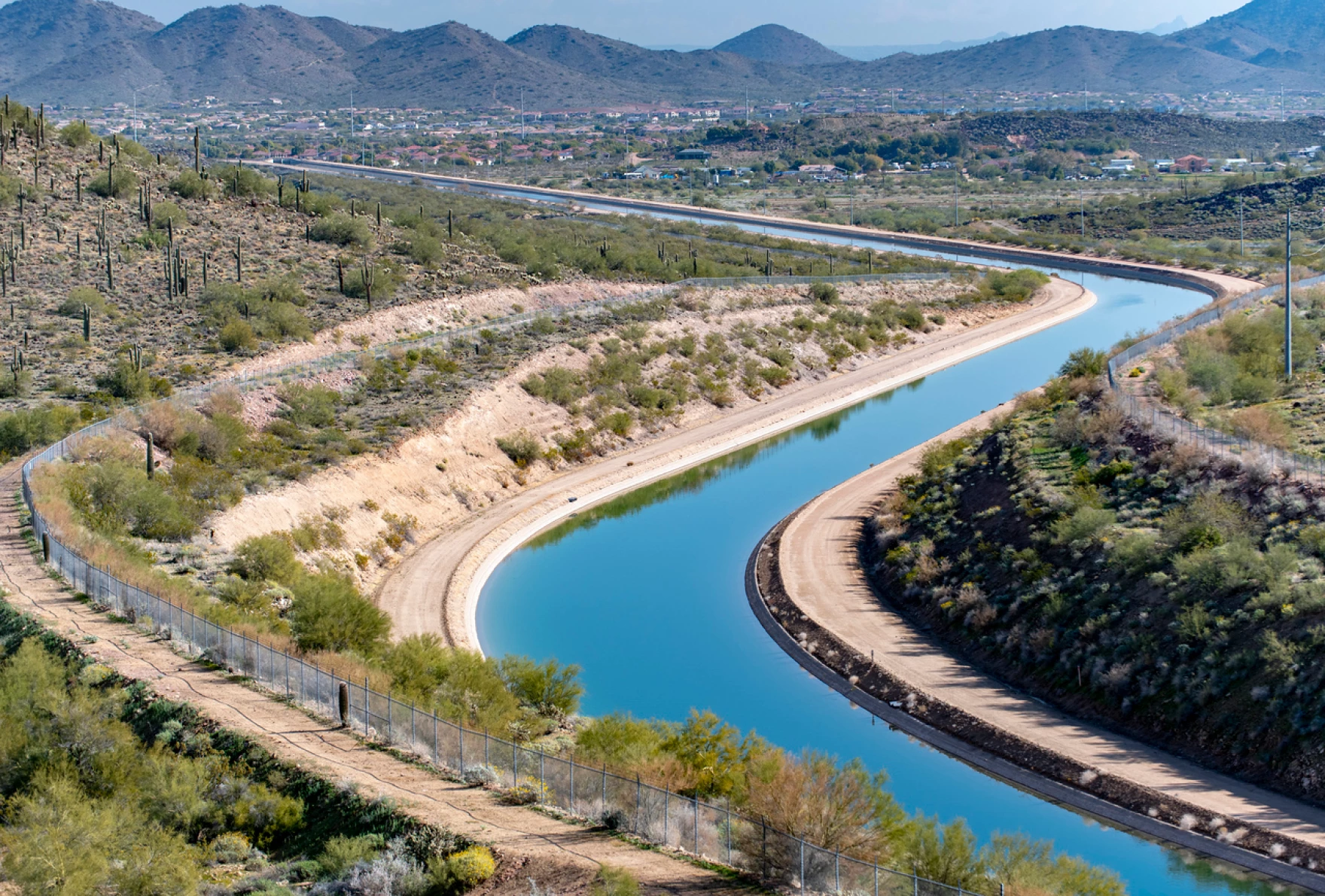
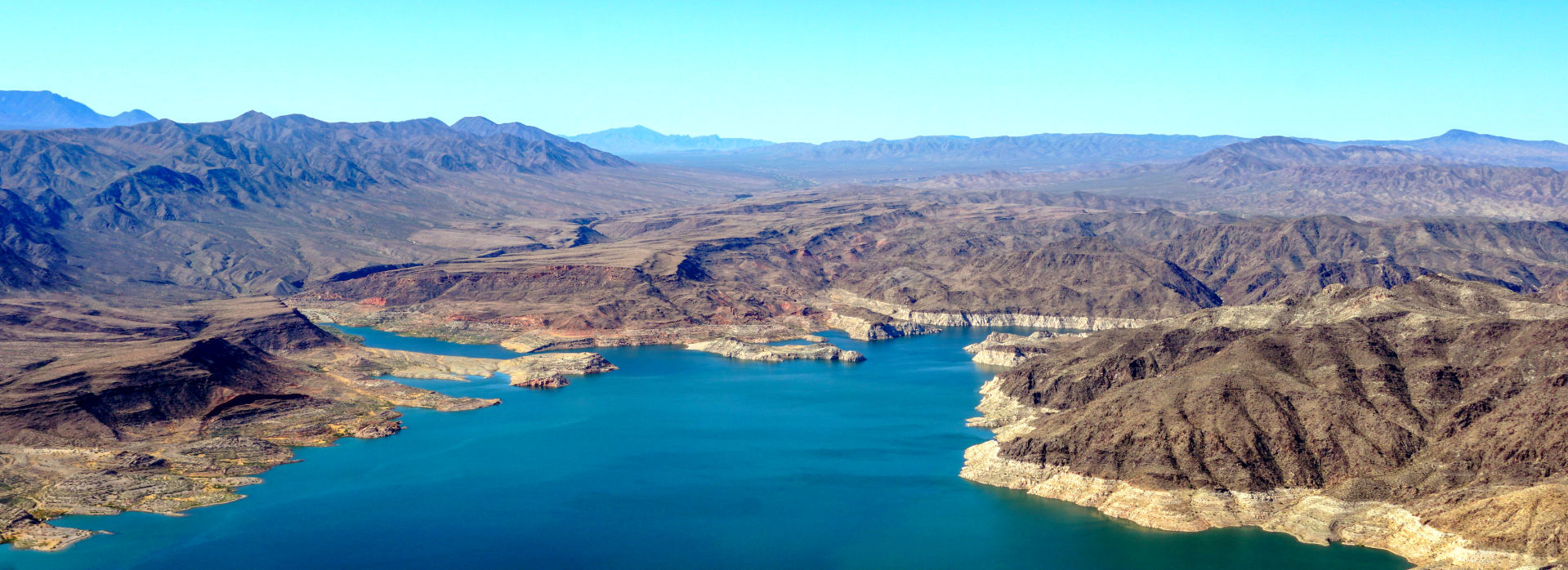
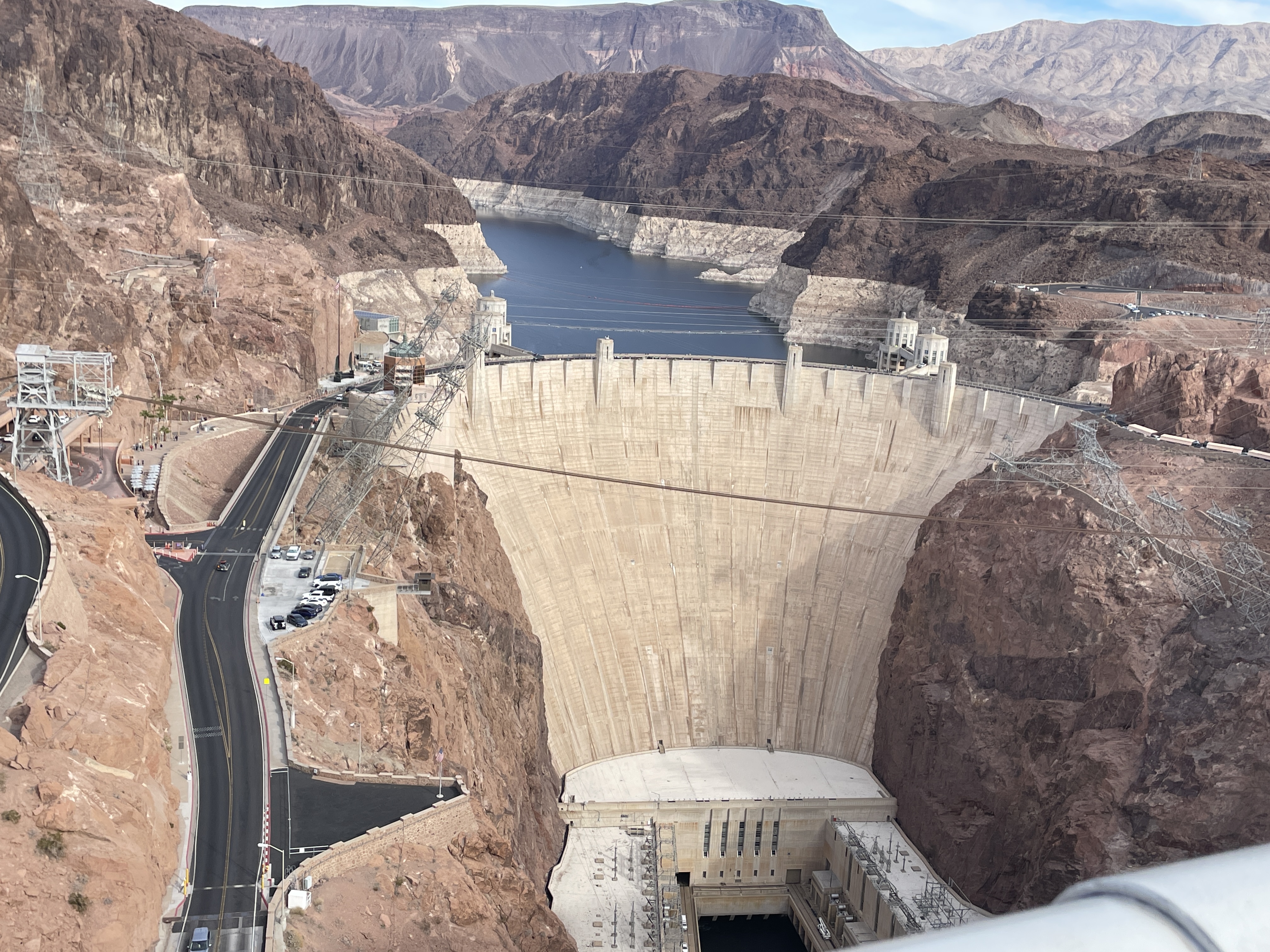
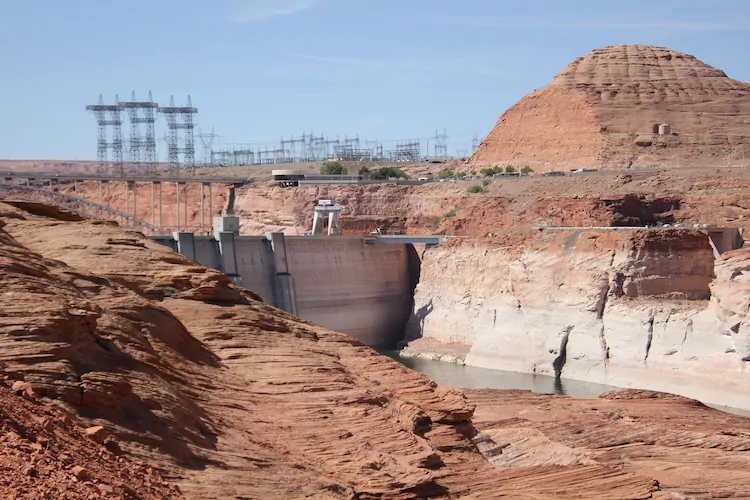
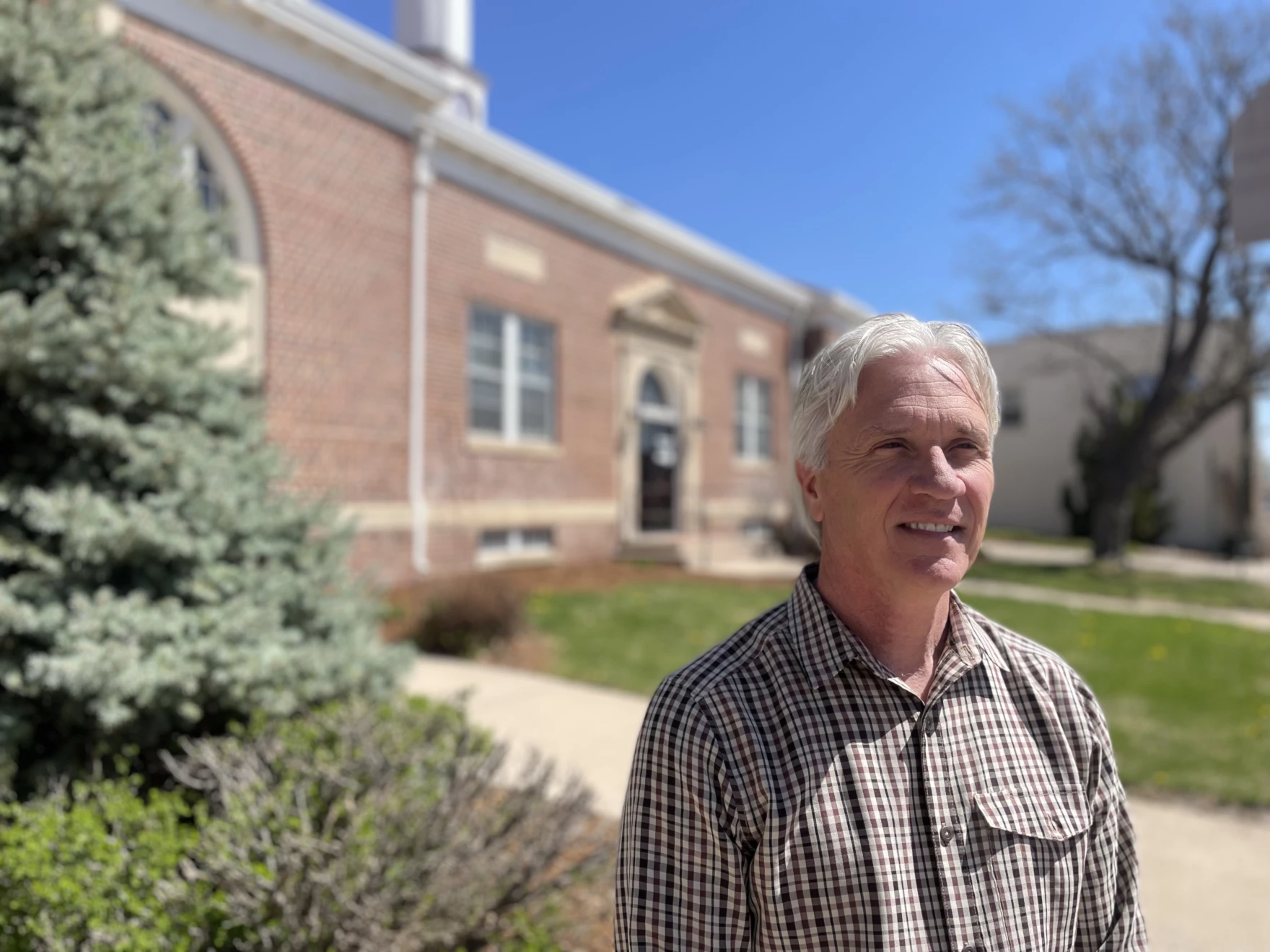
The Central Arizona Project canal carries water through Phoenix in 2019. The project’s former general manager, Ted Cooke, was recently nominated to run the top federal agency for the Colorado River. Those who have worked with Cooke described him as a qualified expert. Ted Wood/The Water Desk
Click the link to read the article on the KUNC website (Alex Hager):
June 17, 2025
This story is part of ongoing coverage of the Colorado River, produced by KUNC and supported by the Walton Family Foundation.
President Donald Trump has tapped longtime water manager Ted Cooke to be the next commissioner of the U.S. Bureau of Reclamation. The nomination, submitted Mondayto the Senate Committee on Energy and Natural Resources, attempts to fill a pivotal role at the top federal agency for Western rivers, reservoirs and dams.
If confirmed, Cooke will become the main federal official overseeing Colorado River matters. His nomination comes at a tense time for the river. The seven states that use its water appear deadlocked in closed-door negotiations about sharing the shrinking water supply in the future.
Cooke will likely try to push those state negotiators toward agreement about who should feel the pain of water cutbacks and when. If they can’t reach a deal ahead of a 2026 deadline, the federal government can step in and make those decisions itself.
Cooke has spent most of his lengthy career with the Central Arizona Project, which brings Colorado River water to the Phoenix area. He first joined the agency in 2003, according to his LinkedIn page. He climbed the ranks and served as CAP’s general manager from 2015 to 2023.
Ted Cooke and Tom Buschatzke: Photo credit: Arizona Department of Water Resources
Water experts across the Colorado River basin, including some who have worked with him in the past, told KUNC they regard Cooke as a qualified technical expert. Sharon Megdal, whose tenure on CAP’s board of directors overlapped with Cooke’s time as general manager, said she had “great admiration” for Cooke.
“He’s thorough, he’s deliberative, he looks for solutions, and boy, we need to find solutions right now,” said Megdal, who now directs the Water Resources Research Center at the University of Arizona. “My observation of seeing him in action in tough situations shows that he’ll keep working until a resolution is reached or a solution is achieved, and I think that’s what we need now.”
John Entsminger, Nevada’s top water negotiator, called Cooke’s appointment a “great choice,” and cited his work in shaping the 2019 Drought Contingency Plan. If confirmed, Cooke will likely be in the same negotiating rooms as Entsminger.
“There are times when [the Bureau of Reclamation Commissioner] has to level pretty realistic threats at everybody,” Entsminger said. There’s also times when they have to be the mediator… I think Ted has both of those skills. I’ve seen him be pretty pointed, and I’ve seen him drive compromise.”
The seven states working on the next set of rules for managing the Colorado River are currently split into two caucuses – the Upper Basin states of Colorado, Wyoming, Utah and New Mexico and the Lower Basin states of California, Arizona and Nevada.
The appointment of Cooke, a longtime Arizonan, could upset some on the other side of that divide. The Central Arizona Project, his former employer, is generally among the first entities to lose water under any plan for cutbacks.
Eric Kuhn is the former general manager of the Colorado River District. The taxpayer-funded agency was founded to keep water flowing to the cities and farms of Western Colorado. He said Cooke is qualified, but added “the nomination of someone from Arizona is interesting at a time when the Lower Division and the Upper Division states are far off.”
“I assume that he would recuse himself from decisions that could affect the CAP – which is just about any decision in the basin,” Kuhn wrote to KUNC. “None the less, his nomination is a plus for Arizona and the Lower Division States.”
Negotiators from Colorado and New Mexico declined to comment, and negotiators from Wyoming and Utah did not get back to KUNC in time for publication. Chuck Cullom, executive director of the Upper Colorado River Commission and a former colleague of Cooke’s, also declined to comment.
Click the link to read the article on the InkStain website (John Fleck):
June 18, 2025
Arizona yesterday finally moved the super-secret idea at the heart of current Colorado River negotiations out of the shadows.
The idea is deceptively simple: base Lake Powell releases on a percentage of the three-year rolling average of the Colorado River’s estimated “natural flow” at Lee Ferry. Allocate water based not on a century-old hydrologic mistake, but rather based on what the river actually has to offer. It presents an attractive alternative to the increasingly baroque and unproductive shitshow that had taken over interstate negotiations.
It has the great virtue of each basin getting out of the other basin’s business – one clean, simple number. But establishing the right percentage remains the hard part. Make the percentage too high and the Upper Basin will have to cut users with pre-Compact water rights. Make the percentage too low and Lake Powell fills up while Central Arizona goes dry.
But some of the early modeling suggests that there may be a sweet spot where a combination of Lower Basin cuts along the lines of what the Lower Basin has already been willing to offer, combined with modest Upper Basin system conservation programs, might thread a needle that could allow the crafting of a compromise. This is very good news if the negotiators and the folks back home who have been egging them on can seize this opportunity to set aside parochial smallness and think at the basin scale.
The possibility of a new approach was hinted at a CU Boulder’s Colorado River conference two weeks ago (I spent most of the conference hidden away watching and listening on Zoom through a covid haze, so it might have just been a fever dream, but I thought I heard the hints), and I’m told was a topic of some of the hallway conversations. But Tom Buschatzke’s reveal at yesterday’s meeting of the Arizona Reconsultation Committee (the closest thing we have to the much-needed C-SPAN for the Colorado River Basin) was the first public discussion of the hush-hush stuff that shouldn’t be quite so hush-hush given, y’know, 40 million of us stakeholders.
The full slide deck from the Colorado River C-SPAN Arizona Reconsultation Committee is useful. Reclamation’s Dan Bunk, for example, shared a slide slowing the latest “min probable” forecast (hilarious typo – “min problem” now corrected) showing the system tanking – dropping below minimum power pool at Powell – in winter 2026. The min probable forecast has been a useful guide lately, frankly, and the latest version is horrifying. (On any other day this would be the lead, and probably deserves its own post, but I try not to work on Wednesdays.)
In his brief slot on the panel, Udall was first a cheerleader for Colorado River problem solving but reminding listeners that climate change was the elephant in the room, as several speakers later in the conference acknowledged.
Following are his remarks, lightly edited:
Given the policy expertise on this panel, I’m going to constrain my remarks to what’s going on in the climate space. I want to make the following two points and end with a heartfelt plea.
Within this basin, we can and have worked together to deal with a really sticky, difficult issue like climate change, to inform decision-making given the right partners, including the federal government at the table. Point two is our current climate trajectory is beyond awful, and that makes our challenge even worse.
So let me get to point one. We can, in fact, work together on a really difficult issue. In late 2006 Terry Fulp (then regional director of the Lower Colorado Basin Region for the U.S. Bureau of Reclamation), pulled together six different sciences to consider how a changing climate would impact runoff, to inform the 2007 Interim Guidelines EIS. That effort became Appendix U.
Interestingly, it was the first time climate science was incorporated into a major EIS. It was not particularly controversial, and it was done during a Republican administration. It set the stage for future (Bureau of) Reclamation climate change efforts, efforts that have continued to this day.
But put an asterisk next to that.
The next year (2008), the Water Utility Climate Alliance was formed by eight major national water providers, and four of those were actually in our basin: the San Diego County Water Authority, Denver Water, Metropolitan Water District of Southern California, and Southern Nevada Water Authority.
Members have led the way in figuring out how to adapt to climate change, including hiring certain staff to deal with this. And a hat tip for this to both Jim (Lochhead, former CEO of Denver Water) and Bill Hasencamp (Colorado River resources manager for Metropolitan).
Let me mention Reclamation again, because in 2009 Mike Connor, as a congressional staffer, wrote the SECURE Water Act, which made Reclamation perform a series of continuing climate change studies that are important to this day.
The lesson here is that when faced with such a daunting and unknown challenge, we actually can come together to discover scientific truths, but we need both federal and basic leadership to make this happen. Unfortunately, right now, one leg of this is seriously threatened, hence my asterisk.
My second point is about our awful moment, our global climate change trajectory. Hold on to your seats, because I’m going to make you uncomfortable. The world is on track for 3 degrees Celsius warming by 2100. This far exceeds anything agreed to by the 2015 Paris Climate Accords. And frankly, terrifies scientists. Three Celsius is a projected average global warming, but over land, that’s 5 Celsius. Converted into Fahrenheit, it’s nine Fahrenheit. Imagine every day, 9 Fahrenheit warmer. Highs, 9 Fahrenheit warmer. Lows, 9 Fahrenheit warmer. That’s a world unlike anything we currently know, and it’s going to challenge us all on every front.
And what’s worse about this, and not particularly appreciated, is that to get to 3 Celsius, we need large global greenhouse emissions to continue through this century to 2100. So, it will continue to warm significantly beyond 2100. Nine Fahrenheit is not where we end up. It’s kind of where we start.
This 3 Celsius outcome has been has been obvious for at least five years, as climate policy progress has stalled and even gone backwards. You know, post-Paris in 2015 there were all kinds of great net-zero by 2050 pledges by government and industry, including the fossil fuel industry.
But since then, the fossil fuel industry is trying to have it both ways. They love to tout these goals while at the same time talking to the shareholders about how they’re going to expand production in ways that are completely incompatible with 2 Celsius. And there are about 25 large, mostly national oil companies that are living this lie. Each one thinks they’re going to be the last one standing, selling a product that’s fundamentally incompatible with a stable climate. [ed. emphasis mine]
If you think we’ve got plenty of time to solve this, like 75 years, normally, I’d agree with you. But think about what’s happened over the past 35 years. Emissions have gone up 60% and continue to rise. With these bad actors and with banks willing to finance this and governments willing to subsidize it, what we’re witnessing is a monumental failure of both capitalism and governance.
Now, if this weren’t all bad enough for you, we now have an anti-knowledge president and his vile enablers systematically attacking all forms of knowledge using illegal and unconstitutional tactics. Nowhere has this been more true than in this climate science space, where they’re going after anything and everything that has the word climate on it, every federal agency.
I’ll mention three here in our basin that are really critical: NOAA, the USGS and Reclamation. All of that climate work is in the sights of these vile enablers and the administration. Hence that nasty asterisk again. This administration aims to stop all work at preventing future greenhouse gas emissions as well as our ability to adapt to coming changes.
And 95% of what I can say on this panel about this is not suitable for this room, but let’s call it what it is: it’s insanity what they’re doing.
There are also recent, strong signs that climate warming is speeding up. So 2023 and 2024 were 1.5 Celsius above a pre-Industrial average. And there, those two years have a trend line that’s twice what we’re used to seeing, and it has climate scientists flummoxed about the reasons behind it.
So why talk about global climate issues in a conference about the Colorado River? Well, it should be obvious. There is no way this makes for a better world in which we live, a better world in which the Colorado River flows, and if you live in that world, tell me how to join in la-la land, because I’d love to be there.
I’m now convinced that we need to plan for the worst possible climate future, and that’s somewhere around 10 million acre-feet runoff. But what it also means is taking a hard look at every existing agreement in the river. It either breaks them or substantially modifies them.
Let me get to my plea. These facts should be a call to action to everybody. Not only are we in a really deep climate hole, we’re continuing to dig. Absolutely the last thing we need is the federal government undercutting our efforts to meet the water supply challenges in this basin. There’s a term called the pessimism aversion trap. I’m going to urge you not to fall on that. And it’s the tendency to look the other way when confronted with dark realities. We still control our destiny, even if the solutions seem daunting.
So I’m going to ask for two things. One, obviously, fight back against all these harmful cutbacks to all aspects of our national climate effort, including the abandonment of science and scientists. Our federal allies are critical partners in this fight, and lasting damage has been done.
Second, some of you think that your job description doesn’t include worrying about reducing greenhouse gas emissions or what might happen at 2100 or beyond. I disagree. I plead with you to get serious about figuring out how to reduce the emissions of your organization and even your own personal emissions. I agree that individual actions aren’t going to solve this, but they send a really strong signal to everyone around us.
Finally, I need to apologize to and beg forgiveness our next speaker who deserves to follow someone far nicer than I am.
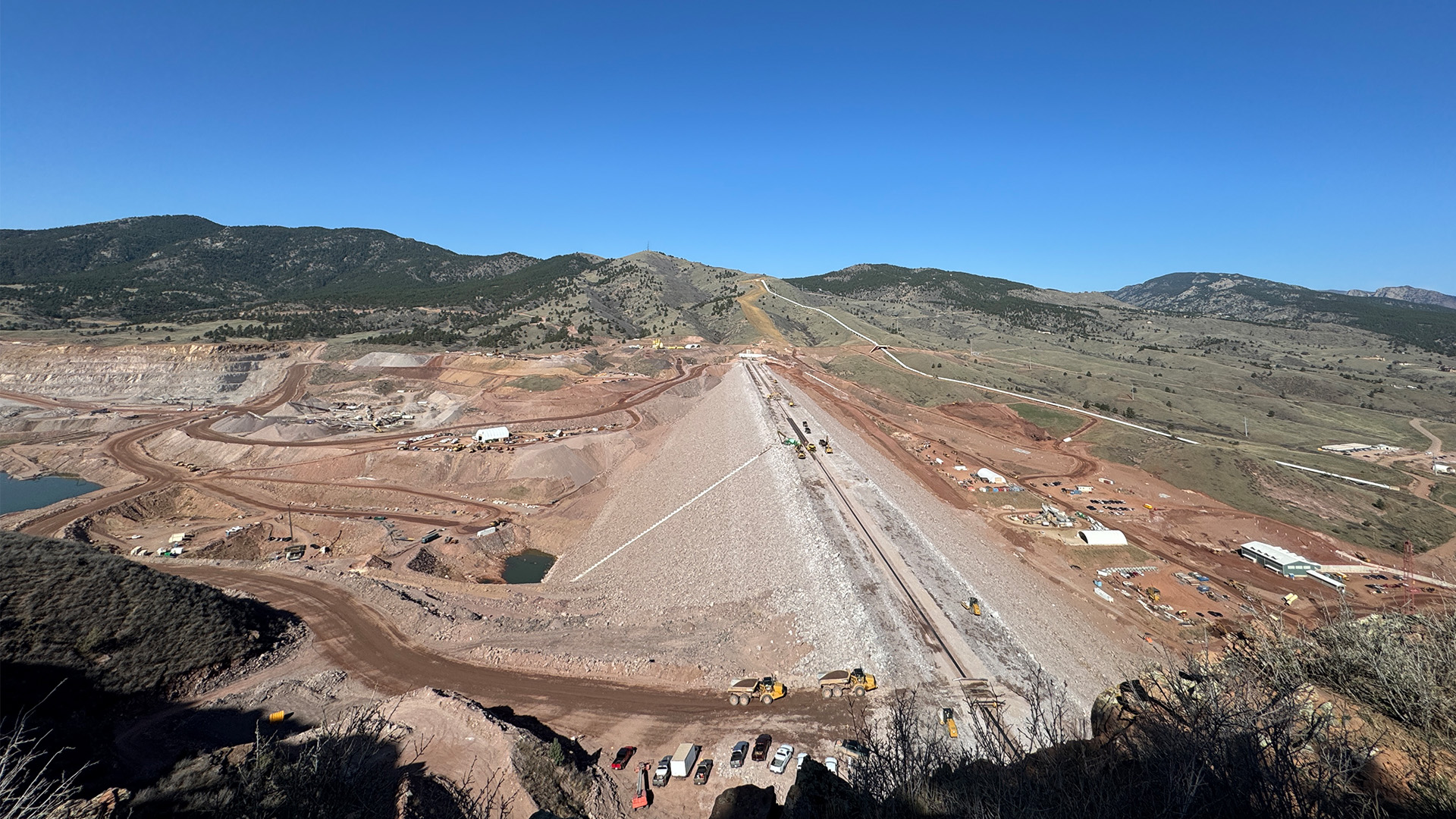
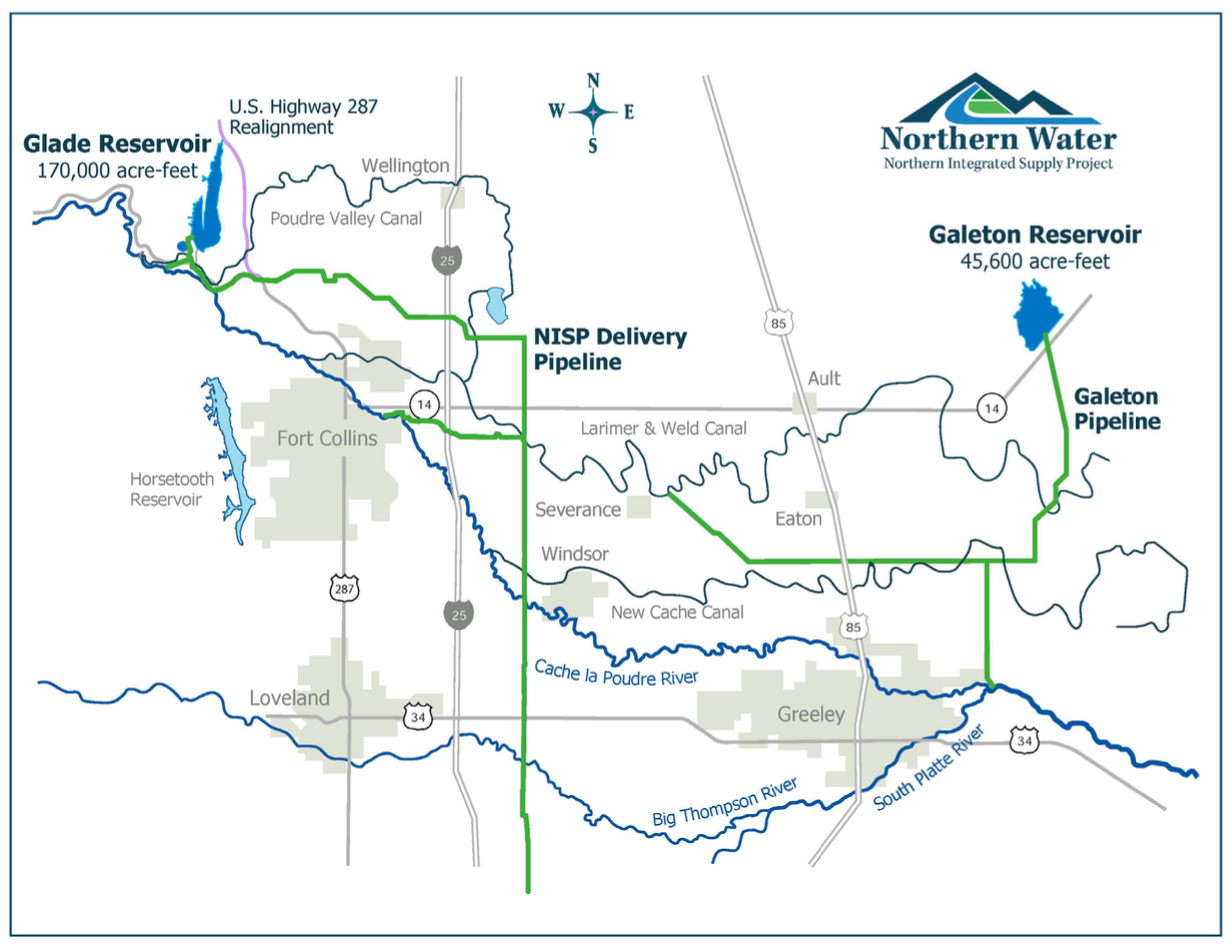
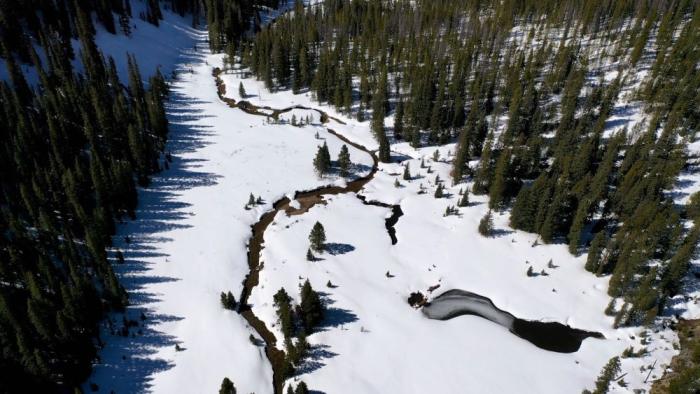
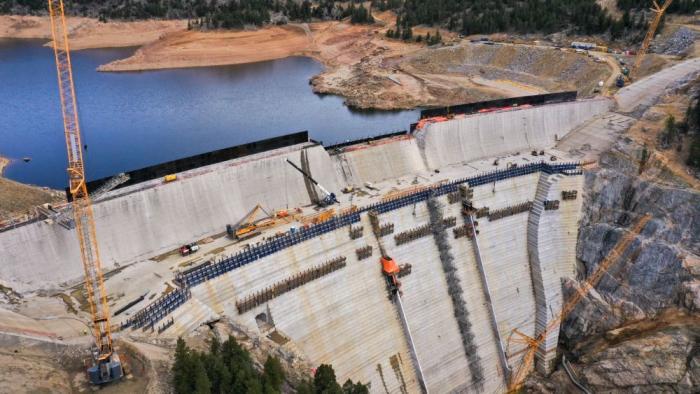
Chimney Hollow Reservoir Project managers are investigating strategies to mitigate the presence of mineralized uranium that is anticipated to be present in the first fill of the reservoir.
Mineralized uranium was detected in water samples taken from behind the cofferdam at the site following a series of major precipitation events in summer 2023. Further testing through 2024 identified the source of the minerals as being the granitic rock being quarried on the west side of the reservoir for placement in the rockfill shell of the asphalt-core dam. The low-level uranium minerals detected were not anticipated to be the result of leached material at the site.
During dam testing and first fill of the reservoir starting later this summer and continuing through 2027, no releases of water from Chimney Hollow Reservoir are expected. Ongoing monitoring of water quality at the reservoir will help managers develop a mitigation strategy that could include treatment and dilution with the significant sources of other water present in the infrastructure nearby.
As more information becomes available, Northern Water will share it with project participants, partner agencies and the public.
Fascinating observation from Jim Lochhead this morning at the Getches-Wilkinson Center Colorado River Conference about the nature of the current negotiations and the role of the federal government. It came during a panel moderated by Anne Castle focused on what we learned from the expiring 2007 river management guidelines, which are the subject of intense renegotiation among the seven basin states.
From the perspective of the panel’s charge – what have we learned since the 2007 agreements – the way I phrased that, the the way the current process is going, should seem weird to us: “intense negotiation among the seven basin states.”
According to Lochhead, a Coloradan who was in the room for the ’07 negotiations, the current cloistered seven-state process is very different from what happened leading up to the ’07 agreement. In 2007, Lochhead explained, the states weren’t the decision maker, the federal government was the decision maker, playing a much more active role as facilitator compared to the current process, which has deferred to the states to come up with a deal.
This is not going well. At least I think it’s not going well. Who knows? Lochhead likened it to the selection of a pope, as we all await the puff of smoke. “The current process seems to me to be like the conclave.”
In my gossip network, I’ve heard good things about the current role being played by Scott Cameron, the Trump Administration’s point person on this stuff. We will hear from him tomorrow. I look forward to that.
Other stuff from the morning sessions
Weirdly, after driving all the way to Colorado for the meeting, I spent the morning in my hotel room on Zoom – a bit under the weather, not feeling up to the social battery drain of all those people, saving energy for tomorrow when I’m moderating the closing panel. But what I lost in social capital construction and maintenance, I made up for in being able to focus on the talks. Among them.
Brad Udall, our modern-day E.C. LaRue, was pretty frank about the climate change trajectory, arguing that we need to prepare for a 10 million acre foot river. For those not steeped in the numbers, that’s not very much water. The current climate trajectory, Brad said, is “beyond awful.”
Gov. Stephen Roe Lewis from the Gila River Indian Community argued that enduring solutions to the Colorado River’s problems will require federal financial help.
A couple of useful nuggets from my Bill Hasencamp of the Metropolitan Water District of Southern California. One: Bill talked about a really interesting analysis his team has done of the Intentionally Created Surplus Program, which concludes that there is a lot more water in the reservoirs right now, including in Lake Powell, than would otherwise be the case. They’ve briefed me on their analysis and shared the report with me, I just haven’t had the time to write about it yet, it’s super interesting.
Bill also talked about the weird state of the current state negotiations. One on one, people say they’re interested in compromise, in finding an agreement. In the negotiating room, they stick to hard line positions. This circles back nicely to Lochhead’s point that last time around, this was a federal process, not a state-run process.
Anne Castle made an incredibly important point about the challenges face by the state’s negotiators. They are sent into the room to advocate for their state’s water supplies. They need permission from their constituents to compromise, to be able and willing to give up some water in order in the interests of the good of the basin.
The Getches-Wilkinson Center is pleased to announce the publication of a thought-provoking article, “Facilitating a Green Future? Permitting Reforms and Renewables on Public Lands,” co-authored by Chris Winter, Executive Director of the Getches-Wilkinson Center, and Obie Johnson, a Colorado Law student and Wyss Scholar.
The piece was featured as the lead article in the spring 2025 issue of the American Bar Association’s Natural Resources & Environment journal and explores recent federal permitting reforms aimed at expanding renewable energy development on federal public lands. In recent years, the United States has accelerated its transition to a clean energy future, increasing the demand for new wind, solar, and transmission infrastructure. The article discusses many of the legal and policy initiatives spearheaded by the Biden Administration to facilitate the development of clean energy infrastructure on public lands.
Winter and Johnson highlight the tension between the development of clean energy infrastructure and the need to protect wildlife habitat and other natural resource values. They evaluate recent permitting reforms implemented under the National Environmental Policy Act, the Endangered Species Act, and the Federal Land Policy and Management Act and highlight how these new policies attempt to balance these important objectives across federal public lands.
Since the article was written, a new Administration that is less supportive of clean energy and conservation has taken office, prompting rapid changes to the legal and policy landscape. Despite these political dynamics, the long-term market trends still favor clean energy, though the full impacts of the Administration’s new policy agenda remain uncertain.
This publication reflects the GWC’s ongoing commitment to supporting scholarship and policy work that addresses the most pressing challenges in natural resources, energy, and environmental law. We are especially proud to highlight the contributions of student co-author Obie Johnson, whose work as a Wyss Scholar exemplifies the next generation of leadership in land conservation. The Wyss Scholars Program at Colorado Law School is made possible by the generous support and partnership of the Wyss Foundation.
The Middle Colorado Watershed Council presented to Rifle City Council during the June 4 meeting for their plans on the restoration of Rifle Creek. The watershed is facing multiple challenges, including overallocation, ecological stress, aging irrigation infrastructure, salinity and natural contaminants, and growing pressure from climate-related threats like prolonged drought and wildfire risk.
“We’ve got some invasive species issues…the creek is creating a deeper channel because there’s no meandering and there’s nothing stopping it from racing towards the Colorado River,” said Wes Collins, director of restoration services at EcoPoint. “With some love, with some care, it can be a centerpiece for a lot of folks to enjoy, as well as create educational opportunities for our kids here in town.”
Kate Collins, executive director of the Middle Colorado Watershed Council, described the group’s Rifle Creek Master Plan for Resilience, which covers a 6.5-mile stretch from Rifle Gap Reservoir to the Colorado River confluence…The Middle Colorado Watershed Council is focusing on infrastructure upgrades, habitat restoration and monitoring water quality and flows to get the Rifle Creek watershed back to being healthy. This Resilience Plan aligns with Colorado’s Water Plan, supporting robust agriculture, thriving watersheds and the environment and fish passage among many other alignments, while also supporting Rifle community values through recreation, environment, agriculture and more…nitial projects include the Middle Colorado Watershed Council will be at Centennial Park, Deerfield Park, the Re-2 School District property, Government Creek, Grand Tunnel Ditch, the golf course and the Wisdom Ditch Outtake. Proposed improvements range from step pools and invasive species removal to flume replacement. These projects will hopefully lead to better instream flow, water quality, healthy vegetation, vibrant agriculture and crop production, public access and wildlife and fish migration.
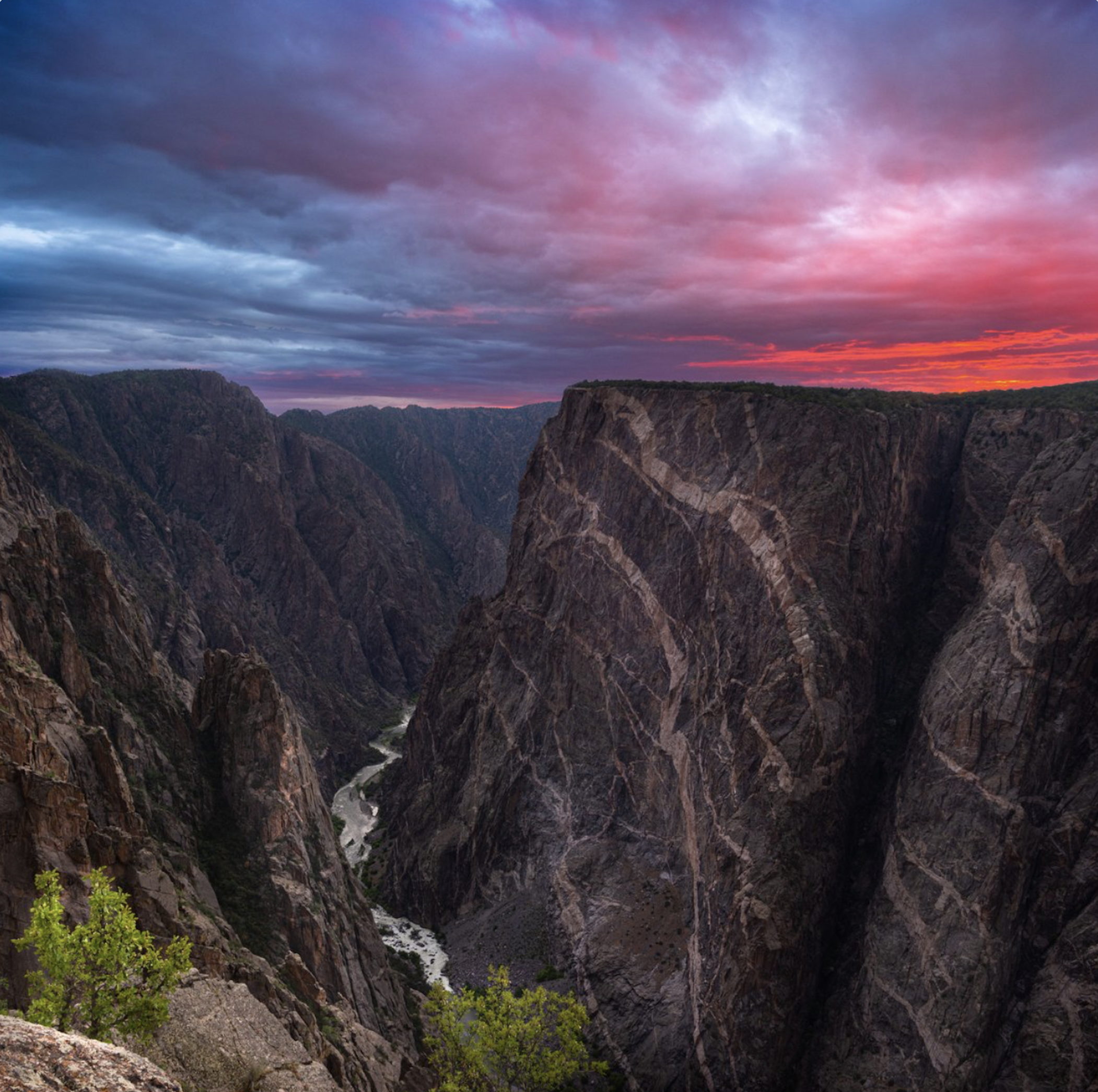
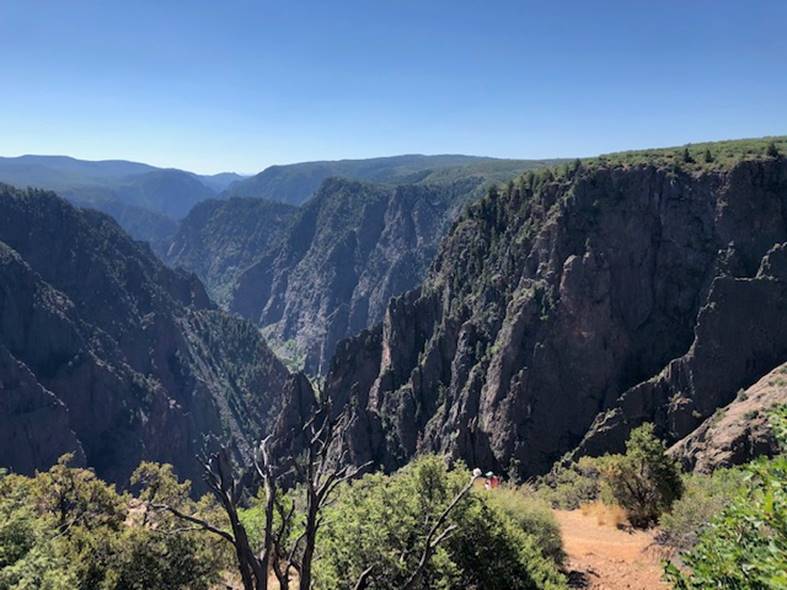
Black Canyon National Park July 2020. Photo credit: Claire Codling/The Department of Interior
From email from Reclamation (Conor Felletter):
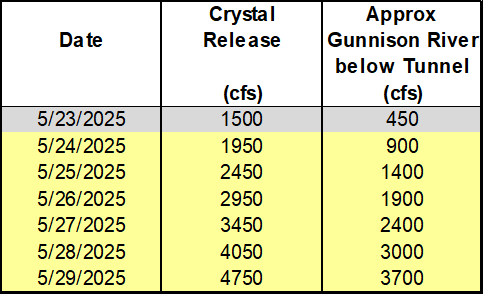
On Monday, June 16th, the scheduled releases from Crystal Dam will decrease to 1,400 cfs. This release change is intended to conserve water amidst the increasingly hot & dry conditions in the Gunnison basin while downstream tributaries are still providing enough water to keep the lower Gunnison River above the baseflow target.
Gunnison River flows (Black Canyon/Gunnison Gorge) are currently 520 cfs and will decrease to ~420 cfs.
Releases are made for the authorized purposes of the Aspinall Unit, and to attempt to maintain a target base flow through the endangered fish critical habitat reach of the Gunnison (near Whitewater). Future release changes are subject to changes in river flows and weather conditions.
Colorado River Basin reservoir storage. Credit: InkStain.net
Click the link to read the article on the InkStain.net website (Jack Schmidt and John Fleck):
June 1, 2025
We now begin June, when the Colorado River’s two largest reservoirs, Lake Mead and Lake Powell, should be swelling with melting snow for use later this year and beyond, but that is not happening. Although Lake Powell is our reservoir and Lake Mead is theirs (or vice versa), the two reservoirs are effectively one very large facility located downstream from Upper Basin consumptive users and upstream from Lower Basin users. At least 60% of the total storage in 46 reservoirs tracked by Reclamation is in Lake Powell and Lake Mead. The total contents of the two reservoirs have been steadily declining since early July 2024 and continued to decline through at least 31 May 2025. Never in the past 15 years has the decline in total storage of Powell and Mead extended so late into spring. Current reservoir storage data are showing us, in real time, an ominous pattern familiar from past dry years: upstream use of water before it has a chance to get to Lake Powell combined with releases from Lake Mead to users further downstream is outpacing the melting snowpack’s ability to replenish the two reservoirs.
While the normal tools we use for measuring and managing use of Colorado River water – the Consumptive Uses and Losses Reports and the Lower Basin decree accounting reports – lag by weeks or even years, reservoir storage, which is the net difference between stream flow into reservoirs and what is released downstream or is lost to evaporation, provides the closest thing we have to an accurate, real-time measure of the Colorado River basin’s water budget. Right now, we are not doing well.
The duration of time this year during which total storage in Lake Powell and Lake Mead has declined is unprecedented in the past 15 years. In a typical year, the steady decrease in the combined contents of Powell and Mead that begins the preceding summer ends in early May when Rocky Mountain snowmelt becomes significant. However, inflows to Lake Powell this year have yet to exceed releases from Lake Mead , and the total contents continue to decline, suggesting that this year’s recovery in storage will be minimal.
Data from other years also suggests that reservoir recovery this year will be relatively small. This year, total unregulated inflow to Lake Powell is predicted to be 55% of normal. Based on past trends, net increase in total reservoir storage of the 46 reservoirs tracked by Reclamation will be ~1.2 million acre feet (af). By July, we are likely to resume draw down the basin’s reservoirs until the 2026 snowmelt season begins.
Presently, storage in the watershed’s reservoirs is comparable to conditions in late summer and fall 2021 when water managers expressed significant concern. The very wet conditions of 2023 averted a major crisis, but the system remains depleted. In 2024, total basin reservoir storage climbed by 2.5 million af, but subsequent drawdown of those reservoirs was 3.6 million af during the following 10 months. Although the net difference between reservoir gain and subsequent drawdown of 1.1 million af might be considered “balanced” in the context of the last 15 years, there is no question that we have begun to mine the bounty of 2023, and we are likely to continue to do so until at least spring 2026 unless we greatly reduce consumptive uses.
For too long, we have hoped that big wet years will occur with sufficient frequency to avert true crisis, but there have been too few of those wet years during the 21st century. Only three of the last 15 years have been sufficiently wet to result in a significant increase in reservoir storage given the magnitude of the basin’s consumptive uses. We can’t continue with a water management policy that hopes for another wet year. The basin’s water managers have no choice but to further reduce consumptive uses to sustainably manage the dwindling water supply.
In response to a previously posted mini-white paper on reservoir storage, a supportive friend commented, “Nobody cares.” Another friend said, “I don’t see how we can get agreement about recovering storage. Let’s hope for more wet years.” We should care, and we need to try harder.
These mini-white papers seek to demonstrate that reservoir storage data, analyzed in aggregate, provide timely and accurate data relevant to understanding the reliability and security of the Colorado River’s water supply. These data are more precise, accurate, and timely than estimates of natural runoff, reservoir inflow, consumptive uses, or evaporation. Reservoir storage data provided by Reclamation are a significant contribution to transparency in water management. However, these data are under-utilized and under-analyzed and are typically reported without long-term context. We can do better.
These data can be used to develop an excellent correlation between April-July unregulated inflow to Lake Powell, forecast by the Colorado Basin River Forecast Center, and anticipated increase in basin-wide storage. Such an analysis strongly indicates that the 2025 snowmelt runoff will yield only a small increase in basin storage and necessitate greater reductions in consumptive use so as to better position the basin’s water users should next year also be dry.
In May 2022, a couple paused at once had been the bottom of the boat put-in ramp in Antelope Canyon to lok down on the receding waters of Lake Powell. The reservoir at that point was 22% full. Photo/Allen Best
Almost 300 water wonks converged on Boulder Thursday [June 3, 2025] for two days of sobering conversations about the river’s future punctuated by frustration, pleas for creative solutions and references to everything from the musician Lizzo to the kids movie “Frozen.”
Udall/Overpeck 4-panel Figure Colorado River temperature/precipitation/natural flows with trend. Lake Mead and Lake Powell storage. Updated through Water Year 2024. Credit: Brad Udall
The Colorado River Basin is in dire straits: The water supply for 40 million people has been dwindling, and climatologists say the climate future is bleak. State officials have spent months mired in thorny negotiations over things like how to split painful water cuts in the driest conditions — with scant progress to report publicly. The lack of progress and insight into the talks had some conference-goers feeling frustrated. Concerned. Uncertain.
High-ranking federal officials joined the Boulder event to reassert the federal government’s frequent role in talks over the Colorado River’s future: The parent ready to stop the car if the kids can’t stop fighting.
In the event that the states can’t agree on how to manage the river’s reservoirs and water supply in a timely fashion, Department of Interior Secretary Doug Burgum is ready to wield his federal authority over reservoirs, water contracts and more in the basin.
“He’s not looking forward to that, but in the absence of a seven-state agreement, he will do it,” Scott Cameron, the Department of the Interior’s acting assistant secretary for water and science, said Friday at the 45th annual Conference on the Colorado River at the University of Colorado’s Getches-Wilkinson Center.
The basin’s task is to submit a joint management proposal to the federal government for analysis. For months, however, they’ve been stuck working on separate ideas for how to manage the river.
Upper Basin states — Colorado, New Mexico, Utah and Wyoming — are on one side, and Lower Basin states — Arizona, California and Nevada — on the other. The 30 tribal nations in the basin are advocating for their individual needs, as is Mexico.
Notably, the top state negotiators, except California’s, skipped the Boulder conference this year, unlike in the past.
The Interior Department will analyze a joint basin proposal as part of a larger process to select draft alternatives and then settle on a final plan.
The final plan could determine everything from how key reservoirs store and release water to who takes cuts in dry years and how environments, like the Grand Canyon, will be impacted for years to come. It will impact water supplies for cities, like Denver, Phoenix and Los Angeles, ecosystems, a multibillion-dollar agricultural industry, hydroelectric power and more.
“The time for action is now,” Cameron told the gathering in a speech. “We do not have a lot of time to waste, people.”
Mounting challenges and a bleak climate future
The Bureau of Reclamation plans to release a draft outlining management options by the end of 2025 with a final plan in place by early summer 2026, Cameron said.
But the negotiating challenges are significant. State officials face the political problem of bringing home a deal that includes water cuts. Policymakers distrust each other. Anxious water users are nixing ideas before they have time to grow into policy solutions.
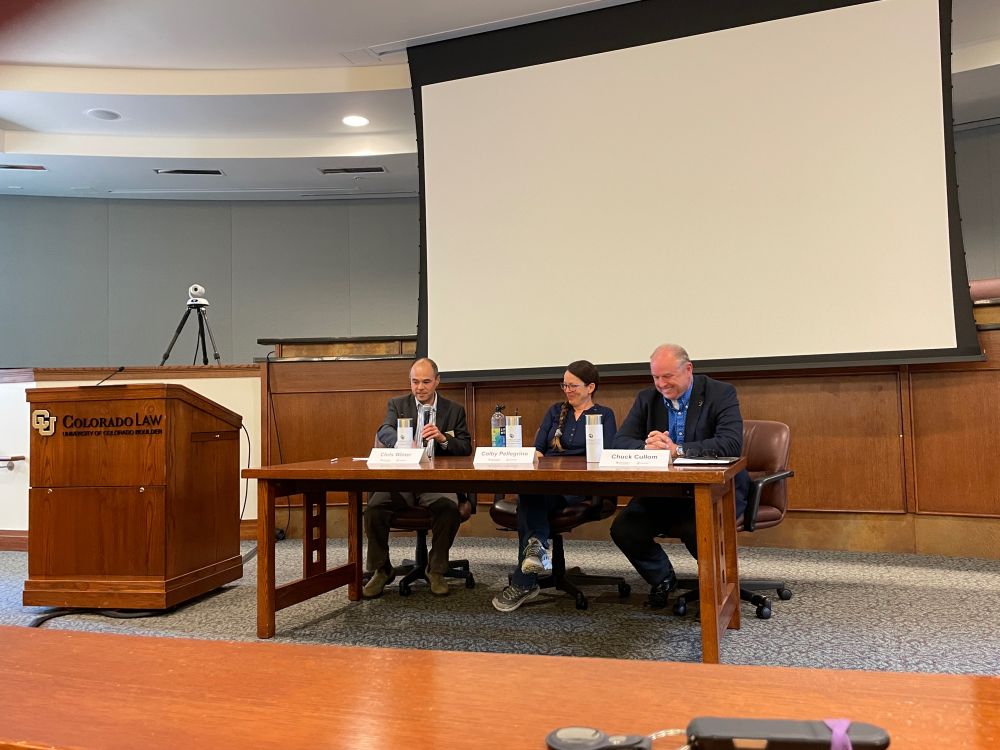
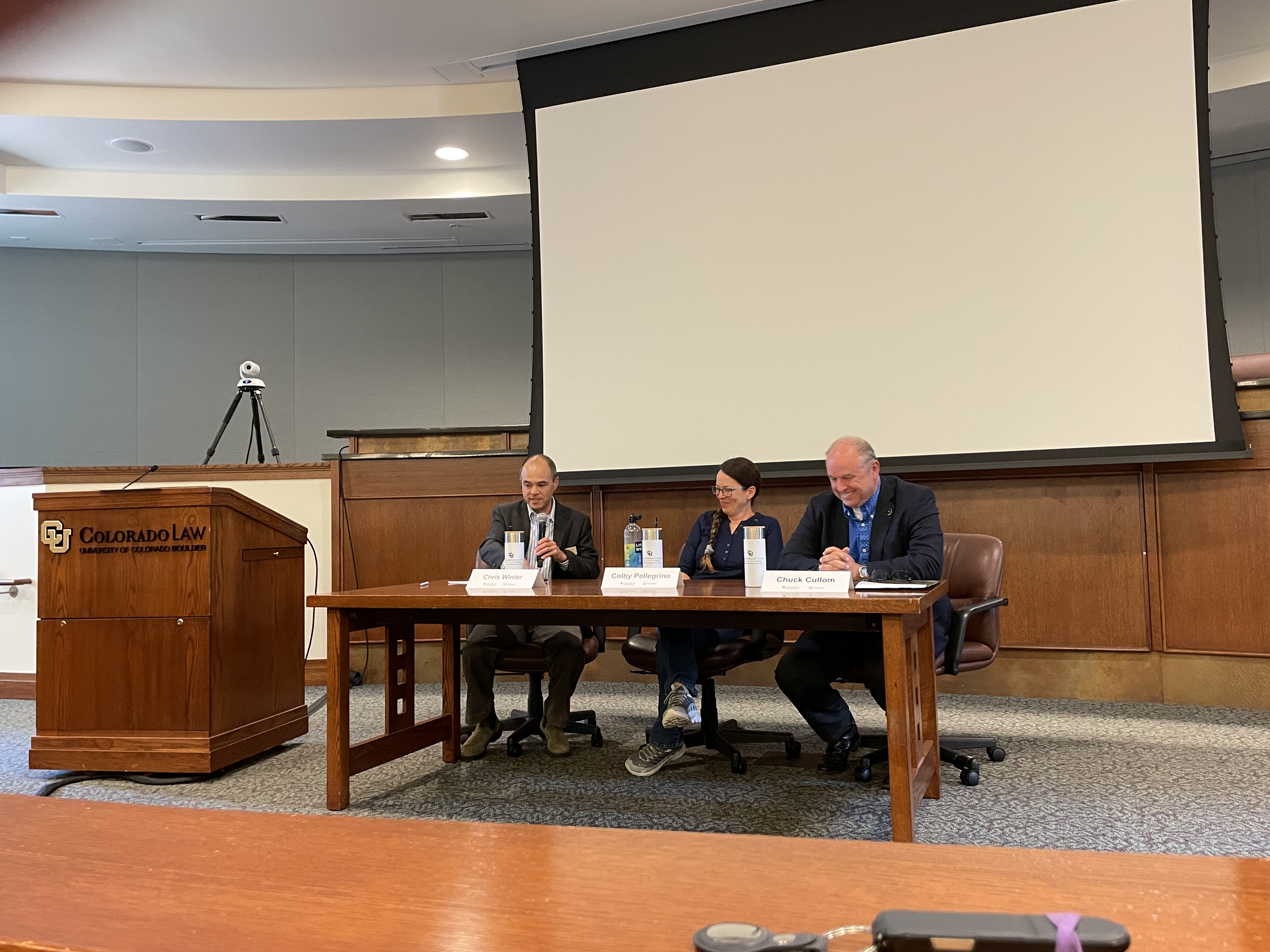
L. to R. Chris Winter, Colby Pelligrino, Chuck Cullom June 4, 2025 during the “Turning Hindsight into Foresight: The Colorado River at a Crossroads” the annual Getches Wilikinson Center/Water & Tribes Initiative shindig in Boulder.
We have to let people develop their ideas, said Colby Pellegrino with the Southern Nevada Water Authority and part of the Nevada negotiating team.
“We’ve done a really crappy job of that. Everyone in this room,” she said. “We need to do more to support the compromise.”
The basin states are already running behind schedule: In March, Upper Basin officials said the basin states had until May to submit their joint management proposal for federal analysis. But May passed, and nothing happened.
It’s like watching the Catholic Church’s secluded conclave to select the next pope, Jim Lochhead, former CEO of Denver Water and state negotiator, said.
“The smoke is all black right now,” he said. “I’m not hearing of any major breakthroughs.”
That’s not for lack of effort: The states are meeting twice a month, and they’re at the negotiating table together.
“We know that we get the best solutions when the states work together,” Colorado’s top negotiator Becky Mitchell said in a prepared statement. (She wasn’t at the conference.) “I am focused on building a broad consensus to address the risks facing the Basin States.”
One of those risks is a changing climate: The basin, along with the rest of the planet, is facing a “beyond awful” climate future, said Brad Udall, senior research scientist at Colorado State University.
The world is on track to warm by 9 degrees Fahrenheit by 2100, and continue warming from there. It’s a future with even less water to share among the U.S., Mexico and 30 tribal nations — and an outcome that, frankly, terrifies scientists, Udall said.
“That’s a world unlike anything we currently know, and it’s going to challenge us all on every front,” Udall told the gathering.
Searching for a unicorn
While some conference-goers were frustrated, speakers took the opportunity to pull lessons from past interstate negotiations and share their ideas for how to break the deadlock.
Tribal leaders called for continued and increased tribal involvement in the Colorado River talks.
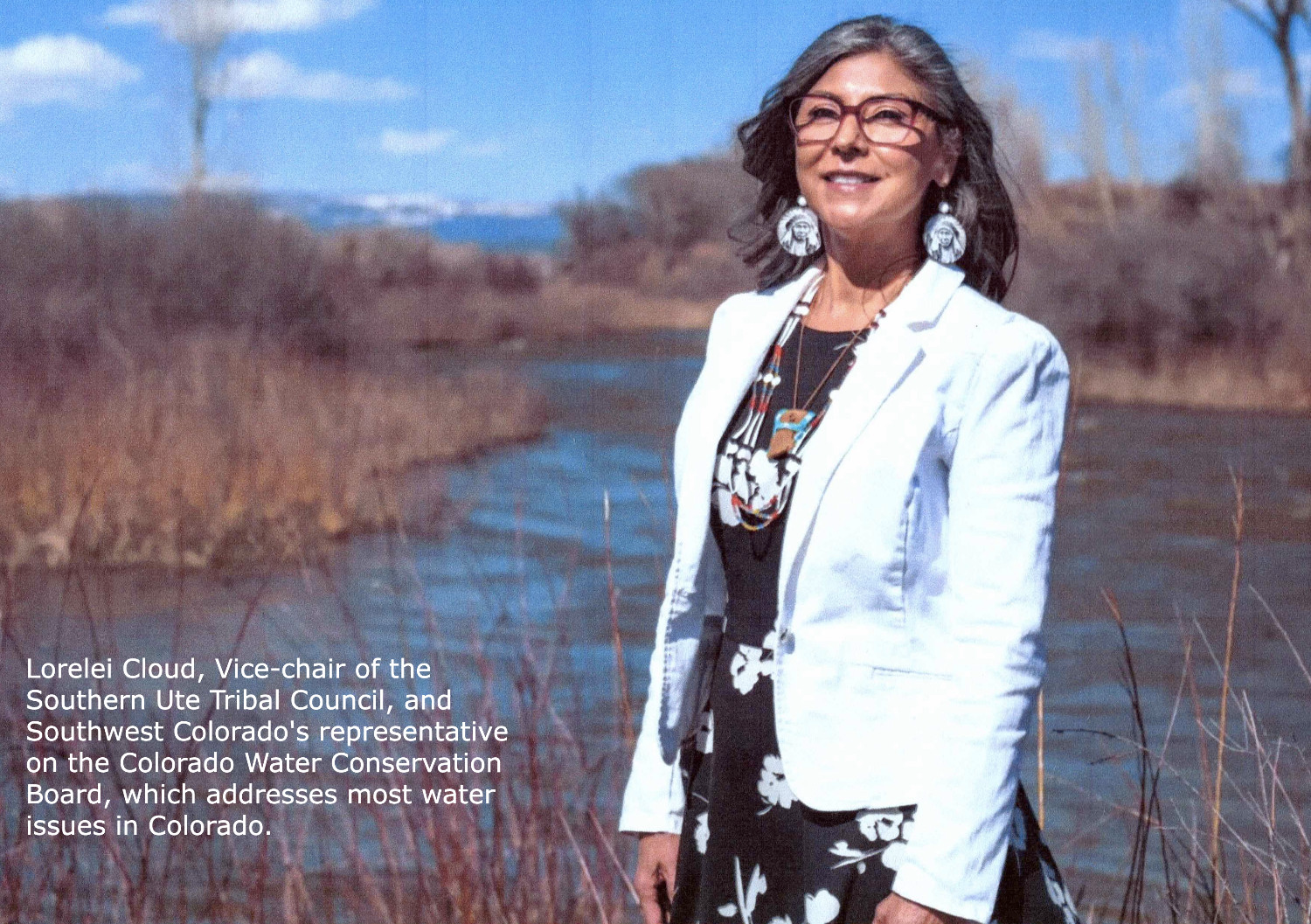
“Honestly, I think if our state representatives are going to sit silent, then we have 30 tribal nations that are ready to take over and make a decision and save our river,” said Lorelei Cloud, a member of the Southern Ute Indian Tribe bordered by Colorado and chair of the Colorado Water Conservation Board. “We’ve been doing it since time immemorial.”
Some suggested solutions, like bringing in an external facilitator. Former negotiator and federal official Mike Connor said the states need to seize every olive branch and set aside personal agendas or political legacies. (This is where speakers turned to the “Frozen” mantra: “Let it go.”)
Jennifer Pitt of the National Audubon Society said building personal connections has been the key to progress in the past. Many people pushed for states to find creative solutions, like desalting seawater — a very expensive solution with a relatively small benefit (the equivalent of Lizzo’s tiny, Valentino purse, one water expert said).
“People are trying to turn this thing upside down and sideways to find a unicorn,” Chuck Cullom, executive director of the Upper Colorado River Commission, said.
Concerns abounded. Lochhead said the basin had a once-in-a-generation influx of federal funding — and blew it. Reclamation’s staff has been cut, something that Cameron said he was working to address. With shrinking water supplies, the basin’s communities are feeling the impacts of dry conditions more immediately than in the past.
Western Slope water leader Andy Mueller pushed for more information and faster action to help Colorado communities have more time to adapt and come up with water conservation plans.
“I think failure of our negotiators would be to fail to recognize that our hydrology could be just as bad as Brad Udall is predicting, or worse,” Mueller said.
As the climate warms and the risk of drought grows, the Eagle River Water & Sanitation District is taking action to protect its most precious resource. In presentations at the 2025 Eagle River Valley State of the River on May 29 and to the Eagle River Water & Sanitation District board on May 22, David Norris, the district’s director of business operations and Allison Ebbets, the district’s water conservation manager, laid out the district’s plan for encouraging its most consumptive customers to lessen their use. The hard truth is that some homes in Eagle County are using way too much water. Nearly 600 individually metered residential accounts — single-family homes — used over 30,000 gallons of water for three or more months in 2024. One home used over 1 million gallons of water throughout the year, equivalent to the use of a large hotel.
“Water conservation is crucial,” Norris said at the State of the River. “We all need to be a part of this together.”
[…]
The Eagle River Water & Sanitation District has set a goal to reduce its customers’ overall water use by 400 acre feet by the end of 2026…Since the district began working on the project in 2023 through strategies that include a conservation-focused water rate redesign, an industry standard-focused rate redesign and increased public outreach, its total reduction has been 111 acre feet. That leaves 279 acre feet to reduce to reach the district’s goal.
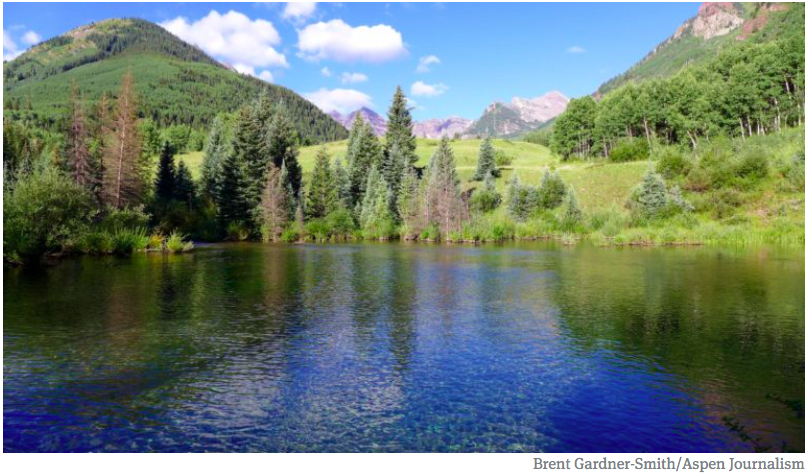
Colorado River “Beginnings”. Photo: Brent Gardner-Smith/Aspen Journalism
Click the link to read the article on the AZCentral.com website (Austin Corona). Here’s an excerpt:
June 7, 2025
Key Points (AI assisted summary)
After months of little progress and public battles, negotiators from the seven Colorado River states may have regained their footing toward a shortage-sharing agreement.
Officials say the Trump administration has engaged in the work to complete an agreement, spurring the states to resume talks. Without a deal, the federal government would impose its own plan.
An official said a new agreement could require changes in the bedrock laws that govern the river, suggesting that even the “Law of the River,” a 100-year old management framework, could face scrutiny.
Metaphors about divorce and grief defined an emotional presentation about the Colorado River in Boulder, Colorado, on June 6. Those metaphors, however, did not represent strife or disaster in stalled water negotiations, but apparent progress and the willingness to let go of past ideas and move toward compromise.
“We’ve heard about the stages of grief … about denial and anger and the need to be at bargaining,” said Chuck Cullom, executive director of the Upper Colorado River Commission. “Well, I believe the basin states are there.”
Officials involved in tense negotiations over how to manage shortages on the Colorado River suggested that months of harsh talk and stalemates have ended and negotiators are exploring new options…Federal officials indicated that even parts of the “Law of the River,” a 100-year-old legal framework that governs Colorado River allocations, could change as a result of the negotiations.
“We’re trying to pivot to something else and be creative, and we have good engagement on that right now,” said Colby Pellegrino, deputy general manager of the Southern Nevada Water Authority…While most of the negotiators from the seven Colorado River basin states did not attend the conference at the University of Colorado in Boulder, the speakers who did attend were cautiously optimistic about their chances at making a deal.
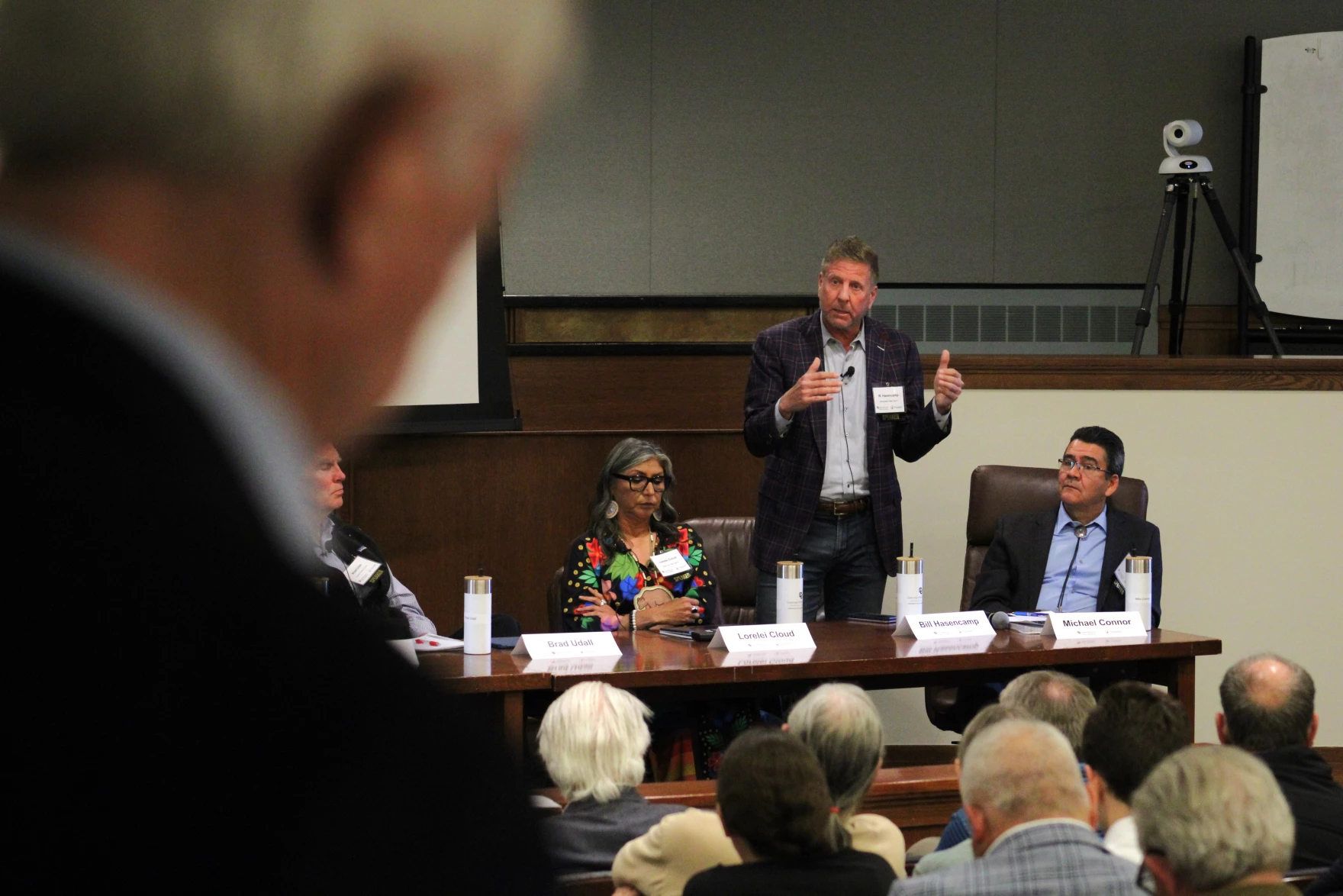
Bill Hasencamp with the Metropolitan Water District of Southern California speaks at the University of Colorado, Boulder on June 5, 2025. More than 300 Colorado River experts attended, but the region’s top water policymakers skipped the event. Alex Hager/KUNC
Click the link to read the article on the KUNC website (Alex Hager):
June 6, 2025
This story is part of ongoing coverage of the Colorado River, produced by KUNC in Colorado and supported by the Walton Family Foundation. KUNC is solely responsible for its editorial coverage.
Closed-door negotiations about the future of the Colorado River are at a standstill. The news of the day is that there’s barely any news. So, when more than 300 water experts got together for an annual conference this week, they had little to do besides wring their hands, listen for crumbs of news, and talk about how they would do things differently if they were on the inside of those negotiations.
“The current process to me kind of feels like the conclave,” said Jim Lochhead, who formerly served as Colorado’s top water negotiator.
Top policymakers caused a stir when they decided to skip the meeting at the University of Colorado, Boulder, withdrawing further into the shadows as tense talks about sharing water appear to be making little progress. The people excluded from those meetings — scientists, academics, tribal leaders, environmental advocates and others with a stake in the river — have been left waiting like the masses gathered in St. Peter’s Square.
“We’re waiting for the black smoke or the white smoke to come out of the seven-state negotiating room,” said Lochhead, who once served as CEO of Denver Water and now works as an independent consultant.
On the other side of this Colorado River “conclave,” seven state-appointed negotiators are trying to come up with a new set of rules for sharing water after 2026. They’re under pressure to cut back on demand for water because the river’s supply is shrinking due to climate change. Until they emerge with a new set of rules, farmers, cities and everyone else will be wondering if they will feel the sting of those cuts.
Across the Colorado River basin, those who depend on the river’s water are making preparations however they can. Cities are spending big on technology that will help stretch out their water supplies if they’re given less in the future. Tribes are trying to get a more formal role in river negotiations, so future water-sharing policies don’t leave them behind like so many in the past.
Efforts like those have been underway for years now. But in Boulder, as top state negotiators keep their heels firmly planted in incompatible policy positions and an unpredictable federal government has yet to appoint a top official to oversee Colorado River matters, everyone else was left to marinate in the anxiety that will linger until a new set of rules is formed.
Looking to the past
With little information about the future, the talks in Boulder mainly focused on lessons from history.
Some of those lessons were relatively recent. For example, Lochhead pointed to talks ahead of a 2007 plan that saw more than seven people in the negotiating room, including federal government representatives who were able to push the states towards consensus. He said today’s negotiations would benefit from a similar approach.
Other lessons were more than a century old. Tribal leaders advocated for the presence of Indigenous interests in today’s talks. Were they included in previous discussions, said Lorelei Cloud, things might be different today.
September 21, 1923, 9:00 a.m. — Colorado River at Lees Ferry. From right bank on line with Klohr’s house and gage house. Old “Dugway” or inclined gage shows to left of gage house. Gage height 11.05′, discharge 27,000 cfs. Lens 16, time =1/25, camera supported. Photo by G.C. Stevens of the USGS. The Colorado River flows past a measuring device at Lee’s Ferry in Arizona on Sept. 21, 1923. Speakers at a recent conference on the Colorado River drew lessons from history to inform the next chapter of water management in the region.. Source: 1921-1937 Surface Water Records File, Colorado R. @ Lees Ferry, Laguna Niguel Federal Records Center, Accession No. 57-78-0006, Box 2 of 2 , Location No. MB053635.
“The past century has really shown that the exclusion of tribal voices has really led to this crisis that we’re dealing with now in the basin,” said Cloud, a member of the Southern Ute Tribe and the recently appointed chair of the Colorado Water Conservation Board. “If we had just honored tribal sovereignty from years back, even from the beginning, we probably would have had serious offers that provided solutions to what we’re dealing with now. We wouldn’t be sitting here talking about hindsight to foresight.”
Patty Limerick, a historian and author whose work focuses on the American West, also brought lessons from more than a century ago when she told the story of a man named E.C. LaRue.
LaRue was a federal engineer who studied the river in the early 1920s. He urged his higher-ups to be conservative in their estimates about the amount of water in the Colorado River. They largely ignored LaRue, instead signing legal agreements that promised more water than the river, in most years, is able to provide.
If policymakers had listened to LaRue more than a hundred years ago, some say, those who rely on the Colorado River today would not be in such a crisis.
Limerick finished describing LaRue’s tale and posed a question to the room.
“Is there a latter-day counterpart to E.C. LaRue to whom we should be paying attention?” she asked. “Is that person among us?”
Another speaker suggested that counterpart might be climate scientist Brad Udall. When he spoke shortly thereafter, his outlook was grim.
Udall/Overpeck 4-panel Figure Colorado River temperature/precipitation/natural flows with trend. Lake Mead and Lake Powell storage. Updated through Water Year 2024. Credit: Brad Udall
‘Beyond awful’ forecasts
Udall and other scientists have provided a rare, uncomfortable dose of certainty to Colorado River talks: The planet is getting warmer, the Colorado River is losing water, and cutbacks to water demand are unavoidably necessary.
He told the audience to “hold on to [their] seats” before describing the climate forecast as “beyond awful.”
While his predictions are rarely rosy, Udall struck a more pessimistic tone than previous years, calling out fossil fuel companies and an “anti-knowledge president and his vile enablers” for attacking science and efforts to gird the nation against the harms of climate change, including water shortages.
“Not only are we in a really deep climate hole,” he said, “We’re continuing to dig and absolutely the last thing we need is the federal government undercutting our efforts to meet the water supply challenges in this basin.”
What the feds said
Those in attendance looking for crumbs of information about negotiations from state leaders were left empty-handed. But one federal representative, perhaps surprisingly, dropped a few tiny ones.
The federal government has stayed relatively tight-lipped on Colorado River matters since Donald Trump returned to the White House. In the administration’s early days, it paused funding for water conservation and infrastructure projects. It has yet to appoint a new commissioner for the Bureau of Reclamation, the agency which manages dams and reservoirs across the West.
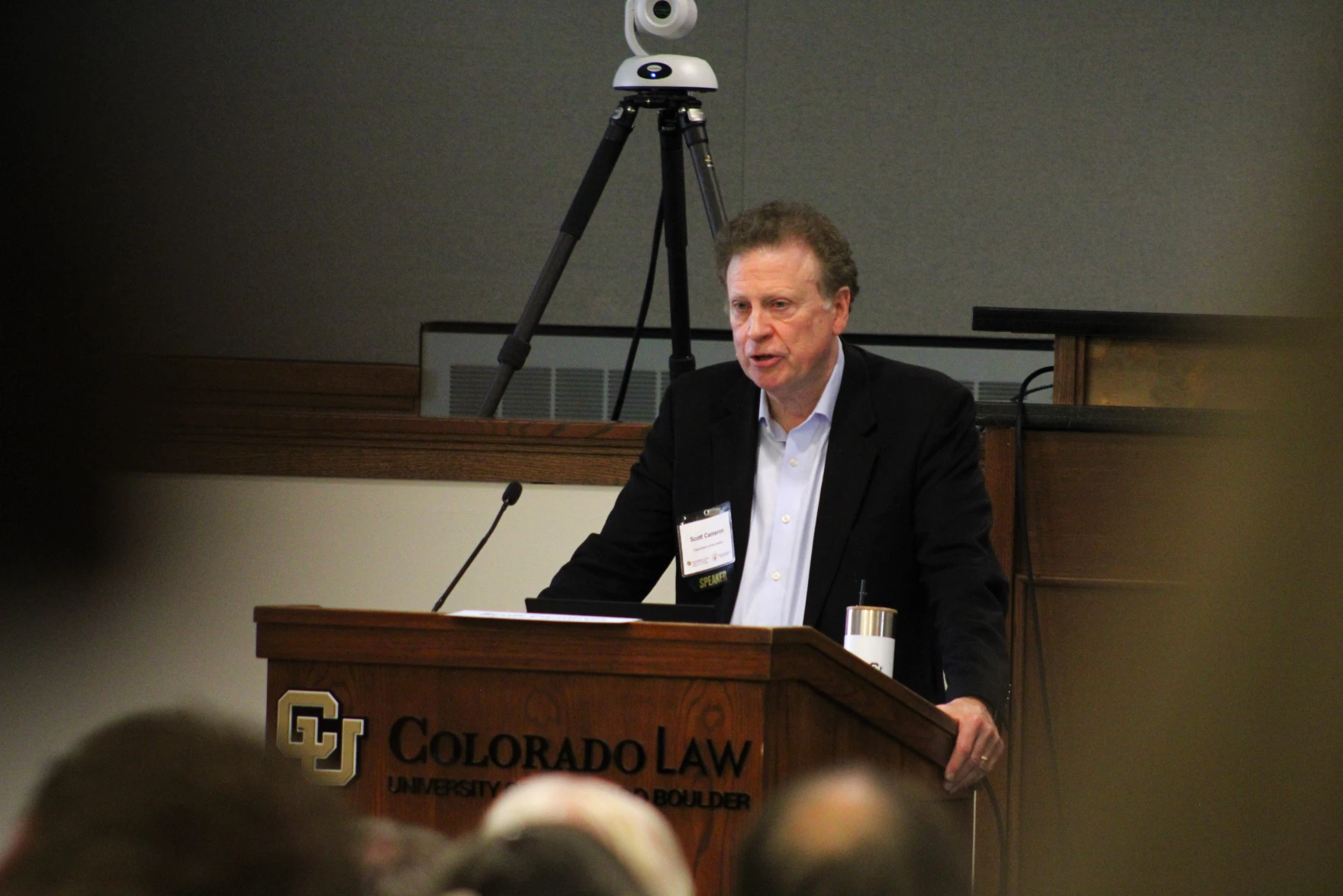
Scott Cameron, the Interior Department’s acting Assistant Secretary for Water and Science, speaks at a conference in Boulder, Colorado on June 6, 2025. He said federal officials are working closely with state negotiators to shape the next chapter of Colorado River management. Alex Hager/KUNC
With that role unfilled, the administration’s highest-ranking official focused on Colorado River matters is Scott Cameron, a longtime federal official who currently serves as the Department of the Interior’s acting Assistant Secretary for Water and Science.
Cameron said he’s been meeting with state negotiators roughly “every other week for the last eight weeks” after his boss, Interior Secretary Doug Burgum, said he wanted the department’s leadership to be “personally, intensely, and constantly” involved in discussions with the seven states. Cameron did, however, say he did not believe the states needed an external moderator to help break their deadlock.
“My impression is they really want a deal, they really want to find a path forward to working together, and I’m convinced that they’re all sincere in that regard,” he said.
Cameron also said he was “constantly” asking Reclamation’s senior leadership to bolster the agency’s staff on Colorado River matters as a way to “mitigate any unintended consequences of national level initiatives to reduce overall federal spending.”
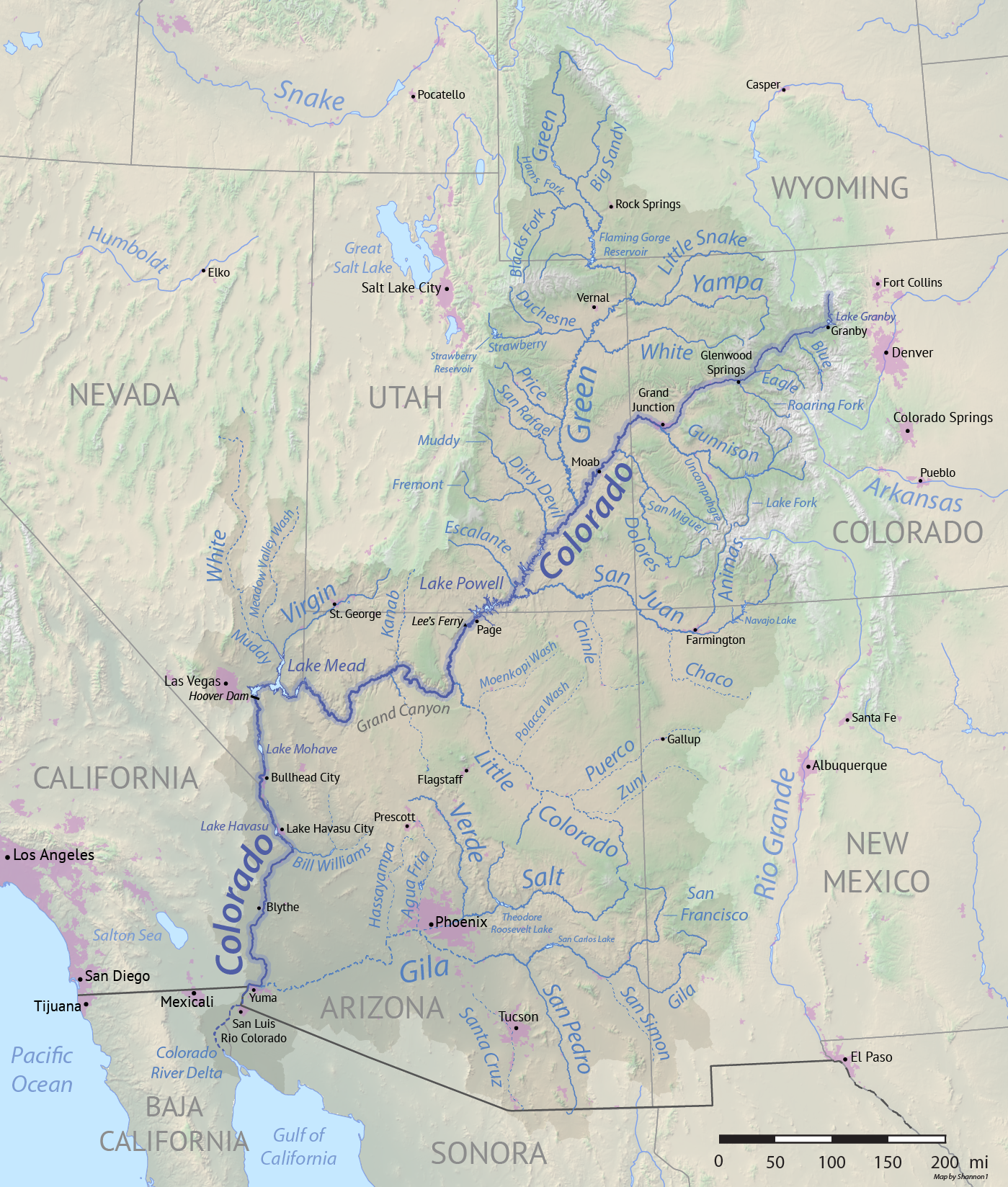
Map of the Colorado River drainage basin, created using USGS data. By Shannon1 Creative Commons Attribution-Share Alike 4.0
This land in Woody Creek is owned by the city of Aspen and is a potential site for a reservoir. On May 30, the city reaffirmed its plans to build water storage with two water court filings. CREDIT: HEATHER SACKETT/ASPEN JOURNALISM
The city of Aspen is reaffirming its plans to build reservoirs to store water from Castle and Maroon creeks — but where they might be built has still not been decided.
On May 30, attorneys for the city filed two applications in water court: a diligence application detailing the actions Aspen has taken toward developing the rights over the past six years and an application to change the original locations of the reservoirs. After a water court process, which saw 10 groups oppose the reservoirs, Aspen in 2019 agreed to modify the rights and move the proposed reservoirs out of Castle and Maroon valleys.
The city has previously identified five potential locations for reservoirs: on land the city owns in Woody Creek; Vagneur Gravel Quarry; and three underground sites — the Aspen Golf Course, Cozy Point Ranch and Zoline Open Space.
“I think the city would try and prioritize sites that we own already, or those that have larger and contiguous areas and focus on those, but I think a lot of it will come down to the feasibility and constructability, and those sites that might have the least impact as well,” said Erin Loughlin Molliconi, Aspen’s utilities director.
Aspen has what’s known as conditional storage rights for up to 8,500 acre-feet of water from Castle and Maroon creeks, which it could store in one or more locations. Conditional water rights allow a water rights owner to save their place in line while they work toward developing the rights.
Since first claiming the rights in 1965, the city every six years filed little-noticed diligence applications to maintain them. But the city’s 2016 diligence filing brought statements of opposition from 10 parties: the U.S. Forest Service, Pitkin County, American Rivers, Western Resource Advocates, Trout Unlimited, Wilderness Workshop and four private-property owners — two who owned land in the Maroon Creek Valley and two who owned land in the Castle Creek Valley.
The location of the potential Maroon Creek Reservoir. Photo credit: Brent Gardner-Smith/Aspen Journalism
The Maroon Creek Reservoir would have had a dam 155 feet tall and would have held 4,567 acre-feet of water in a pristine location in view of the Maroon Bells. The reservoir would have flooded 85 acres of U.S. Forest Service land, including some in the Maroon Bells-Snowmass Wilderness.
The Castle Creek Reservoir would have had a dam 170 feet tall and would have held 9,062 acre-feet of water. The reservoir would have flooded 120 acres on both private and USFS lands, including a small area in the wilderness.
After settling with the opposing parties, Aspen’s total storage rights were winnowed to 8,500 acre-feet, and the city is now required to find a new site or sites to build storage buckets.
Conditional water storage rights that have not yet been developed — such as Aspen’s — are held by many cities, water conservancy districts and fossil fuel companies across the Western Slope.
Five new potential reservoir sites
Besides the five previously identified sites where the city might want to move its potential water storage, officials had been seeking to add five new reservoir sites to the change case, but ultimately they did not include them. In a March 28 letter to opposersin the 2016 case, the city requested approval to include Thomas Reservoir, Marolt Open Space, Snowmass Reservoir, Ziegler Reservoir and Wildcat Reservoir in the list of potential locations.
According to the settlements with opposers, the city needs written approval from the opposers to add any new potential reservoir locations, other than the previously identified five (Woody Creek, Vagneur Gravel Quarry, Aspen Golf Course, Cozy Point Ranch and Zoline Open Space). Aspen did not get that approval from all of the opposers for all of the locations before the May 30 water court filing deadline.
“We can say that some parties did approve of sites,” Molliconi said. “We just didn’t get all parties to approve of all sites.”
Molliconi said the city chose the five additional sites because they already have existing reservoirs or ponds.
“It would be better to get either a partnership with an existing site or enlarge an existing site,” Molliconi said.
It is unclear if the city will pursue adding any of the five new sites to a future proposal. In an emailed statement, officials said they would “continue to respect and honor the stipulations and conditions of other stakeholders in this process.”
“The city intends to maintain site flexibility because we can’t perfectly predict future demands,” the statement said. “We feel it is our responsibility to continue analyses and stakeholder conversations for storage given the need for resource resiliency, storage and demand gaps, and other beneficial uses.”
Bill Hegberg is the association president of Wildcat Ranch, a residential subdivision outside of Snowmass Village. He said he had talked with city officials about including in their plans Wildcat Reservoir, a 1,100-acre-foot lake on Wildcat Creek, a tributary of Snowmass Creek.
“It doesn’t really work when we’ve got a lake that’s a recreation amenity,” Hegberg said. “We aren’t available for that.”
Aspen officials did not provide additional information on how reservoirs in the Brush Creek and Snowmass Creek drainages could be used to provide water to the city.
Environmental conservation organization American Rivers was one of the opposers Aspen settled with in 2019. Matt Rice, American Rivers’ southwest regional director, said the organization couldn’t sign off on the five additional new locations until Aspen provided more information.
“We can’t in good faith approve Aspen’s very vague plans,” Rice said. “But we are not trying to throw up unnecessary roadblocks. They just need to do a little bit more work on that and we can have this discussion in six years, especially if they provide us a longer timeline to get our approval.”
Every six years, holders of conditional water rights must file what’s known as a diligence application with the state’s water court, proving that they still have a need for the water, that they have taken substantial steps toward putting the water to use and that they “can and will” eventually use the water. They must essentially prove they are not speculating and hoarding water rights that they won’t soon use.
According to the water court filings, the city says the following things count as diligence over the past six years: It has spent about $310,000 to investigate the 10 potential reservoir locations; it has spent $300,000 on attorneys fees to “defend” its water rights; and it has continued to improve, operate and maintain its water systems that serve Aspen residents.
The Aspen municipal golf course, which sits between Castle and Maroon creeks. The golf course is one potential site the city of Aspen is considering for underground water storage. CREDIT: BRENT GARDNER-SMITH/ASPEN JOURNALISM
Storage is part of Aspen’s Integrated Water Resource Plan, which was completed in 2021and lays out options for meeting increasing water demands in a hotter and drier future. In addition to storage, the IWRP options include nonpotable reuse; groundwater wells; using Hunter Creek as a water source; enhanced water conservation; and drought restrictions.
“I think that [IWRP] is part of the reason why keeping these water rights alive was important, too, for the supply and demand,” Molliconi said.
According to the plan, which uses estimates of population growth and climate change to make projections 50 years into the future, the worst water shortages could occur in two consecutively dry years and be about 2,300 acre-feet total over the course of both years.
In recent years, Aspen has worked at reducing customers’ water use — especially outdoor water use — with increased public outreach, a landscape ordinance, automated metering and tiered water use rates. The city has also stepped up the monitoring of snowpack and streamflow by funding a new SNOTEL site at the headwaters of Castle Creek and Airborne Snow Observatory flights that measure snowpack from planes using light detection and ranging, or lidar.
Steve Hunter, Aspen’s utilities resource manager, said he plans to recommend to City Council on June 10 that the city move into a Stage 1 water shortage declaration, which aims to reduce water use by 10% through voluntary conservation.
Now that the applications are filed, anyone who might want to oppose the city’s plans has 60 days to file a statement of opposition. The 10 original opposers in the case agreed not to fight the city’s efforts to move the rights to the five alternative locations for 20 years.
If the city’s change case is approved, officials would still need land-use and permitting approval to build any eventual new water-storage reservoir and associated infrastructure.
Aspen Journalism is supported by a community nonprofit grant from the city of Aspen.
Aspen Journalism is a nonprofit, investigative news organization covering water, environment, social justice and more. Visit http://aspenjournalism.org.
Public lands in Bears Ears National Monument. The Trump administration has indicated it may attempt to shrink the monument’s boundaries once again, potentially removing this area near White Canyon from heightened protections. Jonathan P. Thompson photo.
Even before public lands lovers were still celebrating one small victory — i.e. killing a budget bill amendment that would have sold off a half-million acres of federal holdings in Nevada and Utah — the MAGA/Trump/GOP launched a multi-pronged assault on the places Americans hold dear.
The blows come from all three branches of the federal government and seem to be designed to unravel the nation’s framework of environmental protections that have been developed over the last 50 years and more. Meanwhile, the Trump administration’s proposed 2026 budget would gut the agencies that oversee public lands and the programs aimed at stewarding them. Here’s a breakdown of just some of the attacks:
Oak Flat, Arizona features groves of Emory oak trees, canyons, and springs. This is sacred land for the San Carlos Apache tribe. Resolution Copper (Rio Tinto subsidiary) lobbied politicians to deliver this National Forest land to the company with the intent to build a destructive copper mine. By SinaguaWiki – Own work, CC BY-SA 4.0, https://commons.wikimedia.org/w/index.php?curid=98967960
The Supreme Court rejected Apache Stronghold’s bid to block a land swap at Chi’chil Biłdagoteel, aka Oak Flat, in central Arizona, clearing the way for Resolution Copper’s massive mine on sacred ground.
SCOTUS also overturned a lower court’s decision to block federal approval of a proposed Utah railway that would ship Uinta Basin oil alongside the Colorado River and across multiple states to larger markets. More significantly, the ruling also limited the scope of federal environmental reviews to the direct impacts of a proposed project. This means the relevant federal agency need not consider effects of upstream oil and gas drilling facilitated by the railway, or those of processing and burning the oil downstream. The ruling will make it easier for corporations to build pipelines, highways, major oil and gas projects, and so forth.
Excerpt from the Supreme Court’s decision on SEVEN COUNTY INFRASTRUCTURE COALITION ET AL. v. EAGLE COUNTY, COLORADO, ET AL.
The U.S. Interior Department egregiously fast-tracked its approval of the Velvet-Wood Mine in Utah’s Lisbon Valley and promised to do the same for similar projects on federal lands to address a purported “energy emergency.”
Interior also expedited permitting for geothermal energy developments on federal lands, beginning with three projects in Nevada.
Interior Secretary Doug Burgum — whose original appointment was endorsed by none other than outdoor retailer REI (remorsefully, it turns out) — moved to roll back protections on 13 million acres of wilderness-quality lands on Alaska’s North Slope, reopening it to oil and gas drilling, mining, and other development.
Sen. Mike Lee, the Utah Republican who apparently still holds Jell-O socials in his office every Wednesday, said he plans to revive the public land sell-off provision in the budget bill. So much for dodging that bullet!
The Trump administration has granted FAST-41 status to Laramide Resources’ proposed La Jara Mesa and Crownpoint-Churchrock uranium mines in New Mexico. The designation is aimed at streamlining permitting for the contested projects in the Grants area. However, the FAST-41 program does not compress the environmental review or licensing process as radically as the BLM did for the Velvet-Wood mine. The Environmental Impact Statement likely won’t be completed until next November.
And then there’s the Trump administration’s proposed 2026 budget. A while back I gave a more general overview of the budget and the deep, deep cuts to almost everything except for defense, border security and Trump’s golf trips. Now we have more detail in the form of the Technical Supplement to the 2026 budget.
Just like the overview, it would would tear apart the nation’s social safety net, set back science, destroy America’s global standing, erode education, eviscerate the federal workforce, rob communities and low-income households of vital funding, gut dozens of federal agencies, generally weaken regulatory oversight, and even transfer some national park units to states. You can read my take on that one here.
Yet the budget still increases the federal deficit — even Elon Musk calls it an “abomination” (harsh words coming from the guy who brought us the vehicular abomination known as the cybertruck) — because it would hike spending to more than $1 trillion for the military industrial complex and the Department of Homeland Security. It would slash funding for nuclear energy research, but spend an additional $11 billion annually to build more nuclear weapons.
This time, I’ll focus on public lands (and related bureaus under the Interior Department and the USFS) because we only have so much space in these emails, and I only have enough self-medication to handle so much outrage and anxiety. Comparisons are between the 2024 actual expenditures and proposed spending for 2026. This is merely a sampling of some items that really stood out.
Cuts for the Bureau of Land Management:
1,157 full-time-equivalent staff positions (or about 20% of the entire full-time workforce)
– $216 million for personnel compensation
– $45 million for recreation management
– $17 million for energy and minerals
– $65 million for workforce and organizational support
– $30 million for aquatic resources management
– $114 million for wildlife habitat management
– $45 million for national monuments and national conservation areas
National Park Service
-$980 million (yes, you read that right: The agency that oversees America’s “Best Idea” is having its budget slashed by nearly a billion buckaroos …).
– 5,518 full-time-equivalent employees (… and the agency is losing over 40% of its full-time workforce).
U.S. Geological Survey
$563 million budget cut for the agency
– $281 million from ecosystems programs
– $46 million from natural hazards programs
– $74 million from water resources programs
– 2,067 full-time-equivalent employees (44% of the permanent workforce)
U.S. Fish and Wildlife Service
$149 million from the National Wildlife Refuge System
– $50 million from conservation and enforcement programs
– $16 million from habitat conservation
– $9 million from science support
– $33 million from state and tribal wildlife grants
– 1,785 full-time-equivalent employees (27% of the workforce
Bureau of Indian Affairs
$120 million from public safety and justice
– $625 million from gross outlays
– 282 full-time-equivalent employees
Bureau of Reclamation:
$253 million from water and energy management and development
– $51 million from fish and wildlife management and development
National Forest System
4,636 full-time-equivalent employees (or 33% of the workforce)
Other notes
The Bureau of Ocean Energy Management would have its renewable energy program zeroed out, along with $51 million in cuts for its environmental programs. The Bureau would slash about 10% of its workforce.
The Bureau of Safety and Environmental Enforcement (which regulates offshore oil and gas operations on the Outer Continental Shelf) would see its budget cut by $150 million.
The Office of Surface Mining Reclamation and Enforcement’s budget would be reduced by $15 million.
The strikes are coming so rapidly, and from so many different directions, that it has become difficult to keep track, let alone to fight back. That is by design, of course. Advocates can take to the courts to block some regulatory rollbacks, but they have little recourse against Supreme Court decisions. Citizens may be able to convince their congressional representatives to block public land sell-offs, but that draws attention away from lawmakers’ efforts to make it easier to drill and develop public lands.
The attacks will only intensify. The resistance must meet it with equal, opposing force.
📸 Parting Shot 🎞️
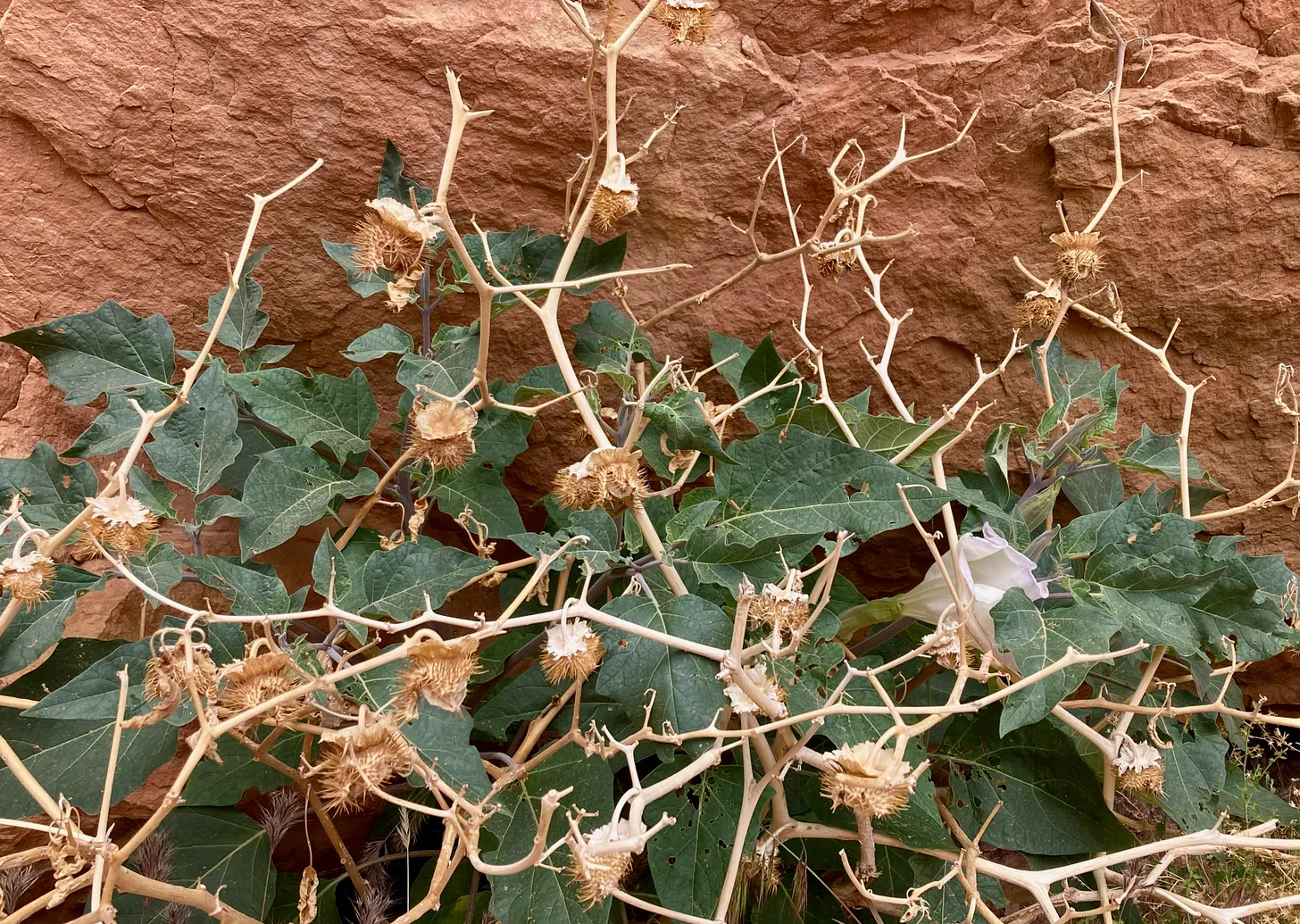
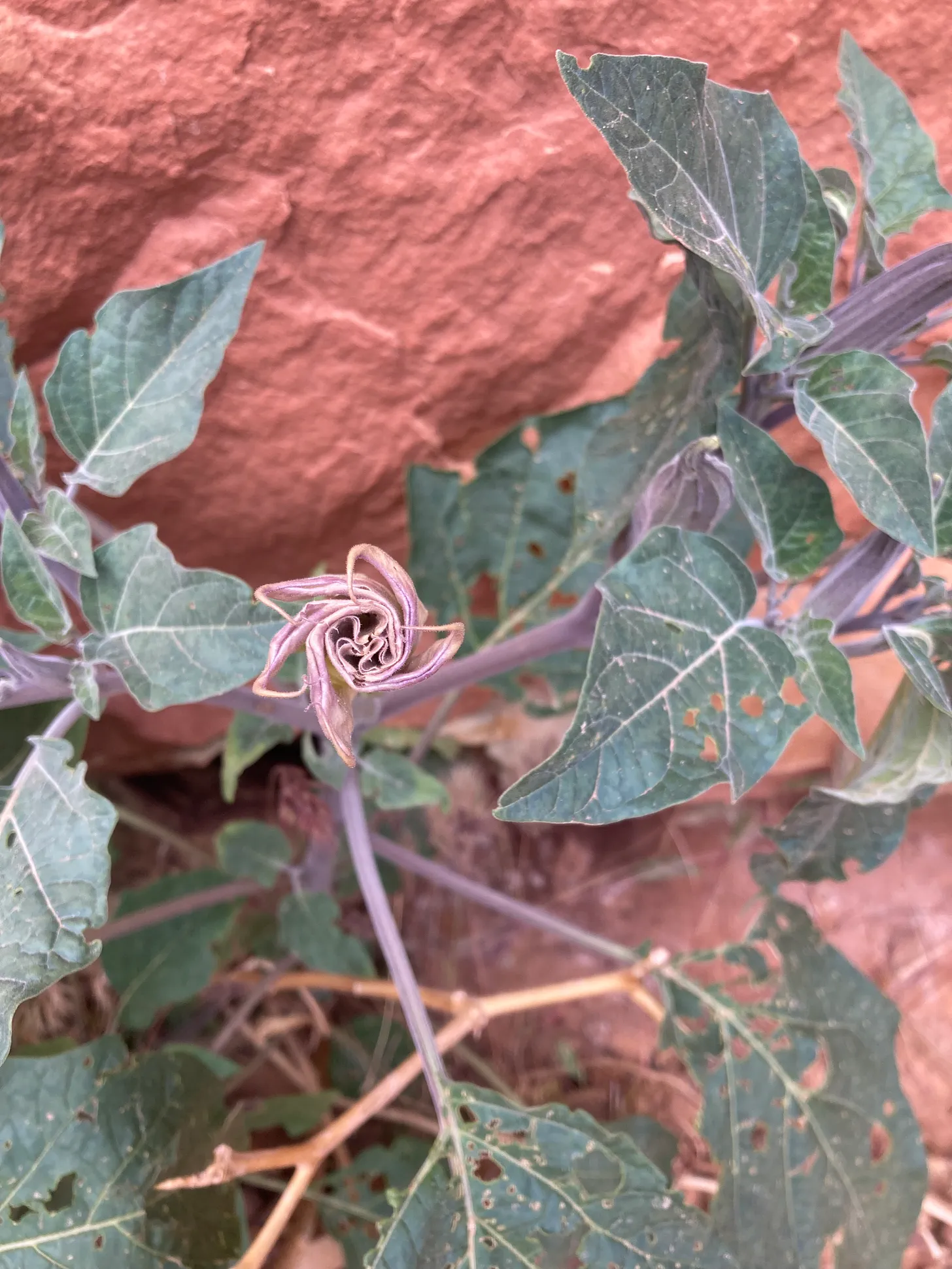
Sacred Datura in Utah. Jonathan P. Thompson photo.
Sacred Datura in Utah. Jonathan P. Thompson photo.
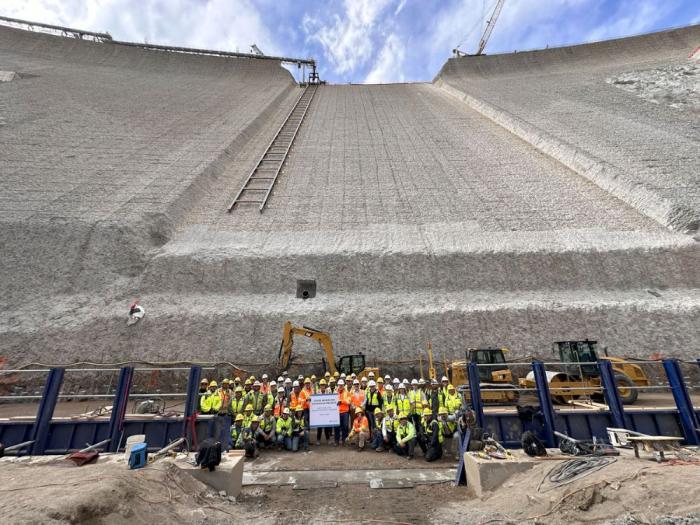
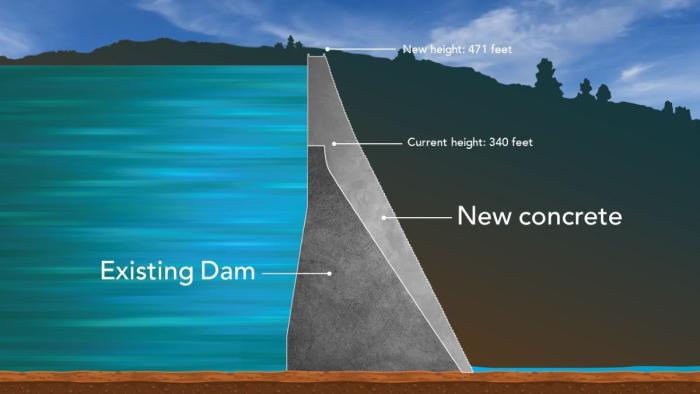
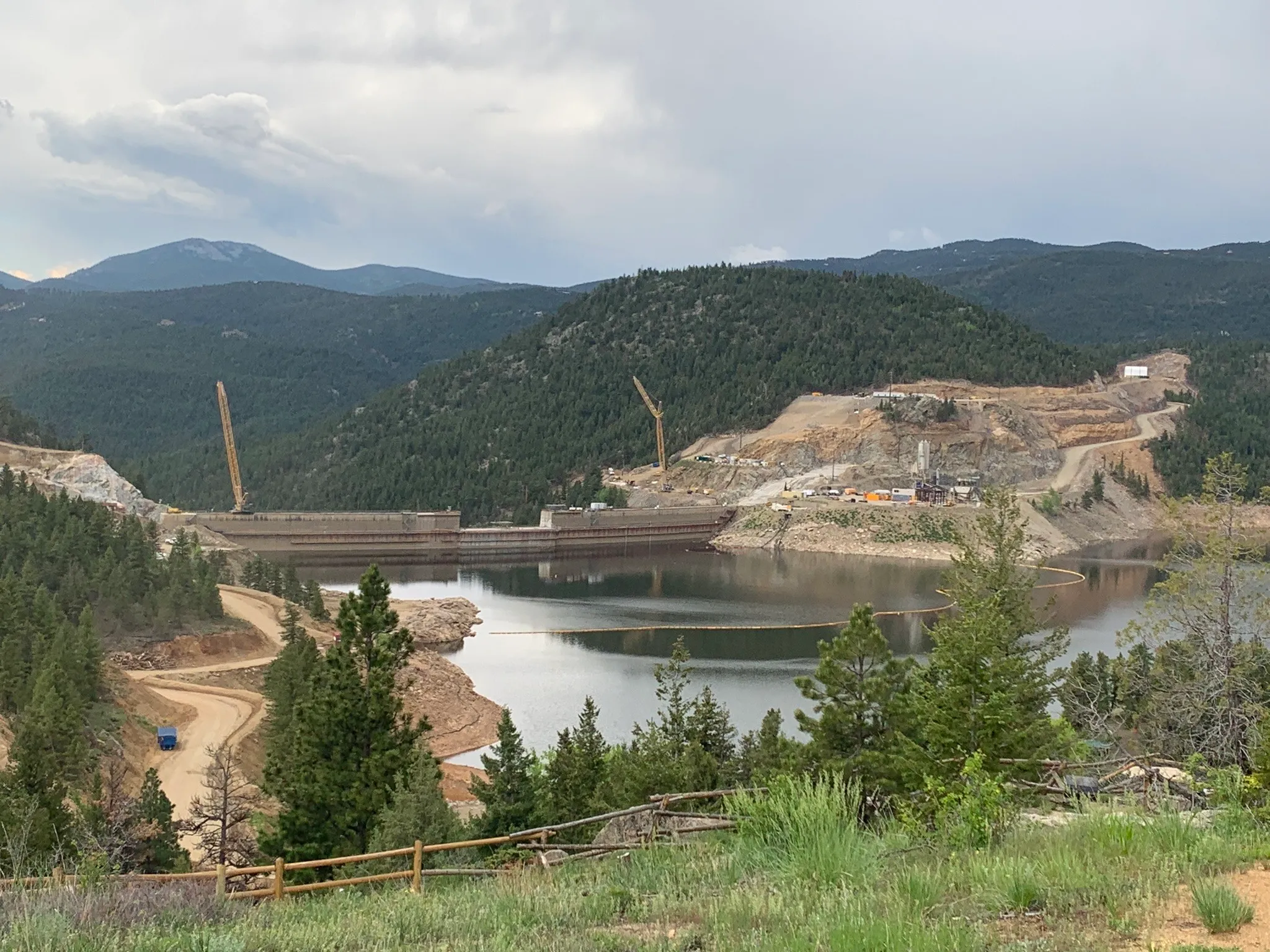
Workers from Denver Water and contractor Kiewit Barnard stand in front of Gross Dam in May 2024 to mark the start of the dam raise process. Photo credit: Denver Water.
Click the link to read the article on the Colorado Politics website (Michael Karik). Here’s an excerpt:
Although she stood by her prior determination that the project permit was unlawful, a federal judge last week decided construction on a major Denver Water infrastructure project should continue for safety reasons…Earlier this spring, U.S. District Court Senior Judge Christine M. Arguello found that, as a result of federal law violations, the expansion of Gross Reservoir and Dam should cease permanently and any further construction on the ongoing project would stop temporarily. The pause on construction, Arguello explained, would give her time to hear from engineers and determine what work would need to occur to make the dam safe…
However, on May 29, Arguello retreated from her prior bellicose tone.
“There is a risk of environmental injury and loss of human life if dam construction is halted for another two years while Denver Water re-designs the structure of the dam,” she wrote in her latest order. “Furthermore, the evidence shows that enjoining dam construction would harm Denver Water and the general public by requiring Denver Water to lay off much of its specialized workforce (which also harms those workers), as well as interfere with Denver Water’s contracts with contractors supplying materials and labor for the Project, which in turn, would significantly increase the costs.”
Getting federal approval for permits to build bridges, wind farms, highways and other major infrastructure projects has long been a complicated and time-consuming process. Despite growing calls from both parties for Congress and federal agencies to reform that process, there had been few significant revisions – until now. In one fell swoop, the U.S. Supreme Court has changed a big part of the game. Whether the effects are good or bad depends on the viewer’s perspective. Either way, there is a new interpretation in place for the law that is the centerpiece of the debate about permitting: the National Environmental Policy Act of 1969, known as NEPA…
Decades of litigation about the scope of indirect effects have widened the required evaluation. As I explain it to my students, that logical and legal progression is reminiscent of the popular children’s book If You Give a Mouse a Cookie, in which granting a request for a cookie triggers a seemingly endless series of further requests – for a glass of milk, a napkin and so on. For the highway example, the arguments went, even if the agency properly assessed the pollution from the cars, it also had to consider the new subdivisions, malls and jobs the new highway foreseeably could induce. The challenge for federal agencies was knowing how much of that potentially limitless series of indirect effects the courts would require them to evaluate.
The Uinta Basin is shown on this map, along with existing rail terminals in Carbon County, Utah, where limited amounts of the basin’s waxy crude is loaded into train cars. A proposal to create a direct rail link to the basin would provide shippers with enough transportation capacity to quadruple output.
L. to R. Chris Winter, Colby Pelligrino, Chuck Cullom.
I was at the Getches-Wilkinson Center & Water and Tribes Initiative shindig this week live-posting on BlueSky (Click the “Latest” tab). The question of whether the negotiators from the seven states were being candid about their proceedings came up. Colby Pelligrino described her frustration with folks jumping all over every proposal as unfair or damaging to their rights. They can’t make any progress towards building a solution if every proposal is prevented from going forward. Chuck Cullom let everyone know that the data the negotiators are working with is available.
Also, Eric Kuhn, maintained that since the Colorado River Compact was written for a river that doesn’t exist any longer parts need to be reworked. He emphasized living with the river we have.
With a deep sigh, he acknowledged that managing the vital river system “is a huge burden” for those mere mortals charged with that task.
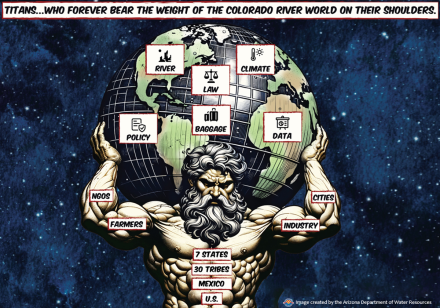
Atlas bearing the weight of the current Post-2026 negotiations. Credit: ADWR
The Director included in his presentation to the conference audience an image he often uses when describing the on-going negotiations over new guidelines for river management: a depiction of the mythical Greek god Atlas holding up the world.
Buschatzke told the WRRC attendees that “one thing that Atlas had going for him that we don’t have is that Atlas was a god, and we are not gods, so it is a huge burden for us to try to deal with this river.”
Divided into Upper and Lower Basins, comprised of seven U.S. states, the Colorado River system is operated by the Bureau of Reclamation under the terms of agreements that are scheduled to run out at the end of 2026. For well over a year, representatives of those seven states have been locked into often-intense negotiations over what the new operating guidelines should look like. Director Buschatzke is Arizona’s representative to those negotiations.
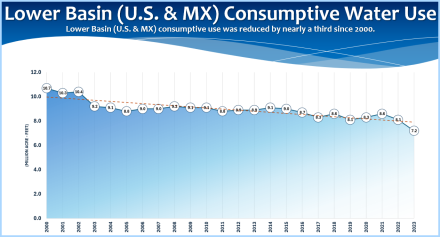
Image credit: ADWR
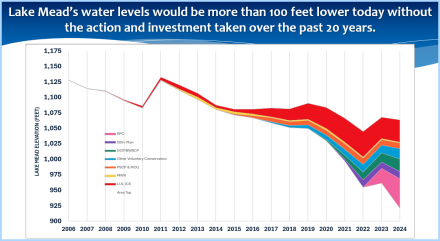
The Director described Lower Basin conservation efforts in recent years. Among those efforts, the Lower Basin and the Republic of Mexico having combined to reduce consumptive use of river water by 20 percent since 2000. He also noted that Lower Basin states and Mexico have left enough water in Lake Mead, especially since 2014, to raise surface levels by more than 100 feet.
“Without this, we’d be in a heap of trouble,” he said. “We’ve shown that we can take proactive measures and we’ve been successful in doing it.”
That 100 feet of elevation in Lake Mead, he said, represents a little over 8 million acre-feet of conserved water.
“And Arizona itself has done 4.6 million acre-feet of that 8 million,” said Director Buschatzke.
The Director emphasized his primary message as it relates to the river-management negotiations: Everyone who benefits from the river needs to contribute to conservation efforts on the river. His Upper Basin counterparts have rejected proposals to share any Colorado River water conservation efforts, he noted.
Image credit: ADWR
In a luncheon address preceding the Director’s keynote, Arizona Governor Katie Hobbs observed the importance of cooperation and collaboration in reaching agreement.
“Collaboration is the foundation of water policy and management discussions in which Arizona is on the cutting edge,” Governor Hobbs told conference attendees.
Collaboration proved a key element in two of the most important water-rights settlements in recent Arizona history.
Under Governor Hobbs, the State in 2024 concluded two tribal water settlements including four Native American tribes – settlements that concluded Arizona’s involvement in water-rights negotiations that in some cases had lasted decades.
Created by Imgur user Fejetlenfej , a geographer and GIS analyst with a ‘lifelong passion for beautiful maps.’ It highlights the massive expanse of river basins across the country – in particular, those which feed the Mississippi River, in pink.
L. to R. Chris Winter, Colby Pelligrino, Chuck Cullom.
I was at the Getches-Wilkinson Center & Water and Tribes Initiative shindig this week live-posting on BlueSky (Click the “Latest” tab). The question of whether the negotiators from the seven states were being candid about their proceedings came up. Colby Pelligrino described her frustration with folks jumping all over every proposal as unfair or damaging to their rights. They can’t make any progress towards building a solution if every proposal is prevented from going forward.
Also, Eric Kuhn, maintained that since the Colorado River Compact was written for a river that doesn’t exist any longer parts need to be reworked. He emphasized living with the river we have.
Chuck Cullom let everyone know that the data the negotiators are working with is available.
The U.S. Supreme Court has ruled in favor of a controversial Utah railway project that critics say erodes the National Environmental Policy Act (NEPA), a bedrock of environmental law for the past half century.
The case centered on a proposed 88-mile railway that would connect the oil fields of northeastern Utah to a national rail network that runs along the Colorado River and on to refineries on the Gulf Coast.
The waxy crude oil is currently transported by truck over narrow mountain passes. Project proponents said shipping the fossil fuel by rail — as many as 10 trains daily — would be quicker and revitalize the local economy by quadrupling the Uinta Basin’s oil production, ICN previously reported,
In 2020, the Seven County Infrastructure Coalition applied to the U.S. Surface Transportation Board for approval of the railroad’s construction. Under NEPA, the board was required to conduct an Environmental Impact Statement (EIS) to evaluate possible harms from the project and consider how they could be mitigated.
Environmental groups and Eagle County, Colorado, opposed the railway project. They cited the potential for derailments and spills into the Colorado River, the drinking water supply for 40 million people. Opponents were also concerned about increased air pollution in the Uinta Basin, where oil fields emit high levels of methane, a potent planet-warming greenhouse gas, as well as volatile organic compounds, some of which have been linked to increased risks of cancer.
Gulf Coast communities would also be harmed by air pollution when the crude oil was refined, opponents argued. The increased oil production and associated emissions would also drive climate change and its disastrous global effects: hurricanes, floods, droughts and extreme heat.
The Center for Biological Diversity, among the groups that had sued the Surface Transportation Board, said in a prepared statement that the ruling “relieves federal agencies of the obligation to review all foreseeable environmental harms and grants them more leeway to decide what potential environmental harms to analyze, despite what communities may think is important. It tells agencies that they can ignore certain foreseeable impacts just because they are too remote in time or space.”
In 2021, the board issued a 3,600-page EIS, which identified numerous “significant and adverse impacts that could occur as a result of the railroad line’s construction and operation— including disruptions to local wetlands, land use, and recreation,” according to court documents.
The board nonetheless approved the railroad construction, concluding that the project’s transportation and economic benefits outweighed its environmental impacts.
Opponents, including EarthJustice and Utah Physicians for a Healthy Environment petitioned the U.S. Court of Appeals for the District Columbia. They argued the board’s environmental review excluded impacts of the project on people living near the oil fields, as well as Gulf Coast residents.
The appellate court agreed. It ruled that the board’s EIS impermissibly limited the analysis of upstream and downstream projects.
“The appeals court had ruled that the federal agency that approved the railway failed in its obligations to consider the regional consequences of massively increased oil extraction on the Uinta Basin, the increased air pollution for the communities in Texas and Louisiana where the oil would be refined and the global climate consequences,” said Dr. Brian Moench, president of Utah Physicians for a Healthy Environment.
The Seven County Coalition and the railroad company then appealed to the Supreme Court.
“The Supreme Court’s ruling will allow all these consequences to unfold without meaningful restraint,” Moench said. “This court has made a name for itself making rulings that mock science and common sense and fail to protect the common good. This unfortunate ruling fits that same pattern.”
The Uinta Basin lies in the northeast corner of Utah and has seen oil and gas development since 1925. The proposed railway could take one of three potential routes – the favored of which would run through 390 acres of state lands and 401 acres of roadless U.S. Forest Service lands.
James St. John/CC via Flickr
NEPA has been federal law since 1970. It doesn’t prescribe specific environmental decisions, but it does establish a process to ensure federal agencies follow proper procedure in permitting. It can be a laborious, time-consuming process, but requires an agency to be thorough in assessing potential environmental impacts while giving the public adequate opportunity to comment.
NEPA doesn’t necessarily halt projects but it can force project developers to pursue alternatives that protect environmentally sensitive areas and communities.
In his first term, Trump rolled back some aspects of NEPA, including weakening requirements to consider cumulative impacts of a project and the effects of climate change. Shortly after taking office this year, Trump signaled he plans to further streamline NEPA to expedite its approval process, especially for energy projects.
Justice Brett Kavanaugh, who was appointed by President Trump in his first term, wrote the opinion on behalf of four other members of the court. “NEPA has transformed from a modest procedural requirement into a blunt and haphazard tool employed by project opponents (who may not always be entirely motivated by concern for the environment) to try to stop or at least slow down new infrastructure and construction projects,” Kavanaugh wrote.
Courts should “afford substantial deference and should not micromanage those agency choices so long as they fall within a broad zone of reasonableness,” Kavanaugh wrote. “NEPA does not allow courts, under the guise of judicial review of agency compliance with NEPA, to delay or block agency projects based on the environmental effects of other projects separate from the project at hand.”
The 8-0 decision excluded Justice Neil Gorsuch, who recused himself because of his close connection to billionaire Philip F. Anschutz, who would economically benefit from the project.
In a concurring opinion, Justice Sonia Sotomayor differed with Kavanaugh on his rationale for the ruling, but agreed on the outcome. She wrote that NEPA didn’t require the board to consider the effects of oil drilling and refining because those activities were outside its authority. “Even a foreseeable environmental effect is outside of NEPA’s scope if the agency could not lawfully decide to modify or reject the proposed action on account of it.”
Justices Elena Kagan and Ketanji Brown Jackson joined Sotomayor in the concurrence.
The coalition was represented by Jay Johnson of Venable LLP, who said the ruling “restores much-needed balance to the federal environmental review process.”
Keith Heaton, director of the Seven County Infrastructure Coalition, the project’s public partner, said the decision affirms the years of work and collaboration that have gone into making the Uinta Basin Railway a reality. “It represents a turning point for rural Utah—bringing safer, sustainable, more efficient transportation options and opening new doors for investment and economic stability.”
Wendy Park, a senior attorney at the Center for Biological Diversity, said despite the court’s ruling, “we’ll keep fighting to make sure this railway is never built.”
Roller-compacted concrete will be placed on top of the existing dam to raise it to a new height of 471 feet. A total of 118 new steps will make up the new dam. Image credit: Denver Water.
Afederal judge will allow Denver Water to continue work on a $531 million project to raise a dam in Boulder County, dealing a blow to environmentalists who had hoped to stop the construction.
However, Senior U.S. District Judge Christine Arguello in her ruling May 29 prohibited Denver Water from filling Gross Reservoir until federal environmental permits can be rewritten by the Army Corps of Engineers.
“There is no evidence that there would be additional environmental injury resulting from completion of the dam construction. In fact, the opposite is true,” Arguello wrote. “There is a risk of environmental injury and loss of human life if dam construction is halted for another two years while Denver Water redesigns the structure of the dam and gets that re-design approved by” the Federal Energy Regulatory Commission.
FERC is involved because of the hydroelectric plant at the base of the dam.
Denver Water’s general counsel, Jessica Brody, said Friday her agency was pleased the judge recognized the safety issues in leaving the dam half-built.
“We’re relieved that the judge understood and appreciated the safety issues. We are relieved as well that she understood the impact to Denver Water’s customers,” Brody said.
The construction is expected to be completed this year, she said. In the meantime, she said, her agency will move forward in asking a federal appeals panel to rule on whether key environmental permits need to be rewritten, as Arguello has ordered.
If the permits are redone, it could mean that the U.S. Army Corps of Engineers will determine that the metro Denver water provider, which serves 1.5 million people, needs less water from the Fraser River to fill an expanded Gross Reservoir than the original permit authorized.
Save The Colorado, one of the plaintiffs in the case, said Friday morning that it will defend the portion of the Thursday ruling that could prevent or reduce additional diversions from the Fraser River, a key tributary in the Upper Colorado River system.
“Importantly,” said Save The Colorado’s Gary Wockner, “her original 86-page ruling still stands … so they can’t cut trees and they can’t put water in it until it is all resolved.”
Denver Water is helping ensure its future water security with the Gross Reservoir Expansion Project. When the project is complete, it will nearly triple the Boulder County reservoir’s capacity to 119,000 acre-feet. CREDIT: HEATHER SACKETT/ASPEN JOURNALISM
How the case progressed
In her April 3 ruling, Arguello said Denver Water had acted recklessly in proceeding with construction in 2022, knowing that important legal questions were being challenged by Save The Colorado, the Sierra Club and others.
The massive construction project to raise the dam 131 feet and triple the capacity of Gross Reservoir has sparked fierce opposition in Boulder County and prompted several legal challenges from Save The Colorado, a group that advocates on behalf of rivers. Though its early lawsuits failed, the group in 2022 won an appeal that put the legal battle back in play. Despite months of settlement talks, no agreement was reached.
Denver Water first moved to raise Gross Dam more than 20 years ago when the water provider began designing the expansion and seeking the necessary federal and state permits. Denver Water has said raising the dam and increasing capacity of the reservoir is necessary to ensure it has enough water throughout its delivery system and to help with future water supplies as climate change continues to reduce streamflows.
After years of engineering, environmental studies and federal and state analyses, Denver received a permit from the U.S. Army Corps of Engineers, and construction began in 2022.
Arguello’s April 3 ruling said, in part, that the Army Corps should have considered whether ongoing climate change and drought would leave the Colorado River and Western Slope waterways too depleted to safely allow transfer of Denver Water’s rights into a larger Gross Reservoir for Front Range water users.
At the same time, she ordered a permanent injunction prohibiting enlargement of the reservoir, including tree removal and water diversion, and impacts to wildlife.
Almost immediately, Denver Water filed for temporary relief from the order, saying, in part, that it would be unsafe to stop work as the incomplete concrete walls towered above Gross Reservoir.
Arguello granted that request, too, allowing Denver to continue work on the dam considered necessary for safety.
State health officials will face tighter deadlines and more scrutiny of a water quality permitting program that has been plagued by massive backlogs and criticized by some small communities who say they can’t afford their state-mandated water treatment systems.
The changes will come under a new bipartisan law Senate Bill 305 approved last month. Gov. Jared Polis is expected to sign the bill this week, according to state Sen. Jeff Bridges, a Democrat from Greenwood Village who is one of the bill’s sponsors and chairs the Joint Budget Committee.
“This bill is a reset in the relationship between the Colorado Department of Public Health and Environment (CDPHE) and local governments that both sides believe will result in better communication, collaboration and ultimately better water quality,” Bridges said this week.
The permits are required under the federal Clean Water Act and are designed to protect Colorado’s rivers and streams from contaminants contained in wastewater. The state is required to enforce the federal law.
The measure is designed to help the CDPHE battle a permitting backlog that has left dozens of communities without a current wastewater discharge permit. Those communities can still discharge under a special administrative rule, but the backlog means the communities aren’t complying with the most current wastewater treatment standards that seek to reduce the various contaminants, such as ammonia and nitrates, being discharged into streams.
Earlier this year, as the state sought to fast-track permit approvals, small towns revolted, saying the new permits that were issued were too tough and that it was too expensive to upgrade treatment systems to comply.
The controversy comes as climate change and drought reduce stream flows and cause water temperatures to rise, and as population growth increases the amount of wastewater being discharged to Colorado’s rivers.
In response to the towns’ concerns, the CDPHE water quality control division took the unusual step in March of holding off on taking enforcement action against at least some of the towns that say they can’t comply with the new regulations.
Senate Bill 305 will allow communities to hire outside engineers and consultants to help speed permit processing times and it also requires the CDPHE to develop new rules establishing clear timeframes for granting or denying different types of permits by Dec. 31, 2027.
In addition, according to Nicole Rowan, director of the Water Quality Control Division, they will set a schedule by Dec. 31, 2026, for reducing the backlog.
The changes aren’t likely to help Ault, a community of 2,350 people on the Eastern Plains that finally received a new permit in March. The permit, however, contains standards the town’s 9-year-old wastewater treatment plant can’t meet. The CDPHE has agreed to suspend any enforcement action against the community until it can do additional analysis to see if it can comply with the new rules simply by upgrading its treatment plant, according to Grant Ruff, who oversees the town’s treatment system.
The town still owes $1.2 million on the existing plant. Building a new one would likely cost more than $20 million, Ruff said.
“We hope it is feasible [to comply] by making minor upgrades,” he said. “Otherwise we will have to spend $20 million to $30 million.”
That won’t be the case for towns seeking new permits in the years ahead.
“The new standards will be tremendously helpful in the future because the state will have to take into consideration the community’s ability to pay,” he said.
In a 36-page ruling, Supreme Court justices said the Surface Transportation Board, a federal agency that oversees rail transit, had sufficiently considered the proposal’s environmental impacts when it approved the plan in 2021. Justice Brett Kavanaugh, writing the opinion for the other justices, said the board “identified and analyzed numerous ‘significant and adverse impacts that could occur as a result’ of the railroad line’s construction and operation — including disruptions to local wetlands, land use, and recreation.”
[…]
The plan had been on hold after a lower appeals court in 2023 ruled in favor of a lawsuit brought by Eagle County and five environmental groups that claimed the transportation board’s review had underestimated the railway’s environmental impact. The lawsuit garnered support from a coalition of local governments, including Pitkin, Routt, Grand and Boulder counties, the cities of Basalt, Avon, Minturn, Red Cliff, Crested Butte, Glenwood Springs and Grand Junction, and the Northwest Colorado Council of Governments…
At the heart of the lawsuit and the question before the Supreme Court was whether the transportation board had sufficiently followed the National Environmental Policy Act, or NEPA, when it approved the railway…The 55-year-old law requires federal agencies to consider the environmental impacts of their decisions, and the transportation board issued a 3,600-page environmental analysis as part of that review.
Click the link to read the article on The Denver Post website (Elise Schmelzer). Here’s an excerpt:
May 31, 2025
Concerningly low amounts of water are flowing from Rocky Mountain snowpack this spring, a summer of drought looms across swaths of the West, and the negotiators tasked with devising a sustainable long-term water plan for the 40 million people who rely on the Colorado River are running out of time. Commissioners from the seven states in the Colorado River Basin — Colorado, New Mexico, Wyoming, Utah, Arizona, California and Nevada — must create a plan that will govern how those states divvy up the river’s water after the current guidelines expire at the end of 2026. As the river shrinks due to drought and climate change, the negotiators must decide who will take less water — and they need to do so in the next few months.
“The way the law of the river is set up, this is a decision that takes the seven states, and there are so many stakeholders and users who depend on that,” said Jennifer Pitt, Colorado River program director at the National Audubon Society. “We are really at their mercy and we are just about out of time.”
Udall/Overpeck 4-panel Figure Colorado River temperature/precipitation/natural flows with trend. Lake Mead and Lake Powell storage. Updated through Water Year 2024. Credit: Brad Udall
Those who depend on the river are already dealing with uncertainty: this season’s mountain snowpack is expected to deliver about half the median amount of water to the system’s two major reservoirs, which are already two-thirds empty. Years of drought not balanced by decreases in water consumption have drained Lake Mead and Lake Powell, and aridification fueled by climate change is expected to continue to reduce the flow of the river that makes modern life possible across the Southwest. The Colorado River irrigates more than 5 million acres of farmland — including water supplies for much of the nation’s winter vegetables — and comprises large portions of many Western cities’ water portfolio, said Brad Udall, senior water and climate research scholar at Colorado State University’s Colorado Water Institute.
On its surface, floating solar appears to conserve water while generating carbon-free electricity. River managers are cautious, but some say the West can’t afford to wait.
GILA RIVER INDIAN RESERVATION, Ariz.—About 33 miles south of Phoenix, Interstate 10 bisects a line of solar panels traversing the desert like an iridescent snake. The solar farm’s shape follows the path of a canal, with panels serving as awnings to shade the gently flowing water from the unforgiving heat and wind of the Sonoran Desert.
The panels began generating power last November for the Akimel O’otham and Pee Posh tribes—known together as the Gila River Indian Community, or GRIC—on their reservation in south-central Arizona, and they are the first of their kind in the U.S. The community is studying the effects of these panels on the water in the canal, hopeful that they will protect a precious resource from the desert’s unflinching sun and wind.
In September, GRIC is planning to break ground on another experimental effort to conserve water while generating electricity: floating solar. Between its canal canopies and the new project that would float photovoltaic panels on a reservoir it is building, GRIC hopes to one day power all of its canal and irrigation operations with solar electricity, transforming itself into one of the most innovative and closely-watched water users in the West in the process.
The community’s investments come at a critical time for the Colorado River, which supplies water to about 40 million people across seven Western states, Mexico and 30 tribes, including GRIC. Annual consumption from the river regularly exceeds its supply, and a decades-long drought, fueled in part by climate change, continues to leave water levels at Lake Powell and Lake Mead dangerously low.
Covering water with solar panels is not a new idea. But for some it represents an elegant mitigation of water shortages in the West. Doing so could reduce evaporation, generate more carbon-free electricity and require dams to run less frequently to produce power.
But, so far, the technology has not been included in the ongoing Colorado River negotiations between the Upper Basin states of Colorado, New Mexico, Utah and Wyoming, the Lower Basin states of Arizona, California and Nevada, tribes and Mexico. All are expected to eventually agree on cuts to the system’s water allocations to maintain the river’s ability to provide water and electricity for residents and farms, and keep its ecosystem alive.
“People in the U.S. don’t know about [floating solar] yet,” said Scott Young, a former policy analyst in the Nevada state legislature’s counsel bureau. “They’re not willing to look at it and try and factor it” into the negotiations.
Several Western water managers Inside Climate News contacted for this story said they were open to learning more about floating solar—Colorado has even studied the technology through pilot projects. But, outside of GRIC’s project, none knew of any plans to deploy floating solar anywhere in the basin. Some listed costly and unusual construction methods and potentially modest water savings as the primary obstacles to floating solar maturing in the U.S.
A Tantalizing Technology With Tradeoffs
A winery in Napa County, California, deployed the first floating solar panels in the U.S. on an irrigation pond in 2007. The country was still years away from passing federal legislation to combat the climate crisis, and the technology matured here haltingly. As recently as 2022, according to a Bloomberg analysis, most of the world’s 13 gigawatts of floating solar capacity had been built in Asia.
Unlike many Asian countries, the U.S. has an abundance of undeveloped land where solar could be constructed, said Prateek Joshi, a research engineer at the National Renewable Energy Laboratory (NREL) who has studied floating solar, among other forms of energy. “Even though [floating solar] may play a smaller role, I think it’s a critical role in just diversifying our energy mix and also reducing the burden of land use,” he said.
This February, NREL published a study that found floating solar on the reservoirs behind federally owned dams could provide enough electricity to power 100 million U.S. homes annually, but only if all the developable space on each reservoir were used.
Lake Powell could host almost 15 gigawatts of floating solar using about 23 percent of its surface area, and Lake Mead could generate over 17 gigawatts of power on 28 percent of its surface. Such large-scale development is “probably not going to be the case,” Joshi said, but even if a project used only a fraction of the developable area, “there’s a lot of power you could get from a relatively small percentage of these Colorado Basin reservoirs.”
The study did not measure how much water evaporation floating solar would prevent, but previous NREL research has shown that photovoltaic panels—sometimes called “floatovoltaics” when they are deployed on reservoirs—could also save water by changing the way hydropower is deployed.
Some of a dam’s energy could come from solar panels floating on its reservoir to prevent water from being released solely to generate electricity. As late as December, when a typical Western dam would be running low, lakes with floating solar could still have enough water to produce hydropower, reducing reliance on more expensive backup energy from gas-fired power plants.
Joshi has spoken with developers and water managers about floating solar before, and said there is “an eagerness to get this [technology] going.” The technology, however, is not flawless.
Hoover Dam with Lake Mead in the background December 3, 2024.
Paddling Powell. Photo by Jonathan P. Thompson.
Solar arrays can be around 20 percent more expensive to install on water than land, largely because of the added cost of buoys that keep the panels afloat, according to a 2021 NREL report. The water’s cooling effect can boost panel efficiency, but floating solar panels may produce slightly less energy than a similarly sized array on land because they can’t be tilted as directly toward the sun as land-based panels.
And while the panels likely reduce water loss from reservoirs, they may also increase a water body’s emissions of greenhouse gases, which in turn warm the climate and increase evaporation. This January, researchers at Cornell University found that floating solar covering more than 70 percent of a pond’s surface area increased the water’s CO2 and methane emissions. These kinds of impacts “should be considered not only for the waterbody in which [floating solar] is deployed but also in the broader context of trade-offs of shifting energy production from land to water,” the study’s authors wrote.
“Any energy technology has its tradeoffs,” Joshi said, and in the case of floating solar, some of its benefits—reduced evaporation and land use—may not be easy to express in dollars and cents.
Silver Buckshot
There is perhaps no bigger champion for floating solar in the West than Scott Young. Before he retired in 2016, he spent much of his 18 years working for the Nevada Legislature researching the effects of proposed legislation, especially in the energy sector.
On an overcast, blustery May day in southwest Wyoming near his home, Young said that in the past two years he has promoted the technology to Colorado River negotiators, members of Congress, environmental groups and other water managers from the seven basin states, all of whom he has implored to consider the virtues of floating solar arrays on Lake Powell and Lake Mead.
Young grew up in the San Francisco Bay area, about 40 miles, he estimated, from the pioneering floating solar panels in Napa. He stressed that he does not have any ties to industry; he is just a concerned Westerner who wants to diversify the region’s energy mix and save as much water as possible.
But so far, when he has been able to get someone’s attention, Young said his pitch has been met with tepid interest. “Usually the response is: ‘Eh, that’s kind of interesting,’” said Young, dressed in a black jacket, a maroon button-down shirt and a matching ball cap that framed his round, open face. “But there’s no follow-up.”
The Bureau of Reclamation “has not received any formal proposals for floating solar on its reservoirs,” said an agency spokesperson, who added that the bureau has been monitoring the technology.
In a 2021 paper published with NREL, Reclamation estimated that floating solar on its reservoirs could generate approximately 1.5 terawatts of electricity, enough to power about 100 million homes. But, in addition to potentially interfering with recreation, aquatic life and water safety, floating solar’s effect on evaporation proved difficult to model broadly.
So many environmental factors determine how water is lost or consumed in a reservoir—solar intensity, wind, humidity, lake circulation, water depth and temperature—that the study’s authors concluded Reclamation “should be wary of contractors’ claims of evaporation savings” without site-specific studies. Those same factors affect the panels’ efficiency, and in turn, how much hydropower would need to be generated from the reservoir they cover.
The report also showed the Colorado River was ripe with floating solar potential—more than any other basin in the West. That’s particularly true in the Upper Basin, where Young has been heartened by Colorado’s approach to the technology.
In 2023, the state passed a law requiring several agencies to study the use of floating solar. Last December, the Colorado Water Conservation Board published its findings, and estimated that the state could save up to 407,000 acre feet of water by deploying floating solar on certain reservoirs. An acre foot covers one acre with a foot of water, or 325,851 gallons, just about three year’s worth of water for a family of four.
When Young saw the Colorado study quantifying savings from floating solar, he felt hopeful. “407,000 acre feet from one state,” he said. “I was hoping that would catch people’s attention.”
Saving that much water would require using over 100,000 acres of surface water, said Cole Bedford, the Colorado Water Conservation Board’s chief operating officer, in an email. “On some of these reservoirs a [floating solar] system would diminish the recreational value such that it would not be appropriate,” he said. “On others, recreation, power generation, and water savings could be balanced.”
Colorado is not planning to develop another project in the wake of this study, and Bedford said that the technology is not a silver bullet solution for Colorado River negotiations.
“While floating solar is one tool in the toolkit for water conservation, the only true solution to the challenges facing the Colorado River Basin is a shift to supply-driven, sustainable uses and operations,” he said.
Denver Water’s sustainability operations include generating energy from solar power panels installed on the roof of its Administration Building, parking garage and over its visitor’s parking lot at its Operations Complex near downtown. Photo credit: Denver Water.
Some of the West’s largest and driest cities, like Phoenix and Denver, ferry Colorado River water to residents hundreds of miles away from the basin using a web of infrastructure that must reliably operate in unforgiving terrain. Like their counterparts at the state level, water managers in these cities have heard floatovoltaics floated before, but they say the technology is currently too immature and costly to be deployed in the U.S.
Lake Pleasant, which holds some of the Central Arizona Project’s Colorado River Water, is also a popular recreation space, complicating its floating solar potential. Credit: Jake Bolster/Inside Climate News
In Arizona, the Central Arizona Project (CAP) delivers much of the Colorado River water used by Phoenix, Tucson, tribes and other southern Arizona communities with a 336-mile canal running through the desert, and Lake Pleasant, the company’s 811,784-acre-foot reservoir.
Though CAP is following GRIC’s deployment of solar over canals, it has no immediate plans to build solar over its canal, or Lake Pleasant, according to Darrin Francom, CAP’s assistant general manager for operations, power, engineering and maintenance, in part because the city of Peoria technically owns the surface water.
Covering the whole canal with solar to save the 4,000 acre feet that evaporates from it could be prohibitively expensive for CAP. “The dollar cost per that acre foot [saved] is going to be in the tens of, you know, maybe even hundreds of thousands of dollars,” Francom said, mainly due to working with novel equipment and construction methods. “Ultimately,” he continued, “those costs are going to be borne by our ratepayers,” which gives CAP reason to pursue other lower-cost ways to save water, like conservation programs, or to seek new sources.
An intake tower moves water into and out of the dam at Lake Pleasant. Credit: Jake Bolster/Inside Climate News
The increased costs associated with building solar panels on water instead of on land has made such projects unpalatable to Denver Water, Colorado’s largest water utility, which moves water out of the Colorado River Basin and through the Rocky Mountains to customers on the Front Range. “Floating solar doesn’t pencil out for us for many reasons,” said Todd Hartman, a company spokesperson. “Were we to add more solar resources—which we are considering—we have abundant land-based options.”
GRIC spent about $5.6 million, financed with Inflation Reduction Act grants, to construct 3,000 feet of solar over a canal, according to David DeJong, project director for the community’s irrigation district.
Young is aware there is no single solution to the problems plaguing the Colorado River Basin, and he knows floating solar is not a perfect technology. Instead, he thinks of it as a “silver buckshot,” he said, borrowing a term from John Entsminger, general manager for the Southern Nevada Water Authority—a technology that can be deployed alongside a constellation of behavioral changes to help keep the Colorado River alive.
Given the duration and intensity of the drought in the West and the growing demand for water and clean energy, Young believes the U.S. needs to act now to embed this technology into the fabric of Western water management going forward.
As drought in the West intensifies, “I think more lawmakers are going to look at this,” he said. “If you can save water in two ways—why not?”
If all goes according to plan, GRIC’s West Side Reservoir will be finished and ready to store Colorado River water by the end of July. The community wants to cover just under 60 percent of the lake’s surface area with floating solar.
“Do we know for a fact that this is going to be 100 percent effective and foolproof? No,” said DeJong, GRIC’s project director for its irrigation district. “But we’re not going to know until we try.”
The Gila River Indian Community spent about $5.6 million, with the help of Inflation Reduction Act grants, to cover a canal with solar. Credit Jake Bolster/Inside Climate News
GRIC’s panels will have a few things going for them that projects on lakes Mead or Powell probably wouldn’t. West Side Reservoir will not be open to recreation, limiting the panels’ impacts on people. And the community already has the funds—Inflation Reduction Act grants and some of its own money—to pay for the project.
But GRIC’s solar ambitions may be threatened by the hostile posture toward solar and wind energy from the White House and congressional Republicans, and the project is vulnerable to an increasingly volatile economy. Since retaking office, President Donald Trump, aided by billionaire Elon Musk, has made deep cuts inrenewableenergy grants at the Environmental Protection Agency. It is unclear whether or to what extent the Bureau of Reclamation has slashed its grant programs.
“Under President Donald J. Trump’s leadership, the Department is working to cut bureaucratic waste and ensure taxpayer dollars are spent efficiently,” said a spokesperson for the Department of the Interior, which oversees Reclamation. “This includes ensuring Bureau of Reclamation projects that use funds from the Infrastructure Investments and Jobs Act and the Inflation Reduction Act align with administration priorities. Projects are being individually assessed by period of performance, criticality, and other criteria. Projects have been approved for obligation under this process so that critical work can continue.”
And Trump’s tariffs could cause costs to balloon beyond the community’s budget, which could either reduce the size of the array or cause delays in soliciting proposals, DeJong said.
While the community will study the panels over canals to understand the water’s effects on solar panel efficiency, it won’t do similar research on the panels on West Side Reservoir, though DeJong said they have been in touch with NREL about studying them. The enterprise will be part of the system that may one day offset all the electrical demand and carbon footprint of GRIC’s irrigation system.
“The community, they love these types of innovative projects. I love these innovative projects,” said GRIC Governor Stephen Roe Lewis, standing in front of the canals in April. Lewis had his dark hair pulled back in a long ponytail and wore a blue button down that matched the color of the sky.
“I know for a fact this is inspiring a whole new generation of water protectors—those that want to come back and they want to go into this cutting-edge technology,” he said. “I couldn’t be more proud of our team for getting this done.”
DeJong feels plenty of other water managers across the West could learn from what is happening at GRIC. In fact, the West Side Reservoir was intentionally constructed near Interstate 10 so that people driving by on the highway could one day see the floating solar the community intends to build there, DeJong said.
“It could be a paradigm shift in the Western United States,” he said. “We recognize all of the projects we’re doing are pilot projects. None of them are large scale. But it’s the beginning.”
The Blue River flows through Silverthorne on May 22 on its way to the Colorado River. Photo/Allen Best
Click the link to read the article on the Big Pivots website (Allen Best):
May 29, 2025
Even-steven. That was the intent of delegates from the seven basin states in 1922 when they met near Santa Fe to forge a compact governing the Colorado River.
But what exactly did they agree upon? That has become a sticking point in 2025 as states have squared off about rules governing the river in the drought-afflicted and climate-changed 21st century. The negotiations between the states, according to many accounts, have been fraught with tensions. Becky Mitchell, Colorado’s lead negotiator, delivered a peek into that dispute at a forum on May 22 in Silverthorne along the headwaters of the river.
The Colorado River Compact was a quid pro quo. California, in particular, but also Arizona, was ready to see the highs and lows of the rivers smoothed out. They, as well as Nevada, wanted a giant reservoir in Boulder Canyon near the small town of Las Vegas, which then had a population of 2,300. Those Southwestern states couldn’t do it alone, though. They needed the federal government to build the dam later called Hoover. For that, they needed the support of Colorado and the three other upper-basin states.
Colorado, represented by Delph Carpenter, and the three other headwaters states realized that they had best reach a compromise, as they would more slowly develop the rivers. If the doctrine of prior appropriation that they had all adopted within their own states prevailed on the Colorado River, the water would be gone by the time they found need for it.
This was the foundation for Article III of the Colorado River Compact. It apportions 7.5 million acre-feet in perpetuity for the exclusive beneficial consumption by each of the two basins. On top of this 15 million acre-feet, they knew there would be water lost to evaporation, now calculated at 1.5 million acre-feet annually, plus some sort of delivery obligation to Mexico, which later turned out to be 1.5 million acre-feet.
In Santa Fe, delegates had assumed bounteous flows in the river, as had occurred in the years prior to their meeting. And so, embracing that short-term view of history, they believed the river would deliver 20 million acre-feet.
Source: Colorado River Water Conservation Board.
It has not done so routinely. Even when there was lots of water, during the 1990s and even before, as Eric Kuhn and John Fleck explained in their 2019 book, “Science be Dammed,” troubles ahead could be discerned. And by 1993, when the Central Arizona Project began hoisting water to Phoenix and Tucson, the river ceased absolutely to reach the ocean.
Then came the 21st century drought. Those framing the compact understood drought as a temporary affliction, not the multi-decade phenomenon now perplexing the states in the Colorado River Basin.
Nor did they contemplate a warming, drying climate called aridification. Similar to drought in effects, it is rooted in accumulating atmospheric gases. Unlike drought, it has little to no chance of breaking.
Now, faced with creating new rules governing the sharing of this river, delegates from the seven states are at odds in various ways, but perhaps none so much as in their interpretation of compact’s Article D. It says that the upper-division states “will not cause the flow of the river at Lee Ferry to be depleted below an aggregate of 75,000,000 acre-feet for any period of ten consecutive years.”
The lower division states have so far received 75 million acre-feet over every revolving 10-year period. The upper-basin states have not fully developed their apportionment, although Colorado has come close. In the last 25 years, the upper-basin states have been using 3.5 million to 4.5 million acre-feet. The lower-basin states that a decade ago were still using 10 million acre-feet have cut back their use to 7.5 million acre-feet.
In May 2022, water levels at Glen Canyon Dam were dropping so rapidly as to make relevant discussions about potential loss of hydroelectricity. Photo credit: Allen Best/Big Pivots
Lake Powell serves as a water bank for the upper basin states. The storage in 2022 had declined to 22%, although a good snow winter in 2022-23 restored levels somewhat. Today, the two reservoirs are at a combined 34% of full.
“That means 66% empty,” said Mitchell at the forum along the Blue River in Silverthorne at a “state of the river” forum organized by the Colorado River Water Conservation District.
Mitchell, an engineer by training, has a large on-stage presence. She’s spunky, not one to mince words, sometimes straying into the colloquial. This outspokenness is more evident when she speaks exclusively to a home-town crowd. Silverthorne certainly counted as one.
Shared risk is at the heart of the dispute. Colorado and other upper-basin states want the lower-basin states to accept that the river will not always satisfy all needs.
“How do we handle drought? We know how to do that in the upper basin, and most of the people in this room know that you get less,” said Mitchell, Colorado’s representative on the Upper Colorado River Commission. “That hasn’t been the case in the lower basin.”
The two basins differ in three fundamental ways. One is the pace of development. The lower basin developed quickly. The upper basin still has not used its full allocation. From the upper-basin perspective, that does not mean that the lower-basins states should expect something beyond a 50-50 split.
“The main thing that we got from the compact was the principle of equity and the ability to develop at our own pace,” said Mitchell. “We shouldn’t be punished because we didn’t develop to a certain number. The conversation now, she added, is “what does equity look like right now?”
Another difference is that the upper basin has thousands of individual users. Sure, there are a few big ones, like Denver Water and the other Front Range transmountain water diverters who collectively draw 400,000 to 450,000 acre-feet annually across the Continental Divide. The lower basin has just a handful of diverters, and the diversions are massive.
Also different — as alluded to by Mitchell — is that the lower basin has the big reservoirs lying upstream. The largest is Mead, with a capacity of almost 29 million acre-feet, followed closely by Powell at a little more than 25 million acre-feet. Mead was created expressly to meet needs of irrigators and cities in the desert southwest.
Source: Colorado River Water Conservation Board.
Powell was created essentially to ensure that the upper-basin states could meet their delivery obligations. Mitchell shared a telling statistic: More water has been released from Powell in 8 of the last 10 years than has arrived into it.
Upper-basin states must live within that hydrologic reality, said Mitchell. If it’s a particularly bad snow year in the upper basin, the farms and ranches with junior water rights and even the cities can get shorted. The lower basin states? Not a problem. They always get their water — at least so far. But the two big reservoirs have together lost 50 million acre-feet of stored water.
“We’re negotiating how to move forward in a way different place than we were negotiating 20 years ago,” said Mitchell.
Upper-basin states have managed to deliver the 75 million acre-feet across 10 years that the compact specifies, but what exactly is the obligation? That has long been a gray area.
At a forum two days before Mitchell spoke in Colorado, her counterpart in Arizona, Tom Buschatzke, reiterated at a conference in Tucson that they see the compact spelling out a clear obligation of upper-basin states to deliver 75 million acre-feet plus one-half of the water obligated to Mexico.
What if the water isn’t there? That’s the crux of this dispute as the upper and lower basin states negotiate in advance of a September deadline set by the Bureau of Reclamation.
Denver Water sends diversions from the Ffaser River and other headwater tributaries through the Moffat Tunnel at Winter Park. Photo/Allen Best
In theory, if the situation were dire enough, Colorado could stop all its post-1922 diversions to allow the water to flow downstream. But is that what those gathered in Santa Fe in the shortening days of November 1922 had in mind?
Will lawsuits toss this into the court system for resolution? That process might take decades and, if it ended up at the Supreme Court, it might not yield a nuanced outcome. Mitchell didn’t address that directly, although she did say everybody on the river wants to avoid litigation.
The situation described by Mitchell and other upper-basin proponents is perhaps analogous to a divorce settlement. The settlement may call for a 50-50 split of all earnings between the partners, but what if one becomes destitute and has no money to pool?
Upper-basin states do have reservoirs to help buffer them from short-term droughts. Altogether, however, they don’t come close to matching the capacity of Powell.
Again, from the perspective of upper-basin states, California and Nevada have a sense of entitlement. Not that the upper basin states are angelic, said Mitchell. It’s because they have no choice.
“I say we use three to four million acre-feet less than our apportionment. It varies. You know why? Because hydrology varies. And so we respond to hydrology. It’s all based on snowpack and it’s all gravity. Most of it is gravity dependent. We don’t have those two big reservoirs above us like the lower basin does. We don’t have those reservoirs to equal out the flows or allow us to overuse. We have to live with variable hydrology, and we take cuts every single year.”
Upper-basin states want a willingness in this settlement for agreement that focuses on the water supply, not the demand. “Common sense would tell you, maybe Mother Nature should drive how we operate the system.” That, she said, is the bedrock principle of the proposal from the upper division.
With plentiful snowfall, greater releases from Powell might be possible, said Mitchell, and in times of extreme duress, water from Flaming Gore and perhaps the Blue Mesa and Navajo too. She said there might be room for greater conservation measures in the upper basin states.
But there must be “real work happening down in the lower basin,” she said.
The audience in Silverthorne was comprised of many “rookies” to the water world. Some who might have attended, those more knowledgeable about the negotiations, would have wanted more: What are the deal breakers; what are the red lines, what are the issues they intend to kick down the road?
As the session in Silverthorne neared its end, time remained for one last question, and I asked it:
“I have to wonder about who we have in the White House right now, and how the President might alter the negotiations on the Colorado River. Any thoughts you might be willing to share?
“No!” she barked back without hesitation. “Allen, you know better than that.”
I laughed heartily, and so did many others.
Given what we’ve seen since January, though, I must continue to wonder.
Postscript: Before her remarks in Silverthorne, Becky Mitchell offered the opportunity for an in-depth interview with Big Pivots sometime later in June. I intend to take up that offer.
Delph Carpenter’s original map showing a reservoir at Glen Canyon and one at Black Canyon via Greg Hobbs
Lorelei Cloud, Vice-chair of the Southern Ute Tribal Council, and Southwest Colorado’s representative of the Colorado Water Conservation Board, which addresses most water issues in Colorado. Photo via Sibley’s Rivers
The Colorado Water Conservation Board, Colorado’s top water policy agency, has a new leader: Southern Ute tribal member Lorelei Cloud.
The 15-member board sets water policy within the state, funds water projects statewide and works on issues related to watershed protection, stream restoration, flood mitigation and drought planning. On May 21, board members elected Cloud to serve a one-year term as chair, making her the first Indigenous person to hold the position since the board was formed in 1937.
Cloud said her new role gives Indigenous people a long-sought seat at the table where water decisions are made.
“This is history,” Cloud said during the meeting. “What a moment. What a great moment for the state of Colorado.”
In 2023, Gov. Jared Polis appointed Cloud for a three-year term, making her the first known tribal member to hold a seat on the board. Cloud also served as the board’s vice chair for a year starting in May 2024.
Part of the Colorado Water Conservation Board’s purpose is to protect Colorado’s water interests in dealings with other states, like the water sharing agreements among seven states in the Colorado River Basin.
She represents the San Miguel-Dolores-San Juan basin in southwestern Colorado, which is part of the larger Colorado River Basin, a key water source for about 40 million people across the West.
The Colorado River Basin’s water supply has been strained by over two decades of prolonged drought, rising temperatures and an unyielding demand for water.
The rules that govern how water is stored and released from the basin’s reservoirs are set to expire in 2026, leaving officials with the difficult task of negotiating a new set of management rules that will last for years to come.
The seven basin states have been at odds over how water should be managed in the basin’s driest possible conditions. Tribal officials have been working to ensure their priorities are considered in the high-stakes negotiations.
“This moment isn’t just about me or about the Indigenous people — it’s about all of the people in this room,” Cloud said, adding that the board is “making decisions that aren’t just about today. It’s about our future.”
Decision-makers in the Colorado River Basin have a history of excluding tribal nations that dates back to the 1922 Colorado River Compact.
The compact laid the foundation for how water is shared between the Upper Basin — Colorado, New Mexico, Wyoming and Utah — and the Lower Basin — Arizona, California and Nevada. The agreement includes one line about tribal water, and tribal nations were not involved in the negotiations.
Native America in the Colorado River Basin. Credit: USBR
Tribal water is a key issue in the basin: The 30 basin tribes have recognized rights to over 25% of the Colorado River’s average flow.
Cloud said her new role is “part of the reconciliation that we’ve all been waiting for as Indigenous people.”
“Having an Indigenous person in a position that makes water management decisions — it’s a seat at the table that we’ve been wanting for such a long time, and it’s finally here,” Cloud said. “It’s a joyous moment.”
Cloud has twice served as vice chairman of the Southern Ute Tribal Council. She has also held leadership positions in The Nature Conservancy Colorado, the Indigenous Women’s Leadership Network, the Ten Tribes Partnership, and the Water and Tribes Initiative.
As board chair, Cloud will run the meetings, ensure fair voting and represent the board as spokesperson when needed. She will continue to represent the southwestern basin, which reaches 10 counties and includes cities like Cortez, Durango and Telluride.
The Southern Ute Indian Tribe and the Ute Mountain Ute Tribe — the two federally recognized tribes with reservation land in Colorado — are also located in the southwestern basin.
“I’ve been lucky to witness Chair Cloud’s rise as a leader in the Colorado water community,” said Dan Gibbs, Department of Natural Resources executive director. “No one is more deserving or better positioned to chair the CWCB in this critical moment.”
GRACE TWS trend map. (a) The time series of nonseasonal GRACE/FO TWS (km3/year) over UCRB and LCRB for the period (4/2002–10/2024). (b) Spatial variation in TWS trends for the Colorado River Basin for the investigated period (mm/year) (c) Time series comparison of the change in storage ΔS/Δt derived from the water balance equation (Equation 1) and GRACE/FO. ΔS/Δt calculated from GRACE/FO TWS anomalies in km3. The light shading represents uncertainties.
New research based on satellite data shows the depletion of groundwater in the Colorado River Basin far exceeds losses from the river’s reservoirs.
Scientists say overpumping is leading to alarmingly rapid declines in groundwater at a time when climate change is putting growing strains on the Southwest’s water supplies.
Scientists at Arizona State University examined more than two decades of satellite measurements and found that since 2003 the quantity of groundwater depleted in the Colorado River Basin is comparable to the total capacity of Lake Mead, the nation’s largest reservoir. The researchers estimated that pumping from wells has drained about 34 cubic kilometers, or 28 million acre-feet, of groundwater in the watershed since 2003 — more than twice the amount of water that has been depleted from the river’s reservoirs during that time.
“The Colorado River Basin is losing groundwater at an alarming rate,” said Karem Abdelmohsen, the lead author and a researcher at ASU’s School of Sustainability.
[…]
Groundwater movement via the USGS
The losses are being driven largely by heavy pumping to supply agriculture, he said. At the same time, prolonged drought and rising temperatures have sapped river flows and decreased the amount of water percolating underground and recharging aquifers.
“As surface water becomes less dependable, the demand for groundwater is projected to rise significantly,” the researchers wrote in the study, which was published Tuesday in the journal Geophysical Research Letters. “Groundwater is a crucial buffer … but it is rapidly disappearing due to excessive extraction.”
I live in Jackson County, in northern Colorado, where hundreds of inactive and abandoned oil wells litter the landscape. Not only are they an ugly sight, they are also just a few of the estimated 2.6 million unplugged wells across the country that leak methane, benzene and other toxic substances.
The reality is that long after I’m gone, most or all of those wells will remain unplugged. The companies and people who once owned them will have been allowed to walk away from their responsibility to clean up their mess.
Uncapped wells are what happens when the federal government enables the fossil-fuel industry to dominate energy policies, as is happening again now, both in the Interior Department and Congress. The policies emerging would allow companies, including many foreign ones, to profit from public lands and minerals that all Americans own. They would also leave taxpayers holding the bag for cleaning up leaking wells.
These abandoned wells already have consequences for wildlife, air, water and rural people. Kirk Panasuk, a rancher in Bainville, Montana, said: “I have personally experienced serious health scares after breathing toxic fumes from oil and gas wells near my property. And I’ve seen too many of my friends and neighbors in this part of the country have their water contaminated or their land destroyed by rushed and reckless industrial projects.”
Republicans and Democrats in previous administrations and Congresses took pains to reform this historically biased federal energy system because of the damage done to rural communities and American taxpayers. Now, the federal government is rolling back those reforms.
Recently, the Interior Department announced that “emergency permitting procedures” were necessary when carrying out NEPA, the National Environmental Policy Act. Timelines for environmental assessments for fossil-fuel projects were changed from one year to 14 days, without requiring a public comment period. The timeline for more complicated environmental impact statements was cut from two years to 28 days, with only a 10-day public comment period.
In May, the House Natural Resources Committee unveiled its piece of the House budget bill, which enables the federal government to expedite oil, gas, coal and mineral development. It gives Americans basically no say on whether those projects should move ahead, while keeping taxpayers from receiving a fair return on the development of publicly owned lands and minerals.
Both the House bill—just passed and now before the Senate—and the Interior Department’s policies, ignore the long-standing mandate to manage public lands for multiple uses. Instead, the new policies:
Drastically reduce the public’s role in the permitting process.
Allow large corporations to pay to evade environmental and judicial review.
Exempt millions of acres of private lands with federal minerals and thousands of wells on these lands from federal permitting and mitigation requirements.
The House bill would also slash the royalty rate for oil and gas production from 16.67% to 12.5%, depriving state and local governments of funding they depend on for schools, roads and other essential services. An analysis by Resources for the Future found that the proposed lower royalty rates would result in a loss of nearly $5 billion in revenue over the next decade.
The Interior Department’s emergency permitting procedures and the House bill are assaults the federal government has waged on public lands since January. The public has been shoved to the side as oil and gas drillers enjoy their energy dominance throughout our public lands.
Barbara Vasquez. Photo credit: CWCB
Now, it’s up to the Senate to strip out these gifts to the fossil fuel industry, and it’s up to us tell our elected Senate representatives that these policies ignore the wishes of Westerners. We have told pollsters innumerable times that we support conservation, not exploitation of public lands for private interests. What’s happening now is radically wrong.
Barbara Vasquez is a contributor to Writers on the Range, writersontherange.org, an independent nonprofit dedicated to spurring lively conversation about the West. A retired PhD biomedical researcher and semiconductor engineer, she is board chair of the Western Organization of Resource Councils and a board member of the Western Colorado Alliance.
Click the link to read the article on the InkStain website (John Fleck):
May 26, 2025
The Bureau of Reclamation has released its May 24-Month Study. It confirms that 2025 will be another very dry year and the consequences will be significant. Under the minimum probable forecast, active storage in Lake Powell will fall to an elevation of 3530’ (5.8 maf), only about 9 feet higher than the February 2023 low of 3521’ (5.3maf). Just as alarming, under the “most probable” scenario, 2027 is projected to be another year for a 7.48 maf release from Glen Canyon Dam. This means that the ten-year flows at Lee Ferry are projected to fall well below the 82.0 maf tripwire – the point at which the basin states’ disagreement over interpreting the Colorado River Compact’s Lee Ferry delivery/non-depletion requirement could trigger interstate litigation.
The May 1st “most probable” forecast for unregulated April to July inflow to Lake Powell was 3.5 maf, down from an April 1 st forecast of 4.3 maf. Since May 1st. However, the runoff forecast has continued to decline, down another ~400kaf as we write this (May 26, 2025). No one should be surprised if we end up with an actual inflow closer to the May 1st “minimum probable” forecast of 2.6 maf.
Even with continued crop fallowing programs, storage in Lake Mead also continues to decline, dropping to an elevation of 1047’ at the end of Water Year 2026 under the “most Probable” forecast and to elevation 1041’ under the “minimum probable” forecast.
cloudy forecast, part II
Lower Basin use continues to run well below long term averages, with this year’s consumptive use by Arizona, California, and Nevada forecast at 6.3maf, well below the legal paper water allocation of 7.5maf. Yet Mead keeps dropping. The latest analysis of total reservoir storage from our colleague and collaborator Jack Schmidt (here’s Jack and colleagues from March, with an update expected later this week) clearly shows that we are once again failing to rebuild reservoir storage. We’re draining the system.
Of course, the 2007 Interim Guidelines expire after 2026, so we do not know what the rules will be for Glen Canyon Dam releases in Water Year 2027. Lacking any better information, the Bureau of Reclamation has assumed a continuation of the 2007 Interim Guidelines rules. Another approach would be for the Bureau of Reclamation to assume that absent an agreement among the states, the Secretary of the Interior could return to an annual release of 8.23 maf from Glen Canyon as set by the 1970 Long-range Operating Criteria. And curiously, under the “minimum probable” scenario, assuming a continuation of the 2007 Interim Guidelines, the projected 2027 annual release at Glen Canyon Dam reverts to 8.23 maf. Under a quirk in the 2007 Interim Guidelines, if the December 31, 2026, projected elevation of Lake Powell is below 3525’ and the projected elevation of Lake Mead is below 1075,’ the release reverts to 8.23 maf. This was referred to as the “sacrifice Lake Powell to save Lake Mead” strategy (seriously!).
Unless the 2025-26 winter is very wet or the Basin States can find consensus, the choices facing the Basin are stark: sacrifice Lake Powell for Lake Mead and perhaps keep ten-year Lee Ferry flows above the tripwire (no guarantee) or reduce annual releases from Glen Canyon Dam to maintain a balanced but small amount of storage in both reservoirs, which risks pushing cumulative 10-year flows past Lee Ferry across the tripwire.
At its May Board meeting in Steamboat Springs this week, the Colorado Water Conservation Board (CWCB) elected Lorelei Cloud as Chair and Barbara Vasquez as Vice Chair.
“It’s a privilege to serve as the CWCB Director under the leadership of these two exceptional women,” said CWCB Director Lauren Ris. “I’m honored to support them as they step into these roles—and proud that this moment marks history. Chair Cloud is the first Indigenous person to lead Colorado’s state water board, and it’s powerful to see three women at the center of these important conversations.”
Lorelei Cloud. Photo credit: Allen Best/Big Pivots
Lorelei Cloud of the Southern Ute Reservation has served as CWCB Vice Chair for the past year and now succeeds Nathan Coombs as Chair. She represents the San Miguel–Dolores–San Juan drainage basin. Cloud also brings a wealth of experience in energy, water and leadership roles across the state and region. She is actively involved with the Water and Tribes Initiative, the Indigenous Women’s Leadership Network and has served on the Southern Ute Tribal Council as the Treasurer and Vice Chairman.
“Having an Indigenous person in a position to make decisions about water, having a seat at the table, is something we’ve been working toward for a long time,” said Chair Cloud. “This is a joyous moment. Colorado has always been a trailblazer, and this isn’t just about me—it’s about all of us. We’re here together, making decisions as a team, and I’m honored to be a part of this group.”
Barbara Vasquez. Photo credit: CWCB
Barbara Vasquez of Cowdrey, Colorado, will serve as Vice Chair. She represents the North Platte drainage basin and brings extensive experience in public land resource management and water issues. Vasquez has served on the Bureau of Land Management’s Northwest Colorado Resource Advisory Council and has been a representative on the North Platte Basin Roundtable since 2006.
“I look forward to supporting Chair Cloud and continuing to strengthen our partnerships across the state over the next year,” said Vice Chair Vasquez. “I’m committed to ensuring that the voices of rural communities and local water users are heard as we navigate the complex challenges ahead.”
“I couldn’t be more honored and excited to have Lorelei Cloud serving as the Chair of the Colorado Water Conservation Board and Barbara Vasquez as Vice Chair” said Dan Gibbs, Executive Director, Department of Natural Resources. “I’ve been lucky to witness Chair Cloud’s rise as a leader in the Colorado water community. No one is more deserving or better positioned to Chair the CWCB in this critical moment. Combined with Vice Chair Vasquez we are very fortunate to have CWCB members who are excellent representatives engaged in Colorado water policy.”
Cloud, Vasquez, and outgoing Chair Nathan Coombs were all appointed to the CWCB in March 2023 and have now each held leadership roles on the Board. Board Chair appointments are for one-year terms. The 15-member Board includes nine representatives from each major Colorado river basin as well as the Denver metropolitan area. Members are appointed by the Governor and confirmed by the Colorado State Senate. Collectively, they bring expertise in water resource management, engineering, law, finance, agriculture and more.
Glen Canyon Dam during high flow experimental release about a decade ago. These occasional releases are just about the only time the river outlet works (where water is gushing out above) operate. Photo credit: Jonathan P. Thompson/The Land Desk
Click the link to read the article on the AZCentral webiste (Brandon Loomis). Here’s an excerpt:
May 23, 2025
Story Summary
Federal officials have confirmed that they will not flood the Grand Canyon this spring, citing ongoing work on Glen Canyon Dam and in the Colorado River downstream.
Colorado River advocates say failing to flood the Canyon will hurt efforts to restore beaches and preserve the environment below Glen Canyon Dam.
Some river advocates say the government’s decision may run afoul of the Grand Canyon Protection Act, which requires the feds to preserve ecological and recreational aspects of the Canyon.
Federal officials have rejected a plan to release floodwaters from Lake Powell to restore Grand Canyon beaches this spring, frustrating river advocates who question the government’s commitment to protecting the canyon’s environment…With repeated decisions not to open the floodgates even when the sand is available, some are questioning whether the Glen Canyon Dam Adaptive Management Program is preserving Grand Canyon’s ecology and recreation as required under the Grand Canyon Protection Act of 1992…
“We are failing,” said Ben Reeder, a Utah-based river guide who represents the Grand Canyon River Guides on a technical work group that considers management options for the Reclamation Bureau.
Reclamation officials said in April that they would recommend that new Interior Secretary Doug Burgum not authorize the flood because a National Park Service contractor was excavating in a slough downstream of the dam to disrupt its use as a spawning bed by non-native fish, including smallmouth bass. Work on relining the bypass tubes to protect their steel pipes also interfered…The floods cost perhaps $1 million or $2 million in lost hydroelectric production, according to Leslie James, who represents mostly rural and tribal power consumers in the program as executive director of the Colorado River Energy Distributors Association. Last year, when there was no major flood but the dam managers regularly pulsed cold water through the bypass tubes to keep the river inhospitable to bass spawning, the agency said the cost in lost power production was $19 million. The losses deplete a fund that pays for dam maintenance and environmental programs, James noted, and drawing more from that fund this year could cause delays in maintenance.
This historical photo shows the penstocks of the Shoshone power plant above the Colorado River. A coalition led by the Colorado River District is seeking to purchase the water rights associated with the plant. Credit: Library of Congress photo
Denver, Aurora, Colorado Springs and Northern Water voiced opposition Wednesday to the Western Slope’s proposal to spend $99 million to buy historic water rights on the Colorado River.
The Colorado River Water Conservation District has been working for years to buy the water rights tied to Shoshone Power Plant, a small, easy-to-miss hydropower plant off Interstate 70 east of Glenwood Springs. The highly coveted water rights are some of the largest and oldest on the Colorado River in Colorado.
The Front Range providers are concerned that any change to the water rights could impact water supplies for millions of people in cities, farmers, industrial users and more. The Front Range providers publicly voiced their concerns, some for the first time, at a meeting of the Colorado Water Conservation Board, a state water policy agency.
The proposed purchase taps into a decades-old water conflict in Colorado: Most of the state’s water flows west of the Continental Divide; most of the population lives to the east; and water users are left to battle over how to share it.
“If this proposal were to go forward as presented in the application, it could harm our ability to provide water for essential use during severe or prolonged drought. I think it’s important for the board to understand that,” Jessica Brody, an attorney for Denver Water, told the 15-member board Wednesday.
Denver Water, the oldest and largest water provider in Colorado, delivers water to 1.5 million residents in the Denver area.
The Colorado River District, which represents 15 Colorado counties west of the Continental Divide, wants to keep the status quo permanently to support river-dependent Western Slope economies without harming other water users, district officials said.
The overstressed and drought-plagued river is a vital water source for about 40 million people across the West and northern Mexico.
“That right is so important to keeping the Colorado River alive,” Andy Mueller, Colorado River District general manager, said during the meeting’s public comment period. “This is a right that will save this river from now into eternity … and that’s why this is so important.”
Over 70 people, nearly twice the usual audience, attended the four-hour Shoshone discussion Wednesday, which involved 561 pages of documents, over 20 speakers and a public comment period.
The Western Slope aims to make history
The water rights in question, owned by Public Service Company of Colorado, a subsidiary of Xcel, are some of the most powerful on the Colorado River in Colorado.
Using the rights, the utility can take water out of the river, send it through hydropower turbines, and spit it back into the river about 2.4 miles downstream.
One right is old, dating back to 1905, which means it can cut off water to younger — or junior — upstream water users to ensure it gets its share of the river in times of shortage. Some of those junior water rights are owned by Denver Water, Aurora, Colorado Springs Utilities and Northern Water.
The rights are also tied to numerous, carefully negotiated agreements that dictate how water flows across both western and eastern Colorado.
Bicycling the Colorado National Monument, Grand Valley in the distance via Colorado.com
Over time, Western Slope communities have come to rely on Shoshone’s rights to pull water to their area to benefit farmers, ranchers, river companies, communities and more.
The Colorado River District wants to buy the rights to ensure that westward flow of water will continue even if Xcel shuts down Shoshone (which the utility has said, repeatedly, it has no plans to do).
They’ve gathered millions of dollars from a broad coalition of communities, irrigators and other water users. The state of Colorado plans to give $20 million to help fund the effort.
Supporters sent over 50 letters to the Colorado Water Conservation Board before Wednesday’s meeting.
“I wanted to just convey the excitement that the river district and our 30 partners have, here on the West Slope, to really do something that is available once in a generation,” Mueller said.
The Front Range water providers all said they, too, wanted to maintain those status quo flows. They just don’t want to see any changes to the timing, amount or location of where they get their supplies.
Under the district’s proposal, the state would be able to use Shoshone’s senior water rights to keep water in the Colorado River for ecosystem health when the power plant isn’t in use.
The Colorado Water Conservation Board is tasked with deciding whether it will accept the district’s proposal for an environmental use. The meeting Wednesday triggered a 120-day decision making process.
“Any change to the rights will have impacts both intended and unintended, and it is important for the board to understand those impacts to avoid harm to existing water users,” Brody said.
The water provider plans to contest the Colorado River District’s plan within that 120-day period.
How much water is at stake?
The Front Range providers voiced another concern: The River District’s proposal could be inflating Shoshone’s past water use.
Water rights come with upper limits on how much water can be used. It’s a key part of how water is managed in Colorado: Setting a limit ensures one person isn’t using too much water to the detriment of other users.
For those who have a stake in Shoshone’s water rights — which includes much of Colorado — it’s a number to fight over.
The River District did an initial historical analysis, which calculated that Shoshone used 844,644 acre-feet on average per year between 1975 and 2003. One acre-foot of water supplies two to three households for a year.
Denver Water said the analysis ignored the last 20 years of Shoshone operations. Colorado Springs, Northern Water and Aurora questioned the district’s math. Northern was the first provider to do so publicly in August.
“We think the instream flow is expanded from its original historic use by up to 36%,” said Alex Davis, Aurora Water’s assistant general manager of water supply and demand.
She requested the board do its own study of Shoshone’s historical water use instead of accepting the River District’s analysis — which would mean the state agency would side with one side of the state, the Western Slope, against the other, Davis said.
The River District emphasized that its analysis was preliminary. The final analysis will be decided during a multiyear water court process, which is the next step if the state decides to accept the instream flow application.
Water court can be contentious and costly, Davis said.
“This could be incredibly divisive if we have to battle it out in water court, and we don’t want to do that,” Davis said.
The Northern Integrated Supply Project, currently estimated at $2 billion, would create two new reservoirs and a system of pipelines to capture more drinking water for 15 community water suppliers. An environmental group is now suing the Army Corps of Engineers over a key permit for Northern Water’s proposal. (Save the Poudre lawsuit, from Northern Water project pages)
You might have read recently about how the Northern Integrated Supply Project, or NISP, is contributing $100 million to a fund for projects to improve the Cache la Poudre River in northeastern Colorado. That funding is part of an agreement between the Northern Colorado Water Conservancy District, known as Northern Water, and the nonprofit group Save the Poudre that will conclude a federal lawsuit against the project.
It’s an outcome that both sides can accept because of the importance of both the Poudre River and a much-needed water supply to communities throughout the region.
The agreement should catch the attention of Denver metro-area water providers that are looking to export existing irrigation water supplies out of northeastern Colorado to serve their future customers.
Brad Wind of Loveland is the general manager of Northern Water, which supplies water to more than 1 million people in northeastern Colorado.
For background, NISP was conceived in the 1990s and early 2000s to provide water to the emerging communities of the northern Front Range. The project will consist of two off-channel reservoirs, one located northwest of Fort Collins and one north of Greeley. It also anticipates exchanges of water with nearby farmers eliminating the dry-up of some agricultural land in the future.
Throughout the lengthy permitting process for NISP, the public has had many opportunities to offer comments and concerns to federal, state and local officials. Some of the concerns were incorporated into mitigation and improvement requirements associated with the project, and all written comments were addressed specifically in the final Environmental Impact Statement produced by the U.S. Army Corps of Engineers.
The $100 million settlement of the federal litigation identifies even more improvements that can be made in the region beyond those required by permitting agencies.
Unfortunately, actions by certain Denver metro-area water providers that anticipate removing water from northeastern Colorado do not undergo such robust scrutiny. Oftentimes, advocates for water resources in the region learn about potential water transfers only when an item appears on a meeting agenda of a metro-area water provider. By then it is too late to consider the regional economic, environmental and social impacts that such a change could produce.
Frequently, these water deals are brokered by third parties who quietly accumulate water and land assets to present them behind closed doors in neat and tidy packages to thirsty cities. There are few, if any, opportunities to discuss how these water transfers will impact local communities in northeastern Colorado or how these impacts could be mitigated by those who seek to move water to the Denver metro area.
The half-million residents who receive water from NISP participants are going to pay billions of dollars to develop water resources for their communities while addressing concerns in the Poudre River watershed. At the same time Denver metro communities are working to undercut the existing supplies that previous northeastern Colorado residents have invested in and relied upon for decades.
Water providers in the Denver area need to be part of the long-term solution to how our northeastern Colorado communities remain vibrant, not distant parties to single point-in-time transactions that provide a perpetual benefit to communities beyond the horizon.
If native water supplies must depart for the Denver metro area from northeastern Colorado, it is appropriate that the new water user should not just pay for the costs to acquire water but also offset the impacts to northeastern Colorado’s degraded quality of life, and diminished regional economy.
All of our futures are diminished by the loss of water from our region. Public processes and mitigation can lessen, to a degree, the perpetual impacts such a loss will endure.
The May 1st forecast for the April – July unregulated inflow volume to Blue Mesa Reservoir is 460,000 acre-feet. This is 72% of the 30 year average. Snowpack in the Upper Gunnison Basin peaked at 93% of normal. Blue Mesa Reservoir current content is 527,000 acre-feet which is 64% of full. Current elevation is 7483.4 ft. Maximum content at Blue Mesa Reservoir is 828,00 acre-feet at an elevation of 7519.4 ft.
Based on the May forecasts, the Black Canyon Water Right and Aspinall Unit ROD peak flow targets are listed below:
Black Canyon Water Right
The peak flow target is equal to 2,360 cfs for a duration of 24 hours.
The shoulder flow target is 300 cfs, for the period between May 1 and July 25.
Aspinall Unit Operations ROD
The year type is currently classified as Moderately Dry.
The peak flow target is 4,585 cfs for a duration of 1 day (based on a May 15 forecast of 430 Kaf)
There are no half bankfull duration or peak duration targets.
Pursuant to the Aspinall Unit Operations ROD, releases from the Aspinall Unit will be made in an attempt to match the peak flow of the North Fork of the Gunnison River to maximize the potential of meeting the desired peak at the Whitewater gage, while simultaneously meeting the Black Canyon Water Right peak flow amount. The latest forecast for flows on the North Fork of the Gunnison River shows a period of high and near peak flows beginning on May 29th.
Therefore ramp up for the spring peak operation will begin on Saturday, May 24th, with the intent of timing releases with this potential higher flow period on the North Fork of the Gunnison River. Releases from Crystal Dam will be ramped up according to the guidelines specified in the EIS, with 2 release changes per day, until Crystal begins to spill. The release schedule for Crystal Dam is:
Crystal Dam will be at full powerplant and bypass release on May 28th and Crystal Reservoir will likely begin spilling by the next day. The peak release from Crystal Dam should be reached on May 29th and the peak flow on the Gunnison River at Whitewater should be reached on May 30th.
The current projection for spring peak operations shows flows in the Gunnison River through the Black Canyon peaking around 3700 cfs in order to achieve the desired peak flow at Whitewater. Actual flows will be dependent on the downstream contribution of the North Fork of the Gunnison River and other tributaries. Lower tributary flows could lead to higher releases from the Aspinall Unit and vice versa. Once the peak target has been reached, details of the ramp down operation will be released.
Black Canyon July 2020. Photo credit: Cari Bischoff
North Fork Snake River. Melted snow is the primary source of drinking water for the 1.5 million people who rely on Denver Water every day. Photo credit: Denver Water.
News headlines this spring offered a bleak picture of Colorado’s snowpack heading into the spring runoff season. But, as always with headlines, it is best to also read the story that follows.
Because the story for Denver Water isn’t quite so dour.
Snowpack woes hit Colorado’s southern half hard. For Denver Water, positioned farther north, the water supply looks better.
First, let’s do the numbers.
Denver Water had a weak showing in the South Platte River Basin, with peak snowpack hitting just 84% of normal and — most unhelpful of all — peaking on April 6, 19 days earlier than typical.
The news was far better in the Colorado River Basin (north of the South Platte River Basin), which accounts for the other half of Denver Water’s supply. There, peak snowpack clocked in at 109% on April 25, right on the mark for a typical peak date.
“Overall, not great, but not terrible either,” summed up Nathan Elder, water supply manager for the utility.
The best news for Denver Water: The utility is starting the runoff and reservoir-filling season with existing storage levels about 2% above average.
That’s a credit to its customers’ efforts to conserve water and translates into a good chance that Denver Water will be able to fill its storage reservoirs that help 1.5 million people get through the summer hot season.
But “fill” doesn’t mean “spill.” That is, there won’t be excess water to spill into rivers in what can make for dramatic visuals and provide an extra boost to river flows.
“We hope to fill our reservoirs right to the brim, but that’s where it stops,” Elder said.
Denver Water’s planners are concerned about a hot-and-dry trend taking hold in May, and emphasize the need for residents to adhere to the utility’s annual summer watering rules that allow irrigation only in the evening and morning hours (between 6 p.m. and 10 a.m.) and limit irrigation to no more than three days a week — preferably just one or two days when springtime temperatures are lower.
And watch the skies. When we do get a good rainstorm, turn your sprinkler dial to “off” for a few days.
The generally poor snowpack and early runoff in much of the state, including in the South Platte River Basin, also stokes concerns for a rough fire season, as 9News meteorologist Chris Bianchi pointed out in a May 13, 2025, story:
“This year’s snowpack levels resemble those recorded in 2018, 2012, 2002 and 1992. All of which were marked by intense wildfire activity. Three out of those four years saw large-scale fires, raising concerns that 2025 could follow a similar trajectory unless weather patterns shift dramatically.”
And, on a too-long-didn’t-read basis, here’s Bianchi’s tweet that summed up the story:
Denver Water’s watershed experts agree that conditions could increase wildfire risk.
“The risk of wildfire is relatively low when there is snow on the ground. When snowpack melts rapidly, vegetation can dry out quickly and become susceptible to wildfire ignitions,” said Madelene McDonald, a watershed scientist and wildfire specialist for Denver Water.
Though McDonald notes that experts anticipate “average” wildfire behavior in Colorado in 2025, that still means thousands of fires that could collectively affect more than 100,000 acres in the state.
“It’s important to stay vigilant and prepared to experience wildfire under any snowpack conditions or fire outlook scenarios,” she said.
An April pivot
The current outlook is a pivot from what had been looking like a normal year for snowpack as recently as April 1, Elder said.
“For Denver Water, April is typically a month where we build snow,” he said.
But that didn’t happen this year, and by mid-May the snowpack had shriveled to half its typical percentage.
The tepid spring in the South Platte River Basin also highlights the importance of Denver Water’s Gross Reservoir Expansion Project, which recently has been slowed in federal court. (Read Denver Water’s recent statement on a May 6 court hearing.)
That project will expand the reservoir and add roughly 80,000 acre-feet of water storage capacity in the utility’s north system, which gathers snowmelt from the Upper Colorado River Basin. That additional water storage will provide a buffer to protect the utility’s customers from the effects of years when the snowpack is weaker, like this year, in Denver Water’s separate and unconnected south system.
“Our system is robust but suffers from significant imbalance,” Elder said.
“We rely too heavily on our south system, on the South Platte, which accounts for 90% of our storage,” he said. “Increasing storage to the north will give Denver Water far more flexibility to handle these weaker snowpack years on the South Platte.”
And years marked by a weaker snowpack in the South Platte River Basin have become more common.
In four of the last five years, the South Platte snowpack above Denver Water’s collection system has peaked below normal. And in that fifth year — last year — it barely cleared the “normal” bar at 101%. All of which amplifies the need for the Gross Reservoir Expansion Project.
Raising Gross Dam, seen here on April 8, 2025, will nearly triple the water storage capacity of the reservoir behind it. The project has been in the permitting and review process for 23 years. Photo credit: Denver Water.
Now, as June approaches, water managers will turn their focus to runoff levels, temperatures and fire potential. And come summer, they will once again — as always — hope for a big dose of monsoonal moisture.
Those big rainstorms not only deliver a boost to rivers and reservoirs but prompt attentive customers to turn off their irrigation system and let their grass and plants drink up nature’s soaking bounty.
Remember, the less you pour, the more your water utility can store.
And it’s never a bad time to consider transforming your landscape, or even parts of it.
Denver Water has a new guide to help: the DIY Landscape Transformation Guide, and it includes ways to eradicate grass in the areas where you want to remodel your landscape with native plants and other changes.
Denver Water relies on a network of reservoirs to collect and store water. The large collection area provides flexibility for collecting water as some areas receive different amounts of precipitation throughout the year. Image credit: Denver Water.
Click the link to read the article on the Summit Daily website. Here’s an excerpt:
May 15, 2025
The Colorado River District will hold one of its 11 “State of the River” events in Silverthorne on Thursday, May 22. The event, held in partnership with the Blue River Watershed Group, will be held at the Silverthorne Pavilion from 6 p.m. to 8 p.m., according to the Colorado River District’s website…
Presentations will cover topics including current river conditions and seasonal forecasts, updates on the Colorado River system, local water projects affecting the Blue River in Summit County, updates on the Shoshone River water rights efforts, conservation efforts in the region and updates on recent legislative efforts. Registration is required. To register for the “State of the River” event visit ColoradoRiverDistrict.org/state-of-the-river-meetings-2025
The debate over selling off public land has become more serious, and consequential, than ever. While the urge to transfer public land out of the American public’s hands has flared up many times over the last century or so, never has the concept gained so much support among establishment politicians and pundits. Neither James Watt, the notoriously anti-conservationist Interior Secretary under Ronald Reagan, nor the fossil fuel-loving officials of the George W. Bush administration, nor even Trump I’s Interior Secretary, Ryan Zinke, called for wholesale public land transfers.
And yet, now we have not only Interior Secretary Doug Burgum advocating for selling land to states and real estate developers, but also members of Congress and even prominent newspaper columnists and editorial boards doing so. As this extremist threat becomes more real, public land lovers understandably react in extreme ways — including condemning every public land transfer, no matter how small.
I used to bristle at the mention of public land swaps, until the late Paul Beaber, a long-time US Forest Service surveyor, set me straight. He pointed out that not only does the current law allow federal land agencies to “dispose” of some parcels, but that in some cases exchanges and even sales can make sense and be beneficial to public land users. (And just to be clear, the current proposals by Republicans in Congress and the Trump administration do not make sense and will not benefit public land users).
The point was raised by Land Desk reader James Aldrich in response to last week’s piece on the public land sale amendment in Congress’ budget reconciliation bill. He wrote:
I have to take issue with James’ last sentence here: Saying that public land should be sold because it belongs to all of us is a logical fallacy, since once it is sold it will only belong to one of us! So that’s not the best justification for selling the land. However, he brings up some other good points.
First, there are hundreds if not thousands of this sort of parcel scattered around the West, these little squares of BLM islands in a sea of private land. The BLM is usually eager to get rid of those parcels, because they not only create a management headache, but also end up serving as something like exclusive parks for the private owner(s) that surround it. They are technically public, but practically private, since the public can’t access them without trespassing on private land.
And, as Luke Schafer put it in a response to Aldrich, the BLM does have a mechanism for “disposing” of those parcels.
I’ll get more into how that is typically done in a moment. But first, a bit of history to see how we ended up with these isolated squares of public land.
In 1785, the U.S. Congress of the Confederation passed the Land Ordinance, which in turn created the Public Land Survey System to be applied to the public domain west of the Appalachians (which, at the time, didn’t extend very far). The land was cordoned off into thirty-six-square-mile rectangular townships, which were then sliced into 640-acre sections — a big grid made up of thousands of squares — with zero consideration for topography, watersheds, cultural boundaries, eco-zones, or habitat.
This grid that overlays America is artifice, something seen only on maps, based on nothing real. Yet it has profoundly influenced the way Americans relate to the landscape and to one another, and is manifested physically on the American landscape in its state and county lines, its streets and avenues, its county roads and property lines, and in GPS coordinates. “The grid, not the eagle or the Stars and Stripes,” wrote John Brinckerhoff Jackson in his seminal A Sense of Place, A Sense of Time, “is our national symbol. It is imprinted in every child before birth.”
As the U.S. government continued to expand its empire westward, usually by stealing land from the Indigenous inhabitants, it added the land to the public domain and imposed the grid onto the landscape to create a system that allowed the government to dispose of — i.e. sell or give away — public land to settlers, would-be farmers, railroads, and miners in an orderly fashion.
[⚠️ Suspicious Content] The 1862 Homestead Act was created with subsistence farming in mind and allowed a prospective farmer to stake out a 40- to 640-acre claim on the public domain1. But the claim’s boundaries weren’t determined by the topography or richness of the soil, but rather by the PLSS; every homestead was a perfect square that the claimant could work for five years, and then patent it, or take title to the land. The government also gave railways every other square-mile of land in rail corridors to incentivize the rail corporations and to draw more homesteaders, and it allowed mining claimants to patent their claims too.
Every square of the public domain that was not homesteaded, given to the railway, staked with a mining claim and patented, or put into a forest reserve or park remained in the public domain. And land that was homesteaded or otherwise claimed, but not patented, also reverted back to the public domain. The result are numerous, chaotic land-ownership called “checkerboards” due to the square shape of each parcel, or geometrically-correct, jurisdictionally nightmarish hodgepodges of federal, tribal, state, private, and Indian allotment land.
Congress passed the Federal Land Policy Management Act, or FLPMA, in 1976, which ended the mass disposal of public lands. The Homestead Act was repealed, mining claims can still be staked (very easily), but there is a moratorium on new patents, and no one is giving public land to railroads any more — although some folks sure would like to give it to real estate developers. Still, the BLM does leave the door open for some land transfers, mainly to address islands of public land within a sea of private holdings. The BLM’s website describes the process like this:
The agency also works to clean up the checkerboard via land swaps, in which an isolated federal parcel is exchanged for a private one surrounded by public land. While these can be win-win situations, they can also look a bit like blackmail or a hostage situation. In the 1990s and early 2000s, for example, a real estate developer named Tom Chapman made a habit of acquiring private inholdings — often in wilderness areas — and threatening to develop them if the BLM or Forest Service didn’t exchange the inholdings for much more valuable parcels in or near ski resorts and so forth. The agencies usually had little choice but to comply.
But in many cases, the swaps can be beneficial. In the San Juan Mountains, for example, huge mining companies like ASARCO ended up with big blocks of mining claims in the high country, surrounded by public lands. The companies could sell the claims to private individuals, who could then potentially build on them, creating a nightmare for county land-use planners. Or they could turn them over to the feds in exchange for isolated but more developable public parcels elsewhere, allowing the BLM or Forest Service to consolidate its alpine holdings, while also disposing of private-land-locked parcels elsewhere.
Don’t get the wrong idea: The BLM can’t just sell or swap chunks of land at their whim. To sell parcels like those James referred to, the BLM first would have to identify them as “disposable,” if you will, during the Resource Management Planning process for that particular field office. That is a long process that includes extensive environmental reviews and ample opportunity for public input. Large exchanges, meanwhile, are subject to their own environmental analyses and public comment.
By contrast, the ideologues in Congress now pushing for public land transfers are looking to sell off or give away about a half-million acres. A small portion of the parcels could be considered “scattered, isolated tracts” that are hard to manage. But others are quite large and, if transferred, would create private inholdings surrounded by public land. This would not only take valuable public land out of the public’s hands, but also would further complicate management.
So, yes, there are cases in which selling or swapping public land isn’t the end of the world. But the fact is, there are fewer and fewer instances in which that is the case. And selling or swapping public land without public involvement? That’s always wrong.
📸 Parting Shot 🎞️
Barrel cactus blooming in southeastern Utah. Jonathan P. Thompson photo.
1 The Homestead Act allowed for claims of up to 160 acres, which was deemed insufficient for arid lands in the West, so in 1877 the Desert Land Act allowed for claims up to 640 acres, and in 1909 the Enlarged Homestead Act made provisions for 320-acre claims.
Governor Jared Polis signs HB-1115 in Dillon, CO. Photo: CWCB
From email from the Colorado Water Conservation Board (Katie Weeman):
May 15, 2025 –Yesterday, Governor Jared Polis signed two critical pieces of legislation that will enhance Colorado’s water management and conservation efforts.
“Water is the basis of life in Colorado. Securing our water future is important for our economy, environment and every Colorado family. With these new laws, we will have a better understanding of Colorado’s water resources, invest in efforts to secure our water, and plan for the future, ensuring Colorado’s access to clean water for generations to come,” said Governor Polis.
House Bill 25-1115: Advancing Water Supply Measurement & Forecasting: House Bill 25-1115 launches a new statewide effort to improve water supply measurement and forecasting across Colorado. The bill authorizes the Colorado Water Conservation Board (CWCB) to establish a comprehensive program to collect and share data on snowpack levels—providing essential information to navigate Colorado’s water future amid a changing climate.
The new effort includes a dedicated full-time employee to manage the program, which will focus on: Collecting and disseminating snowpack data, the primary indicator of Colorado’s annual water supply; investigating advanced technologies for snow measurement and water supply forecasting, including airborne and remote sensing tools; and gathering additional water supply data to help water managers, farmers and policymakers make more informed decisions.
Snowpack functions as Colorado’s largest natural reservoir, feeding streams, rivers and reservoirs throughout the year. And with snow levels becoming increasingly variable, better data and forecasting are essential for water planning that supports agriculture, environmental needs and a growing population.
“In Colorado’s challenging water landscape, we need all the tools in the toolkit,” said Lauren Ris, CWCB Director. “Using new technologies to get a clearer picture of our snowpack water supply is a critical step toward sustaining our water resources for future generations.”
The legislation follows years of collaboration between the CWCB and the Colorado Airborne Snow Measurement group, as well as feedback from water leaders across the state. Water managers have consistently voiced the need for a more coordinated, cost-effective approach to snowpack data collection that allows for more timely and reliable water forecasting.
Senate Bill 25-283: Securing Funding for Critical Water Projects: In addition to HB25-1115, Governor Polis also signed Senate Bill 25-283, the CWCB Projects Bill, which allocates approximately $67 million for water projects across Colorado. This annual legislation funds a wide range of initiatives aimed at enhancing water infrastructure and planning efforts statewide.
The 2025–26 funding includes $2 million for the innovative water forecasting initiatives mentioned above, as well as: $1.4 million for a statewide turf analysis; $29 million for Water Plan Grant funding; $6 million for South Fork focus zone irrigated acreage retirement; $5 million to continue Colorado watershed restoration and Wildfire Ready Watershed programs and more. These investments are designed to support the diverse water needs of Colorado’s communities, agriculture and environment, ensuring a resilient water future for all Coloradans.
“High-quality water data and strategic investment in water infrastructure are both essential to preparing for Colorado’s future,” said Dan Gibbs, Executive Director of the Department of Natural Resources. “Together, these bills represent a major step forward—modernizing how we forecast water supplies while also funding critical projects that strengthen our communities, support agriculture and protect our rivers and streams. We’re grateful for the broad bipartisan support that made these efforts possible.”
The Colorado River from the Navajo Bridge. Jonathan P. Thompson photo.
Click the link to read the article on the AZCentral.com website (Austin Corona). Here’s an excerpt:
May 15, 2025
Key Points
With no settlement yet on how to manage shortages on the Colorado River, the Trump administration is preparing to fill its last vacant Western water post, commissioner of the Bureau of Reclamation.
The seven states who draw water from the Colorado have struggled for years to agree on a plan to deal with shortfalls. The divisions remain among the states on the upper river and lower river.
Arizona’s top water negotiator says the Trump administration seems more willing to talk about different approaches to shortage sharing, but issues about who should take the largest cuts remain
The Trump administration is preparing to announce its pick to head the Bureau of Reclamation, a crucial position in deciding the future of the Colorado River, a White House spokesperson told The Arizona Republic. The move would effectively complete the new federal team overseeing strained negotiations over one of Arizona’s largest water sources. The new commissioner will take charge amid tense negotiations among the seven states that use the Colorado River, which has strained under multi-decade drought and high water demand…
Experts worry that this year’s poor river flows could trigger lawsuits over foundational river-management laws as soon as 2027. States only have months to reach a deal, and negotiators have not shown signs of progress.
Tom Buschatzke, director of the state Department of Water Resources and Arizona’s Colorado River negotiator, has said the Trump administration is already more “engaged in a much more meaningful way” on the Colorado River than former President Joe Biden’s team and has responded to some of Arizona’s long-unanswered requests in the negotiating process. Trump officials could give Arizona and the other Lower Basin states of California and Nevada a new opportunity to convince federal regulators that those states should not have to take all the cuts on the river. Biden negotiators would not call for cuts in the Upper Basin, while Buschatzke said the new administration may be more open to finding a “collaborative” solution. Even so, Upper Basin states — Colorado, Wyoming, Utah and New Mexico — have continued arguing that they cannot be forced to cut their water use if climate change and drought are the causes of low flows in the river, meaning any attempts to cut their use could lead to a lawsuit. A case could drag on for years, while water levels in the reservoirs continue to drop.
The Cache la Poudre River flows through Bellevue, Colorado on May 12, 2025. Water from the river will be used to fill the nearby Glade Reservoir once it’s built. The cost to build the new water storage project has grown from $400 million to $2.2 billion. Alex Hager/KUNC
Click the link to read the article on the KUNC website (Alex Hager):
May 15, 2025
This story is part of ongoing coverage of water in the West, produced by KUNC in Colorado and supported by the Walton Family Foundation. KUNC is solely responsible for its editorial coverage.
There’s a stretch of highway in Larimer County where prairie grasses sway with each passing vehicle. Cars, horse trailers and semi trucks zip through the valley on their way between Fort Collins and Laramie. Soon, it’ll be under more than 200 feet of water.
U.S. Highway 287 runs through the future site of Glade Reservoir. The Larimer county Board of County Commissioners approved the 1041 Land Use Permit for NISP in September, 2020. Photo credit: Northern Water
It’s the planned site of Glade Reservoir, the cornerstone of a massive new water storage system designed to meet the demands of fast-growing towns and cities in Northern Colorado. After more than two decades of permitting, planning and environmental lawsuits, it’s closer than ever to breaking ground.
But along the way, some things changed. Over the years, costs to build the reservoir system — and reroute seven miles of U.S. Highway 287 — have ballooned. Price estimates for the Northern Integrated Supply Project, often referred to as NISP, went from $400 million to $2.2 billion. Because of that, some of the towns that signed up to use its water are cutting back on their involvement before the reservoir system stores a single drop.
Northern Water, the agency building NISP, has projected confidence that it will still get built as planned. The long road from idea to construction, and the things that have changed along the way, can tell us a lot about how Northern Colorado uses water, and how much it costs to keep taps flowing.
The Northern Integrated Supply Project, currently estimated at $2 billion, would create two new reservoirs and a system of pipelines to capture more drinking water for 15 community water suppliers. (Northern Water project pages)
Rising costs
When it was first pitched, in the early 2000s, NISP garnered support as a way to make sure small towns with fast-growing populations could host new housing developments without going dry.
For a tiny town like Severance, that was an attractive proposition. Just 11 years ago, about midway through the NISP planning process, the town had a population of about 3,000. That’s when Nicholas Wharton took the job as town manager. Since then, he’s overseen the installation of the town’s first stoplight, the from-scratch development of its own police department and a homebuilding boom that has nearly quadrupled Severance’s population.
Signing on to NISP, he said, was a way to make sure Severance had enough water for all that growth.
“I think for smaller towns,” he said, “It was a great idea back when it was affordable to us.”
Wesley Lavanchy, the town administrator for Eaton, Colo., poses outside of his office on April 15, 2025. His town is one of four water agencies that reduced the amount of water it would store in NISP, and the amount it would pay to keep it there. Alex Hager/KUNC
Since then, Severance has cut back on the amount of water it will store in NISP, and the amount it will pay to be a part of the project. At one point, the town held 2,000 shares of the project. In 2024, it sold off 1,500 of those shares. Wharton said the town council might try to sell off even more.
And Severance isn’t alone.
Due West, in Eaton, town officials also got cold feet. They were one of four NISP shareholders to offload a portion of their involvement in the new reservoir project on the same day in July 2024.
For years, the water agencies that were part of NISP were mostly focused on paperwork — making sure the project had the permits it needed to get built. Then, there was a lawsuit from environmentalists standing in the way. But after NISP’s proponents were mostly seeing green lights on permits and decided to settle a major lawsuit, the focus shifted to money.
“I think the question for us now is, how do we afford this?,” said Wesley Lavanchy, Eaton’s town administrator. “Moving forward, how much can we afford? It’s like chocolate cake. You like it, it tastes great, but you can’t eat the whole thing.”
Ultimately, Eaton decided to sell off more than half of its NISP shares.
“I suspect that more entities would have been able to hold their commitment had the permitting process not drug on so long, the cost escalated, the litigation kind of wrapped things up,” Lavanchy said.
Cheaper alternatives
While the cost to build NISP has gone up, the cost of other water sources has gone down. Eaton and Severance said it’s getting easier to afford shares of the Colorado-Big Thompson project, which was a big motivator in their pullback from NISP.
That project, referred to as CBT, pipes water from the Colorado River across the continental divide. It flows underneath Rocky Mountain National Park and into major reservoirs along the Northern Front Range, such as Horsetooth Reservoir near Fort Collins and Carter Lake outside of Loveland.
Water from the Colorado-Big Thompson project is managed by Northern Water, the same agency building and operating NISP.
Boats cruise across Horsetooth Reservoir near Fort Collins, Colorado on May 12, 2025. The reservoir holds water from the Colorado-Big Thompson project, which has seen prices level off in recent years. Glade Reservoir is expected to be even larger than Horsetooth. Alex Hager/KUNC
For years, the CBT system was the main way for growing cities in Larimer and Weld Counties to get water for residential development. Typically, farms have sold their portion of CBT water to cities, towns, or developers. Occasionally, they are taken to auction, where cities bid against one another for water stored in those big reservoirs.
The cost of that water skyrocketed between 2010 and 2022. Estimated prices, adjusted for inflation, went from less than $20,000 per share, to around $100,000 per share, according to data from the consulting firm Westwater research. Since 2022, that soaring rise has leveled out.
“We believe that’s largely driven by a softening in the home construction sector,” said Adam Jokerst, a Fort Collins-based regional director for Westwater. “A lot of CBT purchases are by municipalities and developers who dedicate them to municipalities. And when new home construction slows, we see less demand for those shares.”
How did NISP get so expensive?
Northern Water said the price to build NISP has been climbing for about 15 years. Brad Wind, the agency’s general manager, cited inflation and rising interest rates as major drivers. He doesn’t, however, expect that to stop or significantly change the reservoir project.
“It’s an expensive project,” Wind said. “We and the participants advancing the project like it was envisioned.”
The lengthy process to get the project’s two reservoirs — Glade, and a smaller one called Galeton reservoir — from concept to construction gave time for the winds of economic change to shift direction. It’s not uncommon for a massive dam project like NISP to take more than fifteen years to attain a laundry list of environmental permits.
The project also faced opposition from local governments and nonprofits. At one point, Fort Collins voted to oppose the project. The most significant roadblock came from the environmental nonprofit Save the Poudre.
The group rallied local support and took legal action to try and stop NISP. At a 2015 event, Save the Poudre director Gary Wockner told a crowd of supporters that he would “fight to stop the project for as long as it takes.”
In late February, Wockner’s group settled for $100 million dollars. Northern Water will pay that sum into a trust over the course of the next two decades, and the money will be used to fund river improvement projects. In the intervening time, though, the price tag to build NISP likely grew significantly.
Wind said Northern plans to hire a contractor that could find ways to bring down the price by changing construction methods, but doesn’t expect “substantial reductions” to building costs, especially with rising prices of imported construction materials.
Over the years, the towns and water agencies that wanted to use NISP signed periodic agreements to stay part of the project. Now, time is ticking for those participants to sign a binding contract.
Eaton’s Lavanchy said that upcoming contract made his town take a harder look at their water needs, and whether those needs would be satisfied by NISP.
“We’re not dating anymore,” he said, “We’re getting married, and there’s no way out. Divorce is not an option. So it’s like, ‘Let’s be smart and think about, what are these obligations going to run us?’”
‘Demand continues to increase’
Even as some entities cut back on their financial ties to NISP, the project still has momentum.
For one, those towns and water agencies looking to sell their shares found a willing buyer. Eaton, Severance, Fort Lupton and the Left Hand Water District all sold their shares to the Fort Collins Loveland Water District.
Vehicles drive on U.S. Highway 287, near Bellevue, Colo. on May 12, 2025. The highway will be rerouted to make way for a massive new reservoir. Alex Hager/KUNC
The Fort Collins Loveland Water District, which serves an area roughly between Harmony Road and State Route 34, declined to be interviewed for this story.
Second, NISP has a total of 15 participants, and many of them are still on board for the same amount of water they signed up for years ago.
“No matter what,” Severance’s Wharton said, “In one way, you’ll see those 15 probably still continue to be a part of it no matter what, because everybody does realize how precious that water is and how this will be one of the last [big reservoirs.] I don’t think anybody’s discouraged.”
Even the towns that reduced the amount of water they’ll pay to use from NISP are keeping some. Severance and Eaton said they want to make sure they’re getting water from a diverse group of sources, especially with climate change and political bickering threatening their main source of water — the Colorado River via the CBT.
Ultimately, the fast-growing region served by Northern Water — from Boulder County to Fort Collins, and east to Fort Lupton — will keep needing water for a future that will likely see plenty of new home construction.
“It doesn’t appear that folks are shying away from moving to Northern Colorado,” Brad Wind said. “Either from within our state or from outside of our state, so the demand continues to increase for a high quality water supply, which NISP will produce.”
Regarding the Wolf Creek Reservoir on-going project, the district is still working to get an approval from the Army Corps of Engineers on their purpose and need statement to justify the project. Despite data from NRCS showing a drop of roughly 1/3 in water usage by area irrigators over the past 5 years, they have received funding to assess area water users need and or desire for additional water. The District will pursue a Recreation Survey as well.
The Nutrient Farm store and greenhouse are located on Garfield County Road 335. Garfield County is considering a PUD application from Nutrient Farm to expand its operations into a restaurant, housing, lodging facilities, a music/entertainment area, campground, a health and wellness retreat, and other agricultural tourism-related operations. Credit: Heather Sackett/Aspen Journalism
The source of water — and whether there’s enough to go around — is at the heart of concerns about a proposed agritourism development for some local residents and Garfield County officials.
Nutrient Farm, an organic farm and ranch on the south side of the Colorado River between Glenwood Springs and New Castle, is seeking approval from Garfield County for a new planned unit development (PUD), which would include a restaurant, housing, lodging facilities, a music/entertainment area, campground, a health and wellness retreat, and other industrial and agricultural tourism-related operations on its 1,140 acres. Nutrient Farm would need water for its planned expansion of outdoor agricultural production including a “u-pick” orchard, nursery trees, pasture grass, hay, corn, vegetables, lawns and landscaping.
At the confluence of Canyon Creek and the Colorado River. Photo credit: Friends of Canyon Creek
Nutrient Farm is proposing that the main water supply would come from Canyon Creek, a tributary on the north side of the Colorado River. It would be taken out of the creek 1.5 miles upstream from its confluence with the Colorado River and conveyed across the river and Interstate 70 via the Vulcan Ditch.
According to Colorado Division of Water Resources records, the Nutrient Farm property has not used water from Canyon Creek or the Vulcan Ditch in more than two decades.
Water supply studies found that there may not be enough water in Canyon Creek for the Vulcan Ditch to take the full amount to which it is entitled during the late irrigation season in dry years, raising questions about the adequacy of the Canyon Creek water supply and the project’s impacts on the creek.
Concerned residents who live on Canyon Creek have formed Friends of Canyon Creek, a group dedicated to maintaining the ecological health of the stream. Six nearby property owners have hired a lawyer to oppose three water court cases related to Nutrient Farm’s water rights.
Sonia Linman lives along the creek and is an outspoken member of Friends of Canyon Creek. She is one of several residents who own property on the creek and don’t want to see the Vulcan Ditch reopened. Linman and others say the draw on the creek that Nutrient Farm is proposing could devastate wetlands, would harm the ecological values of properties that are protected by conservation easements between some landowners and the Aspen Valley Land Trust, and put the wildfire-prone valley at risk if the source of water to fight the frequent blazes is diminished.
“For me, I’d be losing a family member,” Linman said of the creek. “For most of us who believe nature is in an especially tenuous place right now, it would be reflective of a death of hope. We must do what’s right to protect something that is clearly, legally, morally, ethically deserving of that protection.”
Nutrient Farm’s proposal has been contentious, with the overwhelming majority of public comment and letters expressing concern about the project. Many took issue with impacts that the water use could have on Canyon Creek. After being continued twice — in January and March — the PUD application is scheduled to be revisited by the Garfield County Planning Commission on May 28.
AVLT has 12 conservation easements across eight properties in Canyon Creek, with the common goal to preserve and protect the ecological health of the creek and its habitat.
“Not only would [proposed water diversions] have a devastating impact on the ecology of Canyon Creek itself, it would also have extreme, irreversible and likely impermissible
impacts to the conservation values protected by AVLT’s conservation easements,” the letter reads.
But under Colorado water law, drawing a creek down to a trickle is not illegal, as long as the water is being put to beneficial use. And the state has no problem with someone using their water right — especially one that dates to before the 1922 Colorado River Compact — to the fullest extent possible.
Under Colorado’s arcane, century-old system of management, water usually belongs not to those who need it most, nor to the stream itself, but to the legacies of the European American settlers who got there first. Water is treated as both a natural resource that belongs to the public and a potentially valuable private property right. For some observers, Nutrient Farm’s plan highlights the system’s inherent imbalance and demonstrates how few options there are for protecting the health of streams in a warming and drying climate.
Canyon Creek water supply
The Vulcan Ditch snakes across the hillside on the west side of Canyon Creek, roughly parallel to County Road 137. It is filled with downed trees, boulders, marmot holes, and an overgrown tangle of bushes and weeds. Nutrient Farm plans to reconstruct and realign the ditch, and install a 24-inch pipe, work that would require at least a 15-foot-wide — in some places, a 30-feet-wide — construction corridor, according to its PUD application. Water would have to be conveyed south across I-70 and the Colorado River to get to the Nutrient Farm property.
Dave Temple is the only other current water user on the ditch, which he maintains just enough in certain places to get his .13 cubic feet per second of water through a narrow, plastic pipe running along the bottom of the ditch to his property, located north of I-70 and the river. He walks parts of the Vulcan Ditch every other day during irrigation season.
“The ditch is a disaster,” Temple said. “I’ve always done it by myself, and it’s always taken me at least two weeks to get everything cleaned up enough to where I could turn the water in. … It’s in bad shape and even though [Nutrient Farm is] going to put it in pipes, it’s still going to devastate the whole hillside here.”
Nutrient Farm holds two water rights on Canyon Creek: a larger right, from 1908, and a smaller right, from 1952. According to a water supply adequacy report from Glenwood Springs-based engineering firm SGM, in dry years in the late irrigation season (August through October), the available streamflow may be limited to the senior 1908 water right.
A revised version of the SGM report, from this past March, clarified that although Nutrient Farm has the legal right to divert its full Vulcan Ditch right of 8.93 cfs, it will not — and cannot — divert continuously, year-round. The amount of water allowed to be used by crops (known as consumptive use) is capped at 393 acre-feet per year, which limits how much can be taken from the stream. At its maximum diversion rate of 8.93 cfs, Nutrient Farm would be able to divert only 34 days a year.
The report says the legal and physical water supply from Canyon Creek is sufficient.
“Whether diverting at higher rate for fewer hours, or diverting at a lower continuous rate, the proposed diversions are limited and are well within the supply available from Canyon Creek even in a dry year,” the report reads.
At the request of Canyon Creek property owners, Wright Water Engineers reviewed the original report from 2020 and submitted a memo to Garfield County. The Wright engineers agreed that there would be limited water available in Canyon Creek at the Vulcan Ditch headgate during the late irrigation season of dry years. Further, they concluded when using 1977, the driest year on record in the Colorado River Basin, as a benchmark, that the streamflow available at the Vulcan Ditch headgate would be below the property’s average demand at that time.
“Therefore, the Canyon Creek physical and legal supply is not sufficient to provide for Nutrient Farm’s demands during the late irrigation season in dry years,” the memo reads.
During late summer and early fall is when many streams in Colorado experience dry-ups as natural seasonal streamflows dwindle but irrigation continues. Many streams in Colorado are overappropriated, meaning there are more water rights on paper than there is water in rivers, depending on the season, and it’s not uncommon for irrigators to experience shortages during these times.
Nutrient Farm is owned by Andy Bruno, who bought the property in 2018. He did not answer a list of specific questions sent by Aspen Journalism, but he provided a statement about the project’s intended use of Canyon Creek.
“There is a long-standing adjudicated right for the entire Nutrient Farm water supply,” Bruno wrote in an email. “There is more than ample water available in the Canyon Creek to address all needs and Nutrient Farm remains subject to Division of Water Resources oversight. Nutrient Farm owns senior water rights, has a water management plan and will use this resource responsibly.”
Canyon Creek resident Dave Temple at the headgate of the Vulcan Ditch on Canyon Creek. Besides Nutrient Farm, Temple is the only other water user on the ditch, with a .13 cfs water right. Credit: Heather Sackett/Aspen Journalism
Water for fish
In a comment letter to the Garfield County Planning Commission, leaders of the Colorado chapter of Trout Unlimited said that if Nutrient Farm’s water right — in full or in part — was diverted during fall and winter low-flow periods, it could be devastating to spawning fish.
In 2021, Trout Unlimited completed a $250,000 project to upgrade the culvert system that conveys Canyon Creek under I-70 to improve access for spawning fish from the Colorado River. Trout Unlimited representatives said Nutrient Farm should permanently use water from the Colorado River, and that Canyon Creek should be protected from additional diversions.
“TU is primarily concerned about the detrimental impacts of additional diversion from Canyon Creek on brown trout spawning and subsequent egg incubation and fry emergence,” the letter reads. “In a drier, hotter climate, aquatic systems like Canyon Creek should be given special consideration.”
But historically, the health of aquatic ecosystems have been given very little consideration in the laws that govern water use in Colorado. And the section of lower Canyon Creek where the Vulcan Ditch headgate is located lacks one of the only protections available to rivers in Colorado: a minimum instream-flow water right.
These rights are held by the Colorado Water Conservation Board and are designed to preserve the natural environment to a reasonable degree. They date to the 1970s or later, and under the Western water management system of prior appropriation, where the oldest rights get first use of the creek, they aren’t always effective at keeping water in streams because they are so much younger than many big irrigation rights.
An upper reach of Canyon Creek between the confluence with Johnson Creek and the headgate of the Baxter Ditch has a series of minimum instream-flow water rights, but lower Canyon Creek lacks this protection.
Several other ditches besides the Vulcan Ditch take water from Canyon Creek, including the Williams Canal, the Mings-Chenoweth, Wolverton and Johnson ditches.
DWR does not have a problem with a water user taking so much water that it dries up the creek as long as they are not taking more than legally allowed or increasing their overall consumptive use to more than what is allowed in their water court decrees.
“That’s called tough luck,” said Aaron Clay, a retired water attorney, water court referee and expert who teaches community courses about the basics of water law across the Western Slope. “That’s the way the law works and DWR has no control over that. … Unfortunately, the prior appropriation system does not recognize environmental concerns on creeks.”
The Vulcan Ditch, which takes water from Canyon Creek, is overgrown and hasn’t been used in more than two decades. Nutrient Farm plans to pipe the ditch and begin using it for a farm and agritourism business. Credit: Heather Sackett/Aspen Journalism
Vulcan Ditch history
According to Nutrient Farm’s project narrative, “the Vulcan Ditch has historically provided irrigation water to the property from Canyon Creek and will continue to do so.” Nutrient Farm plans to use the Canyon Creek water for potable indoor use, irrigating crops, livestock, landscaping, grass fields, open space and recreational ponds.
But although the Vulcan Ditch may have brought water to what is now the Nutrient Farm property decades ago, state diversion records indicate that hasn’t happened in the past 24 years. The year 2000 was the last year that the ditch took a large quantity of water, about 1,500 acre-feet. Records are spotty for the next decade with either a very small amount of water diverted or no diversions at all, until 2010, when diversions resumed, but at a much lower level than in the 20th century. These numbers reflect the diversions of the only other water user on the ditch: Temple, who uses a small pipe to get water from the headgate to his property downstream.
Under Colorado water law, water rights holders must use the water if they want to keep their legal right to it. If they don’t, the water right could be abandoned. Abandonment is the legal term for one of Colorado’s best-known water adages: Use it or lose it. Abandonment means that the right to use the water is canceled. The principle came about to discourage hoarding of water rights that weren’t being used and to make sure that someone who used water long ago — but then stopped — couldn’t suddenly begin diverting water again and disrupt the flows of a river that more current water users have come to depend on.
Vulcan Ditch history
According to Nutrient Farm’s project narrative, “the Vulcan Ditch has historically provided irrigation water to the property from Canyon Creek and will continue to do so.” Nutrient Farm plans to use the Canyon Creek water for potable indoor use, irrigating crops, livestock, landscaping, grass fields, open space and recreational ponds.
But although the Vulcan Ditch may have brought water to what is now the Nutrient Farm property decades ago, state diversion records indicate that hasn’t happened in the past 24 years. The year 2000 was the last year that the ditch took a large quantity of water, about 1,500 acre-feet. Records are spotty for the next decade with either a very small amount of water diverted or no diversions at all, until 2010, when diversions resumed, but at a much lower level than in the 20th century. These numbers reflect the diversions of the only other water user on the ditch: Temple, who uses a small pipe to get water from the headgate to his property downstream.
Under Colorado water law, water rights holders must use the water if they want to keep their legal right to it. If they don’t, the water right could be abandoned. Abandonment is the legal term for one of Colorado’s best-known water adages: Use it or lose it. Abandonment means that the right to use the water is canceled. The principle came about to discourage hoarding of water rights that weren’t being used and to make sure that someone who used water long ago — but then stopped — couldn’t suddenly begin diverting water again and disrupt the flows of a river that more current water users have come to depend on.
“We’re afraid that this kind of precedent is dangerous,” Linman said. “When water has not been used and a ditch has not been maintained, to have the power to reopen a clearly abandoned structure puts residents at risk across the entire West.”
The reason that Nutrient Farm’s water rights on the Vulcan Ditch haven’t been formally abandoned, despite the ditch itself not being used in more than two decades, is because the farm has been taking water from the Colorado River using what’s known as an alternate point of diversion.
But those records are spotty. Diversion records indicate that a small amount of water was taken from the Colorado River to the Nutrient Farm property using a pump in five years between 2006 and 2023. Assistant Division Engineer for Division 5 Caleb Foy said his office must evaluate how to best use its resources in pursuing abandonment cases, which are subject to a determination of the court. For a water right to be abandoned, the water user must intend to abandon it in addition to not having used it in the previous 10 years.
“The water court has typically applied a relatively low standard for users to show they did not intend to abandon their rights,” Foy said in an email. “As such, within Division 5, partial abandonment of rights diverted at structures with a record indicating some water use were generally not a priority… .”
There may be another reason the Vulcan Ditch and associated water rights have not ended up on the state abandonment list: For the past 25 years, the state of Colorado has also given an extra layer of protection to pre-Colorado River Compact water rights. The state engineer’s office has had a policy of keeping them off the abandonment list for the past two cycles.
Nutrient Farm, an organic farm between New Castle and Glenwood Springs, is planning to use water from Canyon Creek for its proposed expansion of outdoor agricultural operations. It would involve reopening the Vulcan Ditch, which hasn’t been used in almost 25 years. Credit: Heather Sackett/Aspen Journalism
Data gaps
Garfield County planning staff has also expressed its concerns with Nutrient Farm’s water plan, which they outlined in two recommended conditions of approval. The county land-use code requires that applications for land-use change permits have an adequate, reliable, physical, long-term and legal water supply. To ensure this, the county wants Nutrient Farm to use water from the Colorado River instead of Canyon Creek and to complete an additional water supply plan analysis, which includes an assessment of impacts on stream flows in Canyon Creek.
However, counties typically don’t have jurisdiction over water rights issues in Colorado. Normally, that is the responsibility of departments of state government such as the water courts, DWR and the CWCB.
In a written response to the county, Nutrient Farm attorney Danny Teodoru said both these conditions are far outside the proper scope of zoning review in Colorado.
“Nutrient Farm, and frankly any water owner in the state of Colorado or the American West, can in no way agree to tie their legal use of legally decreed water rights to a discretionary zoning review,” Teodoru wrote. “Such a notion is absolutely untenable and again flies in the face of long-established Colorado law on incredibly valuable water rights.”
He added that Nutrient Farm would participate in a collaborative stream study if other Canyon Creek water rights holders do.
A stream management plan for Canyon Creek would go a long way to fill what Kate Collins, executive director of the Middle Colorado Watershed Council, called an area with a lot of data gaps. Canyon Creek was not included in the 2021 Middle Colorado Integrated Water Management Plan and was left out of the 2024 Wildfire Ready Action Plan. In addition to having no minimum instream flow for the lower portion of the creek, stream gauge data has been spotty over the years, without a long, consistent record.
“We believe finding out more science and data to make good decisions is always a good idea when it comes to the watershed,” Collins said.
Signs have popped up in yards and along roads around New Castle and Glenwood Springs supporting Friends of Canyon Creek, a group dedicated to protecting the watershed. Nutrient Farm wants to resume using a ditch for its planned development that hasn’t been used in more than two decades. Credit: Heather Sackett/Aspen Journalism
Few options for protecting streams
The issue of who can use water on Canyon Creek gets at a central tension of Western water law: Is water a public resource or a private property right? The answer is both. There are other options for leaving water in streams during environmentally critical times of year, including nondiversion agreements or water leasing programs. But there’s no way to force it to happen without the willing participation of water users.
“It has to be a negotiated deal because it’s a property right and the property right says: ‘I have the right to dry up the stream,’” Clay said. “If the dispute is beyond the headgate, it’s no longer a water rights issue — it’s a private property issue. Those disputes are between private property owners, not DWR.”
The Friends of Canyon Creek have few options to protect their local stream. Linman said her group shouldn’t be responsible for funding an assessment of impacts when they want to leave the creek the way it is. Within the limited confines of the system, the water court process — which seeks to minimize harm to other water users — is the best opportunity to have a say in how Nutrient Farm uses water. Three cases related to Nutrient Farm’s water rights are still pending. However, none of the cases directly affects the project’s right to use water from the Vulcan Ditch.
“Our intention is to protect the creek and make sure that a new draw wouldn’t be pulled from an already threatened watershed that is significantly responsible for fire mitigation, ecological stability and community well-being,” Linman said.
Linman, Temple and others are frustrated by what they say is a lack of communication between them and Bruno and his representatives. Temple said he learned of Nutrient Farm’s plan to reopen and pipe the ditch when he talked with an employee of SGM who was surveying the Vulcan Ditch.
“I have not had any communication,” Temple said. “They have never ever come over here to talk to me. They should understand you can’t just be secretive; you have to communicate with your neighbors.”
Residents worry they will soon live next to a diminished stream, harming their quality of life and ability to fight wildfires. They are also concerned that the construction needed to clear the ditch of debris, repair the ditch and pipe the ditch will damage their property. They said they would be more likely to support Nutrient Farm’s development plan if it used water from the Colorado River, a much bigger water source than Canyon Creek and better able to handle the diversion.
According to SGM’s report, Canyon Creek should be the preferred source for Nutrient Farm’s water supply because it’s better quality than the notoriously silty Colorado. Last year, Nutrient Farm filed water court applications to renew water rights from 1983 that would allow the farm to take an additional 2 cfs from the Colorado River and for a 2,000 acre-foot reservoir in which to store this water.
Basalt attorney and JVAM partner Ryan Jarvis represents six property owners who are opposers in the three water court cases that Nutrient Farm filed last year related to its water use.
“Besides a decreed instream-flow water right, I don’t know of any other way, per se, to protect the flows in the creek for environmental concerns,” Jarvis said.
But residents are holding out hope that there is another potential way forward. They say Nutrient Farm could choose to be a good neighbor.
“There is an easy and achievable solution,” Jarvis said. “Take your water from the Colorado River and don’t unnecessarily harm Canyon Creek and its community. My clients are still here and willing to have conversations and find solutions.”
Six of the seven state representatives who will shape the next chapter of Colorado River rules speak on a panel at the University of Colorado, Boulder on Jun. 6, 2024. The same group is opting not to speak at this year’s conference. Alex Hager/KUNC
Click the link to read the article on the KUNC website (Alex Hager):
May 11, 2025
This story is part of ongoing coverage of the Colorado River, produced by KUNC in Colorado and supported by the Walton Family Foundation. KUNC is solely responsible for its editorial coverage.
As tense negotiations about the future of the Colorado River are stuck at a standstill, the people in charge are retreating further into the shadows.
A group of negotiators – one from each of the seven states that use Colorado River water – will not be speaking at a major water law conference in June. Those representatives have appeared together on a panel at the conference for the last few years, and rarely appear together in public otherwise.
“The unwillingness to answer the public’s questions suggests that negotiations aren’t going well,” said John Fleck, who teaches water policy at the University of New Mexico. “I think it misses an important obligation in democratic governance of a river that serves 40 million people.”
The event, the Getches-Wilkinson Conference at the University of Colorado, Boulder, is typically one of two times each year that the negotiators appear together in public. In recent iterations of the same conference, they all spoke on one panel. Occasionally, a state representative has fallen ill or sent a deputy in their stead.
They seemed starkly divided at the other annual appearance, too. In December, they opted to split into two separate panels at the Colorado River Water Users Association conference in Las Vegas.
Water policymakers from (left to right) Utah, New Mexico, Colorado and Wyoming speak on a panel at the Colorado River Water Users Association conference in Las Vegas on December 5, 2024. The two rival factions of states chose to appear on two separate panels then, and have opted to avoid speaking entirely in June. Alex Hager/KUNC
People with knowledge of the situation confirmed to KUNC that state leaders told conference organizers they did not want to speak publicly. There is currently no seven-state panel on the published conference agenda.
JB Hamby, California’s top water negotiator, said he would attend the conference but not speak, and he was “100%” sure the other top officials wouldn’t be speaking. Representatives from Arizona, Colorado and New Mexico confirmed their states’ Colorado River negotiators would not be speaking.
Unlike many government processes, Colorado River policymakers work in a space that does not involve a mandate for public access. Their meetings are often held behind closed doors, are not listed publicly and do not yield minutes or records that can be viewed by the public.
“You need to listen to and have spaces to discuss with the people who are going to be impacted by your decisions,” Fleck said. “That’s not happening now, and that’s really disturbing.”
Those water policymakers are stuck in a standoff about how to use less water from the shrinking Colorado River. Negotiators seem to agree with the broad concept that the farms, businesses and 40 million people of the Colorado River basin need to cut back on water use as the river gets smaller due to climate change. They don’t, however, agree on who should cut back.
Talks so far have largely stayed divided along a decades-old fault line. On one side is the Upper Basin – which consists of Colorado, Utah, Wyoming and New Mexico. The other side, the Lower Basin, is made up of California, Arizona and Nevada.
The Lower Basin has volunteered relatively modest cuts in proposals for how to manage the river after the current rules expire in 2026. The Upper Basin has not volunteered any cuts, insisting that its states are already forced to use less water due to climate change and a longstanding legal requirement to send a fixed amount of water to those Lower Basin states.
“I am fully focused on the negotiations for post-2026 operations of Lake Powell and Lake Mead,” Becky Mitchell, Colorado’s top negotiator, wrote in an email to KUNC. “As the Getches-Wilkinson conference drew nearer, it was unclear where we would be in that process, and I wanted to be cognizant of the sensitivity of the work. Time is of the essence, and these critical negotiations have my full attention at this time.”
The states have dug their heels in on those positions for months now, and their willingness to talk about the status of their closed-door attempts to break the deadlock has only gone down over time.
Reporters’ requests to state water authorities that once yielded interviews with top policymakers are now often met with written statements that tend to be short on detail.
Glen Canyon Dam holds back the waters of Lake Powell near Page, Arizona on Sunday, Feb. 2, 2025. Lake Powell, has approached dangerously low levels in recent years as policymakers have struggled to come up with a long-term management plan for the water it stores. Photo credit: Spenser Heaps/Utah News Dispatch
“I have a lot of respect for the people who are doing these negotiations,” Fleck said. “They’re trying to solve really hard problems, and I respect the idea that they need some space to do that, but not showing up in public at all is granting them more space than I’m willing to grant them.”
Joanna Allhands, an opinion writer at the Arizona Republic who has written about the Colorado River’s “bankruptcy of leadership,” said more transparency from water policymakers “would be smart as a matter of self preservation.”
“Whatever the decision is made,” she said, “Whatever alternative gets chosen, if people feel like they’ve been left out, guess where we’re headed? We’re going to the Supreme Court.”
Colorado River negotiators have said that they want to avoid taking this issue to the Supreme Court, but have made little recent progress to steer talks away from that outcome.
Colorado River “Beginnings”. Photo: Brent Gardner-Smith/Aspen Journalism
Homestake Creek is a tributary of the Eagle River. CREDIT: BRENT GARDNER-SMITH/ASPEN JOURNALISM
Click the link to read the article on the Vail Daily website (Zoe Goldstein). Here’s an excerpt:
May 8, 2025
Every year brings different water conditions in Eagle County. With climate change, the promise of full rivers in the summer may become even less certain. To prepare for future drought years, the Eagle River Water and Sanitation District and Upper Eagle Regional Water Authority have a new water shortage response plan.
“The goal of this plan is to provide water security, to ensure that we can provide our core services,” said Justin Hildreth, the district’s water resources engineer, when presenting the plan to the district board for approval on April 10. Among the core services included in the list are safe drinking water and water for structure fire suppression…According to the plan, “a water shortage occurs when the (district/authority) lacks the physical or legal water supplies needed” to provide their services and maintain required streamflow levels. This can happen when there are extended calls from older water rights, (like the Shoshone water rights on the Colorado River), when stream flows are low for long periods and when local reservoirs (Eagle Park Reservoir and the Black Lakes) have low supply. The district and authority boards approved the plan during their April 10 meetings after learning about the plan during Feb. 27 work sessions…
One of the best early predictors of a drought scenario is if the snow water equivalent measure has not reached an average of 15 inches across the Vail, Fremont Pass and Copper SNOTEL stations by April 1. “That directly relates to Eagle Park Reservoir, that relates to the flows in Gore Creek and the flows in the Eagle River,” Hildreth said. This year, the average was just shy of 16 inches across the three stations on April 1.
Click the link to read the article on the Aspen Times website (Robert Tann). Here’s an excerpt:
Perched above the Dillon Reservoir on the side of a mountain road in Summit County, Gov. Jared Polis on Thursday signed into law three bills aimed at bolstering the state’s water infrastructure. The measures come amid the backdrop of chronic drought and increased water demand in the West which have made finding a path towards water sustainability more urgent. Speaking amid on-and-off snow flurries and bouts of sunshine, Polis said the bills signed on Thursday will help “build a sustainable, livable future” by “securing our water for the state of Colorado.”
State voters’ decision to approve a tax on sports betting in 2019 has provided a critical funding source for water projects, delivering as much as $30 million a year for infrastructure and conservation efforts. House Bill 1311 takes that a step further by eliminating a tax exemption for revenue generated from free sports bets…
A view of the popular Pumphouse campground, boat put-in and the upper Colorado River. Photo credit: Brent Gardner-Smith/Aspen Journalism
Finding solutions to funding woes
While taxes on sports betting have helped shore up state spending on water projects, its other key funding stream risks running dry…Under Senate Bill 40, the state will commission a nine-member task force within the Department of Natural Resources to study the future of severance tax revenue and come up with solutions to better fund the state’s water needs. The task force will be required to submit a final report to the legislature in July 2026, with lawmakers hoping to turn those ideas into policy.
Grays and Torreys, Dillon Reservoir May 2017. Photo credit Greg Hobbs.
Map of the Colorado River drainage basin, created using USGS data. By Shannon1 Creative Commons Attribution-Share Alike 4.0
Click the link to read the article on the AZCentral.com website (Branson Loomis). Here’s an excerpt:
May 13, 2025
Key Points
Arizona has “real skin in the game” as negotiations continue over shares of a smaller Colorado River, Gov. Katie Hobbs said. Now she wants other states to step up.
The seven Colorado River states are trying to reach a shortage-sharing agreement this year, but are also looking to the new Trump administration to see if there are alternatives.
Arizona officials say other parts of the state, such as Yuma, may have to take cuts. Tribes say they expect the state to honor settlements.
Arizona is doing its part and taking its hits to conserve the Colorado River, Gov. Katie Hobbs said, and it’s time for upstream states to do the same. The governor assembled a roundtable of water users and officials on May 13 to present what she called a unified front among the state’s interests in defending Arizona’s share of the Colorado River as time runs short for reaching a deal with other states that use the water. So far, states upstream from Arizona have not offered cutbacks beyond the limits that a paltry snowpack naturally extracts from their farmers.
“It’s been more than a little frustrating,” Hobbs said. “We’ve come to the table with real solutions, with real proposals. We have real skin in the game,” she said, including billions of dollars in water infrastructure upgrades and in conservation agreements that keep water in the river’s reservoirs. “The upper states need to be willing to take their share as well.”
[…]
So far, the Rocky Mountain states known collectively as the Upper Basin have declined to specify new cuts they might take, because they say they already suffer the consequences of a reduced snowpack that shortchanges their farmers every year. The federal government has paid some Lower Basin farmers and others to cut back on their demands from Lake Mead’s storage bank, and the four Upper Basin states of Colorado, New Mexico, Utah and Wyoming argue that their year-in, year-out hardship is unrewarded and largely invisible to water users in the Southwest.
Udall/Overpeck 4-panel Figure Colorado River temperature/precipitation/natural flows with trend. Lake Mead and Lake Powell storage. Updated through Water Year 2024. Credit: Brad Udall
Following a day of testimony on May 6, Denver Water has been asked by U.S. District Court Judge Christine Arguello to provide the court with the utility’s final summary highlighting its position following the witness testimony and exhibits. There isn’t a specific timetable set for this yet.
The focus of the hearing was for the judge to determine if construction can safely stop while Denver Water moves forward on an additional permitting review as the court ruled on April 3. Here is Denver Water’s statement on the risk presented by delaying construction:
Denver Water has already started the appeal process with the 10th Circuit Court of Appeals. As part of this, the project has been allowed to continue (under a temporary stay) while legal proceedings are underway.
Roller-compacted concrete will be placed on top of the existing dam to raise it to a new height of 471 feet. A total of 118 new steps will make up the new dam. Image credit: Denver Water.
(They do one of these every month, I always find them interesting, and I always forget to post them.)
26.5 miles are currently dry in the lower stretch of New Mexico’s Middle Rio Grande, in the stretch between Socorro and Elephant Butte Reservoir, though the Low Flow Conveyance Channel (a big canal next to the river’s main channel through this lower reach – it’s an engineered system, what counts as “river” is semantics at this point) is flowing, and water is still flowing through the Elephant Butte Narrows.
The river’s actually up right now through Albuquerque thanks to last week’s rain and the warmup melting off some last bits of snow. But this is likely the peak.
Rio Grande and Pecos River basins. Map credit: By Kmusser – Own work, Elevation data from SRTM, drainage basin from GTOPO [1], U.S. stream from the National Atlas [2], all other features from Vector Map., CC BY-SA 3.0, https://commons.wikimedia.org/w/index.php?curid=11218868