The inconvenient truth of Herman Daly: There is no economy without environment

The economy depends on the environment. Economics can seem to forget that point. Ines Lee Photos/Moment via Getty Images

Jon D. Erickson, University of Vermont

Herman Daly had a flair for stating the obvious. When an economy creates more costs than benefits, he called it “uneconomic growth.” But you won’t find that conclusion in economics textbooks. Even suggesting that economic growth could cost more than it’s worth can be seen as economic heresy.

The renegade economist, known as the father of ecological economics and a leading architect of sustainable development, died on Oct. 28, 2022, at the age of 84. He spent his career questioning an economics disconnected from an environmental footing and moral compass.


https://embed-player.newsoveraudio.com/v4?key=x84olp&id=https://theconversation.com/the-inconvenient-truth-of-herman-daly-there-is-no-economy-without-environment-193848&bgColor=F5F5F5&color=D8352A&playColor=D8352A


In an age of climate chaos and economic crisis, his ideas that inspired a movement to live within our means are increasingly essential.

The seeds of an ecological economist

Herman Daly grew up in Beaumont, Texas, ground zero of the early 20th century oil boom. He witnessed the unprecedented growth and prosperity of the “gusher age” set against the poverty and deprivation that lingered after the Great Depression.

To Daly, as many young men then and since believed, economic growth was the solution to the world’s problems, especially in developing countries. To study economics in college and export the northern model to the global south was seen as a righteous path.
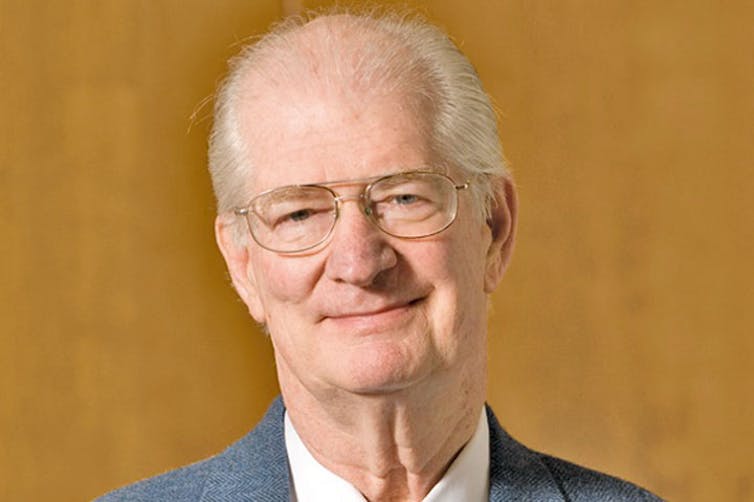
Headshot photo of Daly as an older man, with glasses and thinning hair,
Economist Herman Daly (1938-2022) Courtesy of Island Press

But Daly was a voracious reader, a side effect of having polio as a boy and missing out on the Texas football craze. Outside the confines of assigned textbooks, he found a history of economic thought steeped in rich philosophical debates on the function and purpose of the economy.

Unlike the precision of a market equilibrium sketched on the classroom blackboard, the real-world economy was messy and political, designed by those in power to choose winners and losers. He believed that economists should at least ask: Growth for whom, for what purpose and for how long?

Daly’s biggest realization came through reading marine biologist Rachel Carson’s 1962 book “Silent Spring,” and seeing her call to “come to terms with nature … to prove our maturity and our mastery, not of nature but of ourselves.” By then, he was working on a Ph.D. in Latin American development at Vanderbilt University and was already quite skeptical of the hyperindividualism baked into economic models. In Carson’s writing, the conflict between a growing economy and a fragile environment was blindingly clear.

After a fateful class with Nicholas Georgescu-Roegen, Daly’s conversion was complete. Georgescu-Roegen, a Romanian-born economist, dismissed the free market fairy tale of a pendulum swinging back and forth, effortlessly seeking a natural state of equilibrium. He argued that the economy was more like an hourglass, a one-way process converting valuable resources into useless waste. https://www.youtube.com/embed/qBXBk4fduW8?wmode=transparent&start=0 Herman Daly explains ‘uneconomic growth.’

Daly became convinced that economics should no longer prioritize the efficiency of this one-way process but instead focus on the “optimal” scale of an economy that the Earth can sustain. Just shy of his 30th birthday in 1968, while working as a visiting professor in the poverty-stricken Ceará region of northeastern Brazil, Daly published “On Economics as a Life Science.”

His sketches and tables of the economy as a metabolic process, entirely dependent on the biosphere as source for sustenance and sink for waste, were the road map for a revolution in economics.

Economics of a full world

Daly spent the rest of his career drawing boxes in circles. In what he called the “pre-analytical vision,” the economy – the box – was viewed as the “wholly owned subsidiary” of the environment, the circle.

When the economy is small relative to the containing environment, a focus on the efficiency of a growing system has merit. But Daly argued that in a “full world,” with an economy that outgrows its sustaining environment, the system is in danger of collapse.
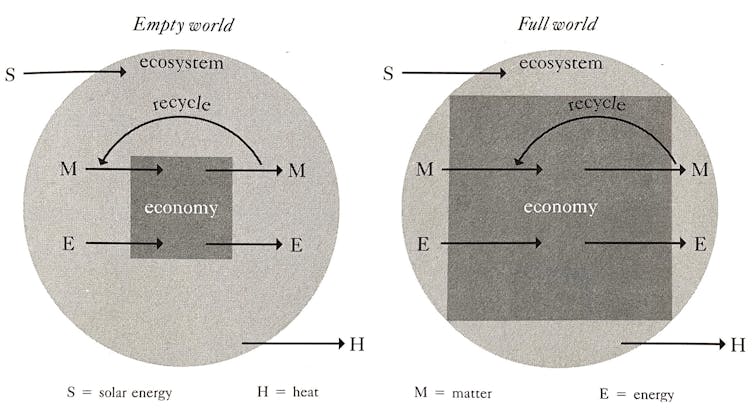
Illustrations of a square (economy) inside a circle (ecosystem). Energy and matter go into and out of the economy square, and some is recycled. Meanwhile solar energy enters the ecosystem circle and some heat escapes. In one, the square is too large.
Herman Daly’s conception of the economy as a subsystem of the environment. In a ‘full world,’ more growth can become uneconomic. Adapted from ‘Beyond Growth.’ Used with permission from Beacon Press.

While a professor at Louisiana State University in the 1970s, at the height of the U.S. environmental movement, Daly brought the box-in-circle framing to its logical conclusion in “Steady-State Economics.” Daly reasoned that growth and exploitation are prioritized in the competitive, pioneer stage of a young ecosystem. But with age comes a new focus on durability and cooperation. His steady-state model shifted the goal away from blind expansion of the economy and toward purposeful improvement of the human condition.

The international development community took notice. Following the United Nations’ 1987 publication of “Our Common Future,” which framed the goals of a “sustainable” development, Daly saw a window for development policy reform. He left the safety of tenure at LSU to join a rogue group of environmental scientists at the World Bank.

For the better part of six years, they worked to upend the reigning economic logic that treated “the Earth as if it were a business in liquidation.” He often butted heads with senior leadership, most famously with Larry Summers, the bank’s chief economist at the time, who publicly waved off Daly’s question of whether the size of a growing economy relative to a fixed ecosystem was of any importance. The future U.S. treasury secretary’s reply was short and dismissive: “That’s not the right way to look at it.”

But by the end of his tenure there, Daly and colleagues had successfully incorporated new environmental impact standards into all development loans and projects. And the international sustainability agenda they helped shape is now baked into the U.N. Sustainable Development Goals of 193 countries, “a plan of action for people, planet and prosperity.” https://www.youtube.com/embed/khgIHOmEGxs?wmode=transparent&start=0 Herman Daly and Kate Raworth, creator of Doughnut Economics, discuss pandemic-resistant economies.

In 1994, Daly returned to academia at the University of Maryland, and his life’s work was recognized the world over in the years to follow, including by Sweden’s Right Livelihood Award, the Netherlands’ Heineken Prize for Environmental Science, Norway’s Sophie Prize, Italy’s Medal of the Presidency, Japan’s Blue Planet Prize and even Adbuster’s person of the year.

Today, the imprint of his career can be found far and wide, including measures of the Genuine Progress Indicator of an economy, new Doughnut Economics framing of social floors within environmental ceilings, worldwide degree programs in ecological economics and a vibrant degrowth movement focused on a just transition to a right-sized economy.

I knew Herman Daly for two decades as a co-author, mentor and teacher. He always made time for me and my students, most recently writing the foreword to my upcoming book, “The Progress Illusion: Reclaiming Our Future from the Fairytale of Economics.” I will be forever grateful for his inspiration and courage to, as he put it, “ask the naive, honest questions” and then not be “satisfied until I get the answers.”

Jon D. Erickson, Professor of Sustainability Science and Policy, University of Vermont

This article is republished from The Conversation under a Creative Commons license. Read the original article.

“… that moment the sun kisses the sea” — @BBerwyn

Ice loss from Northeastern Greenland significantly underestimated — Denmark Technical University #ActOnClimate #KeepItInTheGround

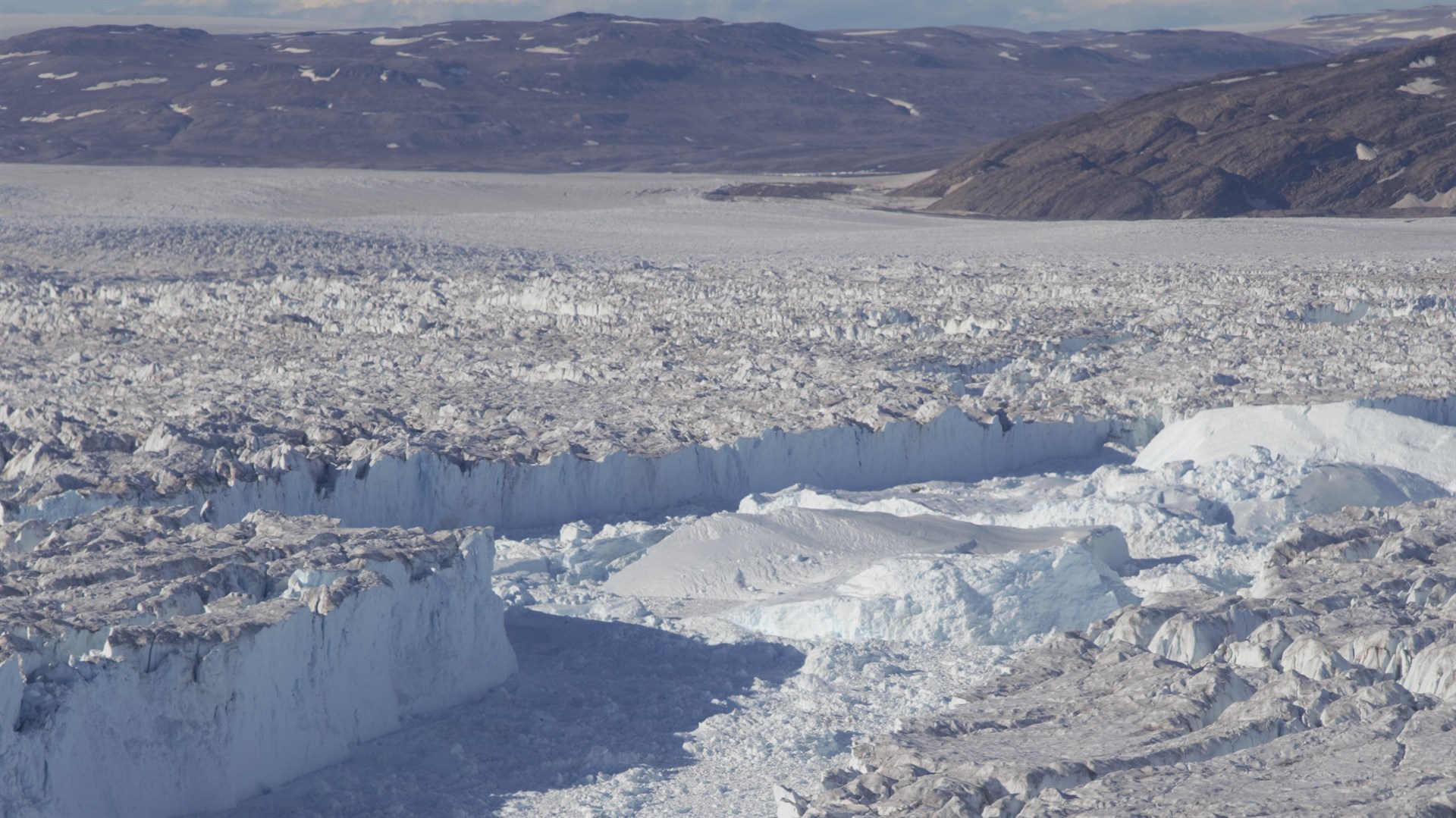
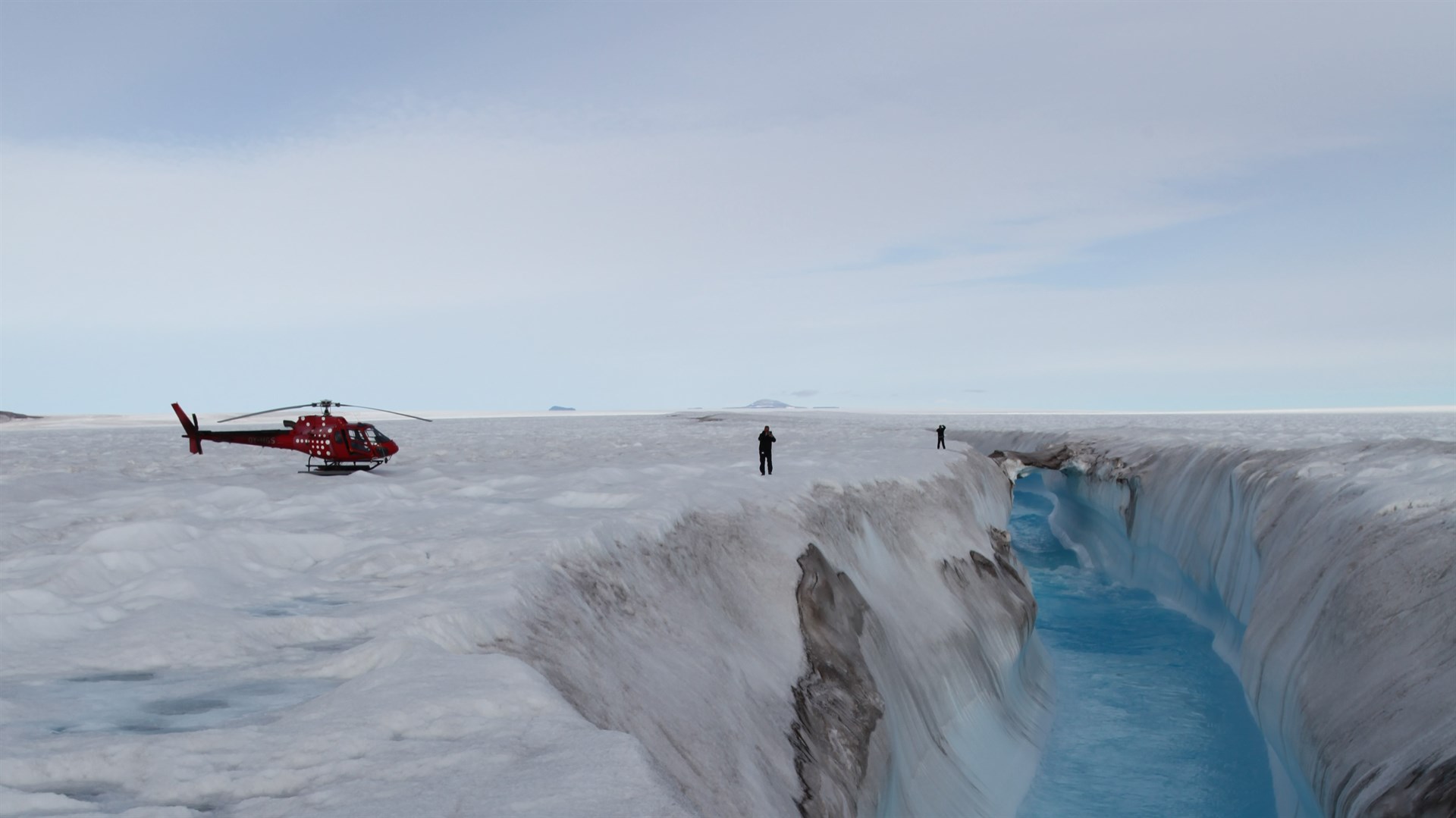
Lake and river on the Zachariae Glacier, northeast Greenland. Photo: Shfaqat Abbas Khan, DTU Space.

Click the link to read the release on the Denmark Technical University website (Tore Vind Jensen):

Ice is continuously streaming off Greenland’s melting glaciers at an accelerating rate, dramatically increasing global sea levels. New results published 9 November in Nature indicate that existing models have underestimated how much ice will be lost during the 21st century. Hence, its contribution to sea-level rise will be significantly higher.

By 2100, the Northeast Greenland Ice Stream will contribute six times as much to the rising sea level as previous models suggested, adding between 13,5 to 15,5 mm, according to the new study. This is equivalent to the entire Greenland ice sheet’s contribution in the past 50 years. The research was carried out by researchers from Denmark, the United States, France, and Germany.

“Our previous projections of ice loss in Greenland until 2100 are vastly underestimated,” said first author Shfaqat Abbas Khan, Professor at DTU Space.

“Models are mainly tuned to observations at the front of the ice sheet, which is easily accessible, and where, visibly, a lot is happening.”

Lake and river on the Zachariae Glacier, northeast Greenland. Photo: Shfaqat Abbas Khan, DTU Space. 4

Ice loss occurs more than 200 km inland

The study is partly based on data collected from a network of precise GPS stations reaching as far as 200 km inland on the Northeast Greenland Ice Stream—located behind the Nioghalvfjerdsfjord Gletscher and Zachariae Isstrøm glaciers, one of Earth’s most hostile and remote terrains. The GPS data were combined with surface-elevation data from the CryoSat-2 satellite mission and high-resolution numerical modelling.

“Our data show us that what we see happening at the front reaches far back into the heart of the ice sheet,” said Shfaqat Abbas Khan. 

“We can see that the entire basin is thinning, and the surface speed is accelerating. Every year the glaciers we’ve studied have retreated further inland, and we predict that this will continue over the coming decades and centuries. Under present day climate forcing, it is difficult to conceive how this retreat could stop.” [ed. emphasis mine]

Significant contribution to rising sea levels

In 2012, after decade of melting, the floating extensions of Zachariae Isstrøm collapsed, and the glacier has since retreated inland at an accelerating pace. And though winter 2021 and summer 2022 have been particularly cold, the glaciers keep retreating. Since northeastern Greenland is a so-called Arctic desert – precipitation is as low as 25 mm per year in places – the ice sheet is not regenerating enough to mitigate the melt. However, estimating how much ice is lost and how far into the ice sheet the process occurs is not easy. The ice sheet’s interior, which moves at less than one meter per year, is difficult to monitor, which limits the ability to make accurate projections.

“It is truly amazing that we are able to detect a subtle speed change from high-precision GPS data, which ultimately, when combined with a model of ice flow, inform us on how the glacier slides on its bed,” said coauthor Mathieu Morlighem, a professor of earth sciences at Dartmouth College.

“It is possible that what we find in northeast Greenland may be happening in other sectors of the ice sheet. Many glaciers have been accelerating and thinning near the margin in recent decades. GPS data helps us detect how far this acceleration propagates inland, potentially 200-300 km from the coast. If this is correct, the contribution from ice dynamics to the overall mass loss of Greenland will be larger than what current models suggest.”

The Zachariae Isstrøm was stable until 2004, followed by steadily retreat of the ice front until 2012, when a large portion of the floating sections became disconnected. As more precise observations of change in ice velocity are included in models, it is likely that IPCC’s estimates of 22-98 cm global sea level rise will need to be corrected upwards.

“We foresee profound changes in global sea levels, more than currently projected by existing models,” said coauthor Eric Rignot, professor of Earth system science at the University of California, Irvine.


“Data collected in the vast interior of ice sheets, such as those described herein, help us better represent the physical processes included in numerical models and in turn provide more realistic projections of global sea-level rise.”

Iceberg at the front of Zachariae Glacier, northeast Greenland. Photo: Nicolaj K Larsen, Globe Institute, Denmark.

About the study

The study is supported by the Carlsberg Foundation and the Ministry of Climate, Energy and Supply (Climate support for the Arctic).

See the scientific article ‘Extensive inland thinning and speed-up of North-East Greenland Ice Stream‘.

Poem and photo gallery: “In #PagosaSprings teaching at #Water 101 and 102, Southwestern Water Information Program” — Greg Hobbs

I think about Greg often. He was a friend of Coyote Gulch and I miss his friendship.

Autumn Anglers
I’m the freshet beneath your bridge
Source and mouth and passage
Fisher above, beyond, beside you
Your guide, your path, your canopy.
I’m the handholds on your cliff faces
The spring in your diversions
The catch, the feast, the planting
Transfusion for your sorrows.
I’m the wing-loft to your feathers
The talons of your grip
Reflection of your ripples
Quiver of your gifts.
I am the soar, the roar, the seep
The fiddle, the song, the strings
The lift of traveling companions
The land, the waters, the peoples.
—  Greg Hobbs

A biggest ever in #Colorado for battery storage — @BigPivots #ActOnClimate #KeepItInTheGround

Tiny now, like a pebble, lithium-ion battery storage in Colorado will soon be like a boulder. What else is needed to complete this emissions-free jigsaw puzzle? Photo credit: Allen Best

Click the link to read the article on the Big Pivots website (Allen Best):

The 13,500 solar modules sandwiched by hillsides of sagebrush, piñon and juniper near Glenwood Springs capture the eyes. It’s the four shipping containers of lithium-ion batteries, capable of five megawatts of storage, that will briefly set a new high mark for Colorado.

Battery storage is coming on in Colorado. This project narrowly eclipses the previous record in Colorado set four years ago. Late next spring, the 275 megawatts of battery capacity planned by Xcel Energy at Pueblo and in Adams County will dwarf this record of 5 megawatts. More yet will be coming after that.

We need storage to complement the intermittency of the renewables but also because this makes economic sense. This transition to an energy system with fewer emissions has so far slowed or stopped increased costs in prices of electricity. If only we could be so lucky with organic food.

Storage capacity within Colorado will rise significantly in the next five years. Imagine driving on Interstate 70 across the Great Plains into Denver. In the city’s western suburbs, the highway rises slightly. In this analogy with battery storage, we’re still in the suburbs. Lying immediately ahead is the sharp rise to Floyd Hill with plenty of uphill beyond.

Mike Kruger, the chief executive of Colorado Solar and Storage Association, a trade organization, rejects this analogy. Instead of uphill struggle, he describes downhill glide. Lithium-ion storage will expand, he explained, because of rapidly declining costs that parallel those of solar panels a decade before.

In his view, we’re about to descend from Loveland Pass.

“Imagine the tiniest thing you can think of,” Kruger said at a Colorado Renewable Energy Society webinar. “That’s storage in Colorado today. Now think of the biggest thing you can think of. That will be energy storage in the future.”

All of Colorado’s larger utilities plan significant storage but in somewhat different ways. Platte River Power Authority recently received 31 bids for various non-carbon generation and storage proposals in and near the four communities it serves in northern Colorado. For example, Estes Park, whose frightened residents had to flee in 2020 as two megafires approached, might need both storage and solar panels if power deliveries get interrupted.

Wildfire threat also figures into the solar and storage at the college campus near Glenwood Springs. Should outside power be cut off, students could shelter in place.

Colorado Springs Utilities, the state’s fourth largest utility, is soliciting bids for batteries with 400 megawatt-hours of storage to become operational in 2024. Utilities spokesman Steve Berry predicts growing importance of battery storage as long as the technology becomes increasingly cost-effective, efficient and reliable.

“Battery storage will help us better manage the intermittent characteristics of renewable energy, but it will also provide greater grid resiliency, help insulate customers from market volatility, and help us modernize our grid for emerging technologies,” he says.

We are also beginning – just beginning – to see batteries in homes and businesses. In a program called Power+, Holy Cross has assisted in placing batteries at 68 homes and businesses. Supply chain issues have 122 still on the waiting list. It is doing this partly to learn how to draw on these batteries to meet peak demands, such as when the snowmaking guns at Aspen and Vail power up as temperatures dive during November evenings.

Now come state and federal programs that Kruger describes as a “really amazing confluence of incentives” via tax rebates. A new Colorado law will award an income tax credit equal to 10% of the purchase price for storage systems purchased in 2023 and 2024. The systems are also exempt from sales tax. The federal Inflation Reduction Act provides an even bigger tax incentive of 30%.

Xcel customers will be eligible for additional incentives next year: $500 per kilowatt of storage up to 50% of the cost of the battery and $800 per kilowatt for Income-qualified (up to 75% of the cost of the battery)

Supplies of batteries remain tight, but manufacturing capacity has been ramping up and prices should fall. Globally, capacity grew by a third last year to reach 600 gigawatt-hour in manufacturing capacity. Wood Mackenzie, a consultant, reports 3,000 gigawatt-hours being planned or under construction.

In “The Big Fix,” Aspen-reared Hal Harvey and co-author Justin Gillis describe how scaling up of industrial process has caused prices of everything from Model T’s to computer chips to tumble. They call it “the learning curve.” The most recent examples were wind and then solar.

Cheaper lithium-ion batteries alone will not alone allow Holy Cross and other utilities to realize their goals of 100% emissions-free electricity by 2030. We also need longer-term storage. Options include molten salt, hydrogen and pumped storage-hydro, the latter a technology use in Colorado since the 1950s that remains the state’s largest “battery.” Nuclear and geothermal are other options. All will take time to deploy. Likely a decade.

For now, it’s time to charge the batteries.

Nearly a third of southern Sierra forests killed by drought and wildfire in last decade — The Los Angeles Times #ActOnClimate #KeepItInTheGround

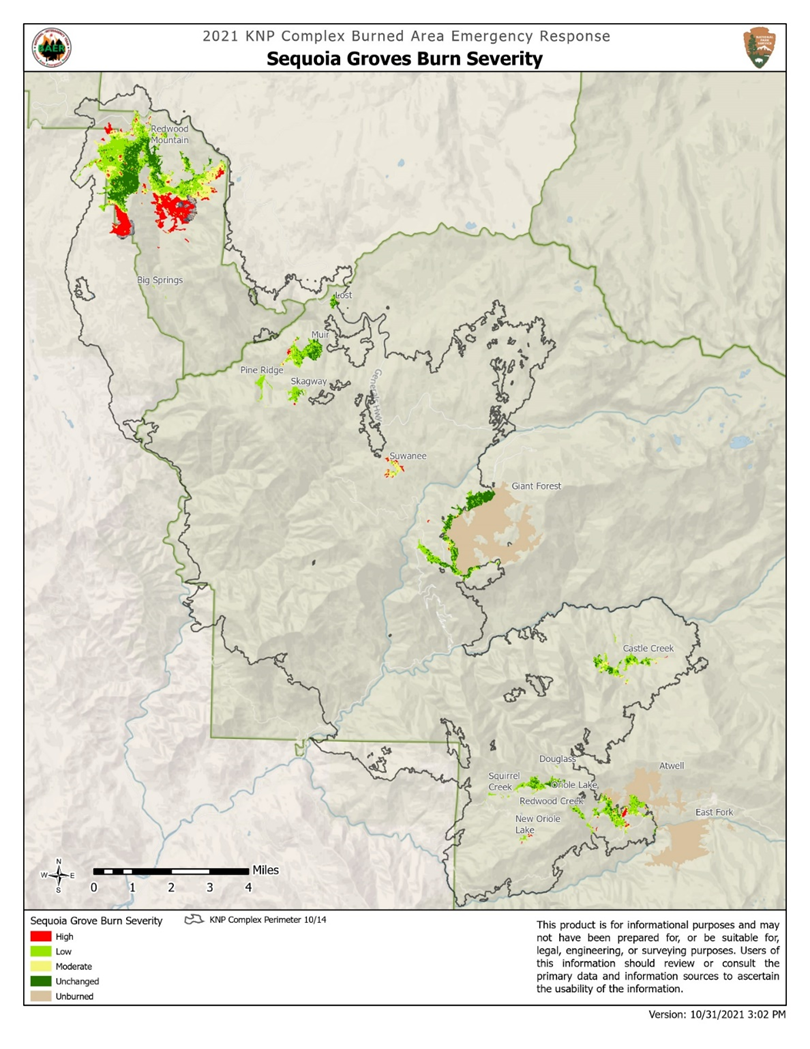
Map of groves showing fire severity for KNP Complex Fire. Credit: NPS

Click the link to read the article on The Los Angeles Times website (Haley Smith). Here’s an excerpt:

As climate change continues to transform California’s landscape in staggering and often irreversible ways, researchers have zeroed in on yet another casualty of the shift: the forests of the southern Sierra Nevada. Between 2011 and 2020, wildfires, drought and bark beetle infestations contributed to the loss of nearly a third of all conifer forests in the lower half of the mountain range, according to a recent study published in the journal Ecological Applications. Eighty-five percent of the southern Sierra’s high-density mature forests either lost density or became non-forest vegetation. The losses could have grave consequences for California wildlife, including protected species such as spotted owls and Pacific fishers that rely on mature tree canopies for their habitats. Researchers said the findings not only are another indication of the state’s shifting climate regime, but also offer new insights that could help guide forest management and conservation strategies.

“Thirty percent of conifer forests in the southern Sierra Nevada are no longer considered forests,” said Zachary Steel, a research scientist with the United States Forest Service’s Rocky Mountain Research Station and the lead author of the study. “They’re either sparsely treed landscapes or, more often, are transitioning either in the short term or long term to more of a shrubland-type system.”

The Sierra covers about a quarter of California’s land area, with the southern portion of the range running from Lake Tahoe to Tehachapi. Hundreds of plants and animals call the region home, and the forest helps sequester carbon and store water for the state’s residents.

Steel, who conducted the study as a postdoctoral researcher at UC Berkeley, said the numbers were alarming.

“What’s most concerning is the pace at which this is happening,” he said. “Fire always occurred in these landscapes, drought always occurred in these landscapes … but the declines are going so rapidly that the succession, or the regrowth, of these forests is not going to be able to keep up.”

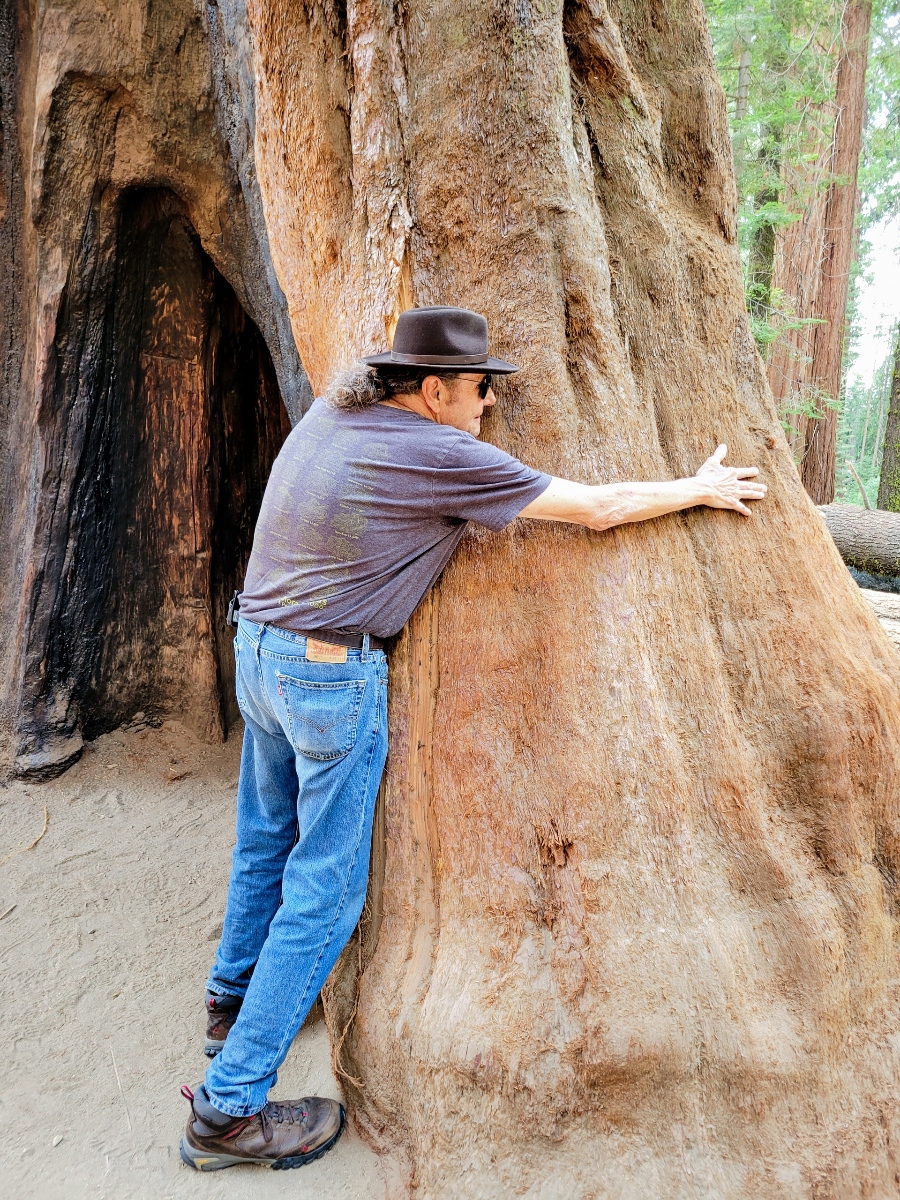
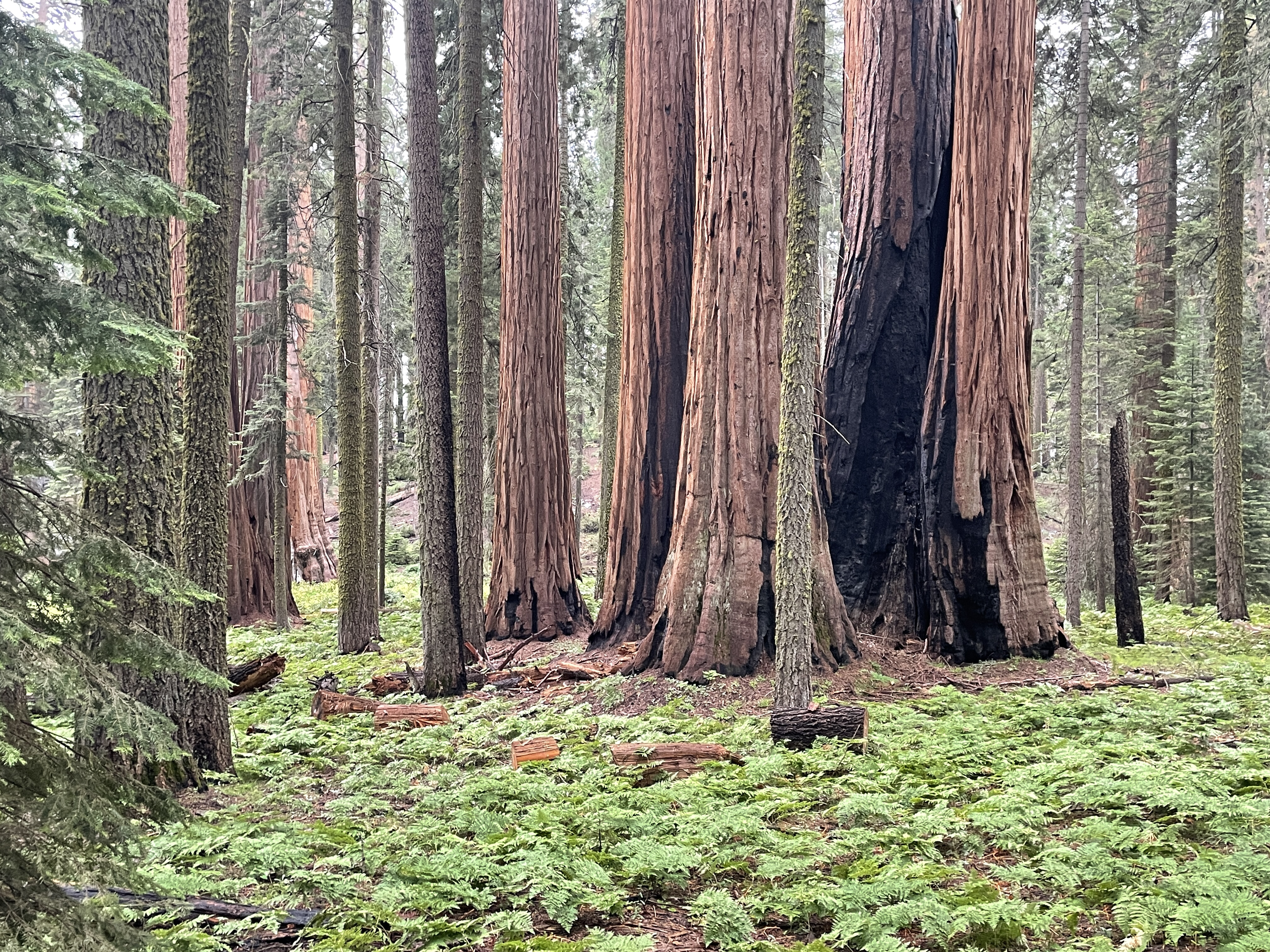
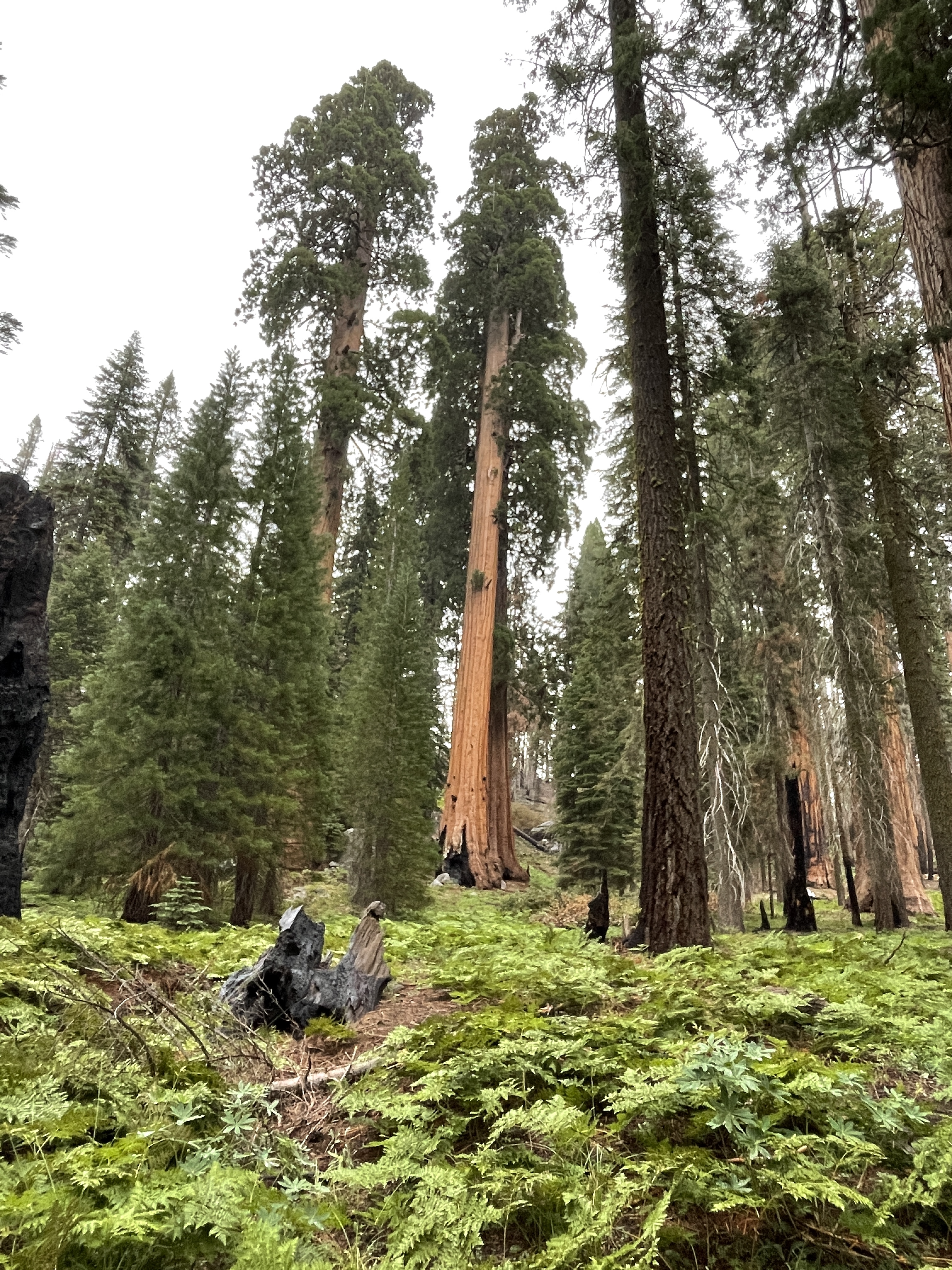
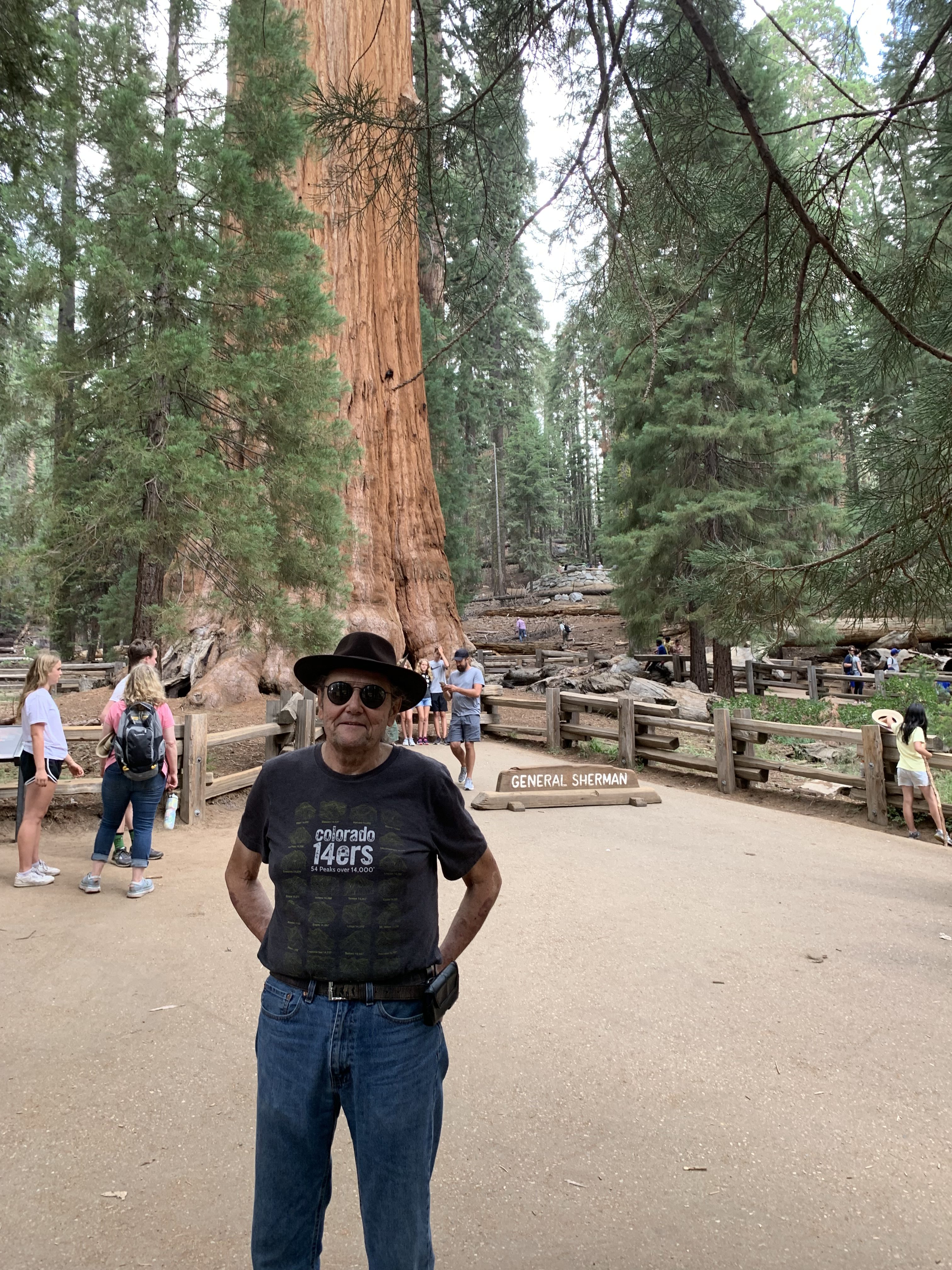
Coyote Gulch attempting to hug a Sequoia near the General Sherman tree August 1, 2022. Photo credit: Mrs. Gulch

For Native Americans, the Supreme Court Lost Legitimacy Long Ago — Indianz.com

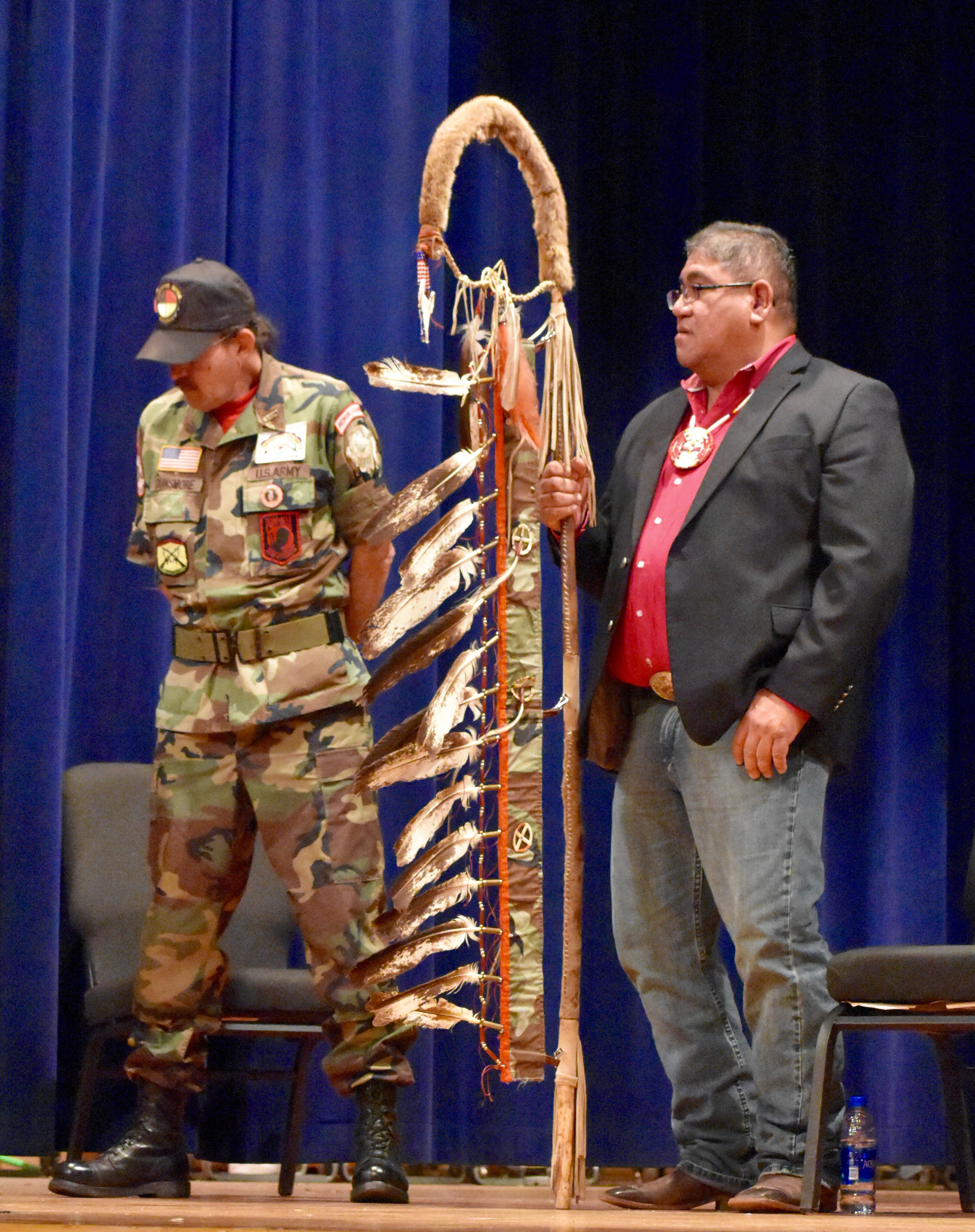
Cheyenne River Sioux Tribal Chairman Harold Frazier at awards ceremony in Eagle Butte, South Dakota. By Apnewcombwei – Own work, CC BY-SA 4.0, https://commons.wikimedia.org/w/index.php?curid=106523575

Click the link to read the gust column on the Indianz.com website (Harold Frazier). Here’s an excerpt:

Today, we do not doubt that the Supreme Court will lose further legitimacy by striking down college admissions that take account of the racial animus that so many students and families have suffered in the Harvard and North Carolina cases. No person shall be denied by any state the equal protection of the laws under the 14th Amendment and Congress has the authority to implement this directive by legislation. Clearly, where the Federal, state, local and societal institutions have infringed on minority rights for generations, Congress can act to allow redress and to promote diversity in education to provide a more meaningful environment for education for all. In Dobbs in June 2022, the Supreme Court lost legitimacy with women by undermining reproductive rights and women’s right to life. Apparently, the Supreme Court does not know that child birth can be fraught with life and death challenges. We know because, confined to Indian health care, our Native women have had high maternal health challenges for decades. Before Dobbs, the Supreme Court lost legitimacy in Bush v. Gore when it ruled that America has more legitimacy when states do not count votes. Later, the Supreme Court struck down voting rights because, in its view, racism in America is over. The Supreme Court has lost its connection to America’s truth.For Native Americans, the Supreme Court lost legitimacy long ago…

In 1903, the Supreme Court overruled the 1867 Kiowa Treaty provision that required three-quarter consent of the Kiowa People for any cession of Indian treaty lands. The Supreme Court said that under the Federal trust responsibility — read White Man’s Burden — America had the power to change Native lands into cash without Native Nation consent.Treaties are made by mutual consent between nations. The Supreme Court’s rulings concerning Native Sovereign Nations are genocidal, contrary to the Constitution, and in violation of our natural law rights for centuries…The Constitution, framed by “We the People … excludes “Indians not Taxed” from U.S. citizenship, because Lakota had our own Native Sovereign Nation, our own democracy, laws and traditions. When America asked for safe passage across our lands for settlers on the Oregon Trail, we agreed and America recognized our homeland in the 1851 Treaty. In the 1854 Kansas—Nebraska Territory Act, the United States pledged to honor native rights of person and property and to rigidly follow our treaties. The 1861 Dakota Territory Act repeated these legal assurances.When America found gold in Montana, miners sought to overrun our homelands and the Government sent the Army. Red Cloud, Crazy Horse, One Horn, and Sitting Bull fought for our lands. In the 1868 Treaty, America pledged “war shall forever cease,” recognized our self-government, and pledged to respect our permanent home, including the Black Hills…For one hundred years, the Supreme Court sat idle raising procedural barriers to justice. In 1980, in United States v. Sioux Nation, the Supreme Court held that America’s taking of our Black Hills treaty lands was unconstitutional, yet for the past 40 years there has been no justice.In June, in Oklahoma v. Castro-Huerta, the Supreme Court held that the 10th Amendment gives states governing power on Indian reservations. Not true. Native Sovereign Nations are prior sovereigns and states agreed not to encroach on Indian lands as part of the bargain of their statehood. Our treaties are the Supreme Law of the Land, nothing in the state constitutions withstanding…

Natural justice, the Constitution and our treaties establish an enduring nation-to-nation relationship between America and Native Sovereign Nations based upon mutual consent. It’s time for America to honor its word.

Native land loss 1776 to 1930. Credit: Alvin Chang/Ranjani Chakraborty

The Free Agent Beaver: Environmentalists and journalists tend to describe beavers in the ways they benefit humans. It’s time to change that perception of nature — The Revelator

Beaver. Photo credit: Oregon State University

Click the link to read the article on The Revelator website (Adam Burnett and Debra Merskin):

Beavers are having a moment. After being hunted to near extinction, they’ve steadily made a comeback, and today both the scientific community and the public have become increasingly aware and appreciative of their profound influence on habitat.

But as environmentalists, journalists and others praise beavers and expound upon their many planet-saving virtues, a problem has emerged: Beavers are too often seen as a tool for humans, rather than animals with their own agency and agenda.

Even those of us who are closely involved with beavers through conservation organizations or habitat restoration have long defaulted to an innate personification of beavers, unfailingly objectifying them and the “ecosystem services they provide.” How many times have you read or said that beaver activities restore watershed health, provide wildfire breaks and refuges, regulate stream flows, and stabilize the water table?

That’s all true, of course. But at the same time, the inference that they’re doing it for anyone but themselves creates an imbalance, an unrealistic expectation of a species that has no interest in the issues of humans.

Beavers are not beholden to the human-caused issues of our planet, and it’s time to adjust our language to reflect that simple but profound fact.

A simple substitution of vernacular, conceptualization and attitudes toward beavers and their natural behavior is vital to creating a well-rounded understanding of the natural processes of wildlife. Endless messages — perpetuated by well-meaning journalists and others — of giving beavers a “role” or “putting beavers to work” can be explained more accurately by “attracting them to locations where they might be naturally successful.” Rather than creating a “collaboration” or “partnership” with beavers, we are simply attempting to “support beaver success” and “restore conditions needed for ecological success.”

The personification of beavers is understandable — and to a certain extent, it’s been useful. Beavers possess natural skills that the Army Corp of Engineers would envy, so the language of “utilizing,” “partnering” and “collaborating” with beavers has served as a vital bridge, as well as connecting us back to a pathway of Indigenous knowledge.

But this also perpetuates a destructive one-to-one relationship with the natural world. “What can it do for me?” has been the guiding question, instead of “How can I be a valuable part of interspecies connectedness?”

A gentle, intentional and more precise reshaping of language around beavers, and nature as whole, could help reconnect us with the origin of our knowledge of interspecies living — recognizing we are not at the “top,” and that human supremacy is a myth.

For those of us who are “beaver believers,” this is incredibly important — to signal through language a path forward in our work, where we work in relationship with natural systems.

Words matter. By placing ourselves side by side with beavers and other species, we can help cultivate and activate a gentle tidal wave that will influence our research, and our relationship to one another and the natural world — and ultimately help restore the natural balance. When we stop seeing and talking about beavers as tools and partners, and instead treat them as free agents with their own agenda completely unrelated to humans, we can collectively transition to the next phase in our conservation effort. We can reach a point where nature is not hierarchically divided in a Linnaean system but recognized as a dynamic organism in concert with itself.

he opinions expressed above are those of the authors and do not necessarily reflect those of The Revelator, the Center for Biological Diversity or their employees.

A beaver dam on the Gunnison River. Photo: Brent Gardner-Smith/Aspen Journalism

When no home is affordable, where do you live? — Writers on the Range

Click the link to read the article on the Writers on the Range website (David Marston):

It’s a common story: Candace McNatt of Durango, in southern Colorado, kept losing bidding wars to buy a house. She finally settled on a tiny home of just 350 square feet.

McNatt works as an operating room nurse and is a single mother of two teenagers, one about to go to college. Though she landed on the homeownership ladder at one of its lower rungs, she’s relieved. “But this is not how I saw myself approaching the age of 40,” she muses.

The rent on her home lot is $650; her mortgage just $604. Combined, that’s about half of what she had been paying to rent an apartment in Durango.

These days, real estate prices in Durango, as in so many Western towns, have outrun most workers’ ability to buy or even rent modest digs. McNatt, for example, makes $85,000 annually, which places her at over 90% of the area median income in Durango.

A two-year-old study by Root Policy, a Denver consulting firm, showed that single- and two-parent households have begun leaving Durango and southwestern Colorado in droves. Replacing them are retirees and wealthy non-working people. That means businesses struggle to find workers as 80% of people moving into La Plata County don’t work in the region.

Adding to the housing crisis is the boom in short-term rentals, compounded by second-home owners snatching up houses once rented to students at the local Fort Lewis College. Fort Lewis has been scrambling for housing. Starting in 2019, demand for on-campus living skyrocketed, and this August, the college of 3,856 students placed 93 kids in hotel rooms. Thirty more were quadruple-bunked in off-off-campus apartments.

The town thrums with stories of scores of students living in cars and scouting for “safe parking,” meaning places where police won’t roust them out. Others camp out on public lands.

The city of Durango, population 19,400, has tried to help by limiting short-term rentals within city limits, and hiring housing expert Eva Henson to figure out how to create workforce housing.

At a Durango council meeting last month, Henson said that only 169 housing units are under construction, while a thousand more are planned. Finished units for the first nine months of 2022 totaled 59. Meanwhile, a ballyhooed Accessory Dwelling Unit (ADU) regulation, which would allow homeowners to add “granny flats,” fizzled. Just two were completed this year, and potential builders complain that restrictions remain tight.

According to the Root Policy study, Southwestern Colorado’s overall housing deficit is 2,500 housing units. “Every town is short on housing,” agrees Nicole Killian, a community development director for the Durango bedroom community of Bayfield. Killian says developers plan to build 800 homes over the next decade, a 75% increase in housing units.

What everyone can agree on is that the area’s housing shortage began in Durango, the biggest and most attractive town, then radiated out to every other town within 50 miles.

“Durango has had a sales tax that funded parks and recreation,” says Mayor Barbara Noseworthy. “Now we need to redirect some of that money toward housing.” But the council is divided, with some members favoring a free market approach.

So far, the free market wants only million-dollar homes. McNatt tells the story of two clinical experts at the hospital, each making $160,000, who “have looked for a house forever. And he’s like, I refuse to pay $1 million for a house.” In the end, “they paid over $1 million and are now house-poor.”

One result of the housing crunch, says Mayor Noseworthy, is finding people for essential jobs: “We have difficulty getting math teachers. If you can’t get a high school math teacher, who’s going to live here?”

Meanwhile, one housing solution in Durango has been Chris Hall’s Hermosa Orchards Village of 22 tiny owner-occupied homes, a gem of collegiality. Many of its residents commute to Purgatory Ski Area or Silverton seasonally, and given their small inside spaces, tend to congregate outside on their stoops.

On Nov. 8, there is hope for affordable housing, thanks to Proposition 123 on the ballot. The measure would give grants and loans to local nonprofits to build workforce housing, and provide mortgage assistance to people like McNatt.

At the end of my interview with McNatt, she took me to meet a friend who lives in a storage unit. The box-like space was narrow, his sleeping bag on a foam pad just fitting between a snow blower and a leaf blower. He said he was glad he’d found it.

Dave Marston is the publisher of Writers on the Range, writersontherange.org, an independent nonprofit dedicated to spurring lively conversation about the West. He lives in Durango, CO.

Lake Nighthorse and Durango March 2016 photo via Greg Hobbs.

#Colorado State University professors bring #sustainability awareness to #FortCollins — The Rocky Mountain Collegian #ActOnClimate

Graphic credit: City of Cornwall Council

Click the link to read the article on the Rocky Mountain Collegian website (Taylor Paumen):

On Sept. 21, a group of Colorado State University professors came together to inform the Fort Collins community about “the overconsumption of natural resources,” as stated on the CSU School of Global Environmental Sustainability website

Avogadro’s Number, a bar and restaurant near campus, hosted the “Managing the Planet: Over Consumption What Can We Do?” event. The panel was composed of experienced professors, including Susan Golicic, management department chair and professor; Joe Scalia, civil and environmental engineering associate professor; Meagan Schipanski, soil and crop sciences associate professor; Terry Yan, design and merchandising professor; and Gene Kelly, moderator and SoGES faculty research liaison and deputy director of the Agricultural Experiment Station and associate dean of CSU Extension. 

Questions came from a few of the audience members, starting with a professor of environmental economics at Front Range Community College, who asked how changing manufacturing processes could lessen impact on the environment.

“Anywhere from 30-35% of all our waste is packaging,” Golicic said, but there are a few companies that are working hard to convert to being more efficient and sustainable. 

This first question essentially sparked a core idea that it “comes down to the orientation and the belief system of the upper management of the individual companies,”Golicic said. Companies that recognize their impact on the environment tend to fall under merchandising and the food industry, like Patagonia, which was mentioned several times throughout the panel on their success in sustainability.

Patagonia allows customers to send back some of their products to get them repaired if needed to reduce the act of overconsumption. However, industries like oil and mining that can have a harsh effect on surrounding ecosystems tend to turn their heads. 

The Bingham Canyon open-pit copper mine in Utah has operated since 1903. David Guthrie/Flickr, CC via Colorado State University

“A good grade of copper today is 3%, which means we’re generating 97% waste,”Scalia said pertaining to the mining of copper being an unfortunate culprit in adding to waste.

“To get to a circular economy, we need to be really critically thinking about what we’re consuming,” Scalia said in his support of increased mining. “I would hope that we see a flurry of … effectively mining, … and then we stop needing more inputs.”

An additional action that has been practiced to help the movement of sustainability has been in textile science, which “is very innovative … by really focusing on how they can utilize more natural fiber or how they can recycle more polyester or to really bring the next level of the materials to use that could be more sustainable,” Yan said.

The downside of these practices is companies might also have to use unsustainable chemicals within their products to keep up with demand of the consumers. Corporations like Ball work diligently to replace plastic cups with aluminum but “can’t produce their products fast enough,” Golicic said.

A common issue in remaining sustainable is the consumer’s demand. To close out the event, Kelly asked the question, “If there was one thing in your discipline that you think is sort of the biggest lever that could be changed, … what would it be?”

“In managing the supply chain, the biggest issue is transportation,” Golicic said. “Transportation is really expensive, and it’s gotten more expensive because of the delays in the supply chain.”

“What we really need is more mining in the U.S. that’s local — that’s not requiring us to transport commodities all over the world,” Scalia said, adding to the transportation issue discussion.

There are many factors to consider with overproduction and waste, like global food insecurity from an agricultural perspective. 

“I think we need to be more humble and realize it’s many levers,” Schipanski said. “If we can get away from the overproduction mindset, I think we’ll be better on conservation.”

But there are local practices individuals can slowly try to apply to their daily lives as consumers in any industry.

“Buy better, buy less and also buy secondhand if you can,” Yan said, taking the approach of advice around the overconsumption of clothing.

Overall, the battle for global sustainability will become more of an apparent issue than ever before if consumers don’t change their demand habits, in addition to companies’ upper management considering putting more sustainable practices in place.

Reach Taylor Paumen at life@collegian.com or on Twitter @TayTayPau.

Bear 747 is the 2022 #FatBearWeek Champion

Queen – We Are The Champions (Live Aid 1985)

The saline lakes of the Great Basin and why they are in trouble: The West’s Great Basin reveals its challenges with dying lakes — The Deseret News

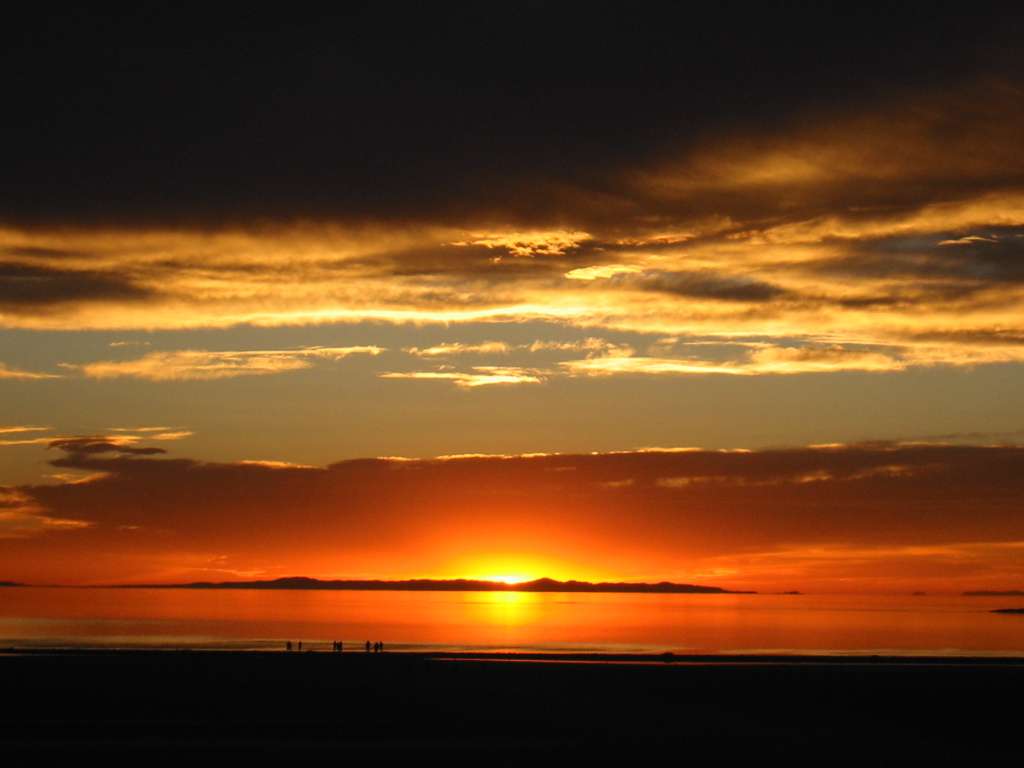
Sunset from the western shore of Antelope Island State Park, Great Salt Lake, Utah, United States.. Sunset viewed from White Rock Bay, on the western shore of Antelope Island. Carrington Island is visible in the distance. By Ccmdav – Own work, Public Domain, https://commons.wikimedia.org/w/index.php?curid=2032320

Click the link to read the article on The Deseret News website (Amy Joi O’Donoghue). Here’s an excerpt:

Like its “sister” lakes in the sprawling Great Basin that cover 200,000 square miles, Utah’s Great Salt Lake appears to be on a collision course withnature plagued by diversions, drought and climate change. It has lost close to half its volume, and more than 800 square miles of lakebed are now exposed, vulnerable to wind-whipped storms that spread toxic dust along the Wasatch Front.

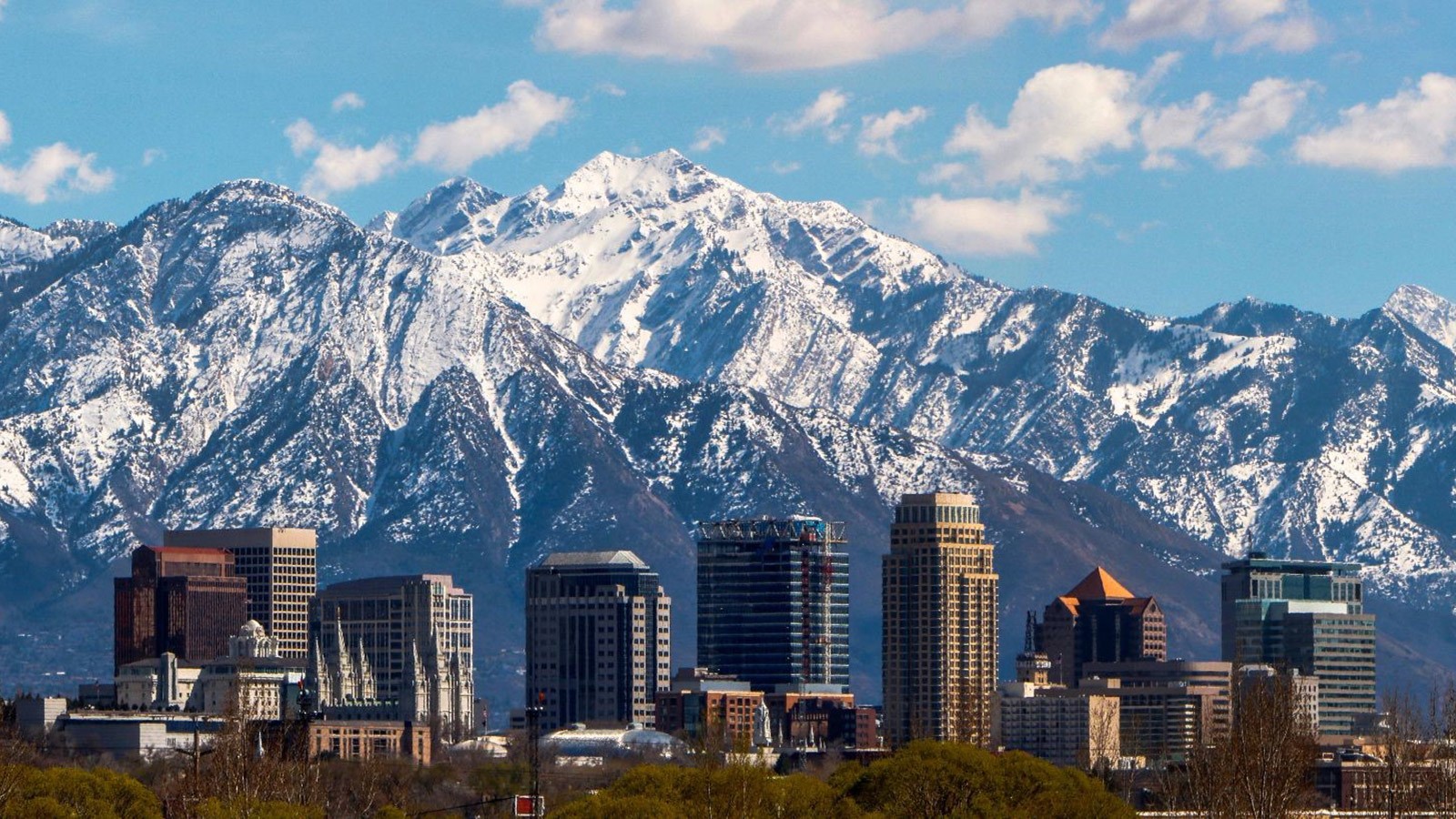
Ski resorts are an important part of Utah’s economy bringing in $10 billion in revenue to the state in 2019. Photo credit: Joe Guetzloff.

These saline lakes in the Great Basin are terminal, meaning they are fed by rivers and are a hydrologic endpoint. When the rivers start to dry up or are diverted, the lakes’ levels of salinity increase. The saline lakes of the Great Basin are remnants of the ice age and are echoes of Lake Bonneville and Lake Lahontan, another large endorheic Pleistocene lake that covered modern northwestern Nevada and extended into northeastern California and southern Oregon. That concern [the long-term viability of the lakes], O’Leary added, is what is leading to a multitude of studies to better understand the hydrological challenges faced by these systems. There is modeling that is focused on groundwater and surface water.

“There are limited resources and money that go into these decisions, but those decisions will involve these lakes that affect people’s livelihoods and communities,” he said. “The hope is that, with the science, we can make informed, intelligent decisions moving forward.”

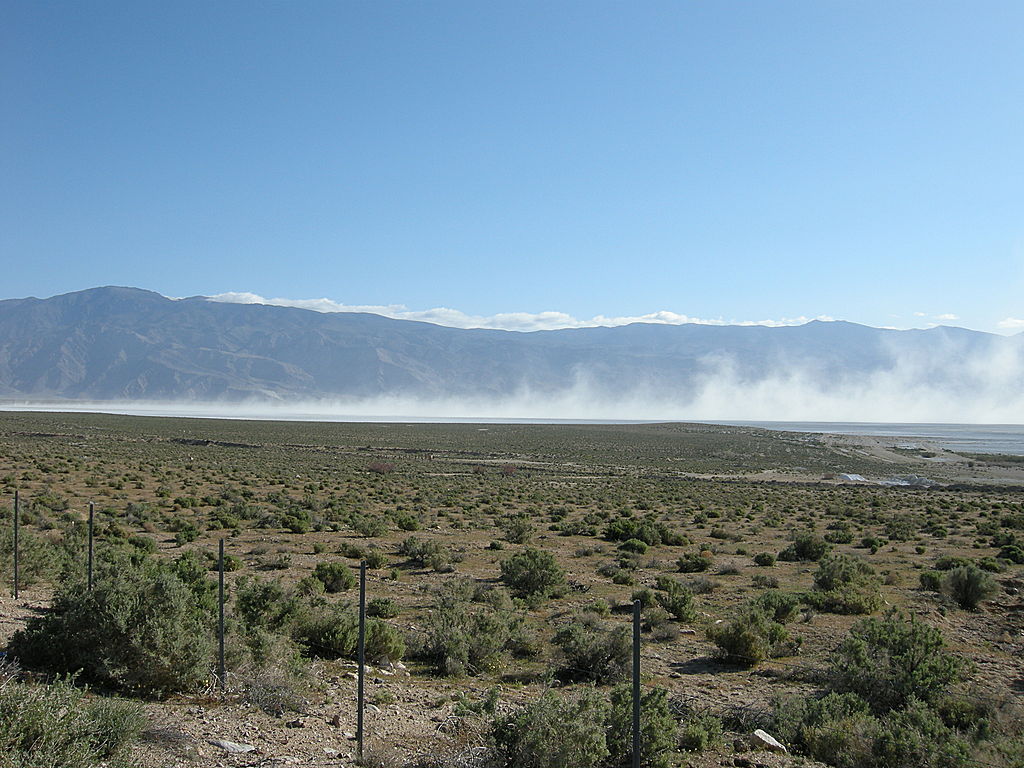
Blowing Alkali Dust at Owens Lake, California. Photo credit: Eeekster (Richard Ellis) via Wikimedia

“We know a lot already. We’ve seen what happened with Owens Lake. We know that dust is a huge problem. We know that there’s a high level of arsenic that could be put into our air along the Wasatch Front, and we don’t want that,” [Blake] Moore said. “It’s a matter of really pinpointing the severity of it. We want to use the study to help do that and then take best practices and come up with new innovative ideas on how to address the issue.”

High temperatures exacerbated by #climatechange made 2022 Northern Hemisphere droughts more likely: “The models analysed also show that soil moisture #drought will continue to increase with additional #globalwarming” — World Weather Attribution #ActOnClimate

Yampa River at Phippsburg June 14, 2022. Photo credit: Scott Hummer

Click the link to read the release on the World Weather Attribution website:

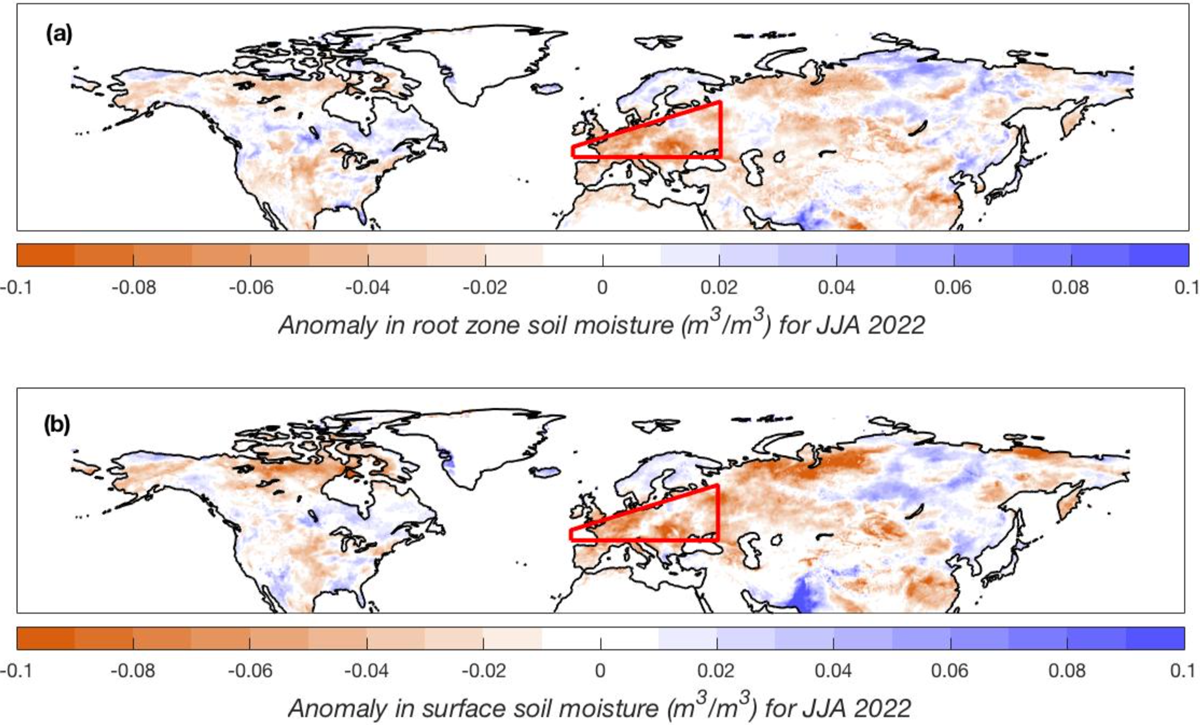
Western Central Europe, North America, China, and other parts of the Northern Hemisphere faced water shortages, extreme heat, and soil moisture drought conditions throughout the summer of 2022

Water shortages, extensive fires, high food prices and severe crop losses were among the most important impacts of one of the hottest European summers on record, with heat waves and exceptionally low rainfall across the Northern Hemisphere. These conditions led to very dry soils particularly in France, Germany and other central European countries (called West-Central Europe in the following); mainland China also experienced exceptionally high temperatures and dryness. These deficits in soil moisture led to poor harvests in the affected regions, increased fire risk, and, in combination with already very high food prices, is expected to threaten food security across the world.

Scientists from Switzerland, India, the Netherlands, France, the United States of America and the United Kingdom, collaborated to assess to what extent human-induced climate change altered the likelihood and intensity of the low soil moisture, both at the surface and the root zones for most crops.

Figure 1: a) Anomaly in the June to August average root zone soil moisture w.r.t 1950-2022 climate over the northern hemisphere so-called ‘extratropics’ (NHET) region (full domain shown) based on the ERA5-Land dataset. The smaller region West-Central Europe (WCE) is highlighted by the red box. (b) same as (a) for surface soil moisture.

Main findings

– Heat and low rainfall in West-Central Europe had far reaching impacts on a variety of sectors including human health, energy, agriculture, and municipal water supply. It was exacerbated by e.g. poor water infrastructure and leakages, and it came at a time when food and energy prices were already high resulting in compounding social and economic impacts.

– In this study, we particularly focus on the dry soils which caused severe economic and ecological impacts across the Northern Hemisphere (excluding the tropical regions) and were particularly severe in West-Central Europe. We therefore focus on these two regions, North-Hemisphere extratropics and West-Central Europe, to analyse the agricultural and ecological drought from June to August 2022.

– Observation-driven land surface models show that very low summer surface and root-zone soil moisture, such as observed in 2022, happens about once in 20 years in today’s climate in both regions.

– While the magnitude of historical trends vary between different observation-based soil moisture products, all agree that the dry conditions observed in 2022 over both regions would have been less likely to occur at the beginning of the 20th century.

– To determine the role of climate change in these observed changes, we combine the observation-based datasets with climate models and conclude that human-induced climate change increased the likelihood of the observed soil moisture drought events. The change in likelihood is larger in the observation-based data compared to the models.

– We also assessed the role of climate change in temperature and rainfall in these regions and found that the strong increase in high temperatures is the main reason for the increased drought.

– Combining all lines of evidence we find for West-Central Europe that human-induced climate change made the 2022 root zone soil moisture drought about 3-4 times more likely,  and the surface soil moisture drought about 5-6 times more likely.

– For the Northern Hemisphere extratropics, human-induced climate change made the observed soil moisture drought much more likely, by a factor of at least 20 for the root zone soil moisture and at least 5 for the surface soil moisture, but as is usually the case with hard to observe quantities, the exact numbers are uncertain.

– The models analysed also show that soil moisture drought will continue to increase with additional global warming, which is consistent with projected long-term trends in climate models as reported e.g., in the IPCC AR6.

Supreme Court hears lively debate on protecting wetlands, led in part by Justice Jackson — The Los Angeles Times #wotus

Ephemeral streams are streams that do not always flow. They are above the groundwater reservoir and appear after precipitation in the area. Via Socratic.org

Click the link to read the article on The Los Angeles Times website (David G. Savage). Here’s an excerpt:

The Supreme Court opened its new term on Monday by hearing a property rights appeal that calls for limiting the government’s power to protect millions of acres of wetlands from development. At issue is whether the Clean Water Act forbids polluting wetlands and marshes that are near — but not strictly part of — waterways.

Justice Ketanji Brown Jackson in her first day on the bench led the way in questioning why the court should move to limit the protection for wetlands. She said Congress in 1977 determined that wetlands “adjacent” to rivers and bays should be protected. Why should the law be narrowed, she asked, “when the objective of the statute is to ensure the chemical, physical, and biological integrity of the nation’s waters? Are you saying that neighboring wetlands can’t impact the quality of navigable waters?” Justices Elena Kagan and Brett M. Kavanaugh said they agreed with that view. Kavanaugh said that seven administrations — Republican and Democratic — had taken the view that wetlands were protected if they were near a waterway.

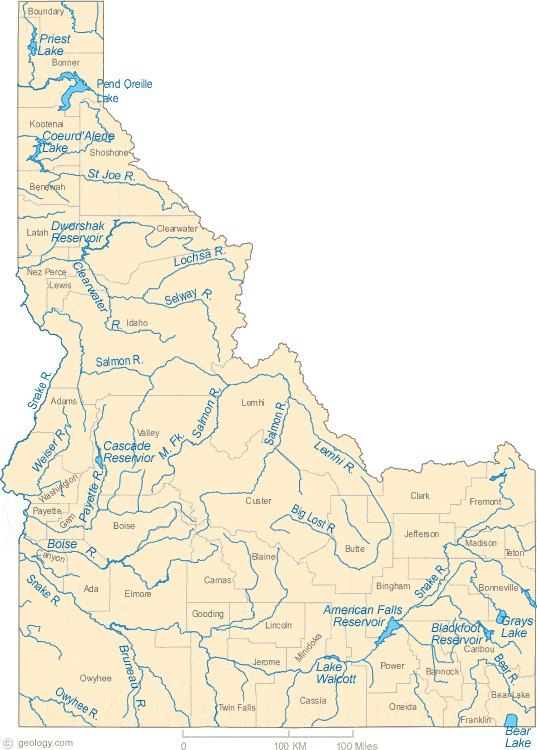
Damien Schiff, an attorney for Pacific Legal Foundation, agreed that some wetlands can be protected, but he argued property owners should not be blocked from developing their land simply because it has a marshy area. His argument won favor with several of the court’s conservatives who questioned how property owners of land near a waterway or a wetland would know if they were subject to federal regulation. Jackson noted that the prior owners of the Idaho land were told it included protected wetlands.

“You keep talking about fair notice and property owners, about not being able to tell or know about this issue,” she told Schiff. But with respect to the Idaho couple, “there seems to have been a prior determination that the land was a wetland before they bought it, and whether or not they know, they could have known, I presume.”

Idaho Rivers via Geology.com

‘We will all die if we continue like this’: Indigenous people push UN for climate justice — Grist #ActOnClimate

Indigenous leader and activist Txai Suruí (Photo: Gabriel Uchida )

Click the link to read the article on the Grist website (Joseph Lee):

As the United Nations General Assembly opens this week in New York, Indigenous people are taking to the streets, and waters, of New York to protest for climate justice and call on world leaders to recognize Indigenous rights. Starting Saturday, activists have protested in front of consulatesprojected images of deforestation on buildings in midtownsailed down the Hudson and East Rivers, and held a die-in in front of the New York Stock Exchange. 

“Every day we see violence increasing, Indigenous Peoples being murdered and the destruction of our territories happening at an accelerated rate,” said Dinaman Tuxá, Executive Coordinator at Articulation of Indigenous Peoples of Brazil (APIB), a national organization that unites Indigenous communities in support of their rights. “We demand the immediate demarcation of our lands and full protection of our rights and lives, as this is the only way in which we can continue to contribute to the fight against the climate crisis.”

APIB members focused their attention on President Jair Bolsonaro, who is in New York to make an address before the General Assembly and has pushed for development of the Amazon at the expense of Indigenous people. From 2019, when Bolsonaro took office, to 2021, Brazil lost over 13,000 square miles of Amazon forest. In just the first six months of this year, 1,500 square miles of forest were destroyed, the highest ever for that time period. Bolsonaro’s policies have also led to increasing violence against Indigenous land defenders–last year at least 27 people were killed protecting their territories. “Further allowing deforestation puts biodiversity, the lives of Indigenous Peoples and traditional communities, and the global climate at risk,” said Carol Pasquali, Executive Director at Greenpeace Brazil, which helped organize the protest. “World leaders must be accountable and put people and the planet first always.”

Filipino groups, including the Kalikasan People’s Network for the Environment, gathered in front of the Philippine Consulate to protest President Ferdinand “Bongbong” Marcos Jr. ahead of his speech at the U.N. Indigenous leaders are concerned that Marcos Jr.’s government will continue the nation’s history of directing violence toward Indigenous people. The protest also marked the 50th anniversary of Marcos Sr. declaring martial law and starting a years-long campaign during which over 3,000 people were killed, 70,000 imprisoned, and 34,000 tortured

Indigenous activists are also using this week to push world leaders on concrete climate actions. Led by the Pacific Islands Students Fighting Climate Change (PISFCC), boats filled with activists sailed down the Hudson and East Rivers in New York to call on world leaders to support their calls for climate justice. 

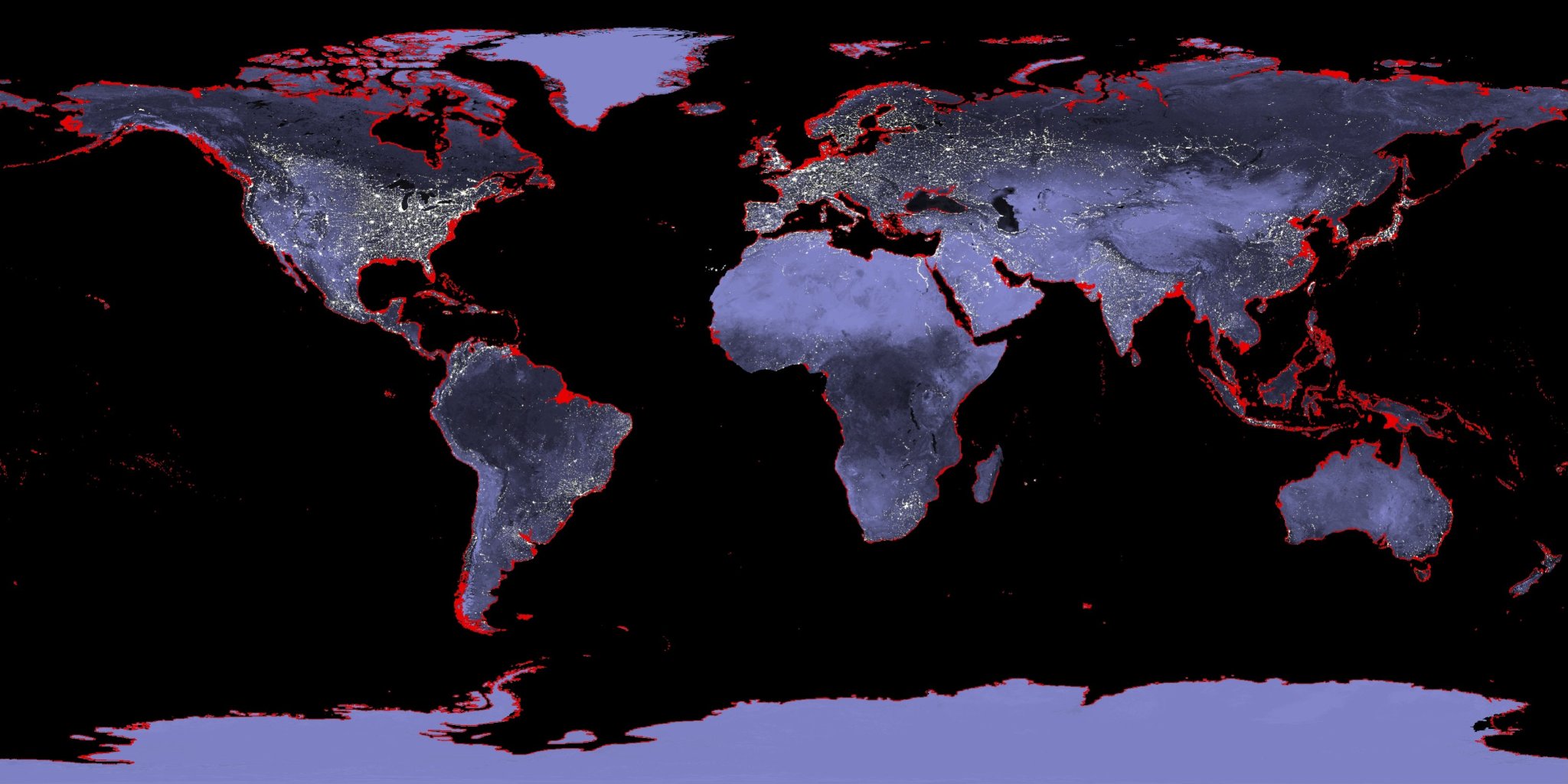
Map of the Earth with a long-term 6-metre (20 ft) sea level rise represented in red (uniform distribution, actual sea level rise will vary regionally and local adaptation measures will also have an effect on local sea levels). By NASA – https://www.flickr.com/photos/11304375@N07/6863515730/ additional source http://www.livescience.com/19212-sea-level-rise-ancient-future.html (Live Science), Public Domain, https://commons.wikimedia.org/w/index.php?curid=40213299

Indigenous people from Pacific Islands are often the most affected by rising sea levels and other climate impacts despite minimal contributions to the crisis, but have limited influence on the international level. “Our traditional knowledge is interrelated with our lands and this climate change is threatening to take this away, but we in Vanuatu will not be passive victims,” said Arnold Kiel Loughman, Attorney General of the Republic of Vanuatu, an island nation in the South Pacific Ocean. “We will do everything we can to defend the human rights of our people.”

Vanuatu and PISFCC are calling for the International Court of Justice (ICJ) to issue an advisory opinion on climate change – non-binding legal advice provided to the United Nations which carries significant weight internationally. As of 2017, only 28 advisory opinions have been requested, on subjects ranging from use of nuclear weapons to United Nations expenses. To date, the International Court has never heard a case on climate change. 

Advocates say the issuing of an opinion would put pressure on member states to review their policies and commitments, including strengthening the Paris Agreement by clarifying state’s obligations toward climate goals, and affirming Indigenous rights in the fight against climate change. For that to happen, the General Assembly must vote to send the case to the ICJ, which organizers believe is likely. Vanuatu and PSIFCC are calling for that vote and rallying support among countries through both diplomatic channels and public campaigning. 

“The [International Court of Justice Advisory Opinion] campaign was born out of this sense of urgency,”said Vishal Prasad, a campaigner with PSIFCC. “We are campaigning for an advisory opinion that seeks to bring together human rights and impacts of climate change on future generations.”

International financing for projects like oil pipelines and deforestation that harm the environment and violate Indigenous rights are also the target of activists this week. Indigenous groups, including the Global Alliance of Territorial Communities, staged a die-in in front of the New York Stock Exchange on Monday. “We start the week in Wall Street to ask decision makers what kind of projects they are supporting. We don’t want continued investment into the destruction of the Earth,” said Gustavo Sanchez, from Alianza Bosques. “We will all die if we continue like this.”

A coalition of Indigenous groups from Peru, including the Autonomous Territorial Government of the Wampis Nation, are calling on banks to divest from companies that destroy the Amazon, including Petroperú, a company they say is trying to build an oil pipeline on Indigenous land. The coalition presented a risk assessment to bank representatives that shows the environmental, financial, and moral cost to continuing with these investments. 

“We all know global action has been significantly lacking,” Vishal Prasad said. “We are not just fighting for the rights of people now, but those that come after us.” 

Half of world’s bird species in decline as destruction of avian life intensifies — The Guardian

A Vermilion Flycatcher along the Laguna Grande Restauration Site in Baja California, Mexico. Photo: Claudio Contreras Koob

Click the link to read the article on The Guardian website (Phoebe Weston). Here’s an excerpt:

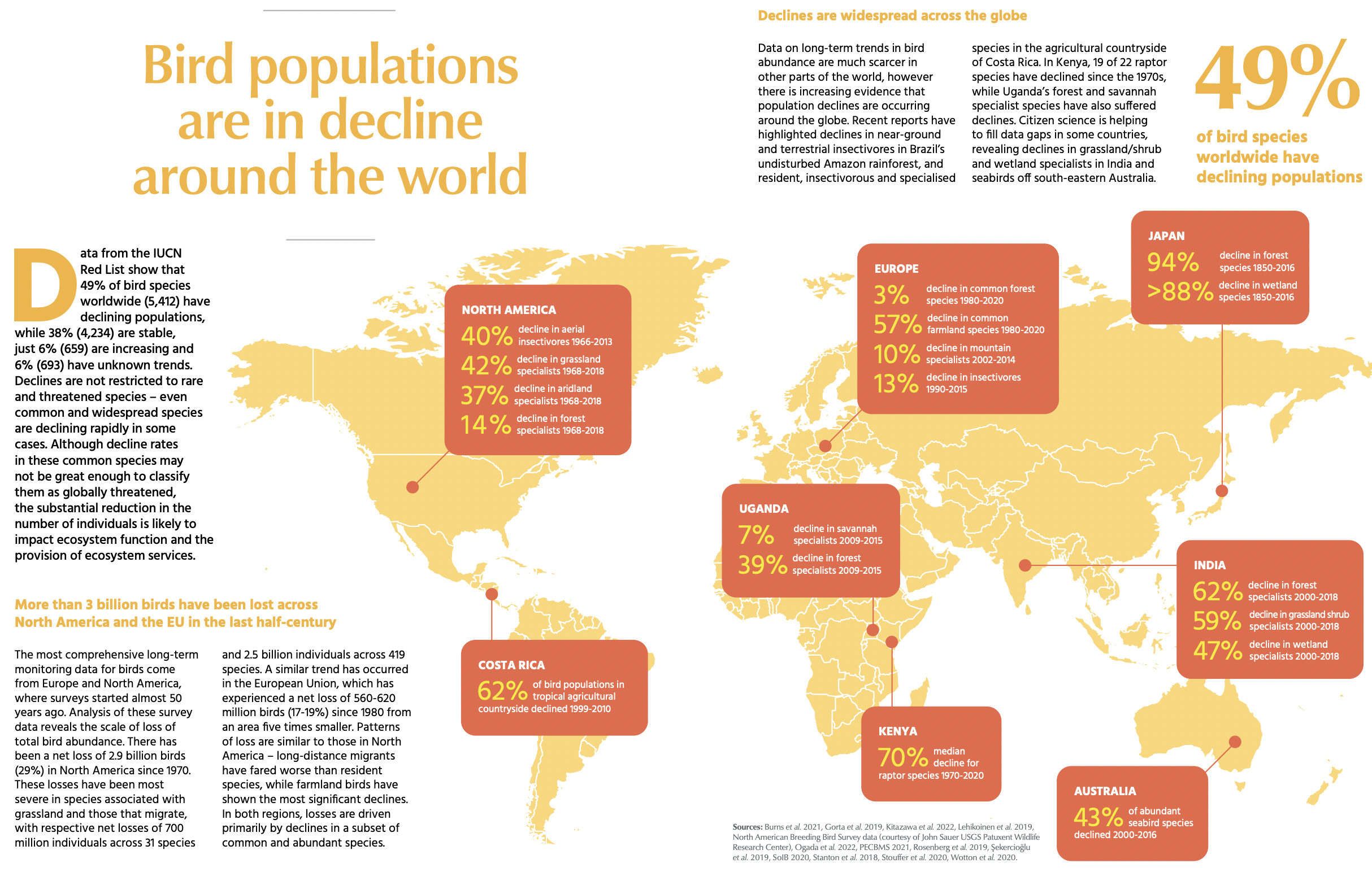
State of the World’s Birds report warns human actions and climate crisis putting 49% in decline, with one in eight bird species under threat of extinction

The State of the World’s Birds report, which is released every four years by BirdLife International, shows that the expansion and intensification of agriculture is putting pressure on 73% of species. Logging, invasive species, exploitation of natural resources and climate breakdown are the other main threats.

Globally, 49% of bird species are declining, one in eight are threatened with extinction and at least 187 species are confirmed or suspected to have gone extinct since 1500. Most of these have been endemic species living on islands, although there is an increase in birds now going extinct on larger land masses, particularly in tropical regions. In Ethiopia, for example, the conversion of grassland to farmland has caused an 80% decrease in endemic Liben larks since 2007. Just 6% of bird species globally are increasing.

Since 1970, 2.9 billion individual birds (29% of the total) have been destroyed in North America. The picture is just as bleak in other parts of the world – since 1980, 600 million birds (19%) have been destroyed in Europe, with previously abundant species such as the common swift, common snipe and rook among those slipping towards extinction. Europe’s farmland birds have shown the most significant declines: 57% have disappeared as a result of increased mechanisation, use of chemicals and converting land into crops. In Australia, 43% of abundant seabird species have declined between 2000 and 2016.

Dr Stuart Butchart, chief scientist at BirdLife International, said: “We have to stop these declines and start getting on track for recovery. Our future, as well as the world’s birds, depends on it. If we continue to unravel the fabric of life, we’re going to continue to place our own future at threat.”

New Poll Reality Check for Republicans — The Buzz

Click the link to read the post on The Buzz website (Floyd Ciruli):

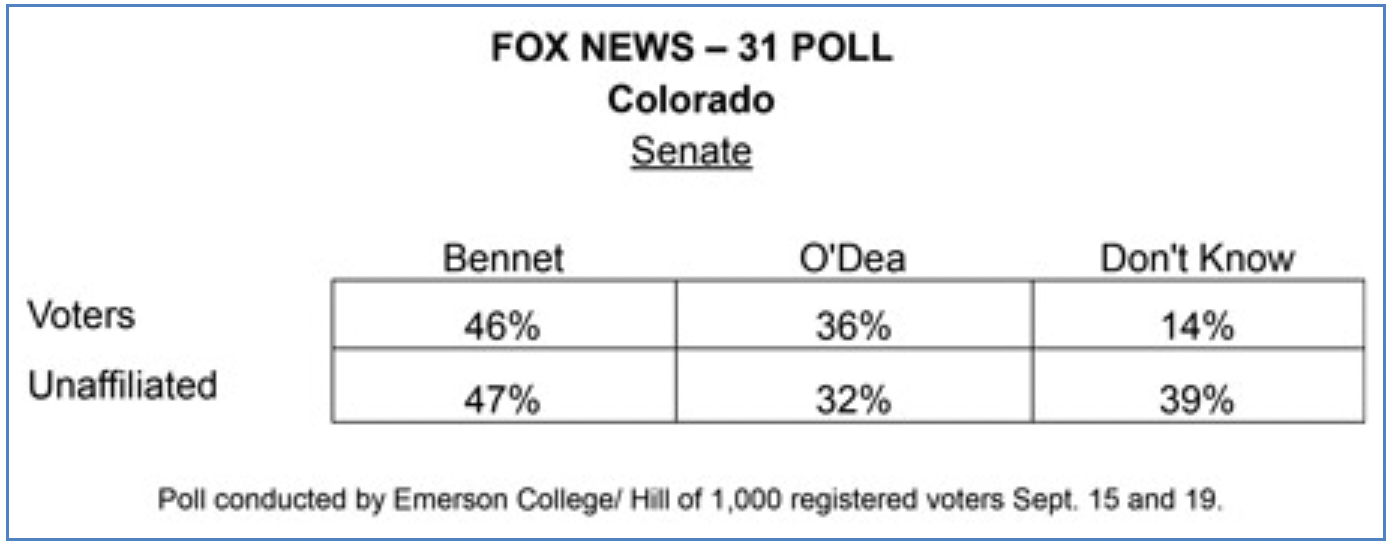
A new poll from Colorado’s Fox news outlet shows Democrats still dominating the top races for senate and governor.

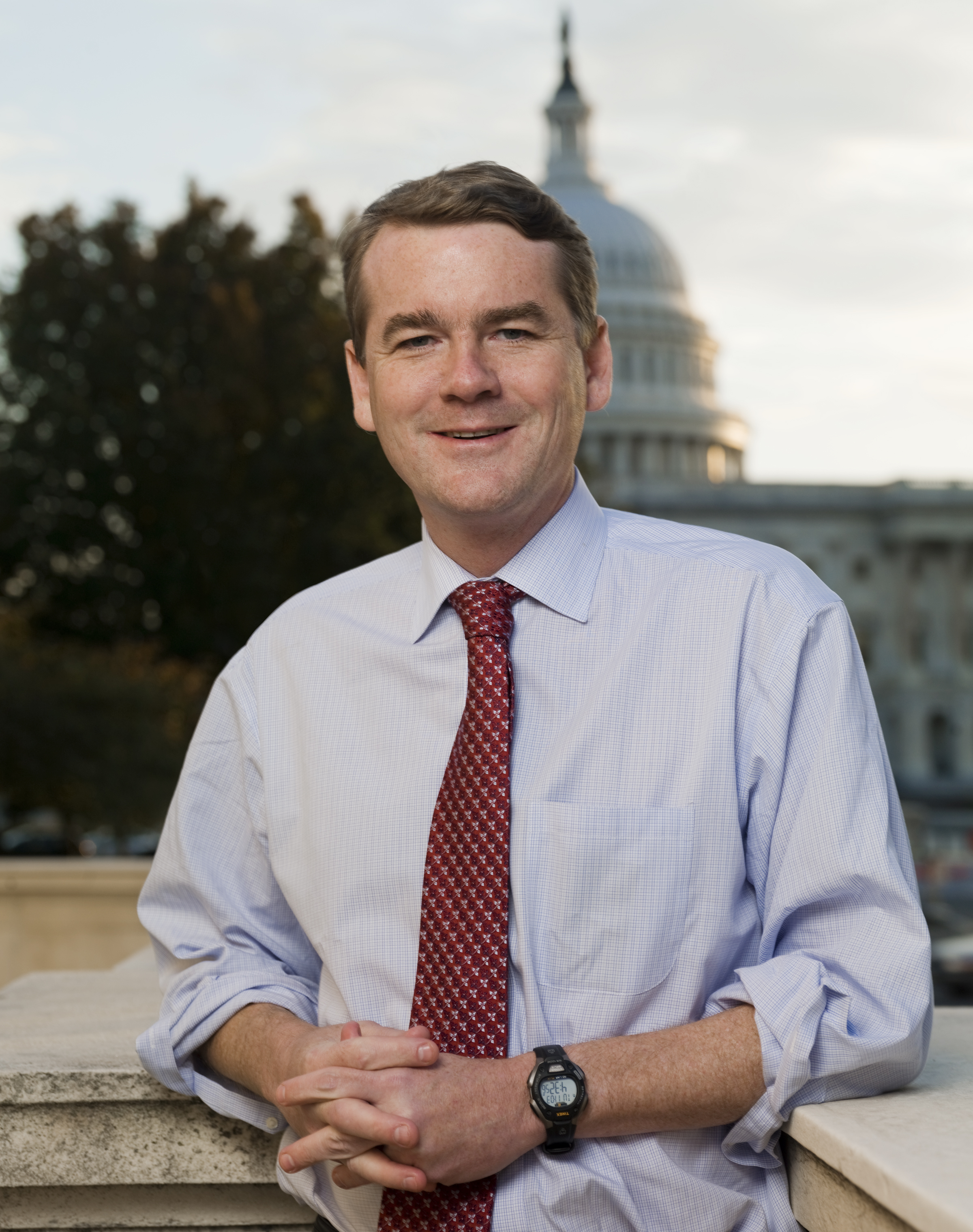
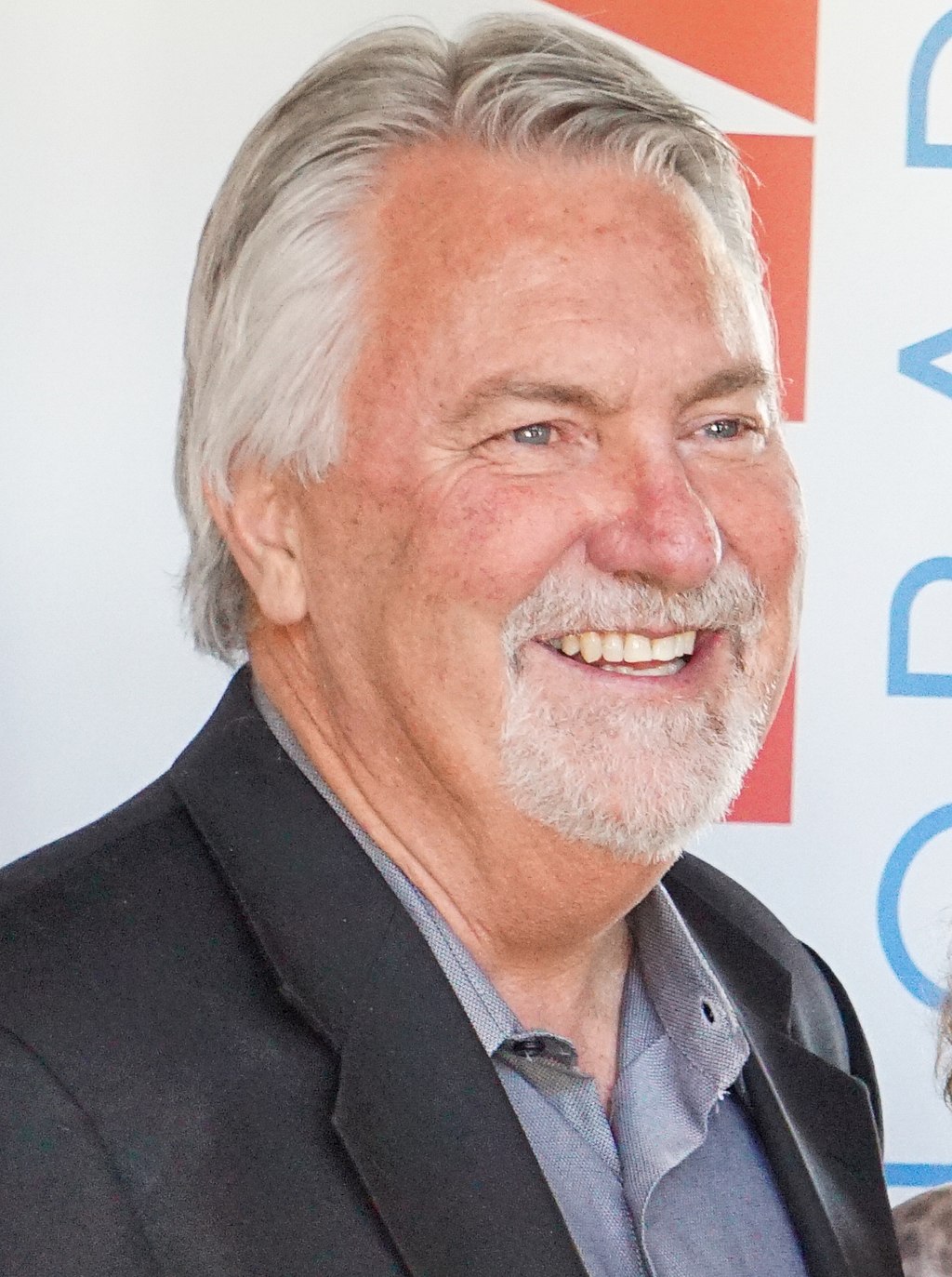
U.S. Senator Michael Bennet is 10 points ahead of GOP challenger Joe O’Dea, 46 percent to 36 percent with 14 percent undecided. Less surprising, Governor Jared Polis is 17 points ahead of Republican nominee Heidi Ganahl.

This poll is especially damaging for O’Dea, who was hoping for polls showing a close post-Labor Day race to attract the money and attention he needs to pull off an upset. Bennet is not yet over 50 percent but he’s winning the unaffiliated vote by 15 points.

The challenge is that both Republican candidates are still not well known by the voters and Democrats have a significant financial advantage in the races. The advertising, much of it negative, is just beginning.

Legal agreement results in EPA taking action on deadly smog pollution in #Denver, other cities — Wild Earth Guardians

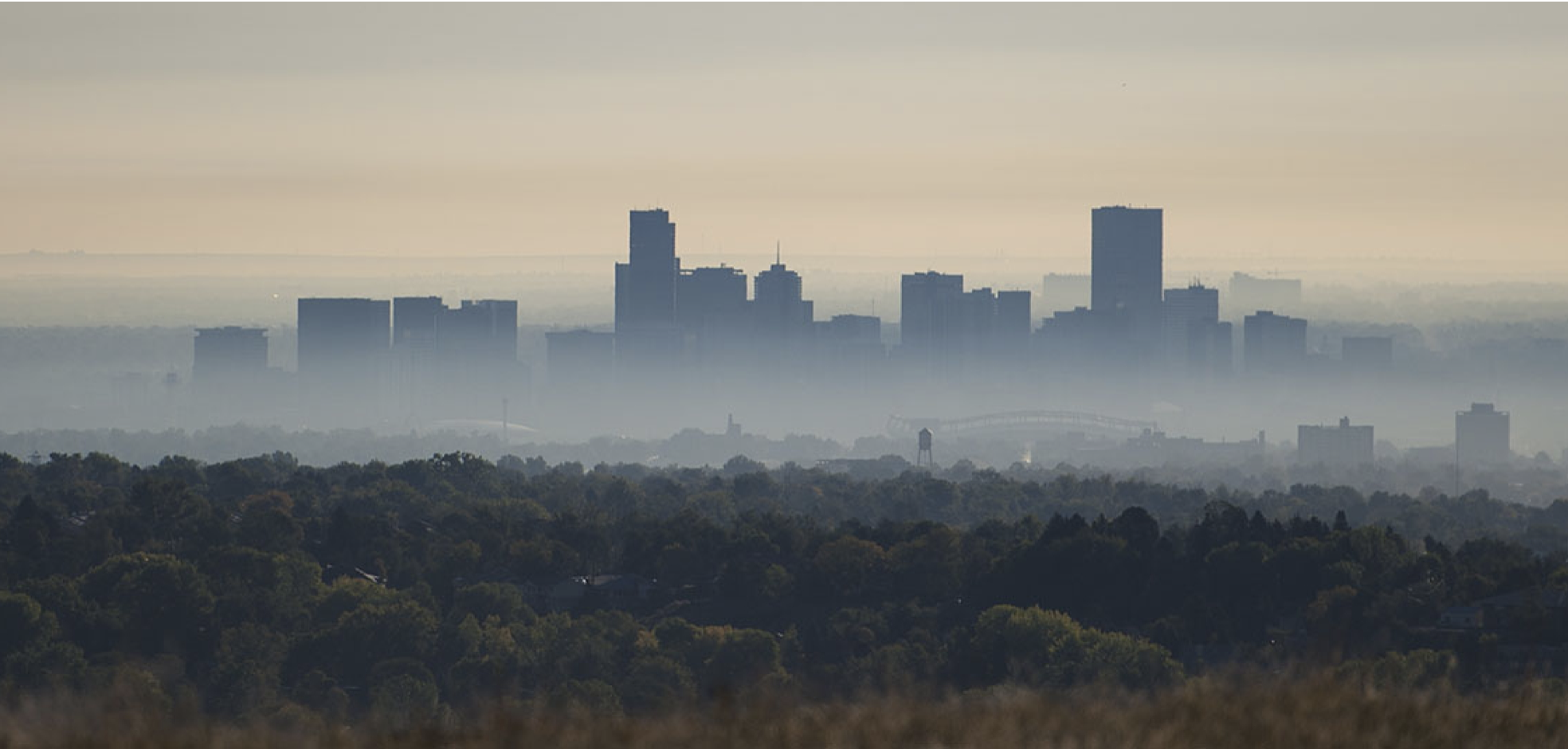
Denver smog. Photo credit: NOAA

Click the link to read the release on the Wild Earth Guardians website (Jeremy Nichols):

Affected areas in Colorado, Connecticut, Texas, New Jersey, and New York are home to nearly 40 million people

As a result of a lawsuit brought by a coalition of environmental groups, today the U.S. Environmental Protection Agency downgraded four areas across the country from a “serious” to a “severe” rating for their smog pollution. This downgrade in the ratings triggers more protective measures to reduce smog pollution.

The four areas, including the Denver Metro area, have some of the nation’s worst air quality. EPA downgraded the areas because their ground-level ozone pollution—commonly called smog—continues to exceed the levels that are safe for human health, wildlife, and plants.

“Recognizing that these areas have a severe smog problem marks an important step forward in reducing this pollution,” said Ryan Maher, an environmental health attorney at the Center for Biological Diversity. “Now it’s time for concrete plans to fix it.”

Smog pollution is linked to human health problems like asthma attacks, cardiovascular problems, and even premature death. Those most at risk include older adults, children and people who work outdoors. The harm smog does to plants can damage entire ecosystems and reduce biodiversity.

“For the more than 3.5 million people living in the Denver Metro and North Front Range region of Colorado, today’s finding gives new hope for clean air,” said Jeremy Nichols, climate and energy program director for WildEarth Guardians.  “Now it’s up to Governor Polis and his administration to do the right thing and finally clean up this smoggy mess and restore healthy skies along Colorado’s Front Range.”

The four environmental groups sued the EPA in March 2022 after the agency missed its deadline to reclassify these areas from a serious to a severe rating for smog. The agreement resulting from this lawsuit required EPA to finalize the ratings for these four areas by today: the Dallas-Fort Worth and Houston-Galveston-Brazoria areas in Texas; the New York City metro areas of Connecticut, New York, and New Jersey; and the Denver-Boulder-Greeley-Fort Collins-Loveland area in Colorado.

“The 37 million people who live in these areas with unsafe levels of toxic pollution deserve clean air and immediate federal action,” said Kaya Allan Sugerman, director of the Center for Environmental Health’s illegal toxic threats program. “Today’s victory will help protect these communities from the dangers of this pollution.”

Under this agreement, EPA must also determine whether the smog ratings for Ventura County and western Nevada County in California need to be downgraded by December 16, 2022.

The downgraded ratings finalized today are part of the environmental groups’ ongoing effort to compel the EPA to protect human health and the environment from smog pollution in accordance with the requirements of the Clean Air Act.

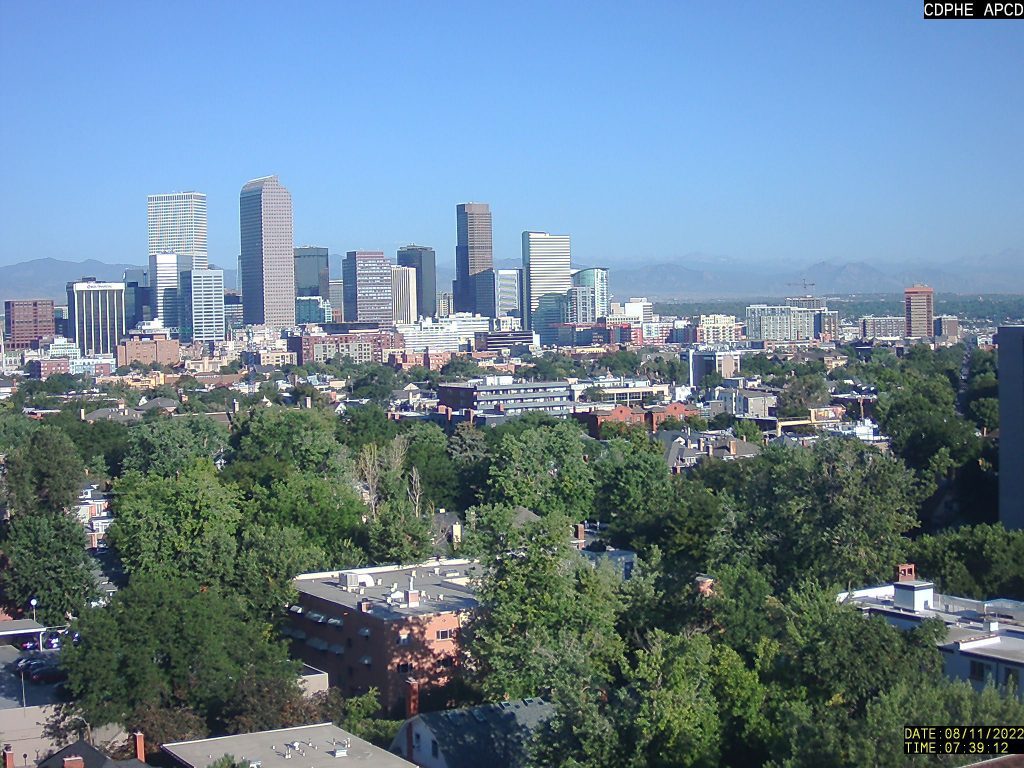
Smoggy day in Denver, August 11, 2022.

Other Contact

Ryan Maher, Center for Biological Diversity, (781) 325-6303, rmaher@biologicaldiversity.org , Kaya Allan Sugerman, Center for Environmental Health, (510) 740-9384, kaya@ceh.org , Ilan Levin, Environmental Integrity Project, (512) 637-9479, ilevin@environmentalintegrity.org

New Poll Shows Americans Strongly Support Clean Water Act on 50th Anniversary — Walton Family Foundation

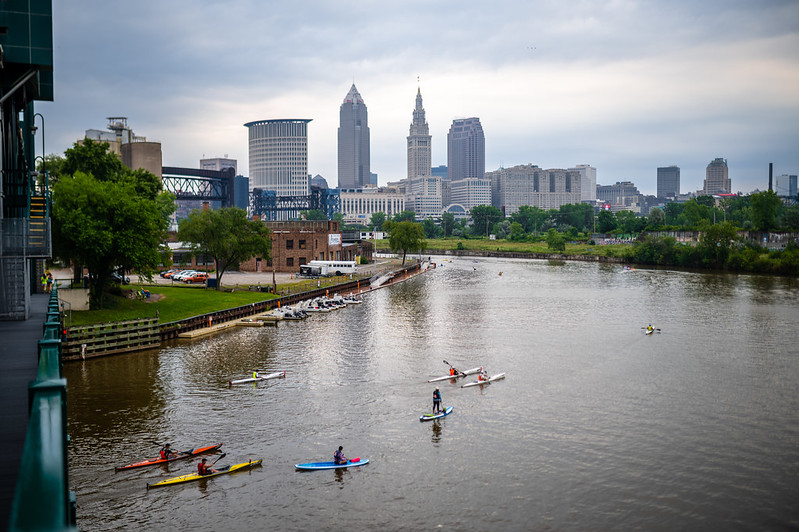
Kayakers on the Cuyahoga River in downtown Cleveland, Ohio. Photo: Erik Drost (CC BY 2.0)

Click the link to read the release on the Walton Family Foundation website (Mark Shields):

The Walton Family Foundation, in collaboration with Morning Consult, released new polling today showing that at least seven-in-ten adults nationally have a favorable opinion of the Clean Water Act (CWA). This comes with the Supreme Court set to hear oral arguments in October about whether certain waters can be protected under the Clean Water Act in the case of Sackett v. Environmental Protection Agency (EPA). The poll, released as UN Climate Week gets underway, shows Americans strongly prefer that the federal government maintains water standards. The EPA is the top choice of Americans to set standards to protect the rivers, lakes and streams that provide drinking water from pollution — and 68% think it is very important the EPA has the authority to protect clean water through the Clean Water Act.

“Clean water and the Clean Water Act continue to unite Americans,” said Moira Mcdonald, Environment Program Director of the Walton Family Foundation. “We all believe that water is vital to every aspect of our lives — from our health to the economy to our ecosystems–and that we must continue to have strong laws that protect this vital resource. Americans do not want to roll back clean water standards, because they want to trust that drinking water is safe.”

Key findings from the poll include:

95% of Americans say that protecting the water in our nation’s lakes, streams and rivers is important. Further, 79% want to strengthen or maintain current standards, while just 8% want to relax them.

88% agree that it is important that the EPA has the authority laid out in the Clean Water Act – such as restricting pollution entering our waters and limiting the destruction or physical damage to lakes, rivers, wetlands, streams and other waterways.

– After a brief description of Sackett v. the Environmental Protection Agency, 75% of adults are supportive of protecting more waters and wetlands under the Clean Water Act.

89% of adults would be concerned if polluters no longer had to meet water requirements before adding waste into streams or wetlands and 88% would be concerned if the permit requirement to make a permanent physical change to a water body was removed in some cases. 

Adults want more safety standards for water releases from factories and industrial processes (69%), municipal drinking water (68%) and drinking water in their community (67%).

Polling Methodology:

This poll was conducted between August 26th – 27th, 2022 among a sample of 2,210 Adults. The interviews were conducted online and the data were weighted to approximate a target sample of Adults based on gender, age, race, educational attainment, and region. Results from the full survey have a margin of error of plus or minus 2 percentage points.

#Colorado Senate Race Barometer — The Buzz

Click the link to read the article on The Buzz website (Floyd Ciruli):

The Colorado senate race is being closely followed by the national media for indications of a Republican tide that could sweep even an incumbent out of a state that has been supporting Democrats since 2016.

In July, Mark Barabak wrote a column for the L.A. Times, “How bad could November be for Democrats? Watch this Senate race and see.” (7-26-22). I said it about incumbent Democrat Michael Bennett.

“He’s not in danger yet,” said Floyd Ciruli, a Denver pollster who has spent decades surveying Colorado voters. “But [President] Biden is in terrible shape and if that becomes a major factor, a lot of candidates we assume would be safe could be in trouble.”

The Denver Post updated the senate race in a weekend story by Nick Coltrain (9-10-22). He reported that mixed signals from polls still don’t show a Republican win and that the national party has not put much money behind their candidate, Joe O’ Dea. (Since the story appeared, McConnell gave $500,000)

Read:
How bad could November be for Democrats? Watch this Senate race and see
How close is Colorado’s U.S. Senate race? Campaigns ready for a ‘dogfight’

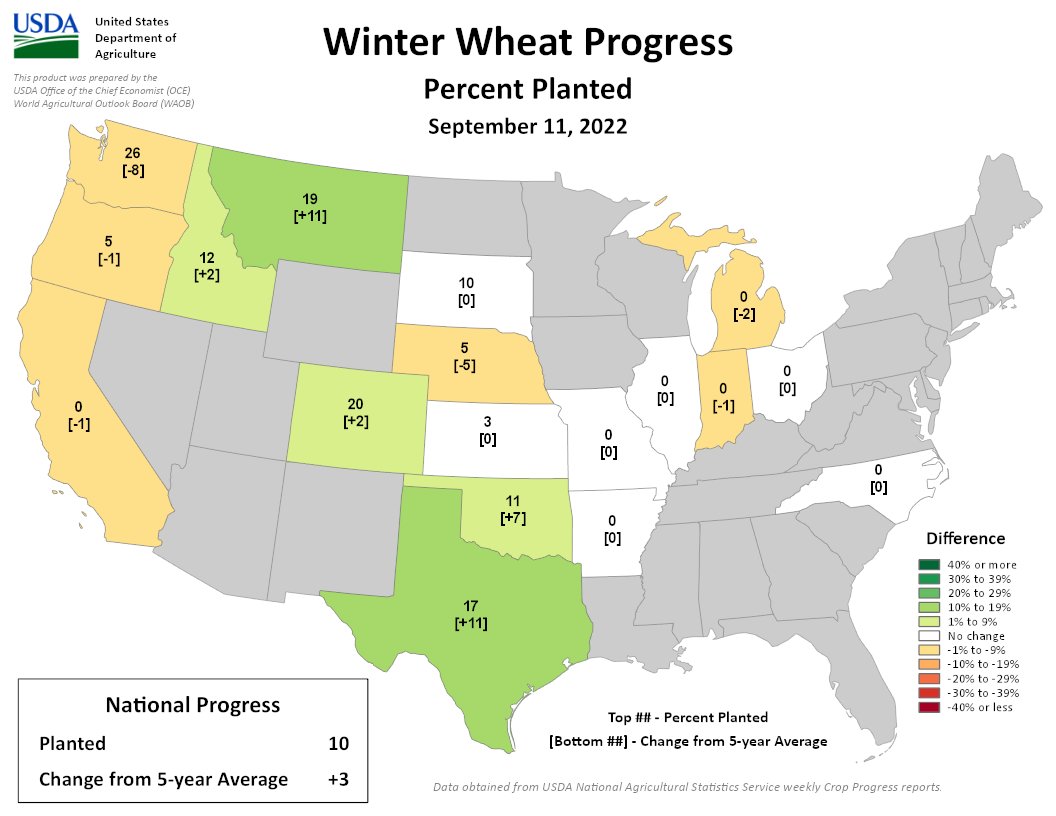
Weekly #cropprogress from @usda_nass and Brad Rippey at #USDAoce — @dennistodey

Drawing to end of growing season and start of #harvest22. #drought22 showing its issue in condition reports. Worst in #plains. Not as bad central #cornbelt.

US changes names of places with racist term for Native women, including in #Colorado — The #Aurora Sentinel

As you begin to descend towards Echo Lake on the Mestaa’ėhehe Pass road, Mt Evans and its barely visible road come into focus. Photo credit: Colorado Bike Maps

Click the link to read the article on the Aurora Sentinel website (Mead Gruver). Here’s an excerpt:

The U.S. government has joined a ski resort and others that have quit using a racist term for a Native American woman by renaming hundreds of peaks, lakes, streams and other geographical features on federal lands in the West and elsewhere…

The changes announced Thursday capped an almost yearlong process that began after Haaland, the first Native American to lead a Cabinet agency, took office in 2021. [Deb] Haaland is from Laguna Pueblo in New Mexico.

The Native American Rights Fund, a nonprofit legal organization, welcomed the changes.

“Federal lands should be welcoming spaces for all citizens,” deputy director Matthew Campbell said in a statement. “It is well past time for derogatory names to be removed and tribes to be included in the conversation.”

Other places renamed include Colorado’s Mestaa’ėhehe (pronounced “mess-taw-HAY”) Pass near Mestaa’ėhehe Mountain about 30 miles (48 kilometers) west of Denver. The new name honors an influential translator, Owl Woman, who mediated between Native Americans and white traders and soldiers in what is now southern Colorado.

Interior Department Completes Removal of “Sq___” from Federal Use: Decisions of the U.S. Board on Geographic Names are Effective Immediately

Secretary Haaland meets with tribal, local leaders regarding conservation efforts in southern Nevada

Click the link to read the release on the Deparmtment of Interior website :

The Department of the Interior today [September 8, 2022] announced the Board on Geographic Names (BGN) has voted on the final replacement names for nearly 650 geographic features featuring the word sq___. The final vote completes the last step in the historic efforts to remove a term from federal use that has historically been used as an offensive ethnic, racial and sexist slur, particularly for Indigenous women.

“I feel a deep obligation to use my platform to ensure that our public lands and waters are accessible and welcoming. That starts with removing racist and derogatory names that have graced federal locations for far too long,” said Secretary Deb Haaland. “I am grateful to the members of the Derogatory Geographic Names Task Force and the Board on Geographic Names for their efforts to prioritize this important work. Together, we are showing why representation matters and charting a path for an inclusive America.”

The list of new names can be found on the U.S. Geological Survey website with a map of locations.

The final vote reflects a months-long effort by the Derogatory Geographic Names Task Force established by Secretary’s Order 3404, which included representatives from the Department’s Bureau of Indian Affairs, Bureau of Land Management, Bureau of Safety and Environmental Enforcement, National Park Service, Office of Diversity, Inclusion and Civil Rights, Office of Surface Mining Reclamation and Enforcement, and the U.S. Geological Survey and the Department of Agriculture’s U.S. Forest Service.

During the public comment period, the Task Force received more than 1,000 recommendations for name changes. Nearly 70 Tribal governments participated in nation-to-nation consultation, which yielded another several hundred recommendations. While the new names are immediately effective for federal use, the public may continue to propose name changes for any features — including those announced today — through the regular BGN process.

The renaming effort included several complexities: evaluation of multiple public or Tribal recommendations for the same feature; features that cross Tribal, federal and state jurisdictions; inconsistent spelling of certain Native language names; and reconciling diverse opinions from various proponents. In all cases, the Task Force carefully evaluated every comment and proposal.

In July, the Department announced an additional review by the BGN for seven locations that are considered unincorporated populated places. Noting that there are unique concerns with renaming these sites, the BGN will seek out additional review from the local communities and stakeholders before making a final determination.

Secretary’s Order 3404 and the Task Force considered only the sq___ derogatory term in its scope. Secretary’s Order 3405 created a Federal Advisory Committee for the Department to formally receive advice from the public regarding additional derogatory terms, derogatory terms on federal land units, and the process for derogatory name reconciliation. Next steps on the status of that Committee will be announced in the coming weeks.

The Way to Slow #ClimateChange Is as Close as Your City Hall or School Board — The New York Times #ActOnClimate

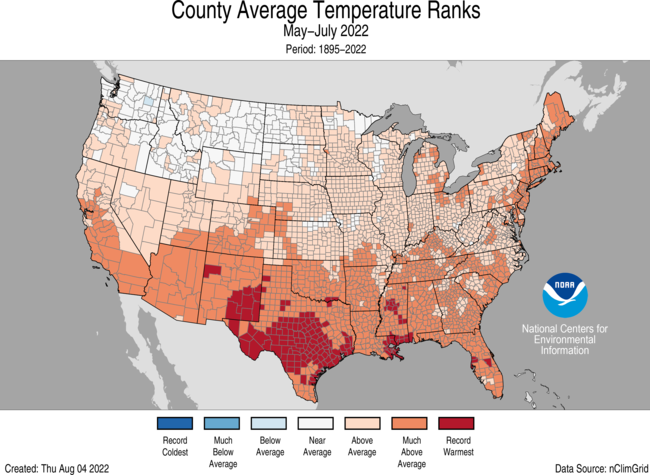
May to July 2022 County Average Temperature Ranks

Click the link to read the guest column on The New York Times website (Justin Gillis and Hal Harvey). Here’s an excerpt:

The big climate law that Congress just enacted will go a long way toward meeting Mr. Biden’s goal [of cutting GHG emissions]. Coupled with other policies and with trends in the marketplace, it is expected to cut emissions by something like 40 percent. But the law — even assuming it survives Republican attacks and defunding attempts over the coming years — does not fully redeem Mr. Biden’s pledge. How can America get the rest of the way toward meeting his 50 percent goal?

The answer is in all of our hands. Many of us are already trying to help as best we can, perhaps by nudging the thermostat a degree or two, by driving or flying less or by eating differently. These actions are useful, but they are not enough. The public must make the transition from green consumers to green citizens and devote greater political energy to pushing America forward in its transition to a clean economy. How? The answers may be as close as your city hall or county commission. Your local school board — yes, the school board — has some critical decisions to make in the next few years. Opportunities to make a difference abound in your state Capitol.

The reason the public needs to speak up is simple. What Congress just did was, in a nutshell, to change the economics of clean energy and clean cars, using the tax code to make them more affordable. But it did not remove many of the other barriers to the adoption of these technologies, and a lot of those hurdles are under the control of state and local governments.

Consider this: Every school day, millions of Americans put their children on dirty diesel buses. Not only are the emissions from those buses helping to wreck the planet on which the children will have to live, but the fumes are blowing into their faces, too, contributing to America’s growing problem with childhood asthma. It is now possible to replace those diesel buses with clean, electric buses. Has your school board made a plan to do so? Why isn’t every parent in America marching down to school district headquarters to demand it? Electric buses are more expensive right now, but the operating costs are so much lower that the gap can be bridged with creative financing. A school board that is not thinking hard about this and making plans for the transition is simply not doing its job.

Here is another example. The power grid in your state is under the control of a political body known as a public utilities commission or public service commission. It has the legal authority to tell electric companies what power plants they are allowed to build and what rates they can charge. By law, these boards are supposed to listen to citizens and make decisions in the public interest, but the public rarely weighs in. We once needed special state laws to push utilities toward renewable energy, but Congress just changed the ground rules. With wind and solar farms becoming far more affordable, every utility in America now needs to re-examine its spreadsheet on how it will acquire power in the future. The public utility commissions supervise this process, and they are supposed to ensure that the utilities build the most affordable systems they reasonably can. But too many utilities, heavily invested in dirty energy, still see clean energy as a threat. They are going to drag their feet, and they will ply their influence with state government to try to get away with it. Citizens need to get in the faces of these commission members with a simple demand: Do your jobs. Make the utilities study all options and go for clean power wherever possible.

One more example: The conversion to electric cars has begun, but as everyone knows, we still don’t have enough places to charge them, especially for people on long trips. State governments can play a major role in alleviating this bottleneck. Under Gov. Jared Polis in Colorado, the state is investing hundreds of millions of dollars to build charging stations, with poor neighborhoods included. Other states can do the same, and citizens need to speak up to demand it.

If you live in a sizable city or county, your local government is probably slowing down the automotive transition, too. These governments buy fleets of vehicles for their workers, and this year most of them will once again order gasoline-powered cars. Why? Because that’s what they’re used to doing. Citizens need to confront the people making these decisions and jolt them from their lethargy.

A native bug is flattening #Colorado’s wheat fields. Farmers are trying to keep ahead of it — #Wyoming Public Media

Photo credit: CC0 Public Domain

Click the link to read the article on the Wyoming Public Media website (Rae Solomon):

Dryland farming has never been easy. But in recent years, [Nate] Northrup has been battling a new challenge that would have baffled earlier generations: the wheat stem sawfly. It’s a pest that infests wheat stems at the base, flattening fields — usually just before the harvest. Northrup described a slow progression of sawflies infiltrating his wheat fields, starting in 2010.

“It used to be just a few swaths around the edges,“ he said. “And then, the next year following, it would just be entire fields, just laying on the ground.”

Adult wheat stem sawfly. Photo credit: Colorado State University

Last fall, Colorado farmers planted more than 2 million acres of winter wheat for the 2022 harvest. But persistent drought is hurting Colorado’s crop, and the sawfly infestation only worsens things.

Lodging cause by wheat stem sawfly. Photo credit: Colorado State University

The mature bugs emerge in the spring and lay their eggs in young wheat stems. As the wheat grows, so do the sawfly larvae, eating their way down to the bottom of the plant. Just as the wheat ripens and becomes ready for harvest, the larvae ripen and get ready to hibernate. It makes itself an overwintering chamber just above the root and, in the process, takes a final big bite at the base of the wheat stem, weakening it beyond repair. The first wind or sprinkling of rain topples the weakened stalks flat on the ground.

Dr. Erika Peirce is a postdoctoral researcher at Colorado State University who specializes in integrated pest management of the wheat stem sawfly, which, she is quick to point out, is not actually a fly.

“Contrary to the name. It’s actually a wasp,” she explained. She says sawfly may be a new pest, but the bug is not new to Colorado. “It was initially discovered in non-cultivated grasses – the grasses on the side of the road — in 1874 in Colorado. It only became a pest of winter wheat in Colorado in 2010.”

Peirce says the sawfly’s transformation from benign native insect to threatening pest happened because of a change in its lifecycle. Initially, adult sawfly timed their emergence to align with the growth of the non-cultivated grasses that were its native host. She explained that winter wheat develops earlier in the season than those native grasses.

“The sawfly, in order to use winter wheat, has to mature and emerge about 3 to 4 weeks earlier than they normally would for their native hosts,” she said.

And eventually, they started doing just that.

Coyote Gulch’s excellent EV adventure — Sequoias Day 8 (Homeward bound)

Denver. Photo credit: Colorado State University

Day 8’s drive was from Mesquite, Nevada to Fruita, Colorado. I always enjoy the Virgin River Canyon. The drive takes you up from St. George through central Utah, over the San Rafael Swell and then into Colorado.

We charged the night before in Mesquite during dinner, then again in Beaver, Utah, a short bump in Richfield, Utah, and then again in Green River. The Tesla seems to be designed for these high speed highways.

Coyote Gulch’s excellent EV adventure — Sequoias Day 7

Coyote Gulch’s rented Tesla Model 3 charging in Yermo, California August 5, 2022.

We started back home from Visalia, California on Friday with a stop in Las Vegas to drop off hellchild for her flight home.

We charged the Tesla at our hotel overnight and then once more in Yermo, California before a short charge in Las Vegas to get us to our destination, Mesquite, Nevada. The Model 3 is a fantastic highway ride. We shared every Tesla Supercharger location with others also charging and Teslas kept coming and going all the while when we were there. Tesla has done a great job building facilities for their customers.

This was eye-opening for me as I had to wait for local government and retailers to build charging infrastructure along the highways after buying my Nissan Leaf in 2016. On my first foray to Steamboat Springs in 2017 I had to use Level 2 chargers in Idaho Springs, Winter Park, and Kremmling. Now there are DC Fast Chargers in Granby and Fraser and all along I-70 from Silverthorne to Grand Junction.

Leaf charging at the Lionshead parking facility in Vail September 30, 2021.

Coyote Gulch’s excellent EV adventure — Sequoias Day 6

Sequoias in the Giant Tree Forest August 4, 2022.

We drove to the Atwell Mill and Grove on Day 6 and then up to the Giant Tree Forest for a nice walk in the light rain. During the walk we saw the Crescent Meadow which, according to the NPS John Muir called in the “Gem of the Sierra.” There was evidence of last year’s fire all around but that didn’t detract from the beautiful landscape.

Crescent Meadow Sequoia National Park August 4, 2022.

The Tesla Model 3’s charge was sufficient for the entire drive and we ended up at our hotel with 35% charge. We picked up charge coming back on Mineral King Road (5%) and down from the Giant Tree forest (6%). The all-wheel drive Tesla performed well on the steep twisting road above the river on the way to the Atwell Grove and back.

Some of the flora in the Giant Tree Forest August 4, 2022.

Sadly, Days 7,8, and 9 are travel days back to Denver, somewhere around 1,150 miles.

Sequoia standing tall August 4, 2022.

Coyote Gulch’s excellent EV adventure — Sequoias Day 5

Bear searching for dinner August 3, 2022 Sequoia National Park.

We drove to the General Grant Tree in Kings Canyon National Park area first thing to get in a hike and to see the many large sequoias in the area. The trails lead to trees named after the states. We then took the Generals Highway over to Sequoia National Park. There were lots of opportunities for “botanizing”. I have been informed that botanizing is the term you use when incorporating plant and tree observations into your enjoyment while hiking.

The Tesla Model 3 had more than enough range for the day. We picked up 7% charge from the regenerative braking system traveling down to the valley to charge at Traver, California for the next day.The car was at 38% when we hooked up, after starting the day at 95%.

Just for grins here’s a gallery of photos from Hellchild, Mrs. Gulch and myself.

Coyote Gulch’s excellent EV adventure — Sequoias Day 4

Rolling River Falls Kings Canyon National Park August 2, 2022.

We drove to the end of the road in Kings Canyon on Day 4. The canyon is impressive and it was great to see the turbid water in the South Fork of the Kings River indicating that the area had seen rain recently. In fact, when we were enjoying the Roaring River Falls thunder could be heard a short distance away. The canyon floor is forested with the now familiar varieties of trees that make up the canopy. There is also a variety of shrubs and flowers for the botanically suited like my traveling companions, the horticulturist and the geneticist.

A huge bonus for me were all the farms along the route that Tesla navigation chose for us. What a bounty of fruit and other crops. Folks that know me well know that I love farmers and farming, and of course the infrastructure to move water it where it is needed.

This was the first day that we really depended on the range of the Tesla Model 3. There are no charging facilities after you start the climb from the valley floor. There would be few locations where the trickle charger would be useful. We picked up 6% from the regenerative braking system from the Grant Tree lodge down to the valley floor. The Model 3 had good charge left when we stopped at the Supercharger in Traver to charge up for Day 5.

Charging the Tesla August 3, 2022 for the next day in Kings Canyon and Sequoia national parks.

Coyote Gulch’s excellent EV adventure — Sequoias Day 3

Coyote Gulch at the General Sherman tree Sequoia National Park August 1, 2022. Photo credit: Hellchild

We went up into Sequoia National Park on Day 3. The primary stop was to see the “General Sherman” tree which is largest tree in the world you are told by the NPS folks. It was quite an experience seeing the mixed forest of Sequoias, firs, etc.

We toured all day on one charge from our hotel — the Model 3 has good range. What a climb from the valley up to the area of the trees. On the trip down we picked up 7% charge from the regenerative breaking system. EV drivers love downhill just as bicyclist’s do. 🙂

Coyote Gulch attempting to hug a Sequoia near the General Sherman tree August 1, 2022. Photo credit: Mrs. Gulch

Coyote Gulch’s excellent EV adventure — Sequoias Day 2

Joshua Trees in California July 31, 2022. Photo credit: Hellchild

Day 2 was another travel day. We had to go from Mesquite, Nevada to Visalia, California, near Sequoia and King’s Canyon national parks. We stopped in Las Vegas to pick up our daughter who had flown in to meet us.

Ugh, the drive from Las Vegas to Baker, California was slow due to traffic. One reason was that mud and debris had washed over the road from convective storms in some places so traffic was backed up while the highway was being cleared. The major reason, we learned from the server at dinner, was that traffic is horrible on Sunday afternoon in that stretch. The traffic was something that I had not allowed for.

It was cool to see so many Joshua trees (this was a novel experience for me). This part of California is very different from our usual haunts. The Tesla navigation system worked flawlessly, even routing us around an accident (there were three in the stretch) down county two-lane blacktop at one point. There was standing water on that road in a couple of places. The NWS warning, “Turn around don’t drown, unless you see someone else get through safely,” was on my mind. 🙂

Screenshot of the Tesla’s “Go Anywhere” apps.

Our hotel is a Tesla destination hotel so after picking up a bit of charge in Bakersfield we plugged in overnight at our base for exploring the sequoias. We utilized Tesla superchargers in, Mesquite, NV, Las Vegas, NV and Bakersfield, CA but could have gotten away with fewer stops according to the Tesla trip planner. I am very impressed with the ease of navigation and the quick charging at the superchargers.

It is so cool that I can rent a Tesla for long driving vacations and not use my Nissan Leaf with it’s more limited range.

Leaf charging at the Beau Jo’s charger in idaho Springs August 23, 2021.

Coyote Gulch’s excellent EV adventure — Sequoias (Day 1)

Coyote Gulch’s rented Tesla charging in Green River, Utah.

Saturday was a long day as we drove from Denver to Mesquite, Nevada. The route was all on I-70 and I-15. The Tesla charging network makes traveling along the interstate network worry free. We charged in Glenwood Springs, Colorado and Green River, Richfield, and Beaver, Utah. At every stop other Tesla vehicles were charging. There was a line of vehicles waiting to charge in Glenwood Springs and the Richfield location with only four chargers was full.

Explorer John Wesley Powell and Paiute Chief Tau-Gu looking over the Virgin River in 1873. Photo credit: NPS

In Green River, Utah, while charging we spent time at the excellent “John Wesley Powell River History Museum” next door to Tesla’s supercharger facility. The museum is worth your time if you are passing through, interesting displays and of course many old photographs of the area and the Colorado and Green rivers, settler stories, etc.

In the late afternoon we drove into Monsoon storms in S. Utah culminating in a spectacular downpour as we drove through St. George, Utah into the Virgin River Canyon. I was thinking of the bad situation in Flagstaff, not all that far away as the crow flies.

Coyote Gulch’s excellent EV adventure — Sequoias

Coyote Gulch’s rented Tesla Model 3 charging (Level 2) at Gulch Manor July 30, 2022.

I’ve started a bucket list of places I want to visit before climate change forever changes them. First up are the Sequoias in California. One article that I read recently said that 25% of them have burned since 2015 and last year wildfire threatened some of the most famous trees in the Sequoia and King’s Canyon National Parks (where I’m headed).

Like many Westerners, giant sequoias came recently from farther east. Of course, “recent” is a relative term. “You’re talking millions of years (ago),” William Libby said. The retired University of California, Berkeley, plant geneticist has been studying the West Coast’s towering trees for more than half a century. Needing cooler, wetter climates, the tree species arrived at their current locations some 4,500 years ago — about two generations. “They left behind all kinds of Eastern species that did not make it with them, and encountered all kinds of new things in their environment,” Libby said. Today, sequoias grow on the slopes of California’s Sierra Nevada.

For the drive I was able to rent a Tesla so I’ll be leaving zero emissions along the road except when I charge with dirty power of course.

Posting may be intermittent due to the possibility that I’ll be having too much fun.

#Colorado State University conference to address collaborative #conservation opportunities in the West

Click the link to read the article on the Colorado State University website (Nikki Martinez):

Confluence, an upcoming conference hosted by Colorado State University, will address the interests and needs of collaborative conservation groups in the West and is set to take place Sept. 19-22 at the Chico Hot Springs Resort in Pray, Montana.

Attendees at the last Confluence in 2020, where 120 participants gathered to learn from their peers, participate in workshops, and network with other collaboratives across the West.

The conference is hosted by the Western Collaborative Conservation Network, an organization housed in the CSU Center for Collaborative Conservation that promotes and supports community-based collaborative conservation efforts to strengthen and sustain healthy landscapes, vibrant communities and thriving economies in the West, including Arizona, Colorado, Idaho, Montana, New Mexico, Nevada, Oregon, Utah, Texas and Wyoming.

The conference will focus on three key collaborative conservation topics: watersheds, regional governance and cross-cultural collaboration.

Online registration closes on Aug. 26 with early-bird registration prices ending on July 31.

Confluence will be held at Chico Hot Springs in scenic Pray, Montana, for three days of intensive learning and connecting with other collaborative conservation practitioners.

Confluence attendees can participate in peer-to-peer learning sessions on measuring collaborative impacts; supporting emerging leadership; storytelling, communications and media; conservation finance; cross-cultural partnerships; and essential skills for a collaborator’s toolbox.

WCCN member Shauni Seccombe, a project manager at the Center for Natural Resources & Environmental Policy at the University of Montana, said the conference’s carefully chosen case studies, workshops, speakers and field trips ensure participants will be engaged in content that is both relatable and relevant to the “vital work that is collaborative conservation in the West,” with applications ranging from the local to national scale.

“With its emphasis on genuine human connection and peer-to-peer learning, Confluence 2022 will bring together various forms of knowledge, experience and understanding with the hope of strengthening our vision and capacity for a more sustainable, collaborative future.”

Along with the peer-to-peer workshops and keynotes, attendees will immerse themselves in the Montana landscape to learn about relevant case studies through field trips and discussion about Montana collaborative conservation efforts. View the summary agenda and content summary for more details about the topics that will be covered during the event.

Photo from http://trmurf.com/about/

The flight of the Nez Perce — USGS

Click the link to read the article on the USGS website:

Summer 2023 marks 146 years since the flight of the Nez Perce, when an indigenous tribe crossed Yellowstone in an attempt to reach Canada and during a running battle with the US army.

Yellowstone Caldera Chronicles is a weekly column written by scientists and collaborators of the Yellowstone Volcano Observatory. This week’s contribution is from Cole Messa, Ph.D. student and Professor Ken Sims, both in the Department of Geology and Geophysics at the University of Wyoming.

Throughout its history, Yellowstone has been frequented by numerous indigenous tribes. All of these groups have a unique and cherished tale bonding them with the land upon which Yellowstone sits, but perhaps one of the most harrowing and tragic recent stories is that of the Nez Perce (Nimiipu).

Photo of Hinmatóowyalahtq̓it (Chief Joseph) taken in November 1877 by O.S. Goff in Bismarck. From Wikipedia (https://commons.wikimedia.org/wiki/File:Chief_Joseph-1877.jpg).

In the summer of 1877, the gold rush and a series of treaty miscommunications resulted in the Nez Perce being driven from their homeland of the Wallowa Mountains in Oregon. A group of about 800 Nez Perce decided to refuse relocation to the newly established reservation, instead opting to seek a new home, led by their soft-spoken and stoic leader, Hinmatóowyalahtq̓it (also known as Chief Joseph). The voyage was meant to be peaceful, but skirmishes with settlers inevitably ensued, often times manifesting as back-and-forth revenge for killings committed during prior encounters. As a result, the Nez Perce’s trek to discover a new home, safe from the relentless encroachment of an ever-growing nation, became marked by fear and bloodshed.

After an initial skirmish in Idaho, the U.S. Army began to pursue the band of Nez Perce on their march east from the Wallowa Mountains, first making contact at White Bird Battlefield in western Idaho on June 17, 1877. While the U.S. Army was being greeted by a 6-person peace party of Nez Perce carrying a while flag, a civilian volunteer opened fire, sparking a battle which resulted in heavy casualties and ignited the flight of the Nez Perce toward Canada. The Nez Perce would continue to encounter the U.S. Army on numerous occasions during their journey, including at the Clearwater Battlefield (northeastern Idaho) and the Big Hole Battlefield (western Montana), before the group entered Yellowstone National Park on August 23, 1877.

Stinging from their loses at the 1876 Battle of Greasy Grass, or as it also known, the Battle of the Little Bighorn, and determined to punish the Nez Perce to discourage other indigenous tribes who might consider rebelling against the rule of the United States, the Nez Perce were pursued by over 2,000 U.S. Army soldiers. Yellowstone was not foreign country to the Nez Perce, who often visited the park in pursuit of its abundant resources and wild game. While within the park, the Nez Perce encountered 25 tourists, and looting of supplies and multiple revenge killings occurred. Today, you can follow the path of the Nez Perce through Yellowstone National Park along park roads near Nez Perce Creek, Otter Creek, Nez Perce Ford, and Indian Pond. The Nez Perce forded the Yellowstone River at Nez Perce Ford, traveled through Pelican Valley and Hoodoo Basin, and passed over the Absaroka Mountains, finally exiting Yellowstone National Park to head north towards the Canadian border, where they hoped to find safety. Before they could reach their destination, the Nez Perce were stopped by the U.S. Army once more in the foothills of the Bear’s Paw Mountains of northern Montana, only 40 miles away from Canada.

Route followed by a band of Nez Perce (or, in their language, Nimiipu or Nee-Me-Poo) in 1877. A band of 800 men, women, and children—plus almost 2,000 horses—left their homeland in what is now Oregon and Idaho pursued by the US Army. The group crossed through Yellowstone National Park in their attempt to reach Canada, and they were ultimately captured by US Army forces in northern Montana. Courtesy of the National park Service Yellowstone Spatial Analysis Center (https://www.nps.gov/yell/learn/historyculture/flightnezperce.htm).

This epic journey of the Nez Perce covered more than 1,170 miles across four states and multiple mountain ranges, and about 250 Nez Perce warriors held off the pursuing US Army troops in 18 battles, skirmishes, and engagements. Ultimately, hundreds of US soldiers and Nez Perce (including women and children) were killed in these conflicts before the Nez Perce surrendered, and Chief Joseph—one of the last surviving chiefs of the band—gave the now-famous speech* in which he said, “From where the sun now stands, I will fight no more forever.” Some of the Nez Perce were able to reach Canada, but the rest, including Chief Joseph, accepted resettlement in numerous reservations throughout the American northwest. Chief Joseph would pass away in 1904 at the age of 64 on the Colville Indian Reservation (WA) of a “broken heart”, per his doctor’s account. He is buried near the village of Nespelem, WA.

Yellowstone National Park is a place of wonder, beauty, and almost spiritual significance to all who look upon its enchanting landscape. But long before western society encroached upon its borders, indigenous people revered this land for its resources and cultural importance. The next time you find yourself driving along Wyoming Highway 296, also known as the Chief Joseph Scenic Byway, on your way to visit Yellowstone National Park, remember the flight, and plight, of the Nez Perce, who walked the very trail upon which you drive.

You can visit numerous Nez Perce Commemorative Sites of Nez Perce National Historical Park along the 1,170-mile Nez Perce National Historic Trail, stretching from Wallowa Lake, Oregon, to the Bear’s Paw Mountains, Montana. For more details, see https://www.nps.gov/nepe/index.htm.

North American Indian regional losses 1850 thru 1890.

Extreme #drought, #sawfly infestation cause wheat yields to plummet: CSU scientists are working on strains of drought- and bug-resistant wheat — The #Sterling Journal-Advocate

Peetz Town Hall via Armchair Explorer.

Click the link to read the article on the Sterling Journal-Advocate website (Jeff Rice). Here’s an excerpt:

Wheat production in northeast Colorado is down by half or more, according to reports from area grain elevators, and experts put the blame on .an exceptionally dry year and an infestation of wheat stem sawfly. Although no hard numbers are yet available – the U.S. Department of Agriculture’s field workers are gathering that information now – reports from elevators in Sterling, Julesburg, Peetz and Haxtun are estimating between 20 and 30 bushels per acre and, in some hard-hit areas, as little as three bushels per acre…

Nationwide, the USDA has projected harvests of around 47 bushels per acre, or about 8 percent less than normal. But here in the shadow of the Rocky Mountains, an almost complete absence of moisture has driven that number down even further…

Colorado Drought Monitor map July 12, 2022.

According to the U.S. Drought Monitor released Thursday, northeast Colorado remains in the grip of a severe to extreme drought, wile moderate to severe drought conditions cover most of the rest of the state. The best drought conditions in the state are along the Front Range, where upslope conditions wring water out of moist air moving over the Rockies, although even there it is mostly abnormally dry…

As if the drought wasn’t bad enough, wheat farmers face an old bug with a new appetite. Meyer said wheat stem sawfly has actually been around eastern Colorado since the late 1800s, but kept mostly to hollow-stemmed prairie grasses. The fly lays eggs on grass stems and when the larva hatch, they burrow into the stem and work their way down until the cut the stem off near the ground. Over the past five years, Meyer said, the flies have discovered wheat and increasingly migrated into wheat fields. A tour of area wheat fields by this reporter over the past two weeks showed that some fields showed as much as 50 percent sawfly destruction.

The Supreme Court’s attack on tribal sovereignty, explained — @HighCountryNews

North American Indian regional losses 1850 thru 1890.

Click the link to read the article on the High Country News website (Nick Martin):

Four federal Indian law experts digest the Supreme Court’s ‘shocking‘ decision to grant state governments the power to prosecute crimes in Indian Country.

As part of its recent precedent-breaking spree, the U.S. Supreme Court turned federal Indian law on its head this week on Wednesday, June 29. In the case of Oklahoma v. Castro-Huerta, a majority of five conservative justices sided with the state of Oklahoma, finding that state governments have the legal jurisdiction to prosecute non-Native citizens for crimes committed against Native citizens on sovereign tribal lands. The opinion, authored by Trump-appointed Justice Brett Kavanaugh, breaks with centuries of established federal Indian law. Until this decision, state law enforcement agencies could intervene in Indian Country crimes only by an act of Congress.

The Castro-Huerta case revisited questions of jurisdiction and sovereignty that were central to the landmark July 2020 case McGirt v. Oklahoma. That case concluded that Congress had never disestablished the reservations of the Cherokee, Choctaw, Seminole, Chickasaw and Muscogee Creek nations in Oklahoma — roughly half of the state’s present land base — and that individuals charged with crimes on tribal lands could be prosecuted by either federal or tribal officials. This latest case now narrows the court’s previous ruling on tribal sovereignty in McGirt, and inserts state jurisdiction, as well. As the author of the dissenting opinion, Justice Neil Gorsuch denounced the majority decision reached by his conservative colleagues. “This declaration comes as if by oracle, without any sense of the history recounted above and unattached to any colorable legal authority,” Gorsuch wrote. “Truly, a more ahistorical and mistaken statement of Indian law would be hard to fathom.”

High Country News spoke with four federal Indian law experts in an effort to unpack precisely what this new ruling means for the citizens and nations of Indian Country, and to better understand what the court’s willingness to eschew established precedent will mean for the health of Indigenous sovereignty in the months and years to come.

This conversation has been edited for clarity and length.

High Country News: On Wednesday [July, 2022], the U.S. Supreme Court ruled 5-4 in Oklahoma v. Castro-Huerta that the state of Oklahoma, and presumably all states, have jurisdiction to charge non-Natives committing crimes against Native citizens. How significant of a departure is this from existing precedent, where a state’s right to prosecute in Indian Country required an act of Congress?

Stacy Leeds (Cherokee Nation; foundation professor of law and leadership at the Sandra Day O’Connor College of Law, Arizona State University). Photo credit: High Country News

Stacy Leeds (Cherokee Nation; foundation professor of law and leadership at the Sandra Day O’Connor College of Law, Arizona State University): The ruling represents a shocking disregard for centuries of prior precedent and a profound disconnect from historical context. The most basic tenet for federal Indian law is that the power over Indian Affairs is consolidated with the federal government to the exclusion of the states.

The sweeping language in this case upends the very foundations of the field. The court casually states without citation to any legal authority.

Elizabeth Reese (Yunpoví; assistant professor of law, Stanford Law School): This decision is a sweeping change in Indian law. It flips precedent and existing presumptions on their head. Yesterday, the preemption was that states have no power over crimes in Indian Country. The narrow exception, from McBratney, that states have jurisdiction over non-Indian on non-Indian crime was always a bit of a puzzle, given how contrary its reasoning was to the rest of Indian law decisions. It was treated like an outlier, a case with fragile foundations that scholars would occasionally ask me to make sense of because it was so inconsistent with the rest of federal Indian law doctrine. The holding in this case is ostensibly limited to just non-Indian on Indian crimes, but its reasoning supports a new era where state authority over tribal lands is the default assumption. I barely recognize the federal Indian law or the American history described in the majority opinion — it’s just that off base.

Matthew Fletcher (Grand Traverse Band of Ottawa and Chippewa Indians; foundation professor of law and director of the Indigenous Law and Policy Center, Michigan State University). Photo credit: High Country News

Matthew Fletcher (Grand Traverse Band of Ottawa and Chippewa Indians; foundation professor of law and director of the Indigenous Law and Policy Center, Michigan State University): Castro-Huerta is a dramatic departure and cannot be reconciled with McGirt v. Oklahoma. The court seems to believe that the (1832) Worcester v. Georgia rule that state law has no force in Indian Country — one of the foundations of federal Indian law — is dead. It doesn’t point to any case that says that, so it cannot even point to a year when that general rule went away, but there it is. The majority is going back to what I call “Canary Textualism,” where the Supreme Court takes the lead on national Indian affairs policy instead of Congress or the tribes.

Bethany Berger (Wallace Stevens professor of law, UConn School of Law). Photo credit: High Country News

Bethany Berger (Wallace Stevens professor of law, UConn School of Law): It’s big. It rejects the established law taught to every federal prosecutor working in Indian Country, every law student studying federal Indian law, and agreed to by every state court considering the question.

HCN: I recognize there will be a litany of responses to this question that will be determined by the relationship between states and the bordering tribal nations, but what do you perceive as being the immediate effects of this decision for tribal citizens throughout Indian Country?

Leeds: Read in its most restrictive light, this case is only about state concurrent jurisdiction over non-Indians who commit crimes inside Indian Country. It may lead to more law enforcement confusion in the field because starting Oct. 1, when the expanded Violence Against Women Act kicks in, all three sovereigns will be recognized as having jurisdiction over some situations. Two of those situations, the federal and tribal jurisdiction are expressly provided for by Congress in various statutes. Only one of those situations springs anew by judicial fiat.

Read in its most expansive light, this case seems to support many types of state intrusion into Indian Country with the erasure of Indigenous nations and their rights to be governed by their own laws to the exclusion of state law. Tribal sovereignty is the right to make local laws and be ruled (only) by those local laws. Now it seems as if the court would support states’ rights to pass laws that tribes oppose and the barrier to state power would not be tribal sovereignty and express treaty rights, but instead, whether a case-by-case federal preemption analysis would keep the state at bay.

Reese: You are correct to flag that a lot will depend on what different states decide to do and their relationships with tribes. Immediately, however, this means that non-Indian crime on Indian crime — including the domestic violence cases that led to all the VAWA activism and reform over the last few decades — are now going to fall to the state and federal government. Increased state police presence could happen on tribal lands immediately, and tribal laws or federal law which previously may have shielded non-Indians from certain state law decisions are no longer a shield.

Fletcher: I don’t know that states and counties are going to swoop into Indian Country to subvert federal and tribal criminal justice prerogatives right away, but they could. Suddenly, without any preparation or cooperation, states and counties are a third sovereign in Indian Country. Who knows what could happen? Justice Gorsuch’s dissent provides an easy suggestion for Congress to fix the decision. Some state legislatures could choose — at tribal request — to stand down from exercising jurisdiction. And — though very unlikely given the history of conflict between sovereigns, states and counties — (it) could actually enhance Indian Country criminal jurisdiction.

Berger: It will mean that tribal citizens will face less protection and more abuse by police. We have years of studies of criminal justice on reservations where Congress gave states full criminal jurisdiction, and state jurisdiction just undermines support for tribal and federal systems without increasing effective responses to crime. Tribal victims are less likely to trust or report crimes to state police, and witnesses are less likely to work with them. But states don’t do the effective community policing that makes tribal citizens safer. The Castro-Huerta case is an example of this. For two years, the Oklahoma Department of Human Services had received reports of possible neglect of the victim in this case, a little girl with severe disabilities who could not feed herself and needed five bottles of specialized feeding a day. Her mother had several other children, and her stepfather, Mr. Castro-Huerta, was an immigrant who worked multiple jobs. It was only when Mr. Castro-Huerta and her mother — who had just given birth — brought the child to the emergency room that the state took her into custody. Oklahoma also never notified the girl’s tribe, the Eastern Band of Cherokee Indians in North Carolina, to seek their help in finding a better placement for the child. The state’s response — to arrest the stepfather and sentence him to 35 (years) — is sadly typical in cases involving state criminal jurisdiction in cases involving Indians, focusing just on punishment and not on effective prevention.

HCN: I have a two-parter to end on: First, do you anticipate that the politicization of the court and its ruling today will embolden more states and private entities to challenge the sovereign rights of tribal nations?

Leeds: Yes, this provides the road map for the extension of state power.

Reese: Unfortunately, yes. Tribal sovereignty is even more vulnerable when the court is willing to disregard precedent and history. I fear that this case demonstrates how Oklahoma’s campaign to claw back power was more persuasive to the court than its precedents — that, in the words of Justice Gorsuch in McGirt, that “rule of the strong, not the rule of law” is what we can expect from this five-justice majority.

Fletcher: Justice Kavanaugh’s majority opinion is his first major writing in an Indian law case and it’s not good for Indian Country. He’s firmly in the Scalia-Rehnquist camp of skepticism toward Indian tribes, skepticism toward congressional policy decisions in Indian affairs, and extreme deference to states’ preferences. He claims to be a textualist, but he is happy to deviate from the text to fulfill those political commitments. The jury is still out on Justice Coney Barrett, another justice who has stated a commitment to textualism (and even wrote about textualism in her work as a law scholar). Her opinion in the Ysleta del Sur Pueblo bingo case was a good omen. When she is confronted with relatively clear text, she doesn’t so easily give up on her commitment to textualism just because a state government complains. Her vote in Castro-Huerta is disconcerting, however. We don’t have a separate writing from her in that case so we can’t be sure, but it appears she approved of the assertion of judicial power that has wreaked havoc in Indian affairs since the 19th century.

This court is quite likely the most radically activist court in American history. The court’s overruling of Roe is the tip of the iceberg. The court struck down the separation of church and state as well. In the next term, it’ll strike down affirmative action in higher education as well. This is a self-proclaimed textualist court that gratuitously deviates from its methodological commitments to advance certain political commitments — deference to states, deference to the police, deference to mainstream religion, and extreme skepticism of racial, gender and sexual minorities.

Berger: States and private entities have never stopped challenging the sovereign rights of tribal nations. This case just shows that — after a handful of cases where tribal sovereignty and precedent seemed to get some respect — the Supreme Court remains a very dangerous place for tribal rights.

HCN: And the second part: Given this is our bench for the foreseeable future, how much faith can those invested in the long-term political and legal strength of tribal nations truly put in this court? Particularly, I am thinking about Brackeen v. Haaland, the state-backed Indian Child Welfare Act challenge, among others. Put simply, can tribal citizens (and electeds and attorneys, etc.) trust SCOTUS after this decision?

Reese: Very little and no. I join the growing chorus of legal experts who are criticizing the faith we’ve put in the Supreme Court — particularly since Brown v. Board of Education — to be a guardian of law and the moral arc of the universe’s bend toward justice. We’ve given them a lot of power by putting so much faith in them. Far too much, I think. It’s time to stop waiting for the court to fix things or hoping that the best legal argument will prevail. It’s time to start talking about institutional reform to the Supreme Court, and to the Constitution broadly.

Fletcher: I would not trust this Court much at all, but that’s been true for the entire history of the United States. What makes this Court worse, however, is the extremity of its radicalism and lack of discipline. Nothing is sacred to this Court.

Berger: Given how much easier it is for the Justices to sympathize with states and non-Indians than with tribes and tribal citizens, trusting SCOTUS was never a safe move. For a few years starting in 2016, the Court seemed to be actually paying attention to precedent and the realities of life in tribal communities, and this breaks from that. It’s a bad sign for Brackeen, but that case always played into a lot of justices’ biases. But the choices facing tribes and their citizens are still the same: Try to stay out of the court, and try to make the best case possible if you have to go.

Nick Martin is an associate editor for HCN’s Indigenous Affairs desk and a member of the Sappony Tribe of North Carolina. We welcome reader letters. Email him at nick.martin@hcn.org or submit a letter to the editor. See our letters to the editor policy.

First image from the James Webb Telescope

Happy Fourth of July

Mrs. Gulch’s apple pie for today’s celebration.

Mrs. Gulch’s apple pie for today’s celebration.

#Climate data on top of the world: #Central #Wyoming College students trek to Everest — WyoFile.com

CWC ICCE Everest team member Red Thunder Spoonhunter, with a Northern Arapaho flag, and Adina Scott, engineer with the all-Black Full Circle climbing team, on Everest. (CWC ICCE Everest team)

Click the link to read the article on the WyoFile website (Katie Klingsporn):

he alpinist team Full Circle made international headlines when it became the first all-Black expedition to summit Mount Everest in May.

Full Circle’s accomplishment was widely celebrated. What was lost in much of the coverage, however, was this detail: Five college students from central Wyoming trekked to base camp to help Full Circle test climate sensor technology.

The Wyoming group, affiliated with the Central Wyoming College’s Interdisciplinary Climate Change Expedition program, included two Eastern Shoshone students, two Northern Arapaho students and one bike shop mechanic who’s the first in his family to go to college.

Members of the CWC ICCE Everest team hike toward the Himalayas. (CWC ICCE Everest team)

On the expedition, they met Full Circle’s climbers, tested emerging technology that may provide clearer data on high-altitude climate change and visited communities dealing with impacts of a changing climate. It was eye-opening, said Ryan Towne, the bike mechanic.

“The communities who are least responsible for climate change do not deserve to bear the brunt of its consequences,” he said. “Whatever we can do, as a school, as a community, to spread awareness for these cultures and their struggles is, you know, all that I can hope for.”

The young adults also had an adventure of a lifetime touring the vibrant city of Kathmandu, sharing meals with Nepali hosts, hiking into the thin Himalayan air and bonding as friends. They played a role in a historic achievement that felt singular in its own merit.

“I can say that I, a Native American female, have reached Everest base camp conducting climate change research,” student Jada Antelope wrote about the trip. “For this, I am beyond proud…”

An Everest expedition arises

Central Wyoming College’s ICCE program launched in 2014. The undergraduate research program weaves together science and outdoor education skills, and its students have undertaken expeditions to Tanzania (in partnership with the National Outdoor Leadership School), the Great Divide Mountain Bike Route and the Wind River Range.

The Everest project started as a nebulous concept and narrowed into focus only a couple months before it took place, said Jacki Klancher, director of instruction and research at CWC’s Alpine Science Institute, who wrangled the expedition. It spawned in part out of Klancher’s relationships with Full Circle members Phil Henderson and James “KG” Kagambi — all three have worked for Lander-based NOLS.

In conversations with the climbers ahead of their Everest attempt, Klancher said, the concept of a CWC student team came up. “They embraced us,” she said. “And the idea was we work with them to get their electrical engineer help testing some tech that we wanted to test.”

The concept of beta testing climate sensors, meanwhile, has roots in a NASA National Space Grant Consortium meeting in Jackson Hole in October, where young and promising STEM scientists gathered, Klancher said. That’s where she put out the message that she was seeking a portable climate sensor, something she has been wanting for some time for Alpine Science Institute programs.

“I was like, ‘y’all, all I want is a portable location-enabled temperature and [relative-humidity] sensor. Can anybody help?’” she said. That led to conversations with scientists from universities like Penn State, as well as the company MeteoTracker, who showed interest in developing prototypes.

As those conversations evolved and with a green light from Full Circle, Klancher next set out to secure funding and assemble a team. Several funders, such as Wyoming NASA Space Grant Consortium and Wyoming EPSCoR, backed the project. In selecting students, she first turned to program veterans like Towne and Aidan Darissa Hereford, who had ridden in the bike trek, and Red Thunder Spoonhunter, who was on the Tanzania expedition.

When Klancher first proposed the expedition, Hereford said, she was reluctant. Hereford was unsure about traveling abroad during a pandemic for one, she said.

“It seemed pretty scary,” she said. “So I was just debating on it for … about a week. [Then] I thought ‘why not? Just go for it. This is a once-in-a-lifetime chance.’”

Antelope, who along with Spoonhunter is Northern Arapaho, and Antoine Day, who like Hereford is Eastern Shoshone, rounded out the team.

Once the team solidified, Klancher and the students scrambled to apply for funding, train for high altitude trekking, expedite passport applications and secure requisite vaccinations with barely any time to spare.

On April 25, they left Fremont County on the first leg of an enormous journey. In the end, base camp occupied two days of their experience-rich three-week adventure.

Travel weary and trekking

After a ride on a triple-decker plane and a long layover in Dubai, the students landed in the teeming city of Kathmandu on April 28, jet-lagged from the 12-hour time difference. They spent a couple days touring temples and negotiating the incessant city traffic before riding a helicopter to the precarious Lukla airport. From Lukla, a carless city roved instead by yaks and trekkers, they set out on foot. They hiked for 10 days, stopping at tea houses, learning Nepali words from their guides and experiencing the countryside one step at a time.

“It was really surreal,” Hereford said. “And it was really nice to see, like, the villages and see how they live and how things are just really different over there.”

Jada Antelope perches on a boulder at Everest base camp with the Northern Arapaho flag. (CWC ICCE Everest team)

Each day was vibrant, Klancher said. “It was spectacular — tea houses and people and culture and the landscape. It felt like we did a month’s worth of living in those 10 days.”

The expedition wasn’t without trials. The team had to manage a gamut of illnesses — including acute mountain sickness, which felled Hereford — and contend with foul weather.

Members healthy enough to keep hiking reached base camp on May 9. It was a different world at 17,600 feet, Day said. “Base camp is tent city, tents everywhere,” he said, with constant helicopter traffic overhead.

There, they met the Full Circle team and hiked to the ice fields. They partnered with Adina Scott, a Full Circle researcher and engineer, to work with the sensor prototypes, and Towne carried one on the trek down.

After two nights at base camp, the students started the journey home. Full Circle reached the summit of Everest on May 12.

It was a wild ride. But reminders of home helped bridge the familiar with the foreign, Hereford said. “What I really loved the most was waking up every day and smelling … over here in our community, you know, we burn sweetgrass … and so it smelled like that every morning, but they called that juniper.” One thing that helped her through her altitude sickness, she said, was eating a Nepali version of fry bread.

Crunching data, telling the tale

The team returned on May 19. In early June, members were still processing the adventure, and hadn’t yet determined the quality of the data the prototypes collected or the technology’s potential.

“We were successful in doing what we wanted to do, which was to partner with Full Circle to beta test these prototype units and go, ‘Can these things even do what MeteoTracker says?’” Klancher said.

Not knowing the answer to that immediately illustrates the long and sometimes painstaking process of science, she said

Aidan Hereford and Antoine Day on the trek. (CWC ICCE Everest team)

“So, you know, like people asked, ‘What did you learn?’ It’s like, well, we didn’t solve climate change for all time and save the Nepalese and 1.6 billion people from surface water crises,” Klancher said. Instead, they tested an idea, and will offer feedback in an attempt to improve the devices and ultimately the science, Klancher and Day said.

It’s “baby steps,” Klancher said, that one day could lead to, for instance, Sherpas carrying the units to gauge high-altitude climate conditions.

“Did we meet my objectives of diversity, equity, inclusion in STEM? We did,” she said. “Did we educate students and help provide them with professional preparation…? Yes. Did we contribute to climate and water science data and tech? Yes. Did we work on a ton of partnerships…? Yes.

“And did we have a blast? Yes,” Klancher said. The team was a delight, she said. “These guys just figured it out and laughed so much. …I did not have to do a lot of interpersonal group management … It was kind of the magic group.”

The students will present on their expedition in September in Riverton, and Day will curate a photography exhibit of images he took later in the fall.

Their school custodian was doing a mic-check for assembly… — @RexChapman

Too close for comfort! Members of Ferdinand Hayden’s Survey stand precariously close to @YellowstoneNPS Old Faithful Geyser erupting, circa 1878 — USGS

Too close for comfort! Members of Ferdinand Hayden’s Survey stand precariously close to @YellowstoneNPS Old Faithful Geyser erupting, circa 1878. Photo credit: William Henry Jackson

More on the early surveys can be found here: https://pubs.usgs.gov/circ/1050/pdf/CIRC1050.pdf?utm_source=twitter&utm_medium=social&utm_term=71d2e8e7-ca66-42be-8e2e-884d17ed9d62&utm_content=&utm_campaign=usgs.

Despite all the bad days and mean people, I still believe in good days and kind people. Plus, there are always dogs — @tinybuddha

Coyote Gulch and Olive 2021

AI and machine learning are improving weather forecasts, but they won’t replace human experts — The Conversation


Meteorologist Todd Dankers monitors weather patterns in Boulder, Colorado, Oct. 24, 2018.
Hyoung Chang/The Denver Post via Getty Images

Russ Schumacher, Colorado State University and Aaron Hill, Colorado State University

A century ago, English mathematician Lewis Fry Richardson proposed a startling idea for that time: constructing a systematic process based on math for predicting the weather. In his 1922 book, “Weather Prediction By Numerical Process,” Richardson tried to write an equation that he could use to solve the dynamics of the atmosphere based on hand calculations.

It didn’t work because not enough was known about the science of the atmosphere at that time. “Perhaps some day in the dim future it will be possible to advance the computations faster than the weather advances and at a cost less than the saving to mankind due to the information gained. But that is a dream,” Richardson concluded.

A century later, modern weather forecasts are based on the kind of complex computations that Richardson imagined – and they’ve become more accurate than anything he envisioned. Especially in recent decades, steady progress in research, data and computing has enabled a “quiet revolution of numerical weather prediction.”

For example, a forecast of heavy rainfall two days in advance is now as good as a same-day forecast was in the mid-1990s. Errors in the predicted tracks of hurricanes have been cut in half in the last 30 years.

There still are major challenges. Thunderstorms that produce tornadoes, large hail or heavy rain remain difficult to predict. And then there’s chaos, often described as the “butterfly effect” – the fact that small changes in complex processes make weather less predictable. Chaos limits our ability to make precise forecasts beyond about 10 days.

As in many other scientific fields, the proliferation of tools like artificial intelligence and machine learning holds great promise for weather prediction. We have seen some of what’s possible in our research on applying machine learning to forecasts of high-impact weather. But we also believe that while these tools open up new possibilities for better forecasts, many parts of the job are handled more skillfully by experienced people.

Australian meteorologist Dean Narramore explains why it’s hard to forecast large thunderstorms.

Predictions based on storm history

Today, weather forecasters’ primary tools are numerical weather prediction models. These models use observations of the current state of the atmosphere from sources such as weather stations, weather balloons and satellites, and solve equations that govern the motion of air.

These models are outstanding at predicting most weather systems, but the smaller a weather event is, the more difficult it is to predict. As an example, think of a thunderstorm that dumps heavy rain on one side of town and nothing on the other side. Furthermore, experienced forecasters are remarkably good at synthesizing the huge amounts of weather information they have to consider each day, but their memories and bandwidth are not infinite.

Artificial intelligence and machine learning can help with some of these challenges. Forecasters are using these tools in several ways now, including making predictions of high-impact weather that the models can’t provide.

In a project that started in 2017 and was reported in a 2021 paper, we focused on heavy rainfall. Of course, part of the problem is defining “heavy”: Two inches of rain in New Orleans may mean something very different than in Phoenix. We accounted for this by using observations of unusually large rain accumulations for each location across the country, along with a history of forecasts from a numerical weather prediction model.

We plugged that information into a machine learning method known as “random forests,” which uses many decision trees to split a mass of data and predict the likelihood of different outcomes. The result is a tool that forecasts the probability that rains heavy enough to generate flash flooding will occur.

We have since applied similar methods to forecasting of tornadoes, large hail and severe thunderstorm winds. Other research groups are developing similar tools. National Weather Service forecasters are using some of these tools to better assess the likelihood of hazardous weather on a given day.

Two maps showing a machine learning forecast and actual flooding in the mid-Atlantic states after Hurricane Ida in 2021.
An excessive rainfall forecast from the Colorado State University-Machine Learning Probabilities system for the extreme rainfall associated with the remnants of Hurricane Ida in the mid-Atlantic states in September 2021. The left panel shows the forecast probability of excessive rainfall, available on the morning of Aug. 31, more than 24 hours ahead of the event. The right panel shows the resulting observations of excessive rainfall. The machine learning program correctly highlighted the corridor where widespread heavy rain and flooding would occur.
Russ Schumacher and Aaron Hill, CC BY-ND

Researchers also are embedding machine learning within numerical weather prediction models to speed up tasks that can be intensive to compute, such as predicting how water vapor gets converted to rain, snow or hail.

It’s possible that machine learning models could eventually replace traditional numerical weather prediction models altogether. Instead of solving a set of complex physical equations as the models do, these systems instead would process thousands of past weather maps to learn how weather systems tend to behave. Then, using current weather data, they would make weather predictions based on what they’ve learned from the past.

Some studies have shown that machine learning-based forecast systems can predict general weather patterns as well as numerical weather prediction models while using only a fraction of the computing power the models require. These new tools don’t yet forecast the details of local weather that people care about, but with many researchers carefully testing them and inventing new methods, there is promise for the future.

Maps of an evolving machine learning forecast for an outbreak of severe weather in the US Midwest in December 2021.
A forecast from the Colorado State University-Machine Learning Probabilities system for the severe weather outbreak on Dec. 15, 2021, in the U.S. Midwest. The panels illustrate the progression of the forecast from eight days in advance (lower right) to three days in advance (upper left), along with reports of severe weather (tornadoes in red, hail in green, damaging wind in blue).
Russ Schumacher and Aaron Hill, CC BY-ND

The role of human expertise

There are also reasons for caution. Unlike numerical weather prediction models, forecast systems that use machine learning are not constrained by the physical laws that govern the atmosphere. So it’s possible that they could produce unrealistic results – for example, forecasting temperature extremes beyond the bounds of nature. And it is unclear how they will perform during highly unusual or unprecedented weather phenomena.

And relying on AI tools can raise ethical concerns. For instance, locations with relatively few weather observations with which to train a machine learning system may not benefit from forecast improvements that are seen in other areas.

Another central question is how best to incorporate these new advances into forecasting. Finding the right balance between automated tools and the knowledge of expert human forecasters has long been a challenge in meteorology. Rapid technological advances will only make it more complicated.

Ideally, AI and machine learning will allow human forecasters to do their jobs more efficiently, spending less time on generating routine forecasts and more on communicating forecasts’ implications and impacts to the public – or, for private forecasters, to their clients. We believe that careful collaboration between scientists, forecasters and forecast users is the best way to achieve these goals and build trust in machine-generated weather forecasts.The Conversation

Russ Schumacher, Associate Professor of Atmospheric Science and Colorado State Climatologist, Colorado State University and Aaron Hill, Research Scientist, Colorado State University

This article is republished from The Conversation under a Creative Commons license. Read the original article.
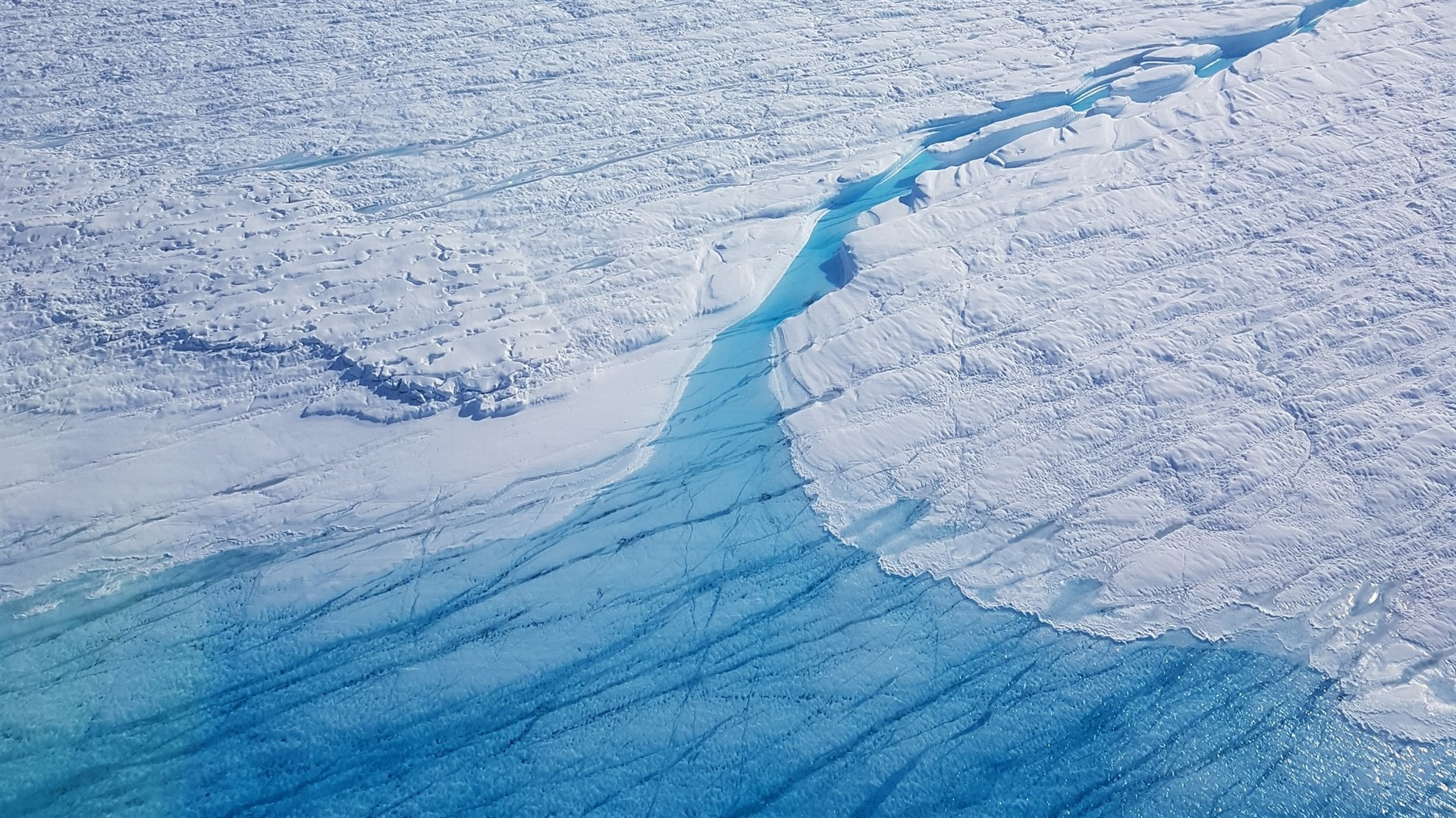
R.I.P. Vangelis “Whenever the running man awakes”

Vangelis in 2012 with stars of the stage adaptation of Chariots of Fire. By Markdawson7 – Own work, CC BY-SA 3.0, https://commons.wikimedia.org/w/index.php?curid=20464114
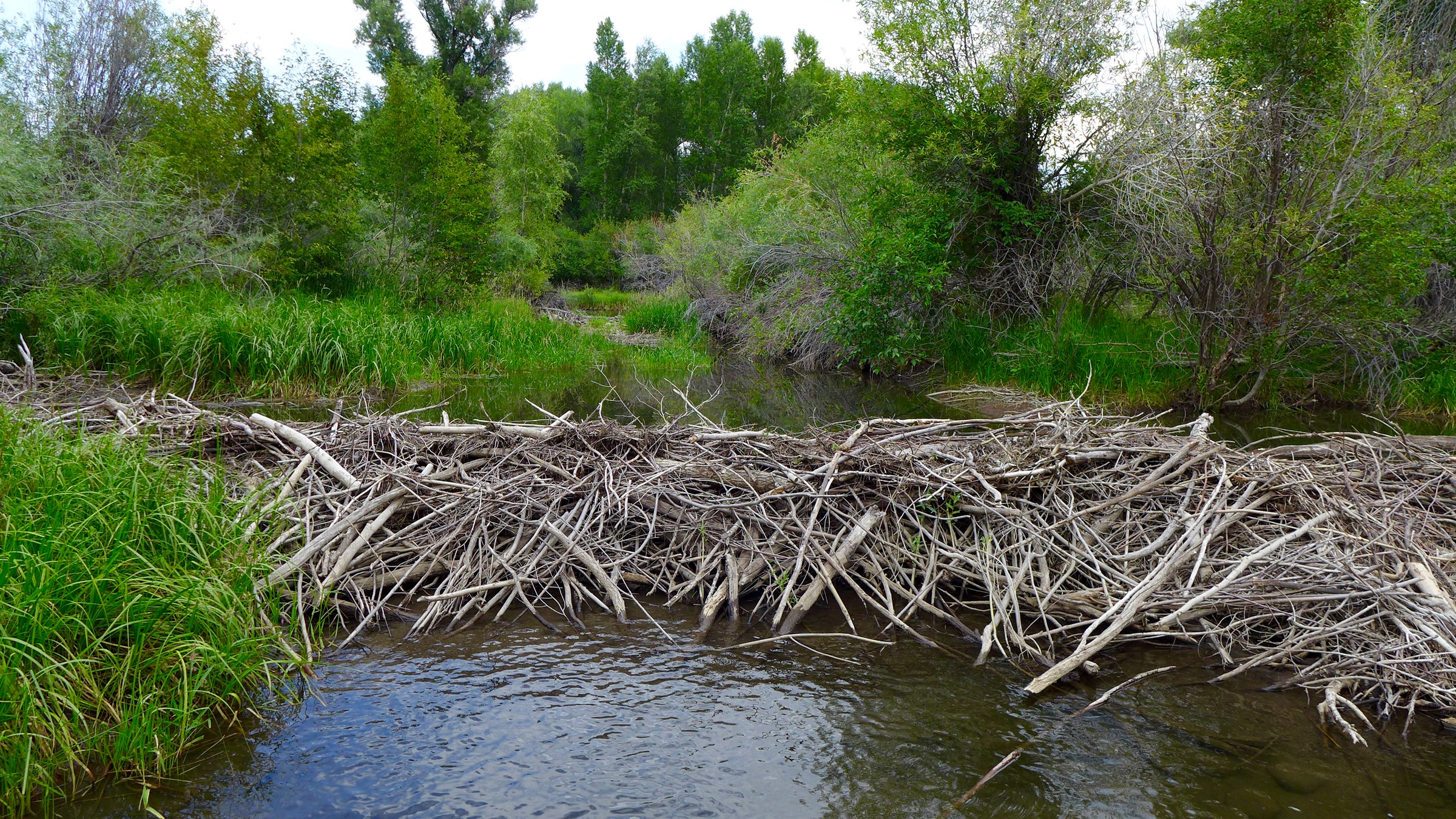
Click the link to read the obituary from The New York Times website (Richard Sandomir):

Vangelis, the Greek film composer and synthesizer virtuoso whose soaring music for “Chariots of Fire,” the 1981 movie about two British runners in the 1924 Summer Olympics in Paris, won the Academy Award for best original score, died on Tuesday in Paris. He was 79…

A self-taught musician, Vangelis (pronounced vang-GHELL-iss), who was born Evangelos Odysseas Papathanassiou, recorded solo albums and wrote music for television and for films including “Blade Runner” (1982), “Missing” (1982) and “1492: Conquest of Paradise” (1992). But he remains best known for scoring “Chariots of Fire.”

The most familiar part of that score — modern electronic music composed for a period film — was heard during the opening credits: a blend of acoustic piano and synthesizer that provided lush, pulsating accompaniment to the sight of about two dozen young men running in slow motion on a nearly empty beach, mud splattering their white shirts and shorts, pain and exhilaration creasing their faces.

Vangelis’s music became as popular as the film itself, directed by Hugh Hudson, which won four Oscars, including best picture. The opening song, also called “Chariots of Fire,” was released as a single and spent 28 weeks on the Billboard Hot 100 chart, including a week at No. 1. The soundtrack album remained on the Billboard 200 chart for 30 weeks and spent four weeks in the top spot. Vangelis said the score immediately came to him as he watched the film in partly edited form…

He was working at the time in his London studio with a Yamaha CS-80 synthesizer.

“It’s the most important synthesizer in my career and the best analog synthesizer design there has ever been,” he told Prog, an alternative music website, in 2016, adding, “It’s the only synthesizer I could describe as being a real instrument.”

R.I.P. Dennis Gallagher: “#Denver is a duller town today” #NorthSide

Dennis Gallagher officiating the Gulch’s wedding vow renewal celebration at the Baldpate Inn in Estes Park June 2003.

Click the link to read Westword’s obituary (Patricia Calhoun). Here’s an excerpt:

Denver is a duller town today. Dennis Gallagher passed away on Friday, April 22, after a short illness. He was 82. Word spread quickly through this city where he was born and raised, this city he’d devoted his life to serving. He did so everywhere from the Colorado Legislature to Denver City Council to the Denver Auditor’s Office, from classrooms to coffeehouses.

Gallagher grew up in north Denver and graduated from Regis University, where he taught off and on for forty years after getting a master’s degree from the Catholic University of America in 1967. Just three years later, he was elected to the legislature…he was still always out in public, hosting his St. Patrick’s Day celebrations, offering tours of cemeteries and other spots around town, and opining on just about everything, with that impish Irish wit and great, deep voice…He seemingly knew everything about Denver and everyone in it, past and present….

Dennis Gallagher’s world was this city. And for so many, he was this city.