Lower Ark district joins federal lawsuit against #Colorado Springs — @ChieftainNews

From The Pueblo Chieftain (Peter Roper):

The Lower Arkansas Valley Water Conservancy District has joined a federal lawsuit against Colorado Springs for not controlling stormwater flooding and discharging pollutants into Fountain Creek and the Arkansas River.

The lawsuit was filed last month in U.S. District Court in Denver by the Environmental Protection Agency and the Colorado Department of Health and Public Environment.

Essentially, the suit argues that Colorado Springs has continued to violate federal clean water standards with discharges into Fountain Creek that sometimes contain high levels of E. coli bacteria and fecal coliform.

The lack of stormwater controls isn’t in question. Colorado Springs officials have negotiated a deal with Pueblo County to spend $460 million over 20 years on flood control.

When the lawsuit was filed, Colorado Springs Mayor John Suthers complained that any money the city spends fighting lawsuits over stormwater flooding would be better spent on fixing the problems.

But the Lower Arkansas board decided last month that too little has been done. Its lawyers urged the board to join the lawsuit to make certain the district participates in any negotiated settlement with Colorado Springs over flooding problems on Fountain Creek.

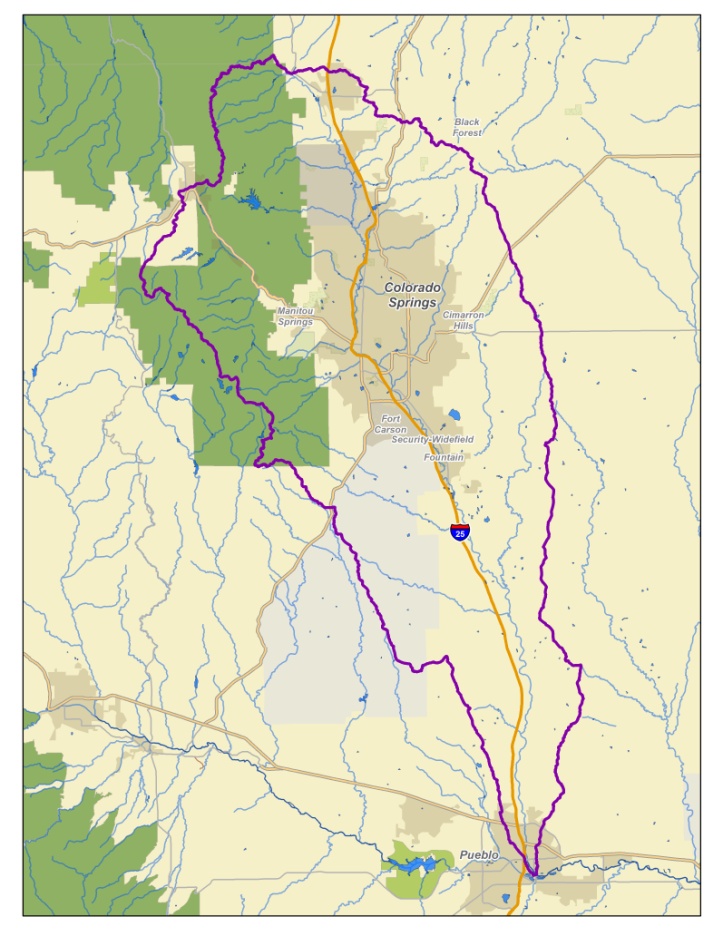
The Fountain Creek Watershed is located along the central front range of Colorado. It is a 927-square mile watershed that drains south into the Arkansas River at Pueblo. The watershed is bordered by the Palmer Divide to the north, Pikes Peak to the west, and a minor divide 20 miles east of Colorado Springs. Map via the Fountain Creek Watershed Flood Control and Greenway District.

#ColoradoRiver District: The 2017 Grant Program cycle opened December 1, 2016 — @ColoradoWater

Deadline for submission of a grant application is January 31, 2017

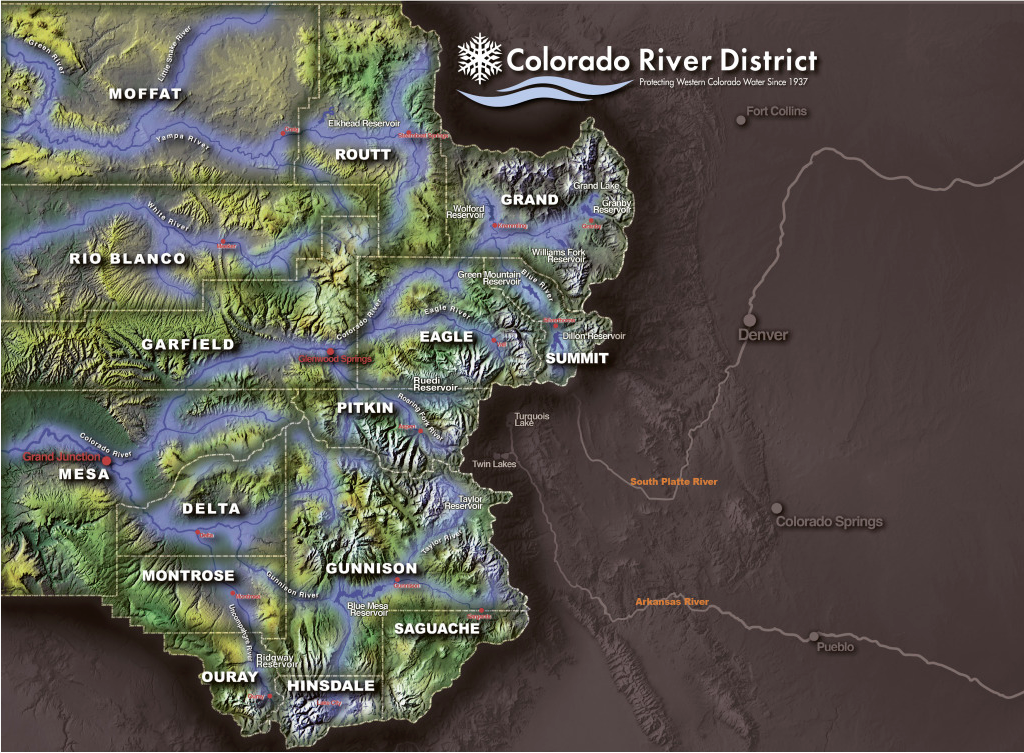
Grant applications for projects that protect, enhance or develop water resources in the 15-county area covered by the District are eligible for funding consideration. This includes all watersheds in north- and central- western Colorado, except the San Juan River basin.

Colorado River District land area.

Eligible projects must achieve one or more of the following:

  • develop a new water supply
  • improve an existing water supply system
  • improve instream water quality
  • improve water use efficiency
  • reduce sediment
  • implement watershed and riparian management actions
  • Past projects have included the construction of new water storage, the enlargement of existing water storage or diversion facilities, rehabilitation of non-functioning or restricted water resource structures, implementation of water efficiency measures and other watershed improvements. Such projects that utilize pre-1922 water rights will be given additional ranking priority over similar projects that do not. Each project will be ranked based upon its own merits in accordance with published ranking criteria.

    Annual Grant Program Standard Guidelines and Criteria

  • 2017 Grant Program Application (PDF fillable)
  • 2017 Grant Program Application (PDF printable)
  • For more information please contact Dave Kanzer or Alesha Frederick at 970-945-8522; Colorado River District, 201 Centennial St., Glenwood Springs, CO 81601 or by e-mail to grantinfo@crwcd.org.

    Please note: The River District is not responsible for lost and/or undelivered applications. The sponsor of the application will receive a confirmation from the River District when an application is received.

    CDPHE: Water Quality Information Bulletin

    Click here to read the bulletin. There will be an informational briefing concerning Clear Creek at the December 12, 2016 meeting.

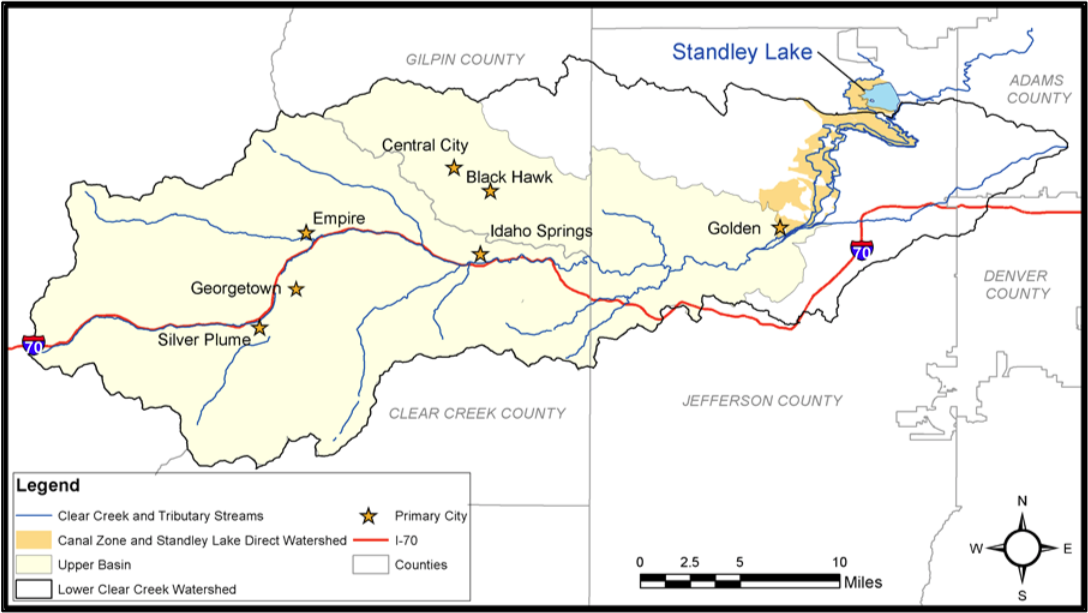
    Clear Creek, Standley Lake watersheds including the Standley Lake Canal Zone via the Clear Creek Watershed Foundation.
    Clear Creek, Standley Lake watersheds including the Standley Lake Canal Zone via the Clear Creek Watershed Foundation.

    @EPA to require mines to offer cleanup assurances — @DenverPost

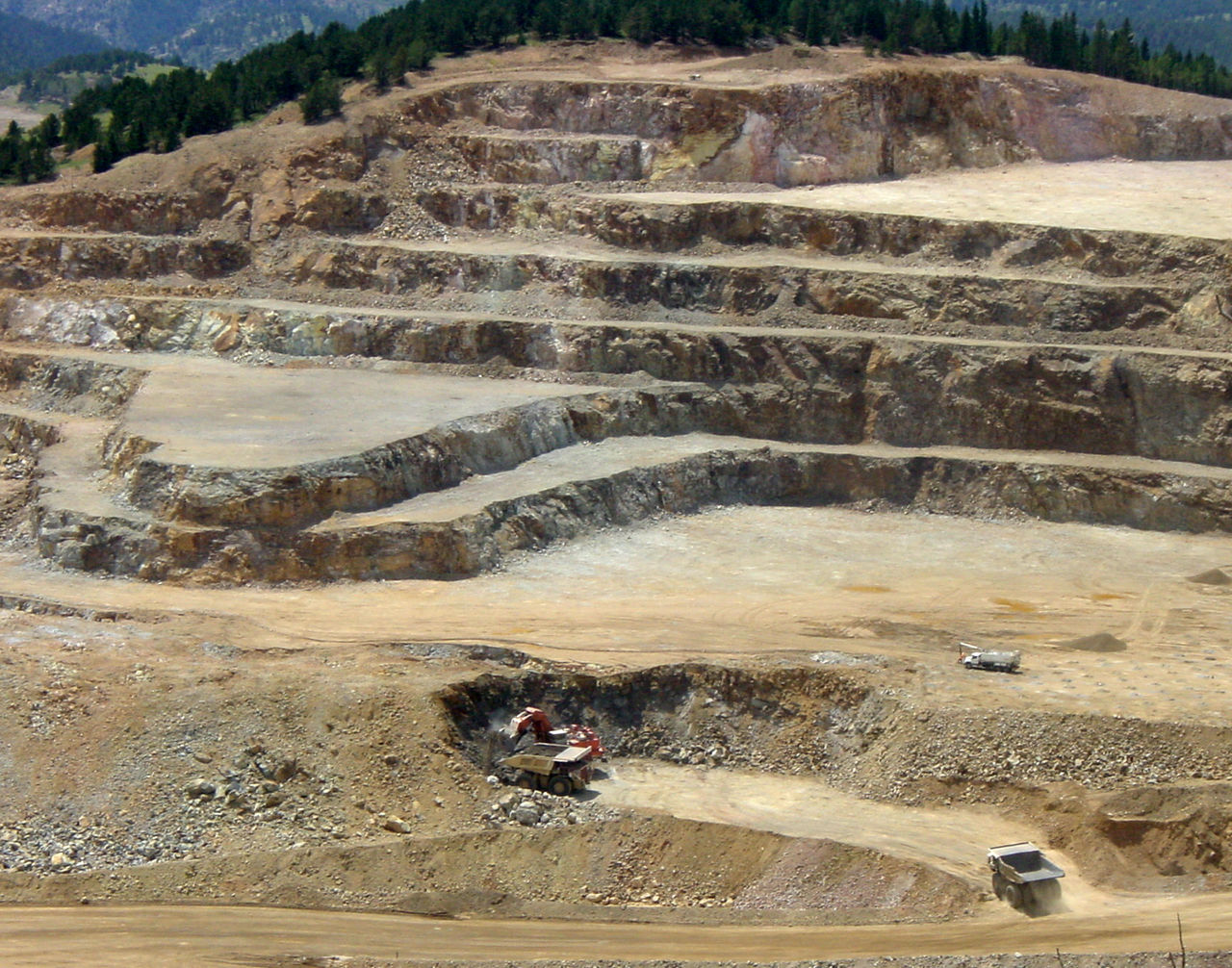
    The Cripple Creek & Victor Gold Mine, formerly and historically the Cresson Mine, is an active gold mine located near the town of Victor, in the Cripple Creek mining district in the US state of Colorado. It is the largest current producer of gold in Colorado, and produced 211,000 troy ounces of gold in 2014. Photo credit Wikimedia.
    The Cripple Creek & Victor Gold Mine, formerly and historically the Cresson Mine, is an active gold mine located near the town of Victor, in the Cripple Creek mining district in the US state of Colorado. It is the largest current producer of gold in Colorado, and produced 211,000 troy ounces of gold in 2014. Photo credit Wikimedia.

    From the Associated Press (Matthew Brown) via the The Denver Post:

    The Environmental Protection Agency on Friday said it plans to require mining companies to show they have the financial wherewithal to clean up their pollution so taxpayers aren’t stuck footing the bill.

    The proposal follows a 2015 court order for the government to enforce a long-ignored provision in the 1980 federal Superfund law.

    The requirement would apply to hardrock mining, which includes mines for precious metals, copper, iron, lead and other ores. It would cover mines in 38 states, requiring their owners to set aside sufficient money to pay for future clean ups.

    The EPA is considering similar requirements for chemical manufacturers, power generation companies and the petroleum refining and coal manufacturing industries.

    From 2010 to 2013, the EPA spent $1.1 billion on cleanup work at abandoned hardrock mining and processing sites across the U.S. [ed. emphasis mine]

    The new rule “would move the financial burden from taxpayers and ensure that industry assumes responsibility for these cleanups,” EPA Assistant Administrator Mathy Stanislaus said.

    Contaminated water from mine sites can flow into rivers and other waterways, harming aquatic life and threatening drinking water supplies. Companies in the past avoided cleanup costs in many cases by declaring bankruptcy…

    The National Mining Association said the new rule was “unnecessary, redundant and poorly constructed,” because existing programs prevent mines from becoming Superfund sites.

    The group accused government officials of overstating the potential risks from modern mining techniques, in a rushed attempt to put a new rule in place before President Barack Obama leaves the White House next month.

    U.S. House Natural Resources Committee Chairman Rob Bishop of Utah and Energy Committee Chairman Fred Upton of Michigan voiced similar concerns. The Republicans said programs in place at the state level already ensure the environment is protected and predicted the EPA proposal would result in a multibillion dollar obligation for the mining industry.

    In documents released with the new rule, the EPA said that since 1980, at least 52 mines and mine processing sites using modern techniques had spills or other releases of pollution.

    There are about 300 hardrock mines in the U.S. Combined they produced about $26.6 billion worth of metals last year, according to mining association Senior Vice President Ashley Burke. Of those mines, the EPA said 221 would be subject to the rule.

    The agency took the first step toward seeking financial assurances on cleanups from hardrock mining companies in 2010 in response to a lawsuit from environmental groups.

    In 2014, frustration with the agency’s slow progress prompted the Sierra Club, Earthworks and other groups to file a second suit that resulted in last year’s court order. A subsequent order in that case requires the EPA to finalize its rule by Dec. 1, 2017.