Creede receives state funding to fix 66-year-old flume — @ChieftainNews

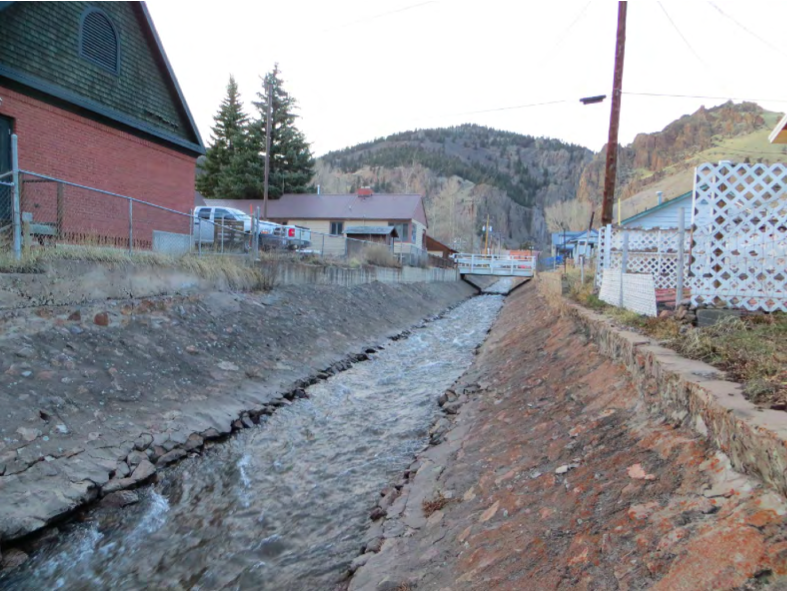
Typical Erosion along the Left and Right Toes of the Willow Creek Flume. Credit Bohannan-Huston Engineering.

From The Pueblo Chieftain (Matt Hildner):

The historic mining town west of the San Luis Valley is in line for a long-awaited fix to the flume that carries Willow Creek through town.

The Colorado Department of Local Affairs awarded $1 million to the town of Creede Tuesday to fix the stone-masonry structure whose potential failure was regarded as a flood threat to much of the town of 425 people.

“This is something we wanted for a long, long time,” Town Manager Clyde Dooley told The Chieftain Wednesday.

The 1.1-mile flume that catches the creek as it tumbles out of a steep canyon was built in 1950 by the U.S. Army Corps of Engineers.

Homes and businesses back onto the flume. Four street bridges, eight foot bridges and water mains also cross the flume’s path.

In a 1989 report, the corps found the structure was nearing the end of its life cycle, with deterioration along the flume’s toe — where the side walls meet the bottom of the flume.

But the town struggled to find matching funds for repairs in the 1990s and when the corps made its regulations more strict following Hurricane Katrina, the deteriorated state of the flume left it outside the agency’s funding stream.

The town also made an unsuccessful attempt to insert a fix into a 2010 federal bill for water projects.

Enter the state’s Department of Local Affairs.

“This just turned out to be perfect timing,” Dooley said. “DOLA is the hero here.”

Dooley also credited Randi Snead, the town’s clerk and treasurer, for developing the current proposal.

The town will contribute $520,000 from reserve funds for construction in addition to budgeting $5,000 annually in the future to meet maintenance demands.

The repairs will fill voids and cracks in the flume and see the installation of concrete curbing along the toes of the channel.

The town hopes it can complete the repairs in August and September to avoid spring runoff and impacting the bulk of summer tourists.
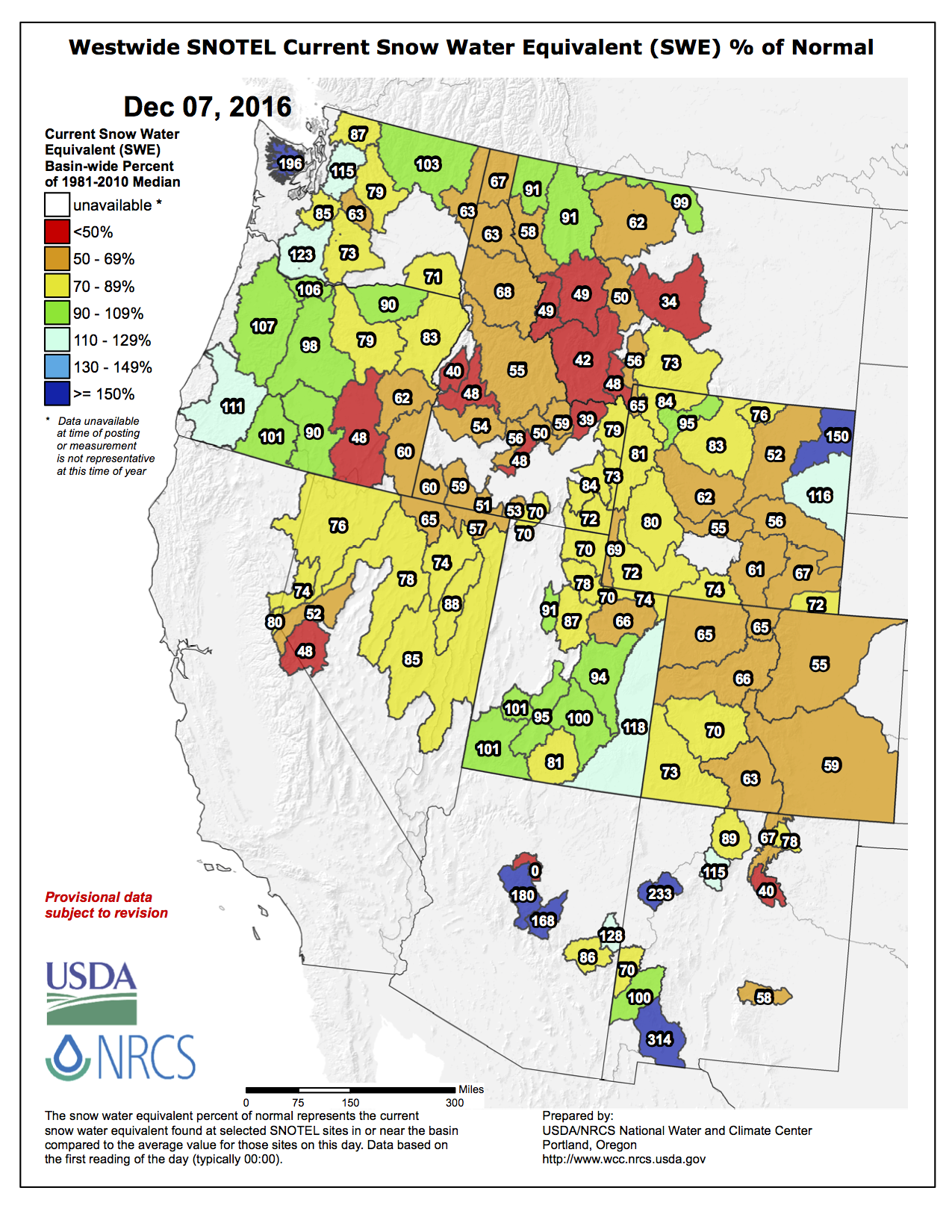
#Snowpack news: San Juan, et. al = 73% of normal, #ColoradoRiver = 66%

Below is the Westwide SNOTEL basin-filled map from this morning.

Westwide SNOTEL basin filled map December 7, 2016 via the NRCS.

The data below is from Sunday and yesterday, before the storms this week.

@ColoradoClimate: Weekly Climate, Water and #Drought Assessment of the Upper #ColoradoRiver Basin #COriver

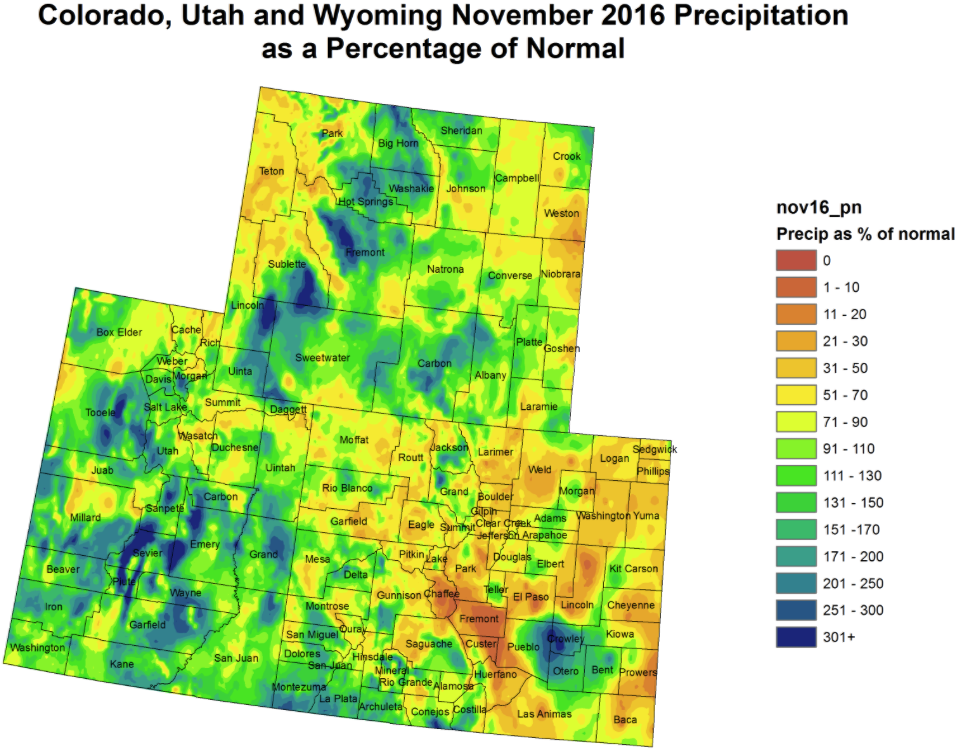
Upper Colorado River Basin precipitation as a percent of normal November 2016 via the Colorado Climate Center.

Click here to read the current assessment. Click here to go to the NIDIS website hosted by the Colorado Climate Center.

Yampa River saw lean autumn flows in 2016 — Steamboat Today

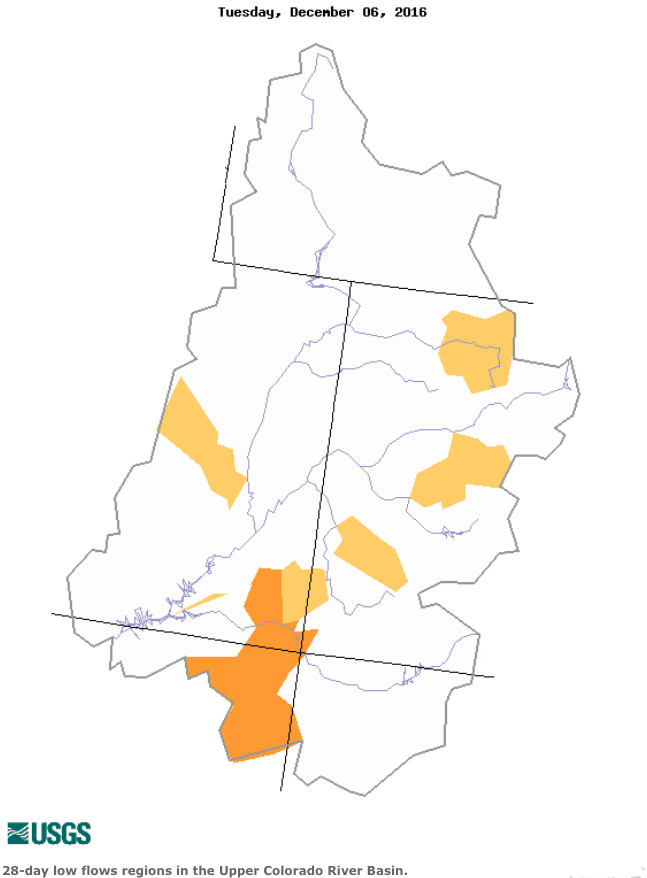
28-Day low flows in Upper Colorado River Basin. Credit @USGS via @ColoradoClimate.

From Steamboat Today (Tom Ross):

The Routt County Board of Commissioners agreed Dec. 6 to renew its $9,660 commitment in 2017 to the water quality monitoring that has been ongoing in the Upper Yampa River Basin since 2011, with the support of the U.S. Geological Survey and other local agencies…

Under the testing regimen, six different sites on the river are tested four times annually to establish the baseline for a healthy river.

In addition, Cowman said the Yampa has been found to have a temperature impairment, and consistent water quality testing over time will help the entities involved in the testing make the case that they’ve been responsive to that condition when the Colorado Water Quality Control Division next focuses on the Yampa.

Steamboat Today reported Dec. 7, 2015, that some high water temperature readings in the river west of Hayden have the potential to lead to a big shift in how a 57-mile stretch of the river is regulated by the state of Colorado.

After a summer of sparse moisture in 2016, the Yampa, where it enters Stagecoach Reservoir, was flowing at 22 cubic feet per second on Sept. 23, representing an historic low, based on 27 years of record.

Managers of the Stagecoach and Catamount dams timed their seasonal draw-down of their reservoirs to benefit the Yampa downstream. And the city of Steamboat and the Colorado Water Trust both arranged to release stored water to boost the river’s flow by 10 cfs well into autumn.

The cost of the water testing in 2017 is up about 2 percent, with the USGS contributing $14,631, or 30 percent, of the total cost of $48,443. Joining the county in contributing 20 percent of the total are the city of Steamboat Springs and the Upper Yampa Water Conservancy District.

The Mount Werner Water and Sanitation District and Morrison Creek Water and Sanitation District are each contributing $2,415, or 5 percent, of the total.

Breckenridge puts new water plant on hold after getting $50 million estimate — Summit Daily News

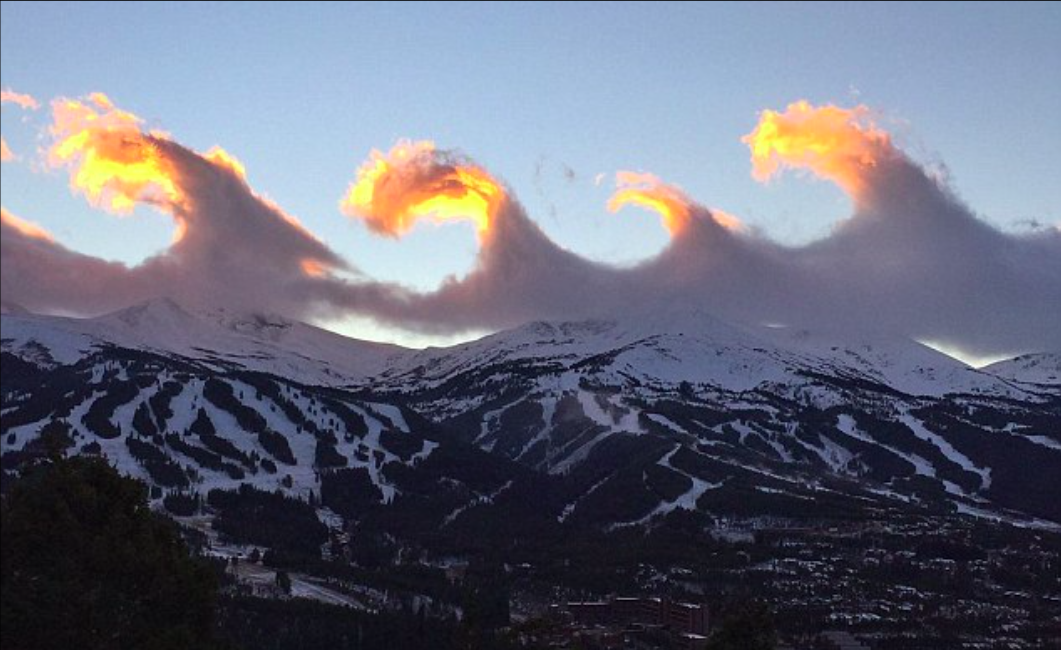
This beautiful pattern emerges in clouds when two different layers of air in the atmosphere are moving at different speeds.  Where the two layers meet, another 'sheer' layer is created that becomes unstable due to the changes in speed. Pictured are Kelvin-Helmholtz clouds recently seen over Colorado Read more: http://www.dailymail.co.uk/sciencetech/article-3301225/What-caused-strange-clouds-form-Colorado-Scientists-explain-weather-pattern-creates-ocean-sky.html#ixzz3qSbT51xB  Follow us: @MailOnline on Twitter | DailyMail on Facebook
This beautiful pattern emerges in clouds when two different layers of air in the atmosphere are moving at different speeds. Where the two layers meet, another ‘sheer’ layer is created that becomes unstable due to the changes in speed. Pictured are Kelvin-Helmholtz clouds recently seen over Colorado
Read more: http://www.dailymail.co.uk/sciencetech/article-3301225/What-caused-strange-clouds-form-Colorado-Scientists-explain-weather-pattern-creates-ocean-sky.html#ixzz3qSbT51xB
Follow us: @MailOnline on Twitter | DailyMail on Facebook

From The Summit Daily News (Kallyn Lamb):

During the budget retreat meeting on Oct. 25, the [Breckenridge Town Council] decided to postpone construction on what would be Breck’s second water plant, in favor of getting more information. Bids originally came in for the plant at around $30 million, but increased to $52 million for the official 2017 budget.

“Everybody was fairly shocked at the bid,” said the town’s mayor, Eric Mamula.

Breck’s town manager, Rick Holman, said that cost of construction has been going up continually year after year, which contributed to the increased cost for the project. Until the town gets the new breakdown in mid-January, Holman said the town is in “wait-and-see mode.” He added that it’s difficult to wait on construction projects because predicting costs can be a roll of the dice.

“When you’re spending that kind of money I think that a second opinion is a smart thing for the government to have,” Holman said.

While the water plant is something the town needs to continue providing for ever-increasing local population and tourist demand, Holman said that the town must find a balance between need and cost.

Mamula said that the council is at a standstill, since they can’t make any decisions on how to move forward until they’ve seen the new plan…

Should the town council decide to move forward with the plant after seeing the new plan in January, Holman said that the 2017 budget would have to be amended. The town is looking at ways to fund the plant, but Holman added that there could be a rise in water rates if the town decided to go ahead with construction.

The Gary Roberts Water Treatment Plant, the town’s current water source, does not have the space for expansion, Holman said. The town will still invest in repairing the 50-year-old plant.

Kim Dykstra, the director of communications for the town, said that the age of plant makes it more likely that it could break down.

The Gary Roberts plant was originally constructed in 1971 and receives its water from snow melt from above the Goose Pasture Tarn Reservoir that flows into the Blue River. After expansions in the late ’80s, the plant had the capacity to run 5 million gallons of water daily.

Dykstra said that the idea for a second water plant was first floated after the Hayman Fire in 2002…

A water task force was created in 2011, but it wasn’t until 2013 that the town did an official feasibility study to try to find the best way to address water use. Dykstra said that the town already possesses the water rights that would enable it to build a second plant because of progressive town council decisions that started as early as the 1950s.

The Gary Roberts plant services around 13,000 single-family-home equivalents in Breckenridge. The new plant would add availability for another 2,000, Dykstra said. While permanent residents are the biggest users of water in the town, she said that tourists make up for a big portion of usage as well. An increasing amount of tourists coming to the town, whether it’s for a day trip or longer, means more demand for water.

Dykstra stressed that part of the reason to add the plant now is to get ahead of water demand.

The feasibility study, released in early 2014, recommended that the second plant operate at 3 million gallons a day to meet the projected demand, with the water intake coming from the Blue River near Lake Dillon.

Breckenridge looked at five different properties for construction of the plant and ultimately decided on the McCain property located north of the town along Highway 9. Since it was land the town already owned, and it was close to an established pipeline, it meant fewer initial costs for taxpayers according to Dykstra.