One year ago, Gov. Hickenlooper presented Colorado’s Water Plan, the result of unprecedented statewide collaboration over 2½ years to ensure sufficient water supplies to keep our cities, farms and environment thriving even as Colorado is expected to add millions of people in coming decades.
Since that time, the Colorado Water Conservation Board and its many partners have started the work of implementing the plan, a process that will unfold over years and be carried forward by all those involved in our water future: ranchers, farmers, cities, water utilities, environmentalists, anglers, developers and many more who care deeply about water’s central place in our beautiful state.
Colorado’s Water Plan includes a series of actions, processes and metrics that put the state and its eight major river basins on a more collaborative path to manage our water in the face of constrained supplies and rising population. These include criteria to guide new storage projects, goals to more smartly share water between farms and cities without the dry-up of agricultural lands, steps to improve degraded streamways and methods and benchmarks for water conservation.
The public has been a full participant in the development of Colorado’s Water Plan, with more than 30,000 comments helping shape the document. Direction from nine basin roundtables representing local interests within each river basin formed the backbone of the document. With such deep public involvement to craft the plan, it’s important Coloradans stay engaged in the work so many are doing to implement it. Through a website, http://www.colorado.gov/pacific/cowaterplan, and updates like this one we are devoted to sharing progress on the plan. Among our many steps forward:
Storage: CWCB is financially supporting a variety of water storage innovations, including a study of options in the South Platte Basin, exploring groundwater storage technology and a spillway analysis to identify places where existing storage could be expanded; water representatives across jurisdictions began work to streamline federal permitting while maintaining strong environmental protections.
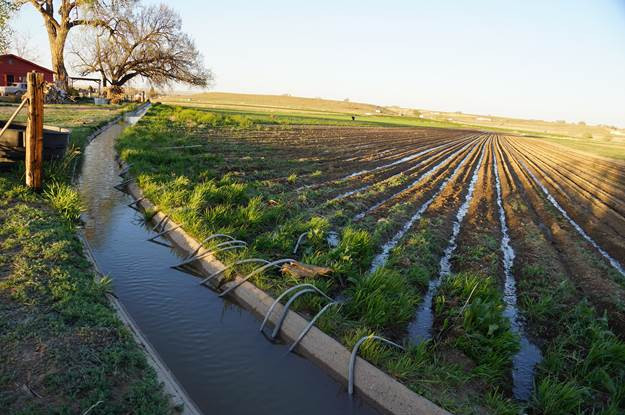
Agriculture: The CWCB and other stakeholders are continuing to explore creative ways to support the temporary transfer of agricultural water that protects farming and meets the water plan goal of sharing 50,000 acre of water by 2050. Workshops and conferences geared toward this end continue and a pilot project in the Arkansas River Basin is in its second year with favorable results.
Environment and recreation: CWCB is securing $5 million for work with basin roundtables and other groups to develop watershed restoration and stream management plans to improve waterways and water quality. The CWCB, in partnership with Colorado Parks and Wildlife, Denver Water and The Greenway Foundation, is funding a large “environmental pool” at Chatfield Reservoir to improve flows and fisheries in the South Platte River through the metro area.
Supply and Demand Planning: The update for the latest Statewide Water Supply Initiative began this year and will refresh Colorado’s baseline information on water supplies, data critical to work outlined in the water plan. CWCB and the Interbasin Compact Committee are revising Water Supply Reserve Fund criteria to ensure funding requests for water-related projects meet a standard that aligns with water plan goals and measurable outcomes.
These examples serve as only a sampling of the work launching in 2016 to implement Colorado’s Water Plan. Other activities across the state, including major storage projects that won the state of Colorado’s seal of approval using water plan criteria and a near-term funding plan to support storage, education, conservation, reuse and agricultural actions called for in the plan, also signal initial implementation steps.
The CWCB is moving on many fronts to ensure Colorado’s Water Plan unfolds in a way that assures we manage our precious water supplies to preserve the best of Colorado while allowing cities, farms and our environment to flourish amid continued growth. In the same way the CWCB, General Assembly, water providers, agricultural organizations, environmental groups, local governments, business and the public at large collaborated to build Colorado’s Water Plan, we look forward to our continued work together to put the plan to work.
James Eklund is the director of the Colorado Water Conservation Board. Russ George is chairman of the 15-member board governing CWCB staff.