
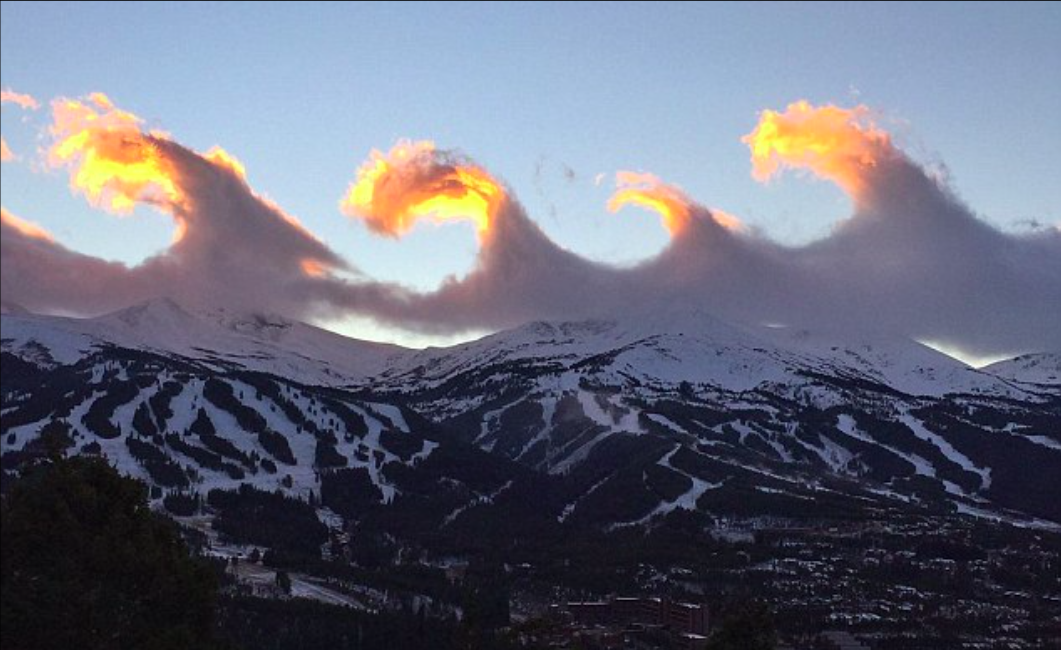
Read more: http://www.dailymail.co.uk/sciencetech/article-3301225/What-caused-strange-clouds-form-Colorado-Scientists-explain-weather-pattern-creates-ocean-sky.html#ixzz3qSbT51xB
Follow us: @MailOnline on Twitter | DailyMail on Facebook
From The Summit Daily News (Kallyn Lamb):
During the budget retreat meeting on Oct. 25, the [Breckenridge Town Council] decided to postpone construction on what would be Breck’s second water plant, in favor of getting more information. Bids originally came in for the plant at around $30 million, but increased to $52 million for the official 2017 budget.
“Everybody was fairly shocked at the bid,” said the town’s mayor, Eric Mamula.
Breck’s town manager, Rick Holman, said that cost of construction has been going up continually year after year, which contributed to the increased cost for the project. Until the town gets the new breakdown in mid-January, Holman said the town is in “wait-and-see mode.” He added that it’s difficult to wait on construction projects because predicting costs can be a roll of the dice.
“When you’re spending that kind of money I think that a second opinion is a smart thing for the government to have,” Holman said.
While the water plant is something the town needs to continue providing for ever-increasing local population and tourist demand, Holman said that the town must find a balance between need and cost.
Mamula said that the council is at a standstill, since they can’t make any decisions on how to move forward until they’ve seen the new plan…
Should the town council decide to move forward with the plant after seeing the new plan in January, Holman said that the 2017 budget would have to be amended. The town is looking at ways to fund the plant, but Holman added that there could be a rise in water rates if the town decided to go ahead with construction.
The Gary Roberts Water Treatment Plant, the town’s current water source, does not have the space for expansion, Holman said. The town will still invest in repairing the 50-year-old plant.
Kim Dykstra, the director of communications for the town, said that the age of plant makes it more likely that it could break down.
The Gary Roberts plant was originally constructed in 1971 and receives its water from snow melt from above the Goose Pasture Tarn Reservoir that flows into the Blue River. After expansions in the late ’80s, the plant had the capacity to run 5 million gallons of water daily.
Dykstra said that the idea for a second water plant was first floated after the Hayman Fire in 2002…
A water task force was created in 2011, but it wasn’t until 2013 that the town did an official feasibility study to try to find the best way to address water use. Dykstra said that the town already possesses the water rights that would enable it to build a second plant because of progressive town council decisions that started as early as the 1950s.
The Gary Roberts plant services around 13,000 single-family-home equivalents in Breckenridge. The new plant would add availability for another 2,000, Dykstra said. While permanent residents are the biggest users of water in the town, she said that tourists make up for a big portion of usage as well. An increasing amount of tourists coming to the town, whether it’s for a day trip or longer, means more demand for water.
Dykstra stressed that part of the reason to add the plant now is to get ahead of water demand.
The feasibility study, released in early 2014, recommended that the second plant operate at 3 million gallons a day to meet the projected demand, with the water intake coming from the Blue River near Lake Dillon.
Breckenridge looked at five different properties for construction of the plant and ultimately decided on the McCain property located north of the town along Highway 9. Since it was land the town already owned, and it was close to an established pipeline, it meant fewer initial costs for taxpayers according to Dykstra.