Wastewater districts approve agreement to research new plant and potential consolidation — The #PagosaSprings Sun

Wastewater Treatment Process

Click the link to read the article on the Pagosa Springs Sun website (Derek Kutzer and Josh Pike). Here’s an excerpt:

On March 21, the board of the Pagosa Springs Sanitation General Improvement District (PSSGID), which also sits as the Pagosa Springs Town Council, voted to approve a new memorandum of understanding (MOU) with the Pagosa Area Water and Sanitation District (PAWSD)…The PAWSD board approved the MOU at its March 14 meeting…

The new MOU establishes a framework for a potential merger of the two entities, exploring the idea of a new regional wastewater treatment plant at the southern end of Yamaguchi Park, which would eliminate PSSGID’s reliance on pumping its wastewater 7 miles uphill to the PAWSD-run Vista Wastewater Treatment Plant.

The agreement explains that the PSSGID has faced significant challenges maintaining its uphill wastewater conveyance system, including more than $1 million in pump replacement costs.  Additionally, there remains serious concern about the long-term viability of this system, which has significant problems with root intrusions, pipe deterioration and clogging that result in significant inflow and infiltration (I and I) of water into the system, the MOU states.

The new agreement comes on the heels of a town-commissioned 2023 study by Roaring Fork Engineering that examined the town’s options, including consolidation with PAWSD. The study concludes that, if a merger occurred, the community might be better served by a single wastewater treatment plant, which would likely be located in the southern portion of Yamaguchi Park, than by the current pumping arrangement, the MOU states.

Solving Water Crises Begins With Good Data — Brian Richter (Sustainable Waters) #ColoradoRiver #COriver #aridification

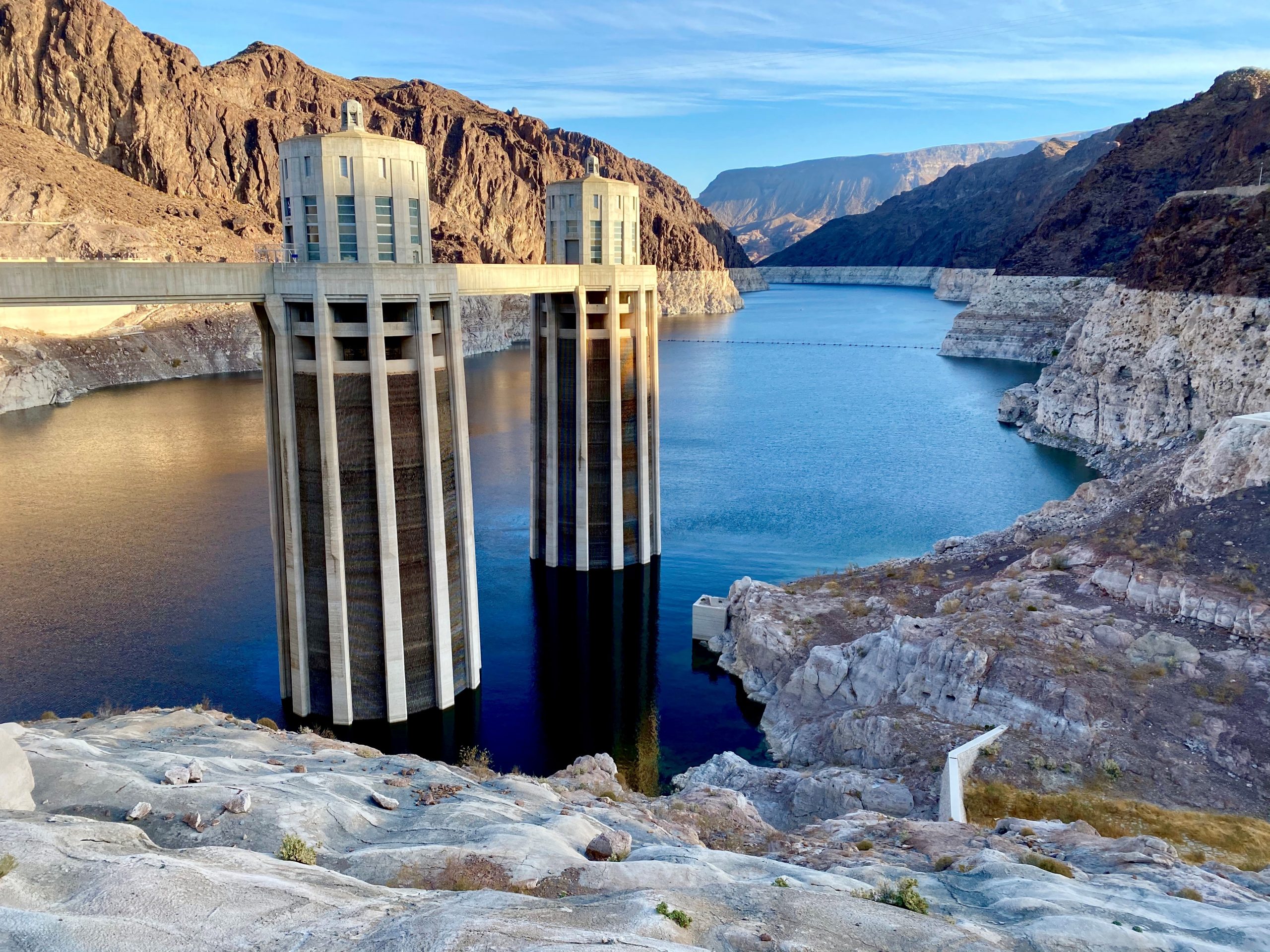
Lake Mead, December 2020. Photo credit: Brian Richter

Click the link to read the article on the Sustainable Waters website (Brian Richter):

March 28, 2024

Note: This blog post was originally published in Research Communities by Springer Nature. Media coverage of this story can be found at the following links:

LA Times

Salt Lake Tribune

High Country News

ABC News

Newsweek

NPR

KNAU Arizona Public Radio

Courthouse News Service

Negotiations over future allocations of water from the Colorado River (southwestern US) are contentious, and intensifying. A new study providing comprehensive accounting for all uses of the river’s water can aid design of strategies for bringing use back into balance with available supplies.

The Colorado River in the southwestern US is getting a lot of media attention lately, for good reason. Since 2000, more water has been consumed from the river basin and its reservoirs than melting snows and summer monsoons have been able to replenish. As a result, Lakes Mead and Powell — the two largest reservoirs in the US — are now three-quarters empty, the river no longer reaches the Gulf of California in Mexico,  and persistent water shortages threaten the security of cities, farms, electricity generation, recreation, and ecological health.

As I’ve long advised my university students and fellow water professionals, any efforts to resolve a water crisis must be founded on  accurate and complete data characterizing available water supplies and uses. Detailed knowledge of how and where a river’s water is being used can aid design of strategies and plans for bringing water use back into balance with available supplies, while ensuring that sufficient water remains in freshwater ecosystems to sustain their health. Yet despite the Colorado River’s importance to more than 40 million people and more than two million hectares (>5 million acres) of cropland,  a full sectoral and crop-specific accounting of where all of the river’s water goes en route to its delta has never been attempted, until now.

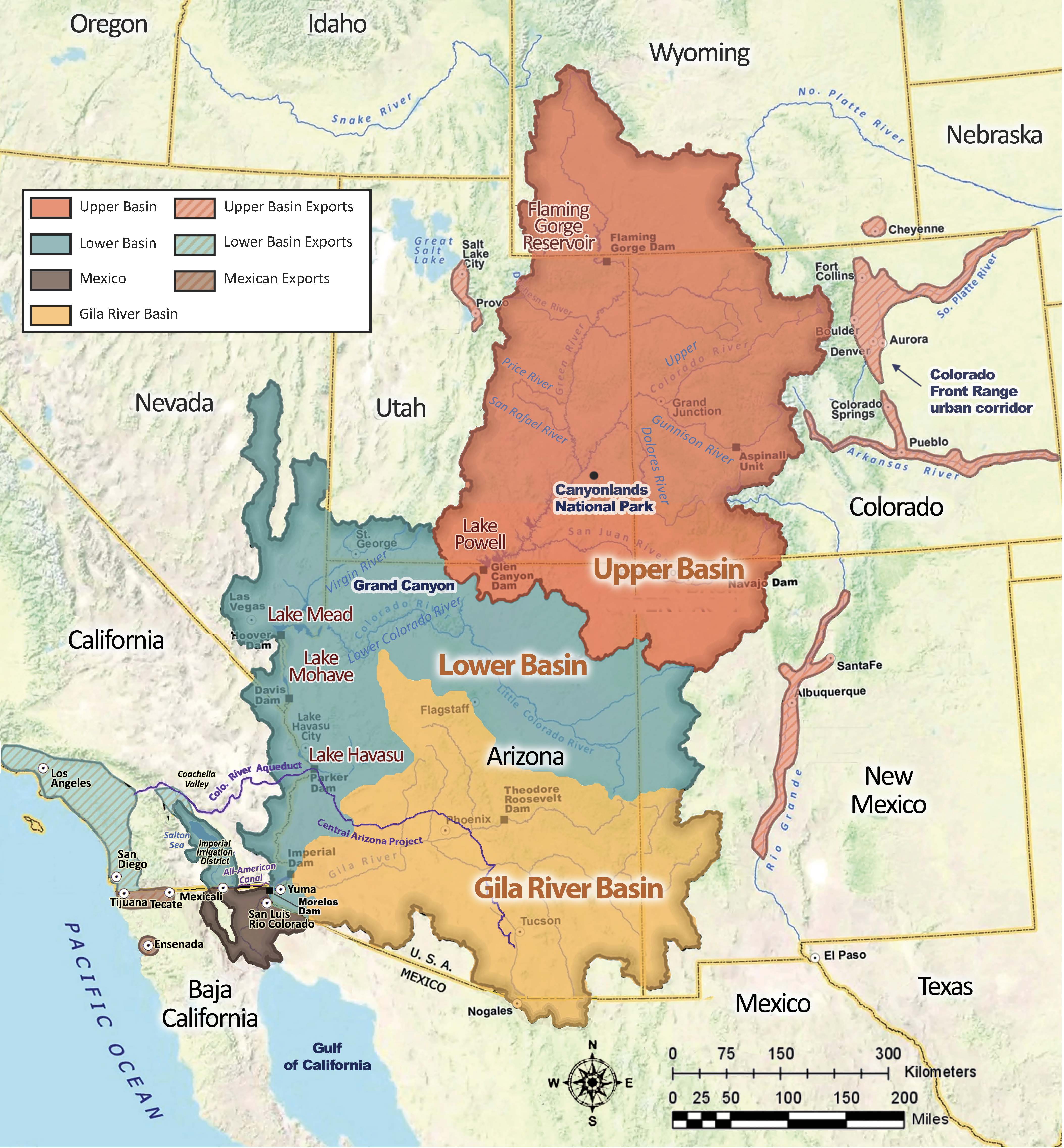
The seven ‘accounting units’ used in this study are displayed here. Credit: Sustainable Waters

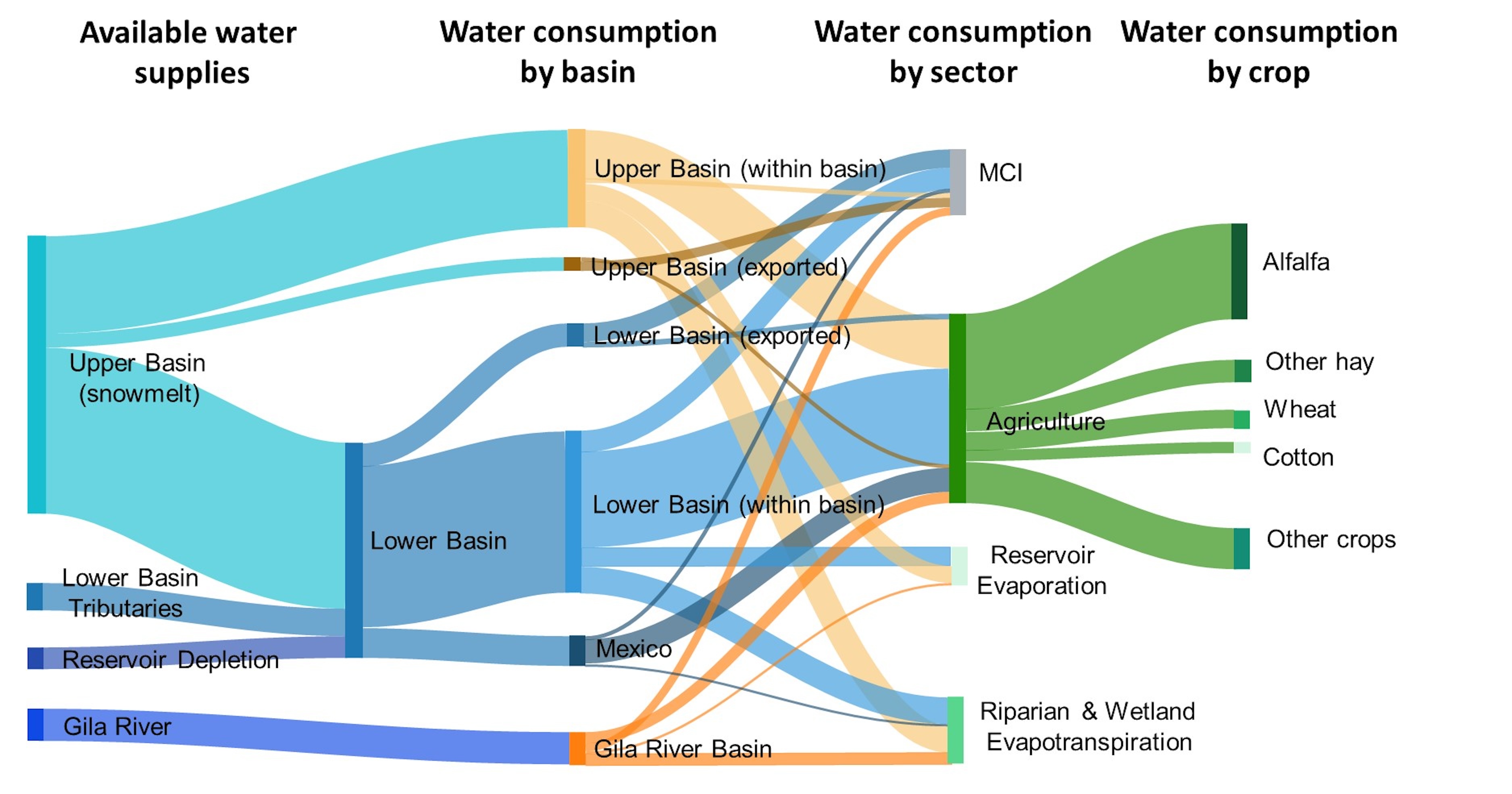
We have just published a complete water budget for the Colorado River in Communications Earth & Environment. Ironically, our motivation for compiling this water budget  emerged from our frustrations over the manner in which our previously published research was being regularly miscommunicated in the media! In 2020, we  published a paper in Nature Sustainability that included a partial water budget for the Colorado River. That study did not attempt to account for the 12% of the river’s water that is exported outside of the basin’s physical boundary, nor did it account for the substantial volume of water (30%) that either evaporates from reservoirs or is evapotranspired from riparian and wetland vegetation. However, many media reporters overlooked the fact that our water budget did not account for all water consumed from the river basin, and media statements based on our research began suggesting that “Nearly 80% of the Colorado River’s water goes to irrigated agriculture,” which is not accurate, and is misleading. As our new study reports, when accounting for ALL water consumed from the river,  the proportion of river water going to farms amounts to just over 50%. [ed. emphasis mine]

Water consumption by sector in the Colorado River Basin and sub-basins (including exports), based on 2000-2019 averages. Credit: Sustainable Waters

These differences in water accounting matter greatly in a river basin with so much at stake. The region has been experiencing a ‘megadrought’ since 2000 that has reduced river flows by  20%. Climate scientists assert that this is a bellwether of long-term, climate-driven aridification in the region. It is of critical importance that the state and federal negotiators presently debating future water allocations are being informed with an accurate tabulation of where all of the river’s water goes presently. Such accounting is essential in designing strategies for rebalancing water consumption with available supplies.

Our water budget details how and where the water is being consumed, including estimates of the volume of water being consumed by individual crops in different areas of the river basin. This level of detail can help water managers understand how much water might be saved by shifting to alternative crops, or by repurposing some portion of farmlands for habitat restoration or renewable energy generation. It is also important to understand trends in water use; our data indicate that during 2000-2019, combined urban and agricultural water use in the Upper Basin increased by 5% while these uses decreased in the Lower Basin by 24%.

An accurate tabulation of a water budget can also be useful to media reporters in formulating comparisons among water-use categories that can capture reader attention, educating them in the process. For instance, our study found that water consumed in irrigated agriculture is three times greater than the volume used in cities, and in fact, the irrigation of just two crops — alfalfa and grass hay fed to cows for beef and dairy production — consumes as much water as all of the cities using Colorado River water.

Another important achievement of our study was our estimation of the volume of water being consumed by riparian and wetland vegetation through evapotranspiration.  Over recent decades, this volume has been reduced considerably because of the drying of the river’s delta in Mexico, which wiped out a vast and highly productive wetland along with the native tribe of Cucupa that depended on the delta’s natural bounty.  If human uses of the river’s water are not substantially reduced, and climate warming continues to reduce the river’s natural flow, more losses of riparian and wetland vegetation — and greater imperilment of native species — can be expected.

Summary of the Colorado River Basin’s water supplies (left side) and all water consumed in each sub-basin, in each water use sector, and by individual crops. All estimates based on 2000-2019 averages. MCI = municipal, industrial, and Industrial uses. Credit: Sustainable Waters

As Spring Shifts Earlier, Many Migrating Birds Are Struggling to Keep Up — Audubon #ActOnClimate

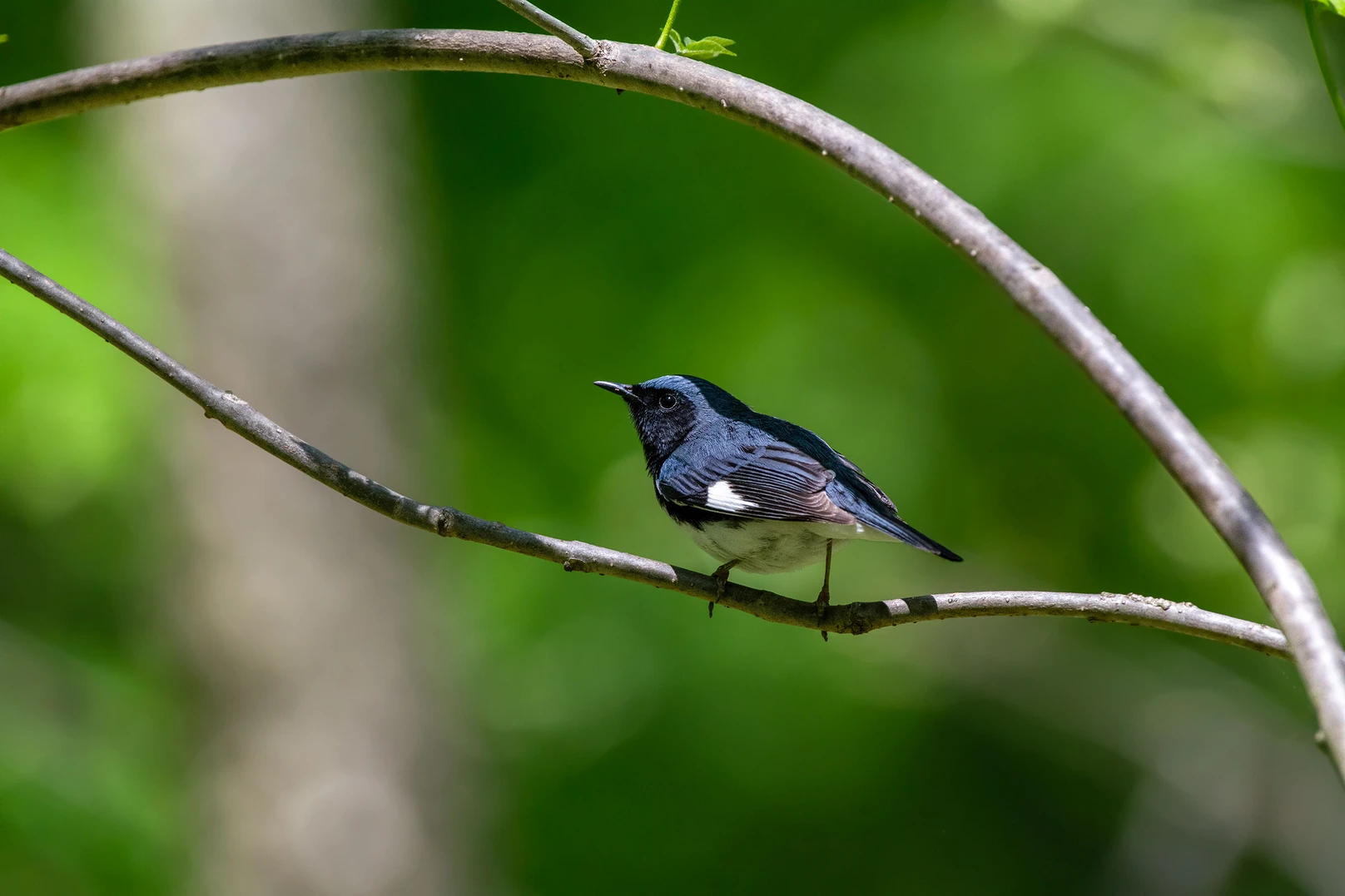
Black-throated Blue Warbler. Photo: Eric Schertler/Audubon Photography Awards

Click the link to read the article on the Audubon website (Maddie Burakoff):

March 7, 2024

With the climate warming, leaves and blooms are popping out ahead of schedule. A wide-ranging new study shows why this trend is troubling for a variety of bird species.

For migrating birds, timing is key. Their journeys require massive amounts of energy, so they need plenty of fuel on their way, and after they get to their breeding grounds, they’ll have hungry chicks to feed, too. “Every day during migration, they’re just on this trade-off between starving to death and being able to continue forward,” says Morgan Tingley, an ornithologist at UCLA. “When they’re not flying, they’re mostly voraciously eating.”

These travelers rely on the newly-available resources brought by spring, such as leaves, flowers, and the insects that come out to munch on them. But that abundance of resources dies down later in the season—and if birds arrive at a stopover or breeding site after this peak period of “spring green-up,” they might miss out on the feeding frenzy.

Climate change is raising the risk of this kind of timing mismatch. As temperature and precipitation patterns shift, and spring’s “green-up” arrives earlier and earlier, a major question for scientists has been: Can birds keep up by changing their migrations? According to a sweeping study published this week in the journal PNAS, a wide range of species may already be falling behind. 

“We’re used to thinking about warming with climate change,” says study author Scott Loss, an ecologist at Oklahoma State University. “But we’re changing the seasons, the seasonality, all across Earth.” Just this year, following a mild winter and record-warm February, leaves and blooms are already popping out, in some cases weeks ahead of their usual schedules; parts of the West Coast are seeing some of their earliest spring leaf-outs on record.

The new study shows this isn’t an anomaly. Loss and his team analyzed the migratory routes of 150 bird species, from hawks to hummingbirds, that breed in North America. They found that spring green-up was indeed moving earlier across birds’ flight paths, according to satellite observations between 2002 and 2021. 

They then stacked those spring shifts against birders’ observations compiled from eBird, and found that migrators generally weren’t keeping pace: “Most of these species were more in sync with past long-term averages of green-up than with current green-up,” says author Ellen Robertson, who worked on the study as a postdoctoral researcher at Oklahoma State University. It’s a concerning mismatch, she says, since it suggests certain birds may not be flexible enough to adapt to a rapidly changing climate. Rather than deciding when to travel based on current conditions, some species may have migratory behavior that is hard-wired into their genes or learned from other birds—factors that could take generations to shift.

These findings add to a growing body of evidence suggesting spring migration is falling out of sync with food sources, says Stephen Mayor, an ecologist at the Ontario Forest Research Institute who was not involved with the study. “This paper expands on previous work to show that the phenomenon is not unique to songbirds, but is common across bird groups,” Mayor says in an email. The analysis covered everything from ducks and geese to kites and woodpeckers. 

While the pattern of mismatch showed up across the board, longer-distance migrants—such as vireos and warblers that winter in Central or South America—seemed to have extra trouble adjusting to year-to-year changes. Their schedules appeared to be more tied to the calendar, possibly relying on cues like changing daylight to tell them when to set off, Loss says.

Tingley, who was not involved with this new study, has seen similar patterns in his research: “Most birds can’t keep up well, but there’s a real range,” he says. Short-distance migrants like Eastern Phoebes can more closely track conditions on the ground, which could help them adapt when those conditions change. But “if you’re a bird that’s wintering in South America, you have no understanding, no ability to know whether or not it’s an early spring or late spring here in North America,” Tingley says. “Those are the birds that are really falling behind.”

If migrants can’t find enough sources of food, they may not be able to survive their journeys, or could produce fewer offspring when they arrive, Loss says. And these earlier springs are part of a broader set of challenges for birds and other migratory animals, Robertson points out, ranging from sea turtles to wildebeest. A recent United Nations report found that one out of every five migratory species they tracked was at risk of extinction, battered by threats like habitat loss and overhunting, as well as other risks brought by climate change. 

Still, more research is needed to understand exactly how shifting seasonal schedules are affecting bird survival. “The consequences for bird populations are potentially catastrophic, but also not yet entirely clear,” Mayor adds.

There is hope, for example, that even if they can’t shift their migrations, birds can adapt in other ways, like by shortening the window of preparation before they lay eggs—which some species are already doing, Tingley points out. Chicks in particular need to eat lots of insects, so it’s important that their hatches line up with periods of bug abundance. “They’re advancing their breeding, even when they cannot advance their migration,” he says, but it’s not known to what extent these kinds of changes can make up for lost time. 

“It could be that even by trying in all these different ways to adapt to climate change, it’s still not enough,” Tingley says. “And at what point that becomes really, really bad for populations is a really big remaining question.”

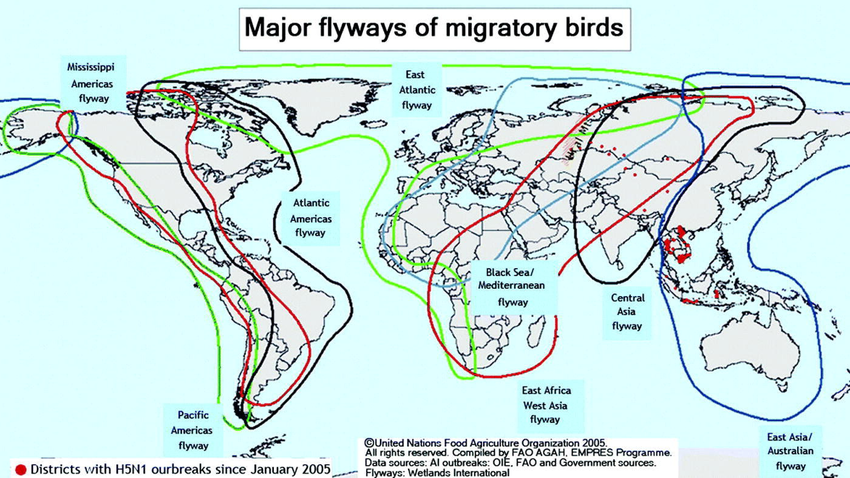
Map showing the global routes of migratory birds. Credit: John Lodewijk van Genderen via Reseachgate.net

2024 #COleg: Wolves, water and wildlife: How will this year’s state budget impact the Western Slope? — Steamboat Pilot & Today

State Capitol May 12, 2018 via Aspen Journalism

Click the link to read the article on the Steamboat Pilot & Today website (Elliot Wenzler). Here’s an excerpt:

March 29, 2024

The budget, which is not yet finalized, includes funding for non-lethal wolf deterrence, water litigation and wildlife management. The six-member Joint Budget Committee, which writes the state budget, settled on a $40.6 billion budget that would take effect July 1…

Water

The proposed budget also includes about $300,000 for two additional full-time employees in the Department of Law to help secure the state’s water interests…Colorado is part of nine interstate water compacts, one international treaty, two U.S. Supreme Court decrees and one interstate agreement. 

“As climate change and population growth continue to impact Colorado’s water obligations, the DOL’s defense of Colorado’s water rights is more critical than ever,” according to the document. 

One of the new employees, a policy analyst, will monitor government regulations and neighboring states’ activities on water policy. The other position will “bolster the representation and litigation support of the DOL across the various river basins,” support the state’s efforts to negotiate Colorado’s water and compact positions and communicate with the state’s significant water interests.