
Click the link to read the article on The Land Desk website (Jonathan P. Thompson):
April 26, 2024
😀 Good News Corner 😎
Now this is what I’m talking about: Last week, the Biden administration forked out $7 billion to states, tribal nations, and non-profits to carry out its Solar for All program aimed at expanding rooftop and residential solar and energy storage access to low-income folks and other underserved communities. About $1.7 billion of that cash will go to the West (see breakdown below). This is what I call a win-win-win-win situation:
- Win 1 = It will add more solar power to the nation’s energy mix, hopefully displacing some fossil fuel generation, which will result in cleaner air and fewer greenhouse gas emissions.
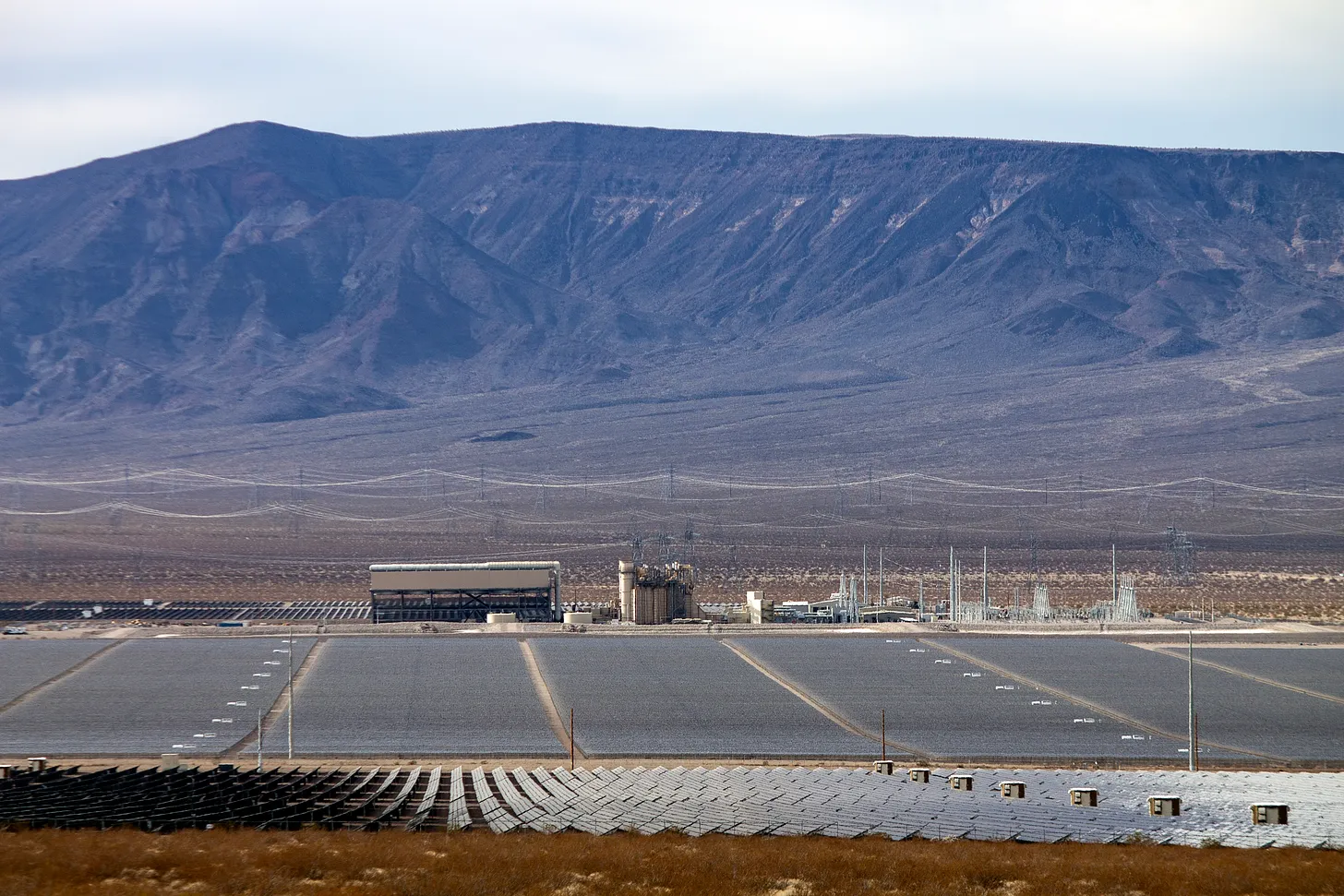
- Win 2 = This added solar will be on rooftops or vacant lots in or near towns or cities, reducing the need to blanket the desert with photovoltaics, which can be hugely destructive to ecosystems and wildlife habitat.
- Win 3 = Rooftop and community-level solar installations will increase residents’ self-sufficiency and reduce dependency on the grid, which is becoming less and less reliable as more frequent and severe extreme weather events damage infrastructure and utilities are forced to shut off power to reduce wildfire hazard. Plus, many homes that lack access to electricity, especially on tribal lands, will now have power.
- Win 4 = This program has the potential to radically transform the residential solar landscape, redistributing this exclusive amenity now reserved to homeowners who can afford to spend tens of thousands of dollars upfront on a solar system, to, well, all of us, including renters.
Recipients include:
- Colorado Energy Office: $156 million for single-family and multifamily rooftop solar statewide.
- New Mexico Energy, Minerals, & Natural Resources Department: $156 million to “help overcome existing barriers to widespread adoption of distributed solar generation” by expanding access to shared solar beyond the new community solar program.
- Utah Office of Energy Development: $62 million to launch a new program to “strengthen the market for deploying residential-serving solar … for disadvantaged and low-income homes”
- Montana and Wyoming and Idaho, Bonneville Environmental Foundation: $131 million to “expand economic and environmental benefits of solar to low-income, tribal, and disadvantaged communities.”
- Colorado-based Oweesta Corporation: $156 million to “address adoption barriers to Native residential and community solar deployment” in tribal lands across the nation.
- Executive Office of the State of Arizona: $156 million to “bring the benefits of the state’s abundant solar resources to the state’s low-income and disadvantaged communities.”
- California Infrastructure Economic Development Bank: $250 million to reach “the homes and businesses statewide that are most in need of affordable, reliable clean energy.”
- Nevada Clean Energy Fund: $156 million
- Hopi Utilities Corporation: $25 million to deploy residential solar and storage systems on the Hopi Reservation, where 35% of households do not have electricity and those that do experience frequent and extended outages.
- GRID Alternatives (Western Indigenous Network Solar for All) $62 million. Provides grants and incentives and technical assistance to deploy tribal residential solar, prioritizing communities in Arizona, Colorado, Nevada, New Mexico, and Utah.
- Alaska Energy Authority, $62 million, to partner with Alaska Housing Finance Corporation to deploy solar photovoltaic infrastructure statewide.
- Oregon Department of Energy, $87 million
- Washington State Department of Commerce, $156 million
- Alaska, Tanana Chiefs Conference $62 million to provide tribal residents with residential and community solar.
***
And the good news keeps a coming: Wind, solar, hydropower, and geothermal generation supplied more than 100% of California’s energy demand on 39 of 47 days this spring. It wasn’t all day, by any means, but anywhere from about 15 minutes on some days to just over nine hours on April 20.
That is to say that a state of 39 million people, with one of the world’s largest economies, ran on non-fossil-fuel energy sources for more than nine hours. That’s a big deal.
Sure, it was on a Saturday in spring, when power demand tends to be lower, and on 4/20, when I guess a lot of people might have been outside smoking dope, which may or may not have affected electricity use. And a small percentage of that power came from large hydropower dams, which have their own problems and which California does not apply toward its renewable portfolio standards. Still, it’s a milestone that wasn’t imaginable a couple of decades ago, when coal generation dominated the power grid and utility-scale solar and wind power barely registered.
Most of the power came from utility-scale solar installations (California grid operators don’t track rooftop solar output, but it contributed by reducing overall demand). In fact, the state’s collective solar systems not only met demand, but exceeded it enough to charge grid-scale batteries and still have enough left over to export to other states. On some days there was so much solar they had to curtail generation — or basically throw it away.
Here’s what it looked like:


And then there’s the dreaded solar duck curve to deal with. This refers to the shape of the electricity net-demand graph on sunny days (net-demand is determined by subtracting solar and wind supply from demand since they aren’t “dispatchable” power sources). On a number of days this spring, solar output was so high that it pushed the net-demand curve down into negative territory in the middle of the day. The real problem’s start when the sun sets and solar output suddenly diminishes. The net-demand curve shoots back up, forcing grid operators to fire up natural gas generation to “follow the load,” or meet demand.
But even that dynamic is changing as an ever-increasing amount of that late afternoon load spike is being met with power from grid-scale batteries that had been charging all day. On the evening of April 16, for example, another milestone was reached when battery storage discharge became the largest energy source on California’s grid, contributing nearly as much power as natural gas and nuclear generation combined for about an hour. Just this week, California announced it had surpassed 10,000 megawatts of battery storage capacity — a 1,250% increase from just five years ago.
Batteries alone, however, won’t get California or the West to 100% clean energy. The region will also need more of what’s known as “geographic smoothing,” or moving power around the region to fill gaps left when wind and solar generation drop off. This might include sending Wyoming wind power to California when the sun stops shining, or shipping California solar to Colorado during the middle of the day. Achieving this will require better regional integration of the grid and power markets. Just yesterday the Biden administration announced a plan to spend $331 million to help build out transmission lines, an important step in realizing this goal.
Read more about the Duck Curve:
The Energy Transition and Public Lands, Part III — December 15, 2021.

A recap of Part I and Part II: Climate change is wreaking havoc on the electricity grid as extreme heat spurs an increase in demand for p…
***
NEWS: Another proposed pumped hydropower storage project on the Navajo Nation bites the dust.
CONTEXT: One way to store energy is in batteries. Another way is with pumped hydropower facilities, usually consisting of two reservoirs, one above the other. Surplus power from the grid, usually generated by solar or wind during the day, is used to pump water from the lower to the upper reservoir. When the power is needed, such as when the sun sets and solar drops off, water is released from the upper reservoir and gravity propels it through a turbine that feeds electricity into the grid before emptying into the lower reservoir to begin the cycle anew.
It’s smart technology, capable of providing massive amounts of energy just when it’s needed. The problem is, these things require water, dams, reservoirs, pumping plants, and pipelines, all of which can have an impact. That means properly siting these facilities — and working with stakeholders before finalizing plans or applying for permits — is important. And, well, so far, a lot of developers haven’t done a great job with that, and now it’s biting them in the butt.
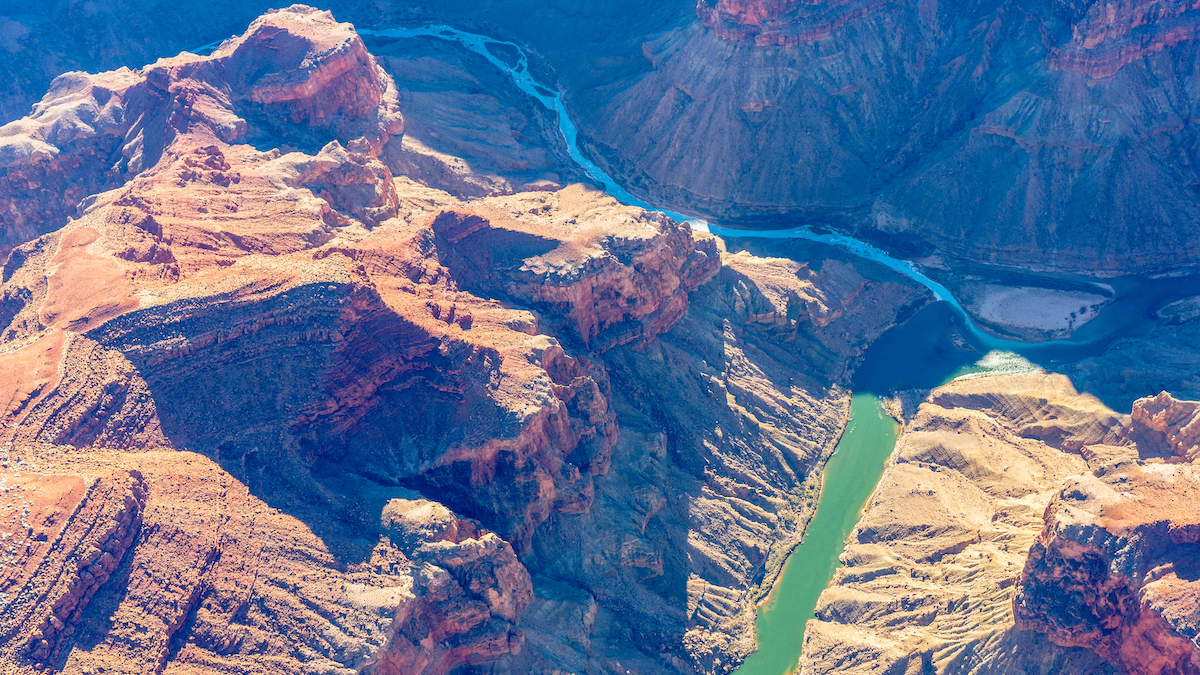
A few months ago the Land Desk reported on federal regulators’ rejection of seven proposed pumped hydropower storage projects on the Navajo Nation, while also establishing a policy of denying any project on tribal land if the tribe opposes it. The regulators deferred a decision on one additional proposal — the massive, three-reservoir Big Canyon project that would be on Navajo Nation land along a tributary of the Little Colorado River. The Navajo Nation initially had expressed concerns about the proposal without explicitly opposing it. After the new policy was put in place, the tribe clarified its opposition. This week, the Federal Energy Regulatory Commission followed its new policy and rejected the permit.
It’s a bummer to see so many clean energy proposals go down in flames. Had they been built, the projects would have contributed mightily to the Western energy transition. Their failure, however, is not on the tribal nation or advocates who opposed the projects. The developers are to blame for faulty siting decisions and for failing to adequately consult with stakeholders at the very beginning of the process. That would save everyone a lot of headaches, and it might even result in some good projects getting built in the right places.
For more on the proposals and their problems, check out this excellent piece — complete with great maps — by the Grand Canyon Trust’s Daryn Akei Melvyn.
📸 Parting Shot 🎞️
