Multi-million dollar investment helps quench #ColoradoRiver basin #drought concerns — The #Craig Press #COriver #aridification

Map credit: AGU

Click the link to read the article on the Craig Press website (Ashley Dishman). Here’s an excerpt:

In a move to combat the drought crisis affecting the Colorado River Basin, the Bureau of Land Management (BLM) announced on Thursday an $11.1 million cooperative agreement with the Foundation for America’s Public Lands. The partnership aims to enhance drought resilience in the region, which is vital for the millions of Americans who depend on the river for their livelihoods. The funding, made available through the Inflation Reduction Act under the Biden Administration, is set to bolster efforts to ensure the sustainability of the Colorado River Basin…The BLM, which manages more public land in the Colorado River Basin than any other federal agency, recognizes drought as the most critical threat to the region. The drought impacts various sectors, including agriculture, grazing, wildlife and fisheries, recreation, cultural resource uses, and power generation and distribution.

The Foundation for America’s Public Lands, officially formed in 2022 and chartered by Congress in 2017, serves as the BLM’s charitable partner. The Foundation operates to raise private funds and awareness, increasing access to and stewardship of over 245 million acres of U.S. public lands and waters. The cooperative agreement between the BLM and the Foundation spans five years and aims to undertake restoration projects on a landscape scale. This approach will cover multiple states and invest in local communities that depend on and manage the land. The agreement also allows the Foundation to collaborate with other partner organizations, bringing in technical experts to enhance the effectiveness of the projects.

Global climate summary for May 2024 — NOAA

Click the link to read the article on the NOAA website:

Highlights

  • Temperatures were above average over much of the globe, while western North America, southern South America, and western Russia were cooler than average.
  • Sea surface temperatures were record warm for the 14th consecutive month.
  • Global tropical cyclone activity was above average, with five named storms.

May temperature

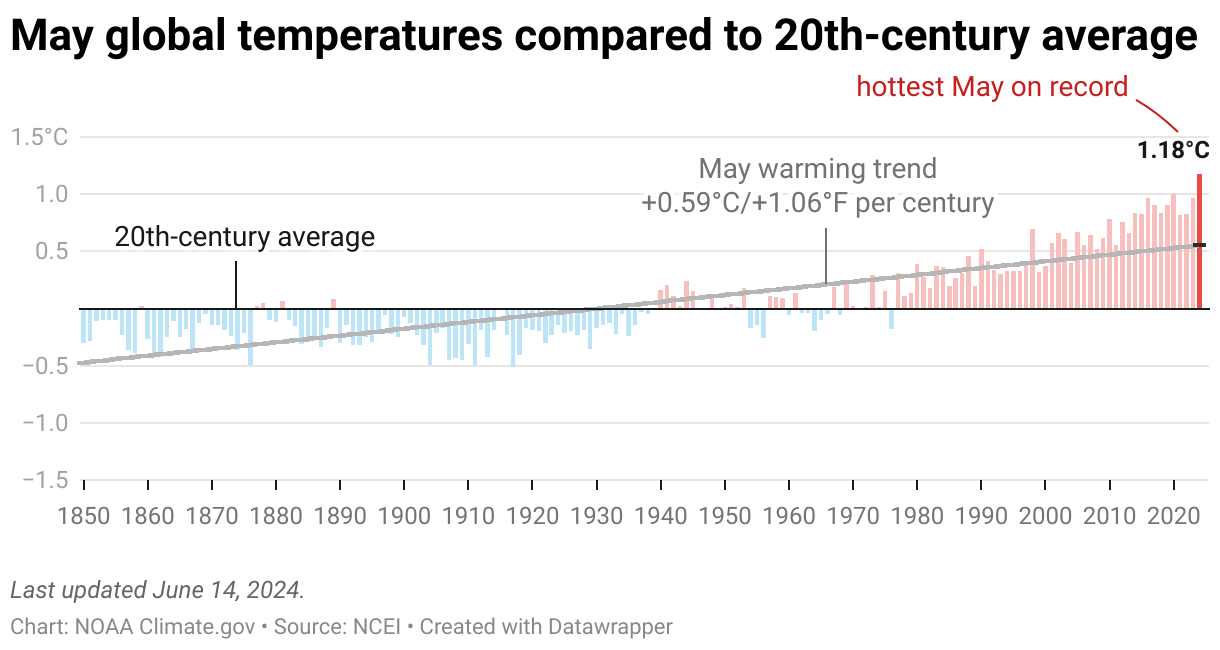
The May global surface temperature was 1.18°C (2.12°F) above the 20th-century average of 14.8°C (58.6°F), making it the warmest May on record. This was 0.18°C (0.32°F) above the previous record from May 2020. May 2024 marked the 48th consecutive May (since 1977) with temperatures at least nominally above the 20th-century average. May had a record-high monthly global ocean surface temperature for the 14th consecutive month.

Graph showing global temperature each May from 1850-2024 compared to the 20th-century average. Warmer-than-average years are red; cooler-than-average years are blue. Image by NOAA Climate.gov, based on data from NOAA National Centers for Environmental Information, created with Datawrapper.

The Northern Hemisphere also ranked as the warmest May on record at 1.44°C (2.59°F) above average. The Northern Hemisphere land temperature was also record warm in May (tied with 2020) and the ocean temperature was again record-high by a wide margin (0.25°C/0.45°F warmer than the previous record set in 2020). The Arctic region had its 11th warmest May on record.

May 2024 in the Southern Hemisphere also ranked warmest on record at 0.92°C (1.66°F) above average. The ocean-only temperature for May in the Southern Hemisphere ranked highest on record, while the land-only Southern Hemisphere temperature was 6th warmest on record. Meanwhile, the Antarctic region had its 23rd warmest May, 0.55°C (0.99°F) above average.

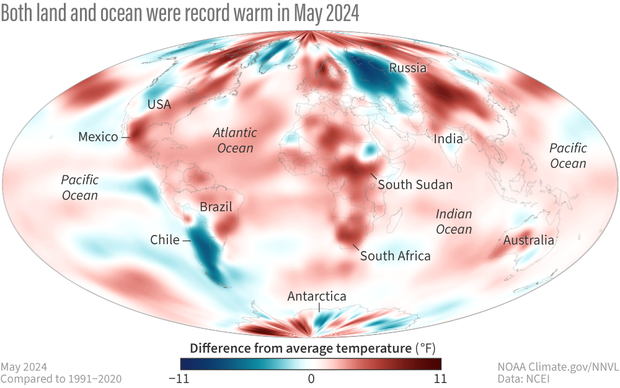
Temperatures in May 2024 compared to the 1991-2020 average. Places that were warmer than average are red; places that were cooler than average are blue. Image by NOAA Climate.gov, based on data from NOAA National Centers for Environmental Information.

Record warm temperatures covered large parts of the African continent, northern China and Mongolia, areas neighboring the North Sea, and many parts of a region stretching from southern Brazil northward through most of Mexico. 

Temperatures were warmer to much-warmer-than-average across much of the Arctic, the eastern U.S. and large parts of Canada, western Europe, the eastern half of Russia, southeast Asia, and much of Australia. In northern and central India and Pakistan, where temperatures for the month as a whole were warmer to much-warmer-than-average, a severe and persistent heat wave struck during the last half of the month. 

In contrast, cooler-than-average temperatures covered areas that included western parts of Russia and Kazahkstan, much of the western U.S. and Alaska, and large parts of Greenland. May temperatures were also cooler-than-average in Argentina and Chile, where a succession of polar air masses brought the strongest cold wave in more than 70 years to parts of Chile.

Across the global oceans, record warm sea surface temperatures covered much of the tropical Atlantic and large parts of the Indian Ocean and the equatorial western Pacific as well as parts of the southwest Pacific and Southern Ocean. Record warm temperatures also occurred in the North Sea and neighboring seas in the North Atlantic. Positive anomalies also covered large parts of the northern Pacific. Record-warm temperatures covered approximately 16.1% of the world’s surface this May, which was the highest percentage for May since the start of records in 1951, and 11.2% higher than the previous May record of 2016.

Near-average to cooler-than-average temperatures covered large parts of the southeast Pacific, the southwest Atlantic, areas of the southwest Indian Ocean, and parts of the Southern Ocean. Only 0.2% of the world’s surface had a record-cold May.

May precipitation from land-based stations

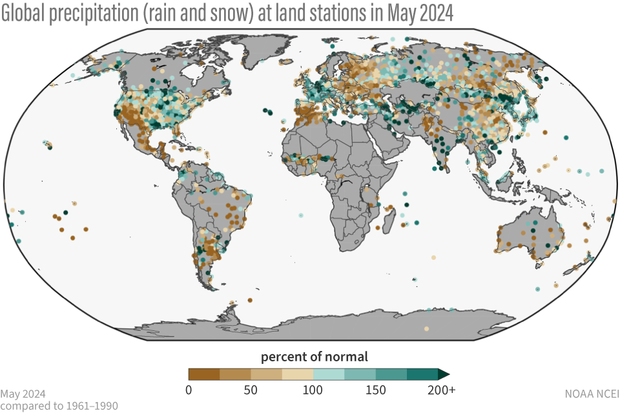
Above-average May precipitation occurred across large parts of western and central Europe, central Asia, far northeastern China, Korea, and Japan. Other wetter-than-average areas included the southern half of India, central Australia, and much of the Seychelles and Mauritius. Precipitation was below average in the southwestern U.S., Mexico, Central America, much of Brazil and Argentina, and much of eastern Europe. Other areas with widespread drier-than-average conditions included much of the United Kingdom, Spain and neighboring parts of Morocco and Algeria, northern India and neighboring Pakistan and Afghanistan, eastern China, southern and western areas of Australia, and many islands of the South Pacific.

Percent of normal precipitation for global land-based stations in May 2024 compared to a base line of 1961 to 1990. Places that received more precipitation than average are colored green; places that received less precipitation than average are colored brown. Gray areas represent missing data. Image by NOAA Climate.gov, based on data from NOAA National Centers for Environmental Information.

For information on 2024’s year-to-date temperature ranking, notable climate events, and separate statistics for Earth’s land and ocean areas see the full May 2024 monthly report from NOAA NCEI. 

Satellite summary of global precipitation patterns

Headlines

  • The Niño 3.4 Index [the primary dataset for tracking the El Niño-Southern Oscillation climate pattern] decreased during the month to a near neutral value indicating continued transition from El Niño and this is reflected in observed anomaly patterns [depatures from average].
  • Tropical cyclones were active in both the North and South Indian Ocean and helped to produce the observed patterns.
  • North America was mainly wet in the east and dry in the west, with Mexico continuing in drought and parts of the southwest U.S. moving toward drier conditions.
  • Global precipitation remains high with this May setting the record high for this month of the year.
May 2024 global precipitation map UMD

#Colorado tribes want to get into lucrative online sports betting. But a long-running dispute with the state is getting in the way — Fresh Water News

Colorado Columbine. Photo credit: Greg Hobbs

Click the link to read the article on the Water Education Colorado website (Jerd Smith):

Colorado tribes want to offer online sports betting. But their tax status, and other issues, has some people worried that allowing the Southern Ute and Ute Mountain tribes to offer remote wagering on professional sports might siphon valuable revenue away from Colorado water projects.

The Colorado Department of Revenue declined to comment on the specifics of the dispute, while tribal representatives say they are frustrated with the state’s refusal to allow them to offer it.

In November, a proposition referred to the ballot by lawmakers in House Bill 1436, will ask voters to allow the state to keep more of the revenue generated by sports gaming. Taxes collected on those bets, which were authorized in 2019, are projected to generate $34.2 million in tax revenue in the state’s next fiscal year, which begins July 1.

Under the current sports gaming law, the state cannot collect revenues in excess of $29 million. If voters approve the ballot measure, that cap would be removed, potentially generating millions of dollars more for water programs.

Colorado voters approved limited gaming in 1990 and the Ute Mountain Ute and Southern Ute tribes opened their own casinos soon after.

Remote sports betting is offered by casinos in Black Hawk, Central City and Cripple Creek, but the tribes have so far not been allowed to participate because of a failure to reach an agreement with the state on how it would operate, according to Peter Ortego, a lawyer representing the Ute Mountain Ute Tribe, in Towaoc. Ortego said the Ute Mountain Ute have not taken a position on the new ballot measure.

Representatives for the Southern Ute Tribe in Ignacio did not respond to a request for comment.

One of the issues is taxation. Because tribes are sovereign nations, they are exempt from paying state taxes. That tax-free status is problematic from the state’s perspective because if tribes allowed other commercial gaming companies to locate a remote sports betting kiosk on tribal land, it too would be exempt from taxation, shrinking the amount of money the state could collect for water programs including conservation, habitat restoration, stream protection and planning and storage, according to state Rep. Dylan Roberts, D-Frisco.

“When the legislature referred the sports betting initiative to voters in 2019, a key part was the state collecting tax on the revenues and dedicating 90% of that money to water projects,” Roberts said. “Now there is a concern that if the physical locations moved to tribal lands, we would lose most of the funding for water.”

The Colorado Gaming Association’s stance on the issue is not clear. The trade group did not respond to a request for comment.

Lawmakers are expected to take up the issue later this summer when a special interim committee on tribal affairs meets, Roberts said.

“I would be open to finding a middle ground. The complication is that tribal lands are not subject to state law, so lawmakers have very little ability to work in that space,” Roberts said.

Previous attempts to break the impasse have failed. The Ute Mountain Ute’s Ortego said it’s not clear when — or if — the dispute will be resolved.

“We want the opportunity to do what every other casino in the state is allowed to do,” Ortego said. “And we believe we have the right to do so.”

More by Jerd Smith

Jerd Smith is editor of Fresh Water News. She can be reached at 720-398-6474, via email at jerd@wateredco.org or @jerd_smith.

With five days until the primary election, #ClimateChange is top of mind for #Colorado voters — KUNC

A bumblebee pollinates a prairie clover. (Erin Anfinson/NPS/Public domain)

Click the link to read the article on the KUNC website (Lucas Brady Woods). Here’s an excerpt:

Conrey has been a beekeeper outside of Berthoud for more than 30 years, and she has seen honey production dwindle to just a fraction of what it was when she started. She attributes the decline to the rise in pesticide use, monoculture crops and lawns, urban sprawl, water shortages and soil health. She now has to cultivate many different bee colonies up and down the Front Range to maintain her livelihood.

“Our livelihood depends on the environment,” Conrey said. “So we pay attention to it, like anybody engaged in ag is paying more attention to the weather and to forecasts and extreme weather events, et cetera.”

Now, with the Colorado primary election just a few days away, she wants to see candidates talking more about climate change, and not just because of the impacts on agriculture. She believes fixing basic environmental problems–like soil, vegetation and insect health–will help create solutions to the big issues like drought and air quality. To do that, though, she said candidates need to base their policies on scientific evidence.

“Science is what it comes down to, and trying to actually follow the science,” Conrey said. “And there’s a lot of great science out there.”

NASA Releases Updated #ClimateChange Adaptation, Resilience Plan

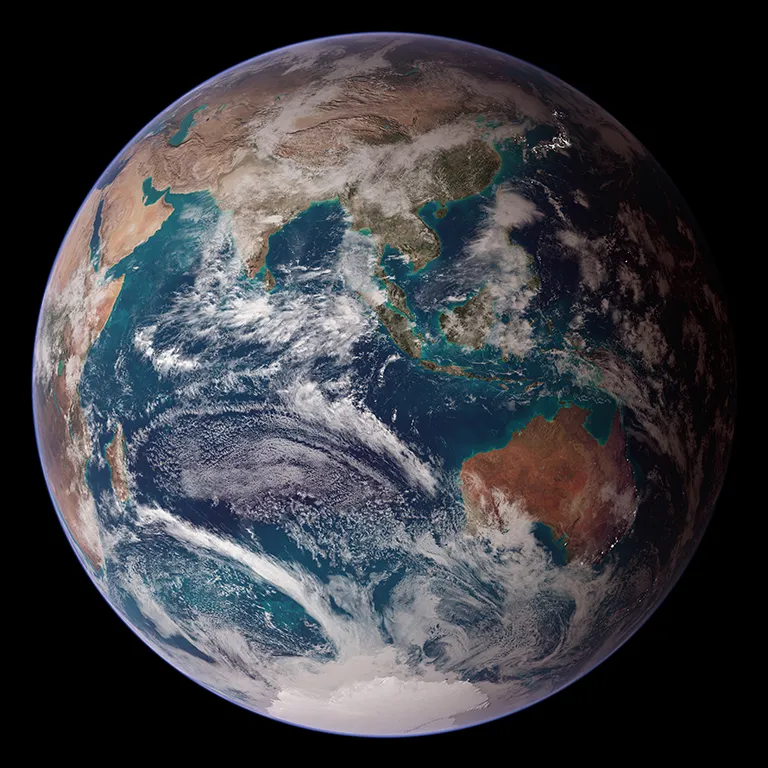
Artist’s concept of the Earth drawn from data from multiple satellite missions and created by a team of NASA scientists and graphic artists. Credit: NASA Images By Reto Stöckli, Based On Data From NASA And NOAA

Click the link to read the release on the NASA website (Abbey A. Donaldson):

NASA joined more than 20 federal agencies in releasing its updated Climate Adaptation Plan Thursday, helping expand the Biden-Harris Administration’s efforts to make federal operations increasingly resilient to the impacts of climate change for the benefit of all.

The updated plans advance the administration’s National Climate Resilience Framework, which helps align climate resilience investments across the public and private sectors through common principles and opportunities.

“Thanks to the leadership of the Biden-Harris Administration, we are strengthening climate resilience to ensure humanity is well-prepared for the effects of climate change,” said NASA Administrator Bill Nelson. “NASA’s decades of Earth observation are key to building climate resiliency and sustainability across the country and the world.”

NASA serves as a global leader in Earth science, providing researchers with crucial data from its satellites and other assets, as well as other observations and research on the climate system. The agency also works to apply that knowledge and inform the public about climate change. NASA will continue to prioritize these efforts and maintain an open information policy that makes its science data, software, and research freely available to all.

Climate variability and change also have potential impacts on NASA’s ability to fulfill its mission, requiring proactive planning and action from the agency. To ensure coastal flooding, extreme weather events, and other climate change impacts do not stop the agency’s work, NASA is improving its climate hazard analyses and developing plans to protect key resources and facilities.  

“As communities face extreme heat, natural disasters and severe weather from the impacts of climate change, President Biden is delivering record resources to build climate resilience across the country,” said Brenda Mallory, chair of the White House Council on Environmental Quality. “Through his Investing in America agenda and an all-of-government approach to tackling the climate crisis, the Biden-Harris Administration is delivering more than $50 billion to help communities increase their resilience and bolster protections for those who need it most. By updating our own adaptation strategies, the federal government is leading by example to build a more resilient future for all.”

At the beginning of his administration, President Biden tasked federal agencies with leading whole-of-government efforts to address climate change through Executive Order 14008, Tackling the Climate Crisis at Home and Abroad. Following the magnitude of challenges posed by the climate crisis underscored last year when the nation endured a record 28 individual billion-dollar extreme weather and climate disasters that caused more than $90 billion in aggregate damage, NASA continues to be a leader and partner in adaptation and resilience.

NASA released its initial Climate Adaptation Plan in 2021 and progress reports outlining advancements toward achieving their adaptation goals in 2022. In coordination with the White House Council on Environmental Quality and the Office of Management and Budget, agencies updated their Climate Adaptation Plans for 2024 to 2027 to better integrate climate risk across their mission, operations, and asset management, including:

  • Combining historical data and projections to assess exposure of assets to climate-related hazards including extreme heat and precipitation, sea level rise, flooding, and wildfire.
  • Expanding the operational focus on managing climate risk to facilities and supply chains to include federal employees and federal lands and waters.
  • Broadening the mission focus to describe mainstreaming adaptation into agency policies, programs, planning, budget formulation, and external funding.
  • Linking climate adaptation actions with other Biden-Harris Administration priorities, including advancing environmental justice and the President’s Justice40 Initiative, strengthening engagement with Tribal Nations, supporting the America the Beautiful initiative, scaling up nature-based solutions, and addressing the causes of climate change through climate mitigation.
  • Adopting common progress indicators across agencies to assess the progress of agency climate adaptation efforts.

All plans from each of the more than 20 agencies and more information are available online.

To learn more about Earth science research at NASA, visit: https://science.nasa.gov/earth-science//

Contender for favorite chart of all time: Predictions vs. Reality for #solar energy — @AlecStapp