
Click the link to read the article on the InkStain website (John Fleck):
June 20, 2024
Given the apparently unproductive state-to-state negotiations over post-2026 management of the Colorado River, it’s worth examining, in our search for a path forward, some of the other proposals submitted to the Department of the Interior. (If you need some bedtime reading….)
One of the most interesting comes from the Gila River Indian Community. (Their March 29 letter to Reclamation lays it out.) Spanning the Gila River along the southern edge of Phoenix, the Gila River Indian Community has long done a masterful job of leveraging water in defense of its sovereignty – or maybe sovereignty in defense of its water?
This 2021 piece by Sharon Udasin does a great job of explaining the GRIC’s success:

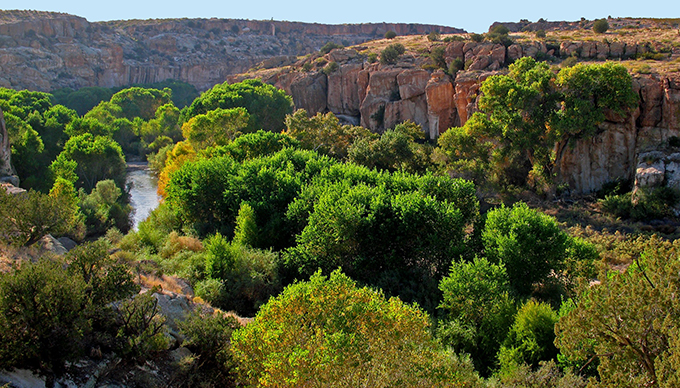
The water, the cattails, and the birds, are part of a complex legal tangle that led to the 2004 Arizona Water Settlements Act, which ensured Central Arizona Project water – Colorado River imports, pumped up into the Gila River Valley from the river’s main stem – to replace water stolen from the Gila River Indian Community by settlers a century before.
Access to that water has made the Community a power player in central Arizona water politics. But that water is now at risk as a result of efforts to cope with declining flows on the Colorado River. In particular, the Community views the Lower Basin States’ proposal for post-2026 river management as (my words, not theirs) an assault on their sovereignty. Here’s how they put it in their March letter to Reclamation:

Allocation of CAP water is crazy complicated, and I’m still trying to get my head around these details. But the Gila River Indian Community is essentially arguing that in the current proposal, which calls for cuts deep enough to eliminate the “structural deficit,” Arizona is essentially bargaining away the Community’s water.
So the Community has concerns with the Lower Basin proposal. But it has even greater concerns about the Upper Basin proposal, which argues that if even deeper cuts are needed, they should all fall on the Lower Basin.

The footnote to that paragraph is wonderful:

The Gila River Indian Community offers an alternative suggestion for managing Lower Basin cuts that’s super interesting. Rather than what the Lower Basin Proposal offers – essentially a negotiated who-cuts-what set of numbers based on talks among the three states – the Community suggests cuts across the Lower Basin proportionally, based on the calculation of evaporation and system losses (which we’re now supposed to shorten, apparently, as ESL):

The Community’s letter includes a strong emphasis on the federal government’s trust responsibility to the basin’s 30 Tribal Sovereigns. The letter makes clear that the federal government has a legal obligation “to find alternative water supplies for tribes that will be negatively affected by the Post-2026 Operations.” As Gila River Indian Community Gov. Stephen Roe Lewis put it at this month’s Getches-Wilkinson conference in Boulder, “First peoples of this land should be the last to be cut.”
