Click the link to read the article on the High Country News website (Jimmy Tobias):
June 17, 2025
This story was published in partnership with Public Domain.
Last year, as Utah prepared to file a federal lawsuit aiming to take control of millions of acres of federal public land within its borders, state officials sought help swaying public opinion in their favor. So they turned to a group of public relations professionals at Penna Powers, a media and branding firm based in Salt Lake City.
Backed with a commitment of more than two million in tax-payer funds, the firm sprang into action. One of the early orders of business was studying the opposition. In June 2024, an assistant attorney general sent an email to numerous state government colleagues and Penna Powers staffers that contained a video from the Theodore Roosevelt Conservation Partnership (TRCP) in which the well-known hunter and media personality Randy Newberg described the dangers of transferring federal land to state control. “It doesn’t matter how many promises are made,” warned Newberg, “the financial realities would force states to sell off our public lands.”
Noting that organizations like TRCP are good at connecting with “traditionally conservative” audiences, the Utah official told his colleagues that “our PR efforts will largely depend on how well we can anticipate and effectively respond to these expected criticisms.”
“That definitely helps us know what we need to counter the opposition,” added Redge Johnson, director of Utah’s Public Lands Policy and Coordinating Office, or PLPCO, which has played a central role in organizing the state’s campaign to seize federal land.
Throughout 2024, Penna Powers put together an elaborate PR and media campaign to do just that — counter the opposition and build support for Utah’s efforts. They churned out videos, newspaper ads, social media spots and more. They hired actors, ran focus groups and helped prominent Utah politicians write talking points. In at least one instance, Penna Powers relied on AI to help create voice-overs in videos. In another instance, PLPCO staffers warned Penna Powers not to use too much scenic imagery in the campaign for fear it might undermine their efforts. They called the campaign “Stand for Our Land,” and those who worked on it were required to sign non-disclosure agreements. “The Office of the Attorney General is taking this NDA extremely seriously,” wrote one government official.
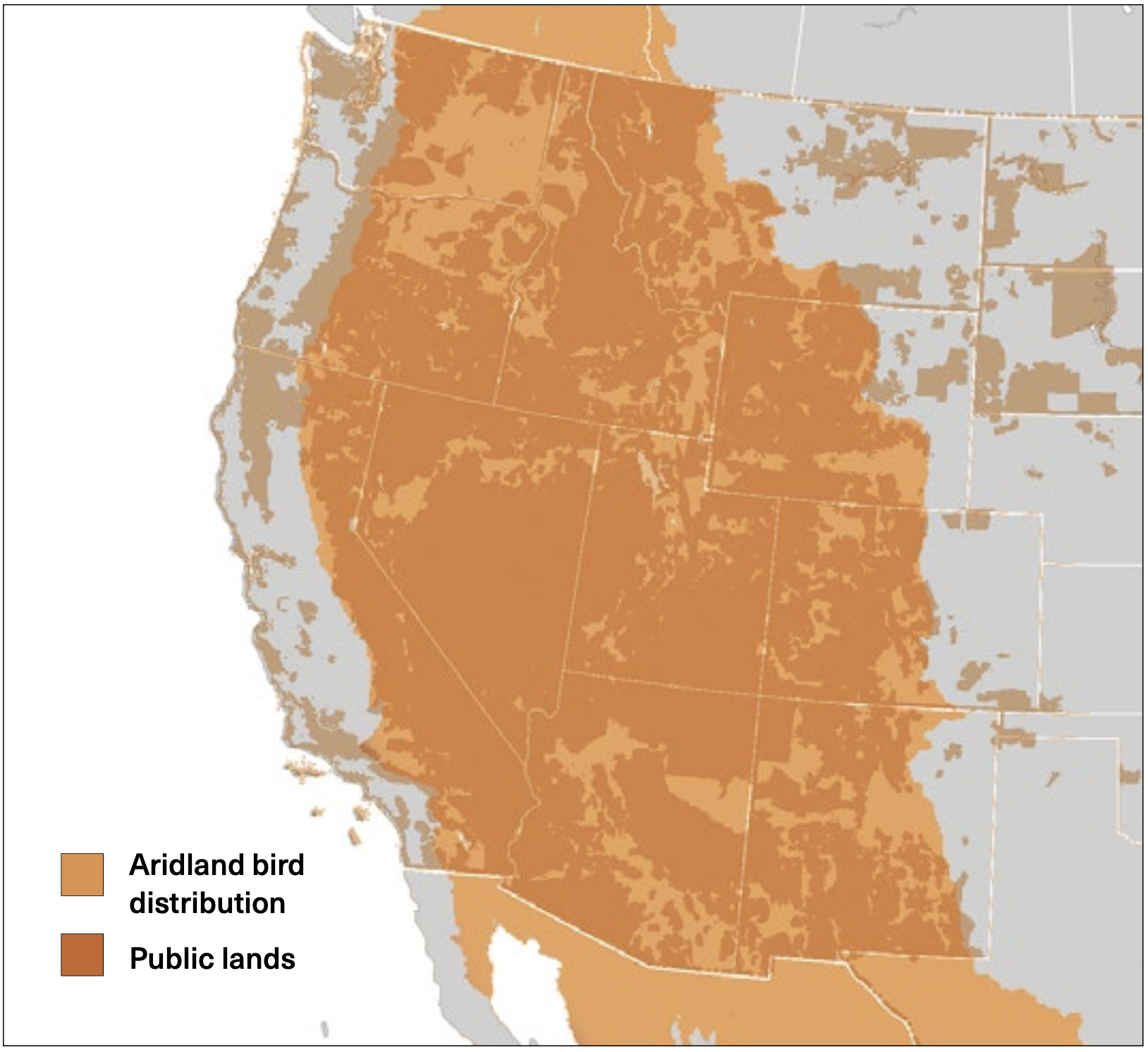
Hundreds of records reviewed by Public Domain shed light on the key players involved in this campaign and the strategies they used to persuade the public in their favor. Among other themes, their campaign relentlessly portrays the federal government as an absentee landlord that mismanages land and cuts off access to the public domain. Utah, on the other hand, is painted as a benevolent force working to ensure public land access. The campaign — like the lawsuit it was meant to support — seeks one principal outcome: federal land disposal. Utah has identified some 18.5 million acres of federal land within the state’s boundaries that are currently administered by the Bureau of Land Management on behalf of all Americans — and it wants those lands for itself.
Penna Powers, meanwhile, landed a big pay day. The contract between the PR firm and PLPCO runs until 2029 for a total cost of some $2.6 million.
In response to queries, PLPCO in a written statement said that,“Utah believes in protecting access to public lands for all users of all ages and abilities, and we are committed to actively managing these lands for generations to come. Utah is home to five national parks, several national monuments, and many other natural wonders. The state has always welcomed, and will continue to welcome visitors from around the world to visit and enjoy all that this great state has to offer.” Penna Powers did not respond to requests for comment.
Meanwhile, critics of the Utah PR effort called it a “propaganda” campaign meant to mislead Utahns and the general public.
“Penna Powers worked hand-in-hand with the state of Utah to craft a misleading message about the state’s land grab lawsuit,” said Kate Groetzinger, communications manager at the Center for Western Priorities, a conservation group. “They made it seem like forcibly taking ownership of public lands would help recreationists and ranchers, when the real goal of this lawsuit was to increase extraction and privatize national public lands in Utah. This campaign is the very definition of propaganda — misleading political messaging paid for by taxpayers.”
UTAH’S EFFORT TO take control of federal lands kicked off in earnest in 2012, when Utah’s then-Governor Gary Herbert signed into law the Utah Transfer of Public Lands Act, demanding state control of the majority of federal public land in Utah. “This is only the first step in a long process,” Herbert said at the time, “but it is a step we must take.” In 2018, Senator Mike Lee, a leading proponent of the land transfer movement, shared similar sentiments during a speech to the conservative Sutherland Institute in Salt Lake City. The campaign for land transfer, he said, “will take years, and the fight will be brutal.” Indeed, just last week, Lee put forward a proposal in the GOP’s massive reconciliation bill that would force the sell off of millions of acres of federal land in the Western U.S.
Utah’s actions to seize control of federal land have only grown more aggressive as the years have progressed. In August last year, it filed a lawsuit directly with the Supreme Court seeking to strip federal ownership over some 18.5 million acres of BLM land within Utah. It claims these lands are “unappropriated,” a novel argument meant to create a legal distinction between national parks, forests and monuments, and large swaths of BLM land across the West. If successful, Utah’s lawsuit would deprive the vast majority of Americans of their ownership stake in such BLM lands. Tribal nations, meanwhile, have been staunch opponents of Utah’s lawsuit, which the Ute Indian Tribe described as an “existential threat” to the tribe and its reservation lands.
In January this year, the Supreme Court declined to hear Utah’s case. It remains unclear whether Utah will refile its lawsuit in lower court, but its efforts to seize federal land are a generational project.
Regardless, Utah, faces a major public opinion hurdle. A large majority of Western voters are opposed to the idea of state control over federal public lands, according to Colorado College’s annual polling. Even in Utah, some 57% of voters oppose public land transfers. That is where Penna Powers comes in. The firm worked to reshape public opinion in the state’s favor, with a focus on building support among Utah residents as well as key decision makers at the national level.
“The Stand for Our Land public education campaign is informing Utahns about the management of public lands, and how federal agencies are restricting access to public lands and ignoring local concerns,” wrote PLPCO in a statement. “The Bureau of Land Management closed over 2,000 miles of Utah roads on public lands in the past two years.”
A centerpiece of Penna Powers’ effort has been glossy videos that portray federal land agencies as an exclusionary force bent on keeping people off the public domain. In one video, Penna Powers and PLPCO hired a voice actor to portray a “disabled camper” in a wheelchair on a camping trip with her family. “Because of my disability I need to reach campsites in a motorized vehicle,” the actor said. “If I lose road access, I lose the ability to do something I love with my family. That’s why I think Utah should be managing Utah land.” The actor who was selected to voice the video does not appear to use a wheelchair or mobility aid in social media posts and other records reviewed by Public Domain. PLPCO appears to have had many of those involved in its video shoots also sign NDAs. A talent agent for the actor in question did not provide comment at the time of publication.
Redge Johnson, the executive director of PLPCO, was particularly keen on the “disabled camper” storyline, among others. He asked about a video that combined the “disabled camper” story with one about an off-highway vehicles business. “I really want that video in the folder, it tells a great story,” he wrote to Penna Powers staffer Allyse Christensen, who worked on the Stand for Our Land campaign.
Others, like disability community advocate Syren Nagakyrie, said Utah’s use of a “disabled camper” storyline to promote its political agenda is “disingenuous.”