
Happy Fourth of July 2025

Click the link to read the article on the Big Pivots website (Allen Best):
July 3, 2025
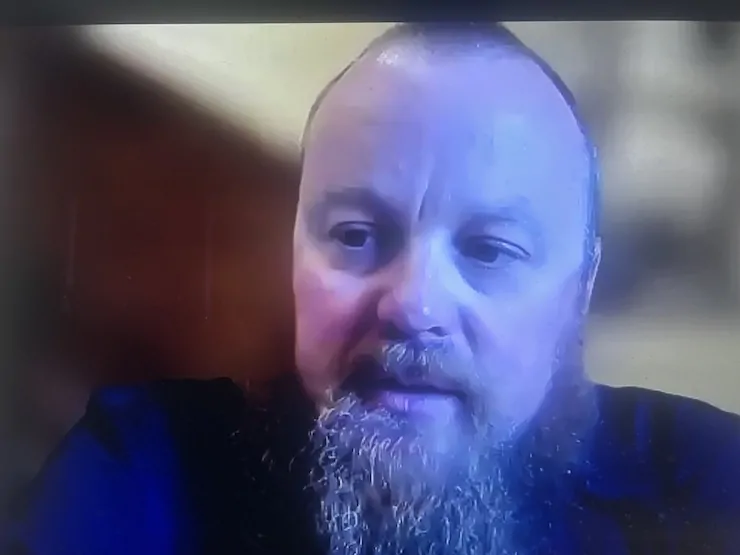
Josh Shipley rides a Harley and drives a Jeep. He says ending federal tax credits for solar may upend his business.
Josh Shipley rides a Harley in his spare time and likes to take his family on off-road Jeep trips and has hunted across North America.
On Wednesday morning, Shipley had to fight tears as he talked about the impact on his business, Alternative Power Enterprises, and the families of the employees of the earthquake-inducing bill now being debated in Congress.
“Removing these tax credits at the end of the year is going to be extremely detrimental,” he said on a press call orchestrated by the staff of U.S. Sen. John Hickenlooper. “We actually don’t believe we’re going to be able to stay in business.”
The business is based in Ridgway, one of two smaller solar installation companies there. It has eight employees, and they have five spouses and seven children. They do work from Paonia to Silverton.
“It’s not just eight people that are going to be affected by this,” he said. The business, he explained, has been around for 30 years, and in recent years it has been able to start helping low-income families to get solar.
“I think in the last three years, 120 families in our area have benefited,” he said. “If I can’t survive, the other parts of this business are going away. I can’t be there to help those individuals.”
Shipley said he bought the business in 2020 with the assumption that federal tax credits would be phased out, but not until 2032.
The bill, he said, is a tragedy for U.S. energy policy.
“Republicans are always talking about independence and being — sorry, I’m getting a little emotional — getting and being dominant in our industries. This is how we become energy dominant. It’s not just wind. It’s not just solar. It’s not just natural gas plants. It’s not just nuclear power plants.
“It takes every single one of these technologies for us to create that — excuse me — and to keep these families — I’m sorry, excuse me — but it will take all of these forms of energy to create that dominance,” he said. This bill’s going to kill that. There are no if’s, and’s, or but’s about it. Small businesses will go out of business because of it. There will not be the workforce that is going to be required to create that energy dominance later, when they’ve realized what they’ve done.”
Hickenlooper, who had arrived late the night before from Washington D.C., touched on several provisions of what he called the “cruel, reckless bill” that the Senate had passed on Sunday morning.
“This was a vote that would strip 17 million Americans, including many, many children, of their health care, push more than 300 rural hospitals to close, gut investments in affordable clean energy,” he said “It would expand our national debt at a level that we have never imagined before, and all this just to accommodate these lavish tax cuts for wealthy Americans, most of whom aren’t asking for the tax cuts. It is a form of madness, fiscal madness, and I think it’s cruel.”

Later, he explained that the bill would gut the Inflation Reduction Act of 2022. “It was a major step towards addressing climate change, and now it’s been it’s like running into a brick wall,” he said.
“We’re going to lose over a million jobs in this country. I mean, these are careers, hundreds of billions of dollars of lost GDP, lost wages. We’re going to see the cost of electricity go up. We’re going to kill new renewable energy that prevents blackouts just when we’re in the process of trying to accommodate AI. We need more energy. We’ve got over 8,000 solar jobs just in Colorado.”
Speaking later, KC Becker described the bill as triggering an all-hands-on-deck moment for the solar industry in Colorado. In April, she became the executive director of the Colorado Solar and Storage Association.
“People are nervous from the smallest companies to the largest companies. It’s been a whirlwind,” she said. “The bill was expected to get better in the Senate. It actually got worse in the Senate because of the excise tax (on solar and wind production, now discarded).”
Right now, many solar providers are working hard, because they have inventories of panels. But the demand, if this bill gets passed as new constructed, will cause demand to drop off a cliff after Dec. 31.
The big question in Colorado — and part of the national dialogue — is whether any of Colorado’s representatives in Congress who are Republicans will buck the marching orders of President Donald Trump. Rep. Gabe Evans and Jeff Hurd, both freshman and both Republican, voted for the bill after saying nice things about renewable energy.
Fort Lupton-based Evans was barely elected last November from the Eighth District north of Denver, his first run at Congress. Grand Junction-based Hurd has a more comfortable position in the Third District, which covers much of the Western Slope plus much of southern Colorado.
Also speaking on the webcast press conference were the four Democrats who are members of Colorado’s delegation in the House of Representatives, Gov. Jared Polis, and various individuals from health care providers, most from more rural parts of Colorado.
The take-away message was that this bill will dramatically hurt poorer people who are unable to afford health care without governmental assistance. That, however, can also be true in urban areas.
U.S. Rep. Brittany Pettersen was momentarily reduced to fighting tears when she talked about the giant erosion of programs to help low-income people. “When I think about my mom who works a low-wage job, without access to medical care,” said Pettersen, who then choked up. For her, this was politics, but the bill was also deeply personal.
Click the link to read the release on the Getches-Wilkinson Center website (Douglas Kenney):
July 2, 2025
On the evening of June 24, the GWC’s Doug Kenney joined Becky Mitchell, Colorado’s lead negotiator on Colorado River matters, at the Crested Butte Public Policy Forum for a conversation about current and future Colorado River issues. Well over 100 people packed the Center for the Arts for the public event that in previous years has featured speakers as varied as Ted Turner, Sandra Day O’Connor, and the GWC’s Senior Fellow Anne Castle.
The primary focus of discussion was how “big river” issues—that is, the changing rules determining how Colorado River supplies are shared amongst the seven states—impact the availability of water on Colorado’s West Slope. This required a review of the three numbers in the basin that increasingly are out of step: the amount of water entering the system each year through snowmelt and rain; the amount of water consumed by water users throughout the basin; and the amount of consumptive use that has been promised to water users in the Colorado River Compact and other laws. This mismatch of supplies, demands and allocations is not a new problem, but is of particular urgency now as Lakes Powell and Mead are two-thirds empty, the EIS process for new determining new reservoir operations is well underway, and the current year runoff is shaping up as one of the worst in decades.
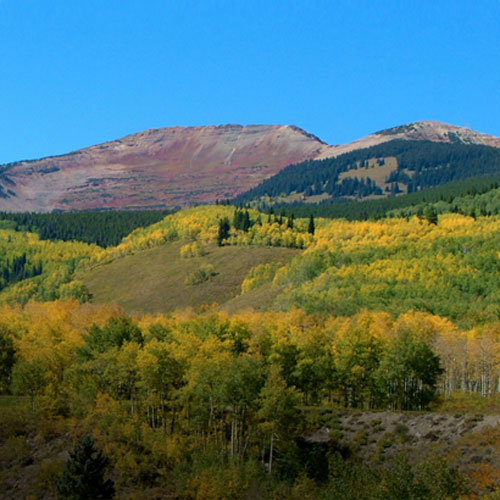
The conversation was led by Julie Nania, an icon in Crested Butte for her work with High Country Conservation Advocates in protecting Mt. Emmons—the so-called “Red Lady”—from development into a molybdenum mine, as well as her service on the Board of Directors of the Upper Gunnison Water Conservancy District and as Executive Director and Faculty Chair of the Coldharbour Institute based at Western Colorado University. Julie began her career at Colorado Law (class of 2011), which included a post-graduate fellowship with the GWC from 2013-2014 working on tribal water rights. Julie stands as a great example of the GWC’s ongoing influence in protecting the resources and places that we all value.


Click the link to read the article on The Land Desk website (Jonathan P. Thompson):
July 2, 2025
🛢️ Hydrocarbon Hoedown 📈 Data Dump 📊
A new report on New Mexico’s abandoned and orphaned oil and gas wells presents an alarming and expensive scenario for the state. It reveals that while the industry generates a lot of revenue for the state, cleaning up its mess is also poised to cost state and federal taxpayers hundreds of millions of dollars. No, this report was not put out by an environmental or progressive advocates, but by the state’s legislative finance committee.
New Mexico has been an oil and gas hotspot for more than a century, during which drillers have sunk at least 121,000 wells, mostly in the San Juan and Permian basins in the northwest and southeast portions of the state. Newly drilled wells typically kick out a large volume of oil and/or gas during the first months after drilling, generating a lot of cash for their operators and for state coffers, and helping to push production numbers for the state through the roof.

But the wells are soon afflicted with what’s known as the decline curve, meaning that the longer they pump, the less they pump. You know, it’s kind of like aging in people. Eventually, aging will render all oil and gas wells into low-producing stripper wells (I’m not sure how this analogy extends to the human realm, but hey …) that kick out less than 10 barrels of oil per day. Thousands of New Mexico wells are extreme strippers, producing one barrel or less daily. Yet they continue to spew methane, hydrogen sulfide, and volatile organic compounds at the same as or an even higher rate than their younger, more vital counterparts.
A trip through a sacrifice zone: The Horseshoe Gallup oilfield — Jonathan P. Thompson
This is problematic for a number of reasons. For one, the operators of stripper wells are likely to be smaller, less financially secure companies, and it’s easier and cheaper for them to keep the wells in a nearly inactive state — during which the wells continue to ooze pollutants into the air and groundwater — than to decommission, plug, and reclaim them. It may make economic sense to abandon these wells, or for the companies to cease to exist and “orphan” the wells, leaving them to the state or federal taxpayers to clean up, since reclamation bonds are woefully inadequate. And, finally, these wells generate almost nothing in production taxes, meaning that they aren’t contributing much to the state’s conservation fund, a portion of which is used to clean up abandoned and orphaned wells.
Saga of an Oil Well (The Horseshoe Gallup Field Sacrifice Zone Part II) — Jonathan P. Thompson
The near constant drone of drilling for over a century has resulted in a near-constant addition of low- to non-producing wells to New Mexico’s rosters. While responsible and financially solvent companies plug and reclaim their own wells, many smaller operators simply walk away.
New Mexico’s Oil Conservation Division is currently responsible for plugging close to 1,000 abandoned and orphaned wells, including 700 on state or private land, and for remediation and reclamation of an additional 500 well sites and 18 infrastructure sites (such as leaky tank batteries).

At recent rates, plugging them will take close to a decade, not including remediation/reclamation. OCD is also responsible for remediation and reclamation of an additional 500 well sites and 18 infrastructure sties. In total, plugging, remediation, and reclamation of all currently orphaned wells and infrastructure on state and private land is estimated to cost a minimum of $208 million, and likely more. And that’s just for now.
The report goes on to say: “… in addition to wells the state already has legal authority to plug, thousands of inactive and low-producing wells are at risk of being orphaned, potentially increasing the state’s liability by many orders of magnitude.” There are about 1,400 inactive at high risk of being orphaned on state and private land, according to the OCD. And there are thousands more that are extremely low-producing wells — putting out less than one barrel of oil equivalent per day — for which the “expected cost of cleanup far exceeds predicted future revenues, increasing their risk of being orphaned.”
And the kicker: “Altogether, the state’s current and near-future liability for well plugging and site remediation is estimated to be between $700 million and $1.6 billion.”
More data from the report:
- 38,817 Number of stripper wells, meaning they produce less than 10 barrels of oil-equivalent daily, in New Mexico, making up about 64% of the state’s active wells. This number will continue to increase.
- $100,000 Average cost to plug single oil and gas well.
- 450% Percent the average state-contracted cost to plug an oil and gas well in New Mexico has increased since 2019.
- $250,000 Maximum amount of financial assurance an operator in New Mexico must post to cover the costs of plugging and reclaiming its wells. This cap applies whether the operator has five wells or 500 wells, meaning it actually provides almost no financial assurance whatsoever.
- $46.4 million Amount spent by the New Mexico Oil Conservation Division to plug and reclaim 360 wells and associated infrastructure between 2019 and 2024.
- 9% Percent by which the cost of plugging a gas well exceeds that of an oil well. Most of the wells in the San Juan Basin are gas wells.
- $208 million Estimated cost to New Mexico to plug, remediate, and reclaim all existing orphaned and abandoned wells and infrastructure on state and private land.
- $5.6 million Amount in financial assurance associated with orphaned wells or their operators, meaning most of the costs will be shouldered by the taxpayers — either via the state reclamation fund or federal grants.
- $66.7 million April 2025 balance of New Mexico’s oil and gas reclamation fund (which is funded by a portion of conservation tax revenues).
- $6 million Tax revenue New Mexico’s 3,024 wells producing less than 1BOE/day would generate with the West Texas Intermediate oil price at $70/barrel (it’s currently lower than that). Plugging and reclaiming those same wells would cost an estimated $531 million to $885 million. “The vast majority of the wells—87%—are owned by private companies whose financial health is difficult for regulators to assess.”
- $1.6 million Amount New Mexico paid in 2024 to plug six of Ridgeway Arizona’s wells under a 2023 settlement agreement with the company. Under the agreement, the state pays to plug 299 of the company’s wells, and the company reimburses the state $2 for each barrel of oil it sells, with a minimum payment of $30k per month. But at current rates, the total cost to plug the remaining wells could be $60 million or more, meaning it would take the company as long as 170 years to pay it off.

🌵 Public Lands 🌲
By now you’ve probably heard that Sen. Mike Lee pulled his public land sell-off provision from the budget reconciliation bill that the Senate just passed following intense backlash. And perhaps you’re planning on celebrating the salvation of America’s public lands on July 4.

Well, I hate to be Mr. Buzzkill, but while this victory may be sweet, it does little to offset the bitterness brought by continuing attacks on public lands, along with democracy, morality, decency, and, well, America, itself, this Independence Day week.
The “Big, Beautiful Bill” perpetuates and amplifies the massive transfer of wealth from low- and middle-income and working-class Americans to the richest 10%. It will slash Medicaid and other vital programs Americans have paid into and rely upon, while also dismantling tribal sovereignty. And yet, it will also drive up the deficit by trillions of dollars due to additional spending on the military industrial complex, which is reaching its tentacles further into immigration enforcement, wildlife blocking border walls, deportations, and $450-million-per-year concentration camps. With Trump threatening to revoke citizenship from U.S.-born citizens whom he considers threats (e.g. Zohran Mamdani and Elon Musk), those camps may end up housing his political opponents. I really hate to make this comparison, but that is some severe Nazi-esque nastiness.
The Senate’s bill gives more handouts to the oil and gas and coal industries, while revoking tax credits for wind and solar power, which could kill those industries when they are needed most.
And yes, some of you may cheer a weaker renewable-energy industry, since it will mean fewer utility-scale installations blanketing the desert. I get that. But it will also hurt rooftop solar and larger installations on big box stores, over parking lots, or in fallow agricultural land, brownfields or other appropriate sites. A western Colorado farmer’s plan to install solar panels to generate electricity and shade his crops, for example, is imperiled by the GOP’s plans.
This at a time when strain on the power grid is exponentially increasing due to the outsized demand of more and more AI-powering, hyperscale data centers. That power will come from somewhere, and if it’s not solar or wind or batteries, then it’s likely to be from pollution-intensive coal and natural gas (mined and drilled from public lands), fish-killing hydropower, or new nuclear reactors (that will require uranium mined from public lands).
And keep in mind, oil and gas leasing and mining claims represent a sort of quasi-privatization of public lands. Sure, the government retains title to the land, but the corporations get access to the minerals within, can rip the land apart to get to them, and can cut off public access with the necessary permits. With its accelerated 14-day “energy emergency” permitting process, the Trump administration is making it a heck of a lot easier for corporations to mine, drill, and otherwise develop public lands, sans public input. The latest beneficiaries include:
- NorthWestern Energy, which was given the Bureau of Land Management green light to build a 74-mile natural gas pipeline between Helena and Three Forks, Montana.
- Ormat got the BLM go-ahead to move forward on three separate geothermal projects in Nevada:
• Exploration work at the Diamond Flat project near Fallon;
• Upgrades at the McGinness Hills project in Lander County;
• Exploration drilling at the Pinto Geothermal Project near Denio.I’m not suggesting that these are horrible projects that shouldn’t have been approved. Geothermal holds a lot of potential as a relatively clean, round-the-clock baseline power source, and these are merely upgrades and exploration, not full on developments. Still, geothermal development and even exploration have impacts and can affect groundwater aquifers, springs, and wetlands. Land agencies should have as much time as it takes to adequately analyze potential effects, and tribal nations should be consulted and have time to do their own analysis. And if it’s happening on public lands, then the public deserves to know about it and have an opportunity to weigh in. None of that is possible under this 14-day permitting process.
So, yeah, happy Fourth of July, y’all and welcome to the Divided States of Project 2025. And on that note, the Land Desk will be taking the rest of the week off.
📸 Parting Shot 🎞️
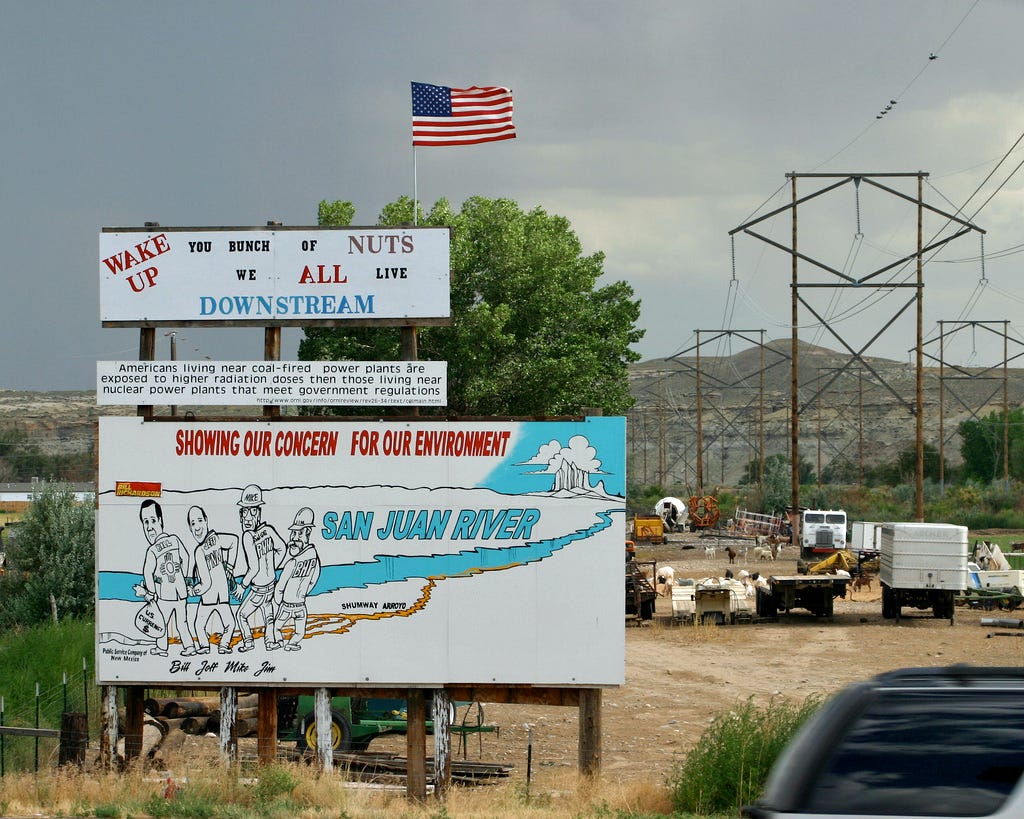
Just getting into the ol’ July Fourth spirit with this picture of Raymond “Squeek” Hunt’s signs near his mutton meat slaughterhouse and shop in Waterflow, New Mexico. I mean, it does have an American flag in it, after all.

Click the link to read the article on the Water Education Colorado website (Shannon Mullane):
July 3, 2025
{The Colorado Water Conservation Board] unanimously agreed Tuesday to hear out Front Range water operators’ concerns about a Western Slope plan to purchase historic Colorado River water rights.
The Colorado River Water Conservation District, which represents 15 Western Slope counties, negotiated a $99 million deal to purchase water rights tied to the century-old Shoshone Power Plant, owned by a subsidiary of Xcel Energy.
The River District and the Front Range groups — Aurora Water, Denver Water, Colorado Springs Utilities and Northern Water — all want to maintain the historical flows past Shoshone to provide predictable water supplies long into the future. They mainly disagree about the amount of water involved. Front Range providers say, if the number is too high, it could hamper their ability to provide water to millions of people.
In June, the Front Range water managers asked the Colorado Water Conservation Board to hold a hearing to air concerns. That hearing will be held during the board’s meeting, Sept. 16-18.
“We look forward to the hearing, and we appreciate the effort and the time that you and the staff have put into this effort,” Andy Mueller, the River District’s general manager, said during the board meeting Tuesday. “[We] look forward to finishing this in September.”
The decision Tuesday also opened up a seven-day period, ending July 9, for others to ask to join the September hearing. The board will share updates with the public on its website.
The hearing is part of a larger [CWCB Instream and water court] process to decide whether Shoshone Power Plant’s water rights can become an environmental water right, called an instream flow right. These rights aim to keep water in rivers to help aquatic ecosystems.

In this case, the environmental water right would focus on a 2.4-mile stretch between Shoshone’s intake dam, which takes water out of the Colorado River, and the end of its penstocks, which return all of Shoshone’s water to the river. The power plant is tucked into Glenwood Canyon along Interstate 70 a few miles east of Glenwood Springs.
At times, the power plant sucks nearly all of the Colorado River’s flow — depending on the amount of water in the river above the dam — through its turbines before returning it to the river channel. When this happens, the 2.4-mile stretch immediately below the dam is reduced to a narrow channel of water.
The environmental flow right would allow water managers to keep more water in that stretch of the river to help fish and other aquatic species. If approved, it would be the largest, most influential instream flow right in the state’s portfolio. The Colorado water board has until Sept. 18 to make its decision.
The Colorado River District wants to purchase the water rights as part of a larger plan to permanently shore up water supplies for Western Slope communities, which have long worried that Shoshone’s flows could change if Xcel decided to shut down the power plant or sell the water rights.
The district has a purchase agreement with Xcel Energy to buy the rights and lease the water back to Xcel to generate electricity. One of the terms of the deal is getting the instream flow use approved by the state.
The Front Range water providers and water managers want to prevent any changes to Shoshone’s water rights from harming their water supplies.
Shoshone’s water rights are like the bottom blocks in a game of Jenga: change to the rights could cause ripple effects statewide, in part, because of their age, location and amount of water.
Shoshone’s oldest water right can impact up to 10,600 other upstream water rights because of the plant’s geographic location, according to the Colorado Division of Water Resources. Those junior water users include Front Range water managers, like Denver Water and Northern Water, that send water to millions of people.

They are also tied to numerous, carefully negotiated agreements that dictate how water flows across both western and eastern Colorado.
The Front Range water operators want to resolve their concerns about the historical flows through Shoshone during the instream flow approval process this summer.
The Colorado River District says their questions can be resolved during the subsequent water court proceedings, where opposing parties will have another opportunity to voice their concerns and make sure their water supplies aren’t negatively impacted.
“We are deeply concerned that the Front Range entities requesting this contested hearing are asking the CWCB to encroach on the jurisdiction of water court,” the district said in a prepared statement Tuesday.
