#Drought news July 17, 2025: Severe and extreme drought were expanded over W. #Colorado while moderate drought and abnormally dry conditions were expanded over much of central #Wyoming

Click on a thumbnail graphic to view a gallery of drought data from the US Drought Monitor website.

Click the link to go to the US Drought Monitor website. Here’s an excerpt:

This Week’s Drought Summary

The last seven days was highlighted by dryness over much of the West, a continued active pattern bringing substantial rains to the southern Plains, and a wet week over much of the Mid-Atlantic and portions of the Midwest. Texas again stood out with several rain events that brought with them localized flooding. The long-term drought signal is still holding on in portions of southern Texas as recharge to depleted water systems has been slow, even with the rain in the region. Above-normal precipitation was recorded from eastern Nebraska through Illinois, bringing some much-needed rain to parts of northern Illinois. With the active rain pattern, temperatures over the southern Plains were 2-4 degrees below normal from Texas to Kansas and Nebraska while much of the West was 4-6 degrees above normal, with the greatest departures in Arizona and the Pacific Northwest. Warmer-than-normal temperatures dominated much of the eastern portions of the Midwest and the Northeast, where temperatures were 6-8 degrees above normal…

High Plains

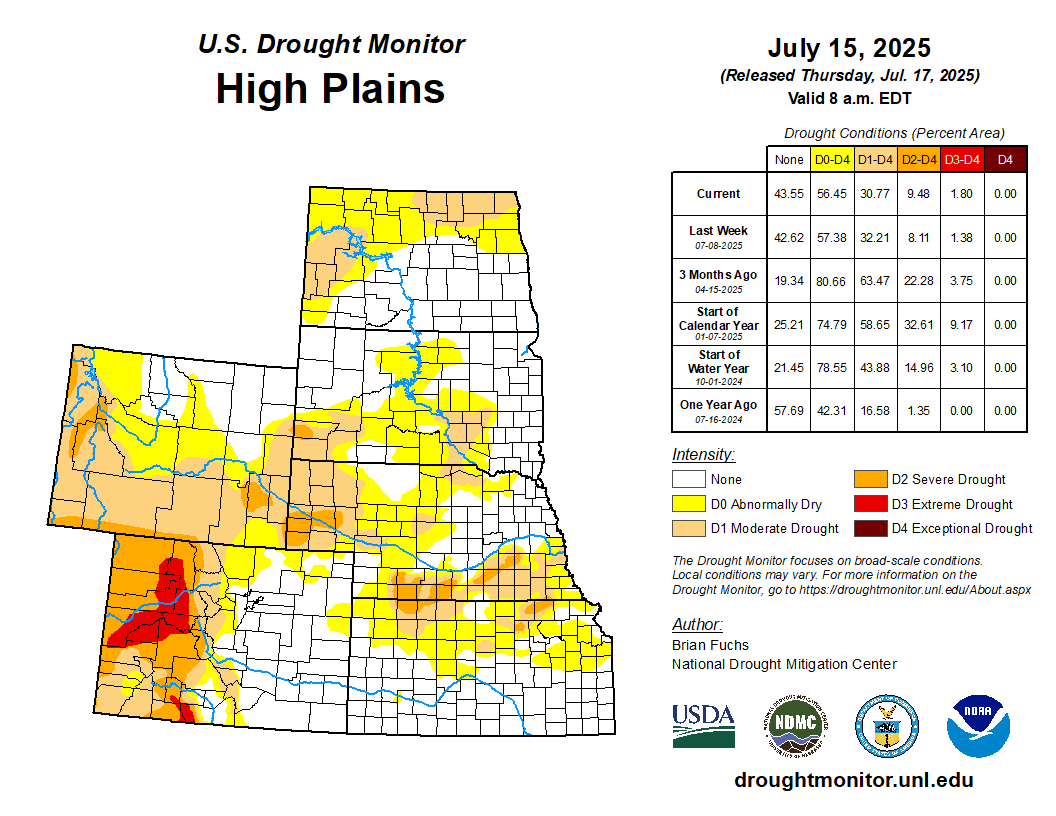
Temperatures were mixed over the region with the northern and western areas 2-4 degrees above normal while the southern and eastern areas were 2-4 degrees below normal for the week. The wettest areas this week were in southwest Kansas, northeast Nebraska and portions of northeast Colorado, where over 200% of normal rain was recorded. Dryness continued in eastern Wyoming and in areas of the Dakotas as well as in northeastern Kansas. The wetter pattern over Nebraska over the past several weeks has allowed continued improvement to drought in the state. A full category improvement was made over most of central and northeast Nebraska and into portions of southern South Dakota. Moderate drought and abnormally dry conditions were improved over northeast Colorado while abnormally dry conditions expanded over northeast Kansas…

Colorado Drought Monitor one week change map ending July 15, 2025.

West

Temperatures for the week were warmer than normal over the region with departures of 4-6 degrees above normal. The only areas that were at or below normal were coastal areas of California and eastern New Mexico. Much of the area remained dry and there was only some spotty monsoonal moisture over the Southwest. Some areas of Montana did receive some needed rain, but conditions have been dry overall in that region. Degradation dominated the region for changes this week with no areas seeing improvements on the map. Severe and extreme drought were expanded over western Colorado while moderate drought and abnormally dry conditions were expanded over much of central Wyoming. In northern Utah, severe drought expanded while a new area of extreme drought was introduced. Much of the panhandle of Idaho and into central portions of the state had a full category degradation while severe and extreme drought expanded over western portions of Montana. Moderate and severe drought expanded over much of Washington and Oregon and severe drought expanded over northeast Nevada…

South

The wettest areas of the region were over central and eastern Texas as well as into portions of eastern Oklahoma and western Arkansas. Dry conditions were mostly over west and southern Texas and along the Oklahoma border in northern Texas. With the rain, temperatures were cooler than normal over much of Texas, with some areas of central Texas 3-5 degrees below normal for the week. Only eastern Arkansas and south Texas were at or above normal for the week. Abnormally dry conditions were improved over southwest Arkansas while much of central Texas had the drought intensities reduced due to the ongoing rains. Some areas of Texas recorded enough rain where a multiple category improvement was made…
Looking Ahead

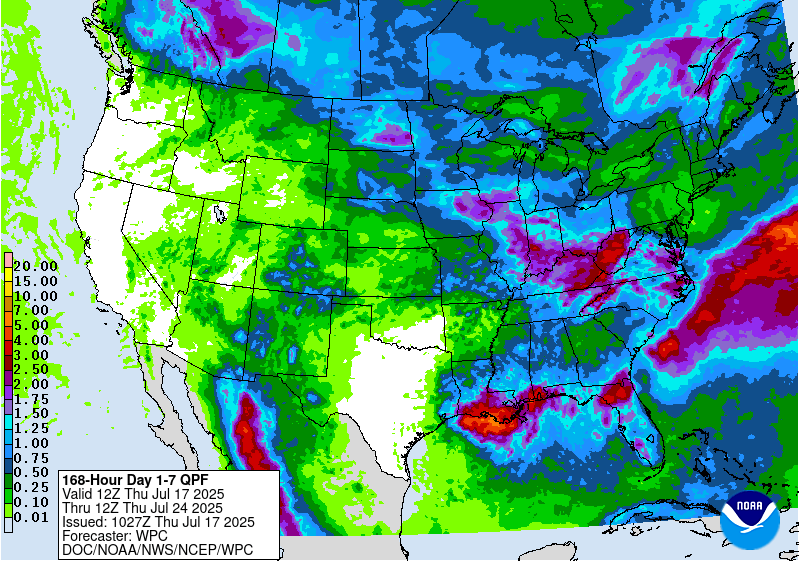
Over the next five to seven days, it is anticipated that the southern Plains and the West will be dry with only a burst in monsoonal moisture over the Four Corners region. The greatest amount of precipitation is projected over the Midwest and into the Mid-Atlantic as well as the central and northern Plains. A tropical disturbance forming over the Gulf is likely to come ashore in and around Louisiana, bringing significant moisture to the coastal and inland areas. Temperatures are anticipated to be below normal over the coastal areas of the West and into the northern Rocky Mountains with departures of 3-5 degrees. Temperatures will be warmest over the central Plains and into the Midwest with anticipated departures of 6-8 degrees above normal.

The 6-10 day outlooks show the greatest likelihood of above-normal temperatures is over the Midwest and into the Ozark Plateau. Outside of the coastal areas of the West, most of the rest of the country is projected to have the best chances of above-normal temperatures. The greatest chances of below-normal precipitation is over the Great Basin as well as in the southern Plains. It is anticipated that the best chances for above-normal precipitation will be along the Gulf Coast into Florida and along the northern tier of the country from Washington to the Great Lakes.

US Drought Monitor one week change map ending July 15, 2025.

Reservoirs almost fill, fall short of (predicted) spill: An abrupt dry spell in the high country shriveled the spring #runoff, a reminder to conserve precious water supplies — Todd Hartman (DenverWater.org) #SouthPlatteRiver #ColoradoRiver #COriver #aridification

Click the link to read the article on the Denver Water website (Todd Hartman):

July 8, 2025

In early July, Denver Water’s reservoirs filled nearly to the brim, holding the most water they’ll hold this year. 

Nearly full reservoirs are certainly good news for Denver Water and the 1.5 million people who rely on the water stored in them every day. But for the utility’s water watchers, 2025’s ā€œpeak storageā€ moment was a letdown — and even a warning of sorts.

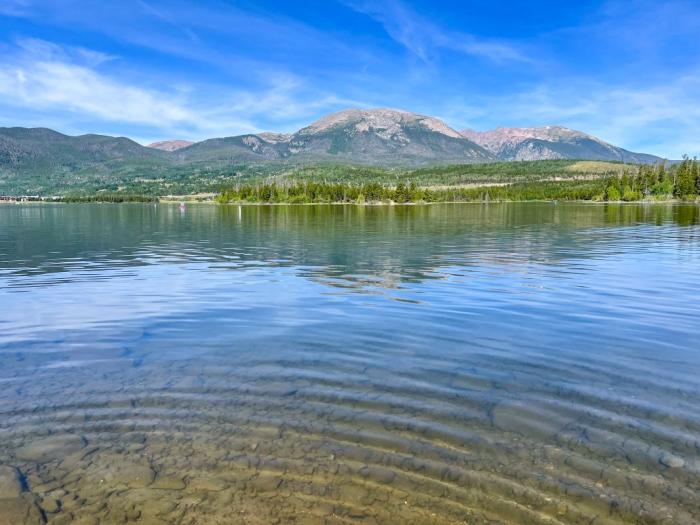
Dillon Reservoir, Denver Water’s largest reservoir is a popular spot for recreation. Photo credit: Denver Water.

Why?

Initial forecasts had suggested more water might run downhill, enough to fill the reservoirs and also provide extra water that could spill and boost river flows. But dry conditions in Colorado’s high country during April, May and June sapped that extra runoff, as drier soils and warmer air soaked up the potential excess.

ā€œWe thought we were going to have some excess water to play with this year,ā€ said Nathan Elder, Denver Water’s manager of water supply. ā€œBut as it turned out we just barely saw enough runoff to fill our reservoirs.ā€

This year’s quick turn from abundant supplies to just-enough-to-almost-fill is another reminder that even in years when overall snowpack is reasonably good, such as this past winter, we can’t take water supplies for granted. That’s even more apparent in an era of climate change, when warming temperatures and longer dry spells can quickly shrink projected water supplies. 

And as the hot summer irrigation season begins on the Front Range, it’s a reminder to residents to be thoughtful with outdoor water use: Adhere to watering rules, turn off irrigation systems during wet stretches, and think about changes to your landscape that, over time, will reduce watering needs.

And, keep in mind, half of Denver Water’s supply comes from the West Slope, where a dry spring is making supplies tight.

ā€œBack on April 1, we thought we were going to be ā€˜filling and spilling,ā€™ā€ Elder said. ā€œBut we saw streamflow forecasts really drop and even in the Colorado River Basin, where we had a solid snowpack, it did not translate into the supplies we expected.ā€

The Snake River as it flows through Keystone toward Dillon Reservoir. Photo credit: Denver Water.

At least one key reason for the swift turn from a forecast for “filling and spilling” to just enough runoff to fill Denver Water’s reservoirs was lack of precipitation — just 50% to 70% of normal — in April, May and June in the mountainous counties of Park, Grand and Summit where Denver Water collects supplies.

That dry spell helped drive runoff down, especially in the South Platte Basin. The amount of spring runoff flowing to Strontia Springs southwest of Denver has been only 46% of normal, below an already weak forecast of 60%. Inflows into Dillon have also been lower than expected, just 75% of normal after forecasts of 100%.

As a result, Denver Water’s supply reservoirs peaked July 1, at just 95% of capacity and are now being drawn down as summer watering season gets into full swing. (One caveat: The peak storage number would have been a bit higher, closer to 97%, but for a storage limitation at Gross Reservoir while construction activities continue on the expansion project there.)

Denver Water hopes to see its reservoirs hit 100% of their storage capacity every year. This year’s shortfall across the reservoir system was about 7,500 acre feet, enough water to supply more than 15,000 households for a year.

ā€œWe missed filling by a relatively small amount, but we never know if this is a short-term situation or the start of the next drought,ā€ Elder said. ā€œWe have filled up those saving accounts and now our reservoirs only go down from here with the peak of the heat season. So, we ask customers to stick to our rules and water with care.ā€

In addition to the lower-then-expected peak storage numbers, Denver Water also faces another ā€œsubstitution yearā€ on the West Slope. 

That is a technical way of saying Denver Water must release water from its West Slope reservoirs to make up for a shortage of water in the federally operated Green Mountain reservoir downstream from Dillon Reservoir. The water will serve downstream water users on the Colorado River.

Substitution years are uncommon, usually required once or twice per decade. But, at least in recent years, that’s changing, with such ā€œwater refundsā€ from Denver Water required in 2021, 2022 and now, 2025.

ā€œThat is another thing that, like the spring dry-up in the mountains, we didn’t expect this year,ā€ Elder said. 

But other aspects of the state’s weather in recent months have been more positive.

Big rains in the metro region in May and June kept water usage down and sent a lot of water down the South Platte River to farmers and communities. That supply boost helped reduce calls for Denver Water to bypass additional water, leaving it in the streams, to meet those downstream demands. 

ā€œThose storms really helped us out; we haven’t had to run big exchanges and send our reservoir water down to meet those needs,ā€ Elder said.

The wet weather locally also cut down on outdoor watering, as customers paid attention to weather and shut off sprinklers. June water use in Denver Water’s service area was just 94% of average, a system-wide water savings of 1,600 acre feet compared to anticipated demands during June. 

Finally, as water watchers do every year about this time, we look to the monsoon season to bring helpful afternoon rainstorms in July and August, which can also drive down water demand.

ā€œThe less we can draw on our reservoirs,ā€ Elder said, ā€œthe better chance we can fill up again next season.ā€

#Nebraska state leaders filed a lawsuit against #Colorado on Wednesday seeking to have the U.S. Supreme Court assert Nebraska’s century-old water rights to the #SouthPlatteRiver that crosses state lines — Zach Wendling (ColoradoNewsline.com)

Nebraska Attorney General Mike Hilgers, at center, and Gov. Jim Pillen, at right, announce a lawsuit against Colorado before the U.S. Supreme Court seeking to assert Nebraska’s water rights to the South Platte River that crosses state lines. At left is Jesse Bradley, director of the Nebraska Department of Water, Energy and Environment. July 16, 2025. (Zach Wendling/Nebraska Examiner)

Click the link to read the article on the Colorado Newsline website (Zach Wendling):

July 16, 2025

This story was originally published by the Nebraska Examiner.

LINCOLN, Nebraska — Nebraska state leaders filed a lawsuit against Colorado on Wednesday seeking to have the U.S. Supreme Court assert the Cornhusker State’s century-old water rights to the South Platte River that crosses state lines.

Nebraska Gov. Jim Pillen, announcing the legal action at a news conference with Nebraska Attorney General Mike Hilgers and other state and local officials, said, ā€œEvery drop of water matters.ā€

Pillen and Hilgers accused Colorado officials of siphoning off more and more water every day, even as Nebraska had been ā€œniceā€ with Colorado, which has seen increases in housing, agricultural and business development along the waterway.

ā€œWe’re here to put our gloves on,ā€ Pillen said, to defend what he called a ā€œmulti-generation investmentā€ afforded under the South Platte River Compact that took effect in 1926.

ā€œWe’re going to fight like heck. We’re going to get every drop of water,ā€ Pillen continued Wednesday. ā€œWe’ve been losing to Colorado on this issue for too long. It’s time we win.ā€

Colorado Attorney General Phil Weiser called Wednesday’s lawsuit ā€œunfortunateā€ and said Pillen and Hilgers ā€œput politics above farming communities and the regional agricultural economy.ā€

ā€œThe failure to look for reasonable solutions and to turn to litigation is both unfortunate and predictable given the misguided effort driving the proposed canal,ā€ Weiser said in a statement.

ā€˜They want everything’

Hilgers said his team had exercised all options in communications with Weiser’s office before filing the 55-page complaint before the U.S. Supreme Court.

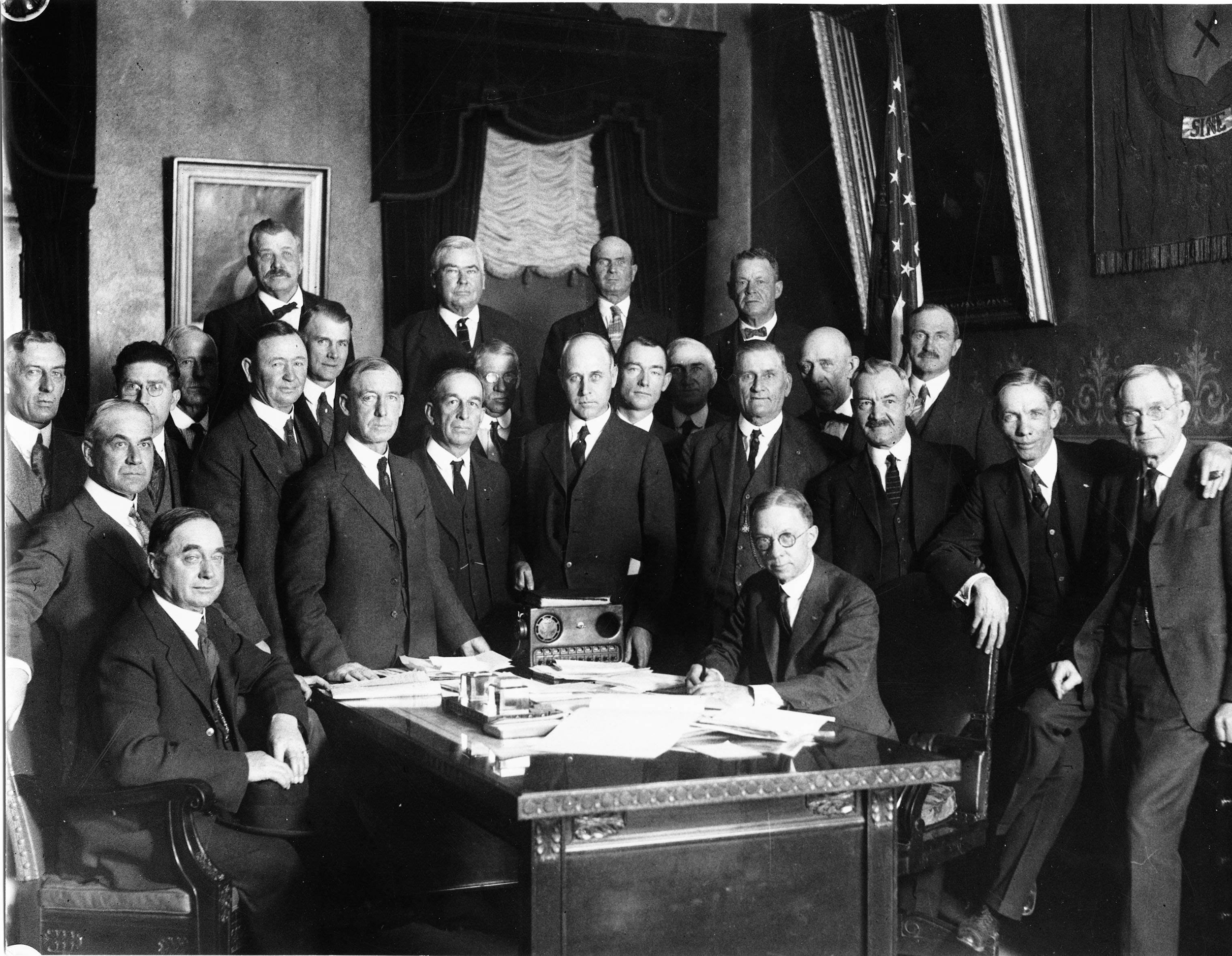
Governor Clarence J. Morley signing Colorado River compact and South Platte River compact bills, Delph Carpenter standing center. Unidentified photographer. Date 1925. Print from Denver Post. From the CSU Water Archives

The complaint accuses Colorado of violating the interstate compact between Colorado and Nebraska, which was ratified in the states in 1923 and enacted federally in 1926. Under the agreement, Nebraska is entitled to at least 120 cubic feet of water per second each day of the summer, during irrigation season.

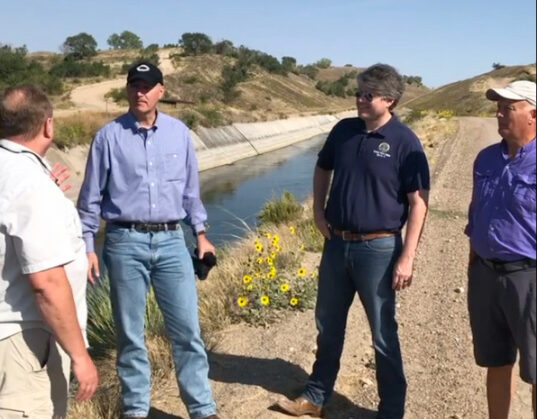
State Sens. Kathleen Kauth, Carolyn Bosn, Jana Hughes, John Fredrickson and Dave Murman tour part of what could be part of the proposed Perkins County Canal in western Nebraska on Monday, May 1, 2023. (Courtesy of State Sen. Carolyn Bosn)

Hilgers said it’s hard to say precisely how long more water than allowed has been taken and that it’s getting worse, an assertion Colorado officials denied in 2022. So far this summer, Hilgers said, Nebraska has gotten its mandated water flows about half the time, averaging 75 cubic feet per second of water daily.

Nebraska’s Western Irrigation District was also recently forced to shut off the majority of its surface water irrigation due to a lack of water from the South Platte River, despite the compact, according to the lawsuit.

Pillen said Colorado is storing more water for its ā€œupstream economy,ā€ which he said comes at the expense of Colorado and Nebraska farmers, with Nebraska’s western neighbors having ā€œno interest in anything being fair and just.ā€

ā€œThey want absolutely everything, they’re even stealing the water from their own farmers, for crying out loud,ā€ Pillen told reporters.

ā€˜All-front war’

The interstate compact also allows Nebraska to construct the ā€œPerkins County Canal,ā€ a major water project through Keith County and into Colorado that would allow Nebraska to divert at least 500 cubic feet of water per second in the winter, during non-irrigation season.

Nebraska is also afforded ā€œeminent domainā€ over some Colorado land to build the canal, meaning the state could seize private land if needed.

Work on the Perkins County Canal near Ovid, Colorado, began in 1894, but the project halted after running out of money. (Courtesy of the Perkins County Historical Society)

State lawmakers, to the tune of more than $600 million, have approved funding to build a canal up to 1,000 cubic feet of water per second to capture more water flow in above-average water years. Nebraska officials say newly captured water would flow statewide and is not just focused on western Nebraska.

According to the court filing, Nebraska officials in January tried to purchase land from landowners in Sedgwick County, Colorado, at 115% of fair market value, deals that ultimately fell through. Nebraska pledged to take land ā€œonly if the parties failed to reach amicable terms.ā€

Hilgers said the situation escalated to an ā€œall-front warā€ in the past year, with Hilgers and Pillen accusing Colorado officials of stepping up opposition, including through local Colorado landowners.

Nebraska-Colorado ā€˜impasse’ reached

Hilgers said he and his team have had many conversations with their Colorado counterparts but are at an ā€œimpasse,ā€ largely over the project’s scope, including canal size, location and Nebraska’s eminent domain rights, a provision Weiser has said he is ready to challenge Nebraska on.

The eminent domain provisions are believed to be one of a kind among any interstate compacts in the nation’s history, according to Hilgers.

ā€œThere is no alternative forum capable of fully resolving the claims Nebraska asserts against Colorado, which are of such seriousness and dignity as to justify the exercise of the court’s jurisdiction,ā€ the complaint to the Supreme Court states.

Weiser said that if the Supreme Court does greenlight the ā€œwasteful project,ā€ it will force Colorado water users to build additional projects to lessen the impact of the canal. He encouraged ā€œcollaboration and collaboration, rather than litigation,ā€ which could lead to a ā€œdurable and thoughtful solutionā€ that increases regional resiliency and agricultural strength.

In 2022, a spokesperson for Colorado Gov. Jared Polis called the project a ā€œcanal to nowhereā€ and a ā€œboondoggle.ā€

Polis on Wednesday called the lawsuit ā€œmeritlessā€ and said the state had continued to meet with Nebraska in ā€œgood faithā€ despite its efforts to intimidate some Colorado landowners. He reasserted that his state has always complied with the South Platte River Compact.

ā€œThis escalation by Nebraska is needless, and Colorado will take all steps necessary to aggressively defend Colorado water users, landowners, and our rural economy,ā€ Polis said in a statement.

Pillen, asked whether he had talked to Polis about the canal or lawsuit, said plainly: ā€œNo.ā€

ā€œThe bottom line: He and I do not agree one iota. And there’s no sense in further conversations,ā€ Pillen said. ā€œI’m not playing goober politics on this. We’re going to fight for Nebraska.ā€

Then-Gov. Pete Ricketts joined other state officials in an unannounced visit in September 2022 to the area of the proposed Perkins County Canal. (Courtesy of Nebraska Governor’s Office)

Former Gov. Pete Ricketts, now a Republican U.S. senator for Nebraska, unearthed and reinvigorated the compact in 2022 with Hilgers, the then-speaker of the Legislature.

Hilgers said it was probably always ā€œinevitableā€ that the U.S. Supreme Court would decide the issue. He acknowledged that while a minority of state senators have tried to claw back funding for the Perkins County Canal, he anticipated that future efforts to do so would continue to fail.

ā€˜The future of Nebraska’

Jesse Bradley, director of the newly merged Nebraska Department of Water, Energy and Environment as of July 1, said his team would continue to move forward with the project, parallel to the litigation, estimating that permitting and design would finish by 2028 for construction to begin.

The hope is that water will flow through the new canal no later than 2032.

ā€œThis is critical to the future of Nebraska,ā€ Bradley said. ā€œWe will continue to push forward aggressively.ā€

Also joining Wednesday’s news conference were representatives of the Nebraska Public Power District, Central Platte Natural Resources District, Central Nebraska Power and Irrigation District, Twin Platte Natural Resources District, the Nebraska Western Irrigation District, the South Platte Natural Resources District and the state’s chief water officer, Matt Manning.

Hilgers estimated the state lawsuit could cost a couple of million dollars, including hiring outside experts or legal counsel, and take three to five years before the Supreme Court decides.

Pillen said Nebraska would not ā€œsave penniesā€ on the project and would have the ā€œA Team 100% of the timeā€ to win, ā€œnot a shadow of a doubt.ā€

Weiser estimated that ā€œwhen the dust finally settles,ā€ more than a billion dollars would be spent over a possible decade of litigation, and ā€œno one in Nebraska or Colorado will be better off.ā€

Hilgers said he’s thankful the U.S. Supreme Court will decide the issue.

ā€œWe could maybe not get everything we want in front of the Supreme Court. But if we don’t file, we will lose. Period, full stop,ā€ Hilgers said. ā€œAnd what we will lose will so far outstrip the cost of this particular project that will really be a ā€˜shame on us’ moment if we don’t actually follow through.ā€

Nebraska Examiner is part of States Newsroom, a nonprofit news network supported by grants and a coalition of donors as a 501c(3) public charity. Nebraska Examiner maintains editorial independence. Contact Editor Aaron Sanderford for questions: info@nebraskaexaminer.com.

The South Platte River Basin is shaded in yellow. Source: Tom Cech, One World One Water Center, Metropolitan State University of Denver.