Safe Passage for #NewMexico’s Wildlife — New Mexico Magazine

A $4.5 million underpass below I-25 in Ratón was finished in 2023. Photograph courtesy of NMDOT.

Click the link to read the article on the New Mexico Magazine website (Jim O’Donnell). Here’s an excerpt:

July 9, 2025

IN JULY 2020, Squeaks left Santa Ana Pueblo. Fitted with a GPS tracking collar by the pueblo’s Department of Natural Resources, the subadult male mountain lion made an extraordinary 558-mile journey to Mesa Verde National Park in southwestern Colorado. Squeaks crossed the rugged mesa and canyon country of northwestern New Mexico, skirted towns, swam Navajo Lake—twice—and struggled to navigate a maze of highways. Eventually, in late September, Squeaks made his way under US 550 near Cuba and continued north.  The epic journey highlights a critical issue facing wildlife in New Mexico. Highways effectively work as deadly walls, impeding wildlife movement and decimating animal populations.  In New Mexico, more than 1,200 wildlife-automobile collisions are reported across the state each year, although the number is considered a serious undercount.  While firm wildlife-impact numbers are hard to come by, the New Mexico Department of Transportation (NMDOT) reported an average of 671 deer and 3,041 elk involved in crashes each year from 2002 to 2018…

Deer have been seen using the underpass on trail cameras. Photograph courtesy of NMDOT.

To address this, New Mexico is implementing a Wildlife Corridors Action Plan to guide NMDOT and the Department of Game & Fish to protect areas vital for wildlife movement and create fresh infrastructure that helps animals safely cross heavily trafficked highways…Over the past decade, the state has built 10 wildlife crossings, including one in Tijeras Canyon east of Albuquerque and at Ratón Pass near the Colorado border. Legislators also allocated an additional $50 million for construction of new passages in early 2025. The Wildlife Corridors Action Plan pinpointed 30 collision hot spots across the state with 11 in need of urgent action, including stretches near Silver City, Ruidoso, Glorieta Pass, and in the Sacramento Mountains. Santa Ana Pueblo is working with the state to construct wildlife passages along 19 miles of I-25 and nearly eight miles of US 550…

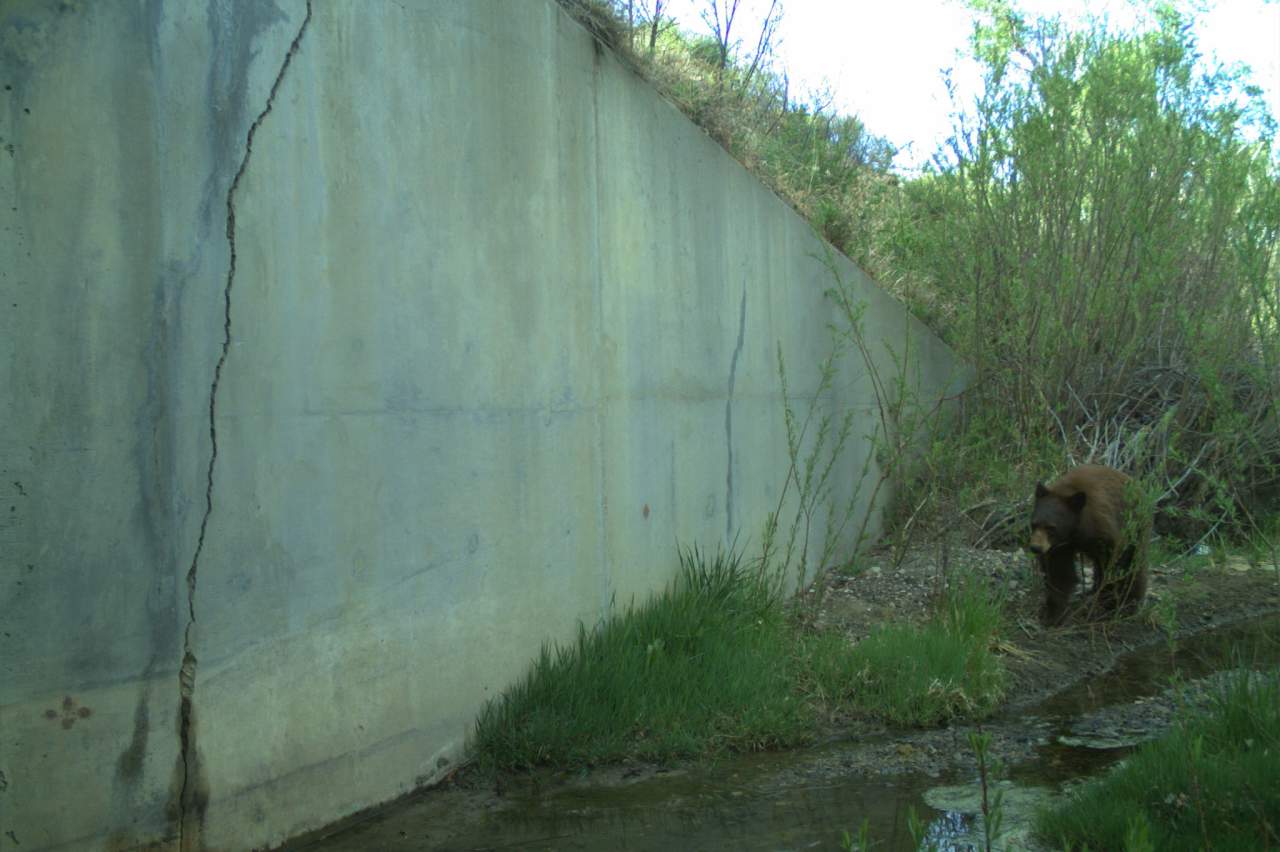
A bear using the underpass. Photograph courtesy of NMDOT.

The current top priority is a $45 million project on US 550, north of Cuba, to construct underpasses and overpasses with eight-foot-high fencing meant to both keep wildlife from highways and funnel them into the passages. That’s because different species have different needs when it comes to wildlife passages. Elk and pronghorn do not like underpasses, preferring a vegetated bridge over the highway. Deer, bear, mountain lions, coyotes, and bobcat are more comfortable with underpasses, provided they are at least 25 feet wide, 12 to 14 feet high, with a length less than 100 feet.

The role of aerosols in lesser precipitation in the Southwest U.S.: How what happens in the North Pacific can effect snowfall in the San Juan Mountains — Caitlin Hayes (BigPivots.com)

The Upper Rio Grande near Creede, Colorado. By Jerry R. DeVault KSUJD – Own work, CC BY-SA 2.5, https://commons.wikimedia.org/w/index.php?curid=12062576

Click the link to read the article on the Big Pivots website (Caitlin Hayes):

July 10, 2025

In the late 2010s, when  Flavio Lehner worked for the National Center for Atmospheric Research in Boulder, water managers often asked him about the drought in the Southwest. Was the low precipitation simply an unlucky draw in the cycle of long-term weather variations? What role did climate change play? Most importantly, was the drought there to stay?

No one had answers, but Lehner began pursuing them.

Now a study by Lehner and his team, published July 9 in Nature Geoscience, shows that climate change and aerosols have indeed led to lower precipitation in the Southwest and made drought inevitable.

The research is the first to isolate the variables of human-caused climate change and air pollution to show how they directly affect the region’s precipitation; the study predicts that drought conditions will likely continue as the planet warms.

“What we find is that precipitation is more directly influenced by climate change than we previously thought, and precipitation is pretty sensitive to these external influences that are caused by humans,” said Lehner, the senior author. He is now an assistant professor of earth and atmospheric sciences in the College of Agriculture and Life Sciences at Cornell University.

A trend towards lower precipitation in the Southwest started around 1980, with the onset largely attributed to La Niña-like conditions, a climate phenomenon that results in cooler surface temperatures in the tropical Pacific Ocean. The new research shows that even if El Niño-like conditions had prevailed instead, the Southwest would not have experienced a corresponding increase in precipitation.

“In our models, if we see a warming trend in the tropical Pacific, we would expect more precipitation in the Southwestern United States, but that’s not the case here,” said first-author and doctoral student Yan-Ning Kuo.

“On top of the El Niño and La Niña sea surface temperature trends, there’s a uniform warming trend because of historical climate change, as well as emissions from anthropogenic aerosols, that both create a certain circulation pattern over the North Pacific. Those two factors prevent the precipitation for the Southwestern U.S. from increasing, even under El Niño-like trends.”

Lehner said the results point to a bigger shift in the connection between the weather in the tropical Pacific and in the U.S., due to climate change and aerosols.

“What we call a teleconnection from that region to the Southwestern U.S. is changing systematically,” he said, “and these external influences really modulate that relationship, so it doesn’t behave exactly how we expect it to behave.”

There is some good news. Researchers expect that the concentration of aerosols – which includes the emissions from vehicles and industry – will drop as China and other countries in East Asia implement policies to improve air quality. But Lehner said warming temperatures may offset those improvements.

“Most experts expect the world as a whole to reduce air pollution, and globally, it’s already going down quite quickly. That’s good news on the precipitation side,” Lehner said. “At the same time, the warming is going to continue as far as we can tell, and that will gradually outweigh those benefits, as a warmer atmosphere tends to be thirstier, gradually drying out the Southwest.”

The researchers were able to determine the role of climate change and aerosols by eschewing prevailing climate models that in recent years have not been able to accurately reflect the sea surface temperatures observed in real-time. The team designed their own simulations that allowed them to plug in data from satellites and statistical models to understand the impact of each contributing factor.

Lehner said the research offers new methods for approaching questions about climate change’s impact on weather patterns, while also specifically helping water managers and other stakeholders in the Southwest plan for the future.

“In the Southwest, people really depend on what little water there is – every drop in the Colorado River, for example, is accounted for through water rights,” he said. “I am excited to go back and show the results to people who need them.”

Co-authors include Isla R. Simpson, Clara Deser and Adam Phillips from the National Center for Atmospheric Research (NCAR); Matthew Newman from the National Oceanic and Atmospheric Administration (NOAA); Sang-Ik Shin from NOAA and the Cooperative Institute for Research in Environmental Sciences; and Julie M. Arblaster and Spencer Wong from Monash University.

The study was supported by NOAA, the U.S. Department of Energy, the National Science Foundation and the Australian Research Council Centre of Excellence for Climate Extremes.

This was originally published in the Cornell Chronicle.

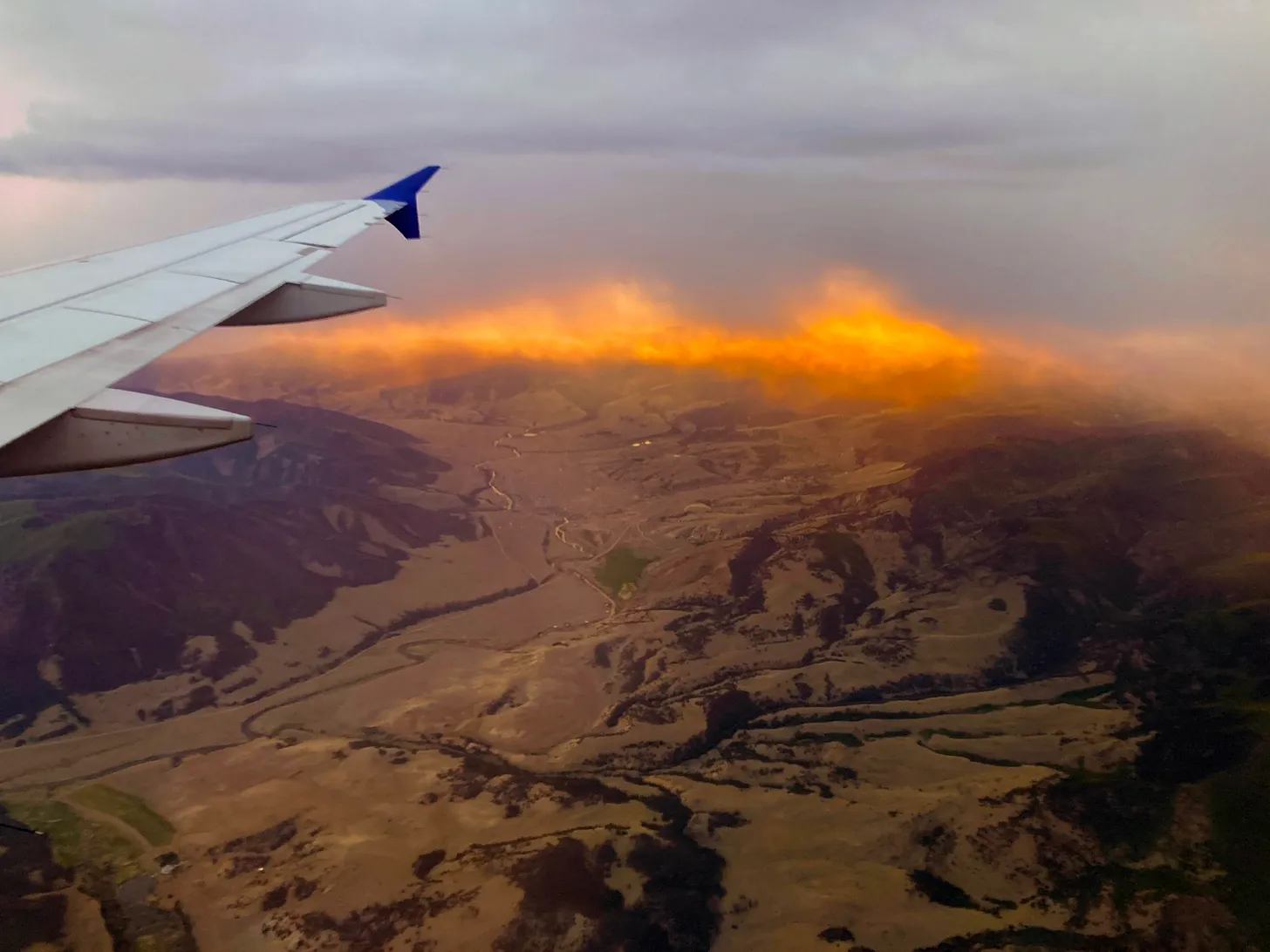
San Juan Mountain foothills and sunset from the window of a plane. Jonathan P. Thompson photo.

The Texas Flash Flood Is a Preview of the Chaos to Come — ProPublica.org

It's been a bit since I've done a meteorological deep dive, but the devastating flash #flood in central Texas this July 4th/5th deserve a closer look. #TXwxYes remnants of #Barry were involved helping enhance moisture. A remnant MCV from Mexico on 3 July also played a role.Full evolution below ⤵️

Philippe Papin (@pppapin.bsky.social) 2025-07-05T22:00:33.079Z

Click the link to read the article on the ProPublica website by Abrahm Lustgarten

July 9, 2025

ProPublica is a Pulitzer Prize-winning investigative newsroom. Sign up for The Big Story newsletter to receive stories like this one in your inbox.

On July 4, the broken remnants of a powerful tropical storm spun off the warm waters of the Gulf of Mexico so heavy with moisture that it seemed to stagger under its load. Then, colliding with another soggy system sliding north off the Pacific, the storm wobbled and its clouds tipped, waterboarding south central Texas with an extraordinary 20 inches of rain. In the predawn blackness, the Guadalupe River, which drains from the Hill Country, rose by more than 26 vertical feet in just 45 minutes, jumping its banks and hurtling downstream, killing 109 people, including at least 27 children at a summer camp located inside a federally designated floodway.

Over the days and weeks to come there will be tireless — and warranted — analysis of who is to blame for this heart-wrenching loss. Should Kerr County, where most of the deaths occurred, have installed warning sirens along that stretch of the waterway, and why were children allowed to sleep in an area prone to high-velocity flash flooding? Why were urgent updates apparently only conveyed by cellphone and online in a rural area with limited connectivity? Did the National Weather Service, enduring steep budget cuts under the current administration, adequately forecast this storm?

Those questions are critical. But so is a far larger concern: The rapid onset of disruptive climate change — driven by the burning of oil, gasoline and coal — is making disasters like this one more common, more deadly and far more costly to Americans, even as the federal government is running away from the policies and research that might begin to address it.

President Lyndon B. Johnson was briefed in 1965 that a climate crisis was being caused by burning fossil fuels and was warned that it would create the conditions for intensifying storms and extreme events, and this country — including 10 more presidents — has debated how to respond to that warning ever since. Still, it took decades for the slow-motion change to grow large enough to affect people’s everyday lives and safety and for the world to reach the stage it is in now: an age of climate-driven chaos, where the past is no longer prologue and the specific challenges of the future might be foreseeable but are less predictable.

Climate change doesn’t chart a linear path where each day is warmer than the last. Rather, science suggests that we’re now in an age of discontinuity, with heat one day and hail the next and with more dramatic extremes. Across the planet, dry places are getting drier while wet places are getting wetter. The jet stream — the band of air that circulates through the Northern Hemisphere — is slowing to a near stall at times, weaving off its tracks, causing unprecedented events like polar vortexes drawing arctic air far south. Meanwhile the heat is sucking moisture from the drought-plagued plains of Kansas only to dump it over Spain, contributing to last year’s cataclysmic floods.

We saw something similar when Hurricane Harvey dumped as much as 60 inches of rain on parts of Texas in 2017 and when Hurricane Helene devastated North Carolina last year — and countless times in between. We witnessed it again in Texas this past weekend. Warmer oceans evaporate faster, and warmer air holds more water, transporting it in the form of humidity across the atmosphere, until it can’t hold it any longer and it falls. Meteorologists estimate that the atmosphere had reached its capacity for moisture before the storm struck.

The disaster comes during a week in which extreme heat and extreme weather have battered the planet. Parts of northern Spain and southern France are burning out of control, as are parts of California. In the past 72 hours, storms have torn the roofs off of five-story apartment buildings in Slovakia, while intense rainfall has turned streets into rivers in southern Italy. Same story in Lombok, Indonesia, where cars floated like buoys, and in eastern China, where an inland typhoon-like storm sent furniture blowing down the streets like so many sheafs of paper. Léon, Mexico, was battered by hail so thick on Monday it covered the city in white. And North Carolina is, again, enduring 10 inches of rainfall.

There is no longer much debate that climate change is making many of these events demonstrably worse. Scientists conducting a rapid analysis of last week’s extreme heat wave that spread across Europe have concluded that human-caused warming killed roughly 1,500 more people than might have otherwise perished. Early reports suggest that the flooding in Texas, too, was substantially influenced by climate change. According to a preliminary analysis by ClimaMeter, a joint project of the European Union and the French National Centre for Scientific Research, the weather in Texas was 7% wetter on July 4 than it was before climate change warmed that part of the state, and natural variability alone cannot explain “this very exceptional meteorological condition.”

That the United States once again is reeling from familiar but alarming headlines and body counts should not be a surprise by now. According to the World Meteorological Organization, the number of extreme weather disasters has jumped fivefold worldwide over the past 50 years, and the number of deaths has nearly tripled. In the United States, which prefers to measure its losses in dollars, the damage from major storms was more than $180 billion last year, nearly 10 times the average annual toll during the 1980s, after accounting for inflation. These storms have now cost Americans nearly $3 trillion. Meanwhile, the number of annual major disasters has grown sevenfold. Fatalities in billion-dollar storms last year alone were nearly equal to the number of such deaths counted by the federal government in the 20 years between 1980 and 2000.

The most worrisome fact, though, may be that the warming of the planet has scarcely begun. Just as each step up on the Richter scale represents a massive increase in the force of an earthquake, the damage caused by the next 1 or 2 degrees Celsius of warming stands to be far greater than that caused by the 1.5 degrees we have so far endured. The world’s leading scientists, the United Nations panel on climate change and even many global energy experts warn that we face something akin to our last chance before it is too late to curtail a runaway crisis. It’s one reason our predictions and modeling capabilities are becoming an essential, lifesaving mechanism of national defense.

What is extraordinary is that at such a volatile moment, President Donald Trump’s administration would choose not just to minimize the climate danger — and thus the suffering of the people affected by it — but to revoke funding for the very data collection and research that would help the country better understand and prepare for this moment.

Over the past couple of months, the administration has defunded much of the operations of the National Oceanic and Atmospheric Administration, the nation’s chief climate and scientific agency responsible for weather forecasting, as well as the cutting-edge earth systems research at places like Princeton University, which is essential to modeling an aberrant future. It has canceled the nation’s seminal scientific assessment of climate change and risk. The administration has defunded the Federal Emergency Management Agency’s core program paying for infrastructure projects meant to prevent major disasters from causing harm, and it has threatened to eliminate FEMA itself, the main federal agency charged with helping Americans after a climate emergency like the Texas floods. It has — as of last week — signed legislation that unravels the federal programs meant to slow warming by helping the country’s industries transition to cleaner energy. And it has even stopped the reporting of the cost of disasters, stating that doing so is “in alignment with evolving priorities” of the administration. It is as if the administration hopes that making the price tag for the Kerr County flooding invisible would make the events unfolding there seem less devastating.

Given the abandonment of policy that might forestall more severe events like the Texas floods by reducing the emissions that cause them, Americans are left to the daunting task of adapting. In Texas, it is critical to ask whether the protocols in place at the time of the storm were good enough. This week is not the first time that children have died in a flash flood along the Guadalupe River, and reports suggest county officials struggled to raise money and then declined to install a warning system in 2018 in order to save approximately $1 million. But the country faces a larger and more daunting challenge, because this disaster — like the firestorms in Los Angeles and the hurricanes repeatedly pummeling Florida and the southeast — once again raises the question of where people can continue to safely live. It might be that in an era of what researchers are calling “mega rain” events, a flood plain should now be off-limits.

The deepening water shortage row between the #US and #Mexico — BBC #RioGrande

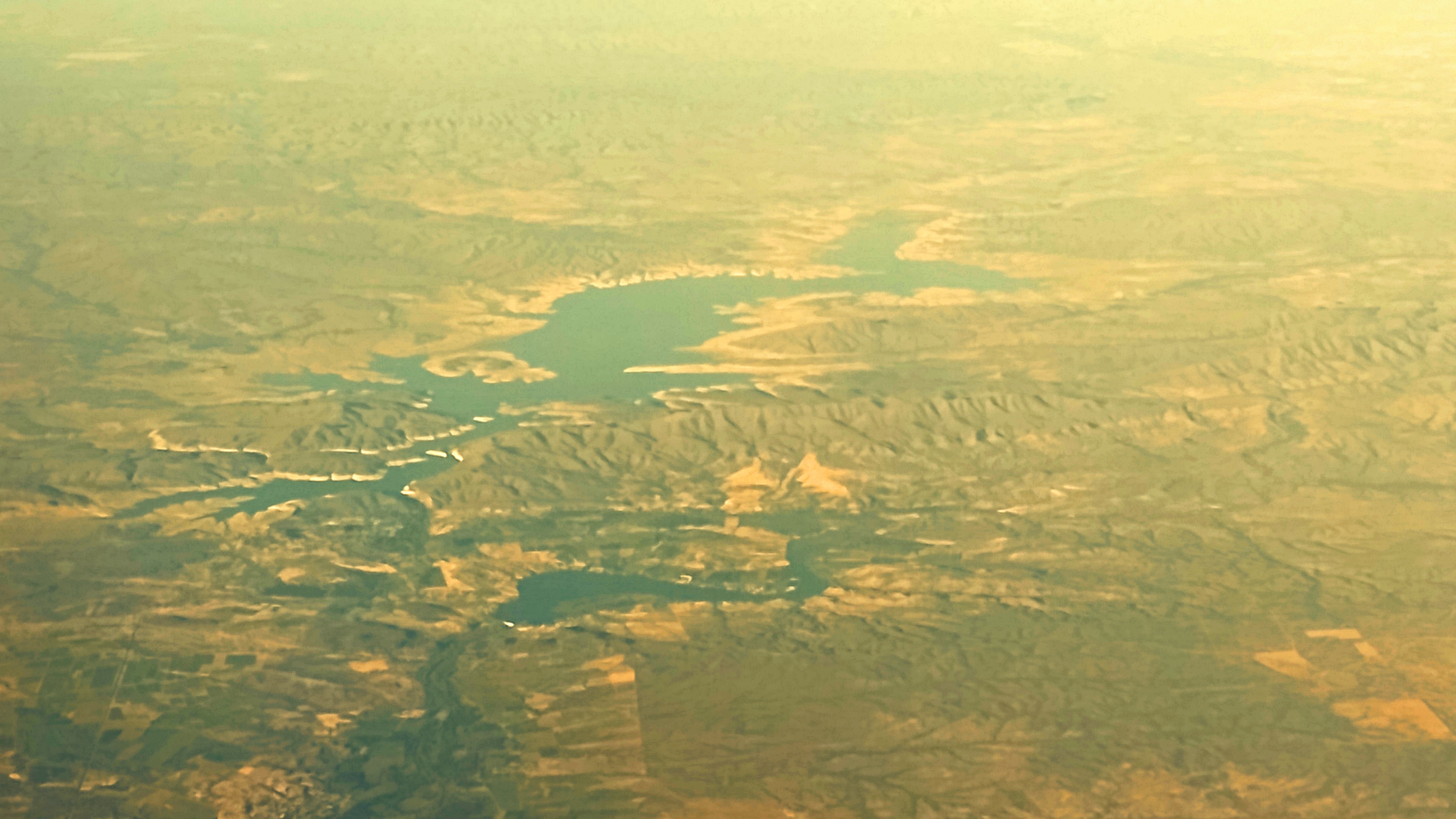
Aerial photograph of La Boquilla Dam and Toronto Reservoir taken from a commercial flight. By Levi Martinez-Reza – Own work, CC BY-SA 4.0, https://commons.wikimedia.org/w/index.php?curid=157605445

Click the link to read the article on the BBC website (Will Grant). Here’s an excerpt:

July 13, 2025

After the thirtieth consecutive month without rain, the townsfolk of San Francisco de Conchos in the northern Mexican state of Chihuahua gather to plead for divine intervention. On the shores of Lake Toronto, the reservoir behind the state’s most important dam – called La Boquilla, a priest leads local farmers on horseback and their families in prayer, the stony ground beneath their feet once part of the lakebed before the waters receded to today’s critically low levels…

“We’re currently at 26.52 metres below the high-water mark, less than 14% of its capacity.” — Rafael Betance, who has voluntarily monitored La Boquilla for the state water authority for 35 years

Now, a long-running dispute with Texas over the scarce resource is threatening to turn ugly. Under the terms of a 1944 water-sharing agreement, Mexico must send 430 million cubic metres of water per year from the Rio Grande to the US. The water is sent via a system of tributary channels into shared dams owned and operated by the International Boundary and Water Commission (IBWC), which oversees and regulates water-sharing between the two neighbours. In return, the US sends its own much larger allocation (nearly 1.85 billion cubic metres a year) from the Colorado River to supply the Mexican border cities of Tijuana and Mexicali. Mexico is in arrears and has failed to keep up with its water deliveries for much of the 21st Century…

Many in northern Mexico believe the 1944 water-sharing treaty is no longer fit for purpose. Mr Ramirez thinks it may have been adequate for conditions eight decades ago, but it has failed to adapt with the times or properly account for population growth or the ravages of climate change.