

Click the link to read the article on the New Mexico Magazine website (Jim O’Donnell). Here’s an excerpt:
July 9, 2025
IN JULY 2020, Squeaks left Santa Ana Pueblo. Fitted with a GPS tracking collar by the pueblo’s Department of Natural Resources, the subadult male mountain lion made an extraordinary 558-mile journey to Mesa Verde National Park in southwestern Colorado. Squeaks crossed the rugged mesa and canyon country of northwestern New Mexico, skirted towns, swam Navajo Lake—twice—and struggled to navigate a maze of highways. Eventually, in late September, Squeaks made his way under US 550 near Cuba and continued north. The epic journey highlights a critical issue facing wildlife in New Mexico. Highways effectively work as deadly walls, impeding wildlife movement and decimating animal populations. In New Mexico, more than 1,200 wildlife-automobile collisions are reported across the state each year, although the number is considered a serious undercount. While firm wildlife-impact numbers are hard to come by, the New Mexico Department of Transportation (NMDOT) reported an average of 671 deer and 3,041 elk involved in crashes each year from 2002 to 2018…

To address this, New Mexico is implementing a Wildlife Corridors Action Plan to guide NMDOT and the Department of Game & Fish to protect areas vital for wildlife movement and create fresh infrastructure that helps animals safely cross heavily trafficked highways…Over the past decade, the state has built 10 wildlife crossings, including one in Tijeras Canyon east of Albuquerque and at Ratón Pass near the Colorado border. Legislators also allocated an additional $50 million for construction of new passages in early 2025. The Wildlife Corridors Action Plan pinpointed 30 collision hot spots across the state with 11 in need of urgent action, including stretches near Silver City, Ruidoso, Glorieta Pass, and in the Sacramento Mountains. Santa Ana Pueblo is working with the state to construct wildlife passages along 19 miles of I-25 and nearly eight miles of US 550…
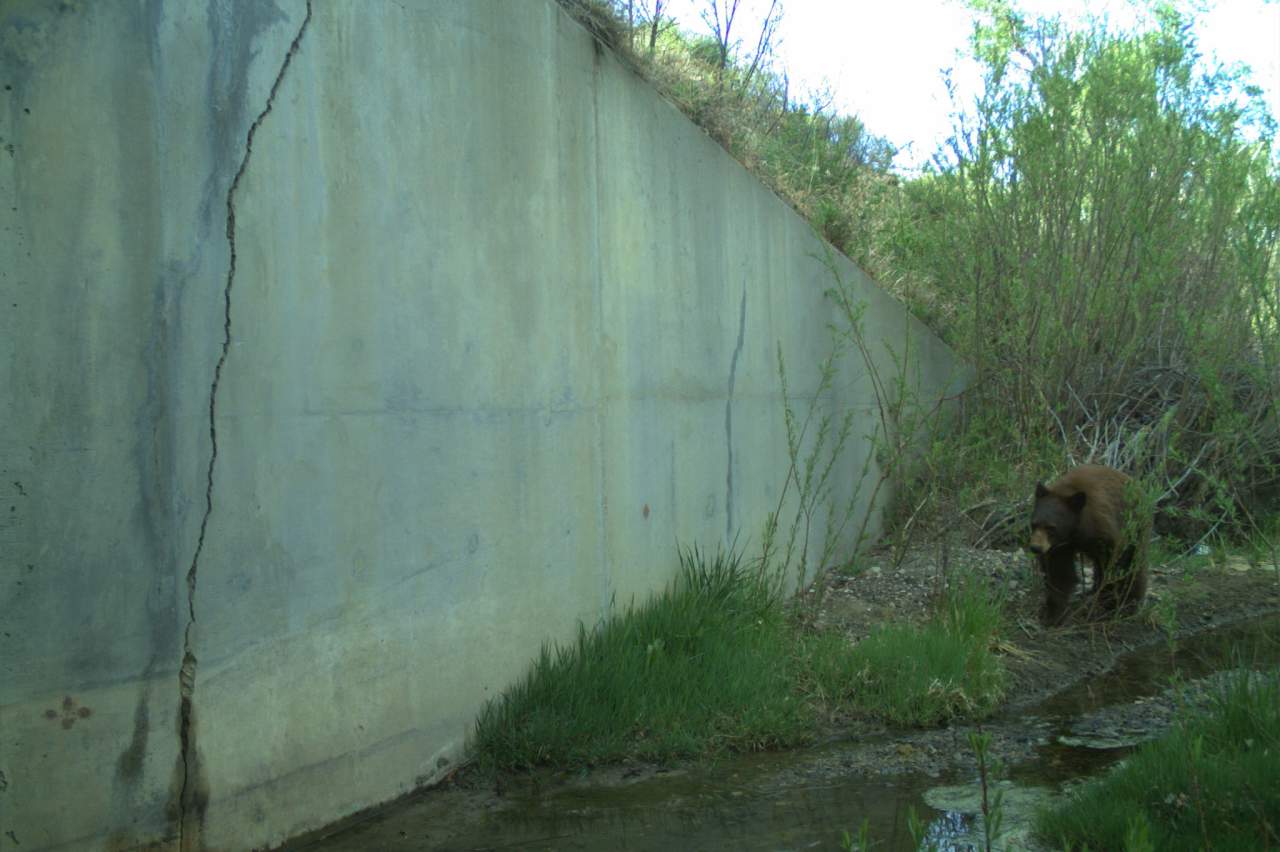
The current top priority is a $45 million project on US 550, north of Cuba, to construct underpasses and overpasses with eight-foot-high fencing meant to both keep wildlife from highways and funnel them into the passages. That’s because different species have different needs when it comes to wildlife passages. Elk and pronghorn do not like underpasses, preferring a vegetated bridge over the highway. Deer, bear, mountain lions, coyotes, and bobcat are more comfortable with underpasses, provided they are at least 25 feet wide, 12 to 14 feet high, with a length less than 100 feet.