DENVER – Today, by repealing the 16-year-old “Endangerment Finding,” which determined that greenhouse gas (GHG) pollution poses a threat to public health and welfare, the Trump administration’s U.S. Environmental Protection Agency (EPA) paved the way for more extreme weather and natural disasters, hurting Colorado communities.
“This decision flies in the face of decades of data about the negative public health impact of greenhouse gasses including heat exposure and fire risk. Colorado is all too familiar with the impacts of climate change, seeing the three largest fires in our state’s history and the most destructive in the last five years. Despite the EPA’s denial of our reality, Colorado will continue to achieve our ambitious clean energy goals to save people more on energy bills, reduce emissions and improve our air-quality and health,” said Governor Jared Polis.
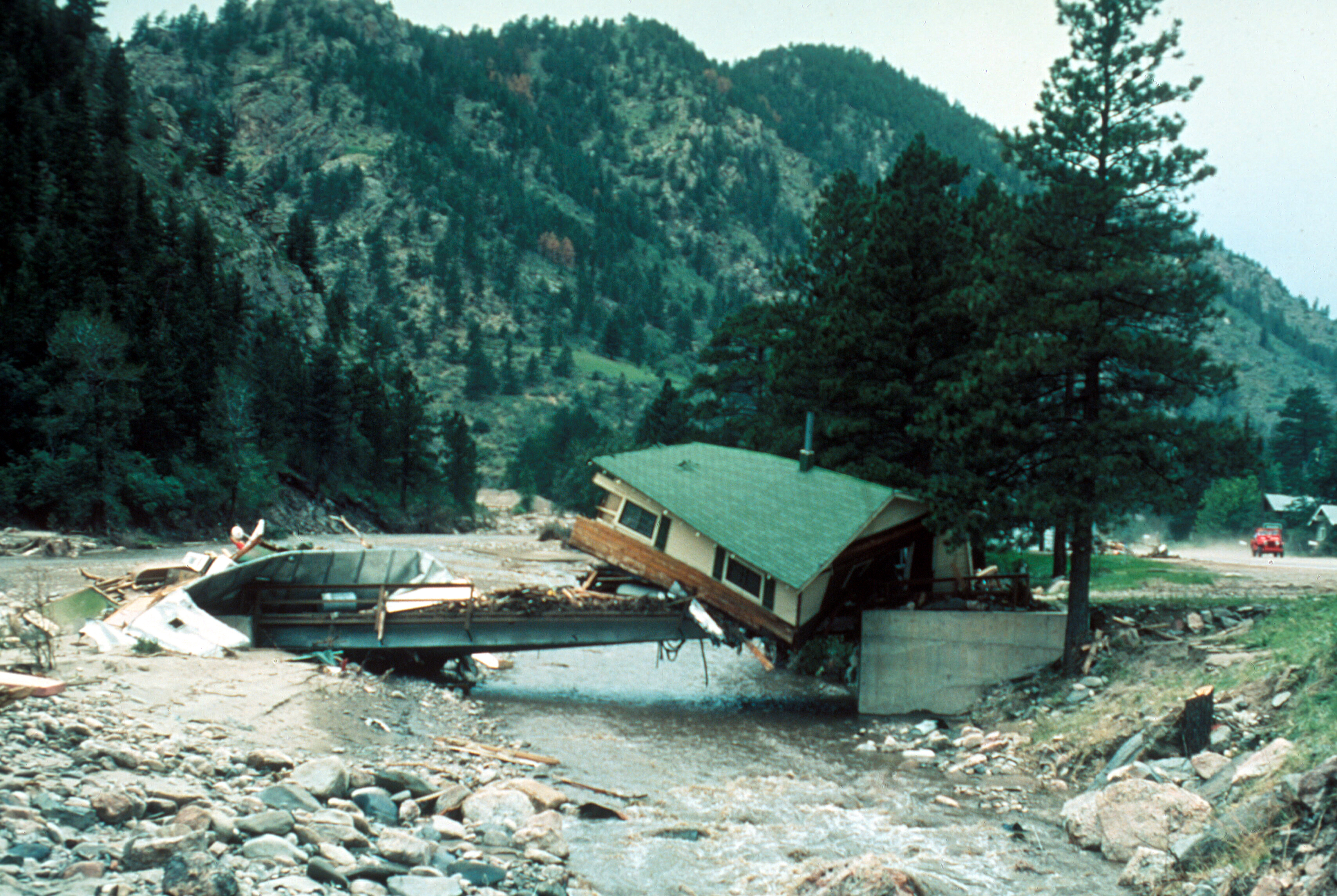
Big Thompson Flood, Colorado. Cabin lodged on a private bridge just below Drake, looking upstream. Photo by W. R. Hansen, August 13, 1976. Photo via the USGS.
Heavy rainfall in late July in Colorado’s past caused two of the state’s worst floods, the Spring Creek Flood and the Big Thompson Flood.
The 1997 Spring Creek Flood resulted in five deaths and over $200 million in damages in Fort Collins.
The 1976 Big Thompson Flood led to 144 fatalities and $35 million in damages.
Twenty-eight years ago this week, 14 inches of rain fell on Fort Collins in just over a day, overwhelming the Spring Creek and leading to the deaths of five people.
And 49 years ago this week, more than a foot of rain fell on the Big Thompson River west of Loveland in about four hours, creating a wall of water that swept away and killed 144 people. It’s not a coincidence that both events happened in the same week of July, though they were years apart. It’s flash-flood season in Colorado, and three of the state’s worst floods occurred from mid-July through mid-September, which is also the state’s monsoon season.
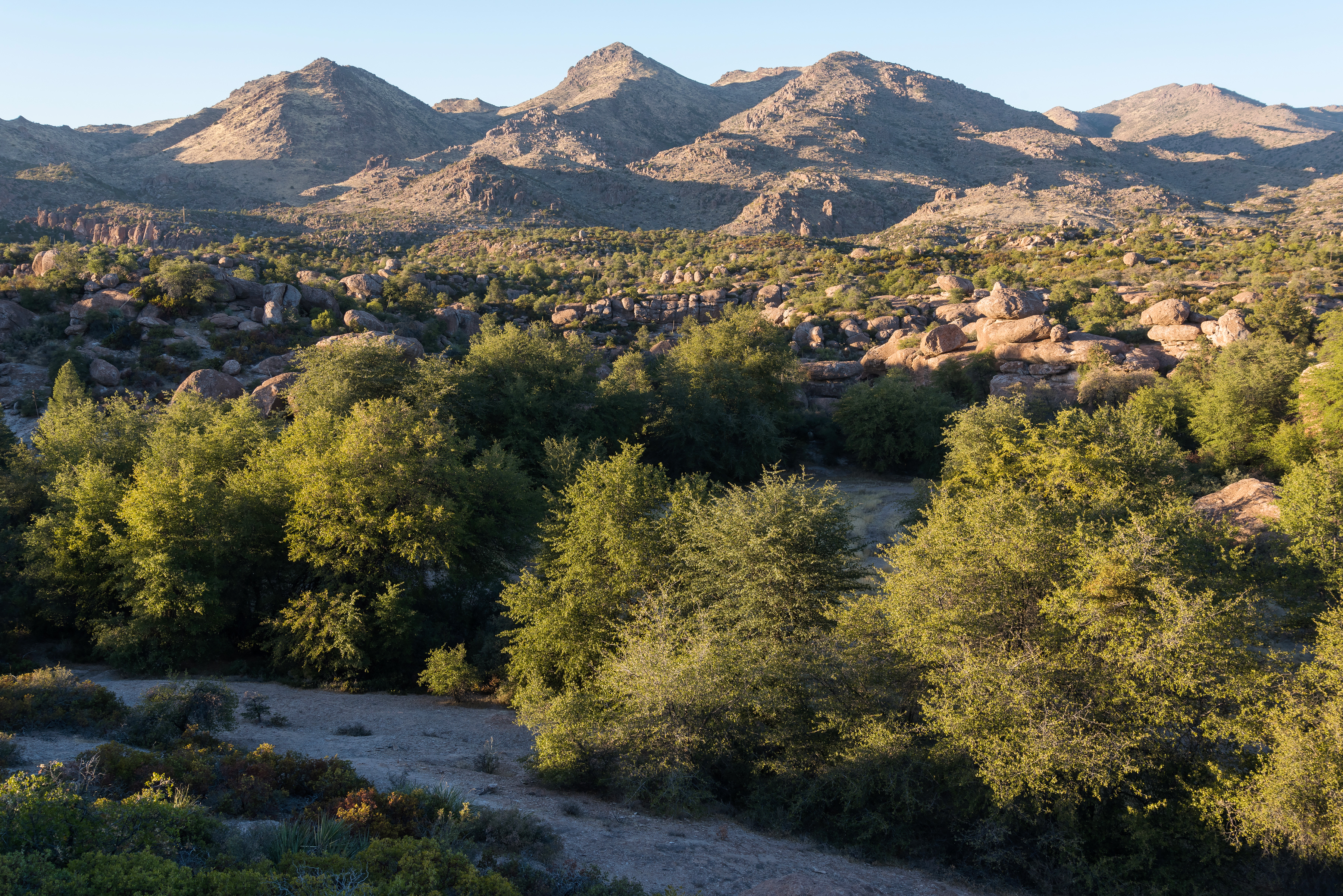
Oak Flat, Arizona features groves of Emory oak trees, canyons, and springs. This is sacred land for the San Carlos Apache tribe. Resolution Copper (Rio Tinto subsidiary) lobbied politicians to deliver this National Forest land to the company with the intent to build a destructive copper mine. By SinaguaWiki – Own work, CC BY-SA 4.0, https://commons.wikimedia.org/w/index.php?curid=98967960
Click the link to read the article on the AZCentral website (Debra Utacia Krol). Here’s an excerpt:
July 29, 2025
Key Points
A group of Apache women has asked a court to stop a land exchange that would lead to a huge copper mine at Oak Flat.
The suit is the latest attempt to block Resolution Copper from building the mine on land east of Phoenix considered sacred to the Apache and other tribes.
A judge will hear arguments in a separate lawsuit next week as the date nears for the land swap to take place.
A group of Apache women asked a federal judge in Washington, D.C., to halt a disputed land exchange at the center of a long battle over plans to build a huge copper mine at Oak Flat. It’s the fourth lawsuit that seeks to stop the U.S. Forest Service from signing over title to the site, held sacred by Apache peoples and culturally significant by other tribes, to Resolution Copper in exchange for other plots of environmentally sensitive land in Arizona. The four women, who all have spiritual and cultural connections to the 2,200-acre campground in Tonto National Forest about 60 miles east of Phoenix, filed their suit in the U.S. District Court for the District of Columbia July 24. Nelson Mullins, a law firm based in Washington, D.C., and South Carolina, outlined the case, which asks Judge Timothy J. Kelly, an appointee of President Donald Trump, to stop the exchange until the plaintiffs can have their day in court. The suit claims the exchange violates the Religious Freedom Restoration Act, the plaintiffs’ First Amendment-guaranteed religious rights protections and two environmental laws.
Visualizing Subsidence Through Block Cave Mining — Resolution Copper
Click the link to go to the “Best of the West” page on the Western Governors website. Here’s an excerpt:
July 24, 2025
Redefining Drought: Drought is often defined as “drier-than-normal,” but if the climate is shifting, what’s considered the new normal? While a larger sample size reduces uncertainty, it could also create a baseline that isn’t representative of today’s climate.
For instance, “if you’re in a place where the precipitation is declining, such as far Western Texas or New Mexico, or possibly you’re relying on stream or river flow to irrigate your crop, and that water resource is declining, you want to be able to think ahead and be aware of the average amount of water you have access to,” said Joel Lisonbee, a senior associate scientist at the Cooperative Institute for Research in the Environmental Sciences, or CIRES, at the University of Colorado in Boulder. In those cases, it may make sense to use a shorter baseline to reflect recent trends, rather than include data from a century ago, when the climate was different.
“What we should be asking is, when should drought be defined using all available data? When should we use the whole climate record?” Lisonbee said. “There’s not one answer, and the correct answer will really depend on why you’re assessing drought in the first place.”
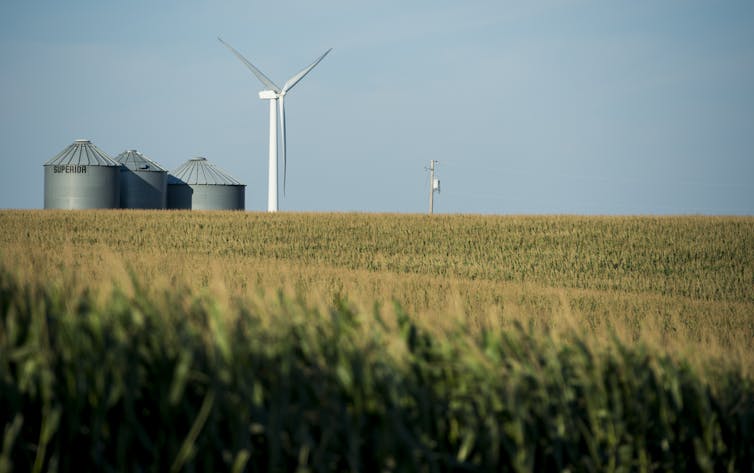
About 60% of Iowa’s power comes from wind. Farmers can earn extra cash by leasing small sections of farms for power production. Bill Clark/Getty Images
Drive through the plains of Iowa or Kansas and you’ll see more than rows of corn, wheat and soybeans. You’ll also see towering wind turbines spinning above fields and solar panels shining in the sun on barns and machine sheds.
For many farmers, these are lifelines. Renewable energy provides steady income and affordable power, helping farms stay viable when crop prices fall or drought strikes.
Wind energy is a significant economic driver in rural America. In Iowa, for example, over 60% of the state’s electricity came from wind energy in 2024, and the state is a hub for wind turbine manufacturing and maintenance jobs.
For landowners, wind turbines often mean stable lease payments. Those historically were around US$3,000 to $5,000 per turbine per year, with some modern agreements $5,000 to $10,000 annually, secured through 20- to 30-year contracts.
Nationwide, wind and solar projects contribute about $3.5 billion annually in combined lease payments and state and local taxes, more than a third of it going directly to rural landowners.
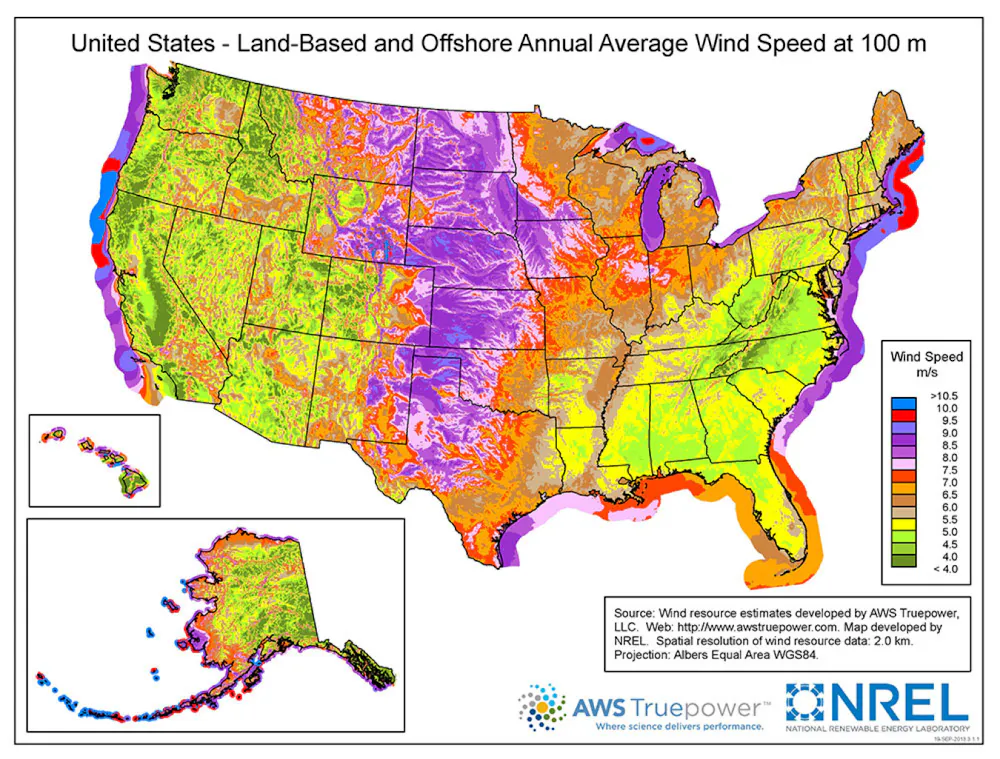
States throughout the Great Plains and Midwest, from Texas to Montana to Ohio, have the strongest onshore winds and onshore wind power potential. These are also in the heart of U.S. farm country. The map shows wind speeds at 100 meters (nearly 330 feet), about the height of a typical land-based wind turbine. NREL
These figures are backed by long-term contracts and multibillion‑dollar annual contributions, reinforcing the economic value that turbines bring to rural landowners and communities.
Wind farms also contribute to local tax revenues that help fund rural schools, roads and emergency services. In counties across Texas, wind energy has become one of the most significant contributors to local property tax bases, stabilizing community budgets and helping pay for public services as agricultural commodity revenues fluctuate.
In Oldham County in northwest Texas, for example, clean energy projects provided 22% of total county revenues in 2021. In several other rural counties, wind farms rank among the top 10 property taxpayers, contributing between 38% and 69% of tax revenue.
The construction and operation of these projects also bring local jobs in trucking, concrete work and electrical services, boosting small-town businesses.
A wind turbine technician stands on the nacelle, which houses the gear box and generator of a wind turbine, on the campus of Mesalands Community College in Tucumcari, N.M., in 2024. Colleges in other states, including Texas, also developed training programs for technicians in recent years as jobs in the industry boomed. Andrew Marszal/AFP via Getty Images
The U.S. wind industry supports over 300,000 U.S. jobs across construction, manufacturing, operations and other roles connected to the industry, according to the American Clean Power Association.
Solar energy is also boosting farm finances. Farmers use rooftop panels on barns and ground-mounted systems to power irrigation pumps, grain dryers and cold storage facilities, cutting their power costs.
Some farmers have adopted agrivoltaics – dual-use systems that grow crops beneath solar panels. The panels provide shade, helping conserve water, while creating a second income path. These projects often cultivate pollinator-friendly plants, vegetables such as lettuce and spinach, or even grasses for grazing sheep, making the land productive for both food and energy.
Federal grants and tax credits that were significantly expanded under the 2022 Inflation Reduction Act helped make the upfront costs of solar installations affordable.
However, the federal spending bill signed by President Donald Trump on July 4, 2025, rolled back many clean energy incentives. It phases down tax credits for distributed solar projects, particularly those under 1 megawatt, which include many farm‑scale installations, and sunsets them entirely by 2028. It also eliminates bonus credits that previously supported rural and low‑income areas.
Without these credits, the upfront cost of solar power could be out of reach for some farmers, leaving them paying higher energy costs. At a 2024 conference organized by the Institute of Sustainability, Energy and Environment at the University of Illinois Urbana-Champaign, where I work as a research economist, farmers emphasized the importance of tax credits and other economic incentives to offset the upfront cost of solar power systems.
What’s being lost
The cuts to federal incentives include terminating the Production Tax Credit for new projects placed in service after Dec. 31, 2027, unless construction begins by July 4, 2026, and is completed within a tight time frame. The tax credit pays eligible wind and solar facilities approximately 2.75 cents per kilowatt-hour over 10 years, effectively lowering the cost of renewable energy generation. Ending that tax credit will likely increase the cost of production, potentially leading to higher electricity prices for consumers and fewer new projects coming online.
The changes also accelerate the phase‑out of wind power tax credits. Projects must now begin construction by July 4, 2026, or be in service before the end of 2027 to qualify for any credit.
Meanwhile, the Investment Tax Credit, which covers 30% of installed cost for solar and other renewables, faces similar limits: Projects must begin by July 4, 2026, and be completed by the end of 2027 to claim the credits. The bill also cuts bonuses for domestic components and installations in rural or low‑income locations. These adjustments could slow new renewable energy development, particularly smaller projects that directly benefit rural communities.
While many existing clean energy agreements will remain in place for now, the rollback of federal incentives threatens future projects and could limit new income streams. It also affects manufacturing and jobs in those industries, which some rural communities rely on.
Renewable energy also powers rural economies
Renewable energy benefits entire communities, not just individual farmers.
Wind and solar projects contribute millions of dollars in tax revenue. For example, in Howard County, Iowa, wind turbines generated $2.7 million in property tax revenue in 2024, accounting for 14.5% of the county’s total budget and helping fund rural schools, public safety and road improvements.
In some rural counties, clean energy is the largest new source of economic activity, helping stabilize local economies otherwise reliant on agriculture’s unpredictable income streams. These projects also support rural manufacturing – such as Iowa turbine blade factories like TPI Composites, which just reopened its plant in Newton, and Siemens Gamesa in Fort Madison, which supply blades for GE and Siemens turbines. The tax benefits in the 2022 Inflation Reduction Act helped boost those industries – and the jobs and local tax revenue they bring in.
As rural America faces economic uncertainty and climate pressures, I believe homegrown renewable energy offers a practical path forward. Wind and solar aren’t just fueling the grid; they’re helping keep farms and rural towns alive.