Click the link to read the article on The Grand Junction Daily Sentinel website (Dan West). Here’s an excerpt:
April 11, 2026
Local water utilities are raising the alarm about the severe drought Mesa County is in and are asking users to voluntarily limit their usage now to conserve water. At a Thursday press conference in Palisade, representatives from the area’s water utilities and the National Weather Service described the situation in stark terms. Grand Junction Public Utilities Director Randi Kim said the winter snowpack is delivering far less water than normal and spring runoff began more than a month early.
“This year in March, our snow survey indicated that our snowpack across the city’s Kannah Creek watershed was at 41% measured as snow water equivalent over the 35-year historical average,” Kim said. “Due to warm weather conditions, runoff in Kannah Creek started on March 26, which is about five to six weeks earlier than normal.”
In response, Kim asked Grand Junction’s water users to help conserve water now. Representatives from Ute Water suggested limiting outdoor watering as an important step in conserving water.
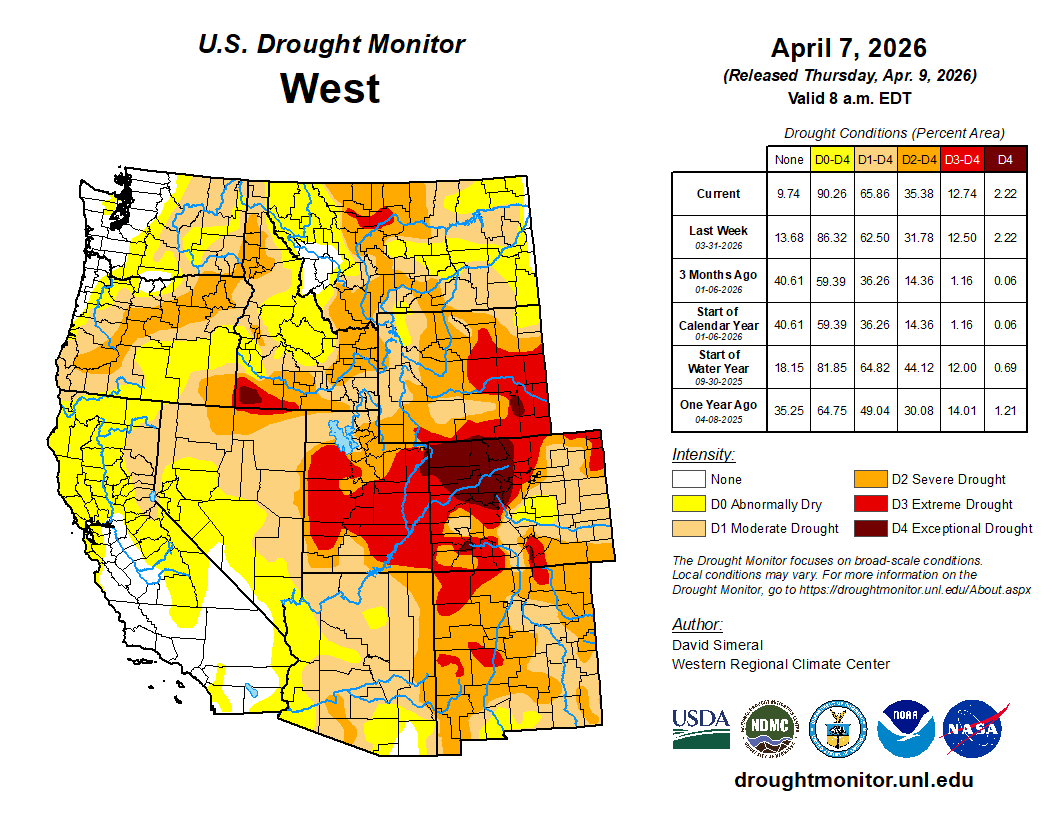
“With Grand Junction currently in D3 extreme drought, the city is asking all of our customers to take actions to conserve water,” Kim said. “Participating now in water conservation actions will help preserve the city’s water supply should that drought persist through the summer and necessitate the city rely upon our stored water rather than direct flows from Kannah Creek.”
[…]
Kim said the city’s Grand Mesa reservoirs are full and it has 1.75 years of water in storage, so it is not facing the prospect of running out of water this year…Data on the Colorado River Basin goes back 130 years. Experts say 2026 will be worse than any of those, likely by a longshot…A perfect storm of factors are behind those concerns.
Erin Walter, service hydrologist for the National Weather Service, said at the Thursday press conference that the record low snowpack has combined with record warm weather to make for especially challenging conditions. In March alone, Walter said Grand Junction saw eight consecutive days of record warm temperatures. That warm weather is persisting into April, Walter said, and forecasts predict it will continue through June. Those conditions could result in the worst drought on record…n reservoirs essential to the Western Slope, that means less water to work with. Green Mountain Reservoir, which includes the Historic User Pool that helps supply numerous farmers, is not expected to fill this year, according to Flinker. Meanwhile Blue Mesa Reservoir, which requires 419,000 acre-feet to fill and supplies water to the Gunnison River before it joins the Colorado River in Grand Junction, is forecast to get only around 200,000 acre-feet this year.