From email from Reclamation (Erik Knight):
Click the link to view the forecast graphics.


From email from Pete Kolbenschlag (Colorado Farm & Food Alliance):
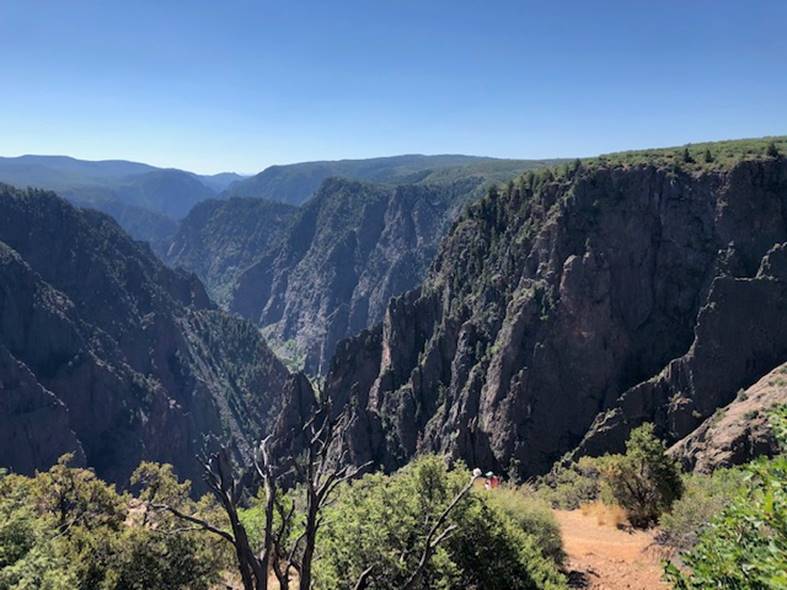
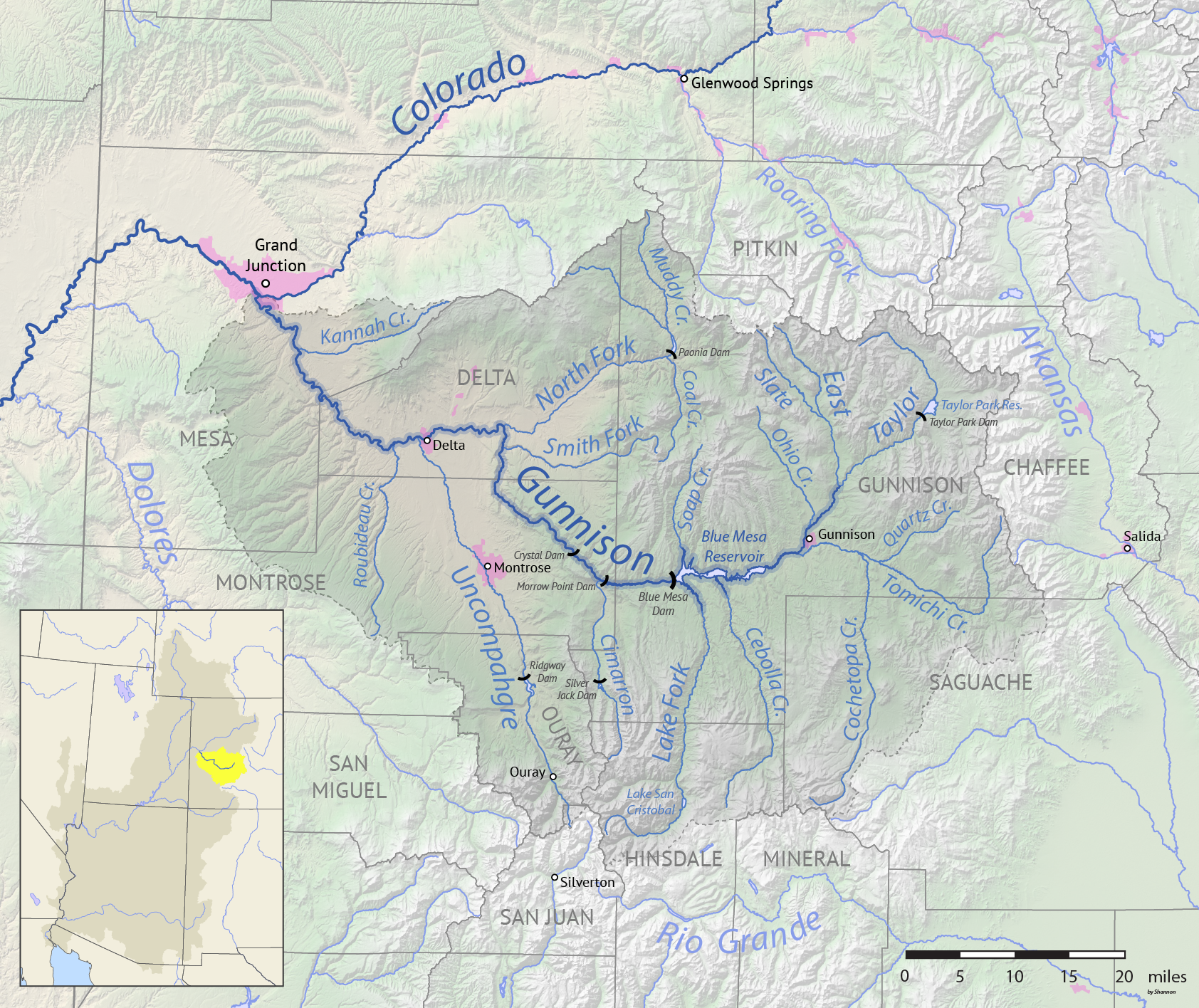
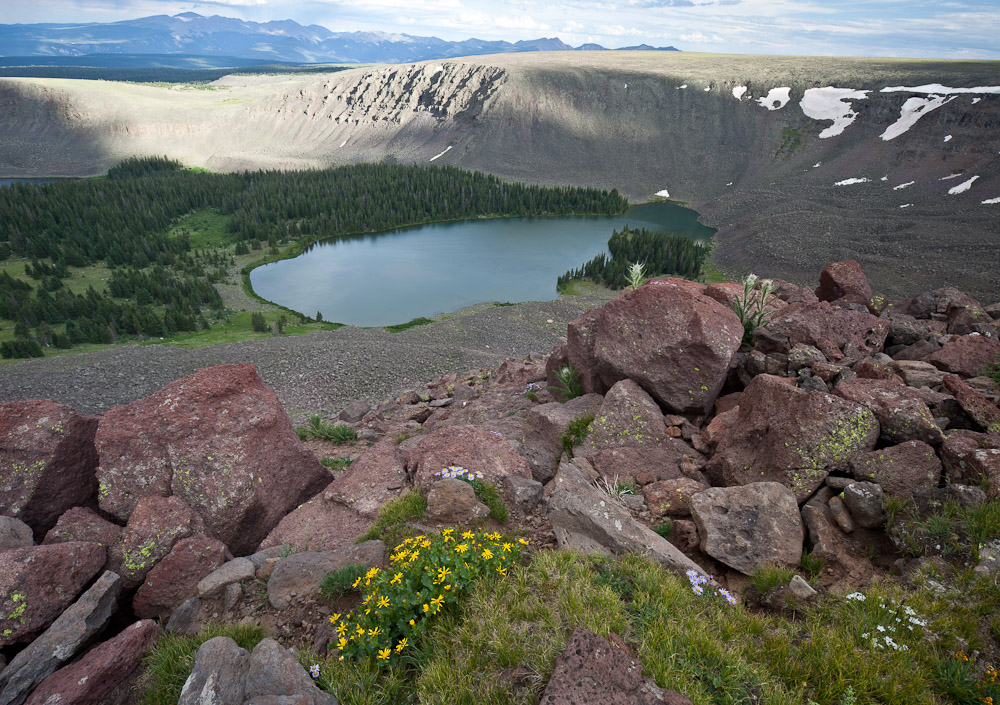
The North Rim of the Black Canyon, in the National Park, which is accessed from Fruitland Mesa near Crawford – a remote region of ranches at the base of the West Elk Mountains – showcases an especially dramatic feature. Even among many spectacular places in western Colorado it impresses, marking where the Southern Rockies transition into the mesas, deserts and canyons of the Colorado Plateau. This cherished national treasure is also a local North Fork favorite, found on the way to Blue Mesa and the city of Gunnison.
The Colorado Farm & Food Alliance is supportive of public lands conservation, for protecting the stunning landscapes near our home-base. Set into this amazing landscape are small towns like Crawford, Paonia and Hotchkiss, and scattered between and on the mesas all around are the farms, ranches, wineries and businesses that work hard to make it here.
As we consider how we can adapt rural communities to be resilient and prosperous in a changing climate and dynamic future, we think that land conservation and watershed health are two of the most important, and effective, strategies we can pursue. That is one reason, as we look even further west, across the Uncompahgre Plateau, into the heart of Colorado’s red rock canyon country along the Dolores River, we see opportunity.
Far less visited than Moab and Monticello, Utah which lie just on the other side of the La Sal Mountains and Paradox Basin, the looming Wingate cliffs along this tributary to the Colorado River, which it joins at Dewey Bridge just over the stateline, contain an unique, fascinating, often hardscrabble history.
Back in the North Fork Valley, the Black Canyon National Park is not the only nearby designated national park service or conservation area. Just downstream is the Gunnison Gorge National Conservation Area. And above it is the Curecanti National Recreation Area which includes not only Blue Mesa reservoir, Colorado’s largest water body, but seldom visited upper reaches of the Black Canyon itself, with sweeping vistas of the San Juan Mountains and the Uncompahgre Plateau. Protected public lands are critical components of the economy in this region.
So lately as talk has percolated up from people who love the red rock Dolores River country, about securing protections to conserve what is unique and important about it, we pay attention. Sen. Bennet has long championed a bill to establish a national conservation area for part of the Dolores Canyon region. And more recently, a growing coalition of businesses, conservation groups and local elected officials are calling on President Biden to designate a national monument for a part of the region as well.
We think this could be a great opportunity to ensure what is unique there remains intact and that local businesses benefit from growing visitation to the region. Given the rich history in the West End of Montrose County, like the Hanging Flume and the town of Uravan – a critical player in the Atomic Age – it’s no wonder community leaders are wanting to protect the area.
Towns like Naturita and Nucla, with their markets and cafes, can serve as hubs that support local farms and residents, as they always have, and play host to visitors and activities, provide guides and services, and be the jumping off and provisioning point for the more adventuresome.
For places as rooted in tradition as are the rural communities of western Colorado, public land conservation and protecting the health of our lands and watersheds is a solid strategy to preserve what we care about most. And to welcome new opportunities. This is the strongest connection we see with our friends on the West End: protected public lands protect a rural way of life – and can help us better prepare for and better prosper in the future.
As 2024 opens to new possibilities, we cannot think of a better conversation than how to secure a locally-rooted, sustainable, and prosperous future for the Dolores Canyon Country and the rural, western communities of our local and nearby watersheds. As President Biden looks for legacy projects to leave with future generations, now is the time for Colorado’s leaders like Senators Hickenlooper and Bennet, and Governor Polis to speak up and urge the president to act.


From email from Reclamation (Erik Knight):
The next coordination meeting for the operation of the Aspinall Unit is scheduled for Thursday, January 18th 2024, at 1:00 pm.
This meeting will be held at the Holiday Inn Express in Montrose, CO. There will also be an option for virtual attendance via Microsoft Teams. A link to the Teams meeting will be emailed next week along with the meeting handouts.
The meeting agenda will include a review of operations and hydrology since August, current soil and snowpack conditions, a discussion of hydrologic forecasts, the weather outlook, and planned operations for this water year. There will also be a presentation by American Whitewater on the development of the Environmental & Recreational Flow Tool.

From email from Reclamation (Erik Knight):
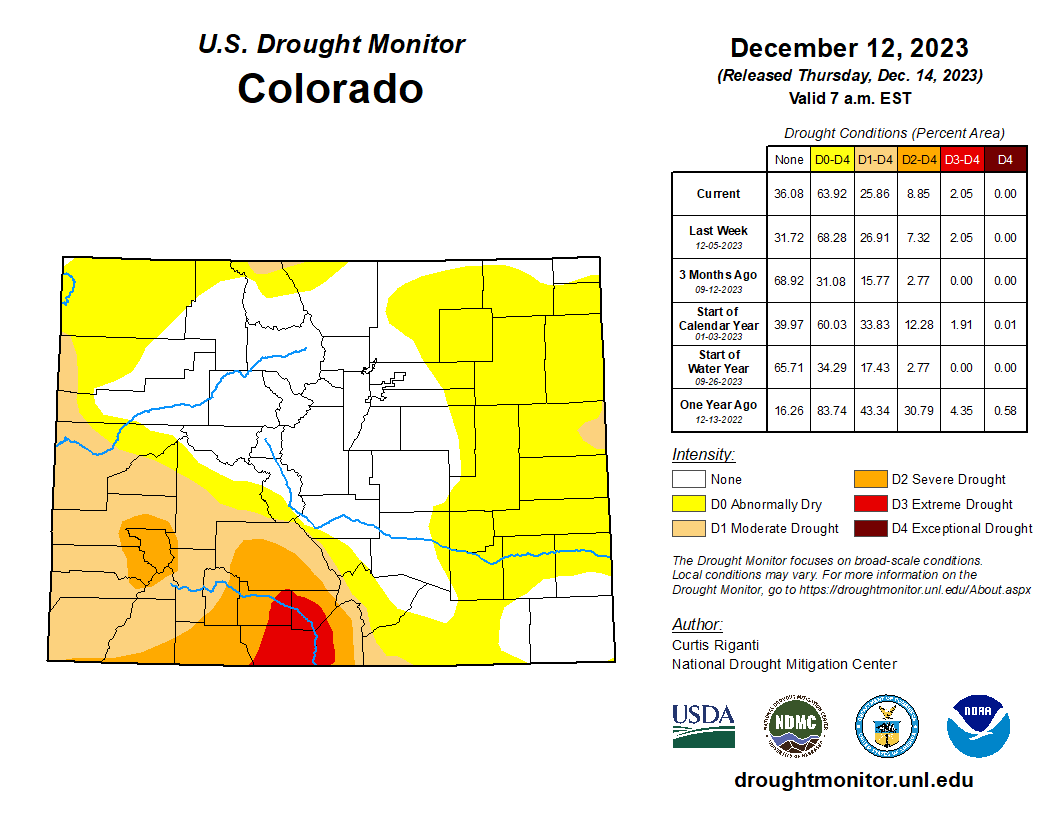
Releases from the Aspinall Unit will be decreased from 650 cfs to 575 cfs on Wednesday, December 20th. Releases are being decreased in response to drier than average conditions in the Gunnison Basin.
Flows in the lower Gunnison River are currently above the baseflow target of 1050 cfs. River flows are expected to remain above the baseflow target for the foreseeable future.
Pursuant to the Aspinall Unit Operations Record of Decision (ROD), the baseflow target in the lower Gunnison River, as measured at the Whitewater gage, will be 1050 cfs for December.
Currently, Gunnison Tunnel diversions are 0 cfs and flows in the Gunnison River through the Black Canyon are around 620 cfs. After this release change Gunnison Tunnel diversions will still be 0 cfs and flows in the Gunnison River through the Black Canyon will be near 550 cfs. Current flow information is obtained from provisional data that may undergo revision subsequent to review.
Click the link to read the article on the Grand Junction Daily Sentinel website (Dennis Webb). Here’s an excerpt:
Four recently announced federal Bipartisan Infrastructure Law grants for water projects in the region all included one notable common denominator — they all got help in their application process through a special Colorado River District program made possible by a voter-approved tax measure in 2020…According to a news release from the Colorado River District, based in Glenwood Springs, four of the projects are in the district’s boundaries, and all four made use of the district’s Accelerator Grant program, which was established last year to help West Slope water users in navigating the time-consuming and often-expensive requirements for applying for the considerable funding available under the Bipartisan Infrastructure Law. The assistance includes helping pay for feasibility analysis, design, preliminary environmental review and engineering costs. Altogether, through the Bipartisan Infrastructure Law, the Bureau of Reclamation is investing a total of $8.3 billion over five years for water infrastructure projects…
■ $746,423 to the Middle Colorado Watershed Council, which in partnership with Garfield County plans to install a fish barrier to prevent non-native fish migration, and upgrade a diversion structure, on Roan Creek outside De Beque.

■ Nearly $1.2 million to American Rivers, which, working with partners, plans to upgrade irrigation infrastructure and enhance aquatic and riparian habitats along a mile of the Uncompahgre River;
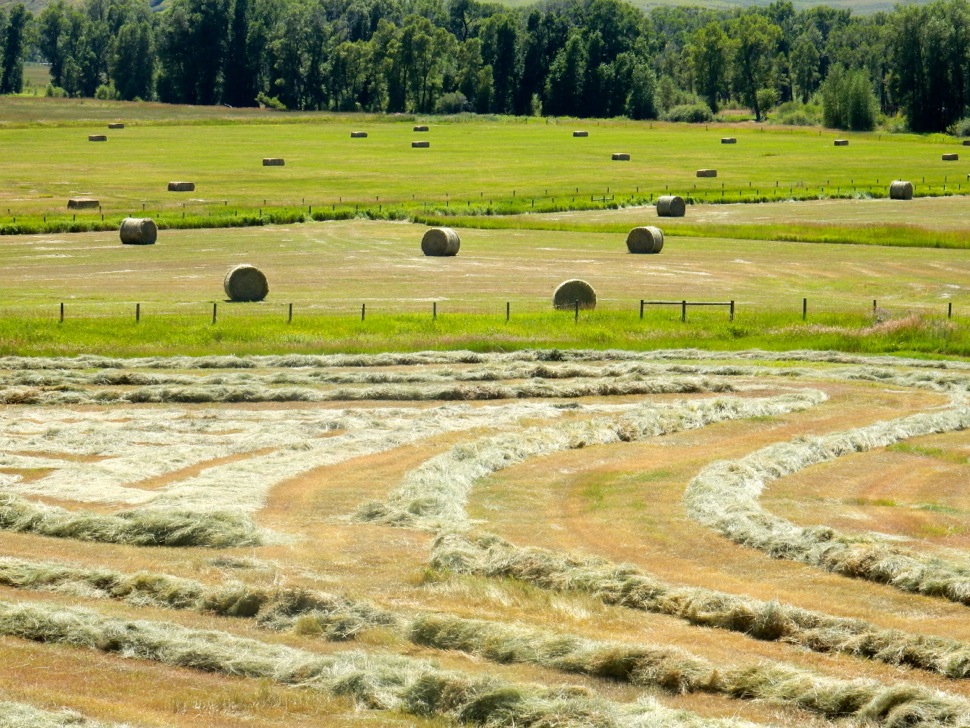
■ About $3 million to Trout Unlimited and the Middle Colorado River Agriculture Collaborative to upgrade, relocate or combine six diversion structures in order to remove instream barriers to fish passage along five miles of Elk Creek in the New Castle area.
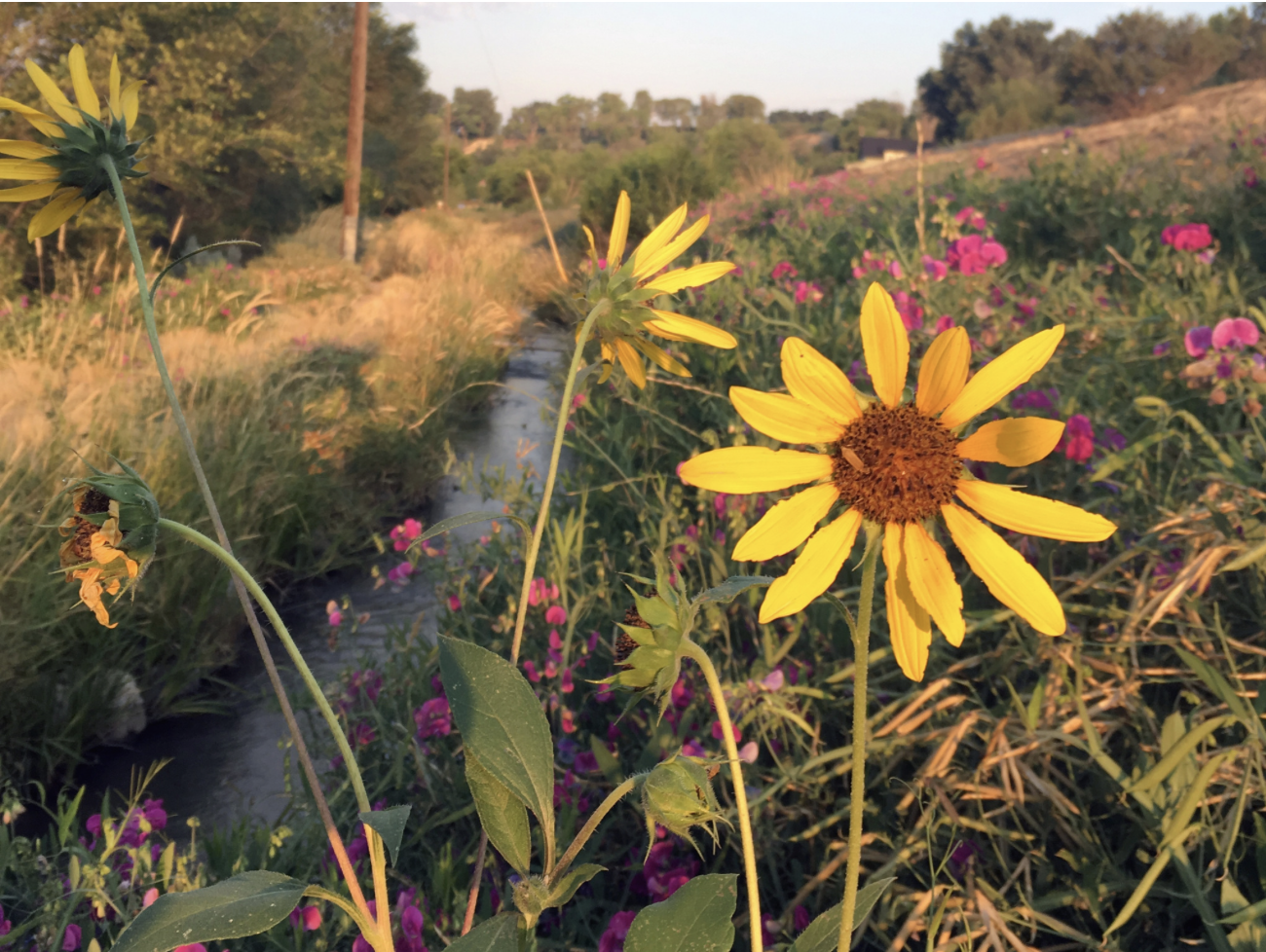
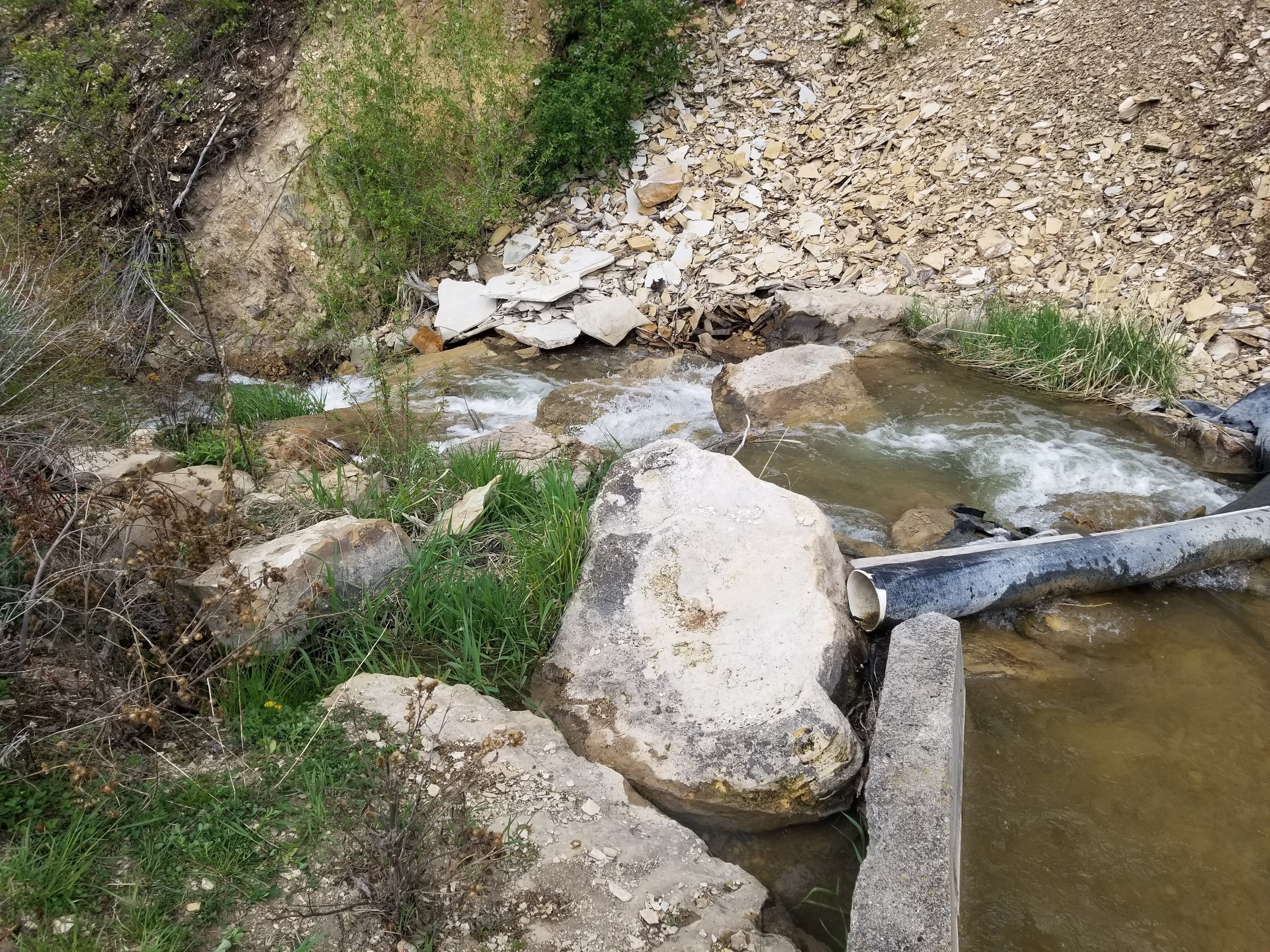
■ Nearly $1.6 million to the Western Slope Conservation Center, which, in partnership with the North Fork Farmer’s Ditch Association, will modernize the Farmers Ditch diversion and headgate structures downstream of Paonia Reservoir to improve upstream fish passage, increase diversion efficiency and improve safety for boaters.
Click the link to read the release on the Department of Interior website:
President Biden’s Bipartisan Infrastructure Law investing in environmental projects to increase water availability
11/15/2023 WASHINGTON — The Department of the Interior today announced $51 million from President Biden’s Investing in America agenda for 30 new Environmental Water Resource Projects in 11 states through the Bureau of Reclamation. The collaborative projects focus on water conservation, water management and restoration efforts that will result in significant benefits to ecosystem or watershed health.
“Adequate, resilient and safe water supplies are fundamental to the health, economy and security of every community in our nation,” said Secretary Deb Haaland. “The Interior Department is focused on ensuring that funding through President Biden’s Investing in America agenda is going to collaborative projects throughout the West that will benefit the American people.”
As part of the Biden-Harris administration’s commemoration of the two-year anniversary of the Bipartisan Infrastructure Law, Principal Deputy Assistant Secretary for Water and Science Michael Brain announced the selections during a visit to Grand Junction, Colorado, where eight of the selected projects are located.
“These locally led initiatives utilize the investments from President Biden’s Bipartisan Infrastructure Law to demonstrate quantifiable and sustained water savings, all while providing a direct benefit to the surrounding ecosystems,” said Principal Deputy Assistant Secretary Michael Brain. “These types of projects and robust cooperation with stakeholders are helping to improve watershed health and increase water reliability and access for families, farmers, and Tribes.”
President Biden’s Investing in America agenda represents the largest investment in climate resilience in the nation’s history and is providing much-needed resources to enhance Western communities’ resilience to drought and climate change. Through the Bipartisan Infrastructure Law, Reclamation is investing a total of $8.3 billion over five years for water infrastructure projects, including rural water, water storage, conservation and conveyance, nature-based solutions, dam safety, water purification and reuse, and desalination. Over the first two years of its implementation, Reclamation selected 372 projects to receive almost $2.8 billion.
The WaterSMART program also advances the Justice40 Initiative, part of the Biden-Harris administration’s historic commitment to environmental justice, which aims to ensure 40 percent of the overall benefits of certain climate, clean energy and other federal investments flow to disadvantaged communities that have been marginalized by underinvestment and overburdened by pollution.
Arizona
Altar Valley Conservation Alliance, Surface Water Conservation for Drought and Climate Resilience in the Altar Valley Watershed
Reclamation Funding: $1,213,809
The Altar Valley Conservation Alliance, in partnership with the Pima County Regional Flood Control District, will use a series of nature-based features in the Altar Wash watershed, southwest of Tucson, Arizona, to slow flows, improve groundwater infiltration, and create surface water habitat for wildlife. The Alliance will install low-tech natural infrastructure in dryland streams facilities across 8,985 acres of the wash, which will slow the runoff, reducing erosion and retaining water in the wash for longer periods. The project will enhance drought and climate change resilience, reduce downstream flood impacts and increase the sustainability of agricultural operations.
California
San Bernardino Valley Municipal Water District, Hidden Valley Creek Aquatic and Riparian Habitat Restoration Project
Reclamation Funding: $3,000,000
San Bernardino Valley Municipal Water District will implement the Hidden Valley Creek Aquatic and Riparian Habitat Restoration Project within the Upper Santa Ana River Watershed, a tributary of the Santa Ana River, in southern California. The project will restore and improve the condition of 21.7 acres of degraded aquatic and riparian habitat, including habitat for the threatened Santa Ana Sucker. The district will construct new and restored stream channel, establish a buffer of native riparian vegetation on each side of the stream, and enhance a 1.2 acre floodplain bench. The project will include non-native plant removal and site revegetation efforts. This restoration will improve water quality, increase habitat connectivity, and provide crucial support for recovering endangered and sensitive species.

Colorado
American Rivers, Inc, Uncompahgre River Multi-Benefit Project
Reclamation Funding: $ 1,198,376
American Rivers, in partnership with the Ward Water Group and local landowners, will upgrade irrigation infrastructure and enhance aquatic and riparian habitats along one mile of the Uncompahgre River in western, Colorado. The current push-up diversion dam structure has caused channel widening, reduction of aquatic habitat diversity, and a decrease in floodplain connectivity. American Rivers will improve the Ward Irrigation Ditch infrastructure by constructing 2 cross-vane weirs, installing a new concrete stoplog bypass at the headgate, and piping 5,600 linear feet of open irrigation ditches. The project will improve aquatic and riparian habitat within the channel by constructing cross-vane weirs, J-hook vanes, rock vanes, and boulder clusters; revegetating the banks and meanders using willow pole clusters and riparian plant species plugs; and removing invasive vegetation.
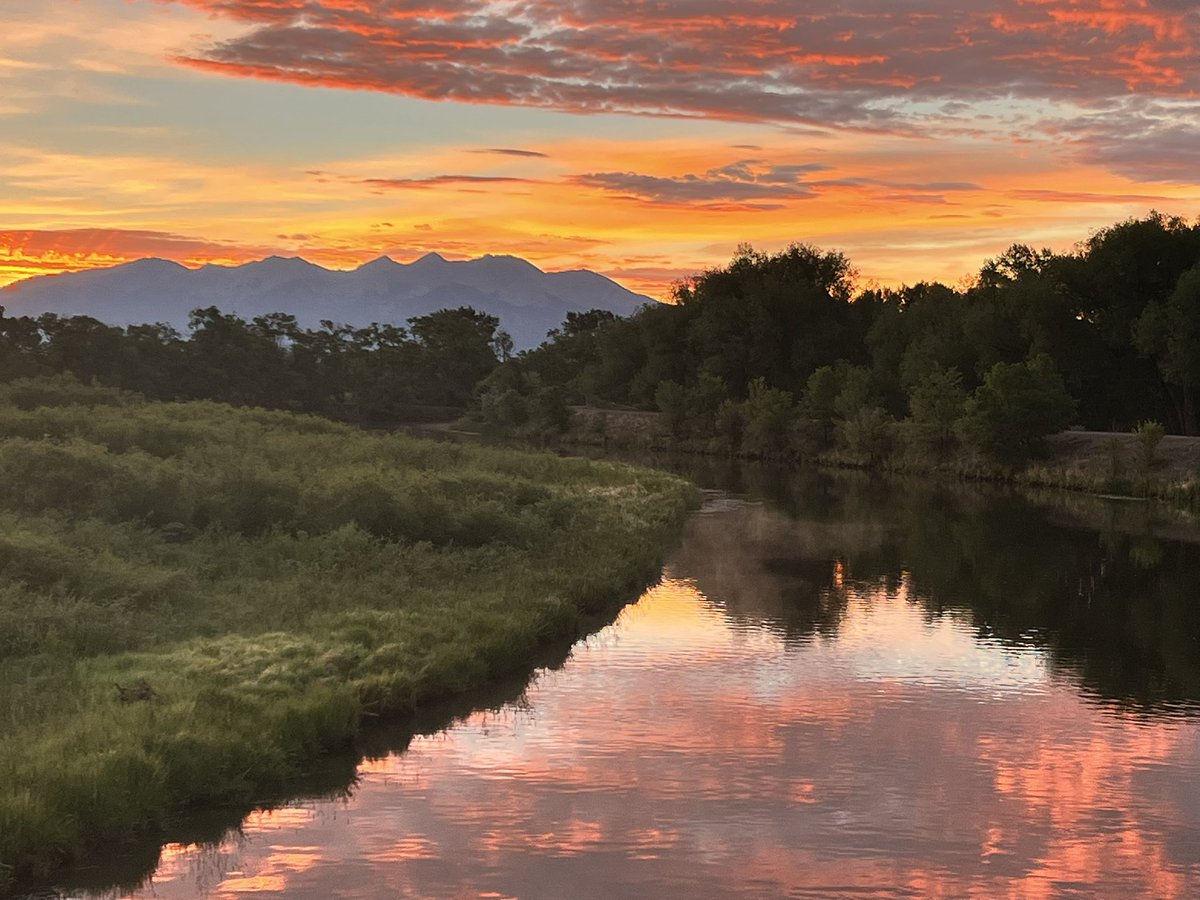
Colorado Rio Grande Restoration Foundation, Farmers Union Multi-Benefit Diversion Infrastructure Improvement Project
Reclamation Funding: $1,274,625
The Colorado Rio Grande Restoration Foundation, in partnership with the San Luis Valley Irrigation District, will upgrade the diversion infrastructure for the Farmers Union Canal and Rio Grande #1 Ditch, in southwestern Colorado, to meet agricultural, ecological, recreational, and community needs. The current diversion infrastructure creates a barrier to fish passage, is hazardous for boaters, and requires frequent maintenance. The partners will construct a new diversion structure, incorporating fish passage that will allow fish to access an additional 1.42 river miles of habitat. The project also includes restoration of streambank through the installation of rock and root wad structures and streambed and aquatic habitat through improved sediment transport at the diversion structure. The diversion upgrade will provide safe boat passage and more efficiently deliver water to the Farmers Union Canal and Rio Grande #1 Ditch.

Mancos Conservation District, Riparian Restoration and Infrastructure Improvements to Better the Ecological Processes of the Mancos Watershed
Reclamation Funding: $2,482,686
The Mancos Conservation District, in partnership with the Town of Mancos, will implement a multi-benefit project consisting of a suite of infrastructure improvements and nature-based solutions along the Mancos River, a tributary of the San Juan River, in southwestern, Colorado. The partners will upgrade three agricultural diversion structures, install remote metering and telemetry equipment on 10 agricultural pipeline headgates, complete fire mitigation work on 650 upland acres and replace invasive riparian plants with native species adjacent to the Mancos River. The project is downstream of Reclamation’s Jackson Gulch Reservoir and will mitigate wildfire risk to the reservoir and water supplies in the Mancos River Watershed.

Middle Colorado Watershed Council, Roan Creek Fish Barrier and Diversion Infrastructure Upgrade
Reclamation Funding: $746,423
The Middle Colorado Watershed Council, working in partnership with Garfield County, will install a fish barrier to prevent non-native fish migration, and upgrade a diversion structure on Roan Creek, in western Colorado. The upper portion of Roan Creek, a tributary of the Colorado River, contains a unique native fish assemblage comprised of Colorado River cutthroat trout, bluehead sucker, Paiute sculpin, and speckled dace. Non-native fish in the Roan Creek watershed harm the river system’s ecology by predating on or hybridizing with the unique native species. Construction of a fish barrier will effectively eliminate the upstream movement of non-native fish to improve Roan Creek’s aquatic and riparian habitat and protect the native fish.
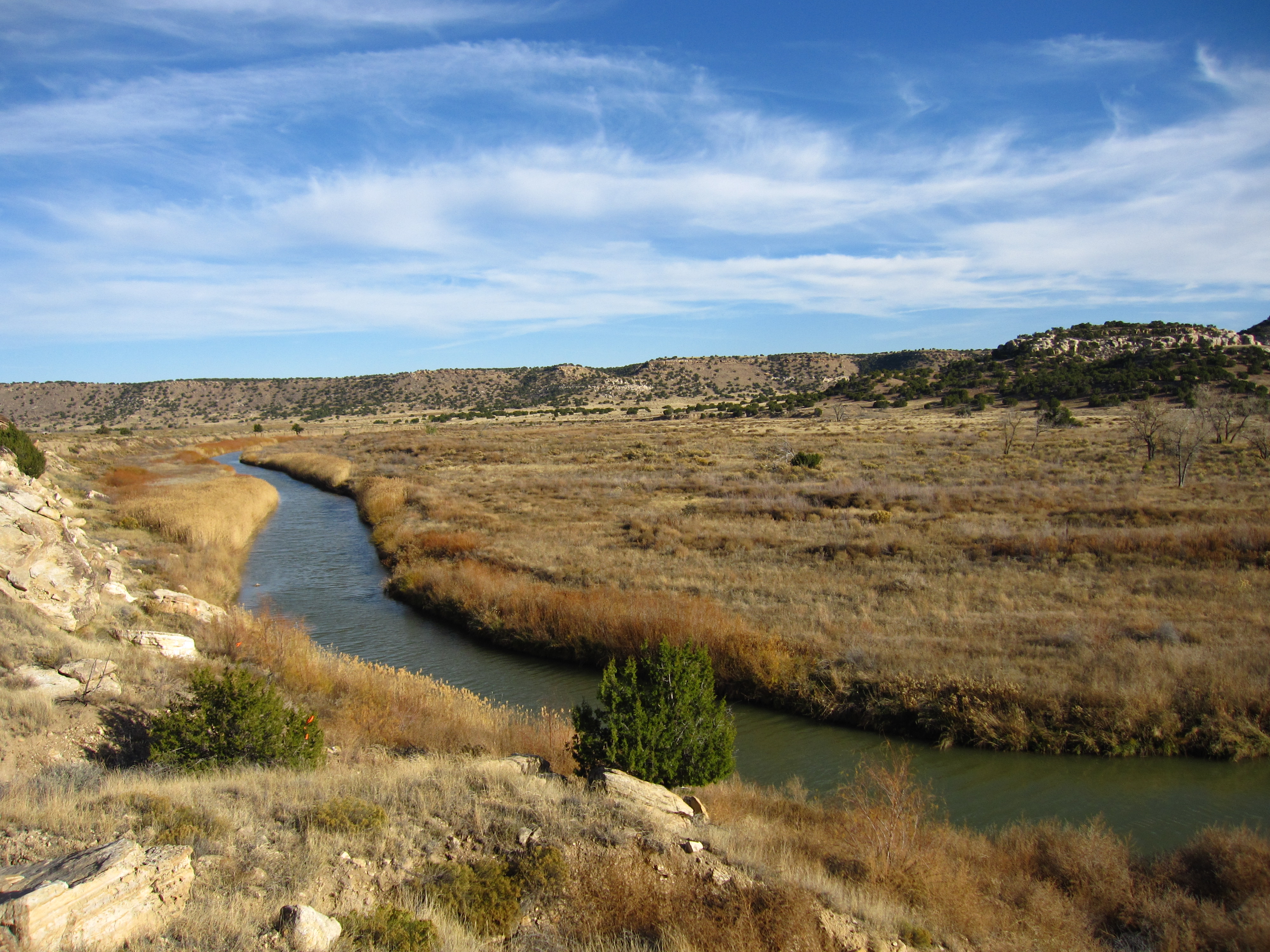
Purgatoire Watershed Partnership, Purgatoire River Fish Passage
Reclamation Funding: $2,403,748
The Purgatoire Watershed Partnership will improve fish passage at the Baca-Picketwire diversion dam on the Purgatoire River in downtown Trinidad, Colorado. The Purgatoire River supports a robust assemblage of fish species and is of local and regional interest for conservation. Currently, ecological function is impaired because the existing concrete diversion dam is not passable to fish. This project will restore fish habitat connectivity and enhance recreation opportunities by adding a low-gradient engineered riffle feature that mimics a natural channel. The upgrade will allow fish access to 3.3 miles of main river, wetlands, 20 miles of Raton Creek, and many stream miles within ephemeral drainages, including approximately 4 miles of Moore’s Canyon and 9 miles of Colorado Canyon. The project is also expected to have flood mitigation, sediment transport, and bank stabilization co-benefits.
Southern Ute Tribe, Nannice Canal Diversion and Fish Passage Project
Reclamation Funding: $651,920
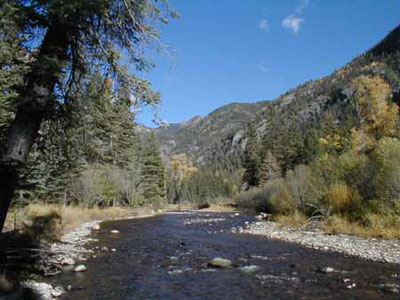
The Southern Ute Tribe, in partnership with the Bureau of Indian Affairs (BIA) and The Nature Conservancy, will implement the Nannice Canal Diversion and Fish Passage project on the Southern Ute Indian Reservation in southwestern, Colorado. Part of the BIA-owned and operated Pine River Indian Irrigation project that receives water from Reclamation’s Vallecito Dam, the Nannice Canal Diversion is a low-head dam that sweeps across the Los Pinos River and creates a significant fish barrier. Fish get entrained in the Nannice Canal during low flows and during irrigation season. The Southern Ute Water Resources Division will upgrade the diversion structure and install a fish screen and fish ladder. The project will restore river connectivity, improve fish passage, and eliminate fish entrainment during low flows, while continuing to allow the diversion of Nannice Canal’s decreed water.
Trout Unlimited, Inc, Middle Colorado River Agriculture Collaborative: 4 Fish Passage/ Irrigation Diversion Upgrade Projects on Elk Creek-a tributary to the Colorado River
Reclamation Funding: $2,999,595
Trout Unlimited and the Middle Colorado Agriculture Collaborative will upgrade, relocate, or combine six diversion structures to remove instream barriers to fish passage in the Elk Creek west of Glenwood Springs, Colorado. These upgrades will open approximately five miles of aquatic habitat in Elk Creek to fish passage. The project is anticipated to improve stream morphology, increase instream flows, and benefit irrigators by increasing the operational capabilities of the diversions and reducing transmission losses of vital irrigation water.
Western Slope Conservation Center, Farmer’s Ditch Improvement Project
Reclamation Funding: $ 1,594,799
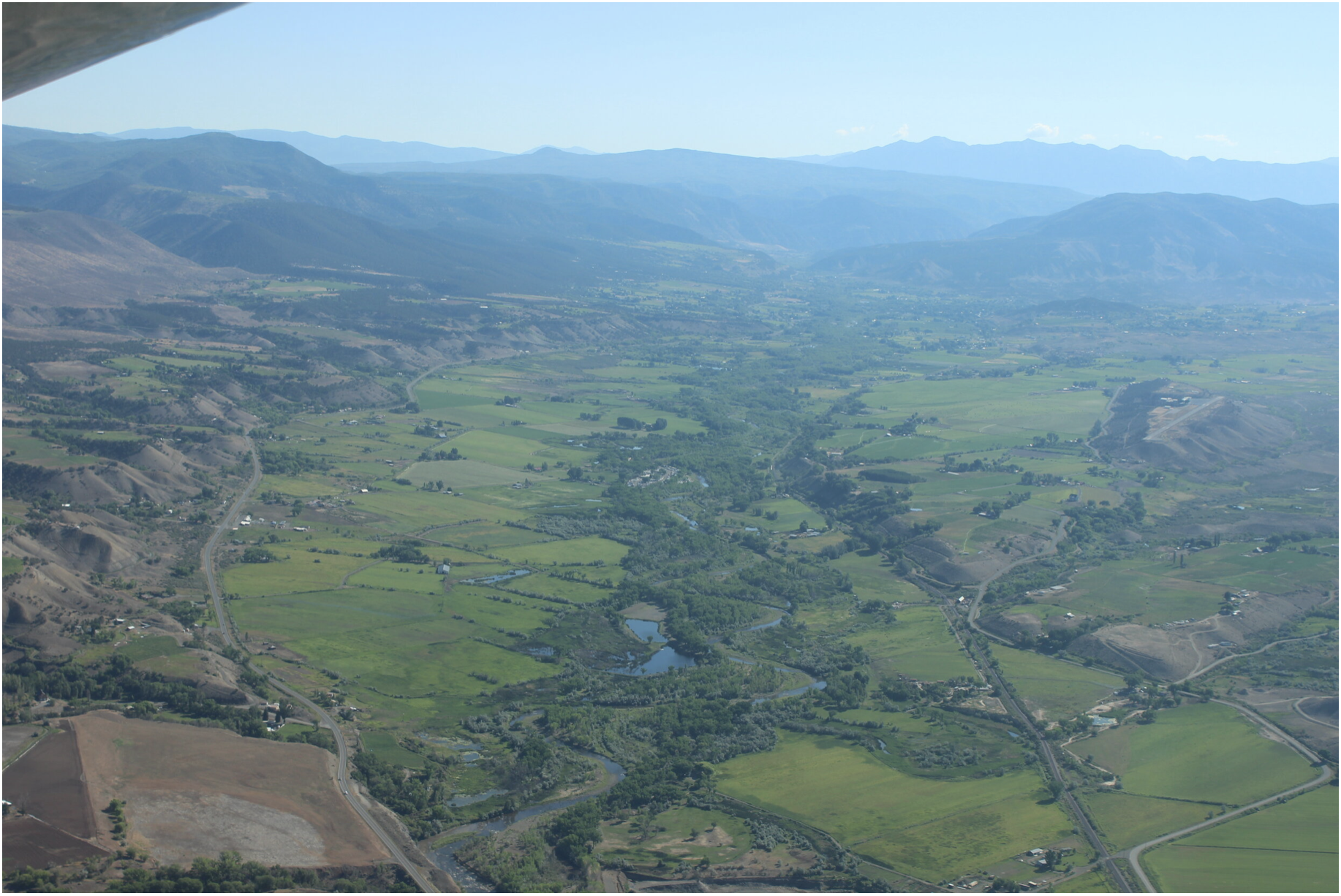
The Western Slope Conservation Center, in partnership with North Fork Farmer’s Ditch Association, located in west-central Colorado, will modernize the Farmers ditch diversion and headgate structures to improve upstream fish passage, increase diversion efficiency, and improve safety for boaters. The project will upgrade the existing concrete headgate structure with a long-lasting alternative headgate that is equipped with remote automation technology, enabling more efficient water deliveries to irrigators while maximizing water that remains in the river. In addition, the Center will install graded riffle and small pools and drops to mimic the natural morphology of the river for approximately 200 feet below the diversion to promote upstream fish passage and allow for safe recreational boating.
Hawaii
Hawaii Department of Land and Natural Resources, Protecting Forests for Water Supply Sustainability in Molokai, Hawai’i
Reclamation Funding: $936,892
The state of Hawai’i Department of Land and Natural Resources, Division of Forestry and Wildlife, will expand protection of native landscapes in the north-eastern portion of Molokai, one of the five Hawaiian Islands. Invasive hooved animals, including feral pigs, deer, and goats, are the main threat to Hawai’i’s original forests, negatively impacting water supply, increasing flood risk and land erosion, and threatening several listed species. The project will reduce populations and associated damage to the forest due to these invasive animals through animal control and installation of fencing to exclude them from 3,340 acres within the Pelekunu Valley. The project will also remove hooved animals from an additional 12,000 acres along the north shore of Molokai in an area with steep terrain that is not possible to fence. The island of Molokai relies on ground water for all fresh water needs and is designated as a groundwater management area by Hawai’i’s Commission of Water Resources Management. The forest provides increased water infiltration into the aquifer and reduces soil erosion and associated water quality issues.
Idaho
City of Pocatello, Rainey Park Stream Restoration and Wetland Creation
Reclamation Funding: $1,635,276
The city of Pocatello, Idaho, will implement a river restoration project on the Portneuf River in downtown Pocatello. The health of the Portneuf River has been severely compromised by flood protection levees and the construction of a concrete channel, which removed hundreds of acres of wetlands when installed. Restoration will be accomplished by moving the river’s existing riprapped levee to an area of city-owned property. A wetland and side channel will be installed adjacent to the levee, along with accessible river access for anglers and floaters. Additionally, a stormwater pond will be installed to capture the first flush of sediment-laden waters from city streets. This project builds on the concepts developed in the 2016 Portneuf River Vision Study and addresses a wide range of environmental goals, including improving hydrologic functions by increasing floodplain, wetland, and riparian habitat areas, and improving water quality.
The Nature Conservancy, Loving Creek Tributaries Restoration and Water Conservation Project
Reclamation Funding: $1,900,217
The Nature Conservancy, in partnership with Idaho Department of Fish and Game and landowners, will complete a suite of nature-based features on four reaches of Loving Creek, located in Blaine County in south central Idaho. The four project locations span the full extent of Loving Creek from its headwaters to the outlet at Silver Creek. Through a combination of in-stream restoration work, sediment removal, and riparian habitat creation, the project will restore 2.75 miles of active stream channel, regenerate riparian and wetland habitat, and remove one fish passage barrier to holistically restore connectivity to 5.72 miles of upstream habitat. The project also will revive upland and agricultural buffer habitat and pipe 1,200 linear feet of open water delivery canal to conserve 9 acre-feet of water, which will remain in Loving Creek as instream flow. Despite improvements in agricultural management and land use practices over the past several decades, water quality and habitat conditions in Silver Creek and its tributaries remain degraded. This project will restore more natural channel morphology, increase habitat complexity, and improve water quality in Loving Creek.
Nez Perce Soil and Water Conservation District, White Road Passage Project
Reclamation Funding: $367,091
The Nez Perce Soil and Water Conservation District will improve anadromous fish habitat for Federally listed Steelhead Trout in the Tom Beall Creek watershed, a tributary to Lapwai Creek, located in northern Idaho. The project will improve watershed health within the boundaries of the Reclamation’s Lewiston Orchard Project. The district will replace an existing culvert with a fish passable structure to support the migration of the Steelhead Trout and additional species including Coho and Chinook Salmon. When completed, the project will provide access to approximately two miles of habitat and reduce area flood risk. The project also will improve water quality to downstream recreational and agricultural water users. The project is supported by the Lapwai Creek Ecological Restoration Strategy developed collaboratively with the Nez Perce Tribe, National Marine Fisheries Service, Idaho Department of Transportation, Nez Perce County, city of Lapwai, city of Culdesac, Lewiston Orchards Irrigation District, a landowner advisory group, and several Idaho state government divisions.
Nez Perce Soil and Water Conservation District, Lower Clearwater Snake Rivers Phase I
Reclamation Funding: $451,889
The Nez Perce Soil and Water Conservation District will undertake the Lower Clearwater Snake Rivers Phase I Project in Culdesac, Nez Perce, and Lewis Counties, in northwest Idaho. The project will improve watershed health within the boundaries of the Reclamation’s Lewiston Orchard Project. The district will enhance anadromous fish habitat for Federally listed Steelhead Trout and improve overall water quality in the Lower Clearwater River Basin. The district will upgrade a culvert for aquatic organism passage, thin approximately 129 acres of forest to mitigate wildfire risk and install over 100 instream wood structures to enhance over 10,000 feet of stream for juvenile steelhead habitat. The project will yield ecological benefits including improved habitat function, optimized flow timing, increased groundwater recharge, and reduced sedimentation.
Trout Unlimited, Inc, Completion of the Alta Harris Creek Boise River Side Channel and Fish Passage Project Along the Boise River
Reclamation Funding: $734,103
Trout Unlimited, together with the city of Boise, Idaho, will improve aquatic ecology in the Boise River by restoring spawning and rearing habitat for salmonid fishes, and providing fish passage connection between the lower Boise River and Barber Pool, downstream of Reclamation’s Arrowrock Dam. The project will enhance 3,800 feet of existing side channel and include construction of 1,600 feet of new side channel, complete riparian revegetation with native plants, and construct of a fish passage facility at Barber Dam. The fishway design will better accommodate fluctuating river flows and variable water surface elevation. Completion of this project will reconnect 2.5 miles of the main-channel Boise River with 5 acres of adjacent riparian habitat and over a mile of side channel for spawning and rearing of juvenile fish. The project also will allow fish to bypass a half mile of the Boise River with a risk for fish entrainment in water delivery canals.
Wood River Land Trust, Warm Springs Preserve Stream Restoration and Irrigation Improvement Project
Reclamation Funding: $1,733,154
Wood River Land Trust, in partnership with the city of Ketchum, Idaho, will enhance and improve the ecological function of the 65 acre Warm Spring Preserve along the Warms Springs Creek in Blaine County, in central Idaho. Warm Springs Creek in the project area has been artificially confined, concentrating flow, and creating incision and floodplain abandonment. There is virtually no floodplain connectivity within the northern half of the project reach. The project will restore 1.3 miles of Warm Springs Creek through instream earthwork to create pools, point bars, and constructed riffles, and installation of woody debris structures to promote in-channel complexity. The project will also create nine acres of adjacent floodplain habitat by lowering the floodplain. The floodplain restoration will be complemented by revegetation with low-water native plant species along the riparian zones and throughout the preserve, which will collectively aid in improvement of water quality and temperature of Warm Springs Creek.
New Mexico
Chama Peak Land Alliance, Increasing Resiliency in the San Juan-Chama Project Headwaters
Reclamation Funding: $3,000,000
The Chama Peak Land Alliance will conduct ecological forest thinning on approximately 2,150 acres to protect source watersheds for Reclamation’s San Juan-Chama Project, the Rio Chama headwaters, and the Rio Brazos headwaters from the impacts of future wildfires. Forests in these headwaters are unnaturally dense and homogenous, putting them at risk of severe wildfires and deterioration of watershed function. These watersheds supply crucial drinking water to the cities of Albuquerque and Santa Fe, and numerous tribes, Pueblos, and rural communities throughout New Mexico. In addition to threatening water supply infrastructure, a severe wildfire could cause water quality impairments, flooding erosion and significant degradation of habitat for fish and wildlife.
Pueblo of Isleta, Restoring Watershed Function and Protecting Sacred Ancestral Sites on the lower Rio Puerco, a tributary of the Rio Grande
Reclamation Funding: $2,487,942
The Pueblo of Isleta will build resilience in the lower Rio Puerco watershed by implementing nature-based watershed restoration techniques to restore natural watershed function on an approximately 30,000 acre parcel of the Comanche Ranch and neighboring lands, in central New Mexico. Forming a part of the Pueblo of Isleta lands, the Comanche Ranch comprises over 90,000 acres of public and private lands and is home to upwards of one hundred sacred ancestral sites, including an important cultural site, the Pottery Mound. The ranch forms an integral part of the Rio Puerco lower watershed, the primary source of sediment to the middle Rio Grande and Reclamation’s Elephant Butte Reservoir. The Pueblo and stakeholders have identified that loss of vegetation and increasingly higher energy monsoonal storms that have resulted in erosion and soil loss throughout the uplands in this region and threaten the cultural sites downstream. The Pueblo will utilize a series of watershed restoration practices that spread and slow runoff flows, increase groundwater infiltration, and reduce erosion, including contour plowing with native seed imprinting, contour stone line and brush weir installation to protect plantings and slow runoff, and riparian restoration and revegetation on a section of the Rio Puerco adjacent to Pottery Mound, including the planting of wild medicinal and traditionally gathered edible plants.
Nevada
Southern Nevada Water Authority, Muddy River Riparian Corridor Improvements at Warm Springs Natural Area
Reclamation Funding: $743,329
The Southern Nevada Water Authority will protect the Warm Springs Natural Area, a 1,250 acre property located in southern Nevada, and downstream habitat from drought impacts. The property is regionally significant as it contains more than 20 perennial springs that form the headwaters of the Muddy River and numerous habitat types. These resources provide habitat for several protected and sensitive species, including the endangered Moapa dace, endangered southwestern willow flycatcher, and threatened yellow-billed cuckoo. The project will widen the riparian corridors along 0.3 miles of the mainstem of the Muddy River and establish mesquite bosques along the corridor, resulting in the creation of 12 acres of new habitat. These actions will increase habitat for listed species, improve hydrologic conditions, lessen wildfire risk, and reduce erosion and sedimentation during flood events. Non-native vegetation will be removed and replaced with native vegetation to restore the area to the natural habitat that existed before the area was converted for agricultural purposes.
Oregon
Crooked River Watershed Council, Lower Crooked River Riparian, Floodplain, and Habitat Restoration Project
Reclamation Funding: $1,400,000
The Crooked River Watershed Council, working in partnership with the Ochoco Irrigation District, will restore habitat and enhance ecological features on two project sites just downstream from Prineville, Oregon. Hydrology in the Crooked River watershed is impacted by upstream Dams, including Reclamation’s Bowman Dam, leading to loss of floodplain continuity, degraded channel structures, and water quality impairments, impacting native Spring Chinook Salmon and Columbia River Steelhead populations that inhabit the watershed. To address these impairments, the Council will strategically place approximately 130 large wood structures to promote habitat complexity, stabilize eroding streambanks on 3,285 linear feet of stream channel, restore approximately 19 acres of floodplain and upland habitat, improve 0.22 acres of alcove habitat, and create 0.42 acres of wetland.
Deschutes Land Trust, Ochoco Preserve Restoration – Phases 2 and 3
Reclamation Funding: $3,000,000
The Deschutes Land Trust, with support from the Oregon Department of Fish and Wildlife, will restore aquatic, floodplain, and upland habitat across 124 acres on the Ochoco Preserve, located in Crook County, Oregon, adjacent to the city of Prineville. The Crooked River and Ochoco Creek support reintroduced spring Chinook salmon and summer steelhead, as well as a host of other native aquatic species. The waterways frequently experience low flows, elevated summer stream temperatures, and poor water quality. These issues are compounded by a lack of suitable habitats for both fish and terrestrial wildlife, and the impacts to river ecology of Reclamation’s Crooked River Project, including Bowman and Ochoco Dams. The Deschutes Land Trust will lead efforts to create over 2 miles of new main baseflow stream channels, 1.5 miles of side channels, over 11 acres of wetland, and restore 37 acres of floodplain and 75 acres of upland habitat, significantly increasing available habitat for native species.
Texas
Menard County Water Control and Improvement District #1, Pipe a 2.5 mile section of the Menard Canal and dedicate 1,100 acre-feet instream
Reclamation Funding: $1,891,500
Menard County Control and Improvements District #1, in central Texas, will upgrade the Menard Canal irrigation water conveyance system to reduce losses so that more water is kept in the San Saba River for fish and wildlife benefit. A water loss study conducted by U.S. Geological Survey in the summer of 2014 showed that the 6-mile long canal experiences an approximately 50% loss over the first 2.5 miles. The project involves replacing the first 4,000 feet of the unlined Menard Canal with pipe, and re-sloping, reshaping and partially filling the next mile of unlined canal to create a narrower channel profile. Following that narrowed span of canal, the district will pipe an additional 2,000 feet of the canal and install gates to control flow. The district has committed to leaving the majority of the conserved water, 1,100 acre-feet per year instream for a 30 year term. The additional instream flows will contribute significantly to baseflow of the San Saba River and create a more reliable supply of water for downstream aquatic habitat. Sections of the San Saba River downstream from the project that will benefit from the increased flows include critical habitat for the Texas fatmucket and Texas pimpleback mussel species.
Washington
The Confederated Tribes and Bands of the Yakama Nation, Lower Yakima River: Anadromous Fish Survival
Reclamation Funding: $2,248,677
The Yakama Nation, in partnership with the Benton County Conservation District, will improve conditions for anadromous fish species in the Prosser, Snively, and Confluence reaches of the lower Yakima River, in central Washington. The project will address two key elements of the Yakima Basin Integrated Plan: fish passage and habitat protection and enhancement. The Yakima Nation will complete instream restoration work to expand a cold-water refuge within the Yakima River mainstem at the confluence of Amon Creek, including construction of 1,400 linear feet of cool water channel habitat and restoration of 20 acres of riparian zone through invasive vegetation removal and revegetation with native species. The Yakima Nation will also complete electrofishing and install a fish trap on the Wanawish Dam to remove and prevent reintroduction of invasive predatory fish species that impede the migration of endangered fish species. These improvements will benefit the federally threatened Middle Columbia River steelhead; spring and fall/summer run Chinook, Coho, and Sockeye salmon; and the Yakima population of Pacific lamprey. The project area is downstream of Reclamation’s Yakima Project, which impacts river flows, temperatures, and habitat conditions in this area.
The Confederated Tribes and Bands of the Yakama Nation, Yakima River Mile 89.5 Side Channel and Floodplain Restoration
Reclamation Funding: $600,000
The Confederated Tribes and Bands of the Yakama Nation will reconnect approximately 9 miles of side channel along the Yakima River within the Yakama Reservation, in south central Washington. Upstream flow regulations tied to Reclamation’s Yakima Project have constricted historical floodplain processes and cut-off side channel access for native fish species, leading to degradation of riparian and wetland habitat areas. The Yakama Nation will excavate five historic side channel sections connecting to the mainstem of the Yakima River, install two constructed logjam inlet structures to ensure fish access to the mainstem of the river, and install three stream ford crossings to access the project site. The excavation of side channels will increase winter and spring off-channel habitat utilized by Middle Columbia River Steelhead and restore hydrologic connectivity to a total of 135 acres of floodplain and wetland habitat. The project is supported by the Yakima Basin Integrated 10-Year Action Plan developed by water and land management stakeholders.
The County of Chelan, Camas Meadows Streamflow and Ecosystem Restoration Project
Reclamation Funding: $468,903
The Chelan County Natural Resource Department, in coordination with the Washington Department of Natural Resources, will restore wet meadow hydrology in Camas Meadows, a unique meadow ecosystem within the steep canyon drainages of north-central Cascade Mountains in Washington. The 1,300 acre meadow flows into Camas Creek, a tributary of Peshastin Creek, in the Wenatchee Watershed. Due to widespread floodplain disconnection and irrigation withdrawals, the Peshastin sub-basin is among the top three flow-limited sub- basins in the Wenatchee Watershed, with chronic low flows and high stream temperatures limiting recovery of ESA-listed steelhead and spring Chinook that reside throughout Peshastin Creek and in the lower reaches of Camas creek. Historic land use practices have resulted in Camas Meadows being confined into ditch-like channels with incision ranging from 4 feet to 8 feet, causing rapid and early drying of the meadow. This projectwill restore the natural hydrology of the meadow by replacing the meadow outlet culvert, re-grading the channel and meadow elevations, installing channel-spanning habitat log structures, and re-planting with native shrubs and plants. The project will restore floodplain connectivity and wet meadow hydrology for a modeled additional water storage of 180 acre-feet and an anticipated year-round baseflow contribution of 0.2 cfs.
Kittitas Conservation Trust, Gold Creek Restoration Phase 2 RM 2-3 Implementation
Reclamation Funding: $2,475,000
Kittitas Conservation Trust will implement an in-stream restoration project on river mile 2-3 of Gold Creek, in Kittitas County, Washington. Located just east of Snoqualmie Pass in Kittitas County, Washington, Gold Creek is the headwaters of the upper Yakima River and flows for approximately 8 miles from the Alpine Lakes Wilderness into Keechelus Reservoir in the Central Cascade Mountains. Upstream fish passage is blocked at Reclamation’s Keechelus Dam on the downstream end of the reservoir. Prolonged dewatering conditions and a century’s worth of anthropogenic channel widening have dramatically impacted the habitat and health of the creek’s Federally threatened Bull Trout. The Trust will install a total of 28 large woody debris structures along the river mile. The instream wood replenishment will create habitat complexity, including deeper pools with shaded cover, provide relief from high velocity flood flows, and ensure optimal habitat for both the successful rearing of juvenile Bull Trout and migration of mature fish. The project also will provide floodplain reconnection, which will improve groundwater recharge from flood flows, and reduce the likelihood of future flood events further harming the channel morphology.
Kittitas Reclamation District, Kittitas Reclamation District – South Branch Piping
Reclamation Funding: $3,000,000
The Kittitas Reclamation District, located in central Washington, will restore in-stream flows and provide benefits to fish and wildlife in Mantash Creek, an over-appropriated tributary of the Yakima River. The project will involve the piping of a 2,656 linear feet section of the currently unlined South Branch Canal, which is part of Reclamation’s Yakima Project. Once piped, the district anticipates conserving approximately 385 acre-feet per year currently lost to seepage. The district will designate this otherwise lost water through an allocation, management, and protection agreement, that involves careful monitoring of stream flow on Mantash Creek to maintain optimal conditions for Yakima Basin fish species, including Coho and Chinook Salmon, Mid-Columbia Steelhead, and Bull Trout. The Washington State Department of Ecology is responsible for water protection and enforcement and will ensure that conserved water stays instream.
Wyoming
City of Casper, North Platte River Restoration — Izaak Walton Reach
Reclamation Funding: $3,000,000
The city of Casper, in collaboration with members of the Platte River Revival Committee, will complete a river and riparian restoration project on the Izaak Walton reach of the North Platte River in Natrona County, Wyoming. The North Platte River is a Blue Ribbon trout fishery, but this reach suffers from significant bank erosion, tight riverbend geometry, a lack of riffle-pool complex development, poor bedform complexity, meager floodplain connectivity, and is characterized by a low quality riparian vegetation community. These conditions have resulted in degraded habitat for trout as well as native aquatic and terrestrial species. These characteristics have also contributed to reduced ecological function, adversely affected the regional municipal water supply, degraded aesthetic values, and impaired river recreation. The city of Casper will restore over 5,150 linear feet of the North Platte River that will involve regrading of the riverbed, banks, and floodplain to create appropriate geometry and bedform complexity, reduce riverbank degradation, and improve instream and riparian habitats.
Trout Unlimited, Inc, Sage Creek Watershed Restoration for Drought Resilience and Sediment Control
Reclamation Funding: $1,513,538
Trout Unlimited, working in partnership with Wyoming Game and Fish, will complete a multi-part restoration project, including nature-based features, in the Sage Creek Watershed, located in southwestern Wyoming. The project will involve the installation of 50 beaver dam analogs, 160 aggradation structures, and an aquatic invasive species barrier along a 5.6 mile stretch of Sage Creek. These installations will be complemented by a robust invasive plant removal and native riparian reseeding along 7.6 miles of both the Sage and Trout Creeks. Together, these actions are estimated to restore 453 acres of valley floor habitat and protect 79.5 linear miles of aquatic habitat from invasive trout that inhabit Reclamation’s Flaming Gorge Reservoir just downstream of the project site. The project is additionally expected to reduce channel incision and erosion to reduce sediment and nutrient delivery to Flaming Gorge Reservoir, protect native trout from hybridization, and increase groundwater recharge and surface water availability.

From email from Reclamation (Erik Knight):
Releases from the Aspinall Unit will be decreased from 850 cfs to 350 cfs on Tuesday, November 14th. Releases are being decreased in response to the end of irrigation diversions to the Gunnison Tunnel. The Gunnison Tunnel will be shut down on November 14th.
Flows in the lower Gunnison River are currently above the baseflow target of 1050 cfs. River flows are expected to remain above the baseflow target for the foreseeable future.
Pursuant to the Aspinall Unit Operations Record of Decision (ROD), the baseflow target in the lower Gunnison River, as measured at the Whitewater gage, will be 1050 cfs for November and December.
Currently, Gunnison Tunnel diversions are 500 cfs and flows in the Gunnison River through the Black Canyon are around 320 cfs. After this release change Gunnison Tunnel diversions will be 0 cfs and flows in the Gunnison River through the Black Canyon will still be near 320 cfs. Current flow information is obtained from provisional data that may undergo revision subsequent to review.

From email from Reclamation (Erik Knight):
Releases from the Aspinall Unit will be decreased from 1100 cfs to 800 cfs on Thursday, November 2nd. Releases are being decreased in response to a decrease in diversions at the Gunnison Tunnel. Tunnel diversions will be reduced by 300 cfs on November 1st, so there will be a short period of higher flow in the Gunnison River through the Black Canyon before the release change at Crystal Dam.
Flows in the lower Gunnison River are currently above the baseflow target of 1050 cfs. River flows are expected to remain above the baseflow target for the foreseeable future.
Pursuant to the Aspinall Unit Operations Record of Decision (ROD), the baseflow target in the lower Gunnison River, as measured at the Whitewater gage, will be 1050 cfs for November through December.
Currently, Gunnison Tunnel diversions are 800 cfs and flows in the Gunnison River through the Black Canyon are around 320 cfs. After this release change Gunnison Tunnel diversions will be 500 cfs and flows in the Gunnison River through the Black Canyon will still be near 320 cfs. Gunnison Tunnel diversions are expected to stay near 500 cfs for the first 2 weeks of November for late season irrigation of the winter wheat crop. Current flow information is obtained from provisional data that may undergo revision subsequent to review.
Click the link to read the article on The Grand Junction Daily Sentinel website (Sam Klomhaus). Here’s an excerpt:
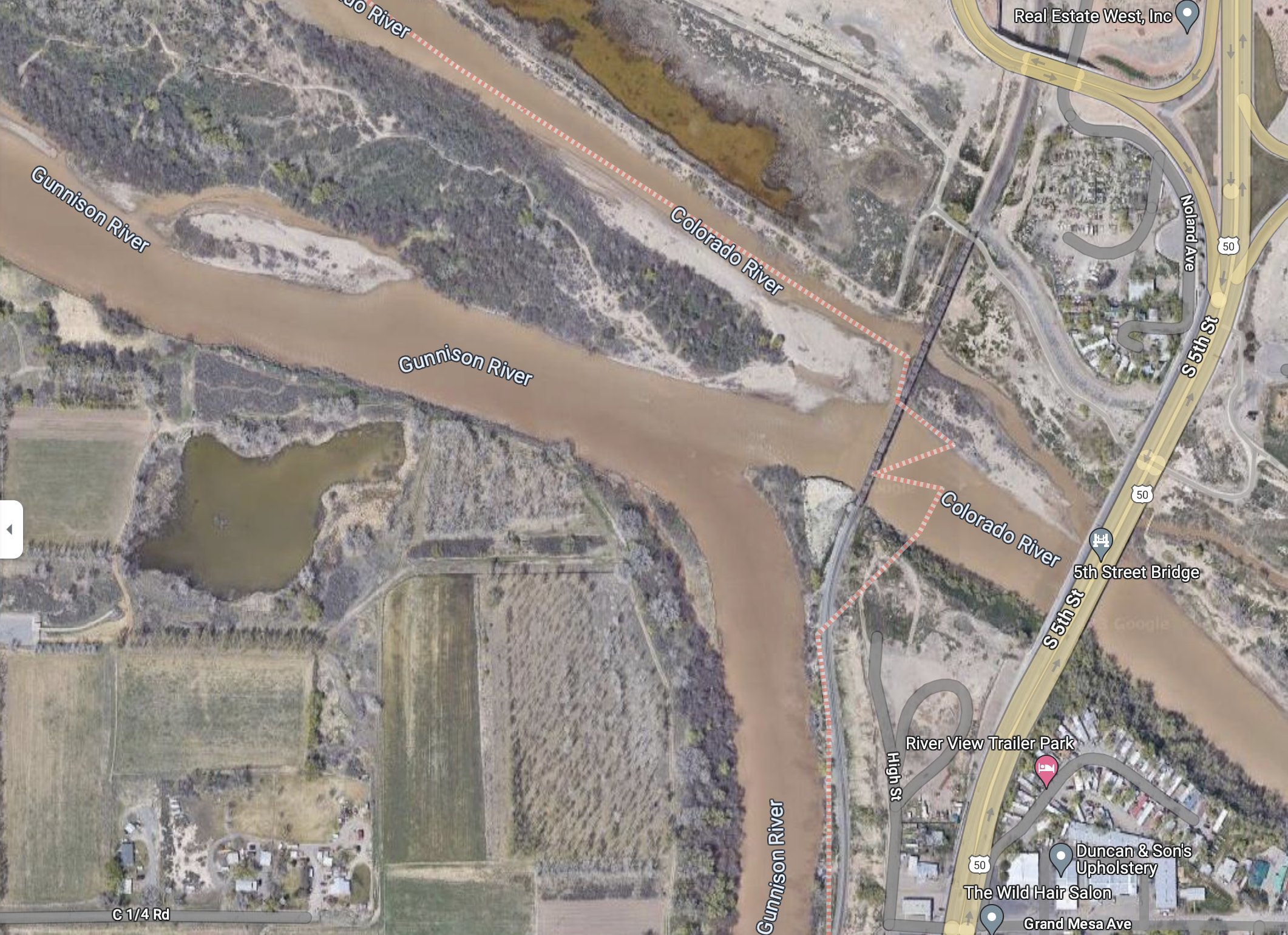
The City of Grand Junction is considering taking water from the Gunnison River to augment its current supply from the Kannah Creek watershed, which is estimated to need bolstering in about 15 years.
“The city’s primary water source is the Kannah Creek watershed,” Utilities Director Randi Kim said at an Oct. 16 City Council workshop. “And we are projecting that that watershed will not yield sufficient supply to carry us into the longer term future.”
Kim said the city could need to supplement the Kannah Creek watershed with additional sources around 2039.
“We’re looking at our water rights on the Gunnison River,” Kim said. “To do that, we’re conducting a feasibility study this year to evaluate the conversion of two gravel pits along the Gunnison River to water storage reservoirs, and the associated piping and pumping to bring that water to our water treatment plant to supplement those supplies.”
[…]
The city is proposing $600,000 in its draft 2024 budget for engineering and design work on converting the gravel pits. Kim said city staffers are looking at grants to help fund the project.
Click the link to read the article on The Delta County Independent website (Frank Witowski). Here’s an excerpt:
“We learned about the WaterSMART grant pretty late,” Bachran said. “It will supplement the cost to finish the hydrogeology study and move into actionable items. That’s what this grant’s going for…
The hydrogeological study is allegedly the driving force and conduit to discovering all that needs to be done with the town’s water system. So far, $25,000 has been allegedly secured through the Water Supply Reserve Fund and the Colorado River District, while the Colorado Water Conservation Board provides $122,983 in funding. According to Bachran, if the town qualifies for the Water SMART strategic planning grant, staff can secure additional funds for the “full comprehensive plan of our water system” from start to finish, financing the hydrogeology study and completing much more needed work. The planning grant process costs $500,113, but the town has matching funds from the above agencies to cover that cost.
Bachran said the planning grant process would help both in-town and out-of-town water companies, ditch companies, farmers and ranchers, and it’s the first step to applying for other federal grants. Bachran asked for letters of support for as many water companies as possible, and she said they would contact them all in the end. An audience participant said she was glad the study would include all the water companies.

From email from Reclamation (Erik Knight):
Releases from the Aspinall Unit will be decreased from 1150 cfs to 1100 cfs on Wednesday, October 18th. Releases are being decreased in response to declining inflow forecasts for the Aspinall Unit.
Flows in the lower Gunnison River are currently above the baseflow target of 1050 cfs. River flows are expected to remain above the baseflow target for the foreseeable future.
Pursuant to the Aspinall Unit Operations Record of Decision (ROD), the baseflow target in the lower Gunnison River, as measured at the Whitewater gage, will be 1050 cfs for October through December.
Currently, Gunnison Tunnel diversions are 825 cfs and flows in the Gunnison River through the Black Canyon are around 400 cfs. After this release change Gunnison Tunnel diversions will still be 825 cfs and flows in the Gunnison River through the Black Canyon will be near 350 cfs. Current flow information is obtained from provisional data that may undergo revision subsequent to review.

From email from Reclamation (Erik Knight):
Releases from the Aspinall Unit will be decreased from 1400 cfs to 1050 cfs on Wednesday, October 4th. Releases are being decreased in response to declining inflow forecasts for the Aspinall Unit.
Flows in the lower Gunnison River are currently above the baseflow target of 1050 cfs. River flows are expected to remain above the baseflow target for the foreseeable future.
Pursuant to the Aspinall Unit Operations Record of Decision (ROD), the baseflow target in the lower Gunnison River, as measured at the Whitewater gage, will be 1050 cfs for October through December.
Currently, Gunnison Tunnel diversions are 700 cfs and flows in the Gunnison River through the Black Canyon are around 700 cfs. After this release change Gunnison Tunnel diversions will still be 700 cfs and flows in the Gunnison River through the Black Canyon will be near 350 cfs. River flows will increase next week as part of a flow request for the trout fishery survey in the Gunnison Gorge. Current flow information is obtained from provisional data that may undergo revision subsequent to review.
From email from Reclamation (Erik Knight):
Releases from the Aspinall Unit will be decreased from 1750 cfs to 1400 cfs on Monday, October 2nd. Releases are being decreased in response to a reduction in diversions at the Gunnison Tunnel.
Flows in the lower Gunnison River are currently above the baseflow target of 1050 cfs. River flows are expected to remain above the baseflow target for the foreseeable future.
Pursuant to the Aspinall Unit Operations Record of Decision (ROD), the baseflow target in the lower Gunnison River, as measured at the Whitewater gage, will be 1050 cfs for October through December.
Currently, Gunnison Tunnel diversions are 1050 cfs and flows in the Gunnison River through the Black Canyon are around 700 cfs. After this release change Gunnison Tunnel diversions will be 700 cfs and flows in the Gunnison River through the Black Canyon will still be near 700 cfs. Current flow information is obtained from provisional data that may undergo revision subsequent to review.
Click the link to read the article on the Aspen Journalism website (Heather Sackett):
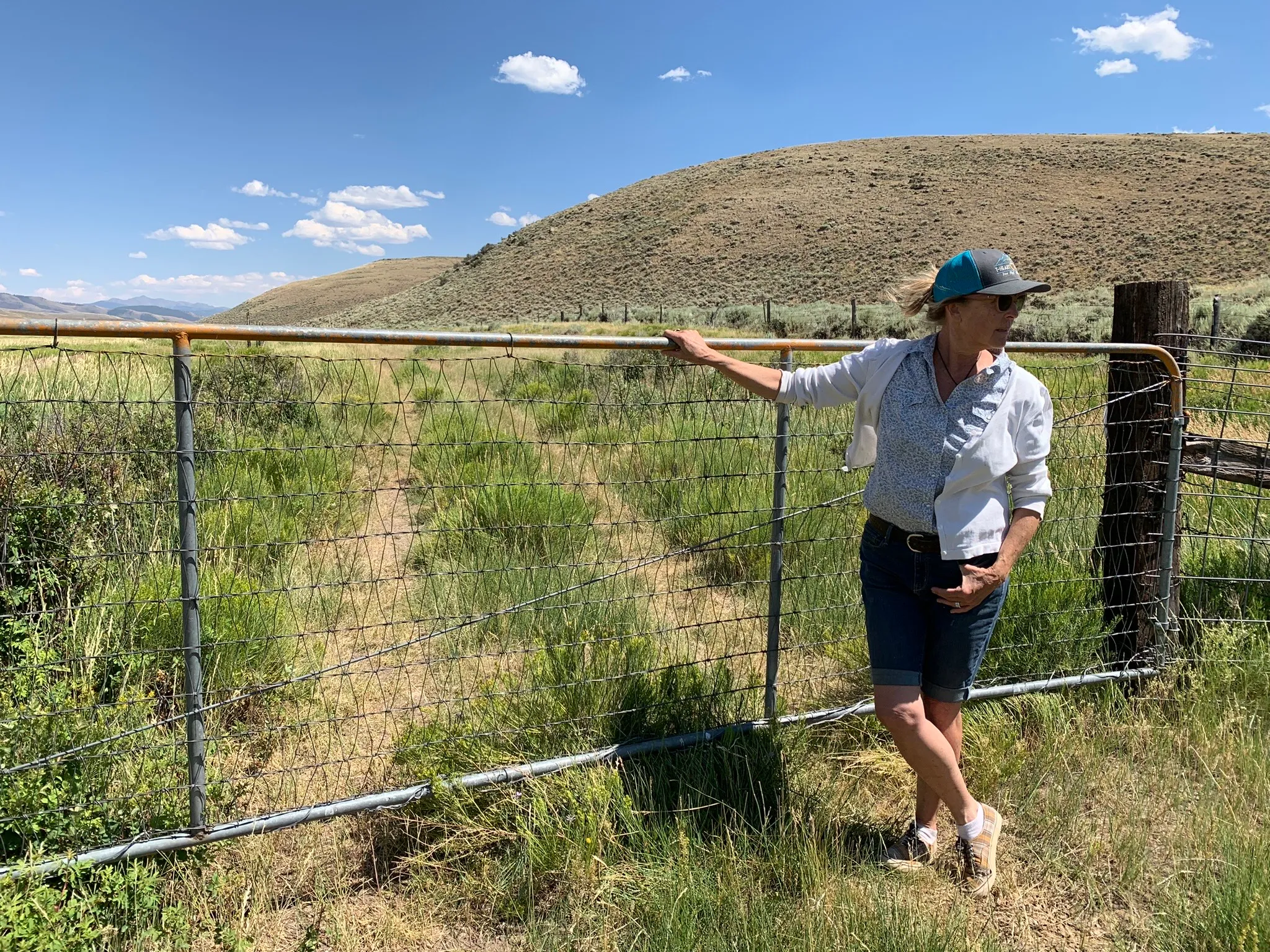
A Gunnison County family ranch plans to use a relatively new tool to help keep water flowing in a chronically dry section of creek while still irrigating their hay crop.
In dry years, the Peterson Ranch will temporarily loan some of the water it diverts from Tomichi Creek to the state’s instream flow program, which is aimed at keeping water in rivers for the benefit of the environment. The agreement was approved by the Colorado Water Conservation Board this year under legislation passed in 2020 designed to make the water loans more attractive to water-rights owners and effective as a conservation tool.
“We don’t like to see the fish suffer, so we thought this was one way to allow us to continue with our operation and do something for the creek,” said ranch owner, former legislator and Colorado River Water Conservation District board member Kathleen Curry. “For us, it was a way to make a contribution.”
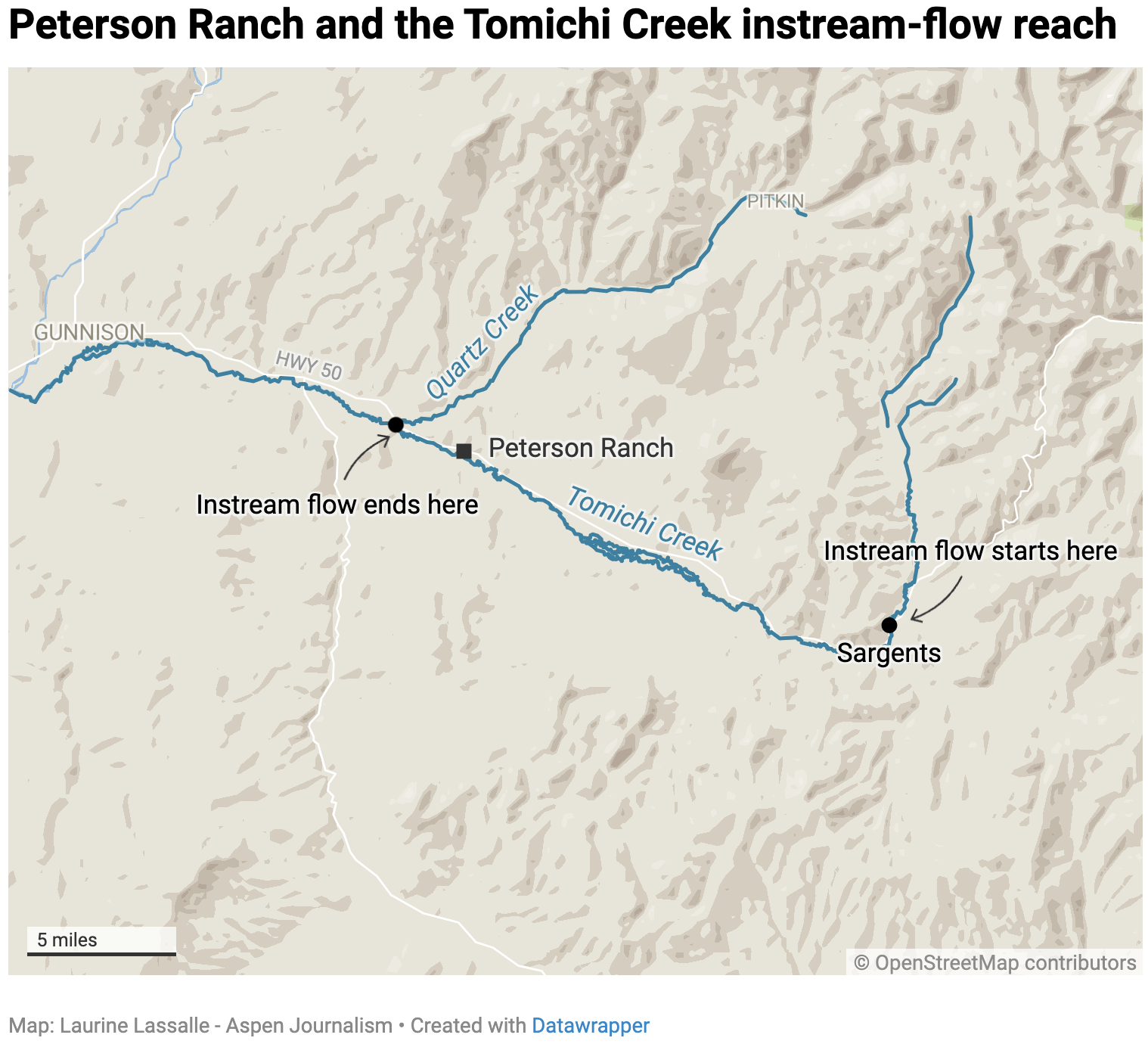
Historically, Curry and her husband, Greg Peterson, have flood irrigated their 220 acres of river bottom ranchland, about 15 miles east of Gunnison, beginning in the spring until the end of July. The end of spring runoff, combined with irrigation season, can cause river flows to plummet during the hottest time of year, which is bad news for fish.
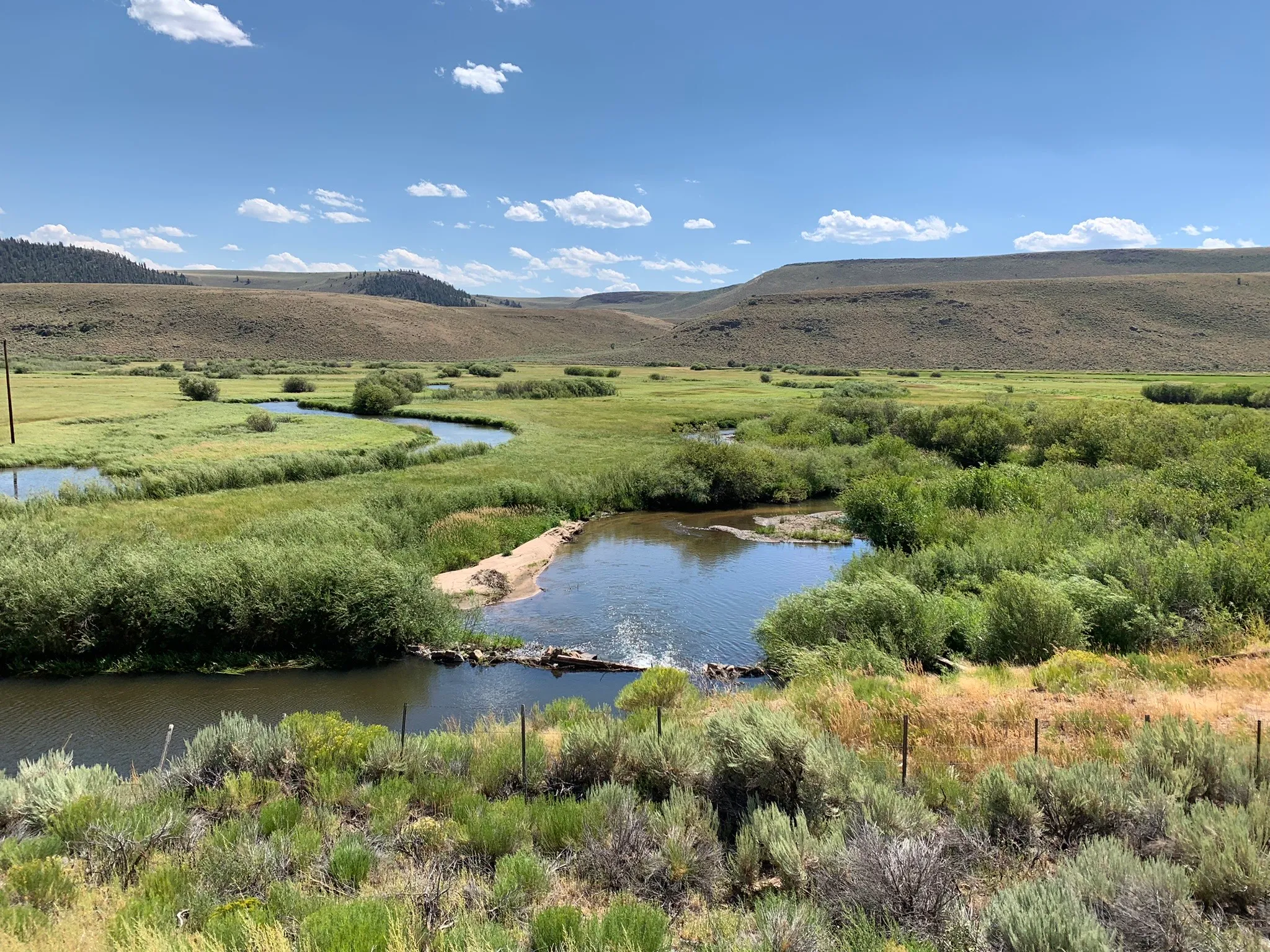
“Historically, Tomichi Creek dries up in several locations,” said Tony LaGreca, a project manager for the Colorado Water Trust. “A dry-up is the complete worst thing to happen for an aquatic ecosystem because everything that needs water to live does not live.”
In late July, Curry and Peterson normally stop irrigating to allow their fields to dry out for a few weeks so that they can get their one annual hay cutting in August, during which time — with the help of monsoon rains — creek flows tend to rebound. They resume irrigating in the fall to regrow some pasture grass and to replenish the groundwater for the next season, which leads to another dip in river flows.
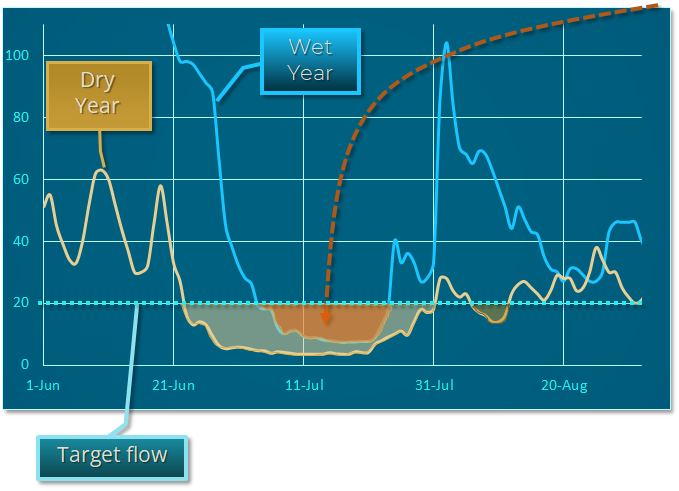
But with the lease agreement enacted, Curry and Peterson would turn off their four ditch headgates at the end of June and keep them off for 37 days — usually the hottest, driest time of year and when Tomichi Creek could most use a boost. By turning water off a month early, they expect to lose about 20% to 25% of their yield, for which they will be compensated nearly $25,000 by the nonprofit Colorado Water Trust.
A second part of the agreement would let them irrigate in August and leave the water in the creek in September, when streamflows are lower. Peterson Ranch could get $2,500 if it enacts the lease in the second operational window. If they do both windows, they could get $30,000.
Over seven miles of Tomichi Creek would benefit from the loan of water. Depending on the location in the stream and time of year, the project could add between 2 and 18 cubic feet per second back to the stream for a total of 116 acre-feet of water conserved.
“It’s a win-win,” Curry said. “We can go with a little bit less yield and they are compensating us very fairly.”
Legal pathway
The statute that allows irrigators to temporarily loan their water to the state’s instream flow program was originally crafted in 2005 with the help of Curry when she was a state representative. (Curry this week told Colorado Politics that she intends to run in 2024 to represent House District 58.)
The instream flow program allows the Colorado Water Conservation Board to appropriate water rights to “preserve the natural environment to a reasonable degree.” Since it was created in 1973, the CWCB has appropriated water rights on nearly 1,700 stream segments, covering more than 9,700 miles of streams, according to its website. But because these rights are so junior compared with most other water users, their effectiveness as a tool for keeping water in rivers is limited.
Under the prior appropriation system — the cornerstone of Colorado water law — the holders of the oldest water rights, which usually belong to agriculture, get first use of the river. That means in many locations across the state, the much younger instream flow water rights — 18 cfs in the case of Tomichi Creek, with an adjudication date of 1980 — are not met. Temporary leasing of agricultural water to the instream flow is one way to remedy the problem.
Still, the tool is not widely used, despite tweaks to the legislation in 2020 with House Bill 1157 that allowed projects to expand to being used five of every 10 years from three of every 10 years. The Peterson Ranch lease is one of just three projects using the five-in-10 lease program, according to CWCB staff. There are six other similar projects across the state that came about under the previous three-in-10 legislation.
“It doesn’t appear at the rate it’s being utilized, it’s going to solve environmental problems all across the state just like that,” said Kate Ryan, executive director of the Colorado Water Trust. “But on the streams and rivers where it’s used, it’s transformative. It makes a huge difference.”
State Sen. Dylan Roberts, D-Avon, who represents District 8, was one of the sponsors of HB 1157. The bill also made it possible to renew loans for two additional 10-year periods, meaning that holders of agricultural water rights can theoretically loan their water for the benefit of the environment for 15 of every 30 years. Roberts said he has heard positive feedback about the expanded loan program.
“We’ve cut down some of the barriers and made it easier to participate but the whole time we’ve kept it voluntary,” Roberts said. “I think the tool is only going to become more important as we head further into drought and dry summers.”
Curry said she got involved with the original bill that created a legal pathway to loan water to ensure that it was workable for livestock producers.
“The state is changing, and we have to face that there are other values for water,” she said. “We just need to make sure if we go down this path, these types of projects need conditions: They wouldn’t hurt ag, they wouldn’t hurt your neighbor, it’s voluntary — things like that.”
State engineers at the Division of Water Resources still need to give their final sign-off for the Peterson Ranch project to move forward. In the spring, Peterson Ranch will decide whether to enact the lease for 2024’s irrigation season. Ideal conditions for the agreement would be a below-average runoff year but not in the bottom 10%.
Despite the lease program’s limited use so far, Ryan said she has seen more interest lately in partnerships among water-user groups.
“We don’t have to choose between ag and the environment,” she said. “I think water users are seeing there is a natural partnership between ag and the environment. But it’s still complicated and takes a lot of work.”
Click the link to read the article on the Gunnison Country Times website (Abby Harrison). Here’s an excerpt:
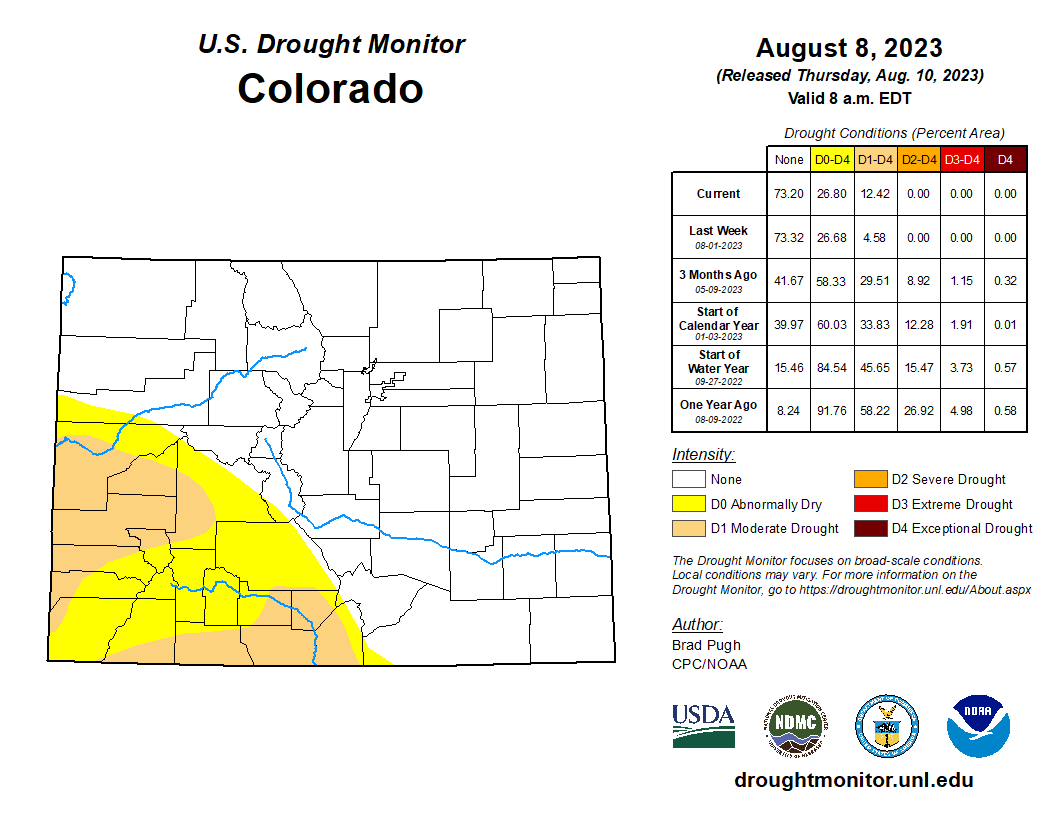
Despite a season of abundant spring rainfall and runoff in the Gunnison Valley, the late arrival of monsoon season has set the stage for fire, robbing the basin of the moisture it relies on each year to reduce the chance of starts. After nearly a month of little-to-no precipitation, the valley started registering drought conditions in mid-July. Lack of monsoon rains and high temperatures have exacerbated and prolonged the drying pattern, bringing drought back to the county and setting the stage for multiple fire starts around the Western Slope. Although a few storms have graced the valley recently, more significant precipitation is not expected for at least a week…
These lingering high pressure systems have ushered in record-breaking temperatures for both Gunnison and Crested Butte. Cities all over the Western Slope set temperature records this year, Sanders said. Thunderstorms that follow prolonged periods of drying tend not to bring “deep moisture,” he said. Dry air at ground level prevents moisture in the atmosphere from reaching the ground, causing dry thunderstorms. Fire officials have stated that the Lowline Fire burning north of Gunnison was likely started by a lightning strike, and most fires burning around the state have also been started this way. The high pressure system finally moved out in late July, bringing some moisture. Even then, rain fell in a few isolated incidents while darker storm clouds hung along the edges of the valley and didn’t quite make it into town.
From email from Reclamation (Erik Knight):
From email from Reclamation (Erik Knight):
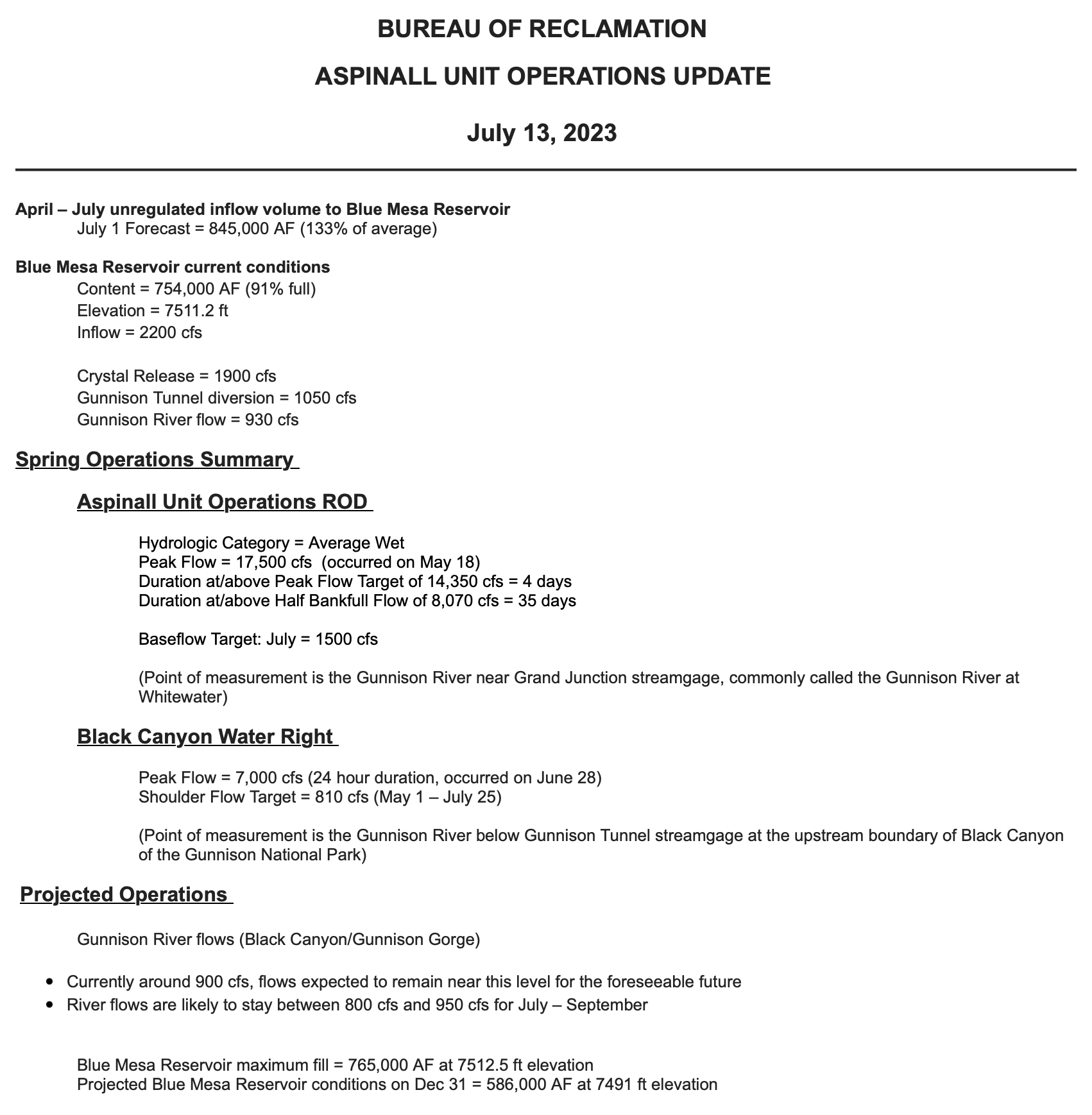
The June 15th forecast for the April – July unregulated inflow volume to Blue Mesa Reservoir is 845,000 acre-feet. This is 133% of the 30 year average. Blue Mesa Reservoir current content is 760,000 acre-feet which is 92% of full. Current elevation is 7512 ft. Maximum content at Blue Mesa Reservoir is 828,00 acre-feet at an elevation of 7519.4 ft.
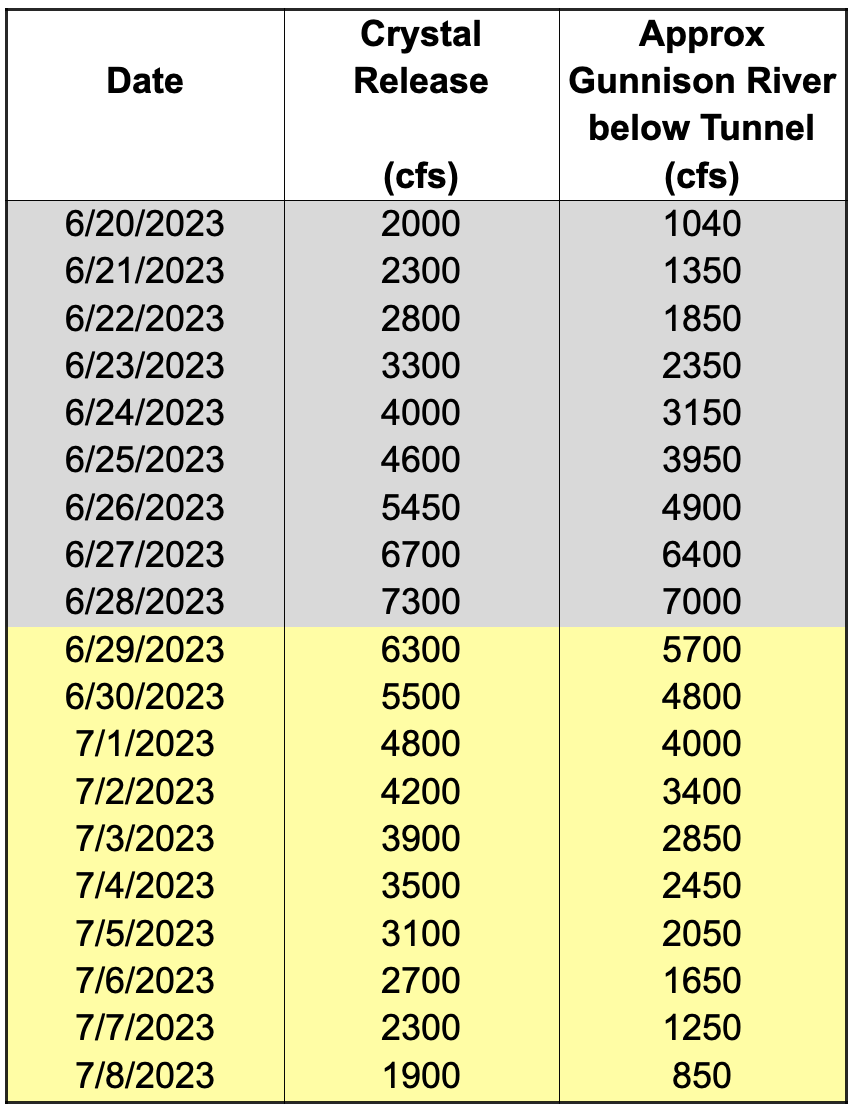
The ramp down from the peak release this week has begun. Releases from the Aspinall Unit will be decreasing over the weekend and next week until returning to full powerplant capacity at Crystal Dam. The full schedule of releases from Crystal Dam with estimated Gunnison River flows is shown in the table below, with the gray areas already complete and the yellow areas future projections. River flow projections are estimated daily averages and actual flows during the day may be slightly different on either side of these projections.
Click the link to read the article on the Montrose Daily Press website (Kylea Henseler). Here’s an excerpt:
Agricultural users, who grow our very food, depend on the health of the river, soil and habitat around it, while recreational users take advantage of opportunities for activities like fishing and surfing. In this sense, the river boosts the economy and literally helps put food on the table…Multiple local and nearby groups have organized around this river and other Western Slope water resources, and yesterday, June 15, 2023, four met up at the Montrose Library to introduce themselves and explain their mission and current efforts. Most have educational opportunities available and are seeking volunteers, and all are focused on protecting watershed health for all kinds of users for years to come…
Friends of the River Uncompahgre
The mission of this Montrose-based group is “restoring, enhancing and protecting the Uncompahgre River through stewardship efficacy, partnerships and education,” according to Board President Melanie Rees. Its biggest immediate focus is on restoration, as the group is working with Grand Junction-based RiversEdge West on a project to remove invasive species from areas of the river in the city of Montrose and revegetate them with native plants…
Shavano Conservation District
This special government district covers parts of Montrose, Delta, Gunnison, Ouray and San Miguel counties and has been around since the Dust Bowl era focusing on providing conservation resources for agricultural producers. ..
Uncompahgre Watershed Partnership
The Ouray County-based Uncompahgre Watershed Partnership focuses on protecting the upper Uncompahgre River Watershed, but since the water flows toward Montrose, their work impacts us all. According to Executive Director Tanya Ishikawa, the group was founded in 2007, when local residents were concerned that state officials couldn’t monitor the water quality within the watershed closely enough…
Gunnison Gorge Anglers
A chapter of the national organization Trout Unlimited, Gunnison Gorge Anglers serves parts of Montrose, Delta, Hotchkiss, Paonia, and Telluride. While “Anglers” is right in the name, President Joel Evans said: “We’re talking about a lot more than fishing. We’re talking about the river and how to take care of things.”
From email from Reclamation (Erik Knight):
The June 1st forecast for the April – July unregulated inflow volume to Blue Mesa Reservoir is 845,000 acre-feet. This is 133% of the 30 year average. Snowpack in the Upper Gunnison Basin peaked at 138% of average. Blue Mesa Reservoir current content is 625,000 acre-feet which is 75% of full. Current elevation is 7496 ft. Maximum content at Blue Mesa Reservoir is 828,00 acre-feet at an elevation of 7519.4 ft.
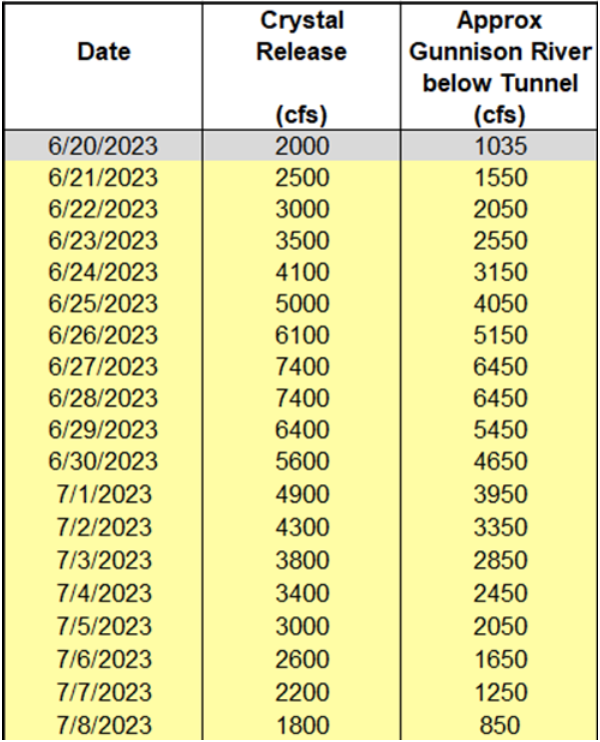
High flows along tributaries downstream of the Aspinall Unit helped with meeting the Aspinall Unit ROD targets on the lower Gunnison River as measured at the Whitewater gage. Releases to meet ROD targets were lower than expected and with the increase in the runoff forecast there is now a need to increase releases from the Aspinall Unit.
Therefore ramp up of releases from the Aspinall Unit will begin on Wednesday, June 21st, with the peak release being achieved by Tuesday, June 27th. The timing of the peak release will be coordinated with required spillway gate inspections at Morrow Point Dam. The full schedule of releases from Crystal Dam with estimated Gunnison River flows is shown in the table below.

Click the link to read the article on the Montrose Daily Press website (Kylea Henseler). Here’s an excerpt:
RiversEdge West, a Grand Junction-based nonprofit, received $22,035 from the Colorado River District’s Community Funding Partnership and $34,433 from the Colorado Water Conservation Board to restore two river sites owned by the city of Montrose.
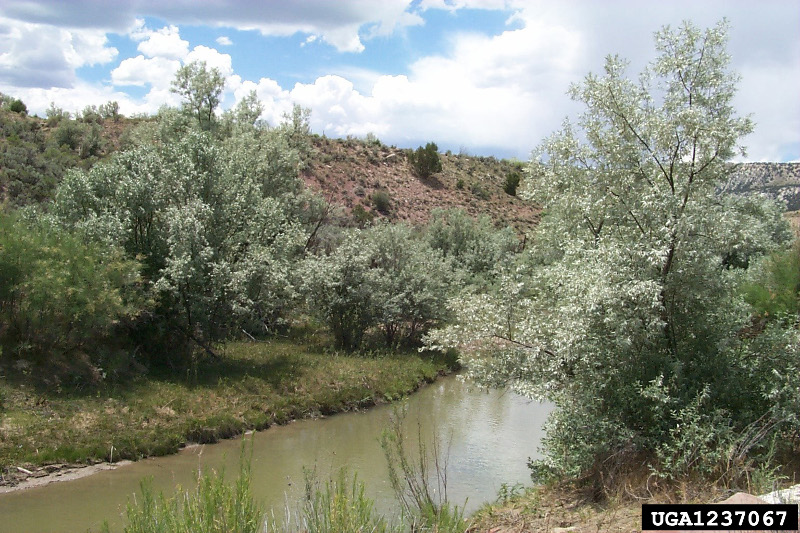
According to RiversEdge West Restoration Coordinator Montana Cohn, the two sites together total around 70 acres, and the project will allow the group to remove about 8 acres worth of invasive tamarisk and Russian olive plants and replace them with native species…One site is off Mayfly Drive, and the other is near Home Depot off Ogden Road. Cohn said restoration efforts at these sites have yielded positive results before, and the new project will expand on previous work. He explained invasive thorns and plants like Russian olive and tamarisk crowd out native vegetation, degrade soil quality and, since some are thorny, block access to the river for wildlife, livestock and recreationists…
The project will go down in phases, starting with volunteer efforts this summer. Then in the fall, paid crews from the Americorps program Western Colorado Conservation Corps will come in with herbicides and chainsaws and remove as many of the invasive plants as possible. Efforts, including volunteer replanting efforts of native plants, will continue into 2024.
Click the link to read the article on the Colorado Newsline website (Pete Kolbenschlag):
There is no better time to invest in rural Colorado and in climate action. The best science is telling us that the window is still slamming shut for staving off significantly worse effects from climate change. Congress might be focused on the debt limit and spending cuts, but we should not be distracted by the drama.
Still, for those who insist on weighing the price of action or inaction today as a bottom line, take note: The future in which we do not act to avert this cascading catastrophe will be far more expensive than almost any future in which we did.
The good news is that there is more funding available than ever to help rural communities transition into 21st century economies that center conservation, climate action, and prosperity. The catch is that they need to participate to get these resources. And for many small communities, that in itself is a burden that may be too much to overcome.
Smart investment in frontline climate action needs to make it to the regions facing the most severe risk from climate change. It needs to reach the places that have borne and will bear the impacts from past and current fossil fuel activity. And it needs to be accessed by the communities that have the furthest to go to catch up in metrics of prosperity, including income, education, and access to housing, jobs, and services. But many of these places, needing such investments the most, do not have development staff or lobbyists in Denver or Washington, D.C.
In response to these constraints, my organization, the Colorado Farm & Food Alliance, is seeking to assist the North Fork Valley, where we are based, to find these federal and state partnerships that can bring those resources here. And we want to do it in a way that serves as a model for what rural climate leadership looks like.
Recently we were the named recipient in a national prize to spur community solar projects. This award is for a collaborative, community-based project that we are helping lead that will pair solar energy and farming in a practice called agrivoltaics. As exciting as this pilot project is, for us and we hope for others watching, it will truly be a success if it is followed by meaningful investments that make more ideas like this possible — such as state policy changes to smooth the way for rural electric co-ops to facilitate and integrate more community solar projects.
For starters, here are three places where smart state and local policy should align to ensure that historic federal investments are making a difference for rural communities.
- Expanding community-based rural renewables
- Strengthening land and watershed health and resilience
- Boosting and incentivizing farm-based ecosystem services
So, while it is the case that the debt-ceiling debate has shifted media and other attention to competing economic needs and proposals, it is worth recounting why investment now in climate action remains more critical than ever.
In our recent report, “Gunnison Basin-Ground Zero in a Climate Emergency,” we lay out clearly the high stakes of failure to act. It all adds up to more human suffering, declining environmental health, and severe economic hardship. Most importantly, though, and on point, is that this report lays out the path for action. It makes the case that western Colorado is particularly well suited to be a national leader in rural-based climate leadership. But to get there, we need government partners that prioritize those outcomes.
We are grateful for federal investments that can drive this type of thoughtful, innovative and scalable climate action, especially for frontline, transitioning, and disproportionately impacted communities. And certainly, Congress ought not “claw back” or otherwise diminish that funding. Climate action is an imperative and rural America should not be left behind.
So we are also eager to see that investment show up in our communities now. We are ready to make a difference before the window for effective climate action slams shut. There is no more time to delay and an incredible opportunity to act. Smart investment now will help rural Colorado, and help all of us to succeed.
Click the link to read the article on the American Rivers website (Hannah Holm):
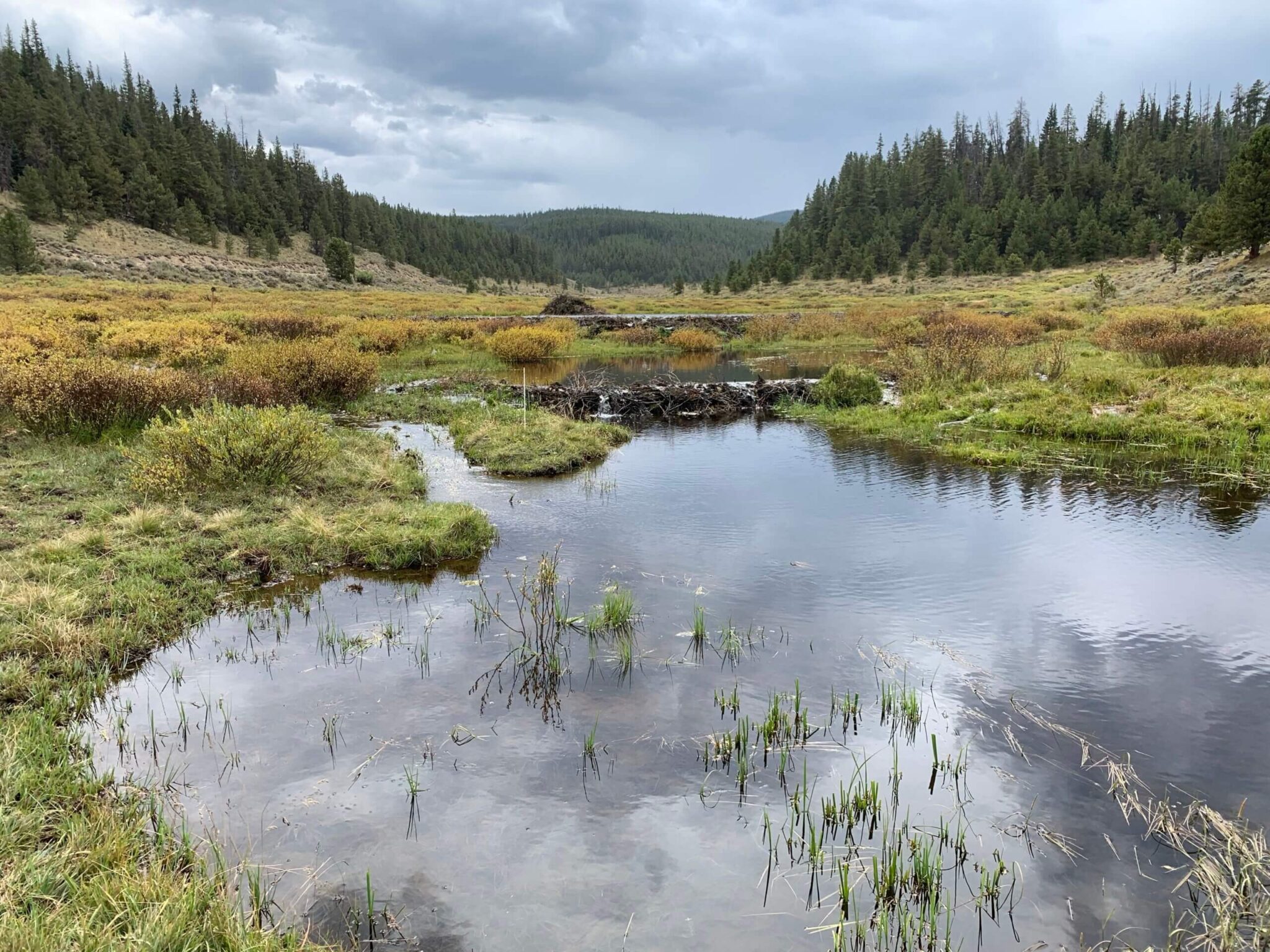
As western mountain snowpacks diminish and wildfires race across parched landscapes, appreciation has grown for the moist mountain meadows and wetlands that hold water up high, feeding streams throughout the summer and providing fire-resistant refuges for wildlife. Before beavers and their dams were largely eliminated by the fur trade, these natural water storage features and refuges were common across western states’ mountain landscapes.
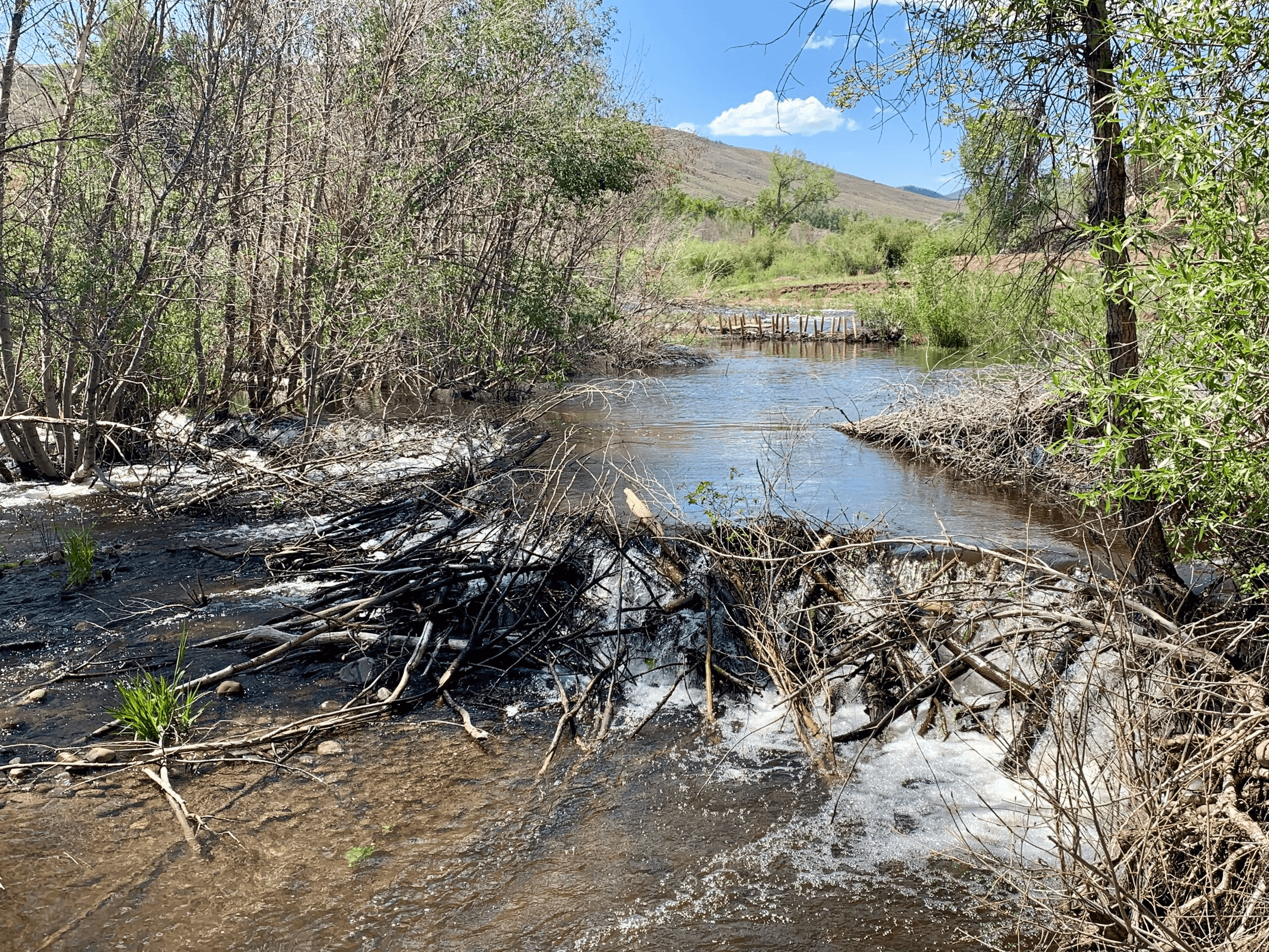
The removal of beavers and other land disturbances have led many creeks to cut deeper into their valleys and detach from their floodplains, dropping the water table and drying out the landscape. A growing field of stream restoration, known as low-tech process-based restoration (LTPBR), seeks to reverse these changes through methods that mimic beaver activity in hopes of enticing them to return.
Projects across the west have demonstrated the benefits of LTPBR on the landscape. Projects have improved water quality, provided important habitat, trapped sediment, increased riparian vegetation and forage, and bolstered resilience against drought, fire, and floods. These benefits are achieved by installing low-tech, hand-built structures, creating “speedbumbs” that enable water from snowmelt and storms to spread across the riparian area, slowing peak flows and recharging groundwater. The rewetted soil “sponge” supports healthy riparian vegetation and reduces wildfire risks.
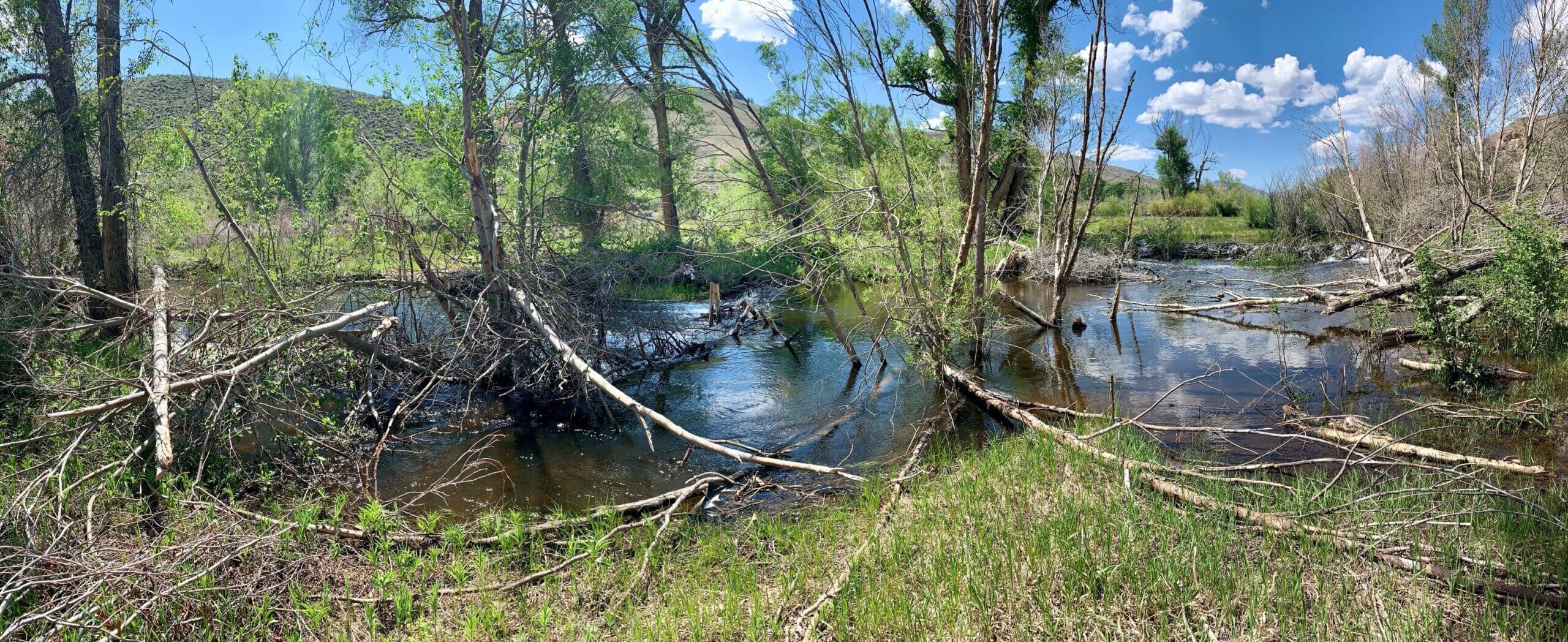
As LTPBR projects have proliferated across western states, both excitement about their benefits and questions about potential impacts have grown. A new report from American Rivers reviews the published science and case study information on LTPBR to better understand the full range of benefits these projects can provide, and provides scientific evidence to address potential concerns. The report finds ample evidence for LTPBR benefiting habitat and buffering the impacts of droughts, floods, and wildfires, but concludes that more research is needed to better understand the full suite of ecosystem service benefits. It also provides insights on how to address human and social factors related to LTPBR projects, such as mitigating beaver dam impacts to infrastructure.
CLICK HERE FOR FULL REPORT
CLICK HERE FOR STATE OF SCIENCE EXECUTIVE SUMMARY
Click the link to read the article on The Crested Butte News website (Katherine Nettles). Here’s an excerpt:
UGRWCD senior water resource specialist Beverly Richards reported that the Gunnison River at the Gunnison Whitewater Park was flowing at 3,210 cubic feet per second (CFS) last weekend, and is very close to peaking. Richards said there is currently only one small portion of Gunnison County to the west that is facing drought, and the three month outlook shows drought conditions not recurring with the exception of a few areas to the north. Richards reported that precipitation has generally been within the historic normal range in the past 30 days, while snow water equivalent (SWE) maps show 193% of normal for the entire Gunnison Basin and 153% of normal for the upper basin. SNOTEL sites where SWE is measured are melting out. “But that was for May 19,” she said, which reflects that in May there isn’t usually much snow left.
The entire Gunnison Basin water storage is at 75% of average; reservoir storage for the Upper Gunnison Basin is 61%; and projected unregulated inflow for Blue Mesa Reservoir is at 131% of average. Richards said Blue Mesa is projected to be 97% full with a max fill amount of 102,869 acre feet. There is no indication from the Bureau of Reclamation (BOR) as of yet about how much water might be called downstream.
“Reservoir storage across the Upper Colorado River is going up, but Lake Powell is expected to only be about 37% full,” said Richards, due to the volume that will come out. For perspective, she offered an estimate that Lake Powell could be filled in three years if the region had the same kind of snowy year as 2023, and if no one took water out. With the reality of outflows, however, she said it would take 6 to 8 years with winters like this one to refill Lake Powell.
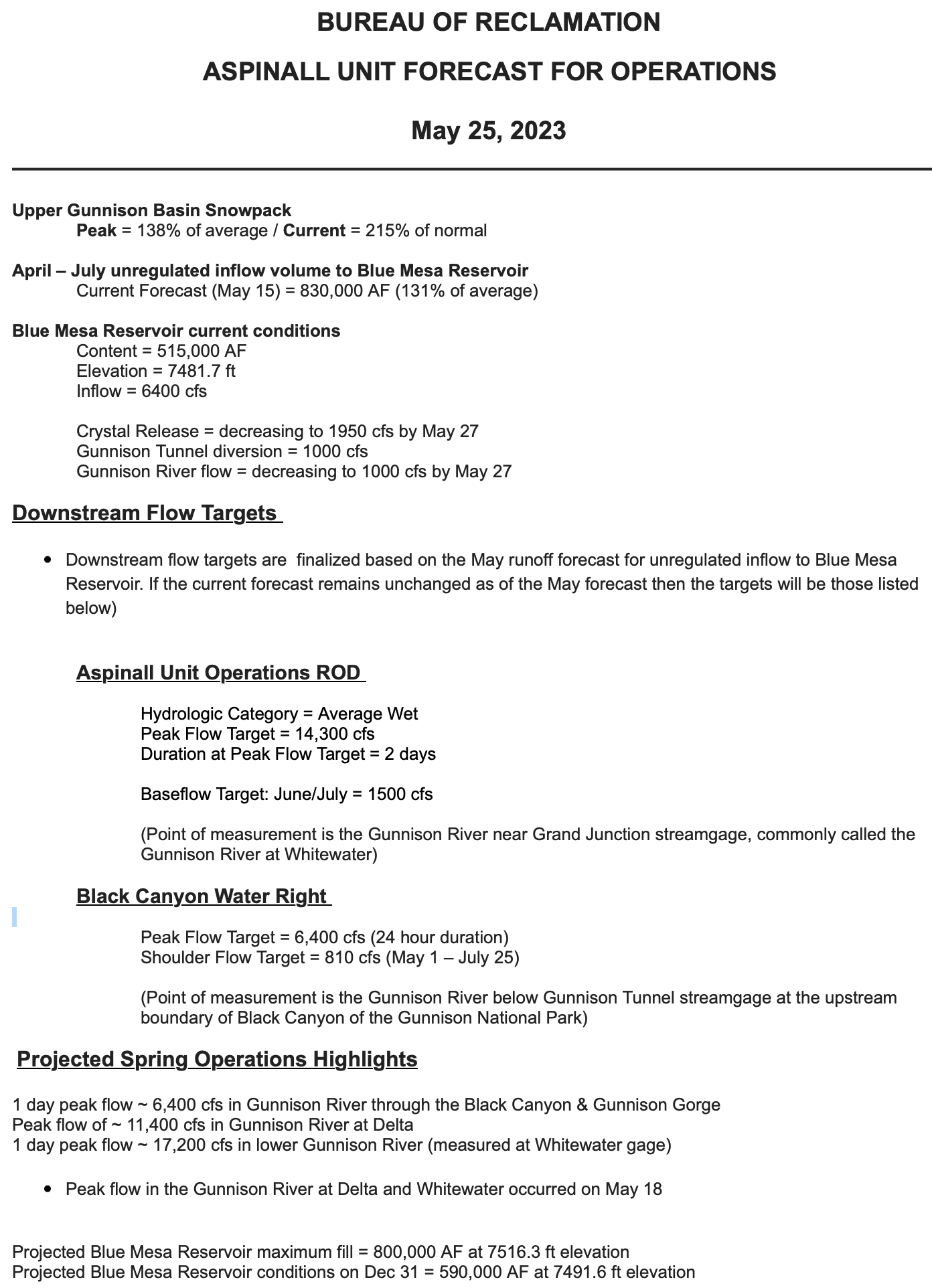
From email from Reclamation (Erik Knight):
Click the link to read the article on the Aspen Journalism website (Heather Sackett);
Three of western Colorado’s biggest irrigation districts are not participating on a large scale in a federally funded program to conserve water, and the amount of water saved by the program overall won’t be enough to rescue depleted reservoirs.
The rebooted System Conservation Program was one of the legs of the Upper Colorado River Commission’s 5-Point Plan, announced in July and aimed at protecting critical elevations in Lake Powell and Lake Mead, which have fallen to record-low levels in recent years because of overuse, drought and climate change. System conservation will take place in the four upper Colorado River basin states — Colorado, New Mexico, Wyoming and Utah — and will pay water users to cut back. It’s being funded by $125 million from the federal Inflation Reduction Act.
The total water estimated to be saved across the upper basin for this year of the restarted, temporary and voluntary System Conservation Program is nearly 39,000 acre-feet. By comparison, Lake Powell when full holds more than 23 million acre-feet; Ruedi Reservoir, on the Fryingpan River, can hold about 100,000 acre-feet. (An acre-foot is the amount of water needed to cover an acre of land to a depth of 1 foot and can supply one to two households a year.)
Becky Mitchell, Colorado commissioner to the UCRC, said in a UCRC meeting last month that although the upper basin will do its part in response to last summer’s calls from the federal government that the seven Colorado River basin states needed to conserve 2 million to 4 million acre-feet of water, the majority of that needs to come from cuts in the lower basin (California, Arizona and Nevada).
“(System conservation) will not resolve the crisis in the reservoirs,” she said.
Last month the UCRC approved moving forward with executing agreements with program participants, which are still being finalized.
Although a goal of the program was to get participation across all water sectors — agricultural, municipal and industrial — all of the projects proposed in Colorado involve Western Slope agriculture. None of the state’s Front Range water providers, which collectively take about 500,000 acre-feet per year of the Colorado River’s headwaters across the Continental Divide to thirsty cities and farms, are participating.
Paying water users to irrigate less has long been controversial on the Western Slope, with fears that these temporary and voluntary programs could lead to a permanent “buy and dry” situation that would negatively impact rural farming and ranching communities.
Of the four upper basin states, Colorado has the largest number of projects (29) but the least amount of saved water (3,532 acre-feet). This is an indication that most of Colorado’s participants are proposing small projects. UCRC Executive Director Chuck Cullom said if the program is undertaken again, officials may consider a minimum size requirement because doing very small projects may not be worth it.
“From a practical standpoint of the cost of monitoring and administering a verification program for that (small number of) acres may not pencil out relative to the amount of water conserved,” Cullom said.
Of the 29 Colorado projects, most involve reducing water use for forage crops, according to information provided by UCRC. Eight involve fallowing grass hay as part of a cow-calf operation, saving 1,163 acre-feet of water; seven plan to fallow alfalfa and save 1,029 acre-feet; and eight propose switching to less-thirsty crops, saving 791 acre-feet.
The UCRC received 88 proposals across the four states, 72 of which met the qualifying criteria. Utah has 20 projects that meet preliminary criteria; Wyoming has 22 and New Mexico has one. The UCRC’s opening offer was $150 per acre-foot of saved water, but the average compensation will probably end up being higher — $434 per acre-foot, according to information provided by UCRC.
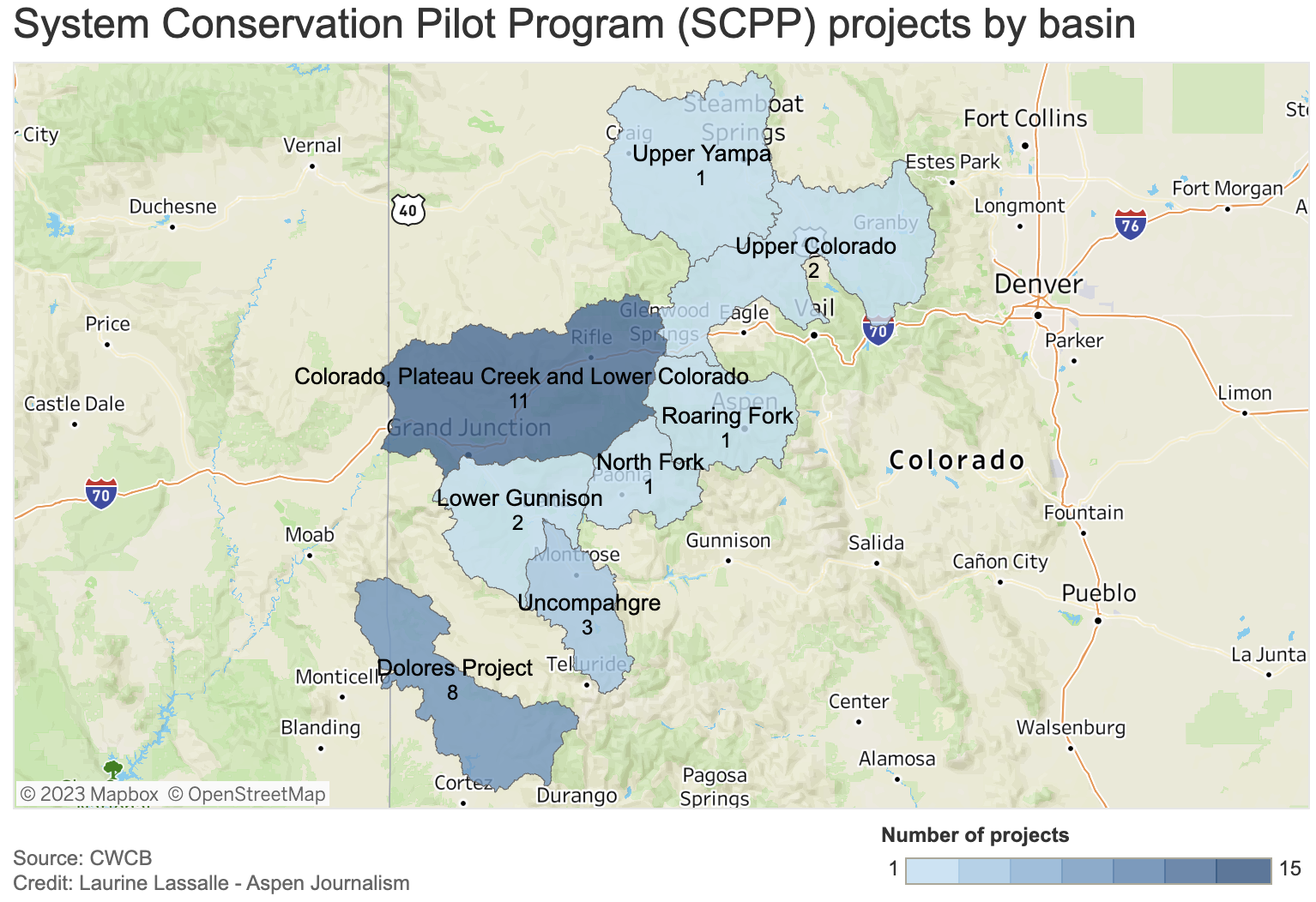
Grand Valley Water Users Association not participating
Although some water users in the Grand Valley Water Users Association participated in the original system conservation pilot program, which ran from 2015 to 2018 and conserved 47,000 acre-feet of water at a cost of about $8.6 million, they won’t be taking part this time around.

GVWUA, whose Highline Canal delivers water to roughly 24,000 acres of farmland on the north side of the valley between Grand Junction and Mack, withdrew its application from the process after manager Tina Bergonzini said she couldn’t come to an agreement on the price with the UCRC. GVWUA had rejected the concept of paying farmers based on an amount of unused water, instead proposing to pay farmers for each acre of land they took out of production.
Individual farmers would have had to apply to the program through the association, which proposed to cap total member participation at 1,000 acres and 3,000 acre-feet of water.
GVWUA was asking for between $686 and $1,306 per each acre fallowed, depending on whether farmers reduced water use during the entire irrigation season or just part of it.
Bergonzini said the price represents what it would cost to administer the program in a way that provides equity and protection; at any lower price, the funding from system conservation would not be enough to cover the extra staff and engineering costs. Cullom said his organization was unlikely to approve those costs, so GVWUA withdrew its application.
“They were not wanting to pay per acre what we had requested,” Bergonzini said. “They had a line drawn in the sand and so did I.”
The Grand Valley Irrigation Company, which serves about 40,000 acres of farmland between Palisade and Mack, has four projects proposed within its service area, covering a total of 120 acres and 285 acre-feet of water savings.
“It’s not a very big amount,” said GVIC Assistant Superintendent Charlie Guenther. “I did hear from a handful of ag people that they didn’t want to be part of this because it sounded very technical and it was government involvement. That’s something that came up.”
Unlike GVWUA, individual water users within GVIC did not have to apply to the program through the irrigation company, and the company’s board did not take a stance on whether or not to support system conservation, according to Guenther.
There is just one conservation project proposed in the boundaries of the Uncompahgre Valley Water Users Association, the largest irrigation district in Western Colorado, at more than 83,000 acres of farmland in Delta and Montrose counties. The project would enroll about 33 acres in the program and would result in about 46 acre-feet of water savings.
UVWUA manager Steve Pope said the system conservation program didn’t get much interest from his water users because of the timing. Bergonzini agreed.
“They didn’t want to do a last-minute thing,” Pope said. “By the time this thing was rolled out, these guys had already made their decisions and they were already committed for the next season.”
Cullom has acknowledged that there were shortcomings with the program’s rollout. The UCRC unveiled details of the program in December, with an original application deadline of Feb. 1, which was later pushed to March 1 for this summer’s irrigation season.
“We need to do much better when we think about how to do this in the future, if we do this in the future,” he said. “We need more clarity on the data requirements, what we expect from a proposal. We need to give people more time to engage in understanding what the opportunity is and we need to start sooner. Start in the fall for an irrigation season instead of January.”
Conservation district concerns
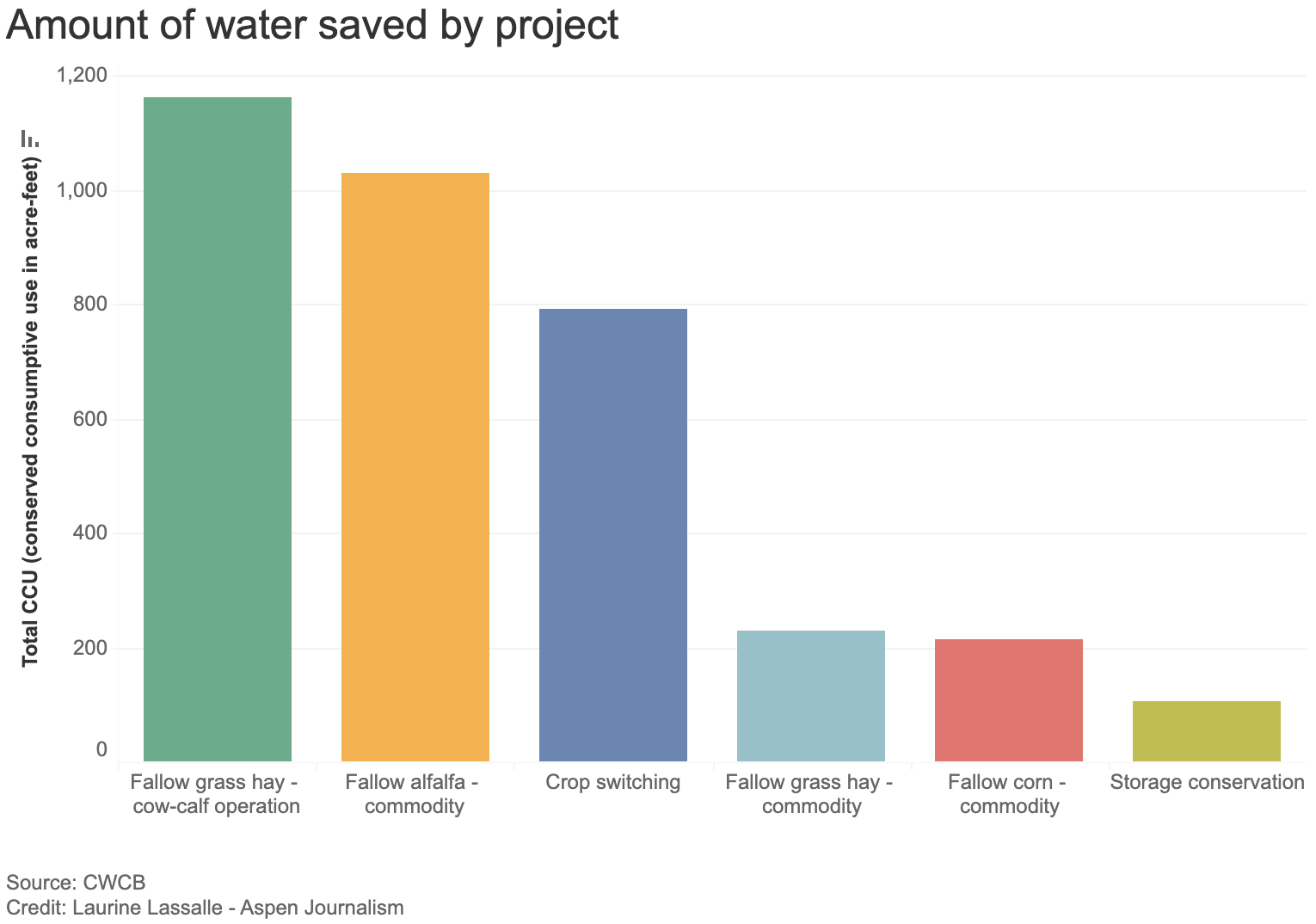
The Western Slope’s two largest conservation districts — the Colorado River Water Conservation District and Southwestern Water Conservation District — submitted letters to the UCRC stating their concerns with the program. Mitchell had promised the districts that they could participate in the review and approval process for applications, thereby securing a measure of local control. But in March, she walked back that commitment, saying the UCRC had sole authority in the approval process.
The UCRC has released few details so far on project proposal specifics, and publicly available applications have been heavily redacted. In addition to redacting the applicants’ personal identifying information, nearly everything else has been blacked out: the precise location of projects; which streams and ditches are involved; details of the water rights involved; and how much the applicants are asking to be paid for their water.
The districts say this makes it impossible to meaningfully review them to determine whether the projects would cause injury to other water users. Their letters to the UCRC say the lack of transparency raises questions about whether public funds are being used wisely.
“In short, SWCD is very disappointed and concerned about the process that has been undertaken by the UCRC and the state of Colorado,” reads the letter from Southwestern General manager Steve Wolff.
In response, Amy Ostdiek, CWCB section chief for interstate, federal and water information, said that the review process respected project proponents’ privacy and that striking a balance between transparency and privacy is an ongoing effort.
“The Colorado State Engineer’s Office has been directly involved as implementation agreements and verification plans are developed to ensure no injury results from SCPP participation,” Ostdiek said in an email.
She said additional information will be available when the UCRC finalizes agreements with project participants, which should happen late this month, according to Cullom.
The 39,000 acre-feet of water across the four upper-basin states will do little to boost Lake Powell. It’s the proverbial drop in the bucket. But the political value of 39,000 acre-feet may be far greater than any benefit to the nation’s second-largest reservoir. The effort shows that upper-basin water managers are willing to do their part to prevent the system from crashing, but that part is small compared with the cuts they say are needed in the lower basin.
“It’s unlikely any system conservation stood up in the upper basin is going to move the needle,” Cullom said. “But it’s important for the upper basin to participate and contribute within the resources and the tools we have available, and what we are demonstrating in this process is that we do have tools, we do have resources. They are narrow in scope and small in volume.”
Aspen Journalism is a nonprofit, investigative news organization covering water, the environment and social justice. This story ran in the May 12 edition of The Aspen Times, the May 13 edition of the Glenwood Springs Post-Independent, the May 14 edition of the Summit Daily, Steamboat Pilot & Today, the Vail Daily, the May 15 edition of the Craig Press and the May 16 edition of the Grand Junction Sentinel.
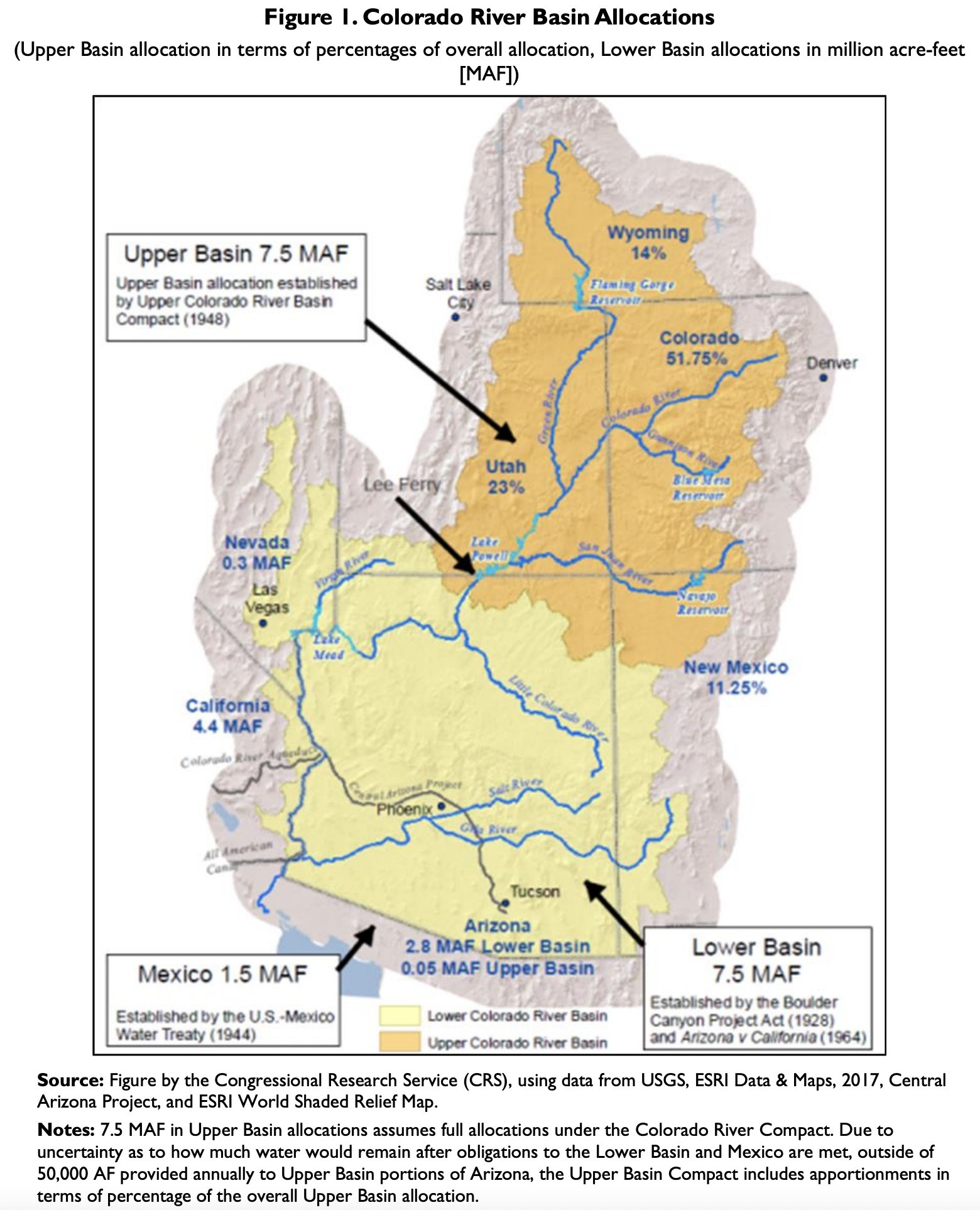
Click the link to read the article on The Montrose Press website (Katharhynn Heidelberg). Here’s an excerpt:
Saying the state will fare best if it stands together when it comes to protecting Colorado River water rights, Western Slope legislators are hailing a bill that creates a drought task force.
“It’s to get Colorado to come to the table and start talking about what we can do, rather than somebody on the eastern side of the state, or the governor, talking,” Rep. Marc Catlin, R-Montrose, who was House sponsor of Senate Bill 295, with Rep. Julie McCluskie, D-Dillon, House speaker. “We’re trying to get people from the Western Slope, particularly since the Western Slope is going to have to deal with it.”
Senate Bill 295 passed 63-2, with Sens. Perry Will, R-Newcastle, and Dylan Robert, D-Eagle, carrying it in the Senate. The bill creates a Colorado River Drought Task Force, with subcommittees, to guide the development of water legislation. It is to include the Ute Mountain Ute and Southern Ute tribes, regional water conservation districts, local government, farmers, ranchers, environmental nonprofits and the Colorado Department of Natural Resources. Members are charged with developing steps and tools the legislature can use to address drought in the Colorado River Basin and commitments under the Colorado River Compact through conservation of the river and its tributaries, such as the Gunnison River and the Uncompahgre. If the bill creating the task force is signed into law, its members have a short window to act: between July and Dec. 15, they are to furnish their recommendations and a summary of their work to the legislative water resources and agricultural review committee…
The bill says recommendations need to be for programs that can be reasonably implemented in a way that does not harm economic or environmental concerns in any sub-basin or region in the state. The recommendations must also fall in line with the 2019 Colorado River Drought Contingency Plan. The recommendations must further ensure any program related to acquiring water rights is voluntary, temporary and compensated, while also looking at revenue sources for the acquisition of program water. [Perry] Will and [Marc] Catlin worry about entities that are purchasing farm land, as well as buying or leasing water, especially if they are not providing adequate compensation…
“The Uncompahgre (River), we’ve got the oldest, biggest water right on the Western Slope of Colorado. Certainly, there are people looking at us,” Catlin said. He said speculators need to understand that when they buy water, they are affecting the entire ag community, not just individual farmers — and that reality needs to be part of the conversation.

From email from Reclamation (Erik Knight):
The May 15th forecast for the April – July unregulated inflow volume to Blue Mesa Reservoir is 830,000 acre-feet. This is 131% of the 30 year average. Blue Mesa Reservoir current content is 468,000 acre-feet which is 57% of full. Current elevation is 7475.3 ft. Maximum content at Blue Mesa Reservoir is 828,000 acre-feet at an elevation of 7519.4 ft.
Based on the May forecasts, the Black Canyon Water Right and Aspinall Unit ROD peak flow targets are listed below:
Black Canyon Water Right
The peak flow target is equal to 6,400 cfs for a duration of 24 hours.
The shoulder flow target is 810 cfs, for the period between May 1 and July 25.
Aspinall Unit Operations ROD
The year type is currently classified as Average Wet.
The peak flow target will be 14,300 cfs and the duration target at this flow will be 2 days.
The half bankfull target will be 8,070 cfs and the duration target at this flow will be 20 days.
The ramp up for the spring peak operation has been paused as flows on the Gunnison River at Whitewater are already above the spring peak target flow. Flows on the Gunnison River at Delta are close to the flow level that could impact the Delta Wastewater Treatment Plant. Currently Crystal Reservoir is spilling with a total release of 5,300 cfs. Flows in the Gunnison River through the Black Canyon are 4,600 cfs.
With the projected increase in flows on the North Fork of the Gunnison River, releases at Morrow Pt Dam (which is now controlling the spill at Crystal Dam), will be reduced by a total of 1,400 cfs by tomorrow, May 19th. This should bring flows in the Gunnison River through the Black Canyon down to around 3,200 cfs. This release rate will be maintained through the weekend and may possibly continue well into next week.
This adjustment to the release plan is based on the latest forecast for river flows in the Gunnison Basin. Adjustments in Aspinall Unit release rates may be made in either direction to achieve downstream target flows or if water gets too high at points along the Gunnison River through Delta.

From email from Reclamation (Erik Knight):
May 12, 2023
The May 1st forecast for the April – July unregulated inflow volume to Blue Mesa Reservoir is 830,000 acre-feet. This is 131% of the 30 year average. Snowpack in the Upper Gunnison Basin peaked at 138% of average. Blue Mesa Reservoir current content is 434,000 acre-feet which is 52% of full. Current elevation is 7470.4 ft. Maximum content at Blue Mesa Reservoir is 828,00 acre-feet at an elevation of 7519.4 ft.
Based on the May forecasts, the Black Canyon Water Right and Aspinall Unit ROD peak flow targets are listed below:
Black Canyon Water Right
The peak flow target is equal to 6,400 cfs for a duration of 24 hours.
The shoulder flow target is 810 cfs, for the period between May 1 and July 25.
Aspinall Unit Operations ROD
The year type is currently classified as Average Wet.
The peak flow target is currently 14,300 cfs and the duration target at this flow is currently 2 days.
The half bankfull target is currently 8,070 cfs and the duration target at this flow is currently 20 days.
Pursuant to the Aspinall Unit Operations ROD, releases from the Aspinall Unit will be made in an attempt to match the peak flow of the North Fork of the Gunnison River to maximize the potential of meeting the desired peak at the Whitewater gage, while simultaneously meeting the Black Canyon Water Right peak flow amount. The latest forecast for flows on the North Fork of the Gunnison River shows a high peak flow occurring near the middle of next week. Flows in the tributaries downstream of the North Fork confluence are also very high, which will help with meeting the flow targets on the lower Gunnison River at the Whitewater gage.
Therefore ramp up for the spring peak operation will begin on Friday, May 12th, with the intent of timing releases with this potential higher flow period on the North Fork of the Gunnison River. Releases from Crystal Dam will be ramped up according to the guidelines specified in the EIS, with 2 release changes per day, until Crystal begins to spill. The release schedule for Crystal Dam is:
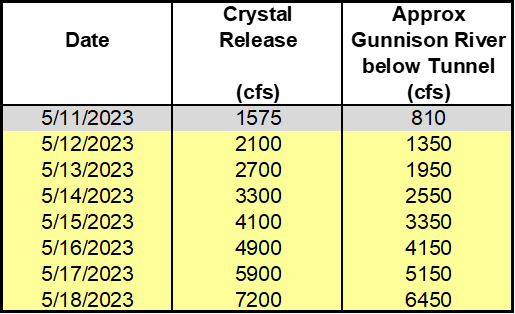
The current projection for spring peak operations shows flows in the Gunnison River through the Black Canyon peaking at 6400 cfs in order to achieve the desired peak flow and duration at Whitewater. Actual flows will be dependent on the downstream contribution of the North Fork of the Gunnison River and other tributaries. Higher tributary flows will lead to lower releases from the Aspinall Unit and vice versa.
From email from Reclamation (Erik Knight):
The May 1st forecast for the April – July unregulated inflow volume to Blue Mesa Reservoir is 830,000 acre-feet. This is 131% of the 30 year average. Snowpack in the Upper Gunnison Basin peaked at 138% of average. Blue Mesa Reservoir current content is 434,000 acre-feet which is 52% of full. Current elevation is 7470.4 ft. Maximum content at Blue Mesa Reservoir is 828,00 acre-feet at an elevation of 7519.4 ft.
Based on the May forecasts, the Black Canyon Water Right and Aspinall Unit ROD peak flow targets are listed below:
Black Canyon Water Right
The peak flow target is equal to 6,400 cfs for a duration of 24 hours.
The shoulder flow target is 810 cfs, for the period between May 1 and July 25.
Aspinall Unit Operations ROD
The year type is currently classified as Average Wet.
The peak flow target is currently 14,300 cfs and the duration target at this flow is currently 2 days.
The half bankfull target is currently 8,070 cfs and the duration target at this flow is currently 20 days.
Pursuant to the Aspinall Unit Operations ROD, releases from the Aspinall Unit will be made in an attempt to match the peak flow of the North Fork of the Gunnison River to maximize the potential of meeting the desired peak at the Whitewater gage, while simultaneously meeting the Black Canyon Water Right peak flow amount. The latest forecast for flows on the North Fork of the Gunnison River shows a high peak flow occurring near the middle of next week. Flows in the tributaries downstream of the North Fork confluence are also very high, which will help with meeting the flow targets on the lower Gunnison River at the Whitewater gage.
Therefore ramp up for the spring peak operation will begin on Friday, May 12th, with the intent of timing releases with this potential higher flow period on the North Fork of the Gunnison River. Releases from Crystal Dam will be ramped up according to the guidelines specified in the EIS, with 2 release changes per day, until Crystal begins to spill. The release schedule for Crystal Dam is:
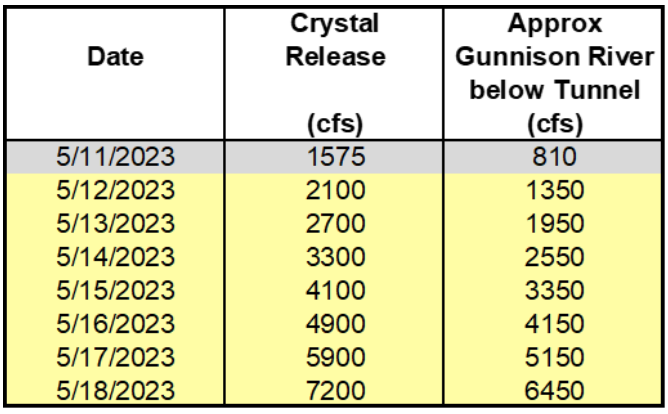
Crystal Dam will be at full powerplant and bypass release on May 15th. Crystal Reservoir will begin spilling by May 16th and the peak release from Crystal Dam should be reached on May 18th. The flows in the Gunnison River after that date will be dependent on the timing of the spill and the level of tributary flow contribution. Estimates of those numbers will be determined in the upcoming days.
The current projection for spring peak operations shows flows in the Gunnison River through the Black Canyon peaking at 6400 cfs in order to achieve the desired peak flow and duration at Whitewater. Actual flows will be dependent on the downstream contribution of the North Fork of the Gunnison River and other tributaries. Higher tributary flows will lead to lower releases from the Aspinall Unit and vice versa.

Click the link to read the article on The Grand Junction Daily Sentinel website (Dennis Webb). Here’s an excerpt:
The county Department of Public Works says in a news release that the threat of flooding in the county from rapid snowmelt primarily poses a flood threat on the Colorado and Gunnison rivers, but several creeks and washes also can be at significant risk of flooding.


Colorado’s snowpack on Friday was at 133% of median for that date, according to the Natural Resources Conservation Service. Snowpack is at 143% of normal in the Yampa/White river basins, 123% in the upper Colorado River Basin in Colorado, 159% in the Gunnison River Basin and 184% in the combined San Juan/Dolores/San Miguel/Animas basins…Snowpack at three measurement sites on Grand Mesa ranges from 137% to 238% of normal. The Columbine Pass site on the Uncompahgre Plateau is holding four times the normal amount of snow for this time in April.
Flooding already has occurred in places such as Dolores, Montrose County and Hayden in Routt County. Delta County and the city of Delta have been making preparations for high waters on waterways including the Gunnison and Uncompahgre rivers, through measures ranging from checking and cleaning culverts and storm drains…Gudorf said anywhere from Palisade to Fruita along the Colorado River has potential for flooding in lower-lying areas…Among other areas she is concerned about are Plateau Creek, and the Dolores River in Gateway. She said drainages in the Redlands area also may be susceptible to high waters from snow melting at higher elevations…
Gudorf said that when temperatures started warming up quickly a while back she got nervous about rapidly increasing runoff, but the cooldown that followed gave her some hope for a slow but steady runoff season. But she said a lot of snowmelt needs to come off Grand Mesa. Another concerning factor is a recent windstorm that deposited dust on a lot of Colorado’s mountains, which can accelerate snowmelt as the dark dust absorbs heat from the sun.
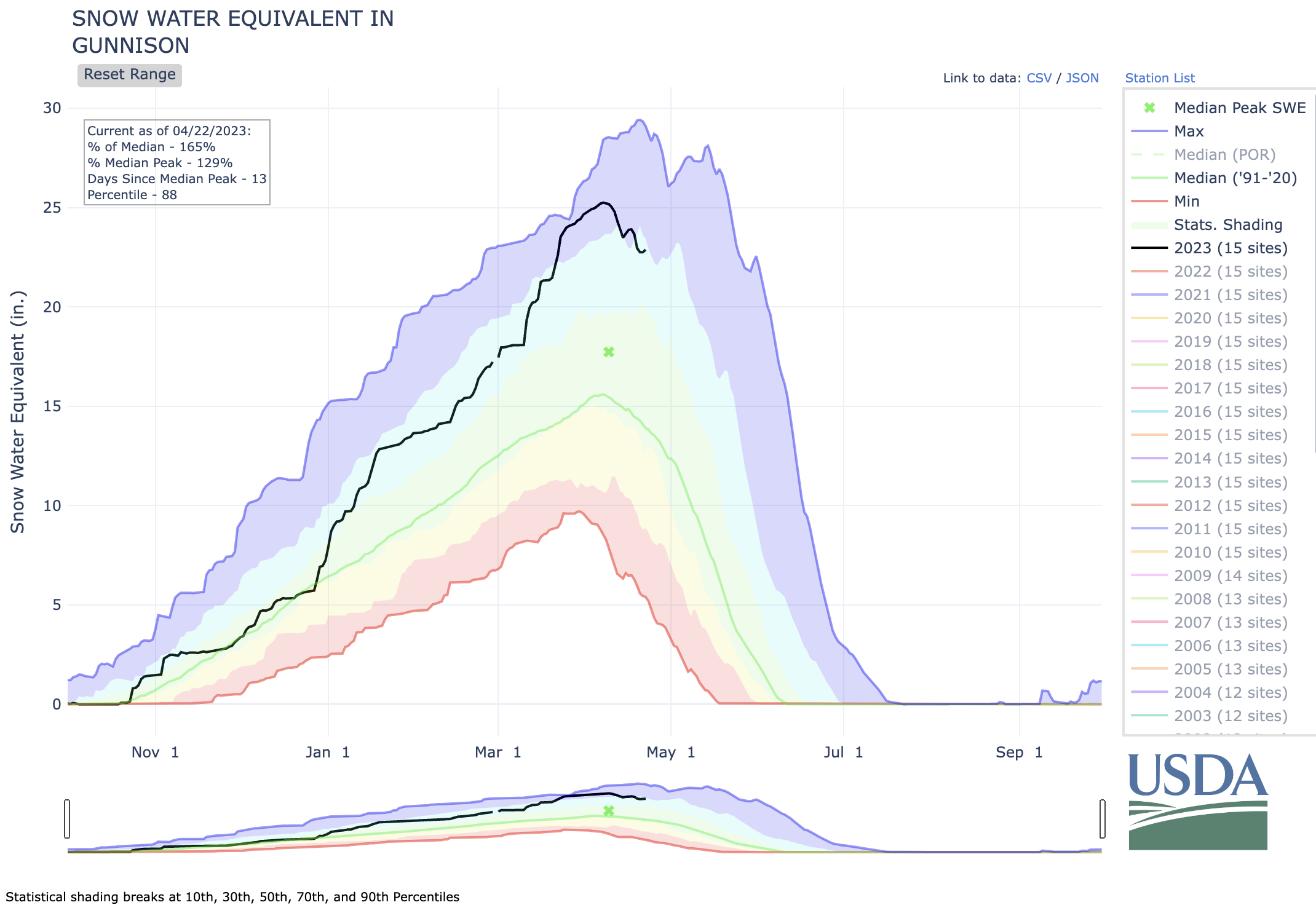
Click the link to read the article on the Montrose Daily Press website (Katharhynn Heidelberg). Here’s an excerpt:
When Luz Marquez returned to her Heritage Estates home off Marine Road Wednesday morning, she was prepared for an ordinary day. What she found was water — lots of it, pooling in her backyard, flowing under a raised shed, and carving small trenches through her parking area to dump the gravel there into the street…
Montrose County had been anticipating flooding this year, based on high snowpack and the potential for a quick melt and runoff. The county was getting sand and sandbags ready for distribution, cleaning ditches and had a contractor lined up for the work. But the water came even sooner than expected.
“It came a little quicker than we thought,” Montrose County Road and Bridge Superintendent Brandon Wallace said, as he and other county staff worked at Heritage Estates. “We watched all night and it decided it really wanted to release. We were trying to get a game plan to clear out some of these drainage ditches cleaned out to alleviate some of this water.”
Montrose County was on alert for weeks, in light of intense snowpack, which just weeks ago stood at record highs in parts of the Gunnison River Basin…The water came roaring about a week sooner than was expected, upending the county’s plans to clear out drainage ditches when things are a bit drier. “The water just beat us to it. We really thought we had a little bit bigger window to get it cleaned when it was dry,” Hawkins said.
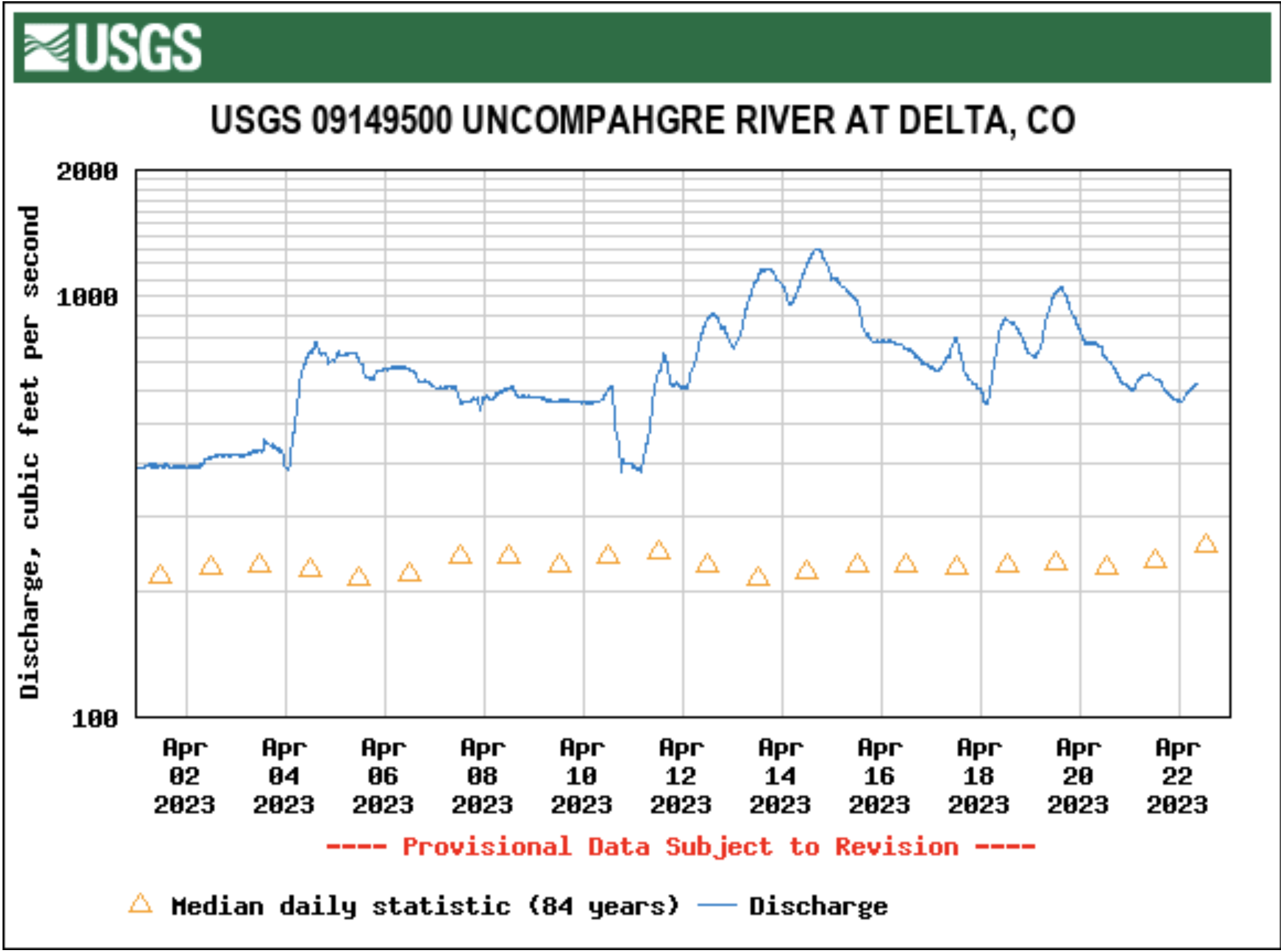
Click the link to read the article on The Montrose Daily Press website (Kylea Henseler). Here’s an excerpt:
A way-above-average snowpack has already begun melting, meaning rivers on the Western Slope will likely be rushing this year — and some nearby adventure outfitters will be happy to see it. The increased flows will likely have both positive and negative impacts on the services, but owners and managers agreed: southwestern Colorado needs water, and nobody’s complaining about it…
As of March 21, the Daily Press reported SnoTel sites above nearby waterways and their reservoirs show big-time snowpack, with the gauge at Columbine Pass sitting at 262% of normal and more than 41 inches of snow water equivalent on the Uncompahgre Plateau. It’s already melting, as evidenced by the flooding seen earlier this week at the Heritage Estates neighborhood off Marine Road.

Here’s the release from the Colorado Farm & Food Alliance:
PAONIA, CO. (April 20, 2023) – Today the Colorado Farm & Food Alliance was named by the National Community Solar Partnership (NCSP) as a recipient of a Community Power Accelerator Phase 1 prize to study and advance community-owned farm-based renewable projects in the North Fork Valley.
The Community Power Accelerator Prize is a U.S. Department of Energy led initiative to spur development of community-owned solar and renewable projects. The North Fork award is for a collaboration that involves the CO Farm & Food Alliance and other organizations, community leaders and businesses. In March this group submitted a proposal to help plan a small solar project that will benefit area farms and farm-related businesses and to use that project as a springboard for additional renewable energy to benefit rural communities. Phase 1 prize recipients can compete for additional awards.
“Our goal is to promote rural climate leadership and to show that the clean energy transition can support agriculture, boost local enterprise, and work toward greater energy equity,” said Pete Kolbenschlag, director of the Colorado Farm & Food Alliance. “We are extremely excited to move our project forward, and we see it as a model for rural climate action that puts land health, people and local community first.”
The North Fork team first coalesced around a small agrivoltaic project being scoped near Hotchkiss, and saw this as an opportunity to consider how the area might advance more community-owned renewables that integrate with agriculture and serve local residents.
“We see agrivoltaics as part of our effort to pursue sustainability, adding renewable energy to our efforts to improve the health of our land and soil and to better feed our local community,” said Mark Waltermire, owner of Thistle Whistle Farm in Hotchkiss, Colorado. “This project will give a handful of farms like this one, and a few food-related businesses that use our produce, a way of accessessing cleaner power, while benefiting our farm by giving us more gentle growing conditions under the panels to grow some of our crops. Our whole farm community benefits. And, we can set the stage for similar projects in areas around the valley that can help other producers,” he added.
Agrivoltaics is an emerging field of solar development that is paired with agriculture. In the U.S. Southwest, as we head into a warmer and drier future, interest in agrivoltaics, as a means to adapt farming to a changing climate while co-locating clean energy production, is high. Some studies show that growing certain crops under solar panels can provide shade benefits, help regulate soil-moisture, and can also help to cool the panels, which increases their efficiency.
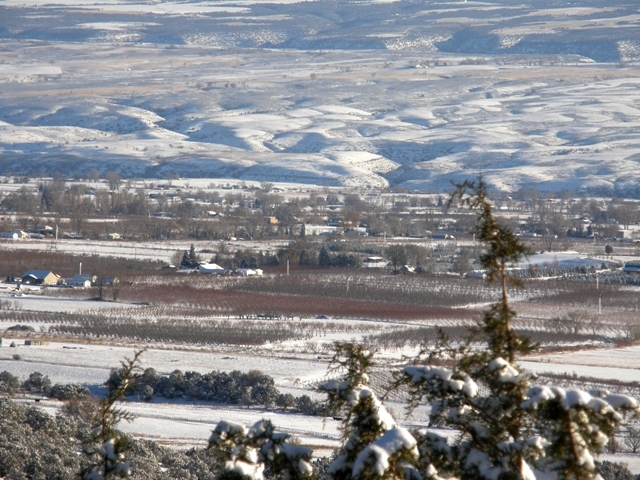
The projects being considered by the North Fork team will involve working agriculture, grid energy production, and scientific research conducted in partnership with the Colorado State University Western Colorado Research Center at Rogers Mesa, to gather more data on how renewable energy and agriculture can co-exist and can even benefit each other.
“Innovative solar projects involving agrivoltaics and community ownership models promise significant benefits for rural agricultural communities and there isn’t a better place than the Western Slope to demonstrate that potential and to provide a model that can be replicated,” said team-member Alex Jahp, who works at Paonia-based Solar Energy International. “Receiving the Community Power Accelerator Prize demonstrates that we aren’t alone in our thinking.”
The North Fork Valley is named after a major stem of the Gunnison River, which is the second largest tributary to the imperiled Colorado River system. The region is at the epicenter of the global climate emergency, as a critical headwaters area and due to its heating at a more rapid rate than many places in the nation. The North Fork Valley is home to both the state’s largest operating coal-mine and its highest concentration of organic farms. Many in the region still see both agriculture and energy as key parts of a diverse economic future, but also see the critical need to act to address climate change.
“With Delta County warming double the national and global average, the impacts of local warming are upon us. Building community resilience–through community-driven projects like the ones being considered here, at the nexus of agriculture, water, and energy–is critical if we are to survive and thrive” said Natasha Léger, Executive Director, Citizens for a Healthy Community. She added that “farms play a critical role in transitioning away from oil and gas as energy sources for running farm operations, and will be leadership models for new approaches to land use.”
Citizens for a Healthy Community has recently completed a Climate Action Plan for Delta County, hoping to help local governments act more boldly to address the climate crisis. In its recent report, Gunnison Basin: Ground Zero in the Climate Emergency, the Colorado Farm & Food Alliance also made a pitch for the potency of rural-based climate action – including the expansion of farm-based renewables. The North Fork Valley agrivoltaic team is not waiting to act.
“The Community Power Accelerator Prize is a key award that will allow us to take the great work already being done by local community groups and turn it into tangible results,” said Kolbenschlag on behalf of the Colorado Farm & Food Alliance which accepted the prize for the community collaboration. “We have an exceptional team and an exceptional project. We think this can be a model for rural climate action and community resilience. We thank the Department of Energy and Solar Partnership for this opportunity to prove it.”
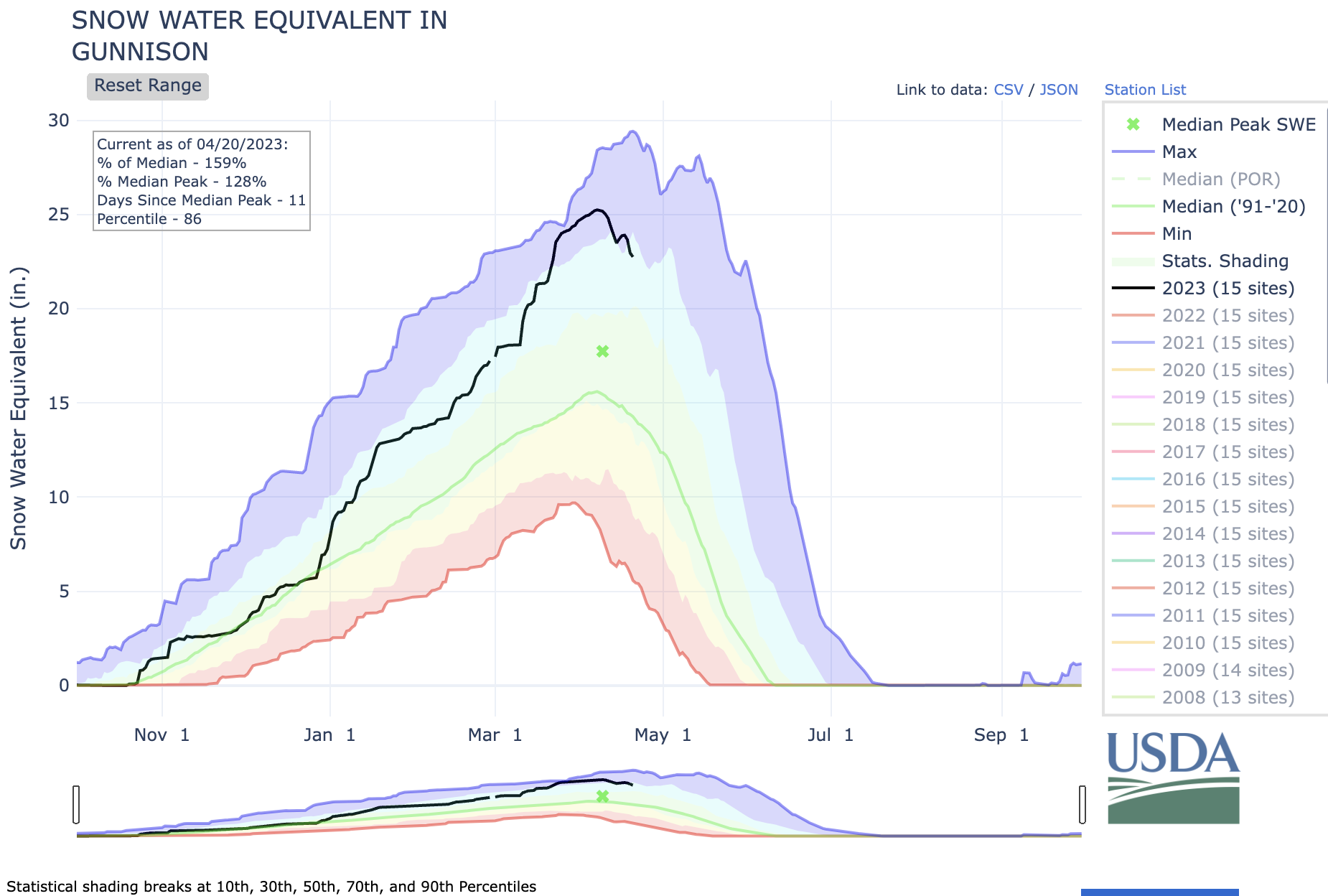
Click the link to read the article on The Gunnison Country Times website (Bella Biondini). Here’s an excerpt:
On Monday, April 17, Gunnison County Emergency Services hosted a multi-jurisdictional meeting to discuss spring runoff and the possibility of flooding in the Gunnison Valley as temperatures rise. Although the upcoming weather forecast is favorable and no cause for alarm, local officials and law enforcement made sure plans are in place and sandbags are available in the case of rapid snowmelt. Snowpack for the Gunnison Basin sat at approximately 160% of normal on April 9 with more snow on the way. After an exceptionally wet winter, rapid warming has the potential to overfill streams and rivers — putting low-lying areas at risk as the snow finally starts to melt away.
Temperatures above freezing overnight at higher elevations for several days can lead to expedited snowmelt, National Weather Service (NWS) Hydrologist Erin Walter said during a weather briefing at the start of the meeting. But transitioning into the middle of the week, she said the basin will see the influence of a low pressure system carrying snow and cooler temperatures.
“This downward turn in temperatures is what we want to see for snowmelt,” Walter said. “If we saw a ridge of high pressure over us and all of these temperatures climbing for a prolonged period of time, that’s when we need to be on high alert.”
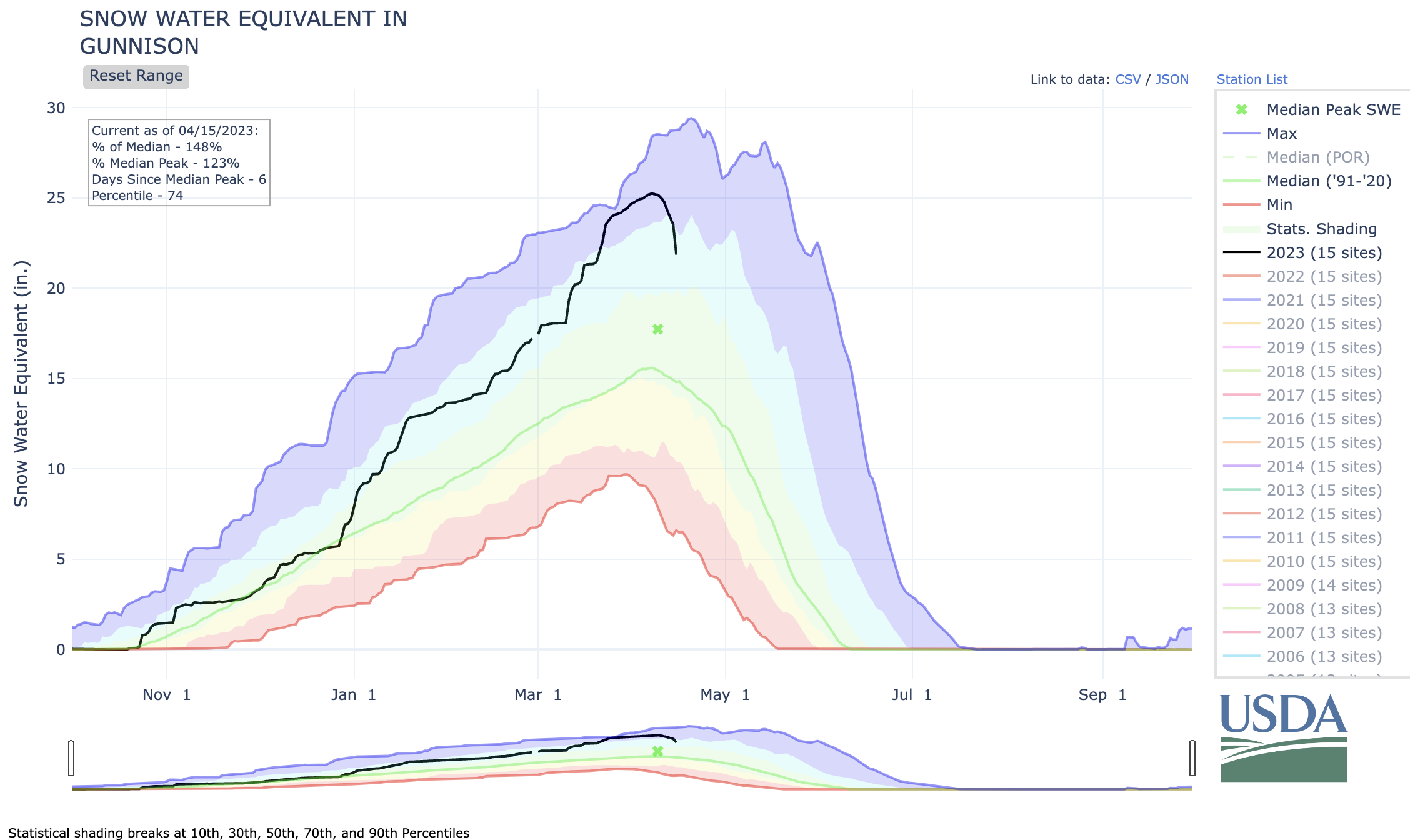
Click the link to read the article on The Montrose Daily Press website (John T. Unger). Here’s an excerpt:
The graphs this week from the U.S. Department of Agriculture show that the Gunnison Basin is at 161% of its normal snow-water-equivalent (S.W.E.). Interestingly, the Upper Colorado Headwaters zone is at 132% of its normal S.W.E. These “normals” are based on just the previous thirty years, twenty of which have been drought years here in the western U.S. But there is some elation in seeing the moisture now residing in the soils within our valleys, though it is said to be too wet to plant onions just yet. Of course, the soils in the backyards of towns such as Crested Butte are still hidden from sight, beneath five feet of settled snow still on the level…
How much of this melting snowpack can we capture and store this year? As reported by Katharhynn Heidelberg in Tuesday’s Montrose Press, the U.S. Bureau of Reclamation states that Blue Mesa Reservoir’s actual live storage capacity is projected to be at just 71% by the end of the water year in September. That beats last year, anyway.


Click the link to read the article on the Sibley’s Rivers website (George Sibley):
In my last post, I was questioning the process of allowing the privatization of the commons through individual appropriations – in our specific instance here, privatization of the ‘water commons,’ but also of the land, and all of its living systems and the raw resources that must feed, water, shelter not just us but all life on the planet.
Every living thing that requires food, water, air or virtually anything at all ‘appropriates it from the commons,’ and probably in the strictest sense we all ‘create a property’ in the apples we pick to eat, the water we dip out of the stream to drink, the oxygen in the air we suck into our lungs. But we have not always gone on to claim personal ownership of the tree that produced the apple, or the land the tree grows on, the stream that waters the tree. That is a relatively recent invention of modern cultures – the agricultural and the industrial societies that we created when there came to be too many of us to support ourselves as hunter-gatherers living off the scattered abundance of the commons.
A contemporary writer-thinker who has considered our conduct in the commons is Garret Hardin, a 20th century American ecologist whose main concern as a scientist was the threat of overpopulation: a species (us) in swarming mode, but clever enough to stay a step ahead of the usual ‘natural’ controls – famine, plague, social breakdown and the Hobbesian ‘war of each against all.’ Hardin is best known, however, for a short excerpt, often found in high school and college texts, from a 1968 essay, ‘The Tragedy of the Commons.’
In the popular excerpt from ‘Tragedy,’ Hardin posed a grazing commons, used by a number of herdsmen. Being rational, Enlightenment individuals with a ‘natural’ desire to maximize their own self-interest through their labors, each herdsman desires to add another animal to his herd on the commons, even though he is aware that it might have a negative impact on the commons. The rational individual calculates, however, that he would get all the profit from his extra animal, while the cost to the commons would be spread among all the grazers. But with every user of the commons adding extra animals through that rational logic, the commons is over-grazed and destroyed.

This is the dark side of Enlightenment economist Adam Smith’s theory that economic individuals are driven by rational self-interest to engage in useful pursuits that will benefit their society as well as themselves, by meeting some societal need – a thesis embraced by most economists since Smith’s time (The Wealth of Nations was published in 1776).
The challenge of course is how to prevent the Enlightenment’s pursuit of individual self-interest from leading inexorably to Hardin’s ‘tragedy of the commons.’ Hardin saw the only alternatives to ecological catastrophe being either a) administration of the commons by the state or b) privatization of the commons according to the conventional wisdom of Aristotle: ‘Men pay most attention to what is their own; they care less for what is common.’ The choice between state management of what’s left of the commons, and further privatization by individuals, remains an area of open public conflict in the American West, with at least two bills before the current Congress proposing more creation from the commons.
But other modern thinkers have thought it through further – with work grounded in research, evidence collection, and other methods of the Scientific Revolution that preceded the Enlightenment. They discovered that there were (still are) many commons that have been used consistently without the users marching inexorably into Hardin’s tragedy – in some cases, in use for hundreds of years. They studied grazing commons, timber commons, fishing commons, water commons, and less tangible ‘commons’ like the air we breathe.

Foremost among these scientists is the late Elinor Ostrom, an American political scientist whose work in the study of commons was acknowledged in 2009 with a Nobel Prize in Economics. Her study of commons globally led her to observations about why some commons endured, even when used by individuals trying to maximize their own profit from their use, while individuals with the same motive degraded other commons.
Commons that succeeded over time, she found, were consciously managed locally by the users themselves, according to a set of rules generated, monitored and enforced uniformly bythe users. She did not find individual self-interest incompatible with successful commons management; it was only necessary for the individuals operating on a fragile commons to be able to persuade themselves and each other that even their short-term interests required the development of rules for avoiding the over-use of their commons. And if they kept the rule-making process close to home, they would be be able to build in elements of flexibility and local control sufficient to maintain the commons without losing their own sovereignty to external forces.
It became evident, to Ostrom and to other students of the commons, that this kind of commons management had to be locally generated rather than top-down from some external authority, and among people who had similar goals in living off the commons; a community with multi-generational stability, and a ‘belief commons’ as well would be more likely to succeed in conserving its physical commons if it chose to. Equally evident was the fact that it could never be a simple one-size-fits-all process; each commons and each community would have unique features.
The ‘water commons’ – the sum of our precipitation, surface waters, and groundwater – is our interest here, and the last two years bear mute testimony to its lack of predictability, which makes management of the commons difficult, no matter what system is employed.
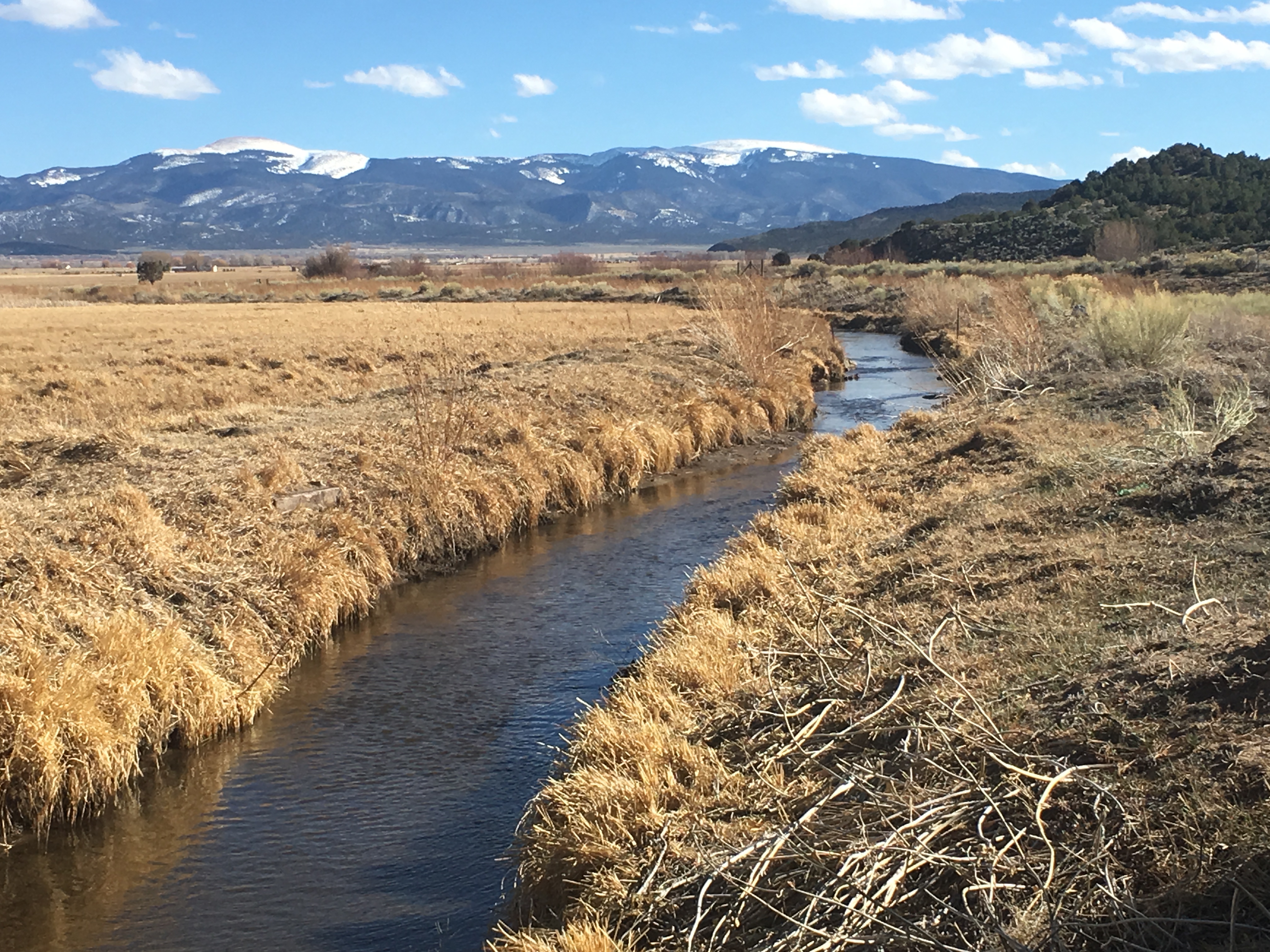
The acequia system of land settlement, practiced by both the indigenous Mexican cultures and the Spanish invaders, only permitted settlement by communities of people, rather than by individuals under the ‘enlightened’ Euro-American model. Acequia systems essentially have ‘commons management’ by its users built into it. Everyone works to build and maintain the irrigation system, and the watered land under the ditch is divided as equitably as possible among parciantes, with the land above the ditch being mostly an undivided commons for grazing, ‘energy production’ (wood-gathering) and timber. The system is run by its users, with both surpluses and shortages shared evenly.
The ‘enlightened’ western American water appropriation system, on the other hand, is fundamentally antithetical to even the existence, let alone the intelligent management of a water commons. The Colorado Constitution, for example, seems to establish a public ‘commons’ in first declaring the ‘water of the streams public property’ – but then immediately stating that this public property is only the water ‘not heretofore appropriated’ – and the rest of the public property is ‘dedicated to the use of the people of the state, subject to appropriation… (and) the right to divert the unappropriated waters of any natural stream to beneficial uses shall never be denied.’
Once the right to use the water has been appropriated, there is not only no encouragement to share the burden of bad years, it is actually operating outside the law to do so; the law enforces the right of the senior appropriators in a system to get all of their water, even if it dries up junior appropriators to do so. This institutes a ‘first come, first served’ system that is more competitive than cooperative.
Theoretically, the users are only appropriating the right to use the water, not the water itself, and only for so long as they actually puts the water to use. But somehow that ‘right to use’ has become a property that can be sold or bought just like any more tangible personal property. And a new owner of the ‘right to use’ can file for a change of use, then move the right to use the water and the water anywhere he or she wants along with the seniority of the right.
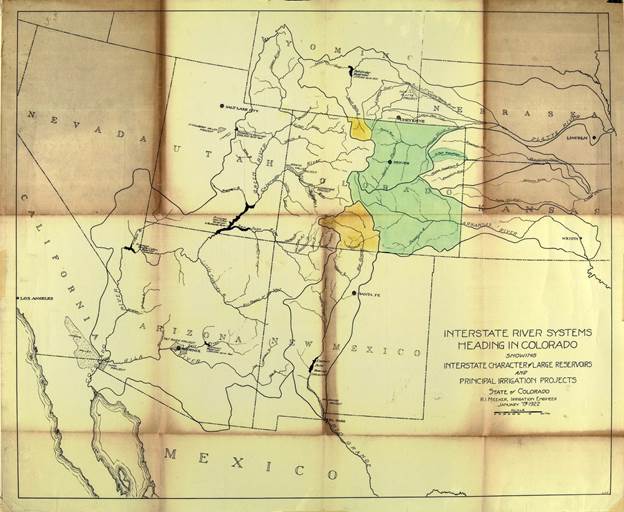
All western states in the arid region have basically the same appropriation system, with variations mostly in administration. Thus, throughout the Colorado River region, water that was appropriated and privatized for agricultural use in one place can (after a change of use) water suburban growth a couple hundred miles away in the same state – a situation facilitated by the fact that the state boundaries bear no relation to any geographic realities like watersheds. Up to five million acre-feet of water leave the Colorado River’s natural basin every year for agricultural and municipal uses outside the basin – 40 percent of the river’s water. This ‘flexibility’ of ownership, on top of its ‘first come, first served’ energy, makes the appropriation process a powerful engine for growth, but with not much of a sense of a water commons.
Which brings us more or less back to the present, where we are at something of an impasse over what passes for our water commons. The seven Colorado River Basin states are confronted with the need for a huge ‘reality adjustment’ in the way the river has been operated over the past century: essentially we must – beginning this year – abandon the magical thinking of the Early Anthropocene and cut the overall consumptive use of the river by at least two million acre-feet.
Six of the seven states have constructed a draft plan that would apportion cuts close to two million acre-feet to meet this emergency equitably among all the states – not ‘equally,’ but equitably, cleaning up some mistakes from the past, like the Lower River states ignoring a million and a half acre-feet of annual evaporation. But the seventh state, California, is holding out for strict administration of the appropriation law, which would mean they would get most of their usual allotment, 4.4 million acre-feet (minus 400,000 they are willing to put into the kitty), and Arizona, Nevada and the four Upper River states, all with water rights mostly junior to California’s, would bear the rest of the burden.
Arguments can be made both ways: the importance of the primacy of the rule of law, versus an emergency situation that the law as (mis)administered cannot resolve. I am personally of the latter persuasion (in case you hadn’t noticed), and believe the appropriation laws for water, as they have evolved, might be more part of the problem than part of the solution at this point.
There is a little-discussed fact about appropriation law and seniority rights as it is actually practiced in bad years down on the ground, at least here in the headwaters of the Upper River. That is the fact that agricultural users, at the local level, don’t like to place ‘calls’ on their neighbors in hard times – a ‘call’ being a demand by a senior user that upstream juniors let the water go by until his right is completely fulfilled.
Downstream senior users will place a call when an upstream junior is being blatant in his or her disregard for priority in a time of relatively normal flows, to bring the offender in line. But in a dry year, which is no one’s fault, farmers and ranchers who have drawn water from the same stream for years – sometimes for generations – tend to not insist on rigorous apportionment of water according to seniority, but instead sit down together and figure out how to move whatever water is available around so that everyone gets enough to avoid dead perennials and maybe get a partial crop on their best land.
The ranchers here call these ‘gentlemen’s agreements’: ad hoc measures in which humans respond to nature’s random assaults the way anthropologists show us we did for our first million or so formative years, fragile bands wandering the generally unaccommodating steppes of the Pleistocene ice ages: working it out together. Self-interest served rationally through cooperative action.
These informal agreements beyond the law seem to fit with Elinor Ostrom’s observed ‘rules’ for the long-term management of commons; ‘gentlemen’s agreements’ only seem to work at the local level where users know each other, have transcended the abstract fear that he-she-they want my water, and know that rational self-interest in living a reasonably peaceful and productive life requires some neighborly accommodation to each other’s needs, whether one loves the neighbors or not (although serious neighborhood feuds can preclude a gentlemen’s agreement).

‘Gentlemen’s agreements’ have not, however, worked when ‘upscaled’ to the state or regional level. Consider the Colorado River Compact: the seven states gathered in 1922 for the expressed purpose of dividing the consumptive use of the river’s water seven ways beyond the appropriation laws. Each state would continue to observe appropriation laws intrastate, but not interstate; they wanted a gentlemen’s agreement that fast-growing California would not be allowed to appropriate most of the river before slower-growing states really got started, and California wanted the other states to support a big-dam project on the mainstem. But either despite their rational self-interest, or on account of it, they were unable to develop that equitable apportionment. The reason they couldn’t is obvious enough from looking at the Compact meeting transcripts: the Compact commissioners were arguing from fantasies about their future development, and they would neither accept each others’ fantasies nor downsize their own, and they would have needed half again more water than even the Bureau of Reclamation’s optimistic fantasies about the river’s actual flow.
But are we now at a sufficiently different place so that the river’s reality might prevail over magical thinking? We now know how much water there actually is in the river, and approximately how much less there will be as the temperatures continue to rise; we can see that the growth energy inspired by ‘first come, first served’ is the last thing we need in the Southwest today; we are aware what a general tangle the fantasies, omissions, ambiguous language and contradictions of the Compact and the subsequent ramshackle Law of the River have created – and we know we are only a couple really bad snow years from a ‘dead pool’ status where no one below Hoover Dam gets any water at all. We know we have to come up with some kind of consensual agreement now, not after another decade in court.
Can the seven states come to the table, leaving all our fantasies of the future behind, face these realities, and come to a gentlemen’s agreement that will get us at least through the next several years with the requisite major cuts in use? While we are trying to forge some new compact that does what the last one failed to do?
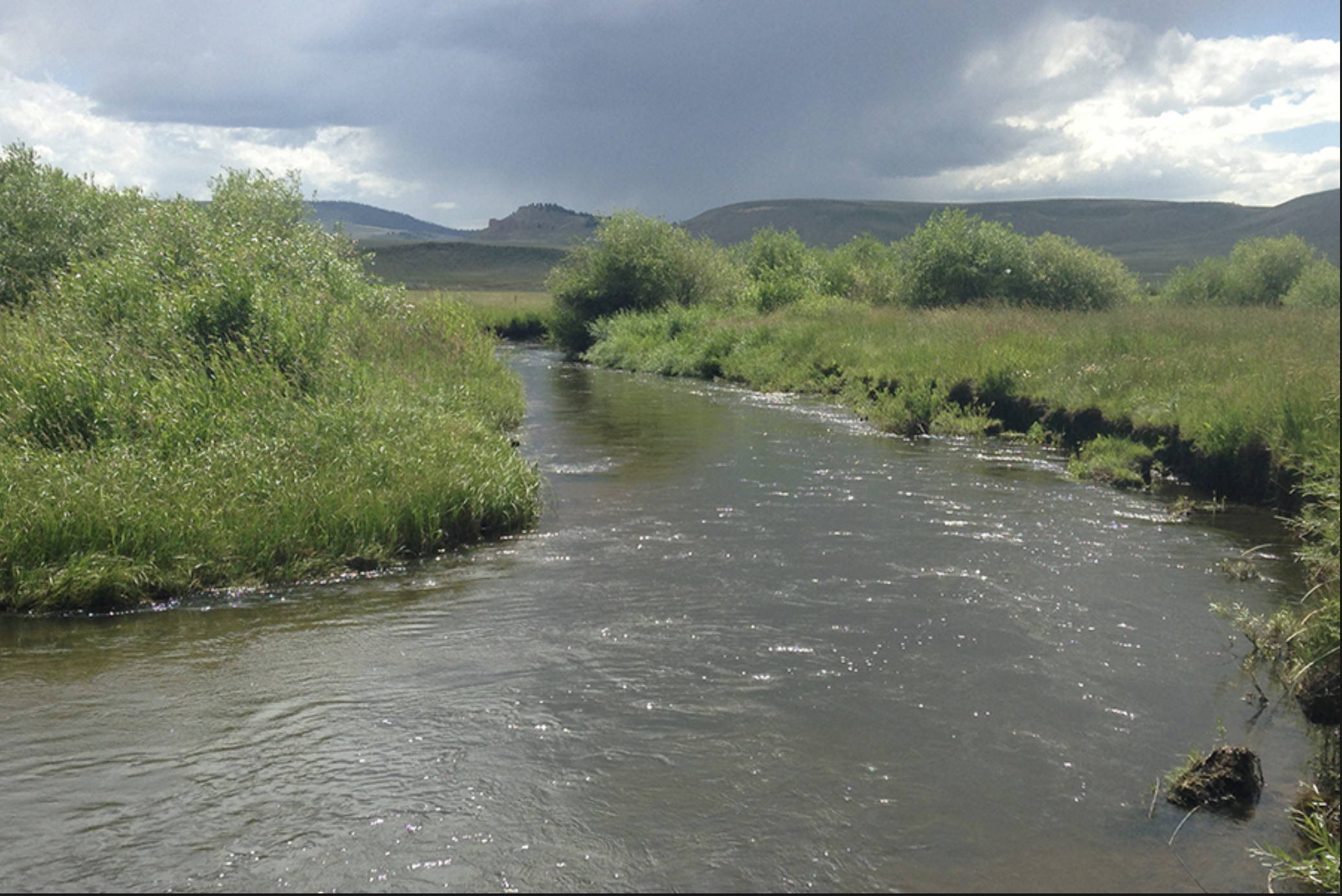
If the ranchers on Tomichi Creek can do it up here in the headwaters….
‘The essence of dramatic tragedy is not unhappiness.
It resides in the solemnity of the remorseless working of things.’– Alfred North Whitehead


Click the link to accesss the report. Here’s the synopsis:
The climate emergency poses an existential threat to our businesses, farms, and communities but there is no shortage of things we can be doing to address it. These include climate action opportunities in agriculture, land-use, electricity and power, and shifts in policy and priorities to drive these solutions. This report provides useful information on the climate crisis and its impacts on the Gunnison River Basin. It also provides examples of available actions for individuals, businesses, and governments.

Click the link to read the release on the Upper Gunnison River Water Conservancy District website:
2023 GRANT FUNDS SUPPORT NUMEROUS PROJECTS THROUGHOUT UPPER GUNNISON BASIN
The Board of Directors of the Upper Gunnison River Water Conservancy District (UGRWCD) voted at the March 27th Board meeting to award $297,170 to organizations and individuals in the Upper Gunnison River Basin. These grant funds will be used for projects that will enhance water supply, improve stream and irrigation conditions, conserve water, provide water education benefits and restore wetlands. There was a diverse group of project applications from all over the Upper Gunnison River. Examples include a City of Gunnison native plant xeriscape project at 11th & Quartz Street intersection with educational signage, Coal Creek Dam Construction (Lake Irwin), and irrigation demonstration projects – one utilizing a combined plastic irrigation pipe, headwall, and turnout gate for improved irrigation water management and another utilizing an IntelliDitch HDPE Liner to prevent seepage loss.
All applicants were required to provide a 50 percent cost match and their projects had to be consistent with the District’s purpose, mission, and objectives.
UGRWCD General Manager Sonja Chavez noted during this year’s funding cycle, the District received requests for funding that totaled $370,613.
“It was a very competitive cycle and I strongly encourage those who were not funded to reach out to us to discuss their project and how they can make it stronger for the next cycle,” said Sonja.
Sonja also pointed out the District Grant Funding Program is a prime example of the District’s responsible allocation of tax revenues to directly benefit diverse water improvement projects in the basin. “I am delighted to report that during this cycle, our District grant funds were leveraged at a ratio of 1:3 with outside funding sources which just amplifies returns on District investment.
The UGRWCD Grant Program follows an annual cycle with applications due in February each year. General Manager Chavez urges potential applicants or individuals, even those just wondering about a water project, to reach out to the District now so that the District can help with infrastructure assessment or engineering that can assist in ensuring that the project can be funded. If you have a water project in mind, please call the District at (970) 641-6065 to schedule a consultation.

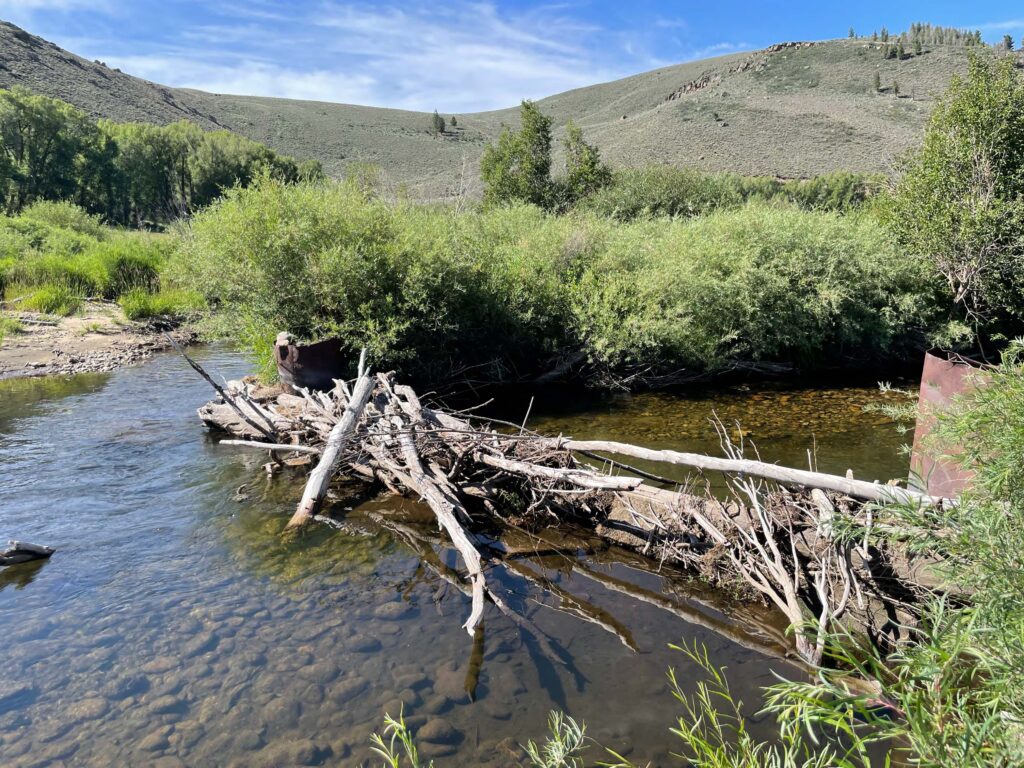
From email from Reclamation (Erik Knight). Click to enlarge:
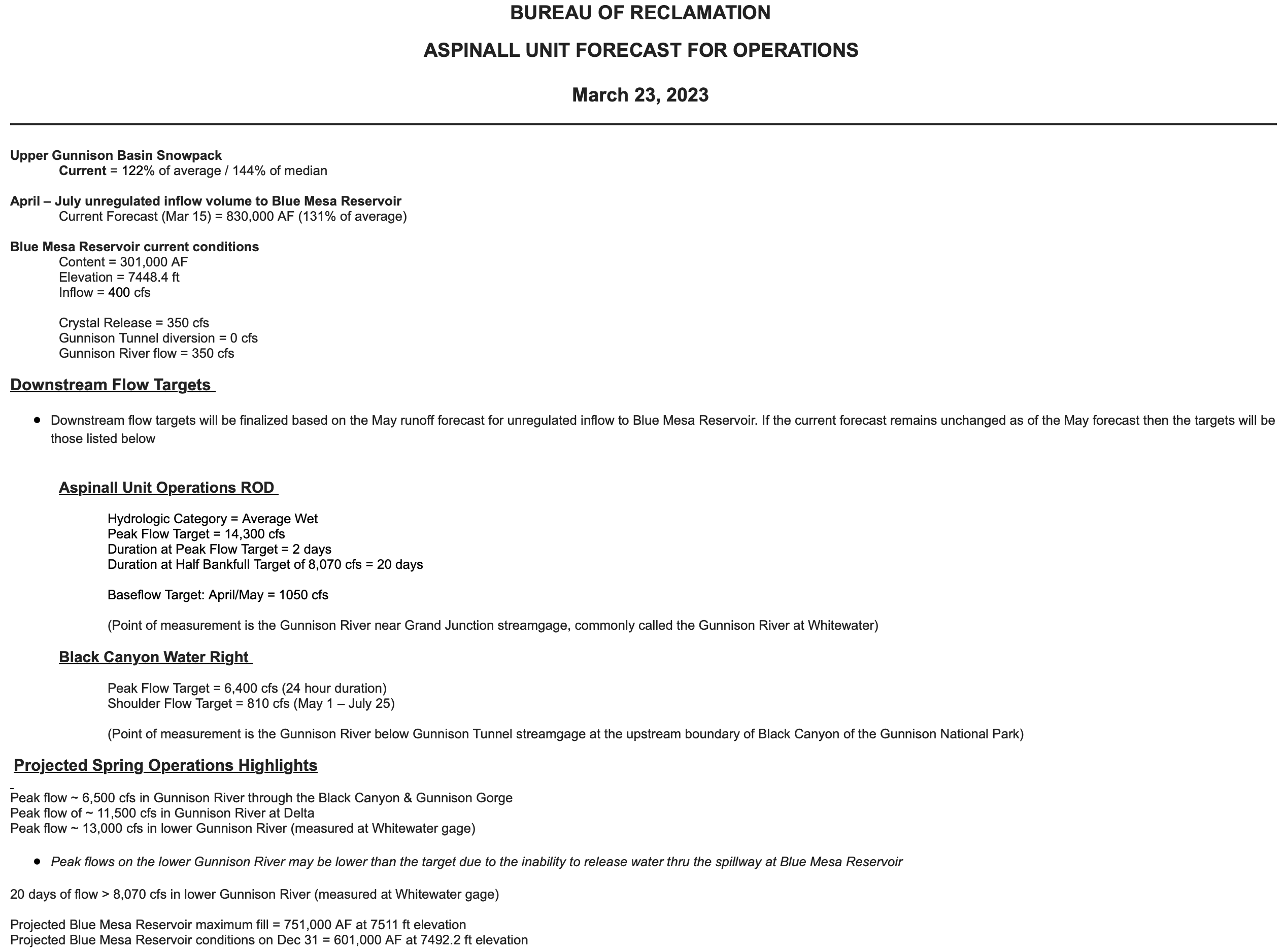
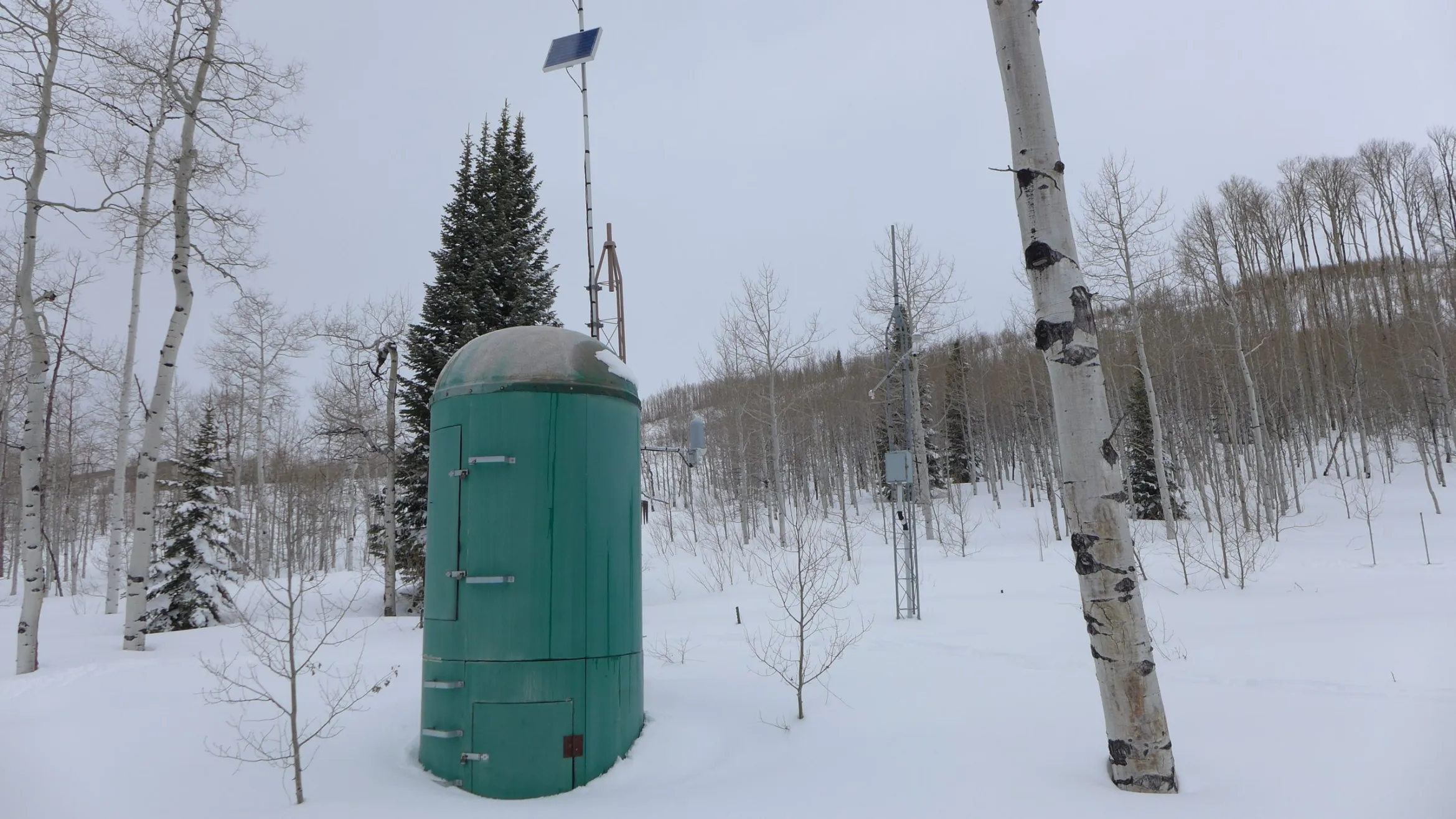
Click the link to read the article on the Aspen Journalism website (Heater Sackett):
Snowpack on the Western Slope is tracking above average for this time of year, which has some forecasters feeling optimistic about spring runoff. But there is also an interesting phenomenon that they don’t yet know what to make of.
The snow-water equivalent — a measure of how much water is contained in the snowpack — for the headwaters of the Colorado River stands at 116% of average. That number is measured by snow telemetry (SNOTEL) sites, which are remote sensing stations throughout the West’s mountainous watersheds that collect weather and snowpack data.
Most of the lower-elevation SNOTEL sites (10,000 feet and below) have a higher percentage of median snowpack than high-elevation sites (above 10,000 feet). For example, in the Colorado basin, low-elevation SNOTELs are at a combined 121% of average while high-elevation ones are at 112% of average.
This trend holds true across the Western Slope with the Gunnison, Southwest and Yampa/White/Green river basins at 155%, 152% and 142% of average, respectively, for low-elevation sites and 119%, 136% and 122% for high-elevation sites. In the Roaring Fork basin, snowpack is at 110% for the four high-elevation sites and 134% for the four low-elevation sites.
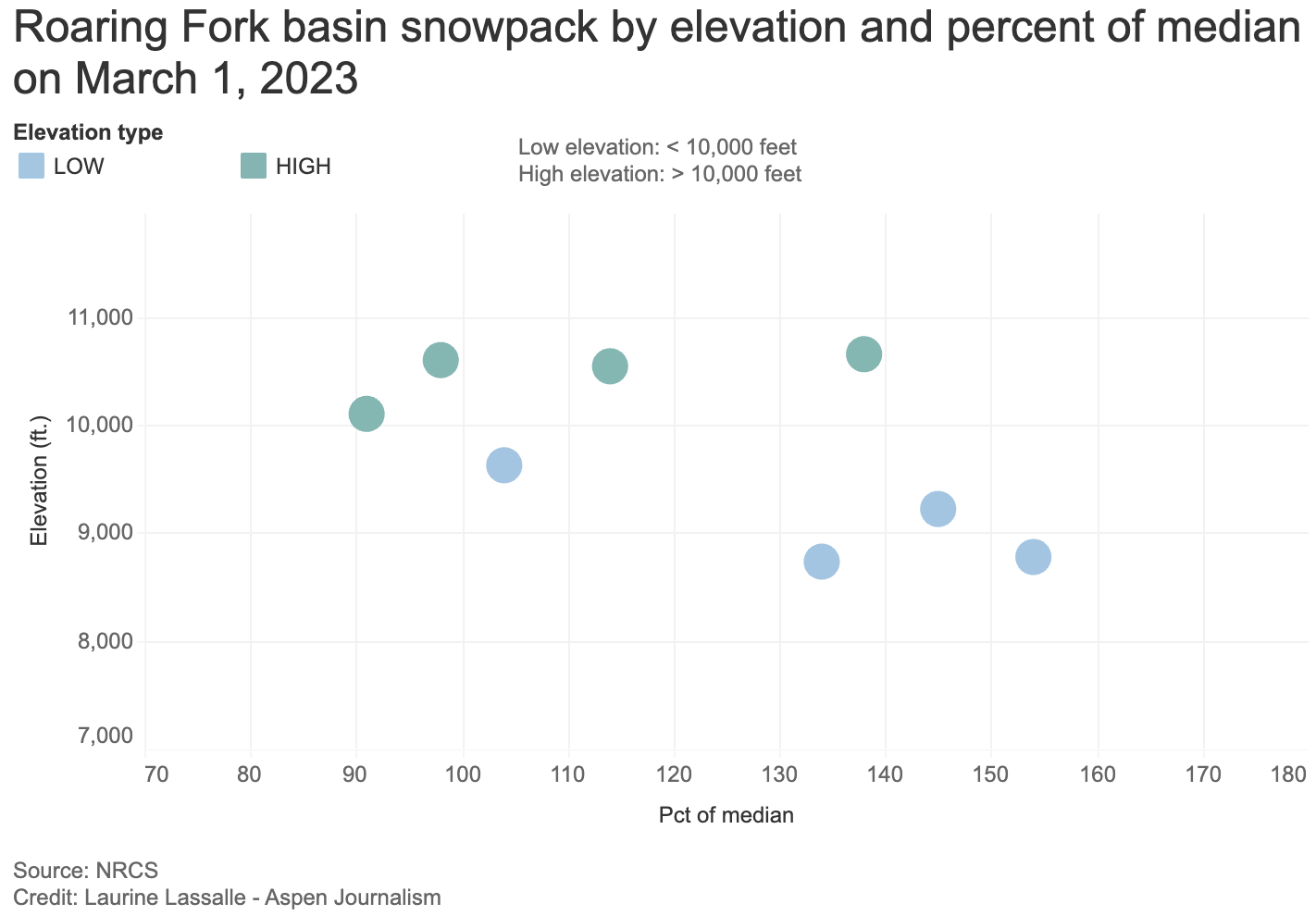
“I can pretty confidently say sites below 10,000 feet have that trend pretty clearly exhibited,” said Karl Wetlaufer, a hydrologist and assistant supervisor at the National Resources Conservation Service’s Colorado Snow Survey. “It’s certainly an interesting observation.”
Why this counterintuitive trend is occurring is unclear. This winter’s storm patterns may be favoring lower elevations. Or colder-than-average temperatures and overcast days in February may have allowed the snowpack at lower elevations to continue accumulating. The February temperatures for western Colorado were on average about 2 degrees below normal, according to the NRCS.
“We’ve been cloudier, colder, and that has probably helped prevent some melting at lower elevations that might typically take place,” said assistant state climatologist Becky Bolinger. “We will definitely want to look into why the lower elevations are performing so much better than the higher elevations.”
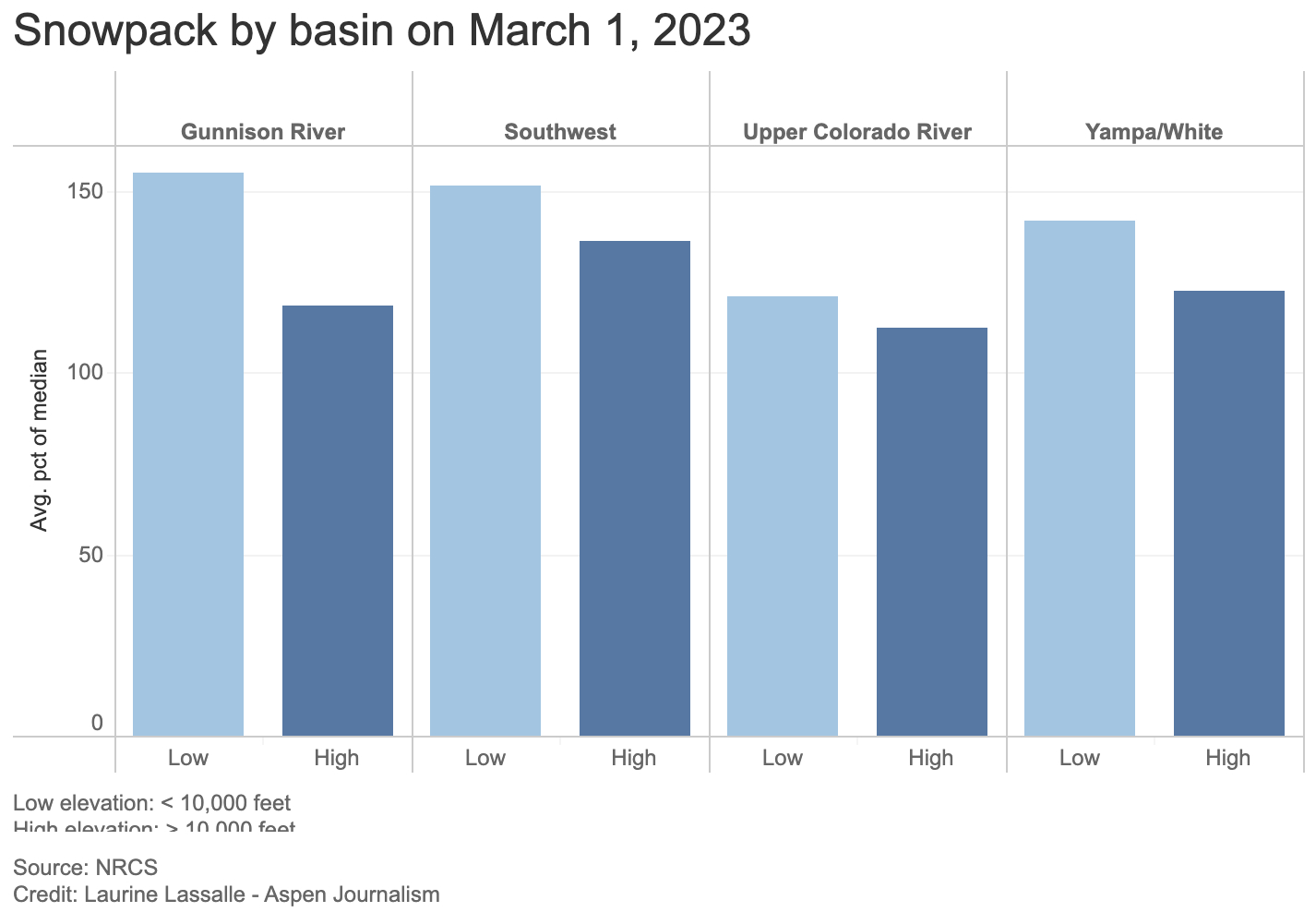
Snowpack above average
Snowpack overall on the Western Slope is above average, with some basins — the southwest, which includes the San Miguel, Dolores, Animas and San Juan rivers and the northwest, which includes the Yampa, White and Little Snake rivers — already surpassing the average seasonal peak. Snowpack typically peaks the first week or two in April.
What more snow at lower elevations means for the timing of this spring’s runoff is also unclear, but forecasters say runoff volume should be above average.
“Big picture, this year is looking very, very favorable for all of western Colorado, and it’s a really big turnaround from the last couple of years,” Wetlaufer said. “It’s kind of tough to parse out the impact of this lower-elevation snow being at a higher percent of median than higher-elevation snow, but, in a general sense, I would certainly say it’s quite encouraging for ample snowmelt runoff this season.”
This is partly because lower elevations encompass more surface area than higher ones; there is simply more land below 10,000 feet than above, and if it is covered in an above-average snowpack, that is a good thing for streams and soils.
“Having that lower-elevation snowpack is going to help keep soil-moisture levels high, which can help the efficiency of the higher-elevation snow when it does melt at a later date,” Wetlaufer said. “Substantial low-elevation snow is going to wet up the soil conditions and allow most of that snowmelt to actually transition to the stream channel.”
In recent dry years, thirsty soils have sucked up runoff before it made it to streams. For example, 2021 was historically bad, with an upper basin snowpack that peaked about 90% of average but translated to only 36% of average runoff into Lake Powell, according to the U.S. Bureau of Reclamation. It was the second-worst runoff on record after 2002.
Although water managers are feeling confident that this year will be better and give a boost to depleted reservoirs in Colorado, they caution that one good year is not enough to pull the entire system out of a crisis. Lake Powell, which is the storage bucket for the upper basin states of Colorado, Utah, New Mexico and Wyoming, is at about elevation 3,521 feet, or about 23% full, the lowest since filling.
“Is this going to solve the Lake Powell and Lake Mead crisis? Not even close,” Bolinger said. “But the forecasted inflows into Powell are above average right now. There’s a silver lining there.”
Aspen Journalism covers water and rivers in collaboration with The Aspen Times.
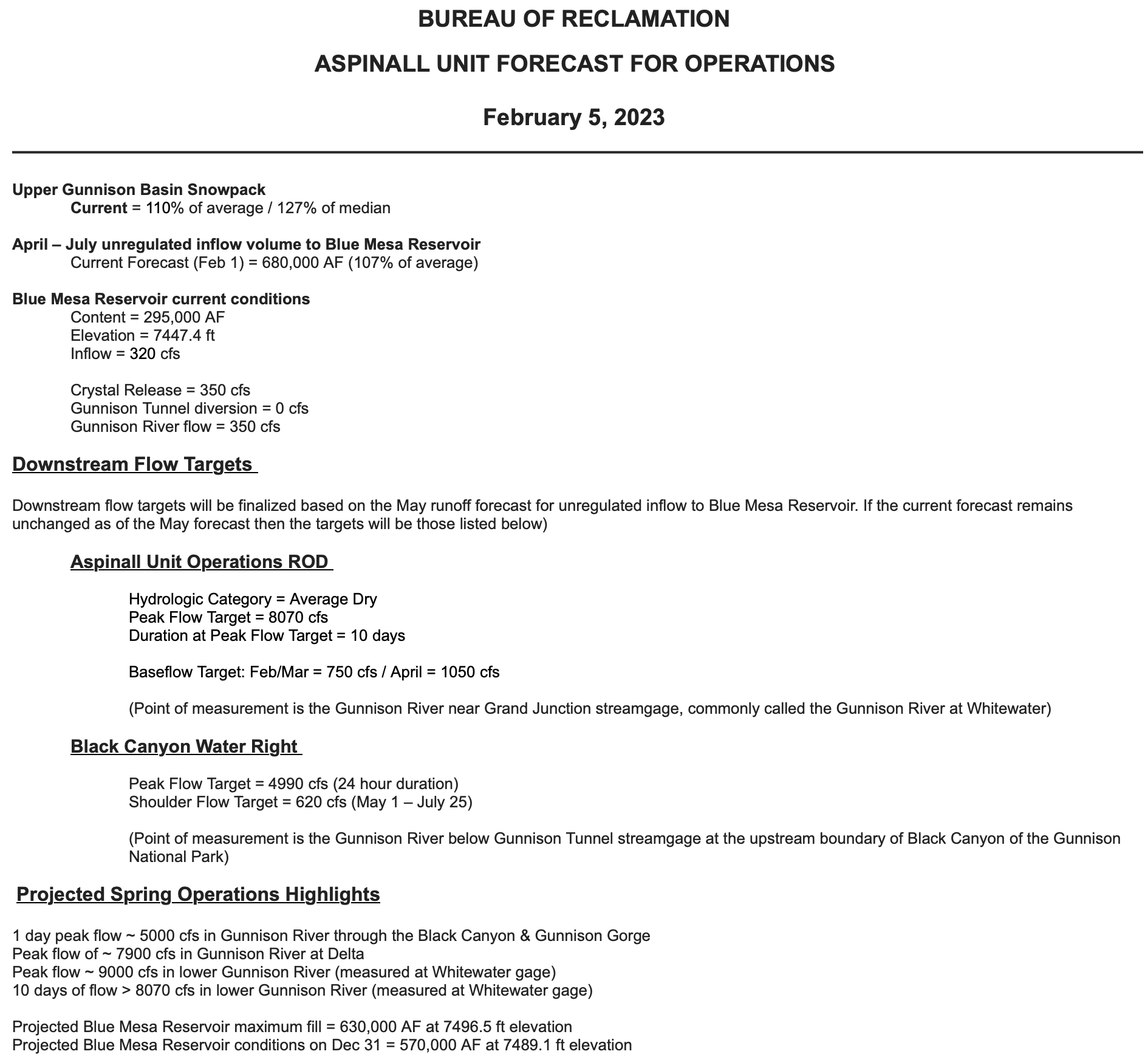
Click the link to read the article on The Grand Junction Daily Sentinel website (Dennis Webb):
The Bureau of Land Management and a nonprofit entity have teamed up once again on an acquisition by the federal agency of land along the lower Gunnison River, this time involving a 26.32-acre parcel in Mesa County. The BLM’s Grand Junction Field Office partnered with the Western Rivers Conservancy on the acquisition of the Meridian Junction property, on the east side of the river just north of the Mesa/Delta county line. The acquisition furthers partnership efforts to conserve and protect resources for future generations, the agency said in a news release. The land is within the Dominguez-Escalante National Conservation Area, and was bought with money from the federal Land and Water Conservation Fund.

Click the link to read the article on the Crested Butte News website. Here’s an excerpt:
It is too early to draw definitive conclusions in terms of the Gunnison Basin’s water situation even given the consistent snowstorms we have experienced recently. But it is currently in a good spot. While the Gunnison Basin is recording snowpack that is significantly above average and is about even with where were last year at this time even after a 99-inch snowstorm barreled through the area in late 2021 and early 2022, it takes more than good December and January snow to ultimately fill the reservoirs.
“It’s too soon to say what our water year might look like,” cautioned Upper Gunnison River Water Conservation District (UGRWCD) general manager Sonja Chavez. “As we saw last year, we had a great snowpack through January and then it stopped snowing. We didn’t see any significant storm events the rest of the winter season. Then, wind and dust on the snowpack was a problem, and our snowpack disappeared before our eyes.”
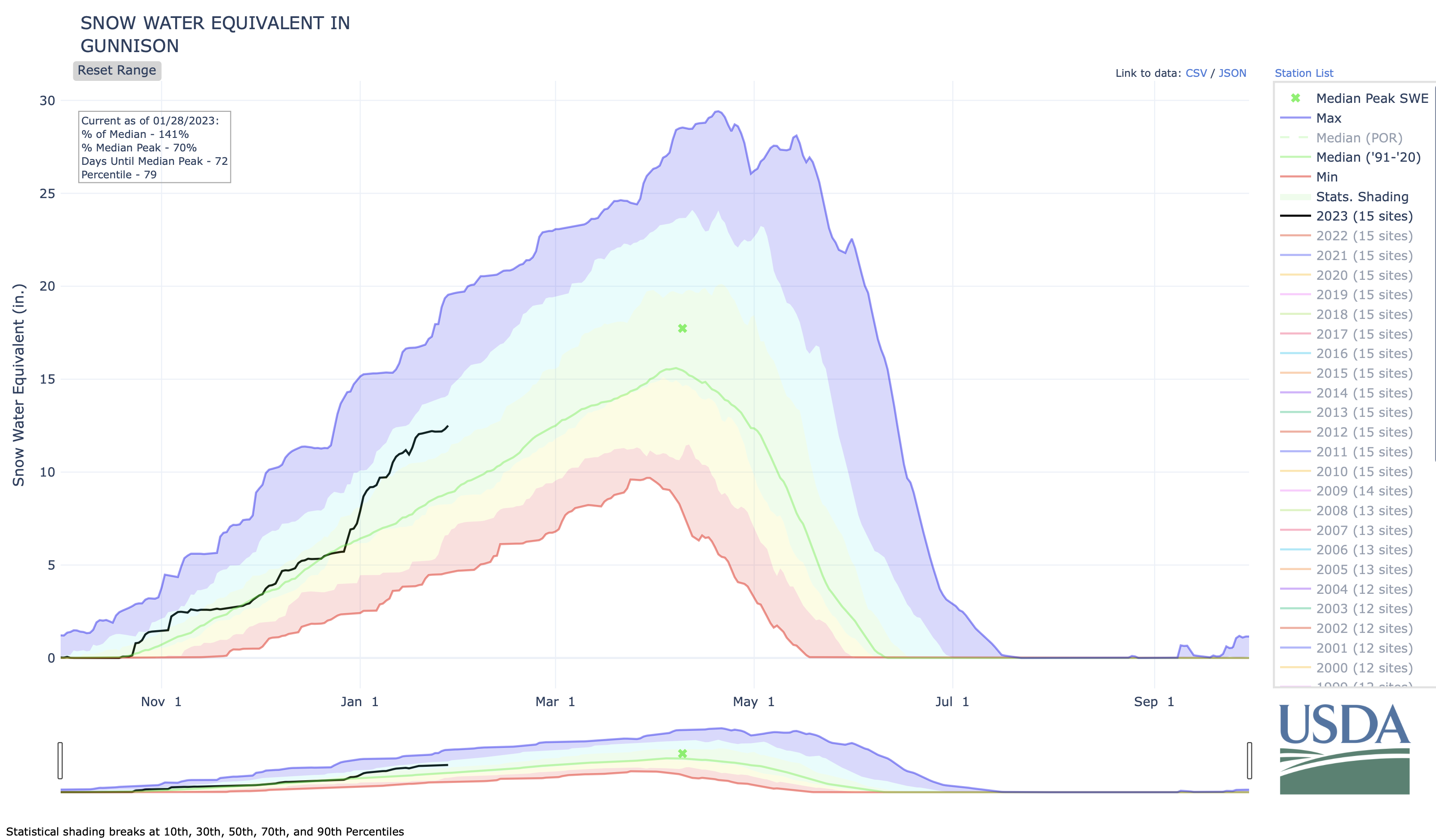
According to UGRWCD water resource specialist Beverly Richards, last week the area in general was recording 140% above average snowpack and that has dropped a bit this week to 133%. The water content is at 129% of average, which is a good sign…
“This winter is doing quite well especially after a very weak start,” he reported. “The snowpack is well above average, though the past week’s snow was much lighter in water than everything earlier. That means it is still settling and catching down to the average. But this is a good winter, if not anything overly special. Last year’s end of December storm was big, but that was pretty much the winter while this year has been steady, which is more like it tended to be in the past.”

Click the link to read the article on the Big Pivots website (Allen Best):
Changing climates have started disrupting schedules of almost everything everywhere. As temperatures rise, spring snow in the Rocky Mountains melts earlier. How has this changed the dance between birds and bees, flowers and the trees?
Plenty, according to a new study of research conducted in Colorado during the last half-century, and in far more complex ways than you might think.
Published by the Proceedings of the Royal Society B, a scientific journal of papers in life sciences, the study examined the voluminous evidence accumulated by 15 scientists since 1975 at the Rocky Mountain Biological Laboratory near Crested Butte. The scientists have studied plants, insects, and birds in the outdoor laboratory amid the forest and meadows at an elevation of about 9,500 feet.
RMBL, pronounced “rumble,” also has a continuous record of temperature and other weather data beginning in 1975. Average summer temperatures at the lab, which is headquartered at the old mining hamlet of Gothic, have increased 0.4 degrees C each decade. Those in autumn rose 0.2 degrees per decade.
Something similar is happening with snowmelt. The date of bare ground has arrived an average of 2.4 days earlier per decade. With this earlier snowmelt, first spring activity advanced significantly across all the species examined except migratory birds. This makes sense because bird migration is determined by cues along their travel from winter grounds farther to the south and not solely by conditions in their breeding grounds in the Gunnison River Basin.
The study found that this shifting climate has not had uniform effects on the plants, insects, and birds that have been studied since Gerald Ford was president. Some interactions, such as those between particular wildflowers and pollinators, may no longer occur. Hummingbirds may no longer arrive while glaciers lilies are in bloom, for example. And, taking cues from the shifting climate, new species may be entering into the mix in different ways.
Rebecca M. Prather, one of four lead authors of the study, compares what has been observed at RMBL to the dining schedule of two people who had habitually gotten together for lunch at a restaurant for a long time. Suppose one of the patrons had a disruption, causing the person to cancel their noon get-togethers. The second person might take up with others, and the one with the disruption might instead arrive in evening.
In the natural world, the warming climate is changing the timing of interactions — or causing missed dates.
Prather explains that a specific flower can rely on a specific pollinator. And if the flower starts flowering before the insect arrives—well, the flower may not be able to reproduce, because it needs that insect to help it accomplish that task.
The study also emphasized the importance of examining which cues are driving a species’ entire distribution of seasonal activity. For example, first date of flowering by a wildflower may not be a good predictor of its peak flowering.
The study yielded some surprises, said Prather, a post-doctoral researcher at Florida State University’s Department of Biological Science who first studied the effects of changing climate on prairie ecosystems in Oklahoma.
Before the data collection began in 2021, she says, researchers assumed the earlier snowmelt in spring and the accompanying warmer temperatures mattered almost entirely in determining how the birds, insects, and plants interact. They do matter, but the study instead found that other things were also at play. For example, precipitation and temperatures from up to 18 months before can alter interactions among actors in the natural world.
“While we didn’t test the mechanisms for why climate in both short and longer time frames matters, we do know that cues can accumulate over time and interact with an organism’s physiological demands,” Prather explains.
“Extended lag times may be more common at high altitudes or latitudes because there is a shorter growing season, or time for organisms to obtain and store energy. An example that we use in the paper is that alpine bistort pre-forms its leaves and inflorescences four years prior to blooming.”
The study was not focused on quantity, such as the number of bees or flowering lilies, but only the timing of their interactions – and, on the flip side, non-interactions.
David Inouye, another of the study’s authors, began spending his summers at Gothic in 1971 studying bumblebees, flies, and hummingbirds, as well as their interactions with the plants that can, in extremely warm years, such as was the case in 2022, flower in the high mountain meadows into October.
Now living in semi-retirement in Paonia after a teaching career at the University of Maryland, Inouye similarly stresses the greater complexity of interactions that the study found. “Individual species do not all respond in the same way,” he says.
For example, migrating hummingbirds might arrive after the flowers, blooming earlier than before, have disappeared. Bumblebees wintering underground might also have jostled timings relative to their vegetative hosts.
“This points to a more complicated picture than we assumed at first,” he says. “It makes it more complicated, but also more interesting. It also points to the need for detailed long-term studies, to tease apart these interactions.”
Why might somebody in Boulder or Durango care about this?
“A lot of people, no matter where they live, have an appreciation for nature and a curiosity about how nature works and curiosity about how things are changing due to climate change,” he says.
“Anybody who spends time outdoors and has done that for a decade or more has a personal understanding that nature is changing. And I think they will also have an appreciation for learning some of the details about how it is changing that we have gained from decades-long studies like ours and with a variety of species.”
Ian Billick, executive director of RMBL, said the study demonstrates how the laboratory is uniquely positioned to provide a systems-level understanding of how ecosystems around the world will respond to a changing climate.
In terms of climate, the lab’s 45 years of data is but a glimpse. Other records go back much further, especially when considering ice cores and coral reefs.
“But from an organismal perspective, this is the gold standard,” he explains. “There are very few organismal studies that go back 50 years.”
Billick also emphasizes the importance of the study at two levels. If not the first such study, it nonetheless provides a “powerful example of how we can start to integrate across individual studies to develop and better predict how species will respond to climate change.”
Second, he says, this study will help climate scientists broaden their understanding of what lies ahead. Today’s climate change models focus on atmospheric conditions. They must also include earth-system models. In other words, they must incorporate what is happening on the ground—and underground, too—and the interaction with the atmosphere.
“Organisms are a huge driver of carbon cycles, and there are strong feedback loops between organisms and carbon/climate,” Billick explains. “We’ve made a lot of progress on climate models abstracting away the organismal component, but bringing biology back into those models will be very important to reducing uncertainty.”
This paper, while not focused on climate models predicting the future, “is a step in harnessing that complexity in the service of more predictive earth-system models,” he says.
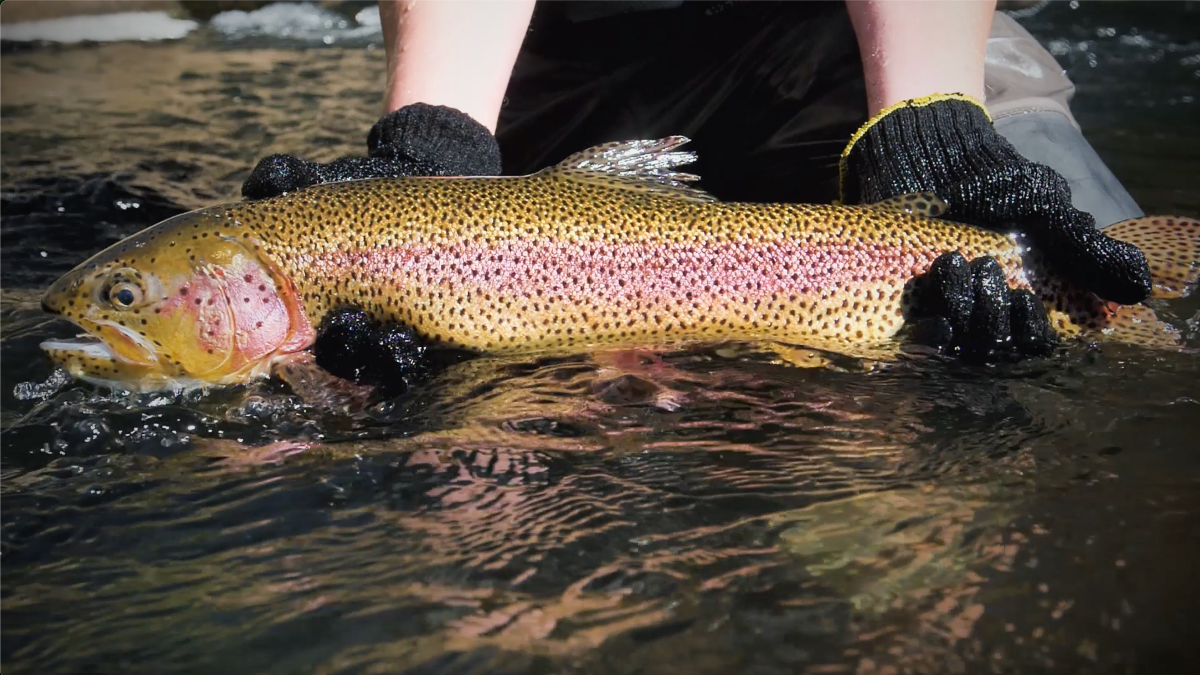
Click the link to read the release on the Colorado Parks & Wildlife website (John Livingston):
Years of consideration and conservation work all led to a golden moment for two pristine rivers in central Colorado.
During its meeting Jan. 18 in Colorado Springs, the Colorado Parks and Wildlife Commission welcomed the Gunnison and Taylor Rivers as the newest Gold Medal trout fisheries in the state. CPW’s Gold Medal Program showcases the most elite fisheries throughout the state.
The stretches nominated and approved include 20 miles of the Taylor River below Taylor Park Reservoir and 12.5 miles of the Gunnison River starting west of the town of Gunnison at Twin Bridges extending up to the town of Almont.
“I’m pretty excited to be able to announce these two waters into our Gold Medal Program,” said CPW Assistant Aquatic Section Manager Josh Nehring. “It’s an achievement that came about by a lot of work by a lot of people over a number of decades. It’s amazing to see the quality of fisheries that we have here.”
Fisheries in Colorado may be designated by CPW as “Gold Medal” if they meet two qualifying criteria. The standard is 60 pounds of fish per acre along with at least 12 quality trout of 14 inches or greater per acre.
With the addition of the Gunnison and Taylor Rivers, Colorado now boasts 19 Gold Medal sections on 13 rivers that total roughly 362 miles. The state also has three lakes that have earned Gold Medal designation.
While the Gunnison and Taylor are newly-designated Gold Medal streams, CPW aquatic biologists believe the rivers have produced Gold Medal quality trout fishing since the 1990s.
CPW Aquatic Biologist Dan Brauch said that while the rivers had met the biological criteria for designation for decades, it was important to ensure the streams provided long-lasting fish habitat for all life stages of trout.
“Significant work went into maintaining conditions on the Gunnison and Taylor Rivers to allow those fisheries to continue to persist,” Brauch said. “We have sampled the rivers quite a few times in the last 10 years, and we continued to see good numbers of quality-size trout and abundant trout.
“The Gunnison and Taylor Rivers really represent a successful conservation story with lots of partners that have made this fishery what it is today.”
CPW surveys streams regularly through the process of electrofishing. Fish are collected, weighed, measured and returned to the water. Data collected through these surveys provides invaluable data for CPW to assess the health of a fishery and to determine waters worthy of Gold Medal nomination.
“It does take quite a bit of work to get fisheries to this standpoint,” said Nehring, who grew up in neighboring Montrose and has enjoyed fishing the two rivers since he was a child. “Just the habitat that goes into it, the monitoring of the fisheries, making sure our regulations are appropriate and we aren’t getting too many fish harvested. There are a lot of things that go into making sure the system is healthy.”
Brauch and Nehring thanked a multitude of public and private partners that have come together throughout time to support the Gunnison and Taylor fisheries as work has been done to improve and protect trout habitat through the Gold Medal stretches.
While celebrating the conservation success story that has led to Gold Medal status for the rivers, CPW Area Wildlife Manager Brandon Diamond encouraged anglers to help protect these resources for generations to come.
“It’s extremely important right now for all water users and conservation-minded people, including anglers, to view these incredible resources through a stewardship lens,” Diamond said. “And I strongly encourage all of us to evaluate how we can contribute to the long-term conservation of these waters and how we fit in as stewards of the land and river resources.
“The Gold Medal designation is certainly something we are locally proud of. The Gunnison Valley has always been very supportive of wildlife conservation values, and we hope to continue that relationship moving forward.”
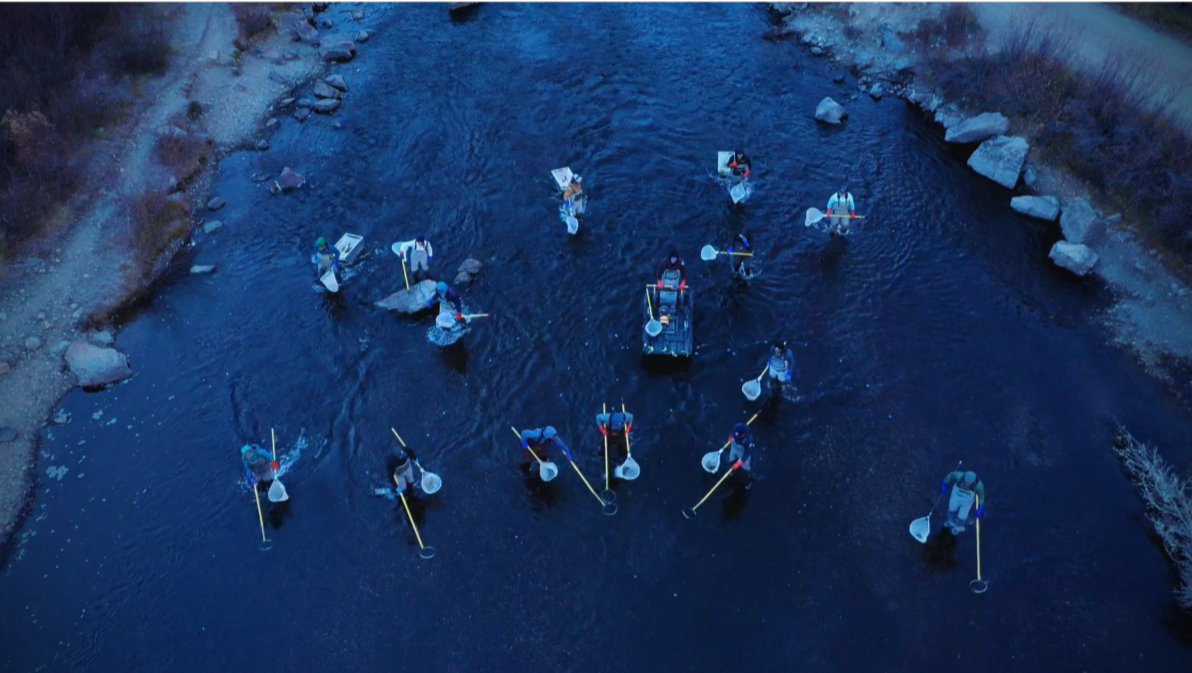
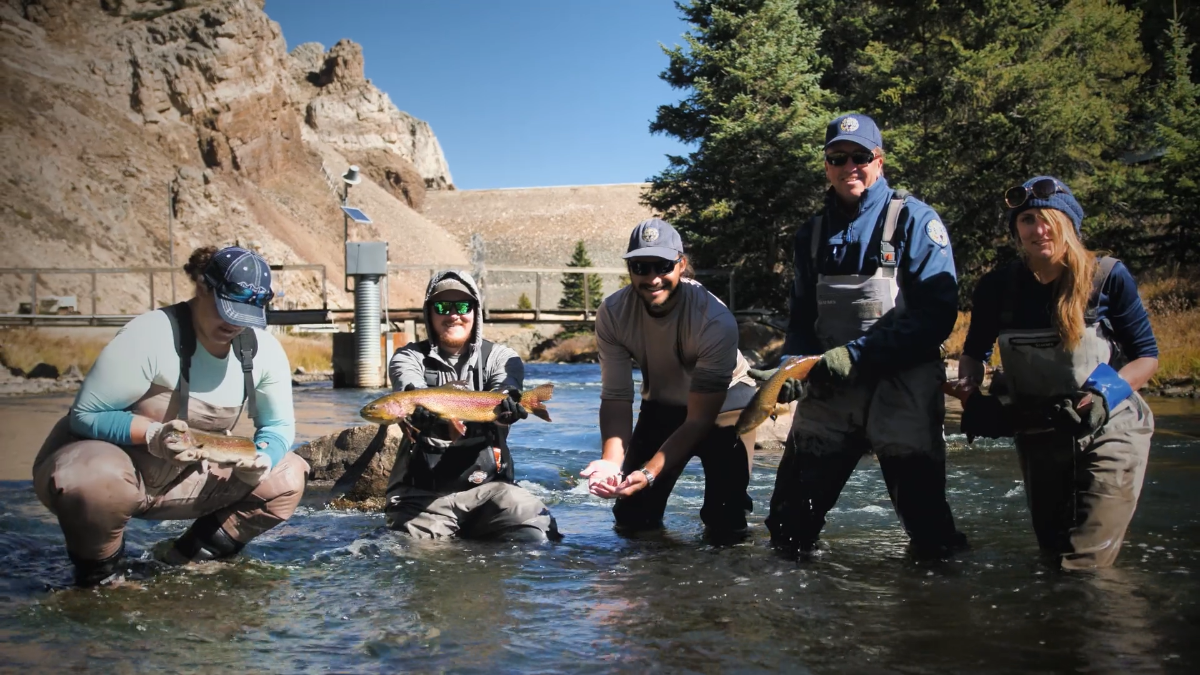
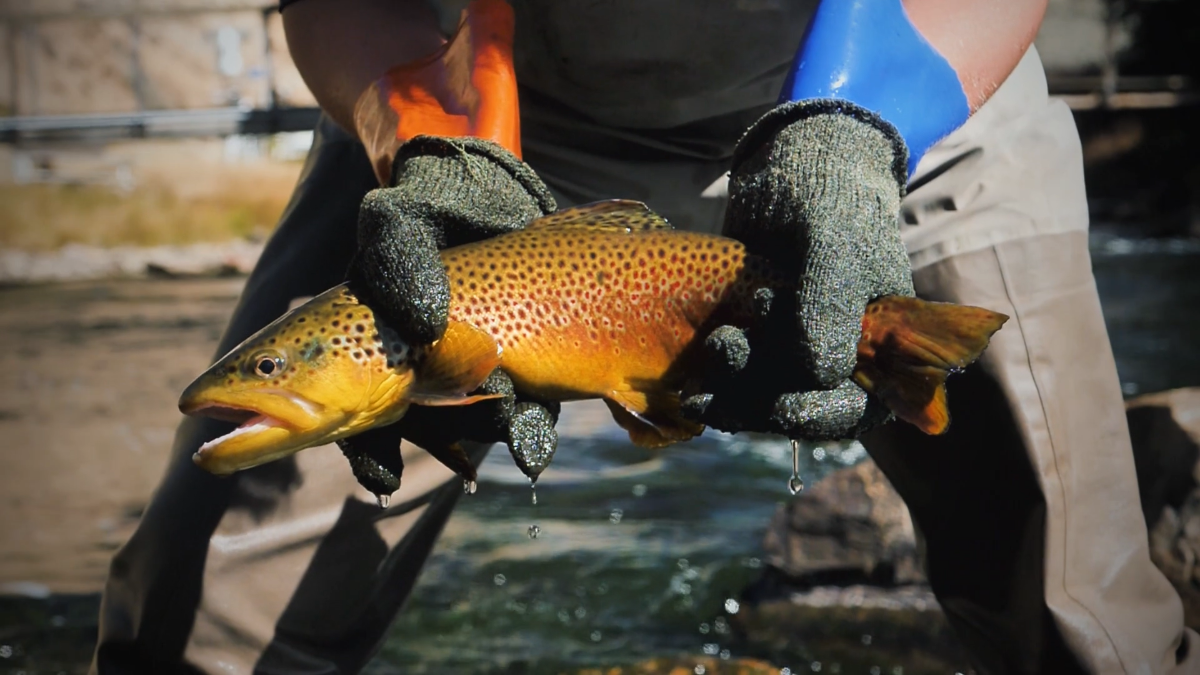
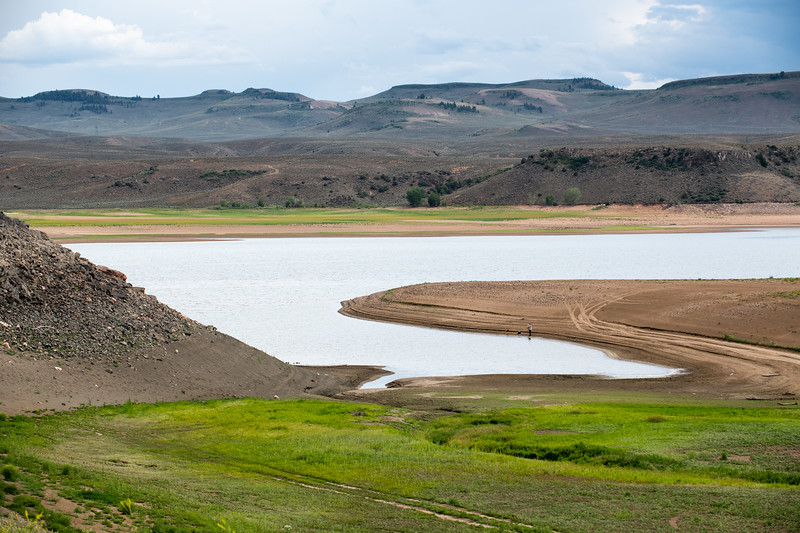
From email from Reclamation (Erik Knight):
The next Aspinall Operations meeting is scheduled for this Thursday, January 19th, start time 1:00pm
The meeting will be open to in-person attendance at the Western Colorado Area Office in Grand Junction.
445 West Gunnison Ave
Grand Junction, CO
The meeting will also be available to attend virtually via Microsoft Teams. Please click on this link to attend the meeting virtually.
This link should open in any smartphone, tablet, or computer browser, and does not require a Microsoft account.
The meeting agenda with handouts will be emailed out prior to the meeting.
For any questions please email or call at the number below.
Erik Knight
970-248-0629
WCAO-GJ
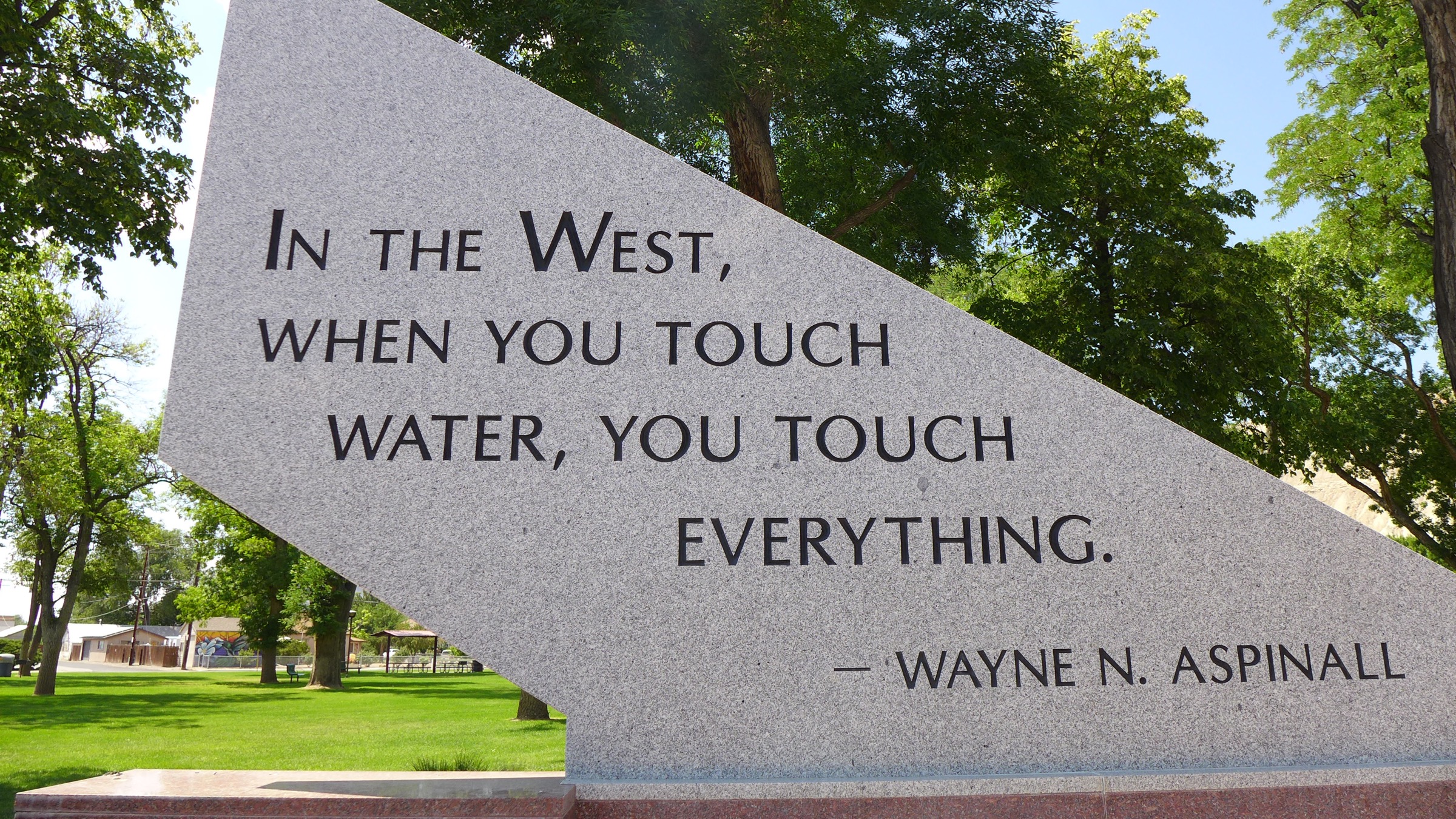
From email from Reclamation (Erik Knight):
The next coordination meeting for the operation of the Aspinall Unit is scheduled for Thursday, January 19th, 2023 at 1:00 pm
As of now, the meeting is planned to be held in person as well as virtually.
The meeting is planned to be held at the Western Colorado Area Office in Grand Junction, CO. Even if the in-person meeting needs to be cancelled, the meeting will still be held via webinar.
Information for connecting to the meeting virtually will be emailed out prior to the meeting, along with the agenda and handouts.

by Abrahm Lustgarten
ProPublica is a Pulitzer Prize-winning investigative newsroom. Sign up for The Big Story newsletter to receive stories like this one in your inbox.
Series: Killing the Colorado
On a crisp day this fall I drove southeast from Grand Junction, Colorado, into the Uncompahgre Valley, a rich basin of row crops and hayfields. A snow line hung like a bowl cut around the upper cliffs of the Grand Mesa, while in the valley some farmers were taking their last deliveries of water, sowing winter wheat and onions. I turned south at the farm town of Delta onto Route 348, a shoulder-less two-lane road lined with irrigation ditches and dent corn still hanging crisp on their browned stalks. The road crossed the Uncompahgre River, and it was thin, nearly dry.
The Uncompahgre Valley, stretching 34 miles from Delta through the town of Montrose, is, and always has been, an arid place. Most of the water comes from the Gunnison River, a major tributary of the Colorado, which courses out of the peaks of the Elk Range through the cavernous and sun-starved depths of the Black Canyon, one rocky and inaccessible valley to the east. In 1903, the federal government backed a plan hatched by Uncompahgre farmers to breach the ridge with an enormous tunnel and then in the 1960s to build one of Colorado’s largest reservoirs above the Black Canyon called Blue Mesa. Now that tunnel feeds a neural system of water: 782 miles worth of successively smaller canals and then dirt ditches, laterals and drains that turn 83,000 Western Colorado acres into farmland. Today, the farm association in this valley is one of the largest single users of Colorado River water outside of California.
I came to this place because the Colorado River system is in a state of collapse. It is a collapse hastened by climate change but also a crisis of management. In 1922, the seven states in the river basin signed a compact splitting the Colorado equally between its upper and lower halves; later, they promised additional water to Mexico, too. Near the middle, they put Lake Powell, a reserve for the northern states, and Lake Mead, a storage node for the south. Over time, as an overheating environment has collided with overuse, the lower half — primarily Arizona and California — has taken its water as if everything were normal, straining both the logic and the legal interpretations of the compact. They have also drawn extra releases from Lake Powell, effectively borrowing straight out of whatever meager reserves the Upper Basin has managed to save there.
This much has become a matter of great, vitriolic dispute. What is undeniable is that the river flows as a much-diminished version of its historical might. When the original compact gave each half the rights to 7.5 million acre-feet of water, the river is estimated to have flowed with as much as 18 million acre-feet each year. Over the 20th century, it averaged closer to 15. Over the past two decades, the flow has dropped to a little more than 12. In recent years, it has trickled at times with as little as 8.5. All the while the Lower Basin deliveries have remained roughly the same. And those reservoirs? They are fast becoming obsolete. Now the states must finally face the consequential question of which regions will make their sacrifice first. There are few places that reveal how difficult it will be to arrive at an answer than the Western Slope of Colorado.
In Montrose, I found the manager of the Uncompahgre Valley Water Users Association, Steve Pope, in his office atop the squeaky stairs of the same Foursquare that the group had built at the turn of the last century. Pope, bald, with a trimmed white beard, sat amid stacks of plat maps and paper diagrams of the canals, surrounded by LCD screens with spreadsheets marking volumes of water and their destinations. On the wall, a historic map showed the farms, wedged between the Uncompahgre River and where it joins the Gunnison in Delta, before descending to their confluence with the Colorado in Grand Junction. “I’m sorry for the mess,” he said, plowing loose papers aside.

What Pope wanted to impress upon me most despite the enormousness of the infrastructure all around the valley was that in the Upper Basin of the Colorado River system, there are no mammoth dams that can simply be opened to meter out a steady release of water. Here, only natural precipitation and temperature dictate how much is available. Conservation isn’t a management decision, he said. It was forced upon them by the hydrological conditions of the moment. The average amount of water flowing in the system has dropped by nearly 20%. The snowpack melts and evaporates faster than it used to, and the rainfall is unpredictable. In fact, the Colorado River District, an influential water conservancy for the western part of the state, had described its negotiating position with the Lower Basin states by claiming Colorado has already conserved about 28% of its water by making do with the recent conditions brought by drought.
You get what you get, Pope tells me, and for 15 of the past 20 years, unlike the farmers in California and Arizona, the people in this valley have gotten less than what they are due. “We don’t have that luxury of just making a phone call and having water show up,” he said, not veiling his contempt for the Lower Basin states’ reliance on lakes Mead and Powell. “We’ve not been insulated from this climate change by having a big reservoir above our heads.”
He didn’t have to point further back than the previous winter. In 2021, the rain and snow fell heavily across the Rocky Mountains and the plateau of the Grand Mesa, almost as if it were normal times. Precipitation was 80% of average — not bad in the midst of an epochal drought. But little made it into the Colorado River. Instead, soils parched by the lack of rain and rising temperatures soaked up every ounce of moisture. By the time water reached the rivers around Montrose and then the gauges above Lake Powell, the flow was less than 30% of normal. The Upper Basin states used just 3.5 million acre-feet last year, less than half their legal right under the 1922 compact. The Lower Basin states took nearly their full amount, 7 million acre-feet.

All of this matters now not just because the river, an unwieldy network of human-controlled plumbing, is approaching a threshold where it could become inoperable, but because much of the recent legal basis for the system is about to dissolve. In 2026, the Interim Guidelines the states rely on, a Drought Contingency Plan and agreements with Mexico will all expire. At the very least, this will require new agreements. It also demands a new way of thinking that matches the reality of the heating climate and the scale of human need. But before that can happen, the states will need to restore something that has become even more scarce than the water: trust.
The northern states see California and Arizona reveling in profligate use, made possible by the anachronistic rules of the compact that effectively promise them water when others have none. It’s enabled by the mechanistic controls at the Hoover Dam, which releases the same steady flow no matter how little snow falls across the Rocky Mountains. California flood-irrigates alfalfa crops destined for cattle markets in the Middle East, while Arizona takes water it does not need and pumps it underground to build up its own reserves. In 2018, an Arizona water agency admitted it was gaming the timing of its orders to avoid rations from the river (though it characterized the moves as smart use of the rules). In 2021, in a sign of the growing wariness, at least one Colorado water official alleged California was repeating the scheme. California water officials say this is a misunderstanding. Yet to this day, because California holds the most senior legal rights on the river, the state has avoided having a single gallon of reductions imposed on it.
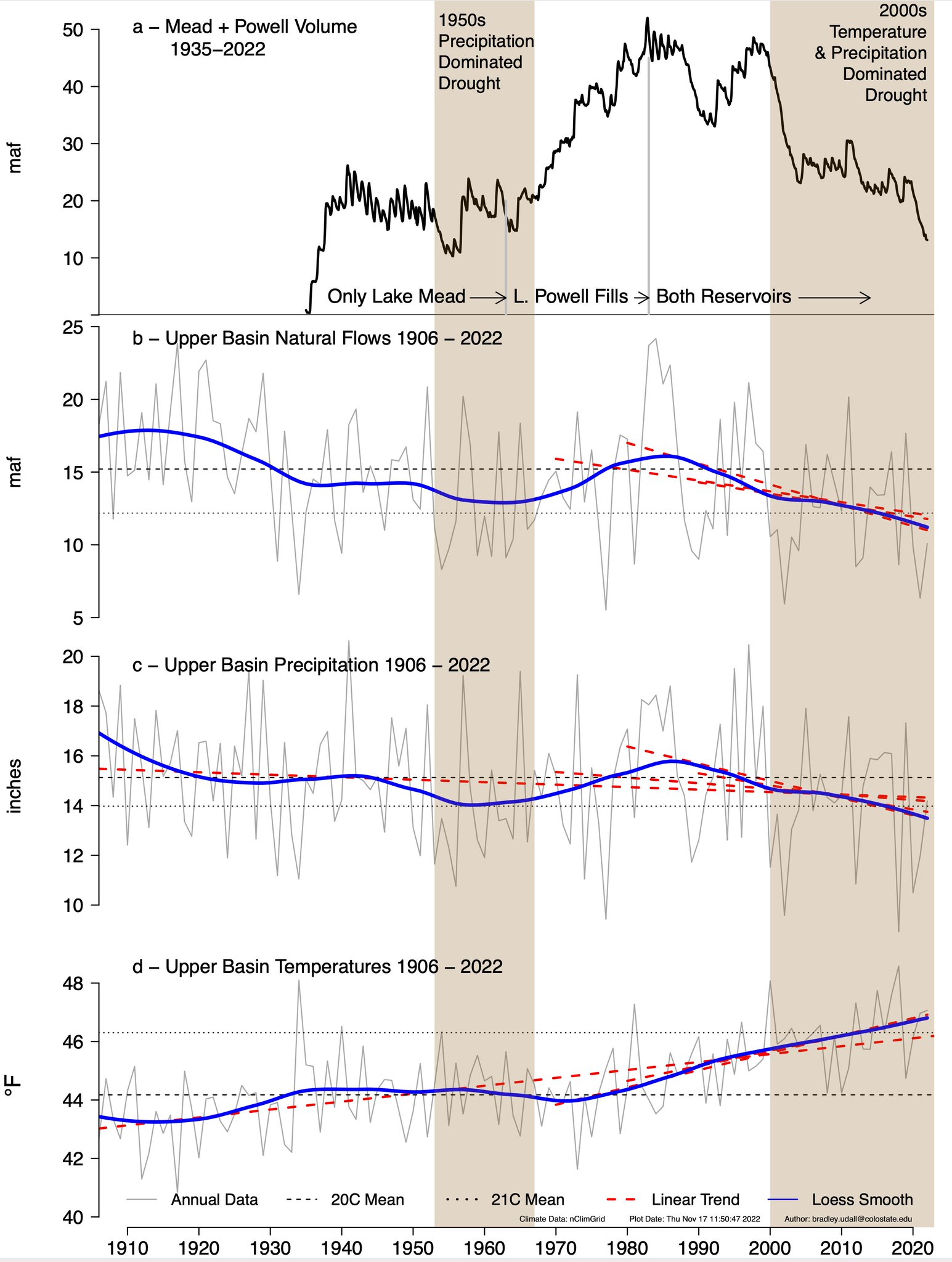
By this spring, Lake Powell shrank to 24% of its capacity, its lowest levels since the reservoir filled in the 1960s. Cathedral-like sandstone canyons were resurrected, and sunlight reached the silt-clogged floors for the first time in generations. The Glen Canyon Dam itself towered more than 150 feet above the waterline. The water was just a few dozen feet above the last intake pipe that feeds the hydropower generators. If it dropped much lower, the system would no longer be able to produce the power it distributes across six states. After that, it would approach the point where no water at all could flow into the Grand Canyon and further downstream. All the savings that the Upper Basin states had banked there were as good as gone.
In Western Colorado, meanwhile, people have been suffering. South of the Uncompahgre Valley, the Ute Mountain Ute tribe subsists off agriculture, but over the past 12 months it has seen its water deliveries cut by 90%; the tribe laid off half of its farmworkers. McPhee Reservoir, near the town of Cortez, has teetered on failure, and other communities in Southwestern Colorado that also depend on it have been rationed to 10% of their normal water.
Across the Upper Basin, the small reservoirs that provide the region’s only buffer against bad years are also emptying out. Flaming Gorge, on the Wyoming-Utah border, is the largest, and it is 68% full. The second largest, Navajo Reservoir in New Mexico, is at 50% of its capacity. Blue Mesa Reservoir, on the Gunnison, is just 34% full. Each represents savings accounts that have been slowly pilfered to supplement Lake Powell as it declines, preserving the federal government’s ability to generate power there and obscuring the scope of the losses. Last summer, facing the latest emergency at the Glen Canyon Dam, the Department of Interior ordered huge releases from Flaming Gorge, Blue Mesa and other Upper Basin reservoirs. At Blue Mesa, the water levels dropped 8 feet in a matter of days, and boaters there were given a little more than a week to get their equipment off the water. Soon after, the reservoir’s marinas, which are vital to that part of Colorado’s summer economy, closed. They did not reopen in 2022.
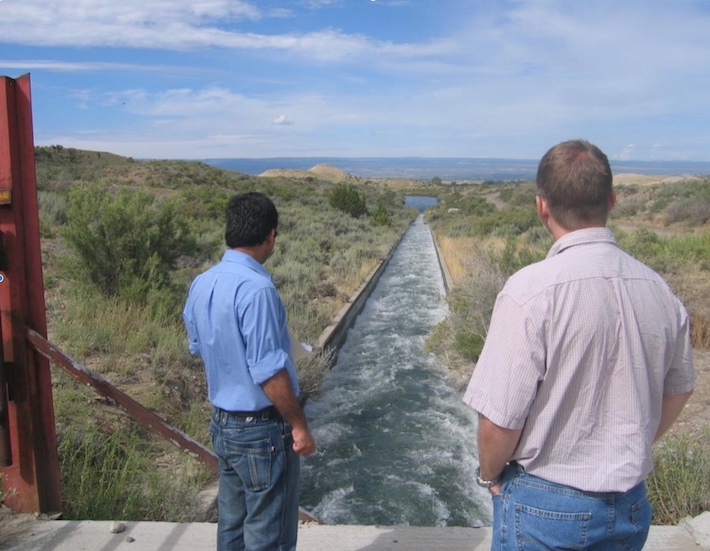
As the Blue Mesa Reservoir was being emptied last fall, Steve Pope kept the Gunnison Tunnel open at its full capacity, diverting as much water as he possibly could. He says this was legal, well within his water rights and normal practice, and the state’s chief engineer agrees. Pope’s water is accounted for out of another reservoir higher in the system. But in the twin takings, it’s hard not to see the bare-knuckled competition between urgent needs. Over the past few years, as water has become scarcer and conservation more important, Uncompahgre Valley water diversions from the Gunnison River have remained steady and at times even increased. The growing season has gotten longer and the alternative sources, including the Uncompahgre River, less reliable. And Pope leans more than ever on the Gunnison to maintain his 3,500 shareholders’ supply. “Oh, we are taking it,” he told me, “and there’s still just not enough.”
On June 14, Camille Touton, the commissioner of the U.S. Bureau of Reclamation, the Department of Interior division that runs Western water infrastructure, testified before the Senate Committee on Energy and Natural Resources and delivered a stunning ultimatum: Western states had 60 days to figure out how to conserve as much as 4 million acre-feet of “additional” water from the Colorado River or the federal government would, acting unilaterally, do it for them. The West’s system of water rights, which guarantees the greatest amount of water to the settlers who arrived in the West and claimed it first, has been a sacrosanct pillar of law and states’ rights both — and so her statement came as a shock.
Would the department impose restrictions “without regard to river priority?” Mark Kelly,, the Democratic senator from Arizona, asked her.
“Yes,” Touton responded.
For Colorado, this was tantamount to a declaration of war. “The feds have no ability to restrict our state decree and privately owned ditches,” the general manager of the Colorado River District, Andy Mueller, told me. “They can’t go after that.” Mueller watches over much of the state.Pope faces different stakes. His system depends on the tunnel, a federal project, and his water rights are technically leased from the Bureau of Reclamation, too. Touton’s threat raised the possibility that she could shut the Uncompahgre Valley’s water off. Even if it was legal, the demands seemed fundamentally unfair to Pope. “The first steps need to come in the Lower Basin,” he insisted.
Each state retreated to its corners, where they remain. The 60-day deadline came and went, with no commitments toward any specific reductions in water use and no consequences. The Bureau of Reclamation has since set a new deadline: Jan. 31. Touton, who has publicly said little since her testimony to Congress, declined to be interviewed for this story. In October, California finally offered a plan to surrender roughly 9% of the water it used, albeit with expensive conditions. Some Colorado officials dismissed the gesture as a non-starter. Ever since, Colorado has become more defiant, enacting policies that seem aimed at defending the water the state already has — perhaps even its right to use more.
For one, Colorado has long had to contend with the inefficiencies that come with a “use it or lose it” culture. State water law threatens to confiscate water rights that don’t get utilized, so landowners have long maximized the water they put on their fields just to prove up their long-term standing in the system. This same reflexive instinct is now evident among policymakers and water managers across the state, as they seek to establish the baseline for where negotiated cuts might begin. Would cuts be imposed by the federal government based on Pope’s full allocation of water or on the lesser amount with which he’s been forced to make do? Would the proportion be adjusted down in a year with no snow? “We don’t have a starting point,” he told me. And so the higher the use now, the more affordable the conservation later.
Colorado and other Upper Basin states have also long hid behind the complexity of accurately accounting for their water among infinite tributaries and interconnected soils. [ed. emphasis mine] The state’s ranchers like to say their water is recycled five times over, because water poured over fields in one place invariably seeps underground down to the next. In the Uncompahgre Valley, it can take months for the land at its tail to dry out after ditches that flood the head of the valley are turned off. The measure of what’s been consumed and what has transpired from plants or been absorbed by soils is frustratingly elusive. That, too, leaves the final number open to argument and interpretation.
All the while, the Upper Basin states are all attempting to store more water within their boundaries. Colorado has at least 10 new dams and reservoirs either being built or planned. Across the Upper Basin, an additional 15 projects are being considered, including Utah’s audacious $2.4 billion plan to run a new pipeline from Lake Powell, which would allow it to transport something closer to its full legal right to Colorado River water to its growing southern cities. Some of these projects are aimed at securing existing water and making its timing more predictable. But they are also part of the Upper Colorado River Commission’s vision to expand the Upper Basin states’ Colorado River usage to 5.4 million acre-feet a year by 2060.
It is fair to say few people in the state are trying hard to send more of their water downstream. In our conversation, Mueller would not offer any specific conservation savings Colorado might make. The state’s chief engineer and director of its Division of Water Resources, Kevin Rein, who oversees water rights, made a similar sentiment clear to the Colorado River District board last July. “There’s nothing telling me that I should encourage people to conserve,” Rein said. “It’s a public resource. It’s a property right. It’s part of our economy.”
In November, Democratic Gov. Jared Polis proposed the creation of a new state task force that would help him capture every drop of water it can before it crosses the state line. It would direct money and staff to make Colorado’s water governance more sophisticated, defensive and influential.
I called Polis’ chief water confidante, Rebecca Mitchell, who is also the director of the Colorado Water Conservation Board and the state’s representative on the Upper Colorado River Commission. If the mood was set by the idea that California was taking too much from the river, Mitchell thought that it had shifted now to a more personal grievance — they are taking from us.

Last month, Mitchell flew to California for a tour of its large irrigation districts. She stood beside a wide canal brimming with more water than ever flows through the Uncompahgre River, and the executive of the farming company beside her explained that he uses whatever he wants because he holds the highest priority rights to the water. She thought about the Ute Mountain Ute communities and the ranchers of Cortez: “It was like: ‘Wouldn’t we love to be able to count on something? Wouldn’t we love to be feel so entitled that no matter what, we get what we get?’” she told me.
What if Touton followed through, curtailing Colorado’s water? I asked. Mitchell’s voice steadied, and then she essentially leveled a threat. “We would be very responsive. I’m not saying that in a positive way,” she said. “I think everybody that’s about to go through pain wants others to feel pain also.”
Here’s the terrible truth: There is no such thing as a return to normal on the Colorado River, or to anything that resembles the volumes of water its users are accustomed to taking from it. With each degree Celsius of warming to come, modelers estimate that the river’s flow will decrease further, by an additional 9%. At current rates of global warming, the basin is likely to sustain at least an additional 18% drop in its water supplies over the next several decades, if not far more. Pain, as Mitchell puts it, is inevitable.
The thing about 4 million acre-feet of cuts is that it’s merely the amount already gone, an adjustment that should have been made 20 years ago. Colorado’s argument makes sense on paper and perhaps through the lens of fairness. But the motivation behind the decades of delay was to protect against the very argument that is unfolding now — that the reductions should be split equally, and that they may one day be imposed against the Upper Basin’s will. It was to preserve the northern states’ inalienable birthright to growth, the promise made to them 100 years ago. At some point, though, circumstances change, and a century-old promise, unfulfilled, might no longer be worth much at all. Meanwhile, the politics of holding out are colliding with climate change in a terrifying crash, because while the parties fight, the supply continues to dwindle.
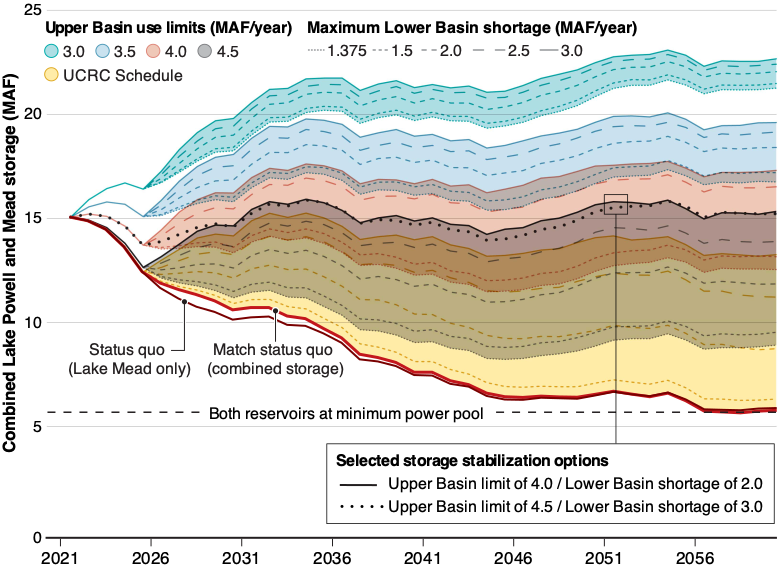
Recently, Brad Udall, a leading and longtime analyst of the Colorado River and now a senior water and climate scientist at Colorado State University, teamed with colleagues to game out what they thought it would take to bring the river and the twin reservoirs of Mead and Powell into balance. Their findings, published in July in the journal Science, show that stability could be within reach but will require sacrifice.
If the Upper Basin states limited their claim to 4 million acre-feet, or 53% of their due under the original compact, and the Lower Basin states and Mexico increased their maximum emergency cuts by an additional 45%, the two big reservoirs will stay at roughly their current levels for the next several decades. If the basins could commit to massive reductions below even 2021 levels for the Upper Basin and to more than doubling the most ambitious conservation goals for the south, the reservoirs could once again begin to grow, providing the emergency buffer and the promise of economic stability for 40 million Americans that was originally intended. Still, by 2060, they would only be approximately 45% full.
Any of the scenarios involve cuts that would slice to the bone. Plus, there’s still the enormous challenge of how to incorporate Native tribes, which also hold huge water rights but continue to be largely left out of negotiations. What to do next? Israel provides one compelling example. After decades of fighting over the meager trickles of the Jordan River and the oversubscription of a pipeline from the Sea of Galilee, Israel went back to the drawing board on its irrigated crops. It made drip irrigation standard, built desalination plants to supply water for its industry and cities, and reused that water again and again; today, 86% of the country’s municipal wastewater is recycled, and Israel and its farmers have an adequate supply. That would cost a lot across the scale and reach of a region like the Western United States. But to save the infrastructure and culture that produces 80% of this country’s winter vegetables and is a hub of the nation’s food system for 333 million people? It might be worth it.
A different course was charted by Australia, which recoiled against a devastating millennium drought that ended 13 years ago. It jettisoned its coveted system of water rights, breaking free of history and prior appropriation similar to the system of first-come-first-served the American West relies on. That left it with a large pool of free water and political room to invent a new method of allocating it that better matched the needs in a modern, more populous and more urban Australia and better matched the reality of the environment.
In America, too, prior appropriation, as legally and culturally revered as it is, may have become more cumbersome and obstructive than it needs to be. Western water rights, according to Newsha Ajami, a leading expert at Lawrence Berkeley National Laboratory and the former director of the urban water policy program at Stanford University, were set up by people measuring with sticks and buckets, long before anyone had ever even considered climate change. Today, they largely serve powerful legacy interests and, because they must be used to be maintained, tend to dissuade conservation. “It’s kind of very archaic,” she said. “The water rights system would be the first thing I would just dismantle or revisit in a very different way.”
This is probably not going to happen, Ajami said. “It could be seen as political suicide.” But that doesn’t make it the wrong solution. In fact, what’s best for the Colorado, for the Western United States, for the whole country might be a combination of what Israel and Australia mapped out. Deploy the full extent of the technology that is available to eliminate waste and maximize efficiency. Prioritize which crops and uses are “beneficial” in a way that attaches the true value of the resource to the societal benefit produced from using it. Grow California and Arizona’s crops in the wintertime but not in the summer heat. And rewrite the system of water allocation as equitably as possible so that it ensures the modern population of the West has the resources it needs while the nation’s growers produce what they can.
What would that look like in Colorado? It might turn the system upside down. Lawsuits could fly. The biggest, wealthiest ranches with the oldest water rights stand to lose a lot. The Lower and Upper Basin states, though, could all divide the water in the river proportionately, each taking a percentage of what flowed. The users would, if not benefit, at least equally and predictably share the misery. Pope’s irrigation district and the smallholder farmers who depend on it would likely get something closer to what they need and, combined with new irrigation equipment subsidized by the government, could produce what they want. It wouldn’t be pretty. But something there would survive.
The alternative is worse. The water goes away or gets bought up or both. The land of Western Colorado dries up, and the economies around it shrivel. Montrose, with little left to offer, boards up its windows, consolidates its schools as people move away, and the few who remain have less. Until one day, there is nothing left at all.

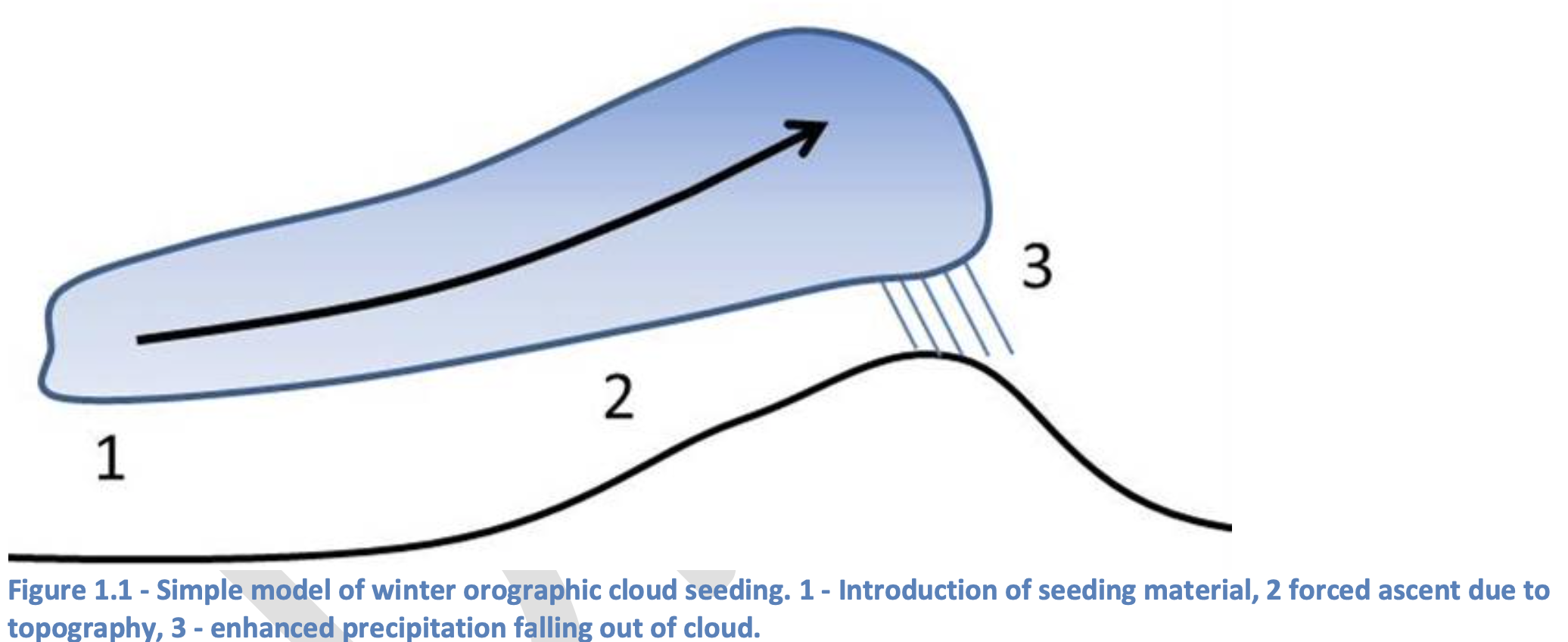
Click the link to read the article on The Crested Butte News website (Katherine Nettles). Here’s an excerpt:
The Upper Gunnison Basin Cloud Seeding Program started in the 2002/2003 winter season, following a feasibility study the year prior funded by Gunnison County in response to significant drought in 2002. After the program’s first year, the UGRWCD took over and in the time since it has grown to 15 generators, on both public and private land. The UGRWCD wants to add more generators in other qualified locations, starting with one on private land on Black Mesa. According to the UGRWCD, cloud seeding is one of the cheapest forms of augmentation water for the river basin at an estimated $0.53 per acre-foot annually. And it can provide critical water to support Gunnison River basin flows, Blue Mesa Reservoir and the local economy.
“Typically, what we plan for is that in the last five years or so the programs run at about $114,000 to $118,000 per year,” says Sonja Chavez, general manager for the UGRWCD.
The Colorado Water Conservation Board gives anywhere between $67,000 and $94,000 and the UGRWCD covers the remaining $20,000 to $45,000. Chavez says that program costs are increasing, however. “We are adding a new generation site, and we are going to be looking for new funding partners,” she says…
Cloud seeding cannot create a snowstorm, but it can increase the precipitation from a storm that already exists. Cole Osborne, project meteorologist for NAWC, explains how the process works using manual and remote-controlled generators and propane tanks to blast a mix of silver iodide and sodium iodide into the atmosphere.
“The solution attracts liquid particles in a cloud, and the water molecules develop into ice crystals…so you can speed up the process and make a cloud more efficient at producing precipitation,” he says…
The UGRWCD and NAWC believe a remote generator placed at Black Mesa between Crested Butte and Gunnison will do more than any other program enhancement, in terms of water augmentation in the Gunnison Range and to Blue Mesa Reservoir. The UGRWCD, with financial assistance from the Colorado Water Conservation Board, has decided to fund the initial set-up and infrastructure costs for the remote generator for approximately $67,600. Osborne says there’s a huge area they are trying to target to lead to increased spring runoff and rises in reservoir levels. According to a memo from the UGRWCD earlier this month to potential funding partners, “NAWC analysis indicates that the generator will have significant direct benefits to northern and southern tributaries to Blue Mesa Reservoir and to eastern tributaries due to positive downwind cloud seeding impacts. The remote generator would permit cloud seeding during almost all storm periods that impact the Upper Gunnison River watershed. Seeding could occur during periods with winds ranging from northerly to southerly.