The latest “#GunnisonRiver Basin News” is hot off the presses

Click here to read the newsletter. Here’s an excerpt:

Funding opportunities in the Gunnison River Basin

Funding opportunities for water projects that help improve and conserve water and land resources can be found on http://gunnisonriverbasin.org, including:

  • US Department of Agriculture federal grants and loans
  • Colorado Water Conservation Board state grants and loans
  • Additional Grant Funding Opportunities
  • Click here to view a table of grand funding opportunities.

    Upper Gunnison watershed May 2019. Photo credit: Greg Hobbs

    The Southeastern #Colorado Water Conservancy District supports Proposition DD

    Here’s the release from the Southeastern Colorado Water Conservancy District (Chris Woodka):

    District Supports Sports Betting for Water Projects

    The Southeastern Colorado Water Conservancy District Board of Directors [September 17, 2019] voted to support a measure that would allow sports betting in Colorado as a revenue source for water projects.

    Proposition DD would provide money for water projects by collecting a tax of 10 percent on net proceeds from sports betting operations at casinos in Central City, Black Hawk and Cripple Creek. Proponents say this could amount to $10 million to $16 million annually. The money would be part of the funding package for Colorado’s Water Plan.

    “It ties into the water plan, but would be just one of the methods to generate revenues,” said Alan Hamel, a member of the Southeastern board.

    The board voted 10-3 to support Proposition DD.

    The water plan calls for $3 billion in new revenue for water projects over a 30-year period beginning in 2020.

    Proposition DD was placed on the Nov. 5 ballot as a referendum by the Colorado General Assembly under HB1327.

    The Southeastern District is the sponsor for one of the state’s largest pending water projects, the Arkansas Valley Conduit, a pipeline project that will provide clean drinking water to 50,000 people in 40 communities east of Pueblo. The Bureau of Reclamation estimates the AVC will cost $600 million, of which 35 percent will be paid by sources within Colorado.

    Photo credit Dave Scadden Paddlesports.

    @CWCB_DNR: The latest “Confluence” newsletter is hot off the presses

    Click here to read the newsletter. Here’s an excerpt:

    Leaders Across the 9 Colorado Basins Collaborate on Water Plan in Winter Park

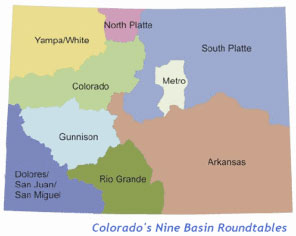
    On September 25 – 26, the Colorado Water Conservation Board (CWCB) hosted a statewide summit of Colorado’s nine basin roundtables (the C-9 Summit) at the Headwaters Center in Winter Park, which brought together over 200 water stakeholders to discuss the process for updating each basins’ implementation plans and, ultimately, the Colorado Water Plan.

    CWCB recently released the Analysis and Technical Update to the Colorado Water Plan (Technical Update), which includes state of the art approaches to analyzing state water needs and includes impacts from climate change. The C-9 Summit provided a forum for sharing Technical Update findings and highlighting key goals for the upcoming Basin Implementation Plans.

    Prior to the panel presentations and discussions, the CWCB organized three water project tours for attendees, which featured Fraser River enhancements, watershed health research in the Experimental Forest, and an innovative education and outreach exhibit called the Headwaters Center River Journey.

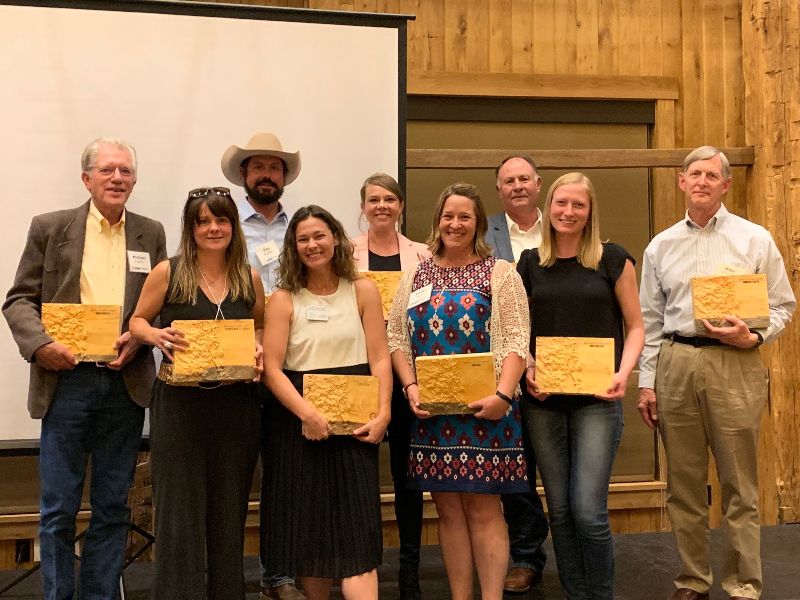
    Additionally, the C-9 Summit served as a platform to present Basin Water Hero Awards to peer-nominated individuals who have shown continued commitment for water initiatives in their basins. Congratulations to the following winners:

    Arkansas: Chelsey Nutter, Colorado: Paul Bruchez, Gunnison: Julie Nania, Metro: Emily Hunt, North Platte: Kent Crowder, Rio Grande: Emma Reesor, South Platte: Mike Shimmin, Southwest: Mike Preston, Yampa-White-Green: Jackie Brown

    Proposition DD garners support from state legislators

    State Capitol May 12, 2018 via Aspen Journalism

    Here’s a guest column that’s running in the Colorado Springs Gazette:

    Proposition DD isn’t a tax increase on citizens or most businesses. DD requires that casinos pay a tax on the profits from sports betting in a similar way they pay taxes on other casino earnings. It allows Colorado Mountain Casinos to offer sports betting, which is something they aren’t able to participate in.

    In 1992, Congress gave Las Vegas a monopoly on sports betting, through an ill-conceived measure in an omnibus package. Thankfully, the Supreme Court overturned this ridiculous law, last year, in the case of Murphy v. The National Collegiate Athletic Association. Justice Alito wrote in the majority opinion that the regulation of sports betting should be left to the states. Our response to this opportunity: Proposition DD.

    Proposition DD authorizes operating mountain casinos to offer sports betting, so Las Vegas doesn’t maintain their monopoly. It also allows for a small tax on these same casinos’ profits. The revenue from this tax goes to regulation costs, gambling addiction services, and the Colorado Water Plan.

    While Colorado’s population continues to explode, competition for water is reaching a fevered pitch. It’s time for Colorado to take action to preserve the future of our water. Proposition DD will address water infrastructure needs.

    Proposition DD would provide an estimated $29 million in funding to expand reservoirs, invest in water quality, manage watersheds decimated by wildfires, and protect access to flowing rivers and streams for fishermen and rafters. Conservatives and citizens who recognize the importance of water to the future of our great state — should vote yes.

    DD will provide the funding necessary to protect Colorado’s water. It addresses core challenges like the need for water infrastructure with targeted approaches that do not increase taxes on the general public. By doing this, we keep the pressure for new taxes off the taxpayers in our great state.

    Colorado must seek ways to address infrastructure needs without resorting to major tax hikes or the weakening of your Taxpayer Bill of Rights. There is zero need to resort to these measures to fix Colorado’s infrastructure needs. That is why Proposition DD is a reasonable proposal that engages our needs while maintaining low taxes.

    Sports betting would be a new enterprise for Colorado, but Proposition DD would limit this enterprise to existing casinos and gambling establishments. It is a modest approach to the gambling industry, while still being viable enough to address our state’s obligations. If the voters approve Proposition DD in November, it is a win for agriculture, a win for the environment, and a win for all Coloradoans.

    That’s why, as conservative Republicans, we are proud to join the Colorado Cattlemen’s Association, the Farm Bureau, the Colorado Dairy Farmers, the Colorado River Water Conservation District, the Colorado Water Trust, Club 20, Action 22, the Grand Junction, Rangeley, and Denver Chambers, and dozens of key water leaders in rural, urban and suburban Colorado in supporting Proposition DD.

    The following Colorado legislators contributed to this column: Senate: John Cooke, Owen Hill, Rob Woodward, Don Coram. House: Patrick Neville, Mark Catlin, Matt Soper, Janice Rich, Dave Williams, Kevin Van Winkle, Rod Pelton, Shane Sandridge, Colin Larson.

    Our View: Vote ‘yes’ on Propositions CC, DD — Steamboat Today

    From the Steamboat Today editorial board:

    Coloradoans are being asked to decide two statewide ballot issues this fall, and we encourage voters to approve both measures, which have garnered widespread bipartisan support.

    Proposition CC

    Proposition CC proposes to eliminate the state’s revenue cap and reallocate that excess revenue to fund transportation and education. It is not a new tax but instead, would allow the state to retain tax revenue rather than refunding it back to taxpayers. The retained revenue would be equally divided and specifically spent on public schools, higher education and transportation projects.

    The proposition mandates that the third of the revenue earmarked for transportation be divided between the Colorado Department of Transportation, counties and cities. According to Steamboat Springs City Council member Kathi Meyer, who serves on the executive board of the Colorado Municipal League, which has endorsed Proposition CC, Steamboat and Routt County stand to gain millions of dollars in revenue that can be spent on local roads and bridges during years when there is a Taxpayers Bill of Rights — or TABOR — excess.

    In addition to helping to fund Colorado’s crumbling transportation infrastructure, Proposition CC would also boost funding for education, which we think is crucial to the future of our state, which currently ranks in the bottom third of the nation when it comes to per-pupil funding at the K-12 level.

    Proposition CC also requires an annual audit of funding, which ensures transparency and allows taxpayers to know exactly how money is being spent.

    We realize that Proposition CC is a De-Brucing at the state level, but we believe TABOR needs to be addressed due to the unintended consequences it has had on the state’s ability to fund core services. Proposition CC provides a mechanism to address TABOR’s flaws, and that is one of the reasons why we believe it deserves voter support.

    Proposition DD

    With broad support from across the state and at the capitol, Proposition DD seems like a no-brainer. The proposition is asking voters to legalize casino sports betting and tax profits to fund the Colorado Water Plan, and we think the measure deserves a resounding “yes” vote.

    DD, if approved, will provide a dedicated, predictable revenue stream to help address Colorado’s future water needs. Funding from DD will help keep water in rural Colorado through the support of projects that are prioritized by the state’s various basin roundtables. And with the Yampa River flowing through downtown Steamboat, our communities know first-hand how important water and water quality are to recreation and our local agriculture community.

    Sports betting is going to happen whether DD is approved or not, and we believe it’s smart for Colorado to tax it and use that revenue to fund water projects. The proposition also will create a regulated betting market as opposed to the black market, and a small portion of the revenue will be used to support resources to combat gambling addiction — an amount that was established with input from key stakeholders.

    Supporters of Proposition DD offer a great analogy for how they believe the proposition will impact Colorado. They think DD will do for water what Great Outdoors Colorado, funded by the Colorado Lottery, did for open space across the state.

    DD won’t provide the $20 billion needed to meet all of Colorado’s water demands, but it does create a significant down payment that can be leveraged in a big way.

    Ninety percent of the revenue will be placed in a cash fund for Colorado Water Plan implementation. This fund will support the allocation of grants to support projects that focus on water storage, supply, water conservation, land use, agriculture, the environment and recreational uses, which all have the potential to positively affect our local community.

    A screenshot from the website for Colorado’s Water Plan.

    From Colorado Politics (Joey Bunch):

    The group Yes on Proposition DD said the coalition of ag interests in support includes the Colorado Association of Wheat Growers, the Colorado Cattlemen’s Association, the Colorado Corn Growers Association, Colorado Dairy Farmers, the Colorado Farm Bureau, Colorado Pork Producers and the Rocky Mountain Farmers Union…

    “Most farmers and ranchers could care less about sports betting. But this is a smart way to pay for the critical water infrastructure that Colorado’s future needs,” Chad Vorthmann, the executive vice president of the Colorado Farm Bureau, said in a statement.

    Sports betting ballot question off to a slow start in early polling; backers raise $430,000+ for ads — @WaterEdCO

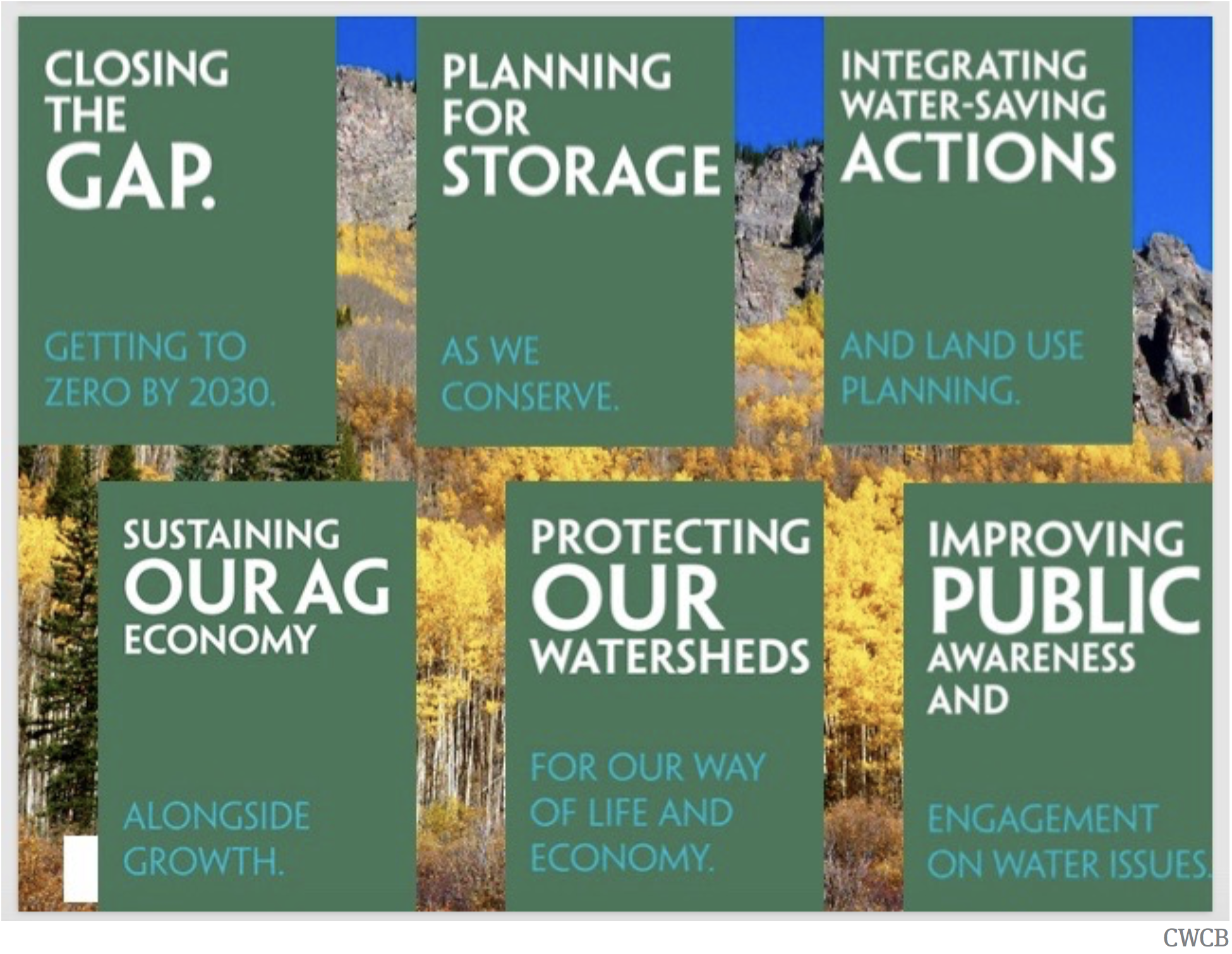
    The broad priorities of the Colorado Water Plan as put forward by Becky Mitchell in a June 20, 2017 presentation to three Front Range roundtables. The slide reflects the competing priorities in Colorado when it comes to water and rivers.

    From Water Education Colorado (Jerd Smith):

    With just weeks left before the Nov. 5 election, a proposal that would legalize sports betting in casinos, then use the proceeds to help pay for water infrastructure and environmental programs, has yet to win widespread recognition from the public.

    Backers say that could change this week with the launch of a wave of television ads touting Proposition DD, as the sports betting proposal is known.

    As of Sept. 17, Yes on Proposition DD had raised more than $433,000, according to filings at the Colorado Secretary of State’s office. It is money that analysts said could be enough to push it to a successful vote in November. The funds came from some Central City casinos, a New York-based gaming company, FanDuel, and the Environmental Defense Fund, among others.

    But much work remains to be done to educate voters on what the measure would accomplish, backers said.

    “It’s not a slam dunk,” said Colorado House Majority Leader Alec Garnett, D-Denver, who was a sponsor of the bill that referred the measure to the ballot so that voters could weigh in. “There’s a lot on the line here.”

    As written, DD would impose a 10 percent tax on sports betting in casinos and dedicate the tax revenue to helping fund the Colorado Water Plan, launched at the end of 2015. Initial estimates by the legislature indicate DD could raise $10 million to $20 million a year to go toward implementing the water plan. The money would flow into a new fund overseen by the Colorado Water Conservation Board (CWCB). It could be used for a variety of purposes, including water-saving programs for cities and farms, habitat restoration programs, storage projects, and legal and planning work.

    Since 2015, the CWCB has financed the water plan using income derived from severance taxes, the state’s general fund and other sources. Those amounts have varied widely, with the state setting aside $30 million this year, up from $5 million in 2015, according to the CWCB.

    Even as lawmakers were sending Proposition DD to the ballot, another group, For the Love of Colorado, was examining ways to secure even more funding for water projects. It hopes to sponsor a second statewide ballot initiative in future years, say in 2020 or 2021, that would raise far more than DD will generate.

    They look at DD as a sort of down payment on the $3 billion in additional funding the state has previously estimated it needs to fully implement the water plan between now and 2050, including projects to protect streams and rivers even as new water supply projects are developed to meet looming shortages.

    “Tax measures are really hard in Colorado,” said Brian Jackson, a western water specialist with the Environmental Defense Fund and a key architect of DD. “They all die, even for things people care deeply about — roads, children, education. But DD is an opportunity that couldn’t be missed, so we’re not missing it. It’s a good down payment. But we have a lot of hard work to do.”

    Key among the tasks backers must accomplish is to clarify, despite ballot language that describes a statewide increase in taxes, that the measure would actually raise taxes only on casinos who implement sports betting programs, Garnett said.

    Polls conducted last month in Adams County by pollster and political analyst Floyd Ciruli showed 40 percent of likely Adams County voters supported the measure, with 42 percent opposing it and 18 percent undecided.

    Gary Wockner, founder of Save the Colorado, is chair of the issue committee opposing DD. In an email, Wockner said his group would battle any effort that raises money for environmentally damaging water projects.

    “We oppose DD because it would pay for new river-destroying dams and diversions,” Wockner said in an email. Coloradans for Climate Justice, as the anti-DD campaign is known, also states on its Facebook page that it sees DD as a tax on Coloradans to pay for damage caused by climate change on the state’s river systems, and that “if taxes are to be raised, they should be raised on entities which caused climate change, principally the fossil fuel corporations.”

    Ciruli and others said that Coloradans for Climate Justice will have difficulty defeating DD without cash to launch a statewide opposition movement. The committee had not raised any money according to its last finance filing. Wockner did not respond to a question regarding his committee’s fundraising to date.

    With campaign coffers full, DD could get a yes from Coloradans, Ciruli said.

    “The public, over the years, has demonstrated that water is very valued and the water plan itself was popular,” Ciruli said. “Right now, beyond extreme environmental interests, [DD] isn’t generating much opposition. It could be a good sell.”

    Jerd Smith is editor of Fresh Water News. She can be reached at 720-398-6474, via email at jerd@wateredco.org.

    #ColoradoRiver District looks to sports-betting tax to help fund #COWaterPlan — The Montrose Press

    Colorado Water Plan website screen shot November 1, 2013

    From The Montrose Press (Katharhynn Heidelberg):

    The river district, which represents 15 western Colorado counties, including Montrose, recently announced its board backs Proposition DD. The ballot proposition would both legalize sports betting in the state and direct most of the revenue from it to implementing the water plan, including a possible water-demand management program to address the multi-state Colorado River Compact.

    Prop DD also places a 10-percent tax on net proceeds of casinos that offer sports betting…

    As described by the river district, revenues from sports betting could then be used for Water Plan Implementation Grants that fund water projects in: agriculture; conservation and land use; water supply and infrastructure; engagement and innovation and environmental and recreation. The revenues could also be used to ensure compliance with interstate water compacts.

    Prop DD is estimated to bring in between $10 and $15 million per year — falling well short of the estimated $100 billion annual funding gap for water plan implementation.

    From Westword (Conor McCormick-Cavanagh):

    Despite the focus on water in these DD spots, money for the campaign is barely trickling in from water-industry stakeholders. Instead, 97.5 percent of the $403,000 donated to the Yes on Proposition DD campaign in the first eleven days of September has come from the gaming industry, though betting is largely an afterthought in these commercials…

    The Proposition DD ballot question reads: “Shall state taxes be increased by twenty-nine million dollars annually to fund state water projects and commitments and to pay for the regulation of sports betting through licensed casinos by authorizing a tax on sports betting of ten percent of net sports betting proceeds, and to impose the tax on persons licensed to conduct sports betting?”

    Asked why the ads focus on the water plan, Hubbard says that the commercials are designed to help make up for what he considers confusing wording on the ballot proposal. “One of the challenges we’ve seen is that it’s unclear if you just read the ballot language that this is a tax that casinos pay and that the vast majority of the money raised goes to fund Colorado’s water plan. That’s what we’re trying to highlight for people,” Hubbard notes.

    Although the ballot language may be a bit convoluted, it’s clear where the Yes on Proposition DD campaign money is coming from.

    The August “#GunnisonRiver Basin News” is hot off the presses

    Click here to read the newsletter from the Gunnison Basin Roundtable. Here’s an excerpt:

    August in the Basin: High and Dry!

    Bountiful snowmelt and increased soil moisture conditions, resulted in “boomer” inflows, boosting basin reservoirs levels and causing an amazing recovery from last year’s low levels – this included Blue Mesa, Colorado’s largest reservoir – with over 160 percent of average inflow volume. Although most of the snow has melted, the Upper Basin rivers are still flowing at higher than average rates, even in the face of drying conditions (July and August precipitation has been generally below average).

    Also, very importantly Lake Powell – the Upper Basin’s largest water storage and management facility received an inflow volume of 145% of average.

    Current conditions and Aspinall Unit operations

    Aspinall Unit dams

    The latest “Gunnison River Basin News” is hot off the presses from the Gunnison Basin Roundtable

    Click here to read the newsletter. Here’s an excerpt:

    Snow Melt Promises to Fill Reservoirs

    While it is mid-July, when you look to the mountain peaks, you will likely see snowcaps – another reminder of the extraordinary winter Colorado experienced. We saw huge storms well into spring and cooler than average weather which kept snow on the ground longer than usual. In particular, cold temperatures in April and May helped boost snowpack levels to record highs. The snow and the resulting runoff is filling the reservoirs across Colorado.

    As reported on The Denver Channel.com, “The snowmelt boost couldn’t have come at a better time, according to Greg Smith, a hydrologist with the Colorado Basin River Forecast Center. There’s a big sense of relief this year that we’ve kind of rebounded.” The forecast center’s conditions map indicates above average water supply forecasts for reservoirs.

    Say hello to FortheLoveofColorado.org #COWaterPlan

    Click here to go to the website and learn about what you can do to help implement the Colorado Water Plan:

    Everything you love about Colorado is connected back to water: kayaking, fishing, peaches, beer, the thriving economy. But the fact is, we’re using more water than the Colorado River supplies. Our population is booming. And snowpack, which feeds our rivers, has been below average all across Colorado most years since 2000. This year’s snowpack has been great, but it’s just a drop in the bucket compared to how much we’ll need. So in order to keep this amazing state a great place to live, work, and do business we need to support Colorado’s Water Plan.

    From The Summit Daily (Deepan Dutta):

    Colorado has launched a public messaging campaign aimed at increasing public awareness of water scarcity as well as to promote the state’s water plan.

    The campaign, For the Love of Colorado, was created to educate the public about water conservation, leaning on sobering facts and figures about the Colorado River.

    For one, Colorado’s population is expected to double by 2050. The campaign also notes that 80% of the state’s water comes from snowpack runoff, which could shrink by as much as 50% by the end of the century.

    To avoid a slow-building water supply catastrophe, the state has drafted its own water plan — which integrates work done by Colorado’s nine Basin Roundtables, the Interbasin Compact Committee, the Colorado Water Conservation Board and other organizations — since 2005 to implement water management plans.

    For the Love of Colorado is trying to push the water plan into the public consciousness, inviting residents to engage in the process and learn more about efforts to protect one of the most critical water supplies in the country.

    OPINION: Support for ‘Demand Management’ Water Policies — The Pagosa Daily Post #ColoradoRiver #COriver #DCP #aridification

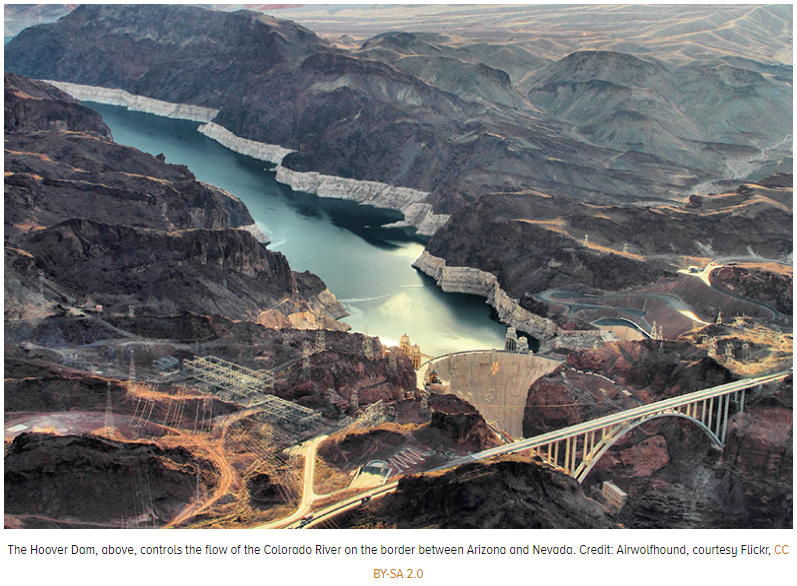
    Hoover Dam. Photo credit: Air Wolfhound Flickr Creative Commons

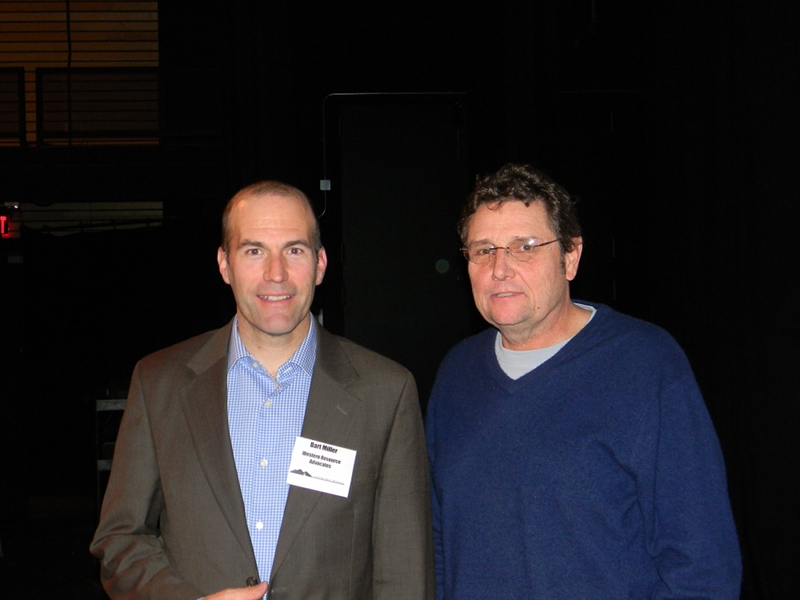
    Here’s a guest column by Matt Rice, Bart Miller, and Aaron Citron that’s running in The Pagosa Daily Post:

    After 19 years of drought across the Colorado River Basin, we know that our state’s water supplies are vulnerable, and we can’t rely on fluctuations in the weather — or a season of above-average snowpack – for the water security we need.

    We are using more water than we have. As our population continues to grow, we need to implement structural, far-reaching conservation solutions to support healthy communities, businesses, and ecosystems. Although snow has been plentiful this winter, last year’s drought devastated local businesses, communities, and fish and wildlife across the state. We can’t afford to forget the images from just months ago: firefighters dropping gravel and mud on wildfires because there wasn’t enough water in the rivers, a first-ever “call” because of record-low water on the Yampa River, farmers standing in dry alfalfa fields, outfitters unable to operate because of low rivers, and fish so stressed from warm temperatures and low flows that anglers were urged to stay away.

    Governor Polis has already shown leadership in his commitment to funding Colorado’s Water Plan, which lays out a blueprint for addressing the risks and uncertainties of a continued dry future. In his State of the State address, Gov. Polis committed to providing bipartisan, sustainable funding for the plan, and pledged that his administration would do its part to implement the Plan. He commended the work of his predecessor, Governor Hickenlooper, but acknowledged that there is much more work to do. He also requested $30 million this year to help pay for the water plan.

    We recently learned that the budget proposed to the Colorado legislature would cut this $30 million in proposed funding down to $10 million. This reduction primarily cuts funding to lay the groundwork for the implementation of a multi-state Colorado River strategy that will be reviewed by Congress this week. The conservation strategies envisioned in that process can increase our water security and introduce more flexible water management strategies to the benefit of all Coloradans.

    To implement this program, all Colorado River Basin states will need to reduce their use of water for the benefit of the whole system. In Colorado, this “demand management” would be a voluntary and market-based approach to conservation. It would be a flexible, dynamic way to provide greater water security, with benefits for the entire Colorado River Basin. The program would pay willing water users like farmer, ranchers, industries, cities and towns to temporarily reduce their water consumption, thereby keeping more water in our rivers and reservoirs. Those reductions can result from temporarily reducing the number of acres under irrigation or switching to crops that use less water, or similarly instituting drought restrictions in cities and towns.

    This multi-state program, including demand management, is premised on stabilizing the levels in the Colorado River Basin’s largest reservoirs, providing greater certainty that we will have enough water in dry times. Conserved water would then be delivered to Colorado’s water “bank account” in Lake Powell, supporting the health of our rivers along the way. These increased water-flows support small businesses, rural communities, the outdoor recreation industry, and river habitats as well as birds and other wildlife.

    On March 19, seven Colorado River Basin states finalized their drought contingency plans (DCPs), setting the stage for a more secure water future. A key part of the DCP for Colorado is the opportunity to store saved water in Lake Powell. It’s now up to Colorado to create a demand management program and starting putting water into it. Colorado has an opportunity to start building the framework we need to protect our water, but we can’t do it without the resources and support to construct proactive conservation measure like our demand management program.

    We know how critical it is to protect our state’s rivers, provide clean, reliable drinking water supplies for our communities, and preserve our agricultural heritage. Colorado has made some progress toward implementing the Water Plan, but further action and investment is urgently needed.

    Authors of this essay include Matt Rice, American Rivers; Bart Miller, Western Resource Advocates; and Aaron Citron, The Nature Conservancy.

    2019 #COleg: Current version of SB19-207 (FY 2019-20 Long Bill) still includes funding for #COWaterPlan

    Colorado Water Plan website screen shot November 1, 2013

    From Water Education Colorado (Jerd Smith) via The Colorado Springs Gazette:

    Colorado lawmakers, citing lower revenue forecasts and competing needs, have dramatically reduced proposed funding for the Colorado Water Plan and Colorado River drought work, providing roughly one-third of what Gov. Jared Polis had requested in his budget for this year.

    This year, the Colorado Water Conservation Board, the agency charged with overseeing the state water plan and developing the Colorado River drought contingency plan, said it would have $30 million to work with as a result of the governor’s request.

    Of that, $20 million would be used to pursue work on a historic, multiyear initiative to find ways to reoperate reservoirs and voluntarily cut back water use to relieve pressure on the drought-stricken Colorado River. The rest would go toward grants to fund entities across the state that are working to implement the Colorado Water Plan.

    But lawmakers aren’t required to honor all budget requests from governors, and Joint Budget Committee members said they would provide just $10 million.

    That appropriation leaves intact the $1.7 million the Colorado Water Conservation Board had budgeted this year to do public outreach and technical studies for the drought contingency plan.

    The rest, $8.3 million, will be used to fund water plan grants over the next three years and comes in addition to the annual funding toward water plan implementation that the Colorado Water Conservation Board has been providing from its budget.

    Even with the reduction, state officials said they are pleased that, for the first time since it was finalized in 2015, general fund money is being dedicated to the water plan.

    Polis’ office said the new general fund allocation is an important step forward.

    “There is always more work to do, but we are excited the JBC has provided unprecedented general funds to make progress toward the state’s water plan,” the office said in a statement.

    Rebecca Mitchell, director of the Colorado Water Conservation Board, said the reduction in funds is manageable. “The $1.7 million we had expected for this year is still there. And we have $8.3 million for the water plan. With that, we feel like we can still move forward.”

    Two weeks ago, the Colorado Water Conservation Board formally approved the drought contingency plan effort and expects to begin recruiting people to serve on several public drought work groups this week…

    Colorado water leaders have been pleading with the state to move quickly on the drought contingency plan to ensure there is some protection should Colorado and its neighboring states in the Upper Colorado River Basin be unable to meet legal obligations to deliver water to Arizona, California and Nevada.

    This year’s task is to determine if there is an equitable way to cut back on water use, where and how those cutbacks would occur, how to measure the reductions and how to protect the environment, local economies and the legal rights of water users while the drought plan is in effect. Up to 500,000 acre-feet of the water saved through such efforts, known as demand management, could be stored in Lake Powell via the new seven-state drought agreement.

    Despite the need for action, Andy Mueller, general manager of the Glenwood Springs-based Colorado River Water Conservation District, said the enormity of crafting a statewide demand management plan requires that the state be prudent in data gathering and analysis.

    “If you do the math on voluntary, compensated demand management, you know it will cost tens of millions of dollars a year to run. That is a frightening concept, but in a complex situation like this, where there are so many multifaceted components, you have to plan.”

    Financing water projects in Colorado has rarely been easy, particularly in small, rural communities or when there is no clear connection to taxpayers. After finalizing the Colorado Water Plan in 2015, officials estimated the state would need roughly $100 million a year to fully fund it and help close the gap on water shortages the state is likely to face by 2030.

    Four years later, though, little progress has been made on securing a permanent funding source, although several nonprofits, such as the Walton Family Foundation, together with the state’s Interbasin Compact Committee are exploring funding options, including a possible ballot initiative in coming years. The committee represents the state’s eight major river basins plus the Denver metro area and was involved in the Colorado Water Plan’s development.

    From The Fort Morgan Times (Marianne Goodland):

    The state Senate on Thursday adopted Colorado’s $30.5 billion budget, often termed the “long bill,” for 2019-20 and sent it on to the state House for the next step.

    The budget includes a last-minute compromise between Senate Democrats and Republicans, who have been at war for the past two weeks in an effort to delay action on items like the “red flag” bill and other measures.

    The compromise added $106 million to the state’s transportation funding, using existing general fund revenues. With that addition, the Colorado Department of Transportation might have $336 million in one-time money available for road and bridge projects. That amendment still must be adopted by the House in order to be included in the final budget.

    Despite the compromise, lawmakers indicated they are nervous about the prospects of another recession and what it could do to the state budget. That included Joint Budget Committee Chair and Sen. Dominick Moreno of Commerce City, who noted a recent revenue forecast “erased” $250 million in expected revenues, due to a growing economic slowdown.

    The budget did not increase the state’s rainy-day fund, which would help weather such a downturn. As passed by the Senate, the rainy-day fund is at 7.25 percent of general fund revenue, or about $843 million. However, economists have warned that Colorado needs a rainy-day fund at least double that amount to survive even a moderate recession. A slowdown like 2008’s Great Recession would require $2 billion, according to a George Mason University study from a couple of years ago.

    While most of the budget package sailed through, one bill drew more opposition than one might expect. Senate Bill 212 puts $10 million in general fund revenue into continued implementation of the state water plan. But that’s $20 million less than was sought by the previous administration (Gov. Jared Polis didn’t say one way or the other how he felt about it) and for the first time tapped general fund dollars, rather than severance tax revenues.

    #RioGrande “State of the Basin” recap #COWaterPlan

    Map of the Rio Grande watershed. Graphic credit: WikiMedia

    From the San Luis Valley Water Conservancy District via The Monte Vista Journal:

    During the 2019 “State of the Basin Symposium” at Adams State University, the Rio Grande Basin was reminded that Colorado has a water plan as Heather Dutton, manager of the San Luis Valley Water Conservancy District and Rio Grande Basin representative on the Colorado Water Conservation Board, shared some insights on the Colorado Water Plan.

    Officially completed on Nov. 19, 2015 by the Colorado Water Conservation Board, the statewide effort followed an Executive Order from Governor John Hickenlooper and represents a great deal of work and input from many experts across the state. Dutton opened her remarks by giving a brief history of the San Luis Valley Water Conservancy District. Next, she turned the focus of her presentation to some of the components of the plan and the work of the Colorado Water Conservation Board.

    Dutton noted that the plan was designed to address the major water issues that Colorado faces. Some of the key areas that the plan focuses on include agriculture, conservation, land use, the supply-demand gap, storage, and watershed health environment, funding, and outreach and education. The plan has been called a roadmap for the future of Colorado’s water. There are numerous goals that the plan has outlined such as maximizing alternatives to permanent agriculture dry-up and the promotion of water efficiency ethic for all Coloradans. The overarching goal of the plan is to help Colorado meet its water needs relative to growing population levels and reach a degree of sustainability by 2030.
    Dutton also mentioned the Colorado Water Plan Grant Program, which is the funding portion of the plan that is designed to provide needed financial assistance for vital water projects across the state. “The CWCB is putting its money where its mouth is,” said Dutton.

    Dutton further noted that part of the process of creating the plan included gathering input from each of Colorado’s respective basin roundtables. Each basin was required to submit its own plan. This led to the Rio Grande Basin Implementation Plan. The result was the San Luis Valley water community having a voice in the entire process. Dutton acknowledged the work of many of the leaders that were present.

    While the implementation process is ongoing, Dutton expressed optimism that Colorado Water Plan will continue help the Rio Grande Basin and the rest of the state see a brighter future when it comes to water.

    #Colorado’s new Department of Natural Resources head talks oil and water — The Colorado Independent #ActOnClimate

    Colorado Water Plan website screen shot November 1, 2013

    From The Colorado Independent (John Herrick):

    Hundreds of men and women who work in the state’s oil and gas fields flocked to the state Capitol this week to protest a bill that, if passed, will impose dramatic changes on the way oil and gas drilling is conducted in Colorado. Workers filled the halls of the Capitol ahead of what ended up being a 12-hour committee hearing on the proposed legislation. Many who lined up to testify said they feared the new regulations would end up costing them their jobs.

    Also waiting to testify was Dan Gibbs, the newly appointed executive director for the Department of Natural Resources. The 43-year-old from Breckenridge will play a key role in guiding oil and gas regulators — who work in his department — through any regulatory changes. The bill, which is expected to win approval of the Democrat-controlled legislature and Gov. Jared Polis, calls for landmark regulatory changes, including elimination of the mandate that state regulators foster oil and gas development.

    Gibbs, a former county commissioner and state lawmaker, has made it clear that he supports the bill, especially a provision that would give local communities more say in permitting decisions. Current Colorado law says that responsibility for regulating fracking falls to the state. Still, several cities across the Front Range have sought in vain to control drilling within their borders, including outright bans. As a state representative, Gibbs helped strengthen regulations over oil and gas, sponsoring a bill to protect wildlife from drilling impacts. He brings his more regulation-focused perspective to the department on the heels of a record production year for the $31-billion industry.

    During his testimony, Gibbs said he heard similar fears of job cuts when he was a lawmaker working on oil and gas bills.

    “We didn’t see any evidence of any job loss as a result of these bills. In fact, there was an increase in activity from 2007 to what we see now,” said Gibbs, who was sitting next to Erin Martinez, a survivor of the Firestone explosion in April 2017. Her husband and brother were killed.

    Gibbs grew up rafting, fly fishing, skiing and ultrarunning. He wears a sports watch and carries his wildland firefighting red card at all times. He worked for former U.S. Sen. Mark Udall in Washington, D.C., served as a state representative before being appointed to the Senate by a vacancy committee, and has been elected Summit County commissioner three times.

    The Department of Natural Resources, made up of 1,465 employees, oversees drilling, mining, water management and state parks in Colorado. In addition to navigating changes to Colorado Oil and Gas Conservation Commission [COGCC], the body that regulates and promotes oil and gas development, he will also be responsible for another urgent challenge: trying to figure out how to pay for the Colorado Water Plan. The plan, which will cost an estimated $100 million a year to implement, is part of a solution to avert projected water shortages due to population growth, climate change and obligations to other states and tribes that rely on the Colorado River.

    We spoke to Gibbs before Tuesday’s marathon Senate Transportation and Energy committee hearing, and again afterward. Our conversation has been edited for clarity and brevity.

    You spend a lot of time outdoors. Is there anything you’ve seen that for you really exemplifies climate change?

    In 2009, I was fighting the Old Stage Fire in Boulder County during the second week of January on the first day of the legislative session…

    That’s when former Gov. Bill Ritter was giving his State of the State address.

    Yeah, he actually mentioned me. ‘As we speak, Dan Gibbs in on the fire line.’ Never did I think I would be fighting a fire in Colorado in January. But that just shows how clearly things are changing. You know, in Summit County, we have 156,000 acres of dead trees as a result of the mountain pine beetle. It was like a slow-moving tsunami, moving from Grand County into Summit County. … I mention this because the mountain pine beetle is a situation of climate change where the winters historically have not been cold enough.

    What do you think the economic impacts of oil and gas drilling in Colorado are?

    There can be a balance with doing things in a more environmentally friendly way while recognizing the economic impacts of having oil and gas industry do well in Colorado. I don’t think it’s either-or. I worked on a bill that added a higher level of wildlife protections for oil and gas. … I was in the committee room. It was packed full of sportsmen wearing camo and blaze orange. And I also had support from oil and gas industry. At that time they were willing to be supportive of this particular bill, believe it or not. As a local government person, formerly as a county commissioner, county commissioners are in charge of looking at health, safety and welfare of people that live in that community and visit. … If someone wants to build something they have to go through a planning process to get approval. If they want to mine something — you know we have a lot of historic mines in Summit County — they need to get a [permit]. We have a gravel pit. And people had concerns about the trucks going by their house. Well, we can make sure the rocks are covered. We can mitigate the times of operation. We can make things more doable for people that have to be directly impacted by that.

    What about the economic impacts of drilling on industries like the outdoor recreation industry? I’m wondering if you think the economic impacts of drilling and coal mining go beyond just the jobs of the people that are working in the oil fields or the coal mines.

    I don’t think we need to pit one industry against another. I wouldn’t even call it the recreation industry because, where I live, it’s the environment that’s the economic driver. So the more we can protect the environment, the more it is beneficial to our economy. And I think that’s reflective of many parts of Colorado.

    How do you reconcile those two competing imperatives: to protect the environment, while at the same time protecting an industry that offers good-paying jobs and provides money for your department.

    We need to look at ways we can protect people, protect the environment, and people’s way of life. I think oil and gas can do things in a way that is not harmful to people’s health. I think there is a way to do it. I don’t think you need to set up oil and gas wells right next to where people live. I think there are ways to do better environmental monitoring of wells when they are close to where people live or when they are close to critical water storage areas. I think we can do things in a more environmentally friendly way where oil and gas can continue to do business in Colorado while minimizing harming the environment.

    The state legislature wants to do way with COGCC’s role of fostering oil and gas development and make it solely a regulatory agency. What’s your reaction to the bill in the legislature?

    I think there should be serious reforms within the structure with how we do things in Colorado. I support this bill, Senate Bill 181. I like having local government have a seat at the table if they want to. … Local governments are in the business of regulating land use issues. I’m shocked that local communities have never had the authority to shape land use decisions as it relates to oil and gas. Depending on many truckloads go through an area, things can be mitigated based on how close [that activity] is to homes, how close it is to critical wildlife areas like sage grouse.

    You’re going to be over at the state Capitol today. You may end up talking to a number of people who work in the industry who will say ‘I’m going to lose my job’ because of this bill. What are you going to tell them?

    I will say that’s not true. There is no evidence to reflect that this bill is trying to shut down industry in any way. What it’s trying to do is balance oil and gas activity with looking at what’s best for people and their communities. It’s not creating necessarily a veto power. It is adding a layer of oversight that doesn’t exist now. New oversight. So I would say that’s just not an accurate statement. But I’m sure we’ll hear that a lot. The industry is important in Colorado. And the bill, as it goes through the process, will have five, six hearings and discussions in the House and Senate and opportunities to amend. It’s not the ending point, but the starting point. The bill will likely change.

    I wanted to transition to water. Water projects are funded through severance taxes. And severance taxes are dependent on the production of oil and gas. Would you describe that as a competing mission — on one hand you have these environmental programs that are reliant on an industry that has an environmental impact?

    It’s funny you say that. Well, not funny. As a county commissioner, we funded all of our recycling programs through tipping fees at our landfills. The more trash we got, the more programs we could fund for diversion. And so, it’s similar, the more oil and gas activity you have in the state, the more we can fund environmental programs. … I think we need a new strategy in terms of how we fund environmental programs. And not just be dependent on severance funds. Looking at other programs I have: the Parks and Wildlife budget is about 85 percent contingent on hunting and fishing licenses. I’m going to be working on a more sustainable funding source moving forward that is not just contingent on hunting and fishing licenses.

    Should people who recreate, like backpackers, pay more to Colorado Parks and Wildlife?

    What we have right now for Parks and Wildlife is not sustainable. We need to look at every option on the table. … We really need to be creative to figure out who might be willing to help fund the trail system throughout Colorado and what opportunities exist with new foundations that could help with funding.

    What are you doing to come up with a new funding mechanism or revenue stream for the Colorado Water Plan?

    I just met with a group of stakeholders. The governor has more or less a line item request of $30 million this year. And that will go along with the [state budget]. And then, on top of that, we have the Colorado Water Conservation Board’s water projects bill, and that’s going to have $20 million associated with that. So we’re going to have $50 million going toward implementation strategies. We need about $100 million [per year] moving forward. I think this is a great place to start. You need a lot of local partners. It’s not just the state flipping the switch. … We have all these folks that are working hard to figure out a plan moving forward. There is talk of a possible ballot question in the future. All options are on the table.

    When do you expect the Surface Water Supply Index (SWSI) report [which projects Colorado’s water shortages] to be ready?

    Sometime over the summer.

    It was supposed to come out years ago. What explains the delay?

    I don’t know. But I will tell you that I think moving forward it’s important that we do regular updates to SWSI. Climate change, population growth, and a variety of different factors impact water availability. I think we need to get on a set schedule that gives us updates — I’m not saying every year — but fairly frequently. That will help us set policies going forward.

    Water shortages are projected in future years and there is no clear way to pay for the water plan. You still have oil and gas and local communities duking it out in the suburbs. There are a lot of pressing issues without easy answers. This job will pay about $160,000, but aside from that, what made you want to take on this challenge?

    I think daily about my young kids and the fact that I could be in this position right now and I can shape how we manage natural resources right now, but have an eye on what Colorado will look like in the next generation, in future generations. That really appeals to me. Working for a governor like Jared Polis, I support his vision of protecting the environment, understanding that protecting the environment is the best way that we can protect our economy in Colorado.

    What keeps you up at night?

    I think about the employees that work here for DNR. We have amazing staff here and ensuring that they are OK in the jobs that they have. But any day I could hear about an oil and gas explosion similar to Firestone. That definitely keeps me up. I worry about hearing about the mountain lion attack in Fort Collins and then looking at strategies that we have to deal with lions. This jobs is so diverse. Folks can call me at two in the morning with catastrophic situations like Firestone.

    Someone might call you up and bring you out to the fireline, too, right?

    Yeah, exactly. I get nervous about oil and gas. But once it hits summertime, I feel like we are one lighting strike, one unattended campfire, from having a mega-fire in Colorado that would have devastating consequences.

    Alamosa councillors plan to oppose latest San Luis Valley water export plans

    The northern end of Colorado’s San Luis Valley has a raw, lonely beauty that rivals almost any place in the North American West. Photo/Allen Best

    From The Valley Courier (Ruth Heide):

    Alamosa city councilors and staff are willing to join the fight against the latest water export proposal, they told water leader Cleave Simpson during a work session Tuesday night.

    Simpson is the general manager of the Rio Grande Water Conservation District, which has taken a position against a water export proposal by Renewable Water Resources. He shared with the council the history of former water export proposals and details about the latest one, which proposes to export 22,000 acre feet from the San Luis Valley to the south Denver metro area.

    “I do believe it’s real,” Simpson said. “I think they intend to do it.”

    Nothing has yet been filed in court but Simpson said the spokesman for Renewable Water Resources indicated the case might be filed by the end of this year. Simpson said the City of Alamosa could enter the case when it is filed.

    The city council and staff discussed other ways they could be involved including taking an official stand through a resolution, like the water conservation district did, and participating in education and awareness.

    “It would damage the agriculture of the Valley,” Councilman David Broyles commented about the proposed export.

    “And economy,” added Alamosa City Manager Heather Brooks.

    Councilman Charles Griego said he believed the city’s first step would be to pass an official resolution during a council meeting. Brooks suggested the city council could pass a resolution either the second meeting in March or first meeting in April. “I am hearing this is something we should be taking seriously,” Brooks said.

    Griego said the city needs to be clear that “not one drop” should be exported from the Valley and that the council would be against any kind of water leaving the Valley. He said the word needs to get out how devastating this would be to the Valley…

    He said he is going to inform the Interbasin Compact Commission members later this week, as he is a member of that governor-appointed statewide water board.

    Simpson said Renewable Water Resources on its website (renewablewaterresources.com) says “Best for the San Luis Valley. Best for the environment. Best for Colorado.” However, he sees no benefit whatsoever to the Valley of this project. “It’s not good for the San Luis Valley.”

    He added that the Valley has a history of opposition to similar projects and will adamantly oppose this one too.

    “Every 10-20 years, there’s another export proposal,” Simpson said.

    Some of the past proposals, which were unsuccessful, were a proposal to export water from wells drilled in Costilla County to San Marcos, Texas in the 1970’s and multiple export proposals tied to the late Gary Boyce who owned land in Saguache County. American Water Development Inc. (AWDI) proposed to pump 200,000 acre feet of water from the Baca Ranch area to the Front Range.

    The latest proposal is that of Renewable Water Resources, which purchased a 12,000-acre ranch north of Crestone. Their proposal is to pipe 22,000 acre feet of water from the confined aquifer out of the Valley and ultimately to the Denver area. (Simpson described 22,000 acre feet as the equivalent of 100 circles.) Renewable Water Resources representatives met with the Rio Grande Water Conservation District board to seek the district’s cooperation in helping the developers use up to $60 million (about $2,500 an acre foot) to buy and retire water rights across the Valley and to help manage a $50-million community fund. Although planning to pump out 22,000 acre feet, the water developers propose to buy up twice that much, 40,000-44,000 acre feet of water rights, and retire a portion, which is a different approach than previous water exporters, Simpson explained.

    He said reducing water consumption is a similar goal to the water district and sub-districts. However, “We are not pursuing permanent dry up or permanent removal of 22,000 acre feet of water leaving the Valley.”

    Governor Polis Announces Water Appointments

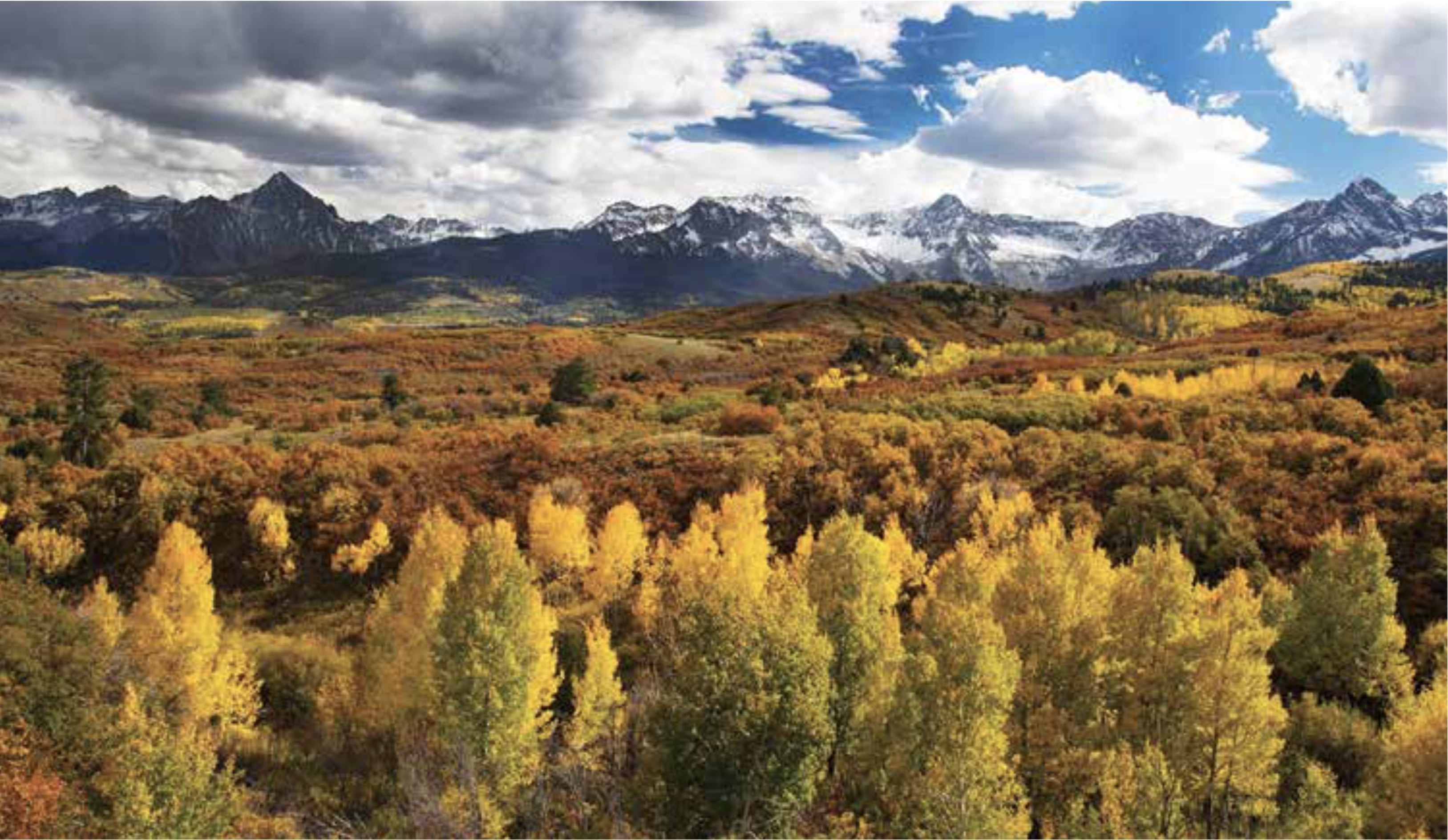
    Aspen trees in autumn. Photo: Bob West via the Colorado State Forest Service.

    From email from the Colorado Department of Natural Resources:

    Governor Polis has announced three new board appointments to the Colorado Water Conservation Board.

    · Gail Schwartz of Basalt, Colorado, representing the Colorado River basin
    · Jackie Brown of Oak Creek, Colorado, representing the Yampa-White River basin
    · Jessica Brody of Denver, Colorado, representing the City and County of Denver

    In addition, the Governor appointed Russ George as the Director of the Inter-Basin Compact Committee in addition to five gubernatorial appointees.

    · Aaron Citron
    · Mely Whiting
    · Robert Sakata
    · Patrick Wells
    · Paul Bruchez

    “I’m excited to work with these appointments,” said Dan Gibbs, Executive Director of the Department of Natural Resources. “Their collective experience is unmatched.”

    Gail Schwartz has spent over two decades serving Colorado in both appointed and elected office. Jackie Brown brings a diverse background in natural resources and is a leader in the water community as the current Chair of the Yampa-White-Green basin roundtable. Finally, as General Counsel for Denver Water and formerly with the Denver City Attorney’s Office, Jessica Brody brings both municipal and environmental law experience.

    “I’m looking forward to working with the newly appointed board and IBCC members to continue implementing Colorado’s Water Plan. They bring valued expertise and leadership to the water community,” said Rebecca Mitchell, Director of the CWCB. “We sincerely thank the outgoing Board members and IBCC appointments for their service. Their dedication has been instrumental on numerous policy and planning efforts, including bringing a diversity of perspectives to Colorado’s Water Plan.”

    Russ George is a fourth generation native of the Rifle, Colorado area and brings a depth of state government and public service. Russ was instrumental in creating the IBCC and basin roundtables.

    “As the first champion of the IBCC and roundtable process, there’s no one better equipped to lead the IBCC. We’re embarking on a future of great opportunity in water, and Russ is the perfect choice to navigate the times ahead,” said Gibbs.

    State of #Colorado, water managers, set to work on water-use reduction plan — @AspenJournalism #cwcac2019 #DCP #ColoradoRiver #COriver

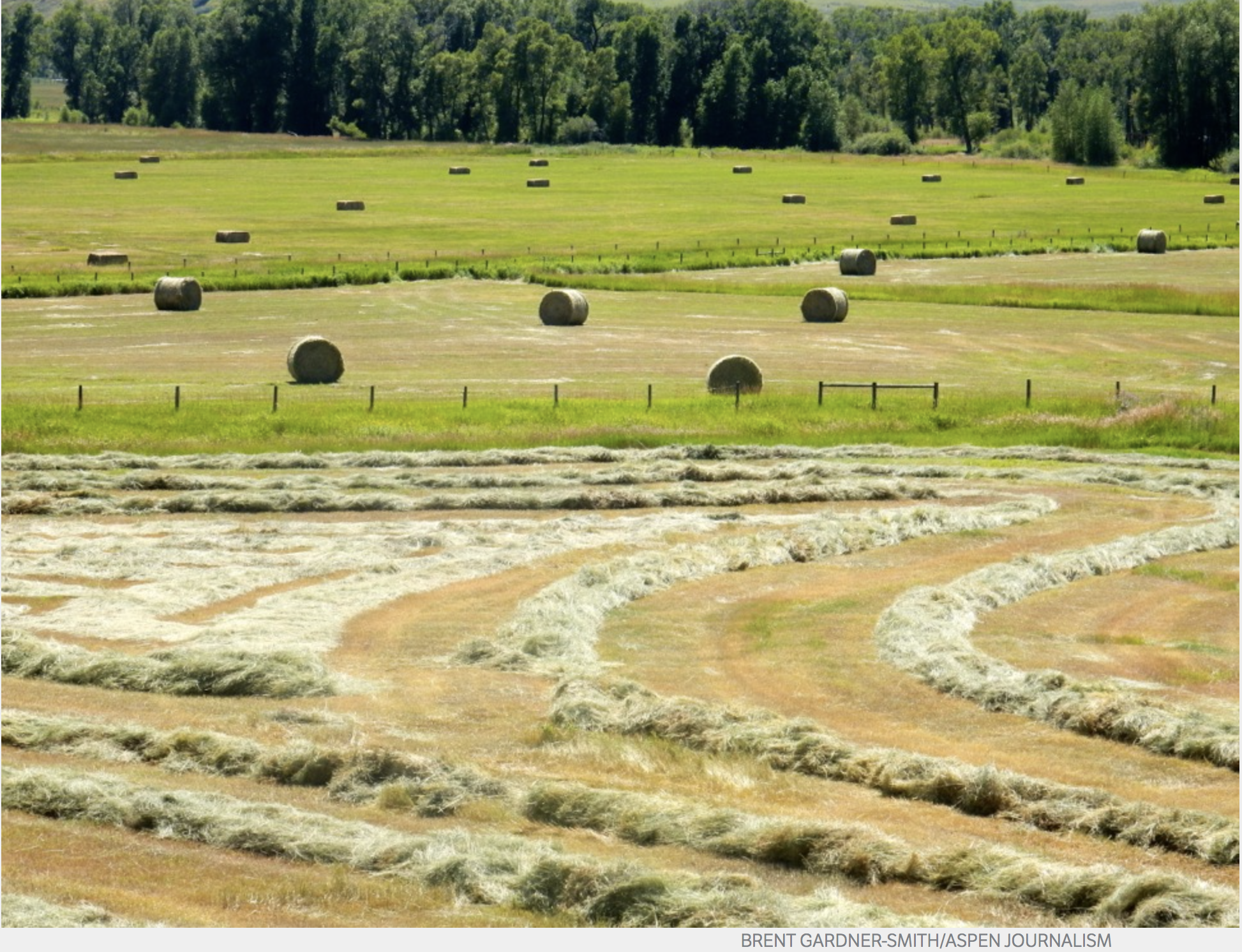
    Hay fields in the upper Yampa River valley, northwest Colorado. Photo credit: Brent Gardner-Smith/Aspen Journalism

    From Aspen Journalism (Brent Gardner-Smith):

    Colorado officials and regional water managers are poised to start working together on a plan to reduce water use in Colorado, mainly by paying willing irrigators to fallow hayfields, in order to bolster falling water levels in Lake Powell and guard against a compact call on the Colorado River system.

    After a series of meetings held last week by the Colorado Water Conservation Board and by Western Slope and Front Range water interests, state officials are now set to begin investigating the feasibility of a “demand management” program that’s “voluntary, temporary and compensated,” and water users and managers throughout Colorado will be asked to help shape the new program.

    “Demand management, reduction in consumptive use, is an incredibly threatening concept to Western water users, and certainly to West Slope water users,” Andy Mueller, the general manager of the Colorado River District, told a ballroom full of water professionals Friday during the last day of a three-day Colorado Water Congress meeting here. “Our agricultural community is concerned that what this is really about is taking water from ag and bringing it into urban areas.”

    Nonetheless, Mueller said, “this is a time where we have to work collaboratively, with both our urban friends and our rural friends, to figure how we do this together, and how we recognize the values that are important to each of us.”

    Mueller also told the Water Congress audience that “the River District is committed to proactively engaging and working with the CWCB and the Front Range to figure out how we can stand up a program that truly protects all of us in this situation. To not do so, to not engage proactively in that conversation, would be irresponsible of every one of us in this room.”

    He also laid out the Western Slope’s vision for the program, which centered on sustaining rural communities.

    “We want, from a West Slope perspective, our agriculture and our industries and our cities that are going to participate in these programs to have the opportunity to use the water when they need it, and to monetize their assets into a program when they can figure out ways not to use it,” Mueller said.

    Demand management is based on the idea that if water that otherwise would be used to grow hay, or turf in suburban settings, can instead be left in the river system to flow into Lake Powell, and into a new regulatory pool of water within the big reservoir, it will help boost water levels in the reservoir, allow for continued hydropower production at Glen Canyon Dam and help the upper-basin states meet their obligations to deliver a minimum amount of water to the lower-basin states under the terms of the Colorado River compact.

    A recently concluded four-year test program called the System Conservation Pilot Program paid irrigators in the Upper Colorado River Basin an average of about $200 per acre-foot of conserved consumptive use of water.

    Fresh turf, in Thornton, near Denver.

    Denver engaged

    Jim Lochhead, CEO and manager of Denver Water, was sharing the stage with Mueller on Friday during a panel discussion, after they together had met Thursday with other Front Range water providers in a behind-the-scenes meeting.

    Lochhead said the Front Range and the Western Slope are united in their desire to avoid violating the terms of the compact.

    “No one wants the result of a situation where we haven’t come together collectively to arrive at a solution,” Lochhead said.

    And, he stressed, “Colorado needs to do our part to make sure that the demand-management piece is done in a way that protects all water users in Colorado, East Slope and West Slope.”

    “From Denver Water’s perspective, we’re prepared to engage productively, as I’ve indicated many times in the past,” Lochhead said. “We’re prepared to contribute our share of water into a solution that would be collectively agreed to within Colorado and the other upper-basin states, if it is necessary, for our own mutual benefit and survival.”

    The state’s emerging demand-management program is tied to the ongoing effort to approve “drought-contingency planning,” or DCP, agreements in the seven states in the Colorado River Basin: Colorado, Utah, Wyoming, New Mexico, California, Arizona and Nevada.

    Arizona’s governor on Thursday signed a required piece of state legislation in order to meet a federally imposed deadline, but there are still other DCP agreements that need to be finalized by a new working deadline, March 4. Federal legislation also is required to implement the regional agreements designed to keep both Lake Powell and Lake Mead operating as designed.

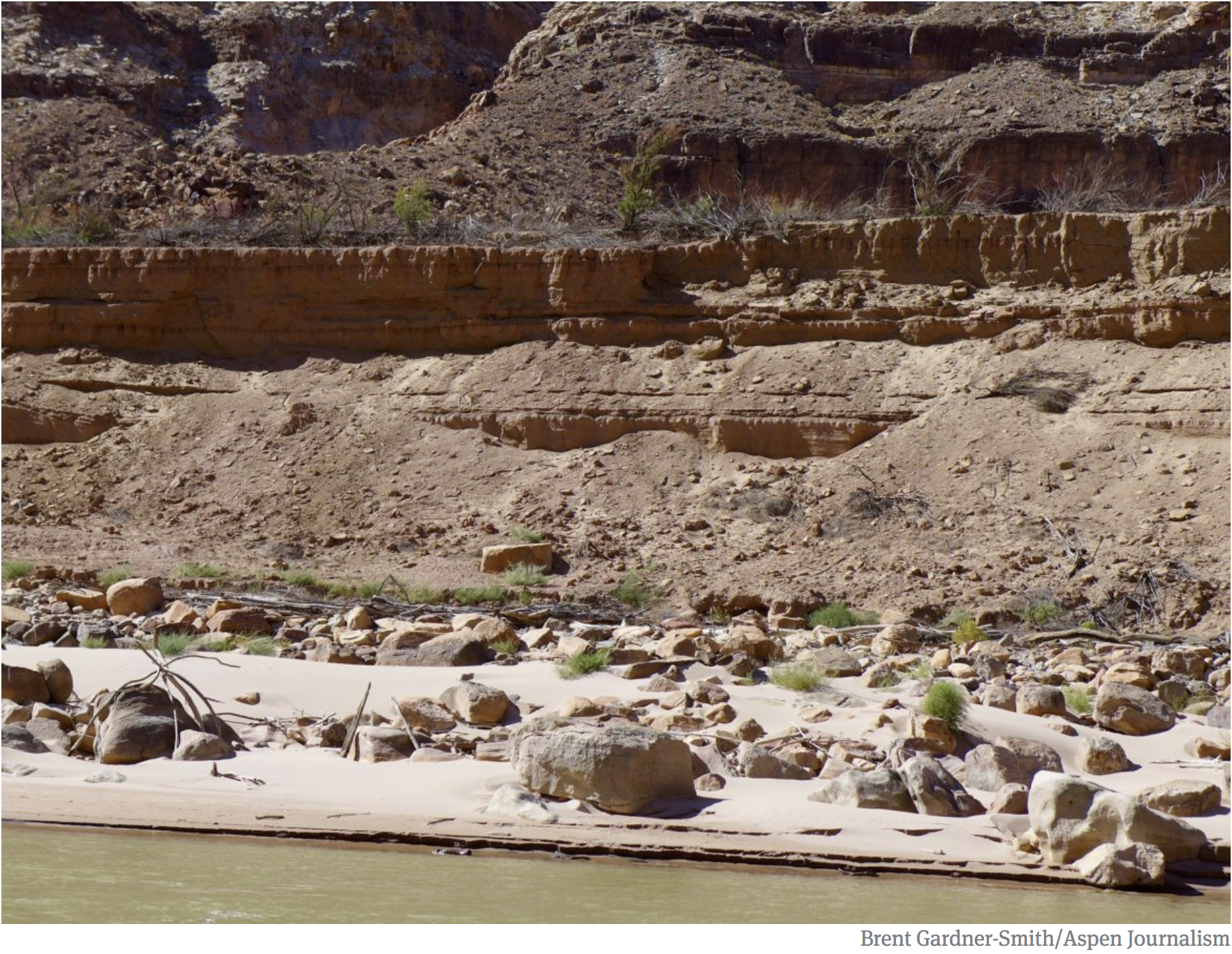
    Sand and silt are piling up on the Colorado River above Lake Powell, as water levels continue to fall due to persistent drought and encroaching aridification. Water managers from San Diego to Wyoming are working to find ways to keep the river’s reservoirs, and water delivery systems, functioning.

    State investigating

    On Tuesday during a regular public meeting held in Westminster, the directors of the Colorado Water Conservation Board indicated they were in support of a staff proposal to form seven different work groups in 2019 to study demand management.

    Brent Newman, the CWCB’s interstate, federal and water information section chief, and point person on Colorado River issues, told the agency’s board of directors that the state is not yet starting up a demand-management program; it is only studying the feasibility of doing so.

    He also said the state is not studying how a curtailment, or mandatory cutback in water use, would be administered by the state if the Colorado River Compact were to be violated.

    Karen Kwon, a first assistant attorney general of Colorado, echoed that stance in her remarks to the CWCB directors Tuesday.

    “We are not talking about how we would administer a curtailment,” Kwon said.

    Newman and Kwon are proposing that the CWCB set up work groups, staffed by hand-picked experts, to explore a “plethora of issues” raised by demand management, including policy; monitoring and verification; water administration; the environment; economics; funding; and education and outreach.

    The staff also proposed to set up a quarterly series of workshops for water users, managers and stakeholders, as well as engaging the state’s basin roundtables, which meet regularly in each of the state’s major river basins, on the issues raised by demand management.

    A detailed work plan for the proposed process is to be presented by CWCB staff to the agency’s directors in March.

    Editor’s note: Aspen Journalism covers rivers and water in collaboration with The Aspen Times and other newspapers owned by Swift Communications. The Times published this story Feb. 4.

    #RioGrande Roundtable meeting recap

    Map of the Rio Grande watershed. Graphic credit: WikiMedia

    From The Valley Courier (Ruth Heide):

    Roundtable member Judy Lopez and her boss Sarah Parmar with Colorado Open Lands (COL) talked with the Roundtable members on Tuesday about providing more options for farmers and ranchers considering conservation easements on their properties. The Roundtable is a group of San Luis Valley residents representing a variety of water uses throughout the Valley.

    Parmar said COL has protected half a million acres across the state through conservation easements. “Conservation easements are still the only permanent tool to keep land and water in agriculture,” she said.

    Parmar explained that conservation easements originated on the East Coast, and when they were introduced in Colorado, “water was an afterthought.” The focus was on land protection. However, as they evolved, conservation easements also focused on protecting the water rights associated with the land, not allowing the water rights to be sold but requiring them to remain in their historical use, Parmar explained.

    Up to this point, conservation easement agreements were very restrictive regarding water use, she said. To meet current conditions and needs, however, COL brought together a team to look at more flexibility with water rights under conservation easements while still protecting the investment of those funding such easements. The efforts began with the South Platte Roundtable, which was concerned that about one third of irrigated land and water would be transferred to municipal use by 2050 through “buy and dry” purchases. “Buy and dry is the easiest way for municipalities to get water,” Parmar said.

    To prevent permanent loss of the water, COL began looking at ways in which property owners could lease their water rights for a certain number of years, like seven out of 10, to municipalities like Castle Rock, while retaining some agricultural use of the water. During the years their water was going to municipalities, farmers could fallow their land, deficit irrigate, irrigate for less than a full season or use a crop that used less water, Parmar explained.

    Parmar said South Platte Basin water users who were surveyed on the issue were interested in the concept, with nearly 60 percent saying they would be interested in a lease situation.

    Parmar said their choices were to preserve the water rights through conservation easements or sell them off entirely, the latter being more profitable. A leasing option provided farmers and ranchers with another alternative, she said. The water would remain with the land but could be involved in a long-term lease with a municipality, which would give that municipality some assurances as well, Parmar explained.

    Parmar said attorneys working with COL have developed easements that would accomplish these goals and meet IRS codes for conservation easements and the tax benefits associated with them.

    Lopez said the way this would likely work in the San Luis Valley would be agriculture-to-agriculture leasing, not agriculture-to-municipality leasing. This might help with some of the challenges facing the Valley now from water export threats to state regulations, she said. It might also allow some folks to keep their properties that might not have been able to, she added.

    Lopez said the water portions of conservation easements would be evaluated on a case-by-case basis.

    Roundtable member Ronda Lobato asked about the possibility of changing existing conservation easements. Parmar said she did not think that was out of the realm of possibility. She said there are about two million acres under conservation easements through various organizations across the state, a lot of it in the San Luis Valley.

    Roundtable member Mike Gibson was very opposed to changing existing conservation easements. He said the roundtable had approved funding for conservation easements on the basis the water would stay on the land and be used for historical purposes. He said the people who entered those agreements for their land also did so with the understanding the water would remain protected, and to change that would affect other factors like habitat.

    Roundtable Chairman Nathan Coombs, who is the manager of the Conejos Water Conservancy District, said he understood that conservation easements already in place were created with some options off the table, but with the current situation in the Rio Grande Basin, it might be time to look at more flexibility.

    Little Snake River Dam backers forge ahead with $11 million, seek more from feds — WyoFile.com

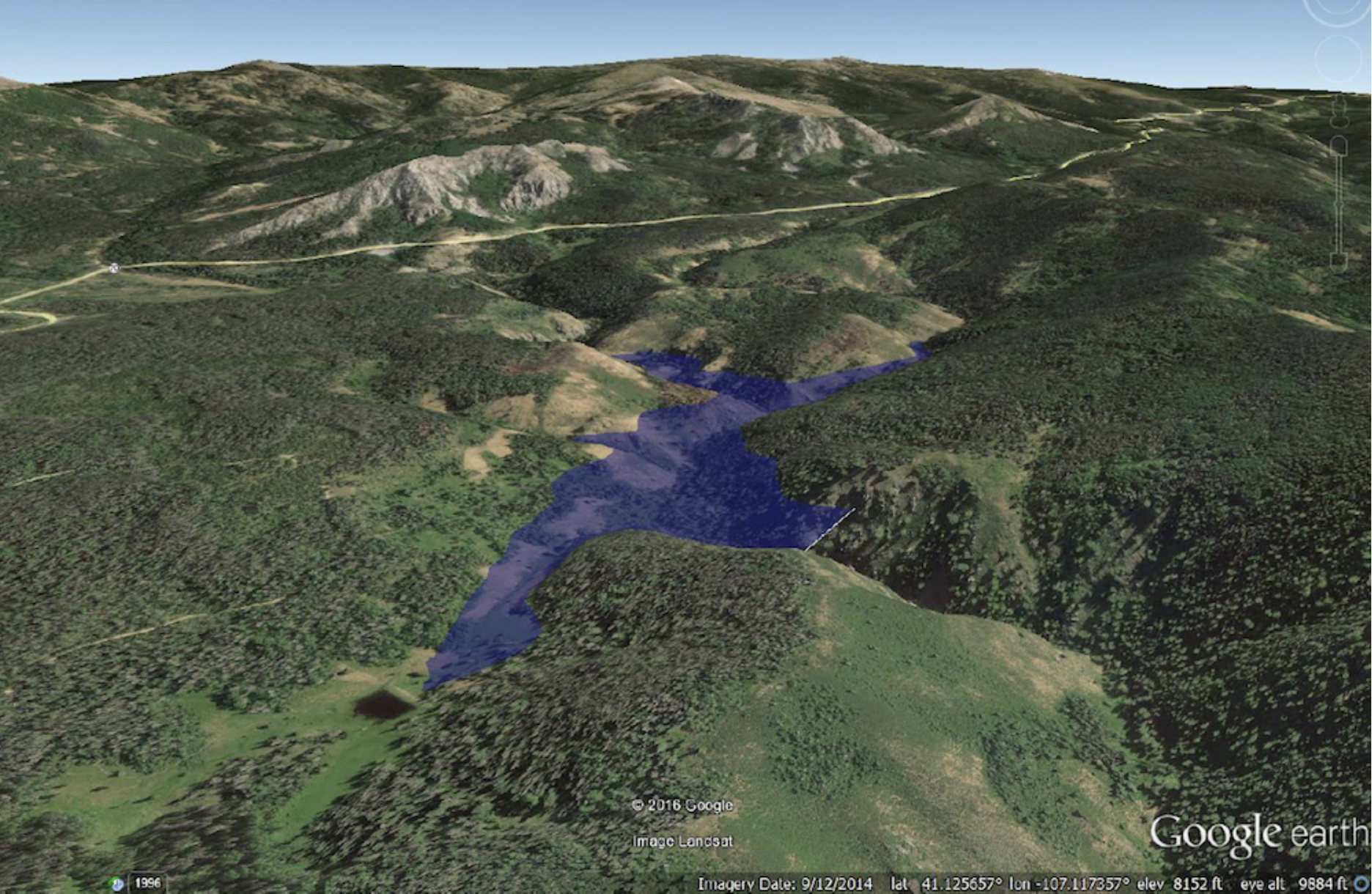
    Proposed dam site on West Fork of Battle Creek, Little Snake River watershed S. of Rawlins, Wyoming via the Wyoming Water Development Office.

    From WyoFile.com (Angus M. Thuermer Jr.):

    The plan to impound 10,000 acre feet of water on the West Fork of Battle Creek barely survived a legislative roadblock earlier this year when the Wyoming House stripped $40 million from a water bill that had been earmarked for the project. A compromise with the Senate saw $4.7 million in appropriations restored, but with caveats requiring further legislative approval for expenditures and pro-rata financial participation from potential beneficiaries in Colorado.

    Dam backers are not for the moment returning to Wyoming’s financial well. Neither of two draft 2019 water bills that propose more than $28 million for water planning and development statewide include funding for the project, according to a review of draft bills posted online. But two water districts — one in Colorado and one in Wyoming — are asking for a total of $1.2 million from the U.S. Department of Agriculture to conduct environmental reviews of the dam and reservoir that would be constructed in the Medicine Bow National Forest, officials say.

    Meantime, dam backers failed to win full-throated support for the $80 million project from a water coalition in Northern Colorado. Instead, members of the Yampa-White-Green Basin Roundtable said they supported further evaluation of the proposed dam, but not yet construction of the facility itself (see letter below).

    Dam backers also must figure out whether Wyoming and Colorado’s new governors — both of whom were elected in November — will support the project and to what degree. Wyoming Water Development Office Director Harry LaBonde said he continues to work with his counterpart in Colorado to obtain support and money but the election means dam backers have to undertake a new round of lobbying.

    “Every time there’s a new governor, all those conversations start over,” he said in a telephone interview.

    Show-me tour wins tepid Colorado support

    To build Colorado support, Wyoming officials took members of the Colorado roundtable on a tour of the dam site and surrounding area last summer. LaBonde drafted a letter of support that the Colorado group could consider signing its name to in late November, group chairman Jackie Brown said. “We require[d] that,” she said of the draft correspondence.

    It proposed that the roundtable, a coalition of water users that includes irrigators, municipal interests, and recreation representatives, write the following; “We would like to offer this letter of support for the project and look forward to working with your office to continue to move this project forward for the mutual benefit of water users in both states.”

    LaBonde’s version stated that the project would have $92 million in benefits. It said the Wyoming Legislature has already appropriated $11.3 million to build the dam and that Colorado irrigators could have a chance to buy some of the stored water. The $11 million figure comes from a $7 million planning appropriation, very little of which was used, plus the conditional $4.7 million appropriation earlier this year.

    “As the project is currently configured approximately 4,000 – 5,000 acres of irrigated lands in Colorado would be potentially eligible to purchase supplemental irrigation water from the project,” LaBonde’s draft said.

    The Colorado roundtable adopted most of the proposed language. But “the group stopped short of supporting the project,” LaBonde said, backing an investigative process only.

    “At our November 14th meeting, the Roundtable unanimously approved the support for the process of reviewing a reservoir at the west fork of Battle Creek,” the final roundtable letter, dated Nov. 27, reads. “The membership would like to be clear that this is not support of the reservoir itself, only the process of the exploration, as approval of a reservoir would need to come before the membership in a final format, after [National Environmental Policy Act analysis] has been completed.”

    The roundtable also dropped proposed language that stated it “would like to continue … identifying other funding opportunities for this project.” Instead, the Colorado group said it “supports the development of water resource in the basin and would be happy to work with local water users in Colorado and Wyoming and the State of Wyoming.”

    The proposed dam on the West Fork of Battle Creek would serve 67 to 100 irrigators, studies commissioned by the Water Development Office say. The most likely beneficiaries in Colorado would appear to be members of the Pot Hook Water Conservancy District that joined the Savery-Little Snake district in applying for the $1.2 million federal grant.

    That district appears to be relatively small. In 2017 it held a successful election to impose a four-mill property tax that would raise $12,831.48 in 2018, and similar amounts in subsequent years. The tax money will “meet the future needs of landowners within the district” and “proactively protect … existing water rights,” according to a description of the measure. It passed on a 13-7 vote.

    O’Toole agreed with LaBonde that the fresh administrations in Cheyenne and Denver will require a renewed effort securing support — support that backers couldn’t find in their home House of Representatives. “I’m going to watch and see who gets picked for positions and go from there,” O’Toole said.

    Among the considerations is the announced retirement of Wyoming State Engineer Pat Tyrrell who has held the cabinet-level position since 2001. A gubernatorial appointee who’s considered the state’s water czar, his office resolves conflicts among users and represents Wyoming during inter-state negotiations. When Tyrrell retires in January, he will have served under four governors.

    Meantime, conditions in the Little Snake River Basin are deteriorating, O’Toole said, as a 19-year-drought is forcing water users to plan for shortages. “We saw the [Little Snake] River in a state I’ve never seen,” he said. This summer, for the first time ever, there was a call for regulation on Colorado’s Yampa River as water users asked state regulators to enforce prior appropriation doctrine and law. Those ensure that during low flows the holders of earlier water rights get their allocation before holders of more recent rights can divert river flows.

    Backers want federal funds but not oversight

    West Fork Dam supporters want a land exchange that would give Wyoming some 100 acres of federal property in the Medicine Bow National Forest to construct the proposed dam and impound the reservoir. Such a deal would exempt the project from some aspects of the demanding NEPA process, likely making it easier to accomplish. So far, the federal agency hasn’t received any formal requests for development, forest spokesman Aaron Voos said in a telephone interview from forest headquarters in Laramie.

    Yampa River Basin via Wikimedia.

    Governor Hickenlooper’s proposed budget include $30 million for implementation of the #COWaterPlan

    Gov. John Hickenlooper touts his water plan as pioneering. (Photo by Rachel Lorenz for The Colorado Independent)

    from The Summit Daily (Deepan Dutta):

    On Thursday, several Colorado conservation and river advocacy groups praised Gov. John Hickenlooper’s proposal to add a record $30 million to implement Colorado’s Water Plan and help the state prevent water shortages as the state continues to experience an extended drought.

    In his budget request for fiscal year 2019-2020, the governor proposes to invest $30 million over the next three years from the general fund, on top of funds already earmarked for water projects that benefit river health and our communities across the state.

    The groups – Theodore Roosevelt Conservation Partnership, Environmental Defense Fund, Western Resource Advocates, The Nature Conservancy, Conservation Colorado, American Rivers and Audubon ­­— called the proposal a “smart investment in healthy rivers that will have ripple effects across Colorado.”

    “This budget request is a recognition of the importance of water to Colorado families, of water challenges that Colorado could face, and the imperative that Colorado secures its water future,” the groups said. “This is a tremendous step forward, and a sustainable water future for Colorado families will require continued investments. We look forward to working with the next governor and the legislature on longer-term commitments that will ensure the state has the resources to fully implement the Colorado Water Plan.”

    South Platte and Metro basin roundtables release new basin data tools — @AspenJournalism

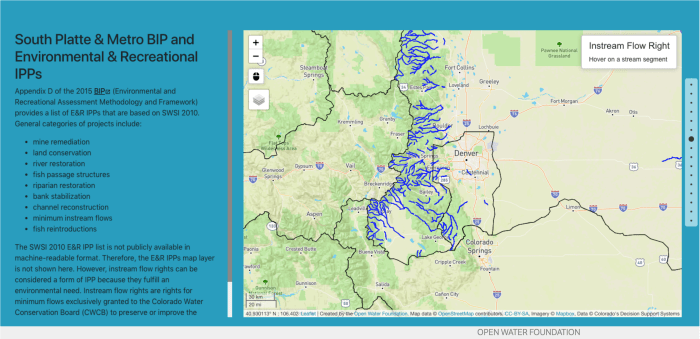
    An interactive graphic from one of the new storyboards shows the instream flow rights of rivers and streams throughout the South Platte Basin.

    From Aspen Journalism (Lindsay Fendt):

    For anyone in Colorado wondering how water reaches their pipes, there is plenty of public information out there. But a cursory internet search will quickly turn up incomprehensible acronyms — SWSI, TBD, BIP and CWP, just to name a few — along with hydrology charts, infrastructure designs and a complicated set of laws that traces back all the way to the 19th Century.

    In an effort to simplify the deluge of data out there, the water community in the South Platte Basin teamed up with a local non-profit to develop a new set of tools to explore data about water management in the basin.

    “I thought that rather than referring to big documents and PDF reports that people could look at these live interactive resources and have more engaging discussions on the issues,” said Steve Malers, chief technology officer at the Open Water Foundation and the project’s creator.

    With a year and $100,000 in combined funding from the Colorado Water Conservation Board, the South Platte and Metro basin roundtables, Malers was able to sift through reams of water data to create three interactive storyboards.

    “There are lots and lots of things out there already, but they aren’t all easy to understand,” said Lacey Williams, public education and outreach coordinator for both the South Platte and Metro roundtables. “We liked the idea of putting together maps and data into a story.”

    The storyboards are designed to explain the more dense aspects of water management to the public (and to shed light on some of those acronyms).

    Malers also incorporated information specifically for people who work in water.

    By crunching numbers and reformatting data to fit into one readable page, Malers hopes that roundtable members and others working in water can use the storyboards to make more informed decisions.

    “If they find those things useful, perhaps that can change the paradigm a bit and we can have more data-driven discussions,” he said.

    For now, these storyboards are tucked away on the South Platte Basin Roundtable’s website, but Malers and Williams are working to spread the link across the web.

    According to Williams, the education committees are already considering expanding the storyboards to other parts of the state.

    South Platte River Basin via Wikipedia

    “News You Can Use from the Gunnison Basin” is hot off the presses from @GunnisonRiver

    Confluence of the Cimmaron and Gunnison rivers. Photo: Brent Gardner-Smith/Aspen Journalism

    Click here to read the newsletter. Here’s an excerpt:

    The Lower Gunnison Project (LGP)

    The LGP is making progress and construction bids have come in for one of four projects (Needle Rock Head gate Improvement) slated to go to construction this fall. Initial permitting and planning has been completed with the publication of the Environmental Assessment (EA). This detailed EA can be reviewed here. Information on the next steps is being uploaded to the LGP page. This will include news for both on- and off-farm activities.

    Western Slope to keep studying water without state funds, Front Range support — @AspenJournalism

    Lake Powell April 12, 2017. Photo credit Patti Weeks via Earth Science picture of the day.

    From Aspen Journalism (Brent Gardner-Smith) via The Aspen Times:

    Two Western Slope water conservation districts are moving forward with the third phase of a “risk study” exploring at how much water might be available to bolster water levels in Lake Powell, and they are doing so without state funding to avoid Front Range opposition to the study.

    Lake Powell today is half-full and dropping and water managers say several more years like 2018 could drain the reservoir, which today contains 12.3 million acre-feet of water. And the looming water shortage is revealing lingering east-west tensions among Colorado’s water interests.

    Officials at the Colorado River Water Conservation District and the Southwestern Water Conservation District, whose boundaries include the Yampa, Colorado, Gunnison, and San Juan river basins on the Western Slope, are eager to answer some forward-looking questions.

    How much water in a hotter and drier world might still be available from Western Slope rivers to divert and put to beneficial use, for example.

    And how much water might be made available from current water users to send downriver from each of the major Western Slope river basins to help fill Lake Powell?

    Those are sensitive questions in Colorado, on both sides of the Continental Divide.

    And powerful Front Range water interests think the state should be answering them, not the two Western Slope conservation districts.

    A state agency, the Colorado Water Conservation Board, approved a $32,000 grant in March 2015 to help pay for the first phase for the Western Slope’s “risk study.”

    Then the CWCB kicked in $40,000 in March 2017 for the second phase of the Western Slope’s risk study.

    But that second grant-review process brought opposition from the Front Range Water Council, which unsuccessfully sought to block the requested funding from the Western Slope.

    “The opposition to Phase II of the risk study was focused on concerns related to the direction and management of the study coming solely from the West Slope without East Slope involvement, and being funded by the state,” said Jim Lochhead, the president of the Front Range Water Council and the CEO of Denver Water, in a statement released July 20. “Risks on the Colorado River are of statewide concern and any such studies are better conducted by the state, through its Colorado Water Conservation Board.”

    The Front Range Water Council is an ad-hoc group that includes Denver Water, Northern Water, Aurora Water, the Pueblo Board of Water Works, Colorado Springs Utilities, the Southeastern Colorado Water Conservancy District, and the Twin Lakes Reservoir and Canal Company.

    The first two phases of the Western Slope’s risk study showed that 1 million to 2 million acre-feet of water from current water users may be needed to bolster levels in Lake Powell, especially if more water is also diverted to the Front Range.

    Today, irrigators on the Western Slope use about 1.3 million acre-feet of water a year, while the Front Range uses about 541,000 acre-feet from the Western Slope to meet municipal and agricultural demand.

    As such, officials at the Western Slope conservation districts are now asking if, say, 10 percent of that water use was cut back over time, in a voluntary and compensated demand management program, and the saved water was banked somewhere — ideally Lake Powell itself — would that be enough to keep the big reservoir full enough to still produce power at Glen Canyon Dam and deliver enough water downstream to the meet the terms of the Colorado River Compact?

    And if it was enough, how much should come from each Western Slope basin?

    On Monday in Glenwood Springs, Andy Mueller, the general manager of the Colorado River Water Conservation District, acknowledged that the 2017 funding request from the Western Slope “ran into a lot of political opposition from the Front Range, basically saying, ‘You guys are asking questions that may harm our state.’ And the questions that were posed in Phase II were essentially dumbed down in order to comply with that request so that we could get the [state funding]. So our board and the Southwestern board voted unanimously to proceed to fund [Phase III of the study] on their own.”

    Mueller was addressing the members of the Colorado Basin Roundtable when he described the 2017 process. The roundtable, which reviews grants for the CWCB, had twice voted to fund the risk study, along with three other Western Slope roundtables.

    And even without state funding, it’s still important to the two Western Slope conservation districts that the four Western Slope basin roundtables now conceptually support the third phase of the risk study.

    On Monday, the members of the Colorado roundtable unanimously passed a resolution to that effect.

    Mueller assured the roundtable members that the two districts will work to make the mechanics, and the results, of the evolving water-modeling tool available.

    “We really want to make sure that what we’re doing is an open and transparent modeling process,” Mueller said. “Because we think that data that everybody can agree on is data that can then elevate the conversation with respect to the risk in the Colorado River.”

    Mueller also told the roundtable that interest from the Front Range is welcomed during the third phase of the study, up to a point.

    “We have reached out to the Front Range,” he said. “I went over to their joint roundtable in May and explained to them what we were doing and welcomed their participation, input, their views. Didn’t welcome their censorship, but welcomed their thoughts.”

    Heather Sackett of Aspen Journalism contributed to this story. Aspen Journalism is reporting on water and rivers in the Roaring Fork and Colorado river basins in collaboration with The Aspen Times and other news organizations.

    The latest E-Newsletter is hot off the presses from the Hutchins Water Center

    Rodeo Rapid on the upper Colorado River. Photo: Brent Gardner-Smith/Aspen Journalism

    Click here to read the newsletter. Here’s an excerpt:

    Colorado Basin Roundtable Integrated Water Management Planning Framework Project

    The Colorado Basin Roundtable’s Integrated Water Management Planning Framework Project created guidance and on-line data tools to build a foundation for conducting comprehensive integrated water management plans in the mainstem Colorado River Basin in Colorado. The purpose of these plans is to identify ways to provide water for environmental needs in conjunction with the needs of agricultural, domestic and industrial water users. The Hutchins Water Center at Colorado Mesa University coordinated the project, and most of the technical work was conducted by Lotic Hydrological.

    The Final Report for this project is available for review here.

    The website that houses the on-line tools referred to in the report is here.

    “If I was to look at the one thing that changed the most in my public life, it’s the collaborative approach” — Gov. John Hickenlooper

    Here’s an in-depth look at Gov. Hickenlooper’s legacy from Marianne Goodland writing for The Colorado Springs Gazette. Here’s an excerpt:

    In a fast-growing state that places greater demands on its water supply each day, a state that regularly faces withering droughts, Hickenlooper has spent his eight years in office navigating water issues and leading the development of a state water plan that Denver’s chief water official calls a “real act of political courage.”

    But not everyone believes the governor has made all the right choices on water. Colorado still faces daunting water-supply challenges. Some say Hickenlooper should have done more to promote dams and reservoirs and there’s no clear way to pay for the ambitious state water plan he fostered.

    Still, many give Hickenlooper credit for reshaping how Colorado deals with water.

    “He was the first governor to put water at the forefront,” said veteran northern Colorado water manager Eric Wilkinson.

    Hickenlooper’s legacy may depend on what is done with the water plan that he is leaving for his successor. Colorado Politics talked to members of Colorado’s water community to see what they think his legacy in water looks like – and the governor weighed in on that, too.

    US Drought Monitor June 25, 2002.

    The beginnings

    When Hickenlooper became mayor of Denver in July 2003, the state was already entering the second year of a record-setting drought. Gov. Bill Owens, in his 2003 State of the State address six months earlier, claimed the 2002 drought was the worst in 350 years, with most of Colorado in what the U.S. Drought Monitor called “exceptional drought,” the worst stage in their rankings.

    So water got into the future governor’s mind early on, although as mayor, his control was limited primarily to appointing commissioners to Denver Water, the state’s largest water utility.

    But as he saw it, he wasn’t dealing with just Denver’s water. It was water that belonged to the entire state, he said.

    At the time, state officials were also trying to figure out how to solve the water problem. In the midst of devastating drought, the General Assembly and Owens began working on several ideas that still hold water today, including a new assessment of Colorado’s water supply, known as the Statewide Water Supply Initiative (SWSI)…

    In the 2005 session, the General Assembly approved a law setting up groups known as basin roundtables, which divided Colorado into nine regions, each representing a major river, plus one for Denver.

    But the groups weren’t required to work with each other. There were differences among the regions, including claims from the Western Slope that the Denver area was seeking more “transmountain diversions” to channel water from the Colorado River and other western waters through the mountains to the Front Range. That claim still sticks today.

    And there were long-standing hard feelings over what happened about 15 years earlier, when ski towns joined forces with environmentalists to help defeat a major Denver reservoir project…

    Two Forks was a proposed dam on the South Platte River that would have created a million acre-feet reservoir, flooding 30 miles of canyon from Deckers south to the river’s confluence with its north fork.

    Advocates said the project was vital to supplying growing metro Denver. But environmentalists sounded the trumpets, complaining of the potential drowning of much of Cheesman Canyon with its prime fishing, hiking and kayaking areas, and the Environmental Protection Agency vetoed a permit for the project in 1990.

    Denver Water, which exhausted its appeals of the rejection in 1996, was forced to shift to conservation rather than looking for major new water supplies from storage.

    That’s the environment that Hickenlooper walked into as mayor. And that’s when his water legacy started, says Eric Kuhn, who has spent 40 years working on the Colorado River, including as general manager of the Colorado River Water Conservation District.

    It was then, he said, that the groundwork was laid with Denver Water board members to build cooperation with Western Slope water providers.

    Knowing that Denver Water controlled a quarter of the state’s water supply, it meant new conversations with the Western Slope water community. Those discussions started in 2006 between Denver Water and 42 Western Slope partners, ranging from water providers to local governments to ski resorts.

    That eventually became the groundbreaking Colorado River Cooperative Agreement, first reached in 2011 and signed by all parties by 2013. The agreement resolved at least some of the historic fights over the Colorado River. It focused on efforts to improve the river’s health and looked for ways to provide additional water supplies to Denver Water…

    Hickenlooper got one other big advantage during his time as mayor: The Denver Water board selected a new general manager, Jim Lochhead, who would continue the agenda set forth by the board and with Hickenlooper’s vision in hand. That took place in 2010.

    Hickenlooper “made very thoughtful appointments” to the Denver Water board, including people like Tom Gougeon, John Lucero and George Beardsley, Lochhead told Colorado Politics. They were “really strong leaders with the ethics for moving Denver Water forward but with having us take a far-sighted approach with the Western Slope,” he said.

    Part of a strategic plan

    Hickenlooper says he tackled water issues again shortly after being elected governor in November 2010. The state found itself in another multi-year drought starting in 2011, and that’s when Hickenlooper asked if drought would be the new normal and how Colorado would deal with it.

    He talked to other governors to research the best practices they employed, and found that what Colorado lacked was a comprehensive water plan, which he called a “serious vacuum” in the state’s framework. It was a risky proposition, given that Coloradans were historically polarized around the issue of water, he said.

    There were things – like boosting water conservation – that he knew would be difficult. He knew rural Colorado’s farmers and ranchers did not want to be told what to do. “We couldn’t deny people the right to sell their property,” he said, referring to water rights. But the plan would look at how to incentivize farmers to at least temporarily lease their water rather than sell.

    With the traditional east-west divide over water evolving with the completion of the Colorado River agreement, the time to strike came early on in Hickenlooper’s first term. He began asking his cabinet about a water plan.

    According to James Eklund, who first served as Hickenlooper’s senior deputy legal counsel and then as director of the Colorado Water Conservation Board (CWCB), the governor was asked if he was willing to spend his political capital by wading into the water wars.

    “Some governors only touch (the issue) on a superficial level,” Eklund told Colorado Politics. Previous governors would go to the Colorado Water Congress (the state’s leading water advocacy organization), pound the table, say that water is the lifeblood of the West and then get out.”

    After the discussions with the other governors, that wasn’t going to be Hickenlooper’s way. “We have no choice but to treat this as a serious discussion” and to engage in strategic planning, according to Eklund.

    Hickenlooper – a former restaurateur – looks at everything through a business lens, Eklund said. That meant that if water is so important to Colorado’s bottom line and there isn’t a strategic plan, that’s not acceptable.

    In May 2013, Hickenlooper announced he would task Eklund and the CWCB to come up with a state water plan…

    In November 2015, the water plan was unveiled after more than 30,000 public comments from all over the state. “We wanted to make sure all the interests were represented, not just conservation,” Hickenlooper said. “We also put in water storage,” meaning reservoirs, but that also ruffled the feathers of environmentalists, he said.

    Hickenlooper said he was most pleased with the ability of the basin roundtables – set up in that 2005 legislation – to take the long view, especially for groups historically polarized over water.

    According to many in the water community, it’s the statewide water plan that most defines Hickenlooper’s water legacy…

    ‘Water at the forefront’

    The water plan attempts to address what is now expected to be a 1 million acre-feet shortage of water in Colorado by 2050, based in part on projected population growth of another 3 to 5 million people on top of the state’s current population of 5.6 million.

    It focuses on a number of strategic goals: 400,000 acre-feet of water to be gained through conservation, another 400,000 to be gained through new or enhanced storage (dams and reservoirs), and the rest from other steps, such as agricultural water sharing.

    The plan has its detractors who have criticized it for lack of specific objectives in how to achieve those goals. And some lawmakers believe the General Assembly has been shut out of the process and that storage gets short shrift.

    Senate President Pro Tem Jerry Sonnenberg of Sterling told Colorado Politics that he’s been frustrated with the plan’s lack of attention to storage and that there hasn’t been enough emphasis on how to avoid “buy and dry” – the practice of buying up agricultural land for its water rights and then draining the land dry…

    Sonnenberg disagrees that the water plan is a positive legacy for Hickenlooper.

    “He tried to put the plan together and it didn’t get a lot of attention other than from the environmental community that wants to make sure we leave more water in the rivers. If you want to be a water leader with a water legacy, you must support water storage that is paid for by the communities planning for growth,” Sonnenberg said, citing the Northern Integrated Supply Project (NISP), which plans two reservoirs – Glade, near Fort Collins and Galeton, east of Greeley.

    Sonnenberg complained that the governor has not yet endorsed those projects, although Hickenlooper did endorse two other reservoir projects two years ago: Chimney Hollow, near Loveland, and expansion of Gross Reservoir, near Boulder.

    But Eric Wilkinson, who recently retired as general manager of Northern Water, which runs NISP, does believe in Hickenlooper’s water legacy.

    “He was the first governor to put water at the forefront,” Wilkinson told Colorado Politics. He was pleased with Hickenlooper’s endorsement of Chimney Hollow, a Denver Water reservoir project, which he said tells federal agencies that the project has cleared Colorado’s permitting and is ready to go forward. That was part of the state water plan, too, Wilkinson noted.

    ilkinson also pointed to the people Hickenlooper put in charge of water issues as part of the legacy: Stulp, Eklund and Becky Mitchell, the current head of the CWCB; and both of his heads of the Department of Natural Resources, first Mike King and now Bob Randall.

    In the water plan, the balance between conservation and new storage is a pragmatic solution for the state’s future, Wilkinson said. “We need to have a greater ability to manage the water resources, and to do that, conservation is first, but infrastructure is very much needed. The water plan calls that out.”

    The timing was right and the leadership was right, Stulp told Colorado Politics.

    Hickenlooper saw what had been taking place for the past seven to eight years, after the formation of the basin roundtables, which came up with projects for their own regions. The time was right to pull all that together, Stulp said.

    Eklund, now with the law firm Squire Patton Boggs, is still involved in water issues, partly as Colorado’s representative on the Upper Colorado River Commission. He said Hickenlooper’s legacy isn’t only about the water plan; it’s also where he positioned Colorado internationally on water issues.

    Colorado’s position as a headwater state that provides water to 18 downstream states and Mexico means “we punch above our weight on water policy,” Eklund said. The eyes of the water-stressed world are on the Southwest United States.

    Colorado finally has a platform in that discussion by coming up with the water plan, which he called a “gold standard” for water planning. Other states and nations can look at what Colorado is doing and judge for themselves, he said.

    Colorado now speaks with one voice on water, said Mitchell, who was in charge of water planning prior to becoming the CWCB’s latest director.

    “The default starting point now on water talk is cooperation, not confrontation,” she told Colorado Politics.

    The water plan shows what’s possible, she added, when people with polarized perspectives and faulty assumptions sit down together, listen and speak with civility and respect…

    Hickenlooper told Colorado Politics he hopes the next governor recognizes the funding gap for implementing the plan. The General Assembly has so far devoted about $17 million over the past two budget cycles to funding projects in the water plan, but it’s a drop in the bucket compared to the need, which is estimated at around $20 billion.

    Water providers are expected to shoulder most of that, but the state’s obligation is expected to be around $3 billion, at $100 million per year for 30 years, starting in 2020.

    No one, including Hickenlooper, has come up with a solid plan for where that money is coming from. Lots of ideas have been floated, such as changes to the state’s severance tax structure on oil and gas operations – a no-go with Senate Republicans – bottle taxes, water tap fees and the like.

    Hickenlooper said he believes funding for the water plan is sufficient for the next few years, but there is a gap, and at some point, the state will need to spend more money on water infrastructure…

    That political courage, and part of the legacy, as Lochhead sees it, is that Hickenlooper opened the door for the next governor to come in and pick up where Hickenlooper ended and made it a little safer for a governor to jump into water issues.

    So how does Hickenlooper view his legacy in water?

    “If I was to look at the one thing that changed the most in my public life, it’s the collaborative approach,” the governor said. “This is everyone’s issue.”

    Wringing what’s left out of the booming South Platte river basin

    Development along the I-25 corridor north of Denver is booming, according to water providers in the South Platte basin. A new proposed storage and re-use plan will help meet demands they say.

    By Brent Gardner-Smith, Aspen Journalism

    KEYSTONE – Representatives of various water providers in the South Platte River basin said Wednesday they intend to develop a new water-storage project that includes 175,000 acre-feet of storage at three locations on the South Platte River system.

    The potential project would store 50,000 acre-feet of water in Henderson, just north of Denver, 100,000 acre-feet in Kersey, downstream of Greeley, and 25,000-acre-feet further downriver on the Morgan County line at the Balzac Gage, east of Snyder.

    By comparison, Ruedi Reservoir above Basalt holds about 100,000 acre-feet of water and Dillon Reservoir in Summit County holds about 257,000 acre-feet.

    “We think we have something that could help the Front Range and the South Platte, and the state as a whole,” said Jim Yahn, who represents the South Platte basin on the Colorado Water Conservation Board and is manager of the North Sterling Irrigation District.

    The proposal, which does not include a new transmountain diversion, is coming from an informal and collaborative working group that included officials from Denver Water, Aurora Water, and Northern Water, along with officials from other water providers and users, such as Yahn.

    The group called itself the South Platte Regional Opportunities Working Group, or SPROWG, which rhymes with frog.

    Now a new regional water organization is expected to be formed to guide the proposal toward permitting and funding, said Lisa Darling, the executive director of the South Metro Water Supply Authority.

    Darling was on the working group and she was presenting the project to the members of the Interbasin Compact Committee, or IBCC, in Keystone on May 2.

    She said the various water providers in the South Platte realized that “not unifying was not an option” and that the group developed “a series of projects that could be linked together to benefit everybody as a whole.”

    Darling also said, “We have to be able to maintain control of the supply, and not have it leave the state unnecessarily.”

    The South Platte River rises in the mountains west of Denver, runs through the city north to Greeley, and then turns east toward the Nebraska line.

    According to slides presented to the IBCC, the reasons to do the big project because it would “maximize use and effectiveness of available water on South Platte” and “minimize traditional agricultural ‘buy and dry.’”

    “There is no choice,” Darling told the IBCC. “We have to work together to do this, and we really don’t have a choice.”

    The project, which would provide 50,000 acre-feet of “firm yield,” is based on capturing water in the river at times when it is physically and legally available, such as in wet years, and then storing it for release as needed in a regional water re-use system.

    New facilities would include off-channel reservoirs, reclaimed gravel pits, and underground storage facilities, at the three strategic locations along the river to give providers more flexibility. There might also be some storage at Julesburg, near the Nebraska state line.

    A key component of the project is a long pipeline and pump system from the lower river back to the metro area north of Denver, in order to re-use the water released earlier from the upstream storage facilities. Each time the water went through the system, up to 40 percent could be re-used, Yahn said.

    “It’s a big one,” said Yahn, of the project. “It doesn’t fulfill all the needs, especially on the other basins, but on the South Platte it could be a pretty big deal.”

    He also said the storage and re-use project would be in addition to all the other planned water projects in the South Platte basin, as listed in the “basin implementation plan” developed by the Metro and South Platte basin roundtables.

    “It’s not in place of anything,” Yahn said. “It’s not in place of NISP (Northern Integrated Supply Project). It’s not in place of Gross (Reservoir) enlargement. It’s not in place of any of those other things that all of our entities are trying to do on the South Platte to meet some of our water demand.”

    The project also builds upon a recently completed study of available storage sites in the lower South Platte basin. That study found there was available water to store, and a “long list of possible storage sites,” as well as a wide range of types of facilities, and costs.

    A map shown by representatives of the South Platte Regional Opportunities Working Group to the members of the Interbasin Compact Committee on May 2, 2017, Keystone. The map shows three large water-storage facilities and a re-use pipeline back to the north metro area.

    Help ag, and cities?

    Yahn said that storage on the river upstream of irrigators on the lower South Platte would allow farmers to sell their water to cities in a more flexible way. They could, for example, fallow a portion of their fields instead of selling the whole farm.

    He also said that would spread the potentially negative economic impact of “buy and dry,” which can change the economies of agricultural communities, across a bigger area in the South Platte basin.

    “You’re not hurting, economically, any one area,” Yahn said. “You’re spreading it out and farmers are getting a little bit of extra money for their water, using it a little differently, treating it as a commodity, getting some interest out of it. But really, to do that, you need storage.”

    Yahn also told the IBCC, “Basically, we’re trying to give farmer’s options. But you’ve got to have a place to put the water.”

    Sean Cronin, the executive director of the St. Vrain and Left Hand Water Conservancy District in Longmont, also served on the working group, which was formed after the 2015 Colorado Water Plan was completed.

    “I want to emphasize how significant this analysis and this effort has been, because it’s really a fundamental shift in how the South Platte was thinking of things at that time,” Cronin told the IBCC members. “It was told ‘you need to get your house in order.’ And this is very much in that vein, of getting the South Platte’s house in order.”

    He also said “there is a sense of urgency for this. If you’ve traveled on I-25 between, say, north of Thornton to Ft. Collins, there is an absolute crazy boom going on right now in that corridor.”

    A new home, complete with lush lawn, not far from I-25 in Thornton. The northern metro area is booming and water providers are willing to use 'buy-and-dry' as a way to move water from the ag sector to the municipal sector.

    Price tag?

    The project proponents did not provide a cost estimate during their presentation on Wednesday.

    “As for costs, the number is, gazillions,” Darling told the IBCC members. “It is a very, very large number.”

    But not large enough that the working group thought state funding would be needed.

    “That was never really talked about at SPROWG, as to where the funding was coming from, or whether there was going to be state funding,” Cronin said. “In fact, it was sort of a presumption that the individual water providers would find enough value in this on a cost per acre foot that they could collectively get there and pull off a project. But we didn’t get there. There was no cost-benefit analysis.”

    He said water from the Colorado-Big Thompson project, which serves the northern Front Range, was now “going for $38,000 an acre-foot, and developers aren’t even batting an eye, because houses are now going for $400,000. So, it is on in the South Platte.”

    He said the storage and re-use project might actually take pressure off of water supplies from the Western Slope.

    “The urgency for what we’re trying to do I think helps, ultimately, the West Slope because these guys are going to be scrambling for buy-and-dry, and when that’s all done they’re going to be looking elsewhere,” he said.

    The Moffat Tunnel and water pipe, at Winter Park, is an example of existing transmountain diversion that brings water to the South Platte River basin. While the South Platte working group's project does include new transmountain water, there are concerns it could lead to more such water being shipped under the Continental Divide.

    Interbasin view

    The Interbasin Compact Committee, or IBCC, operates under the auspices of the Colorado Water Conservation Board and is charged with sorting out potential conflicts between basins, especially those brought up by transmountain diversions under the Continental Divide.

    It includes two representatives from each of the state’s nine basin roundtables, six governor’s appointees and two members of the state legislature.

    The South Platte project does not include new sources of West Slope water, but concerns were still raised by West Slope interests on the IBCCC last week that the South Platte project could eventually draw more water through existing transmountain diversions.

    Eric Kuhn, the former general manager of the Colorado River Water Conservation District who remains a governor’s appointee to the IBCC, suggested that the West Slope might want to see “some protections that these reservoirs don’t end up sitting there empty for a long time and that it doesn’t just drag additional transmountain water over the hill.”

    T. Wright Dickinson, a rancher along the Green River, also serves as a governor’s appointee on the IBCC.

    “I think the South Platte is clearly demonstrating what many around this table has asked, in the context of fully utilizing your own resources,” Dickinson said. “But I have a concern that the project could in fact pull water through existing projects – more water across the divide.”

    Bruce Whitehead, the executive director of the Southwestern Water Conservation District in Durango, commented on the South Platte basin’s apparent stance that the project was happening regardless of what the West Slope thought.

    “I’m a little concerned about ‘we’re moving forward, with or without you,’” Whitehead said. “I’m not sure that’s the way we’re going to get cooperation.”

    He also suggested the West Slope might embrace the project if it also included “an acknowledgement there won’t be any more development of water from the West Slope.”

    That drew a chuckle from some IBCC members, as Front Range water interests have said they do not intend to walk away from the Western Slope as a source of water.

    There are two “water development concept workshops” set up for the public to learn more about the South Platte project, one on May 10 at 1:30 p.m. at Denver Water’s headquarters in Denver and one on May 15 at 3 p.m. at Northern Water’s headquarters in Berthoud.

    Yahn said the two meeting locations does not mean the project is coming from Denver Water and Northern Water.

    “Denver and Aurora were part of it, and Northern, but it wasn’t them,” Yahn said. “It was all of us just thinking outside the box together. And taking off our agency hats.”

    Editor’s note: Aspen Journalism is collaborating on the coverage of rivers and waters with The Aspen Times. The Times published a shorter version of this story on Monday, May 7, 2018.

    Water in the West Symposium creates foundation for work in water #WaterintheWest2018

    Water in the West Symposium April 27, 2018. Photo credit: Colorado State University

    From Colorado State University:

    Solutions to water needs lie in the hands of the next generation, said U.S. Secretary of Agriculture Sonny Perdue. He was in Denver April 27 for a conversation about water with former Secretary of Agriculture Tom Vilsack, who serves as a special advisor to Colorado State University, as part of the inaugural Water in the West Symposium.

    “We’re seeing a lot of millennials getting their hands back into the soil,” Perdue said.

    Perdue and more than 30 experts in water – ranging from conservationists, politicians, researchers, farmers, to business professionals – shared their insights during the two-day event. The sold-out Symposium drew more than 400 attendees and highlighted the greatest challenges surrounding water in the Western region. Experts explored best practices and proposed solutions to address emergent challenges – all efforts that will be continued at the future Water Resources Center at the National Western Center.

    Topics discussed during the Symposium included:

  • Funding for water projects
  • Federal, state, and local policies surrounding water
  • Water education
  • Colorado’s Water Plan
  • Water research
  • Water innovation
  • Water infrastructure
  • The need for cross-sector collaboration
  • Water is an endless topic of discussion in the West. Especially in Colorado – the only headwater state in the continental United States, which means all of the water in the state flows outside state boundaries – everyone has an interest and a stake in water, but leaders at the Symposium firmly held the importance of collaboration in working toward solutions around water challenges.

    “These issues are not partisan, and we should not allow them to become partisan,” said U.S. Senator Michael Bennet (D-Colo.), during the Symposium. “We can actually solve these problems; and we might find ourselves able to accomplish a lot — and we should.”

    Tony Frank, president of CSU and chancellor of the CSU System, joined other speakers in reiterating the theme that water needs to be at the forefront of conversations around growth of cities, agricultural production, economic development, recreation – and all aspects of the future.

    “As you’ve heard virtually every speaker say, what happens around water will in a very real sense influence the world we leave to future generations,” said Frank.

    More from Colorado State University:

    Related news from the Water in the West Symposium

    A $10 million grant to fund the Irrigation Innovation Consortium was announced; the consortium is a collaborative research hub involving five university partners, including CSU, that will be built in Fort Collins in the next three years.

    News from day one of the Symposium.

    A full video recording of the Symposium.

    Symposium photos.

    #Colorado water managers studying #LakePowell levels issues — @AspenJournalism #ColoradoRiver #COriver

    Colorado River Basin in Colorado via the Colorado Geological Survey

    From Aspen Journalism (Brent Gardner-Smith) via The Aspen Times:

    About 120 water managers gathered Wednesday to discuss how to keep enough water in Lake Powell and avoid a demand from downstream states for more water under the Colorado River Compact, and they agreed to keep studying potential solutions.

    The meeting, held at the Ute Water Conservancy District, brought together members of four Western Slope basin roundtables to discuss the third phase of an ongoing “risk study” that seeks to define how much water might be needed to flow toward Lake Powell during a sustained dry period instead of being put to use growing crops.

    Basin roundtable boundaries

    The basin roundtables operate under the guise of the Colorado Water Conservation Board, a state agency charged with planning to meet the state’s water needs and its obligations under the interstate water compact negotiated in 1922.

    If Lake Powell — which today is 52 percent full and at 3,610 feet in elevation — drops below 3,490 feet, then the hydropower plant in Glen Canyon Dam, which backs up the Colorado River to form Lake Powell, won’t be able to continue producing electricity.

    And as the water level in the reservoir falls, it also makes it increasingly hard to release the volume of water necessary for the upper Colorado River basin states to meet their obligation to the lower basin states under the compact.

    “I don’t want to project that it’s coming, but the possibility of it happening exists,” said Karen Kwon, an attorney at the Colorado Attorney General’s Office who works on Colorado River issues, about the potential for a “compact call.”

    And she told the audience of water managers and users that the “hydrology is tanking” as the upper Colorado River basin continues to be mired in an 18-year dry period.

    An ongoing study conducted by a consultant for the Colorado River Water Conservation District has found that a series of severely dry years could produce the need to send 1 million acre-feet — about 10 Ruedi Reservoirs full of water — down to Lake Powell to keep it at sustainable levels.

    “Those are big volumes of water,” Carron said, and not easy to find in a pinch, especially after water in big upstream reservoirs such as Flaming Gorge also has been released to bolster water levels in Lake Powell.

    The water is envisioned to come from ranchers who voluntarily agree to fallow their fields, which in Colorado are mainly fields of alfalfa, in exchange for money, and send the water toward Lake Powell instead of using it for irrigation.

    But there is a long list of unanswered questions about the concept, including where the water from the “conserved consumptive use” effort could be stored until needed.

    John Carron of Hydros Consulting of Boulder, who is leading the water-modeling study, showed a graphic Wednesday of a “hypothetical” reservoir, or “water bank,” near the Colorado-Utah state line that would hold 1 million acre-feet of water, but he also said the saved water could be stored in Lake Powell itself or in existing reservoirs in Colorado.

    “The best place to put it is in Lake Powell,” said Eric Kuhn, the former general manager of the Colorado River District, who continues to work part-time for the district.

    However, right now there is no way, at least from a policy or legal standpoint, for the upper basin states to store water in Lake Powell in a designated, and protected, pool of water within the reservoir, as there is in Lake Mead.

    And, Carron said, trying to “bank” 1 million acre-feet of water in existing reservoirs in the upper basin states is problematic.

    Alden Vander Brink, the manager of the Rio Blanco Water Conservation District in Rangely, and a board member at the Colorado River District, asked why not work toward building new “wet water” storage projects.

    Vander Brink is currently leading an effort to gain approval for a dam and reservoir called the Wolf Creek Reservoir, which would hold up to 1.2 million acre-feet of water from the White River.

    A lot of questions were posed but left unanswered at Wednesday’s meeting, including the true cost of trying to reduce the risk of Lake Powell dropping too low, how water left in rivers and streams could be guaranteed to reach the big reservoir, how a compact call would actually unfold and who it would affect, and how much money it might take to entice ranchers to fallow fields and participate in a large water banking or “demand management” program.

    Rachel Richards, a Pitkin County Commissioner who serves on the Colorado River Basin roundtable, said Wednesday she was concerned that a demand management program doesn’t try to solve a water shortage problem while at the same time allowing new growth and development to make the problem worse.

    She also said the solution to the state’s water shortages should be equally shared on both sides of the Continental Divide.

    At the end of the meeting, none of the attendees disagreed with the proposal to keep studying the issue. A proposed outline of the next phase of the study is to be brought back before the basin roundtables and then to the directors of the Colorado Water Conservation Board for their review and approval.

    Aspen Journalism is collaborating with The Aspen Times on the coverage of rivers and water. More at http://www.aspenjournalism.org.

    Arkansas River Basin Water Forum, April 11-12, 2018

    Arkansas River Basin via The Encyclopedia of Earth

    From the Arkansas River Basin Water Forum via The Pueblo Chieftain:

    Streams of funding will become important to keep streams of water flowing in Colorado in the coming decades, Gov. John Hickenlooper’s top water adviser says.

    “We are looking at the appropriate revenue streams,” said John Stulp, the governor’s adviser. “One of the key questions is: How do you build certainty that new methods don’t dry up agriculture?”

    Stulp, whose home base is a farm-ranch operation in Prowers County, will speak at the 2018 Arkansas River Basin Water Forum, April 11-12 in La Junta. This year’s forum is dedicated to the issues facing the Lower Arkansas Valley. Water lawyer David Robbins, who defended state interests in the Kansas v. Colorado case before the U.S. Supreme Court, will open the conference, while Stulp will offer closing remarks.

    Colorado’s Water Plan, completed in 2015, calls for $3 billion of new state investment in water projects from 2020-50, or about $100 million annually. Much of Stulp’s time working with the state Interbasin Compact Committee has been spent figuring out just how to do that.

    “We looked at 110 possibilities, then narrowed that to about 12. About four of those rose to the top,” Stulp said.

    Those ideas included:

    An excise tax on water activities, including recreation.

    A tap fee on all water users’ bills.

    A bottle fee on beverage containers.

    A one-time tap fee on new construction.

    In addition, a bill introduced late in the 2017 legislative session proposed a 0.1 percent sales tax to fund water.

    “None of the ideas have been implemented,” Stulp said. “It’s been a very general discussion.”

    Funding is also a very real issue at present. The Colorado Water Conservation Board has borrowed $10 million from its construction fund to fund Basin Roundtable projects that formerly would have been funded through mineral severance fees, which were curtailed by a court decision. Roundtables have been more selective in choosing projects that adhere to the Water Plan.

    “I think it’s been a good refresher for the roundtables to look at their Basin Implementation Plans and decide which projects to fund at the local level and which to take to the state level,” Stulp said. “The Arkansas Basin Roundtable has been very active and has come up with good ideas for the valley and to take back to the rest of the state.”

    [The] water forum at Otero Junior College in La Junta will include a series of presentations on agriculture, municipal water supply, environmental concerns, water quality and watershed restoration. For information, go to http://rbwf.com.

    #COWaterPlan: “We are looking at the appropriate revenue streams” — John Stulp

    James Eklund and Governor Hickenlooper roll out the Colorado Water Plan, Thursday, November 19, 2015 via The Colorado Independent

    Here’s the release from the Arkansas River Basin Water Forum (Chris Woodka):

    Streams of funding will become important to keep streams of water flowing in Colorado in the coming decades, Gov. John Hickenlooper’s top water adviser said.

    “We are looking at the appropriate revenue streams,” said John Stulp, the governor’s adviser. “One of the key questions is: How do you build certainty that new methods don’t dry up agriculture?”

    Stulp, whose home base is a farm-ranch operation in Prowers County, will speak at the 2018 Arkansas River Basin Water Forum, April 11-12 in La Junta. This year’s forum is dedicated to the issues facing the Lower Arkansas Valley. Water lawyer David Robbins, who defended state interests in the Kansas v. Colorado speaker will open the conference, while Stulp will offer closing remarks.

    Colorado’s Water Plan, completed in 2015, calls for $3 billion new state investment in water projects from 2020-50, or about $100 million annually. Much of Stulp’s time, working with the state Interbasin Compact Committee, has been spent figuring out just how to do that.

    “We looked at 110 possibilities, then narrowed that to about 12. About four of those rose to the top,” Stulp said.

    Those ideas included:

  • An excise tax on water activities, including recreation.
  • A tap fee on all water users’ bills.
  • A bottle fee on beverage containers.
  • A one-time tap fee on new construction.
  • In addition, a bill introduced late in the 2017 legislative session proposed a 0.1 percent sales tax to fund water.

    “None of the ideas have been implemented,” Stulp said. “It’s been a very general discussion.”

    Funding also is a very real issue at present. The Colorado Water Conservation Board has borrowed $10 million from its construction fund to fund Basin Roundtable projects that formerly would have been funded through mineral severance fees, which were curtailed by a court decision. Roundtables have been more selective in choosing projects that adhere to the Water Plan.

    “I think it’s been a good refresher for the roundtables to look at their Basin Implementation Plans, and decide which projects to fund at the local level, and which to take to the state level,” Stulp said. “The Arkansas Basin Roundtable has been very active, and has come up with good ideas for the valley, and to take back to the rest of the state.”

    Next month’s water forum at Otero Junior College in La Junta will include a series of presentations on agriculture, municipal water supply, environmental concens, water quality and watershed restoration. For information, go to the Web site: http://arbwf.com

    From Colorado Politics (Marianne Goodland) via The Colorado Springs Gazette:

    This year there just wasn’t enough money in the coffers to fund the state water plan at $10 million, which it received last year. For the 2018-19 fiscal year, it’s slated to receive only $7 million. The drop in funding comes just as the water plan’s chief cheerleader, Gov. John Hickenlooper, is headed into the last eight months of his term in office.

    Severance taxes are paid by oil and gas and mineral companies when they take those resources out of the land, known as severing. Those revenues pay for some of the divisions in the Department of Natural Resources (DNR), including the Colorado Oil and Gas Conservation Commission (COGCC) and the Colorado Water Conservation Board (CWCB) and are known as Tier I funding.

    Tier II dollars, which also come from severance taxes, pay for continuing projects such as water and agriculture-related programs, clean energy development, soil conservation, wildlife conservation, invasive species control and low-income energy assistance.

    But the decline in severance tax revenues due to lower oil and gas activity, combined with the state losing a lawsuit filed by oil giant BP over property tax deductions, has wiped out a substantial portion of what the state has to fund those operational activities…

    The Joint Budget Committee stepped in with a bill, House Bill 1338, to transfer just under $30 million in general fund dollars (income and sales tax) to ensure those DNR divisions and projects keep going. That bill is one of 17 bills, referred to as “orbitals,” that go hand-in-hand with the Long Appropriations Bill, House Bill 1322. Orbitals are included to ensure sure the budget is balanced.

    The House Appropriations Committee approved HB 1338 Tuesday morning, prior to the House breaking into its separate caucuses for a JBC presentation on the budget, and to determine what amendments would be offered when the House debates the Long Bill Wednesday.

    What’s left of the severance tax money will fund a variety of projects contained in Senate Bill 18, the annual CWCB projects bill. But with less money to work with, the water plan came out with less money than it got last year.

    The $7 million for the water plan includes $3 million for storage work; $1 million for agriculture-water projects; another $1 million for grants that would put into action strategies for conservation, land use and drought planning; and $1.5 million for environmental and recreational projects. Who gets what will be decided by the board of directors for the CWCB.

    The CWCB projects bill also includes $8 million to take care of “Republican River matters.” Half of those dollars will go to Nebraska, due Dec. 31, to pay off a settlement for alleged violations of an interstate compact.

    South Platte Roundtable meeting recap

    HB12-1278 study area via Colorado State University

    From The Greeley Tribune (Tyler Silvy):

    With dozens of people and thousands of acres of farmland affected by high groundwater in Weld County, the South Platte Roundtable on Tuesday accepted recommendations from its Groundwater Technical Committee to solve the problem.

    The Tribune previously reported many of the solutions, including pumping water out of the ground and directly to the river, something Gilcrest is doing with a dewatering well officials recently turned on, resulting in groundwater receding by 7 inches in the past two weeks.

    For some, though, the recommendations are either too expensive or simply don’t address the root problem…

    In a survey of Farm Bureau members, Kammerzel found 40 of 94 people reported groundwater problems. The problems covered 2,154 acres, and conservative estimates put damages among Farm Bureau members at $4 million.

    The high water table has inundated and destroyed basements, but it also has increased salinity levels in soils, making it impossible for farmers to grow some crops. Some crops like potatoes have been found rotting in the fields, sitting in high groundwater.

    Even those presenting the recommendations say there’s no magic solution to a problem that has caused millions of dollars in damage around the county.

    “I don’t know that our work will ever be done,” said John Stulp, a member of the technical committee and an adviser to Gov. John Hickenlooper on water issues.

    Here’s where they’re at for now:

    Increase groundwater use in high groundwater areas — This is easier said than done, as farmers have a certain well pumping quota, and it’s often wise to save that well pumping allotment until the end of the year in case rainfall doesn’t cover crop needs.

    Multi-purpose storage — Basically, this involves buying or developing more storage, something officials at Central Colorado Water Conservancy District constantly are working to do. Increased storage can help provide replacement water for pumping, meaning farmers could be allowed to pump more.

    Multi-use pipelines — Gilcrest pumps water out from under its wastewater treatment plant, puts that water in a 4- to 6-inch pipeline and takes that water to the river. The pipeline also is used for sewage effluent and stormwater, though, meaning its capacity is quite limited. There’s talk of a partnership between Gilcrest and Central Water on a new pipeline both could use, with Central using it for augmentation (replacement) water.

    Conveyance improvements — Lining irrigation ditches, at $1 million per mile, is not only expensive, but it also takes away a key augmentation strategy. Ditch owners fill ditches, allow the water to seep into the ground and get to claim credit for recharging the aquifer and use that water at a later date.

    Improving drains — The Big Bend Drain, located in and around Gilcrest, has fallen into disrepair, and the committee recommends fixing it, re-digging it and allowing it to serve its initial purpose: draining high water around Gilcrest.

    There were recommendations, too, for individual farmers or landowners. But there also was this: A minority report from retired water consultant and engineer Bob Longenbaugh, who also made a presentation.

    Longenbaugh’s key recommendations include gathering more data, as well as curtailing big artificial recharge projects — where organizations such as Central Water dump water into shallow ponds to recharge the aquifer and claim water credits. Longenbaugh contends artificial recharge around Gilcrest is exacerbating the high groundwater problem.

    Randy Ray, executive director for Central Water, won’t go for that, as artificial recharge is a key tool for allowing more well pumping for Central customers.

    As for the committee report, Ray said he’d like to see more research.

    “We strongly feel that if an acre foot of water is pumped it needs to be replaced, but we need to work on timing, location and volume of depletions,” Ray said.

    Farmers around Weld County have long said the formula used to replace depletions doesn’t match Mother Nature, a point Longenbaugh hit on Tuesday, as well.

    Governor’s Forum on Agriculture recap

    Colorado Convention Center Solar Power System

    From Colorado Politics (Marianne Goodland) via The Durango Herald:

    Hickenlooper, speaking to an audience at the 27th annual Governor’s Forum on Agriculture this week, said that the Colorado Outdoor Recreation Industry Office met with representatives from recreation offices and outdoor recreation companies from eight states, and the result was something called the Colorado Accord. It’s a nonpartisan effort to work on issues related to clean air, water and public land – areas the trade association strongly supports and part of the reason the trade show moved to Colorado, he said.

    This accord is the start of an opportunity for Colorado to be a national leader in outdoor recreation, Hickenlooper said. The companies involved are small – around 10 to 15 employees.

    “They don’t want to live in the cities or their businesses to be in the cities,” he said. “These are companies that are naturals for smaller communities … . This is a chance to build a relationship between farms and ranches and outdoor recreation. If you want more jobs in your towns, there will never be a better chance.”

    The governor also addressed the ongoing negotiations over the North American Free Trade Agreement, and the importance of maintaining partnerships with Canada and Mexico, which are NAFTA partners. The renegotiation of the 22-year old agreement hasn’t gone as quickly as he would like, Hickenlooper said.

    “Our relationships with Canada and Mexico need to remain strong,” given that more than half of Colorado agricultural exports go to those two countries, he said, adding that NAFTA has the potential to do so many good things for Colorado, and that he has talked with officials from both countries.

    “They just want a deal,” Hickenlooper said.

    Hickenlooper said he recently spoke with the U.S. Secretary of Agriculture Sonny Perdue and their positions align on several issues, such as the need for better and faster negotiations with South Korea, China and India on agricultural trade; about volatility in the labor market for ag, and for a more balanced approach on agricultural regulations.

    One of the state’s highest priorities for global exports, he said, is to open up Asia. “There’s an insatiable appetite for beef and pork” in South Korea, China and Japan, and the U.S. needs a fair deal with those countries.

    Hickenlooper also made a push for a long-term funding solution for the Colorado water plan. Last month, the governor said he favored a change in how the state collects severance taxes on oil and gas, saying, among other things, that Colorado has the lowest severance taxes on oil and gas in the region.

    A court case two years ago with oil giant BP dramatically reduced the amount of severance taxes the state can collect, which has been used in the past to mitigate oil and gas activities in rural communities and to pay for water projects around the state. The state had to take money out of its general fund to pay for the property tax deductions the court decided BP was owed. After that, the state’s share of severance taxes dropped from around $150 to $200 million per year in 2016 to about $25 million last year, Hickenlooper said.

    Without a structural change in how severance taxes are levied, he warned, severance taxes could come to an end. “But let’s get a referred measure on the ballot” that will provide a fair tax structure for oil and gas, he said. “It’s a social contract with the state of Colorado. If it were presented properly,” voters would not walk away from it.

    That didn’t fly with Senate President Pro tem Jerry Sonnenberg of Sterling, who was in the audience and is president of the board of the Colorado Agricultural Leadership Program, which hosts the annual agriculture forum. Sonnenberg disputed the governor’s claim that Colorado has the lowest severance taxes in the region.

    Sonnenberg told Colorado Politics that “we have robbed $400 million from severance taxes” to cover budget shortfalls, including $100 million to pay BP for the lawsuit. “We need to figure out how not to rob Peter to pay Paul,” Sonnenberg added. “If we truly want to do something about severance tax, maybe we add all energy: wind, solar, nuclear and hydroelectric.”

    2018 #COleg: Is there a sentiment, outside of @GovofCO, to raise severance taxes to implement the #COWaterPlan?

    James Eklund and Governor Hickenlooper roll out the Colorado Water Plan, Thursday, November 19, 2015 via The Colorado Independent

    From Colorado Politics (Marianne Goodland) via The Durango Herald:

    Hickenlooper was initially expected to talk about his water legacy during the Colorado Water Congress luncheon in southeastern Denver, but instead, he addressed how he regards water and how the state ought to pay for the water plan’s estimated $20 billion price tag.

    Before the start of Hickenlooper’s remarks, the Water Congress took the pulse of those in attendance about what the next governor should do with the water plan. Seventy-three percent said “use it,” 8 percent said the next governor should ignore it and 19 percent said the state should embark on a different path with regard to its water future.

    Pollster Floyd Ciruli said the results show the new governor has to make sure the water plan and its issues remain a top priority, along with rural broadband, transportation and public education funding.

    Hickenlooper referred to his recent State of the State speech and his reference to “topophilia.” No, that’s not something bad – it’s a love of place, according to the governor. And Colorado must do all it can to preserve its clean air and water, two of the most important aspects of the state’s infrastructure, he said.

    Funding for the water plan has not been identified, Hickenlooper said. The governor said he is looking for a bipartisan approach to funding the water plan, in part to avoid the sensitivity that people have to being asked to pay more taxes. That could include, he said, using severance taxes.

    But it would take a structural change to how severance taxes are levied to raise the kind of revenue anticipated to cover the state’s share of the water plan costs: around $100 million per year for the next 30 years, beginning in 2020.

    Hickenlooper explained the state has some of the lowest severance taxes in the nation. And that hasn’t gotten any better after a 2016 lawsuit from BP that challenged certain deductions on oil and gas equipment. BP won that lawsuit, which forced the state to tap tens of millions of dollars from severance taxes to cover not only BP’s deductions but that of other oil and gas companies. That lawsuit exposed structural problems in the way severance taxes are collected, Hickenlooper said.

    A structural change to severance taxes is something the General Assembly will have to deal with, most likely through a ballot measure, the governor added.

    The idea of using severance tax money for the water plan isn’t that far-fetched an idea. Those dollars have been going to water projects for years, mostly to water providers for infrastructure and through grants and loans, although in small amounts. And severance taxes have been tapped directly to fund the initial implementation of the water plan, in areas such as alternative transfers of water in agriculture, conservation and water efficiency. But the state has, in times of trouble, also raided the severance tax fund to cover shortfalls in the budget, to the tune of $322 million in the past two recessions.

    Hickenlooper said he believes the oil and gas industry will not stand in the way if the state seeks higher severance taxes, based on conversations he’s had with oil and gas CEOs. “They’re not complaining” about how much severance tax they pay in Colorado, especially after winning the BP court case.

    In #Colorado implementing the #COWaterPlan will fall to the next governor

    Colorado Water Plan website screen shot November 1, 2013

    From The Grand Junction Daily Sentinel (Floyd Ciruli):

    Although Colorado has identified its water needs and has a state plan, 2018 will be a year of political transition. Will a new governor and legislature keep water at the top of the agenda or allow it to drop until the next water crisis? Many local agencies need financial help that can’t be met through local ratepayers alone. The state water plan identified $3 billion in unmet needs. And, as California has demonstrated, conservation must be a well-articulated state goal with significant resources dedicated to public education. California cut statewide use by 25 percent during the last drought through massive education coordinated with local agencies. But, leadership, both local and from the state, is needed.

    Gov. John Hickenlooper accelerated the work of former governors Bill Owens and Bill Ritter to help address the state’s projected water shortage, but he only has one year left in office. Fortunately, besides Hickenlooper’s advancement of the scientific base behind the need for new projects, his use of a state planning process that involved all eight water basins in cooperation and decision-making and his issuing of a completed state water plan in December 2015, he has also seen real progress during his term on projects. He helped facilitate approval of Denver Water’s Gross Reservoir and Northern Water’s Windy Gap projects. Still, much remains to be done.

    ■ How will pressing water issues fare through the upcoming political transition?

    ■ Will the research, river basin collaboration and planning continue?

    ■ Will permitting of the water projects now underway continue to make progress?

    ■ Will the next wave of projects — many in rural and small towns — get permitted, funded and built?

    ■ Will the state initiate and fund a statewide conservation public education program?

    ■ Will the state continue its planning processes in order to lead a ballot issue funding effort? (The previous proposal, controversial in design and promotion, failed in 2003, but lessons were learned.)

    The planning and development capabilities of Colorado’s water community have grown significantly, but the needs are growing faster still. Through the 2018 political transition, we must ensure that water remains a top priority and not become another state plan ignored in a government file.

    Stream management planning offers promise, complications — Hannah Holm

    Summary of Observed Wet & Dry Surface Water Hydrology via SCW

    From The Glenwood Springs Post Independent (Hannah Holm):

    On a bright, early fall day in 2017, members of the Colorado Basin Roundtable stood on the banks of the Colorado River watching water slide smoothly over the Bill and Wendy Riffles near Kremmling. Willows glowed gold on the banks, and new sprouts poked up through the cobble at the water’s edge.

    Most riffles don’t have names, but then most riffles aren’t constructed as part of a multi-million dollar plan to remake a damaged river. The Bill and Wendy Riffles, named after the resident ranchers, were designed to raise the level of the river back up to where it used to be so that irrigation pumps, left high and dry by a depleted river, could function. Trout habitat and riparian vegetation have also benefited.

    Upstream, plans are afoot to reshape Windy Gap reservoir, which currently blocks the free movement of fish, sediment and water. The construction of a new channel around the reservoir is planned to reconnect those reaches of the river and breathe new life into the ecosystem.

    These projects in Grand County are part of a multi-pronged effort to compensate for the impacts of drastic flow reductions resulting from diversions from headwaters streams across the Continental Divide to the Front Range. On average, around 300,000 acre feet of water per year crosses the divide from Grand County, dropping average annual flows at Kremmling by more than 60 percent. These numbers will go up further with the completion of a pair of recently approved projects to increase these diversions.

    The prospect of increased diversions, while exacerbating the overall problem of less water in the river, also provided the leverage for Grand County to demand the resources to address problems created by decades of previous trans-mountain diversions, as well as the new ones. This involved both negotiating for more water to be left in streams at certain times and the resources to reshape portions of the river’s channel.

    Early on, Grand County commissioned a detailed Stream Management Plan to define environmental flow needs. This study then guided its negotiations and project prioritization. Since the completion of the study, projects to improve flows for both irrigators and the environment, such as the Bill and Wendy Riffle project, have drawn funding from numerous sources. These include the Colorado Basin Roundtable and the Colorado Water Conservation Board (CWCB), as well as the federal Natural Resources Conservation Service. Denver Water and Northern Water have also contributed. Local irrigators have played a leading role in developing and guiding projects, as have conservation organizations such as Trout Unlimited.

    The Grand County example has demonstrated that water management does not have to be a zero-sum game, with some interests benefiting only at the expense of others. The approach has inspired related efforts across Colorado, a goal in the Colorado Water Plan, and a statewide grant program to promote stream management planning.

    Stream management plans exist or are underway currently for the Poudre River, the Crystal River, the Roaring Fork River, the North Fork of the Gunnison, the Upper Gunnison Basin, and the San Miguel River. New planning efforts have been proposed for the Yampa River, the Eagle River, Ouray County, the Upper San Juan River, and the middle section of the Colorado River.

    In addition, the Colorado Basin Roundtable has initiated a framework project to provide tools and guidance for such efforts across the basin. The author of this article is coordinating the framework project.

    As these initiatives have spread, it has become clear that environmental and agricultural water needs don’t always align as neatly as they do in Grand County, where all local water interests were affected by reduced flows. Each river basin has its own dynamics, both hydrologically and socially, that affect the approaches taken and prospects for success.

    The guidance for the CWCB’s Stream Management Planning grant program focuses on assessing environmental and recreational flow needs, which have historically been less well-understood than needs for agricultural, municipal and industrial uses. However, any plan to address environmental water needs will likely require cooperation from other water users, as well. These water users need a reason to come to the table.

    A growing recognition of the importance of addressing the interests of all water users from the beginning of the planning process is reflected in the names of several projects funded through the Stream Management Planning grant program. The Colorado Basin Roundtable chose the term “integrated water management plan” rather than “stream management plan” for its framework project, and the Upper Gunnison project is called a “Watershed Management Planning” project.

    Inclusive labeling is not enough to bring and keep diverse stakeholders at the table, however. In order to achieve that, agricultural water users and others that rely on stream diversions need to trust that their interests are genuinely being respected. They also need a sense of common cause with their planning partners. Current planning efforts appear to be attempting to respond to these needs.

    Trust levels are influenced by who leads the project as well as the stated project goals. On the middle section of the Colorado River, between Glenwood Canyon and De Beque, local conservation districts have decided to take the lead on gathering information on agricultural water needs, in order to ensure that their constituents are adequately represented. The Middle Colorado Watershed Council, which kicked off the planning effort, has welcomed their involvement.

    Cultivating a sense of common cause, the Upper Gunnison Watershed Management Planning Group asserts that its mission is “to help protect existing water uses and watershed health in the Upper Gunnison Basin as we face growing pressure from increased water demands and permanent reductions in overall water supply.”

    The Crystal River Plan sought to “identify, prioritize and guide management actions that honor local agricultural production, preserve existing water uses, and enhance the ecological integrity of the river.” The completed plan includes a detailed accounting of agricultural water shortages along with information on the ecological state of the river. The project on the North Fork of the Gunnison River has assessed opportunities for diversion structure upgrades that could benefit irrigators and improve safety for boaters.

    These are complicated processes, with many opportunities for conflict and failure. However, the potential payoffs of healthier streams and more water security, as well as enhanced mutual understanding across the whole community of water users, could make these projects well worth the effort.

    Hannah Holm coordinates the Hutchins Water Center at Colorado Mesa University, which promotes research, education and dialogue to address the water issues facing the Upper Colorado River Basin. Learn more at http://www.coloradomesa.edu/water-center.

    Two trips around the Sun for the #COWaterPlan

    Colorado Water Plan website screen shot November 1, 2013

    Here’s a guest column from Drew Beckwith that’s running in The Durango Herald. Click through and read the whole column. Here’s an excerpt:

    On the second anniversary of the release of Colorado’s Water Plan, a few key facts are unchanged: A swelling population is stretching our water supplies, evidence is mounting that climate change is already reducing flows on the Colorado River and securing and sustaining Colorado’s supply of clean, safe drinking water continues to be top of mind…

    This funding imbalance is one reason why progress on implementing Colorado’s Water Plan has been lopsided. First, the good news. Communities across Colorado, like those in the Roaring Fork and Gunnison valleys, have developed stream management plans identifying specific projects to improve the health of the river and nearby communities. In 2016, the Colorado Legislature appropriated $5 million for the development of watershed plans and another $1 million for implementing environmental and recreation projects, the latter receiving requests for funding far exceeding the allotment.

    However, progress on urban water conservation, flexible water sharing, and river protection – projects that Coloradans said they value most – has been elusive and difficult to measure. Transparency is necessary so that Coloradans can see how well we are, or aren’t, doing on meeting urban conservation goals, environmental goals and other measurable objectives in the plan.

    We must address the uneven focus on water storage projects, too. The state has routinely spent tens of millions of dollars on storage and infrastructure projects over many years, while spending just a few million dollars on conservation, environmental and recreational projects – and that only recently.

    Two years in, it is clear what we need to do. We need Colorado to make smart investments in only the water projects that meet all of the criteria in Colorado’s Water Plan. We need state leaders to be more transparent about progress toward the plan’s goals. We need the Legislature to increase funding for urban water conservation, stream management plans that improve river health and innovative water agreements with agriculture.

    And, because we don’t have enough money to implement the full suite of projects needed to maintain clean, safe drinking water and protect rivers and wildlife – even with a rebalancing of existing funds – we need to secure a new source of money to move Colorado’s Water Plan over the finish line.

    Two trips around the Sun for the #COWaterPlan

    Here’a report from Marianne Goodland) writing in Colorado Politics. Click through and read the whole article. Here’s an excerpt:

    The 567-page plan sets nine goals, but its biggest focus is for a subset: Conservation and storage, with agricultural sharing and water recycling further down the list. The conservation goal asks for savings of 400,000 acre-feet of water, most of it to be born by municipal water providers and their customers. Storage needs hit the same number — 400,000 acre-feet — a gap that is most likely to be handled by water providers through new or expanded storage projects, such as those currently in the works in the Northern Front Range: the Windy Gap Firming Project, scheduled to break ground for a new reservoir near Loveland in 2019, and the Northern Integrated Supply Project, which is planning new reservoirs on the Poudre and South Platte rivers.

    Now that the water plan has hit its two-year anniversary, what kind of progress has the water plan made? It depends on who you ask. Those who favor more storage, particularly in northern and northeastern Colorado, claim not enough money is being devoted to increasing storage capacity. Those who favor environmental goals say not enough money is being spent in that area, either.

    According to a draft implementation update that is likely to become public in December, the water plan has made significant progress in the past year. That includes:

    • Water plan grants to begin addressing the supply-demand gap: $2 million was set aside from a $10 million appropriation from the General Assembly in 2017 to pay for nine water plan grants, which the draft update said would reduce the municipal/industrial water supply gap by 48,000 acre-feet.

    • Integrated water resource planning, part of the conservation goal: 22 water providers have submitted water efficiency plans to the CWCB, with 18 approved and 4 in review. These plans allow water providers to set local goals on indoor and outdoor conservation activities, including incentives, regulations, education and pricing mechanism. The CWCB has so far awarded more than $800,000 in grants for conservation planning and public education.

    • $1 million (out of the $10 million for the water plan) to conservation and land use activities, drought planning, water meter replacements and projects to reduce water loss.

    • The water plan sets an objective that by 2050, 75 percent of Coloradans will live in communities that have incorporated water-saving activities into land-use planning. The draft implementation report notes that the CWCB has teamed up with other organizations and state agencies to train more than 300 participants on how to integrate water and land-use planning.

    • The water plan sets a goal of finding 50,000 acre-feet of water through agricultural sharing. In the past two years, the draft implementation report said, the CWCB and its partners have worked on education and assistance programs for farmers and ranchers that will promote water sharing, as well as $1 million for grant and loan programs that would improve aging agricultural infrastructure or other water efficiency projects.

    • Under the goal of increasing water storage, the draft report notes a study underway to investigate storage possibilities along the South Platte, primarily near Sterling. The results of that study are expected relatively soon.

    • Another $3 million funds water projects that will lead to the development of additional storage, according to the draft implementation report. That includes recharging water into aquifers and expanding existing reservoirs to provide more storage…

    One of the organizations that has worked with the CWCB on water projects is Western Resource Advocates. Drew Beckwith, water policy manager, told Colorado Politics recently that the state has made good progress in the first two years, and that $10 million per year is “a sound start.”

    The problem and urgency, as Beckwith sees it, is how to meet clean, safe and reliable drinking water standards and protect rivers. “We have to pick up the pace” to protect clean drinking water and preserve Colorado’s agricultural heritage, he said.

    Progressive 15 Ag-Water Conference recap #COWaterPlan

    Yuma Colorado circa 1925

    From The Sterling Journal-Advocate (Jeff Rice):

    John Stulp, Gov. John Hickenlooper’s chief advisor on water issues, told the Progressive 15 Ag-Water Conference Wednesday that Denver already has made great strides in water conservation, but now storage is needed to meet ever-growing demand.

    “Denver is using the same amount of water today as it did 30 years ago, but serving 350,000 more people,” Stulp said. “Denver Water has said we cannot water the next 5 million people like we did the first five million people in Colorado.”

    Stulp alluded to the supply-demand gap of 560,000 acre feet by 2050, most of which will be in the South Platte River Basin. That number comes out of the 2015 Colorado Water Plan, commissioned by Hickenlooper two years earlier.

    If nothing is done to close that gap, Stulp said, between 500,000 and 700,000 acres of irrigated ag land will be lost, in addition to the 1 million acres already lost over the past century.

    “It’s not that we’re gonna run out of water, but we’re gonna get it somewhere else, from agriculture or the Western Slope, and we’re both feeling the pressure,” he said.

    The major hurdle in providing storage is financing. Water storage projects, of whatever form they take, are expensive, and the costs are going up all the time, Stulp said. While the Northern Colorado Water Conservancy District has struggled to build the Windy Gap Firming Project for water storage near Loveland, the cost of building the project rises by about $1 million a month.

    “In terms of funding (water storage) we need to invest $20 billion in the next 20 to 30 years, and a lot of that is going to come from rate payers,” he said. “But even at that, there’s still a $3 billion gap, and there’s no obvious source for that funding.”

    A traditional source of water funding, Colorado’s severance tax revenues, have declined sharply lately as the oil and gas industry has endured a prolonged slump in the U.S. Combined with a judgment against Colorado that forces the state to refund $125 million because tax deductions were not properly calculated, Stulp said, the severance tax fund could actually run a deficit in the near future.

    There may be other sources of revenue, however. Stulp said one idea being batted around is a penny-per-bottle fee on bottled water.

    “Apparently, we drink a lot of bottled water in Colorado,” he said, “so we may see that as a source of revenue down the road.”

    Basin roundtable boundaries

    Stulp said there is reason to be optimistic about the state’s water future. He said the nine river basin roundtables — one in each of the state’s eight river basins and one for metro Denver — are working together like never before to resolve the water shortage.

    “We’ve got people working together who never saw each other except in court when they sued each other,” he said. “But now they’re collaborating, and that’s a very good thing.”

    @AmericanRivers: The big picture of @ColoradoWaterPlan – two years in

    Click here to listen to the podcast. From the American Rivers website:

    Last week, the state celebrated the second anniversary of Colorado’s Water Plan. Over the last two years, the state has made solid progress funding grants to advance water projects and increase funding for stream management plans. However, the challenges identified in the plan are significant. A swelling population is stretching our water resources, and climate change is having an impact, by reducing flows on the Colorado River. We need to pick up the pace toward implementing all of the Plan’s water solutions if we are to reach our goal of securing clean reliable water for our communities, preserving our agricultural heritage, and protecting our rivers. Over the next few months, We Are Rivers will highlight the Colorado Water Plan through a series of episodes breaking down the opportunities, challenges, and successes to date from Colorado’s Water Plan. Join us for the first installment, as we look back at the last two years of the water plan and identify a sustainable path forward.

    Growing up in New York, I envied the posters pinned up in my middle school hallways that honored Colorado landscapes like the Maroon Bells, Dinosaur National Monument, the Great Sand Dunes, and of course the Colorado River as it weaves through canyons and deserts. But moving to Colorado six years ago, tacking on to Colorado’s growing population, I haven’t exactly made life easier for the state’s water managers. Without the native badge, I empathize with the influx of people flooding into Colorado who have recreational fervor, career hopes, and of course adventure in mind, straining the West’s already overtapped water supply.

    Colorado’s population is projected to double by 2050, with most of the growth occurring on the Front Range, where about 80% of the people live. With about 80% of the state’s water coming from west slope snowpack, the imbalance is striking. Additionally, like many other states across the Southwest, Colorado is experiencing higher temperatures, reduced precipitation, and earlier and faster runoff. With growing population and climate change impacts, how can Colorado work to close our gap in supply and demand? Through increased collaboration, dialogue, and efficiencies, the Colorado Water Plan sets out to address this grand dilemma.

    The Colorado Water Plan sets a goal of conserving 400,000 acre-feet of municipal and industrial water by 2050. By 2025, if the Water Plan objectives are met, 75% of Coloradans will live in communities that have water-saving actions incorporated into land-use planning. Furthermore, by 2030, the plan sets out to A) re-use and share at least 50,000 acre-feet of water amongst agricultural producers, B) cover 80% of locally prioritized rivers with Stream Management Plans, and C) ensure 80% of critical watersheds with Watershed Protection Plans. In order for a project to utilize the Water Plan’s budget to meet these goals, the proposed conservation project must be appropriate in that it addresses real needs and is cost-effective, sustainable, and supported by local stakeholders.

    The state has taken a great step forward by allocating $10 million per year for Water Plan Implementation grants. While this is a first step, we must further fund the plan’s broader strategies as well. Public investment in water projects must be smart, which starts with meeting all of the “criteria” in the Colorado Water Plan. Before any new, significant projects are proposed, the state should apply all of the Water Plan’s criteria in order to demonstrate that the state is committed to investing in (or endorsing) only projects that use public resources wisely, protect rivers and wildlife, and reflect community values. The last two years have seen state funding disproportionately spent on costly structural projects while sustainable, cost-effective methods, such as water reuse and flexible water-sharing agreements have been undervalued and underfunded. Creative conservation projects are essential in upholding the Water Plan to sustain the natural beauty of Colorado’s rivers and streams and ensure a safe and reliable drinking water supply.

    However, it is important to note that there is nothing legally binding in the Water Plan that requires Colorado to abide by its outlined goals. Therefore, the success of the plan solely relies on the motivation of everyday people to work together as a community to hold politicians and basin roundtables accountable with respect to the plan. I encourage you to learn more about where your water comes from and what you can do as an individual to reduce your water consumption. We all need to work collaboratively to reduce our demand for water.

    As we celebrate the second anniversary of Colorado’s Water Plan, we have an opportunity, and a responsibility to rally behind the premise of the Plan, keeping Colorado beautiful and sustainable for all. Join us over the next few months as we dive into the mechanics of Colorado’s Water Plan, and why it is so important to see it succeed.

    Colorado Water Plan website screen shot November 1, 2013

    Sterling: Northeast Livestock Symposium recap

    North Sterling Reservoir

    From The Sterling Journal-Advocate (Jeff Rice):

    Increased water conservation along Colorado’s Front Range doesn’t translate into increased water supplies in the farmlands along the South Platte River.

    That was part of the message Jim Yahn had for the Northeast Livestock Symposium in Sterling Tuesday. Yahn, who is manager of the North Sterling and Prewitt reservoirs and who represents the South Platte Basin on the Colorado Water Conservation Board, briefed the three dozen people attending the symposium on the Colorado Water Plan of 2015 and how that plan is being put into effect.

    Yahn repeated the assertion that, by 2030, the need for water in Colorado will exceed supplies by 560,000 acre feet, or 182 billion gallons per year, and most of that is here in the South Platte River Basin.

    The Colorado Water Plan is the road map to closing that gap…

    Yahn said the plan is important because developers along the Front Range, where the building and population booms continue unabated, have no plan to provide water for the growth other than to heavily promote water conservation. The Colorado Water Plan calls for conservation measures to save 400,000 acre feet of water per year by 2030. While conservation is important, Yahn said, it’s not nearly enough to close the gap between supplies and demand.

    “When cities start conserving (water) less water comes downstream, and we rely on those return flows to irrigate,” he said. “So the 400,000 acre feet of conservation does not apply directly to the gap. It’s not a one-to-one return, one for one, so if municipality has xeriscaping, we don’t see that runoff down here for agricultural use.”

    That’s why increasing storage is vital to closing the water gap by 2030, Yahn said. He told the symposium that $21 million in water supply reserve funds already has been approved to find new storage and more than $65.6 million in loans has approved since the governor’s receipt of the Colorado water plan two years ago.

    Yahn also pointed to what are called “alternative methods of transfer” to temporarily move water from agricultural uses to non-ag uses when the water isn’t needed for irrigation. He said there are seven known ATMs in Colorado; two in the Arkansas River Basin, four in the South Platte basin and one in the Colorado River basin.

    Two of the four in the South Platte basin are with the North Sterling Irrigation Co., which Yahn manages; one is for 3,000 acre feet with Xcel Energy for its Pawnee Generation Plant at brush, and one for 6,000 acre feet with BNN Energy for hydraulic fracturing of oil and gas wells in Weld County.

    Yahn pointed out that ATMs aren’t a panacea to closing the water gap, but are better than permanent sale of irrigated crop land to obtain water rights.

    Yampa-White-Green Rivers Basin Round Table seeks to fill 10 vacancies on board in November

    Basin roundtable boundaries

    From The Rio Blanco Times (Jennifer Hill):

    The Yampa-White-Green Rivers Basin Round Table is a group of 32 stakeholders from Routt, Moffat and Rio Blanco counties who work on local water issues. Established in 2005 when the Colorado General Assembly passed the Colorado Water Act for the 21st Century and officially beginning 2010 by order of the governor, the Round Table often uses studies, system modeling and projects with the goal of preserving the quantity and quality of water. Their goals include protecting the Y-W-G Basin from the Colorado River Compact curtailment of existing decreed water uses and some increment of future uses, protect and encourage agricultural uses of water in the Y-W-G Basin within the context of private property rights, improve agricultural water supplies to increase irrigated land and reduce shortages, identify and address municipal and industrial water shortages, quantify and protect non-consumptive water uses, maintain and consider the existing natural range of water quality that is necessary for current and anticipated water uses. They also seek to restore, maintain, and modernize water storage and distribution infrastructure while developing an integrated system of water use, storage, administration and delivery to reduce water shortages and meet environmental and recreational needs.

    In November the Round Table will need to fill 10 vacancies on their board. Areas that will be open for re-election or new appointments include representatives for recreation, domestic water provider and industrial water user, as well as four at-large representatives plus three individuals or entities who reside outside the basin but own water rights within the basin. Eligibility requirements vary between the positions. Those interested in serving or seeking more information should contact April McIntyre, Round Table Administrative Assistant at 970-985-9924 or mcintyreapril6@gmail.com.

    Those who are interested in protecting and directing the future of the Yampa, White and Green River Basins are encouraged to get involved. Changing population distributions and water demands across the west will only serve to raise the level of importance these rivers play making groups like the Round Table ever more vital.

    Comment deadline for #COleg Water Resources Review committee for @COWaterPlan looms

    Colorado Water Plan website screen shot November 1, 2013

    From The Grand Junction Daily Sentinel (Charles Ashby):

    Under a bill approved by the Legislature in 2014 a year before the plan was implemented, the committee that reviews and suggests new legislation dealing with water issues is required to review specific elements of the plan.

    Although it is not required to, the committee then can suggest bills altering that plan, but such measures would require the full approval of the Legislature and the governor.

    The committee is scheduled to vote on final recommendations on the plan on Oct. 5.

    The current plan, called for by Gov. John Hickenlooper back in 2013, sets a number of goals for water basins in the state to meet by 2050 in order to ensure there is enough water for a growing population, while still maintaining adequate in-stream flows for environmental and recreational purposes.

    A new report released earlier this month updating how the plan is being implemented says those goals are being met.

    #ColoradoRiver District seminar recap @ColoradoWater #CRDseminar #COriver

    Rebecca Mitchell was named to the Colorado Water Conservation Board on July 5, 2017. Photo credit the Colorado Independent.

    From The Grand Junction Daily Sentinel (Dennis Webb):

    Becky Mitchell, who has been the director of the Colorado Water Conservation Board for about two months, spoke Friday at the Colorado River District’s annual water seminar in Grand Junction.

    She told attendees that when it comes to meeting the state’s water needs, “it’s really all hands on deck. Everyone here plays an important role. … What you’re doing is equally as important as anything we’re doing.”

    Steps already taken by entities ranging from her agency to the river district to agricultural interests, environmental stakeholders and members of river basin roundtables “have really shown me that we are at a point where we’re ready to work together and that the success that we’ve had has been because of collaboration,” Mitchell said.

    In comments to the group and in an interview, she addressed the monetary challenges for Colorado in meeting its future water needs. An initial estimate for paying for projects identified in the new water plan in coming decades was about $20 billion — already a daunting amount — but Mitchell’s agency now believes the price tag could be twice that much when the cost of water quality projects, generally involving water or wastewater treatment, are included.

    The state water board is looking into the cost issue through a statewide water supply initiative analysis that is expected to come out next year…

    She said it will be important to rely on a prioritization of projects by roundtable groups in each river basin. Also key is to focus on projects that provide multiple benefits, because having multiple interests in a project could lead to multiple sources of money to pay for it, she said.

    “It’s not necessarily the responsibility of the state to come up with the entire amount to implement the water plan,” Mitchell said. “A lot of it goes back to the local level and how we can support work that’s being done on the ground.”

    Mitchell worked on developing the plan as a staff member of her agency before being promoted after her predecessor, James Eklund, left to take a job as an attorney with a legal firm.

    “We’re at a really important time in the state where we have a capability to make a big difference in how we’re looking at our water future. It’s an exciting time and I’m excited to be a part of it,” Mitchell said.

    As for Eastern Slope/Western Slope water matters, “I am optimistic that we’ll be able to work through issues like we have done. When we’ve found solutions, it’s when we’ve come together regardless of the side of the (Continental) Divide. I think where we’re going to see solutions is where we come together,” she said.

    Eric Kuhn along the banks of the Colorado River in Glenwood Springs, general manager of the Colorado River District. Photo via the Grand Junction Daily Sentinel.

    From KJCT8.com:

    The Colorado River is the hardest working river in the world, that’s according to local experts. Hundreds of water experts are gathered in the valley to put together their game plan to tackle the biggest challenges facing the river.

    The General Manager Colorado River Water Conservation District, Erik Kuhn, says there are a lot of ideas to better manage the Colorado River, before it runs out in southern California. In order to stretch the water even further, one idea is to move the waters in Lake Powell to Lake Mead.

    “So it would allow for the recovery of lands that are now inundated by water in Lake Powell, natural recovery of those. It’s called the ‘Fill Mead First’. He’s talking about that. We don’t think that works very well for a number of reasons. But it’s one of those things that’s caught a lot of press attention of late,” Kuhn said.

    The Colorado River helps supply water to people in Denver all the way to about 20 million people in the Los Angeles, California area.

    The Colorado River Basin is divided into upper and lower portions. It provides water to the Colorado River, a water source that serves 40 million people over seven states in the southwestern United States. Colorado River Commission of Nevada

    @AmericanRivers: #Colorado families need a Ford not a Ferrari for a @COwaterplan budget

    Red Canyon from Roaring Fork River. Photo credit: Brent Gardner-Smith.

    From American Rivers (Sinjin Eberle, Kristin Green, Rob Harris, Brian Jackson)

    A recent article suggested that the Colorado Water Plan could cost much more than anticipated – but estimates of higher cost are misguided, as all the proposals for proposed projects, and smart prioritization, is not yet final. Low-cost conservation measures will bring down the cost of the plan, and protect Colorado’s rivers for drinking water stability and healthy rivers.

    SMART PRIORITIZATION AND COLLABORATION CRITICAL

    Most everyone in Colorado knows that we can’t take a reliable water future for granted. Having clean, secure water for our communities, businesses, and agriculture, along with healthy rivers for respite, recreation, and to fuel our economy is not a given. In 2015, Colorado adopted a water plan, setting a course to achieve a reliable water future. Many applauded the balance of solutions and goals, including bolstering water conservation and reuse, looking for favorable ways to share water between cities and agriculture, and ensuring we had plans, and ideally actions, to keep our streams healthy.

    Recently, the cost of the plan has come up in discussion.

    There is no firmly identified cost to implement the water plan. We only have estimates at this time for what it will take to secure reliable water for our communities, agriculture, and environment. Those costs will become clearer as the state and water providers prioritize what water conservation, new supplies, water reuse, and stream restoration we want to do.

    What we do know is that it will take resources to preserve the Colorado we love, and keep our farms productive and taps flowing. We also know that the money we need to restore and protect our rivers and streams, and find innovative ways to conserve water, are currently underfunded.

    The initial estimate for the plan put the cost of implementation around $20 billion. That estimate includes the cost of the projects proposed from each basin around the state, but given the state’s limited resources that number could change as stakeholders further prioritize those projects.

    We recently heard a much higher estimate cited that is simply wrong. When a Colorado family needs a new car, most are not going to go out and buy a Ferrari when a Ford affordably meets their needs – and that’s what we have here. We can achieve all of what’s needed to secure Colorado’s water needs into the future while investing only in those ideas that provide the best return to ratepayers and taxpayers. That’s what Coloradoans expect and it can be done. We need to identify what projects are a priority and which are financially feasible. We need to make sure we don’t double count projects that overlap with each other.

    We encourage the state to prioritize funding the most cost-effective and feasible projects to secure a reliable water supply and protect our rivers and streams. Water conservation is one of the most cost effective ways to get where we need to go. Other innovations like water reuse and agricultural-urban sharing can provide multiple benefits and help us achieve a reliable water future.

    Do we need more money? Yes. There are water funding needs identified in the plan and we will likely need to find new sources of dedicated funding. New funding sources should be used to support stabilizing a clean water supply for people, river health, agricultural conservation and efficiency, municipal conservation for smaller and medium-sized communities, and environmental water transactions. These projects are modest in costs, like adding air conditioning to a Ford, not a splurging on a lavish luxury car.

    Collaboration will be critically important to shaping our water budget. We look forward to working with water providers, businesses, consumers, the state, local leaders, and other stakeholders in exploring the best way to meet the goals of the Colorado Water Plan.

    WISE Partnership delivers water, marks new era of cooperation #ColoradoRiver #COriver

    WISE System Map via the South Metro Water Supply Authority

    Here’s the release from the WISE Project:

    Denver, Aurora and South Metro region connect water systems to maximize efficiencies

    DENVER, Aug. 16, 2017 – One of the most exciting water projects in Colorado’s history is now live. After years of planning and development of critical infrastructure, water deliveries have begun for the Water Infrastructure and Supply Efficiency Partnership, known as WISE.

    “This is a significant new chapter in Colorado’s water history,” said John Stulp, special policy advisor to Gov. John Hickenlooper on water and chairman of the state’s Interbasin Compact Committee. “With the start of WISE deliveries, we are ushering in a new era of regional collaboration and partnership for the benefit of current and future generations in the Denver metropolitan area.”

    WISE is a regional water supply project that combines available water supplies and system capacities among Denver Water, Aurora Water and the South Metro WISE Authority, which consists of 10 water providers serving Douglas and Arapahoe counties. Participating South Metro communities include Highlands Ranch, Parker and Castle Rock, among others.

    “The state water plan identified regional collaboration and partnerships as key to a secure water future for Colorado,” said Lisa Darling, executive director of the South Metro WISE Authority. “WISE is a perfect example of the benefits that can come from such an approach.”

    The innovative regional partnership is one of the first of its kind in the West and a major component to the region’s cooperative efforts to address long-term water supply needs. The WISE project has garnered unprecedented statewide support for its collaborative approach, which draws a stark contrast to water feuds of the past.

    WISE allows the participating water entities to share existing water supplies, infrastructure and other assets in the South Platte River basin in ways that are mutually beneficial.

    For communities in the South Metro region, WISE provides an additional source of renewable and reliable water supply and helps to reduce historical reliance on nonrenewable groundwater. Since the early 2000s, the region has made tremendous progress transitioning to a renewable water supply while ramping up conservation efforts.

    For Denver, WISE adds a new emergency supply and creates more system flexibility, while allowing Denver Water to use water imported from the Colorado River multiple times for multiple purposes. For Aurora, WISE creates revenue that helps stabilize rates for municipal customers while creating added value from existing water and infrastructure.

    “WISE promotes the efficient use of water through full utilization of existing resources,” said Denver Water CEO Jim Lochhead. “Through this project, we’ve created a sustainable water supply without having to divert additional water out of mountain streams.”

    “This is a positive development for Colorado’s water community,” Aurora Mayor Steve Hogan said. “It is critically important that water utilities and providers are working together to meet Colorado’s water needs, and I commend this partnership.”

    By reusing water imported from the Colorado River through Denver Water’s water rights, the project provides a new sustainable supply without additional Colorado River diversions. A portion of the WISE water rate also goes to the Colorado River District to support river enhancements within the Colorado River basin.

    In 2015 WISE became the first water infrastructure project ever to receive funding from Basin Roundtables — groups of regional water leaders who help shape statewide water policy — across the state because of the example it set of regional cooperation. It also received financial support from the Colorado Water Conservation Board.

    “The WISE Partnership is a great example of communities working together to creatively address the water demands of Colorado’s growing Front Range,” said Laura Belanger, water resources engineer with Western Resource Advocates. “We commend the project partners for successfully implementing this innovative and flexible project that utilizes existing infrastructure to share water supplies between communities, increasing reuse, and helping keep Colorado rivers healthy and flowing.”

    Others expressing public support of the project include Gov. Hickenlooper; U.S. Sen. Cory Gardner; U.S. Reps. Ed Perlmutter and Mike Coffman; and David Nickum, executive director of Colorado Trout Unlimited.

    Since finalizing the WISE delivery agreement in 2013, WISE members have been hard at work putting in place the infrastructure and processes that will allow the parties across the Denver metro area to combine water supplies and system capacities.

    Work included:
    · Purchasing a 20-mile pipeline to carry water from Aurora to Denver and South Metro;
    · Building a new water tank near E-470 and Smoky Hill Road;
    · Connecting an array of existing underground pipelines; and
    · Developing a new computer system that enables up-to-the-minute coordination between all entities.

    @COindedpendent: As hundreds of thousands of people move to Colorado, a critical water supply report is years behind schedule

    Lake Isabel photo credit Ray Schoch via the Colorado Independent.

    From The Colorado Independent (Marianne Goodland):

    Editor’s note: Marianne Goodland reports on water issues for this ongoing series: PARCHED, which looks at conservation, the role of agriculture and storage, as Colorado prepares for a looming water shortage brought on by population growth and climate change.

    John Hickenlooper and his administration spent four years and millions of dollars working up Colorado’s first statewide water plan out of what he called an urgent imperative – a projection that water needs will exceed supply by 2050.

    But those water supply projections, upon which the water plan was based, are now nine years out of date, raising questions about the current state of Colorado water, given the recent population boom and more evidence that climate change has become a larger problem for water supplies.

    Mark Eiswerth, a water expert and economics professor at the University of Northern Colorado, points out that ”[e]ven if water providers are completely successful in implementing projects [already planned], state water experts predict that we will meet only about 80 percent of the forecasted needs in the municipal and industrial sectors by 2050.”

    The Colorado Water Conservation Board [CWCB], the agency overseeing water supplies as well as the state water plan, won’t have new projections quantifying our water shortage until summer of 2018, despite its commitment in 2010 that it would update and refine the data “every few years.” In the meantime, Hickenlooper earlier this month appointed Becky Mitchell—the official who for the last five years has been responsible for compiling that data—to head the agency and carry his plan forward.

    “Coloradans and our water communities are working like never before to solve our state’s challenges collaboratively,” Mitchell said at the time of her appointment. “The same kind of cooperation that led to Colorado’s Water Plan will fuel the long-running effort necessary to continue putting the plan into action.”

    Mitchell’s appointment was welcomed by both lawmakers and environmentalists who work regularly with the state’s water board.
    Mitchell “knows the plan inside out,” Kristen Green of Conservation Colorado, the state’s largest environmental advocacy group, told The Colorado Independent. “She’s great at being collaborative and reaching out to different stakeholders.”

    State Sen. Jerry Sonnenberg of Sterling, who chairs the Senate Agriculture, Natural Resources and Energy Committee, said Mitchell would bring “the right balance of institutional knowledge and fresh ideas on how to meet the water demands of the state.”

    The challenge ahead is immense. Sonnenberg, who also chairs a summer interim legislative committee on water, says the state needs to know what has changed over the last nine years. While, he says, he suspects supply and demand forecasts are still roughly in line with the last projections, the update “could force us to accelerate what we need to accomplish” to tackle the impending water shortage.

    The population surge

    Water planning is a complex numbers game that factors in current and projected population, climate patterns, water policies on the local, state and federal levels, and the competing needs of farmers, ranchers, city dwellers, businesses, oil and gas drillers, environmentalists, birders, anglers, rafters, kayakers and everyone else who relies on the health and vibrancy of Colorado’s rivers.
    Hickenlooper – whose legacy as governor will be shaped largely by the unprecedented growth he has championed in the state – ordered the first statewide water strategy in 2013 out of a need for an informed, cohesive and clear plan forward.

    The administration’s 540-page plan, released in November, 2015, is predicated on a 2010 report, known as the Statewide Water Supply Initiative, or SWSI, pronounced swa-zee. The first SWSI report came out in 2004 at a time when the state was in the process of developing its infrastructure around water planning. The most recent report, an update, was based on 2008 data about water supplies. Since then, Colorado’s population has surged from about 4.9 million to 5.6 million people in 2016. The state is growing by 100,000 people per year, and the population could reach close to 10 million people by 2050, according to both the water plan and the 2010 water supply report.

    John Stulp, special policy advisor to the governor on water, said that population growth now appears to be slower than what the water plan and 2010 SWSI had predicted – more in line with a population of about 8.5 million rather than 10 million by 2050. That’s good news in terms of demand, but the state still needs to figure out how to provide water to the three million additional residents.

    The 2010 report projected that the Front Range will continue to be the most populous area in the state, but that population on the Western Slope will double. With that kind of growth on both sides of the Continental Divide, the 2010 SWSI projected Colorado would be short about one million acre-feet of water by 2050 and cities and towns would have to at least double their water supplies. One acre-foot is about 326,000 gallons of water, or enough water to satisfy two families of four for a year.

    In the nine years since the state compiled data for its 2010 report, Colorado also has weathered its most disastrous wildfires, a drought in 2012 and a 100-year flood later that same year. In 2015-16, the United States experienced the warmest winter ever recorded.
    Turnover, burnout and bureaucracy

    The water plan has been criticized as a “compendium of ideas” rather than an actionable plan forward. Some of Colorado’s top water experts see it as a political move to make Hickenlooper look like he’s on top of water issues, but without having to make tough decisions that could affect developers or could inflame longstanding water tensions between the east and west sides of the state. At the time the plan came out, Peter Nichols, a water attorney who sits on the Interbasin Compact Committee, a statewide water working group, said the plan had a lot of nice words but without a lot of action tied to them.

    The CWCB is supposed to update policy-makers with new SWSI reports every few years. But that hasn’t happened since 2010. In 2016, the Colorado General Assembly authorized the CWCB to take $1 million out of its construction fund to update the SWSI report. At the time, the CWCB said the update would be done by mid-year 2017. Meaning now.

    CWCB officials now say the report is more likely to surface around June 30 of next year.

    The reason for the latest delay differs, depending upon whom you ask.

    Minutes from a February 2016 meeting of a group of Denver-area water agencies, city and county officials, and representatives from agriculture, recreational, environmental and municipal water users, show that contractors had been selected for the SWSI update and “work will begin very soon.” “…Delivery targeted for mid-2017,” the minutes read. That was before the legislature had even approved the $1 million to update the report.

    By Sept. 8 of that same year, progress appeared to have come to a halt. Minutes from the same working group’s meeting said that “[ e]verything with SWSI is on hold. There is no staff. No technical work has started.” According to the meeting’s minutes, those remarks came from the CWCB’s Craig Godbout, a program manager in the agency’s water supply planning section, which was then headed by Mitchell.
    Mitchell disputes that work came to a standstill, stating that one of the biggest holdups has been navigating the state’s contracting rules. In attempting to put together an elaborate series of contracts to handle the SWSI update, Mitchell said, the CWCB ran into delays due to the state’s procurement rules, and the approval process was more complicated than the CWCB anticipated.

    In addition to contractors, volunteer members of select groups, known as basin roundtables, are also responsible for much of what will happen with the next SWSI update.

    These nine groups, set up by state law, include more than 300 representatives from counties, water providers, agricultural, municipal, industrial, environmental and recreational interests. Each roundtable covers a major river basin in the state – eight in all – plus a separate one for the Denver metro area.

    The role of the roundtables, established in state law, is critical in every aspect of the state’s water planning. The roundtables are responsible for knowing the water situation in each of their nine areas and coming up with projects to satisfy water issues as well as the implementation plans for those projects. Those implementation plans formed the technical background for the state water plan.

    Stulp told The Independent that roundtable members wanted to provide some of the technical expertise for the next update. Choosing who would participate slowed things up, he says, adding that he thinks the SWSI process is now “back on course.”

    Mitchell and the CWCB’s former director, James Eklund, noted that the basin roundtables have seen turnover — and some burnout in membership. Once the SWSI was updated in 2010, Stulp says, the roundtables used that information to develop their own basin implementation plans. When the water plan was done, work on the SWSI update began, and once that’s done, the basin plans will in turn be updated, and the cycle repeats.

    Mitchell says that despite the churn, the cycle works. SWSI is the technical piece that the basin roundtables rely on as they plan projects to solve a variety of water issues in their own areas. The water plan then is the status report, which asks “are we doing what we say we would do?” she said.

    Greg Johnson, a program manager in the CWCB’s water supply planning section, is in charge of putting together the 2018 SWSI. “We wish we had more control over the timing,” he told The Independent last week. “But coming off the water plan, people, especially at the basin roundtable level, had put in thousands of hours of effort and it was hard to ask them to get back on that train for the SWSI” just three months after the water plan was rolled out.

    Sonnenberg sees the delay in updating SWSI as a reflection of a lack of interest by the Hickenlooper administration and its appointees on the water board. His committee needs the update as it maps out priorities for the water plan for the next five years.

    Part of the delay, he said, is due to turnover at the CWCB, which most recently included its former director. Eklund left in April to join the law firm of Squire Patton Boggs as a water law and infrastructure expert. Sonnenberg pinned the delay on Eklund, saying there during his tenure there was “a lack of interest in following through.”

    Eklund chose not to respond to Sonnenberg’s criticisms, saying they had a good relationship while he was at the CWCB and that Sonnenberg had been very helpful on water issues. He noted that Sonnenberg had either been consulted on or a proponent of every major piece of water legislation.

    What we learned from SWSI 2010

    The 2010 report found that Colorado’s rivers generate about 16 million acre-feet of water every year—that’s 5.2 trillion gallons a year. On paper, that sounds like an abundance. But two-thirds of that water doesn’t stay in Colorado. If flows out of state under agreements drawn up decades ago with neighboring states that rely on our water.

    The report pointed out that 80 percent of the state’s water is on the Western Slope while 80 percent of the population is on the Eastern Slope, including most of the state’s irrigated agricultural lands. Those farms and ranches use about 89 percent of the state’s consumed water, which doesn’t flow back to streams, rivers or aquifers.

    The 2010 report also looked the state of the Colorado River – the biggest source of water for our state, and for the entire Southwest. The report included a review of environmental and recreational water supply and demand, municipal and industrial water supply and demand, and the water needs of ski resorts, breweries, and the state’s energy sector, based on electrical generation as well as oil and gas fracking.

    The supply gap could be eased by changes in state water policy and efforts by the nine roundtable groups to address issues such as how the agriculture industry uses its water, additional storage from new or expanding existing dams and reservoirs, and conservation efforts, which have proven most successful during times of drought when Coloradans feel the squeeze.

    Without its own data projecting the effect of climate change on water supplies, the water board drew data from experts such as the state’s climatologist and the Colorado Water Institute at Colorado State University in forming the state water plan. It warned, for example, about decreased water supply resulting from “dust on snow,” a phenomenon that occurs when wind pulls dust from deserts or other areas without vegetation and deposits it on mountain snowfields. That in turn increases solar radiation, “which speeds up snowmelt and leads to earlier spring runoff” by as much as three weeks, the water plan said.

    Out of the 91 occurrences of dust-on-snow tracked since 2005, 10 took place in 2013 alone. If these dust-on-snow events continue at or near the same rate, the Colorado River alone would be short 750,000 acre-feet of water. That’s twice the amount of water used by Denver every year, the report warned.

    What will the 2018 SWSI look like?

    Stulp said the updated SWSI will be based more on technical data than the 2010 report, which looked at water supply gaps driven by the natural cycle of how water is generated and consumed in Colorado. The update will, instead, look at water supply and demand as a structural gap – based on the equation of how much new demand the state will face, minus the water projects already being planned statewide.

    The updated report also will include updates on extreme weather conditions from drought to flooding and on the condition of Colorado’s rivers and streams. Improved water flows help both preserve fish and other wildlife habitats, as well as improved conditions for recreational activities, such as fishing or rafting.

    “It’s amazing how fast six or seven years goes by,” Stulp said, referring to the 2010 SWSI.

    The CWCB’s Johnson said the 2018 SWSI will rely on the roundtable expertise through four technical advisory groups, dealing with agriculture, municipal and industrial water uses, planning scenarios, and environmental and recreational water supply. The technical groups will act as peer review over the analysis provided by the contractors, who are now setting up the methodology, figuring out what models to use, how to quantify socio-economic factors, such as land use and population density, and then “crunching the numbers.” The technical groups will review that information in September.

    One of the biggest differences for next year’s SWSI, Johnson added, will be its inclusion of an elaborate series of scenario planning. That planning will take into account population growth, social values and climate change. “Let’s imagine different futures and how the variables will change” that future, he said.

    “We want to come up with something that is scientifically defensible. In the end we will get a better product.”

    Johnson laid out a timeline for completion of the 2018 SWSI with the CWCB board at its monthly meeting last week in Crested Butte. The methodology development, which is being done by contractors, will continue through November, with technical evaluations to wrap up in late spring. A final report, according to Johnson, should be issued by June 30, 2018.

    The ticking clock

    When Hickenlooper issued the order for the water plan in 2013, lawmakers felt they had been left out of the process. In response, in 2014, they passed a bill that sternly claimed that the purpose of the water plan is to determine state policy on conservation and development of water resources, and that the General Assembly “is primarily responsible for guiding the development of state water policy.”

    That work is left mostly to the legislature’s 10-member interim Water Resources Review Committee, which will begin its summer schedule in August.

    During 2015, the water committee traveled around the state, gathering public input on drafts of the water plan and coming up with their own views on how the plan should look. Since then, lawmakers’ roles have been largely confined to passing bills to come up with the money to start implementing the plan, although those bills ($5 million in 2016 and $10 million in 2017) have said little about exactly how that money would be spent.

    The late SWSI update isn’t a big deal to Rep. Diane Mitsch-Bush of Steamboat Springs, a Democrat who sits on the water committee. She said that she doesn’t think the delay would make a difference but acknowledged that the information would be important because lawmakers can’t just rely on assumptions about the state’s water supply and demand.

    Sonnenberg said that during the water committee meetings in August he wants lawmakers to meet with the water board to discuss what’s going on with the SWSI.

    “It’s important we have the updates so we can see if we’re on same trend or if we have drastic changes,” he said.”[But]growth in Colorado has been fairly predictable.”

    This is Colorado, Sonnenberg said, and people love coming here. Between 2008, when the last SWSI update was issued, and 2016, 700,000 new residents settled in this state. By next summer, another 100,000 are expected.

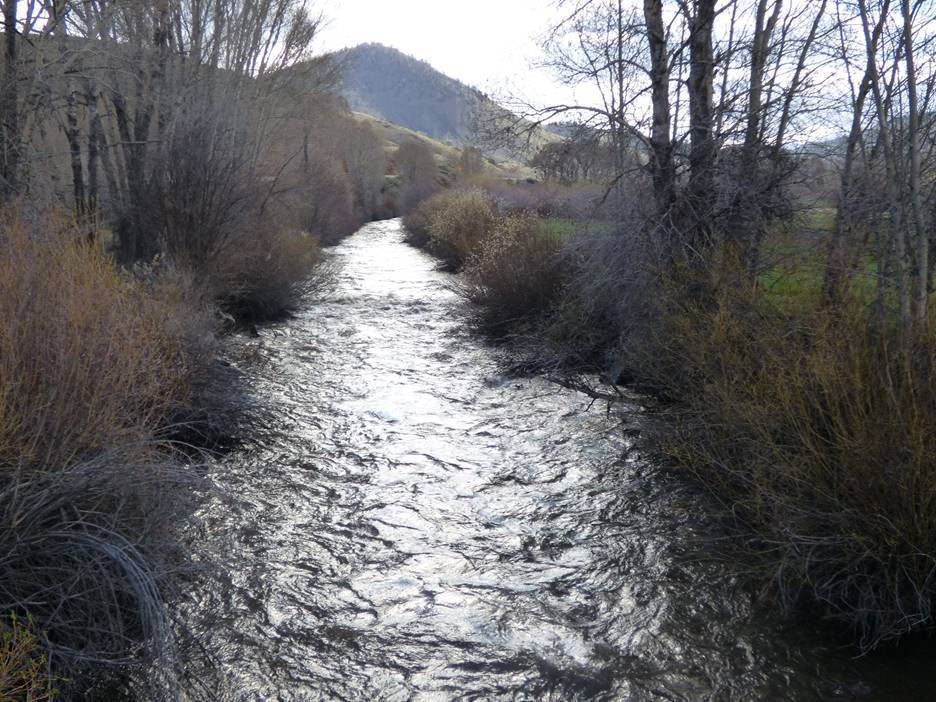
    Rebecca Mitchell selected as new CWCB director — @COindependent

    Photo of Becky Mitchell at Main Reservoir, Lakewood by Marianne Goodland

    From The Colorado Independent (Marianne Goodland):

    Rebecca “Becky” Mitchell, who currently heads up the water supply planning section of the Colorado Water Conservation Board, today was named the agency’s new director, effective immediately.

    Mitchell has been with the Department of Natural Resources since 2008 and joined the CWCB in 2009. She was selected as the next director by the agency’s 15-member board. The CWCB provides guidance on state water policy and is the state’s comprehensive source for water information, including technical assistance and training.

    A native of Hawaii, Mitchell has lived in Colorado for the past 20 years. Colorado water has been the focus of her entire career.

    She started off with an interest in the environment and biology but found water was her real passion. “Water is the corner in which I can make a difference,” she said.

    That interest has taken her all over the world, but especially to Africa, and Ethiopia. Mitchell has five children, including several adopted from Ethiopia. She says she believes in giving back and has traveled to Ethiopia to help the country with water treatment as well as work on water systems for orphanages.

    “It keeps you grounded in terms of why what you do is important,” she said.

    “I’m excited and fortunate to have an opportunity to serve a state agency filled with committed and thoughtful stewards of Colorado’s precious water resources,” Mitchell said in a statement. “Coloradans and our water communities are working like never before to solve our state’s challenges collaboratively. The same kind of cooperation that led to Colorado’s Water Plan will fuel the long-running effort necessary to continue putting the plan into action. What a privilege to be part of this process.”

    As section chief over water planning for the past five years, Mitchell has been a key liaison with water groups around the state, such as the basin roundtables, which represent environmental, recreational, agricultural, municipal and industrial water users in each of the state’s eight major river basins plus a separate group for metro Denver. She also has been responsible for directing and implementing the Statewide Water Supply Initiative, which provided some of the critical background data for the state water plan on water supply and demand.

    Prior to joining CWCB, Mitchell served served as the Water Policy and Issues Coordinator within the Department of Natural Resources’ executive director’s office and in both the public and private sectors as a consulting engineer. She received her bachelor’s and master’s degrees from the Colorado School of Mines.

    Senate President Pro tem Jerry Sonnenberg of Sterling, a critic of the previous director, James Eklund, greeted the news of Mitchell’s appointment with enthusiasm. “I’m confident the new director will rebuild the relationships with the legislature and work with us rather than working on their own,” he said.

    Conservation Colorado also viewed Mitchell’s appointment as a positive. “Our number one priority is to see the water plan implemented,” said Kristen Green of Conservation Colorado. Mitchell “knows the plan inside-out. She’s great at being collaborative and reaching out to different stakeholders.”

    Here’s the release from the Colorado Division of Water Resources (Todd Hartman):

    Rebecca Mitchell, who played an instrumental role in production of Colorado’s Water Plan, has been named the new director of the Colorado Water Conservation Board.

    Mitchell, who was selected by the CWCB’s 15-member board, will oversee CWCB’s 45-member staff as it provides statewide policy direction on water issues and continues implementation of the water plan. Mitchell replaces James Eklund, who left recently for private law practice after serving nearly four years as the agency’s director.

    “I’m excited and fortunate to have an opportunity to serve a state agency filled with committed and thoughtful stewards of Colorado’s precious water resources,” Mitchell said. “Coloradans and our water communities are working like never before to solve our state’s challenges collaboratively. The same kind of cooperation that led to Colorado’s Water Plan will fuel the long-running effort necessary to continue putting the plan into action. What a privilege to be part of this process.”

    Mitchell previously served as the Section Chief for CWCB’s Water Supply Planning section, which includes the Office of Water Conservation & Drought Planning and focuses on ensuring sufficient water supplies for Colorado’s citizens and the environment. Mitchell played a significant part in working with the state’s Basin Roundtables, the Interbasin Compact Committee, the public at large and CWCB staff in producing Colorado’s Water Plan following Gov. John HIckenlooper’s executive order in 2013 directing CWCB to facilitate the development of the plan.

    Mitchell has also served as the Water Policy and Issues Coordinator within the Colorado Department of Natural Resources’ executive director’s office. Before joining DNR she worked in both the public and private sectors as a consulting engineer. She received her bachelor’s and master’s degrees from the Colorado School of Mines.

    The Colorado Water Conservation Board (CWCB) was created over 75 years ago to provide policy direction on water issues. The CWCB is Colorado’s most comprehensive water information resource. The agency maintains expertise in a broad range of programs and provides technical assistance to further the utilization of Colorado’s waters. It is one of six divisions housed within the Colorado Department of Natural Resources.

    @COWaterPlan update

    Colorado Water Plan website screen shot November 1, 2013

    Here’s an interview with Bart Miller about the Colorado Water Plan from Water Deeply (Matt Weiser):

    Recent adoption of the first Colorado Water Plan sets the state on a path to resolve projected shortfalls in water supply, but the plan has flaws that still need attention, explains Western Resource Advocate’s Bart Miller.

    COLORADO FACES AN estimated water deficit of 560,000 acre-feet by 2050, due in part to an expected population increase. But it has a long-term plan to address that looming shortage.

    The Colorado Water Plan – the first-ever statewide water strategy in Colorado – was ordered up by Gov. John Hickenlooper in 2013 and finalized at the end of 2015. This May, the state legislature allocated a first slug of dedicated funding to meet objectives in the plan.

    The goal is to bring water demand into balance with supply while maintaining existing urban and agricultural values and also improving stream health throughout the state.

    To learn more about the plan, Water Deeply recently spoke with Bart Miller, Healthy Rivers Program director at Western Resource Advocates in Boulder. Miller has followed the plan closely, both during its drafting and as implementation begins.

    Water Deeply: Why this plan? What’s the conflict behind it?

    Coyote Gulch and Bart Miller at the State of the Rockies Speaker Series 2011.

    Bart Miller: The state of Colorado has seen and will continue to see a lot of growth – and in the last 15 years a lot of drought. So those two combined create what the plan describes as a gap in supply and demand looking out just a few decades ahead. The plan also recognizes some troubling trends in Colorado. Some of that is related to what we often refer to as “buy and dry”: cities buying up agricultural lands to get their water, and completely retiring the (farm) use on those lands.

    Also, there has been some conflict between east versus west. The Front Range has harvested water from the west side of Colorado such that today there is over 500,000 acre-feet collected from the Western Front and delivered to the Front Range.

    The executive order that called for the Water Plan back in 2013 was really, for the first time, describing broadly the water values the state has. Despite a history where water has been diverted for agriculture, cities and mining, the Water Plan points out there are a range of values, including viable communities, viable agriculture, viable recreation and smart land use. Those are the values the state has that cities and state agencies embrace. So I think it was an effort to get all those out on the table as co-equal partners in the state’s future water needs.

    Water Deeply: Does the plan lay out a particular budget or investment scheme?

    Miller: Not quite. It leaves most of the financial questions unresolved. It sets out objectives for all those different values that I mentioned. It tries to put a price tag on the funding gap to make all these things happen by 2050. The plan recognizes much of that funding will come from existing sources, in that cities, if building a water project, will be able to raise that funding and apply it to the customers they serve.

    But there are some items that have been underfunded or even unfunded over the course of the past few decades. A need for new funding is things like stream health.

    Water Deeply: Is there anything binding in the plan? Does it set any hard deadlines?

    Miller: I’d say no. It’s largely a planning document. It suggests that different objectives could be met through a series of actions. It suggests legislation that might be helpful, as well as executive or administration actions by the state agencies in collaboration with others. It notes some things, like urban water conservation, are really going to happen through water utilities and their planning process. So the short answer is no.

    But there is a pretty wide suite of recommendations, many of which are starting to be implemented. But it’s really just taking the first steps toward implementation.

    Water Deeply: Is this a good plan, in your opinion?

    Miller: I think yes. It’s a good planning document. It has good objectives, it recognizes a wide range of values. It doesn’t clearly spell out how we’ll get from here to 2030 or even 2050. So it’s in need of more milestones. We’ve got broad objectives for urban conservation, land-use planning, stream health and building new water storage. But it doesn’t have much in the way of measurement points, ways to check in.

    And then there’s the price tag. It does spell out a need for some new sources of funding. The good news is, this year the state legislature passed a bill in May that allocates a lot of money to the state Water Conservation Board – $20 million or so – toward implementing the water plan. A project bill is passed by the legislature every year. This year is the first time they included a large boost in funding. They took an existing revolving loan account, and there’s a large enough balance in it that they felt comfortable spending part of it down, which will not be reimbursed. A lot of it will be for grants.

    Water Deeply: The plan calls for 400,000 acre-feet of water savings by 2050. Is that ambitious enough?

    Miller: That’s a significant number for Colorado. As a point of reference, the water project that serves the Denver metro area serves about 1.3 million customers, and their annual use is about 250,000 acre-feet. So in rough terms, 400,000 acre-feet is enough to meet the needs of over 2 million people, and probably even more. In a state like Colorado, where you’ve only got 5 million residents today, that’s a good goal and a pretty big goal, and a pretty important part of the puzzle.

    Water Deeply: Even so, the plan projects a 560,000 acre-foot gap in water needs by 2050, right?

    Miller: The plan did both supply and demand projections in various parts of the state. It saw there could be a shortage, yes. But interestingly, a lot of the objectives in the plan will greatly reduce that gap. For example, urban conservation. If cities continue on the track they’ve been on the last 15 years, which is reducing water use per capita by about 1 percent per year, that’s going to save a large chunk of the 400,000 acre-feet, through urban conservation. So at some level, I would de-emphasize the importance of that gap, because there are several approaches that will make that gap shrink or disappear.

    Water Deeply: The plan also calls for 400,000 acre-feet of new water storage. Do we know what those projects will be?

    Miller: Some of them, yes. At least a couple of those fairly large water projects are already in progress. The proponents in one case are Denver Water, and in another case a northern Colorado group of cities working together under a group called Northern Water. They both have had projects proposed for 15 years or more, and they are in the process of getting environmental reviews done.

    Those two projects combined would point toward well over half of that 400,000 acre-foot goal. The rest of that 400,000 acre-foot – it’s an open question what projects will get built. And even these two are not done. They’re not built yet, and there may be delays or objections to those yet. The plan did not directly articulate which projects would be inside the 400,000 acre-foot goal.

    Water Deeply: What do the watershed protection components of the plan involve?

    Miller: One involves a state program – called Watershed Protection – that has been around a number of years. It does some things like sediment control and prescribed burns.

    And there’s a new element tucked inside that same program that has additional funding called stream management planning. It focuses specifically on river health and streamflow. This is meant to be kind of an organic process where stakeholders inside a particular river basin identify stream reaches that are in trouble: they’re dry, or they may have temperature issues. And they try to identify what options there might be to help those streams. It’s meant to identify problems and lay out a suite of solutions.

    There’s study from about five years ago that found Colorado River-based recreation and tourism generates in the neighborhood of about 80,000 jobs a year and adds about $9 billion a year to state’s economy. So there’s a growing recognition of the importance of rivers to the state.

    Water Deeply: The plan also calls for identifying new funding sources for water projects. How will this work?

    Miller: Yes, the plan is looking for options to raise an additional $100 million by 2020 and $3 billion by 2030. The plan estimated the unfunded piece of implementing the plan is $3 billion. All that’s still being discussed. There’s no firm plan yet for what the best mechanism for that is.

    The plan recognizes there are important water values across the state that do need to be addressed to help communities meet their conservation goals. But I think the funding need is probably an underestimate, because the plan did not go into very great detail about the costs of remedying stream health.

    Water Deeply: You mentioned there’s also a need to prioritize how funding is spent.

    Miller: There are many objectives in the plan. And there are gaps – perceived and real funding gaps. But there’s not yet a real clear process for applying criteria on how public funds are spent.

    So that’s an important next step, and I hope it will come to pass that those criteria are used. That, plus the long-term funding, will be really the proof of the truth in meeting our plan goals. The goals and objectives are great. We’ll hopefully find ourselves in a place where we’ve made good decisions two or three years from now.

    The Colorado Water Conservation Board and the Rio Grande Basin @CWCB_DNR

    San Luis Valley via National Geographic

    From The Alamosa News:

    The Colorado Water Conservation Board is a known name with an often unknown role. However, one thing is certain, it is the guiding force behind water policy in the State of Colorado and has been a key provider of financial means for many important water projects in the San Luis Valley.

    The Colorado Water Conservation Board was formed more than 75 years ago. The mission it was charged with was/is “To conserve, develop, protect and manage Colorado’s water for present and future generations.” Today, the CWCB is Colorado’s most comprehensive resource for water information, expertise and technical support.

    The CWCB is also about those who serve. Fifteen board members govern the CWCB. Members are appointed by the governor and serve three-year terms. Each member hails from one of the nine basins of Colorado which are the Arkansas, Colorado, Gunnison, Metro, North Platte, Rio Grande, South Platte, Southwest, and Yampa/White respectively. They are responsible for tasks such as protecting Colorado’s streams and rivers, water conservation, flood mitigation, watershed protection, stream restoration, drought planning, water project financing, and the creation and oversight of the Basin Roundtables. In addition, the CWCB collaborates with other western states, as well as federal agencies, to protect state water apportionments.

    Other personnel include more than 40 CWCB staff members who maintain a total of six major program areas or sections. The sections are management, finance and administration, interstate and federal, stream and lake protection, water supply planning, watershed and flood protection. These are the teams that report to the board members, make recommendations and do all of the behind the scenes work. The combined efforts of the CWCB board and staff have produced beneficial and needed results with water projects and issues throughout the state.

    One example of a key initiative that was recently completed by the CWCB is the Colorado Water Plan. Until 2015, Colorado was one of the only western states that did not have a water plan. With the population of Colorado expected to see enormous increases, the demand for water is also projected to see a huge spike. There were/are also many challenges facing Colorado including an increasing water supply gap, agricultural dry-up, critical environmental concerns, variable climate conditions, inefficient regulatory process and increasing funding needs. As a result, Governor John Hickenlooper signed an Executive Order in 2013 which tasked the CWCB with the creation of a water plan for the State of Colorado.

    After three years, the completion of the Colorado Water Plan was celebrated in November of 2015. Goals in the plan include meeting the water supply gap, defending Colorado’s compact entitlements, improving regulations, and exploring financial incentives. Meanwhile, the objective is to honor Colorado water values and ensure the state’s most valuable resource is protected and preserved for generations to come. The implementation of the Colorado Water Plan continues by working through individual issues in each basin. This is just one of the many complex areas the CWCB tackles on a daily basis.

    With the many and often difficult issues the Colorado Water Conservation Board handles, what do these efforts mean to the Rio Grande Basin and the San Luis Valley? The answer is the Rio Grande Roundtable. The Roundtable serves two critical roles. The first is to develop a comprehensive communication platform for stakeholders, and the second is as a conduit for funding basin water projects. The Rio Grande Roundtable itself exists because of the CWCB. The concept of the Basin Roundtables was established through the “Water for the 21st Century Act” with the intent of facilitating discussion and common sense solutions for Colorado’s water needs.

    Currently, the roundtables across the state bring more than 300 individuals to the table. There is an even larger amount of needs and interests represented. Each basin is also required to have a plan. These plans must identify both consumptive and non-consumptive water needs as well as available water supplies and proposed projects and methods. The projects and methods of course, require funding. This is where the CWCB Water Project Loan Program comes in. On an annual basis, the CWCB has close to $50 million available for this program. These low interest loans are available to any agricultural or municipal borrower who can establish a clear need for the design and/or construction of a raw water project. Proposed projects must then clear an application process and obtain board approval. Once each of these measures are successful, the project can begin.

    The Rio Grande Basin Roundtable has been the recipient of millions of dollars in funding for crucial water projects, thanks to the Colorado Water Conservation Board. One notable example is the Rio Grande Cooperative Project. As a public/private partnership between Colorado Parks and Wildlife and the San Luis Valley Irrigation District, the Rio Grande Cooperative project was presented to the CWCB as a funding request for needed repairs to Rio Grande and Beaver Reservoirs. The request was successful and in 2013, Phase 1 of the repair process at Rio Grande Reservoir was complete. Beaver Reservoir completed its dam rehabilitation in 2016. This is just one way in which the CWCB has tremendously benefitted the San Luis Valley. In fact, it could possibly be argued that the Valley would be a much different place without the CWCB.

    Colorado’s water and water in the Rio Grande Basin is and always will be an important matter. Many can agree that it must be used wisely. The Rio Grande Roundtable and the Colorado Water Conservation Board work to ensure that this valuable resource is managed well.

    The Rio Grande Basin Roundtable meets the second Tuesday of every month. Meetings are located at the San Luis Valley Water Conservancy District office at 623 4th St. Alamosa. Visit http://www.rgbrt.org. or http://cwcb.state.co.us.

    Lawmakers lament they “don’t have more influence” moving state water plan forward — @COindependent

    James Eklund and Governor Hickenlooper roll out the Colorado Water Plan, Thursday, November 19, 2015 via The Colorado Independent

    From The Colorado Independent (Marianne Goodland):

    Two sessions have passed since Gov. John Hickenlooper rolled out Colorado’s first statewide water plan, yet lawmakers have made little progress toward the plan’s main goal – averting a massive state water shortfall in 2050.

    The single biggest achievement in water policy these past two sessions is a feel-good law allowing Coloradans to use rain barrels to collect rain and snowmelt to water their gardens. Although the barrels carry some symbolic importance in a state whose water supplies aren’t keeping up with needs, the amount of water they collect toward solving Colorado’s water woes is the statistical equivalent of a drop in the bucket.

    Lawmakers’ broader inaction underscores the limits of their authority on water policy and of their ability to put in place meaningful efforts – or at least a priority list for those efforts – to stave off a water crisis. Although the legislature has allocated $15 million to implement the water plan, some members complain their involvement is limited mainly to “writing the check,” without input into how, specifically, money might be spent other than on writing more water reports and holding more water meetings. Several admit they have no idea where the plan’s priorities lie or how, specifically, Hickenlooper expects it will be put into action.

    Senate President Pro Tem Jerry Sonnenberg, a Republican and farmer from Sterling and one of the General Assembly’s leading agriculture and water advocates, complains that lawmakers “do not have enough influence on the direction of the water plan.”

    Rep. Jeni Arndt of Fort Collins, a Democrat who chairs the House Agriculture, Livestock and Energy Committee, has run a half-dozen bills that specifically address water plan issues, some successfully, some not. She points out that a published guide on moving forward, put out by the Colorado Water Conservation Board (CWCB), said that most goals of the water plan would be accomplished by the executive branch, with a limited role for the General Assembly.

    “That’s what they think,” she laughed.

    The Colorado Water Plan was initiated with much fanfare by Hickenlooper in May 2013 and finalized in November 2015. It seeks to address an alarming problem: Projections that, by 2050, the state will face a water shortfall of at least one million acre-feet per year.

    An acre-foot of water is about 326,000 gallons of water. If not addressed, the one million acre-foot supply-demand gap would cut across all water uses in the state: affecting at least two million residents as well as recreational, environmental, industrial and agricultural water uses.

    The swelling water deficit is born of several factors. One is growth and projections that the state’s population will jump from about 5.4 million residents this year to as many as 10.3 million by 2050.

    Another factor is climate change. A 2014 report commissioned by the CWCB points out that average annual temperatures in Colorado have risen by 2 degrees between 1977 and 2006. A hotter climate increases the potential for drought in southern Colorado, and could also reduce the annual spring runoff from the mountain snowpack, which affects all of Colorado as well as some of the downstream states both east and west that rely on water that originates here.

    An increasing reliance on water by Colorado’s oil and gas industry also factors in, as do demands by conservationists and recreational users to stop bleeding our rivers dry.

    But the biggest factor in terms of actual water use is that farming and ranching interests, which use 80 percent of the state’s water, are motivated under the state’s “use it or lose it” water laws to continue antiquated and even wasteful water practices out of fear of losing their senior water rights.

    The water plan identifies the size of the projected water shortage – drawn from a 2010 study that is being updated – but doesn’t offer a roadmap for addressing it, other than stating how much water the state needs to save through storage and conservation projects to meet its 2050 needs. It doesn’t spell out just who’s responsible for those savings: the executive branch, the legislature, or public-private partnerships.

    Hickenlooper’s administration has passed responsibility for charting the specific courses mainly to nine local, grassroots groups, known as basin roundtables, that include officials from water utilities and representatives of agricultural, industrial, recreational and environmental groups. The nine roundtable groups are centered around the state’s eight major waterways plus the Denver metro area. Each assessed how much water they would be short in the coming decades, broken down by recreation, environmental, agricultural and municipal needs.

    The roundtables – with the South Platte River and metro Denver groups working jointly – each came up with plans that outline what they will do to meet the projected water shortages in their areas. Their wishlists for local water projects form the bulk of specifics within the 540-page statewide plan. But there is no greater design, no set of master priorities on which spending decisions can be based.

    That leaves lawmakers scratching their heads when it comes to water policy and budgeting.

    The legislature’s efforts on water fall to a joint interim committee, known as the Water Resources Review Committee, that meets every summer. The bipartisan group of 10 lawmakers – including the chairs of the Senate and House agriculture committees – starts its annual review of state water issues each August. Members then sponsor water-related legislation either as a committee or on their own.

    In the past two years, water committee members have sponsored most of the 35 water-related bills proposed at the Statehouse. Of those, the vast majority deal with managing the state’s Byzantine laws on water rights. Roughly 15 were to varying degrees intended to address some of the nebulous goals laid out in Hickenlooper’s water plan.

    Related: Path forward is murky in Hickenlooper’s final water plan

    By far the most noteworthy among those 15 were the 2016 and 2017 annual water projects bills, which were written by CWCB staff and earmarked state funding for a variety of water projects. The 2016 bill put up $5 million to implement the water plan, but didn’t specify how that money would be spent. That line item became a bone of contention for some lawmakers, especially those on the Joint Budget Committee who tend to take a dim view of spending money without specifics on where it’s going.

    The 2017 projects bill set aside another $10 million for implementing the state water plan, plus another $10 million more to the basin roundtables to pay for local water projects. The 2017 projects outlined how the $5 million from 2016 would be spent. That money will go to the CWCB for statewide projects, such as improved water supply forecasting, a grant program on agricultural water transfers, statewide training to water providers on water loss, and grants to water agencies that are developing http://cwcb.state.co.us/legal/Documents/Policies/17FeasibilityStudySmallGrants.pdf for future water storage projects.

    The $10 million in 2017 for implementing the plan includes $1 million to update a 2010 study that provided the initial projections for the state’s projected water deficit – estimated in 2010 to reach about one million acre-feet per year by 2050. That estimate is now considered low, and could possibly be as much as two million acre-feet annually.

    Another $2 million will pay for water projects that serve multiple purposes (such as recreation and environmental needs). Another $1 million will develop long-term strategies on conservation, land use and drought planning. Another $3 million will help facilitate the development of water storage systems. Some $1 million will pay for water education, $1 million for “technical assistance for agricultural projects” and $1 million for watershed health (more about that later).

    The $10 million for the CWCB’s 2017 costs for implementing the water plan and the $10 million for the regional roundtable groups will come from severance tax revenues that will be transferred into the CWCB’s construction fund. The rest comes from that construction fund, a revolving loan account that dates back to 1971 and makes low-interest loans for water projects throughout the state. Its revenues come from interest earned on outstanding loans, the fund’s cash balance, and federal mineral lease revenues.

    The 2017 projects bill, which Hickenlooper signed into law on Tuesday, puts $10 million from the CWCB’s construction fund into a new loan guarantee fund that would help with regional water projects in which multiple water utilities are involved.

    Another $5 million will pay for a watershed restoration program. Watersheds are areas of land from which rain or snowmelt route toward a common waterway, including the surface water from streams, rivers and reservoirs as well as groundwater found in underground aquifers. The water plan says healthy watersheds are crucial for environmental needs such as improving fish and wildlife habitats or reducing the impact of soil erosion, and for recreational purposes such as rafting and angling. Colorado’s watersheds match up with the nine river basins, and then are further subdivided by local waterways in each of those basins. The $5 million for watersheds is intended to advance the water plan’s goal to improve the health of 80 percent of those watersheds by 2030.

    In addition to the annual projects bills in 2016 and 2017, lawmakers have over the past two sessions sought measures to do the following:

    Improve forest health. A 2015 report by Colorado State University says healthy forests are key to providing clean water. But when the health of those forests decline, through wildfires or disease, for example, the quality of water flowing through them and on to waterways also declines. “Forests are our largest reservoir,” says Republican Sen. Don Coram of Montrose, sponsor of a 2016 bill that directs the Colorado State Forest Service and CWCB to document the nexus between the state water plan and forest management as a way of protecting the state’s water resources. That report is due July 1.

    Study possibilities to store water from the South Platte River: The General Assembly commissioned a report in 2016, and it’s due to lawmakers this December. Without waiting for that report, the water committee this year sponsored a bill to increase the capacity of reservoirs along the South Platte through dredging. The stand-alone bill sought $5 million in funding, but, in the end, the 2017 projects bill set aside $3 million for storage, including dredging the South Platte’s reservoirs.

    Help streamline state permitting for water projects. Water storage projects take years, even decades, from start to finish, and much of that is tied up in regulations. Sonnenberg says that at the state level a storage project gets caught in a circular trap. First, a proposed project goes to the state Department of Public Health and Environment (CDPHE), which has authority on water quality issues. Then it heads to Colorado Parks and Wildlife for review on mitigating wildlife issues. After that, it heads back to CDPHE, but by then much has changed.

    Lawmakers tried to set up a “one-stop shop” for water projects permits a couple of years ago. That didn’t work, so in 2016 they found a backdoor way to address the problem by telling the governor to hire someone to do it. Hickenlooper quickly put into place his water czar, former Ag Commissioner John Stulp. Under the law, the director of water project permitting coordination (yes, that’s the title) should work to speed up permitting for water projects financed by the CWCB’s construction fund or those required to obtain water quality certification from the CDPHE. Yet Stump said that so far, there hasn’t been a great need for his assistance in moving the permit process along. The water project closest to completion, the Windy Gap Firming Project southwest of Loveland, got its final federal approval earlier this month and is expected to begin construction of a 90,000 acre-foot reservoir known as Chimney Hollow in 2019. The projects bill includes a $90 million loan to the Northern Water Conservancy District for construction of Chimney Hollow.

    There are two other storage projects in the pipeline, and the permitting assistance is available as needed, Stulp said.

    Among the other water plan-related bills in 2016 and 2017:

    • Successful legislation to continue a pilot program that would allow farmers and ranchers to temporarily lease their water rights to municipal water utilities.
    Bills to require local governments to incorporate water conservation goals, including those found in the state water plan, into local community master plans, particularly when new development is being considered. Those bills failed two years in a row at the balking of local governments who don’t want to be told what to do.

    Sonnenberg, the water committee chair, looks toward hearings in August with an eye on building more water storage. He lives just a few miles away from the South Platte River whose water flows east to Nebraska for free. As many farmers and ranchers see it, dams and reservoirs need to be built to capture that water and save it for future use within Colorado.

    Most municipal water districts and industrial users agree on the need for more storage. But conservationists and recreational water interests oppose that view, saying and flows need to stay in rivers – regardless of state lines – to keep them and their habitats healthy.

    Sonnenberg has been particularly critical of CWCB and Hickenlooper’s administration for not taking a clear position on water storage and how it should figure in the water plan. He also criticizes CWCB for not welcoming lawmakers’ input on the water plan in general.

    “We had to run a bill just to get the CWCB to listen to us” about the water plan, Sonnenberg grumbled.

    That 2014 law reiterated that the General Assembly is responsible for water policy and that the CWCB has authority to implement that policy. The law also sent the water committee around the state in the summer and fall of 2014 to gather input from citizens on what the water plan should look like. The committee then sent that input to the CWCB for consideration in the water plan, as well as its own recommendations strongly urging a clearly defined set of priorities and specific steps the state needs to take to meet its water needs mid-century.

    From lawmakers’ perspectives, the final version of the plan doesn’t reflect their input.

    Disappointed with the plan’s progress, Sonnenberg says, “The CWCB has not had conversations with the legislature other than to (say) ‘pass our projects bill, sit down and shut up.’ That communication has to change.”

    Fellow committee member Sen. Matt Jones, a Louisville Democrat, is similarly concerned about efficacy of the plan, but for different reasons. His water worries are about conservation and river health – issues for which he says the plan lacks “a cohesive recommendation.” Progress on those issues has been very slow, he said, and certainly not fast enough to compete with increasing strains on the state’s water supply caused by population growth.

    Jones has pushed a bill for the last two years that would require developers to submit plans for water conservation in their proposed developments. Despite bipartisan sponsorship and even without opposition from homebuilders, the measure twice has failed to make it out of the Senate.

    He is especially frustrated that Colorado’s legislature hasn’t pushed the conservation side of the water plan. He notes that the state hasn’t updated its conservation statutes since 1991.

    The water plan “is very aggressive on conservation planning, and the legislature should meet that need by pushing even harder to make it happen,” Jones said. Without such a push, conservationists say, the plan remains more of a statement of values than a call for action.
    “The targets are there, and it has a lot of aspirational goals, but it’s not a defined implementation plan” that specifically says what needs to be done and who’s responsible for doing it, says Doug Kemper, executive director of the Colorado Water Congress.

    Kemper says the clock is ticking toward 2050 and that the water plan needs clearly articulated priorities from the General Assembly no later than the end of this year. The water community, including local and county governments, water districts, and hundreds of individuals and organizations interested in water issues, also hasn’t set its priorities yet, either. Kemper expects that will happen when the Water Congress meets in August.

    Bart Miller, who directs a program promoting healthy rivers for the conservation group Western Resource Advocates, says the progress so far has mainly been on the funding side – in particular the dollars coming out of the two projects bills in 2016 and 2017 – but that those amounts are too small to quench state water needs. Although, as Miller sees it, water projects from the Northern Water Conservancy District and Denver Water and under way to help meet the plan’s storage goal of 400,000 acre-feet, the goal of conserving another 400,000 acre-feet has seen far less progress.

    Miller sees a lack of clear milestones as one of the plan’s bigger shortfalls. “It should be able to say where you need to be by 2020 if you’re working toward 2030 or even 2050,” he says.

    CWCB has balked at setting such milestones and has been trying to lower expectations about the speed of the plan’s implementation. Nowhere was this more obvious than at a Joint Budget Committee meeting in December, when CWCB finance chief Kirk Russell told lawmakers only half-jokingly that, “I’m glad the question wasn’t ‘Are you done yet and why not?’”

    Feature photo of James Eklund, then head of the CWCB and Gov. John Hickenlooper, holding up a copy of the state water plan for its November, 2015 rollout. Photo by Marianne Goodland.