More than 3,500 students are expected to get out of the classroom and into the Cache la Poudre River National Heritage Area after the area received a grant from the National Park Foundation.
The foundation, the nonprofit partner of the National Park Service, awarded a $26,800 Open OutDoors for Kids grant to the national heritage area as part of the foundation’s Youth Engagement and Education Initiative.
The funding will support the heritage area’s Learning in Our Watershed program, providing scholarships to public, charter, home and online schools for field trips to locations throughout the heritage area. Scholarships are available for all grades, but fourth-grade classrooms from Title I schools receive priority.
On-site field trips for the program include the Poudre Learning Center, the Environmental Learning Center, Centennial Village Museum, the Fort Collins Museum of Discovery, the Windsor History Museum and Study Outdoors Learn Outdoors. Learning in Our Watershed has initiatives for learners of all ages.
Assistant Secretary for Water and Science Tanya Trujillo wrapped up a multi-day visit to Colorado today, where she highlighted investments from President Biden’s Bipartisan Infrastructure Law and Inflation Reduction Act in drought resilience.
The Bipartisan Infrastructure Law allocates $8.3 billion for Bureau of Reclamation water infrastructure projects over the next five years to advance drought resilience and expand access to clean water for families, farmers, and wildlife. The investment will repair aging water delivery systems, secure dams, complete rural water projects, protect aquatic ecosystems and fulfill Indian Water Rights Settlements. The Inflation Reduction Act is investing another $4 billion to address the worsening crisis. Combined these two initiatives represent the largest investments in climate resilience in the nation’s history and provide a once-in-a-generation opportunity for the work of the Interior Department.
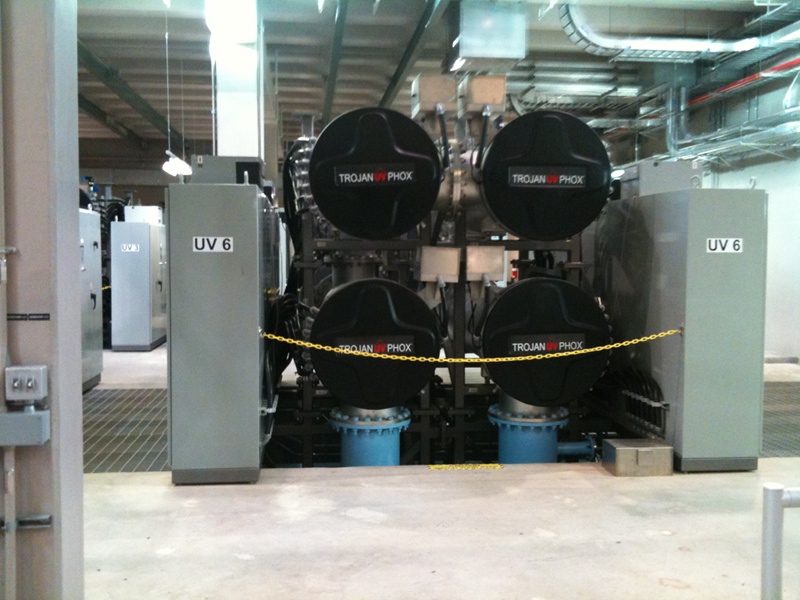
UV pretreatment Peter D. Binney Purification Facility.
Today [January 13, 2023] , she joined Congressman Jason Crow, Colorado Department of Agriculture Commissioner Kate Greenberg, and Aurora Mayor Mike Coffman to tour the Binney Water Treatment facility in Aurora to celebrate a recent $5 million investment from the Bipartisan Infrastructure Law that will allow the city to expand the Prairie Waters Project (PWP), securing more clean, reliable water. The funding is part of $84 million announced last month from the Bipartisan Infrastructure Law to advance innovative drought resilience efforts.
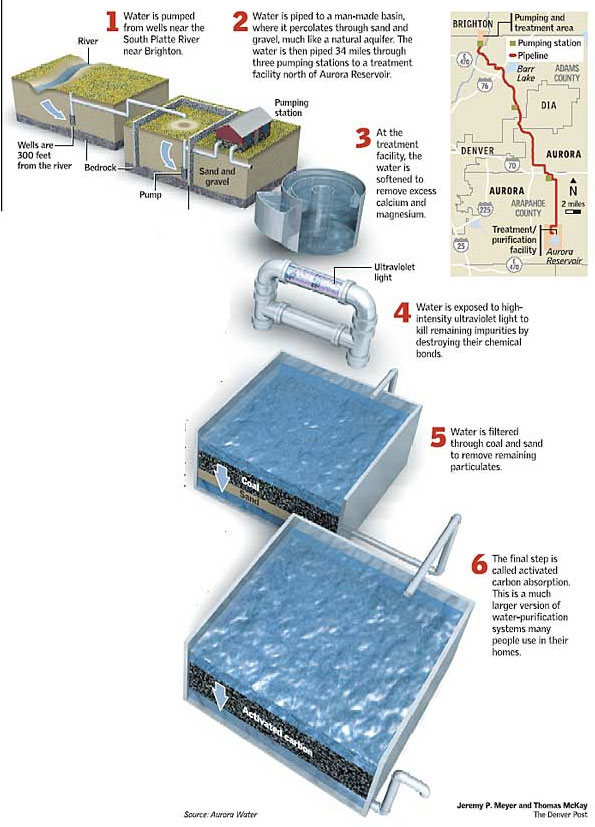
The City of Aurora constructed the PWP after the severe drought in 2002 to improve drought resiliency. The project is an innovative potable reuse system, which captures and treats river water to provide up to 10 million gallons of clean water to Aurora residents per day. With Bipartisan Infrastructure Law funding, the City will expand the PWP by constructing a second radial well and pump station and increasing the overall water recovery capacity by 4,500 acre-feet annually.
On Thursday, Assistant Secretary Trujillo spoke at the Four States Irrigation Council Annual Meeting to highlight how investments from both laws will support western communities. While in Colorado, Assistant Secretary Trujillo also visited with staff at the U.S. Geological Survey’s (USGS) Fort Collins Science Center and at the Denver Federal Center in Lakewood, Colorado. The Bipartisan Infrastructure Law provides $510.7 million over the next five year to advance scientific innovation through integrated mapping of critical minerals that power many household appliances and clean energy technologies and through a $167 million investment for the USGS Energy and Minerals Research Facility in Golden, Colorado.
Aurora is planning an expansion to its innovative Prairie Waters project with the help of a $5 million federal grant, a project that city staffers say could recover enough water to support thousands of homes. The grant, which the federal government says the city is likely to receive, would be used toward the $11.5 million undertaking of digging a new pump station and radial well, which would draw water from below the South Platte River.
“Drought has been something we’re needing to tackle and handle more and more as the years go on, and so having this resource come from the South Platte instead of the mountains is definitely a drought resiliency component,” said Aurora Water staffer Justin Montes, who applied for the federal grant…
Radial wells consist of a single vertical shaft ending in multiple horizontal shafts that radiate outward like the spokes of a wheel. The radial well and pump station would be part of an expansion to the Prairie Waters project including another radial well that the city plans to dig in 2024. Aurora Water representatives say the entire expansion has the potential to double the water recovered by the project, which uses wells dug near the South Platte River to collect water that has been absorbed and naturally filtered by the riverbank. By the time water is collected by the wells, it has already passed through hundreds of feet of sediment beneath the South Platte, filtering out pathogens, organic chemicals and other contaminants. Montes said the process can also filter out debris introduced by wildfires.
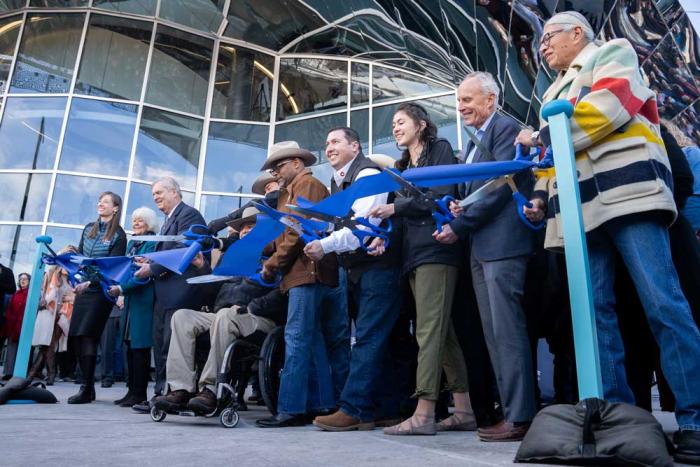
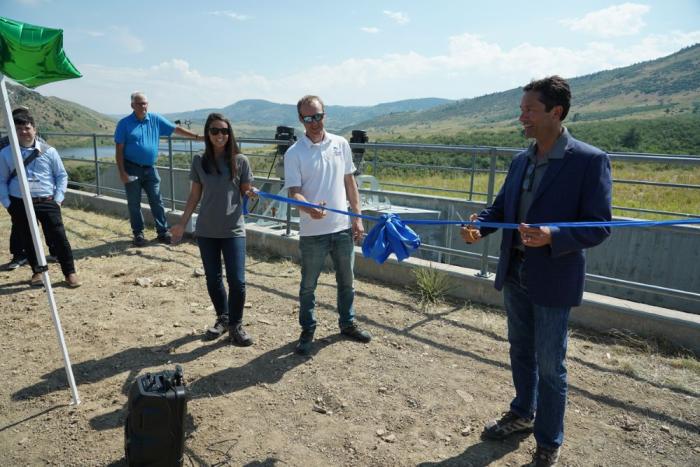
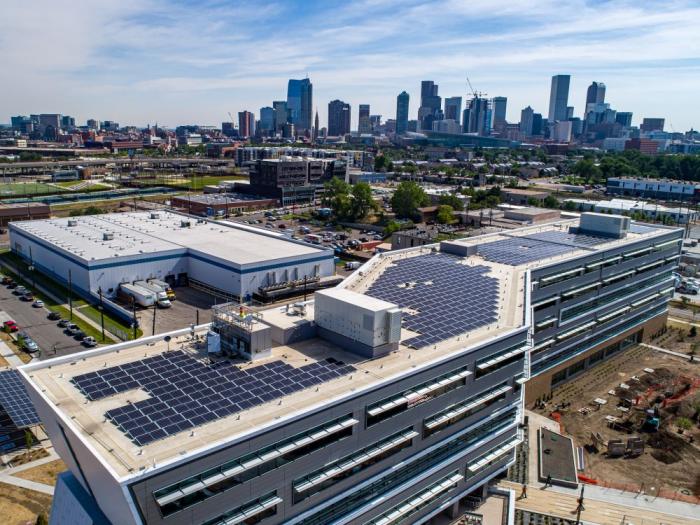
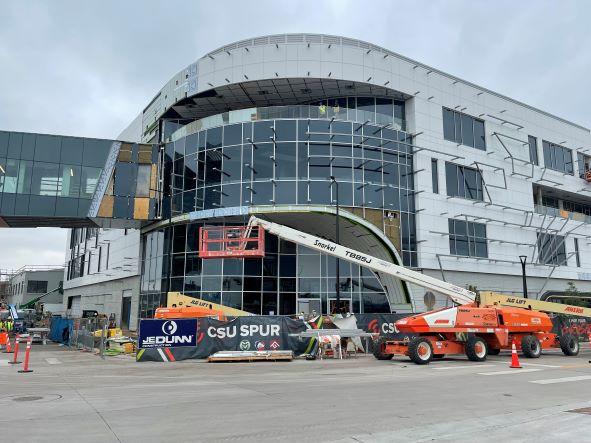
A ribbon-cutting ceremony for the Hydro building on Jan. 6, 2023, marked the completion of the CSU Spur campus, a center for innovation and learning focused on water, land and life. Photo credit: CSU Spur.
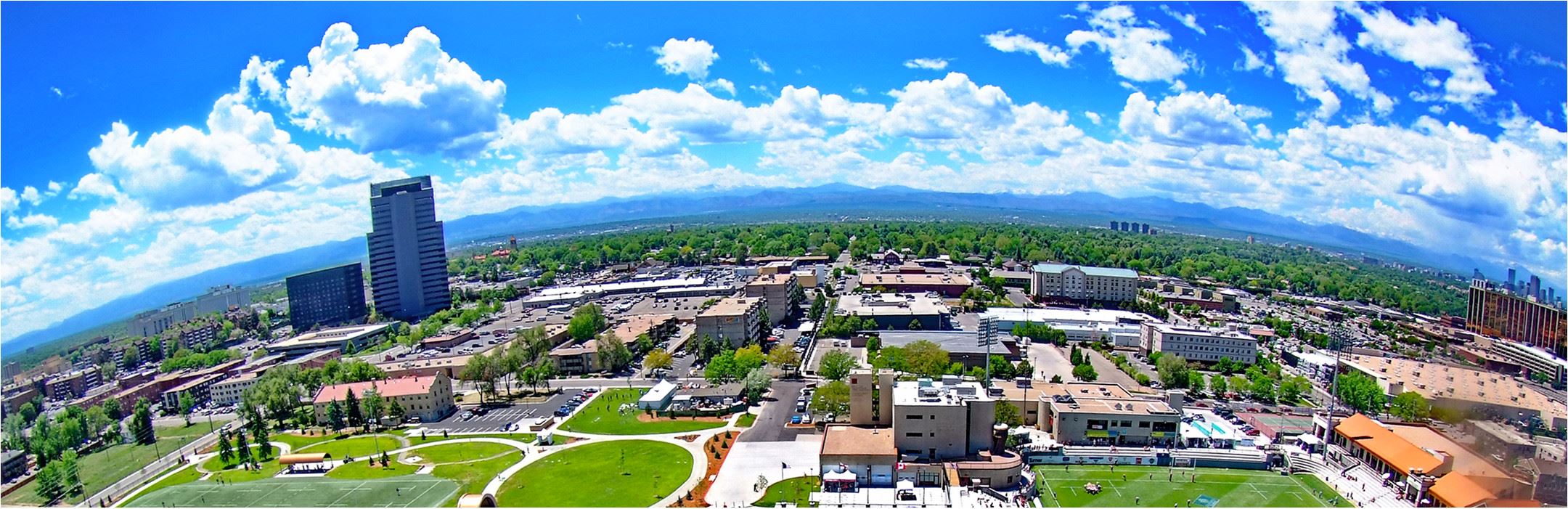
Colorado State University’s marching band, university mascot CAM the Ram and the enthusiastic clamor of cowbells joined with dignitaries from the city, state and nation on Friday to celebrate the opening of the new Hydro building at the CSU Spur campus in north Denver.
The Hydro building will be the home of Denver Water’s new, state-of-the-art water quality laboratory, replacing a small and outdated facility in southwest Denver that Denver Water had outgrown.
It’s the third of a three-building research innovation and education complex called CSU Spur built at the heart of the National Western Center, the historic site of the old stock show complex now undergoing a massive redevelopment effort.
See inside the Hydro building, which opened on Friday, Jan. 6:
Denver Water is partnering with Colorado State University to be part of the new CSU Spur campus on the National Western Center campus. Learn about Denver Water’s role at the new building.
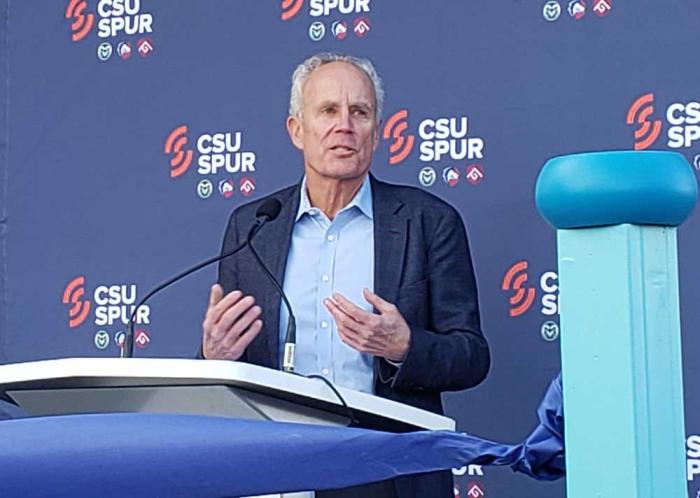
Prior to cutting the ribbon to open the new building, Denver Water CEO/Manager Jim Lochhead noted that the building offers far more than laboratory space, which is expected to be fully operational later this spring.
“Here at CSU’s Spur campus, Denver Water will be the heart of a new research environment where we can work closely with academics and scientists in planning for water demands and challenges of tomorrow,” Lochhead said.
“Climate change and emerging water quality issues require innovation. Spur provides a collaborative opportunity with all water interests to help Denver Water provide leading solutions to water challenges for our customers, the state and the West in a public and engaging way,” he said.
One of the exhibits in the Hydro building provides a hands-on demonstration of how moving water, such as a river, shapes the land around it over time. Photo credit: CSU Spur
The utility’s water quality team conducts nearly 200,000 tests every year to ensure the water delivered to 1.5 million people every day is clean, safe and meets all state and federal water quality standards. The new facility provides room for Denver Water scientists to test three times that amount in the future.
Denver Water’s Youth Education team also will use the site to teach students about their water — where it comes from, how it’s cleaned and how its delivered to their homes.
“This space also provides us with new ways to connect with the next generation of water leaders and highlight career paths that many students may not have been aware of before. It’s a win for all of us,” Lochhead said.
The connections created by the people working at the CSU Spur campus will be “a win for all of us,” said Jim Lochhead, the CEO/Manager of Denver Water. Photo credit: Denver Water.
Hydro, which is Greek for water, joins two completed buildings at the CSU Spur campus.
The first building, Vida, which means “life” in Spanish, opened in January 2022. It’s home to a community veterinary hospital for the Dumb Friends League; Temple Grandin Equine Center, which offers equine assisted services; and a 9-foot model of a kitten named Esperanza, quite possibly the largest cat in the West.
The second building, Terra, which means “earth” or “land” in Latin, opened in the summer of 2022. It features rooftop greenhouses and a teaching kitchen, along with food innovation labs for new product creation, agricultural diagnostic labs and exhibits focused on food and agricultural systems.
The intersection of those three areas — water, land and life — represent the global challenges facing our world.
“I don’t think we can imagine what will be accomplished in the next 20, 40, 50 years at this campus. But I believe when we think about the human potential that will be unlocked here, the creativity that will be unleashed to make progress around these great global challenges, CSU Spur is something we’ll be incredibly proud to be a part of,” said Tony Frank, the chancellor of the Colorado State University System, at the opening ceremony.
Terra, one of the three buildings at the CSU Spur campus, focuses on agriculture and has a teaching kitchen. Photo credit: CSU Spur.
The connections the three buildings will foster — between people dedicated to public health and animal care, the land and the food it provides, and the life-giving water that circulates throughout — was noted by several speakers during the ceremony.
Denver Mayor Michael Hancock said Denver Water’s presence at the building, with its water quality experts, will feature the mission of Hydro — to bring research and innovation to the questions of water resilience and sustainability.
Tom Vilsack, the U.S. Secretary of Agriculture, has been involved in the planning for the CSU Spur campus for years. The end of construction means the start of opportunity and change on a local and international level, he told the crowd.
“These buildings are not just buildings. They’re not just incredible educational opportunities. They’re not just a place to celebrate the science and arts. They’re not just a place to connect rural and urban,” Vilsack said.
“This is the center of transformation. This is a center for a brighter and better future, not just for Colorado agriculture, not just for United States agriculture, but for global agriculture. It’s that important what you all are doing here.
“I hope as you go through here, you understand and appreciate how proud you should be to be connected to a university, to a city, and to a state that is so committed to this endeavor,” he said.
The Vida building at the CSU Spur campus has a veterinary clinic for professionals, and a learning space for students exploring future opportunities. Photo credit: CSU Spur.
Colorado Gov. Jared Polis said he viewed the campus and the connections it will foster as a place that will drive the state’s economy and sustainability efforts.
“Water is life in our state, and the challenges that Colorado and the West face around water are really reaching a critical point in less water, more demand, our straining of our streams and our waterways, making the work here, inventing innovative, a future that works for the West, that works for Colorado is more important than ever before,” Polis said.
“This is a place where we can continue our leadership on water, fostering conversations that lead to local, regional, statewide solutions.”
After the ribbon was cut, all three buildings were open to the public.
Children, parents and adults walked through Hydro, learning about the importance of water from Denver Water employees who staffed the “Water and Land” hands-on exhibit demonstrating how moving water, such as a river, shapes the land around it.
On the third floor of the building, they peered through the glass at the new laboratory space that will be set up and operational in coming months. And they gathered around a column of water, watching bubbles rise through the water and using an information table to explore different indicators that scientists look for to determine water quality.
Interactive exhibits explore the world of water at the Hydro building. Photo credit: Denver Water.
At the Terra building, students explored food options, while at Vida they learned about veterinary care – even trying on lab coats while bandaging a stuffed dog.
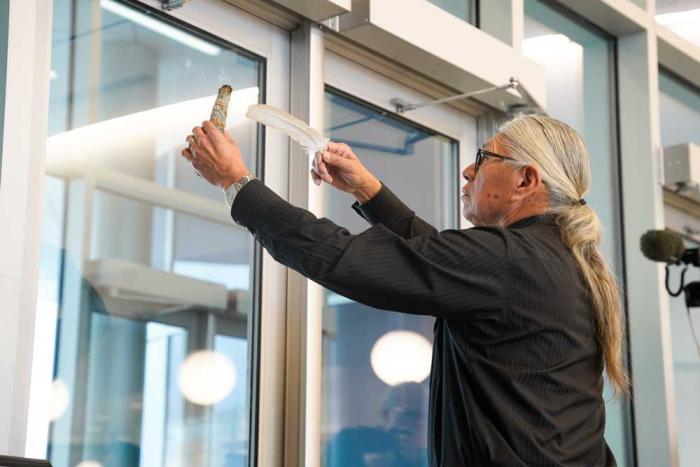
Before the celebration, John Gritts, a member of the Cherokee Nation, blessed the building:
“Creator, as we gather here today to open and celebrate Hydro, the last building in this educational complex, we ask for your blessings upon this sacred ground,” Gritts said.
“We ask for your blessings for this place where people can learn the importance of the relationship between animals, plants — and how sacred water is to us as human beings. May we recognize and honor those relationships.
“Thank you for this day that we can celebrate.”
John Gritts, a member of the Cherokee Nation, sought a blessing for the Hydro building prior to its opening on Jan. 6, 2023. Photo credit: CSU Spur.
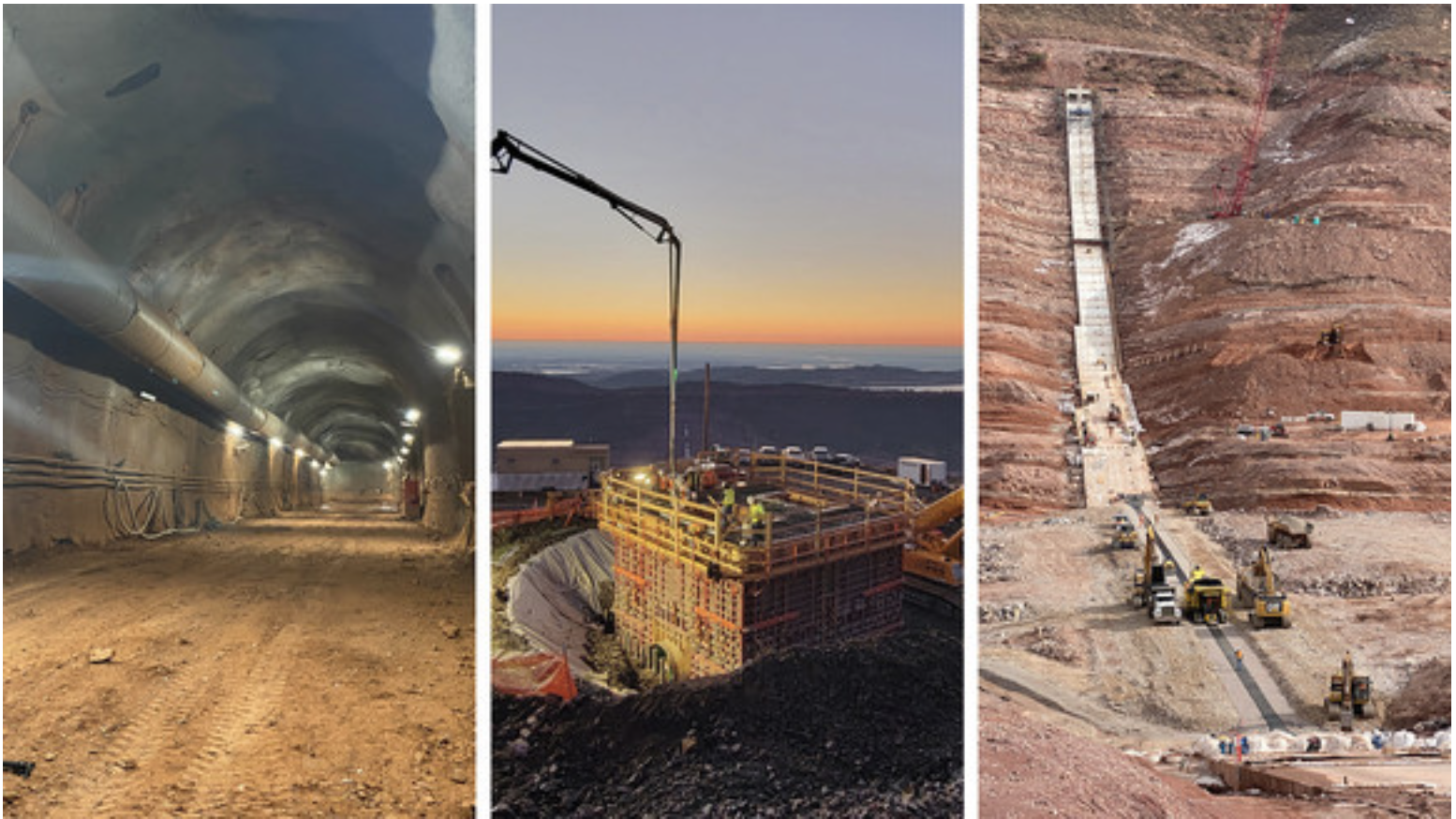
Inlet/Outlet Tunnel (left), Bald Mountain Interconnect (center) and Main Dam (right). Credit: Northern Water
From the Chimney Hollow “E-Newsletter” from Northern Water:
Chimney Hollow Reservoir construction crews made significant progress in 2022. Work started in August 2021 and is scheduled to continue until August 2025. Here are some highlights from this year’s work.
Main Dam Foundation Prep: In November 2022, crews completed the main dam rock excavation, which marked a huge milestone in reservoir construction after 15 months of work on this component.
Hydraulic Asphalt Core: Chimney Hollow construction crews began the asphalt placement in October 2022. For the next two years, the asphalt will be placed in 9-inch increments per lift until the dam reaches a height of about 350 feet. Rockfill and filter/drain construction occur concurrently to complete the embankment construction at any given elevation.
Bald Mountain Interconnect: One of the most time-sensitive aspects of the Chimney Hollow Reservoir Project was the Bald Mountain Interconnect. A shutdown of the Colorado-Big Thompson (C-BT) Project occurred from mid-September through mid-December as crews cut into existing infrastructure to tie in a 126-inch diameter section of steel pipe with a 72-inch diameter steel offtake (known as a wye) to add the ability to deliver water into Chimney Hollow Reservoir from the C-BT Project.
Larimer County and Saddle Dam Access Roads: On Nov. 15, the Larimer County and saddle dam access roads were completed. When the reservoir opens to the public, the Larimer County access road will be the entry road to Chimney Hollow’s future public recreation and open space facilities. The saddle dam road is not a public road and extends to the saddle dam for Northern Water maintenance access.
Downstream Tunnel and Valve Chamber: The downstream tunnel portal and excavation of the 26-foot diameter downstream portion of the tunnel, which runs 667 feet to the center of the main dam was completed in October 2022. A 30-foot diameter valve chamber was also excavated to provide room for mechanical equipment installation and maintenance. A 72-inch diameter steel conduit will be placed inside the tunnel to bring water in and out of Chimney Hollow Reservoir.
Northern Water’s Joe Donnelly and Jeff Drager explain in this video how the new 90,000 acre-foot Chimney Hollow Reservoir, located southwest of Loveland, will be filled with water once construction is completed in 2025.
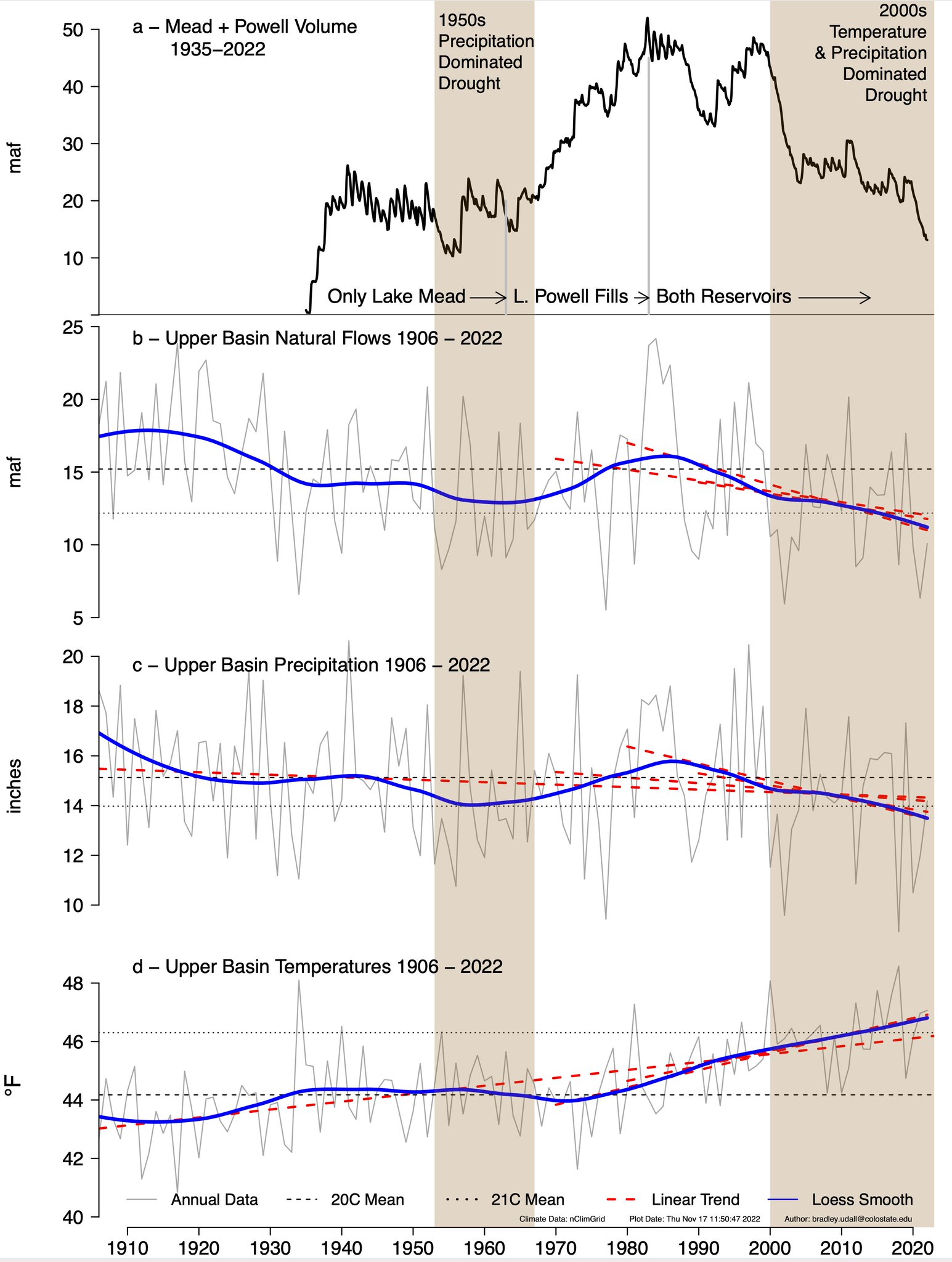
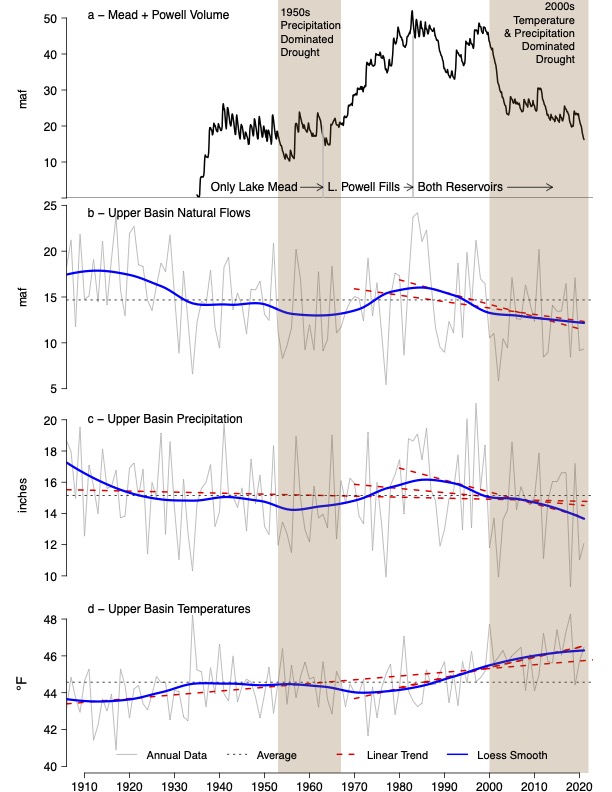
Updated Colorado River 4-Panel plot thru Water Year 2022 showing reservoirs, flows, temperatures and precipitation. All trends are in the wrong direction. Since original 2017 plot, conditions have deteriorated significantly. Brad Udall via Twitter: https://twitter.com/bradudall/status/1593316262041436160
Click the link to read the article on the KUNR website (Kaleb Roedel). Here’s an excerpt:
In Nevada, more than $1.7 million will pay for Las Vegas Valley homeowners using septic tanks to convert to the municipal sewer system. This recycles water back into Lake Mead, which is fed by the drought-stricken Colorado River, said Doa Ross, deputy general manager of engineering for the Southern Nevada Water Authority…
In Colorado, $5 million will be used to build a collector well in Aurora. On the state’s Western Slope, Deutsch Domestic Water Company is getting $585,000 for storage and efficiency improvements…
In New Mexico, $5 million will go toward a groundwater well in Gallup. Another $1.5 million will help pay for new tools and strategies in regions with acequia water distribution systems, which are gravity-fed earthen canals that divert stream flow for distribution to fields…
Utah is getting the largest chunk of funds among states in the Mountain West. The state has seven different projects receiving a total of about $22.5 million
Editor’s note: Rice Elementary School became the second Wellington school to find elevated copper levels in some of its drinking water sources over PSD’s winter break, according to a district email sent to the school’s staff and families Wednesday. The Coloradoan will continue its reporting on this development.
Poudre School District is investigating the cause of issues with Wellington Middle-High School’s drinking water after two science classes at the school found high levels of copper in it late last year. Following the class tests — which showed levels more than double the Environmental Protection Agency’s action level for copper in drinking water at two water bottle filling stations — PSD took its own water samples from around the school Dec. 22, later confirming through a third-party lab that copper levels in several fixtures and bottle filling stations exceeded the EPA’s threshold, according to a district email to the school’s staff and parents Tuesday [January 3, 2023]…
The Town of Wellington also took samples of its own around the same time, ultimately ruling out the town’s water distribution lines as the cause for the elevated copper levels, the town and PSD both said. While PSD hasn’t yet confirmed what’s causing the elevated copper levels, the general contractor who built Wellington Middle-High School believes the issue could be tied to the newly constructed building’s water softener equipment, according to the district.
Erie is among 15 Northern Colorado entities participating in the Northern Integrated Supply Project. Water to supply new growth is a key driver of the project. Construction underway in Erie. Dec. 4, 2022. Credit: Jerd Smith, Fresh Water News
Fifteen towns, cities and water districts in northern Colorado hope to begin building two dams and other infrastructure in 2025 to deliver enough water to meet needs for a quarter-million people, many of them along the fast-growing Interstate 25 corridor.
Northern Water, the agency overseeing what’s known as the Northern Integrated Supply Project (NISP), hailed federal approval of a critical permit last month as a milestone. “This action is the culmination of nearly 20 years of study, project design and refinement to develop water resources well into the 21st century,” said Brad Wind, general manager of Northern Water. Wind said that NISP will enable the 15 project members, including Windsor, Erie and Fort Morgan, to grow without buying farmland, then drying it up and using its water for growth.
The environmental group, Save the Poudre, hopes to dash those plans. The nonprofit says it will file a lawsuit in an attempt to block the $2 billion NISP. To succeed, the group will have to overcome precedent. It failed to block Chimney Hollow, the dam that Northern Water is constructing as part of a separate project, in the foothills west of Berthoud whose construction began in 2022 after a three-year court case.
“We have a much stronger case against NISP because the project would drain a dramatic amount of water out of the Poudre River, which would negatively impact the river’s ecology, its habitat, and its jurisdictional wetlands — protected by the Clean Water Act — all the way through Fort Collins and downstream,” said Gary Wockner, director of Save The Poudre.
This new court challenge was set up by a U.S. Army Corps of Engineers announcement Dec. 9 that it was issuing a crucial permit under the Clean Water Act. Directors of Northern Water, the overarching agency for the participating jurisdictions, are scheduled on Thursday, Jan. 5, to take up whether to accept the terms of the permit. Staff members have advised them to do so.
Northern Integrated Supply Project (NISP) map July 27, 2016 via Northern Water.
The impetus for NISP can be traced to the early 1980s when Northern Water began drawing up plans to dam the Poudre River in the foothills near Fort Collins. Federal agencies balked at Denver’s plans for a similar project on the South Platte River at Two Forks, in the foothills southwest of Denver. Northern shelved its initial plan. But after the scorching drought that began in 2002, Northern developed plans for NISP, which it submitted to federal agencies in 2004.
Two reservoirs are central to NISP. Glade Park, an off-channel reservoir, would be built north of La Porte, bounded by the Dakota hogbacks and a dam that would cross today’s Highway 287. It would have a capacity of 170,000 acre-feet, slightly larger than the 157,000 acre-feet of Horsetooth Reservoir. Northern’s water rights are relatively junior, dating from the 1980s and would only generate water in spring months during high runoff years.
The project promises delivery via pipeline of 40,000 acre-feet of high-quality water annually to the 11 mostly smaller towns and cities and the 4 water districts. Erie is buying the largest amount of water from the new project, claiming 6,500 acre-feet. An acre-foot equals 326,000 gallons.
The second storage pool, Galeton Reservoir, at 45,000 acre-feet, would impound water northeast of Greeley. Unlike the water from Glade, which is to be strictly dedicated to domestic use, Galeton would hold water that will be delivered to farms in Weld County that otherwise would have received water from the Poudre River. This will be done via a water-rights swap with two ditches north of Greeley. Those agreements have not been finalized.
Preservation of agricultural land, costs of water, and water quality figure prominently in the talking points both for — and, in some cases, against — the project.
Northern and its project participants argue that NISP will allow them to grow without drying up farms. It can do so, they say, by delivering the water at a lower cost.
The federal environmental impact statement’s no-action alternative found that population growth would occur regardless of whether a federal permit was issued, said Jeff Stahla, the public information officer for Northern Water. That analysis found that in the absence of NISP, the 15 cities and water districts would look to buy water rights currently devoted to agriculture, ultimately taking 64,000 acres — or 100 square miles — out of production.
The 15 utilities will be able to get NISP’s new water at $40,000 per acre-foot, substantially below current market rates for other regional water sources such as the Colorado-Big Thompson Project shares. Those shares, which constitute seven-tenths of an acre-foot, have been selling for about $75,000.
In some cases, expanding cities will take farmland out of production — and presumably gain access to the water, but not always.
“We do not want to dry up northern Colorado,” says John Thornhill, Windsor’s director of community development.
Thornhill said that Windsor, a town of 42,000 with its 20th Century sugar beet factory still standing, is participating in NISP to improve the resiliency of its water portfolio as it prepares for another 10,000 to 15,000 residents in the next 10 to 15 years.
“The town of Windsor has just as much interest in having a clean, healthy river as anybody else does,” he says. “[The Poudre River] goes right through our town.”
Fort Collins is not participating in the project. In a 2020 resolution, it said it would oppose the proposal or any variant that failed to “address the City’s fundamental concerns about the quality of its water supply and the effects on the Cache la Poudre River through the city.”
Water quality will be at the heart of Save the Poudre’s lawsuit against the Army Corps of Engineers’ 404 permit. The group’s Wockner says the diversion to Glade Reservoir will reduce peak flows in the Poudre, a river already suffering from E. coli and other pollutants, by up to 40%. “The water quality in the river will worsen because as you take out the peak flows what is left is dirty water,” he says.
Also at issue, says Wockner, will be the impacts to Fort Collins’ wastewater treatment. With reduced flows downstream from its two treatment plants, those plants would have to be upgraded.
On the flip side, Fort Morgan got involved partly because of Glade Reservoir’s higher water quality, according to City Manager Brent Nation.
The city of 12,000 historically relied upon aquifer water heavily laden with minerals for its domestic supply. As the aquifer became increasingly tainted by chemicals used in agricultural production, the city, in the late 1990s, began importing water through an 80-mile pipeline from Carter Lake, a reservoir that stores imported Colorado River water southwest of Loveland.
To use aquifer water for its new population growth Fort Morgan would need to upgrade its water treatment system to use reverse osmosis. That’s a more expensive treatment that also produces a problem of brine disposal.
Both Fort Morgan and Windsor have started working on land-use regulations that will restrict high-quality water for domestic use, at least in some subdivisions, leaving lower-quality water for landscaping.
If NISP as proposed survives Save the Poudre’s legal challenge, it may still need a 1041 permit from Fort Collins. Those regulations have not yet been adopted, however.
Allen Best grew up in eastern Colorado, where both sets of grandparents were farmers. Best writes about the energy transition in Colorado and beyond at BigPivots.com.
Many members of Standley Lake’s boating community saw a huge aspect of their community taken away with the ban of trailered boats in 2019. [Gary] Gambino used to work a graveyard shift and after, went straight to the lake.
“I would come home, hook up my boat, go out onto Standley, take it out in the back bay anchor in and take my four hours of sleep,” he said…
With Westminster’s city council revisiting the item, Northglenn’s council sent a letter signed by all council members indicating they will not be revisiting the item.
“Northglenn’s water in Standley Lake is irreplaceable, valued at more than $209 million dollars. There is no level of risk that our community is willing to accept when it comes to protecting our drinking water supply,” the letter reads.
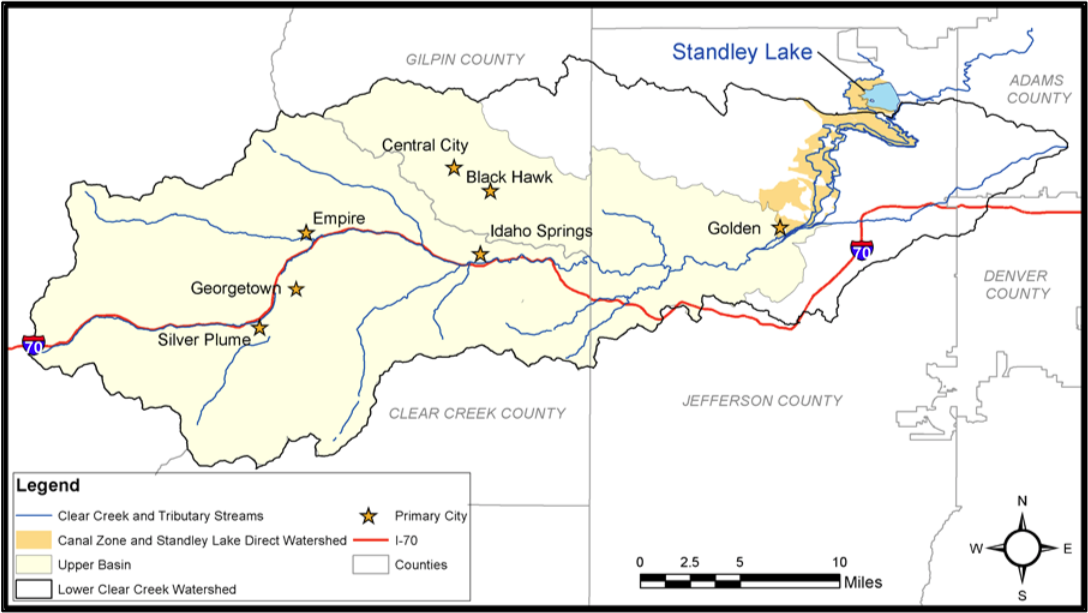
Clear Creek, Standley Lake watersheds including the Standley Lake Canal Zone via the Clear Creek Watershed Foundation.
Click the link to read “Standley Lake heads toward fifth summer with a firm no to powerboats” on The Denver Post website (John Aguilar). Here’s an excerpt:
But Westminster Councilman Dave DeMott said it’s “not realistic” to operate on a zero-risk basis “as there is no area where zero risk exists in this world.” He’s heard from boating enthusiasts that they are “frustrated” with the ban, which was made permanent in late 2019…
Northglenn — along with Westminster, Thornton and the Farmers Reservoir and Irrigation Company — own the 42,000 acre-feet of water in the lake, which serves as the sole supply of drinking water for both Westminster and Northglenn. Standley Lake, which is fed by three canals diverted off of Clear Creek, accounts for about a quarter of Thornton’s drinking water supply. It, too, is in favor of maintaining the trailered boat ban. Any change in boating policy would have to be agreed to by the three cities…
Northglenn’s decision was likely re-affirmed by the September discovery of a single zebra mussel in Highline Lake State Park, northwest of Grand Junction. In late October, Colorado Parks & Wildlife announced more zebra mussels had been found in Highline Lake, giving the lake an official infestation listing. CPW says Highline Lake is currently the only Colorado body of water infested with zebra mussels. No quagga mussels are known to exist in the state, though Lake Powell in Utah has them.
“We don’t see the value in risking our drinking water supply for the benefit of a small group of people,” said Tami Moon, Northglenn’s environmental manager. “That is the only place we have to store our water.”
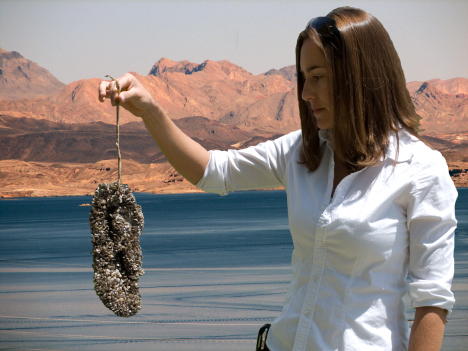
In May of 2018, USGS Hydrologic Technician Dave Knauer found a batch of zebra mussels attached to the boat anchor in the St. Lawrence River in New York. (Credit: John Byrnes, USGS. Public domain.)
Colorado Parks and Wildlife officers have detected the presence of a nonnative invasive plant species in Boulder Reservoir.
The plant, Eurasian watermilfoil (EWM), was detected during a routine inspection at the reservoir in the summer of 2022 and confirmed during a follow-up survey in the fall. The plant is established primarily along the western coves of the reservoir and in areas along the southern and northern shorelines, according to a release from the City of Boulder. It is not harmful to public health and at its current growth levels, there are no impacts to recreation use at the reservoir or its use as a municipal and irrigation supply.
If the growth becomes very dense, the plant could impact swimming and boating and cause taste and odor issues with drinking water.
“While the survey confirmed the presence of EWM at the reservoir, we don’t know how it arrived. It can easily be transported by wind, connected waterways, humans fishing, dogs, watercraft, or wildlife, so we encourage anyone who recreates in the water to be vigilant about checking for aquatic nuisance species,” said Boulder Parks and Recreation Director Ali Rhodes. “The survey did find that there are no other aquatic nuisance or invasive plant species in the reservoir, which is good news.”
According to the city, recreation users will see a continuation of changes put in place in summer 2022. Upon initial detection of the plant, the city adjusted operations to include exit inspections on watercraft, increased education to users and added notification signage.
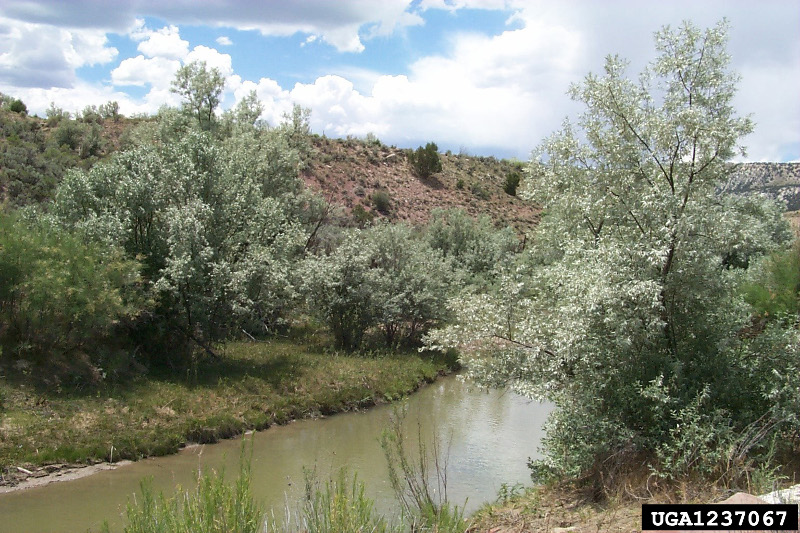
Russian olive is an invasive species that spreads aggressively and deprives native species of important resources like water, according to Julia Clover Clark, natural resources manager at the High Line Canal Conservancy.
“We don’t want the canal to become a vector for Russian olive to spread throughout open spaces,” she said.
With a recent $41,100 grant from Great Outdoors Colorado, the High Line Canal Conservancy will continue efforts to rid the canal of the invasive species. Working with the Mile High Youth Corps, they will spend four weeks eliminating Russian olive along the corridor in Greenwood Village and Cherry Hills Village.
“It’s just such an exciting opportunity because not only (does) it allow us to get out there and do this important work of mitigating Russian olive along the corridor, but it really aligns with our values to be able to have a partnership with (the youth corps),” Clark said.
The grant program is implemented in partnership with the Colorado Youth Corps Association, a coalition of eight accredited conservation service corps that employ and train people aged 14-25 in the natural resource sector…Last year, the High Line Canal Conservancy also received the grant, which it used to started Russian olive mitigation along 20 miles of the canal corridor. This pilot project covered parts of the corridor in Denver, unincorporated Arapahoe County, Centennial and Greenwood Village during the summer of 2022. At the end of that project, a 5.5 mile gap between the project areas remained. This year, their work will address the gap.
“After (the corps’) work is completed, there will be 27 continuous miles (with no Russian olive),” Clark said.
Old cottonwoods line the banks and trails of the historic Highline Canal, which is being converted into an ultra modern stormwater system even as its trail systems continue to serve metro area residents. July 21, 2020 Credit: Jerd Smith via Water Education Colorado
FORT CARSON, Colo. – 4th Combat Aviation Brigade, 4th Infantry Division receives first CH-47 Chinook helicopters at Butts Army Airfield on Fort Carson, Colo., Jan. 22, 2013. Crew members conduct their post flight checks. The Chinooks are the first CH-47s to arrive to the new combat aviation brigade. (Photo by Sgt. Jonathan C. Thibault, 4th Combat Aviation Brigade, 4th Infantry Division Public Affairs NCOIC/Released)
For over a century, the U.S. Army has been plagued by the lasting consequences of its negligent use, storage and disposal of hazardous chemicals. As a result, countless troops and dependents residing on contaminated bases regularly came into contact with toxins known to trigger adverse health effects and deadly diseases.
In high-profile cases like North Carolina’s Camp Lejeune, nearly 1 million service members and their families were exposed to deadly toxins for over 30 years (1953-1987), including health hazards like benzene, vinyl chloride, trichloroethylene, perchloroethylene, and per/polyfluoroalkyl substances — PFAS.
Also known as “forever chemicals,” PFAS are a group of over 12,000 artificial compounds that represent a distinct environmental concern due to their resilient molecular structure, which prevents natural decomposition, allowing them to easily permeate the soil and contaminate drinking water sources. Exposure to PFAS has been linked to testicular cancer, organ damage (liver, kidneys), high cholesterol, decreased vaccine efficiency in children, and impaired reproduction.
On Camp Lejeune and more than 700 army bases across the US, PFAS contamination is directly linked to aqueous film-forming foam used since the early 1970s to extinguish difficult fuel blazes. In 2016, the EPA established a health advisory of 70 parts per trillion for PFOA and PFOS, the main PFAS compounds.
Although service members and their relatives are the most burdened, contamination originating from military sources plays a larger role in an insidious pattern of discrimination that affects marginalized minority communities.
Due to discriminatory redlining policies, land in minority neighborhoods was significantly undervalued and became a cost-efficient solution to situate army bases, industrial facilities, landfills, traffic routes, and other sources of toxic pollution. The higher toxic burden that vulnerable minority communities experience due to systemic prejudice is better known as “environmental racism.”
A 2021 report notes that Colorado has the highest PFAS footprint in the country, with approximately 21,000 sites suspected of using or storing such compounds. Although industrial activities are the primary driver of PFAS’ prevalence, frontline communities also have to contend with contamination from several military sources.
(Widefield aquifer via the Colorado Water Institute.)
Nine army bases in Colorado are known to have been affected by PFAS due to aqueous film-forming foam, with the most contaminated including Schriever Air Force Base (870,000 ppt), Buckley Space Force Base (formerly Buckley Air Force Base, 205,000 ppt), Fort Carson (156,000 ppt), U.S. Air Force Academy (72,000 ppt) and Peterson Space Force Base (formerly Peterson Air Force Base, 15,000 ppt). Significantly, PFAS from Peterson has previously contaminated the drinking water sources of downstream communities, with a CDC study finding PFAS compounds in the blood of residents in one exposed community registering concentrations 1.8 to 8.1 times the national average.
While the Air Force and Department of Defense have been involved in some remediation efforts, from distributing bottled water to installing filters and building treatment plants, their contributions are considered limited by Coloradans, given the lack of actual PFAS cleanup projects. Unlike Camp Lejeune, none of the contaminated Colorado bases are listed as Superfund sites.
Frontline communities exposed to higher health risks due to environmental racism’s lingering effects rely on state and federal authorities to establish a legal framework that keeps polluters accountable and protects vulnerable citizens. Since 2020, Colorado has enacted some of the country’s most stringent PFAS laws and adopted a PFAS narrative policy that closely follows the EPA’s 2016 advisories.
Federally, the National Defense Authorization Act will see aqueous film-forming foam phased out by 2024 and finance PFAS cleanup projects on contaminated installations, while the Bipartisan Infrastructure Law will provide impacted communities with crucial investments to address pollution and other causes of environmental injustice. The Honoring Our PACT Act will provide improved health benefits and compensation for veterans and military families exposed to toxins in highly contaminated locations like Camp Lejeune.
Despite these encouraging developments, the DoD has yet to commence cleanup on any of the most affected bases in the country per NDAA’s provisions, and diseases resulting from exposure to PFAS aren’t recognized as presumptive conditions under HOPA. Moreover, while Colorado adopted the EPA’s 2016 guidelines, it falls behind other states that employ even stricter standards.
Still, Colorado has the opportunity to stay ahead of the game by implementing more effective PFAS standards that align with the EPA’s most current efforts to regulate these toxic compounds. With the goal of setting enforceable maximum contaminant levels in drinking water, the EPA has drastically reduced its non-binding advisories for PFOA and PFOS in June 2022 to a paltry 0.004 ppt and 0.02 ppt, respectively, illustrating the dangers these substances represent even at exceedingly low concentrations.
Products that contain PFAS. Graphic credit: Riverside (CA) Public Utilities
Click the link to read the post on The Buzz website (Floyd Ciruli):
The NISP project in the North Front Range has just received its critical permit from the U.S. Army Corps of Engineers in compliance with the National Environmental Policy Act. The project, which will cost $2 billion and take years to complete, will provide water to a host of cities and agricultural water districts in Larimer, Weld, Morgan, and Boulder counties.
The review by Colorado and federal environmental agencies took 20 years and added millions in additional cost to the project in scientific study and mitigation, including sending more water down the Poudre River through Fort Collins to maintain flows above what currently exist. It also adds major recreational opportunities and flatwater fishing.
Ciruli Associates provided public relations and public opinion research to the project managers to assist in the regulatory compliance.
After years of opposition and delay, some adversaries now threaten lawsuits, their success after these long environmental reviews has been limited. Most recently, they filed lawsuits to stop the Windy Gap project on the western slope and Gross Reservoir in Boulder County and failed in both.
Fortunately, the region’s water leadership maintained a steady and determined commitment to achieving the project’s approval.
The Chimney Hollow Reservoir Project hosted a groundbreaking event on Aug. 6, 2021. Photo credit: Northern Water
The planned $2 billion Northern Integrated Supply Project received a federal Clean Water Act Section 404 Record of Decision from the U.S. Army Corps of Engineers on Friday, Northern Water Conservancy District — the group leading the project — announced in a news release, calling this “a major milestone” for the project.This is the final large-scale permit needed for the project to move forward, Northern Water spokesperson Jeff Stahla told the Coloradoan.
“This action is the culmination of nearly 20 years of study, project design and refinement to develop water resources well into the 21st century,” Northern Water General Manager Brad Wind said in the news release. “This Project will also allow participating communities to serve their customers without targeting water now used on the region’s farms.”
NISP will divert water from the Poudre and South Platte rivers to store in two new reservoirs — Glade Reservoir north of Fort Collins and the smaller Galeton Reservoir east of Ault — to supply water for 15 growing North Front Range communities and water suppliers, including the Fort Collins-Loveland Water District and others in Weld and Boulder counties.,.Northern Water is still in the design phase for NISP, and Stahla said construction could begin in late 2024 or early 2025 and should be operational four years after that, based on the timeline for the Chimney Hollow Reservoir.
Click the link to read the article on The Denver Post website (John Aguilar). Here’s an excerpt:
Arapahoe County may triple the amount of water developers will be made to bring to any new subdivision they build, as a historic drought continues to grip the region and demographers project the county’s population to surge to more than 800,000 by 2050. The stricter limit, which would increase the required groundwater allocation for new development from the state minimum of 100 years to 300 years — known among water managers as the “300-year rule” — will be considered as part of an 18-month, $500,000 water study Arapahoe County is launching this month. Any new regulations or directives from the county’s study, the first of its kind in 20 years, would apply only to unincorporated parts of the county…
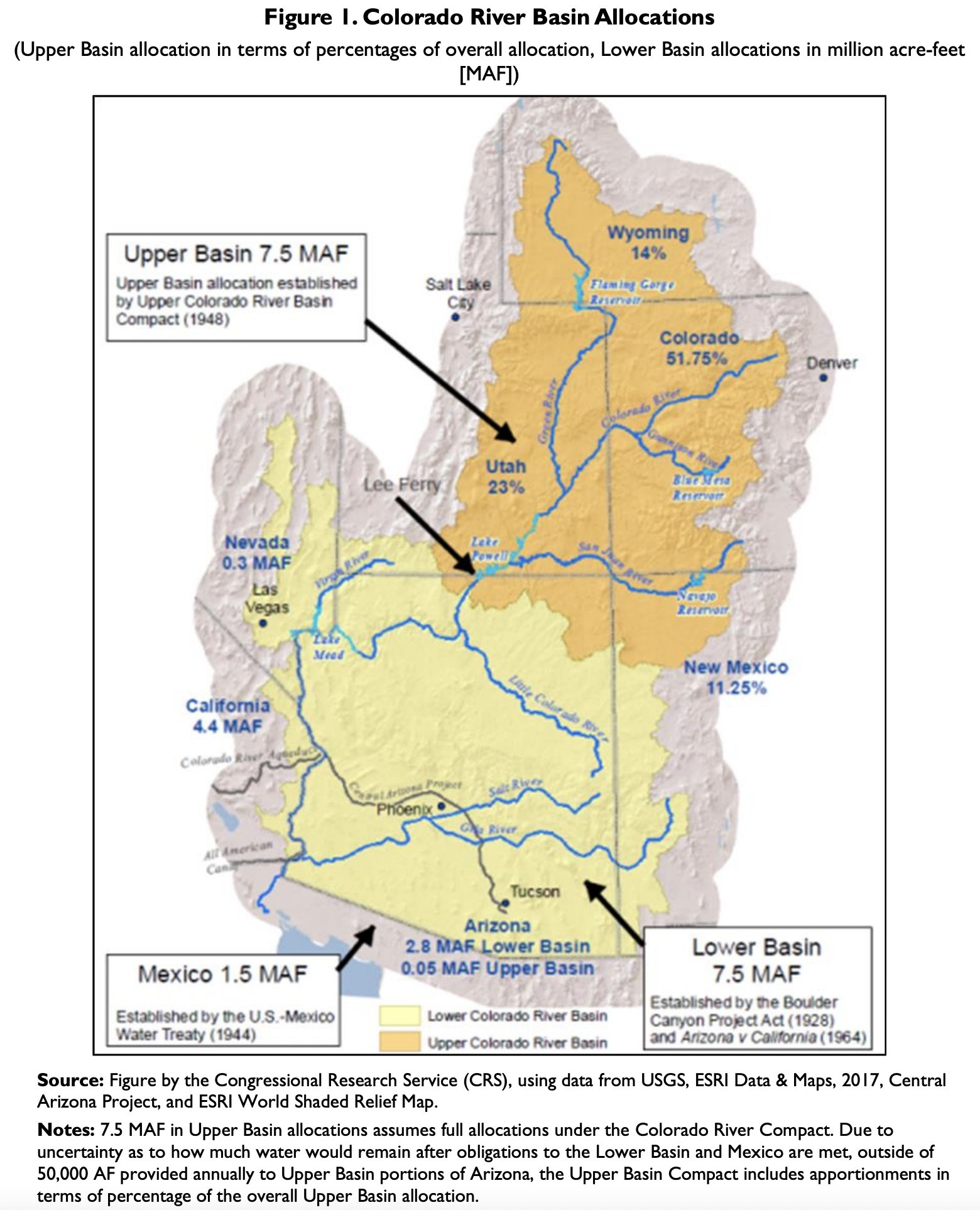
The county would join several others in Colorado, like Adams, Elbert and El Paso, that have adopted the 300-year rule as demand on metro area aquifers has shot up over the decades. The population in the Greeley/Boulder/Denver metropolitan statistical area, under which the Denver Basin water table lies, has leaped from less than 2 million in 1985 to nearly 3.6 million last year. It could jump to 4.4 million people by mid-century, according to state demography data. And much of that new development is headed to the eastern periphery of metro Denver, just beyond the E-470 beltway. Sixteen of the top 20 best-selling residential developments in the metro area are in Adams, Arapahoe and Douglas counties, which accounted for 76% of all metro area lots under development, according to 2021 data from real estate analytics firm Zonda. But just how much growth is constrained by stricter water supply requirements in Arapahoe County, with a population of 655,000, is not clear. According to state demography numbers, the county’s projected population will increase to just over 800,000 over the next 28 years, which would translate to an additional demand of 21,200 to 53,300 acre-feet of water a year.
Water stored in Colorado’s Denver Basin aquifers, which extend from Greeley to Colorado Springs, and from Golden to the Eastern Plains near Limon, does not naturally recharge from rain and snow and is therefore carefully regulated. Courtesy U.S. Geological Survey.
A computer rendering shows Glade Reservoir and its forebay northwest of Fort Collins. Credit: Northern Water
From email from Northern Water (Jeff Stahla):
The U.S. Army Corps of Engineers has issued a federal Clean Water Act Section 404 Record of Decision for the Northern Integrated Supply Project. This is a major milestone for NISP, as it reflects the lead federal regulatory agency’s review and approval of the Project.
The Corps’ approval was based on a lengthy and rigorous scientific analysis under the National Environmental Policy Act and a host of other environmental laws, including the federal Endangered Species Act, National Historic Preservation Act, State Water Quality compliance certification, and State Fish and Wildlife Mitigation Plan requirements.
The Corps has concluded that the Project’s 40,000 acre-foot yield will meet a substantial amount of the 15 Northern Front Range participants’ future water need and that NISP is the least environmentally impactful means of satisfying that need. The Corps considered a range of other potential alternative approaches, including the adverse impacts to the region if no federal action was taken.
“This action is the culmination of nearly 20 years of study, project design and refinement to develop water resources well into the 21st century,” said Northern Water General Manager Brad Wind. “This Project will also allow participating communities to serve their customers without targeting water now used on the region’s farms.”
Through the federal permitting process, the Project was refined to further avoid and minimize environmental impacts and provide mitigation and enhancements to river-related resources. NISP’s operations will send more water down the Poudre River and through downtown Fort Collins in most months of the year, providing additional flows through the city in late summer, fall and winter than currently exist. NISP will also offer significant new flatwater recreation opportunities to everyone.
NISP includes Glade Reservoir, Galeton Reservoir, and associated project infrastructure to deliver high-quality water to more than 250,000 Northeastern Colorado residents.
Participants in the Project include the Town of Erie, Town of Windsor, City of Fort Morgan, Town of Frederick, City of Evans, City of Fort Lupton, Town of Eaton, Town of Severance, City of Lafayette, Town of Firestone, and City of Dacono, as well as the Fort Collins-Loveland Water District, Left Hand Water District, Central Weld County Water District, and the Morgan County Quality Water District.
Three years after it started, Denver Water’s Lead Reduction Program is getting a big boost from more than $76 million in federal funding.
The funding will help fast-track the program, replacing thousands more old, customer-owned lead service lines in the next few years than had been originally anticipated.
The state approved allocation of funds to Denver Water in October, and the Denver Board of Water Commissioners formally accepted the funds Dec. 7.
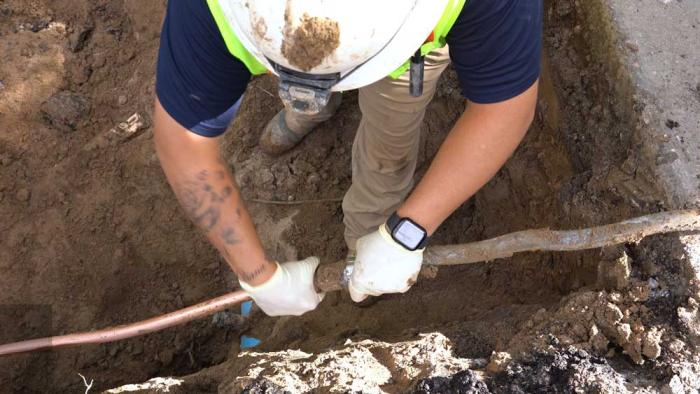
The money will be spent in 2023 through 2025 and is expected to replace up to 7,600 lead service lines, shortening the 15-year program by 1.5 years. Thanks to the new funding, between 3,000 and 5,000 additional lines will be replaced in 2023 — on top of the nearly 5,000 lines already planned for replacement next year.
Since the program started in January 2020, Denver Water has replaced more than 15,000 lead service lines. The lead lines are replaced with lead-free, copper lines at no direct cost to the customer.
The addition of $76 million in federal funding for the Lead Reduction Program will fast-track the replacement of up to 7,600 old lead service lines. Photo credit: Denver Water.
“This infusion of federal money means we will be able to replace thousands more customer-owned lead service lines at a faster pace than we had originally planned, and ultimately shorten the length of the biggest public health initiative in Denver Water’s history. This groundbreaking program is supported by all our customers across our service area,” said Jim Lochhead, Denver Water’s CEO/Manager.
“Removing these lines is the most effective way to eliminate this source of lead exposure, and we are committed to this program until every lead service line has been removed. We’re grateful for the opportunity provided by this funding.”
The water Denver Water delivers to customers is lead-free, but lead can get into the water as it passes through a customer’s internal plumbing or water service line that contains lead. The service line is the small pipe that connects to Denver Water’s pipe in the street and carries water to the customer’s home. Lead can cause serious health problems if too much enters the body, whether from drinking water or other sources.
Denver Water’s groundbreaking Lead Reduction Program aims to replace nearly 5,000 customer-owned lead service lines every year. When the program started, Denver Water estimated there were between 64,000 and 84,000 lead service lines in its service area and expected it would take 15 years to remove them all.
The addition of federal money will help Denver Water exceed its annual target in 2023 by an extra 3,000 to 5,000 lines. For every 4,500 additional lead service lines replaced using the federal funding, the overall length of the program will be one year shorter.
Replacement work will take place in parts of many neighborhoods across Denver in 2023, including Baker, Globeville, Sunnyside, Barnum West, Athmar Park and Capitol Hill.
An initial map of the 2023 replacement work areas is available at denverwater.org/Pipes. The replacement work prioritizes areas with vulnerable, at-risk populations and disproportionately impacted communities while also taking into account planned construction activities, schools and child care centers.
Lead was a commonly used material for water service lines across the U.S. through the mid-1900s and is frequently found in Denver homes built before 1951.
The replacement work is done by contractors through the Lead Reduction Program and by Denver Water crews, who replace any lead service line found during scheduled pipe replacements or during repair work on a broken water main.
In total, Denver Water was approved for $76,123,628 from the Colorado Drinking Water State Revolving Fund, which will receive money from the federal bipartisan Infrastructure Investment and Jobs Act signed into law by President Joe Biden in November 2021. The funding Denver Water received is a low-interest loan that the utility will repay, with $40 million of the loan’s principle forgiven immediately as allowed by the legislation.
The $76 million in federal funding Denver Water’s Lead Reduction Program received comes from the federal bipartisan Infrastructure Investment and Jobs Act signed by President Joe Biden signed in November 2021. Photo credit: White House.
The state will receive federal funding from the Environmental Protection Agency to address lead in drinking water every year for five years, beginning in 2022. Denver Water intends to apply for funds in the future and, if approved, will be able to accelerate the replacement program even more.
The EPA also has approved a continuation of the Lead Reduction Program, via a variance from the federal Safe Drinking Water Act, following a review of the progress made in its first three years.
“Denver Water’s approach to tackling lead in drinking water has been remarkable and an example for other communities across the country,” said EPA Regional Administrator KC Becker, in an announcement.
“Thanks to new funding from the Bipartisan Infrastructure Law the utility’s customers can expect an even faster lead service line replacement schedule delivering health protections for children and adults across the Denver area.”
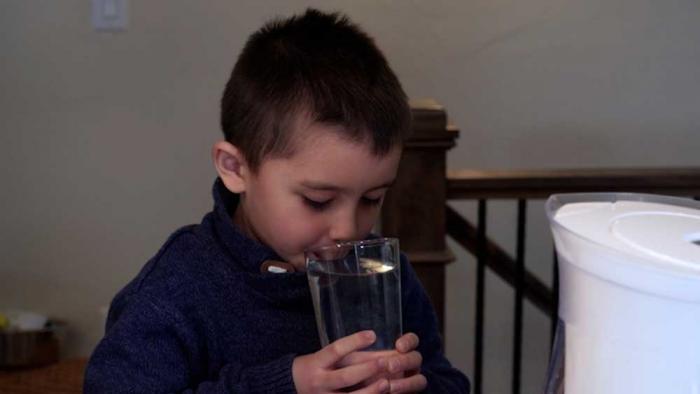
Customers enrolled in the Lead Reduction Program receive water pitchers and filters to use for cooking, drinking and preparing infant formula until six months after their lead service line is replaced. Photo credit: Denver Water.
Lochhead thanked EPA and Denver Water’s community partners for working with the utility to ensure the successful implementation of the program.
“Denver Water’s first priority is sustaining our communities by protecting the health of our customers,” Lochhead said.
In addition to the installation of a new, lead-free, copper water service line at no direct cost, customers enrolled in the program also receive water pitchers and filters certified to remove lead.
Filtered water should be used for cooking, drinking and preparing infant formula until six months after the lead service line is replaced. The utility also has changed the water chemistry, raising the pH of the water it delivers, to better protect customers from the risk of lead.
This has been a huge effort involving many areas of Denver Water, and we couldn’t have done it without the support we’ve received from our customers,” said Alexis Woodrow, who manages the Lead Reduction Program for Denver Water.
“Our customers enrolled in the program allow us into their homes to replace their old lead service lines, and they are patient with all the construction work that accompanies the replacement process. We’re also excited that in a recent survey, 83% of customers said that they use the filters we provide to filter water for cooking, drinking and preparing infant formula.”
With the federal funding, the work surrounding the replacement process will touch more homes and neighborhoods in 2023.
“We’re grateful for all the support we’ve received for this program, from our customers to our community partners and our elected officials,” Woodrow said.
“We’re all working to protect our customers now and for generations to come.”
Letter puts kibosh on Westminster’s efforts to bring boating back
Northglenn Mayor Meredith Leighty sent a letter, signed by the eight other council members, declining Westminster’s request to meet regarding bringing boating back to Standley Lake.
“Northglenn’s water in Standley Lake is irreplaceable, valued at more than $209 million dollars. There is no level of risk that our community is willing to accept when it comes to protecting our drinking water supply,” the letter reads.
That means unless Northglenn changes their minds, Westminster will have to wait until 2030 to renegotiate the Intergovernmental Agreement. According to Thornton Spokesperson Todd Barnes, the agreement needs all three cities to agree to amend it. The move comes after Westminster held a study session on Nov. 21 discussing the possibility of reallowing boating on the lake. At the meeting, Mayor Pro Tem David DeMott, City Councilor Rich Seymour and City Councilor Lindsey Emmons said they wanted to make sure all councilors — for Northglenn and Thornton — understand the entire issue. DeMott emphasized that the decision comes down to risk and the threshold each council is comfortable accepting. Seymour said it’s a complicated subject and takes a long time to understand. In response to the letter, DeMott said he was disappointed.
Two of the biggest current topics in water resources management drew nearly 400 people to the Embassy Suites on Nov. 15.
The Northern Water Fall Symposium offered in-depth panel discussions exploring the ongoing challenges facing users of Colorado River water and the challenges of developing housing with appropriate water-conserving landscaping.
With an overall theme of the event highlighting the physical and sociological adaptations that may be required of Northern Colorado residents into the future, the Symposium brought together water users from across many municipalities, agricultural interests and industries to hear from top experts in their respective fields.
In addition to the in-depth discussions, the Symposium offered the opportunity to meet the new director of the Colorado Water Center – John Tracy, hear about the regional outlook from the state’s climatologist, forest health initiatives and local water projects.
Planning for the Spring Water Users Meeting has already begun, and more information will be released soon.
The increase is part of a long-term plan for the city to be able to meet the funding and service requirements of water operations. In 2017, the city contracted Stantec Consulting to do a rate study.
“The study determined that to meet the funding and service requirements of water and wastewater operations, revenue collections would need to increase approximately 3.6% to 6.7% annually in each of the subsequent 10 years beginning in 2018,” the agenda read.
Future projects are the main drivers of the increase. From 2025 to 2027, there will be $37 million needed in repairs and another $37 million from 2028 to 2031. Rates will slowly increase between Jan. 1, 2023 and Jan. 1, 2027. The first 3,000 gallons will go from $4.24 to $4.59; 3,000 to 10,000 gallons will increase from $5.31 to $5.75; 10,000 gallons to 20,000 gallons will jump from $6.64 to $7.19; and over $20,000 gallons will creep up from $9.96 to $10.78. City Councilor Rich Kondo asked if there were any rhyme or reason to establishing the tiers. Director of Finance Jason Loveland said they were established a long time ago to encourage conservation. The average winter consumption for Northglenn residents is about 5,000 gallons, which will go from costing $66.76 in 2022 to $69.09 in 2023. Summer months are higher: the average usage is 15,000 gallons. The price tag will increase from $125.36 to $128.84.
In the halls of the Colorado State Capitol drinking fountains are in easy reach, and grabbing a quick drink of cool, clear, odorless water is an automatic act.
But just minutes away, in dozens of industrialized neighborhoods in North Denver, Commerce City and unincorporated Adams County, many homeowners and apartment dwellers never drink their tap water.
Tens of thousands of people in this area have been exposed to contaminated water over the years. Convincing them finally that their water is now safe to drink is a tough sell.
In a Commerce City bungalow on Kearney Drive, Armando Guardiola and his family are sitting in a small kitchen, eating posole from brightly colored bowls. The water served for this meal did not come from their tap. Instead, it came from a large, pale blue five-gallon jug perched on the edge of the sink.
It has been this way since Guardiola, a retired railway worker, and his parents moved into this bungalow in 1982.
Maria Guardiola cleans up after dinner. In her and her husband’s bungalow in Commerce City, the pale blue water jugs supply the family with drinking water. They don’t drink tap water. Credit: Jerd Smith, Fresh Water News
Their tap water, he says, as his brother and sister interpret, is full of minerals that leave a residue everywhere. Sometimes it has an odor or a strange taste. The family’s water comes from the South Adams Water and Sanitation District and meets all the state standards for water quality and safety. But this is no comfort to the people who live here.
“They used to say, don’t drink the water,” Guardiola said. “Then, they came out about 15 years ago and said it was better. But we don’t trust this. A lot of people here have skin rashes. They have lost their hair. It has been a continuous problem.”
Two water bills
Parts of north Denver, south Adams County, and Commerce City have a legacy of water contamination that dates back more than half a century and is tied to aging lead service lines, in Denver, and various industrial activities farther north.
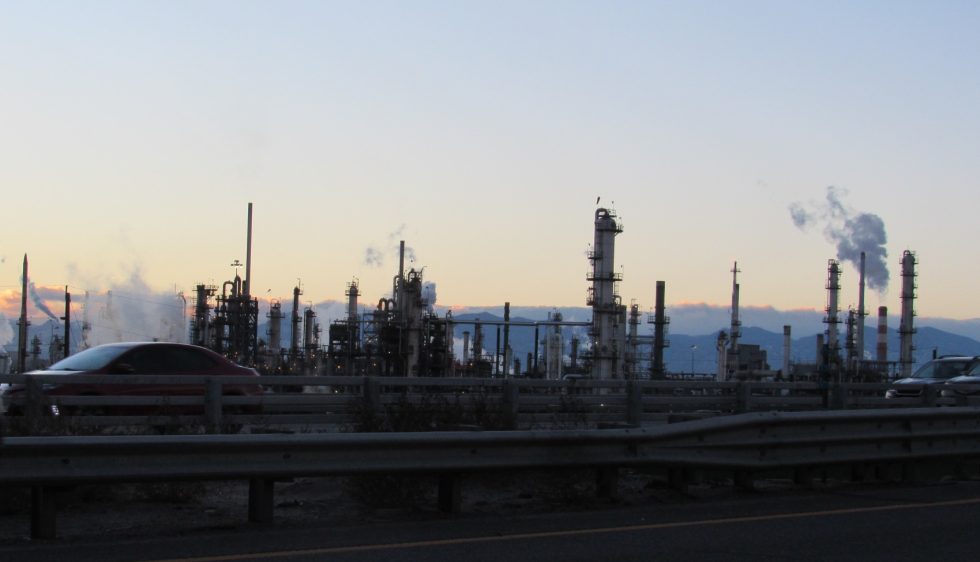
Wave after wave of pollutants have been discovered in this area, from contaminants that leaked from the Rocky Mountain Arsenal in the 1980s, to contamination from the local oil refinery whose lights dot the skyline at dawn and dusk.
Now, so-called forever chemicals, also known as PFAS, short for per- and polyfluoroalkyl substances, have been discovered in the groundwater in Commerce City and have been linked to firefighting foam used up until 2018 at the nearby Denver Fire Training Academy, according to the Colorado Department of Public Health and Environment.
The City of Denver disputes that finding. It declined an interview request, citing potential litigation.
The South Adams Water and Sanitation District (SAWSD) says it must spend $45 million to $70 million to build a new treatment plant to remove this PFAS from its raw water.
Will it ever end, residents ask. They can’t answer that question.
Instead, many opt to pay two water bills: one at the local water filling station, where they often spend $10 to $50 a week to buy water for drinking and cooking, for watering plants and caring for their pets. This is in addition to their monthly water and sewer bills from the local utility, in this case the South Adams Water and Sanitation District. Utility costs vary depending on location and water use.
One of several commercial water stations in Commerce City and unincorporated Adams County where residents fill jugs with water for drinking and cooking because they don’t trust the tap water. Credit: Jerd Smith, Fresh Water News
Sacrifice zones
Armando’s brother Beto says there is little hope in the community that their tap water will ever be drinkable.
“To go back to the tap water we think is risky,” Beto said. “We’ve been told it’s good. We’ve been told it’s bad. We hope what happened in Jackson, Mississippi, doesn’t happen here,” referring to the decades-long problems with Jackson’s water system that finally collapsed earlier this year after it was inundated by flood waters.
Patricia Ferrero heads Protégete, an environmental justice initiative housed within Conservation Colorado.
“Honestly it all comes down to trust” Ferrero said. “I don’t know if there is one thing that would re-establish trust with these communities. Industry is so close to home. There is too much evidence that it is a sacrifice zone.”
Cultivando, another environmental justice group which is focused on Commerce City, recently launched a tap water testing program funded by the University of Denver. It has signed up 30 homeowners in the area, who have agreed to allow specially trained community members to come into their homes and gather water samples to have them privately tested. These residents get their water from various sources, including some from privately owned wells.
Residents from Commerce City and Adams County gather at Our Lady Mother of the Church in October to learn about private water testing being offered for free by environmental justice group Cultivando and funded by the University of Denver. Credit: Jerd Smith, Fresh Water News
Once results are in, the activists will consider what next steps need to be taken. This could mean pushing for better water treatment or new indoor piping, or, if results confirm that the water is, in fact, safe to drink, looking at how they can work alongside the state health department and water providers to reassure residents on this point. In this way, the community organizers hope to begin rebuilding trust in the local water along with the government agencies and water utilities charged with protecting their water and their health.
Mike Wireman, a former national groundwater specialist at the U.S. Environmental Protection Agency, is running the Commerce City testing program for Cultivando.
“We have heard for some time, from residents who live in parts of Commerce City, that their water tastes bad, smells bad, feels bad. Bacteria can cause that. We know they have a problem, but I don’t believe that it is related to the water that leaves the Commerce City treatment plant. It gets back in somewhere between the water treatment plant and the homes,” Wireman said.
The problem may be inside these older homes. “The houses that were built were not constructed with the best materials. They were not $500,000 homes. They were built to accommodate industrial workers,” he said.
In addition to neighborhood activists, lawmakers have also taken note. In 2021, at lawmakers’ request, the Colorado Department of Public Health and Environment created an environmental justice action task force in an effort to forge better relationships with communities whose water quality has been harmed by industrial contamination.
“We take these issues very seriously,” said Nicole Rowan, head of CDPHE’s Water Quality Division.
The state has also begun working with the City of Denver to oversee the removal of PFAS from soils around the Denver Fire Training Academy in Adams County. How long the cleanup might take isn’t clear. But Rowan said some mitigation work at the site has begun.
Generations of distrust
For the South Adams Water and Sanitation District, the legacy of contamination is a powerful, cultural constant. The district has built two treatment plants and is planning a third to deal with the issues, which stem both from industrial activities and naturally occurring minerals present in groundwater.
The discovery of PFAS in its groundwater wells in 2018 added another major item to its long list of industrial woes. The district immediately shut down wells that were too contaminated to salvage at the time, and began aggressively treating its other wells, as well as blending with clean water purchased from Denver, to meet federal PFAS safety standards. According to its 2022 Consumer Confidence Report, the district has been successful in meeting all federal and state water quality standards.
The district has spent millions of dollars and has some of the most sophisticated on-site testing equipment in the state, if not the country, according to Kipp Scott, SAWSD’s manager. Its high-tech labs allow the utility to test its raw water and treated water almost continuously to ensure it is safe. But new PFAS standards that are close to being finalized by the federal government will mean more has to be done.
Alan Frey, a PFAS analyst at South Adams Water and Sanitation District, checks levels Nov. 4 in Commerce City. Credit: Jerd Smith, Fresh Water News
Scott remains deeply worried that the plume of contamination moving from the fire academy toward his district’s wells won’t be stopped before it gets any closer. In the interim, the district is spending some $8 million a year to buy clean surface water supplies from Denver Water to mix with its own, to ensure it can continue to deliver clean water until the contamination is removed.
Equally distressing is the community’s skepticism about the district’s efforts to deliver clean water to them, Scott said.
“It’s been a public relations nightmare,” he said.
The district is also plagued with naturally occurring hard water, which damages plumbing and can cause skin rashes and hair loss in some. Last year, the district built a $60 million water-softening plant that now delivers water that is much softer to residents.
Many of its customers still don’t know the water has been improved or do not believe it.
Theresa Friess, SAWSD’s public affairs coordinator, was hired to help educate and engage customers.
“It’s been a hard conversation, in part because it’s hard to hear that our customers feel this way,” said Friess. “But we have tried to increase our outreach and we are having more conservations with non-English speaking residents as well.”
The district has hosted tours and open houses, and has had various government officials meet with residents and publicly drink the water that flows from the taps in an effort to prove it is safe.
To date, there is little if any belief among nearly two dozen residents across north Denver, Commerce City and unincorporated Adams County interviewed by Fresh Water News that the water won’t make them sick.
“We have been drinking this water for years,” said one woman at a meeting convened by Cultivando in Commerce City last month on the private tap water testing program. Speaking through an interpreter, she said, “They think they can come in here and take one drink of water to convince us it is safe? What does that prove?”
Are your pipes okay?
In Denver’s Elyria, Swansea and Globeville neighborhoods, Denver Water has been working since 2019 to replace tens of thousands of lead service lines to protect its customers from lead contamination. Testing had shown that lead was leaching from the pipes into the water that reached the tap. The work is going on across the city, including such neighborhoods as Hilltop and Washington Park. Lead service lines are more likely to be an issue for homes built before 1951.
The agency replaced the old lead service lines in front of Tony Garcia’s Elyria house two years ago.
Garcia, a well-known historian and executive director of Su Teatro, and others in the neighborhood are happy about the remediation project. Some even drink the water now. But the utility is still almost 10 years away from having all the city’s lead service lines replaced, even with a new federal infrastructure grant to speed the process.
Raymond Gallegos water his lawn in Elyria in North Denver. Gallegos, whose water service lines have been replaced by Denver Water to help eliminate lead contamination, said he trusts the water now. Credit: Jerd Smith, Fresh Water News
Garcia still uses filters provided by Denver Water, and the utility still tests his water periodically. Denver Water spokesman Todd Hartman said the ongoing testing is part of its lead monitoring program. For many of these older homes, the water may still contain lead, leaching not from the main delivery lines, which are lead-free, or from the customer-owned service lines Denver Water is replacing, but from the aging plumbing systems within the homes themselves. No amount of lead is safe to drink.
Garcia doesn’t drink the tap water and has no plans to do so. If his home’s pipes need to be replaced, he said, it will have to be done by the next homeowner or someone else.
CDPHE’s Rowan said her agency is researching whether some of its grant money could be accessed by homeowners to be used for in-home pipe replacement, but isn’t clear yet whether that is possible.
What the neighborhood has endured, not just with lead contamination but also with air and groundwater pollution, “would not be tolerated in other communities,” Garcia said.
In addition to the ongoing risk to public health, cost is a major concern, for residents and the water districts and state agencies charged with keeping the water safe.
On a recent Friday morning, student chef Paul Tyrell is filling up several of the ever-present five-gallon pale blue jugs at a private water station in Commerce City. His pregnant partner sits in the front seat as he hauls the empty jugs out of the back seat, fills them at the water station, and lugs them to the car.
Commerce City resident Paul Tyrell fills his family’s water jugs here every week because he and his wife say the water in their apartment makes them feel sick. Credit: Jerd Smith, Fresh Water News
Here five gallons of water costs $1.50, or 30 cents a gallon. Tyrell will fill up all his containers once a week, at a cost of $7 to $10. If he could use his apartment’s tap water from SACWD, it would cost less than 5 cents a gallon. The district charges $5.24 for the first 12,000 gallons used.
“I wish we would have better water,” Tyrell said. “We don’t use the water in our apartment because it makes us feel sick.”
Who pays
Denver Water has raised residential water rates to help pay for its lead remediation work, in addition to issuing bonds and using cash on hand to cover for the $168 million overall project cost. It has also been approved for a $76 million federal infrastructure grant to help accelerate the work.
In South Adams County, the federal government paid for the district’s primary water treatment plant, completed in 1989, as part of the Superfund cleanup at the Rocky Mountain Arsenal.
But since 2018, the district has been forced to uses its own money, and some state grants, to fund the $3 million price tag on new water treatment processes along with testing equipment related to the PFAS contamination.
Residents are paying just over $4.50 a month additionally to cover the cost of the new water softening plant, but Scott says the district doesn’t believe they should have to pay to cover the cost of the new $45 million to $70 PFAS treatment plant. The district plans to apply for federal infrastructure improvement funds to get that done.
“Our residents should not have to bear this cost for the additional treatment we are going to have to put in place. But the new plant is going to be less expensive than purchasing Denver water over the long haul.”
It’s not just water bills that are expensive. Residents are often approached by sales people suggesting the water is so unsafe that they need to buy expensive in-home treatment systems and filters.
South Adams Water Quality Supervisor Kevin Pustulka said he recently went out to a home where a woman was preparing to buy a $20,000 in-home softening system that she didn’t need. “Please don’t,” he told her.
His message to everyone else: “The next time someone offers to sell you an in-home water device, call me.”
Olga Gonzalez hopes they do. She is executive director of Cultivando and has watched people in these North Metro communities struggle for years. That things may be changing is possible, she said, but her level of skepticism remains high.
“We are seeing them [the CDPHE and South Adams] ask what our communities need and be transparent and explain things in a way residents can understand. I feel hopeful that finally community members will be heard. We have been very clear that we don’t want these agencies to just check boxes and say they have been in touch with the community.”
For the environmental justice activists on the ground, after years of battling industrial pollution and institutional indifference, they are convinced the way to deliver safe tap water and to convince residents that it won’t make them ill, lies in rebuilding trust between residents and the government.
“In the end, we don’t want to be residents’ go-to,” Gonzalez said. “We want them to go to the people who are paid to protect them, and take care of their health.”
This project was made possible, in part, by funding from the Colorado Media Project.
Jerd Smith is editor of Fresh Water News. She can be reached at 720-398-6474, via email at jerd@wateredco.org or @jerd_smith.
Click the link to read the article on the KUNC website (Rae Solomon). Here’s an excerpt:
Yellow Barn is a baby of a farm. The 100-acre operation in Longmont started up just a little over 2 years ago, on the grounds of a shuttered horse stable. Nick DiDomenico is Yellow Barn’s young farmer. DiDomenico practices regenerative agriculture, a holistic approach to farming and ranching. It rebuilds depleted soils, improves ecosystems and mitigates climate change by putting carbon back in the ground. Farmers in Colorado are increasingly experimenting with those techniques, to different degrees. DiDomenico is among those leading the pack. The fields at Yellow Barn are just getting started. DiDomenico has been working to establish a silvopasture here – an integrated system of trees and livestock that work together to produce an overall regenerative benefit – including increased biodiversity on the land, leading to higher soil fertility, and better water retention. “We’re farming here, we’re running our cattle,” Didomenico explained. “It’s this rotational grazing strategy that improves the land.”
On a recent afternoon, DiDomenico adjusted a faulty pump on the water trough that keeps his small herd of belted Galloway cows hydrated. “It’s a really niche thing that we’re doing,” he said, “which is converting completely decertified, degraded, marginalized land and redeveloping it into agricultural systems that are viable.”
[…]
Conventional agriculture costs a lot of money. Farmers typically pay dearly for inputs like fertilizer and pesticides and the fuel needed to spread them in the field. Since the 1930’s, the federal government has subsidizedthose costs heavily. But Farm Bill subsidies are deliberately conservative. They aren’t equipped to encourage risk and experimentation. “They’re designed for commodity mid- to large-scale agriculture,” according to Clark Harshbarger, a regenerative agriculture expert with the NGO Mad Agriculture in Boulder, Colorado. “They purposely try to take the risk out of those practices because it’s taxpayer money already spent,” Harshbarger said. “And sometimes [the USDA] vetting process hasn’t necessarily caught up with progressive regenerative farming systems.” As a small-scale regenerative farmer, DiDomenico falls through the cracks when it comes to federal subsidies. The farming technique at Yellow Barn is experimental and holistic. Harshbarger is familiar with DiDomenicos’ work. “It’s very creative and it’s complex,” he explained, but “the Farm Bill is designed to be very specific… very 1 to 1.”
[…]
The USDA doesn’t subsidize this type of work. So DiDomenico finds financial support in some unlikely places…Just off the highway, in the city of Boulder, there’s a strip mall with an Indian Restaurant, a nail salon, and a locksmith. In a corner behind the Goodwill, a Subway sandwich shop does brisk business at lunch hour. But this Subway is special, because along with the standard steak and cheese, spicy Italian and tuna subs, it offers customers the opportunity to support regenerative farming in the neighboring rural areas. That’s because of a program called Restore Colorado, that takes a little extra charge – just 1% of the cost of your meal – from urban restaurants, like this Subway, and gives it to rural farmers, like DiDomenico, to invest in their soil. That comes to just a few cents on top of the cost of each sandwich, that shows up on the sales receipt as the 1% Restore Colorado charge.
Water Year 2022 started slow, lit up at wintertime, dried up in early spring, leaped back into action in late summer, then got lazy in early fall before one last hurrah.
The erratic spurts over the just-completed “water year,” the 12-month span between Oct. 1 and Sept. 30 that hydrologists use to track water trends, added up to a not-terrible-but-not-great-either result for Denver Water.
The Blue River, which flows into Dillon Reservoir, Denver Water’s largest reservoir, in April 2022. Photo credit: Denver Water.
The most noticeable events included a very slow start to mountain snowfall through the first three months (bad), a second straight year of healthy summer monsoons in the mountains (good) and a sizable split between the water fortunes of Denver Water’s collection area (the high country and foothills) versus its service area (Denver and parts of five surrounding counties).
In short, it translated into a reasonably good water year in higher elevations and a far drier one for the 1.5 million people the utility serves in Denver and nearby suburbs.
One memorable result? Denver’s first snowfall came Dec. 10 — the latest first snow on record for Denver.
“Every water year is different, and Mother Nature throws new challenges at us almost every time,” said Nathan Elder, Denver Water’s manager of water supply. “But timely rains and good customer practices helped us keep reservoir levels in solid shape and we soldiered through an up-and-down year.”
The very best news appears to be the way a second consecutive year of strong monsoon rains and higher humidity replenished dry soils in the mountains.
Should Colorado enjoy a deeper winter snowpack this year, it would mean more melting snow in the spring could find its way to streams and reservoirs in 2023, rather than vanishing into parched soils as has been the case in recent cycles.
Dice up the numbers in a different way and zoom out from Denver Water and the picture looked better from a statewide perspective, with summer precipitation levels the best since 2015.
Precipitation statewide left much of Colorado in less severe categories of drought than the end of the 2022 water year. Most of Denver Water’s collection system finished the water year out of drought or classified as “abnormally dry,” the lowest classification. Image credit: U.S. Drought Monitor; Colorado Climate Center.
Additionally, soil moisture is at its highest levels in three years, according to climate trackers at Colorado State University and the U.S. Department of Agriculture’s Natural Resources Conservation Service via recent reporting from Marianne Goodland in the Denver Gazette.
While those are positive developments, experts across various agencies agree that Colorado and its water utilities need a string of strong winters, and preferably some wetter/cooler years overall if we’re ever to see longer-term improvements in hydrology.
But in an era of steady climate change that appears to be unlikely. Colorado’s summer of 2022 was the sixth warmest in the 128-year record maintained by state climatologists.
Denver Water’s supply managers faced some tough conditions in the 2022 water year.
Colorado’s summer of 2022 was the sixth warmest in the 128-year record. It was also the second warmest for minimum temperatures, just behind the summer of 2012. Image credit: Colorado Climate Center.
Ongoing work to expand capacity at Gross Reservoir has limited storage in the facility west of Boulder. At the same time, unusually dry conditions on the South Platte River downstream of Denver left farmers calling on water rights dating all the way back to 1871 (just a decade shy of the oldest water rights on the river).
These rights are senior to all of Denver Water’s South Platte River reservoirs and made it difficult to fill those reservoirs. Cheesman Reservoir’s 1889 right is the most senior storage right in Denver Water’s portfolio.
All of that meant more water bypassed Denver Water’s reservoirs to meet those agricultural calls and there was less ability to make up that water by pulling from Gross Reservoir on the north side of the utility’s system. It also meant higher-than-average flows through the Roberts Tunnel to help supplement South Platte supplies.
Colorado’s summer of 2022 was the 34th-wettest summer in the 127-year record, and 0.56 above average. It was the first above-average summer for rainfall since 2015. Image credit: Colorado Climate Center.
But, in a hat tip to customers and Mother Nature, smart irrigation techniques (like turning off systems in rainy periods) and solid summer precipitation in the higher country (and, at times, in metro Denver) helped keep Denver Water’s reservoirs at just below average levels.
In fact, all that combined to close a storage gap. Reservoirs were 5% below average in July. But by the end of September that deficit fell to just 1% below average.
And there was more good news. Another good summer of monsoons kept wildfires at bay, which was a big relief after the devastating water year of 2020, when record-setting late-season fires extended the burn season into October.
The last month of summer keeps getting warmer. This one set a new record for 90-degree days (10), which — along with other factors — make it the fastest-warming month in the Denver area when compared to the previous 30-year block of records that spans 1981 to 2010.
Conditions improved in late September, when late-season moisture boosted streamflows and dampened soils, especially in the high country, bringing a happy ending to the water year.
After another hot start to September, the unseasonably dry and hot weather gave way to helpful rainfall in Colorado and across the Colorado River Basin, seen in these maps from the National Weather Service’s Colorado Basin River Forecast Center. Tweet credit: Colorado Basin RFC.
Some broader context also is in order.
The 2022 Water Year for the wider Colorado River Basin was another poor one. One simple metric captures the status of the basin: The amount of water in the two major reservoirs on the river dropped dramatically, with Lake Mead falling 1.8 million acre-feet from a year ago and Lake Powell falling 1.5 million acre-feet in the same time frame.
Trends in the Colorado River Basin matter a great deal to Denver Water, as the utility gets about 50% of its supplies from the headwaters of the basin.
Westwide SNOTEL basin-filled map November 13, 2022 via the NRCS.
The new 2023 Water Year that began Oct. 1 is off to a good start for Denver Water.
After the nip-and-tuck of the summer months, the utility’s reservoir levels have hit their average mark heading into late fall and winter, just where water managers want to be at the beginning of the snow-accumulation season.
“We hope Mother Nature makes a New Water Year Resolution to provide ample snow and rain fall in the water year of 2023,” said Elder.
It’s he and his team who must now begin planning for the various scenarios winter and spring might bring.
You, too, can make a resolution for the New Water Year: to reduce your water use. Check out Denver Water’s website for rebates and ways to use water efficiently.
Thornton Water Project route map via ThorntonWaterProject.com
Click the link to read the article on The Denver Post website (John Aquilar). Here’s an excerpt:
Dispute between Thornton, Larimer County has gone on for nearly four years
In a letter sent to Larimer County officials on Oct. 31, the Home Builders Association of Metro Denver and the Colorado Association of Home Builders wrote that the county’s February 2019 denial of a permit for a portion of a 72-mile pipeline Thornton needs to move its Poudre River shares continues to reverberate.
“The ongoing delays associated with Larimer County’s denial and refusal to work something out with Thornton are only increasing these costs and adding needless delays — carelessly pricing thousands of aspiring homeowners in Colorado out of the market in the process,” the letter reads.
According to the National Association of Home Builders, the letter said, a $1,000 increase in the cost of a median-cost new home bumps more than 2,300 Colorado households out of the market…Thornton says without its Poudre water shares, its growth will grind to a halt before 2030 at a population of 160,000. It has long-term plans for 240,000 residents but available water for only another 5,000 housing permits…
So far, Thornton has been unable to get the relief it wants in the courts. A Larimer County judge upheld the county’s decision to deny the pipeline permit and that ruling was affirmed by the Colorado Court of Appeals in September.
Wellington’s Board of Trustees is now playing catch-up. During its regular meeting on Oct. 25, Wellington’s board heard several options on how the town plans to decrease water rates for residents and distribute the cost of the new treatment plants more equitably across all classes of users. While residents could see some decrease in their monthly water costs, the town still has some of the highest water bills in the region. Some residents say they don’t think the problem will go away until the town stops prioritizing growth over updating the existing infrastructure…
Currently, Wellington residents pay a base rate of $66 and anywhere between $4.56 to $7.72 per 1,000 gallons used, depending on how many thousands of gallons of water they use per month. The average household in Wellington uses about 4,000 gallons of water during winter months and 10,000 gallons of water in the summer, said Meagan Smith, Wellington’s deputy director of public works. Under current water rates, the average resident is paying anywhere from $85 to $112 per month for just their water usage depending on the time of year. For Fort Collins Utilities customers, similar bills would be about $30 to $47. In January 2021, Wellington raised the base rate from about $31 to $66, leaving residents to make significant changes in order to cover their bills…
While nothing is official until the board votes, which will likely happen later this month, members indicated during the Oct. 25 meeting they would support an option for residents that would have a tiered base rate, dependent on the size of the residential tap, that includes a capital charge — the fee to cover new infrastructure and what made base rates so high in the first place — and a minimum of 3,000 gallons of “essential use.” Previous base rates didn’t include any sort of essential use. According to a rate study the town conducted, roughly half or water bills in Wellington use 3,000 gallons or less per month.
October represented the 5th consecutive month with above normal temperatures for Denver (monthly departure of +2.7 degrees). Temperature extremes were limited on both ends.
Denver's 0.46" of precipitation was 0.53" below normal. All areas of NE CO were drier than normal. #COwxpic.twitter.com/LjfB14T1KT
Brad Udall: Here’s the latest version of my 4-Panel plot thru Water Year (Oct-Sep) of 2021 of the Colorado River big reservoirs, natural flows, precipitation, and temperature. Data (PRISM) goes back or 1906 (or 1935 for reservoirs.) This updates previous work with @GreatLakesPeck. Credit: Brad Udall via Twitter
Click the link to read the column on the AZCentral.com website (Joanna Allhands). Here’s an excerpt:
The Gila River Indian Community now says it will conserve 125,000 acre-feet of its own water each year for three years and make available for purchase another 125,000 acre-feet of water it has stored underground for others – mostly, central Arizona cities – to leave more water in Lake Mead during that time. The hope is that this will entice others to follow suit – and that might help finally break the logjam on the additional 2 to 4 million acre-feet of Colorado River water that states must stop using next year, simply to keep Lake Mead and the upstream Lake Powell on life support.
We’re nowhere close to saving Lake Mead
Credit the tribe for leading by example. But don’t expect much to change. Farmers must be on board to achieve this magnitude of savings, considering that agriculture uses the lion’s share of water in Arizona and across the Colorado River basin. Yet many are balking at the price the feds have put on the table. And we’re still woefully short of saving enough water to save the lakes. The Upper Basin states of Colorado, Wyoming, Utah and New Mexico, which rely on Lake Powell, have been adamant that the bulk of cuts should fall on the Lower Basin states of California, Arizona and Nevada, which rely on Lake Mead. California recently sent a letter to the feds saying it would be willing to conserve 400,000 acre-feet each year for the next three years, if it gets money to help stabilize the environmental disaster that is the Salton Sea…
Add in Gila River’s proposal, and that’s 650,000 acre-feet on the table in 2023. Another million (or so) acre-feet of water could be in play if the feds carry through with their promise to begin “charging” the Lower Basin states for water lost to evaporation and transit, which the Upper Basin already pays but the Lower Basin pretends doesn’t exist.
Nestled against the foothills of the Rocky Mountains west of Denver sits an old concrete canal that’s been delivering water to the metro area since the 1930s.
Fast forward to 2022, and the South Boulder Canal is still performing its regular job for Denver Water.
But the canal has now taken on the added role of generating hydropower, with four small turbines spinning inside the concrete waterway and producing electricity. The turbines were connected to the local energy grid in mid-July.
Emrgy crews installed new turbines in the South Boulder Canal in June. Photo credit: Emrgy Inc.
“Denver Water has been producing hydropower at our dams for decades, but this is the first time we’ve generated power from one of our canals,” said Ian Oliver, source of supply director at Denver Water whose team operates the utility’s dams, reservoirs and canals.
The innovative hydropower project began in 2017 when Denver Water teamed up with Emrgy Inc., an Atlanta-based company that specializes in creating clean, sustainable energy using the flow of water through existing infrastructure.
Water flows past four new hydropower turbines on Denver Water’s South Boulder Canal. Four units were installed in June and were connected to the local power grid in July. Photo credit: Denver Water.
The South Boulder Canal is part of Denver Water’s northern delivery system, which brings water from Colorado’s West Slope to the Front Range. The 8-mile canal starts near Eldorado Canyon and ends at Ralston Reservoir north of Golden.
Ian Oliver, Denver Water’s source of supply director, has been involved with Emrgy on the South Boulder Canal hydropower project since 2017. Photo credit: Denver Water.
Denver Water typically runs water through the canal about nine months a year, with flows ranging between 50 and 300 cubic feet per second depending on time of the year and water demands in the city.
“Sustainability is part of our mission at Denver Water, so when we met the team at Emrgy and they told us about their turbines for low head applications, we knew it was something we wanted to pursue further,” Oliver said.
In 2017, Emrgy placed an initial array of turbines in the canal as part of a pilot project.
Since that time, the company has continued to innovate its design and installed four new turbines in June. The new turbines are easier to lift, handle and connect to the utility grid through the same inverters used in the solar power industry. The turbines are located at the end of the canal just before it reaches Ralston Reservoir.
The original Emrgy turbines were placed in the South Boulder Canal just before Ralston Reservoir in 2017 as part of a pilot program. Photo credit: Denver Water.
The turbines look somewhat like mixers you’d see in the kitchen to stir cake batter — just a lot bigger, stronger and more advanced.
As the moving water in the canal flows past the turbines, the blades spin and produce mechanical energy, which is then converted into electrical energy. The electrical energy is then fed to a power conversion system next to the canal and delivered to the local power company’s energy grid.
“The process is unique in that it uses the kinetic energy of the flowing water and doesn’t require a large dam to build up pressure to create hydropower,” said Emily Morris, Emrgy’s CEO. “These turbines will work in any channel with moving water where energy can be extracted.”
From the original pilot study, Emrgy refined the hydro system and made the assemblies more modular, so they are easier to deliver and install. The new design also made the turbines easier to remove for maintenance, according to Morris.
Another enhancement focused on the design of the concrete flume box assembly. The flumes include curves in the concrete structure that direct moving water to pass by the rotors more efficiently.
The new turbine system is also more “plug and play,” using the same onshore power electronics equipment used by the solar industry so it’s easier to connect to the power grid, according to Morris.
Emrgy’s new turbines use the kinetic energy of the water to generate electricity. Photo credit: Denver Water.
Morris said each turbine can produce anywhere from five to 25 kilowatts of instantaneous power depending on the speed and depth of the water in the canal. If running 365 days a year, that would be roughly enough to power around eight U.S. homes each year.
Denver Water’s role in letting Emrgy use the canal to refine the technology has been a win-win for both organizations. For Emrgy, the pilot program helped them develop their turbines and expand them to three other states in the U.S. and into three other countries.
For Denver Water, Oliver says putting water to work to generate electricity is part of the utility’s annual goal of being a “net-zero” organization in terms of the utility’s overall energy consumption. “Net-zero” status is when the utility produces as much electricity through its hydro and solar power units as it consumes through traditional forms of energy.
With the addition of the South Boulder turbines, Denver Water now has 13 hydropower units at its facilities. The hydro program generates an average of 61,000 megawatts of electricity annually.
“Denver Water’s interest in hydropower is really multifaceted,” Oliver said. “We generate hydropower to sell to the local power grid, which helps offset the consumption of electricity at our facilities, and, by doing so, we’re also helping to meet our own sustainability goals.”
Power generated by Emrgy’s South Boulder Canal turbines is distributed to the local power grid. Denver Water receives a credit for the hydropower on its utility bill, which helps offset energy consumption at the utility’s Northwater Treatment Plant and Ralston Reservoir.
Denver Water and Emrgy held a ribbon-cutting ceremony in June to celebrate the installation of new turbines in the canal and their connection to the power grid. Photo credit: Denver Water.
Denver Water and Emrgy are now studying the feasibility of adding six more turbines to the canal in the future to create a larger array of power generation, similar to installing a series of solar panels.
Morris said small turbines in canals help produce clean energy at the local level.
“In order to achieve a truly carbon-free future, we’re going to have to harness the power of the sun, the wind and the power of water,” Morris said. [ed. emphasis mine]
“Water is one of the only controllable natural resources that we have, and I’m excited about the ability to harvest the natural energy here to improve our environment.”
Participants of the annual Hydrovision International convention toured the South Boulder Canal project in June. Photo credit: Denver Water.
After multiple water treatment plant mishaps over the past year, Arvada’s City Council unanimously approved a 12.3% water rate increase to fund improvements for the city’s aging infrastructure on Oct. 17. The rate hike will increase single-family water bills by roughly $19 per bi-monthly billing cycle on average for single-family homes. The increase will see water and wastewater usage rates increase by an average of $13 per bi-monthly billing cycle for single-family homes. It also includes a $4 bi-monthly water service fee increase and a $2 bi-monthly wastewater service fee increase. Primary cost drivers of the rate hike are a 15% price hike for raw water from Denver Water, the recommended issuance of a $50 million bond later this year that will fund infrastructure upgrades and an expected overall operation cost increase of $4.2 million in 2023. Over the past five years, the average in-city water rate has increased by about 3.55% annually, Gillis said. The bi-monthly service fee was last adjusted in 2022 for the first time since 2009.
Credit: The City of Arvada
At the heart of Arvada’s decision to invest in aging infrastructure are two water treatment plants: the Ralston Water Treatment Plant, built in the 1960s; and the Arvada Water Treatment Plant, built in the 1980s. The RWTP is rated at 36 million gallons per day, while the AWTP is rated at 16 million gallons per day. 75% of Arvada’s raw water comes from Denver Water, while the remainder is provided by Clear Creek. Two recent water line breaks and leaks through an exterior wall at the RWTP over the summer have threatened the city’s water supply, as Arvada Director of Utilities Sharon Israel recounted during a tour of the RWTP with the Arvada Press…
At the Oct. 17 city council meeting, Arvada Mayor Marc Williams summed up the position of many council members, all of whom voted for the rate increase.
“We had two major water line breaks in the last two weeks that cost us well over a million gallons of water, I believe,” Williams said. “We’ve got to take lasting care of our community and this is an appropriate step that we’re taking…That passes 7-0; reluctantly, but necessarily.”
A burnt sign on Larimer County Road 103 near Chambers Lake. The fire started in the area near Cameron Peak, which it is named after. The fire burned over 200,000 acres during its three-month run. Photo courtesy of Kate Stahla via the University of Northern Colorado
Click the link to read the article on the Inside Climate News website (Bob Berwyn):
When Stephanie Kampf visited one of her wildfire test plots near Colorado’s Joe Wright Reservoir in June of 2021, the charred remains of what had been a cool, shady spruce and fir forest before the Cameron Peak Fire incinerated it nearly took her breath away.
“We would walk through these burned areas and they were just black, nothing growing and already getting kind of hot,” she said. “And then you walk into an unburned patch, and there’d still be snow on the ground. You could almost breathe more.”
The surveys, up at about 10,000 feet in the Rocky Mountains west of Fort Collins, were part of a rapid response science assessment to measure just how much the extreme 2020 wildfire season in the West disrupted the water-snow cycle in the critical late-snowmelt zone which serves as a huge natural reservoir. The snowmelt sustains river flows that nurture ecosystems, fills irrigation ditches for crops and delivers supplies of industrial and drinking water to communities.
The findings of the study, published earlier this month in the Proceedings of the National Academies of Sciences, suggest that the relationships of snow and water in many Western mountain forests are caught in a vicious climate cycle, with more fires leading to faster snowmelt and reduced water, which, in turn, makes forests more flammable.
The critical areas are at different elevations in various parts of the West, depending on latitude and other geographic factors, but long-term wildfire records suggest that for millennia, fire was a rare visitor in many high-altitude forests, with burn intervals of 200 to 300 years, or even longer in wetter regions.
In Colorado those snow accumulation zones can produce “on the order of half of all streamflows,” with some geographic nuances, said Kampf, a Colorado State University researcher who is currently on sabbatical in Spain, where she studying the impacts of similarly devastating wildfires that have scorched the Iberian Peninsula in recent years.
During her Colorado research, “It was just so striking to go up to these places and see no snow left,” she said. In one unburned comparison plot a short distance away, there was still more than three feet of snow. “It’s disturbing when you’re accustomed to a place and how it was, and you see it change that much. It’s kind of mind blowing. I suspected that what we experienced in 2020 was outside the norm, but I didn’t realize how far outside the norm it was. And that was just honestly pretty disturbing.”
A helicopter drops water on the Cameron Peak Fire near CSU’s Mountain Campus. Photo credit: Colorado State University
With the measurements of the Cameron Peak Fire in Colorado as a case study, Kamp’s research team also analyzed satellite data from 1984 to 2020 to show how wildfires are encroaching on the critical snow-storage zones across 70 percent of the Western mountain study area, including the Sierra Nevada, Cascades, Rocky Mountain and Great Basin ranges.
Peak snowpack is declining, which can reduce or even choke off streamflows completely in late summer because the snow is melting off the burned areas much faster. Colorado and New Mexico appear especially vulnerable to fires threatening watersheds that are critical to local residents as well as distant communities on both sides of the Continental Divide.
Wildfires are leaving mountains free of snow earlier in the year, the authors wrote, “and this loss of snow can reduce both ecosystem water availability and streamflow generation in a region that relies heavily on mountain snowpack for water supply.” And as the snowpack melts earlier, the ground and plants warm up and dry faster, setting the stage for more fire in a vicious cycle of climatic changes.
The Extreme 2020 Wildfire Season Was a Warning
The overall drying from climate change is expanding the threat in areas “that historically have provided a large fraction of annual water supplies,” said Paul Brooks, a hydrology researcher at the University of Utah, who was not involved in the new study. “Fires are becoming more frequent in colder, wetter environments that typically burned rarely.”
The research shows that burned forests often reduce the total amount of water stored in the snowpack and speed up melting, he added.
Kampf described her findings in the broader context of the extreme wildfires in the summer of 2020, when wide swaths of the West choked under gloomy layers of toxic smoke that sometimes spread all the way to the East Coast. In Colorado, the Cameron Peak fire burned from mid-August through early December—112 days—with a last patch left smoldering under winter snow near her university’s mountain campus.
“It just kept growing. And it grew to a size that was just unprecedented. And we hadn’t seen anything like that, way up in the higher elevations,” she said. “Then the East Troublesome Fire, which burned in really damp, snow-dominated areas, and then over the Continental Divide, which was not something anyone expected. And so this was just really shocking and concerning.”
Lands in Northern Water’s collection system scarred by East Troublesome Fire. October 2020. Credit: Northern Water
The new rules approved by the town council last week prohibit lawns in front yards and limit lawns in backyards to 500 square feet. Castle Rock estimates that the limits on lawns could reduce outdoor water use 50% once the community is fully built out, according to the town’s website.
Mrs. Gulch’s Blue gramma “Eyelash” patch August 28, 2021.
The community is eliminating future front yard lawns in part to help encourage the acceptance of alternative landscaping that can thrive in a drier climate, he said.
Water stored in Colorado’s Denver Basin aquifers, which extend from Greeley to Colorado Springs, and from Golden to the Eastern Plains near Limon, does not naturally recharge from rain and snow and is therefore carefully regulated. Courtesy U.S. Geological Survey.
Castle Rock relies heavily on nonrenewable groundwater aquifers and it is working to transition to other sources, according to the town website.
In April 2018, Colorado adopted a law that changed the way oil and gas development is regulated, required updates to state regulations and allowed local government authorities to adopt tighter regulations than those established by the state. Following that, Larimer County adopted “comprehensive regulations along with resources for regulatory compliance programs,” according to city documents. Meanwhile, some in the Fort Collins community have expressed concerns about new oil and gas developments within city limits or city natural areas, largely because of traffic, leaks and spills, regional air quality and climate change impacts…
So in response to the changing regulations locally and community feedback, staff developed its own set of regulations for existing and new oil and gas facilities in Fort Collins. Those regulations were presented to City Council at a work session Tuesday night. All in all, council members broadly showed support for the regulations and no concrete changes were suggested. Mayor Jeni Arndt told staff she felt they had “really thought it out well” and appreciated that their updates weren’t adding a high amount of regulations but adjusting and expanding what is in place…
Current oil and gas regulations around setbacks and where wells could be built have left about 3% of city land and open space available for development, but the proposed changes for new facilities decrease that to about 0% availability.
Proposed changes to new well regulations include 2,000-foot setbacks from occupiable buildings, parks, trails or natural areas and would limit developments to industrial zone districts, which are intended to house “a variety of work processes and work places such as manufacturing, warehousing and distributing, indoor and outdoor storage, and a wide range of commercial and industrial operations,” according to the city’s land use code. Very few, if any, land in city limits meets all these requirements, so the regulations would essentially prohibit new drilling. Cassie Archuleta, the city’s air quality program manager who presented to council, said this isn’t “a ban” on drilling in the city but uses zoning to make available surface area “highly restrictive.” Adding to the severity of the regulations, the 2,000-foot standard would leave no room for exceptions, differing from the state’s standard, which allows exemptions.
Wattenberg Oil and Gas Field via Free Range Longmont
Castle Rock and Pikes Peak. Photo credit VisitCastleRock.org
Click the link to read the article on The Denver Post website (John Aguilar). Here’s an excerpt:
Castle Rock this week became the second metro area municipality in as many months to pass a measure severely limiting the amount of water-intensive “cool-season turf” that can be rolled out with new homes in the Douglas County town. The new ordinance, passed Tuesday in a unanimous vote of the Castle Rock town council, bans turf in the front yards of new homes and limits it to no more than 500 square feet in the backyard. It also does away with turf in non-functional areas — spaces not meant for recreation — around commercial properties and multi-family developments. The new measure applies to any new home construction permitted after Jan. 1, 2023…
“Water’s on everyone’s mind and how we can conserve it,” Castle Rock Mayor Jason Gray said. “We’re going to get more and more people moving in and we’re going to have to accommodate these people.”
In fact, Castle Rock has plans to grow to around 125,000 people from 81,000 today over the next couple of decades. Nearly half of the water the town uses is for outdoor irrigation and water officials estimate Castle Rock could achieve a reduction of 52% in future outdoor water use if less thirsty turf — like fescue or Kentucky bluegrass — is planted and more drought-tolerant native vegetation is grown, a practice known as xeriscaping. The town has a goal of cutting per capita water usage from 118.4 gallons a day to 100 gallons daily by 2050.
Water stored in Colorado’s Denver Basin aquifers, which extend from Greeley to Colorado Springs, and from Golden to the Eastern Plains near Limon, does not naturally recharge from rain and snow and is therefore carefully regulated. Courtesy U.S. Geological Survey.
Cache la Poudre River drop structure. Photo credit: Northern Water
From email from Northern Water (Jeff Stahla):
Northern Water’s Board of Directors has set the initial 2023 quota for the Colorado-Big Thompson Project at 40 percent.
At its meeting on Thursday, Oct. 13, the Board voted to set the quota at 40 percent in light of uncertainty regarding Colorado River Basin hydrology and Northern Water’s commitment to system resiliency. In recent years, the initial quota had been set at 50 percent.
“This is what we need to do to protect the system for the long term,” said President Mike Applegate.
Quotas are expressed as a percentage of 310,000 acre-feet, the amount of water the C-BT Project was initially envisioned to deliver to allottees each year. A 40 percent initial quota means that the Board is making 0.4 acre-feet of water available at the beginning of the water year (Nov. 1) for each of the 310,000 C-BT Project units. In April, the Board will assess conditions such as available local water storage levels, soil moisture, mountain snowpack and more to adjust the quota for the 2023 peak water-use season.
Water from the C-BT Project supplements other sources for 33 cities and towns, 120 agricultural irrigation companies, various industries and other water users within Northern Water’s 1.6 million-acre service area. According to recent census figures, more than 1 million residents now live inside Northern Water’s boundaries. To learn more about Northern Water and the C-BT quota, visit www.northernwater.org.
Screenshot of the Colorado-Big Thompson Project boundaries via Northern Water’s interactive mapping tool , June 5, 2019.
Rocky Mountain Metropolitan Airport, Thornton’s Ascent Solar and Westminster’s Ambassador Printing are all sites called out in a new interactive map that identifies places across the country contaminated by “forever chemicals.” […] The map calls out places that have tested positive for having PFAS onsite as well as “presumption contamination” from things such as firefighting foam and industrial chemicals. The sites in Northglenn, Thornton and Westminster are all listed among the sites with presumed contamination…[Alissa Cordner] said the tool’s purpose is to provide regulators, decision-makers and public health officials more information regarding potential risks to their communities. Places with contamination or presumptive contamination do not imply direct exposure or ingestion…
In 2020, the Colorado Department of Public Health and Environment tested 400 Colorado water systems, 15 firefighting districts and 43 streams and found 34% of drinking water systems tested had some level of PFAS in the water. A 2020 survey from the Colorado Health Department found 71 surface water samples had concentrations as high as 257 parts per trillion for 18 different kinds of PFAS. The state health department released a report in April indicating that bodies of water in El Paso, Adams and Jefferson counties were contaminated with PFAS. CDPHE collected 49 fish representing 10 different species from Willow Springs Pond in El Paso County, Tabor Lake in Jefferson County and Mann-Nyholt Lake at Adams County’s Riverdale Regional Park. They found PFAS in 100% of the fish they collected.
Weather forecasters consider September the start of “meteorological fall.” And even without the fancy term, most of us think of the month as the unofficial kickoff to autumn.
School starts, football season is underway, and temperatures begin a welcome cool down.
Well, about that last part: September is not as cool as it used to be.
A car thermometer registers another hot September day. Photo credit: Denver Water.
And that means customers are watering their yards later into the year, creating more demand for water and making things trickier for Denver Water’s water supply managers.
Just recall the way September started this year, with a string of days in the mid-to-upper 90s, including back-to-back 99-degree days in the Denver area. (Denver Water’s downtown weather station hit 100.)
In fact, as 9News meteorologist Chris Bianchi reported on Twitter, Denver broke a record for number of 90-degree days (10) in a single September this year.
A wave of heat-related records were broken across the West this year, including here in the Denver metro area. Image credit: Chris Bianchi via Twitter.
The phenomenon was also well-documented by 9News meteorologist Cory Reppenhagen in his Sept. 5 report on how unusual heat records in Denver notched during September’s first week are part of the metro area’s rising September heat trend.
All told, toasty Septembers appear to be one more element of a changing and warming climate.
A screenshot from a Sept. 5, 2022, report by 9News meteorologist Cory Reppenhagen about September’s changing weather patterns in the Denver metro area. Image credit: 9News meteorologist Cory Reppenhagen.
“We have a pretty good idea of what water demand in the summer months will look like, but September is becoming a wild card,” said Nathan Elder, the utility’s water supply manager.
“We have seen higher demand and increased reservoir releases in recent Septembers,” he added. “But we also know we can see snow during the month, which makes planning for the month and setting up winter operations difficult.”
Additionally, Elder said, warmer fall temperatures can dry soil in the collection system, which means more snow is needed the following winter to fill reservoirs.
“This is a trend we are really keeping our eye on because it can have significant impacts on water supply late in the season and going into the next spring,” Elder said.
One other challenge tied to warmer Septembers: a longer fire season, such as in 2020, when the state’s two largest-ever fires exploded late in the year, including the East Troublesome Fire that roared through Grand Lake in mid-October.
Dillon Reservoir is Denver Water’s largest reservoir. It sends water to the Front Range via the 23-mile-long Roberts Tunnel under the Continental Divide. Photo credit: Denver Water.
Some numbers that tell the story:
– Denver Water is seeing more demand for water in September. Last year, demand was about 30 million gallons per day above the 30-year average. In 2022, the volume was 15 million gallons over the same average. The difference between the two years can be attributed to the fact that precipitation in 2022 was closer to normal and 2021 was drier.
– September 2022 was Denver’s third-warmest on record, at an average of 69 degrees, surpassed only by 2015 and 2019, according to National Weather Service data highlighted by Bianchi, the 9News meteorologist.
– Flows in the Roberts Tunnel, which delivers water from Dillon Reservoir to the Front Range, are rising in September, with 260 cubic feet per second seen in recent years versus the long-term average of 160 cfs. That’s a sign Denver Water needs to send more water to the metro area to meet the higher September demand.
That doesn’t mean, however, that Denver Water is pulling more water from its West Slope reservoirs. In fact, overall water movement through the Roberts Tunnel over the course of a year is flat, as lower winter demand and tunnel shutoffs have helped balance out that September bump.
Warmer-than-normal temperatures during the day and at night raise the overall average temperature of the month. Image credit: Chris Bianchi via Twitter.
Overall, September reservoir releases across the system have been higher than average in recent years, a sign that Denver Water must rely more on storage to meet higher late-summer demand.
Cheesman Reservoir on the South Platte River system serves as one example, with average September releases during the last five years of 286 cfs versus the longer-term average of 211 cfs.
Denver Water’s records show September is warming at a higher rate than any other month during the watering season. And Reppenhagen’s reporting found that “September (weather) is changing the most out of all the months, warming by 1.5 degrees compared to the previous 30-year period of record.”
As Reppenhagen points out, warmer Septembers are extending the summer growing season, a development that he notes was predicted by some of the earliest computer modeling examining the effect of rising carbon dioxide in the atmosphere.
Denver Water customers are using more water later in the year as Septembers warm. Photo credit: Denver Water.
That is borne out by water use.
Outdoor demand in September has grown about 23% when comparing the recent-five year stretch of 2017-2021 to the period between 2000 and 2016. In the same five-year span, September use has only been 3% below June levels.
From a practical standpoint, warmer Septembers make work tougher for Denver Water’s planners.
When that extra pull on reservoirs in September is combined with lower soil moisture, it means the utility has to lean even harder on the winter months to provide enough snowpack to fill reservoirs the following spring.
The shift also means planners are relying less on historical water demand models and focusing far more on data from more recent years to get a better idea of how much water Denver Water customers will need in September.
Overall, Denver Water customers have been good at conserving. Demand is generally flat or even declining during most months of the year. September is an outlier: as noted above, the five-year average for the month is actually on the rise.
Adjusting your sprinkler control system to account for weather and the time of year can save water. Cooler nights send a signal to your landscape that it’s time to wrap things up for the winter and it doesn’t need as much water. Photo credit: Denver Water.
But a reminder to customers: Even with a warmer September, the need for outdoor watering declines because nighttime is cooler, and grass can get by with less water.
As Denver Water takes many steps to adapt to a warming climate, it will incorporate these late-summer temperature increases into its many-faceted approach to ensure it can supply the Denver region with water.
In the shorter term, Elder has a more visceral suggestion: “September should be kicked out of fall,” he said. “Move it permanently to summer.”
Ensuring a system that is providing clean, safe water to 25% of the state’s population will continue delivering requires taking the long view when it comes to maintenance and upgrades.
At Denver Water, projects from replacing water mains to building a new treatment plant are carefully vetted to ensure they will bolster the system as it exists today and for the decades ahead.
“Our mission is to deliver a clean, safe, reliable water supply to 1.5 million people, and also to sustain our vibrant communities for years to come,” said Jim Lochhead, the CEO/Manager of Denver Water.
To do that, the utility expects to invest about $2.3 billion into the system during the next 10 years, from large projects to regular inspection and maintenance programs designed to ensure the system is flexible, resilient and efficient.
Denver Water’s approach has been recognized repeatedly by its peers in the water industry and others.
Denver Water’s administration building is powered by solar panels. Photo credit: Denver Water.
The awards committee specifically called out the utility’s sustainable, scalable and streamlined design approach to the project, which leaves room at the site for future expansions as needed.
The redevelopment of its Operations Complex near downtown has won several awards since its completion a few years ago, including a LEED Platinum certification for the utility’s Administration Building, just one of many the project received for its sustainable aspects. The building includes solar power panels on its roof and parking structures, a highly efficient radiant heating and cooling system and an on-site wastewater recycling system that treats water for reuse flushing toilets and irrigation.
Here’s an overview of some of Denver Water’s work:
The graphic shows the existing dam and water level and how high the new dam will rise above the current water level. Image credit: Denver Water.
Water storage
Work on the Gross Reservoir Expansion Project, the subject of more than 20 years of planning, got underway in April. Expected to be complete in 2027, the project will raise the height of the existing dam by 131 feet.
The higher dam will nearly triple the amount of water that can be stored in Gross Reservoir, providing Denver Water with more flexibility to manage its water supply in the face of increasingly variable weather and snowpack patterns.
The additional storage capacity also will provide a greater balance between Denver Water’s separate north and south water collection areas.
Much of the work done on the expansion during 2022 and 2023 will be site preparation for the on-site quarry and concrete production plant and removing rock from the sides and bottom of the existing dam to make room for the new concrete. Workers also have been hydroblasting the face of the dam, removing a few inches of concrete, to leave a rougher surface for the new concrete to adhere to.
At the height of construction, there will be as many as 400 workers on-site and when complete, the dam will be the tallest in Colorado.
A major part of Denver Water’s investment forecast is the Lead Reduction Program, which launched in January 2020.
The water Denver Water delivers to customers is lead-free, but lead can get into drinking water as the water passes through old lead service lines that carry water from the water main in the street into the home.
The program reduces the risk of lead getting into drinking water by replacing the estimated 64,000 to 84,000 old, customer-owned lead service lines at no direct cost to the customer. Households enrolled in the program are provided with water pitchers and filters certified to remove lead to use for cooking, drinking and preparing infant formula until six months after their lead service line is replaced.
It’s the biggest public health campaign in the utility’s history and through the end of September, more than 14,000 lead service lines have been replaced.
The program aims to replace about 4,500 lead service lines every year, and the utility is working through final approvals to accept federal funding. The money will allow the utility to replace an additional number of lead service lines (at no direct cost to the customer) above the 4,500 currently slated for replacement in 2023. This additional funding will help speed up the replacement program while keeping rates as low as possible for customers.
In March 2020, Denver Water also raised the pH of the water it delivers to customers to help reduce the risk of lead getting into water as it passes through customers’ internal plumbing that may contain lead.
Northwater Treatment Plant
Work on Denver Water’s new, state-of-the-art Northwater Treatment Plant next to Ralston Reservoir north of Golden this year passed a milestone, with 2.5 million hours of work poured into its design and construction since 2016.
The treatment plant, scheduled for completion in 2024, will include 14 buildings and be able to clean 75 million gallons of water per day. Its design left room for the plant to be expanded to clean up to 150 million gallons of water per day in the future as needed.
During this last year, roofs have been placed on buildings, allowing workers to start installing electrical lines and HVAC equipment.
Construction also has continued on the two giant water storage tanks, which will be mostly buried underground when complete. Each tank is capable of holding 10 million gallons of clean, safe drinking water.
It will house Denver Water’s new water quality laboratory, expected to become fully operational during 2023, and replaces a facility that has been tucked into the Marston Treatment Plant south of U.S. Highway 285 and South Wadsworth Boulevard, on the south side of Denver Water’s service area.
Denver Water’s new water quality laboratory, expected to be operational in 2023, is inside the Hydro building at the CSU Spur campus at the National Western Center north of downtown. Photo credit: Denver Water.
Locating Denver Water’s water quality laboratory in the midst of CSU’s new Spur campus ensures the utility’s water experts will be working near researchers, scientists and others tackling issues surrounding water, agriculture and public health that are important to the metro area, state and region.
Two other buildings are at the CSU Spur campus, Vida, which opened in January 2022 and focuses on life and public health, and Terra, which opened earlier this year and focuses on land and food.
With the completion of the Hydro building, the campus will house experts dedicated to exploring how the three disciplines intersect — and interact — with each other.
Ongoing investments
As the metro area grows and changes, its often an opportunity for Denver Water to upgrade older elements of its system — before new development takes place.
That was exactly the situation at Loretto Heights in the southwest part of Denver.
Upgrades to infrastructure that delivers water to downtown Denver took place before development of a new neighborhood at Loretto Heights. Photo credit: Denver Water.
The site is best known for the historic tower built in the 1890s as part of a boarding school and college. But buried under that same hill is a 575-foot-long concrete tunnel, 7 feet in diameter, used to deliver water from the Marston Treatment Plant in southwest Denver to the downtown area.
Before construction on a new residential development at Loretto Heights began, Denver Water worked with the developer to do needed upgrades and repairs at the site before homes were built — and to avoid disrupting the new neighborhood later.
Earlier this year, crews dug down to uncover pipes and valves installed a century ago, removed the four original valves, placed new pipes, installed a single new valve and repaired cracks inside the tunnel.
Watch a video of the Loretto Heights project.
Denver Water also is continuing its investment in replacing its water mains under streets and installing new ones where needed. The utility has more than 3,000 miles of pipe in its system, enough to stretch from Seattle to Orlando.
The utility is working toward a goal of replacing 1% of its installed water mains every year, or more than 145,000 feet of pipe.
And in recognition that the drought in the Colorado River Basin affects us all, Denver Water and several large water providers from across the basin have committed to substantially expanding existing efforts to conserve water.
Parking lot medians are no place for grass. Water-wise landscaping can offer beauty and save water. Photo credit: Denver Water.
Denver Water is working with partners — including local governments, fellow water providers, and experts in water use and landscapes — to develop programs that will help transform our landscapes and expand our indoor and outdoor conservation efforts.
Being financially responsible
Denver Water has a long been proactive with maintaining and improving its vast network of dams, pipes, canals and treatment plants — and planning ahead for the future.
And that work extends to the financial side of the utility.
Denver Water doesn’t receive tax dollars or make a profit. Its infrastructure projects, day-to-day operations and emergency expenses, like water main breaks, are funded by a mixture of water rates, bond sales, cash reserves, hydropower sales and fees for new service (called System Development Charges).
And in this area too, Denver Water has received high marks.
For a recent bond sale, which brought in about $200 million to invest into the system, rating agencies extended Denver Water’s existing triple-A credit rating, the highest available. The agencies cited multiple factors, including the utility’s strong financial management for the rating.
The rating was just another example of how at Denver Water, sustainability isn’t just a word, it’s embedded throughout the organization, from its long-range planning for a warmer future to the training it provides to inspire its employees to go the extra mile for customers.
Denver Water crews dug up old lead service lines from customers’ homes for years of study that led to the utility’s Lead Reduction Program. Photo credit: Denver Water.
Click the link to read the article on The Denver Post website (Conrad Swanson). Here’s an excerpt:
The Environmental Protection Agency said the utility has succeeded in its three-year trial program and should be allowed to finish its 15-year program
Denver Water’s plan to replace tens of thousands of lead pipes connecting homes to the city’s water supply is working well enough to move past the trial phase, federal officials said. Environmental Protection Agency officials gave the utility three years in late 2019 to try its unique approach of replacing lead service lines, home by home, while changing the chemistry of its water supply to keep lead levels low. In that time, Denver Water has replaced thousands of lead service lines and kept levels of the toxic, heavy metal in its water supply at a fraction of the allowable federal limits, Sarah Bahrman, chief of the EPA’s Safe Drinking Water Branch, said. Bahrman said EPA officials are recommending that Denver Water be allowed to finish the remaining 12 years of its replacement plan, a decision that EPA Region 8 Administrator KC Becker is expected to make in the coming weeks.
Denver Water officials originally estimated that between 64,000 and 84,000 homes received water through lead service lines and that replacing them would cost about $500 million and take 15 years. Considering inflation, supply chain shortages and more, Alexis Woodrow, the utility’s lead reduction program manager, said the new cost estimate for the life of the program is more likely to be $681 million…
Denver Water needed approval from the EPA because CEO and Manager Jim Lochhead pushed back on a mandate from the Colorado Department of Public Health and Environment, which originally ordered the utility to inject a nutrient – orthophosphate – into its water system. Lochhead argued that orthophosphate could pose a health risk for metro residents and downstream communities. Instead he proposed to send water filters to homes that might have lead service lines, replace the service lines themselves and to slightly boost the water’s alkalinity to stop the heavy metal from breaking off into the water supply.
Click the link to read the article on The Denver Post website (Saja Hindi). Here’s an excerpt:
The Aurora City Council tackled several water issues Monday night, giving the final stamp of approval to the mayor’s proposal that would prohibit cool-weather grass for new golf courses and reduce the amount of grass in new developments. The City Council had to vote on the proposal again, despite passing it last month, because of a typo in the first reading that required the additional vote. The ordinance aimed at conserving water dictates where and how much “cool-season turf” or grasses, including Kentucky bluegrass and Fescue, can be placed in new developments. Ornamental water features would also be banned…In addition to eliminating the use of cool-season turf on new golf courses, the ordinance removes turf in residential front yards, curbside or median landscape areas, multifamily and commercial landscape areas that are not active recreation areas and spray irrigation in medians. It restricts using the grasses to 45% or 500 square feet of backyards, whichever is less…Site plans approved before Jan. 1, 2023, would be exempt from the new rules. Additionally, alley-load areas where small backyard sizes don’t allow for the installation of turf can have either 45% or 500 square feet, whichever is less, of front-yard turf.
The City Council also approved on Monday night a resolution supporting a “water conservation memorandum of understanding” among Colorado River Basin Water providers…In the memorandum, Aurora pledged to continue water conservation programs, introduce a new program to reduce nonfunctional turf by 30% (with a full plan brought forward next year), increase water and recycling programs and collaborate with other water users in the Colorado River Basin. But agriculture will have to be part of the solution because “we could turn off water in every state in the basin, every municipality, and it wouldn’t address the issue. It’s agriculture,” Council member Dustin Zvonek said.
The City of Thornton will not appeal Colorado’s Court of Appeals’ decision denying their permit to construct a water pipeline in Weld County, the city said on Oct. 6.
“After thorough consideration of its options, the City of Thornton has decided against filing a petition with the Colorado Supreme Court in its lawsuit against Larimer County,” the city announced in a statement.
The statement said the decision is about time. The time waiting for a potential Supreme Court decision is better spent working with Larimer County and its community…
Weld County landowners were influential opponents of Thornton when the city went through the permit application process. In 2019, the Weld County Planning Commission recommended approval of the project, but protests from landowners caused the planning commission to reverse its recommendation in 2020. Residents’ complaints were also cited by commissioners as a reason for denying the permit at a hearing on May 5, 2021.
Thornton Water Project route map via ThorntonWaterProject.com
Click the link to read “Thornton will not appeal its case against Larimer County over pipeline to Colorado Supreme Court” on the Fort Collins Coloradoan website (Bethany Osborn). Here’s an excerpt:
The announcement comes over a month after the state Court of Appeals upheld a decision from 8th Judicial District Judge Stephen Jouard, who ruled that Larimer County was within its right to deny the permit, though there were some exceptions. Larimer County commissioners originally denied Thornton a 1041 permit to construct 12 miles of a pipeline through unincorporated parts of the county in 2018 and again in 2019. Larimer County commissioners said both times that Thornton’s proposed project failed to meet several criteria required under 1041 permit and would significantly impact residents who lived along the proposed construction route. Commissioners said the city of Thornton failed to explore other options like running the water through the Poudre River, but both the district and appeals court said commissioners did not have the right to deny the permit for that reason alone…
Larimer County has been a major roadblock for the city’s plans to transport water from several farms in Larimer and Weld counties the city purchased over 30 years ago. Thornton hopes to be able to use the water to accommodate its growing population by 2025. The denial from county commissioners doesn’t appear to be halting progress on the project. According to the project website, 7 miles of the pipeline have already been installed.
Thornton officials said in the press release their preferred outcome is “an agreed upon solution between Thornton and Larimer County.” And “finding solutions to the benefit of the Coloradans living in both communities.”
Potential Water Delivery Routes. Since this water will be exported from the San Luis Valley, the water will be fully reusable. In addition to being a renewable water supply, this is an important component of the RWR water supply and delivery plan. Reuse allows first-use water to be used to extinction, which means that this water, after first use, can be reused multiple times. Graphic credit: Renewable Water Resources
Douglas County plans to release an executive summary of its most recent closed-door water briefing from attorney Steve Leonhardt, who met Sept. 13 with the county commissioners to update them on his latest talks with Renewable Water Resources.
Leonhardt told Douglas County officials that he wasn’t comfortable releasing his full notes from the meeting he held with Douglas County Commissioners and county administrators. Douglas County Commissioner Lora Thomas continues to push for full transparency and release of all the information from Leonhardt’s most recent discussions with RWR.
On Tuesday [September 27, 2022] during a county commissioner work session, Douglas County Commissioner Abe Laydon, who chairs the three-member board, said it would be appropriate for Douglas County to provide an executive summary of the Sept. 13 executive session given the ongoing public interest in the RWR discussions.
Douglas County Attorney Lance Ingalls told the commissioners he would work on an executive summary for review and in essence it would say, “Mr. Leonhardt’s conclusion is that the issues remain. That they have some ideas how to address them, they have some ideas of what’s bigger than others, but the bottom line of his followup with RWR is that issues remain. They still need to be resolved.”
Ingalls is stepping down from his position on Oct. 3. Douglas County said it has a national search underway for his replacement. He’s been overseeing the work of Leonhardt and other water attorneys Douglas County has hired to advise it in its talks with Renewable Water Resources.
Douglas County remains interested in the idea of moving water from the Upper Rio Grande Basin’s confined aquifer in the San Luis Valley for residential use in Douglas County, and has Leonhardt working with RWR to resolve a host of issues that Leonhardt previously identified as problematic for Douglas County. Here’s his two-part memorandum to the Douglas County commissioners back in May when he told Douglas County that there are too many holes in the RWR plan for Douglas County to make an investment.
Commissioner Thomas has called for a full public briefing of the Sept. 13 meeting, but Christopher Pratt, formerly the assistant county attorney and now acting county attorney with Ingalls pending departure, said Leonhardt is opposed to releasing full notes.
“He felt very strongly that he does not want that released,” Pratt told the county commissioners. “Those were his notes from the meeting. It’s not really something he generated for public dissemination.”
As Ingalls later stated to the commissioners, Leonhardt has been working to address the issues at a high level on behalf of Douglas County and that he still sees major problems for Douglas County to get involved with the RWR plan. How those are being addressed will remain between Douglas County and its attorneys for now.
“We’re talking about spending a significant amount of taxpayer money and I think the taxpayers have a right to know what’s going on,” Thomas said.
Map of the Colorado-Big Thompson Project via Northern Water
From email from Northern Water:
Registration has opened for Northern Water’s Fall Symposium, set for 9 a.m. to 3 p.m. Tuesday, Nov. 15, at the Embassy Suites in Loveland.
Northeastern Colorado water users will hear from multiple speakers about challenges facing the Colorado River and the intricacies of land use and water planning in times of water scarcity. A theme throughout the Symposium will highlight change and how best to adapt.
Additional presentations at the event will include a look ahead at reinvesting in our forests and protecting our source watersheds, as well as offer brief updates on the Chimney Hollow Reservoir Project and the Northern Integrated Supply Project.
Registration is now open on our website. Spaces fill quickly for this event, so we encourage you to register no later than Nov. 1. This symposium is a great opportunity to invite your co-workers and industry professionals to learn more about the latest water challenges in our region. Doors will open at 8 a.m. for check-in and to allow attendees to network.
After more than a decade of intensive efforts to rescue the greenback cutthroat trout from the brink of extinction, Colorado Parks and Wildlife announced Friday it has discovered that the state fish is naturally reproducing in Herman Gulch, one of the first places the agency stocked it in its native South Platte River drainage.
This is a huge breakthrough by CPW’s aquatics team considering that in 1937 the greenback cutthroat trout was considered extinct. For decades, it was believed only two native cutthroat – the Colorado River and Rio Grande – had survived while the greenback and yellowfin had succumbed to pollution from mining, pressure from fishing and competition from other trout species.
Cutthroat trout historic range via Western Trout
In 2012, CPW confirmed that tiny Bear Creek, on the southwest edge of Colorado Springs and in the Arkansas River drainage, was home to an unlikely population of wild greenback cutthroat trout. Outside their native range, the fish are believed to have been brought to Bear Creek from the South Platte Basin in the late 1800s for a tourist fishing enterprise.
The discovery triggered a massive effort by CPW and the Greenback Recovery Team – a multi-agency group of state and federal aquatic researchers and biologists – to protect the 3½-mile stretch of water holding the only known population of naturally reproducing greenbacks.
After a decade of work to protect and reproduce greenbacks, the Herman Gulch discovery marks a major milestone.
“While we will continue to stock greenback trout from our hatcheries, the fact that they are now successfully reproducing in the wild is exciting for the future of this species. This is a huge wildlife conservation success story and a testament to the world-class wildlife agency Coloradans have in Colorado Parks and Wildlife. Colorado’s ecological diversity strengthens our community, supports our anglers, and our thriving outdoor recreation economy,” said Gov. Jared Polis. “CPW’s staff and our partner agencies have worked for more than a decade to restore this beloved state fish, and today’s news truly highlights the success of the work.
The governor’s thoughts were echoed by officials throughout CPW.
“The bedrock mission of Colorado Parks and Wildlife is to perpetuate the wildlife resources of the state,” said CPW Acting Director Heather Dugan. “This is a tremendous example of CPW fulfilling its mission. I am so proud of all the aquatic researchers, biologists, hatchery staff, volunteers and partner agencies who helped achieve this milestone of naturally reproducing greenback cutthroat trout.
“Despite more than a decade of setbacks and frustrations, CPW staff worked as a team across departments and across regions, stayed focused on the goal and now we gave this great news. It’s a great day.”
Front-line aquatic researchers and biologists celebrated the news.
“It’s just great to see all the hard work everyone has put in to save these fish is starting to pay dividends,” said Kevin Rogers, CPW aquatics researcher who has devoted much of his career to rescuing the greenbacks. “This is just another affirmation that our conservation practices work and that we can save species on the brink.”
In the years since the 2012 confirmation of greenbacks in Bear Creek, CPW has worked with its partners including U.S. Forest Service to protect and improve the creek habitat and the surrounding watershed and to develop a brood stock – a small population of fish kept in optimal conditions in a hatchery to maximize breeding and provide a source of fish for the establishment of new populations in suitable habitats.
Each spring, CPW aquatic biologists have strapped on heavy electro-fishing backpacks to painstakingly hike up Bear Creek to catch greenbacks and collect milt and roe – sperm and eggs.
Then, they use the milt to fertilize all the roe in a makeshift lab on the banks of the creek. All the spare greenback milt collected is then raced to the Leadville National Fish Hatchery to fertilize eggs from the greenbacks in its brood stock. In 2014, an additional broodstock was started in Zimmerman Lake, near the headwaters of the Cache la Poudre River and thus within the greenback’s native South Platte basin.
Mount Shavano Hatchery. Photo credit: Colorado Parks & Wildlife
All fertilized eggs are then sent to the CPW Mount Shavano Hatchery in Salida where they are kept in a greenback isolation unit where conditions are carefully controlled to allow the maximum number of eggs possible to hatch.
In 2016, CPW began stocking the greenback fry that hatch from those eggs into Herman Gulch west of Denver. Stocking into other streams in the South Platte drainage soon followed. Today, fledgling greenback populations exist in four South Platte basin streams. But only the fish in Herman Gulch have existed long enough to reach adulthood and begin reproducing.
CPW and its partner agencies in the Greenback Recovery Team and others including Trout Unlimited have carried bags of greenback fry miles up steep mountain trails every summer since trying to get them into water where they might reproduce. The agency tried different age classes and sizes each year over a three-year period.
“The news of the natural reproduction of greenback cutthroat trout in Herman Gulch is truly monumental,” said Josh Nehring, CPW’s assistant aquatic section manager who previously was senior aquatic biologist in the Southeast Region and oversaw efforts to protect the lone greenback population in Bear Creek.
“CPW aquatic biologists in the Southeast Region have worked incredibly hard to protect and preserve the only known population of greenbacks in Bear Creek,” Nehring said. “Our hatchery staff along with our federal hatchery partners overcame immense obstacles to be able to replicate the species in captivity. Now to see them on the landscape in their native habitat replicating on their own is a huge sense of accomplishment for everyone involved.”
The news of reproducing greenbacks in Herman Gulch was never a sure bet. And over the years CPW aquatic biologists even feared they could lose the population in Bear Creek. There was intense pressure from increased recreation on adjacent trails and traffic on a road that parallels the creek, delivering sediment into Bear Creek.
There were flash floods that could have wiped out the rare trout. Invasive and aggressive brook trout remain a constant threat to move upstream and outcompete the greenbacks. And there have even been wildfires that have erupted in the forests that surround the creek.
Worst was a survey conducted by CPW aquatic biologist Cory Noble in the fall of 2020 that showed a troubling decline in the greenback population in Bear Creek with no reproduction that year. Noble launched even greater efforts to modify the habitat to reduce the influx of sediment, to patrol for invasive brook trout and to monitor the population by less stressful techniques using underwater cameras.
While Noble worked on Bear Creek, a long list of his CPW aquatic colleagues were spending countless hours and piling up miles hiking high-country streams in the gritty work of identifying host creeks, preparing them for greenbacks and then hauling them miles in heavy backpacks to be stocked.
“As our colleagues worked to protect the Bear Creek population and successfully raise them in our hatchery, our Northeast Region biologists were on the ground building a wild brood source at Zimmerman Lake and searching for just the right habitats where we could remove non-natives, safely stock the greenback and protect them from other threats and give them the best chance to survive and reproduce,” said Jeff Spohn, senior aquatic biologist in the Northeast Region.
Leading that effort was Boyd Wright, aquatic biologist in Fort Collins, who has dedicated the past decade to returning wild populations of greenbacks to their native range in the South Platte Basin.
Like Noble on Bear Creek, Wright and his team hauled heavy electro-fishing backpacks up Herman Gulch and the other stocking sites to study the fish they had stocked. After some disappointments, just a few days ago they made a stunning discovery: they documented greenbacks up to 12 inches long and found fry.
“Our team of field technicians literally high-fived right there in the stream when we captured that first fry that was spawned this year,” Wright said. “When moments later we captured a one year old fish produced in 2021, we were truly beside ourselves.”
“After many years of hard work and dedication, it is extremely satisfying to see our efforts paying off.”
It’s news the entire agency had waited to hear for a long time: greenback cutthroat trout that were naturally reproducing in Herman Gulch.
“This is a great achievement for the recovery of greenback cutthroat trout,” said Noble, the Colorado Springs-based aquatic biologist who has shouldered daily responsibility for the greenbacks in Bear Creek. “It is really rewarding to see that all of CPW’s hard work is paying off.”
Similar relief was voiced by Bryan Johnson, hatchery manager at Mount Shavano Fish Hatchery in Salida. Johnson, a 20-year CPW hatchery veteran, has endured 10 years of frustration trying to find the right combination of water temperatures and genetic combinations just to get greenbacks to survive in the hatchery, much less in the wild.
“This represents a lot of years and a lot of hard work and a lot of disappointment along the way,” Johnson said. “Frankly, we have low survival rates in the hatchery compared with other strains of cutthroat. We started the broodstock in 2008 and here it is 2022 and we’re finally seeing the first natural reproduction. We’ve gone through a lot to get these fish back on the landscape.”
Just this week, Johnson and staff were bagging greenback fry at 4:30 a.m. so he could drive them 11 hours up gravel roads to a new reintroduction site. There, he handed off the fish to the Northeast Region team led by Kyle Battige, aquatic biologist from Fort Collins.
“This is just the start,” Johnson cautioned. “We need more. We’ve only got a few places where we have greenbacks on the landscape. But it’s awesome to see natural reproduction in Herman Gulch.”
Harry Crockett, CPW’s native aquatic species coordinator and chair of the Greenback Recovery Team, said he’s confident the news of natural reproduction in Herman Gulch will be followed by even better headlines.
“We found a greenback that was born in Herman Gulch that was already a year old,” Crockett said. “This indicates successful reproduction both this year and last, plus overwinter survival. This is important because trout that survive to one year are likely to live even longer.
“And with more of these reintroductions going, we expect to find more reproduction in more places in the coming years.”
Before dirt was moved at Chimney Hollow Reservoir in 2021, Northern Water implemented several environmental improvements nearby as part of our commitment to offset any environmental impacts of the new reservoir. A section of the Little Thompson River in Berthoud, and a second section north of Lyons, both decimated by the 2013 flood, received compensatory mitigation including the repair of natural channels and replanted vegetation. An area in west Loveland along the Big Thompson River, also impacted by the flood, had a diversion structure removed, the natural channel restored, and cottonwood and willow trees replanted.
The Big Thompson Watershed Coalition, Windy Gap Firming Project participants, AloTerra Restoration Services, ERO Monitoring and the Northern Water Municipal Subdistrict identified sites, completed restoration at each, and began the monitoring and reporting phase which are required as part a permit granted under Section 404 of the Clean Water Act. Water resource projects that result in impacts to Waters of the United States, such as Chimney Hollow Reservoir, are required to obtain such a permit before altering or impacting a project site. While a steadfast objective of the Chimney Hollow Reservoir Project is to minimize environmental impacts, some are unavoidable. To compensate for this, Section 404 allows project participants to identify and enhance other areas in need of restoration.
These improvements have already had positive impacts on water flows, ecological health and fisheries and we expect the Army Corps of Engineers will sign off soon that the restoration projects were successfully completed.
Big Thompson Canyon before and after September 2013 flooding. Photo credit: Flywater.com
Click the link to read the article on the Fort Collins Coloradoan website (Mile Blumhardt). Click through and read the whole article with video and photos. Here’s an excerpt:
Deaths, damage caused by 2013 flood in Colorado
– At least nine people were killed
– The flood covered 4,500 square miles, or the size of more than 10 Rocky Mountain National Parks
– The damage estimate reached nearly $4 billion
– More than 19,000 people were evacuated and 3,000 had to be rescued
– 26,000 homes were damaged or destroyed
– 200 businesses were destroyed and 750 were damaged
– 485 miles of road were damaged or destroyed statewide, including U.S. Highway 34 in the Big Thompson Canyon
– 50 major bridges were damaged
– There were 65 flash flood warnings
Storm pattern over Colorado September 2013 — Graphic/NWS via USA Today
“The surprise of the 2013 flood was that it happened that time of year,” state climatologist Russ Schumacher said in a Coloradoan story on the eight-year anniversary of the flood. “Events like this that come to mind tend to come in late July and early August during monsoon storms or in May and June with intense thunderstorms.”
City Spokesperson Todd Barnes said the city will decide between three ways to move forward: asking for a rehearing at the Court of Appeals, appealing to the Colorado Supreme Court or applying for a new permit. The project will now cost the city an additional $126 million because of the delays and increase in labor and steel costs.
“While we are disappointed with the court’s ultimate decision, we appreciated that the court acknowledged Thornton’s lengthy and active efforts to work with Larimer County and its citizens as we went through the permit process,” said Barnes…
The Larimer County Planning Commission voted to deny the permit on May 16, 2018. In response, Thornton worked to address the concerns raised by the Commission. Thornton then submitted a revised application, which included changing the preferred route: a corridor approach that was recommended by the Commission. With the new edits, the Commission recommended to the Board of Commissioners to approve the project. However, the Board voted unanimously to deny the application on Feb. 11, 2019, saying the project did not meet seven of the 12 criteria. Thornton took the decision to the District Court, claiming the board abused its discretion in denying Thornton’s application. While the Board said that seven of the criteria weren’t met, the District Court ruled that there were only three instances with competent evidence to support the Board’s conclusion. Thornton appealed the decision at the Court of Appeals, who dealt a blow to Thornton, but recognized the Board’s abuse of power.
“Although we agree with Thornton that the Board exceeded its regulatory powers in several respects, we ultimately affirm its decision to deny the permit application,” they wrote in the opinion…
The Larimer Board of County Commissioners also recommended Thornton use the river, but Thornton said that running that water through the City of Fort Collins would degrade the water. The Court of Appeals said the method would also require modification of the water decree and ruled in favor of Thornton. As well, that court noted that making that request is outside of the Board’s power. Additionally, the Court of Appeals ruled the Board abused its discretion by suggesting Thornton’s potential use of eminent domain weakened its application because it was “disfavored by property owners.” The Court said that can’t be considered in the 1041 process.
“It is clear that the Board may not consider Thornton’s potential use of eminent domain during its 1041 review,” the judges wrote.
Thornton Water Project route map via ThorntonWaterProject.com
Following heavy rains which fell mid-September 2013 in Colorado, the pool elevation at the Bear Creek reservoir rose several feet. At 4 a.m., Sept. 15, the reservoir pool elevation surpassed its previous record elevation of 5587.1 feet, and peaked at a pool elevation of 5607.9 ft on Sept. 22, shown here. Bear Creek Dam did what it was designed to do by catching the runoff and reducing flooding risks to the hundreds of homes located downstream.
Click the link to read the article on the CBS Colorado website (Ben Warwick). Here’s an excerpt:
The Colorado Water Conservation Board, Army Corps of Engineers and City of Lakewood partnered on a study to examine gaps in water supply and demand, as part of the Colorado Water Plan. The study looked at several different scenarios to forecast and address water supply gaps through the year 2050. The South Platte Basin, which serves the Denver metro area, Northern Colorado, and the northeastern plains, is projected to have a gap anywhere between 509,000 acre-feet and 835,000 acre-feet per year.
The CWCB and Army Corps of Engineers chose Bear Lake because it has an existing dam and provides an opportunity to store more water at what the group calls a more reasonable cost. The study is examining whether an expansion can decrease the supply/demand gap, possible impacts to flood control, and environmental and recreational impacts.
If deemed feasible, funding for expansion and enhancement of recreational areas and open space would be a large part of the project.
There is no set timeline for the project. The feasibility study is ongoing.
Colorado River Allocations: Credit: The Congressional Research Service
Click the link to read the article on the Rocky Mountain Collegian website (Ivy Secrest):
Dry, hot air settles over a small suburb in Fort Collins. The heat pushes residents indoors to crank the air conditioning, and the constant spurt of sprinklers is the only sound breaking the midday silence. This is a common occurrence of exceptional waste that may need to become a scene that only exists in memory, especially for states like Colorado.
Colorado has been experiencing drought conditions on and off for decades. And combating the issue of water scarcity in the region has been a priority for the states that rely on Colorado’s water resources.
“As a headwater state, we’re a really critical location in terms of the different rivers that originate in Colorado,” said Melinda Laituri, professor emeritus in ecosystem science and sustainability at Colorado State University.
One of these rivers is the Colorado River, the sixth-longest river in the country, which serves nearly 40 million people. It’s a critical resource for the Southwest United States and Mexico.
“The lower basin and the southern half of the upper basin had been in drought for 22 years,” said Steven Fassnacht, a snow hydrologist and professor at CSU.
Governor Clarence J. Morley signing Colorado River compact and South Platte River compact bills, Delph Carpenter standing center. Unidentified photographer. Date 1925. Print from Denver Post. From the CSU Water Archives
The Colorado River Compact of 1922 has been a focus, as the rights established in the compact are being renegotiated to protect the river. [ed. this statement is not correct, no renegotiation of the Compact is in the works.]
A lot of this water access is dependent on snowpack. From the flow of the Colorado River to ground water resources, snow is integral to water access, and Colorado is simply not getting the amount it used to.
“From the mid ’30s to the mid ’70s, the snowpack was actually increasing,” Fassnacht said. “And since then, the trend has been a decrease in the snowpack.”
This is particularly concerning when resources are used to manufacture snow for skiing or water lawns that aren’t beneficial to local ecosystems. The larger ecological impacts Colorado has been facing, like fires and excess use of resources, have to be considered.
The aftermath of July 2021 floods in Poudre Canyon, west of Fort Collins. (Credit: Colorado Parks and Wildlife)
“If you burn the hillside, then you really increase the likelihood that you’re going to have rainfall causing erosion,” Fassnacht said. “You’ve got a lot of sediment that ends up in the river. Ash is terrible for the water treatment plants.”
Think of what it would mean to have ash in your drinking water or even just damaging water treatment facilities. This reality means the way we interact with water may have to drastically change in order to protect it.
“We have the expectation that we can go to the tap and turn it on and water will be there,” Laituri said.
Even using your sprinklers in the middle of the day or overusing natural resources by running your AC all of the time can have serious impacts on water resources and the ecosystems they serve.
“It comes down to education too because not everyone is a watershed scientist,” said Eric Williams, president of the Watershed Science Club at Colorado State University.
Williams said lawns and developers should concern the public in regard to water use.
“I think if we want to point the finger at something, it should be all of these lawns that we have,” Fassnacht said. “I’m not saying let’s get rid of every last piece of lawn, but let’s be a lot more strategic.”
This is not a new idea. Nevada has begun to remove lawns, and the City of Fort Collins has an initiative to encourage xeriscaping, the replacement of lawn with local plants that fare better in drought conditions. Participating in these programs and educating yourself, Williams said, are some of the best ways to get involved. However, the average citizen can’t simply stop watering their lawn and expect the drought to no longer exist.
“I don’t know if this can be really driven at the individual level,” Laituri said. “Yes, it makes us feel good to do things that we feel are contributing. … Will that be enough? It’s the larger water users that are going to have to really come to the table.”
We cannot continue to live in a world wherein wealthy citizens and major celebrities can abuse their water allocations while others go without access to clean water at all. The issue of water scarcity is an elaborate entanglement of social justice and environmental concern, meaning the resource must first be treated like a necessity before it can be allocated for luxury.
Native American lands where tribes have water rights or potential water rights to Colorado River water. Graphic via Ten Tribes Partnership via Colorado River Water Users Association website.
“There’s 30 federally recognized (Indigenous) tribes across the lower basin that should have access to water, and many other reservations actually don’t have running water,” Laituri said. “Assuring that they have access to that resource is part of this conversation.”
Indigenous groups were not included in the Colorado River Compact, and as some of the most prominent advocates of water rights, they have a lot to contribute to the conversation.
Indigenous groups are not the only population to be considered as water rights are negotiated. Laituri emphasized new populations coming to Fort Collins should be considered.
Laituri said if we want to conserve water, we need to consider the state’s capacity when developing. We need to consider if we can house more people and if it’s responsible to continue this growth in population.
While the concerns around the river are complex and still not fully understood, that doesn’t mean action isn’t being taken. And it doesn’t mean there aren’t any solutions.
“Please be curious,” Williams said. “No question is (a) dumb question.”