Amid the y’alls, two themes at the Colorado Water Congress conference — Allen Best (BigPivots.com) #CWCSC2026

Lauren Boebert at the Colorado Water Congress Annual Summer Conference. Photo credit: Allen Best/Big Pivots

Click the link to read the article on the Big Pivots website (Allen Best):

August 31, 2026

Many political office-seekers spoke at the annual summer conference in Steamboat. Some ā€˜y’alled to the attendees. Others not so much. Most called forĀ Ā more water storage and ā€œforest resilience.ā€

ā€œGod bless, y’all,ā€ said Victor Marx, the Republican candidate for governor in Colorado in wrapping up his allotted 15 minutes at the podium at the Colorado Water Congress summer conference in Steamboat Springs.

Lauren Boebert, who represents the Fourth Congressional District in Colorado, followed him on the agenda. ā€œIt is wonderful to be back with y’all at Water Congress,ā€ said Boebert, a Republican seeking her fourth term in Congress.

Y’alls were common during her quarter-hour on stage. It being a water conference, one of them had to do with water. ā€œSo y’all better get real good at that xero-scaping for your lawns and everything you’re building out there because your cactus, your cacti might do just fine, but we’re taking it back,ā€ she said of Arizona.

Dwayne Romero, the Democratic candidate in Boebert’s former Third Congressional District, who preceded them, used none.

What this says exactly, I’m not sure. Y’all is a Southern locution that has become somewhat more common across the United States. I do note that Romero grew up in southeast Texas while Marx was reared in Louisiana, both of those places thick with y’alls and drawls. As for Boebert, she came to Colorado from Florida at the age of four.

Water Congress’s twice-annual conferences always have elected officials as well as water leaders from across Colorado. This being election season in 2026, the time devoted to the pols was greater than normal.
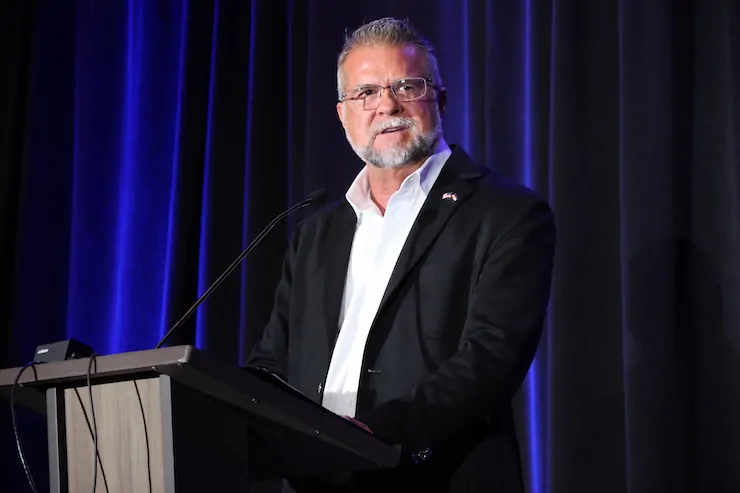
Victor Marx, the Republican nominee for Colorado governor, says Colorado must be prepared adequately for when the rain and snow returns. Photo/Allen Best

Like Marx, some are seeking statewide offices, while others, including Boebert and Romero, are running for Congress in districts with more rural areas.

That makes sense, as the Water Congress has a strong rural constituency. Denver Water is well represented, but so is Logan County. I also noted that Rod Lenz, the chair of the Republican River Water Conservation District’s board of directors, managed to get to the conference by Wednesday morning after a meeting in Holyoke that lasted long into the previous afternoon. That’s a good five-hour trip by car.

As for the y’alls, I have no idea whether Jeff Hurd, the Third Congressional District incumbent, Phil Weiser, the Democratic nominee for governor, drawled y’alls. I suspect not. I have heard both speak several times. Neither is a y’all guy. Both are also attorneys.

Perhaps not surprisingly, Romero and Boebert started out on much the same note in their remarks about the Colorado River. Romero mentioned ā€œdecades of lower-basin useā€ and urged solidarity with Colorado’s negotiating team on ā€œprotecting Colorado’s compact entitlements.ā€ Boebert struck the same tone but with more pugilistic language. ā€œWe’re fighting for what belongs to us and for our future generations.ā€

Beyond those obligatory remarks, the two candidates differed greatly. Boebert talked about what she has done for her constituents regarding water and mentioned her work on the Arkansas Valley Conduit Project. ā€œEven though my dear great president may have vetoed that, we are still working to get that over the line for Southeast Colorado.ā€

Boebert was typical Boebert, saucy and sort of interesting in how she played to her base. She wore blue jeans, as that seems to be her style when making the rounds in Colorado. In what may be more revealing, she also tried to talk about her bi-partisan work. I also noticed she did so when running in a tight race in her former congressional district, the third, in 2022. She won that race by a mere 546 votes, precipitating her move across the Continental Divide.

Maybe it’s because she is in what appears to be a tougher contest with the Democratic candidate, Eileen Laubacher, a retired Navy rear admiral, in a district that in the past has been unflinchingly Republican. Laubacher’s resume, money and growing institutional support could, noted Axios in a story last week, ā€œmake Boebert sweat.ā€ Laubacher also spoke at the conference. But again, I was elsewhere.

Themes

Two themes were evident in remarks made by the office-seekers and others at the conference. One was the need for more storage, the other for more ā€œwatershed restorationā€ via Proposition 137, the proposal on the November ballot to divert sales tax revenues from sporting goods to do work in the forests and expand funding for parks.

The discussions in a general way crossed party lines but the storage case was cited more prominently by Republican speakers. Absent, though, was the sort of specifics I thirsted for.

Politicians rarely get into the details when on the stump, of course. And 15 minutes isn’t much time. Boebert’s comments will likely be echoed in the next two months.

ā€œForest management is not optional anymore. It never was, and for anyone to come up and present policy that is more reactive then proactive is failing you and each and every one of us — is failing future generations,ā€ said Boebert. ā€œHealthy forests hold snow longer, release water cleaner, and protect our watersheds from catastrophic fires that turn drinking water into ash.ā€

Boebert then took aim at clean energy.

ā€œWe hear all the environmental claims about carbon emissions, but these wildfires that are too quickly growing out of control, burning down our beautiful state, neighboring states in the West, with more than 6 billion standing dead trees that no one will allow us to harvest or not harvest enough of, unfortunately even taking lives of first respondersā€¦ā€

Boebert attributed to NASA a statistic: A wildfire produces more greenhouse gas emissions than all of the cars fueled by fossil fuels in a year.

ā€œSo EVs aren’t the answer. Sending your money to DC for wind and solar isn’t the answer. It’s being good stewards of our land, managing our forests.ā€

The storage theme also got lots of attention. It was bipartisan. Little of the conversation went very deep. Some of it was almost insultingly oversimplified.

Consider what Marx had to say: ā€œWe can’t make it snow. We can’t make it rain. But we can decide whether we’re prepared for when the water comes. So I believe we should store water in good years. Lord, please send it.ā€

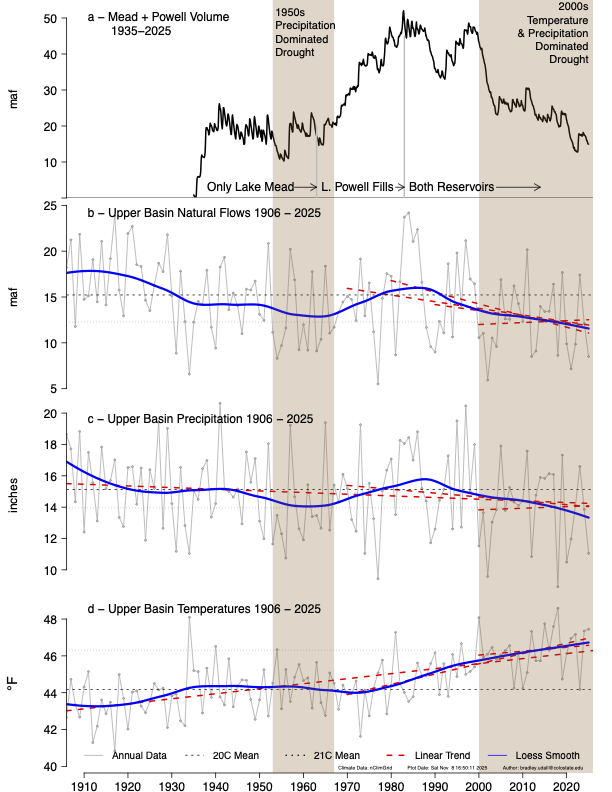
Udall/Overpeck 4-panel Figure Colorado River temperature/precipitation/natural flows with trend. Lake Mead and Lake Powell storage. Updated through Water Year 2025. Note the tiny points on the annual data so that you can flyspeck the individual years. Credit: Brad Udall

It sounds good, being ā€œprepared adequately.ā€ But that statement assumes good years will come. Examining the science, Colorado State University’s Brad Udall has suggested there may not be any good years, let alone enough to fill all the [reservoirs] already built.

Consider that we have two giant reservoirs on the Colorado River sitting 75% empty. And in the headwaters, Green Mountain Reservoir is 15.1% full, as of Sunday, according to the Bureau of Reclamation. Blue Mesa Reservoir was only marginally better. Navajo, on the Colorado-New Mexico border, is doing better at 40% to 45%.

Romero’s call for partnership

Of the three office-seekers I heard, Romero was most interesting. It was obvious to me he had taken the time to study the Colorado River issues. As for Marx, he rambled.

Romero’s comments were calculated, of course. He was making a case for stability after the chaos of the Trump presidency.

ā€œWe have to restore Congress and our federal agencies as institutions that work. Congress has to legislate. It has to authorize projects. It has to appropriate money. It has to conduct oversight. Those are all the rules that were stipulated in the Constitution for our Congress,ā€ he said.

I suspect Jeff Hurd would agree with at least parts of that statement.
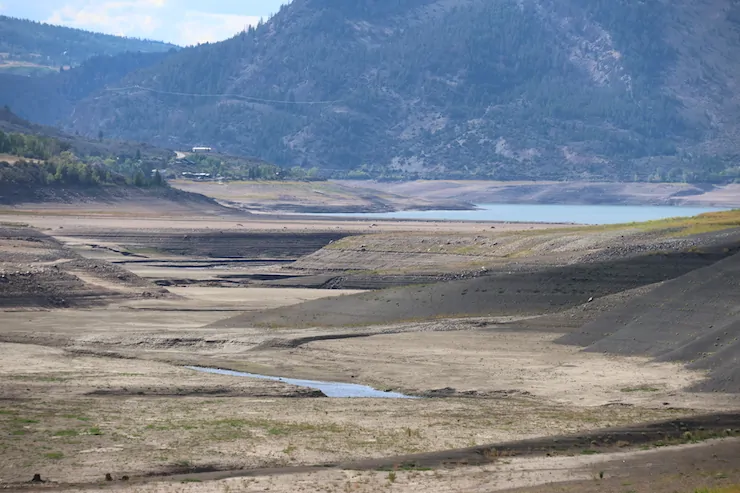
Green Mountain Reservoir, seen here on Aug.17, sits about 85% empty. Most other reservoirs have more water stored, but not that much. Photo/Allen Best

He later talked about what this meant on the ground. ā€œA rancher can’t make long-term conservation investments around a pilot program that could disappear with the next administration,ā€ he said.

What must be restored, he continued, is a federal partnership with the state, ā€œwhere federal dollars turn local grit into lasting resilience. So here’s the heart of it: We have the right people, we have the expertise, we have the will. Now we need to bring real, sustained funding and solutions and resources to bear, enough to help us build resilience for the next 50 years of demand. And we need genuine, reliable partners.ā€

As for resilience, said Romero, it comes from many projects. ā€œIt’s a modernized diversion that lets a farmer grow more with less. It’s a storage that gives a community room to breathe in a drought. It’s a treated watershed that doesn’t burn catastrophically. And it’s securing an historic right like Shoshone, so it benefits Colorado permanently.ā€

Shoshone, of course, is the hydroelectric plant in Glenwood Canyon, and the Colorado River District is nearing success in its multi-year effort to make sure that the very senior water rights continue to ensure water flows downstream. It’s complicated, of course.

ā€œThese things take money. The federal government has helped build the water structure that made this modern American West possible. It is their responsibility to be a reliable partner with us, adapting that infrastructure and those institutions to the 21st century. They need to stay with us for capital and capital improvements.ā€

Romero wrapped up his speech with this observation: ā€œOur hardest moments are often when we find our common ground.ā€ That means, he said, ā€œcreating solutions that last beyond the next drought, the next negotiations, or the next administration, but for generations to come.ā€

Sounds good – but where does additional storage make sense that allows communities to breathe?

As for forest resilience, it sounds good — but what exactly is being proposed? Most environmental organizations seem to support Proposition 137, as do Denver Water and Northern Water. Western Resource Advocates and other environmental organizations are pushing it.

I still have major questions about the mechanics even after sitting through an hour-long press conference on Monday morning. Sometimes I can be fuzzy in my thinking, but in this case I think there’s some fuzziness about what is being proposed.

Colorado Rivers. Credit: Geology.com

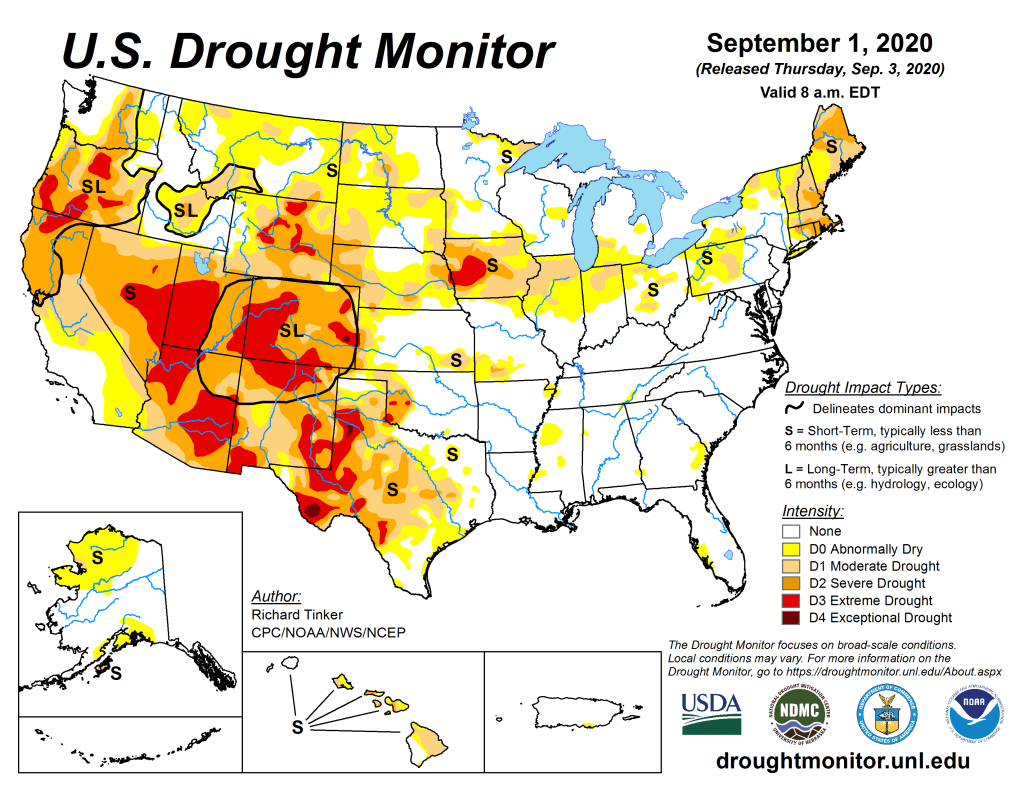
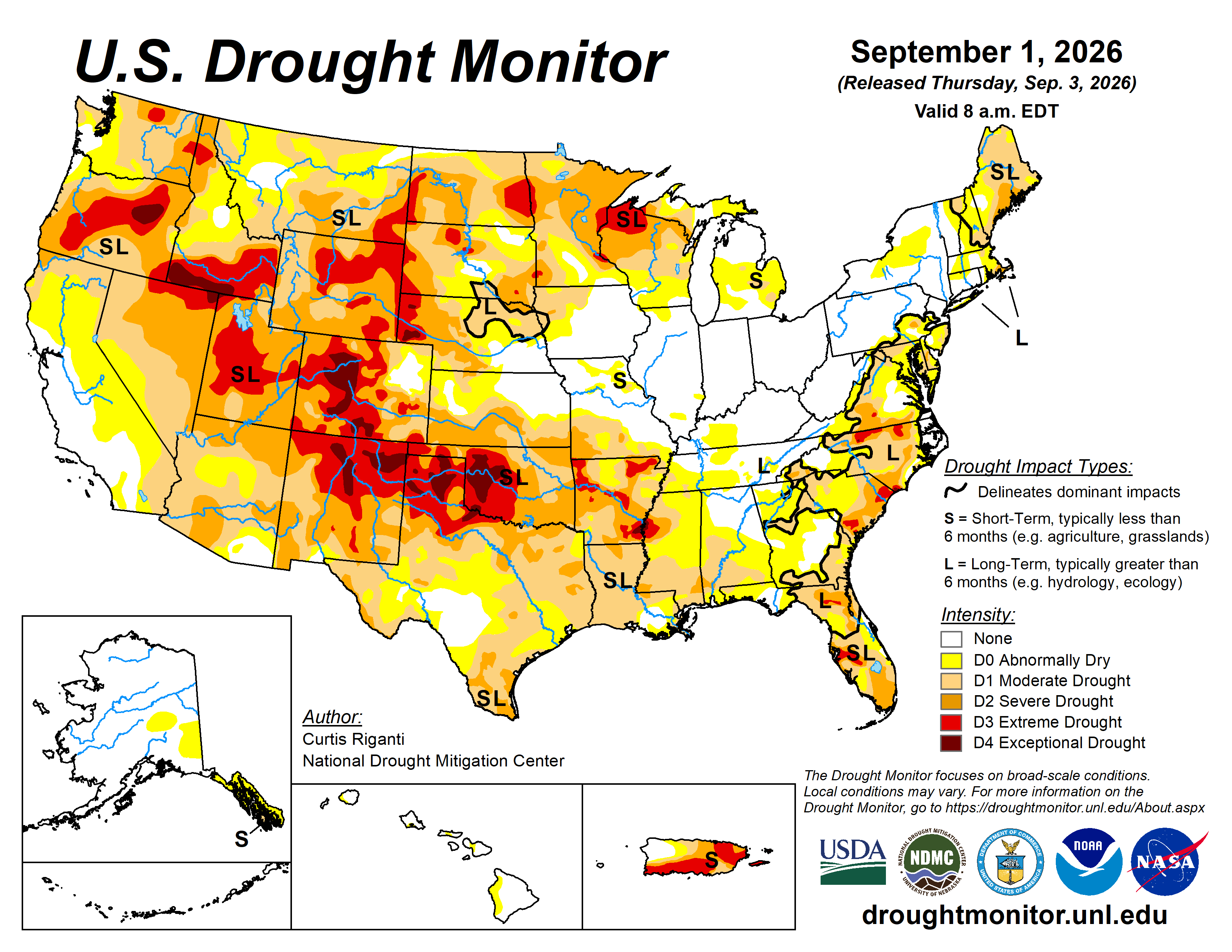
#Drought news September 3, 2026: Locally heavy rains from the #Monsoon fell in parts of the Rocky Mountains in Colorado, parts of W. #Colorado to the west of the Front Range saw conditions improve given recent rainfall

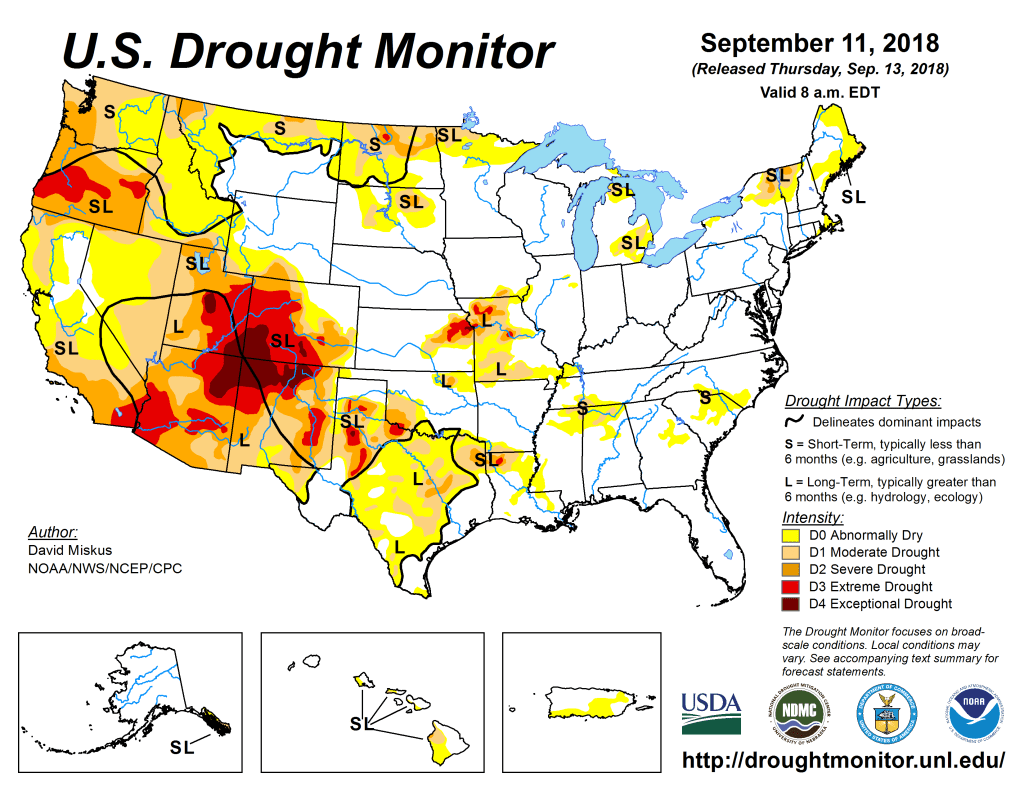
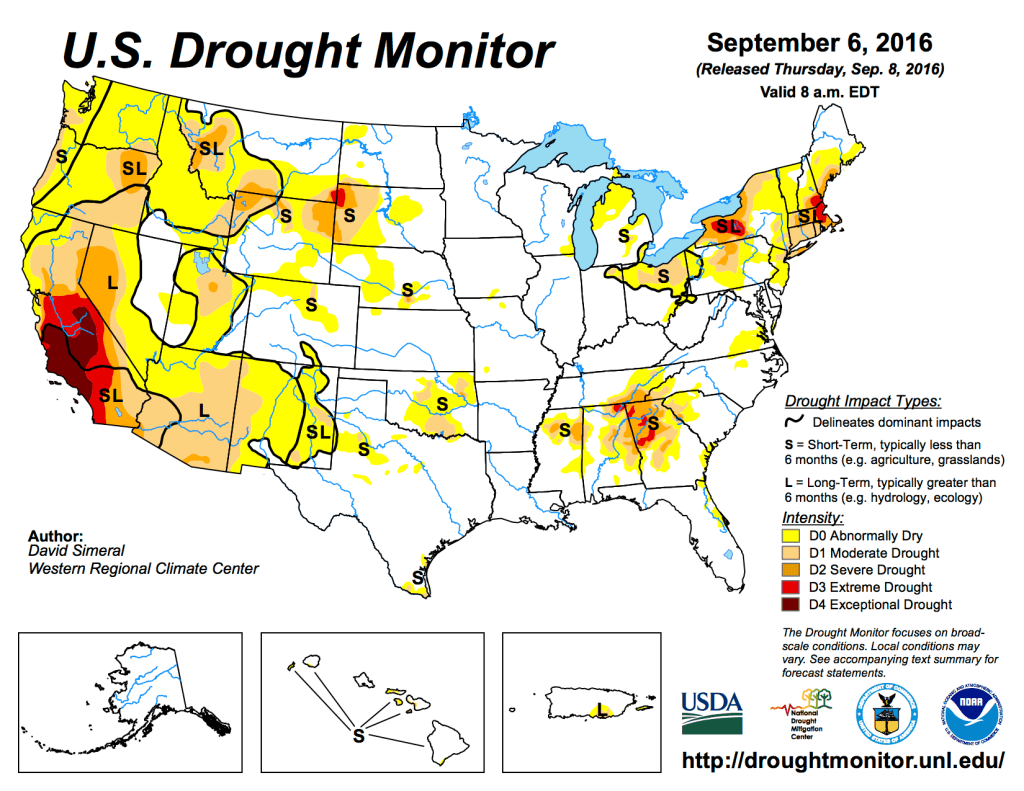
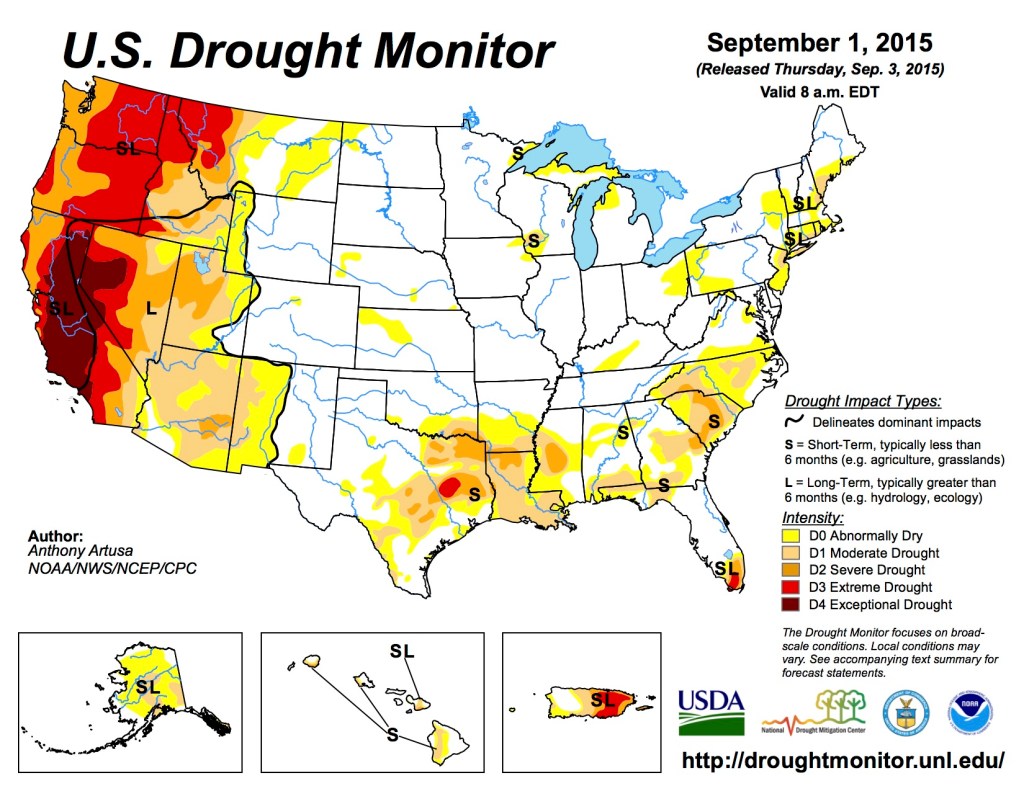
Click on a thumbnail graphic to view a gallery of drought data from the US Drought Monitor website.

Click the link to go to the US Drought Monitor website. Here’s an excerpt:

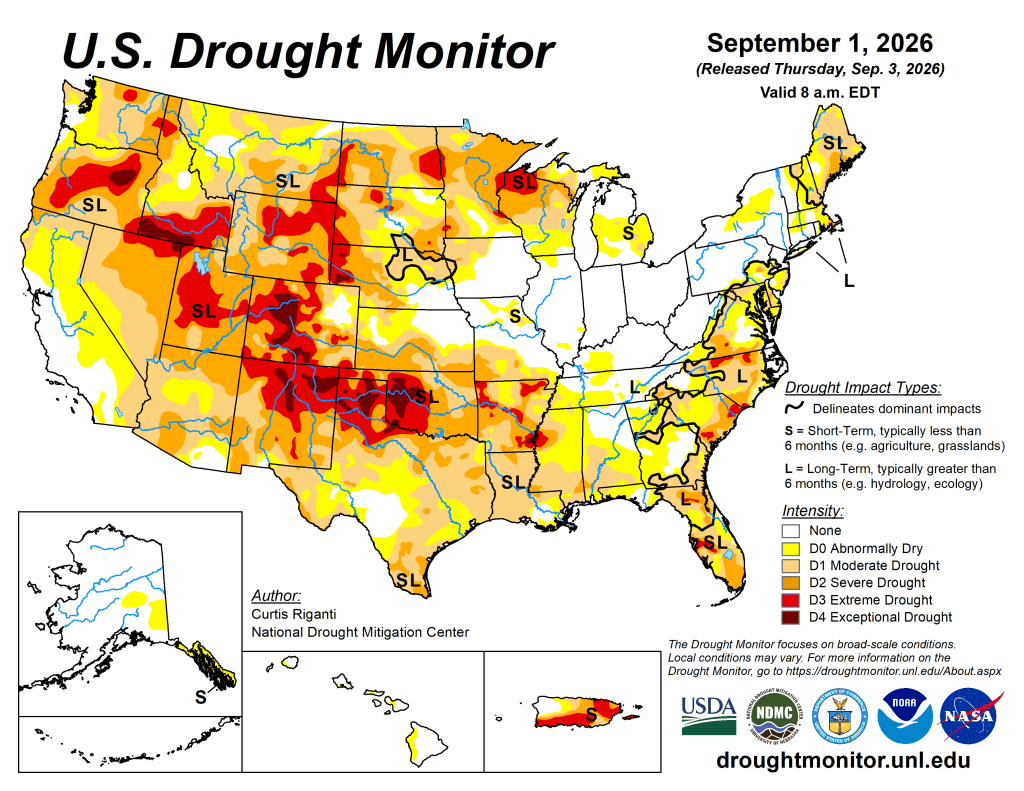
This Week’s Drought Summary

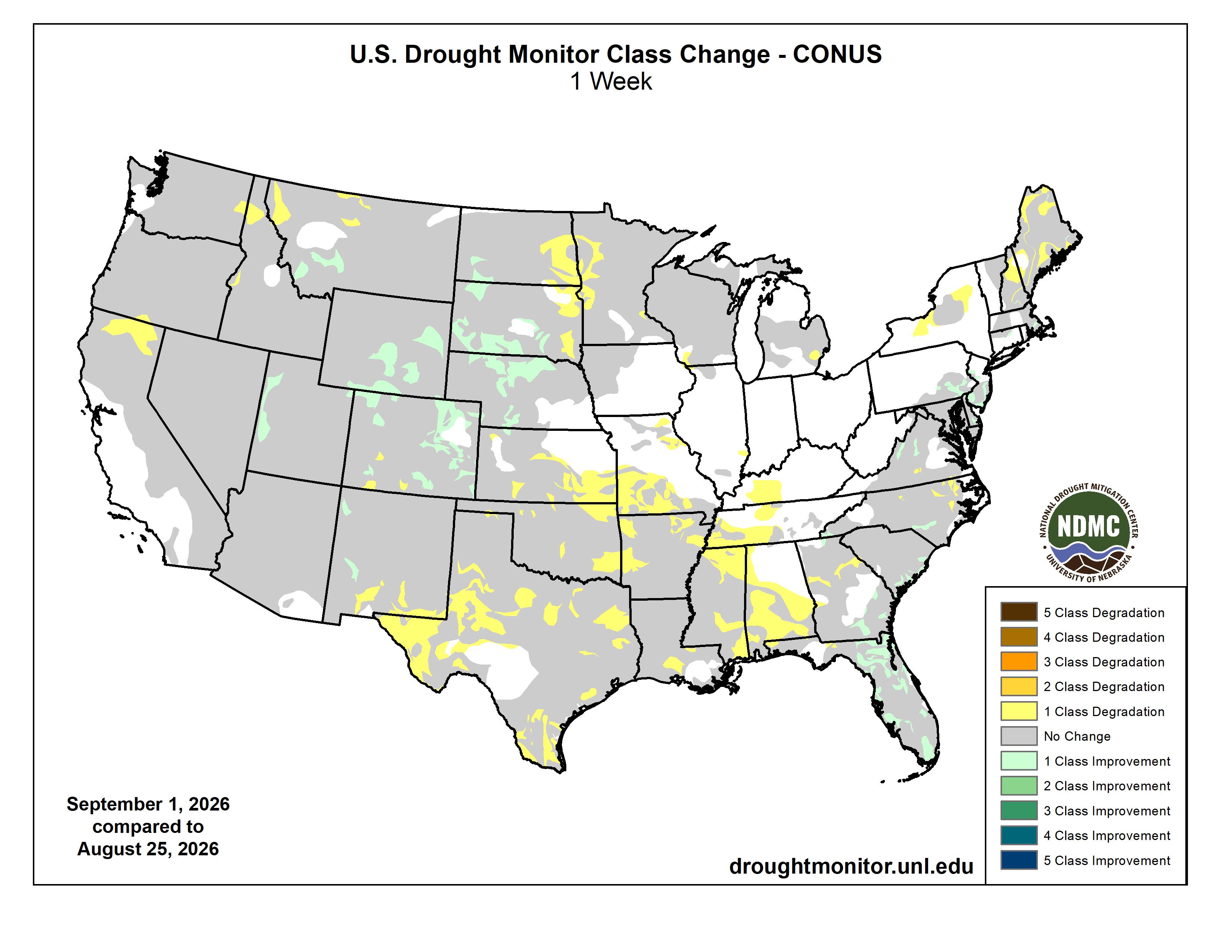
Dry weather continued this week across much of the central U.S., especially from the southern Great Plains to the Mississippi River Valley and Corn Belt. Flash drought conditions were occurring across a large area spanning from Texas northeastward to Oklahoma and southern Kansas, southern Missouri, Arkansas, northern Mississippi and portions of far western Tennessee. Due to the drier- and warmer-than-normal weather in most of these areas, drought and abnormal dryness expanded and intensified in many areas, as widespread adverse impacts to agriculture continued and fire danger continued to grow in some areas. Widespread showers and thunderstorms, some locally heavy, dotted parts of the Northeast and Southeast regions, leading to localized improvements to ongoing drought or abnormal dryness. Some areas that missed out on the rains saw conditions worsen. Hot and dry weather continued near the borders of the Dakotas with Minnesota, leading to worsening drought conditions. Widespread improvements occurred in some areas from Wyoming and the plains of eastern Colorado northeast into the Nebraska Sandhills and southern South Dakota, where either heavy rainfall this week improved conditions or conditions were reassessed following recent heavier rains. Recent hot and dry weather, combined with a lack of winter snowpack, led to the expansion of moderate drought in northern California. Heavy rainfall associated with the remnants of Tropical Storm Dolly in eastern Puerto Rico led to a few improvements there, though widespread severe and extreme drought continued across much of Puerto Rico. Recent rainfall led to the removal of short-term moderate drought from Alaska’s Central Interior…

High Plains

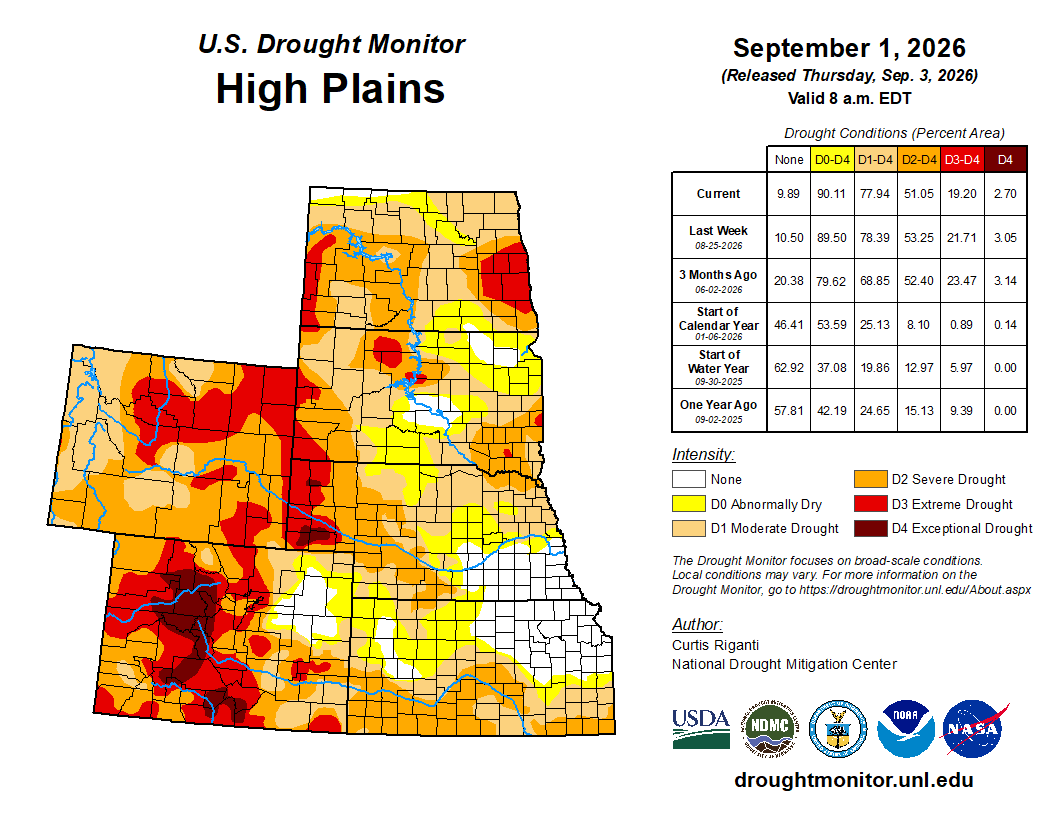
A swath of 0.5-2 inches of rain fell from parts of western Nebraska and western Kansas into portions of Colorado and Wyoming. Scattered similar rain amounts also fell in portions of east-central and northern South Dakota, as well as in parts of central and western North Dakota. The impacts of recent rainfall in southern South Dakota and the Nebraska Sandhills were re-evaluated this week, and widespread improvements were made as soil moisture and streamflow locally improved, while short-term rainfall deficits were alleviated. Long-term precipitation deficits and their impacts continued across much of this region, and abnormal dryness and long-term moderate drought remained. Scattered improvements to drought also occurred from southern and eastern Wyoming into the western Dakotas and much of eastern Colorado. Short-term precipitation deficits improved in these areas, with some improvement in soil moisture and streamflow, leading to improvements in drought conditions. Streamflow still remains low across portions of the western High Plains region given the poor high elevation snows and warm temperatures during the water year. Temperatures across the region were hotter than normal, especially in Kansas, where temperatures ranged mostly from 6-10 degrees above normal, resulting in high atmospheric demand for moisture in southeast Kansas…

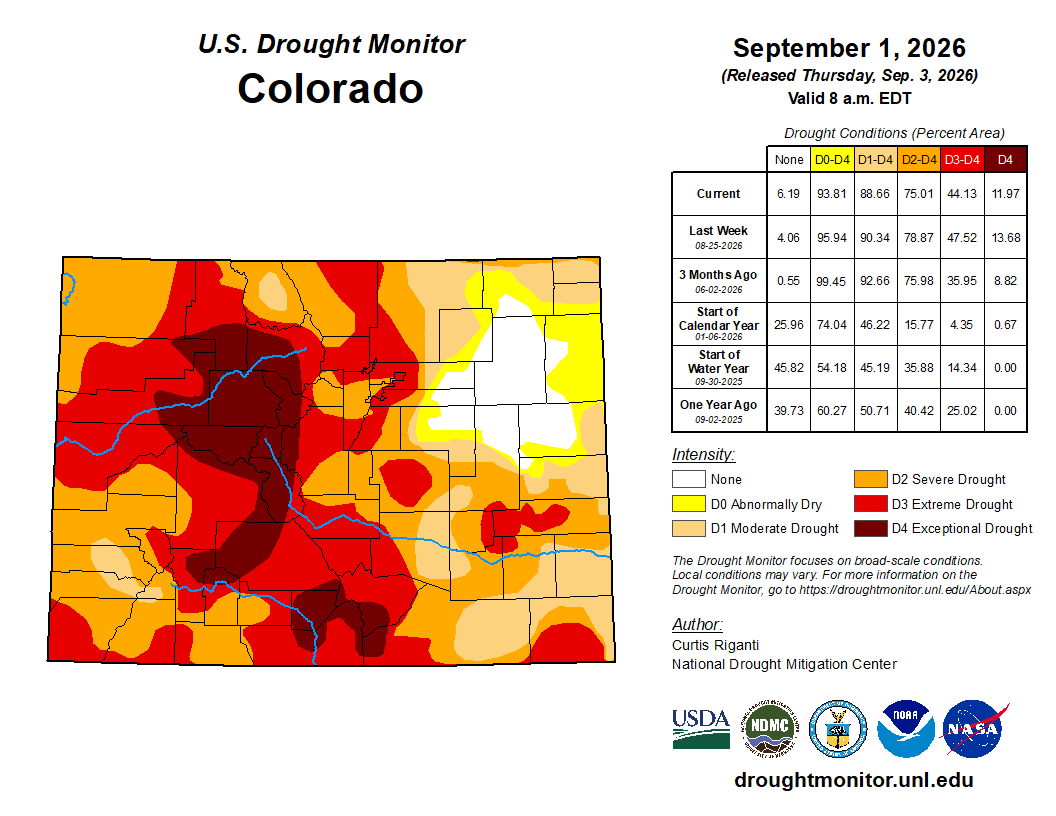
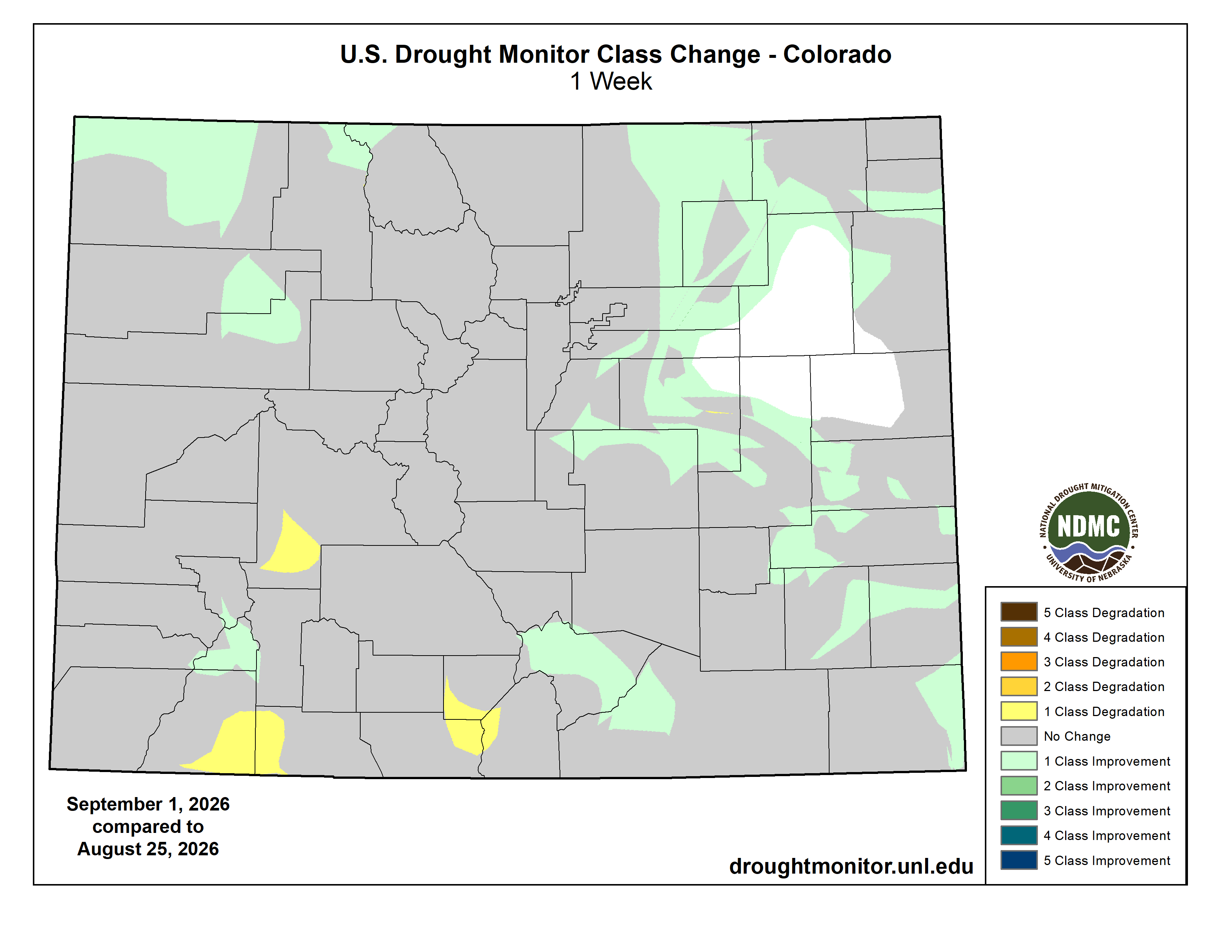
Colorado Drought Monitor one week change map ending September 1, 2026.

West

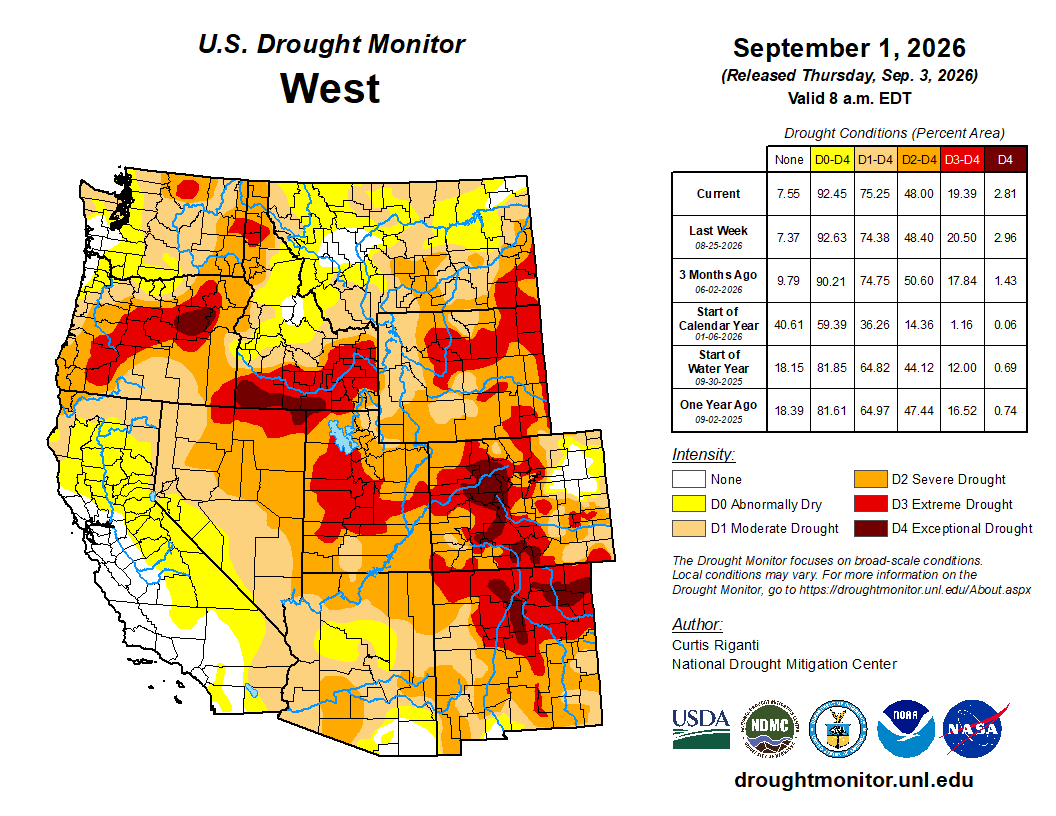
Locally heavy rains from the North American Monsoon fell in parts of Arizona, Utah and the Rocky Mountains in Colorado. Parts of Colorado to the west of the Front Range saw conditions improve given recent rainfall, though widespread short- and long-term drought remained across central and western Colorado. In a few areas in south-central and southwest Colorado that missed out on heavier rains, long-term precipitation deficits grew even worse. Temperatures from 4–6 degrees above normal also kept atmospheric thirst high, and extreme and exceptional drought locally expanded. Short-term precipitation deficits and poor streamflow in some areas led to drought degradation in parts of the Idaho Panhandle, the Spokane, Wash., area, and nearby northwest Montana. Short-term dryness and warmth in northern California led to the expansion of moderate drought there. Moderate drought locally expanded in north-central Montana where short-term rainfall deficits grew and soil moisture declined in a few areas. Recent precipitation in southwest Montana led to improvements in mid- to long-term precipitation deficits and overall conditions, and moderate drought coverage decreased. Recent precipitation in western Utah helped to lessen long-term precipitation deficits, and extreme drought coverage lessened slightly. Temperatures were warmer than normal across much of the West, excluding areas from western Nevada and far northern California through Oregon and Washington. In the rest of the region, temperatures were mostly at least 2-4 degrees above normal, with many areas 4-10 degrees warmer than normal…

South

Widespread expansion or worsening of ongoing drought or abnormal dryness occurred across the South, especially in parts of Mississippi, Texas, eastern Oklahoma and portions of Arkansas. Heavier rains, locally over 2 inches, fell in southeast Louisiana and southwest Mississippi. Otherwise, weather conditions were mostly drier, with many areas receiving less than a half inch of rainfall and some receiving none at all. Temperatures were warmer than normal across most of the region, especially in Oklahoma and the northern half of Texas, where temperatures were 6-10 degrees hotter than normal. This continued a very hot August across much of Oklahoma. Degradations in drought conditions were especially prevalent in southwestern and northern Texas, deep south Texas, northern Mississippi and eastern Oklahoma, as ongoing hot and dry weather worsened conditions in areas already suffering a myriad of drought impacts. Burn bans were enacted across much of western Oklahoma, while Oxford, Miss., residents were asked to conserve water due to high water demand and recent extreme heat. Streamflow across much of central and western Oklahoma and northern Texas was quite low, along with low soil moisture and intense short-term precipitation deficits…

Looking Ahead

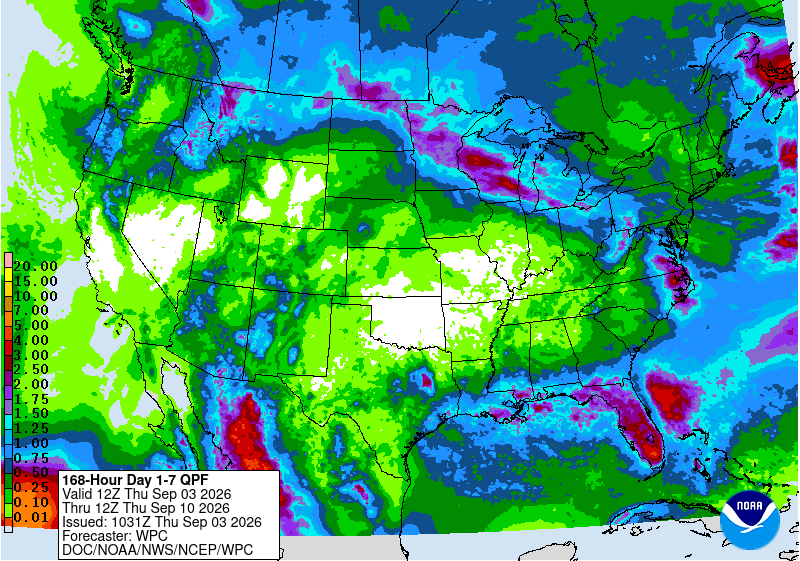
Through the evening of Monday, Sept. 7, the National Weather Service Weather Prediction Center is forecasting dry weather to continue across much of the central and south-central U.S., especially from southeast Nebraska through Oklahoma, Arkansas and western north Texas into southwest Texas and eastern New Mexico and Colorado. Heavier precipitation amounts through Monday evening will likely be confined to parts of the southeastern and northern Lower 48. Heavy rain is forecasted, or occurring on Wednesday afternoon, in east-central and southeast Texas, while the remnants of Tropical Storm Edouard pass through. Heavier rain is also forecast across the central and eastern Gulf Coast and Florida Peninsula. Rain amounts from southern Louisiana to near Panama City may approach 1-2 inches, while heavier rain amounts, locally 2-3 inches or more, are forecast in the Florida Peninsula. Heavier precipitation amounts, mostly in the 0.75-2 inch range, are also forecast in parts of the Pacific Northwest, northern Idaho, northern parts of Montana and North Dakota, and from Minnesota southeastward across Wisconsin and the lower Great Lakes into Pennsylvania and New York.

The National Weather Service Climate Prediction Center’s 6-10 day outlooks, covering Sept. 8-12, favors warmer-than-normal temperatures across much of the central and eastern U.S. The highest confidence for above-normal temperatures is centered around Kansas City and the mid-lower Missouri River Valley southward to the central and western Gulf Coast. Near-normal temperatures are favored in the western half of the West, with below-normal temperatures slightly favored in western Nevada and adjacent parts of California and Oregon. Near- or below-normal temperatures are also favored in central and northern New England. Above-normal precipitation is favored across much of the Great Plains and western U.S., especially from the Continental Divide into the Great Basin and in northern Minnesota and environs. Above-normal precipitation is also slightly favored in east-central Florida. The forecast favors drier-than-normal weather in the Tennessee and Ohio River Valleys and from Lake Erie to southern parts of the Northeast.

In Hawaii, both precipitation and temperatures are expected to be above normal for Sept. 8–12. Above-normal precipitation is also favored across large parts of Alaska, except for the northwest portion of the state and the central Aleutian Islands. Above-normal temperatures are favored in southeast and central Alaska and in the central Aleutian Islands, while near-normal temperatures are favored in northeast and southwest Alaska and the eastern Aleutian Islands.

US Drought Monitor one week change map ending September 1, 2026.

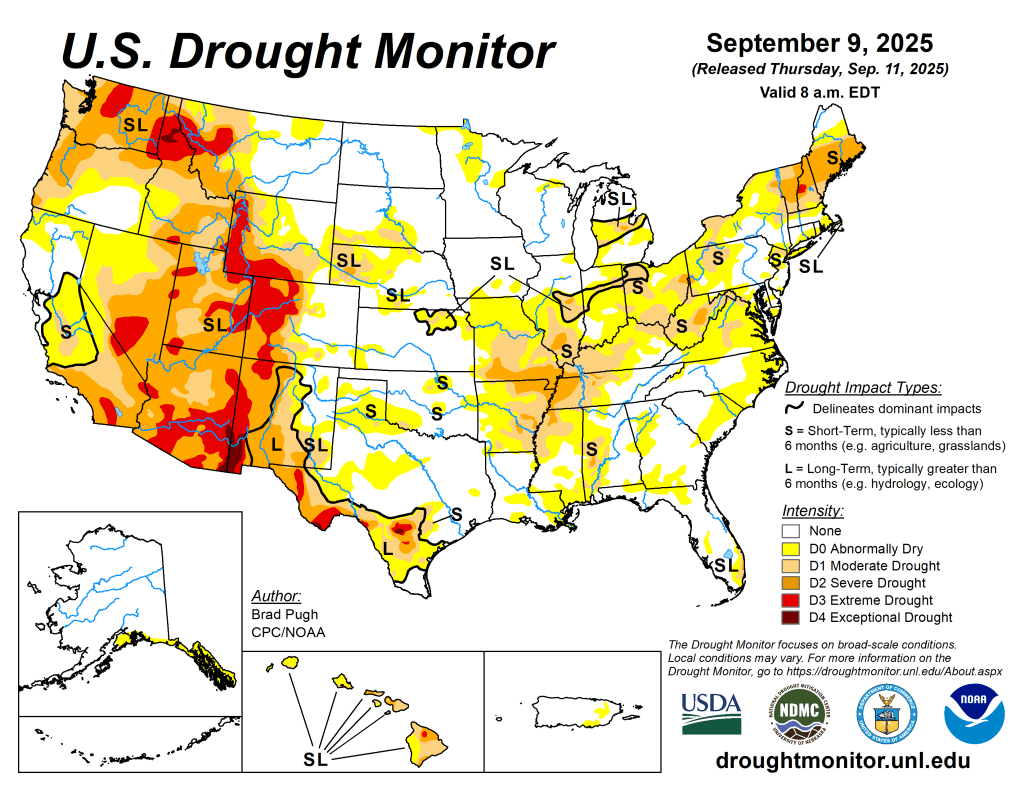
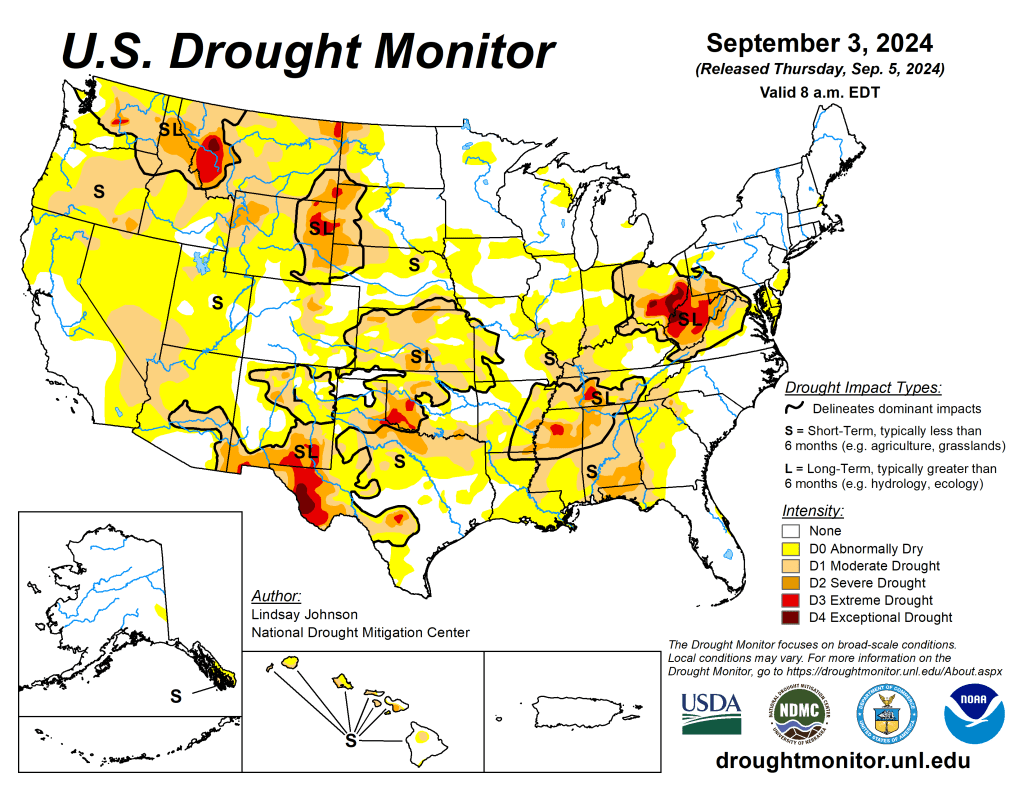
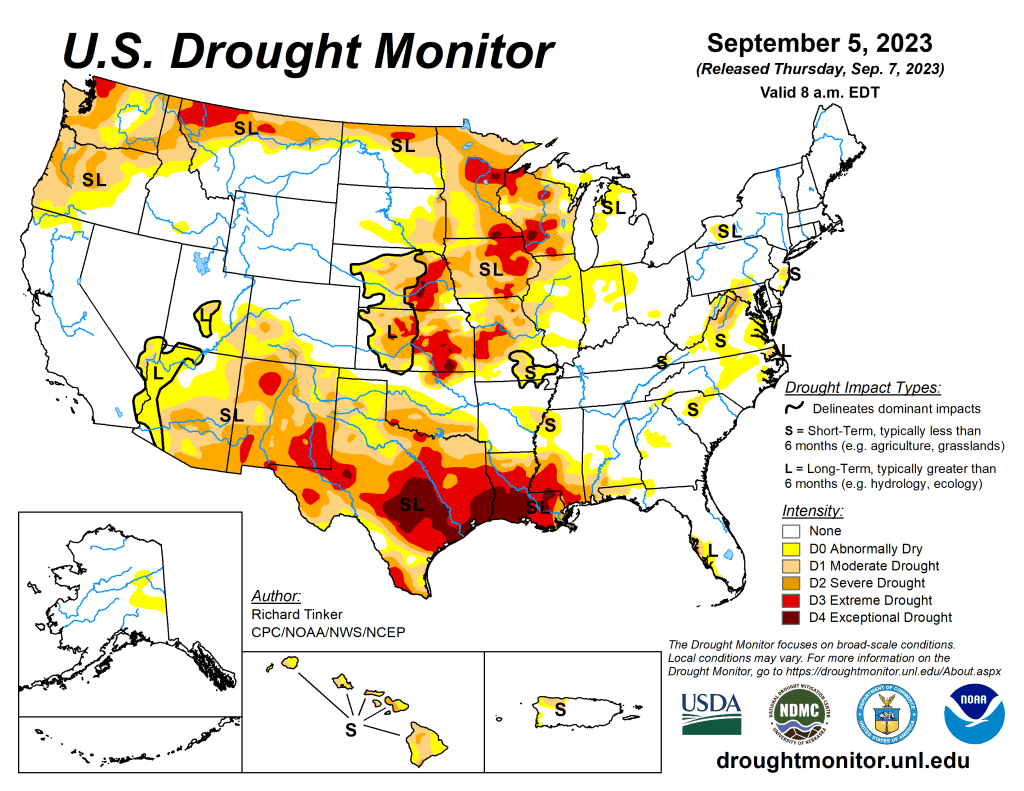
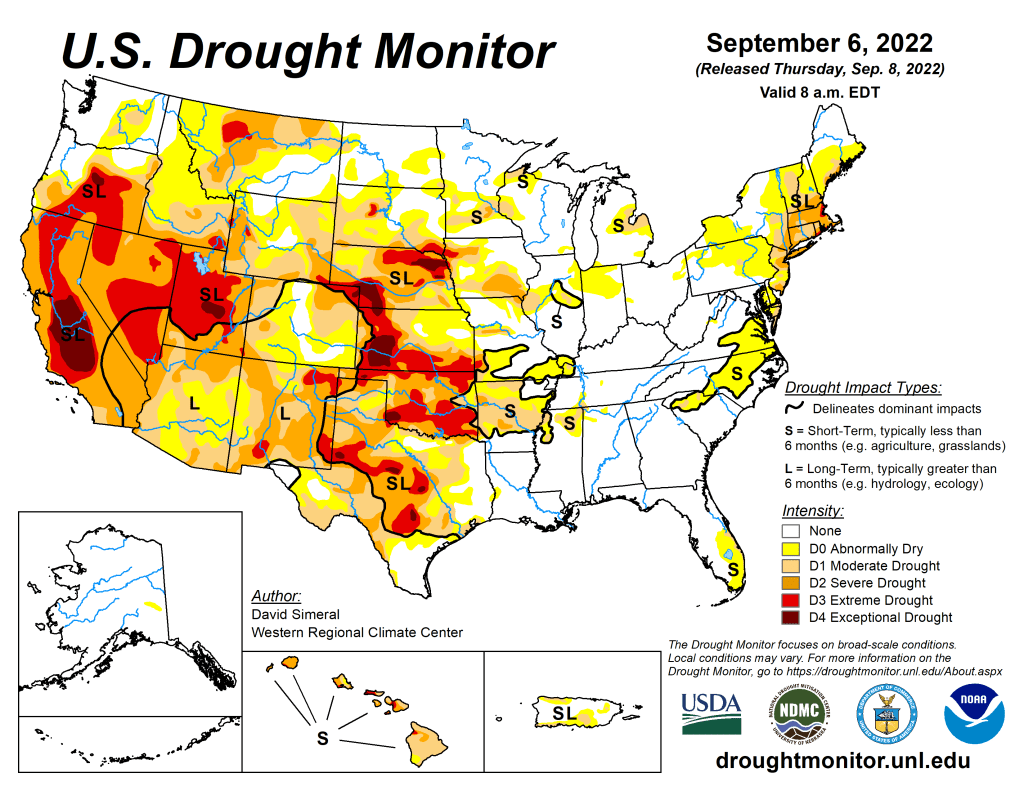
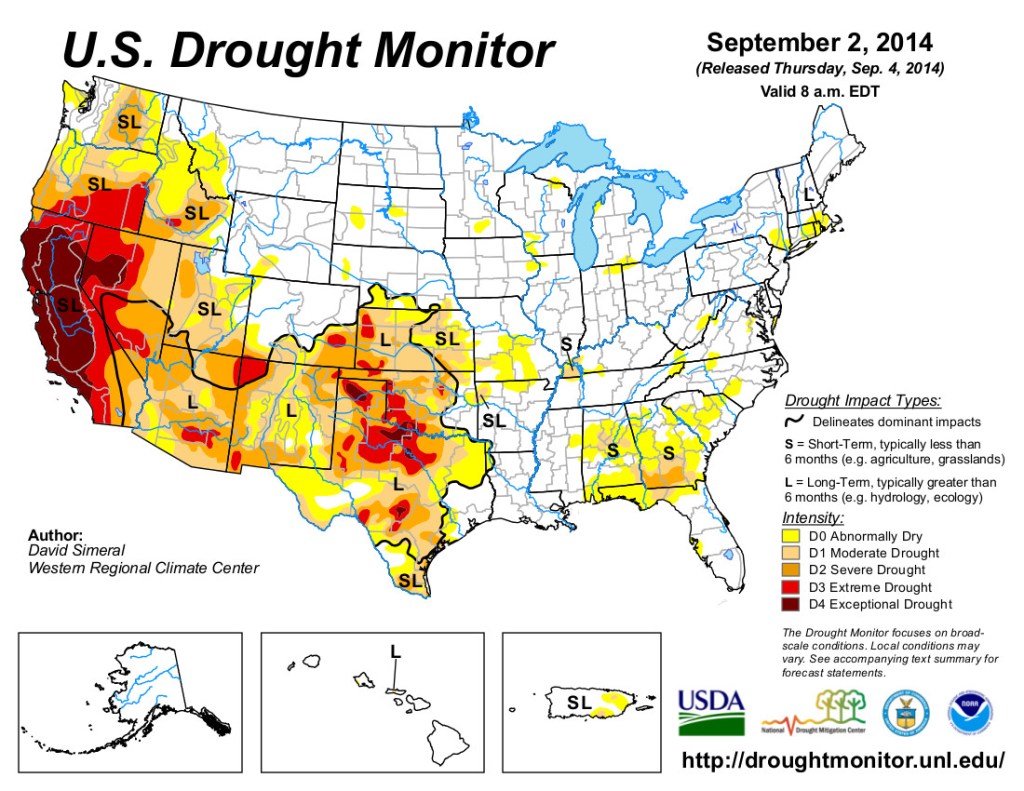
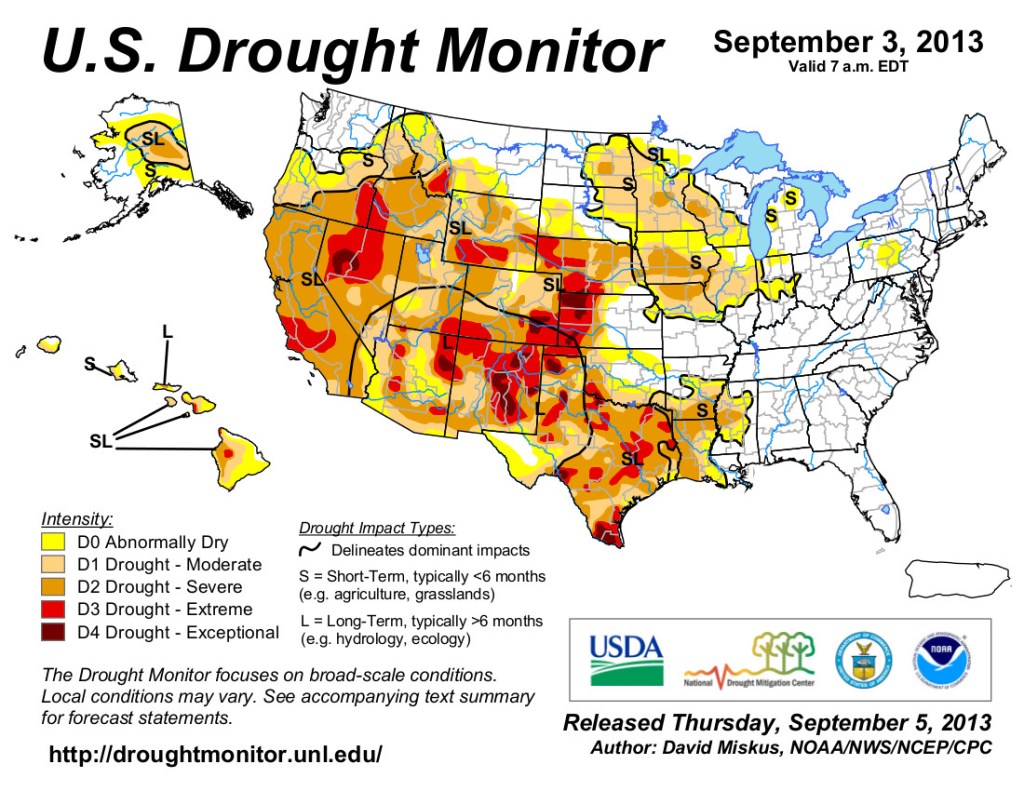
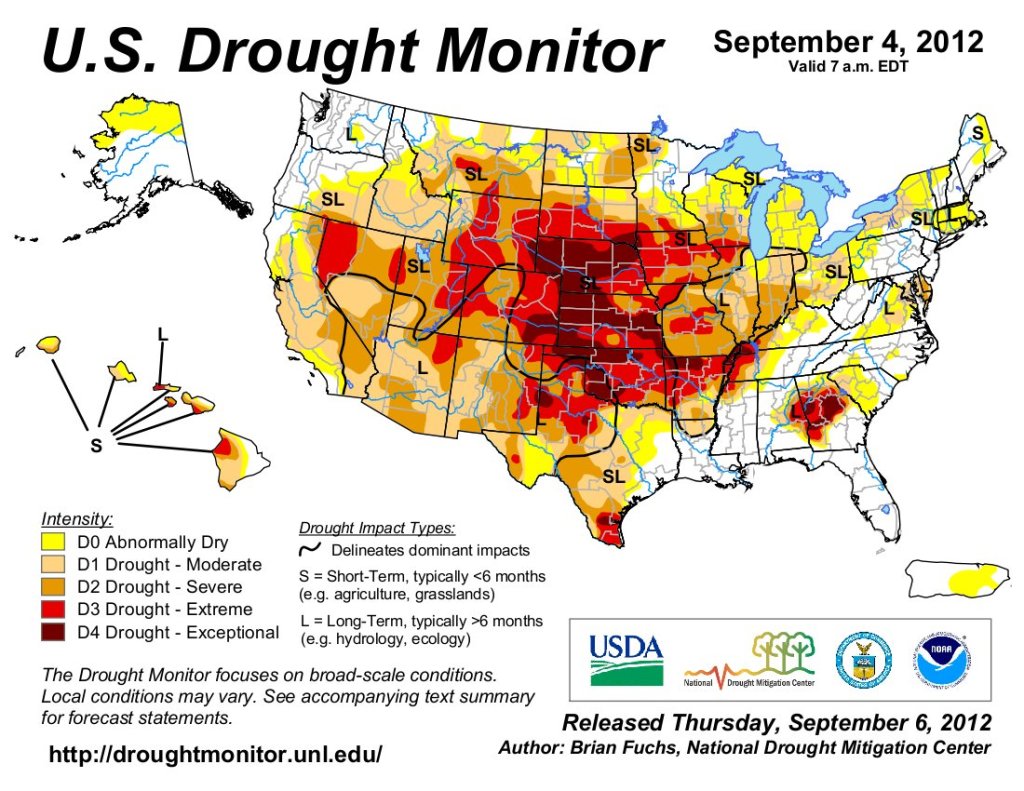
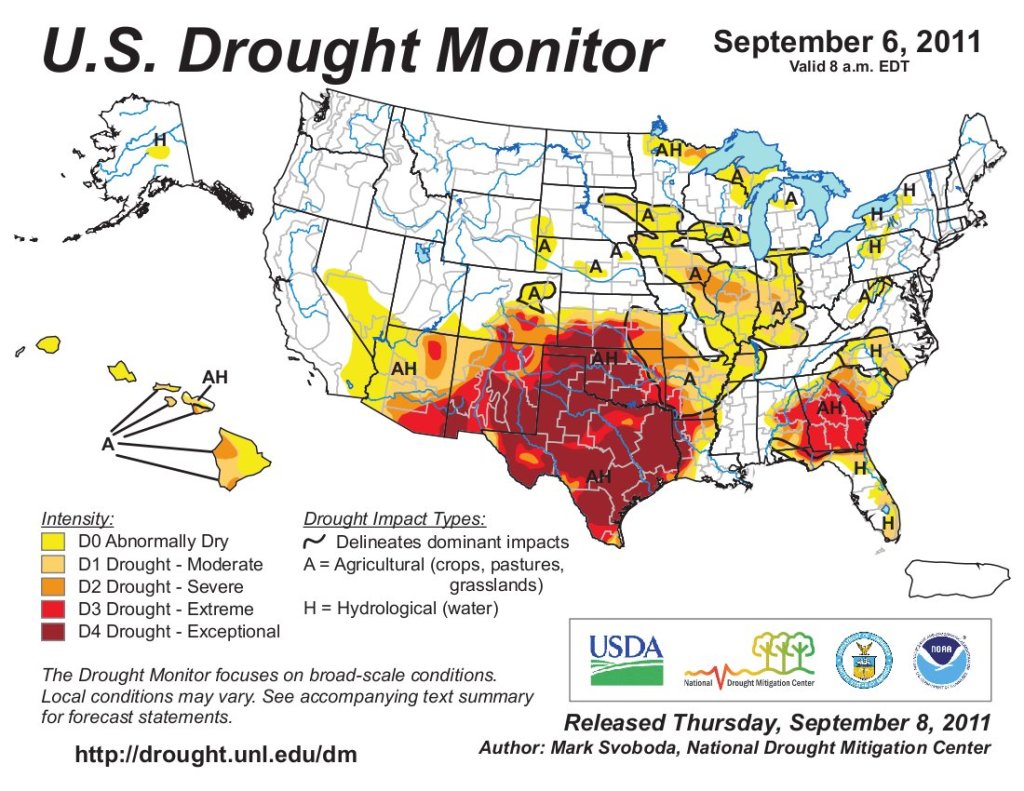
Just for grins, here’s a slideshow of early September US Drought Monitor maps for the past few years.

The #MissouriRiver: A Long History, A Hopeful Future: The “Big Muddy” deserves a healthy future — American Rivers #MissouriRiver #aridification

Upper Missouri River, Montana | Scott Bosse

Click the link to read the article on the American Rivers website (Michael Sertle):

August 26, 2026

From its start as a pure snowflake in the Rocky Mountains of Montana to its clouded, churning confluence with the Mississippi River in St. Louis, the ā€œBig Muddyā€ has for centuries been incrediby impactful to the communities that call it home. Native Americans were first to recognize the importance of the Missouri River, with twenty-nine Tribal Nations recognized to hold cultural, economic, or water rights to this current day. Followed by Lewis and Clark on their historic ā€œCorps of Discovery Expeditionā€, the river opened up a new horizon for the newly established United States of America to expand. 

Map of the Missouri River drainage basin in the US and Canada. made using USGS and Natural Earth data. By Shannon1 – Own work, CC BY-SA 4.0, https://commons.wikimedia.org/w/index.php?curid=67852261

As time moved on, the Missouri and its floodplain became more developed, heavily farmed, tightly constricted, and eventually dammed.  The Pick-Sloan Flood Control Act of 1944 changed the wild and free Big Muddy like never before; building massive dams and reservoirs, and thousands of miles of levees to facilitate flood control, farm irrigation, commercial navigation, and hydropower generation. While it can be debated as to the successes of Pick-Sloan, one thing is certain, a new wave of threats to the health and function of the river itself was set in motion and continues to grow today.

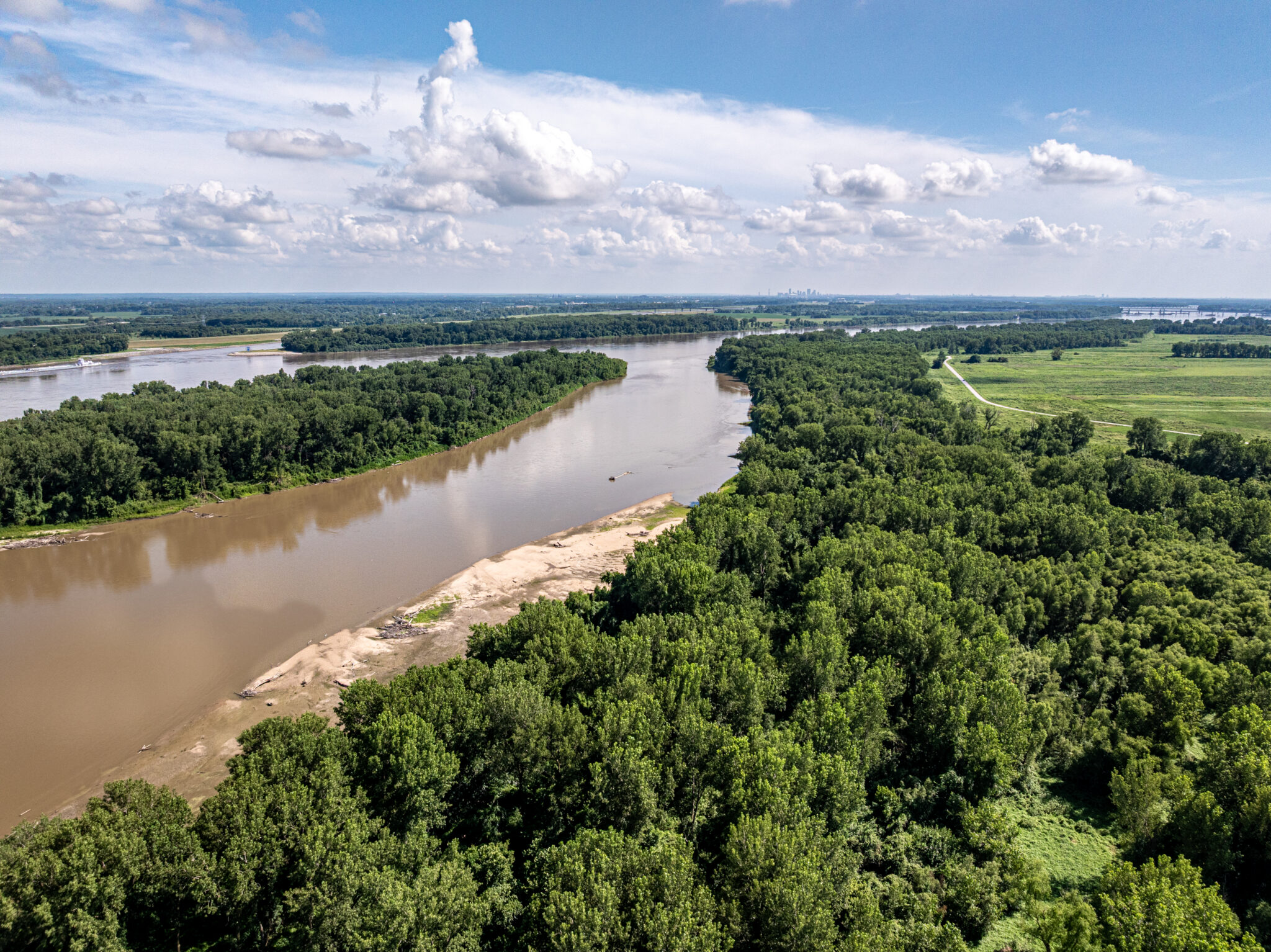
Confluence of the Missouri and Mississippi Rivers, Missouri | Mitch Paine Photography

One of the first major rivers that was a focus of conservation efforts by American Rivers, we pushed for the endangered species listing of the pallid sturgeon, piping plover, and interior least tern. Changes in the river connectivity, historic hydrology, and natural sandbar creation severely impacted these species’ ability to survive.Ā We were also a primary advocate in the subsequent actions for the Congressional creation of the U.S. Army Corps of Engineers’ (USACE)Ā Missouri River Recovery ProgramĀ (MRRP).Ā 

Pallid sturgeon

The MRRP is focused on:

While advances have been made, including the de-listing of the interior least tern and the slow completion of levee-setbacks to establish floodplain re-connection, there is still over halfway to go to complete the total 166,750 acres of Missouri River floodplains that were approved to be acquired and restored as part of the BSNP.

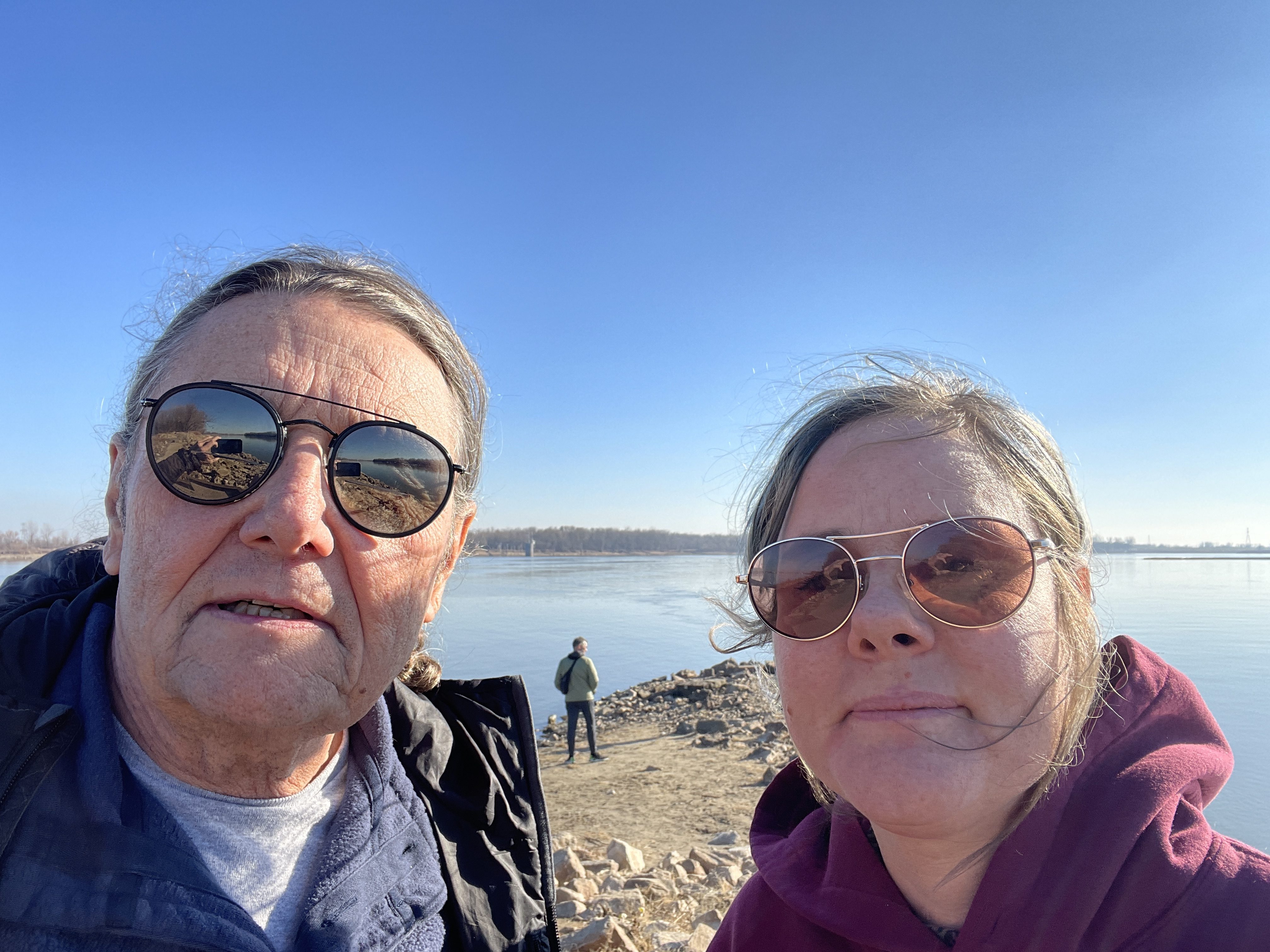
Coyote Gulch and daughter at the confluence of the Missouri River and Mississippi November 25, 2022. The Mississippi is to the left and the Missouri is to the right. Note the huge gaging station on the far bank.