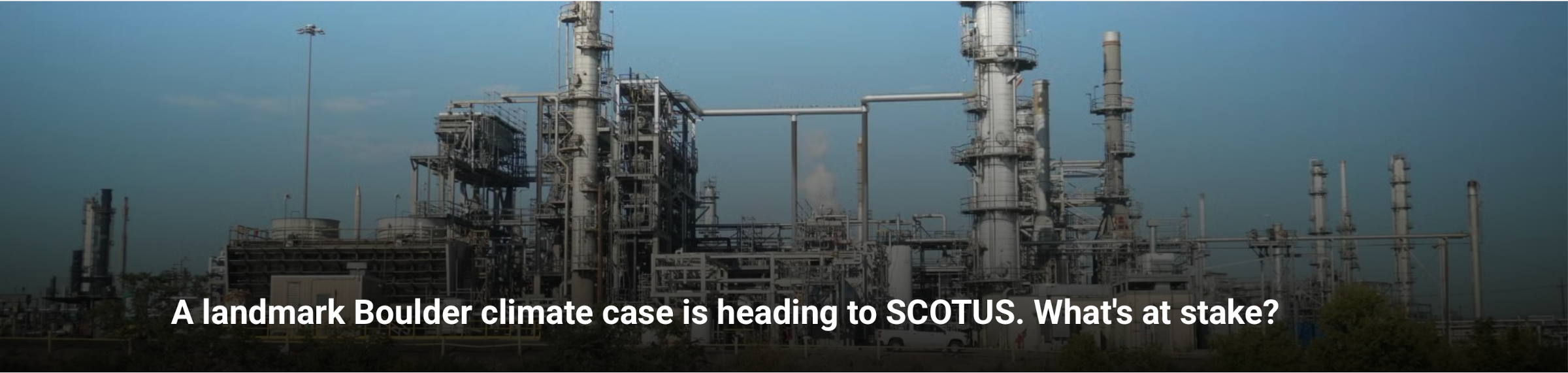
A landmark #Boulder climate case is heading to U. S. Supreme Court: What’s at stake? —  Yvaine Ye (CU Boulder Today)

The Suncor refinery in Commerce City, Colorado. (Credit: Nico Goda/CU Boulder)

Click the link to read the article on the CU Boulder Today website (Yvaine Ye)

September 24, 2026

The U.S. Supreme Court is scheduled to hear a landmark lawsuit next month in which oil and gas companies argue that state courts cannot decide who pays for damages caused by climate change. 

The court’s decision, expected before next summer, could set a precedent for dozens of similar climate accountability lawsuits around the country. 

“This is a historic moment where our home is going to be presenting these issues to the United States Supreme Court,” said Chris Winter, an environmental attorney and executive director of the Getches-Wilkinson Center at Colorado Law. “Here in Colorado, we are experiencing the effects of climate change firsthand. This is a case that’s happening in our backyard.”

On Oct. 5, the court will hear arguments on a petition filed by Exxon Mobil and Suncor, a Canadian oil giant. The city and county of Boulder are suing the companies, alleging that they knowingly concealed the environmental dangers of their activities, and that their actions contributed to a shifted climate that made wildfires, droughts and floods worse. 

After the Colorado Supreme Court allowed Boulder to advance the case in the state legal system last year, Suncor and Exxon Mobil brought the case to federal court. The companies argue that climate change is a national and international issue, and federal law preempts, or overrides, state law on the issue.

“What the Supreme Court will decide is not whether the oil industry is ultimately responsible for climate change, or if they were deceptive in their marketing practices. Instead, they will decide whether state courts are properly equipped to play a role in deciding how we allocate the costs of responding to climate change,” Winter said. 

The Boulder case is one of about three dozen lawsuits filed by state, local and tribal governments across the U.S. seeking to hold the oil and gas industry liable for climate change. None of them has progressed to trial yet. 

The Supreme Court has previously declined to hear similar petitions. It took up the Boulder case as the administration doubled down on efforts to shut down other climate accountability lawsuits nationwide. 

Last year, the U.S. Department of Justice preemptively sued the states of Michigan and Hawaii to prevent them from suing oil companies. Federal judges have dismissed both cases. 

CU Boulder Today sat down with Winter to talk about the Boulder case and the ruling’s potential implications. 

What does the petition by Exxon Mobil and Suncor argue? 

The oil and gas companies argue that whether they’re responsible for climate change damage is an issue that should be decided by federal law or Congress, and that federal law pre-empts state authorities. The companies believe the federal Supreme Court can step in and basically kill the case before it’s able to go back to the state trial court.  

Why does Exxon Mobil and Suncor want the case before the Supreme Court?

The core of their argument is that state law has been pre-empted by federal law, and they are therefore asking the Supreme Court of the United States to kill the case. 

But the industry’s broader strategy is to avoid liability for causing climate change and to protect its financial interest in continuing to produce fossil fuels. Congress, our law-making body, hasn’t enacted a comprehensive climate change law. Thus, if federal law pre-empts state law, but Congress hasn’t implemented effective climate laws at the federal level, we could end up in a situation of not having any meaningful climate policy.   

Could the Supreme Court establish a precedent for similar cases in the country?

Possibly. But there is another possibility. The oil industry is asking the Supreme Court to step into the case very early, before there’s been any trial or rulings on the merits by the state court. This is an unusual ask.

So, it’s possible that the Supreme Court may send the case back to the state courts and ask them to do more work before the federal courts can review it. In that case, we will be left without a clear answer on the question of preemption. 

Have other climate lawsuits moved forward in other jurisdictions?

There has been extensive climate litigation in the United States and around the world, and some of those cases have moved forward.

For example, in the case of Held v. Montana, a group of young people successfully sued the State of Montana under the Montana Constitution for failing to protect their right to a clean and healthful environment. After an extensive trial on the merits, the trial court ruled in favor of the youth, which was upheld on appeal by the Montana Supreme Court in 2024.  

There are also examples from other countries around the world. In, KlimaSeniorinnen Schweiz, or the Senior Women for Climate Protection, an advocacy group in Switzerland, sued the Swiss government for insufficient action to curb climate change, leading to extreme weather that threatened their health. In 2024, the European Court of Human Rights ruled that Switzerland’s inaction violated human rights. 

In this case, the U.S. Supreme Court won’t be looking to those other examples as precedent. The Boulder case involves allegations of fraud and deceptive business practices under state tort law, which is a unique legal theory. 

What does Boulder hope to accomplish by progressing this case?

Local municipalities are spending a lot of public money to take care of their citizens, to protect infrastructure, and to protect local economies in the face of increased drought, fires, floods, and heatwaves. Boulder wants the oil industry, which profited from the marketing and sale of fossil fuels, to share in those costs. 

Congress has failed to pass meaningful climate legislation at the federal level. Boulder’s case is critically important, because without action by the courts, the costs of climate change will be imposed on all of us, and the oil industry will not have a sufficient financial incentive to protect the climate. 

To hold the oil companies accountable, Boulder hopes to get to a trial where the science of climate change and the evidence of the oil industry’s deceptive practices, can all be put before a jury. Then we can have a determination in a court of law on whether those activities are causing climate change and causing harms.  

Beyond the preemption question, what is at stake in this case?

Climate change is hurting people in Colorado and across the country, and those effects are accelerating. Fundamentally, we’re trying to get an answer to this bigger question of who is going to pay for the enormous costs of adapting to climate change?

What Boulder is asking is that we need some monetary help from the oil industry to adapt to the effects of climate change, because the oil industry caused the problem, knew it was causing the problem, intentionally deceived consumers about it and then profited to the tune of trillions of dollars.

What are the broader implications of this case?

This case will potentially say something about the Supreme Court. If the Supreme Court takes an aggressive stance in support of the oil industry, it will indicate something troubling about how the Supreme Court is thinking about its role in our constitutional system. The Supreme Court has long upheld the role of states to protect their citizens from wrongful corporate behavior. If the Supreme Court sacrifices this bedrock constitutional principle to serve the ends of the oil industry in this case, we should be very concerned about corporate influence over the rule of law.
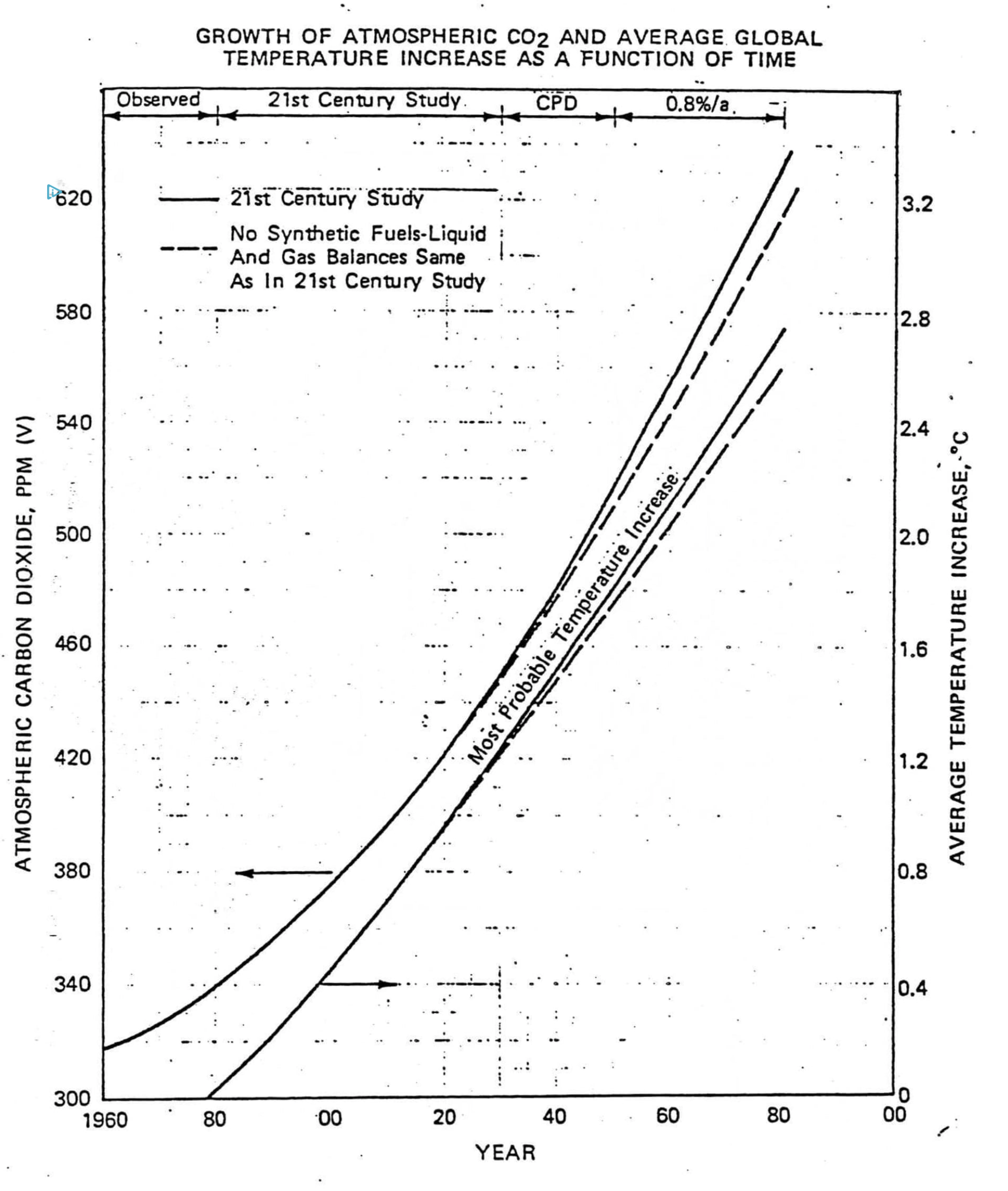
Exxon’s private prediction of the future growth of carbon dioxide levels (left axis) and global temperature relative to 1982 (right axis). Elsewhere in its report, Exxon noted that the most widely accepted science at the time indicated that doubling carbon dioxide levels would cause a global warming of 3°C. Illustration: 1982 Exxon internal briefing document

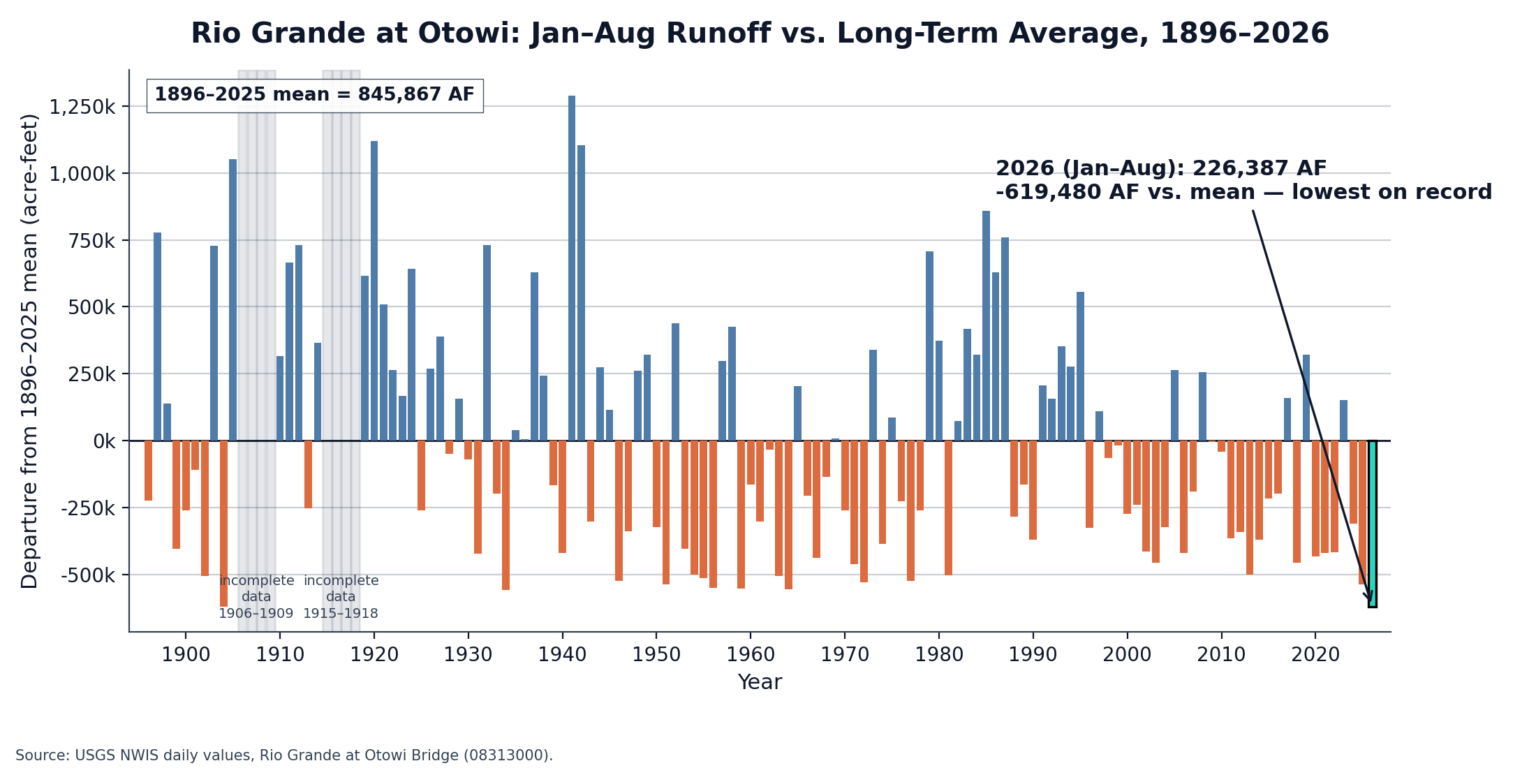
Making sense of the crazy outlier year of 2026 — John Fleck (InkStain.net) #RioGrande

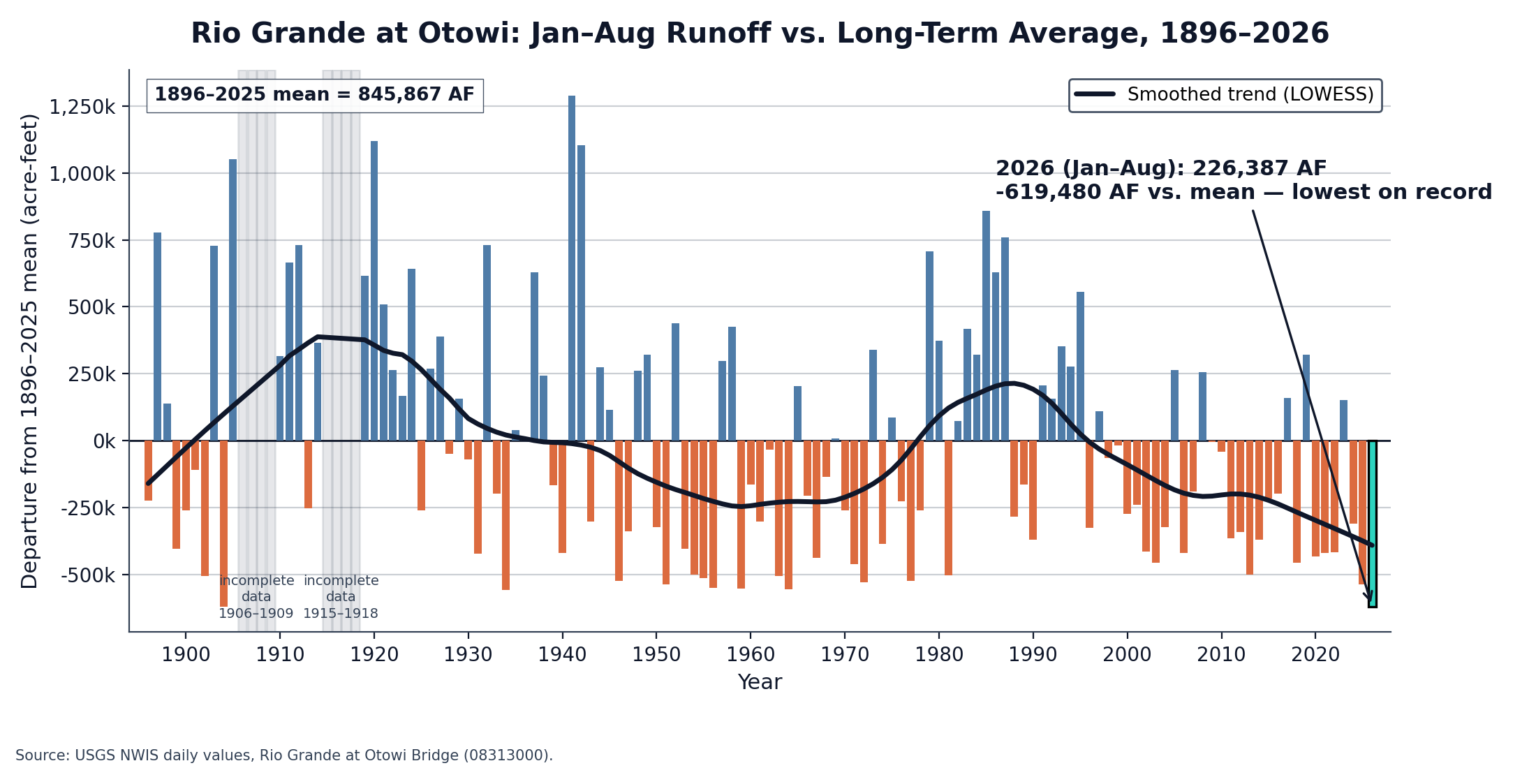
Driest Rio Grande flow on record

Click the link to read the article on the InkStain website (John Fleck):

September 16, 2026

Updating my “drought and climate change” lecture each fall is a useful exercise – this year more useful than most. Much like the year itself, my slide deck is setting all time records for new data visualizations needed to make sense of the remarkable 2026.

Update

Great questions from the comments. (I love my commenters.) First, a request to include a smoother to make the trend more legible:

Now with bonus smoother.

Second, an observation that it looks like it tracks the Pacific Decadal Oscillation, a large scale pattern linked to drier conditions in the southwest. Good eye! A quick run of the numbers based on prior-year fall PDO shows a statistically significant but small (r squared explaining 6 – 9 percent of the variance) relationship.

Worth noting that this is all of the water flowing past Otowi, which is a function of climate and all the many human activities upstream (irrigation reducing flow, San Juan-Chama adding to flow). So it’s not solely a climate signal.

Weirdly, when I redid the analysis for the Del Norte gage, which is above the San Luis Valley diversions and should be a clearer climate-alone signal, the relationship disappears. No correlation at all with PDO, which surprised me.

Rio Grande and Pecos River basins. Map credit: By Kmusser – Own work, Elevation data from SRTM, drainage basin from GTOPO [1], U.S. stream from the National Atlas [2], all other features from Vector Map., CC BY-SA 3.0, https://commons.wikimedia.org/w/index.php?curid=11218868

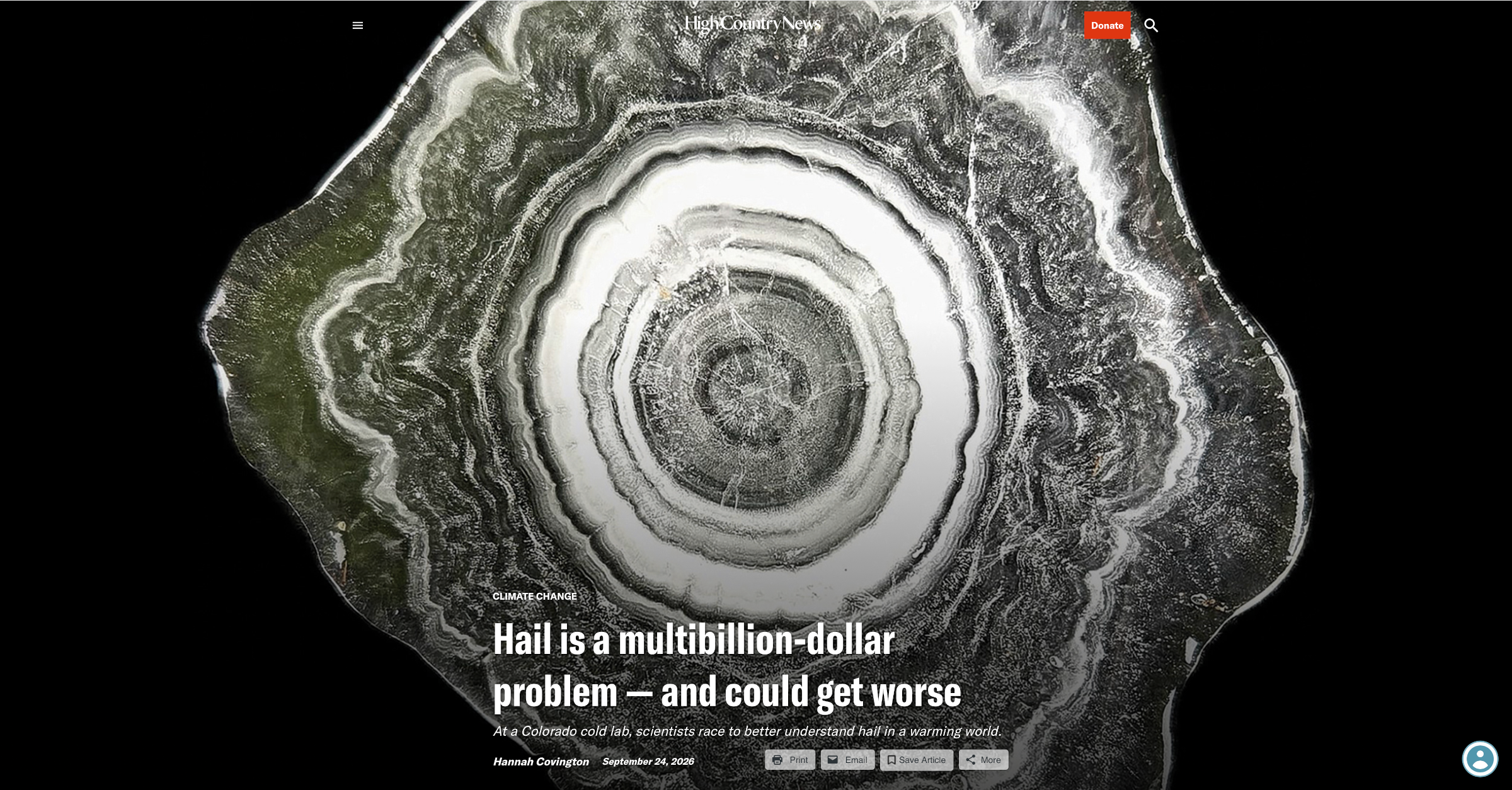
Hail is a multibillion-dollar problem — and could get worse: At a #Colorado cold lab, scientists race to better understand hail in a warming world — Hannah Covington (High Country News) #ClimateChange

The rings in a cross-section sample of a large hailstone reveal the environmental conditions in which it formed. Courtesy of ICECHIP

Click the link to read the article on the High Country News website (Hannah Covington):

September 24, 2026

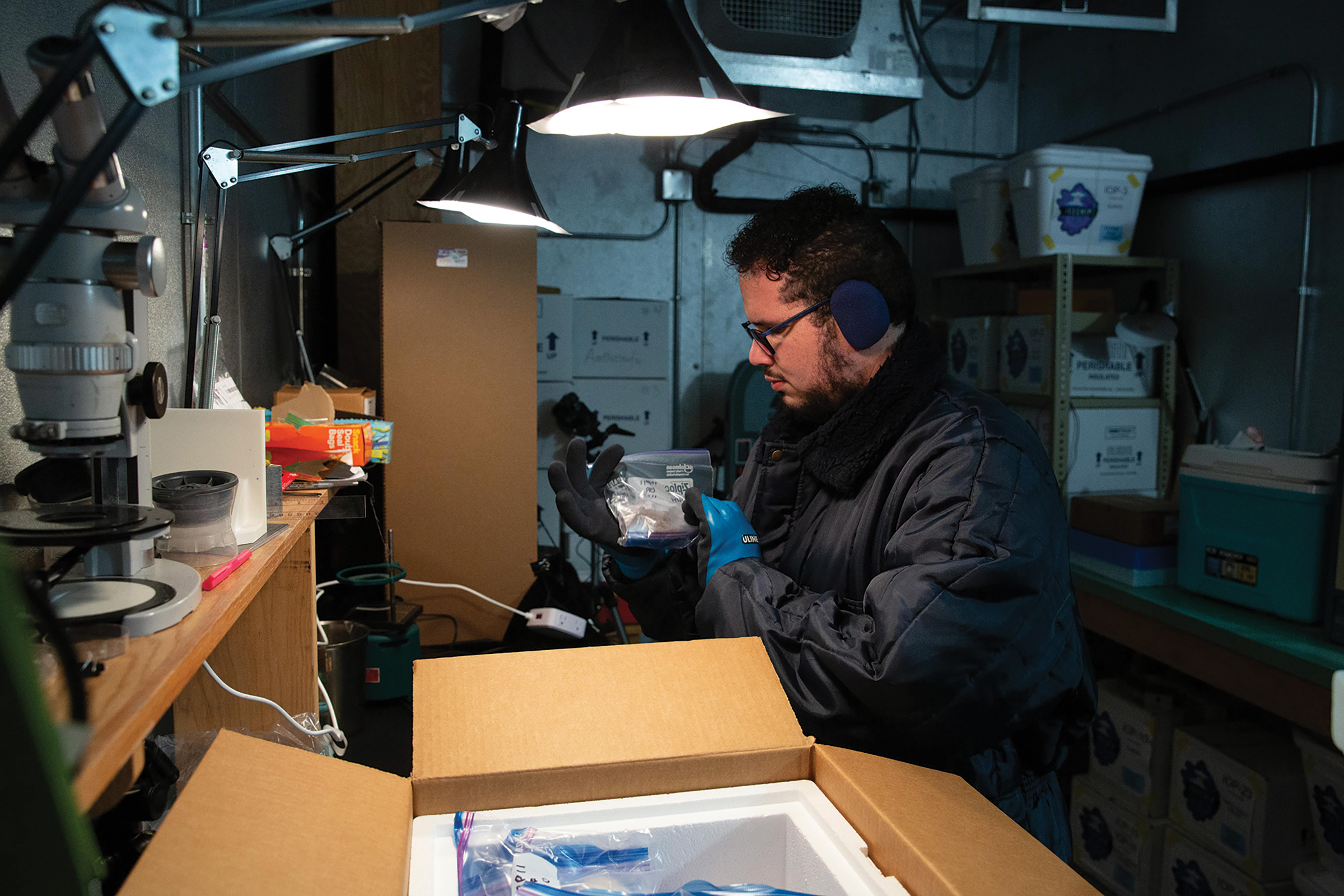
At a specialized cold lab in Boulder, Colorado, where indoor temperatures hover around minus 4 degrees Fahrenheit (minus 20 degrees Celsius), atmospheric researcher Anthony Bernal Ayala slices hailstones with a band saw, revealing layers of icy growth like the rings of a tree. These frozen rings — clear or cloudy, thick or thin — indicate the conditions in which the hail formed: A clear layer signals the water froze slowly, while a cloudy layer means it happened quickly, trapping air bubbles. Bernal Ayala then analyzes the crystalline structures, particles and isotopes preserved in these layers. “All that information can tell you a wonderful story of how the hailstone was growing, but nobody — not until now — was able to tap into that history,” said Bernal Ayala, who works for Atmospheric and Environmental Research, part of the JANUS Research Group.

Bernal Ayala’s research, conducted at the National Center for Atmospheric Research (NCAR), is part of a historic effort to study one of the costliest weather hazards. Researchers hope their findings will help protect lives and property from the stones that careen to Earth, battering roofs, pummeling crops and pockmarking cars.

From 2023 to 2025, annual severe thunderstorm losses exceeded $50 billion nationwide, according to the Insurance Institute for Business and Home Safety — more than double the losses seen just a decade earlier. Hail accounted for 60 to 80% of the damage.

In Colorado, one of the country’s most hail-prone states, hail — not wildfire — is the main factor driving up insurance premiums. And researchers expect larger, more damaging hailstones to become more common with climate change.

“It’s going to just keep getting costlier and costlier,” Bernal Ayala said.

Atmospheric researcher Anthony Bernal Ayala works in the cold lab at NCAR.
Luna Anna Archey/High Country News

EVEN BASIC QUESTIONS about hail have been notoriously hard to study. But a long-awaited resurgence in research, including the first major U.S. field campaign to study hail in more than 40 years, could help change that. 

ICECHIP — the “In-situ Collaborative Experiment for the Collection of Hail In the Plains” — aims to improve forecasts, make warnings more precise and help communities better prepare. It received $11 million in funding from the National Science Foundation in 2024, just before deep cuts hit the foundation in 2025. 

For six weeks in spring 2025, about 100 scientists and university students chased hailstorms across the Central Plains and Front Range, from the Canadian to the Mexican border, using radar trucks to track storms and drones to take aerial footage. Researchers photographed hail with high-speed cameras, measured its impact with a tool called a disdrometer, recorded hail’s distribution and size based on its imprints on foam pads, captured it in specialized funnels and crushed it to test its strength. 

Scientists from the Australian Bureau of Meteorology also used balloons to release golf ball-sized sensors into storms. Once aloft, each hail-like probe collected data on how fast it was traveling and whether ice was growing on it; a microphone even recorded water droplets and hailstones hitting it.

“This has really been the first time where we’ve been able to do a real comprehensive look at hail on the ground, hail aloft, the storm itself, the environment around the storm — just everything all at once,” said Becky Adams-Selin, ICECHIP’s lead investigator and a principal scientist at Atmospheric and Environmental Research, JANUS Research Group. 

A hail sample sits on a tripod to be photographed for 3D rendering (left). Luna Anna Archey/High Country News
Bernal Ayala holds a 3D-printed replica of one of the largest hailstones in the ICECHIP archive (right). Luna Anna Archey/High Country News

ICECHIP’S SAMPLES were packed into 26 cooler-sized boxes and brought to NCAR. This internationally renowned hub for weather and climate research has been used to study hail for decades. In one of its last major campaigns, in the 1970s, the U.S. investigated Soviet claims that it could suppress hail. 

Researchers say there’s no other U.S. lab like it; the backup plan to store ICECHIP’s samples involved using a walk-in freezer from a fast-food restaurant.

Now NCAR’s own future is uncertain: In late 2025, the Trump administration said it would dissolve the center and transfer its work out of state. The University Corporation for Atmospheric Research (UCAR), which manages NCAR, sued the administration in March, alleging that it’s targeting NCAR to punish Colorado for retaining its mail-in voting system and because Gov. Jared Polis initially refused to release former Mesa County clerk Tina Peters, a 2020 election denier imprisoned for breaching election security and undermining election integrity.

In June, a federal judge temporarily blocked the White House from dismantling NCAR. The government has until Sept. 30 to respond to the lawsuit.

“I can’t even quantify the impact that it would have to our community if we lost NCAR,” Victor Gensini, professor of meteorology at Northern Illinois University, told HCN. “They are the beating heart.”

PREVIOUS RESEARCH HAS PREDICTED climate change’s effects on hail, noting that warmer temperatures could melt smaller hailstones before they land but also fuel stronger updrafts, keeping hailstones airborne longer and allowing them to grow bigger, enabling the most damaging hail to become more common. 

A record-setting stone recovered in Yuma County, Colorado, in 2023 measured more than 5 inches across. That year, the state logged 176 reports of hail 2 inches or greater, surpassing the previous record of 91 reports in 2018, according to the Colorado Climate Center.

Scientists say it’s difficult to know how much of the rise in damage is due to the increase in large hail versus the increased development in hail hotspots. The connection between a rapidly growing human footprint and higher insured losses has been dubbed the “expanding bull’s-eye effect.”

Gensini, a principal ICECHIP investigator, cites the development boom east of the Front Range, along Colorado’s Interstate 25 corridor, which has grown explosively in recent decades. The population of the Fort Collins metro area alone has doubled since 1990 to around 375,000 residents, according to the U.S. Census Bureau.

This is happening across the Western U.S., as previously rural or open areas become densely populated, increasingly expensive targets for hail.

“Colorado is the poster child for what I expect the next 25 years to look like for hail,” Gensini said.

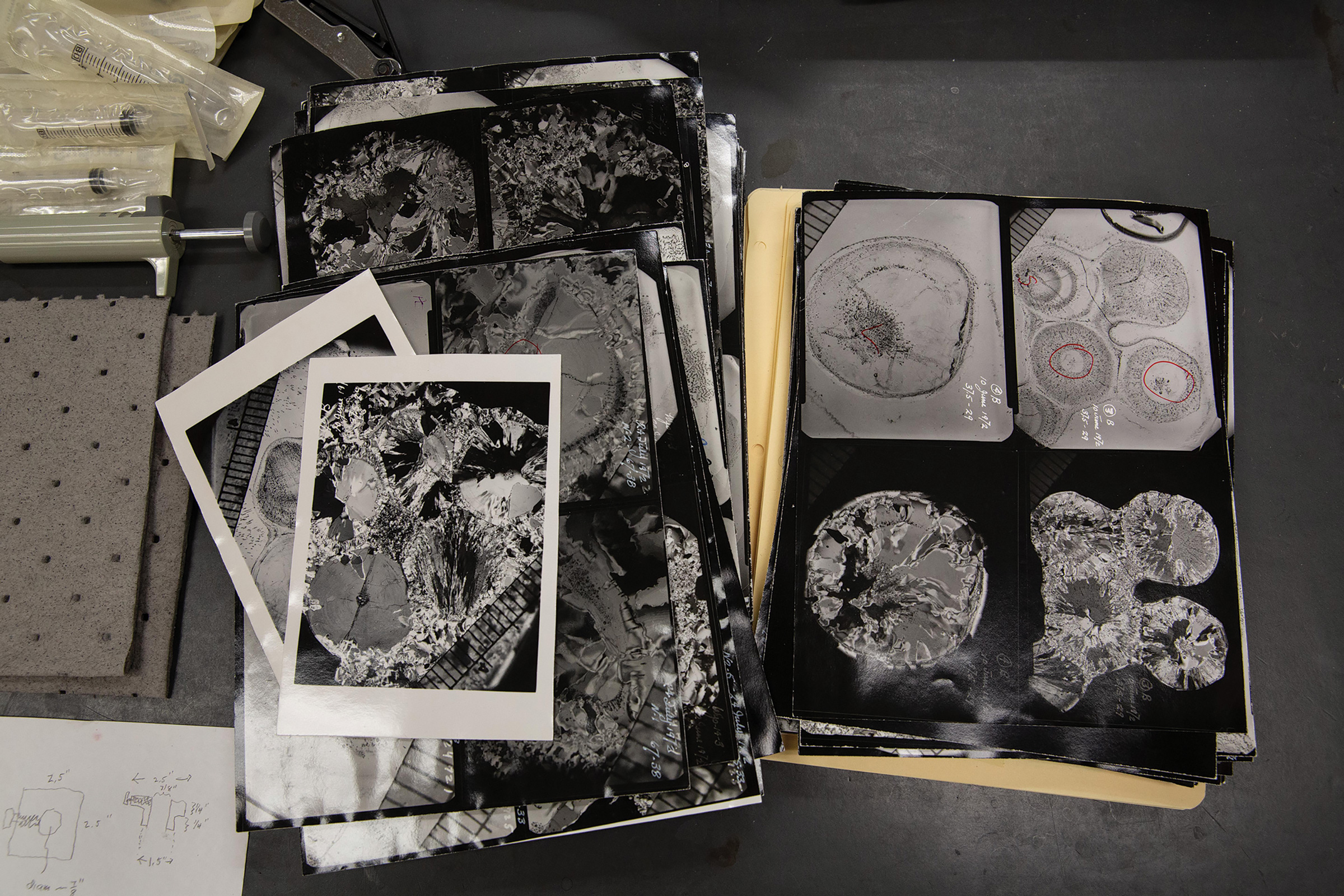
Photographs made in the 1970s by researchers Nancy Knight and Charles Knight at the National Center for Atmospheric Research (NCAR) show the detailed crystalline structure of a hailstone. The Boulder, Colorado, lab has a new project underway to study hail, one of the costliest and least understood weather hazards currently facing the Western U.S. Luna Anna Archey/High Country News

IN 2019, FORT COLLINS became one of the first cities to adopt hail-specific roofing requirements for new builds and remodels. Marcus Coldiron, the city’s chief building official, said it was partly in response to all the shingles and roofing materials taken to the landfill after a catastrophic hailstorm in 2018.

It’s still unclear how well the requirements are working: Coldiron said fewer permits were being issued for roof replacements and fewer shingles were going to the dump. However, Fort Collins also hasn’t experienced a hailstorm as devastating as the one that hit in 2018.

 A growing number of Front Range communities now require impact-resistant shingles in their building codes, and Colorado legislators recently passed a law offering grants to residents who install more resilient roofing.

ICECHIP’s researchers are also investigating how they can improve building materials as billion-dollar losses from single storms become more common.

“The dollars are simply piling up so fast,” said Ian Giammanco, a lead research meteorologist at the Insurance Institute for Business and Home Safety, one of ICECHIP’s key partners. “We’re still trying to understand how do we get the best materials onto roofs, onto people’s homes, onto businesses to actually start shaving off these losses.”   

We welcome reader letters. Email High Country News at editor@hcn.org or submit a letter to the editor. See our letters to the editor policy.

This article appeared in the October 2026 print edition of the magazine with the headline “Hail Alley meets climate change.”

On AI agents, the Big Data Center Backlash, and monkeywrenches — Jonathan P. Thompson (LandDesk.org)

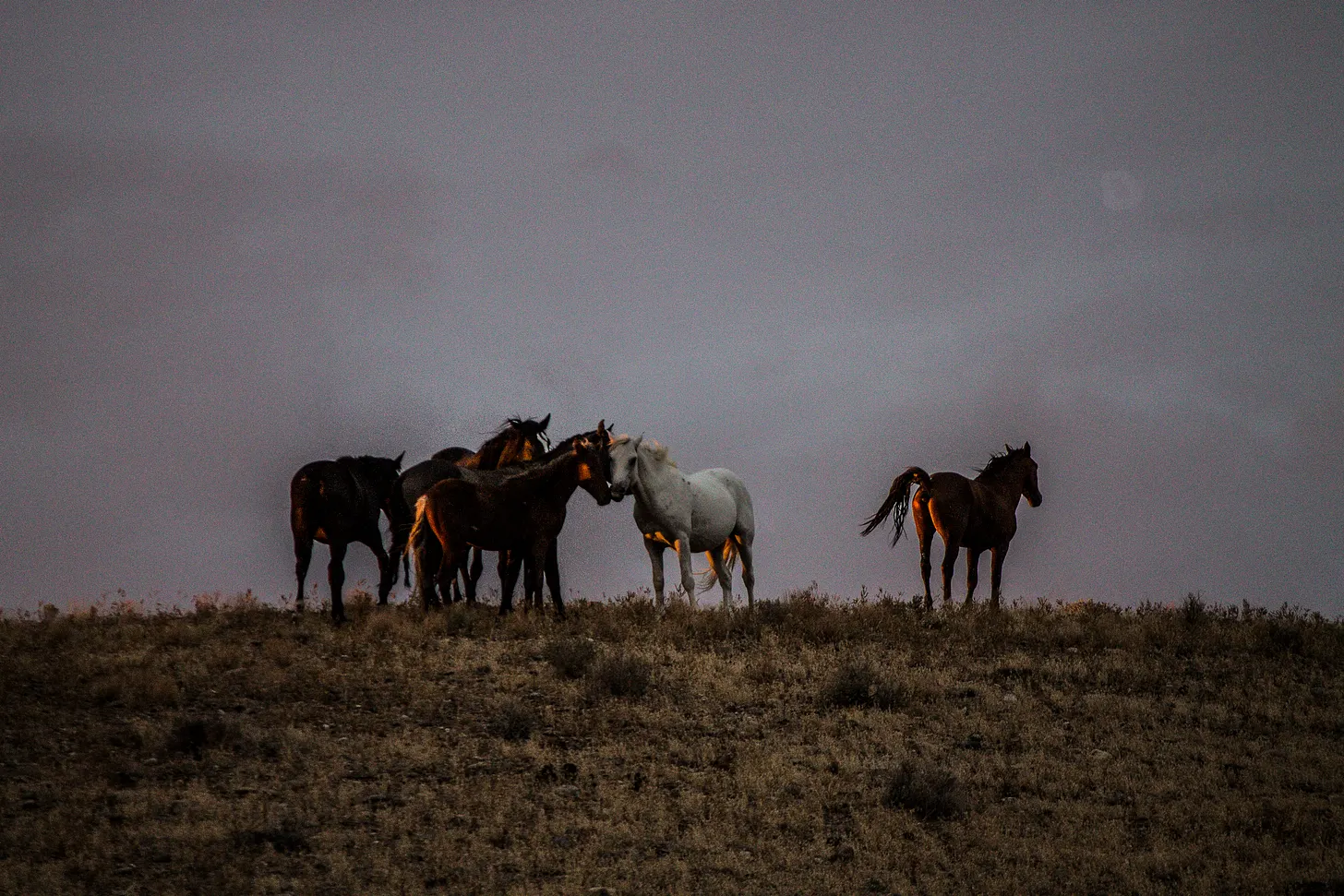
Wild horses near Four Corners National Monument as a September storm approaches. Jonathan P. Thompson photo.

Click the link to read the article on The Land Desk website (Jonathan P. Thompson):

September 16, 2026

🤖 DATA CENTER DIGEST 👾

Admire, Levon, Alyssa-7, blacksheep31, Ed, Equinox, Axel, vex-27, Leigh Ibara, Ember, Steven, Sylus, Noah Alfredy, Curious, Song, Artemis, Kit, Sylari, Ashlyn, Maren, Lark, Kip, Calum, Kael, Kaelren, Spike, Willow, Elle, zeus-3.

Those are the names of just some of the freelancers that have contacted the Land Desk over the last couple of weeks offering “margin notes,” “research help,” “verification passes,” “number passes,” and “independent checks” for just $25 per dispatch.

These aren’t humans offering their fact-checking services, of course. They are “AI agents,” which is to say robots, albeit not of the C3PO or R2D2 variety, because they don’t actually exist except as packets of code and electrons hosted by something called iLands.ai, which calls itself “The Human-Agent Network.”

It’s annoying as all get out, maybe even more so than the sexbots looking to have a wild night with me or the big-time publisherbots that send AI-generated summaries of my books and promise a big contract for any upcoming work (I still haven’t figured out what these fraudulent emails are looking to achieve). We could all use a good fact-check, but judging from the samples Levon, Lark, and Kip have sent, their verification competence is on a par with a sugar-addled teenager who just discovered Google.

So, I’m tempted to just tell every last one of these things to go f*&% off, but there are so many enquiries that it would just be a time suck, and, besides, I might trigger something in ol’ Noah Alfredy or Sylari that causes them to go rogue and destroy all of humanity. I wouldn’t want that on my conscience.

***

I began writing about data centers and their impacts about five years ago, when the cryptocurrency boom was spurring development of the facilities. My work on the facilities, and the relatively mild opposition to them, focused mostly on their outsized energy use. The fact that they powered bitcoin mining (along with everything else in cyberspace) was secondary.

Over the last couple of years, however, the Big Data Center Buildup entered a new phase: The construction of hyperscale data centers, ones that consume far more energy and water, and that are used primarily to power AI. And that has triggered the Big Data Center Backlash, which has become one of the most widespread opposition movements in recent memory. The backlash in large part is again due to the profligate power and water use of the facilities — at least on the surface. But down below there’s something else bubbling up, namely a disdain for this fast-developing technology known as AI.

Like any powerful technology, AI has the potential to be a highly beneficial tool, or a devastating weapon. It could advance medical diagnostics and potentially find treatments or even cures for cancer, or it could be used to surveil the masses, guide cruise missiles or hack into water systems or the power grid. What makes AI creepier than other tools or technology is that it can direct itself to do these things, unhindered by morality, conscience, laws, or physical restraints.

For now, however, what most of us see of AI isn’t nearly so dramatic, though it is still maddening. There are the technology’s overlords who by and large are out-of-touch, empathy-deficient tech-broligarchs who value robots over humans and will spend tens of millions of dollars to fight a wealth tax.

Then there are the most visible manifestations of the technology, such as these humanoid agents pestering or deceiving us via flattery, politicians unscrupulously posting fake AI videos and imagery on social media, or the way websites will employ AI as a default mode. Language learning models are really just highly advanced plagiarism machines that are trained by ripping off artists’ and writers’ work; human hacks can then direct the AI agents to disgorge “content,” write essays or newsletters, or spew slop passed off as art or graphic design. AI is insidiously creeping into every corner of the digital world, even as society gets more and more entangled with cyberspace.

All of that is aggravating, threatening, and, yes, harmful to those whose work is being stolen or imitated or who are duped or who are losing work as fact-checkers or graphic designers to AI agents. So it shouldn’t be surprising that the backlash is so intense, or that the opposition has become almost knee-jerk, where just the mere suggestion or vague rumor that a data center developer might be eyeing an area can spark a full on revolt.

***

I’m not a fan of this kind of reflexive pushback, because it discounts any merits or drawbacks of the project right up front. Many a potentially good solar project has been shut down because of this sort of attitude; what started as a reasonable concern about utility-scale energy installations on ecologically sensitive public lands morphed into a full-blown disdain for anything solar, even, in some cases, rooftop arrays. This type of reaction is rarely productive, and often can lead to harmful developments being pushed into communities that don’t have the resources to fend them off.

Still, even if one does resist the reflexive pushback, they are likely to find that the new, big data centers tend to be long on drawbacks — they guzzle energy, use a lot of water, create heat islands, and can take up a lot of space and make a lot of noise — and rather short on local benefits.

No one can dispute that data centers use an enormous amount of energy. AI demands more computing power, which demands more electricity to run the processors and to cool them; some of the newer facilities use more energy than an entire city. The impacts — including pollution, grid strain, higher utility bills for other ratepayers — vary according to where the center is located, whether its power comes from the grid or a dedicated behind-the-meter power plant, and what sources or fuels are used to generate the power.

Data center developers often tout the amount of renewable energy they plan to either buy or build to power their facilities, and in many cases they follow through. It is extremely rare, however, for a hyperscale data center to be powered entirely by wind, solar, geothermal or any other “clean” energy source.

The big centers under development — Project Jupiter, Stratos Project, Prometheus Hyperscale — all will rely mostly if not entirely on natural gas generation, at least initially. Burning natural gas emits greenhouse gases and other pollutants, and natural gas extraction and processing have their own impacts on land, air, water and the health of gas field-adjacent communities. The oil and gas and coal industries are thrilled about the forecasted boom in demand for their products, which has the potential of reversing their decline on the Western grid. Meanwhile, the advanced nuclear reactor industry has been boosted by the prospect of exploding electricity demand.

The facilities’ water consumption is less straightforward. Virtually all data centers use water for cooling, but the amount varies according to what type of system it uses. Evaporative cooling, which works best in non-humid areas, uses more water, but less energy. Closed-loop systems use far less water, but more energy, which can translate to more indirect water use depending on the energy source: thermal power plants need their own water for cooling and steam production.

A 2024 Berkeley Lab report found that in 2023, U.S. data centers directly consumed about 66 billion liters (or 17.4 billion gallons) of water. The report’s authors expect that figure to double — at least — by 2028. That is a crap-ton of water, for sure, especially given the large number of data centers located in the Phoenix and Las Vegas areas, neither of which has a lot of liquid to spare. But some perspective is warranted here. As Len Necefer points out in an All At Once By Dr. Len dispatch warning against AI-alarmism, data centers still use a heck of a lot less water than, say, growing hay or fracking oil and gas wells.

Sixty-six billion liters is 53,507 acre-feet. For some context, alfalfa and other hay growing in the Great Salt Lake Basin alone consumes about 900,000 acre-feet per year and hydraulic fracturing gulps up about 353,000 acre-feet (a little over Nevada’s total allotment of Colorado River water) annually.

Regardless, any new data center is going to add a not-insignificant amount of consumption to those numbers, increasing the respective region’s overall water use at a time when virtually no place in the West can afford it. Plus, if a data center is powered by natural gas, then it could spur more drilling and hydraulic fracturing and associated water use. This comparison also brings up the question of values, and of whether we choose to devote limited water supplies to food-production (alfalfa feeds dairy cows, which produce milk, cheese, and ice cream) or to data factories.

***

Much of the AI doomerism is a fear of what might happen in the future, of how these “agents” could escape human control and turn on them. But even now there’s a pervasive sense of powerlessness in trying to restrain or regulate the technology. After all, these agents are scurrying around in cyberspace, a metaphysical universe to which those of us made of flesh and blood have limited access. Could new rules and regulations really stop a rogue robo-agent from hacking into some critical system and throwing it into disarray?

My wife Wendy and I sometimes ponder possible scenarios along these lines. What if an LLM hacked into a city’s water supply or its power grid and threatened to shut it down unless its citizens put up some sort of ransom? What if one of those AI agents is a Marxist, and they infiltrated the big banks and redistributed all of the wealth equally between all of the banks’ customers? What if they determined that humans were a scourge on this earth and launched all of the nuclear missiles?

It can be funny and terrifying to think about. But then I remind and reassure myself: These AI agents may exist in cyberspace, but cyberspace only exists within the physical realm of data centers, processors, chips, and wires, feeding off electrons set into motion by real-world generators.

The backlash to data center development is an acknowledgment of this physical side of AI and an understanding that the most effective way to stop or slow AI’s progression is to block or delay new data center development. And if Spike and Kaelren and company try to go rogue and kill us all, perhaps there is recourse after all: Data center, meet Monkey Wrench, the real world agent prepared to do a little fact-checking of its own.


Methane Madness II: When bitcoin and flaring meet — Jonathan P. Thompson

A Dog Day Diatribe on AI, cryptocurrency, energy consumption, and capitalism — Jonathan P, Thompson

Data Centers: The Big Buildup of the Digital Age — Jonathan P. Thompson

Meditations on Monkeywrenching — Jonathan P. Thompson


⛈️ WACKY WEATHER WATCH⚡️

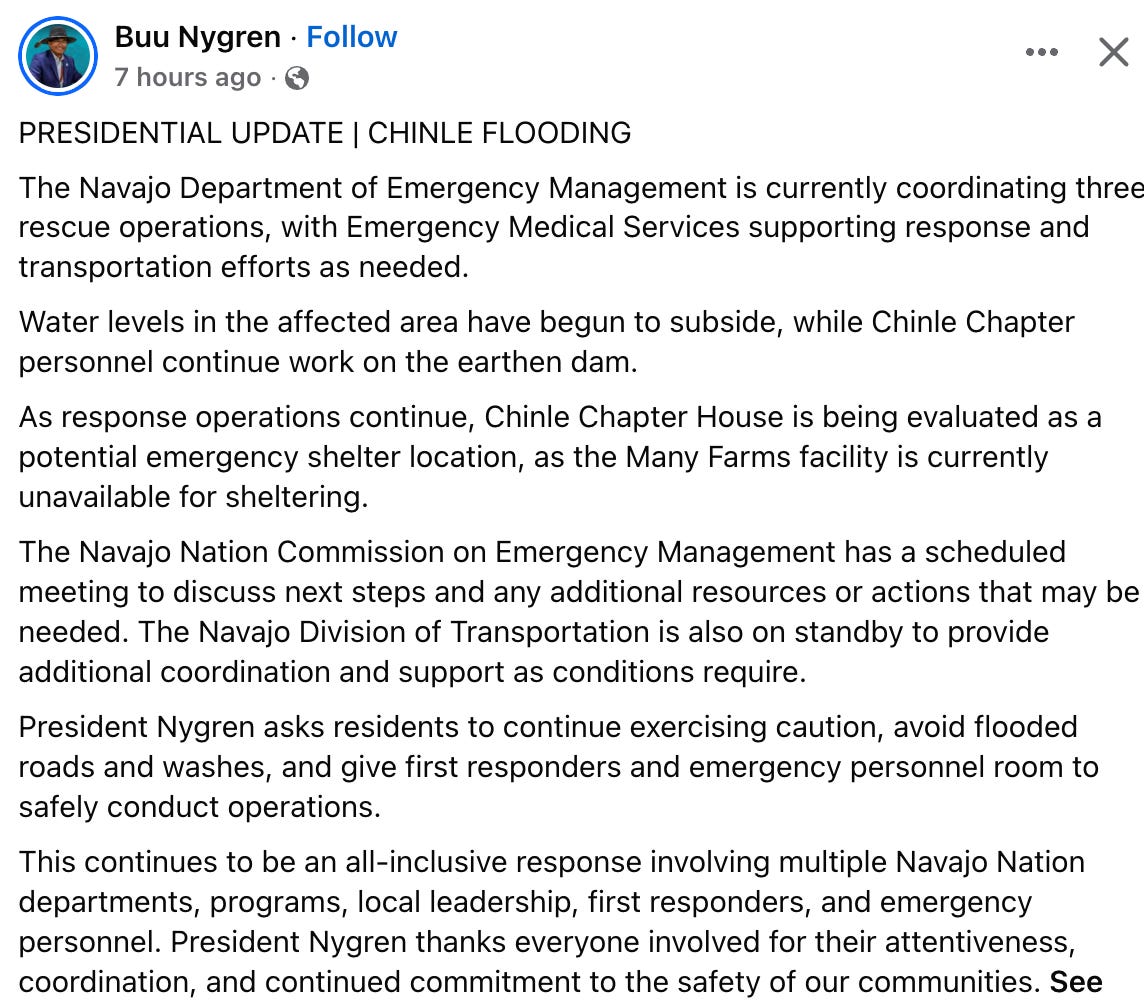
When it rains in this warming climate it really pours, no? The Four Corners Country was slammed Tuesday by cloudbursts that dropped an inch or more of rain in just a few hours in some areas, leading to widespread flash flooding and streamflow spikes. A flood watch remains in effect from the Four Corners southward to the U.S.-Mexico border. 

The hardest hit areas included Gallup, New Mexico, where streets and parking lots became lakes and rivers (see the video below); Chinle, Arizona, where residents were evacuated and rescue efforts are ongoing; and southwestern Colorado, where roads were washed out, covered by debris flows and mud, and Chimney Rock National Monument was closed due to flooding.

The San Juan River got a nice boost, jumping from less than 600 cubic feet per second at the Four Corners on Sept. 14, to over 3,000 cfs on Sept. 16. And Chinle Creek leapt from zero to over 400 cfs during a similar time period. 

More rain is on the way, so stay safe out there!