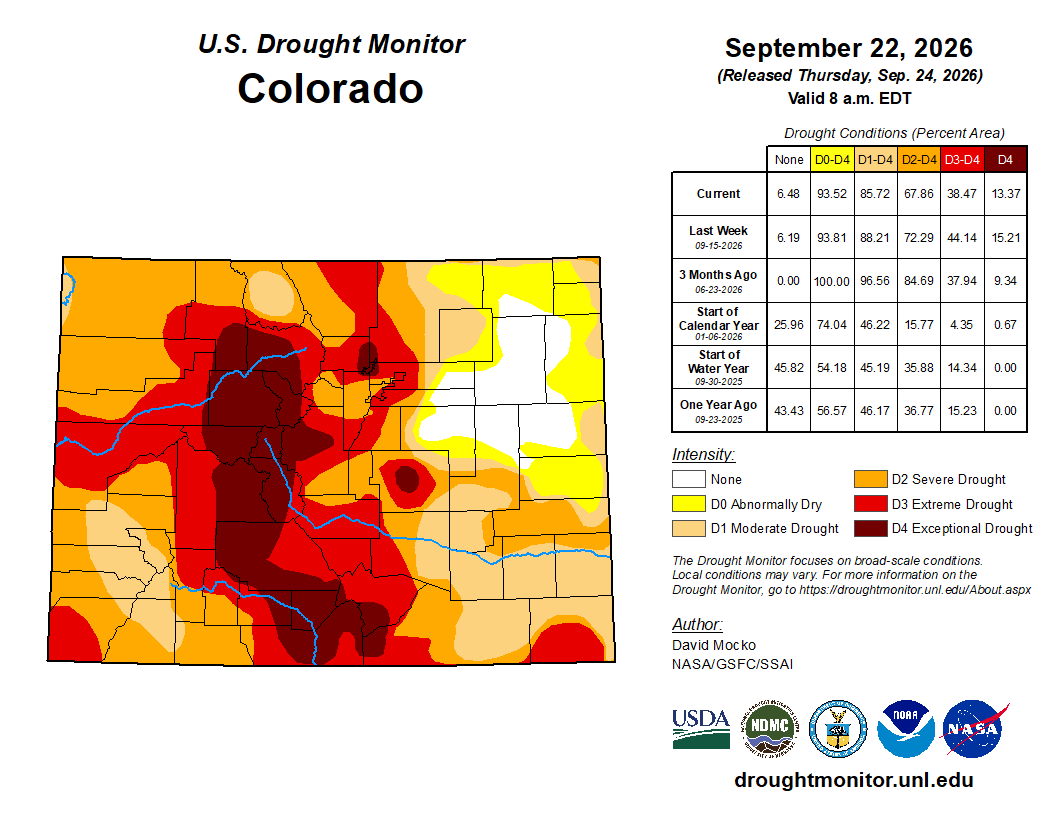
Despite recent rain, much of the Roaring Fork Watershed remains in “exceptional” drought as of the autumn equinox. Pitkin and Eagle counties are among the 15.2% in the state categorized in the highest ranking for drought, according to the United States Drought Monitor, alongside Lake and Alamosa counties. The majority of Garfield County is in either exceptional or “extreme” drought, the next highest ranking. The dryness paired with above-average temperatures in 2026 made the January through August period the sixth-driest recorded in Colorado since 1895, with 3.78 fewer inches of rain than average. That decreased precipitation has shown in local watersheds and trickled into recreation management. By June, local angling guides were sharing anecdotes about adjusting trips to early hours of the morning to reduce stress on fish.
Colorado River District’s annual water seminar included stories of how collaboration and creativity pulled users through this year’s drought crisis, while questions remain about whether that’s enough to secure water in a hotter, drier future
On Colorado’s Western Slope, water managers, ranchers, producers and community leaders knew early in the year that this summer was going to be unlike any others they’ve experienced.
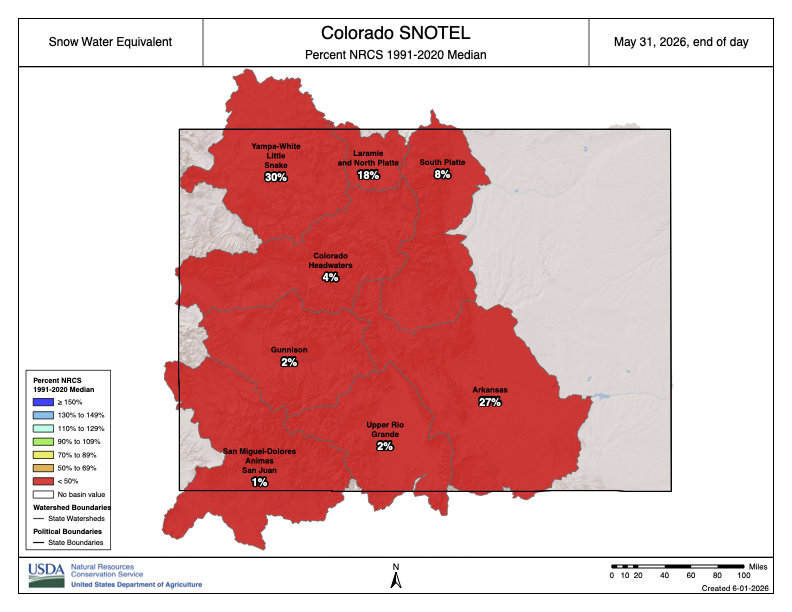
“Things were not looking great — and then March happened,” said Rebecca Briesmoore, senior water resources engineer for the Colorado River Water Conservation District, at its annual water seminar on Friday, Sept. 18, in Grand Junction. “Every single county in the state of Colorado broke the record for the hottest March on record by a large margin. What does that do to our snowpack? It started melting very, very quickly. We saw that [snow water equivalent] just plummet down the graph.”
[…]
“Drought is really a different kind of emergency,” [Jen] MacPherson said, adding that there aren’t a lot of tools set up for towns to address running out of water.
In Kremmling, partnership and collaboration ultimately helped the new town manager find solutions. The town’s water rights in one of its reservoirs were shared with the Colorado River Cattle Ranch.
“That ranch decided to cut irrigation to a hay meadow; they sacrificed hundreds of thousands of dollars to help us [provide] drinking water,” MacPherson said. “And we’ve seen stories like that up and down the entire river.”
Plus, the town and residents stepped up with conservation efforts, reducing its use by 45%, she added.
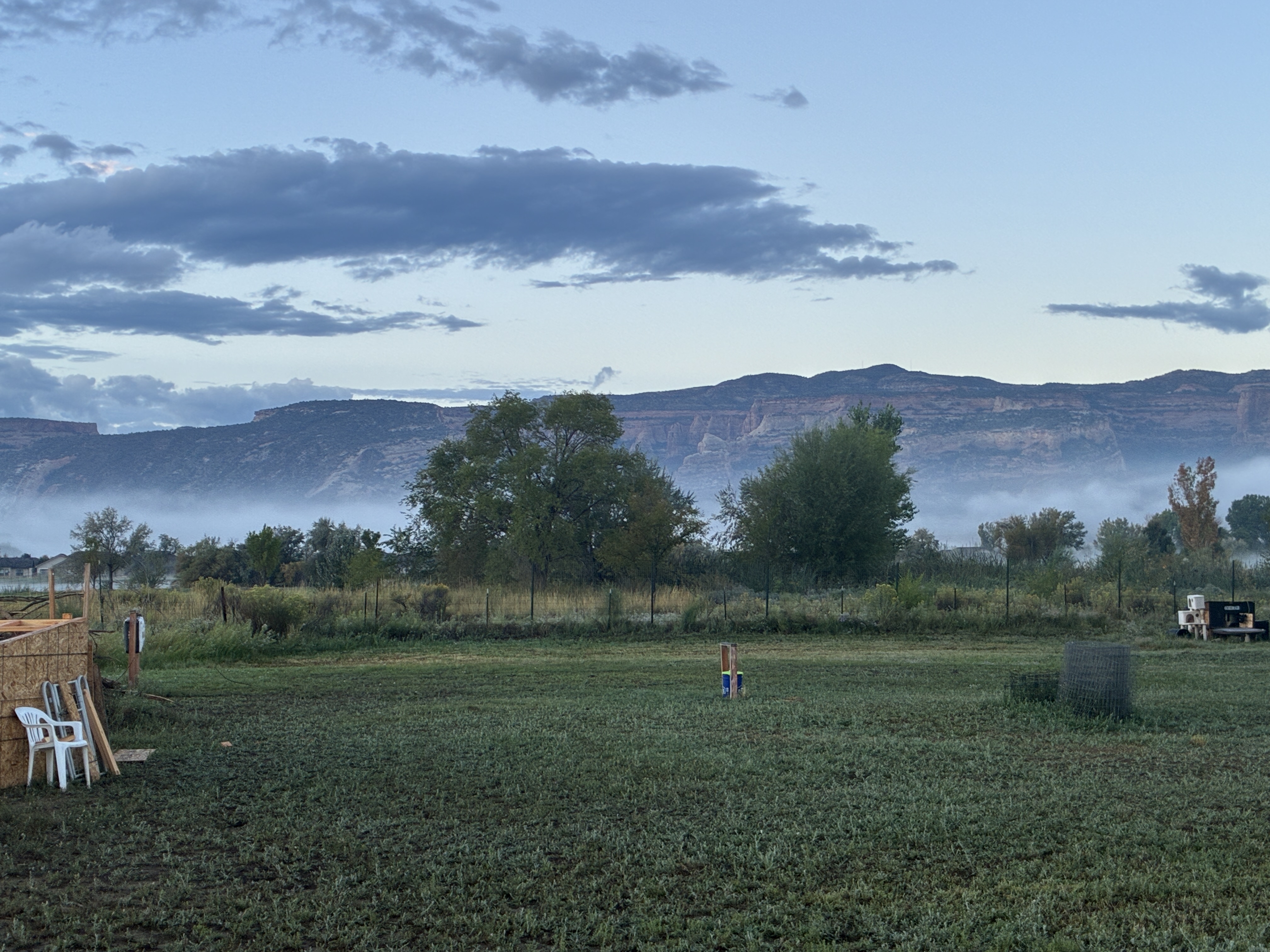
Colorado National Monument from the Colorado Riverfront Trail near Fruita September 18, 2026.
Click the link to read the article on The Aspen Times website (Ali Longwell). Here’s an excerpt:
September 24, 2026
The Colorado River Conservation Water District’s multi-year bid to acquire the historic Shoshone water rights on the Colorado River has required collaboration, strange bedfellows, bipartisan support and intense fellowship. While the River District wants this spirit of partnership to continue as the deal moves through Colorado Water Court, it won’t compromise values — nor those of the 17 Western Slope counties the district represents — to do so, according to General Manager Andy Mueller.
“We have a trial date set, we’re doing our best to get mediation going and try to solve that problem collaboratively among parties, but frankly, I want everybody here to understand that the west slope will not compromise our important values,” Mueller said during his keynote address at the Colorado River District’s annual water seminar in Grand Junction on Friday, Sept. 22. “…We’re gonna defend the west slope’s interest on this.”
[…]
After a decree from the water court, the River District will only need to get approval from the Colorado Public Utilities Commission and secure funding to seal the deal. Mueller said the district is currently $1.6 million shy of the $98.5 million needed, with contributions coming from the River District’s board, the Colorado Water Conservation board and over 40 Western Slope utilities, organizations and municipalities. The federal government is supplying around $40 million through a bucket of drought mitigation funding created by the Biden Administration’s Inflation Reduction Act. Securing the funding was a bit of a rollercoaster and took a combination of strange bedfellows, intense fellowship and bipartisan coordination, according to those involved…
“When you look at Shoshone and the coalition that came together behind that, you see strange bedfellows,” said Zane Kessler, Colorado River District director of government relations. “It’s not every day that you have Pitkin County and Mesa County agreeing. It’s not every day that you have the rec community and ag. vocally supportive of a project.”
During Friday’s seminar, Rep. Jeff Hurd, a Republican representing Colorado’s 3rd District, and U.S. Democratic Sen. Michael Bennet joined Kessler to discuss just what it took to get this funding from the federal government. With Bennet’s help, the funding was initially awarded in the final days of Joe Biden’s presidency and subsequently frozen on President Donald Trump’s first day in office.
“We were able to come up with the $40 million, Jeff and I, working two different administrations,” Bennet said. “One, the Democratic Biden administration and the other, the Trump administration. I give Jeff full credit for that. He landed on this plane, because it wasn’t like I was getting my calls returned from the Trump administration.”
The twin turbines of Xcel Energy’s Shoshone hydroelectric power plant in Glenwood Canyon can generate 15 megawatts. Credit: Heather Sackett/Aspen Journalism
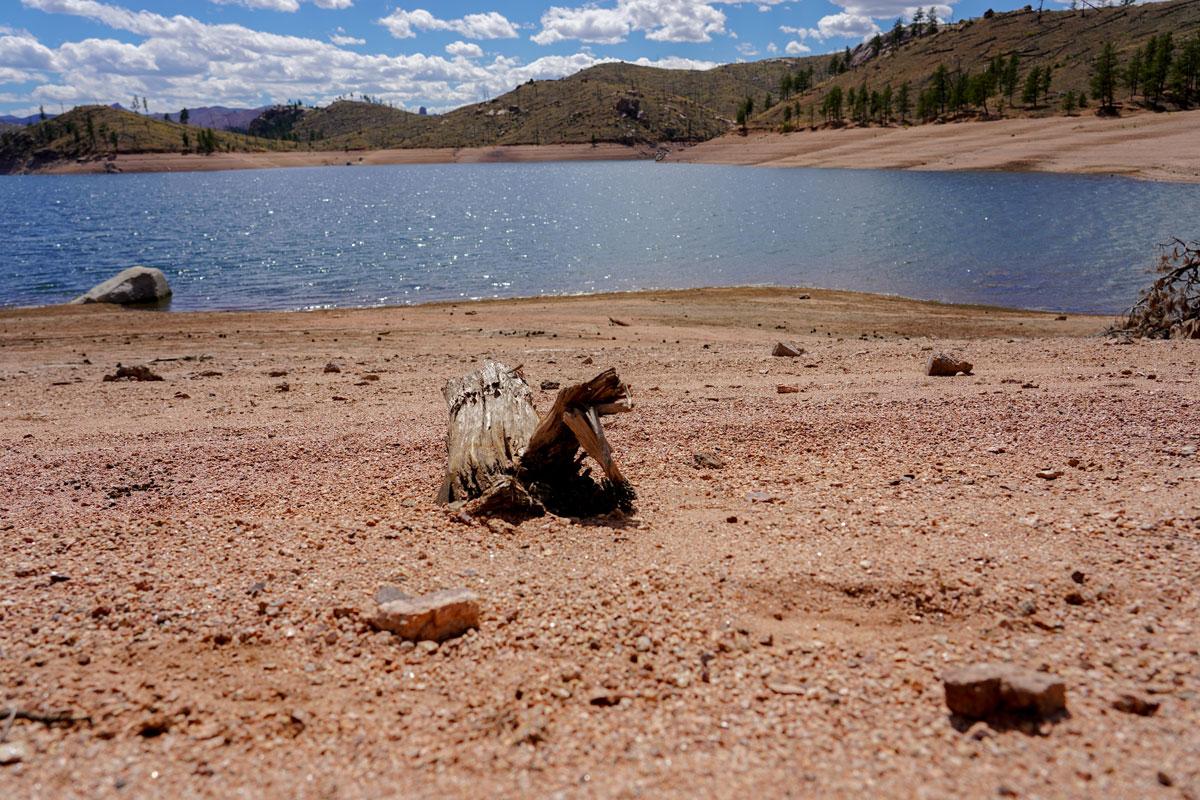
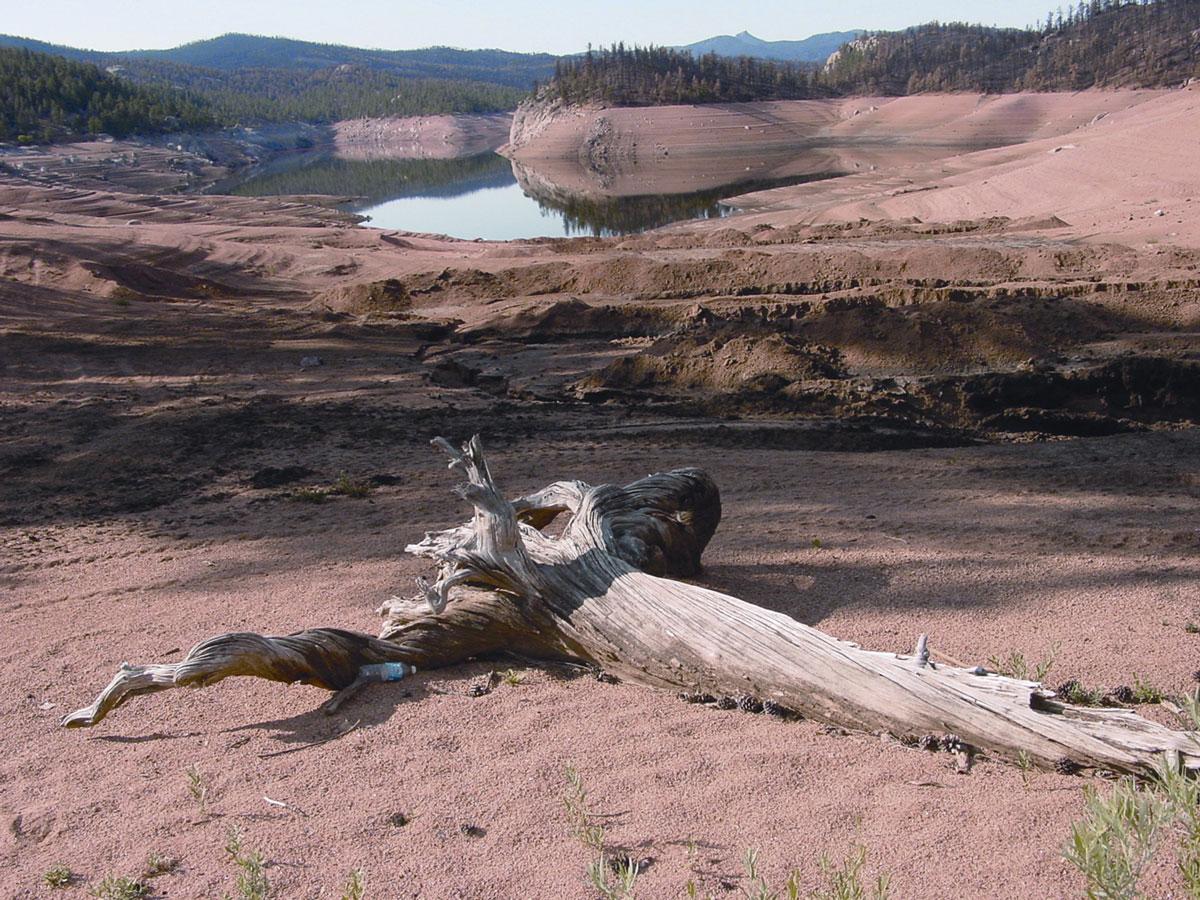
The effects of this year’s historic drought are easy to see when standing on the barren, sandy shoreline exposed by low water levels at Denver Water’s Cheesman Reservoir.
The reservoir was completed in 1905 and is Denver Water’s oldest mountain reservoir. It straddles Douglas and Jefferson counties along the South Platte River in the foothills southwest of Denver.
Cheesman’s history dates back to Denver’s early days, when city leaders knew that a stable, reliable water supply was critical to the future of the growing city.
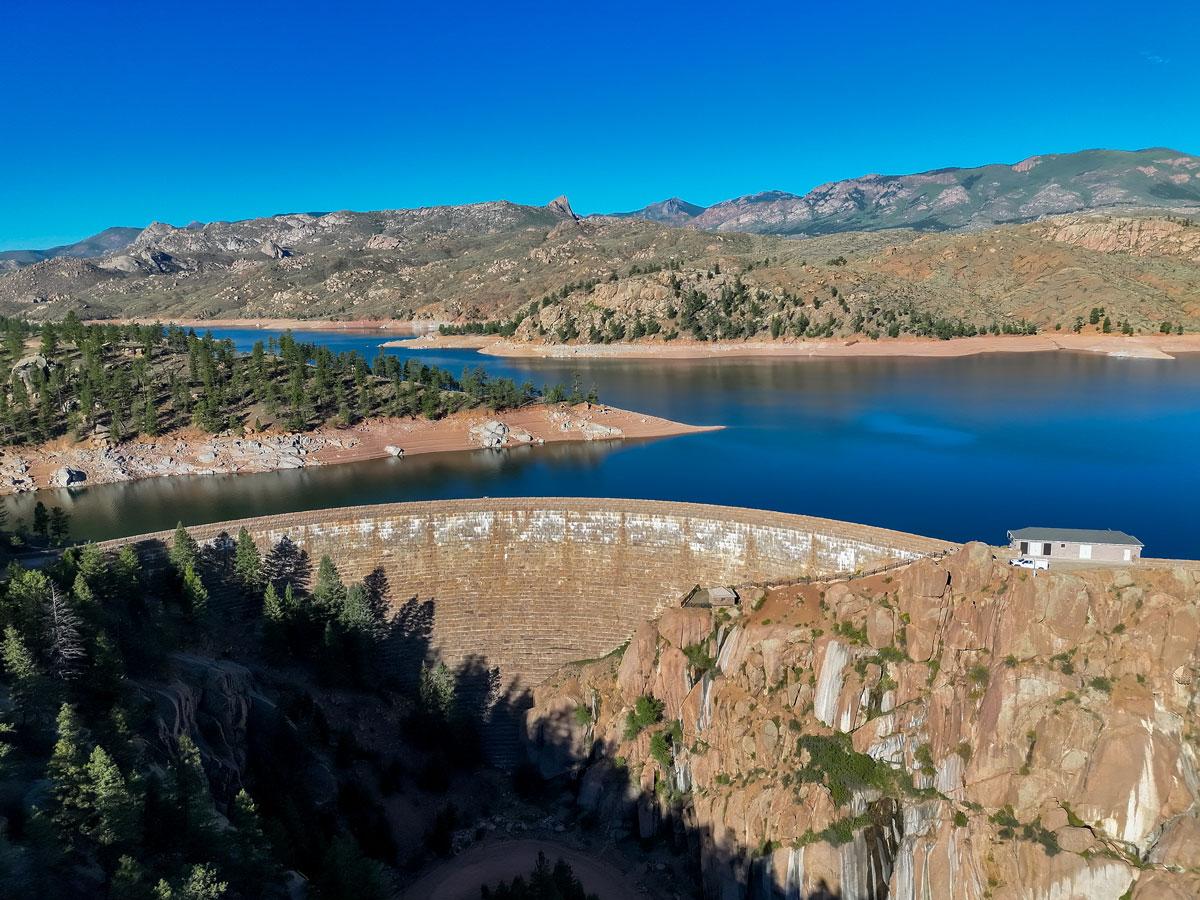
Cheesman Reservoir was down 35 feet as of Sept. 15, 2026. The reservoir is expected to continue falling until the 2027 spring runoff due to customer demand. Photo credit: Denver Water.
Today, Cheesman Reservoir is a critical part of Denver Water’s system that collects, stores, cleans and delivers water to 1.5 million people across the Denver metro area.
As of mid-September, the reservoir was at 65% of capacity, when normal for this time of year is 88% full. The water is down due to last winter’s record-low snowpack and the need to meet customer demands for water during the ongoing hot and dry conditions this summer.
Watch a video showing reservoir conditions in September 2026:
Water levels in Cheesman will continue dropping this fall and through the winter. The reservoir is forecast to be at about 60% of capacity or lower by April 1, 2027, before the start of next year’s spring runoff.
During the drought of 2002-2003, Cheesman dwindled to merely 29% full, less than one-third of its capacity.
Cheesman Reservoir dropped to 29% of capacity during the drought of 2002-2003. Photo credit: Denver Water.
While the water is low at Cheesman, it shows the vision of Denver’s pioneers in the late 1800s who had the foresight to prepare the infrastructure needed to get through times of drought that continue more than a century later.
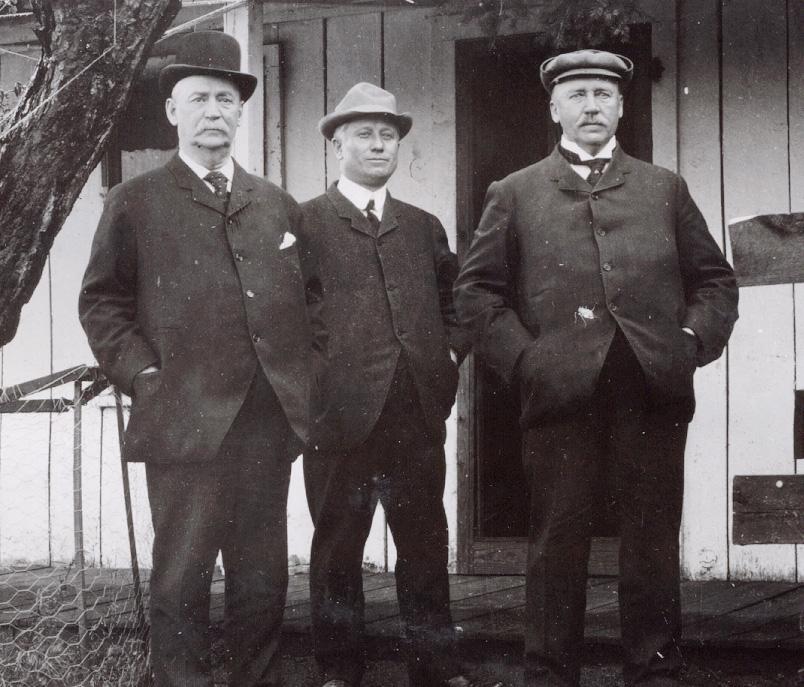
Cheesman Dam carries the name of Walter S. Cheesman, an early Denver businessman, railroad developer and real estate magnate. He was president of the Denver Union Water Company, which built the dam and was a precursor to Denver Water.
Early Denver businessmen (from left) David Moffat (his name is on the Moffat Tunnel that carries water under the Continental Divide), William Robinson and Walter Cheesman pose for a photo in 1905. The three were instrumental in building critical water infrastructure in the late 1800s and early 1900s to serve the growing city. Photo credit: Denver Water.
Cheesman and other water and city leaders knew that Denver lacked the annual precipitation needed to support the young, bustling community. In order to grow, the city would need a reliable source of water. That’s because the South Platte, Denver’s primary water supply at the time, would nearly dry up in the months after the spring runoff.
In the 1890s, scouting parties began looking for locations to build a dam and reservoir on the South Platte River west of the city.
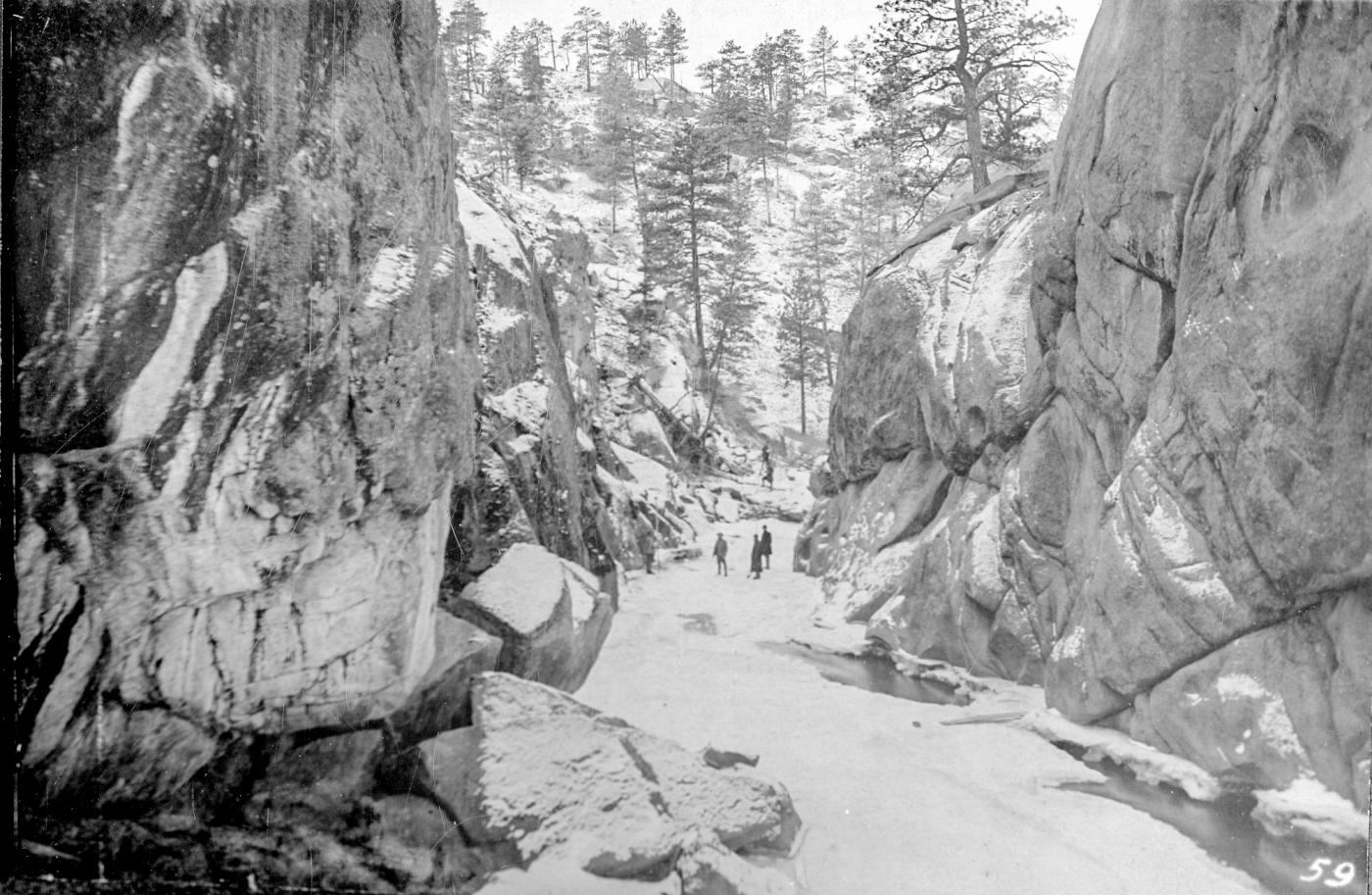
On what’s described as a surveying and fishing trip in 1893, a group that included C.P. Allen, chief engineer of two early water companies, identified a deep, narrow canyon on the South Platte River, about 48 miles southwest of Denver, the perfect location for what would become the site of Cheesman Dam.
Engineers walk on the frozen South Platte River in the winter of 1896 at the site of the future Cheesman Dam. Photo credit: Denver Water.
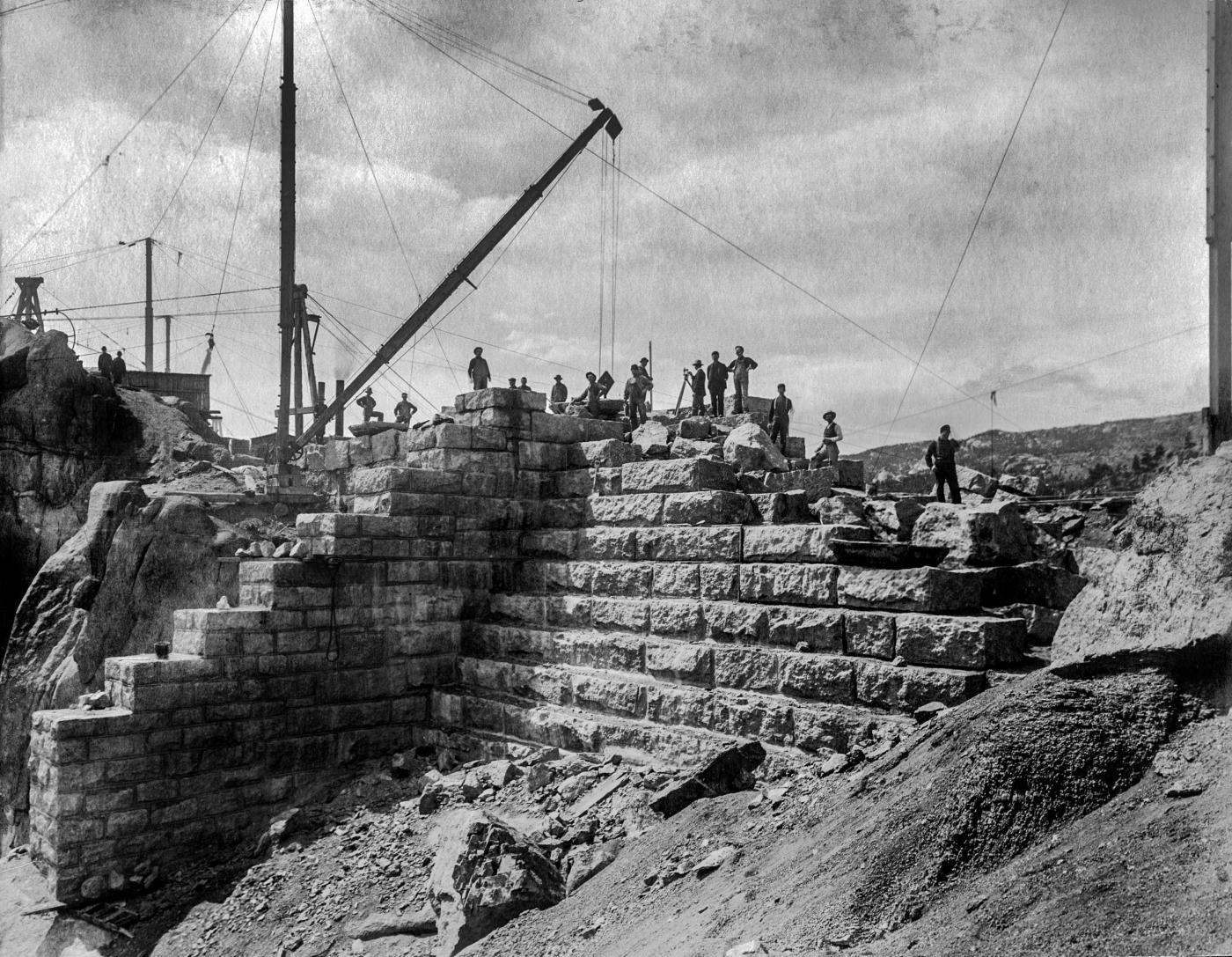
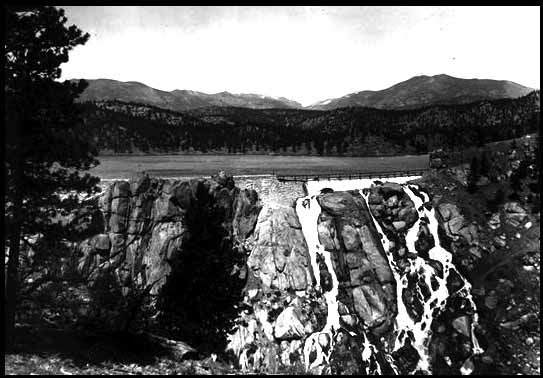
Construction of Cheesman Dam in the early 1900s. The dam was built using nearby granite stones carved by Italian craftsmen. Photo credit: Denver Water.
Cheesman Reservoir, then and now, captures melting snow from the spring runoff. The water it stores is used to stretch the annual spring rush of water down mountain streams and rivers and make it last year-round.
Learn about the history of Cheesman Reservoir in this video:
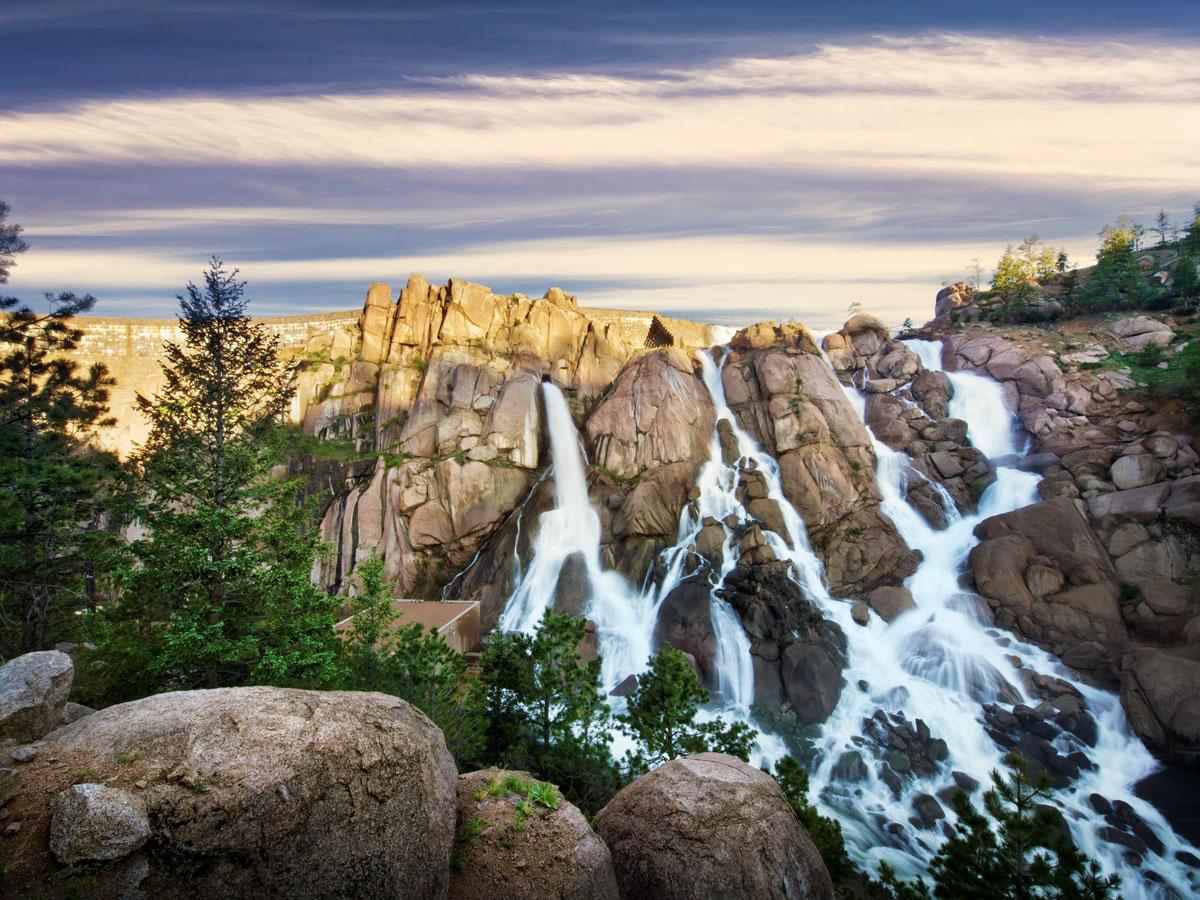
The reservoir’s water levels fluctuate every year depending on snowpack, weather conditions and customer demand. When full, Cheesman can hold 79,064 acre-feet of water. In wet years, excess water flows over the dam’s spillway in spectacular fashion.
Water flows over Cheesman Dam’s spillway during the spring of 2014. Water flows over the spillway when the reservoir reaches capacity in years with high snowpack. Photo credit: Denver Water.
Part of Cheesman’s value stems from the age of its water rights.
Water rights associated with Cheesman Reservoir date to June 27, 1889, which means Denver Water has relatively senior rights to capture and store water from the river — even in times of drought when river flows are low.
The reservoir is also in a favorable location for water storage.
“Cheesman Reservoir was built in a deep, narrow canyon, which means it has a relatively small surface area, which limits evaporation,” said Nathan Elder, water supply manager at Denver Water. “Reducing water loss is important all the time, but critical during droughts.”
The reservoir’s attributes came into play this summer when Denver Water moved water from the shallow Antero Reservoir upstream on the South Platte into Cheesman to reduce evaporation.
“Denver Water is fortunate to have had the visionaries of the past who prepared us for the water challenges we face today,” Elder said. “The reservoir they built serves as the workhorse of Denver Water’s South Platte collection system.”
Cheesman Dam and Reservoir on Sept. 3, 2026. The reservoir has water rights dating back to 1889, which are critical because they make it easier to fill the reservoir each year. Photo credit: Denver Water.
As for when Cheesman will fill again, Elder says that’s hard to predict, although the reservoir will likely need more than one winter with above-normal snowpack to fully recover.
“We’re not sure what the coming winter will deliver in terms of snowpack. That’s why it’s important for our customers to do their part and look at ways to conserve water at home.”
Elder reminds customers that Denver Water has banned lawn watering and spray irrigation as of Oct. 1. The move is expected to save an estimated 5,000 acre-feet of water this fall, which will help stretch our water supplies in Cheesman and other Denver Water reservoirs.