Click the link to read the article on the American Rivers website (Michael Sertle):
August 26, 2026
From its start as a pure snowflake in the Rocky Mountains of Montana to its clouded, churning confluence with the Mississippi River in St. Louis, the “Big Muddy” has for centuries been incrediby impactful to the communities that call it home. Native Americans were first to recognize the importance of the Missouri River, with twenty-nine Tribal Nations recognized to hold cultural, economic, or water rights to this current day. Followed by Lewis and Clark on their historic “Corps of Discovery Expedition”, the river opened up a new horizon for the newly established United States of America to expand.

As time moved on, the Missouri and its floodplain became more developed, heavily farmed, tightly constricted, and eventually dammed. The Pick-Sloan Flood Control Act of 1944 changed the wild and free Big Muddy like never before; building massive dams and reservoirs, and thousands of miles of levees to facilitate flood control, farm irrigation, commercial navigation, and hydropower generation. While it can be debated as to the successes of Pick-Sloan, one thing is certain, a new wave of threats to the health and function of the river itself was set in motion and continues to grow today.
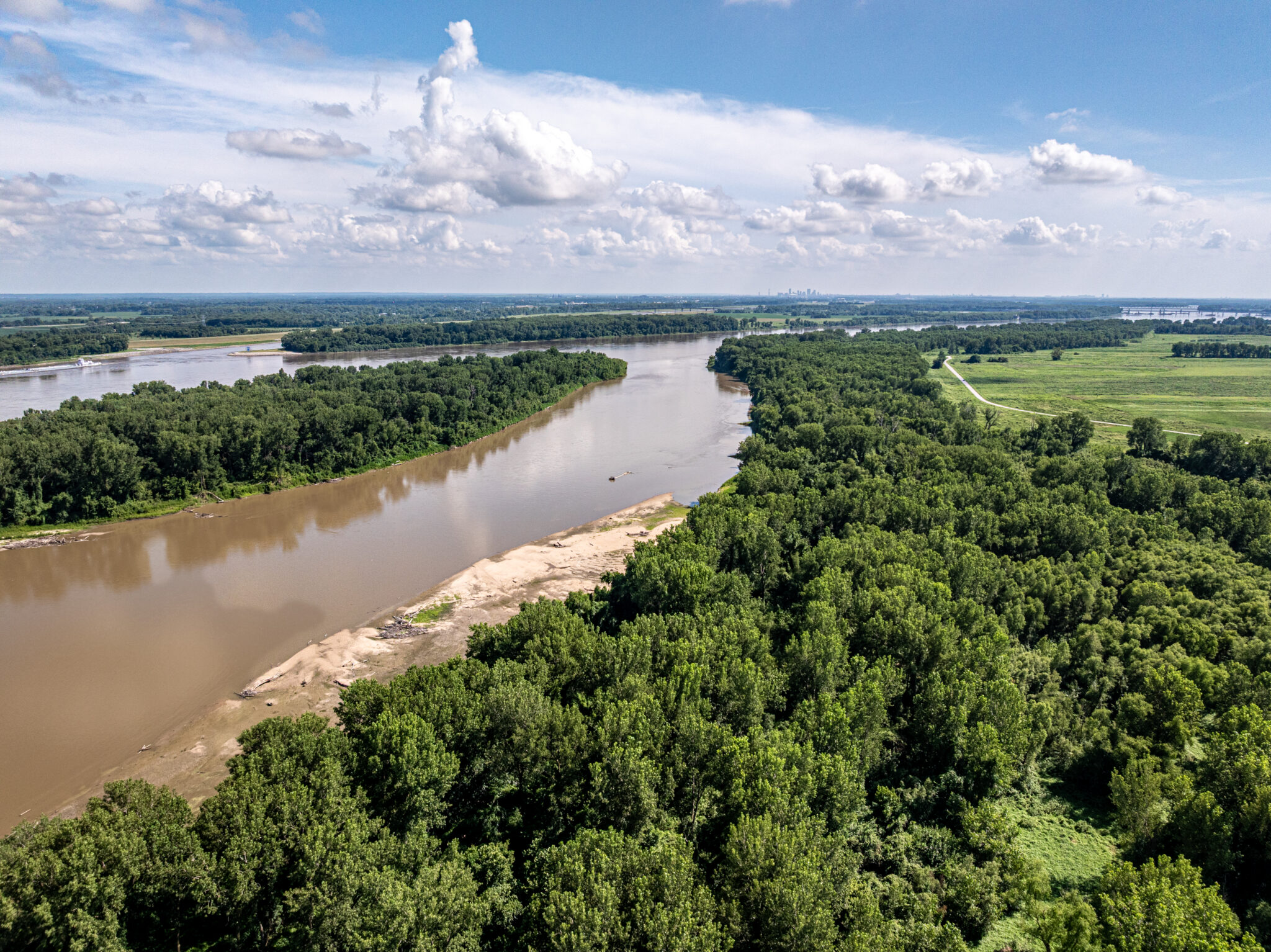
One of the first major rivers that was a focus of conservation efforts by American Rivers, we pushed for the endangered species listing of the pallid sturgeon, piping plover, and interior least tern. Changes in the river connectivity, historic hydrology, and natural sandbar creation severely impacted these species’ ability to survive. We were also a primary advocate in the subsequent actions for the Congressional creation of the U.S. Army Corps of Engineers’ (USACE) Missouri River Recovery Program (MRRP).

The MRRP is focused on:
- (1) avoiding actions that jeopardize federally listed species, and
- (2) the Bank Stabilization and Navigation Project Fish & Wildlife Mitigation Project (BSNP).
While advances have been made, including the de-listing of the interior least tern and the slow completion of levee-setbacks to establish floodplain re-connection, there is still over halfway to go to complete the total 166,750 acres of Missouri River floodplains that were approved to be acquired and restored as part of the BSNP.