From 9News.com (Maya Rodriquez):
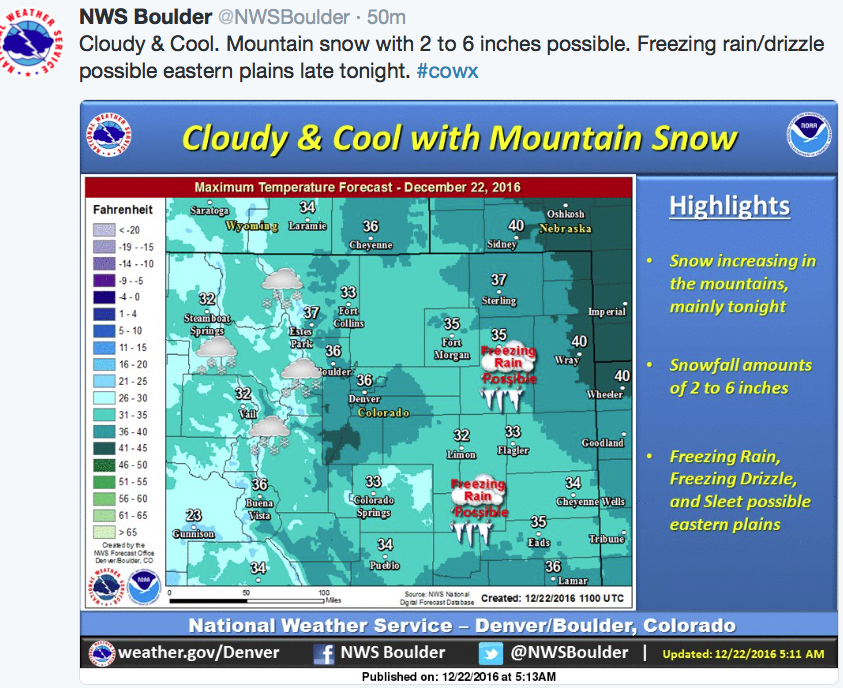
Expected snow in the mountains this weekend means the potential for improvement in the state’s snowpack numbers — and it’s already picking up from what we saw earlier this month.
“We were looking at snowpack of about 20 to 25 percent of average. In the past couple weeks, things have started to shift. We started to see a little bit more an accumulation of snow in the high country and that’s really helped to boost those numbers,” Becky Bolinger, Colorado Climate Center Climatologist, told 9NEWS earlier this month.
At the start of December, Colorado’s statewide snowpack numbers averaged about 61-percent.
“It was extraordinarily dry, starting in August,” said 9NEWS meteorologist Marty Coniglio. “August 1st was when things dried up and that stayed the case, really through November and we have turned on the spigot in a big way here in December.”
What a difference it’s made: our snowfall of late is pushing the state’s snowpack to above average: 103-percent.
So what changed? The emergence of La Nina, which is a cooling of the waters in the Pacific Ocean, near the equator.
“La Nina is very much different, where you can be drier at the beginning, drier at the end of the season and then right in the heart of the winter, December/January/February, you have the solid flow from the jet stream and you get more consistent storms – not necessarily huge storms, but more consistent and more reliable,” Coniglio said.
That is good news for the state’s water supply, which relies on snow runoff in the spring to feed reservoirs tapped in the summer.
“I always caution people, though – the only numbers that count are at the end of April and early May. Those are really the only numbers that matter because that’s when the snowmelt begins,” Coniglio said, adding, “As long as you get enough during the winter season, you build up a big reserve, and you don’t melt it off too soon or too fast, you’re still in good shape for the summer.”