The health of our waters is the principal measure of how we live on the land — Luna Leopold
#Drought conditions improve in U.S. West, but more snow is needed” By January, #snowpack was above normal for most Western basins — The Washington Post
The season’s latest snowpack numbers in the Western United States are a big improvement from where they were in early December. But there’s a lot of winter left, and long-term drought remains an ever-present hurdle. So where are we, and what’s to come?
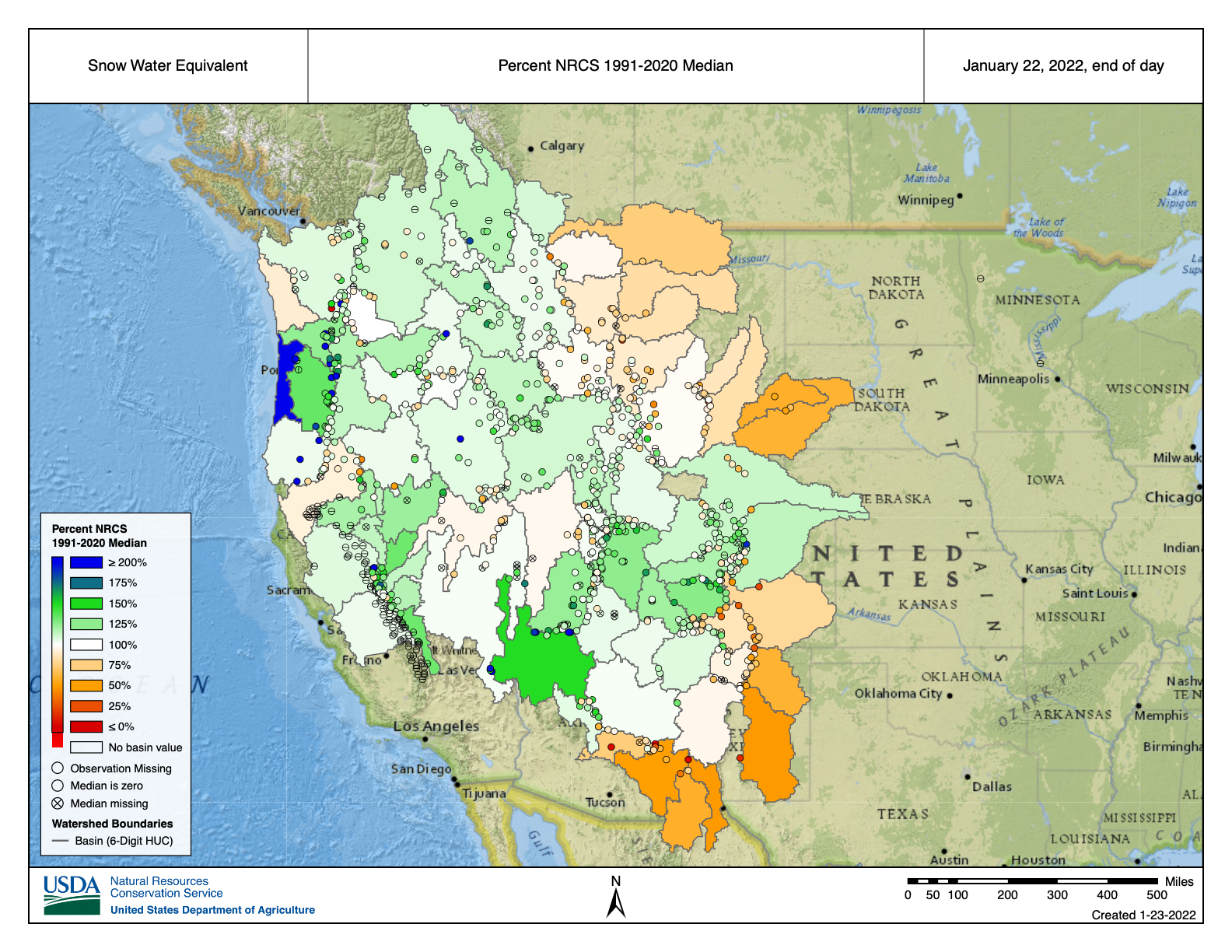
Let’s start with the good news. Since early December, weather patterns have boosted snowpack across the West to above-normal levels for this time of the year.
Western U.S. snowpack January 22, 2022 via the NRCS.
On Dec. 1, snowpack across most of the basins in the West was less than 75 percent of historical norms; many were below 25 percent. Starting Dec. 10, a series of atmospheric rivers and snow events erased those deficits. By January, basin totals in California had increased to about 200 percent of normal. California ended the month much wetter than average, which was much needed, since seven of its last 10 winters have been drier than average.
In Colorado, all Snow Telemetry (SNOTEL) stations showed that snowpack was below the 50th percentile in early December. In early January, nearly half of the stations reported in the 75th percentile. Wolf Creek Summit, one of Colorado’s highest-elevation observation sites, reported an impressive 18-inch increase in snowpack.
Current snow cover is holding steady across the mountain areas, with the highest elevations at around 50 inches or more of snow depth, and mid-elevations between 20 and 50 inches. In Mount Rainier National Park in Washington, the Paradise Ranger Station is reporting snow depth of 110 inches (after reporting 100 inches of snowfall over one month).
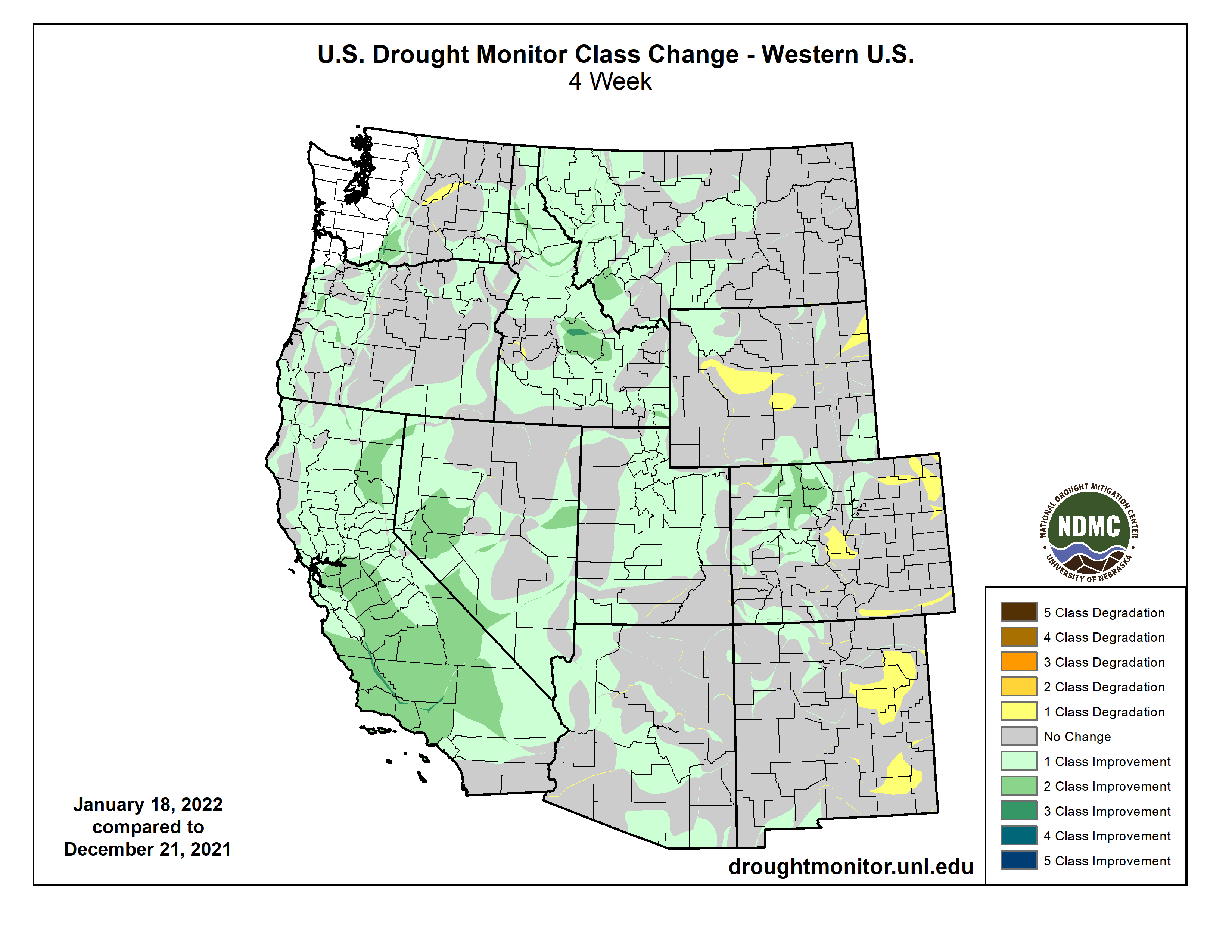
Western U.S. Drought Monitor four week change map ending January 18, 2022.
The shift from dry conditions to a wet pattern has been evident in the U.S. Drought Monitor. Most high-elevation areas have seen a one-category improvement in drought from Dec. 14 to Jan. 11. Isolated areas in California, western Nevada, northern Idaho, western Montana and northern Colorado have seen two-category improvements.
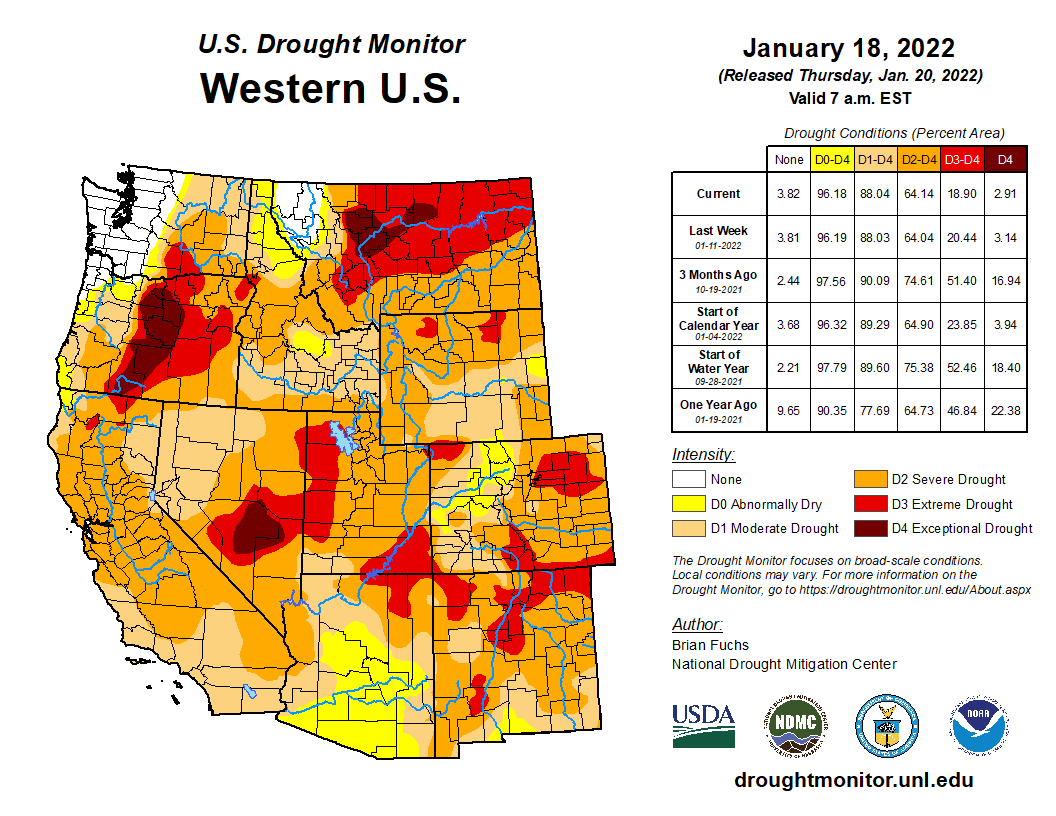
In Utah, “extreme” to “exceptional” drought conditions covered more than half the state from September 2020 until Dec. 28, 2021. As of Jan. 18, only 30 percent of the state was in extreme drought, with no areas under exceptional drought. Since early December, severe to exceptional drought conditions also eased in Idaho, decreasing by nearly half…
La Niña is expected to continue into the spring. For the Northwest, the wet pattern is likely to continue, which means snowpack will probably remain in good condition.
For the Southwest, it’s going to be tough. Precipitation is likely to be less than average for Arizona, New Mexico, and the southern portions of California, Nevada, Utah and Colorado. If the outlook pans out, expect to see those spring water supply forecasts decrease and for drought to persist through the summer months.